Get 20% OFF All Premium 3D & STL Models!

The world of 3D modeling for automotive design is a fascinating blend of artistic vision and technical precision. Whether you’re a game developer striving for unparalleled realism, an AR/VR innovator crafting immersive showrooms, or a visualization artist producing breathtaking marketing renders, the foundation of your project lies in the quality of your 3D car models. A truly exceptional model isn’t just about aesthetics; it’s about optimized topology, accurate scale, robust rigging, and versatile file formats that seamlessly integrate into diverse professional pipelines.
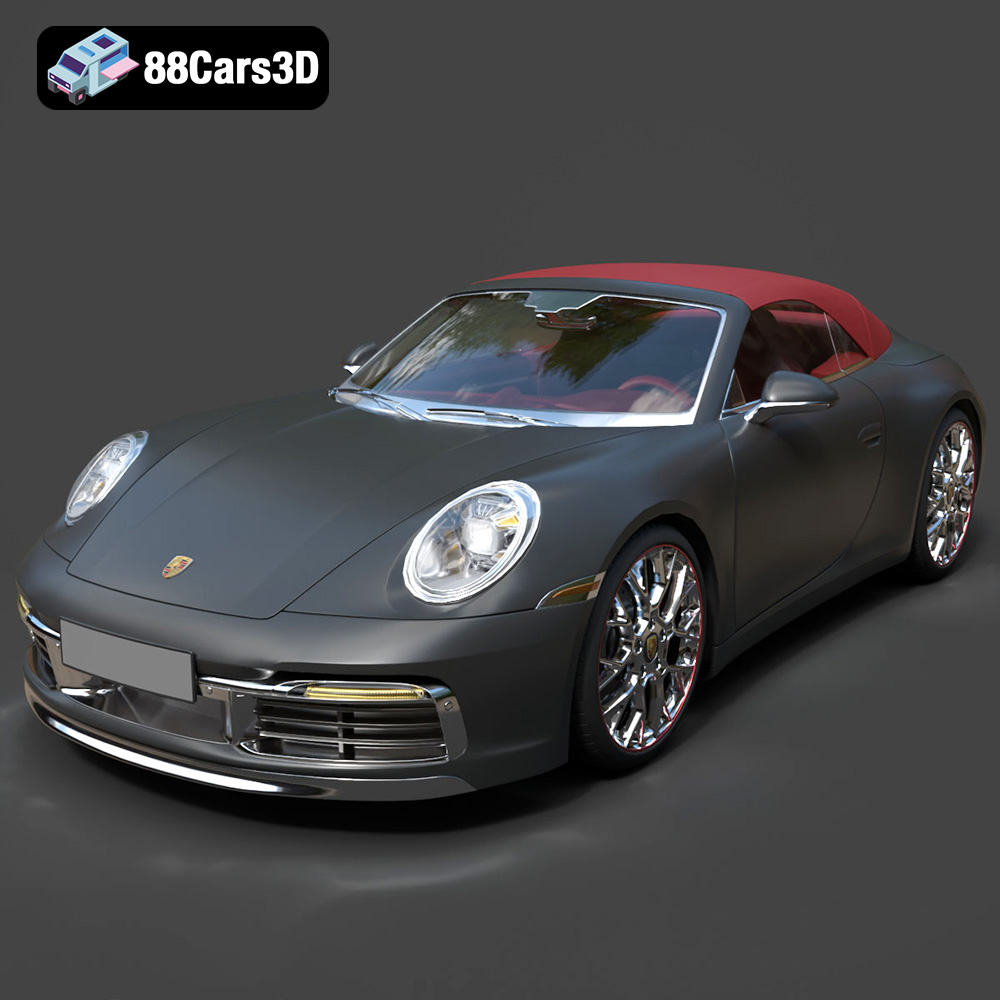
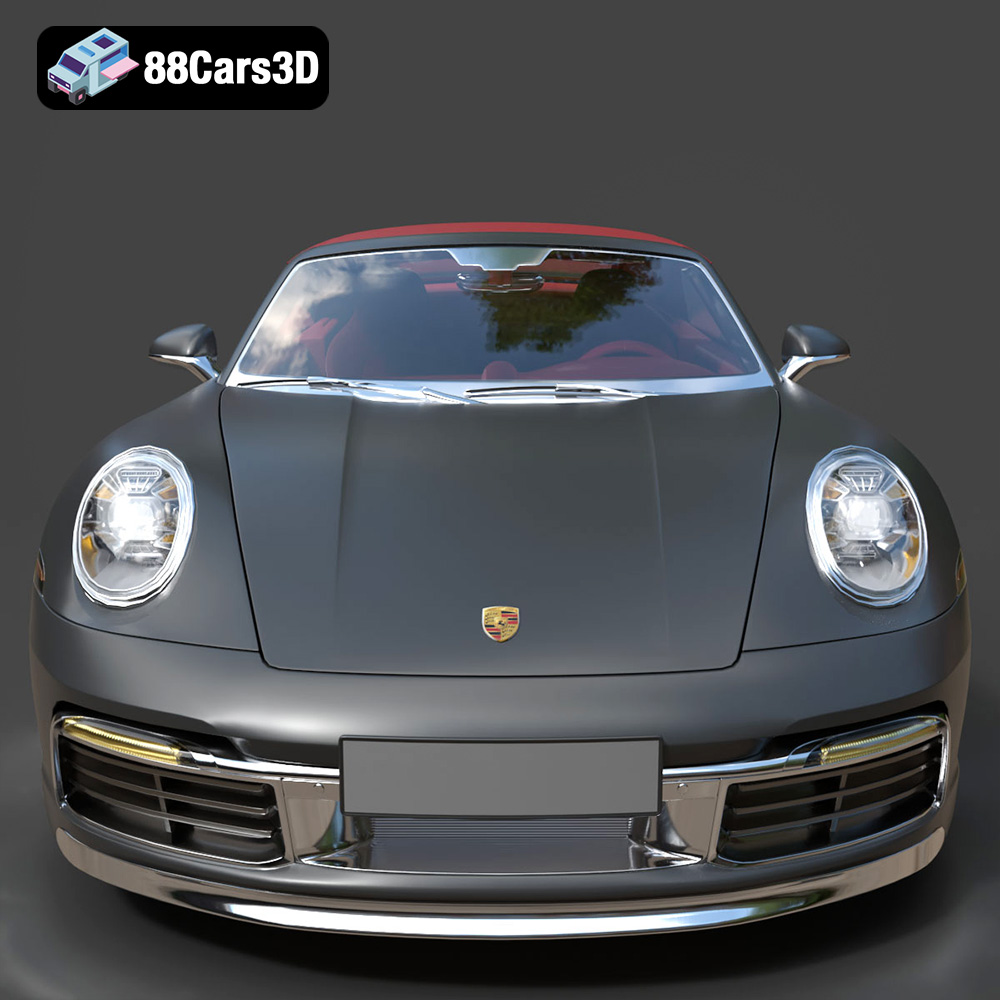
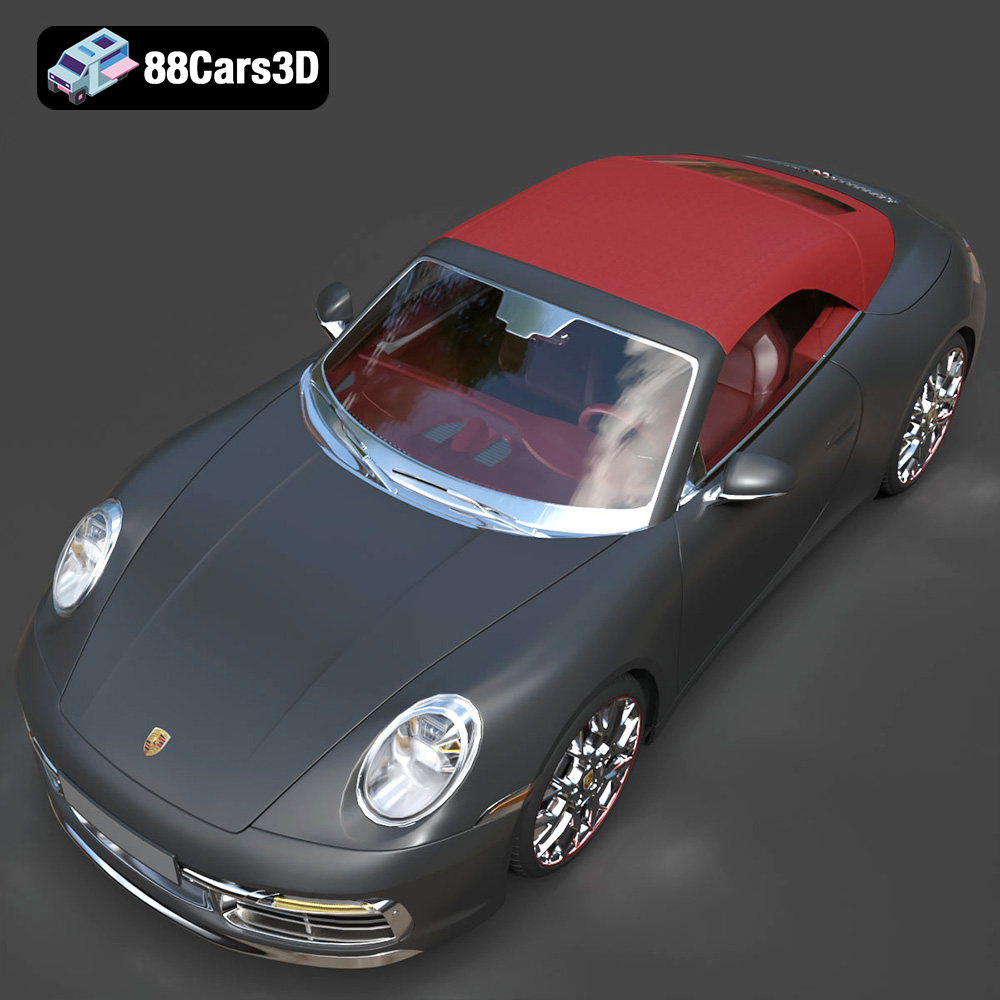
Today, we delve into the intricate details that elevate a 3D car model from good to indispensable, using the exquisite Porsche 911 Carrera Cabriolet 2019 3D Model as our prime example. This particular model, available at 88cars3d.com, encapsulates the pinnacle of what modern 3D automotive assets can achieve, offering a detailed, game-ready representation of the iconic 992 generation. We’ll explore the technical specifications, workflow integrations, and the boundless applications for such a meticulously crafted digital asset.
In the complex ecosystem of 3D production, choosing the correct file format is crucial for workflow efficiency, compatibility, and achieving specific project goals. A premium 3D car model, like the Porsche 911 Carrera Cabriolet 2019, offers a wide array of formats to cater to virtually any professional need. Understanding each format’s strengths and ideal applications is paramount.
The .blend format is native to Blender, the popular open-source 3D creation suite. When you download a .blend file, you’re not just getting a mesh; you’re receiving a complete Blender scene. This includes all geometry, materials, textures, lighting, camera setups, and often even basic animation rigs. For artists and studios primarily working in Blender, this offers maximum flexibility for editing, customization, and scene integration. It preserves all the intricate node-based material setups and modifiers used during creation, making it the most editable and robust option for Blender users.
.fbx (Filmbox) is an industry-standard format developed by Autodesk, designed for interoperability between 3D software applications and, critically, game engines like Unreal Engine and Unity. Its strength lies in its ability to store not only mesh data but also animation, cameras, lights, and materials in a single file. This makes .fbx ideal for real-time pipelines where animated elements and complex scene data need to be transferred efficiently. For the Porsche 911 model, an .fbx file would typically include the car’s mesh, its PBR materials, and perhaps rudimentary pivot setups for wheels and steering, ready for immediate import into your game engine of choice.
The .obj (Wavefront Object) format is one of the oldest and most widely supported 3D file types, renowned for its simplicity and cross-software compatibility. It primarily stores geometric data—vertices, normals, texture coordinates, and faces—along with references to external material files (.mtl). While .obj doesn’t support animation or rigging directly, its universal nature makes it an excellent choice for basic mesh transfer between virtually any 3D application. It’s a reliable fallback when other formats present compatibility issues, ensuring your automotive rendering project or visualization can proceed without major hurdles.
.glb (GL Transmission Format Binary) is quickly becoming the go-to format for efficient 3D model delivery in web, AR (Augmented Reality), and VR (Virtual Reality) contexts. It’s a binary format that bundles all necessary assets—geometry, materials, textures, and even animations—into a single, self-contained file. This makes .glb extremely efficient for streaming and display in browser-based viewers or mobile AR applications, where file size and loading speed are critical. For interactive automotive configurators or virtual showrooms of the Porsche 911, .glb offers an optimized, high-performance solution.
.stl (Stereolithography) is the dominant file format for 3D printing. It represents a 3D model as a series of connected triangles (a triangular mesh) and contains no color, texture, or material information—only surface geometry. For 3D printing the Porsche 911 Carrera Cabriolet, the .stl format ensures a manifold, watertight mesh, essential for successful physical reproduction. The model is prepared with specific considerations for scale and printability, allowing enthusiasts to bring a tangible version of this digital masterpiece to life.
.ply (Polygon File Format) is another format for storing 3D data, often used in applications like 3D scanning, CAD, and scientific visualization. It can store a wider range of properties than .obj or .stl, including color, transparency, and often normal vectors per vertex, making it useful for high-precision models and analysis. While less common for general rendering or game development, its inclusion signifies the model’s robustness for niche applications requiring precise mesh data.
The inclusion of a dedicated .unreal file signifies an asset specifically pre-prepared for Unreal Engine. This typically means the model has been imported, optimized, and set up within an Unreal Engine project. It often includes material instances, collision meshes, LODs (Levels of Detail), and possibly even Blueprints, saving developers significant setup time. This format is a testament to the model’s game-readiness, allowing for immediate integration into an Unreal-based racing title or automotive configurator.
Similar to .blend for Blender, the .max format is the native file type for Autodesk 3ds Max. It stores the complete 3ds Max scene, including all geometry, modifiers, materials, textures, lighting, cameras, and animation data. For professionals working in 3ds Max for architectural visualization, high-end rendering, or complex animations, the .max file provides full editability and access to the original creation environment, allowing for deep customization and seamless integration into existing 3ds Max projects.
The availability of such a comprehensive suite of file formats for the Porsche 911 Carrera Cabriolet 2019 3D model underscores its versatility and the commitment of 88cars3d.com to provide assets that meet the diverse technical demands of the 3D industry.
Creating a 3D car model that stands up to professional scrutiny requires a meticulous approach, balancing aesthetic fidelity with technical efficiency. The Porsche 911 Carrera Cabriolet 2019 3D Model exemplifies this balance, engineered for excellence across various applications.
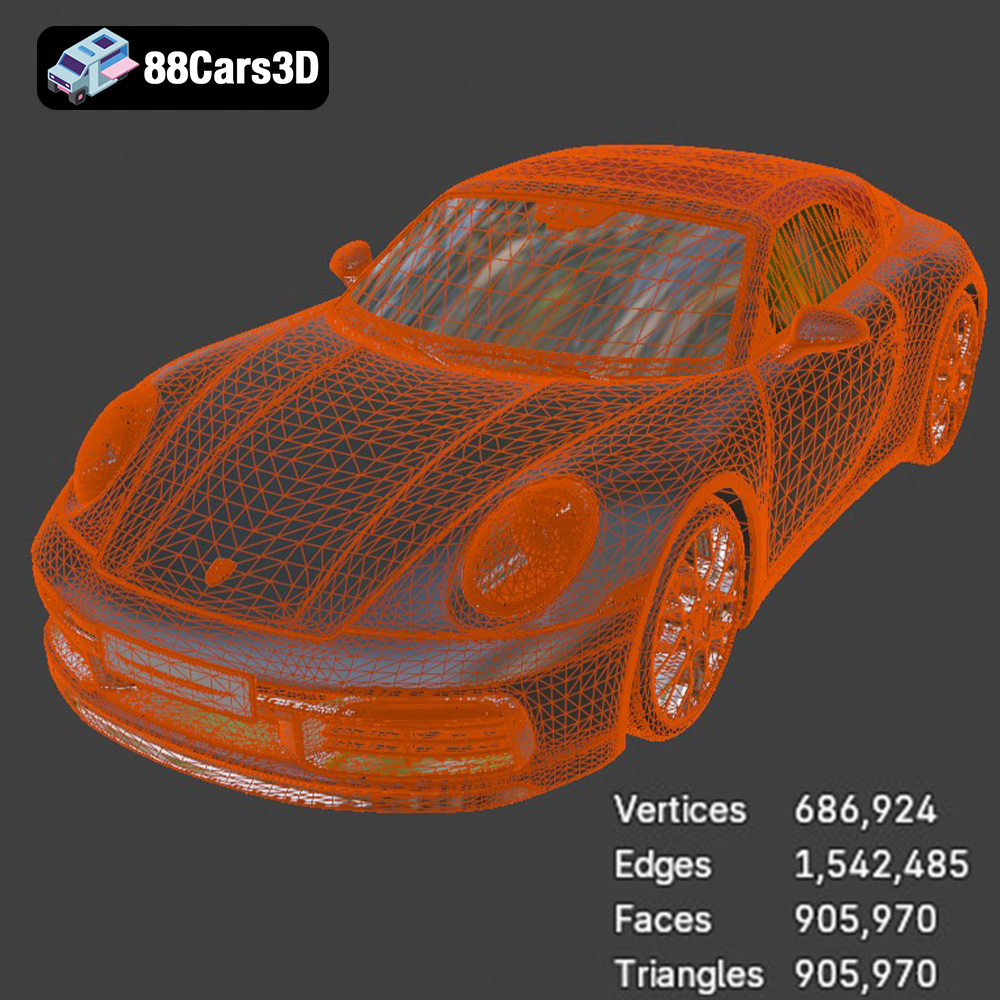
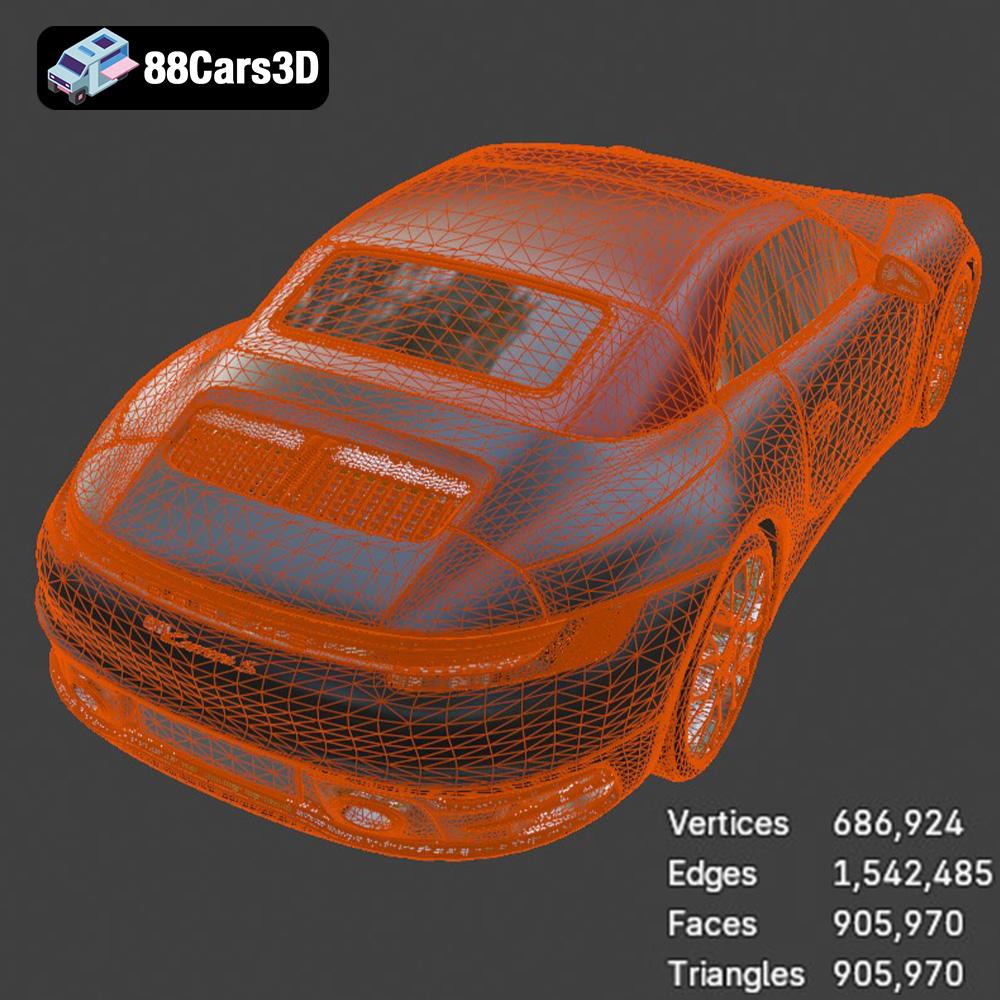
At the core of any high-quality 3D model is its geometry. For automotive subjects, this means accurately capturing the elegant curves, sharp lines, and intricate details of the vehicle. The Porsche 911 Carrera Cabriolet 2019 model boasts an optimized triangle count of approximately 450,000. This figure is critical: it’s high enough to maintain the car’s signature continuous rear LED light bar, sleek muscular fenders, and the detailed engine bay, ensuring visual fidelity even up close. Yet, it’s low enough to be “game-ready,” meaning it won’t unduly strain real-time rendering engines like Unreal or Unity. This balance is achieved through careful polygonal modeling, focusing on quad-based topology where possible for smooth subdivision, and strategic triangulation where optimization is key. Proper topology also facilitates clean deformations if the model were to be animated for suspension travel or steering, a feature already considered with separate, pivot-setup components.
Beyond raw geometry, how textures are applied dramatically impacts realism. The quality of UV unwrapping dictates how cleanly material details, decals, and custom liveries will appear on the model’s surface. A professional asset features clean, non-overlapping UV layouts that maximize texture resolution and minimize distortion. For the Porsche 911 Carrera Cabriolet, this translates to flawless representations of the premium leather-upholstered sports seats, the multifunction GT sports steering wheel, and even the intricate details of the high-resolution staggered alloy wheels and cross-drilled rotors. Efficient UVs also play a crucial role in game development, reducing draw calls and optimizing memory usage.
Modern 3D rendering heavily relies on Physically Based Rendering (PBR) workflows. The materials for this Porsche model are designed to interact with light in a physically accurate manner, mimicking real-world properties. This includes metallic shading for the dual-exit exhaust system, realistic reflections and clear coat effects on the body paint (allowing for customization to Guards Red, Miami Blue, or Agate Grey), and subtle fabric nuances in the interior. The combination of well-defined PBR materials with high-resolution textures ensures that whether the car is bathed in studio lighting or dynamic outdoor scenes, it reacts authentically, adding immense depth and believability to any render or real-time application.
For game developers, the quality and optimization of 3D car models are paramount. The Porsche 911 Carrera Cabriolet 2019 3D model is engineered with game development specifically in mind, offering a seamless integration process into leading real-time engines.
Consider a scenario where a game studio needs to integrate this luxurious sports car into an open-world racing title using Unreal Engine. The .blend and .fbx formats from 88cars3d.com are perfectly suited for this. The typical workflow would involve:
Racing simulators demand both visual excellence and uncompromising performance. The Porsche 911 model’s ~450k triangle count is a sweet spot, offering high detail without being excessively heavy. Further optimizations are still possible and often necessary:
The technical specifications of this 3D model, combined with its high-quality textures and material definition, make it an ideal candidate for pushing the boundaries of realism and performance in modern racing titles and simulators. Developers can confidently leverage this asset from 88cars3d.com knowing it meets rigorous industry standards.
While game development is a major consumer of 3D car models, the utility of a high-fidelity asset like the Porsche 911 Carrera Cabriolet 2019 extends far into other professional domains, each with its unique requirements and opportunities.
Augmented Reality (AR) and Virtual Reality (VR) are transforming how we interact with products, especially in the automotive sector. Imagine a potential buyer exploring the Porsche 911 Carrera Cabriolet from their living room via an AR app, or stepping into a virtual showroom to customize the car in real-time. The optimized triangle count (~450k) and the inclusion of the .glb format make this 3D model perfectly suited for such immersive experiences.
For advertising agencies, automotive designers, and visualization studios, stunning renders are the currency of communication. The Porsche 911 Carrera Cabriolet model is a powerhouse for creating visually striking marketing campaigns and detailed design presentations. Utilizing formats like .max, .blend, or .fbx, artists can import the model into renderers like V-Ray, Corona, Redshift, or Octane.
Beyond screen-based applications, the Porsche 911 Carrera Cabriolet 2019 model also offers the exciting possibility of physical reproduction through 3D printing. The inclusion of the .stl format, alongside detailed print settings, caters to hobbyists and professionals alike.
The versatility demonstrated by this Porsche 911 model truly underscores its value as a multi-purpose asset, capable of transforming ideas into visual realities across a spectrum of industries.
In the fast-paced world of 3D production, time is a critical commodity. The decision to use pre-built, high-quality 3D assets can dramatically impact project timelines, budgets, and overall quality. This is where a marketplace like 88cars3d.com proves invaluable, offering meticulously crafted 3D car models like the Porsche 911 Carrera Cabriolet 2019.
Developing a 3D car model from scratch, particularly one as detailed and accurate as the Porsche 911 Carrera Cabriolet 2019, is an incredibly time-consuming and resource-intensive endeavor. It requires expert modelers, texture artists, and a deep understanding of automotive design. By opting for a pre-made asset from 88cars3d.com, studios and individual artists can bypass months of development work. This directly translates into:
The Porsche 911 model’s “game-ready & optimized” status, with its balanced ~450k triangles and proper pivot setups, exemplifies this benefit, providing an asset that needs minimal post-purchase tweaking before deployment.
One of the persistent challenges in 3D production is ensuring compatibility across different software and engine pipelines. 88cars3d.com addresses this by providing models in a comprehensive range of industry-standard file formats, as highlighted by the .blend, .fbx, .obj, .glb, .stl, .ply, .unreal, and .max options for the Porsche 911 Carrera Cabriolet. This multi-format availability guarantees that irrespective of your preferred 3D software (Blender, 3ds Max, Maya, Cinema 4D) or real-time engine (Unreal, Unity), the asset will integrate smoothly.
Furthermore, professional assets from platforms like 88cars3d.com adhere to high technical standards:
By choosing assets from a reputable source, professionals ensure their projects are built upon a solid foundation of quality, allowing them to focus on creativity and innovation rather than grappling with technical imperfections.
The journey from a blank canvas to a fully realized 3D automotive masterpiece is paved with technical challenges and creative opportunities. As we’ve explored with the Porsche 911 Carrera Cabriolet 2019 3D Model, a truly professional asset is defined not just by its visual appeal, but by its optimized geometry, comprehensive file format support, and seamless integration into diverse professional workflows.
From captivating high-end renders for marketing campaigns to delivering thrilling, optimized experiences in game development and creating interactive virtual showrooms in AR/VR, the technical prowess of this particular Porsche 911 model makes it an indispensable tool. Its meticulously crafted exterior features, detailed cockpit, and game-ready specifications underscore its versatility, further enhanced by the ability to customize colors and material finishes to suit any creative vision.
Understanding the nuances of file formats like .fbx for game engines, .glb for web and AR/VR, and .stl for 3D printing empowers artists and developers to select the right tool for the job. Platforms like 88cars3d.com serve as critical resources, offering a curated selection of high-quality 3D car models that save invaluable time and resources, while consistently meeting the demanding technical standards of the industry. Embrace the power of expertly crafted 3D car models to elevate your projects and bring your automotive visions to life with unparalleled realism and efficiency.
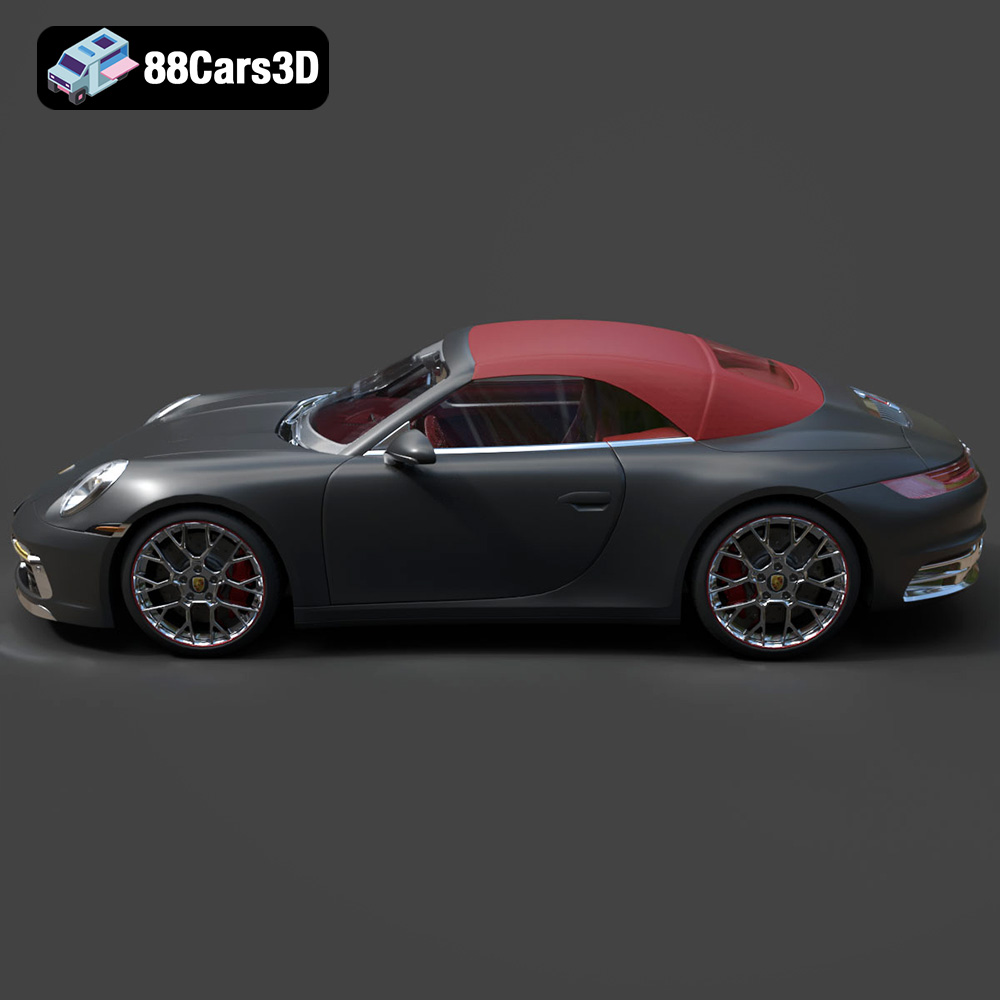
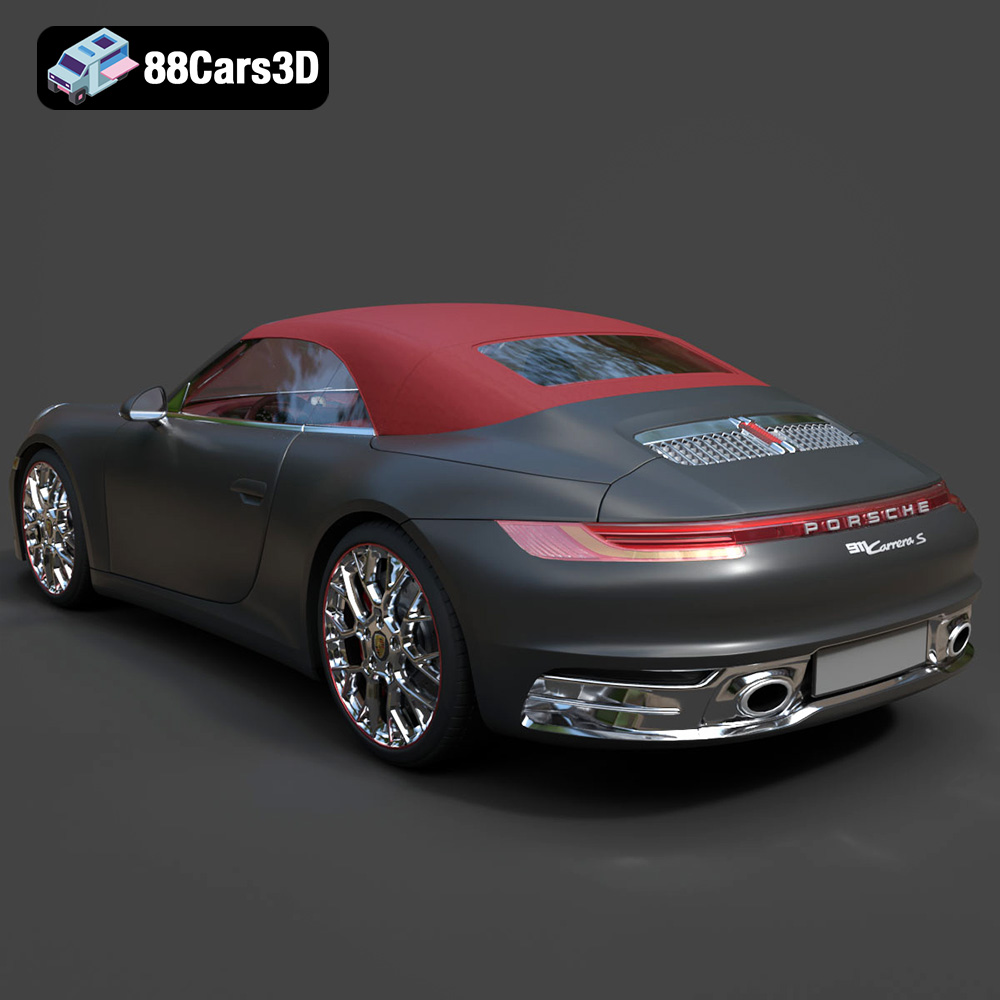
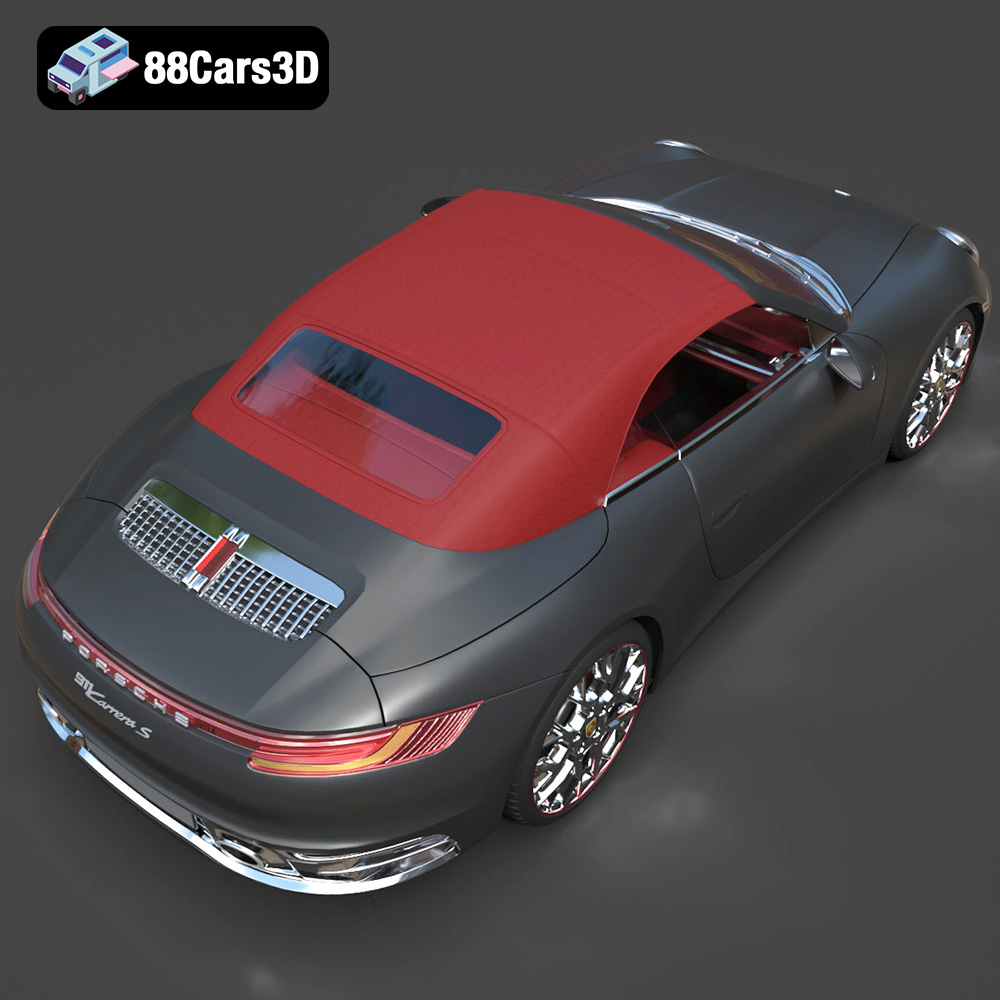
Experience the epitome of open-top motoring with the Porsche 911 Carrera Cabriolet 2019. Representing the iconic 992 generation, this German masterpiece combines a timeless silhouette with modern aerodynamics. Powered by a potent twin-turbo flat-six engine, the Cabriolet offers a perfect blend of high-performance thrills and wind-in-the-hair luxury. Key visual elements include its signature continuous rear LED light bar, sleek muscular fenders, wide rear track, and refined exhaust system integrated seamlessly into the rear fascia.
This 3D model boasts exceptional topology with an optimized triangle count of approximately 450k, ensuring it is game-ready without compromising on visual fidelity. Designed to meet the highest industry standards, the model provides a flawless balance for use in real-time game engines, immersive AR/VR applications, high-end animation, and architectural or lifestyle visualization.
Perfect for luxury lifestyle scenes, coastal driving simulations, high-speed racing titles, and interactive automotive configurators.
.blend, .fbx, .obj, .glb, .stl, .ply, .unreal, .max
Tags:
porsche, 911-carrera-cabriolet-2019, sports-car, convertible, game-ready, low-poly, optimized, car-3d-model, game-asset, rendering, vr-ar, blend, fbx, obj, glb, stl, ply, unreal, maxMercedes Benz CLS 500 3D Model 3D Printable STL
$19.99
.blend
.convertible
.fbx
.glb
.max
.obj
.ply
.porsche
.rendering
.sports car
.stl
.unreal
911-carrera-cabriolet-2019
car-3d-model
game asset
game-ready
low-poly
optimized
VR/AR