Get 20% OFF All Premium 3D & STL Models!

In the vibrant world of 3D modeling, automotive design holds a unique place. It’s where engineering precision meets artistic flair, capturing the essence of a vehicle down to its smallest detail. For professionals across game development, architectural visualization, AR/VR experiences, and even 3D printing, the demand for high-fidelity 3D car models is constant. These digital assets serve as the cornerstone for everything from captivating cinematic renders to immersive real-time simulations. Today, we turn our attention to an icon that perfectly embodies this blend of rugged capability and refined aesthetics: the Land Rover Defender 2020.
The reimagined Land Rover Defender 2020 has quickly become a symbol of modern off-road prowess, blending its legendary heritage with contemporary luxury and cutting-edge technology. Translating such an intricate vehicle into a versatile 3D model requires meticulous attention to detail and a deep understanding of optimization techniques. This comprehensive blog post will explore how a premium 3D asset like the Land Rover Defender 2020, available from 88cars3d.com, can elevate your projects, discussing its technical merits, diverse applications, and the crucial role of file formats in professional workflows.
Creating a truly exceptional 3D car model is an intricate process that goes far beyond simple geometry. It involves a fusion of artistic interpretation and technical rigor to ensure accuracy, visual appeal, and functional versatility across various platforms and engines.
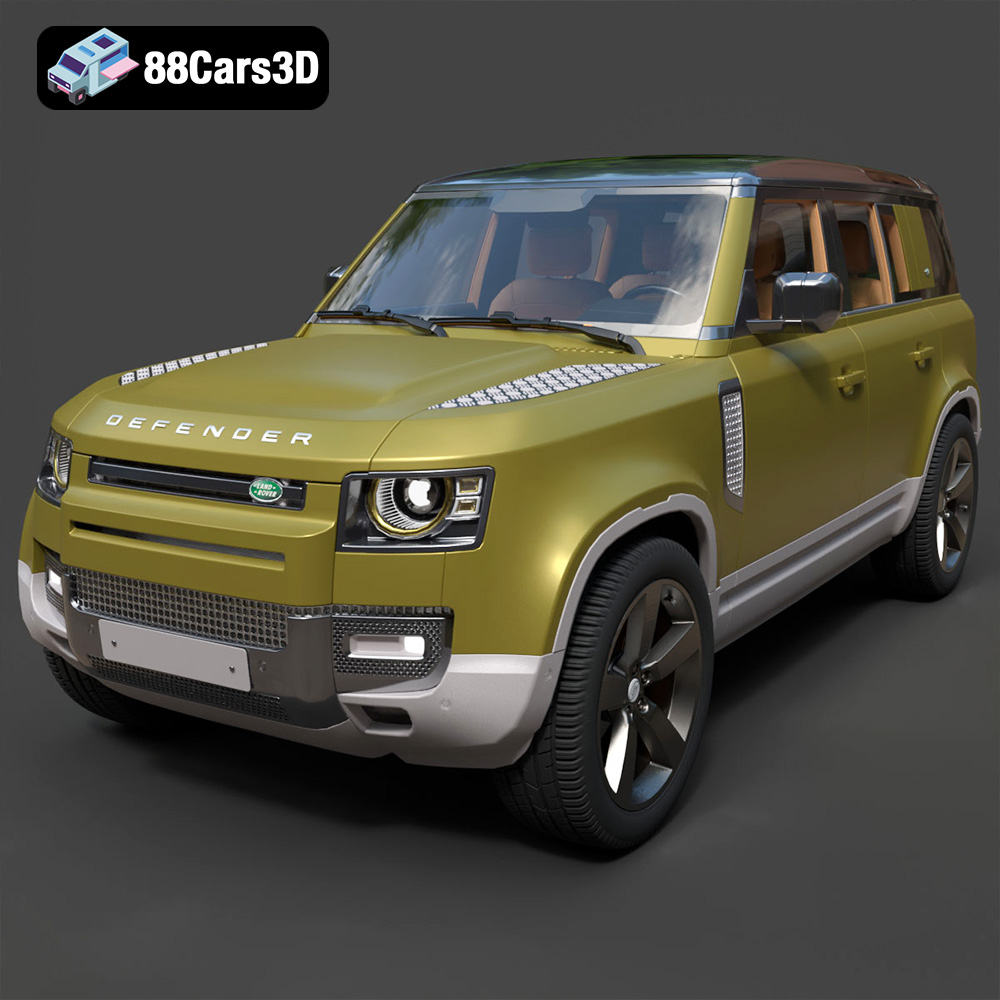
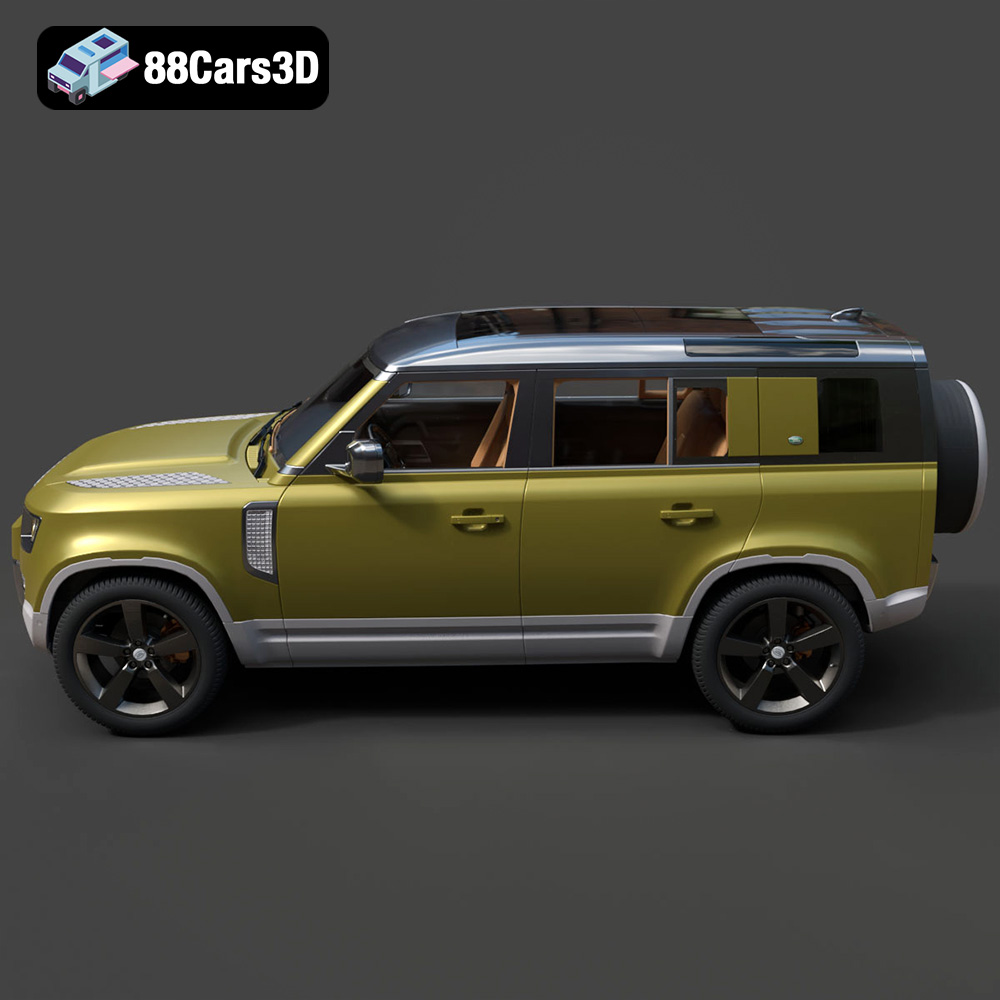
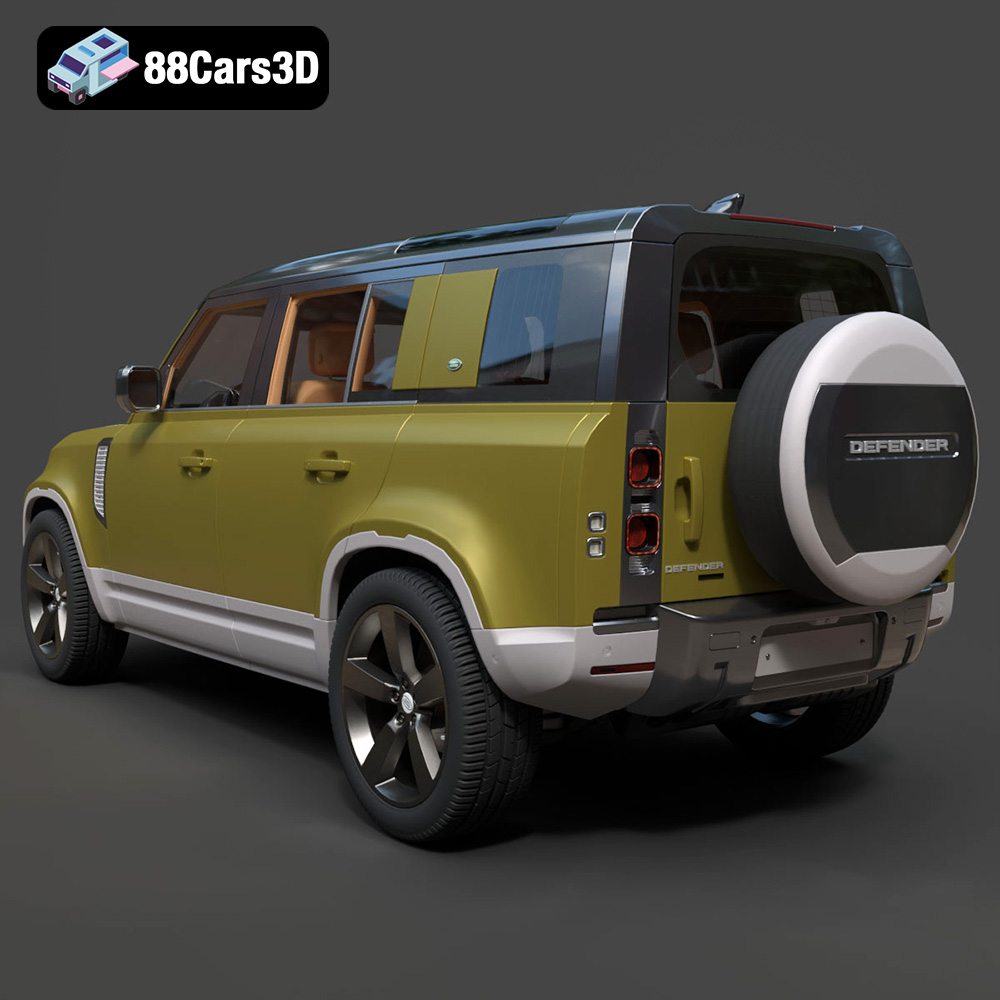
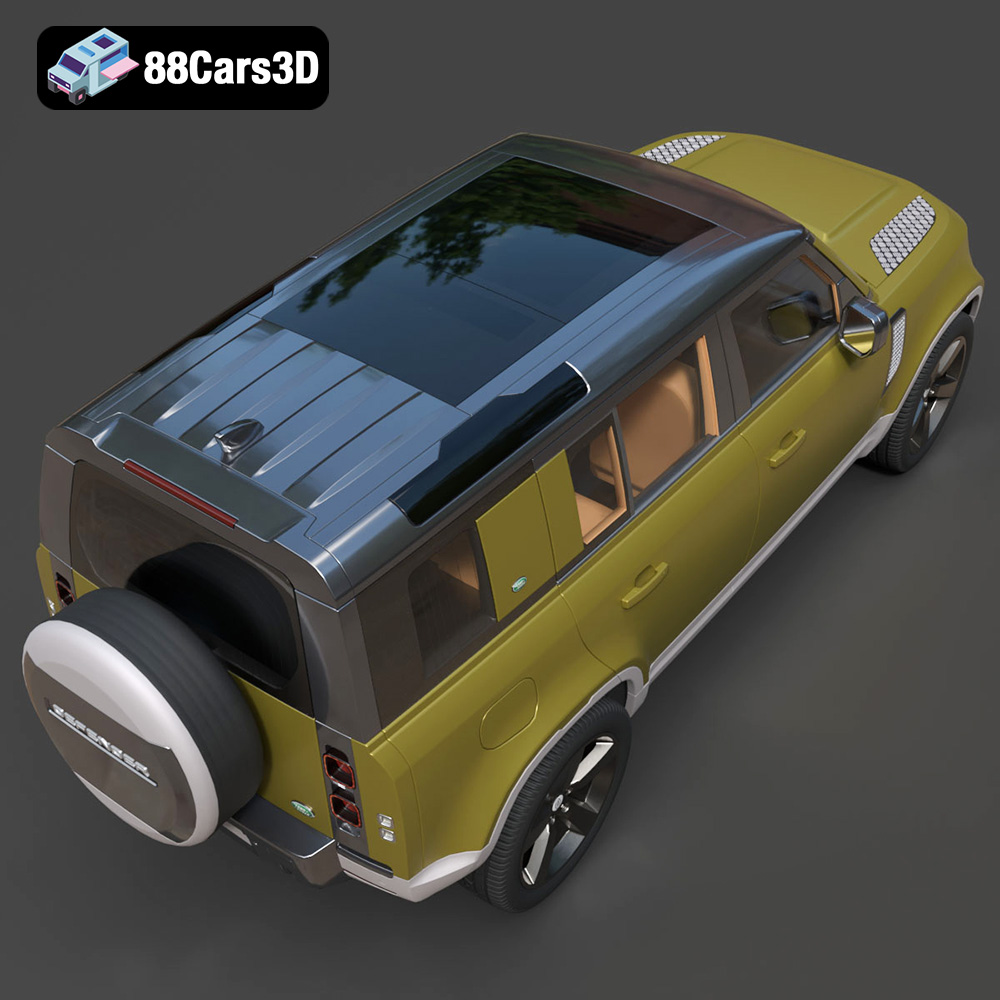
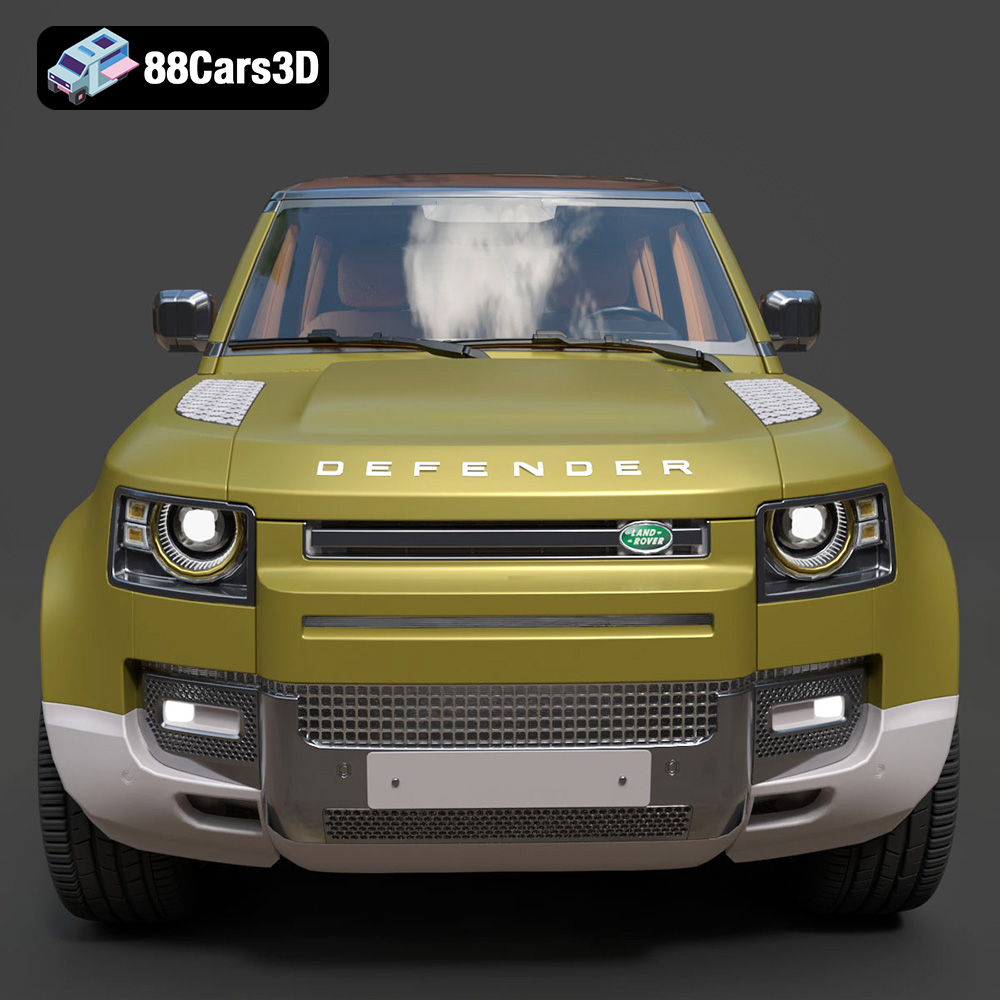
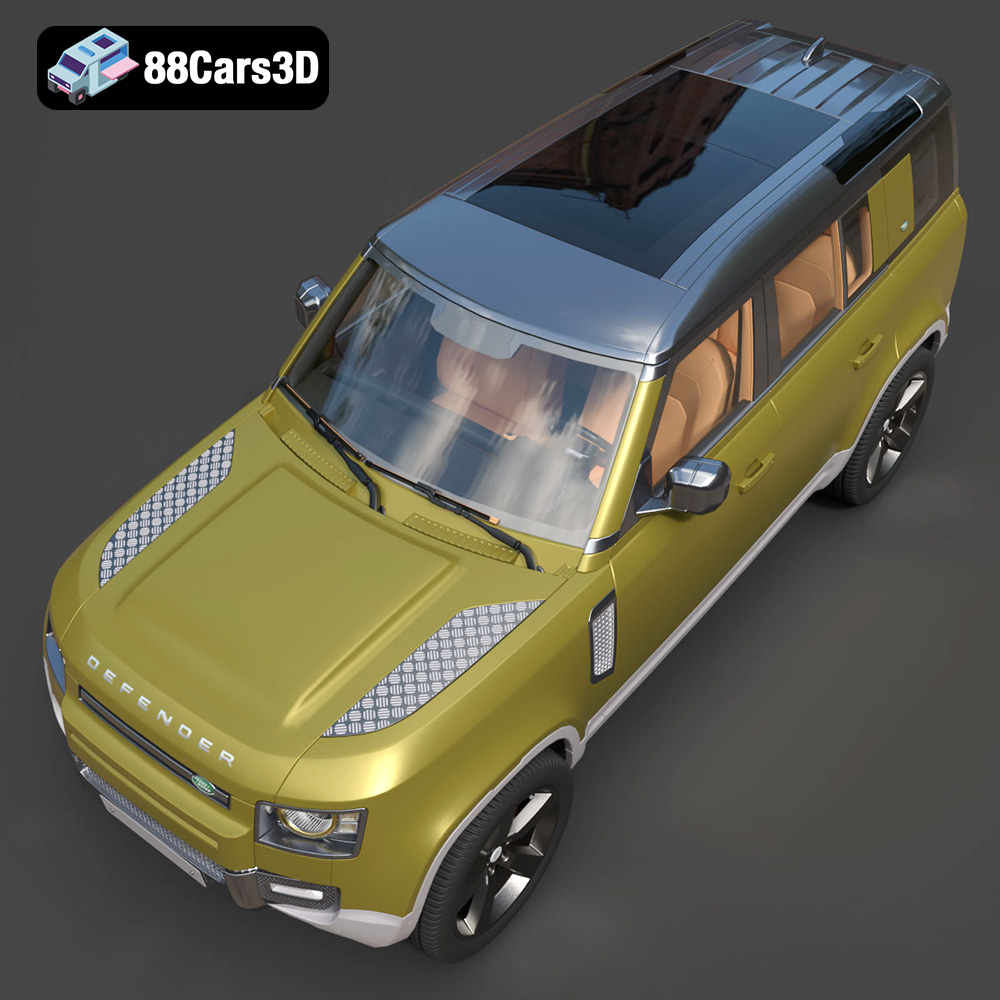
The foundation of any high-quality automotive 3D model lies in its geometric accuracy. For the Land Rover Defender 2020, this means replicating its distinctive boxy silhouette, signature round LED headlights, robust front grille, and unmistakable side profile with precision. Every panel gap, curve, and rugged accessory must be meticulously recreated to capture the vehicle’s authentic presence. This Land Rover Defender 2020 3D model achieves this with exceptional topology and real-world scale accuracy, based on the actual vehicle chassis.
Beyond the exterior, the model features a detailed engine block underneath the sculpted hood, distinctive modern dual exhaust, and intricately modeled independent air suspension components. These aren’t just aesthetic flourishes; they provide crucial details for close-up renders, animations, and even interactive inspection scenarios. The high-fidelity alloy wheels, equipped with aggressive all-terrain tires, further enhance its rugged appeal, contributing significantly to the overall realism of any scene.
The interior, or cockpit, is equally vital, especially for applications requiring first-person views, such as game development or virtual showrooms. This model boasts premium multi-material seats with realistic stitching details, a detailed multi-function steering wheel and steering column, a high-resolution digital instrument cluster, and a central infotainment screen. The accurately modeled central console with gear selector and drive mode controls ensures that the experience inside the virtual Defender is as immersive and authentic as the exterior view.
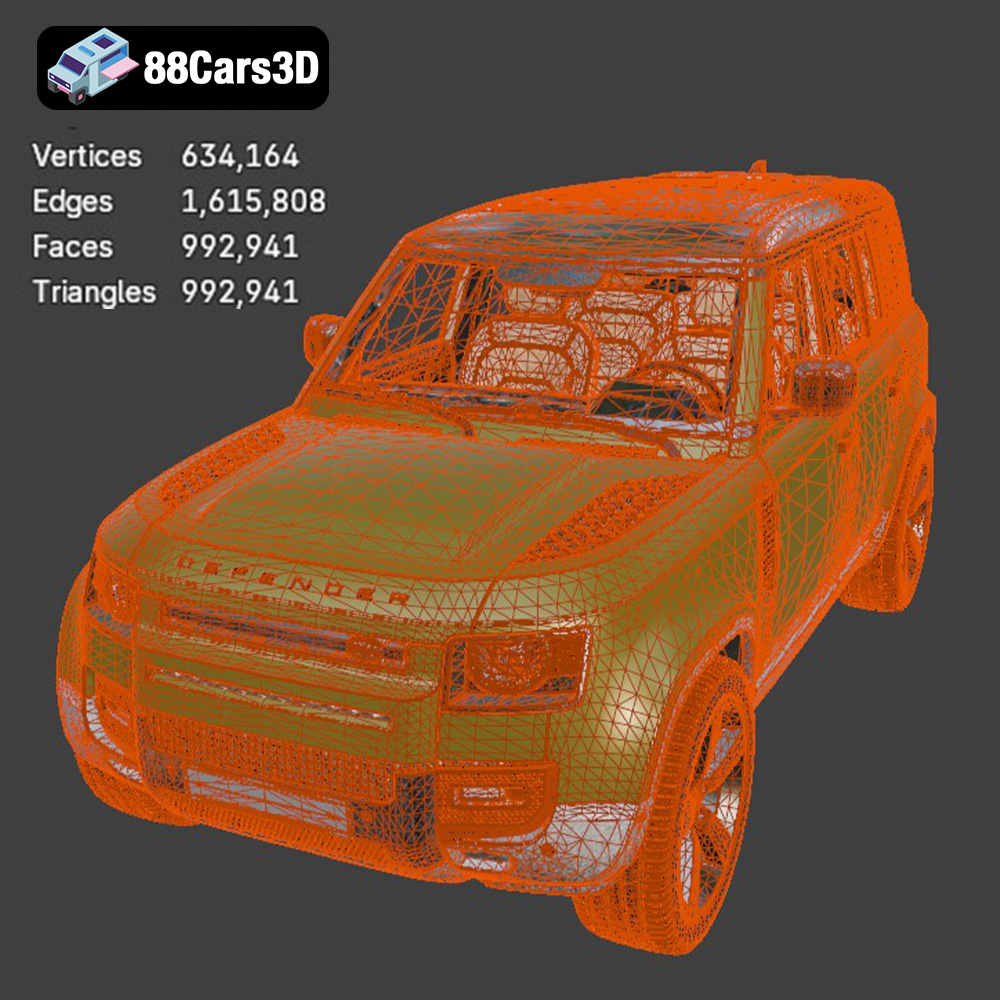
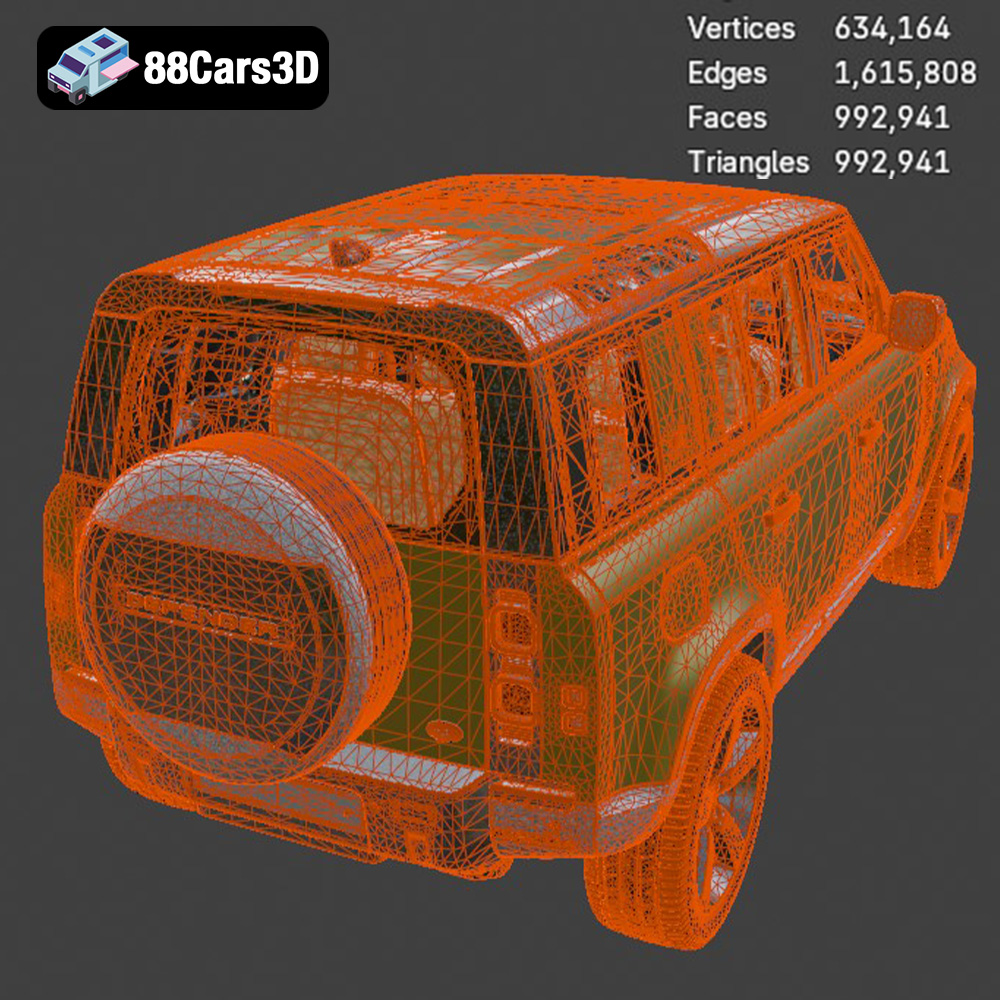
Achieving a balance between high-end visual fidelity and game-ready optimization is a significant challenge in 3D modeling. A premium 3D car model, such as this Land Rover Defender 2020, must cater to a wide range of use cases, from photorealistic cinematic renders to smooth real-time performance in demanding game engines. This particular model strikes that perfect balance with an optimized triangle count of approximately 500k. This polycount is sufficiently detailed to hold up under close scrutiny for high-quality renders, yet optimized enough to ensure smooth frame rates in real-time environments like Unreal Engine or Unity.
Effective optimization also extends to UV mapping, material setup, and asset structuring. Clean UVs are essential for applying high-resolution textures without distortion, while well-defined PBR (Physically Based Rendering) materials ensure realistic interactions with light, whether it’s the metallic sheen of the paintwork, the texture of the plastic trim, or the reflections on the glass. The model’s proper pivot setup for steering, wheel rotation, and suspension travel is a crucial technical advantage, enabling seamless animation and dynamic interaction within game engines or animation software.
The choice of file format is a critical decision in any 3D workflow, directly impacting compatibility, functionality, and the overall efficiency of your project. A versatile 3D asset, like the Land Rover Defender 2020 model from 88cars3d.com, often comes bundled with multiple formats to cater to diverse professional needs. Understanding each format’s strengths and weaknesses is paramount for seamless integration and optimal results.
Selecting the correct file format is crucial for workflow efficiency. If you’re developing a game, .fbx or the Unreal-specific asset are your best bets for smooth integration with animation and PBR materials. For detailed rendering projects in 3ds Max or Blender, the .max or .blend files offer maximum flexibility. When creating interactive web experiences or AR apps, .glb is the clear winner due to its optimization. And for physical models, .stl is the undisputed champion for 3D printing. A versatile product like the Land Rover Defender 2020 model provides all these options, ensuring you have the right tool for any job.
The gaming industry constantly pushes the boundaries of realism, demanding highly detailed yet performance-optimized 3D assets. The Land Rover Defender 2020 3D model is specifically designed to meet these rigorous demands, making it an ideal choice for a wide array of game development projects.
For game developers utilizing Unreal Engine, a robust 3D car model like the Defender is a game-changer. The included .fbx or .unreal formats are perfectly suited for a streamlined import process. Once in Unreal, developers can quickly set up PBR materials, leveraging the engine’s advanced rendering capabilities to achieve photorealistic vehicle appearances. The model’s clean topology and optimized ~500k triangle count mean less time spent on manual optimization and more time on gameplay development.
Crucially, the separate wheels, suspension, and steering components, along with proper pivot points, allow for realistic vehicle physics and animation. Imagine using this Defender in an open-world driving simulator, where players can experience the precise handling and suspension articulation over challenging terrains. Or integrating it into an off-road adventure game, where its rugged design adds a layer of authenticity to the exploration. Collision meshes can be easily generated or imported to ensure accurate interaction with the game environment, and Levels of Detail (LODs) can be implemented to maintain high performance across varying distances, rendering the Defender convincingly whether it’s up close or in the distance.
The “game-ready” designation isn’t just a marketing term; it reflects a deliberate design philosophy focused on performance. The approximately 500k triangle count for this Land Rover Defender 2020 strikes a sweet spot, providing enough detail for modern game engines without bogging down frame rates. Beyond polycount, optimization in game development involves smart material use. Utilizing texture atlasing for various components can reduce draw calls, while material instances allow for quick variations in color or finish (e.g., custom factory colors, different levels of dirt or wear) without increasing material complexity.
For first-person POV gaming, the optimized geometry of the cockpit and interior features becomes paramount. Players expect to see a highly detailed steering wheel, dashboard, and infotainment system, especially when driving. This model delivers on that expectation, ensuring that the immersive experience extends inside the vehicle, enhancing realism for racing titles, simulators, and open-world exploration games.
In architectural visualization (ArchViz) and product rendering, a premium 3D car model acts as a powerful storytelling element. It can ground a scene in reality, convey a sense of scale, or evoke a specific lifestyle. The Land Rover Defender 2020 model excels in this role, offering unparalleled realism for high-end rendering projects.
Whether you’re a 3ds Max or Blender professional, importing the respective .max or .blend file of the Defender provides a complete, editable scene. The journey to photorealism begins with precise lighting setup. HDRIs (High Dynamic Range Images) combined with carefully placed physical lights (e.g., area lights simulating studio softboxes or sunlight) can bring the model to life. The model’s PBR materials—encompassing everything from the metallic flake in the paint to the subtle reflections on the glass and the texture of the rubber tires—can be further refined using advanced rendering engines like V-Ray, Corona Renderer (for 3ds Max), or Cycles and Octane (for Blender).
Consider a case study: an architectural rendering of a luxury modern home. Placing the Land Rover Defender 2020 in the driveway immediately adds a touch of aspirational lifestyle and realism. The vehicle acts as a focal point, indicating the status and adventurous spirit of the imagined inhabitants. Or for a product advertisement, the Defender can be rendered in a dramatic studio lighting setup, highlighting its robust design and premium features, making it an invaluable asset for brand campaigns and marketing materials.
The Land Rover Defender 2020 is also perfectly suited for the burgeoning fields of Augmented Reality (AR) and Virtual Reality (VR). For web-based AR experiences, the included .glb format is highly optimized, allowing users to place a virtual Defender in their real-world environment via their smartphone, scale it, and walk around it. This is invaluable for virtual showrooms or interactive configurators where potential buyers can explore different color options, wheel types, and interior trims in a highly engaging way.
For more dedicated VR applications, the .fbx format can be integrated into platforms like Unreal Engine or Unity to create fully immersive virtual test drives or detailed walkthroughs of the vehicle’s interior. Imagine donning a VR headset and stepping into the Defender’s cockpit, interacting with the digital instrument cluster, or exploring the intricate stitching on the seats. The model’s optimized geometry and detailed interior ensure a smooth and visually rich experience, making it a powerful tool for marketing, training, and design review.
The versatility of a high-quality 3D model extends beyond digital screens, offering the exciting possibility of physical fabrication through 3D printing. The Land Rover Defender 2020 3D model is designed with this in mind, providing an .stl format suitable for bringing this iconic vehicle into the real world as a tangible collectible.
The .stl file format is the universal language for 3D printers. Before printing, the digital model must be meticulously prepared to ensure a successful physical output. This involves checking for manifold geometry (ensuring no holes or gaps in the mesh), verifying wall thickness (the model description recommends 1.2–2.0 mm for structural integrity), and choosing the appropriate scale. The recommended scales of 1:12, 1:18, or 1:24 allow for a balance between detail and manageable print size, catering to hobbyists and collectors alike.
Resin printing (SLA/DLP) is often recommended for models like the Defender, as it can achieve finer details and smoother surfaces compared to FDM (Fused Deposition Modeling) printers. Layer height, typically between 0.04–0.12 mm, further influences the print quality. Complex parts like the exhaust system, mirrors, and specific interior elements will likely require supports during printing to prevent sagging and ensure fidelity. The recommended print orientation, such as printing the frame angled and wheels separately, is crucial for structural integrity and maximizing detail on specific components.
Once printed, the journey from digital file to physical masterpiece continues with post-processing. This typically involves removing supports, sanding down any imperfections, and applying a primer. The real magic happens with painting. Replicating authentic factory colors with metallic finishes can truly bring the miniature Defender to life. Customization options, initially digital, translate directly to the physical realm—imagine painting a custom two-tone body or modifying the tires for a specific off-road look. This process allows enthusiasts to create highly personalized, display-quality models that reflect the detailed craftsmanship of the original 3D asset.
Investing in high-quality 3D car models like the Land Rover Defender 2020 isn’t just about immediate project needs; it’s about future-proofing your asset library and enabling limitless creative possibilities. The inherent customizability of such a model ensures its long-term value.
The included .blend and .max files offer extensive customization options. Artists can effortlessly change body colors, experimenting with factory shades, matte finishes, gloss coats, or even unique metallic paints. Tire textures can be swapped to reflect different terrains—from aggressive off-road variants to sleek street profiles. Material finishes on internal and external components can be adjusted to match specific brand aesthetics or scene requirements, whether you need a rugged, weathered look or a pristine, showroom shine. Furthermore, adapting the lighting setup for different environments, from a bright desert scene to a moody urban night, is made easy thanks to the model’s clean material breakdown.
This flexibility is invaluable. It means the same base Land Rover Defender 2020 3D model can be repurposed across countless projects, saving significant time and resources compared to modeling from scratch for each scenario. Need a muddy Defender for a game and a polished one for an ArchViz render? No problem—the foundational asset supports both.
In a fast-evolving industry, the reusability and adaptability of 3D assets are key to long-term success. A professionally crafted model from 88cars3d.com ensures that you’re investing in an asset that can be updated, modified, and integrated into new software versions or rendering pipelines with minimal effort. The clean topology, proper pivot setups, and multiple file formats guarantee compatibility and ease of use for years to come. This makes premium 3D car models not just project tools, but valuable components of your professional toolkit, providing a consistent quality benchmark for all your automotive visualization needs.
The Land Rover Defender 2020 is more than just a vehicle; it’s an automotive legend reimagined. Its digital counterpart, a high-quality 3D model, mirrors this excellence by offering an unparalleled level of detail, optimization, and versatility. From the intricate exterior geometry and fully realized cockpit to its game-ready polycount and extensive range of file formats, this model is a testament to the power of professional 3D asset creation.
Whether you’re developing an immersive game, crafting a photorealistic architectural visualization, building an interactive AR/VR experience, or even producing a tangible 3D-printed collectible, the Land Rover Defender 2020 3D model provides the robust foundation you need. It exemplifies how expert-level 3D car models can streamline workflows, elevate visual fidelity, and unlock creative potential across diverse industries. To explore this exceptional asset and discover other premium 3D car models for your next project, visit 88cars3d.com today.
The Land Rover Defender 2020 redefines a legendary off-road icon for the modern era. Blending rugged durability with contemporary luxury, this reimagined 4×4 features a distinctive boxy silhouette, signature round LED headlights, a robust front grille, and an unmistakable side profile. Built to conquer both urban jungles and extreme terrains, the Defender boasts a sophisticated suspension system and a powerful engine block setup, making it a masterclass in modern automotive design. This highly detailed 3D model features exceptional topology with an optimized triangle count of approximately 500k. It strikes the perfect balance between high-end visual fidelity and game-ready optimization, ensuring smooth performance in real-time environments. Every curve, panel gap, and rugged accessory has been meticulously recreated, making it an essential asset for game development, AR/VR experiences, architectural visualization, and cinematic animations. Perfect for off-road driving simulators, luxurious architectural renderings, rugged outdoor lifestyle scenes, and high-quality virtual showrooms.
$19.99
.4×4
.blend
.defender
.fbx
.glb
.land-rover
.max
.obj
.ply
.rendering
.stl
.unreal
car-3d-model
game asset
game-ready
low-poly
off-road
optimized
SUV
VR/AR