Get 20% OFF All Premium 3D & STL Models!

In the dynamic world of 3D visualization, the quality of your assets dictates the fidelity of your final output. Whether you’re a game developer pushing the boundaries of realism, an architect creating compelling visualizations, or a product designer showcasing an upcoming vehicle, access to high-fidelity, meticulously crafted 3D models is paramount. The difference between a passable model and a truly exceptional one lies in its technical precision, optimization, and inherent versatility across various applications.
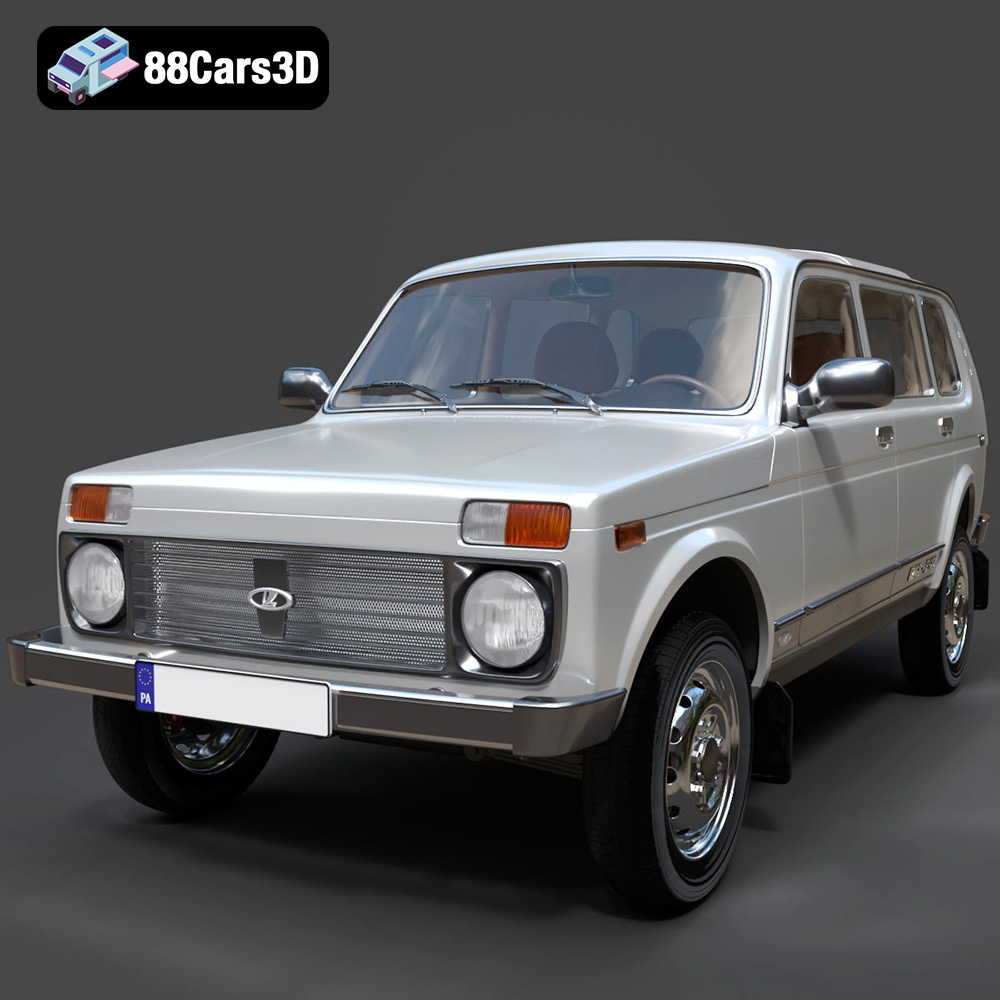
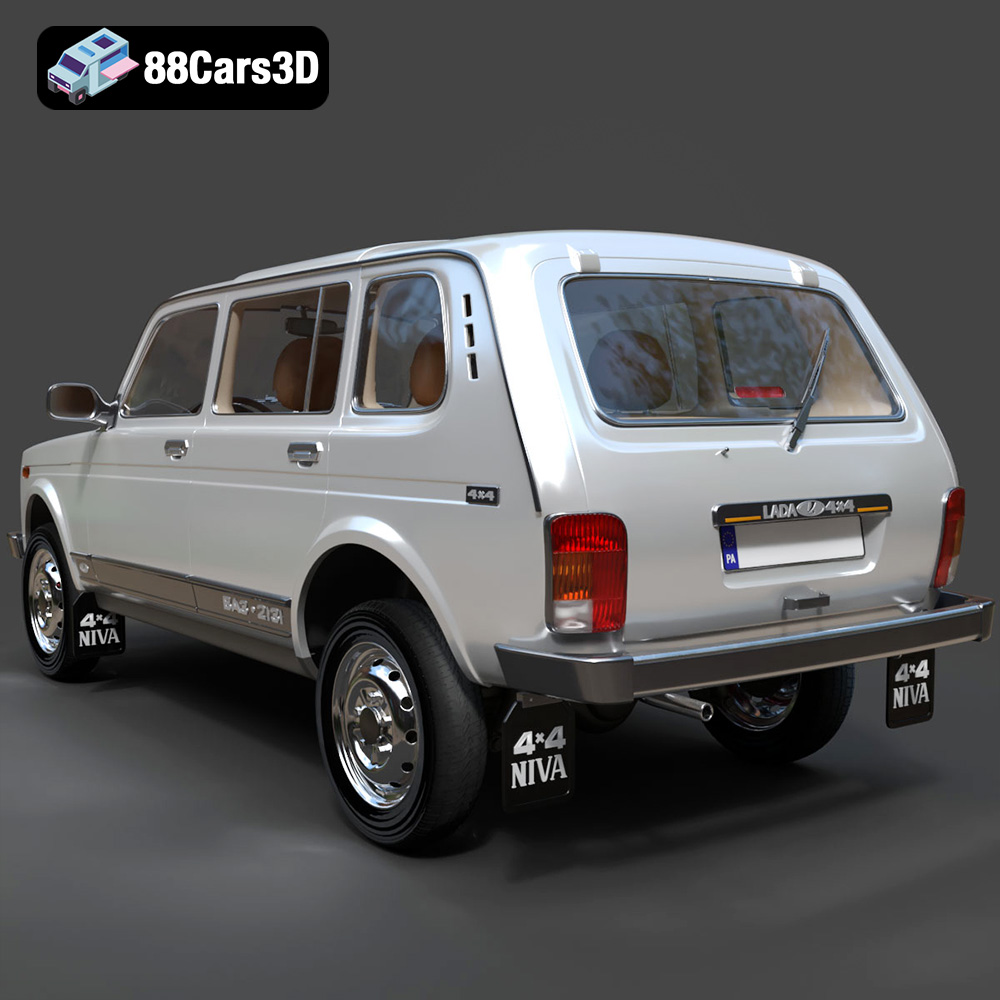
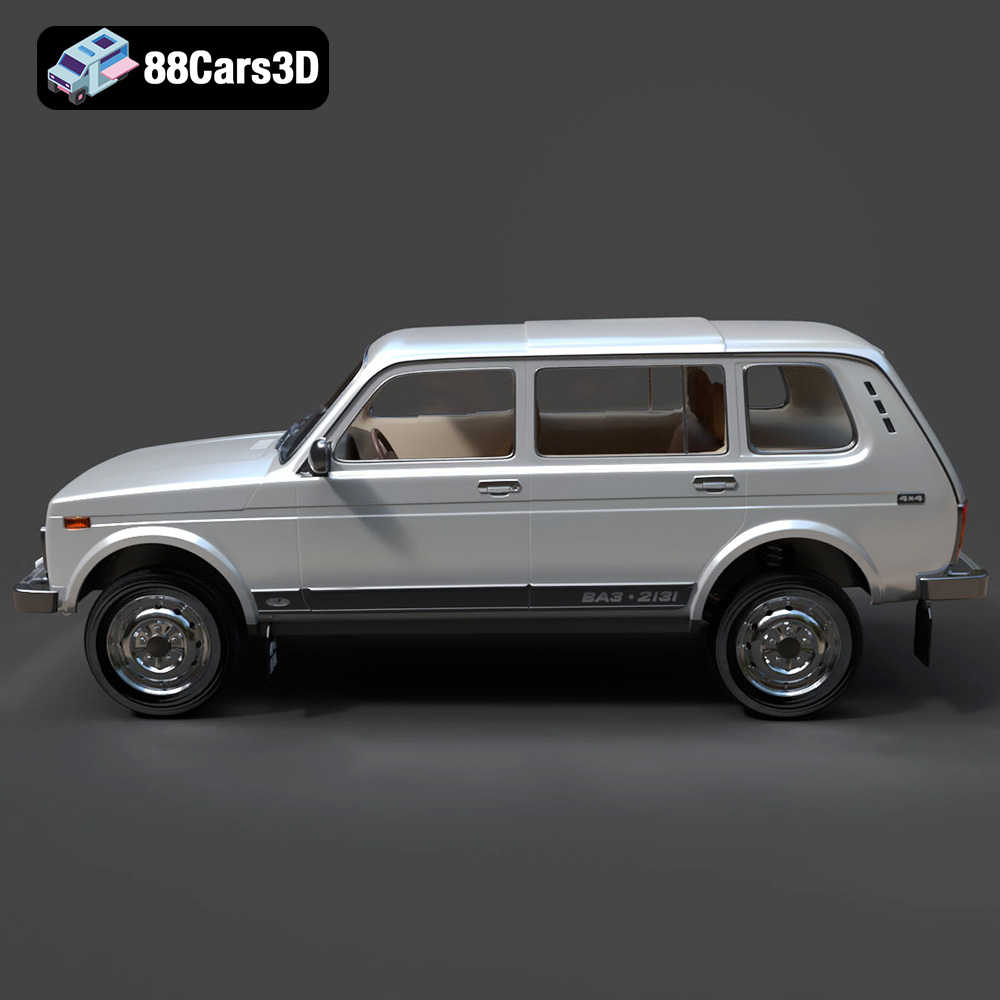
Today, we’re delving into the technical intricacies of acquiring and utilizing premium 3D car models, using a fantastic example that bridges both heritage and utility: the VAZ Lada Niva 4×4 2131 2012 3D Model. This iconic, elongated five-door variant of the legendary Russian off-roader embodies rugged simplicity and a rich history of conquering challenging terrains. Its classic boxy silhouette, distinct round headlights, and utilitarian charm make it a compelling subject for any 3D scene. This particular model, available on 88cars3d.com, is not just a visual representation; it’s a meticulously engineered asset designed for seamless integration into diverse professional pipelines, from game development to architectural visualization and even 3D printing.
High-quality 3D car models are more than just pretty pictures; they are the fundamental building blocks for creating immersive digital experiences. For game developers, optimized geometry and proper pivot setups are crucial for performance and animation. For automotive rendering artists, accurate proportions and detailed materials are essential for photorealism. And for AR/VR creators, efficient file formats and real-world scale are key to delivering seamless interactive experiences. The VAZ Lada Niva 4×4 2131 2012 3D Model exemplifies these characteristics, offering a detailed engine block, authentic interior features, and separated components ready for intricate animation, making it an invaluable asset for serious projects.
The choice of a 3D model file format is not trivial; it’s a foundational decision that impacts compatibility, feature retention, and overall workflow efficiency. Understanding the strengths and weaknesses of each format is critical for any professional working with 3D car models. The VAZ Lada Niva 4×4 2131 2012 3D Model package from 88cars3d.com thoughtfully includes a comprehensive array of formats, ensuring maximum flexibility for artists and developers.
The .blend format is Blender’s native file type, offering a complete and editable scene. When you download the Lada Niva model in .blend format, you gain access to all aspects of its creation within Blender: the mesh data, materials (often set up with Cycles or Eevee nodes), textures, lighting, camera setups, and even any pre-existing animations or modifiers. This is ideal for Blender users who want to fully customize the model, make topological adjustments, or leverage Blender’s powerful rendering and animation toolsets without any conversion artifacts or data loss. For intricate automotive rendering or detailed scene composition within Blender, .blend is the go-to format.
.fbx (Filmbox) is arguably the most widely used 3D interchange format in the industry, especially prevalent in game development and film production. It supports geometry, materials, textures, animations, skinning, and even camera data. Its strength lies in its robust compatibility with major 3D software like 3ds Max, Maya, Blender, and crucially, game engines such as Unreal Engine and Unity. When importing the VAZ Lada Niva as an .fbx, you can expect its separated components (wheels, suspension, steering) and pivot points to transfer accurately, making it game-ready for real-time pipelines and a staple for professional asset management.
The .obj (Wavefront OBJ) format is a universal standard for storing 3D geometry. While it supports basic material assignments through an accompanying .mtl file, it generally doesn’t carry complex material shaders, animations, or rigging information. However, its simplicity and widespread support make it an excellent choice for cross-software compatibility. If you need a clean mesh of the Lada Niva that can be imported into virtually any 3D application for modeling, sculpting, or re-texturing from scratch, .obj is an indispensable format. It’s often used as a base mesh for further detailing.
.glb (GL Transmission Format Binary) is a relatively newer format optimized for efficient transmission and loading of 3D scenes and models in web and AR/VR applications. It’s a binary container format that includes geometry, materials, textures, and animations in a single file, making it incredibly streamlined for quick deployment. For showcasing the Lada Niva in a web-based configurator, an AR app on a mobile device, or a lightweight VR experience, the .glb variant ensures fast loading times and broad platform support with minimal overhead.
The .stl (Stereolithography) format represents a 3D model as a series of connected triangles, defining only the surface geometry without color or texture information. It is the de facto standard for 3D printing. When preparing the VAZ Lada Niva for physical fabrication, the .stl file is essential. It provides the precise mesh data that 3D printers use to build the object layer by layer. For hobbyists or professionals looking to create a tangible scale model of this rugged vehicle, the .stl version is the starting point.
.ply (Polygon File Format) is a file format for storing 3D data, particularly from 3D scanners. It can store a variety of properties beyond just geometry, including color, transparency, surface normals, and even confidence values. While less common for general asset exchange than .fbx or .obj, it’s valuable in applications requiring high-precision mesh data, such as CAD, reverse engineering, or scientific visualization. For certain engineering or analysis workflows involving the Lada Niva’s chassis, .ply might offer a more comprehensive data set.
The inclusion of an .unreal file (often referring to a .uasset file or project setup for Unreal Engine) is a significant advantage for developers. This format implies that the VAZ Lada Niva 3D model has been pre-processed, potentially with proper material setups, collision meshes, LODs (Levels of Detail), and even physics assets, specifically for Unreal Engine. This saves immense development time, as the asset can be directly imported into an Unreal project with minimal adjustments, ready for real-time environments, games, or high-end architectural visualizations.
Finally, the .max format is Autodesk 3ds Max’s native scene file. Like .blend for Blender, a .max file provides a complete, editable project, retaining all the original scene data: geometry, materials (often V-Ray or Corona setups for automotive rendering), lighting, cameras, modifiers, and animation rigs. For professionals who rely on 3ds Max for their automotive rendering and animation workflows, the .max file of the Lada Niva offers the highest level of control and fidelity, allowing for complex scene setups, advanced material adjustments, and high-resolution output.
A truly exceptional 3D asset goes beyond mere aesthetics; it’s built on a foundation of sound technical execution. The VAZ Lada Niva 4×4 2131 2012 3D Model stands out due to its thoughtful construction, designed for both visual fidelity and optimal performance across various applications.
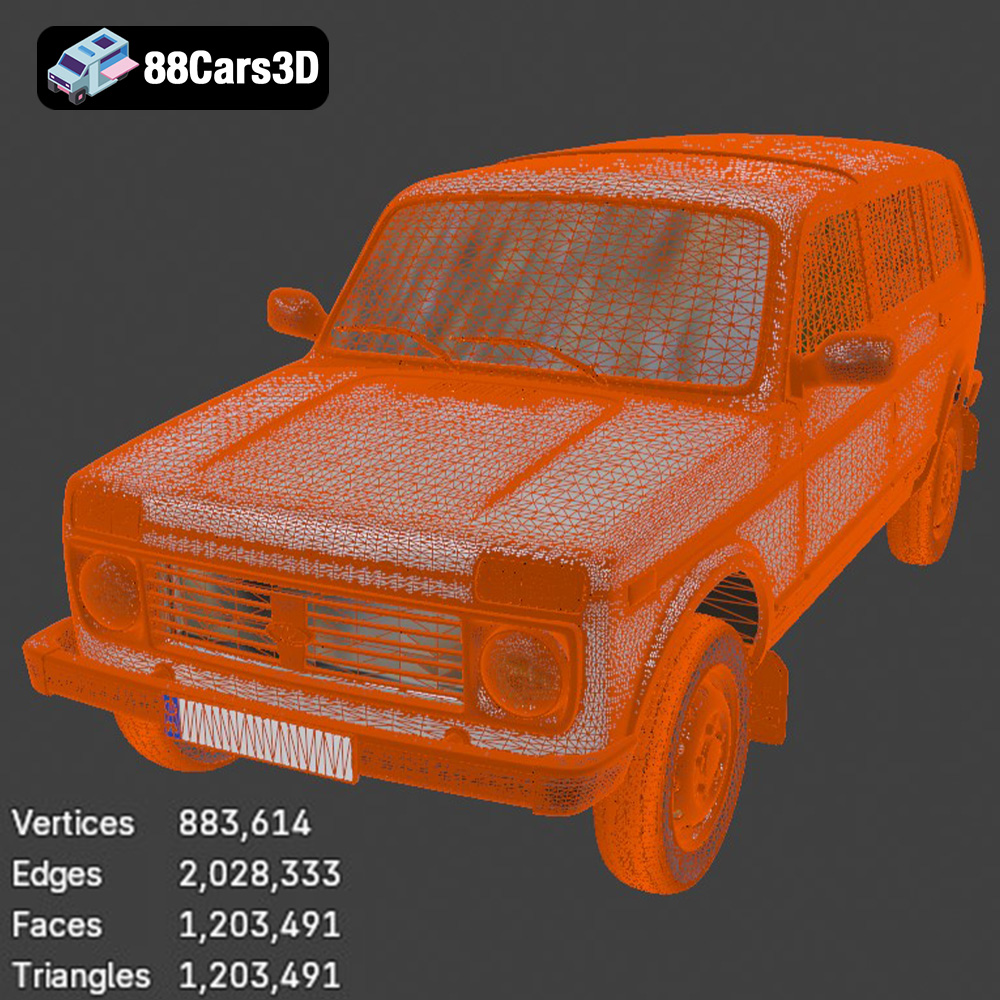
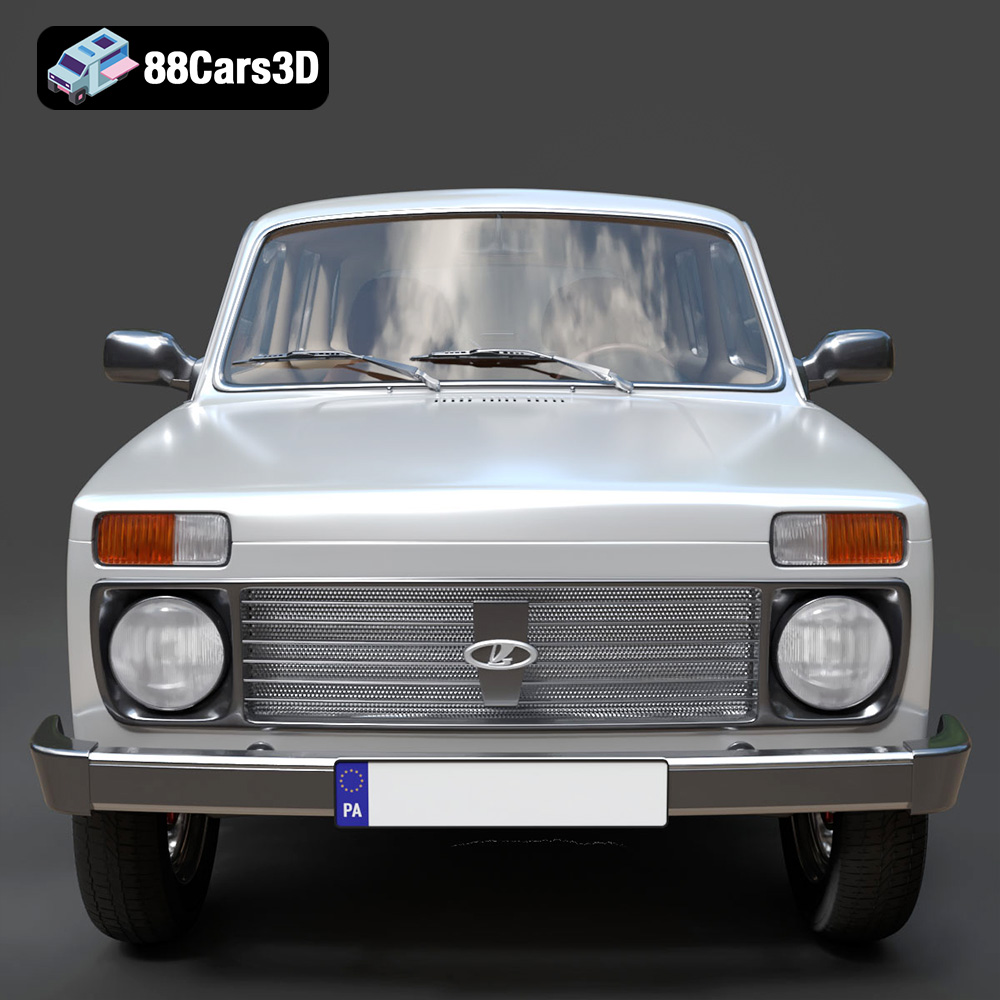
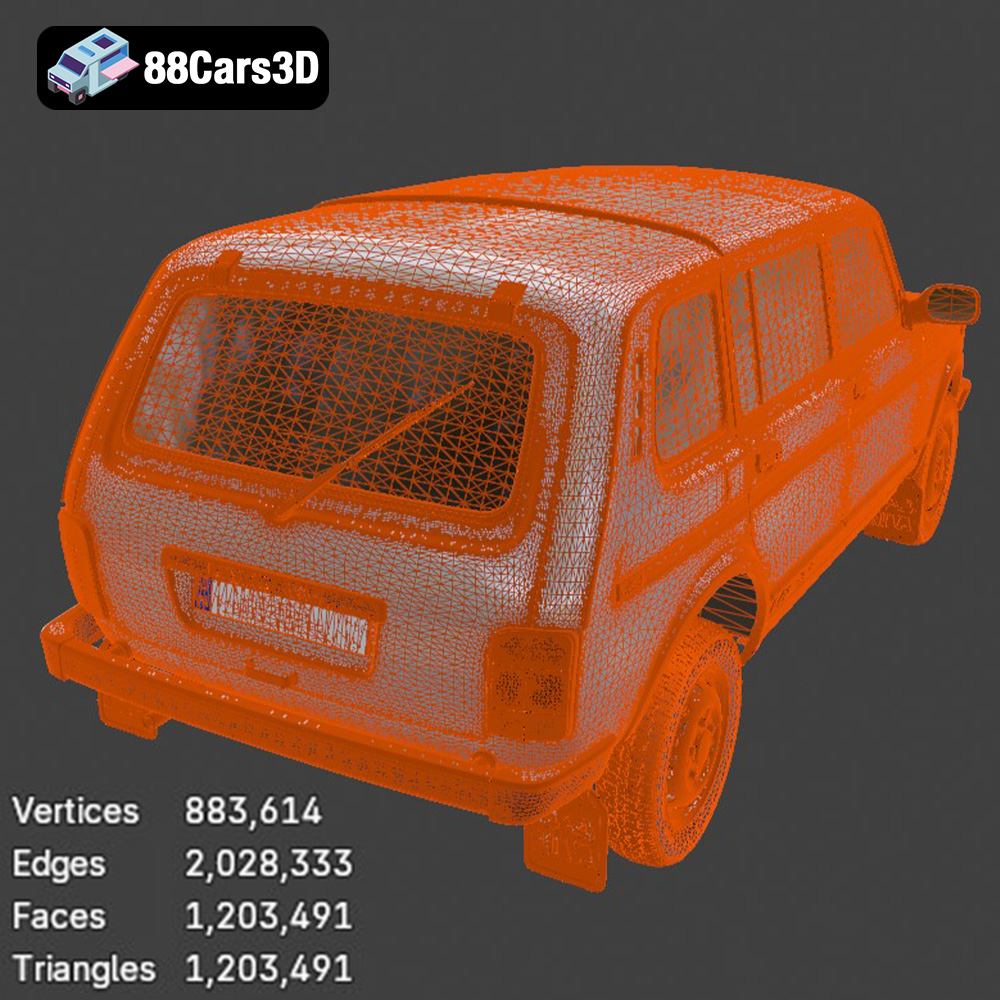
The core of any 3D model is its geometry and topology. This Lada Niva model boasts excellent topology with an optimized triangle count, a crucial balance for modern 3D pipelines. An optimized polycount means the model is efficient enough for real-time rendering in game engines like Unreal and Unity, preventing frame rate drops and ensuring smooth performance. Yet, it maintains enough detail to capture the iconic features of the 2131 variant, from its classic boxy silhouette to the distinct round headlights and prominent front grille, for high-end automotive rendering. Furthermore, it’s built to real-world scale accuracy, a fundamental requirement for photorealistic rendering, architectural visualization, and physically accurate simulations.
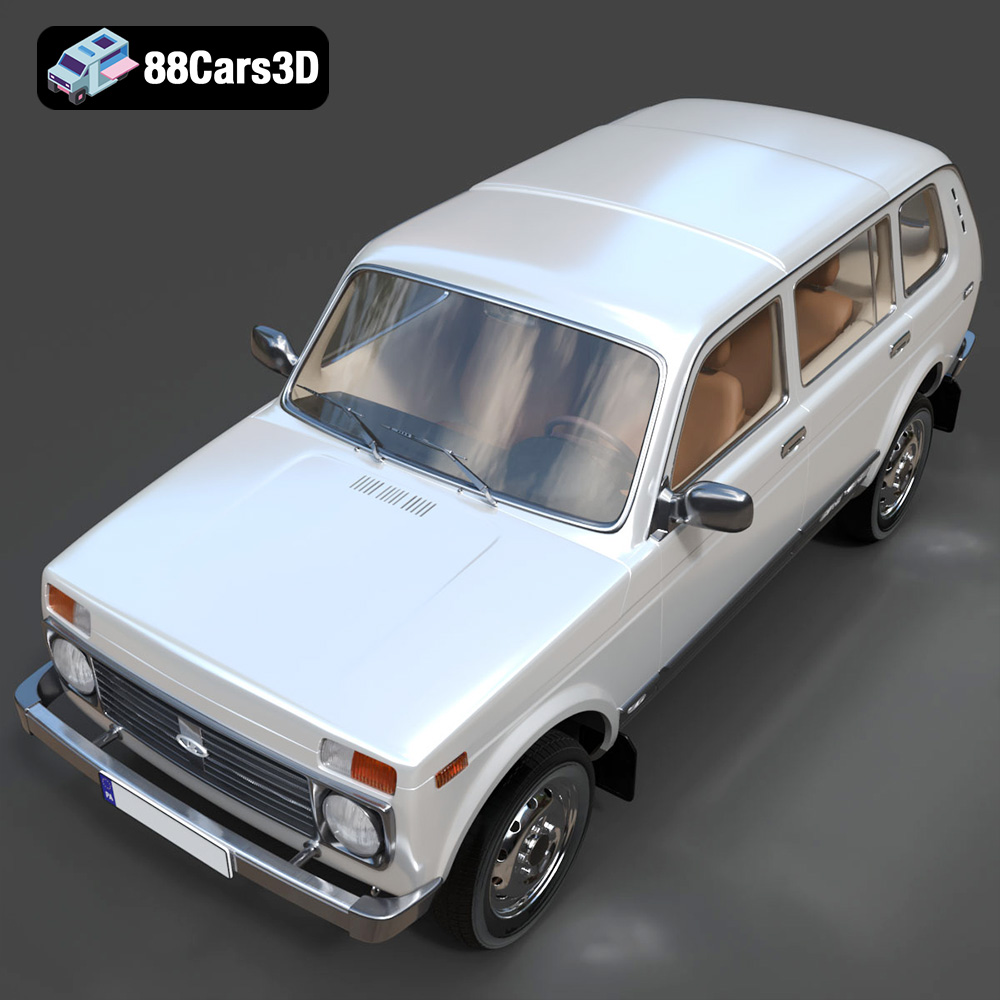
Authenticity is key when replicating a real-world vehicle. This 3D model meticulously captures the essence of the Lada Niva 2131. On the exterior, you’ll find an accurate VAZ Lada Niva 4×4 2131 frame geometry and proportions, complemented by a detailed engine block (1.7L inline-4 engine) and an authentic rear exhaust pipe and muffler configuration. The utilitarian steel wheels with rugged off-road tire treads and the accurate rigid rear axle and independent front suspension detailing further enhance its realism. Inside, the model offers an equally impressive level of detail: authentic cloth and vinyl textured seating for five, the classic two-spoke Lada steering wheel, an utilitarian analog instrument cluster, and detailed transmission and transfer case shift levers. The interior geometry is specifically optimized for first-person POV in gaming, allowing for truly immersive cockpit experiences.
One of the most valuable technical advantages of this model is its readiness for animation. It features separate wheels, suspension, and steering components, each with proper pivot setups. This meticulous preparation means artists and developers can easily animate wheel rotation, steering actions, and realistic suspension travel without tedious re-rigging or re-modeling. This capability is indispensable for creating dynamic game assets, realistic driving simulations, or compelling automotive animations for commercials and presentations. The ability to articulate these parts seamlessly saves countless hours in a professional workflow, making the VAZ Lada Niva 4×4 2131 an incredibly versatile asset.
The true measure of a versatile 3D asset lies in its seamless integration into diverse professional pipelines. The VAZ Lada Niva 4×4 2131 2012 3D Model is engineered with this versatility in mind, making it suitable for a wide range of applications, from cutting-edge game development to high-end cinematic rendering.
For game developers, performance and visual quality must go hand-in-hand. This Lada Niva model is specifically marketed as Game-Ready & Optimized. Its optimized triangle count ensures that it can be dropped into demanding real-time environments without excessive performance overhead. With the inclusion of .fbx and .unreal formats, integrating this vehicle into Unreal Engine or Unity is a streamlined process. Developers can leverage the pre-set pivots for wheels, steering, and suspension to quickly implement realistic vehicle physics and animations. Imagine this rugged Lada Niva as a drivable asset in an open-world post-apocalyptic game, navigating challenging terrains, or as a key vehicle in a survival simulator. The accurate real-world scale and detailed interior, optimized for first-person POV, make it ideal for immersive driving experiences, adding depth and authenticity to any virtual world.
Beyond gaming, the VAZ Lada Niva 3D model excels in automotive rendering and architectural visualization. For artists using 3ds Max, Blender, or other leading rendering software, the .max, .blend, and .obj formats provide the foundation for stunning photorealistic imagery. When placed within an architectural scene – perhaps a winter landscape render next to a cabin, or an industrial backdrop – its presence adds character and a sense of realism. The ability to easily change body colors, modify tire textures, and adjust material finishes (matte, gloss, metallic) allows for extensive customization to match specific branding or artistic visions. Leveraging powerful renderers like V-Ray, Corona, Cycles, or Octane, artists can create high-resolution images and animations, showcasing the Lada Niva with stunning detail, reflective surfaces, and accurate lighting, perfect for brand campaigns or lifestyle scenes.
The burgeoning fields of Augmented Reality (AR) and Virtual Reality (VR) demand highly optimized assets for seamless interaction and performance. The inclusion of the .glb format makes the Lada Niva model perfect for immersive virtual showrooms, interactive configurators, and mobile AR experiences. Its optimized geometry ensures fast loading times on various devices, from high-end VR headsets to smartphones. Imagine placing a virtual Lada Niva in your driveway via AR, or exploring its detailed interior in a VR walkthrough. The real-world scale accuracy is particularly crucial here, as it grounds the virtual object convincingly within the user’s physical environment or virtual space, enhancing the sense of presence and realism.
The versatility of high-quality 3D car models extends beyond digital screens, venturing into the tangible world of physical fabrication. The VAZ Lada Niva 4×4 2131 2012 3D Model from 88cars3d.com is specifically designed to be convertible for 3D printing, opening up exciting possibilities for hobbyists, collectors, and prototyping.
The inclusion of the .stl format is key for 3D printing. This triangulated mesh format is universally accepted by 3D slicing software, which prepares the model for your printer. When translating a complex digital model like the Lada Niva into a physical object, attention to detail in the .stl export is crucial. The model is designed with sufficient geometric integrity to ensure that all its exterior features – from the classic boxy silhouette and prominent grille to the utilitarian steel wheels and rugged tire treads – are accurately represented when scaled down. This allows for the creation of display-scale models or prototypes that faithfully capture the iconic design of the Niva 2131.
Successful 3D printing requires adherence to specific guidelines, and this model provides excellent recommendations. It’s suggested for scales like 1:12, 1:18, or 1:24, which are popular for automotive models, offering a good balance between detail and manageable print size. For optimal fidelity, resin printing is recommended for fine details, especially for components like the exhaust pipe, mirrors, and subtle body lines. Critical settings such as layer height (0.04–0.12 mm), wall thickness (1.2–2.0 mm), and infill (20–30%) are provided to ensure structural integrity and detail preservation. Support structures will be required for overhangs and intricate parts, and careful print orientation (e.g., frame angled, wheels printed separately) can significantly improve results. Post-processing, including sanding, priming, and applying authentic factory colors with metallic finishes, transforms the raw print into a stunning, display-worthy replica, bringing the digital asset to life.
One of the enduring strengths of acquiring a professionally crafted 3D model like the VAZ Lada Niva 4×4 2131 2012 3D Model is the immense potential for customization. Artists and developers rarely use an asset exactly as-is; the ability to adapt it to specific project needs is invaluable, enhancing its overall utility and lifespan across multiple projects.
The Lada Niva model is built with flexibility in mind, allowing for extensive material and texture manipulation. Artists can easily change body/tank colors, experimenting with authentic factory colors, applying custom finishes, or even creating weathered, post-apocalyptic looks. This is achievable by adjusting the base color maps or shader properties within your chosen 3D software (Blender, 3ds Max, Unreal, etc.). Furthermore, the ability to modify tire textures opens doors to swapping between off-road variants for rugged scenes and street variants for more urban or clean presentations. Artists can also adjust material finishes – shifting between matte, gloss, or metallic looks – to fine-tune reflections and surface properties, ensuring the vehicle perfectly matches the desired aesthetic of any scene. This level of material control is vital for achieving photorealistic automotive rendering and integrating the model seamlessly into diverse lighting conditions.
Beyond the model itself, its successful integration into a scene hinges on thoughtful lighting and environment setup. The Lada Niva model, with its accurate proportions and optimized geometry, serves as an excellent base for various environmental contexts. Artists can adapt lighting for different environments – whether it’s a sun-drenched desert for an off-road adventure, a snow-covered mountain pass for a winter scene, or a grimy cityscape for a gritty narrative. By adjusting HDRI maps, directional lights, and area lights, the car’s surfaces will react realistically, showcasing its details and materials. The model’s compatibility with major 3D software platforms and real-time rendering engines ensures that these environmental adjustments can be made efficiently, allowing creators to rapidly prototype different looks and moods without compromising visual quality. This adaptability makes the VAZ Lada Niva 2131 3D model a truly versatile asset, capable of fitting into virtually any automotive visualization or game environment.
In the competitive landscape of 3D visualization and game development, the quality of your assets directly impacts the success and realism of your projects. The VAZ Lada Niva 4×4 2131 2012 3D Model serves as an exceptional example of a meticulously crafted asset, offering a potent combination of technical precision, optimized performance, and broad compatibility. From its game-ready topology and real-world scale to its detailed interior and animation-ready components, this model is designed to accelerate your creative workflows across game development, architectural visualization, AR/VR, and even 3D printing.
Understanding the nuances of various 3D file formats – from the editable power of .blend and .max to the universal compatibility of .fbx and .obj, and the specialized applications of .glb, .stl, .ply, and .unreal – empowers you to make informed decisions that optimize your pipeline. Investing in high-quality 3D car models like the VAZ Lada Niva from reputable sources ensures you start with a strong foundation, allowing you to focus on innovation and artistic expression rather than wrestling with sub-par assets.
For professionals seeking to enhance their automotive rendering, create compelling game assets, or build immersive interactive experiences, the VAZ Lada Niva 4×4 2131 2012 3D Model represents a smart investment. Explore this and many other premium 3D car models on 88cars3d.com, and take the first step towards elevating your next project to new heights of realism and engagement.
The VAZ Lada Niva 4×4 2131 (2012) is the iconic, elongated five-door version of the legendary Russian off-roader. Known for its rugged simplicity, unibody architecture, and full-time four-wheel-drive system, this legendary utilitarian vehicle boasts a rich heritage of conquering unforgiving terrains. Key visual elements include its classic boxy silhouette, distinct round headlights, prominent front grille, utilitarian steel wheels, and the extended wheelbase that defines the 2131 variant. This 3D model features excellent topology with an optimized triangle count, striking the perfect balance between high-end visual fidelity and game-ready performance. Carefully crafted with accurate real-world dimensions, it is heavily suited for integration into game engines (Unreal, Unity), architectural visualizations, and immersive AR/VR simulations. Perfect for off-road driving simulators, post-apocalyptic game environments, winter landscape renders, and automotive visualization scenes.
$19.99
.4×4
.blend
.fbx
.glb
.lada
.max
.niva
.obj
.ply
.rendering
.stl
.unreal
.vaz
2131
car-3d-model
classic-car
game asset
game-ready
low-poly
off-road
optimized
SUV
VR/AR