Get 20% OFF All Premium 3D & STL Models!

In the fast-evolving landscape of digital design and interactive experiences, the demand for exceptionally crafted 3D car models has never been higher. From breathtaking cinematic renders to immersive virtual reality simulations and high-octane gaming environments, the fidelity and performance of these digital assets are paramount. Professionals across automotive design, entertainment, and architectural visualization rely on precision-engineered models to bring their visions to life with unparalleled realism. This pursuit of digital perfection is exemplified by cutting-edge assets like the Kuna 08, a luxury crossover 3D model that encapsulates futuristic design with advanced technical specifications, making it an indispensable tool for a wide array of projects.
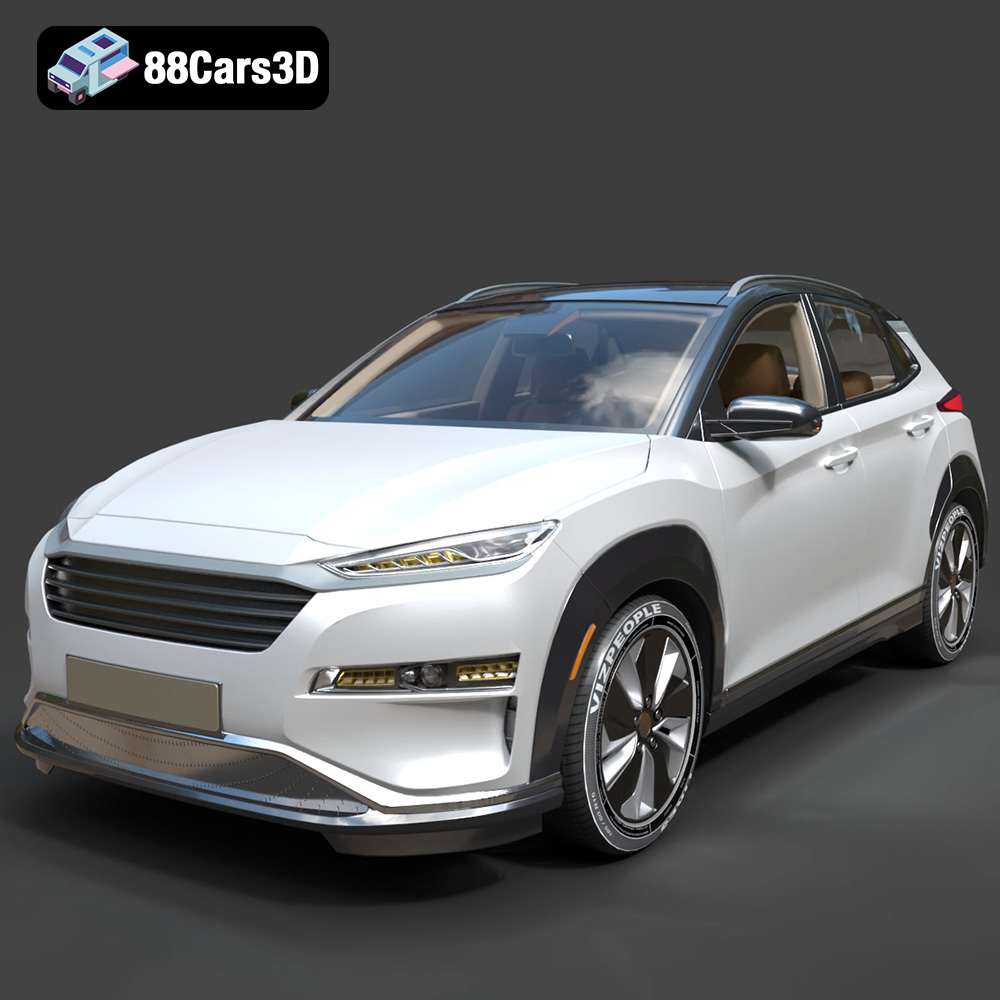
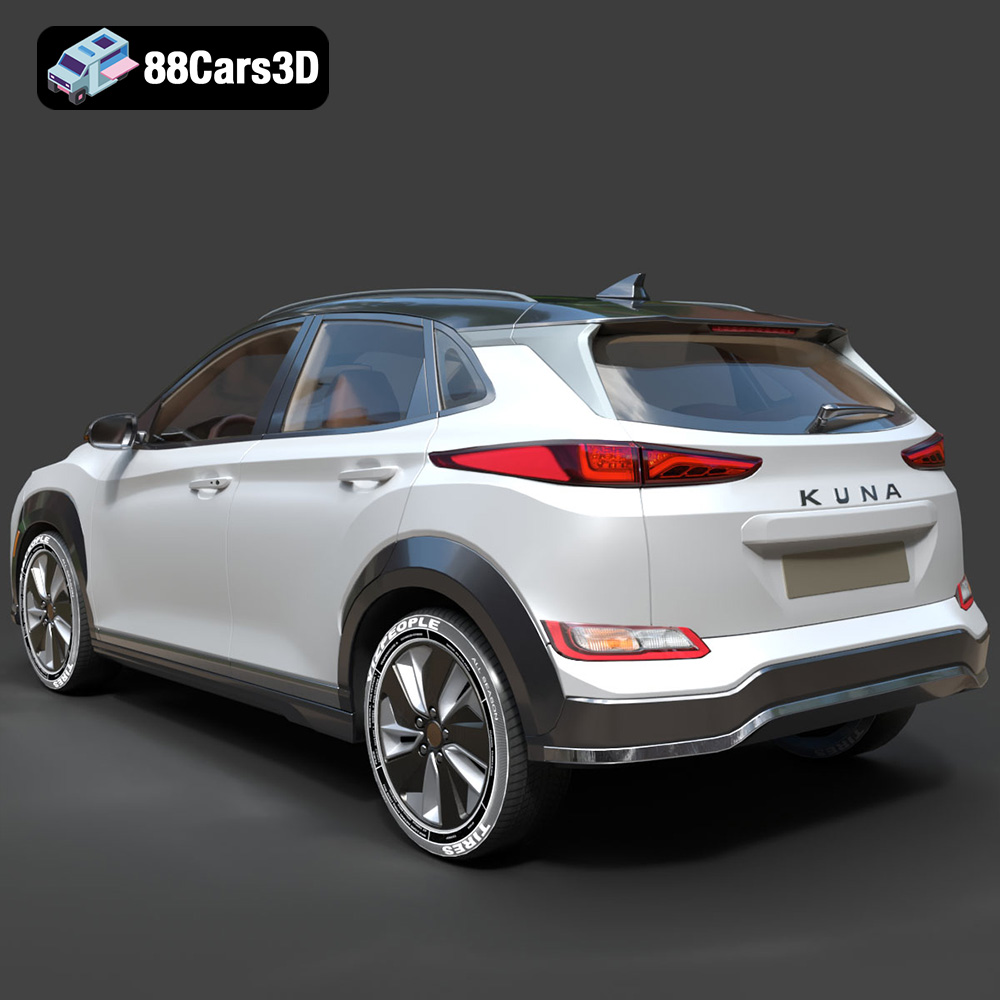
The Kuna 08, with its aggressive styling, dynamic body lines, and high-performance stance, represents the zenith of modern automotive design language translated into a digital format. Its meticulous detailing, from aerodynamic splitters and intricate ventilation systems to striking LED lighting signatures, ensures it stands out in any digital environment. Whether you’re a game developer pushing the boundaries of realism, an automotive designer showcasing a new concept, or an architect populating a sprawling city visualization, the foundation of your success lies in the quality of your core assets. A model like the Kuna 08 provides not just aesthetic appeal but also the underlying technical robustness required for seamless integration and optimal performance across various digital platforms.
The journey of a 3D car model, from concept to final render or in-game asset, involves a sophisticated interplay of artistic vision and technical mastery. It demands an understanding of topology, materials, rigging, and, crucially, file formats that dictate compatibility and functionality across diverse software ecosystems. As we delve deeper into the intricacies of creating and utilizing premium 3D models, we will explore the essential technical considerations that elevate a good model to an exceptional one, offering insights into workflows and applications where assets like the Kuna 08 truly shine.
The world of 3D modeling is vast, and navigating its complexities often begins with understanding the various file formats that dictate how your models are stored, shared, and utilized across different software and platforms. Each format serves a specific purpose, offering unique advantages in terms of compatibility, data preservation, and optimization for particular applications. For a versatile asset like the Kuna 08, the availability in multiple formats underscores its adaptability and value in diverse professional workflows. Let’s explore the most common and crucial file types you’ll encounter.
.blend – Fully Editable Blender Scene with Materials
The .blend file format is native to Blender, the popular open-source 3D creation suite. It’s a comprehensive package that saves not just the 3D geometry but also materials, textures, lighting setups, animation data, scene hierarchy, and even the user interface layout. For artists working primarily in Blender, this format offers maximum editability and retains all the project’s intricate details, making it ideal for deep customization or continuing a project directly within its native environment. When you download a .blend file, you’re getting the full, uncompressed creative context, ready for further refinement.
.fbx – Ideal for Unreal, Unity, and Real-time Pipelines
Developed by Autodesk, the .fbx (Filmbox) format is an industry standard for interoperability between 3D software applications and real-time game engines. It excels at transferring geometry, materials, animations, and skeletal data with high fidelity. For game developers using Unreal Engine or Unity, .fbx is often the go-to format for importing complex assets like the Kuna 08, as it maintains rigging information and ensures smooth animation transitions. Its robust data handling makes it a cornerstone of efficient game development pipelines, facilitating the movement of assets from modeling software to the final interactive experience.
.obj – Universal Format for Cross-Software Compatibility
The .obj (Wavefront OBJ) format is one of the oldest and most widely supported 3D file formats. It’s renowned for its universality, capable of storing geometric data (vertices, normals, texture coordinates) and material references. While it doesn’t typically store animation or rigging data, its widespread compatibility makes it an excellent choice for basic mesh transfer between different 3D applications, ensuring that the core geometry of models like the Kuna 08 can be accessed by virtually any 3D software. It’s often used as a fallback or for models where only the static mesh is required.
.glb – Optimized for AR, VR, and Browser-based Display
GL Transmission Format Binary (.glb) is a compact, single-file representation of the GLTF (Graphics Library Transmission Format) specification. Designed for efficient transmission and loading of 3D scenes and models, .glb packages all necessary assets – geometry, materials, textures, animations – into a single binary file. This makes it incredibly efficient for web-based 3D viewers, augmented reality (AR), virtual reality (VR), and mobile applications where file size and quick loading times are crucial. The Kuna 08 in .glb format is perfect for embedding interactive models directly into websites or deploying them to AR/VR experiences without complex data dependencies.
.stl – Suitable for 3D Printing Output
The .stl (stereolithography) format is the standard for 3D printing. It represents a 3D model as a series of connected triangles, describing only the surface geometry without color, texture, or other properties. While simple, this triangular mesh is precisely what 3D printers need to interpret and build a physical object layer by layer. For hobbyists or professionals looking to bring the Kuna 08 to the physical world, the .stl version provides the essential data for successful fabrication, allowing for tangible display models or prototypes.
.ply – Precision Mesh Format for CAD or Analysis
The .ply (Polygon File Format, or Stanford Triangle Format) is a versatile format for storing 3D data, particularly scan data and point clouds. It can store a wide range of properties for each vertex, face, or edge, including color, transparency, normals, and texture coordinates. While less common for everyday artistic workflows, .ply is often used in scientific applications, CAD, and situations requiring highly precise mesh representation or detailed analysis, offering a robust alternative for geometry preservation beyond simple meshes.
.unreal – Engine-Ready Asset for Real-time Environments
While not a standard open format like .fbx or .obj, the .unreal designation typically refers to assets specifically packaged or optimized for direct import and use within Unreal Engine. This often implies proper scaling, collision geometry, level of detail (LOD) setups, and material configurations already tailored for the engine’s renderer. For developers, an “unreal” specific file streamlines the import process, minimizing setup time and ensuring optimal performance within the engine’s environment. The Kuna 08’s availability in this form drastically accelerates game development pipelines.
.max – Editable 3ds Max Project for Animation and Rendering
Similar to .blend for Blender, the .max file format is native to Autodesk 3ds Max, a powerful 3D modeling, animation, and rendering software widely used in architectural visualization, film, and game development. A .max file contains the complete scene, including geometry, materials, textures, lighting, cameras, animations, and modifiers, offering full editability within 3ds Max. For users whose primary workflow is centered around 3ds Max, this format provides the most comprehensive and flexible starting point for further design, animation, or high-fidelity rendering projects.
Understanding these formats is crucial for efficient workflow management and ensuring your 3D car models, like the Kuna 08, are deployed effectively across all your projects.
Creating a truly exceptional 3D car model is a delicate balance between artistic interpretation and rigorous technical engineering. It’s about more than just replicating a physical form; it’s about capturing the essence, the spirit, and the underlying design philosophy. The Kuna 08 luxury crossover embodies this fusion, standing as a testament to what’s achievable when design meets optimized 3D modeling.
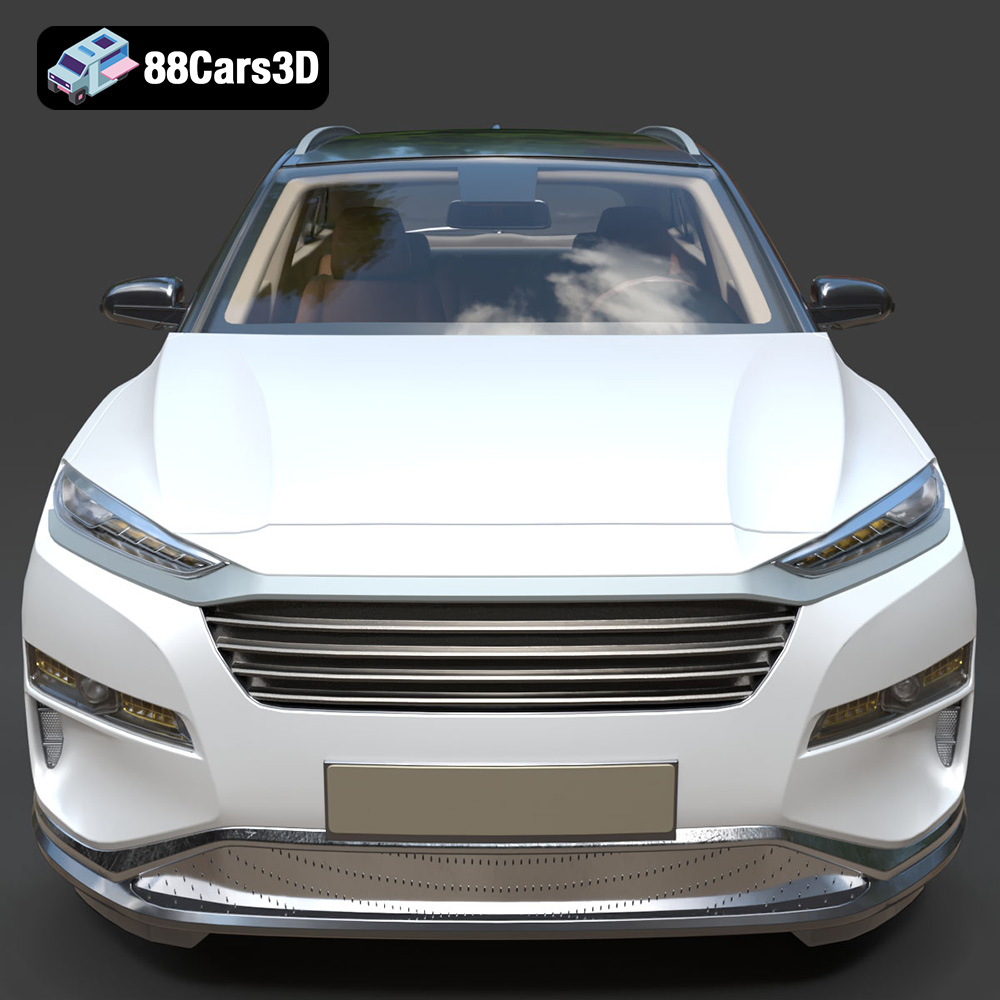
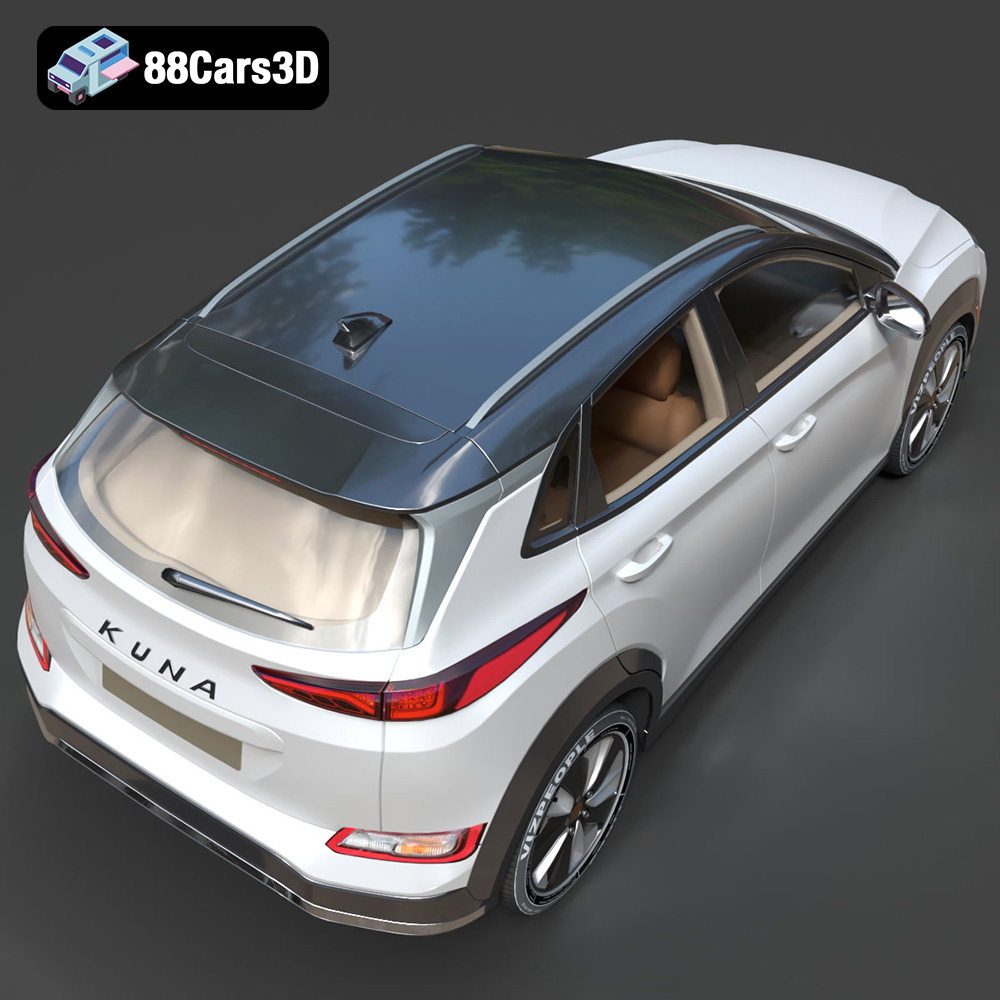
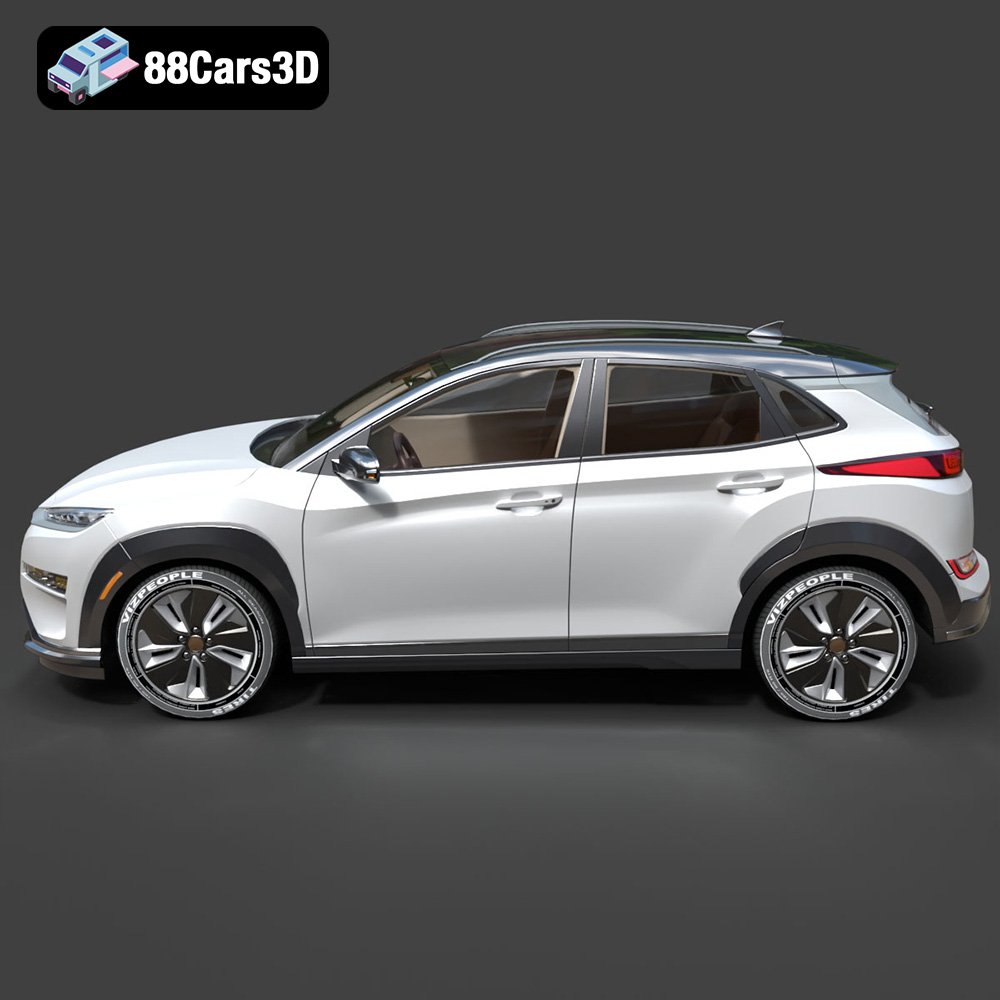
The exterior of a vehicle is its signature, a visual story told through curves, angles, and aerodynamic forms. For the Kuna 08, this narrative is one of futuristic aggression and sleek sophistication. The model meticulously translates its low-slung profile and dynamic body lines into a digital canvas, showcasing an attention to detail that is critical for automotive rendering and visualization. Every element, from the distinct aerodynamic splitters that hug the road to the intricate ventilation systems designed for performance, is accurately represented. The advanced LED-style lighting signatures, both for headlights and taillights, are not just aesthetic but also designed to interact realistically with light, casting appropriate glows and reflections in any scene. Furthermore, the custom-designed alloy wheels paired with low-profile performance tires, along with intricate suspension details visible through the wheel arches, contribute to a holistic and believable representation. This level of accuracy is vital for designers seeking to integrate the model into real-world advertising campaigns or concept presentations.
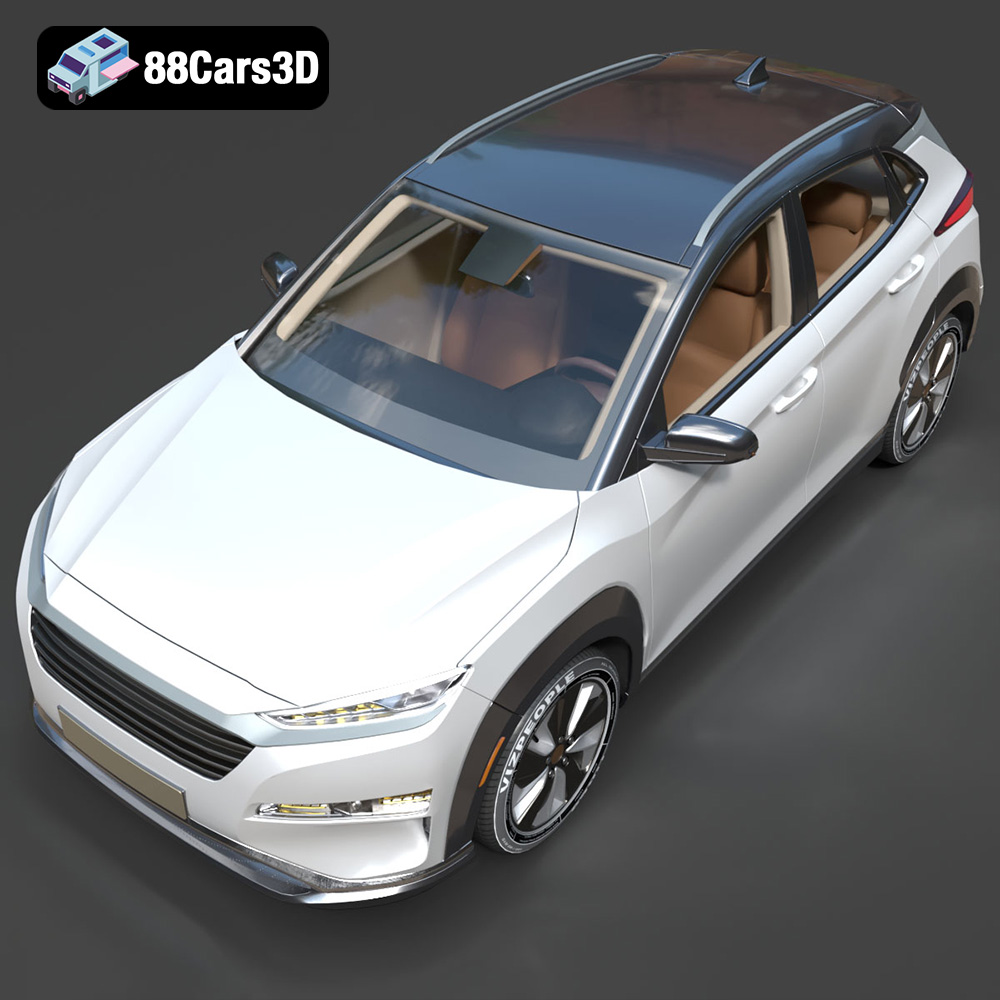
While the exterior grabs immediate attention, a truly immersive 3D car model also demands an equally detailed interior. The Kuna 08’s cockpit is a masterclass in digital craftsmanship, designed to offer an authentic experience, especially important for game development and virtual reality applications where first-person perspective is key. Ergonomic sport bucket seats are rendered with high-detail stitching elements, providing a sense of luxury and comfort. The modern racing-style steering wheel and column are not just visually accurate but often include separate components for animation, enabling realistic turns and driver interactions. A digital dashboard and a highly detailed instrument cluster provide critical visual cues, enhancing the sense of being inside a high-tech vehicle. The detailed center console with integrated control interfaces, pedals, and shifter further immerses the user, solidifying the model’s value for open-world games and simulators. These interior elements are optimized to balance visual fidelity with performance, ensuring that even with high detail, the model remains game-ready.
In the realm of interactive media, visual quality must always be balanced with performance. A stunning 3D car model is only truly effective if it runs smoothly within its intended environment. This is where optimization comes into play, transforming a beautiful render asset into a game-ready powerhouse.
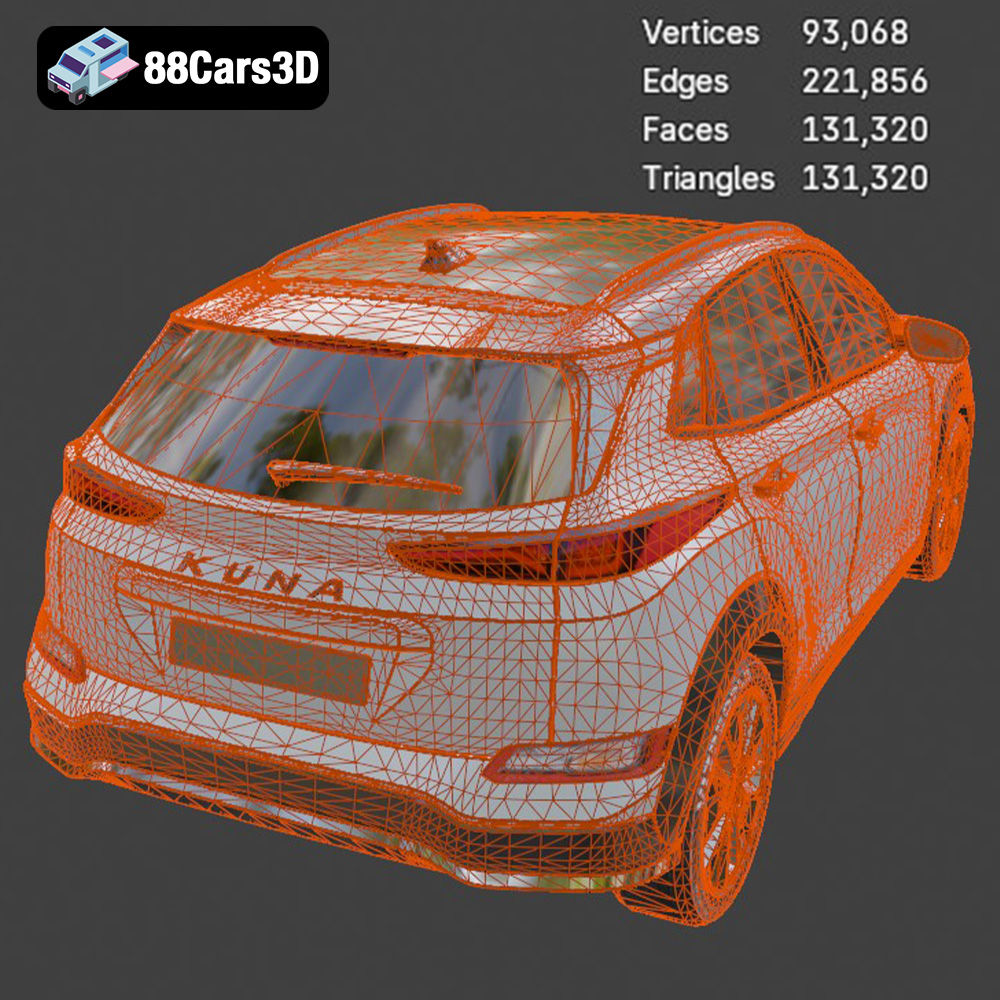
The Kuna 08 is engineered with a pristine topology of approximately 150,000 triangles. This specific poly count is not arbitrary; it represents a carefully considered sweet spot for modern game engines like Unreal Engine and Unity, as well as high-resolution rendering and AR/VR experiences. Too few triangles, and the model loses critical detail, appearing blocky or unrealistic. Too many, and it can cripple frame rates, leading to a choppy and unenjoyable experience. A 150k triangle count allows for high-end visual fidelity – capturing all the nuances of the Kuna 08’s aggressive design and intricate features – while remaining optimized for real-time rendering performance. This means seamless integration into projects without compromising on visual quality or bogging down the engine, making the Kuna 08 an ideal asset for game developers looking for quality 3D car models.
Beyond static beauty, a truly versatile 3D car model must be prepared for dynamic action. The Kuna 08 excels in this regard, featuring proper pivot setups for steering, wheel rotation, and suspension travel. This technical detail is crucial for animators and game developers, as it simplifies the process of bringing the vehicle to life. Instead of manually adjusting pivot points or performing complex rigging, the model comes pre-configured, allowing for immediate animation of realistic driving mechanics. Whether you’re animating a cinematic sequence in 3ds Max or Blender, or implementing vehicle physics in Unreal, this “animation-ready” state significantly streamlines the workflow. Furthermore, the model’s compatibility with major 3D software platforms and real-time rendering engines ensures that it can be dropped into virtually any professional pipeline, providing a flexible and robust solution for diverse projects.
High-quality 3D car models are the backbone of numerous professional industries. Their utility extends far beyond mere aesthetics, serving as critical components in everything from marketing campaigns to immersive simulations.
For automotive studios, advertising agencies, and visualization artists, the ability to produce photorealistic renders is non-negotiable. The Kuna 08, available at 88cars3d.com, is an exceptional asset for this purpose. Its detailed geometry and optimized materials make it perfect for studio lighting setups and complex scene compositions. Artists can easily integrate the model into rendering software like V-Ray, Corona Renderer, Blender Cycles, or Autodesk Arnold. Imagine showcasing the Kuna 08 against a dramatic cityscape or within a high-tech showroom, experimenting with various lighting schemes – from crisp, reflective studio lights to soft, ambient twilight. The model’s customization options are a renderer’s dream: artists can effortlessly change body colors to sleek matte finishes or gloss metallics, modify tire textures for track slicks or street treads, and adjust material finishes to incorporate carbon fiber accents or unique paint effects. This flexibility allows for endless creative possibilities, enabling the production of compelling visuals for brand campaigns and lifestyle scenes.
The game development industry constantly seeks assets that deliver both visual impact and technical efficiency. The Kuna 08 is specifically designed to meet these rigorous demands. Its optimized polycount and game-ready status make it ideal for open-world games, racing titles, and vehicle simulators. Developers can leverage its .fbx or .unreal formats for seamless integration into Unreal Engine or Unity, immediately benefiting from its accurate real-world scale and animation-ready pivot points. This significantly reduces development time and resources. Furthermore, in the burgeoning fields of Augmented Reality (AR) and Virtual Reality (VR), immersive experiences require assets that are both detailed and performant. The Kuna 08 is perfect for virtual showrooms, interactive configurators, and mobile AR applications, where users can explore the vehicle in a highly realistic and interactive manner. Platforms like 88cars3d.com provide developers with access to these meticulously crafted 3D car models, ensuring their projects stand out in an increasingly competitive digital landscape.
While 3D car models primarily exist in the digital realm, their applications are not confined to screens. The advent of accessible 3D printing technology has opened up exciting avenues for physical prototyping, display models, and even functional components. The Kuna 08, with its robust design, is perfectly convertible for fabrication, offering a tangible connection to its digital counterpart.
The transition from a digital 3D model to a physical object is made possible through formats like .stl. The Kuna 08 provides this crucial file type, allowing hobbyists and professionals alike to create physical replicas. For successful 3D printing, careful consideration of scale is essential. Recommended scales for the Kuna 08 include 1:12, 1:18, and 1:24, which are common for display models and offer a good balance between detail preservation and manageable print times. Layer height is another critical factor, with 0.04–0.12 mm being ideal for resin printing, which is often recommended for models with fine details like the Kuna 08. Resin printing excels at capturing the intricate aerodynamic splitters, ventilation systems, and interior cockpit elements that define the model’s high fidelity.
Achieving a high-quality 3D print of a complex car model like the Kuna 08 requires attention to several technical details. Wall thickness, typically recommended between 1.2–2.0 mm, ensures structural integrity for the printed parts. An infill of 20–30% provides a good balance of strength without excessive material usage. Supports are almost always required for detailed parts and overhangs, especially for elements such as side mirrors, the aggressive splitters, and intricate steering components. Strategic print orientation is also key; the main frame might be printed at an angle to enhance structural integrity, while wheels are often printed separately to optimize detail and minimize support requirements. After printing, post-processing is crucial for a display-quality finish. This includes careful sanding to smooth out layer lines, priming to prepare the surface, and then applying authentic factory colors with metallic finishes to truly bring the Kuna 08 to life as a stunning physical display piece. This comprehensive approach ensures that the digital excellence of the Kuna 08 translates flawlessly into a tangible model.
The landscape of 3D modeling for automotive design, game development, and visualization is driven by innovation and an unwavering commitment to quality. As demonstrated by the Luxury Crossovers Kuna 08 3D Model, exceptional assets are not merely visually appealing; they are technically robust, optimized for performance, and versatile across a multitude of applications. From its meticulously crafted exterior and interior details to its game-ready topology and extensive file format compatibility, the Kuna 08 embodies the pinnacle of modern 3D car models.
Whether you are crafting cinematic renders in 3ds Max, building an immersive racing experience in Unreal Engine, populating an architectural visualization with a futuristic vehicle, or even creating a physical display model through 3D printing, the right asset can significantly elevate your project. The availability of models like the Kuna 08 in formats ranging from .blend and .fbx to .stl and .unreal ensures that professionals have the flexibility and technical foundation needed to push creative boundaries.
Investing in high-quality 3D car models saves invaluable time and resources, allowing artists and developers to focus on creativity rather than foundational asset creation. For those seeking premium 3D assets that blend stunning aesthetics with technical precision, exploring the extensive collection at 88cars3d.com is a definitive step towards realizing your most ambitious digital visions.
Experience the futuristic design and sleek aerodynamics of the Kuna 08. This cutting-edge vehicle combines aggressive styling with advanced engineering aesthetics, featuring a low-slung profile, dynamic body lines, and a high-performance stance. The model meticulously captures the essence of modern automotive design, including its distinct aerodynamic splitters, intricate ventilation systems, and striking light signatures that make it a standout asset for any digital environment. Designed with a pristine topology of approximately 150,000 triangles, this game-ready 3D model offers the perfect balance between high-end visual fidelity and real-time rendering performance. The geometry is fully optimized for modern game engines, VR experiences, and high-resolution rendering, ensuring seamless integration into your project without compromising on frame rates or detail. Perfect for sci-fi racing games, modern city visualizations, automotive design showcases, and virtual reality experiences.
$19.99
.blend
.fbx
.glb
.max
.obj
.ply
.rendering
.sports car
.stl
.unreal
car-3d-model
concept-car
game asset
game-ready
low-poly
Luxury Crossovers Kuna
optimized
VR/AR