Get 20% OFF All Premium 3D & STL Models!

In the rapidly evolving world of digital visualization and interactive experiences, the demand for exceptionally detailed and technically sound 3D car models has never been higher. From breathtaking cinematic renders that capture the essence of automotive design to immersive real-time environments where performance is paramount, a quality 3D asset forms the bedrock of success. Professionals across industries — including game development, architectural visualization, virtual reality, and product design — rely on precise, optimized models to bring their visions to life.
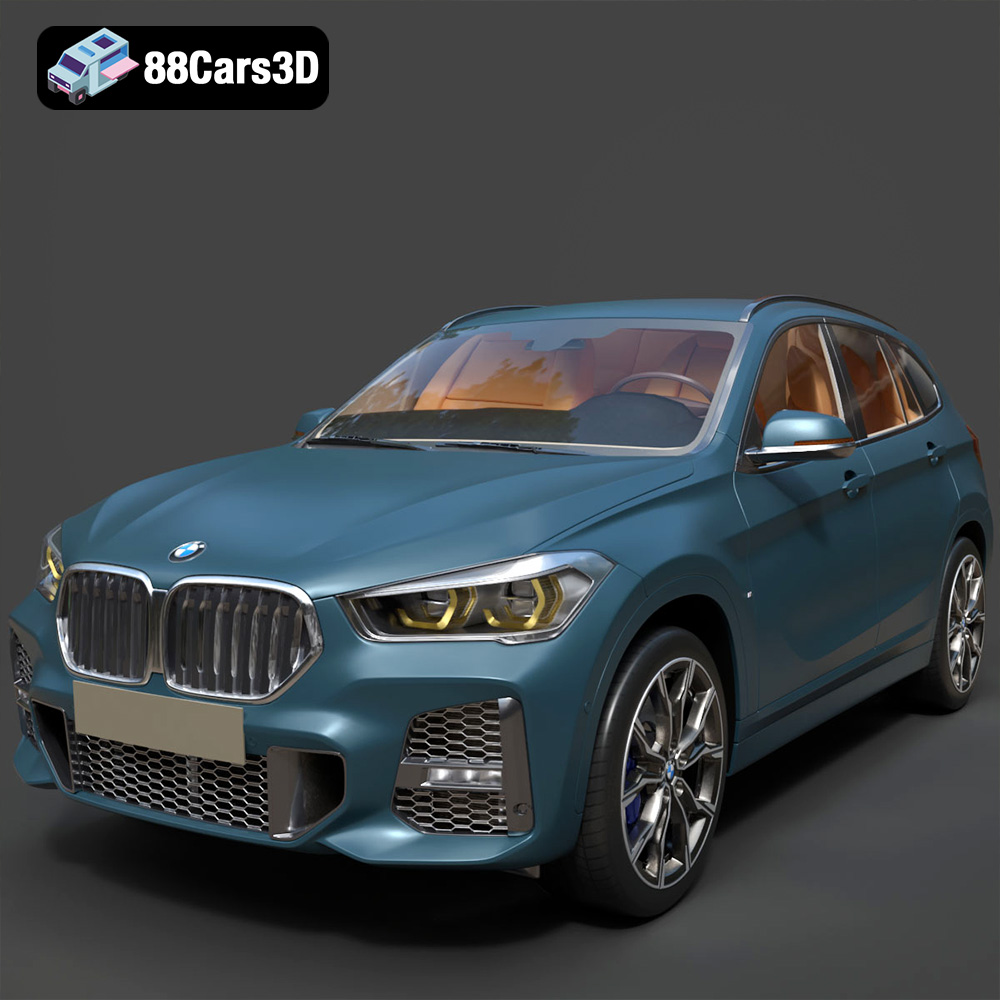
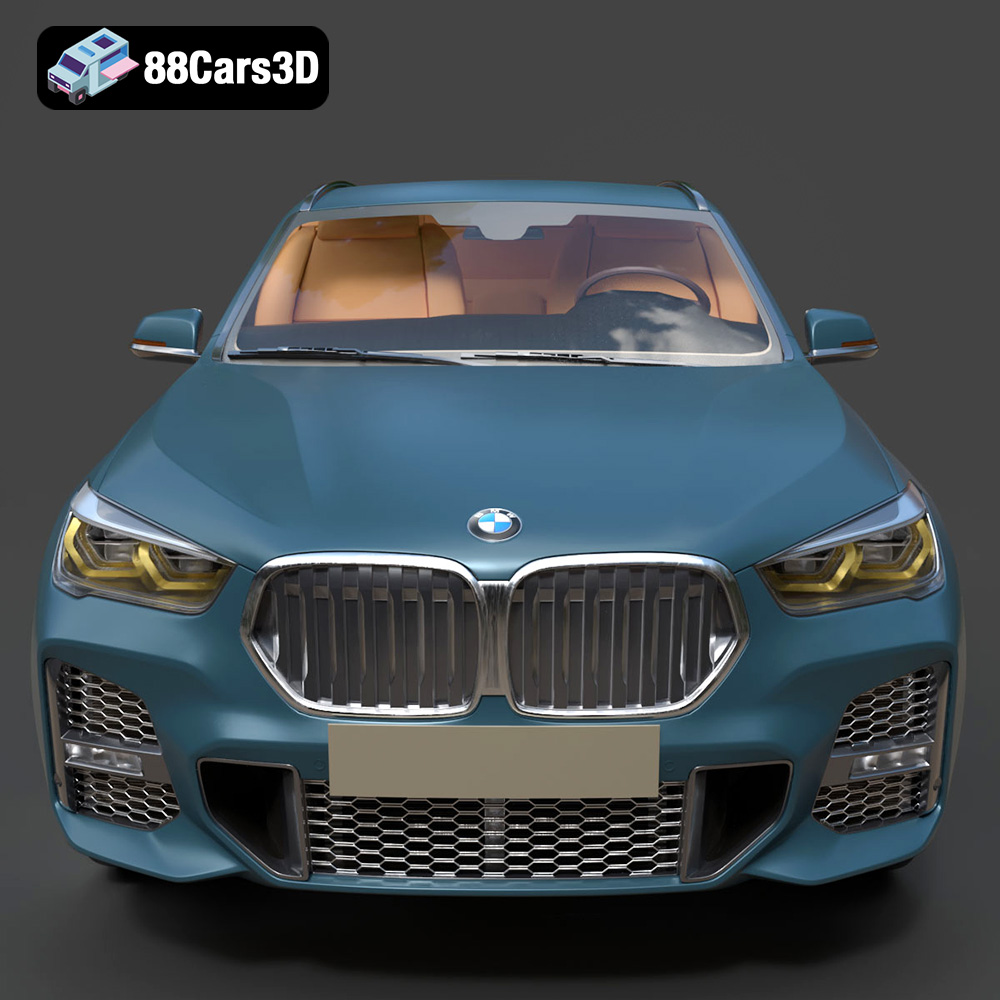
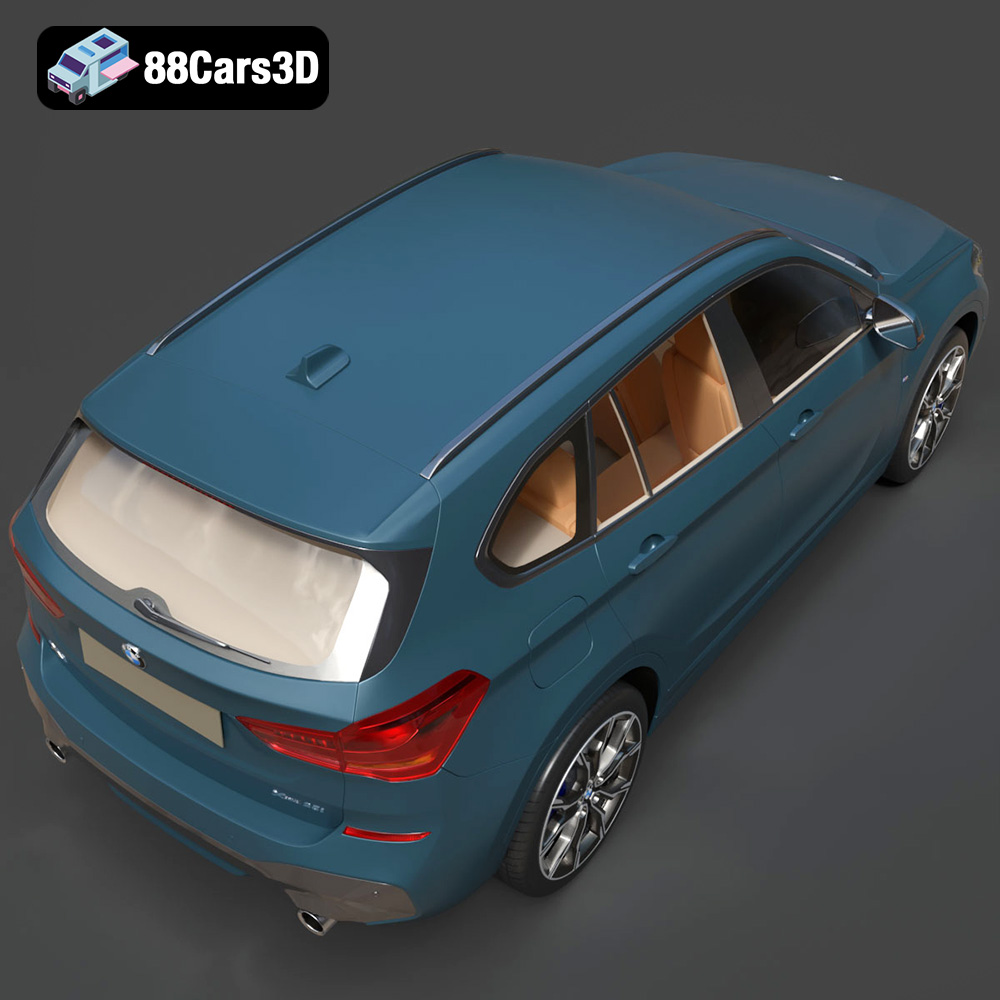
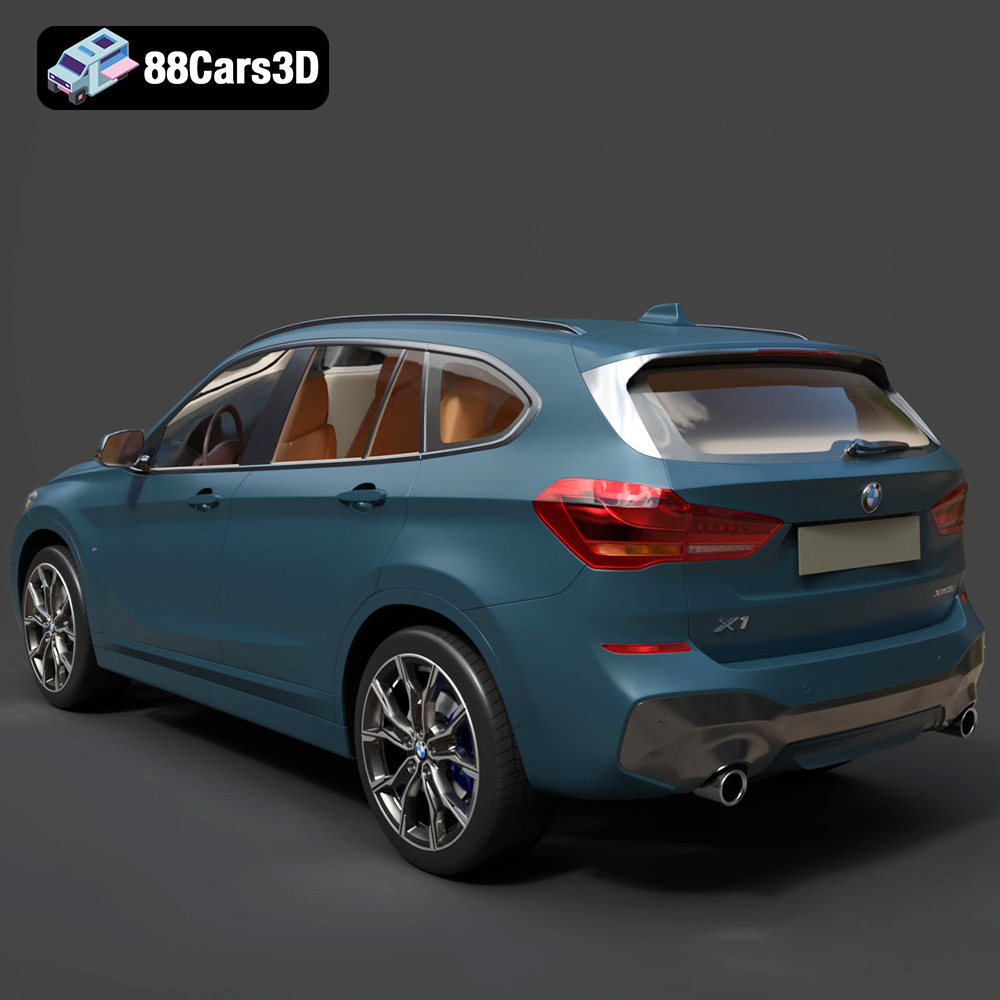
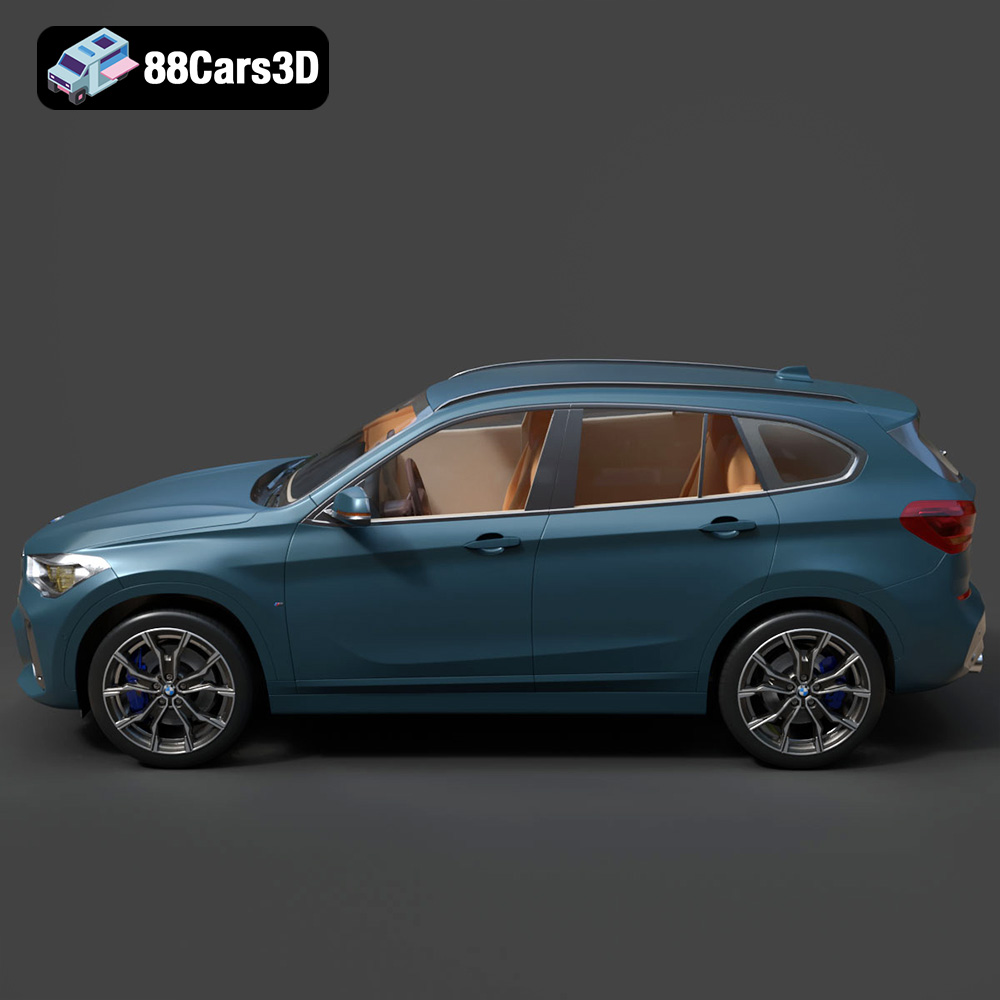
Today, we’re diving deep into what makes a 3D car model truly stand out, using a prime example: the BMW X1 M-Sport 2020 3D Model. This particular model embodies the blend of aesthetic fidelity and technical optimization that modern projects demand. It’s a digital representation of BMW’s premium compact SUV, featuring the aggressive M-Sport aerodynamic package, bold kidney grille, and sharp LED headlight styling that define its road presence. But beyond its striking appearance, it’s the underlying technical execution that makes it an invaluable asset for serious designers and developers.
Throughout this comprehensive guide, we will explore the critical aspects of professional 3D car models, delve into various file formats, discuss their integration into diverse workflows, and highlight how a meticulously crafted asset like the BMW X1 M-Sport 2020 can elevate your projects.
The choice of file format for a 3D model is far more than a technicality; it dictates compatibility, performance, and the scope of manipulation within various software environments. Understanding the strengths and weaknesses of each format is crucial for anyone working with 3D car models, whether for automotive rendering, game assets, or even 3D printing. The BMW X1 M-Sport 2020 3D Model, for instance, is offered in a wide array of formats, catering to virtually any professional pipeline.
The .blend file is the native format for Blender, a powerful and increasingly popular open-source 3D creation suite. When you acquire a .blend file like the one for the BMW X1 M-Sport 2020, you receive a fully editable Blender scene. This includes not just the mesh data, but also materials, textures, lighting setups, camera positions, animations, and even physics simulations. For artists deeply integrated into the Blender ecosystem, this format offers unparalleled flexibility for customization, material adjustments, or scene composition without any loss of data during import/export. It’s ideal for those who want to tweak every aspect of the model or integrate it seamlessly into a Blender-centric project.
FBX (Filmbox) is a proprietary file format developed by Autodesk, and it has become the de facto standard for exchanging 3D data between different software applications, especially in game development and animation. It efficiently supports geometry, materials, textures, animations, and even rigged characters. For game engines like Unreal and Unity, .fbx is often the preferred format due to its robust support for skeletal animation, morph targets, and efficient data transfer. The .fbx version of the BMW X1 M-Sport 2020 would be ideal for direct import into these engines, ready for real-time environments, offering reliable material and UV mapping data crucial for game assets.
The Wavefront OBJ (.obj) format is one of the oldest and most universally supported 3D file formats. It’s a simple, human-readable text-based format that primarily stores geometry (vertices, normals, texture coordinates, and faces) and references to external material files (.mtl). While it doesn’t support animation or rigging, its widespread compatibility makes it an excellent choice for basic mesh transfer between almost any 3D software. If you need a clean mesh for foundational modeling, sculpting, or a reliable backup, .obj is a solid choice for the BMW X1 M-Sport 2020 model.
GLB (GL Transmission Format Binary) is the binary version of glTF, a royalty-free specification for the efficient transmission and loading of 3D scenes and models by applications. It’s specifically designed for web-based 3D, augmented reality (AR), and virtual reality (VR) experiences. A .glb file packages all model data — geometry, materials, textures, and animations — into a single, compact file, making it incredibly easy to share and display in browsers, mobile AR apps, and VR platforms. For immersive virtual showrooms or configurators using the BMW X1 M-Sport 2020, the .glb format offers optimal performance and accessibility.
STL (STereoLithography) is the standard file format for 3D printing. It represents a 3D model as a series of connected triangles, essentially describing the surface geometry without any color, texture, or material information. While simplistic, its ubiquity in the 3D printing world is unmatched. Converting the BMW X1 M-Sport 2020 into an .stl format allows hobbyists and professionals to physically manifest the digital design, creating display models or custom parts. The product description already outlines specific print settings — scale, layer height, supports — highlighting its readiness for physical creation.
PLY (Polygon File Format, also known as Stanford Triangle Format) is another format for storing 3D data, particularly useful for scanned data, point clouds, and precision meshes. It can store a wider range of properties beyond geometry, such as color, transparency, and even material properties per vertex or face. While not as common for general asset exchange as FBX or OBJ, .ply is valuable in applications where detailed mesh analysis, reverse engineering, or CAD integration is required. For highly precise engineering reviews of the BMW X1 M-Sport 2020’s geometry, .ply could be advantageous.
The .unreal format (or typically an associated asset package) implies that the model has been specifically prepared and optimized for direct import into the Unreal Engine. This often means textures are properly packed, materials are set up with Unreal’s physically-based rendering (PBR) workflow, collision meshes might be included, and LODs (Levels of Detail) could be pre-configured. This minimizes setup time and ensures optimal performance within the engine, making the BMW X1 M-Sport 2020 instantly usable for developing immersive game worlds or interactive simulations within Unreal.
Similar to .blend for Blender, .max is the native project file format for Autodesk 3ds Max, a leading software for 3D modeling, animation, rendering, and compositing. A .max file contains the complete scene data, including geometry, modifiers, materials, textures, lighting, cameras, animation keyframes, and plugins used. For users of 3ds Max, having the BMW X1 M-Sport 2020 in this format means full editability, allowing for complex animation setups, advanced rendering configurations using renderers like V-Ray or Corona, and seamless integration into existing 3ds Max projects without any translation issues.
Choosing the right format significantly impacts workflow efficiency and project outcome. The comprehensive selection offered for the BMW X1 M-Sport 2020 ensures that professionals can pick the best tool for their specific task, reducing friction and accelerating development cycles.
Creating a compelling 3D car model is a delicate balance between artistic interpretation and rigorous technical precision. It’s about more than just replicating a vehicle’s shape; it’s about capturing its soul, its engineering, and its presence through a digital medium. The 88cars3d.com library prides itself on models that achieve this equilibrium, and the BMW X1 M-Sport 2020 3D Model is a prime example.
The exterior of any modern vehicle is a masterpiece of industrial design, and a high-quality 3D model must reflect every curve, crease, and panel gap with accuracy. For the BMW X1 M-Sport 2020, this means meticulously replicating its aggressive M-Sport aerodynamic package, which includes distinctive front and rear bumpers, side skirts, and prominent exhaust tailpipes. Details like the bold kidney grille, the sharp, multi-faceted adaptive LED headlights, and the iconic 3D L-shaped taillights are not just modeled — they are engineered for visual fidelity. Even the authentic M-style alloy wheels, complete with low-profile tire details and accurately modeled brake calipers and suspension components, contribute to the overall realism. Furthermore, the provision of separate wheels, suspension, and steering components ensures that the model is not just static but ready for dynamic animations, a critical feature for driving simulators and realistic cinematic sequences.
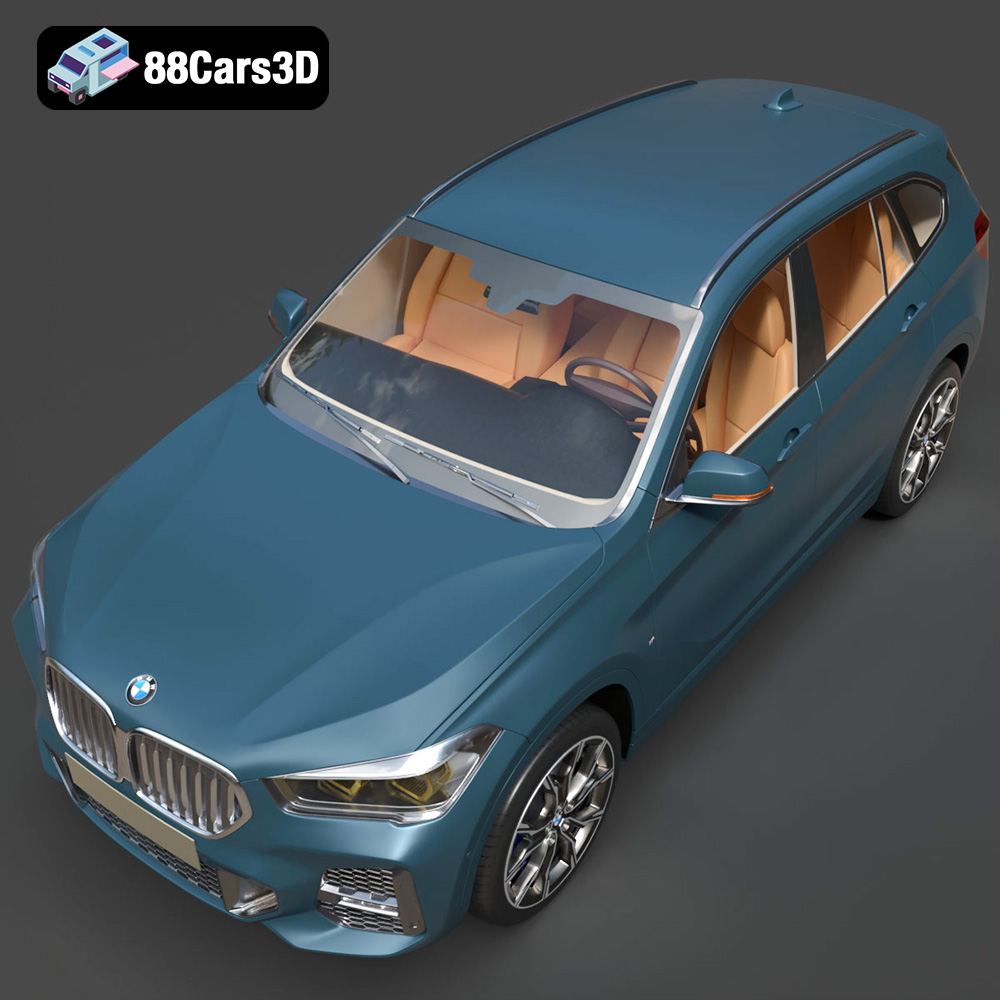
The interior of a premium vehicle is where luxury and ergonomics meet, and a truly great 3D model extends this detail into the cabin. The BMW X1 M-Sport 2020 model excels here, offering M-Sport specific sport seating with detailed stitching, an M leather steering wheel with paddle shifters and controls, and a high-resolution digital instrument cluster paired with the iDrive infotainment display. Every button, dial, and surface on the detailed center console and gear selector is carefully modeled. This level of interior fidelity is crucial for projects requiring first-person perspectives, such as in game development or virtual reality tours, where the user directly interacts with or observes the cockpit environment.
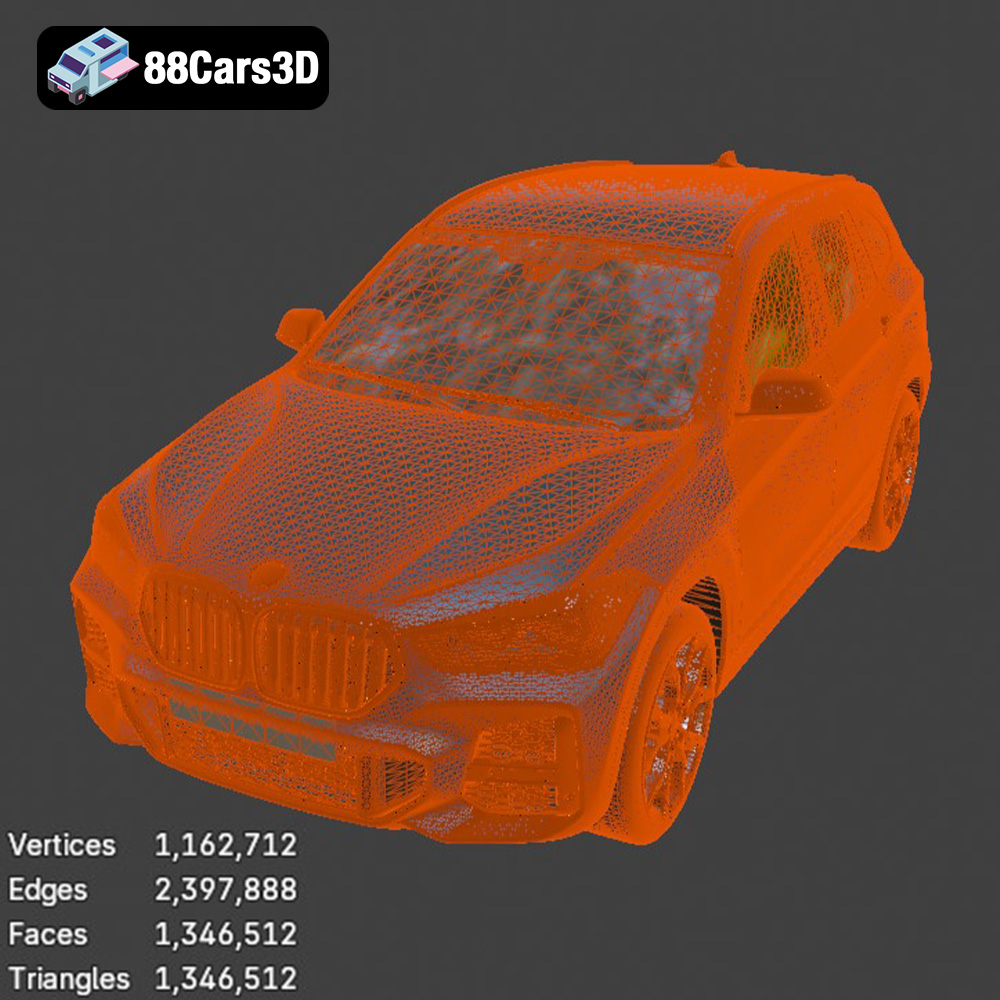
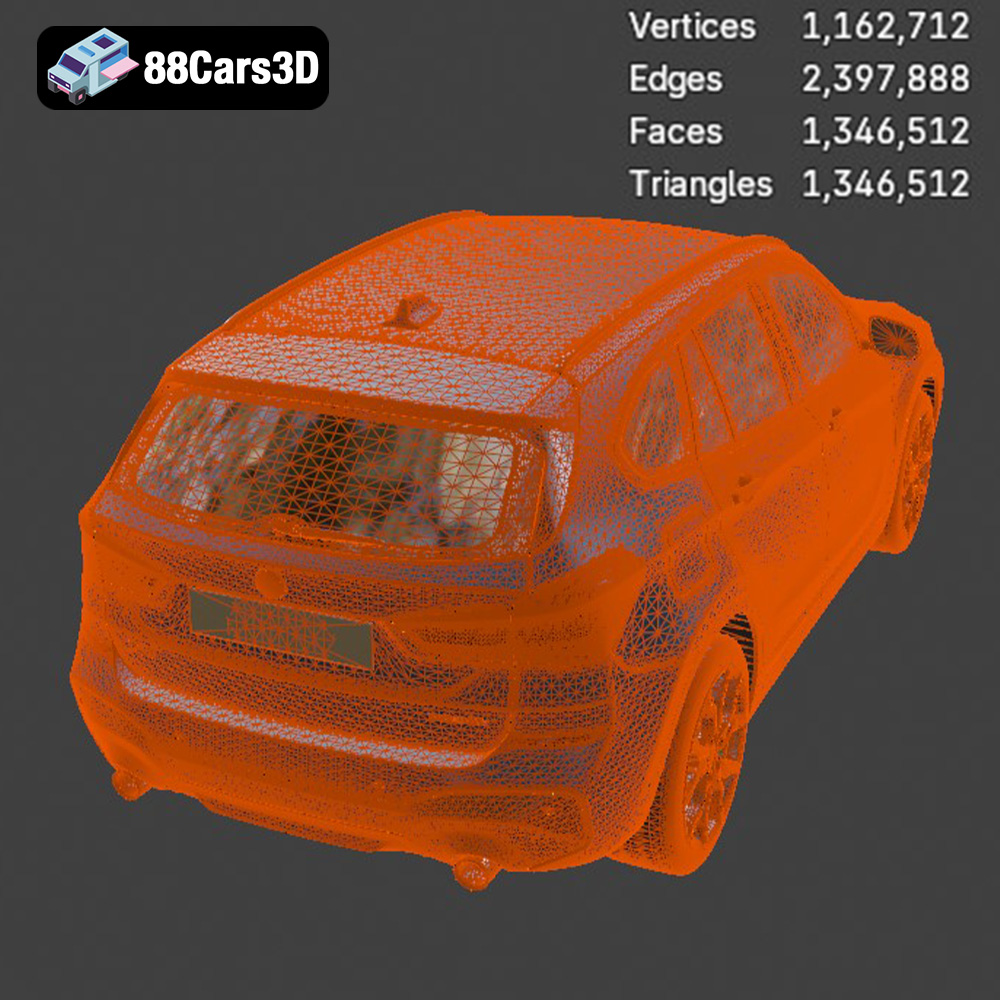
Perhaps one of the most significant technical achievements of a professional 3D car model is its optimized topology. The BMW X1 M-Sport 2020 model boasts approximately 500,000 triangles. This polycount represents a “sweet spot” — high enough to retain exceptional visual fidelity, ensuring smooth reflections and accurate shading for photorealistic renders, yet optimized enough to be considered “game-ready.” For real-time engines like Unreal and Unity, this balance is critical. Too many polygons can cripple performance, leading to lag and choppy frame rates. Too few, and the model appears blocky or unrealistic. This meticulous optimization ensures that the model not only looks stunning in high-end automotive rendering projects but also performs flawlessly as a central asset in demanding interactive environments.
The utility of a high-quality 3D car model extends across a myriad of professional applications. Its versatility is often defined by its technical specifications and the file formats it supports, allowing seamless integration into diverse pipelines.
For game developers, the quality of game assets, particularly vehicles, is paramount for creating immersive experiences. The BMW X1 M-Sport 2020 3D Model is explicitly designed to be “Game-Ready & Optimized.” With its ~500,000 triangles, it strikes the perfect balance for real-time engines like Unreal and Unity. When integrating into these engines, the .fbx or .unreal format is often preferred. The model’s real-world scale accuracy, based on actual vehicle chassis, ensures realistic proportions within game environments. Crucially, the proper pivot setup for steering, wheel rotation, and suspension travel allows developers to easily implement realistic vehicle physics and animations, transforming a static model into a dynamic, interactive element for open-world games, racing titles, and sophisticated driving simulators. This level of preparation significantly reduces development time and resources.
In architectural visualization and automotive marketing, photorealism is the ultimate goal. High-end rendering engines such as V-Ray, Corona Renderer, and Redshift thrive on detailed geometry and robust material setups. The BMW X1 M-Sport 2020 model provides the necessary foundation with its meticulously optimized topology, ensuring smooth reflections and accurate shading. Artists can leverage its precise frame geometry to set up studio lighting, experiment with various paint finishes (matte, gloss, metallic), and adapt lighting for different environments, from sun-drenched cityscapes to dramatic studio shots. Whether for brand campaigns, lifestyle scenes, or detailed product showcases, this 3D car model acts as a highly convincing centerpiece, allowing for endless creative possibilities in capturing the vehicle’s aesthetic appeal.
While primarily a digital asset, the BMW X1 M-Sport 2020 3D Model also offers tangible possibilities through 3D printing. Converting the model to an .stl format opens the door for display-scale hobbyists or even professional model makers to create physical replicas. The product description provides crucial 3D print settings: recommended scales (1:12 / 1:18 / 1:24), layer height (0.04–0.12 mm for fine detail, with resin printing often recommended), wall thickness, infill, and specific support requirements for intricate parts like exhausts, mirrors, and exterior trim. It also advises on print orientation — frame angled for structural integrity, wheels printed separately — and post-processing steps like sanding, priming, and applying authentic factory colors. This foresight allows creators to bridge the gap between digital design and physical craft, producing high-fidelity physical models.
The true value of a premium 3D asset lies not only in its initial visual appeal but also in its underlying technical structure and the degree to which it can be customized. The BMW X1 M-Sport 2020 3D Model from 88cars3d.com exemplifies this dual focus, offering both inherent quality and flexible options for adaptation.
Every element of this 3D car model has been considered for realism and functionality. The accurate BMW X1 M-Sport 2020 frame geometry and proportions ensure that the digital model perfectly mirrors its real-world counterpart. This precision extends to the detailed M-Sport front bumper and aerodynamic body kit, the signature dual exhaust system with its chrome finishes, and the high-definition adaptive LED headlights and 3D L-shaped taillights that define its signature lighting. The authentic M-style alloy wheels are not merely textures; they are distinct geometrical elements, complete with low-profile tire details and accurately modeled brake calipers and suspension components. Critically, these components — wheels, suspension, and steering — are separated, making them prime candidates for animation. This means a developer or animator can easily implement realistic steering, wheel rotation, and even dynamic suspension travel, transforming the static vehicle into an interactive, animated object. Inside, the M-Sport specific sport seating with detailed stitching, the M leather steering wheel with paddle shifters, the high-resolution digital instrument cluster, and the iDrive infotainment display are all modeled with optimized geometry for first-person perspective, vital for immersive gaming or VR experiences. Real-world scale accuracy and proper pivot setup are fundamental, ensuring correct interaction with physics engines and accurate integration into larger digital scenes.
A static, unchangeable model, no matter how detailed, has limited utility. The BMW X1 M-Sport 2020 3D Model addresses this by offering significant customization options, allowing artists and developers to tailor it to their specific project needs:
These customization capabilities ensure that the BMW X1 M-Sport 2020 3D Model is not just an asset, but a flexible toolkit for creative expression, ready to be integrated into diverse visual narratives and interactive experiences.
The true measure of a 3D model’s quality lies in its applicability to real-world projects. High-quality 3D car models like the BMW X1 M-Sport 2020 are essential tools that accelerate production, enhance realism, and expand creative possibilities across various industries.
Consider an independent game studio tasked with developing a new open-world racing game. Historically, creating a highly detailed vehicle from scratch could consume weeks or even months of an artist’s time. By acquiring a game-ready asset such as the BMW X1 M-Sport 2020 3D Model from 88cars3d.com, the studio can immediately integrate a premium vehicle into their game engine. Its optimized polycount (~500,000 triangles) ensures smooth performance, while its accurate geometry and pivot setups allow for straightforward implementation of driving physics and animations. The studio can focus their resources on unique gameplay mechanics and world-building, rather than getting bogged down in intricate vehicle modeling. This allows them to iterate faster, bring their game to market quicker, and deliver a visually rich experience right from the start.
Imagine an architectural visualization firm showcasing a luxurious residential complex. Placing a generic, low-quality car in the driveway or on the streetscape diminishes the overall realism and high-end feel of the render. However, by incorporating a detailed model like the BMW X1 M-Sport 2020, the scene instantly gains credibility and sophistication. The car’s authentic design, realistic materials, and precise reflections contribute significantly to the photorealism of the entire visualization. Similarly, an automotive marketing agency developing a brand campaign for BMW itself could leverage this model for digital advertisements, interactive web configurators, or even virtual launch events. The model’s customizability — allowing for easy changes in body color, material finishes, and lighting — means the agency can quickly adapt the asset to various campaign themes and visual requirements without needing to re-render entire scenes from scratch. This efficiency is invaluable in fast-paced marketing environments.
Another powerful application is in the burgeoning field of augmented and virtual reality. A car manufacturer might want to offer potential customers an immersive virtual showroom experience or a mobile AR configurator. The BMW X1 M-Sport 2020 3D Model, particularly in its .glb format, is perfectly suited for this. Customers could virtually ‘walk around’ the car, open doors, explore the interior in VR, or even place a life-sized virtual model in their driveway using AR on their smartphone. The model’s optimized geometry ensures smooth, real-time interaction without performance hiccups, providing a truly engaging and innovative way for consumers to interact with a product before it’s physically present. This is a game-changer for sales and marketing, offering a rich, interactive experience that traditional photography or video cannot match.
The journey from concept to a polished digital masterpiece in 3D modeling is intricate, demanding both artistic skill and technical acumen. High-quality 3D car models are not merely visual assets; they are foundational components that drive innovation across diverse industries, from interactive entertainment to cutting-edge visualization. The BMW X1 M-Sport 2020 3D Model stands as a testament to this, offering an exceptional blend of visual fidelity, optimized topology, and versatile file format support.
Whether you are a game developer needing game assets ready for Unreal or Unity, an architect aiming for photorealistic automotive rendering, a VR/AR specialist crafting immersive experiences, or a hobbyist venturing into 3D printing, the technical specifications and flexibility of such a model streamline your workflow and elevate your final output. Understanding the nuances of each file format and leveraging a professionally crafted asset can significantly reduce development time and enhance the overall quality of your projects. Investing in premium 3D models from trusted sources like 88cars3d.com empowers creators to focus on their creative vision, knowing that the underlying digital foundation is robust and meticulously engineered.
The 2020 BMW X1 M-Sport is a premium compact SUV that perfectly blends everyday practicality with signature Bavarian athletic performance. Featuring the aggressive M-Sport aerodynamic package, a bold kidney grille, and sharp LED headlight styling, this SAV (Sports Activity Vehicle) stands out on any road. Its dynamic silhouette, prominent exhaust tailpipes, and sculpted bodywork make it a highly desirable vehicle in the luxury crossover segment. This premium 3D model offers exceptional visual fidelity and a meticulously optimized topology with approximately 500,000 triangles. It strikes the ideal balance between high-end detail and game-ready performance, making it an excellent asset for real-time engines like Unreal and Unity. The mesh provides smooth reflections and accurate shading, ensuring a photorealistic appearance right out of the box. Perfect for high-end architectural visualizations, driving simulators, open-world gaming environments, and immersive VR automotive showrooms.
$19.99
.2020
.blend
.bmw
.crossover
.fbx
.glb
.max
.obj
.ply
.rendering
.stl
.unreal
car-3d-model
game asset
game-ready
low-poly
m-sport
optimized
sav
SUV
VR/AR
x1