Get 20% OFF All Premium 3D & STL Models!

In the vast landscape of urban infrastructure and global commerce, the Ford Transit Camion stands as an unmistakable symbol of reliable workhorse utility. Its presence, whether navigating bustling city streets or delivering vital goods to remote locations, is fundamental to countless businesses. For 3D artists, game developers, automotive designers, and visualization specialists, recreating this commercial icon with accuracy and performance in mind is paramount. This is where a meticulously crafted 3D model becomes an invaluable asset, bridging the gap between real-world functionality and digital versatility.
Imagine integrating a highly optimized, visually authentic representation of the Ford Transit Camion 2008 into your next project – be it a hyper-realistic automotive rendering, a dynamic open-world game, an immersive AR/VR training simulation, or even a detailed 3D print for a diorama. The challenges often lie in acquiring a model that balances intricate detail with robust performance, offers seamless compatibility across diverse software, and provides the flexibility for extensive customization. Fortunately, solutions exist that meet these demanding professional standards. A prime example is the Ford Transit Camion 2008 3D model available on 88cars3d.com, a comprehensive digital asset designed to empower creators across multiple industries.
The choice of a 3D model file format is far from arbitrary; it dictates compatibility, data integrity, and efficiency across your entire workflow. Professionals need to understand the nuances of each format to leverage their digital assets effectively. The Ford Transit Camion 2008 3D model exemplifies this versatility by offering a wide array of formats, ensuring it fits into virtually any pipeline.
The .blend format is Blender’s native file type. It encapsulates not just the mesh geometry but an entire Blender scene, including materials, textures, lighting, cameras, animation data, and even modifiers. For users working within Blender, this is the most powerful and editable format. It allows for complete control over the model’s structure, shaders, and rigging. The .blend file for the Transit Camion would provide direct access to the model’s optimized topology, separated material slots, and any pre-configured scene elements, making it ideal for custom rigging, complex animation sequences, or specific rendering setups within Blender’s Cycles or Eevee engines.
.fbx (Filmbox) is arguably the most ubiquitous format for 3D data exchange, especially between digital content creation (DCC) tools and game engines. Developed by Autodesk, FBX supports geometry, materials, textures, animations, and skeletal data. Its strength lies in its ability to maintain scene hierarchy and animation curves across different software. For the Ford Transit Camion, the .fbx variant is the go-to for importing into Unreal Engine, Unity, 3ds Max, Maya, or Cinema 4D, ensuring that the model’s clean topology, material assignments, and crucial pivot points for animation (like wheels and doors) are preserved, making it ideal for real-time pipelines and game development.
.obj (Wavefront OBJ) is a fundamental, universally supported 3D format that primarily stores geometry data (vertices, normals, texture coordinates, and faces). While it supports basic material information via an accompanying .mtl file, it doesn’t store animation or scene hierarchy as robustly as FBX. Its simplicity is its strength, offering excellent compatibility across virtually all 3D software. The Transit Camion’s .obj file is perfect for scenarios where you need to import just the raw geometry into a new scene, perhaps for retopology, sculpting, or converting to a different proprietary format without carrying over complex scene data.
.glb (GL Transmission Format Binary) is the binary version of glTF, a royalty-free specification for the efficient transmission and loading of 3D scenes and models by applications. GLB files package all assets (geometry, materials, textures, animations) into a single file, making them highly efficient for web-based 3D, augmented reality (AR), virtual reality (VR), and mobile applications. For visualizing the Ford Transit Camion in a web browser, an AR app on a smartphone, or an immersive VR experience, the .glb format provides excellent performance and ease of integration.
.stl (STereoLithography) is the de facto standard for 3D printing. It represents a 3D model as a collection of triangles, defining only the surface geometry without color, texture, or material information. While simple, it’s universally accepted by 3D printers and slicing software. The Transit Camion’s .stl file is specifically prepared for physical fabrication, allowing enthusiasts and professionals to bring the digital model into the tangible world for display, prototyping, or scale model building, with recommended settings provided for optimal print quality.
.ply (Polygon File Format or Stanford Triangle Format) is a file format for storing graphical objects that have been digitized. It supports properties such as color, transparency, surface normals, texture coordinates, and confidence values. Often used in scientific and engineering applications, it can store high-precision mesh data, making it suitable for CAD, reverse engineering, and advanced analysis. While less common for typical automotive rendering, the .ply format for the Ford Transit Camion could be valuable for precise measurements, structural analysis, or integration into specialized CAD pipelines.
The .unreal designation implies a model specifically prepared and optimized for direct import or even pre-packaged as an asset within Unreal Engine. This might involve optimized material setups, collision meshes, LODs (Levels of Detail), and blueprint configurations. For game developers and real-time visualization artists using Unreal Engine, this format significantly streamlines the integration process for the Ford Transit Camion, ensuring it’s battle-ready for virtual worlds with minimal setup time.
Similar to .blend for Blender, the .max format is the native file type for Autodesk 3ds Max. It contains all scene data, including geometry, materials, lighting, cameras, animation, and modifiers specific to 3ds Max. For users whose primary DCC tool is 3ds Max, the .max file for the Transit Camion offers the highest level of editability and control within that environment, allowing for complex rendering setups, sophisticated animation, and detailed scene assembly.
Understanding these formats ensures that when you acquire a high-quality 3D asset like the Ford Transit Camion 2008 from 88cars3d.com, you can confidently integrate it into your specific workflow, leveraging its full potential.
The Ford Transit Camion 2008 3D model isn’t just a collection of polygons; it’s a meticulously crafted digital replica designed to fulfill the demanding requirements of professional visual production. Its construction reflects an acute understanding of both real-world vehicle design and the technical considerations of 3D modeling for various applications.
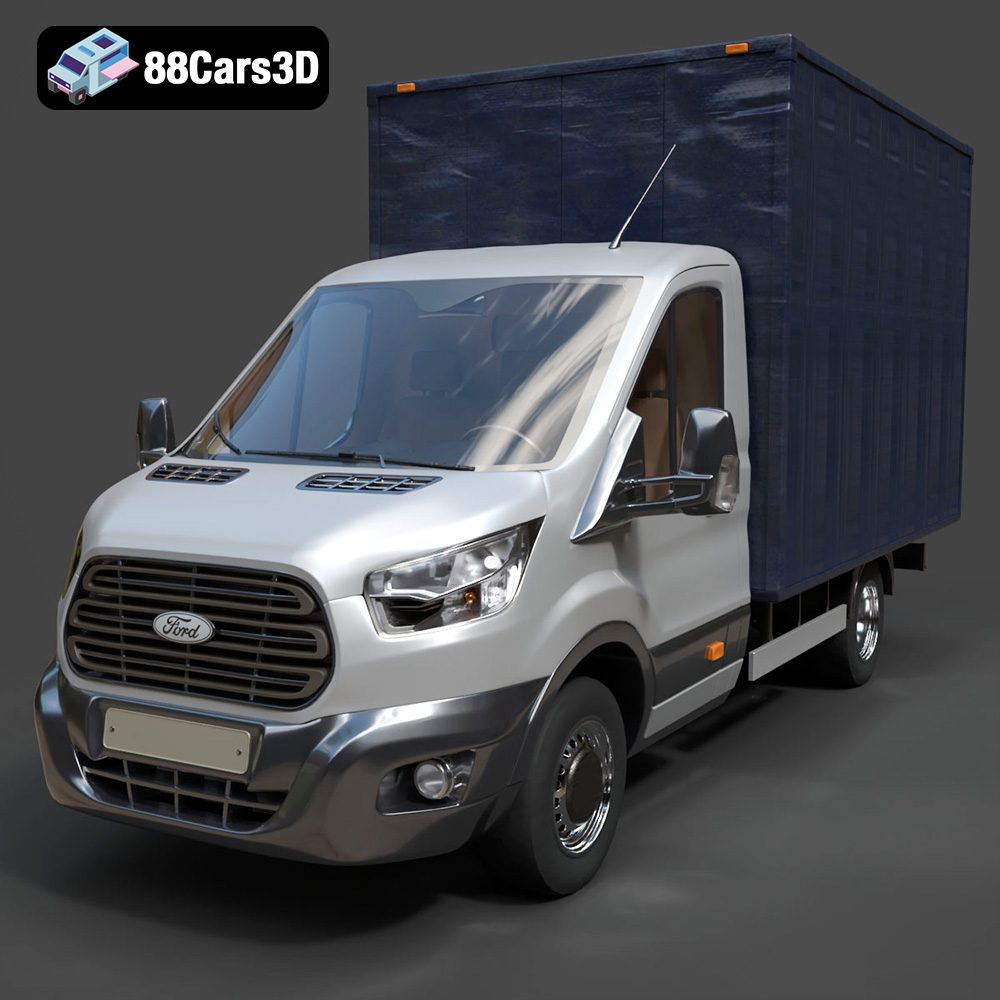
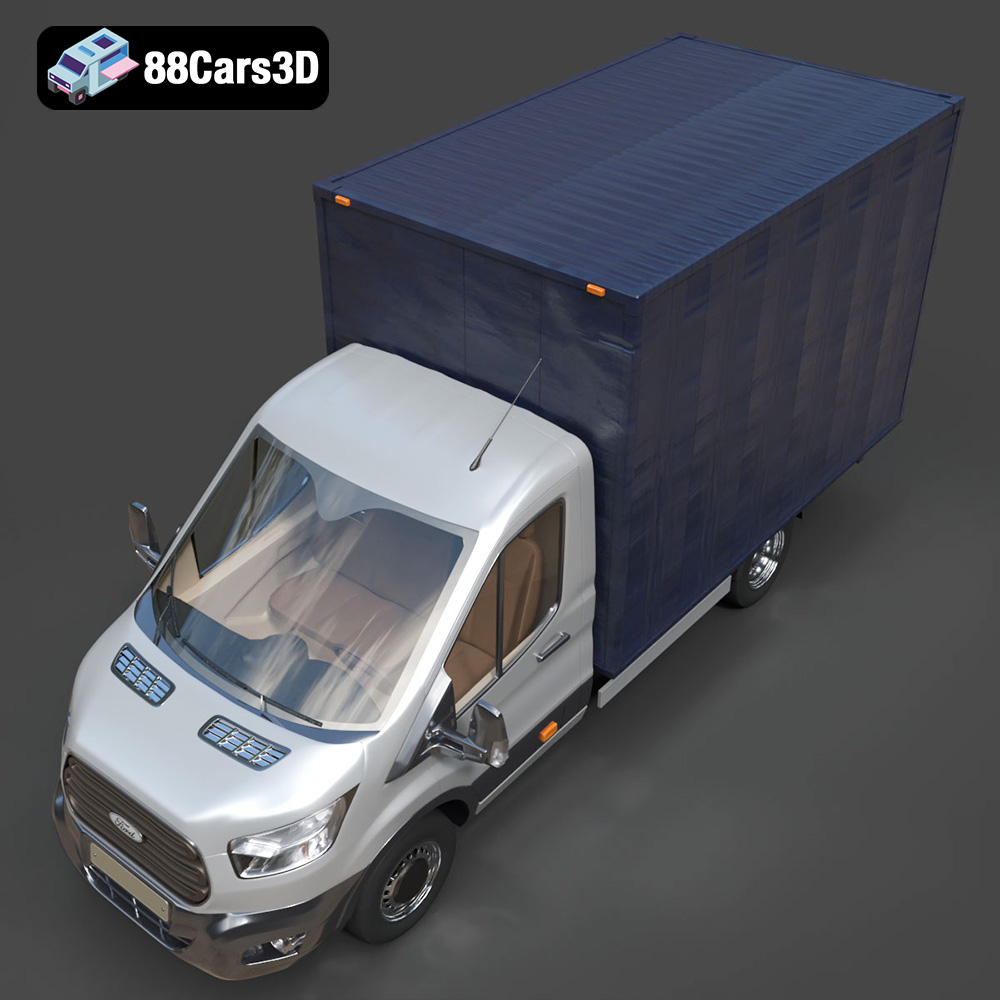
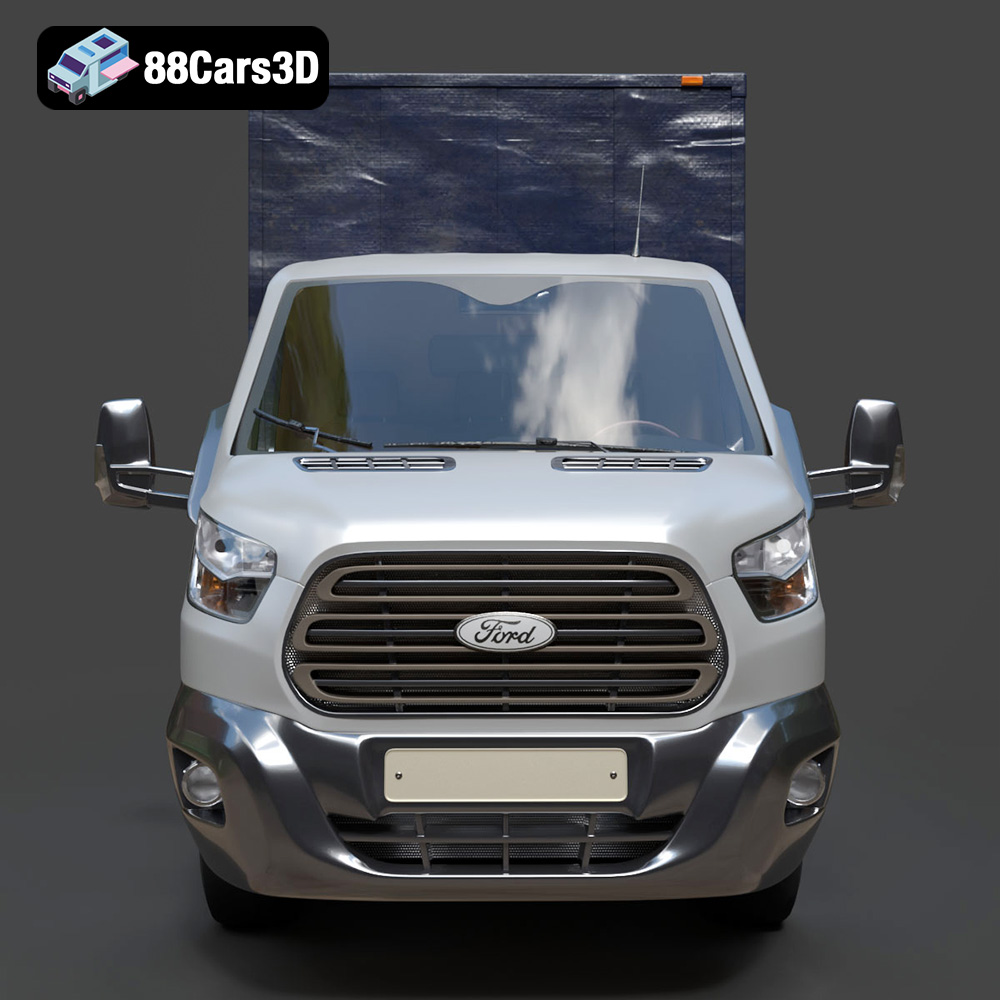
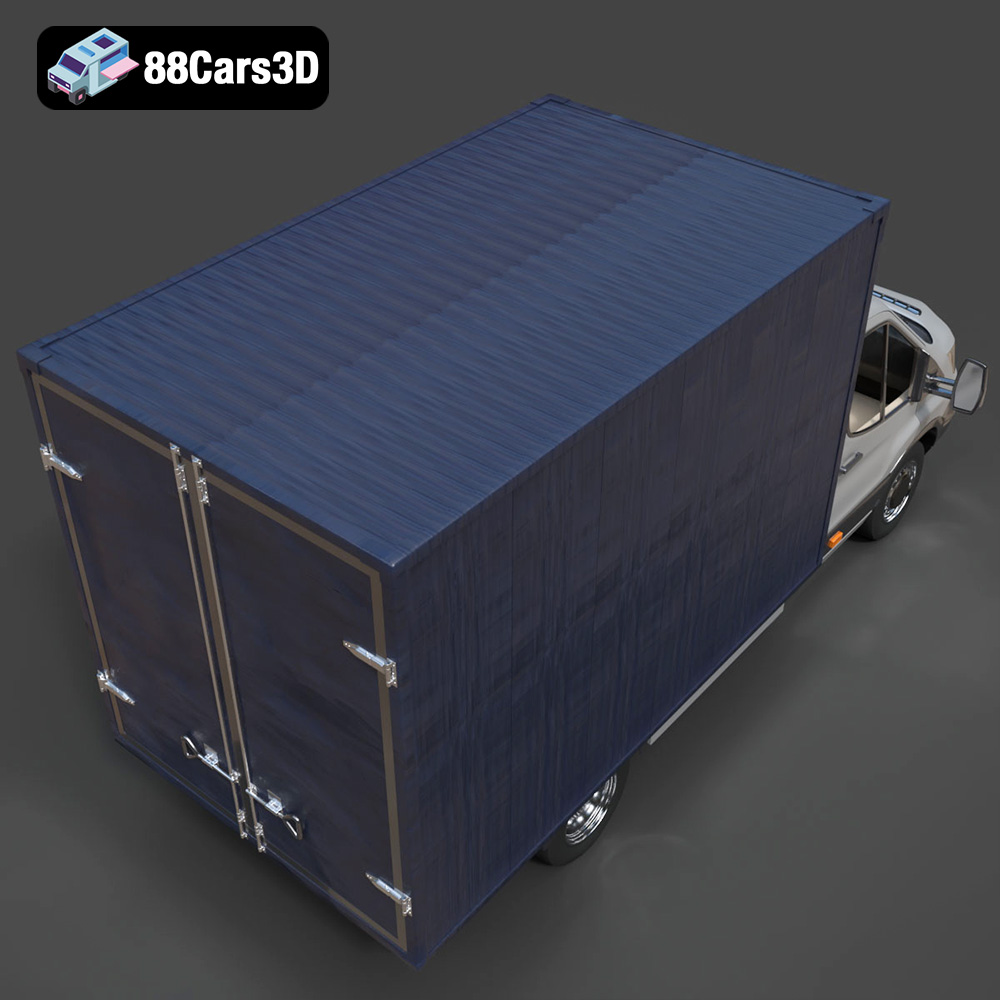
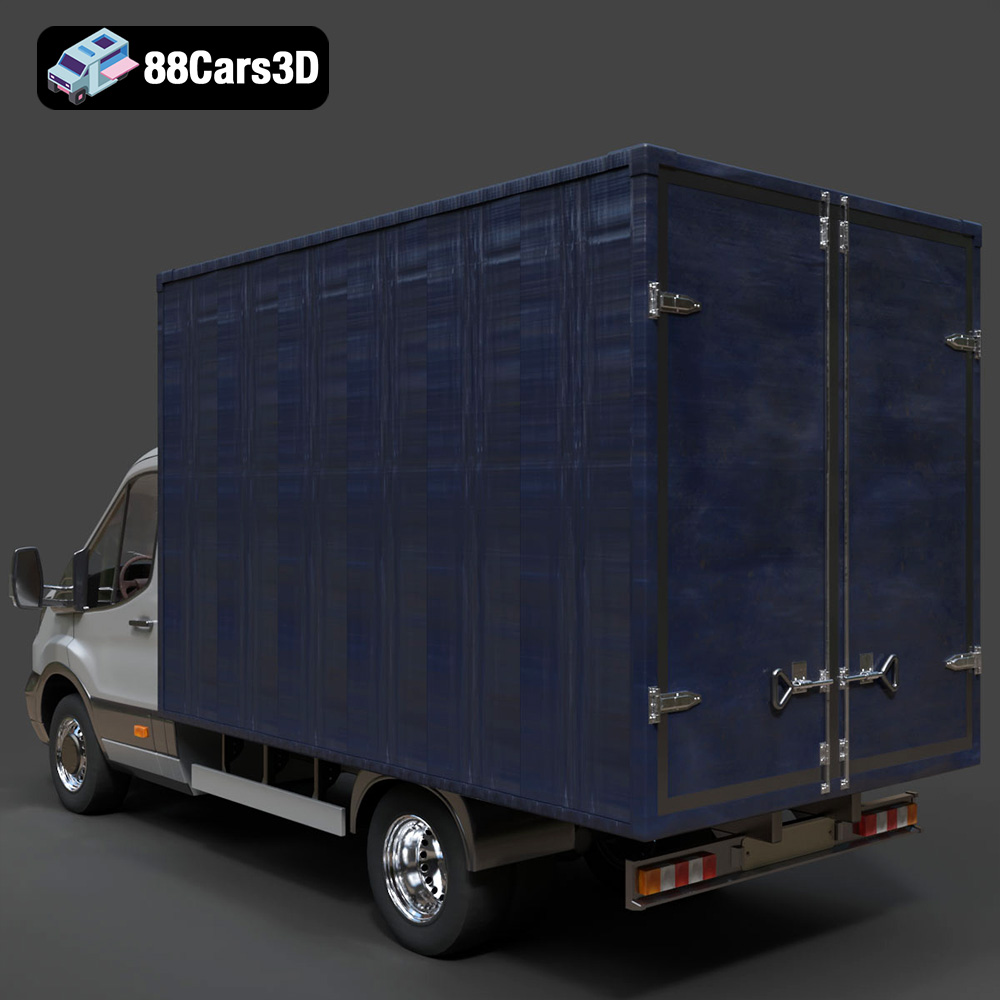
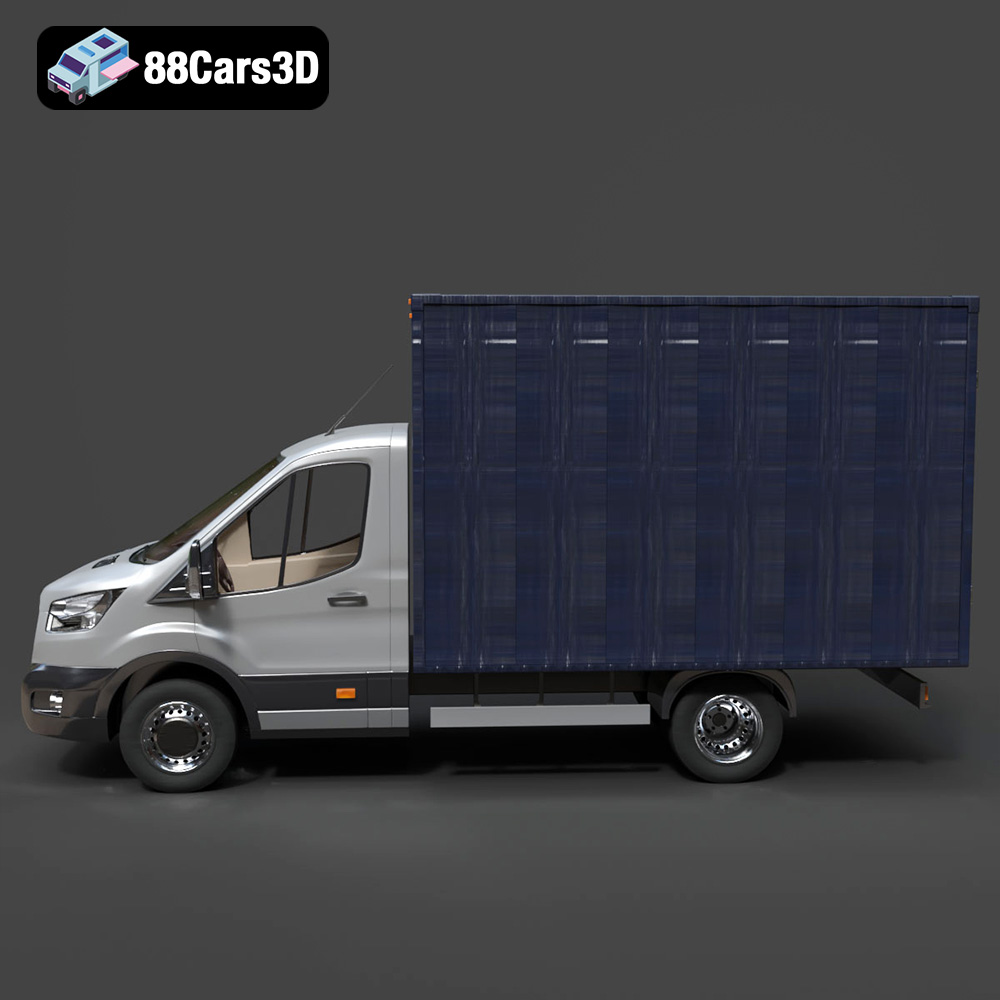
The external features of the Ford Transit Camion are what define its rugged, utilitarian character, and the 3D model captures this essence with exceptional fidelity. From the signature Ford grille and robust bumper, which signify its commercial pedigree, to the accurately proportioned heavy-duty chassis and spacious rear cargo box, every element contributes to a convincing digital presence. The authenticity extends to smaller, yet crucial, details such as realistic headlights, indicator markers, and taillights, which are essential for automotive rendering realism, especially in varied lighting conditions. Furthermore, the model includes heavy-duty steel wheels paired with rugged commercial tires, ensuring visual integrity even in close-up shots. The detailed undercarriage, complete with exhaust routing and suspension elements, speaks to a commitment to comprehensive realism, making it suitable for scenarios where the vehicle’s underside might be visible, such as in repair simulations or cinematic camera angles.
While often overlooked in external shots, a well-modeled interior is critical for many professional applications, particularly in game development and AR/VR. The Transit Camion model features an authentic commercial cabin seating arrangement with textured fabric details, adding a layer of realism to interior views. The accurate steering wheel and robust dashboard layout, complete with a detailed instrument cluster and center console controls, provide a believable environment for virtual drivers. Operational details like the gear shifter and pedal assembly are also included. Critically, the cabin geometry is optimized for first-person POV in truck driving simulators, striking a balance between visual detail and polygon efficiency, ensuring smooth performance without sacrificing immersion.
Beyond its visual accuracy, the true strength of the Ford Transit Camion 2008 3D model lies in its technical specifications and the intelligent decisions made during its creation. These attributes ensure it’s not just a pretty picture, but a powerful asset capable of performing across a spectrum of professional tasks.
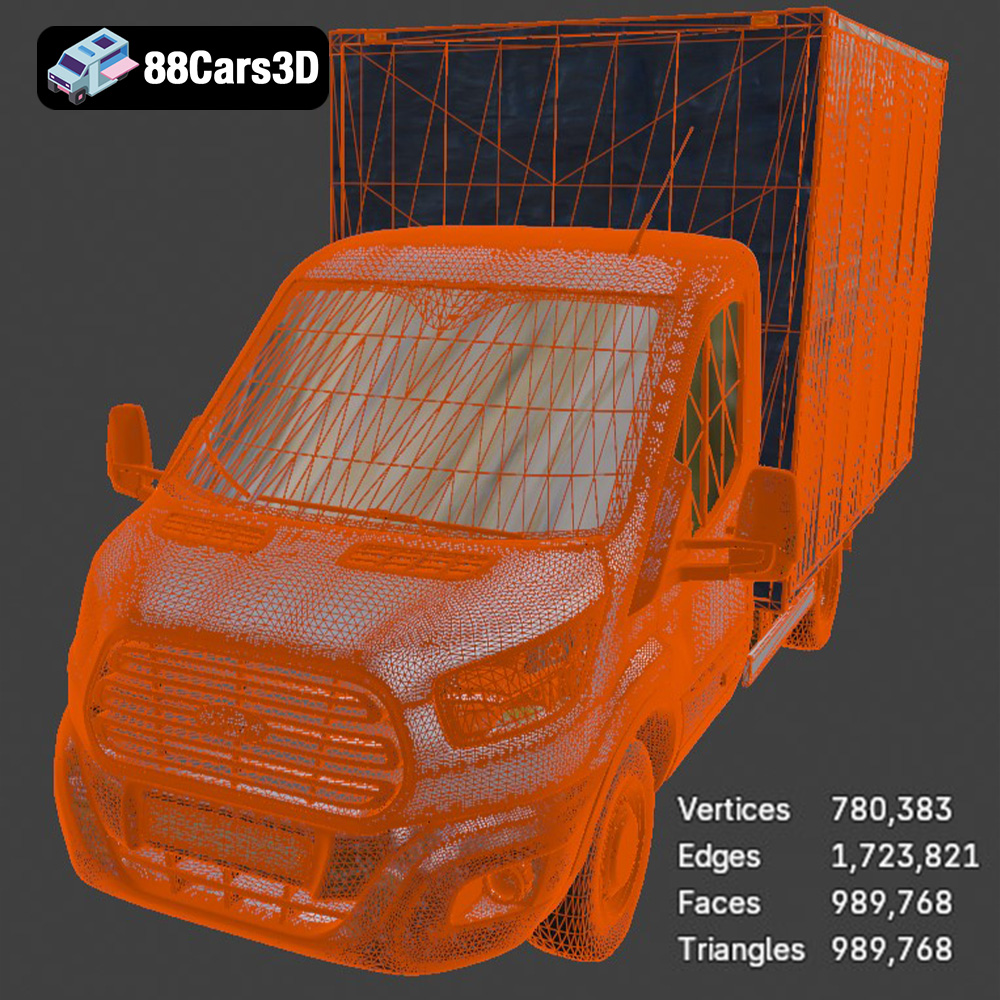
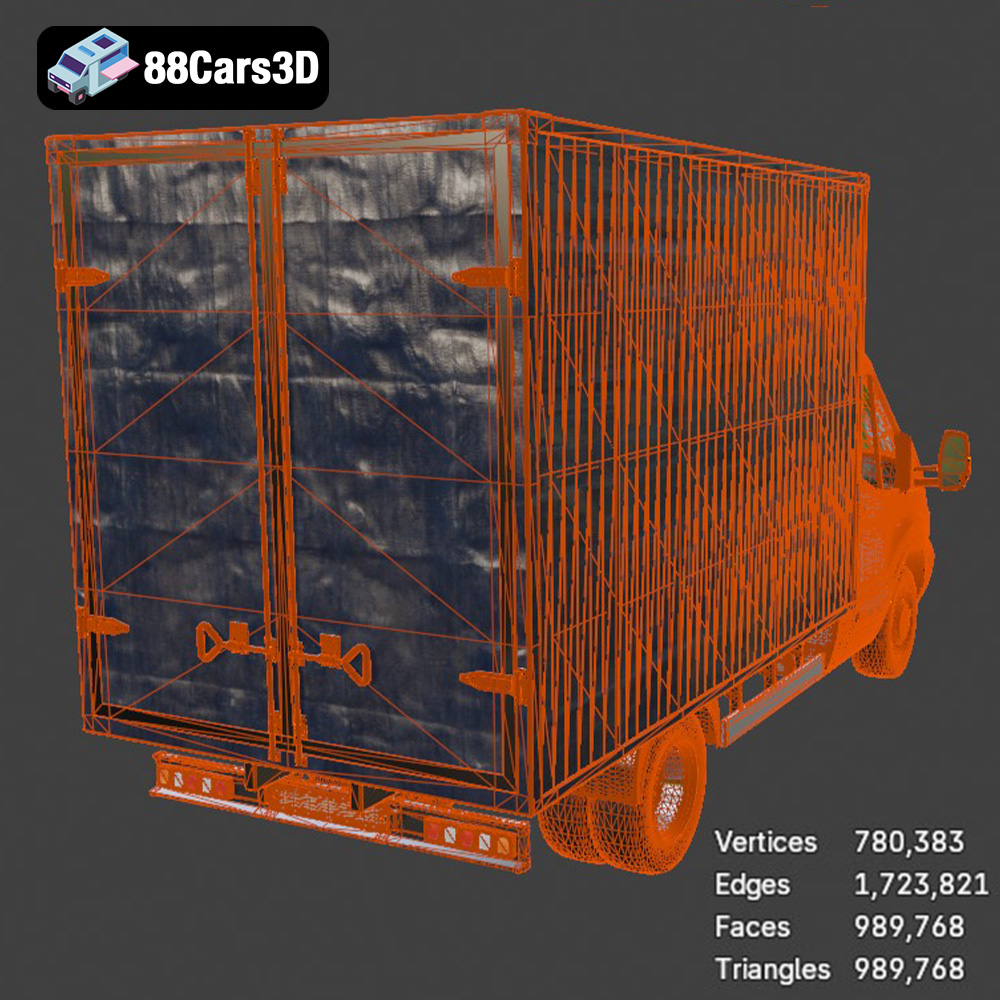
One of the most significant advantages of this model is its “game-ready” designation, achieved through an optimized topology of approximately 120,000 triangles. This specific polycount is a deliberate choice, striking a perfect balance for real-time engines like Unreal Engine and Unity. It ensures that the model maintains high visual realism, capable of holding up to close-up rendering, while remaining efficient enough to be used in large-scale game environments without causing performance bottlenecks. This optimization is crucial for open-world games populated with numerous vehicles, or for logistics simulators where multiple instances of the Transit might be required. Furthermore, the model features proper pivot setups for steering, wheel rotation, and cargo door mechanics, which are absolutely essential for seamless animation and interaction within game engines. This saves developers countless hours of rigging and setup time.
The model adheres to real-world scale accuracy, based on actual vehicle chassis dimensions. This precision is vital for architectural visualizations, urban scene integration, and any application requiring true-to-life proportions. The model also boasts distinct material separation, a key feature for customization. This allows users to easily apply custom liveries and weathering effects, change cabin colors, and even modify tire textures between clean street variants and weathered/dirty options. Adjusting material finishes—from matte commercial plastics to gloss paint or even rusted metals—provides unparalleled flexibility for designers and artists to adapt the vehicle to specific branding, environmental conditions, or stylistic requirements. This level of control makes the Ford Transit Camion an incredibly versatile asset for diverse creative projects.
The multi-format availability and robust design of the Ford Transit Camion 2008 3D model mean it’s not confined to a single application but can be a cornerstone asset across various professional pipelines.
For game developers, this 3D model is a significant time-saver. Its optimized polycount makes it ideal for populating urban logistics simulators, serving as critical AI traffic in open-world city environments, or as a player-controlled vehicle in a driving game. The .fbx and .unreal formats are particularly beneficial here. A typical workflow might involve importing the .fbx directly into Unreal Engine or Unity, where the model’s material separation allows for quick PBR (Physically Based Rendering) texture assignment. Developers can then leverage the pre-set pivot points to easily rig the wheels for rotation, animate the steering, and set up interactive cargo door mechanics. For VR training applications, such as learning proper loading procedures or maintenance tasks, the model’s detailed interior and accurate scale provide an immersive and functional environment.
Architectural visualization studios and commercial branding agencies will find the Ford Transit Camion an invaluable asset for adding realism and context to their scenes. Whether it’s showcasing a new building development with realistic street traffic, illustrating urban planning projects, or creating compelling commercial branding mockups, the model’s high visual fidelity ensures stunning results. Artists working in 3ds Max or Blender can utilize the .max or .blend files respectively, taking full advantage of the scene’s native capabilities for advanced rendering. They can set up complex lighting scenarios, apply advanced material shaders, and integrate the vehicle seamlessly into dynamic urban or industrial environments. The ability to customize paint schemes and add company logos to the cargo box is particularly advantageous for creating bespoke marketing materials.
The growth of augmented and virtual reality demands highly optimized yet visually rich 3D content. The Ford Transit Camion, particularly in its .glb format, is perfectly suited for immersive virtual showrooms, where potential buyers can explore the vehicle in a 3D space, or for interactive fleet configurators that allow businesses to customize their virtual vehicles before purchase. Furthermore, in VR maintenance training, technicians can interact with a virtual model of the Transit, practicing repairs or inspections in a safe, controlled environment. The combination of detailed features and optimized performance ensures smooth frame rates and a convincing user experience in these cutting-edge applications.
The utility of a robust 3D model extends beyond digital screens. For hobbyists, educators, and product designers, the ability to physically manifest a digital creation through 3D printing opens up a world of possibilities. The Ford Transit Camion 2008 3D model is designed with this in mind, offering a dedicated .stl format for seamless transition to the physical realm.
Converting a complex digital model into a successful physical print requires careful consideration of various parameters. The .stl format is universally compatible with 3D slicer software, which prepares the model for printing. The recommended scales of 1:18, 1:24, or 1:32 are popular choices for display-scale models and dioramas, offering a good balance between detail retention and manageable print size. For fine details, a layer height between 0.04–0.12 mm is recommended, with resin printing often yielding superior results compared to FDM (Fused Deposition Modeling) due to its ability to capture intricate elements. Wall thickness recommendations of 1.2–2.0 mm ensure structural integrity without wasting material, while an infill of 20–30% provides a good balance of strength and material economy.
Successful 3D printing often hinges on proper support structures and intelligent print orientation. For a detailed model like the Transit Camion, supports are required for delicate parts such as side mirrors, the undercarriage, and mudguards to prevent sagging or failure during printing. Printing the frame angled can enhance structural integrity, and separating components like wheels and the cargo box for individual printing often leads to cleaner results and easier post-processing. After printing, a significant part of achieving a professional finish involves post-processing. This typically includes sanding to smooth layer lines, applying primer to create an even surface, and finally, painting with authentic factory colors and metallic finishes to truly bring the physical model to life. This hands-on process allows enthusiasts to create highly detailed, tangible replicas of the iconic commercial vehicle.
The Ford Transit Camion 2008 is more than just a commercial vehicle; it’s an enduring symbol of reliability and utility. Its digital counterpart, available as a high-quality 3D model, mirrors this versatility and robustness, offering an indispensable asset for a wide range of professional endeavors. From its meticulously crafted exterior and functional interior to its optimized topology and extensive format compatibility, this model is engineered for performance and visual fidelity across the board.
Whether you are a game developer building a sprawling urban environment, an architect visualizing a new development, an automotive artist crafting photorealistic renders, or a hobbyist looking to 3D print a detailed replica, the Ford Transit Camion 2008 3D model provides the foundational quality and flexibility you need. Its comprehensive file format support, including .blend, .fbx, .obj, .glb, .stl, .ply, .unreal, and .max, ensures seamless integration into any workflow, making it a truly universal asset. Elevate your projects with this expertly designed 3D model and unlock new creative possibilities. You can find this exceptional asset, along with a curated collection of other high-quality 3D car models, at 88cars3d.com.
The Ford Transit Camion 2008 stands as a global icon of commercial reliability, serving as the backbone for countless logistics and delivery fleets worldwide. This 3D model meticulously captures the rugged utilitarian aesthetic of the beloved light commercial vehicle, featuring its distinct front fascia, heavy-duty chassis, and spacious rear cargo box. From the accurate grill design to the practical and robust exterior housing, every detail reflects the real-world functionality that has made the Transit a staple in the commercial transport sector. Crafted with an optimized topology of approximately 120,000 triangles, this game-ready model strikes the perfect balance between high visual fidelity and rendering efficiency. The geometry has been specifically tailored for real-time applications, ensuring smooth performance in game engines like Unreal Engine and Unity without sacrificing the intricate details necessary for close-up rendering. It features distinct material separation, enabling easy application of custom liveries and weathering effects. Perfect for urban logistics simulators, open-world city environments, commercial fleet visualizers, and VR training applications.
$19.99
.blend
.fbx
.ford
.glb
.max
.obj
.ply
.rendering
.stl
.unreal
box-truck
commercial-vehicle
game asset
game-ready
low-poly
optimized
transit-2008
transit-camion
truck-3d-model
VR/AR