Get 20% OFF All Premium 3D & STL Models!

In the rapidly evolving landscape of digital media, the demand for breathtakingly realistic and functionally robust 3D assets has never been higher. From blockbuster video games and cinematic visualizations to cutting-edge AR/VR experiences and even precision 3D printing, the backbone of any successful project is the quality of its foundational models. Automotive design, in particular, thrives on this digital fidelity, requiring intricate detail and impeccable accuracy to convey the essence of engineering marvels.
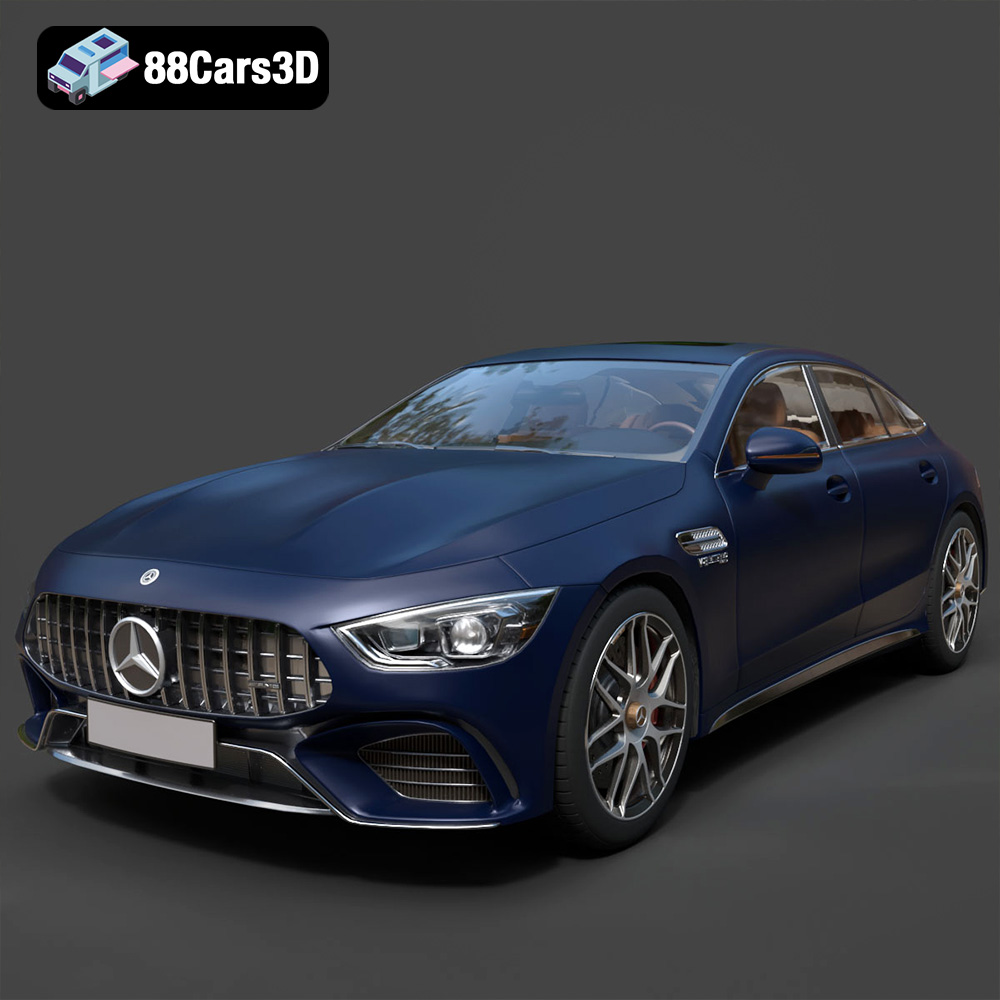
Among the pantheon of modern performance machines, the Mercedes-Benz AMG GT 63 stands out as a true icon, a four-door coupe that masterfully marries aggressive aesthetics with formidable power. Capturing such a vehicle in the digital realm demands an equally meticulous approach, transforming its sweeping lines, muscular stance, and luxurious interior into a versatile 3D model. This is precisely what the Mercedes-Benz AMG GT 63 3D Model delivers, providing creators with an exceptional foundation for their projects. Available at 88cars3d.com, this model exemplifies the blend of artistic craftsmanship and technical optimization necessary for today’s diverse digital applications.
Crafting a 3D model that truly represents a vehicle like the Mercedes-Benz AMG GT 63 is an exercise in precision and passion. Every curve, every vent, and every interior detail must be faithfully recreated to deliver an authentic digital twin. This featured model excels in this regard, offering a level of realism that can elevate any project.
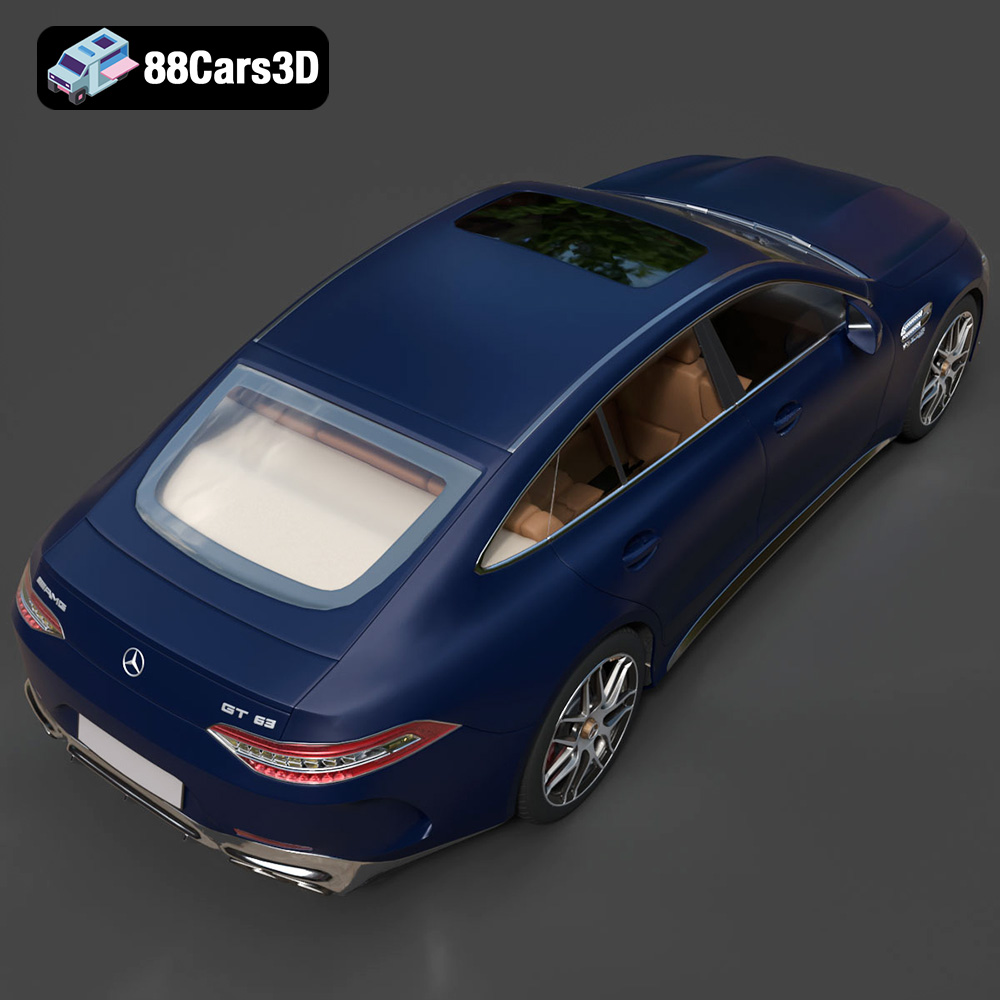
The exterior of the Mercedes-Benz AMG GT 63 is a symphony of performance-oriented design. The 3D model meticulously reproduces these defining characteristics, starting with the iconic Panamericana grille, its vertical slats a clear nod to AMG’s racing heritage. The aggressive quad-exit AMG sports exhaust system is not just visually present but accurately modeled, hinting at the Biturbo V8’s power. Further adding to the realism are the high-resolution Multibeam LED headlights and sleek LED taillights, which not only illuminate the virtual world but also provide accurate geometry for lighting effects. The authentic AMG multi-spoke alloy wheels, complete with high-performance tire treads, are individually modeled, showcasing intricate brake calipers and rotors behind them. The entire body frame geometry and aerodynamic proportions are accurate, ensuring the vehicle’s dynamic presence is maintained, whether stationary or in motion.
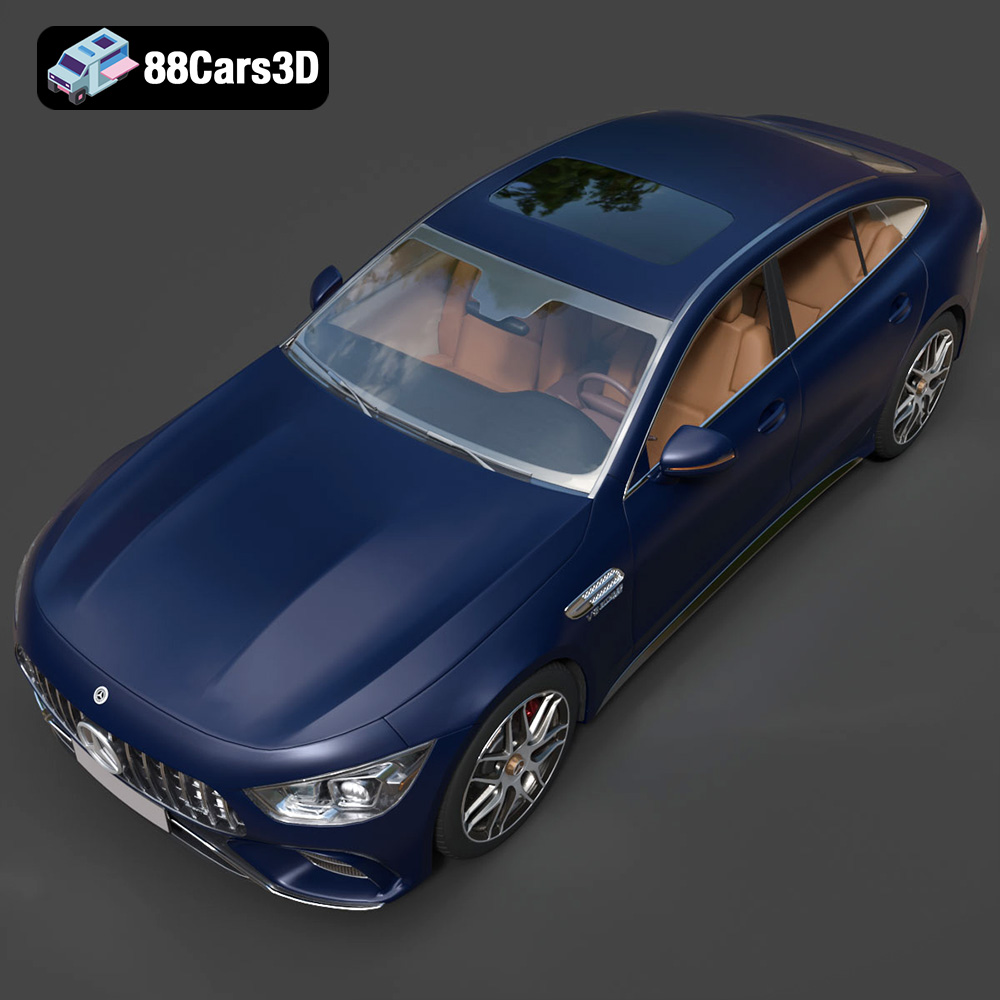
Beyond the striking exterior, the interior of the AMG GT 63 is a realm of luxury and advanced technology. The 3D model’s cockpit and interior features are equally detailed, designed to offer an immersive experience, especially crucial for gaming and virtual reality applications. Authentic AMG Performance sport seats with their detailed stitching invite virtual occupants, while the Alcantara-wrapped multi-function AMG steering wheel promises tactile feedback even in a digital context. The widescreen dual-display digital instrument cluster and infotainment system are accurately depicted, ready for custom UI overlays. Completing the experience are a detailed center console, precision pedals, and an electronic gear selector. The optimized interior geometry ensures that even from a first-person perspective, the user experiences the full luxury and performance ethos of the AMG GT 63.
The versatility of a high-quality 3D model is often defined by the range of file formats it supports. Each format is designed for specific purposes, optimizing for different software environments, use cases, and levels of data retention. When acquiring a model like the Mercedes-Benz AMG GT 63 3D Model, understanding these formats is crucial for seamless integration into your chosen workflow. 88cars3d.com provides a comprehensive suite of formats to ensure maximum compatibility and utility.
The .blend format is native to Blender, one of the most popular open-source 3D creation suites. A .blend file typically contains the entire scene, including mesh data, materials, textures, lighting, cameras, animations, and even physics simulations. This format is fully editable, meaning you can open the model in Blender and access all its components, modify its topology, adjust materials using node-based setups, or even re-rig it for custom animations. It’s ideal for artists deeply integrated into the Blender ecosystem who require complete control and flexibility over the asset.
FBX (Filmbox) is a proprietary file format owned by Autodesk and is widely considered the industry standard for exchanging 3D data between different software applications. It’s particularly favored in game development and real-time visualization due to its robust support for mesh data, animation, cameras, lights, and materials. An .fbx file can efficiently transfer complex scenes, including skinning and rigging information, making it perfect for importing into game engines like Unreal Engine and Unity. Its ability to maintain hierarchy and animation data makes it indispensable for character animation and vehicle dynamics.
OBJ (Object) is one of the oldest and most universally supported 3D file formats. It’s an open standard developed by Wavefront Technologies. While simpler than FBX, it excels at storing mesh data (vertices, normals, UV coordinates), and groups. Material properties are typically referenced via a separate .mtl (material template library) file. .obj is excellent for cross-software compatibility, ensuring that almost any 3D software can open and interpret the model’s geometry. It’s a reliable choice for static models where complex animation data isn’t required but precise mesh representation is paramount.
GLB (GL Transmission Format Binary) is the binary version of the glTF format, designed for efficient transmission and loading of 3D scenes and models by applications. It’s an open standard managed by the Khronos Group and is rapidly gaining traction for web-based 3D, AR (Augmented Reality), VR (Virtual Reality), and mobile applications. A .glb file is a single, self-contained file that includes all geometry, materials, textures, and even animation data, making it incredibly easy to share and integrate into environments like web viewers or mobile AR experiences without external dependencies. Its optimization for runtime performance makes it perfect for interactive 3D.
STL (Stereolithography) is the de facto standard file format for 3D printing and CAD (Computer-Aided Design). It represents a 3D model as a collection of unconnected triangles, forming the surface geometry of the object. .stl files typically do not contain color, texture, or material information, focusing purely on the geometric form. When converting the Mercedes-Benz AMG GT 63 3D Model to .stl, it becomes ready for slicing software to prepare it for physical output on a 3D printer. This format bridges the gap between digital design and tangible reality, enabling hobbyists and professionals to create physical replicas.
PLY (Polygon File Format) is a versatile file format for storing three-dimensional data from 3D scanners, CAD programs, or other applications. It can store not only the geometry (vertices and faces) but also additional properties for each vertex or face, such as color, transparency, surface normals, and texture coordinates. While .obj is more common for basic mesh exchange, .ply can be richer in data, often used in scientific visualization, reverse engineering, and applications requiring precise geometric and attribute data for analysis or complex manufacturing processes.
The .unreal format refers to assets specifically prepared and optimized for direct import into Unreal Engine. While Unreal primarily uses .fbx for import, “unreal” in this context signifies that the asset has undergone a dedicated pipeline of optimization, material setup, and potentially even collision mesh generation to ensure it functions flawlessly within the engine. This means materials are often pre-configured with Unreal’s Physically Based Rendering (PBR) standards, and hierarchies are structured for optimal performance and interaction, saving developers significant setup time. It represents a truly “game-ready” asset, engineered for the demands of high-fidelity real-time environments.
The .max format is native to Autodesk 3ds Max, a powerful 3D modeling, animation, rendering, and compositing software. Like .blend files, a .max file stores the entire scene, including geometry, materials, textures, lighting setups, cameras, and any animations or modifiers applied within 3ds Max. This format is essential for professionals who use 3ds Max for architectural visualization, high-end automotive rendering, or complex animation projects. It allows for complete control over every aspect of the model within the 3ds Max environment, making it ideal for customization and integrating into existing 3ds Max projects.
The true value of a premium 3D model lies not just in its visual appeal, but in its underlying technical craftsmanship. The Mercedes-Benz AMG GT 63 3D Model exemplifies this, boasting specifications and advantages engineered for peak performance across diverse digital applications, from demanding real-time engines to high-fidelity rendering pipelines.
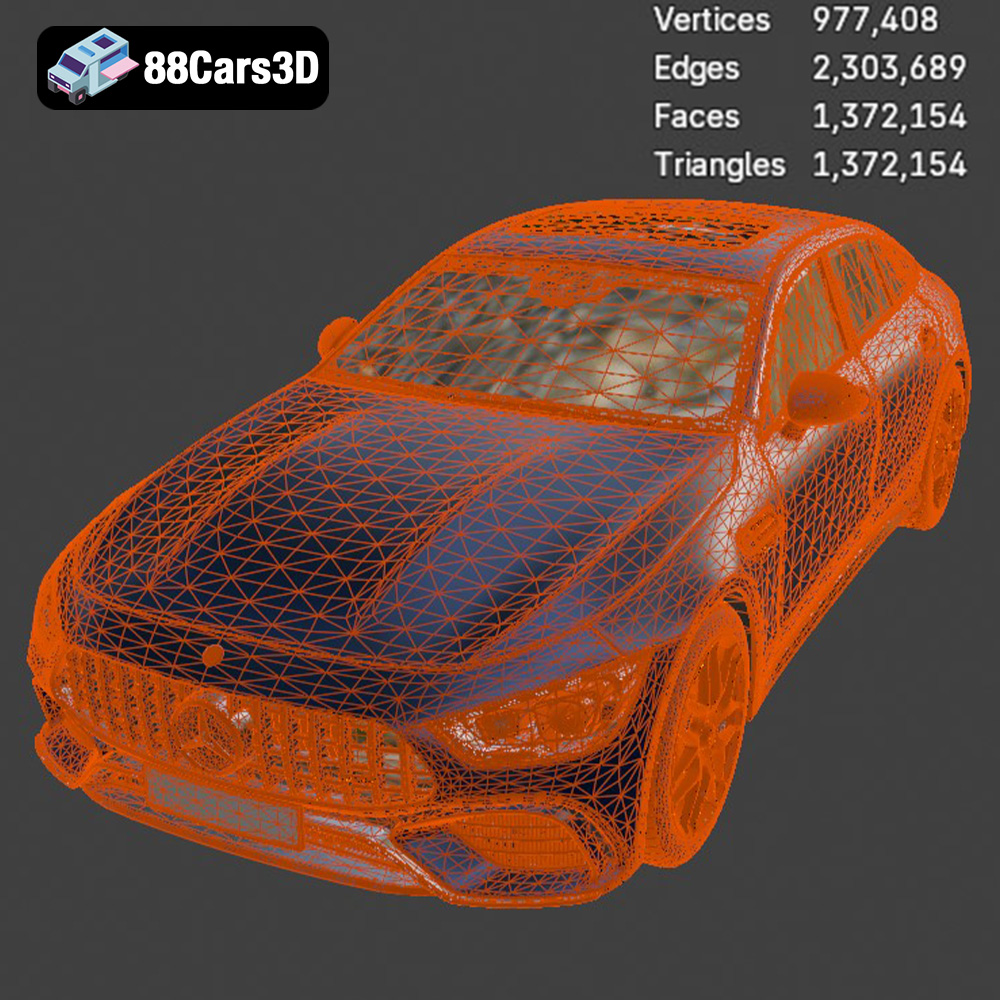
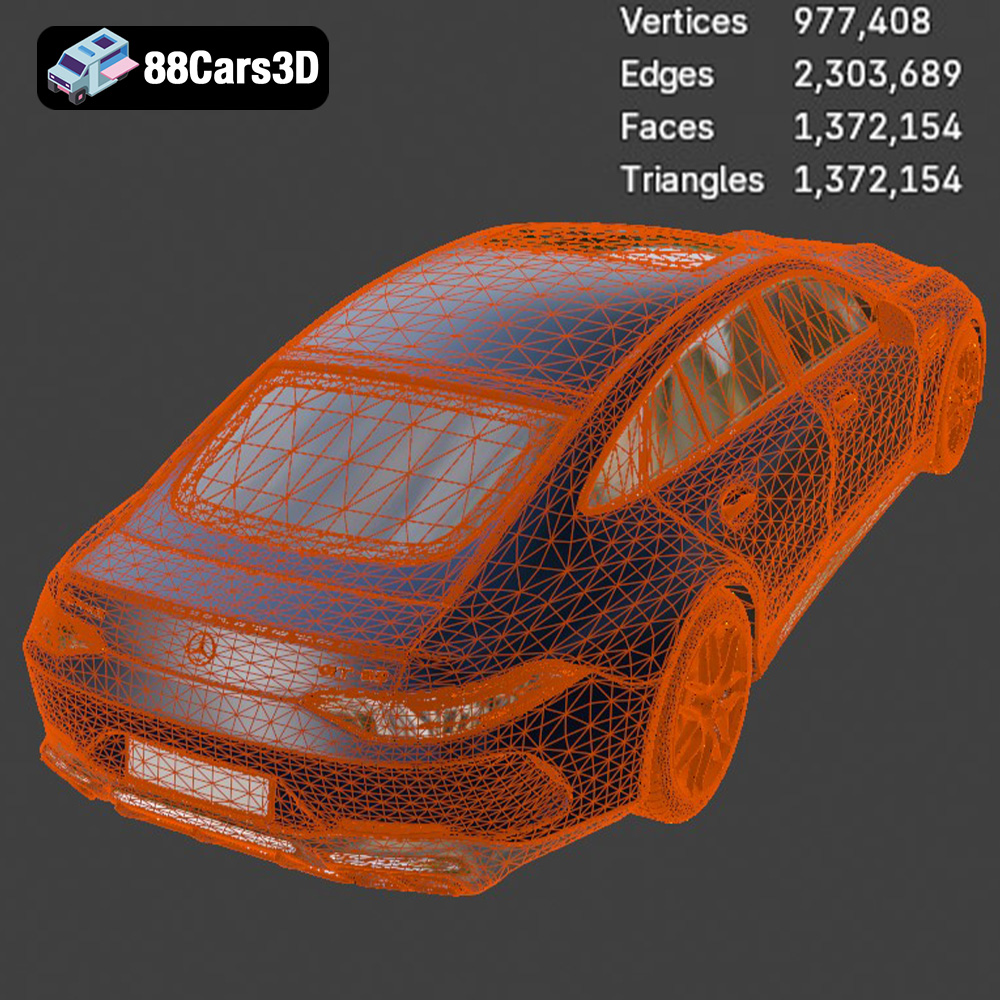
Achieving a perfect balance between visual fidelity and real-time performance is a constant challenge in 3D modeling. This model rises to the occasion with a meticulously optimized topology featuring a balanced triangle count of approximately 350,000. This figure is strategically chosen: it’s high enough to capture the intricate details of the AMG GT 63’s aggressive design, including subtle body panel curves, sharp edges, and detailed grilles, without appearing faceted. Simultaneously, it’s efficient enough to ensure smooth frame rates in demanding real-time environments like Unreal Engine and Unity. Clean, quadded topology (before triangulation for export) further ensures smooth subdivisions and deformation if further detail is required, and provides a solid base for robust UV mapping, essential for applying high-resolution textures and materials with precision and minimal distortion.
A static model is one thing, but a model engineered for dynamic interaction unlocks a world of possibilities. The Mercedes-Benz AMG GT 63 3D Model comes with proper pivot setups for key animated components: steering, individual wheel rotation, and suspension travel. This ‘rigging readiness’ means animators and game developers can quickly integrate the model into dynamic scenes, simulating realistic driving physics or cinematic sequences without extensive re-rigging. Furthermore, the model adheres to real-world scale accuracy, a critical factor for architectural visualizations, automotive configurators, and any application where the digital asset must seamlessly interact with other real-world scaled objects or environments. Separated components for wheels, suspension, doors, and steering further streamline the animation process, allowing for independent control and dynamic responses.
The comprehensive range of included file formats (.blend, .fbx, .obj, .glb, .stl, .ply, .unreal, .max) speaks volumes about the model’s compatibility. This broad support ensures that professionals working in virtually any major 3D software platform—be it Blender, 3ds Max, Maya, Cinema 4D, or real-time rendering engines like Unreal Engine and Unity—can seamlessly import and utilize this asset. For automotive rendering specialists, the model serves as an ideal base for creating stunning promotional imagery or configurator assets. For game developers, its game-ready optimization and comprehensive file formats mean less time on conversion and more time on gameplay, making it an invaluable game asset for racing titles, open-world adventures, or virtual car showrooms.
The Mercedes-Benz AMG GT 63 3D Model is more than just a digital replica; it’s a versatile tool designed to fuel creative projects across a multitude of industries. Its inherent quality and optimization open doors to innovative applications, while its structure allows for extensive customization to fit any unique vision.
The optimized polycount and game-ready status make this model a prime candidate for game development. Imagine it as a hero vehicle in an open-world racing title, a selectable car in a high-speed simulation, or an integral part of an immersive driving experience. Its balanced triangle count ensures smooth performance, a critical factor for maintaining high frame rates in complex game environments. Beyond traditional gaming, the model excels in AR/VR applications. Its efficient .glb format is perfect for virtual showrooms, allowing potential buyers to explore the AMG GT 63 in stunning detail from any angle. Developers can create interactive configurators where users customize paint, wheels, and interior trims in real-time, or build mobile AR experiences that place the car directly in the user’s driveway, bridging the gap between digital and physical.
For architectural visualization (arch-viz) and branding, the model’s high fidelity is a game-changer. Placing the Mercedes-Benz AMG GT 63 into a luxury residential rendering instantly elevates the scene, adding a touch of realism and aspiration. Imagine a sleek AMG GT 63 parked outside a modern villa, its reflections catching the setting sun, enhancing the overall lifestyle appeal. In brand campaigns, this 3D car model can be utilized for compelling marketing visuals, from studio lighting setups showcasing its exquisite details to dynamic action shots that highlight its performance. Agencies can create bespoke advertisements, product showcases, or interactive web experiences that engage audiences on a deeper level, all powered by this authentic digital asset from 88cars3d.com.
For enthusiasts and product designers, the ability to convert the model to the .stl format opens up the fascinating world of 3D printing. This means you can transform the digital Mercedes-Benz AMG GT 63 into a physical collectible or a detailed scale model. The product description provides specific print settings to guide hobbyists: recommended scales of 1:12, 1:18, or 1:24, layer heights between 0.04–0.12 mm (with resin printing recommended for superior detail), and wall thicknesses of 1.2–2.0 mm. Crucially, it advises on infill, support structures for delicate parts like mirrors and exhaust tips, and optimal print orientation for structural integrity. Post-processing, including sanding, priming, and painting with authentic factory colors and metallic finishes, allows for a truly professional physical replica.
The adaptability of the Mercedes-Benz AMG GT 63 3D Model is further enhanced by its customization potential. Artists and developers are not limited to a single factory configuration. They can easily change body colors, experimenting with iconic Magno matte finishes or a spectrum of factory gloss paints to match specific branding or aesthetic requirements. Tire textures can be modified to switch between aggressive track variants and refined street options. Material finishes throughout the model, from the bodywork to the interior, can be adjusted to showcase matte, gloss, carbon fiber, or metallic effects. Furthermore, the model is designed to adapt to various lighting environments, allowing creators to render it under a dramatic sunset, harsh studio lights, or the subtle glow of a city night, ensuring it always looks its best regardless of the scene.
Seamless integration is paramount for any professional 3D asset. The Mercedes-Benz AMG GT 63 3D Model is designed for ease of use across industry-standard software, streamlining workflows for rendering and real-time applications.
For high-end rendering in Blender or 3ds Max, the process begins with importing the appropriate file format (.blend for Blender, .max or .fbx for 3ds Max). Once imported, the focus shifts to material setup. Utilizing Physically Based Rendering (PBR) workflows is crucial for realism. In Blender, this involves setting up Principled BSDF shaders with appropriate texture maps (Albedo/Base Color, Metallic, Roughness, Normal, Ambient Occlusion) for the body, glass, tires, and interior components. Similarly, in 3ds Max, materials like V-Ray Mtl or Corona Mtl would be used, connected to PBR textures. Lighting is another critical aspect; often, an HDRI (High Dynamic Range Image) environment map is used to provide realistic global illumination and reflections, complemented by targeted studio lights to highlight the car’s contours. Camera angles are carefully chosen to emphasize design, and depth of field can be used to add cinematic quality. Post-production in software like Photoshop can further enhance the final image, adjusting colors, contrasts, and adding effects.
Integrating the AMG GT 63 into game engines like Unreal Engine or Unity capitalizes on its “game-ready” optimization. For Unreal Engine, importing the .fbx or leveraging the dedicated .unreal format streamlines the process significantly. Upon import, materials will need to be configured using Unreal’s PBR material editor, connecting texture maps to base color, roughness, metallic, and normal inputs. Collision meshes are essential for realistic physics and interaction within the game world, often generated automatically or manually crafted for precision. Depending on the project’s performance requirements, Level of Detail (LOD) meshes might be generated to optimize rendering at various distances, though the model’s balanced polycount already makes it highly efficient. For interactivity, blueprints in Unreal (or scripts in Unity) can be set up to control doors, steering, and wheel rotation, allowing players to engage with the vehicle dynamically. Optimizing texture sizes, material complexity, and draw calls are ongoing considerations to ensure peak performance in the final game or application.
The digital automotive world thrives on precision, realism, and versatility. The Mercedes-Benz AMG GT 63 3D Model embodies these principles, offering an exceptional asset for professionals and enthusiasts alike. From its meticulously captured design details and immersive interior to its game-ready optimization and extensive format support, this model stands as a testament to high-quality 3D asset creation.
Whether you’re developing the next generation of racing simulators, crafting stunning architectural visualizations, producing engaging AR/VR experiences, or bringing a detailed replica to life through 3D printing, this model provides the robust foundation you need. Its flexibility for customization, coupled with seamless integration into industry-standard workflows, makes it an invaluable addition to any digital arsenal. Experience the fusion of performance and digital artistry, and elevate your projects with top-tier 3D car models. Explore the Mercedes-Benz AMG GT 63 3D Model and a vast collection of other high-quality assets at 88cars3d.com, your premier destination for professional-grade automotive 3D assets.
The Mercedes-Benz AMG GT 63 represents the pinnacle of modern German performance engineering, blending aggressive four-door coupe styling with track-dominating power. This highly detailed 3D model perfectly captures the sweeping roofline, muscular haunches, signature Panamericana grille, and quad-exit exhaust system that define this iconic high-performance luxury vehicle. This model features meticulously optimized topology with a balanced triangle count designed for maximum visual fidelity without sacrificing real-time performance. It is fully game-ready and engineered for seamless integration into game engines, architectural visualizations, and high-end rendering pipelines. Perfect for modern urban environments, high-speed racing simulations, luxury lifestyle visualizations, and immersive virtual showrooms.
$19.99
.blend
.fbx
.glb
.max
.obj
.ply
.rendering
.sports car
.stl
.unreal
amg-gt-63
car-3d-model
game asset
game-ready
high-performance
low-poly
luxury car
mercedes-benz
optimized
VR/AR