Get 20% OFF All Premium 3D & STL Models!

The automotive industry, game development, architectural visualization, and even augmented reality experiences are constantly pushing the boundaries of visual fidelity and interactive realism. At the heart of this evolution lies the demand for exceptionally detailed and optimized 3D models. A truly great 3D vehicle asset isn’t just about aesthetics; it’s a complex interplay of meticulous geometry, realistic materials, and efficient technical specifications designed to integrate seamlessly into diverse professional pipelines. Whether you’re crafting a new open-world game, designing a virtual car configurator, or producing a stunning commercial render, the quality of your foundational 3D car models dictates the success of your project.
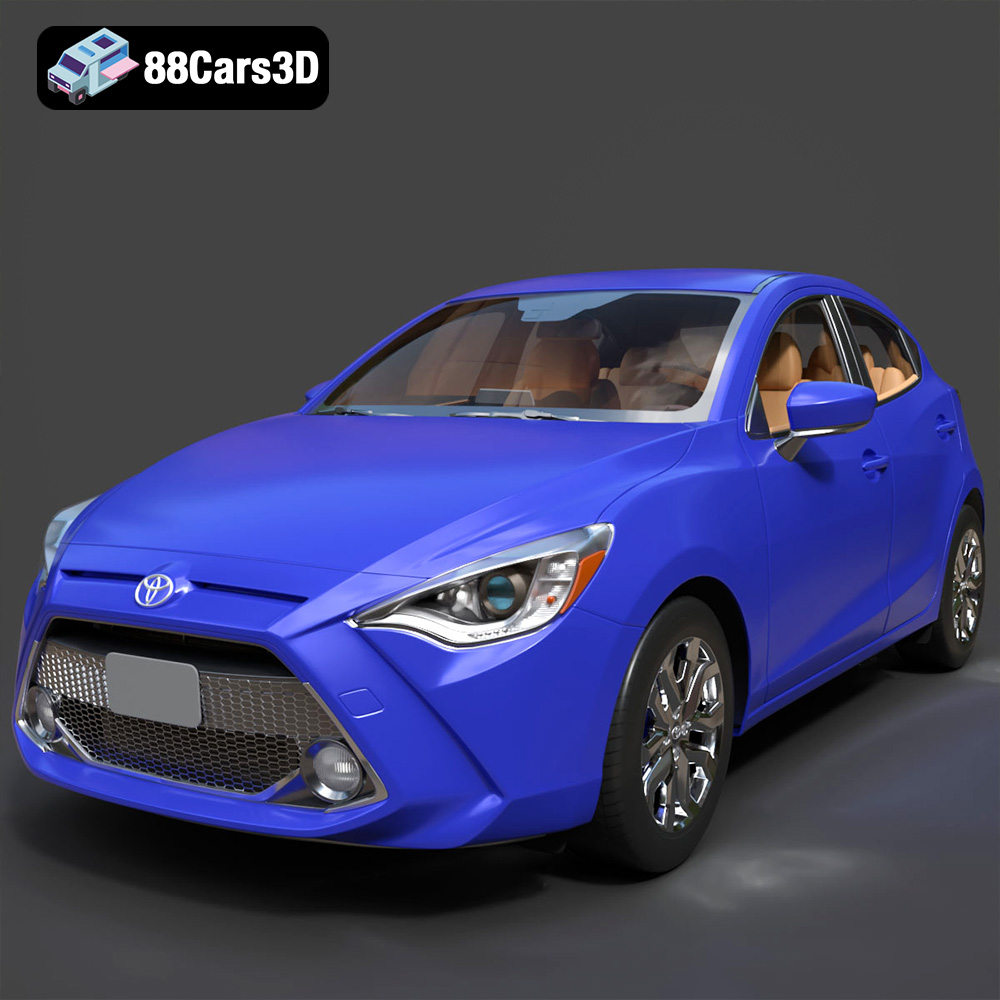
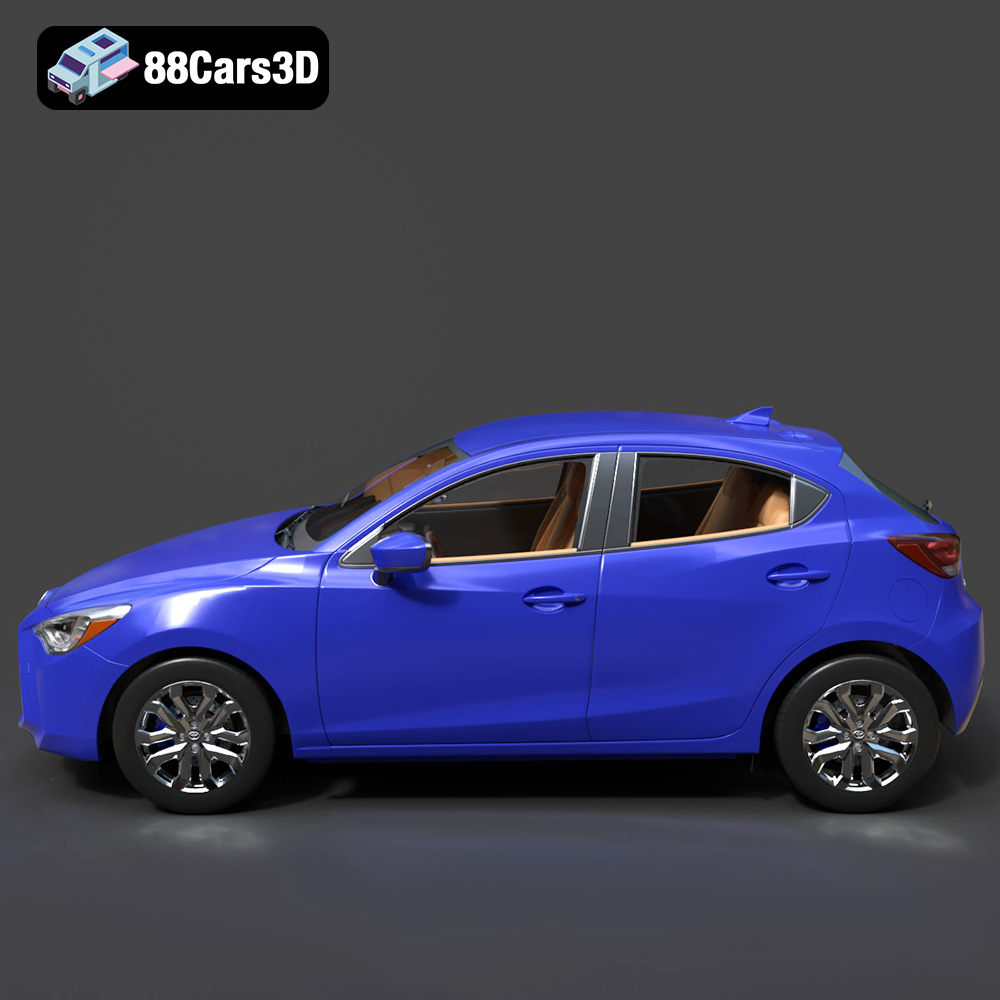
Consider the practical urban charm and sporty stance of the Toyota Yaris Hatchback US 2020. This popular subcompact vehicle embodies a blend of efficiency and modern design, making it a staple on roads worldwide. For 3D artists and developers, translating such a recognizable vehicle into a digital asset requires precision and a deep understanding of optimized 3D modeling practices. Our featured Toyota Yaris Hatchback US 2020 3D model stands as a prime example of this dedication. It’s not merely a static representation but a meticulously engineered asset, ready to elevate a multitude of digital projects with its authentic detail and game-ready optimization.
In this comprehensive guide, we’ll delve into the technical nuances of professional 3D car models, explore critical file formats, and illustrate how an asset like the Toyota Yaris Hatchback US 2020 3D model can empower your creative endeavors across various industries. From understanding poly counts and PBR materials to integrating assets into game engines and rendering software, we aim to provide a detailed roadmap for maximizing the potential of high-quality automotive assets.
In the world of 3D modeling and visualization, selecting the correct file format is crucial for workflow efficiency, compatibility, and achieving desired project outcomes. The Toyota Yaris Hatchback US 2020 3D model, for instance, is offered in a comprehensive range of formats, ensuring its adaptability across virtually any professional pipeline. Let’s break down these essential formats and their specific use cases:
The `.blend` format is Blender’s native file type, preserving an entire scene with all its data. This includes not only the mesh geometry but also materials (including advanced node setups), textures, lighting, cameras, animations, rigging, physics simulations, and modifiers. When you download the Toyota Yaris Hatchback US 2020 3D model in `.blend` format, you’re getting a fully editable, self-contained project file. This is ideal for artists who primarily use Blender and require maximum flexibility for customization, material tweaks, or integrating the model into existing Blender scenes without loss of data or hierarchy.
FBX (Filmbox) is arguably the most widely adopted proprietary file format for 3D data exchange, developed by Autodesk. It supports geometry, materials, textures, animation, and rigging, making it incredibly versatile. For real-time pipelines like Unreal Engine and Unity, `.fbx` is the go-to format for importing complex animated models. It maintains scene hierarchy, pivot points, and UV maps effectively, which is vital for game assets. The Toyota Yaris model in `.fbx` ensures a smooth transfer to these game engines, preserving its optimized topology and separated components for animation.
The `.obj` (Wavefront OBJ) format is a universal standard for 3D geometry. It’s a simple, text-based format that defines polygon mesh data (vertices, normals, UVs, and faces). While it supports basic material definitions via an accompanying `.mtl` file, it doesn’t store advanced features like animation, rigging, or complex shader networks. `.obj` excels in cross-software compatibility, making it perfect for scenarios where you need to import the core geometry of the Toyota Yaris into almost any 3D application, regardless of its native format support. It’s reliable for static model import when material setup will be done anew in the target software.
GLB (GL Transmission Format Binary) is the binary version of glTF, an open-standard, royalty-free format for 3D scenes and models. `.glb` files package geometry, materials, textures, and animations into a single, compact file. Its primary strength lies in its optimization for web-based 3D applications, augmented reality (AR), and virtual reality (VR) experiences. Browsers can natively display `.glb` models efficiently. The Toyota Yaris in `.glb` format is perfect for embedding in a website’s virtual showroom or for mobile AR applications, offering quick loading times and broad platform support.
STL (Stereolithography) is the de facto standard file format for 3D printing. It represents a 3D model as a series of connected triangles (a tessellated surface) without color, texture, or material information. While lacking visual fidelity for rendering, its simplicity makes it ideal for additive manufacturing. The Toyota Yaris Hatchback US 2020 3D model, convertible to `.stl`, opens up possibilities for hobbyists and professionals to produce physical scale models, requiring careful consideration of scale, wall thickness, and support structures during the printing process.
PLY (Polygon File Format) is another format for storing 3D data, particularly useful for scanned 3D objects or point cloud data. It can store a variety of properties including color, transparency, surface normals, and range data, going beyond what `.obj` typically offers for raw mesh data. While not as common for general asset exchange, `.ply` is valuable in scientific, CAD, or reverse engineering workflows where precise mesh information and additional per-vertex or per-face data are critical. This format ensures the intricate surface details of the Toyota Yaris are preserved for specific analytical applications.
While not a universal file extension in the same vein as .fbx, the inclusion of an “.unreal” optimized asset often indicates a project file or package specifically prepared for direct import into Unreal Engine. This typically means the asset has been pre-configured with materials, textures, and potentially even Blueprints or animation setups tailored for Unreal’s rendering pipeline. An Unreal-ready Toyota Yaris model offers immediate drag-and-drop functionality, saving significant time on asset preparation and material configuration, and ensuring PBR materials render correctly within the engine’s lighting system.
The `.max` format is the native file type for Autodesk 3ds Max, a powerful 3D modeling, animation, and rendering software. Similar to `.blend`, a `.max` file contains all scene information—geometry, materials, lights, cameras, animations, and modifiers—specific to the 3ds Max environment. For professionals working within the Autodesk ecosystem, the Toyota Yaris in `.max` format provides the highest degree of flexibility for further manipulation, advanced rendering setups with V-Ray or Corona, and intricate animation sequences.
This wide array of formats available for the Toyota Yaris Hatchback US 2020 3D model on 88cars3d.com underscores its versatility, catering to virtually any professional requirement and ensuring seamless integration into diverse creative pipelines.
Creating a truly authentic and high-performance 3D car model requires more than just artistic flair; it demands a deep understanding of geometry, materials, and optimization techniques. The Toyota Yaris Hatchback US 2020 3D model exemplifies this fusion, meticulously engineered to deliver both visual fidelity and real-time efficiency. This asset is a testament to the skill involved in capturing a real-world vehicle’s essence while making it viable for demanding digital environments.
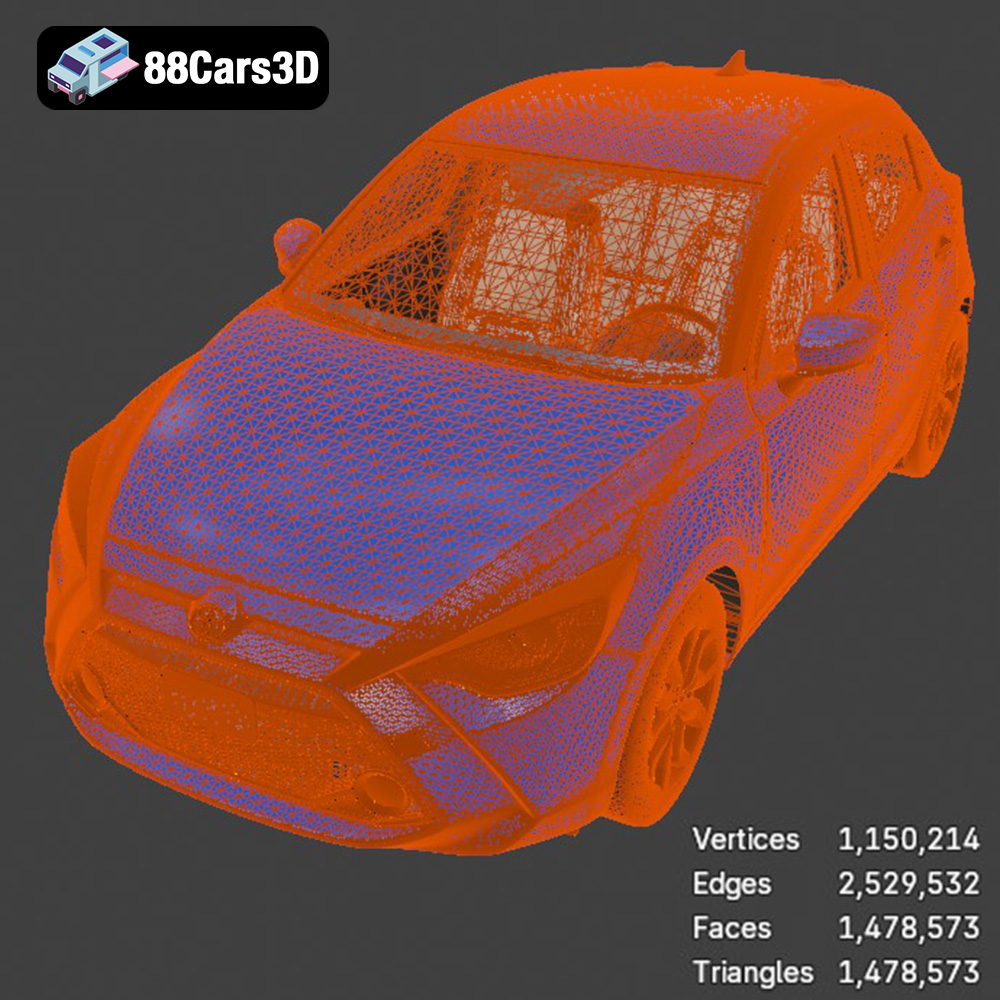
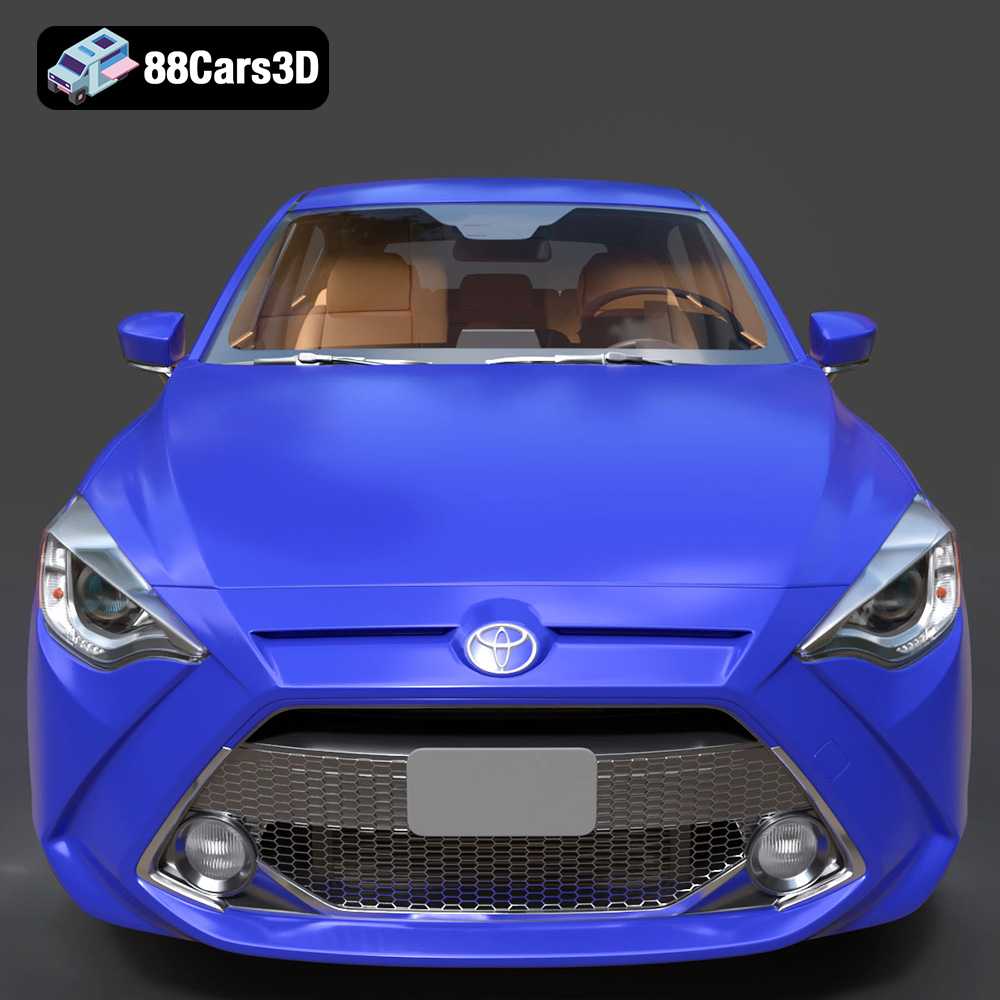
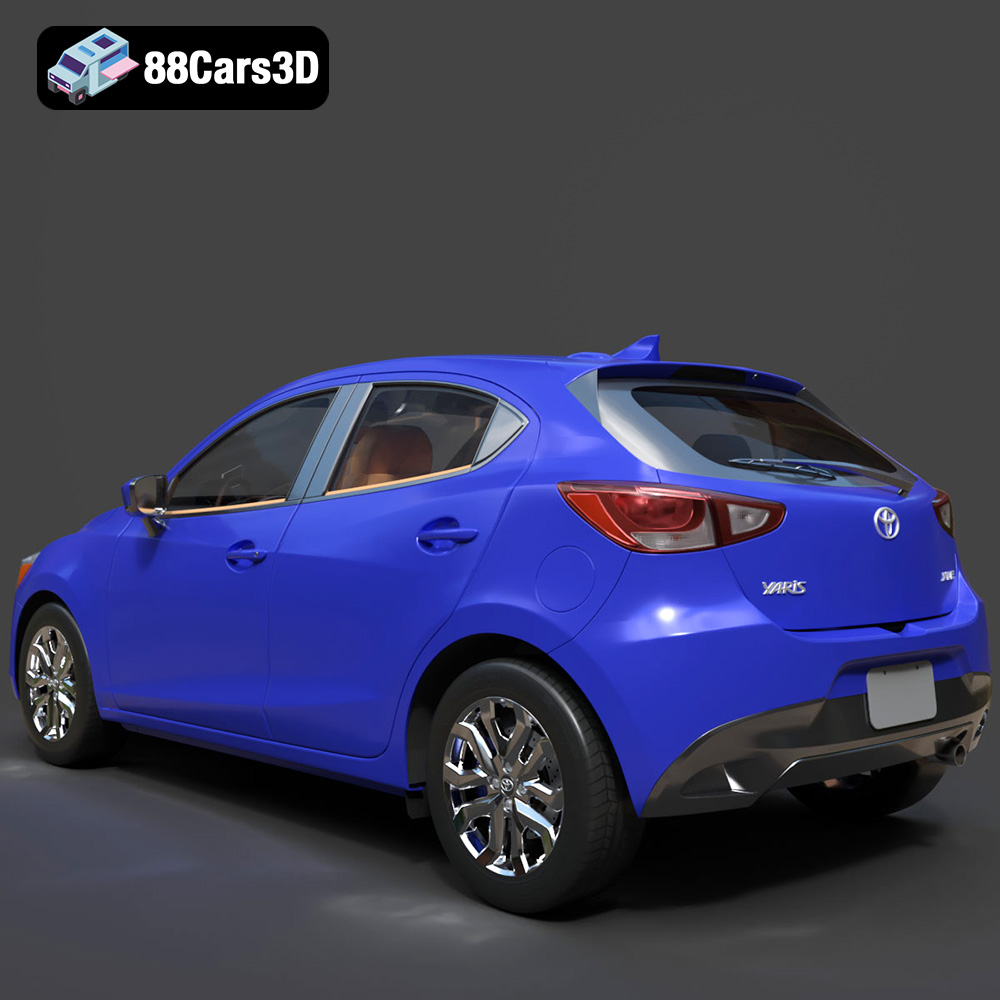
The exterior of the Toyota Yaris Hatchback US 2020 3D model is a showcase of precision. From the distinctive front grille and dynamic swept-back LED headlights to the carefully sculpted rear bumper and modern exhaust layout, every characteristic has been faithfully recreated. The aerodynamic body lines and accurate proportions ensure that the digital model is instantly recognizable and true to its real-world counterpart. Critical for demanding applications, the model boasts an optimized topology of approximately 250,000 triangles. This poly count is a sweet spot, providing ample detail for close-up renders and animations while remaining lean enough for smooth performance in real-time game engines like Unreal Engine and Unity. This careful balance is a hallmark of truly professional game assets.
The attention to detail extends seamlessly into the interior, offering an immersive experience for first-person perspectives in games or virtual tours. The cockpit of the Toyota Yaris Hatchback US 2020 is a modern, functional space, and the 3D model reflects this with impressive accuracy.
Beyond geometry, the visual realism of the Toyota Yaris model is heavily reliant on its Physically Based Rendering (PBR) materials. These materials are calibrated to react accurately to light, mimicking real-world surfaces. This includes realistic metallic finishes, glass reflections, rubber textures for tires, and the subtle sheen of cloth upholstery. The PBR workflow ensures consistent, high-quality rendering across different engines and lighting conditions, making the asset truly “plug-and-play” for a professional look. The impeccably structured geometry and PBR materials work in concert to achieve unparalleled realism.
The versatility of a high-quality 3D car model like the Toyota Yaris Hatchback US 2020 extends across numerous professional domains. Its optimized design and availability in multiple formats make it an invaluable asset for a wide range of creative and technical projects.
For game developers, the Toyota Yaris Hatchback US 2020 3D model is a ready-to-use solution for populating virtual worlds. Its ~250,000 triangle count strikes the perfect balance for real-time engines, allowing for visually rich environments without sacrificing frame rates. This makes it ideal for:
Integration into engines like Unreal Engine is streamlined thanks to formats like `.fbx` and potentially `.unreal` packages. Developers can easily import the model, apply collision meshes, set up materials using Unreal’s PBR system, and animate the vehicle components using sequencer or Blueprint.
Augmented Reality (AR) and Virtual Reality (VR) platforms are transforming how consumers interact with products. The Toyota Yaris model is perfectly suited for:
For artists focused on producing high-quality stills and animations, the Toyota Yaris model provides an excellent foundation for:
While primarily a digital asset, the Toyota Yaris Hatchback US 2020 3D model is also convertible to `.stl` format, opening up avenues for physical creation. This is excellent for:
Successful 3D printing requires attention to specific settings: recommended scales (1:12, 1:18, 1:24), layer height (0.04–0.12 mm for resin), wall thickness (1.2–2.0 mm), and infill. Support structures are essential for intricate parts like the exhaust and side mirrors, ensuring the fidelity of the final print. Post-processing steps like sanding, priming, and painting with authentic factory colors can further enhance the physical model’s realism.
The true value of a versatile 3D asset lies in its seamless integration into various professional software environments. The Toyota Yaris Hatchback US 2020 3D model, available from 88cars3d.com, is designed with this interoperability in mind, supporting workflows in industry-standard applications like 3ds Max, Blender, and Unreal Engine.
For professionals using Autodesk 3ds Max, the `.max` file format offers unparalleled flexibility. Importing the native `.max` file ensures that all scene data, including object hierarchy, pivot points, and even initial material setups, are perfectly preserved. This allows artists to:
Blender users benefit immensely from the `.blend` file, which delivers the complete scene with all its native settings. This allows for:
Unreal Engine is a powerhouse for real-time visualization and game development. The Toyota Yaris model is “game-ready,” meaning it’s optimized for performance within such environments. Using the `.fbx` format, and potentially the dedicated `.unreal` optimized package, developers can:
By providing the Toyota Yaris Hatchback US 2020 3D model in these widely used formats, 88cars3d.com ensures that creative professionals can seamlessly integrate this high-quality asset into their preferred workflows, maximizing efficiency and achieving exceptional results.
The demands of modern digital content creation – from breathtaking automotive rendering to interactive game environments and immersive AR/VR experiences – necessitate 3D assets that are not only visually stunning but also technically robust and highly adaptable. The Toyota Yaris Hatchback US 2020 3D model epitomizes these qualities, offering a meticulously crafted asset that balances aesthetic fidelity with real-time performance optimization.
We’ve explored how its optimized geometry, PBR materials, and separated, animatable components make it an ideal choice for game development, while its adaptability for AR/VR platforms opens doors for innovative product visualization. Furthermore, its availability in a wide array of industry-standard file formats—from .blend and .max for native software flexibility, to .fbx for universal engine compatibility, and .glb for web-optimized experiences, even .stl for tangible 3D prints—underscores its unparalleled versatility. This ensures that professionals across diverse fields can integrate it seamlessly into their workflows, whether they are in 3ds Max, Blender, or Unreal Engine.
Investing in high-quality 3D car models like the Toyota Yaris Hatchback US 2020 from 88cars3d.com is not just about acquiring a digital object; it’s about acquiring a powerful tool that accelerates production, enhances visual realism, and unlocks new creative possibilities. As the digital landscape continues to evolve, the demand for such expertly crafted and technically sound assets will only grow, making them indispensable for anyone looking to stay at the forefront of automotive design, visualization, and interactive content creation.
Discover the perfect blend of efficiency, agility, and modern aesthetics with our meticulously crafted Toyota Yaris Hatchback US 2020 3D model. Renowned for its urban practicality and sporty stance, this subcompact vehicle boasts a distinctive front grille, dynamic swept-back LED headlights, and aerodynamic body lines. Every defining characteristic, from the sleek exterior silhouette to the carefully sculpted rear bumper and modern exhaust layout, has been faithfully recreated to capture the true essence of this popular hatchback. Engineered with an optimized topology of approximately 250,000 triangles, this game-ready model strikes an impeccable balance between high-end visual fidelity and real-time performance. Designed for seamless integration, it features impeccably structured geometry, realistic PBR materials, and separated components ensuring unparalleled realism across game engines, rendering software, and augmented or virtual reality platforms.
$19.99
.blend
.fbx
.glb
.hatchback
.max
.obj
.ply
.rendering
.stl
.toyota
.unreal
.yaris
car-3d-model
compact-car
game asset
game-ready
low-poly
optimized
VR/AR
yaris-hatchback