Get 20% OFF All Premium 3D & STL Models!

Few aircraft command the respect and admiration of the Supermarine Spitfire. A symbol of resilience and engineering prowess, its distinctive silhouette graced the skies during one of history’s most pivotal conflicts. The roar of its Rolls-Royce Merlin engine, the elegant curve of its elliptical wings, and its legendary combat record have cemented its place not just in history books, but in the collective imagination of aviation enthusiasts worldwide.
Today, the legacy of this iconic fighter extends beyond museums and historical archives, finding new life in the intricate world of 3D modeling. For designers, game developers, filmmakers, and simulation creators, bringing such a detailed piece of history into digital projects requires not just passion, but access to high-quality, technically sound assets. This is where models like the Supermarine Spitfire MK2A 3D Model truly shine, offering an unparalleled foundation for a myriad of creative applications. Whether you’re aiming for a historically accurate flight simulator, a dramatic cinematic sequence, or an immersive AR/VR experience, the meticulous detail and versatile file formats of this particular model provide an exceptional starting point, available for immediate integration into your next big project.
The journey of a 3D model from concept to completion, and then into various applications, relies heavily on the file format it adopts. Each format serves a specific purpose, optimized for different software environments, use cases, and levels of data preservation. When acquiring a premium asset like the Supermarine Spitfire MK2A 3D Model, understanding these formats is crucial for ensuring seamless integration and maximizing your project’s potential. The Spitfire model’s availability in a comprehensive suite of formats caters to virtually every professional workflow, from animation studios to game development pipelines.
The .blend file format is native to Blender, the popular open-source 3D creation suite. It’s an incredibly comprehensive format, containing not just the mesh data but also materials, textures, lighting setups, cameras, animation data, and even the full scene hierarchy. For users working within Blender, this means a “fully editable Blender scene with materials.” You can open the Spitfire model in Blender and immediately begin dissecting its construction, adjusting shaders, modifying geometry, or extending its animation rigs. This format is ideal for artists who want maximum flexibility and control, allowing for deep customization without losing any original scene data.
Developed by Autodesk, .fbx (Filmbox) has become the gold standard for 3D data interchange across various software applications and game engines. It’s a robust format capable of storing complex scene information, including geometry, materials, textures, animations, and skeletal data. Its broad compatibility makes it “ideal for Unreal, Unity, and real-time pipelines.” When importing the Spitfire MK2A as an .fbx, you can expect a reliable transfer of the model’s structure and basic material assignments, making it ready for real-time rendering environments where performance and efficient data handling are paramount. Most 3D DCC (Digital Content Creation) tools can export and import FBX with high fidelity.
The .obj (Wavefront OBJ) format is one of the oldest and most widely supported 3D file formats, making it a truly “universal format for cross-software compatibility.” It primarily stores geometric data – vertices, normals, UV coordinates, and faces – and can reference external material files (.mtl) for basic shading information. While it doesn’t support animation or rigging data, its simplicity and widespread adoption ensure that the Spitfire model can be opened and worked with in almost any 3D software package. It’s an excellent choice for static meshes, archival purposes, or as a foundational model for extensive re-texturing and re-shading in a new environment.
.glb (GLB, Binary glTF) is a relatively newer format gaining significant traction, especially in web-based 3D, AR, and VR applications. It’s a binary version of the glTF (GL Transmission Format), designed for efficient transmission and loading of 3D scenes and models. Described as “optimized for AR, VR, and browser-based display,” .glb files package all necessary data (geometry, materials, textures, animations) into a single file, reducing HTTP requests and speeding up load times. For showcasing the Spitfire model in a web viewer, an augmented reality app, or a virtual reality experience, .glb offers superior performance and integration.
The .stl (Stereolithography) format is synonymous with 3D printing. It represents a 3D model as a series of connected triangles, describing only the surface geometry without color, texture, or other model attributes. As such, it is “suitable for 3D printing output.” When preparing the Supermarine Spitfire for physical fabrication, the .stl file provides the unambiguous geometric data that a 3D printer needs to slice and build the object layer by layer. This format is crucial for hobbyists and professionals looking to create physical scale models or prototypes of the iconic aircraft.
The .ply (Polygon File Format, or Stanford Triangle Format) is primarily used for storing 3D data from 3D scanners and for applications requiring high precision mesh data, such as CAD or scientific analysis. It can store a wide range of properties for each vertex, face, or edge, including color, transparency, normals, texture coordinates, and even reliability information. While less common for general game assets, its inclusion for the Spitfire model ensures “precision mesh format for CAD or analysis” for specialized engineering, historical reconstruction, or measurement-based projects.
The .unreal format refers to assets specifically packaged or optimized for direct use within the Unreal Engine. While often technically an .fbx import that has been pre-processed, its inclusion signifies an “engine-ready asset for real-time environments.” This usually means that the model has been rigorously tested for compatibility, potentially includes collision meshes, LOD (Level of Detail) setups, and material instances tailored for the engine’s renderer. For developers aiming to drop the Supermarine Spitfire straight into an Unreal project, this format ensures minimal setup and maximum efficiency.
Finally, the .max format is the proprietary file type for Autodesk 3ds Max, one of the most powerful 3D modeling, animation, and rendering software packages. Similar to .blend, a .max file contains the entire scene data, including geometry, modifiers, materials, lights, cameras, animation keyframes, and plugins used within 3ds Max. It offers an “editable 3ds Max project for animation and rendering,” providing complete control over the Spitfire model for high-end cinematic rendering, complex animation sequences, or detailed architectural visualization projects. Professionals using 3ds Max will find this invaluable for deep customization and leveraging the software’s advanced rendering capabilities.
The availability of the Supermarine Spitfire MK2A 3D Model in this comprehensive array of formats from 88cars3d.com underscores its versatility and suitability for nearly any digital endeavor, providing creators with the right tools for every stage of their workflow.
Creating a 3D model of an iconic vehicle, especially one with such a rich history as the Supermarine Spitfire MK2A, is a meticulous process that bridges historical accuracy with digital artistry. It’s not merely about replicating shapes, but capturing the spirit and functional elegance of the original. The high-quality 3D car models (a principle that applies equally to legendary aircraft like the Spitfire) available on platforms like 88cars3d.com demonstrate this commitment to excellence, providing assets that are both visually stunning and technically robust.
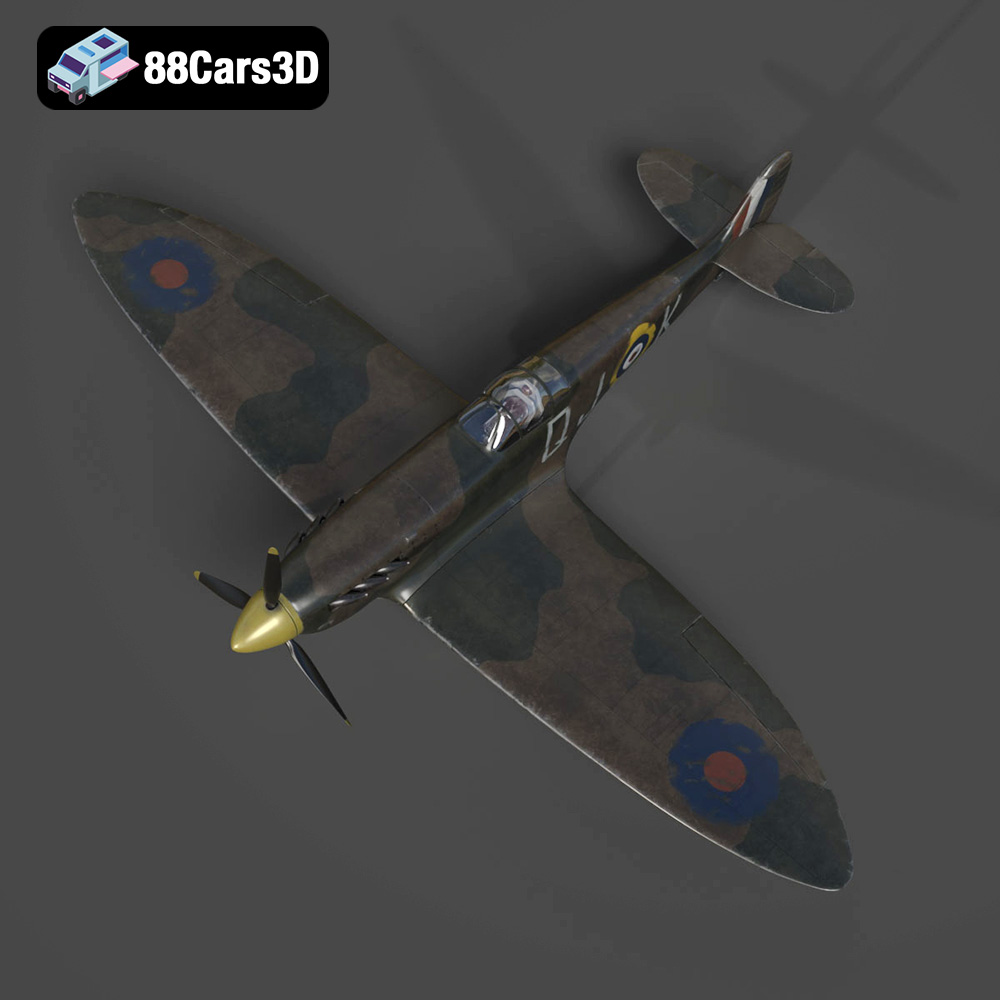
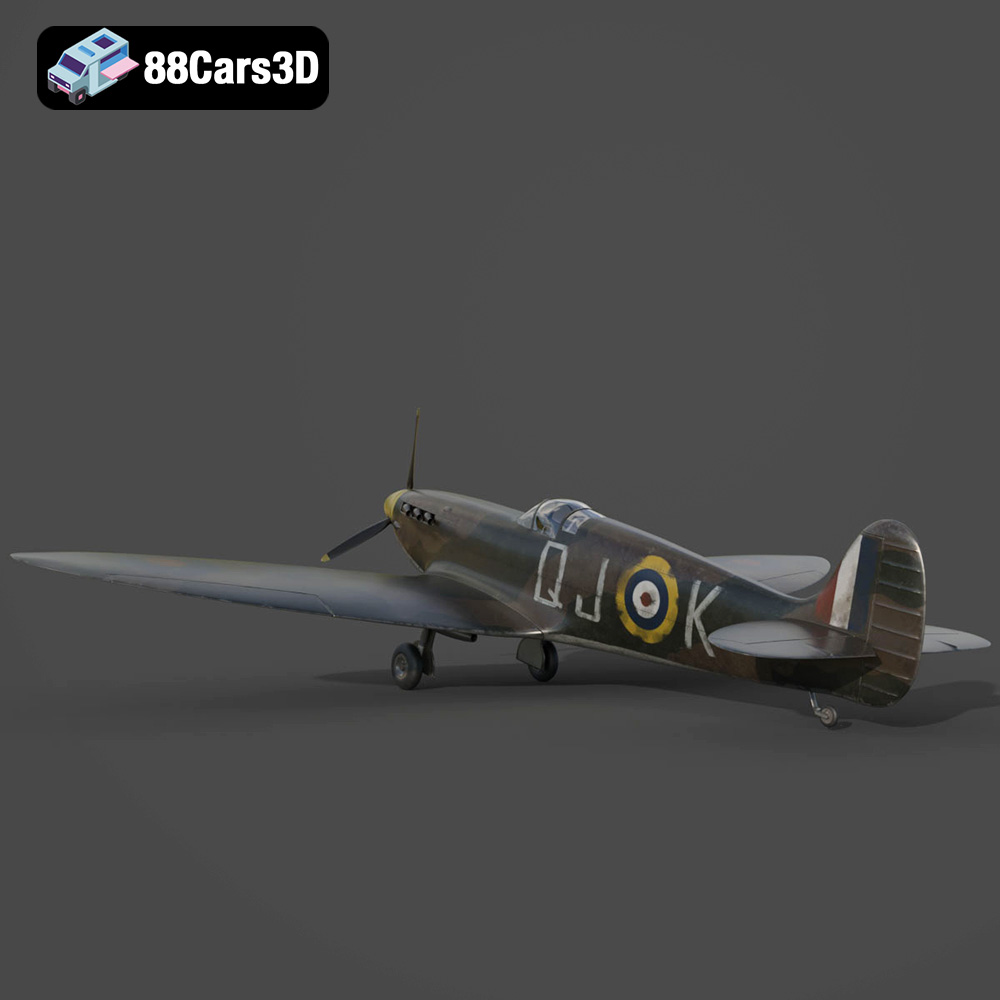
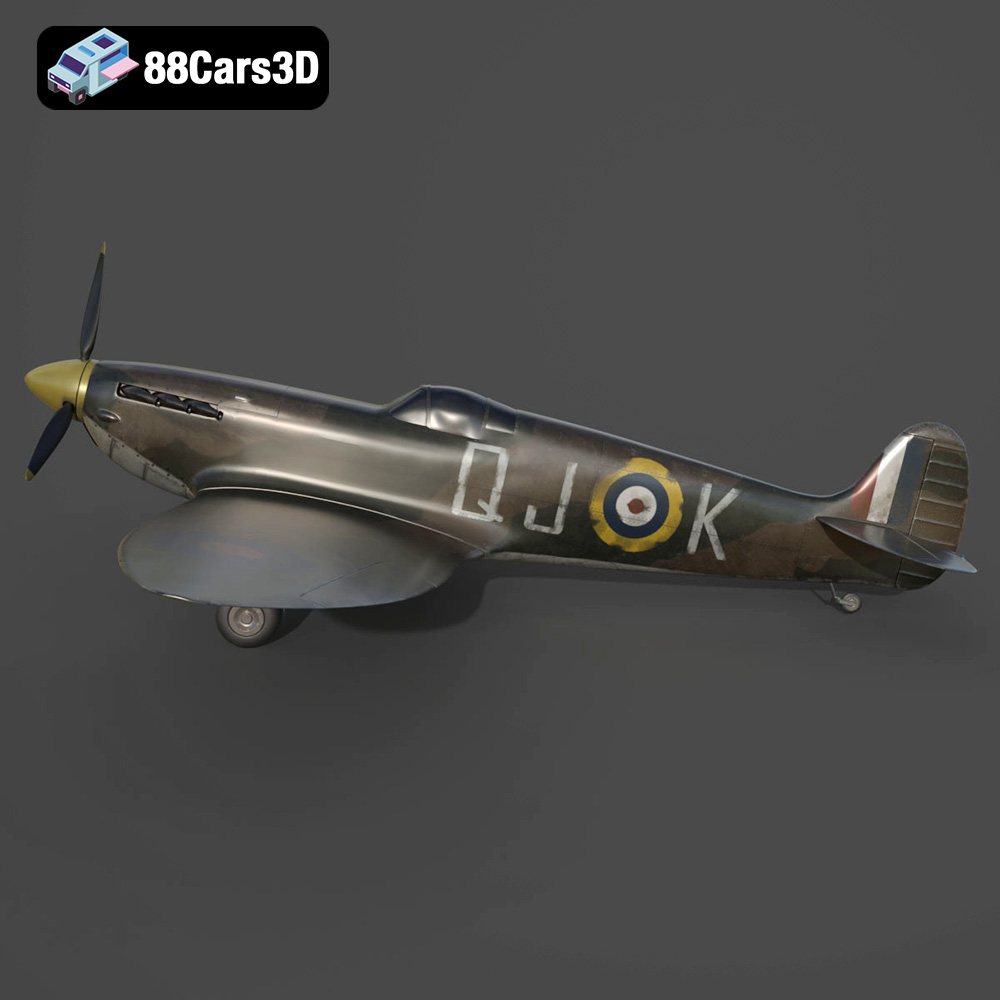
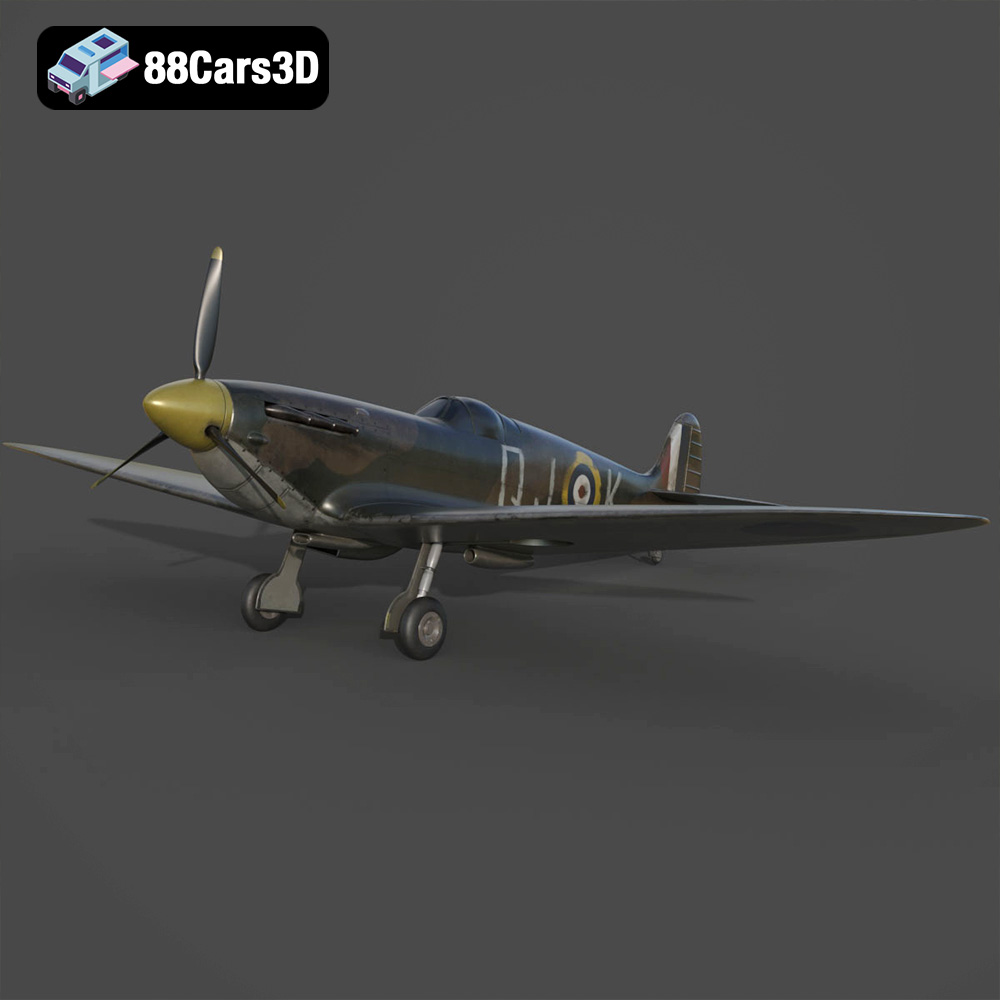
The foundation of any exceptional vehicle model lies in its adherence to real-world dimensions and historical blueprints. For the Supermarine Spitfire MK2A, this means painstakingly recreating its unique aerodynamic form. The “accurate Supermarine Spitfire MK2A airframe geometry and historical proportions” are paramount. This extends to the signature “elliptical wing design,” which was not just aesthetically pleasing but functionally superior for maneuverability. Details like the “detailed Rolls-Royce Merlin engine exhaust stacks and cowling” and the “authentic propeller blade profile with spinner hub” are critical. Even smaller elements, such as “historically accurate navigation lights and pitot tube details,” contribute to an overall model that can withstand close scrutiny, making it perfect for educational content or historical reconstructions.
For flight simulators, VR experiences, or any first-person perspective, the cockpit is the heart of the immersion. The Supermarine Spitfire MK2A 3D model doesn’t just focus on the exterior; it delivers an “authentic pilot seat with detailed harness attachments,” providing a sense of realism. The “historically accurate spade-grip control stick and rudder pedals” are not merely cosmetic; they hint at the tactile experience of piloting this machine. Furthermore, the “intricate instrument cluster featuring altimeter, artificial horizon, and engine gauges,” alongside the “throttle quadrant, trim wheels, and authentic canopy latching mechanisms,” ensures that every glance inside feels genuine. This “optimized geometry for first-person POV” is essential for deeply engaging experiences.
A static model, no matter how detailed, limits creative possibilities. Professional 3D vehicle models are designed with animation in mind. The Supermarine Spitfire MK2A model excels here, featuring “separated control surfaces, propeller, and landing gear.” This means the ailerons, flaps, and rudder can be articulated independently. The “retractable landing gear with intricate strut and tire details” can be animated to deploy or retract smoothly, and the propeller can be spun realistically. These “proper pivot setup for propeller rotation, landing gear retraction, and control surface deflection” are crucial for creating dynamic scenes, whether it’s a take-off sequence, a dogfight, or a landing animation, allowing artists to breathe life into the digital legend.
In the world of interactive media, where every millisecond counts, the technical optimization of 3D game assets is as critical as their visual fidelity. Game developers, AR/VR creators, and simulation engineers require models that not only look fantastic but also perform flawlessly within real-time rendering engines. The Supermarine Spitfire MK2A 3D Model is specifically engineered to meet these demanding requirements, proving its worth as a premier asset for any project on 88cars3d.com.
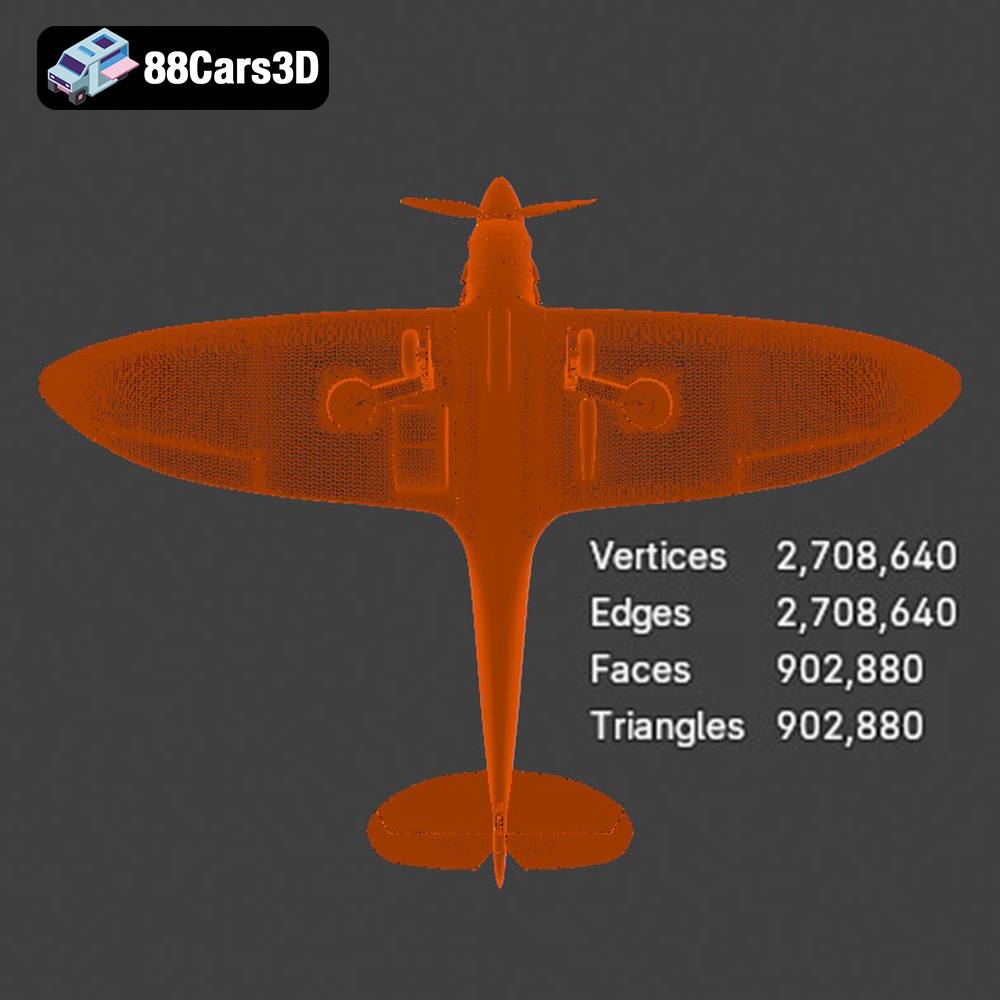
Achieving a high-quality visual experience without bogging down performance is a delicate balancing act. The Supermarine Spitfire model strikes this equilibrium with an “optimized topology of approximately 150,000 triangles.” This polycount is strategically chosen to deliver “high-end visual fidelity” while remaining efficient enough for “real-time performance rendering.” For game engines like Unreal and Unity, this means the model can be displayed with intricate detail—from the panel lines to the subtle curves of the fuselage—without causing a significant frame rate drop. This balance is key for immersive gaming where visual realism must be maintained even under heavy loads.
For developers working with powerful platforms like Unreal Engine, the ease of asset integration is paramount. The Supermarine Spitfire MK2A, particularly in its .fbx and .unreal formats, is designed for a smooth workflow. Importing the .fbx file into Unreal Engine typically involves a straightforward process where geometry, UVs, and basic material assignments are transferred efficiently. Developers can then apply advanced physically-based rendering (PBR) materials, set up dynamic lighting, and integrate the model into their game logic. The “proper pivot setup for propeller rotation, landing gear retraction, and control surface deflection” translates directly, allowing animators to quickly set up skeletal controls and sequences within the engine’s animation blueprint system. This streamlined integration helps accelerate development cycles, letting creators focus on gameplay and storytelling rather than troubleshooting asset compatibility.
Augmented Reality (AR) and Virtual Reality (VR) applications demand incredibly lean yet detailed 3D models to maintain high frame rates and prevent motion sickness. The Supermarine Spitfire MK2A is “perfect for immersive virtual hangars, educational applications, and mobile AR experiences.” Its optimized geometry and efficient texture maps contribute to a smooth VR experience, allowing users to inspect the aircraft from all angles in a virtual environment without lag. For AR, the compact nature of the .glb format, combined with the model’s precise scale accuracy, ensures that the Spitfire can be superimposed onto the real world convincingly, providing an interactive, educational, or entertainment experience right on a user’s device. This capability transforms a historical artifact into a living, interactive experience.
While the Supermarine Spitfire MK2A 3D Model is impeccably optimized for real-time applications, its robust construction and high level of detail also make it an outstanding asset for non-real-time rendering and visualization projects. In contexts where absolute visual fidelity is prioritized over interactive performance, such as film, advertising, or architectural visualization, this model truly shines, allowing artists to push the boundaries of realism.
The dramatic history of the Spitfire lends itself perfectly to cinematic narratives, and a high-fidelity 3D model is indispensable for bringing these stories to the screen. Imagine a documentary reenacting the Battle of Britain, or a historical drama requiring a perfectly rendered aircraft for impossible-to-film maneuvers. The Supermarine Spitfire MK2A 3D Model is “excellent for historical documentaries, cinematic sequences, and studio lighting setups.” For animators using professional software like 3ds Max (leveraging the .max file format) or Blender (with the .blend file), the model’s clean topology and separated, animatable components allow for intricate shot blocking. Complex flight paths, dynamic camera movements, and realistic material interactions under a variety of lighting conditions can be achieved, ensuring that every frame captures the majesty and power of this legendary plane. The model’s “real-world scale accuracy” ensures that it will look authentic alongside other scaled assets in a composite scene.
Beyond narrative, the model is ideal for creating stunning promotional imagery or detailed technical visualizations. For artists tasked with showcasing the Spitfire in a virtual studio environment, the model’s rich detail provides ample opportunities for sophisticated rendering. With access to the fully editable Blender or 3ds Max files, artists can fine-tune every aspect of the materials – from the subtle sheen of worn metal to the matte texture of camouflage paint. Advanced rendering engines can then utilize global illumination, subsurface scattering (for canopy glass), and complex reflection models to create photorealistic images that are virtually indistinguishable from real-life photographs. This capability makes the Spitfire model a perfect fit for high-impact marketing materials, museum exhibits, or educational resources requiring the highest visual standards, similar to how premium 3D car models are showcased.
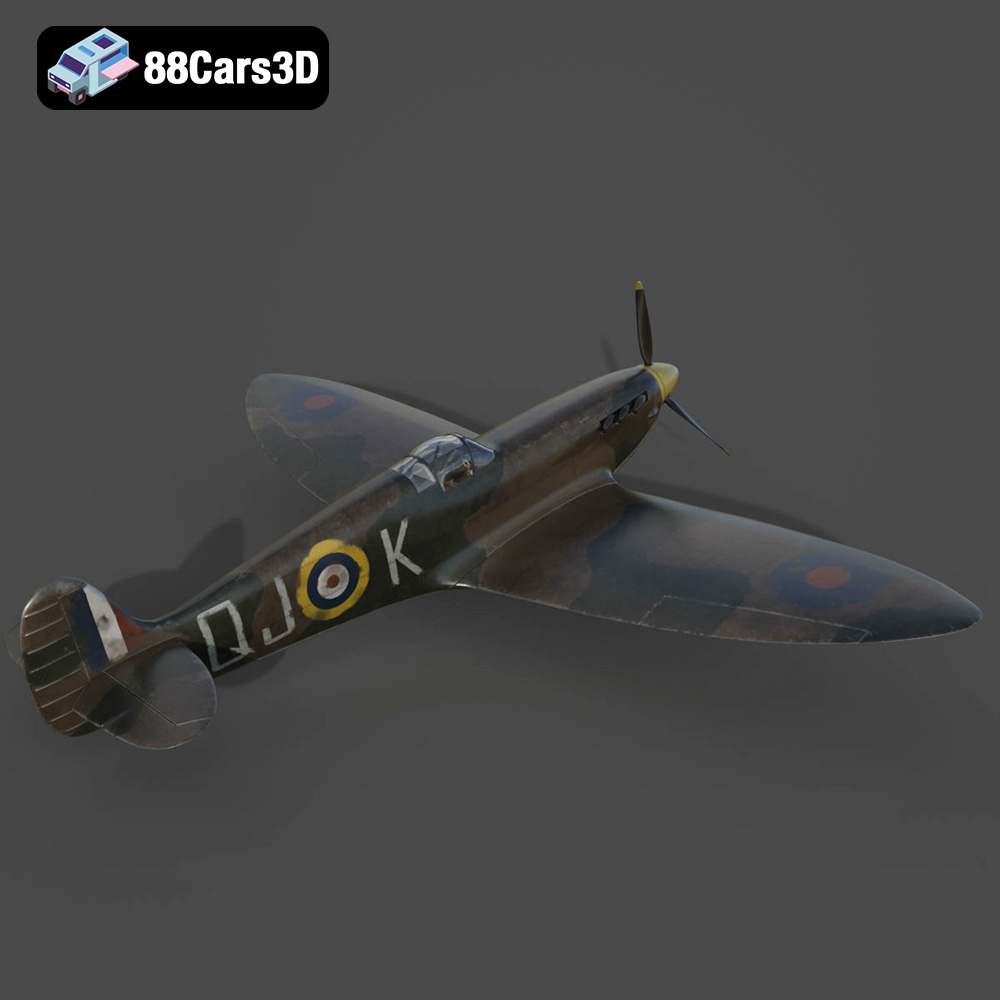
A key advantage of a well-structured 3D model is its potential for customization. The Supermarine Spitfire MK2A offers extensive options to tailor its appearance to specific scenarios or historical periods. Artists can easily “change camouflage liveries,” swapping between iconic “RAF Dark Earth/Dark Green” schemes to desert or naval patterns. The ability to “modify squadron codes, roundels, and nose art” allows for the creation of unique, historically accurate, or even fictional individual aircraft. Furthermore, artists can “adjust material finishes” to depict a pristine, recently restored Spitfire with a glossy finish, a heavily weathered combat veteran, or a metallic, unpainted prototype. These customization options provide immense creative freedom, ensuring that the model can be seamlessly integrated into diverse projects requiring specific aesthetic or historical contexts. The model from 88cars3d.com isn’t just an asset; it’s a versatile canvas.
The evolution of 3D modeling has not only revolutionized digital creation but has also bridged the gap between virtual and physical objects through 3D printing. For enthusiasts of aviation history, model makers, and educators, the ability to materialize a digital asset like the Supermarine Spitfire MK2A 3D Model is incredibly exciting. The inclusion of the .stl format specifically caters to this rapidly growing demand, allowing users to hold a piece of history in their hands.
The journey from a digital 3D model to a tangible object begins with the .stl file. This format, as previously discussed, simplifies the model into a surface of connected triangles, making it readable by 3D slicing software. For the Supermarine Spitfire, this means transforming the intricate digital geometry into instructions that a 3D printer can follow. Hobbyists can download the model, load the .stl into their slicer, and prepare it for printing on their home FDM or resin 3D printers. The process is a testament to how accessible advanced manufacturing has become, allowing anyone to reproduce complex forms that were once the domain of specialized factories or skilled artisans. This democratizes the creation of physical scale models, similar to the burgeoning market for printable 3D car models.
Achieving a successful 3D print, especially for a detailed model like the Spitfire, requires careful attention to print settings. The recommended scales of “1:32 / 1:48 / 1:72” offer practical sizes for display without compromising too much detail. For optimal results, “Resin printing is recommended for fine details” due to its ability to produce smoother surfaces and sharper edges, which are critical for elements like exhaust stacks and thin wing profiles. “Layer height: 0.04–0.12 mm” further refines this detail. Structural integrity is maintained with “Wall thickness: 1.2–2.0 mm” and “Infill: 20–30%.”
Given the Spitfire’s complex geometry, “Supports are required for detailed parts like exhaust stacks, landing gear, and propeller blades.” Strategic “Print orientation,” such as printing the “Fuselage angled for structural integrity” and “wings and prop printed separately,” minimizes the need for supports and improves overall print quality. These specific recommendations ensure that users can confidently embark on their 3D printing journey, achieving excellent results with their Supermarine Spitfire MK2A model.
Once printed, the physical Supermarine Spitfire MK2A model becomes a blank canvas for further artistic expression. “Post-processing” is a crucial step, involving “sanding, primer, and authentic WWII camouflage patterns with weathering effects.” This allows modelers to recreate the exact historical appearance of a specific squadron’s aircraft, complete with battle scars and environmental wear. These physical models are perfect for “display-scale model hobbyists and diorama builders.” Imagine a meticulously crafted diorama depicting a Spitfire returning to base after a sortie, or a static display showcasing its iconic form. The 3D printable aspect of this model extends its utility far beyond the digital screen, allowing enthusiasts to engage with history in a tactile and profoundly personal way.
The Supermarine Spitfire MK2A is more than just a legendary aircraft; it’s a testament to human ingenuity and a beacon of historical significance. In the digital age, high-quality 3D models like the one featured here from 88cars3d.com ensure that this legacy continues to inspire and inform across a multitude of platforms and applications. From its meticulously accurate exterior and detailed cockpit to its optimized topology and comprehensive file format support, this model represents the pinnacle of digital craftsmanship.
Whether you are a game developer crafting the next immersive flight simulator, an animator producing a cinematic masterpiece, an AR/VR enthusiast building a virtual museum, or a hobbyist eager to 3D print a piece of history, the Supermarine Spitfire MK2A 3D Model offers the versatility and quality you demand. Its design principles, mirroring the best 3D car models and aircraft assets available, provide a robust foundation for creativity, allowing professionals and enthusiasts alike to bring their visions to life with unparalleled realism and performance.
Embrace the power of highly detailed, production-ready 3D assets. Explore this exceptional Supermarine Spitfire MK2A 3D Model and a vast collection of other premium 3D models at 88cars3d.com, and take your projects to new heights.
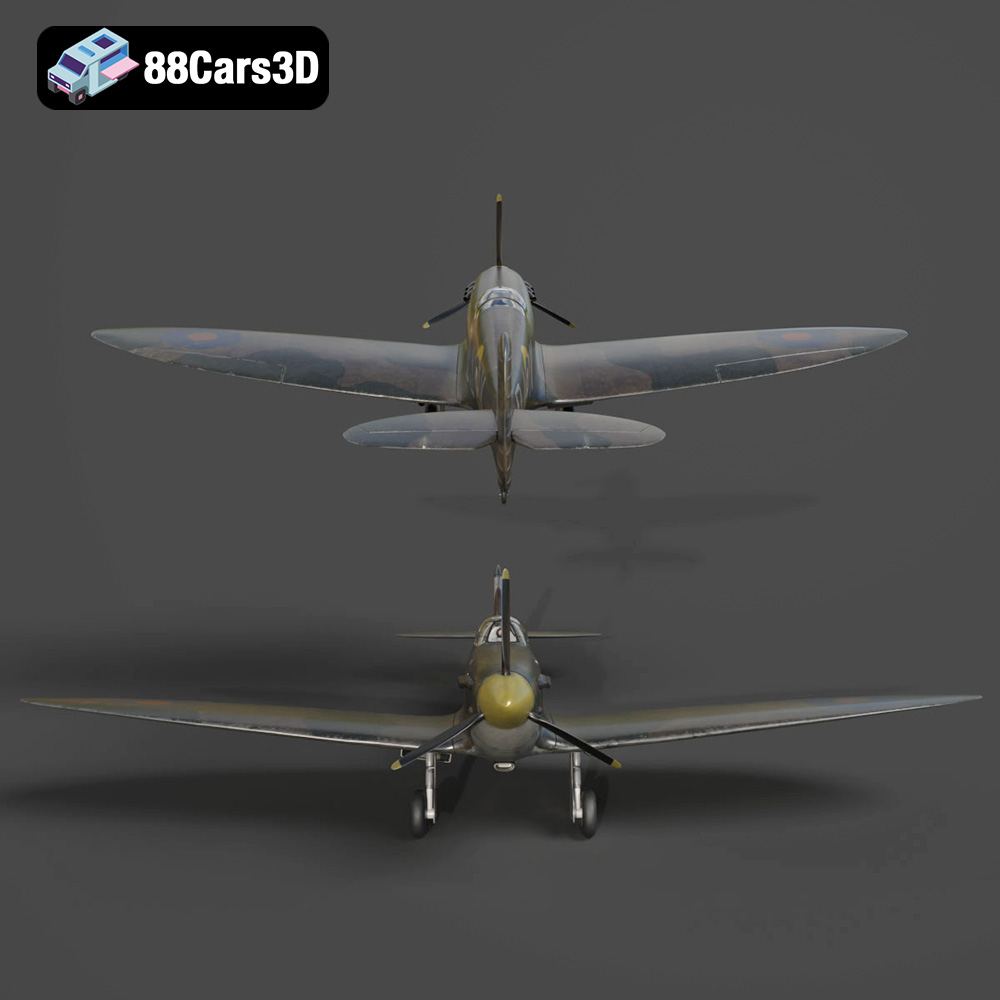
The Supermarine Spitfire MK2A stands as one of the most iconic fighter aircraft in aviation history. Renowned for its critical role in the Battle of Britain, this legendary WWII interceptor is instantly recognizable by its graceful elliptical wings, aerodynamic fuselage, and the distinctive roar of its Rolls-Royce Merlin engine. Our meticulously crafted 3D model captures the heritage and aggressive yet elegant styling cues of the original, from the sweeping wing leading edges to the multi-stack exhaust system and distinctive bubble canopy framing. Designed with exceptional attention to detail, this game-ready model features an optimized topology of approximately 150,000 triangles. It strikes the perfect balance between high-end visual fidelity and real-time performance rendering. Ideal for game development, AR/VR applications, animation, and high-quality visualization, this asset comes with separated control surfaces, propeller, and landing gear to ensure seamless rigging and animation.
$19.99
.blend
.fbx
.glb
.max
.obj
.ply
.rendering
.stl
.unreal
classic-aircraft
fighter-aircraft
game asset
game-ready
low-poly
optimized
plane-3d-model
spitfire-mk2a
supermarine
VR/AR
wwii-plane