Get 20% OFF All Premium 3D & STL Models!

In the vast and ever-evolving landscape of digital content creation, the demand for realism, precision, and versatility in 3D assets has never been higher. From the immersive worlds of video games to the meticulous detail required in architectural visualization, and from critical medical training simulations to groundbreaking AR/VR experiences, the quality of a 3D model forms the bedrock of an entire project’s success. It’s not merely about aesthetics; it’s about functionality, performance, and the ability to seamlessly integrate into diverse professional workflows.
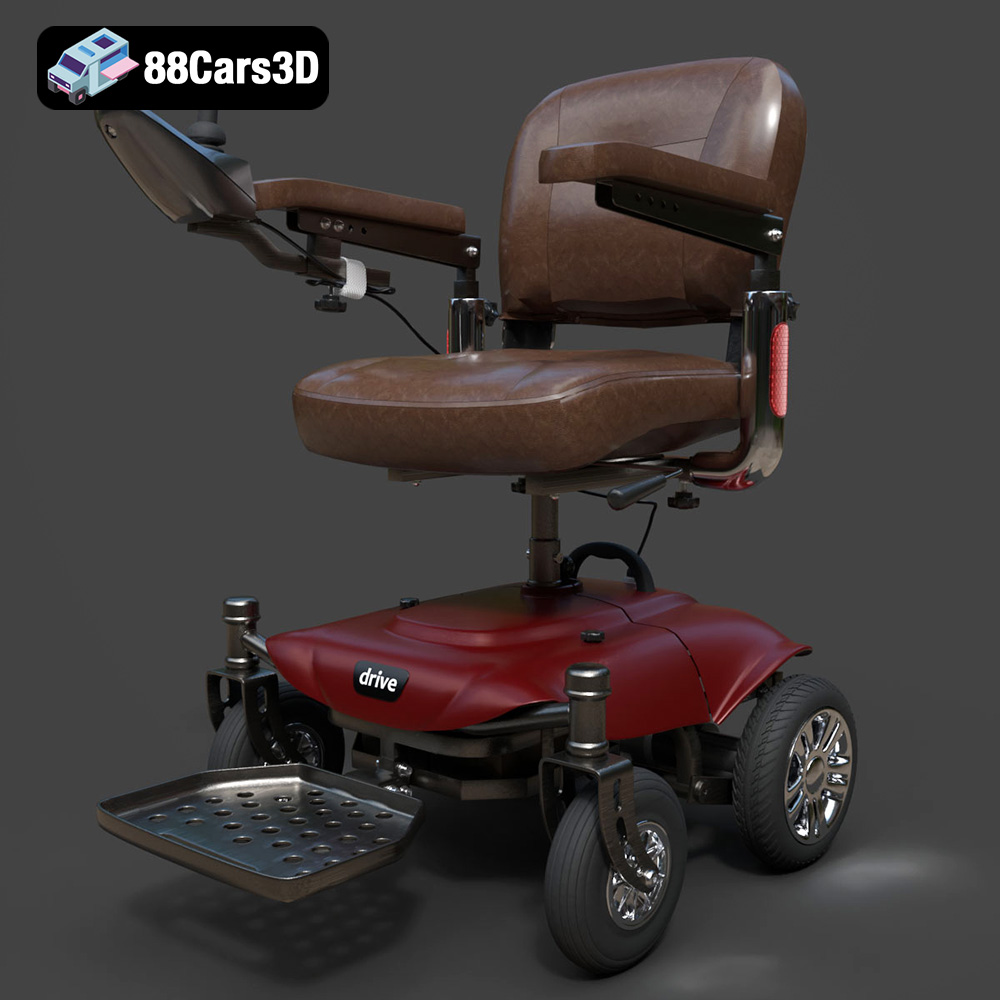
Today, we delve into the intricate world of crafting exceptional 3D assets, using the Wheelchair 08 3D Model as a prime example of a meticulously engineered prop that meets the rigorous demands of modern digital production. This model, available through 88cars3d.com, encapsulates the essence of what makes a 3D asset truly valuable: exceptional topology, optimized performance, and broad compatibility across a spectrum of platforms. While 88cars3d.com is renowned for its high-quality 3D car models, this Wheelchair 08 showcases the same commitment to excellence across all its offerings, providing indispensable assets for various scenarios.
At the heart of any compelling digital experience lies the quality of its assets. A well-crafted 3D model isn’t just visually appealing; it’s technically sound, performant, and designed for purpose. This fundamental principle applies whether you’re building a complex environment for a game or rendering a photorealistic scene for an architectural client.
The integrity of a 3D model begins with its design precision. For assets like the Wheelchair 08, this means replicating real-world dimensions, mechanical functions, and material properties with exactitude. Every tubular frame, spoke, push rim, and footrest must reflect its physical counterpart to ensure believability and accurate interaction within a digital space. In medical simulations, for instance, a realistically scaled and articulated wheelchair is crucial for training scenarios involving patient transfer or mobility assistance. Similarly, in an architectural walkthrough, a precisely scaled prop ensures that accessibility features are accurately represented.
This level of detail extends beyond static appearance. For game developers, accurately modeled components like individual wheels and footrests with proper pivot points are essential for smooth, believable animations. This attention to detail allows the Wheelchair 08 to be integrated not just as a visual prop, but as an interactive element in a dynamic environment, enhancing user immersion significantly.
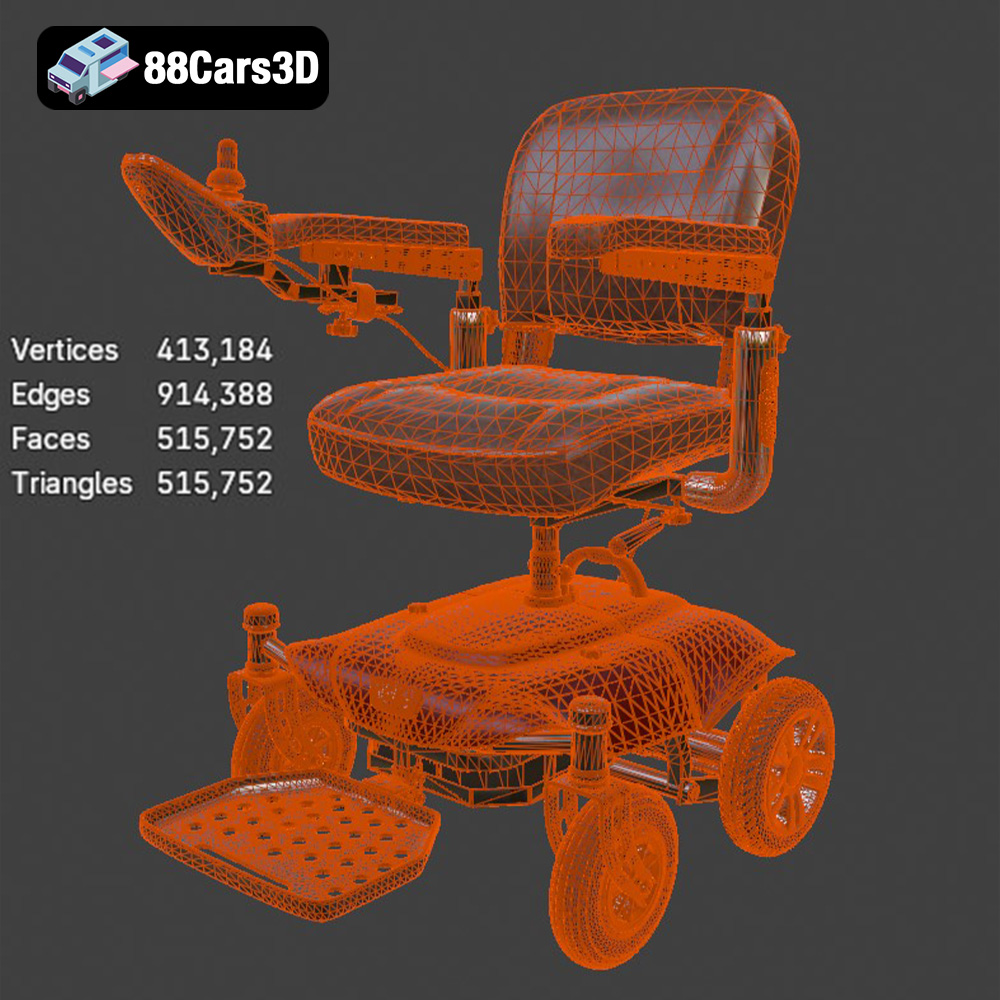
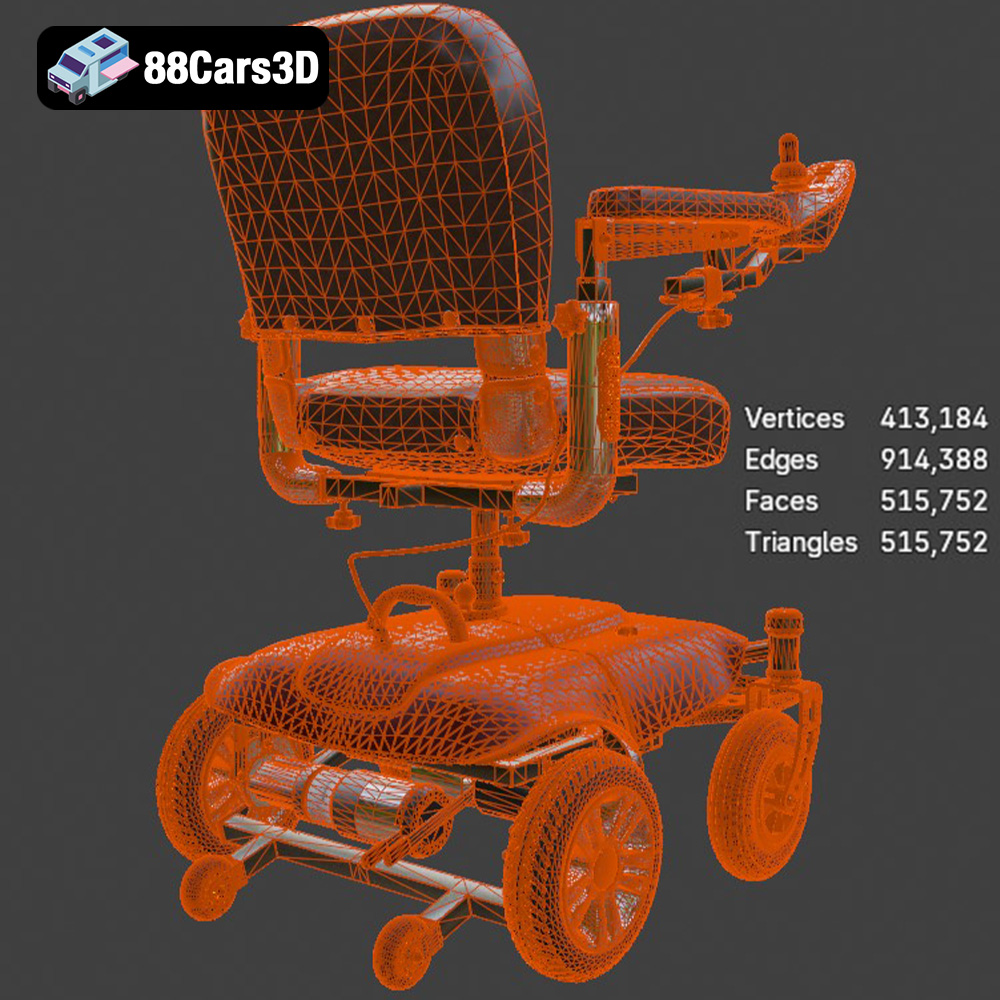
One of the greatest challenges in 3D content creation is striking the perfect balance between visual fidelity for high-end rendering and performance optimization for real-time engines. High-quality game assets often require a careful polygon budget to ensure smooth frame rates without sacrificing visual appeal. The Wheelchair 08 3D Model exemplifies this balance, boasting approximately 35,000 triangles. This poly count is high enough to convey intricate details and ensure clean shading under various lighting conditions, making it suitable for high-resolution automotive rendering-style stills or animations. Yet, it remains lean enough for efficient integration into demanding real-time environments like Unreal Engine or Unity.
This optimization is critical. A model that looks fantastic in an offline renderer but cripples a game engine is of limited use. Conversely, an overly simplified model sacrifices realism. The Wheelchair 08 achieves this sweet spot, allowing developers and artists to deploy it confidently in applications ranging from cinematic cutscenes to interactive VR experiences, all while maintaining visual integrity and performance.
Navigating the diverse world of 3D software and engines necessitates a clear understanding of the various file formats available. Each format serves specific purposes, optimized for different stages of the production pipeline, from initial modeling to final deployment. The Wheelchair 08 3D Model is provided in a comprehensive suite of formats, ensuring maximum compatibility and utility for any project.
The .blend format is the native file type for Blender, a powerful and increasingly popular open-source 3D creation suite. A .blend file typically encapsulates the entire scene, including the 3D mesh, materials (with all their textures and nodes), lighting setups, cameras, animations, and even specific Blender scene settings. This makes it an ideal format for artists who primarily work in Blender or those who wish to delve deep into the model’s construction, modify its geometry, adjust PBR material properties, or expand upon its existing animation rigging. For the Wheelchair 08, the .blend file offers complete control, allowing users to customize every aspect of the model, from frame color to fabric textures, directly within a familiar environment.
Autodesk’s .fbx (Filmbox) format is an industry standard for interoperability, particularly favored in game development and real-time visualization. It’s designed to transfer 3D data between various applications while preserving critical information such as geometry, materials, textures, animations, and rigging. Its robust support for skeletal animations and blend shapes makes it invaluable for character and prop animation. When importing the Wheelchair 08 into Unreal Engine or Unity, the .fbx format ensures that the model’s hierarchy, pivot points (for wheels and casters), and material assignments are retained, streamlining the integration process into a game or AR/VR experience. It’s a highly efficient and widely supported format for asset exchange.
The .obj (Wavefront OBJ) format is one of the most widely supported and simplest 3D geometry formats. It primarily stores geometric data like vertices, faces, normals, and UV coordinates. While it can reference external material files (.mtl) for basic color and texture information, it doesn’t store advanced PBR material properties, animations, or scene data. Its strength lies in its universal compatibility across virtually all 3D software, making it an excellent choice for transferring raw mesh data. If you need to import the Wheelchair 08 into a less common 3D application or simply require the base geometry for extensive remodeling, .obj is a reliable choice for fundamental mesh transfer.
.glb (GL Transmission Format Binary) is an increasingly vital format, particularly for web-based 3D, AR (Augmented Reality), and VR (Virtual Reality) applications. It’s a binary representation of the glTF (GL Transmission Format) spec, designed for efficient transmission and loading of 3D scenes and models. A .glb file packages all necessary assets – geometry, materials, textures, animations – into a single, compact file. This “all-in-one” characteristic makes it perfect for fast loading in browsers, mobile AR apps, and immersive VR experiences. The Wheelchair 08 in .glb format is ready for immediate deployment in interactive web viewers or mobile accessibility configurators, offering a lightweight yet visually rich representation.
The .stl (Stereolithography) format is the de facto standard for 3D printing. It represents a 3D model as a series of connected triangles (a triangulated surface mesh) without any color, material, or texture information. Its simplicity makes it universally readable by 3D printers and slicing software. While it doesn’t offer visual fidelity beyond geometry, it’s essential for converting digital models into physical objects. The Wheelchair 08 .stl file enables hobbyists or professionals to 3D print scaled versions for dioramas, medical prototypes, or display models, allowing for tangible interaction with the digital design.
The .ply (Polygon File Format) is another format for storing 3D data, particularly useful for scanned data, CAD, and scientific applications where precision and a wider range of properties (like color per vertex, normal vectors, or even confidence values) are crucial. Unlike .stl, .ply can store both triangular and polygonal faces, and often includes more comprehensive information about the mesh. For highly detailed analysis or specific manufacturing processes that require robust mesh information beyond basic geometry, the .ply version of the Wheelchair 08 offers a more data-rich representation.
While often a derivative of an .fbx import, a specific .unreal file (often a .uasset or an optimized package) signifies an asset that has been pre-configured and optimized directly for the Unreal Engine. This may include pre-set materials, collision meshes, LODs (Levels of Detail), and blueprint configurations, saving considerable setup time within the engine itself. For the Wheelchair 08, an .unreal asset streamlines integration, making it a true plug-and-play solution for developers working within Unreal’s powerful ecosystem.
The .max format is the native file type for Autodesk 3ds Max, a leading software for 3D modeling, animation, and rendering, particularly strong in architectural visualization and product design. Like .blend, a .max file contains the complete scene, including geometry, materials (with support for advanced renderers like V-Ray or Corona), lighting, cameras, and animations. The .max file for the Wheelchair 08 provides full editability and flexibility for 3ds Max users, enabling them to leverage all of the software’s powerful features for high-end offline rendering and complex scene integration, much like the comprehensive nature of 3D car models found on 88cars3d.com often utilize this format for intricate detailing and realistic rendering.
The true value of a versatile 3D asset lies in its seamless integration into various professional pipelines. The Wheelchair 08 3D Model is designed precisely for this, offering a flexible solution for diverse applications.
For game developers, the Wheelchair 08 is a prime example of an optimized game asset. Its ~35,000 triangle count strikes an ideal balance, ensuring visual richness without taxing real-time performance. When imported via .fbx or .unreal formats into engines like Unreal or Unity, the model’s clean topology and proper pivot points are immediately beneficial. Developers can swiftly set up PBR materials, add collision meshes for realistic interactions, and even implement basic animations for wheels or adjustable footrests. Imagine populating a virtual hospital in a medical simulation game or adding environmental storytelling to a post-apocalyptic urban setting. The Wheelchair 08 can serve as an interactive prop for player mechanics, a static background detail, or even a narrative element.
Artists focused on photorealistic rendering will find the Wheelchair 08 equally adept. Using the .max or .blend files, users can harness the full power of their preferred rendering engine (e.g., V-Ray, Corona, Cycles, Eevee) to produce stunning visuals. The model’s clean geometry and well-defined surfaces allow for realistic reflections and refractions, crucial for capturing the metallic sheen of the frame and the subtle texture of the fabric. This is akin to the precision required for high-end automotive rendering, where every curve and material surface must be flawless. From architectural visualizations of accessible spaces to medical product showcases, the Wheelchair 08 elevates the scene with its detailed realism and offers numerous customization options for material and lighting adjustments to match any aesthetic.
Beyond traditional rendering and game development, the Wheelchair 08 excels in specialized fields. Its .glb format is tailor-made for AR/VR experiences, allowing for rapid deployment in virtual clinics for medical training or interactive accessibility tours. Users can explore the model in a 360-degree environment, understanding its features and dimensions in an immersive way. For those in product design or prototyping, the .stl format facilitates 3D printing. Whether creating a scaled model for a diorama or a physical prototype for design review, the robust .stl export, combined with the recommended print settings (like resin printing for fine details), ensures a high-quality physical output.
The versatility of the Wheelchair 08 3D Model truly shines when applied to practical, real-world scenarios across various industries.
Consider a virtual reality training program designed for medical students or caregivers. In such a simulation, the Wheelchair 08 could be a central interactive element. Students could practice safe patient transfers, learn about proper wheelchair adjustments, or navigate challenging architectural layouts from a patient’s perspective. The model’s real-world scale and animatable components (like adjustable footrests and rotating wheels) provide critical accuracy for these immersive learning experiences, ensuring that the skills acquired in the virtual environment are directly transferable to real-life situations.
For architects and urban planners, integrating the Wheelchair 08 into proposed building designs allows for unparalleled visualization of accessibility. Placing the model within a 3D architectural render helps stakeholders visualize how a space functions for individuals with mobility challenges. Designers can meticulously check clearances, ramp gradients, elevator dimensions, and door widths, ensuring full compliance with accessibility standards. This level of realistic detail not only enhances the presentation to clients but also serves as a vital tool in the design process itself, leading to more inclusive and functional environments.
In the realm of gaming, environmental props play a crucial role in world-building and narrative. The Wheelchair 08 can transform a generic hospital corridor into a lived-in, believable space within a survival horror game, or add a touch of everyday realism to an open-world RPG. Its optimized polycount ensures it won’t impact game performance even in densely populated scenes. As a detailed game asset, it can convey backstory, evoke emotion, or simply add visual richness, contributing significantly to the player’s immersion. Developers looking to populate their scenes with more than just generic objects will find this model invaluable.
Beyond its versatility and applications, the Wheelchair 08 3D Model boasts several technical advantages that underscore its professional-grade quality.
The model’s “exceptional topology” is a cornerstone of its quality. Clean topology means the mesh is structured logically with predominantly quad-based polygons, making it easy to subdivide, deform, and animate without visual artifacts. This ensures clean shading and prevents jagged edges or unnatural light reflections, even under close inspection. While specific UV details are not explicitly listed, the mention of “clean shading and realistic reflections” strongly implies meticulous UV mapping. Proper UVs are essential for applying PBR (Physically Based Rendering) materials accurately, ensuring that textures like fabric weave, rubber grip, or metallic chrome render consistently and realistically across different lighting conditions and rendering engines. This dedication to foundational mesh quality is paramount, much like the precise detailing found in high-quality 3D car models.
Adherence to real-world scale is often overlooked but critical for realistic integration. The Wheelchair 08 is modeled with accurate dimensions, ensuring it fits seamlessly into any scene without requiring manual scaling, which can introduce errors. Furthermore, the model is designed with “proper pivot setup for wheel rotation, caster swiveling, and footrest adjustment.” This forethought is invaluable for animators and game developers. Instead of wrestling with incorrect pivot points, artists can immediately animate the individual components, bringing the wheelchair to life with realistic movement. This modularity and animation-readiness elevate the Wheelchair 08 from a static prop to a dynamic, functional asset.
A truly professional 3D model isn’t just about what’s included, but also the possibilities it unlocks for creative adaptation. The Wheelchair 08 3D Model offers substantial flexibility for artists and designers.
The underlying mesh and PBR material setup of the Wheelchair 08 are designed for easy customization. Artists can effortlessly “change frame colors,” choosing from standard chrome, medical blue, or even custom matte black to match specific brand guidelines or scene aesthetics. Similarly, the fabric textures for the seat and backrest can be modified, allowing for “nylon vs. vinyl upholstery variants.” This adaptability ensures the model can fit into a diverse range of visual styles, from sterile hospital environments to grittier, more stylized settings. The ability to “adjust material finishes” (matte rubber, gloss paint, metallic chrome) further empowers artists to achieve precise visual fidelity.
Thanks to its clean topology and optimized materials, the Wheelchair 08 reacts beautifully to various lighting conditions. Whether it’s a sterile, brightly lit hospital room, the soft, ambient glow of a rehabilitation center, or the dramatic shadows of a cinematic environment, the model’s surfaces will render accurately and convincingly. This inherent flexibility minimizes the need for extensive post-processing or material adjustments when integrating the model into new scenes, allowing artists to focus on the overall creative vision rather than technical hurdles.
The journey through the intricacies of the Wheelchair 08 3D Model reveals the profound impact of high-quality digital assets in today’s creative industries. From its meticulously detailed design and optimized performance to its broad compatibility across various file formats and applications, this model stands as a testament to professional-grade 3D content creation. It serves as an indispensable tool for game developers, architectural visualizers, medical trainers, and AR/VR pioneers alike, enabling them to craft more realistic, immersive, and functional digital experiences.
By offering a comprehensive solution that bridges the gap between high-end rendering and real-time demands, the Wheelchair 08 empowers creators with both technical reliability and creative freedom. Its thoughtful design, coupled with diverse file format support, ensures it can seamlessly integrate into virtually any workflow, whether you’re building a sprawling virtual world or designing an accessible real-world space. For those seeking assets that meet the highest standards of detail, optimization, and versatility, the Wheelchair 08 3D Model is an exceptional choice. Explore this and many other high-quality assets, including a vast array of 3D car models, at 88cars3d.com, where precision meets performance.
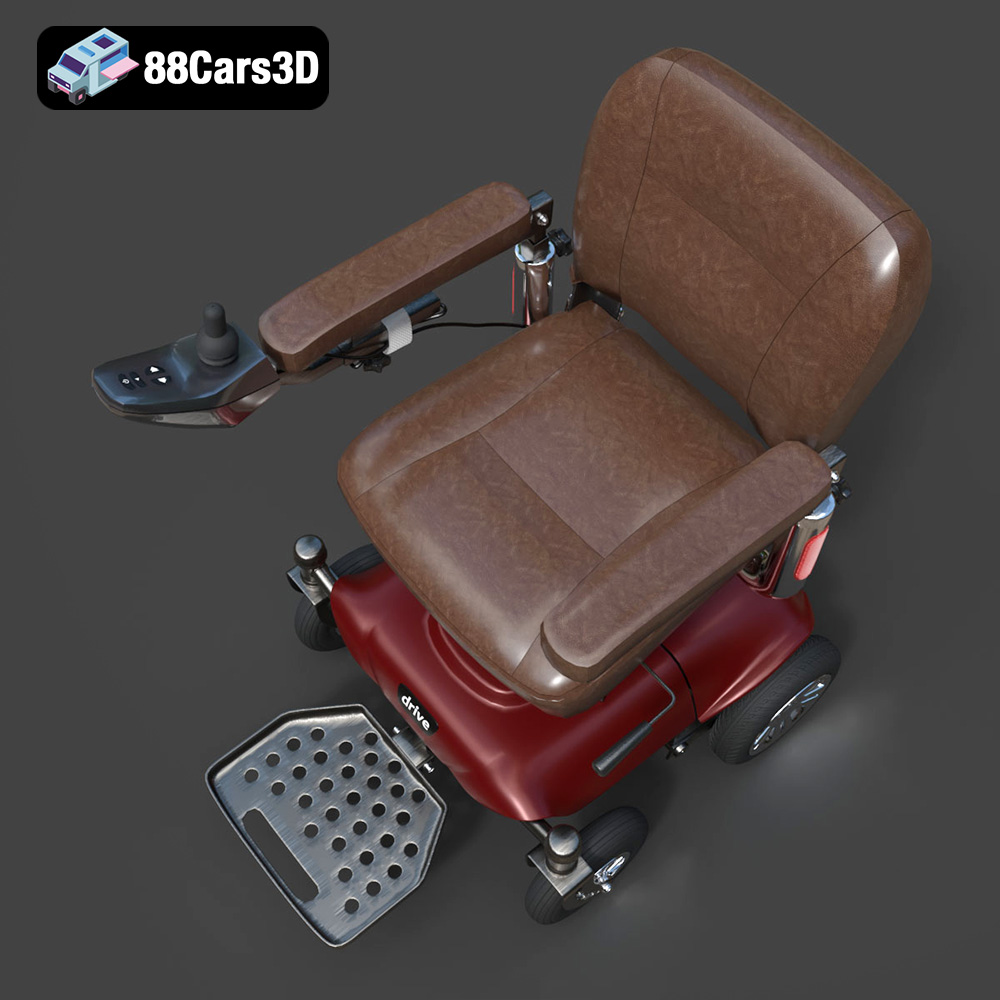
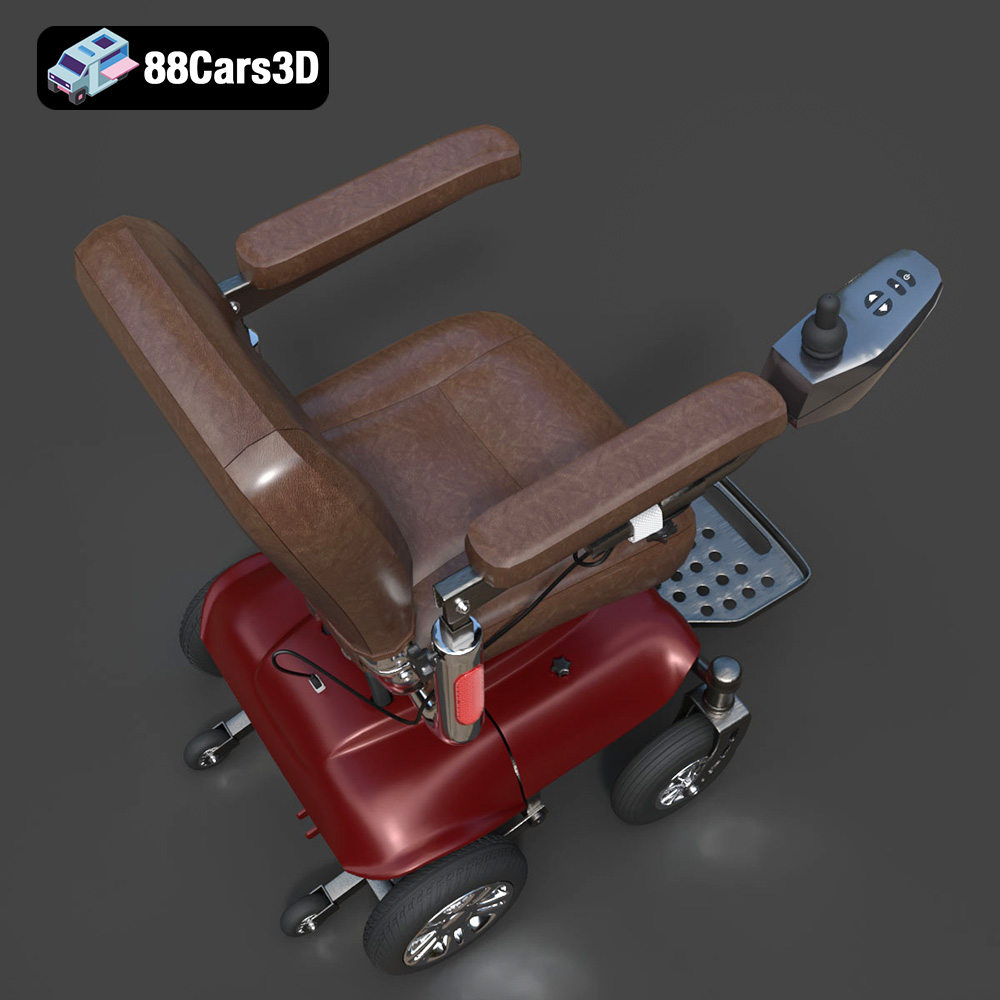
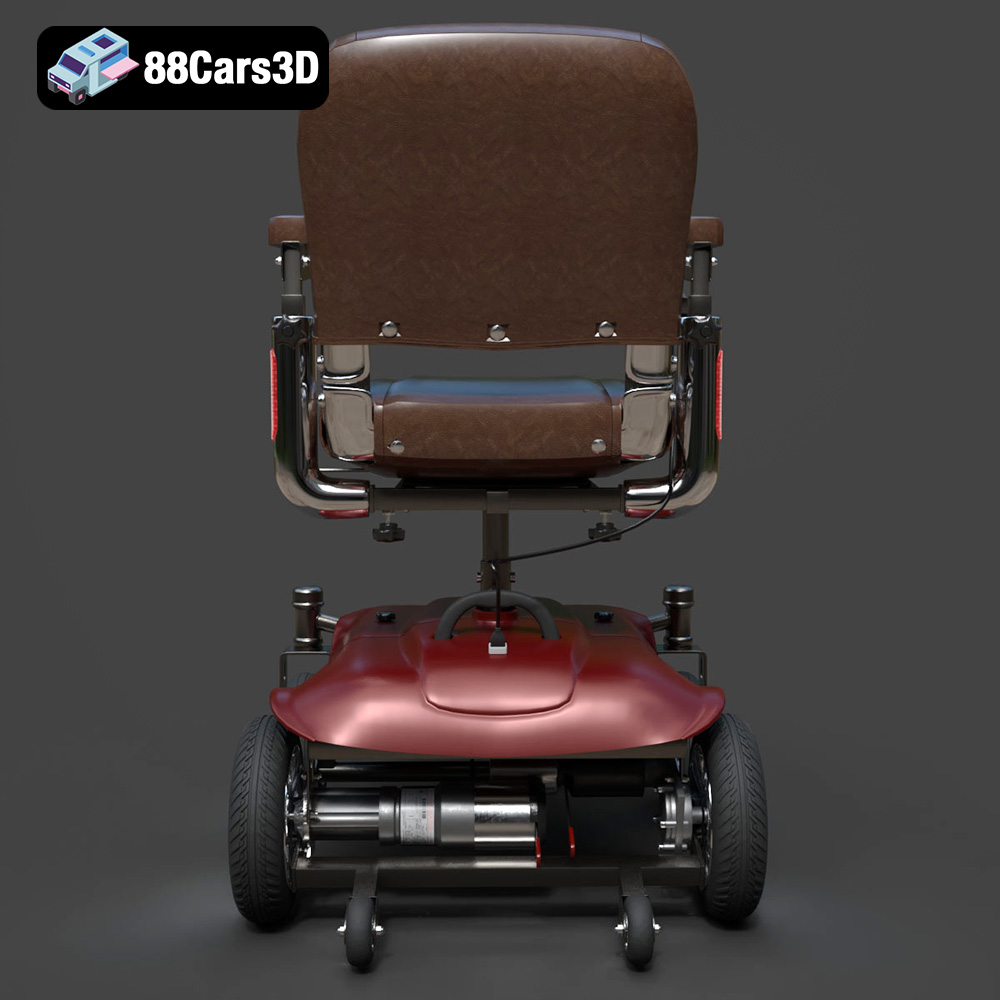
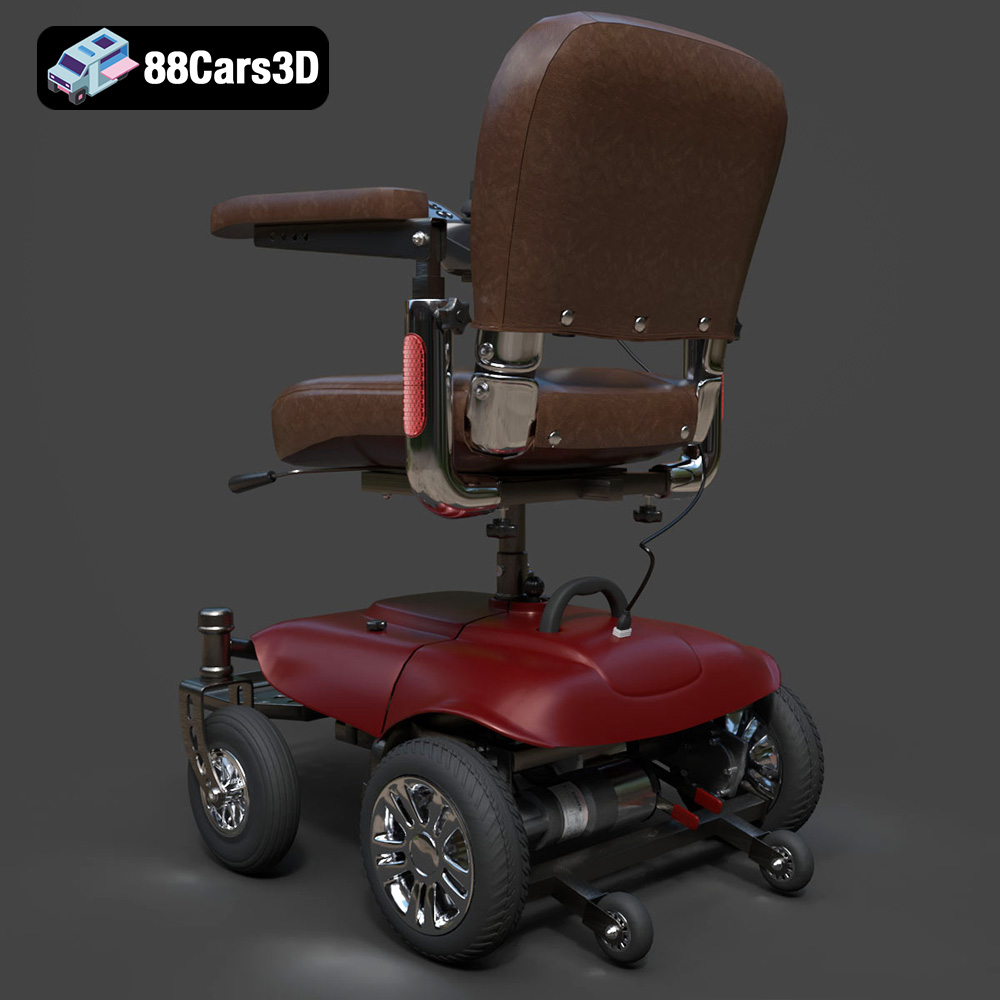
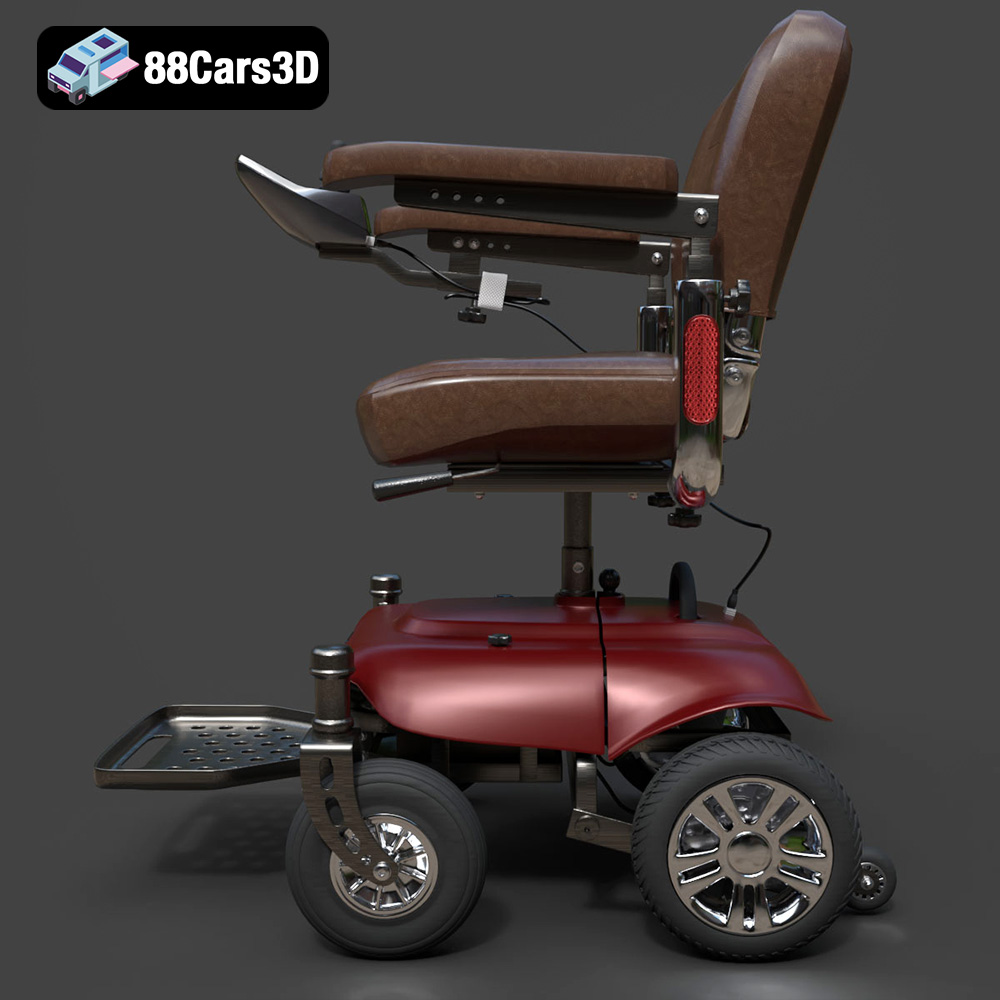
Introducing the Wheelchair 08, a highly realistic and detailed 3D model representing a modern manual mobility device. Designed with meticulous attention to detail, this model captures the essential elements of hospital-grade and everyday mobility equipment. It features a sturdy tubular folding frame, ergonomic fabric seating, detailed push rims for manual propulsion, and adjustable footrests, making it an indispensable asset for any medical or accessibility-focused digital environment.
Engineered with exceptional topology and a balanced triangle count, this game-ready model provides high-end visual fidelity without compromising real-time performance. Its meticulously modeled geometry ensures clean shading and realistic reflections under various lighting conditions, making it the perfect bridge between high-quality offline rendering and efficient real-time engine processing for game development, AR/VR, and medical animation.
Perfect for hospital environments, rehabilitation center visualizations, medical training simulations, and architectural accessibility showcases.
.blend, .fbx, .obj, .glb, .stl, .ply, .unreal, .max
Tags:
wheelchair, wheelchair-08, medical-equipment, hospital-prop, mobility-device, game-ready, low-poly, optimized, 3d-model, game-asset, rendering, vr-ar, blend, fbx, obj, glb, stl, ply, unreal, max
$19.99
.blend
.fbx
.glb
.max
.obj
.ply
.rendering
.stl
.unreal
3d model
game asset
game-ready
hospital-prop
low-poly
medical-equipment
mobility-device
optimized
VR/AR
wheelchair
wheelchair-08