Get 20% OFF All Premium 3D & STL Models!

In the expansive and ever-evolving landscape of digital content creation, the demand for highly detailed and technically accurate 3D assets is relentless. From the breathtaking cinematic sequences of Hollywood blockbusters to the immersive open-world environments of cutting-edge video games, and from sophisticated architectural visualizations to interactive AR/VR experiences, precision-engineered 3D models form the very bedrock of visual storytelling. Automotive design, in particular, stands as a testament to this need for fidelity, where the subtle curves, intricate mechanics, and iconic silhouettes of vehicles must be captured with absolute perfection. Achieving this level of realism requires not just artistic skill but also a deep understanding of technical specifications and diverse software ecosystems.
At the heart of any successful digital project lies the quality of its foundational assets. A poorly constructed model, no matter how beautifully rendered, will introduce inefficiencies, compromise performance, and ultimately detract from the final product. This is especially true for complex subjects like automobiles, which demand meticulous attention to topology, material setup, and optimization for various applications. For professionals seeking a seamless integration of quality and performance, platforms like 88cars3d.com offer a curated selection of pre-built, production-ready assets. A prime example of such a meticulously crafted asset is the Volvo XC90 2008 3D Model, which serves as an excellent case study for dissecting what makes a premium 3D car model truly exceptional and how it fits into diverse professional pipelines.
The journey of a 3D model from concept to a fully realized digital asset involves navigating a complex ecosystem of file formats, each with its own strengths, limitations, and specific applications. Understanding these formats is crucial for any 3D artist, developer, or visualization specialist to ensure compatibility, preserve data integrity, and optimize workflows. The Volvo XC90 2008 3D Model is a versatile asset, supplied in a comprehensive suite of formats, enabling its seamless integration into virtually any production pipeline.
The .blend format is the native file type for Blender, the powerful open-source 3D creation suite. A .blend file typically contains not just the mesh data but an entire scene, including materials, textures, lighting, cameras, animation data, modifiers, and even scripts. This makes it an incredibly rich and fully editable format, ideal for users who work within the Blender ecosystem. When you download a .blend file, you’re getting the complete working project, allowing for deep customization, adjustments to the topology, modifications to the material nodes, and full control over the model’s setup as intended by the original artist. For the Volvo XC90 2008 3D Model, this means having access to the exact setup used for its creation, offering unparalleled flexibility.
.fbx (Filmbox) is a proprietary file format owned by Autodesk and is widely regarded as the industry standard for 3D data interchange between various software applications, especially in game development and animation. It supports a vast array of data, including mesh geometry, materials, textures, animations, skinning, and camera information. Its binary nature makes it efficient for storage and fast to load. The .fbx format is particularly ideal for Unreal Engine and Unity, serving as the backbone of real-time pipelines due to its robust support for animation and skeletal data. For the Volvo XC90, an .fbx file ensures that all elements – geometry, materials, and pivot points for animation – transfer smoothly into game engines or other DCC applications like Maya or 3ds Max.
.obj (Wavefront OBJ) is one of the oldest and most universally supported 3D file formats. It is a simple, open standard that primarily stores geometry data (vertices, normals, texture coordinates, and faces) and can reference external material files (.mtl) for surface properties. While it doesn’t support animation or advanced scene data, its widespread compatibility makes it a safe choice for cross-software integration when only the raw mesh is needed. An .obj version of the Volvo XC90 guarantees that the base geometry can be imported into virtually any 3D software without issues, providing a clean slate for custom material and animation setups.
.glb (GL Transmission Format Binary) is the binary version of glTF, a royalty-free specification for the efficient transmission and loading of 3D scenes and models by applications. It’s often referred to as the “JPEG of 3D” due to its optimization for web-based, AR, and VR applications. A .glb file packages all necessary assets – geometry, materials, textures, and animations – into a single file, making it incredibly easy to share and integrate into web browsers, mobile AR apps, and immersive VR experiences. For showcasing the Volvo XC90 2008 3D Model in an interactive web viewer or an augmented reality car configurator, .glb is the format of choice due to its compact size and quick loading times.
.stl (STereoLithography) is the de facto standard file format for 3D printing. It represents a 3D model as a series of connected triangles, describing only the surface geometry without any color, texture, or material information. While it lacks visual data, its simplicity and ubiquitous support make it indispensable for additive manufacturing. The Volvo XC90’s availability in .stl format means it can be directly prepared for physical production, allowing hobbyists and professionals to print display-scale replicas or prototypes, leveraging the model’s accurate chassis and detailed components for tangible output.
.ply (Polygon File Format or Stanford Triangle Format) is another widely used format for storing 3D data. It is known for its ability to store various properties beyond just geometry, such as color, transparency, normals, texture coordinates, and even reliability information for each polygon. Often used in scientific and CAD applications, as well as by 3D scanners, .ply is excellent for preserving precise mesh information. For highly accurate reproductions or analytical purposes, the .ply version of the Volvo XC90 offers a robust and detailed representation of the vehicle’s geometry.
The .unreal file (often a Uasset within an Unreal Engine project structure, or an FBX specifically prepped and imported) denotes a model optimized and ready for direct integration into Unreal Engine. While not a standalone file format in the traditional sense like .fbx or .obj, providing a pre-configured Unreal asset means the model has already been imported, scaled, had materials applied, and potentially collision meshes generated within the engine environment. This significantly reduces setup time for developers, offering a truly “plug-and-play” experience for the Volvo XC90 in an Unreal project, complete with proper pivots and material instances.
The .max file is the native format for Autodesk 3ds Max, one of the most powerful and widely used 3D modeling, animation, and rendering software packages in the industry. Like .blend, a .max file stores a complete scene with all its elements, including geometry, materials, textures, lighting, cameras, and animation data. It offers maximum editability and full control over every aspect of the model within the 3ds Max environment. For professionals working with 3ds Max, the .max version of the Volvo XC90 allows for advanced rendering setups with V-Ray or Corona, complex animation sequences, or detailed modifications to the model’s structure and materials.
The inclusion of this diverse range of formats for the Volvo XC90 2008 3D Model underscores its versatility and the foresight of its creators. This comprehensive offering empowers artists and developers to select the precise format required for their specific workflow, ensuring maximum compatibility and efficiency from the outset of any project.
Creating a high-quality 3D car model is far more intricate than simply extruding shapes. It involves a meticulous blend of artistic vision and technical precision, ensuring that the digital representation is not only visually stunning but also functionally robust for various applications. The Volvo XC90 2008 3D Model exemplifies these principles, showcasing the depth of detail required for professional-grade automotive assets.
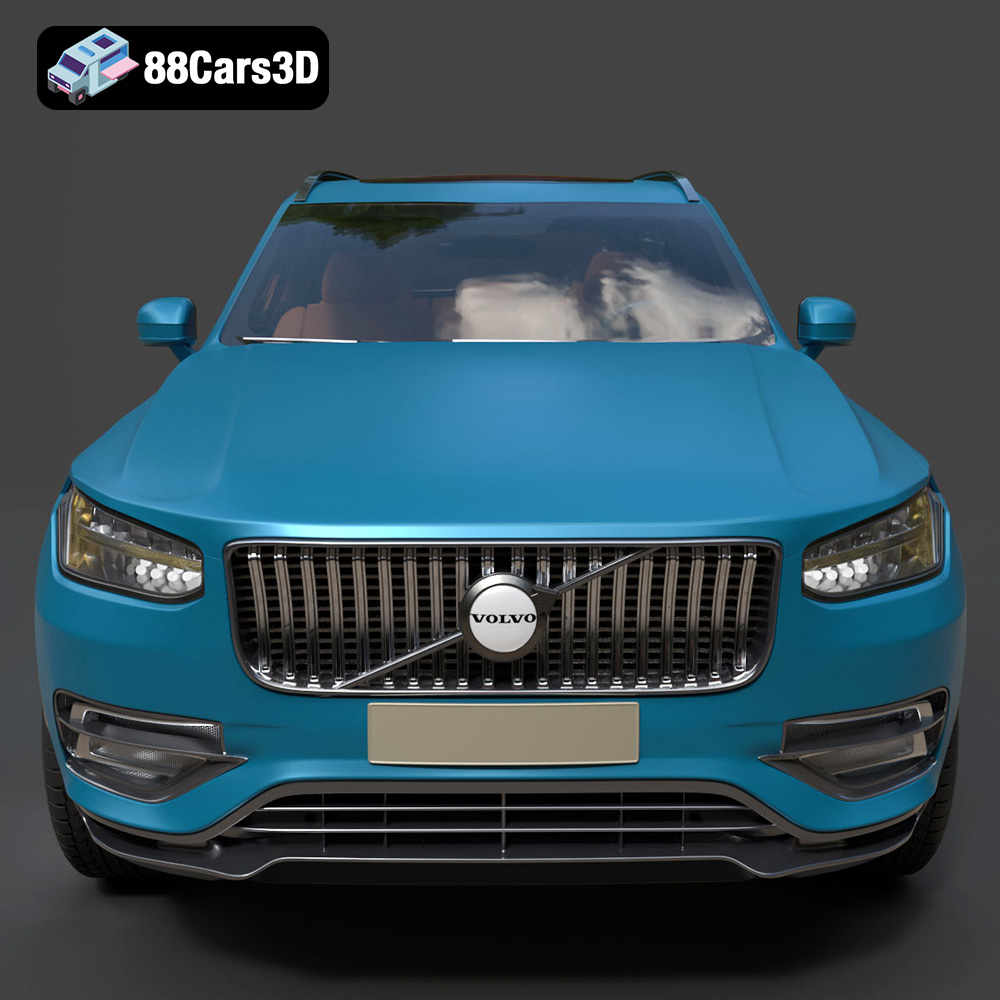
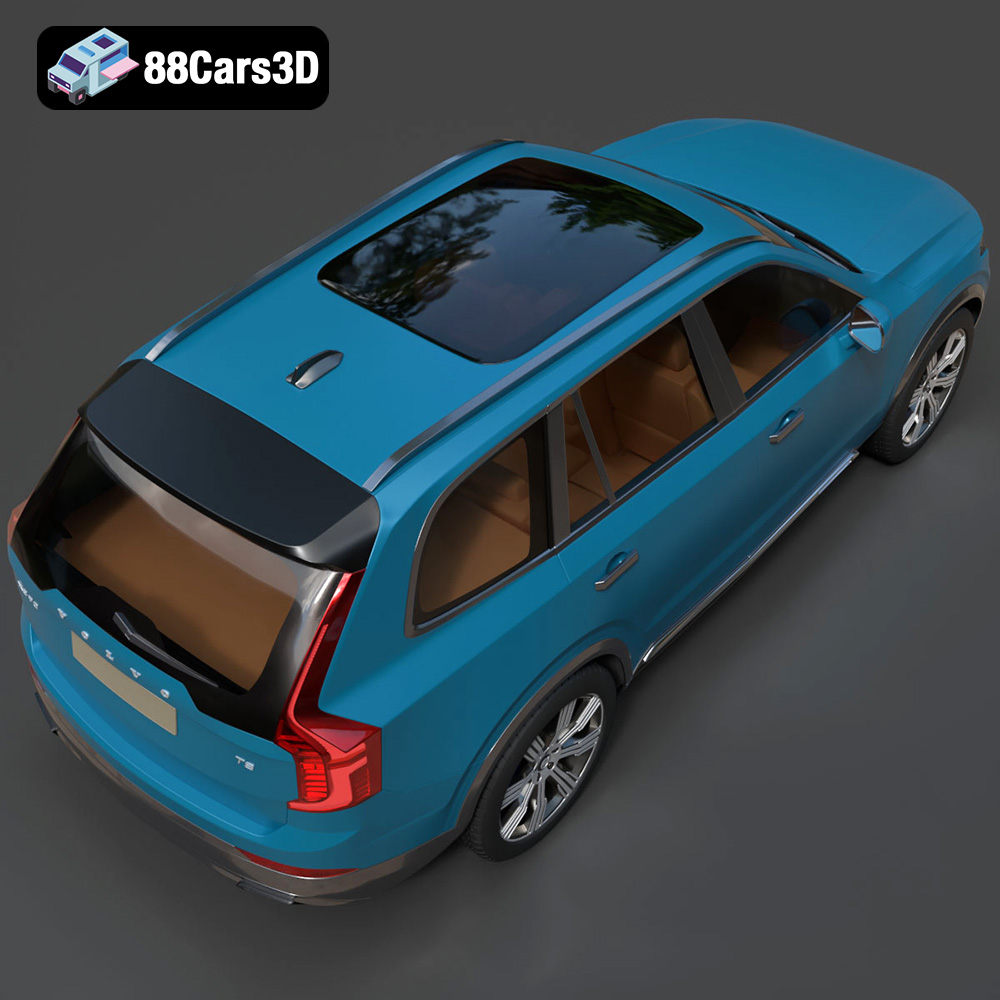
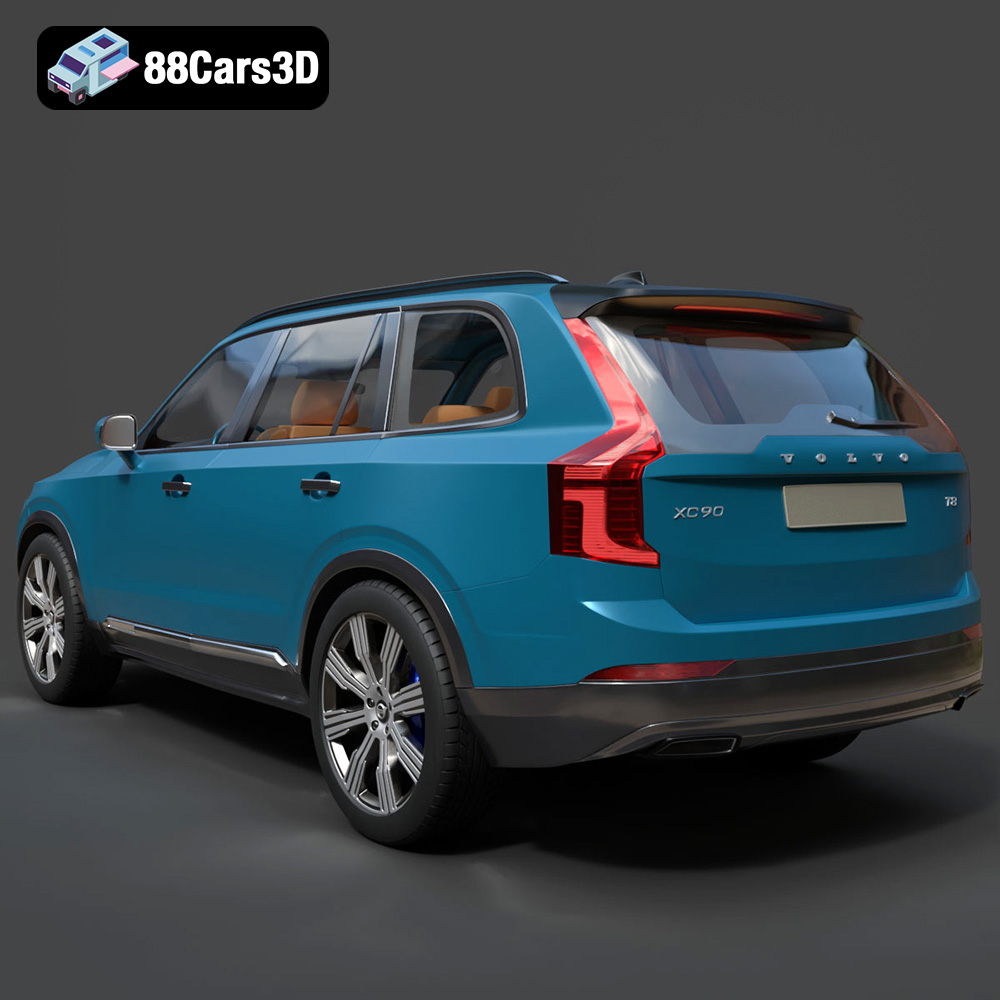
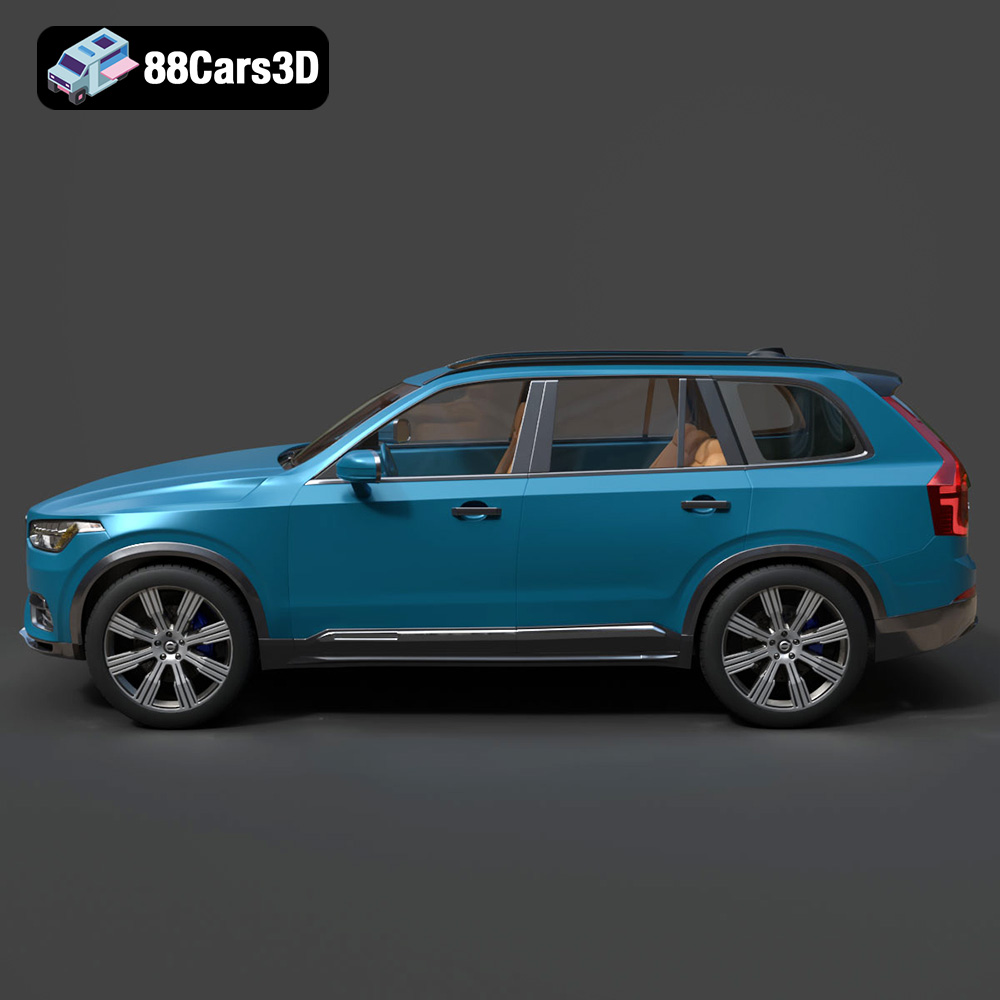
The first impression of any vehicle comes from its exterior, and capturing this digitally demands unwavering accuracy. The Volvo XC90 model excels in this regard, boasting accurate frame geometry and proportions that faithfully recreate the imposing stance and robust elegance of the real-world SUV. Every curve, panel gap, and design line reflects the original vehicle’s Scandinavian design philosophy. Beyond the primary body, granular details such as the distinctive vertical taillights and HID headlights are meticulously modeled, complete with realistic housing geometry. The alloy wheel design, often a subtle yet crucial detail, is precisely replicated, paired with realistic tire treads that add to the visual authenticity. Even the undercarriage and exhaust system geometry are included, vital for close-up shots, game damage systems, or VR experiences where the user might explore the vehicle from all angles. Furthermore, separate wheels, suspension, and steering components are provided, foundational for dynamic animation and realistic simulations.
While the exterior draws the eye, the interior often defines the user’s immersive experience, especially in games or virtual showrooms. The Volvo XC90 3D model features a spacious cabin geometry with detailed leather seat texturing, creating an inviting and authentic feel. The multi-function steering wheel and column details are accurately reproduced, alongside the authentic instrument cluster and Volvo’s signature floating center console design. Every control, from pedals to the gear selector and climate dials, is distinct and properly scaled. This level of interior detail is crucial for first-person POV in gaming or virtual reality, where users expect a fully interactive and believable environment. The optimized geometry ensures that this rich detail doesn’t compromise real-time rendering performance, striking a perfect balance between visual fidelity and playability.
In today’s interactive digital experiences, performance is paramount. A beautifully detailed model that causes lag or frame drops is ultimately unusable. Therefore, optimizing 3D car models for real-time engines like Unreal and Unity is a specialized skill, and the Volvo XC90 2008 3D Model is engineered with this philosophy at its core.
The cornerstone of a game-ready asset is its topology – the arrangement of polygons that form the mesh. The Volvo XC90 model features a meticulously balanced topology, boasting approximately 350,000 triangles. This polycount is a strategic sweet spot: it’s high enough to maintain exceptional visual realism, capturing the nuanced surfaces and intricate details of the vehicle without looking blocky, yet low enough to ensure smooth real-time rendering performance in demanding environments. This careful balance prevents common issues like aliasing, allows for clean deformation during animation, and reduces the computational load on GPUs, making it an ideal asset for open-world games, racing titles, and high-fidelity simulators.
A static model has limited utility. For dynamic applications, a 3D car model must be prepped for animation. The Volvo XC90 includes a proper pivot setup for crucial animated elements: steering, wheel rotation, and suspension travel. This means that animators and developers don’t have to spend valuable time manually configuring these essential pivot points. The separation of components like wheels, suspension, and steering further facilitates rigging, allowing for complex and realistic motion sequences. Whether it’s driving dynamics in a game or a detailed product animation for marketing, the model’s inherent readiness for animation streamlines the entire production process.
The true value of a versatile 3D asset lies in its ability to integrate seamlessly into a wide array of professional workflows. The Volvo XC90 2008 3D Model, with its diverse file formats and meticulous construction, is designed to be a linchpin in various creative and technical pipelines.
For marketing agencies, design studios, or automotive manufacturers, high-quality rendering is essential for showcasing vehicles. Using software like 3ds Max or Blender, artists can import the Volvo XC90 3D model and leverage advanced rendering engines like V-Ray, Corona Renderer, or Cycles. The model’s clean topology and detailed materials provide an excellent foundation for achieving photorealistic results. Imagine a campaign showcasing the XC90 against a stunning landscape or in a sleek studio environment, with every reflection and shadow perfectly captured. The .max and .blend formats offer the most flexibility here, allowing artists to fine-tune lighting, camera angles, and material properties to achieve breathtaking cinematic quality. This is where the model’s accurate proportions and detailed surface qualities truly shine, enabling renders that are indistinguishable from real photography.
The demands of game development are unique, requiring a balance between visual fidelity and real-time performance. The game-ready optimization of the Volvo XC90 3D Model, particularly its ~350,000 triangle count, makes it an ideal candidate for integration into Unreal Engine or Unity. Developers can utilize the .fbx format for easy import into these engines, knowing that the mesh, materials, and pivot points are correctly structured. For Unreal Engine users, the dedicated .unreal asset can further expedite the process. This model is perfect for populating open-world game environments with realistic traffic, serving as a player vehicle in racing games, or appearing in simulation titles. Its separate, animatable components allow for realistic physics interactions, damage systems, and custom driving mechanics, significantly reducing development time and cost for studios.
As augmented and virtual reality technologies become more prevalent, the need for optimized 3D assets grows. The Volvo XC90 3D Model is perfectly suited for immersive AR/VR applications and interactive digital showrooms. The .glb format is particularly valuable here, providing a highly optimized, single-file solution for web-based viewers, mobile AR apps, or VR experiences built in engines like Unity or Unreal. Imagine a potential customer exploring the XC90 in their driveway via AR, or walking around and interacting with it in a virtual car showroom, customizing its color and interior details in real-time. The model’s detailed interior, optimized for first-person POV, ensures a compelling and believable experience, pushing the boundaries of interactive product visualization.
The utility of a premium 3D model extends beyond digital screens, venturing into the tangible realm of physical creation. For enthusiasts, educators, or design studios, the ability to 3D print a highly accurate model offers a unique way to interact with the design. The Volvo XC90 2008 3D Model provides a solid foundation for this, particularly through its .stl format.
Converting a digital 3D model into a physical object via 3D printing requires careful preparation. The .stl format is the industry standard for this process, representing the model as a mesh of triangles suitable for slicing software. When preparing the Volvo XC90 for printing, recommended scales (1:12, 1:18, 1:24) are crucial for balancing detail retention and print size. Resin printing is often recommended for such detailed automotive models, allowing for finer layer heights (0.04–0.12 mm) to capture intricate elements like the exhaust system, mirrors, and roof rails. Critical considerations include adequate wall thickness (1.2–2.0 mm) for structural integrity and the strategic placement of supports, especially for overhangs and delicate parts. Printing the frame angled and wheels separately is a common practice to optimize structural strength and minimize support material.
Once printed, the physical model undergoes a crucial post-processing phase to achieve a professional finish. This typically involves removing supports, sanding to smooth out layer lines, and applying primer to create a uniform surface for painting. For automotive models, applying authentic factory colors with metallic finishes can elevate the replica to display-quality standards. This hands-on process allows designers to physically evaluate the model’s form factor, enthusiasts to build their own collection of iconic vehicles, and educators to use tangible examples for teaching automotive design principles. The detailed geometry of the Volvo XC90 ensures that even in its physical form, the essence of its design is perfectly preserved.
The journey through the creation, optimization, and application of a high-quality 3D car model reveals a complex interplay of artistry and technical mastery. From the intricate exterior and interior details to the strategic optimization for diverse real-time environments, and from seamless integration into professional visualization workflows to the tangible output of 3D printing, a truly exceptional asset offers unparalleled versatility. The Volvo XC90 2008 3D Model stands as a testament to this, providing a robust, game-ready, and highly detailed asset suitable for a multitude of industries.
Whether you’re a game developer seeking realistic vehicles to populate an open world, an architect needing to visualize urban traffic, a marketer creating stunning automotive renders, or a hobbyist looking to 3D print an iconic SUV, the value of a meticulously crafted 3D model cannot be overstated. It saves invaluable development time, ensures consistency across projects, and empowers creators to push the boundaries of digital realism. By providing a comprehensive suite of file formats, this Volvo XC90 model ensures maximum compatibility and efficiency for any digital endeavor. For those seeking premium 3D car models that deliver on both aesthetic fidelity and technical performance, exploring the curated collection at 88cars3d.com is an essential step towards elevating your next project.
Experience the robust elegance of the Volvo XC90 2008, a trailblazing mid-size luxury crossover SUV that redefined family safety and Scandinavian design. This highly accurate 3D model captures its imposing stance and distinctive profile. Engineered for maximum versatility, it features game-ready optimization (~350,000 triangles) for exceptional visual fidelity without compromising real-time rendering. Perfect for open-world games, virtual showrooms, architectural visualizations, and 3D printing.
$19.99
.2008
.blend
.fbx
.glb
.luxury suv
.max
.obj
.ply
.rendering
.stl
.unreal
.volvo
.xc90
car-3d-model
family-car
game asset
game-ready
low-poly
optimized
Scandinavian design
SUV
VR/AR