Get 20% OFF All Premium 3D & STL Models!

In the dynamic world of digital creation, the demand for high-fidelity 3D assets continues to escalate. From blockbuster video games to cutting-edge automotive configurators and cinematic advertising, the realism and detail of 3D models are paramount. Nowhere is this more evident than with vehicles, where intricate designs, reflective surfaces, and powerful presence must be meticulously translated into the digital realm. A truly exceptional 3D car model isn’t just an object; it’s a meticulously crafted digital sculpture, ready to be integrated into diverse projects and elevate visual storytelling.
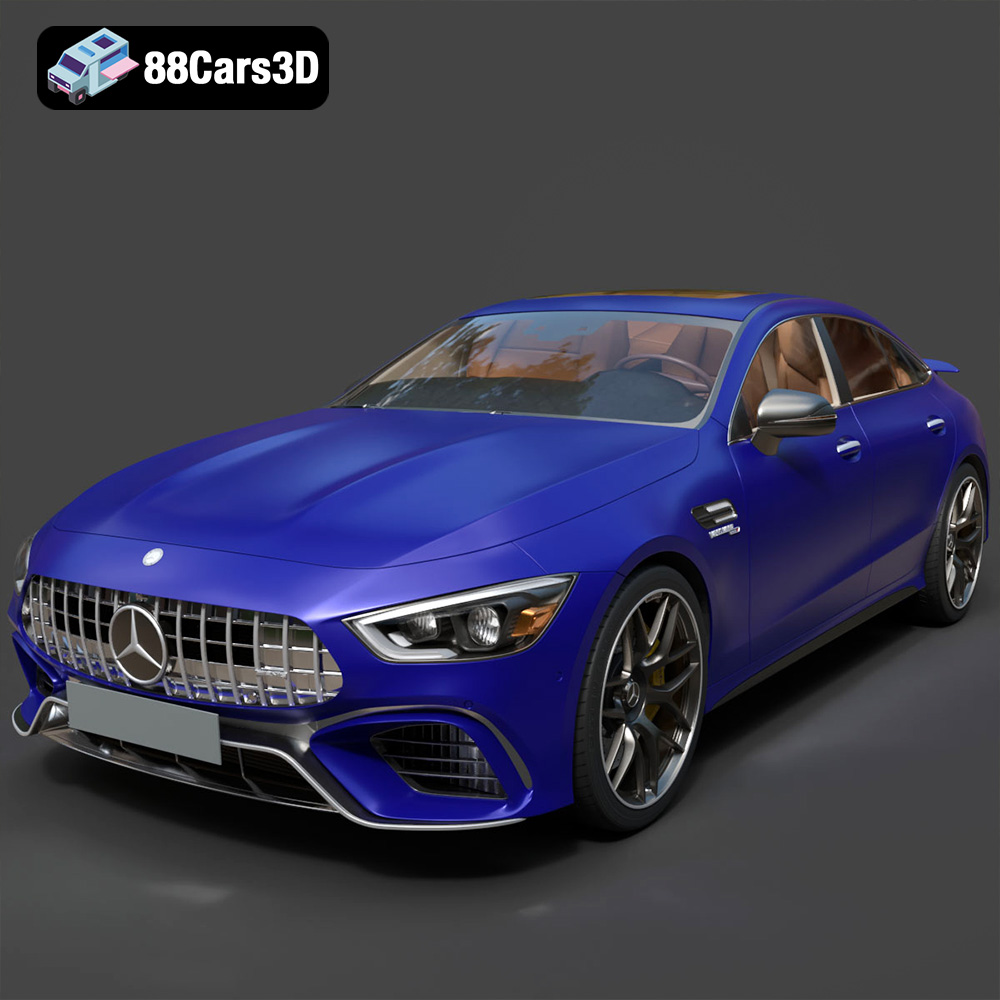
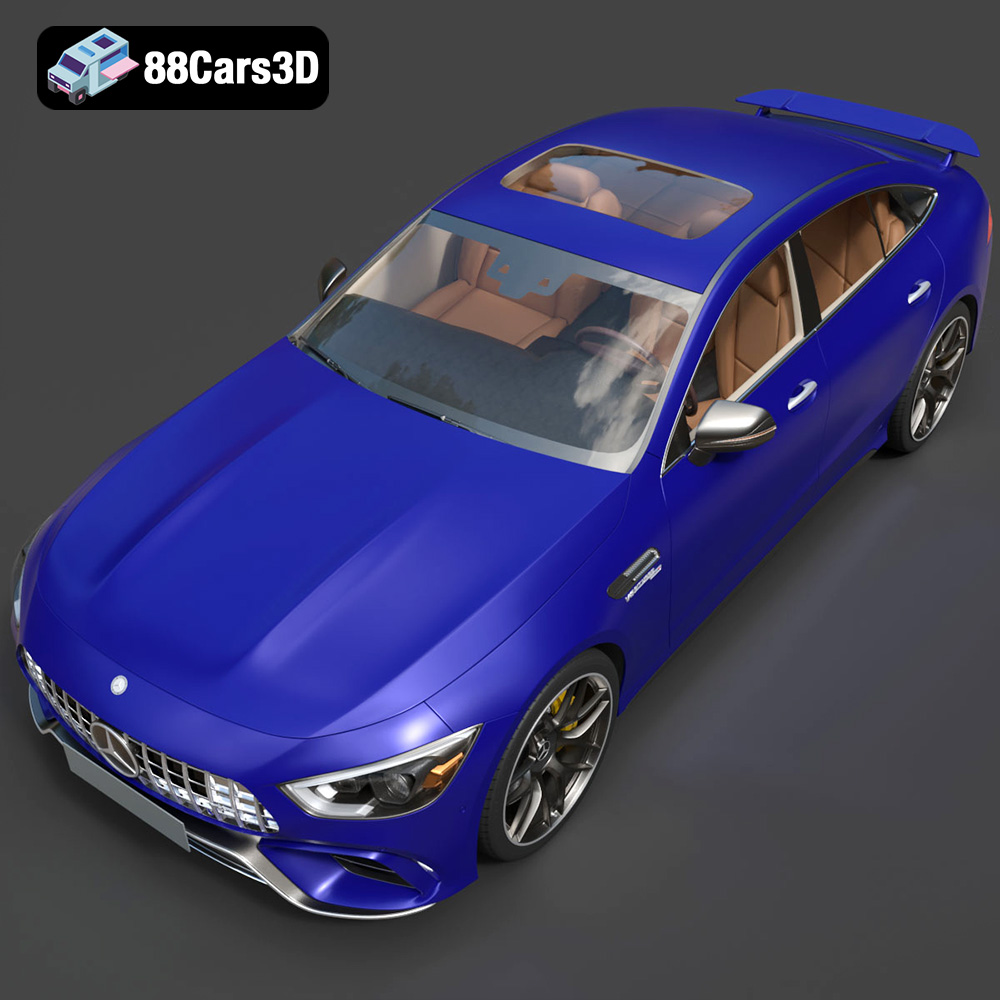
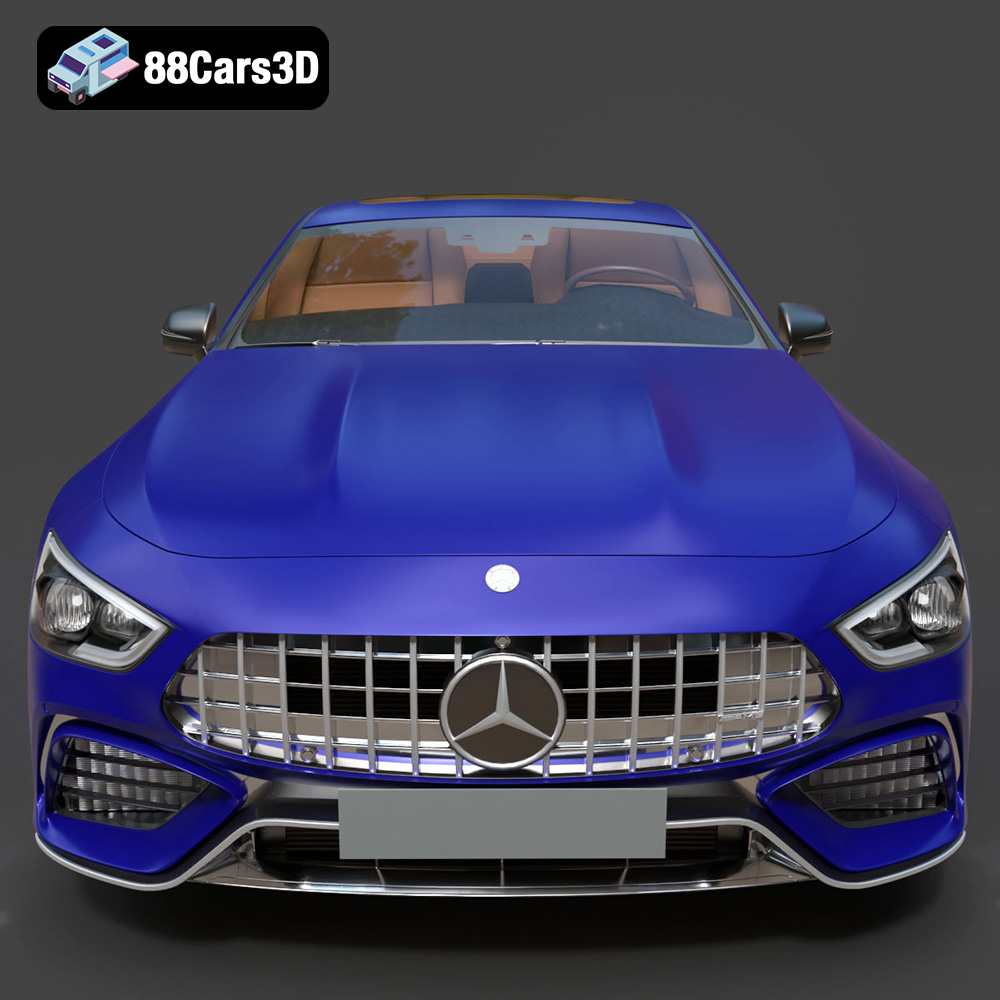
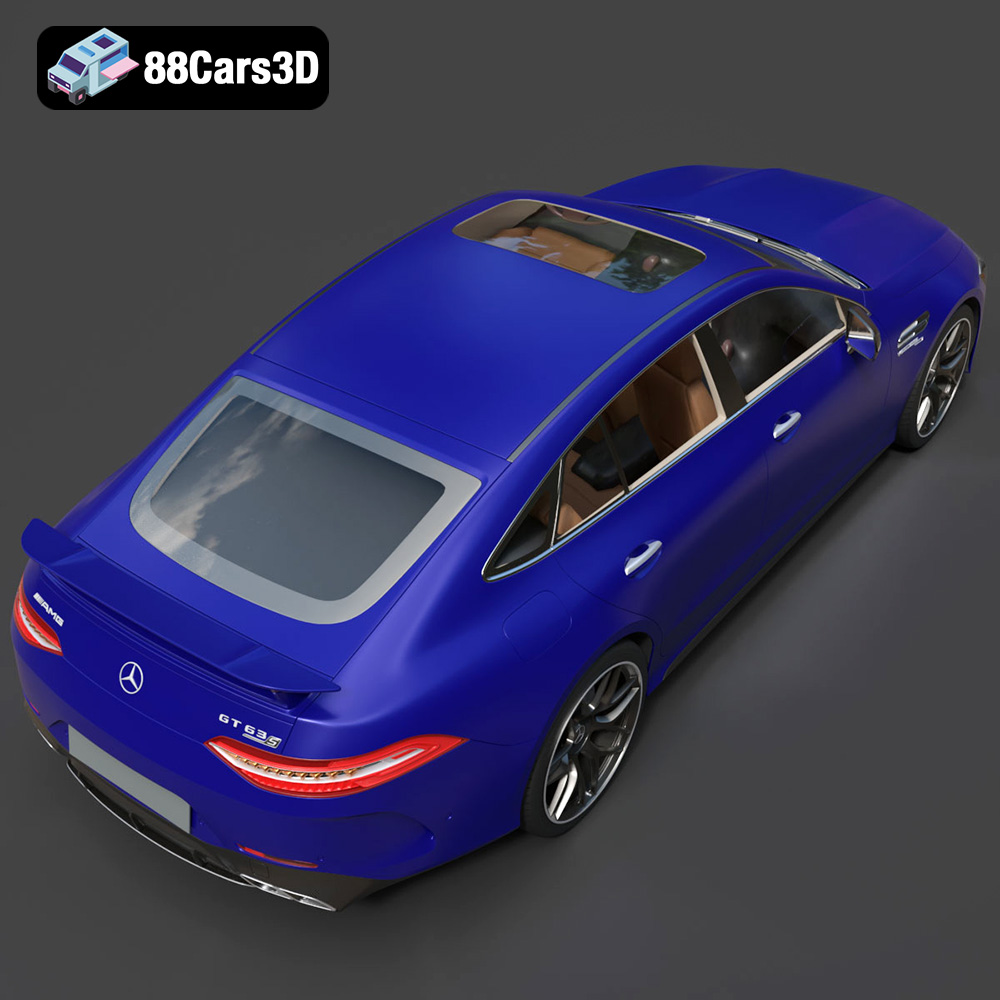
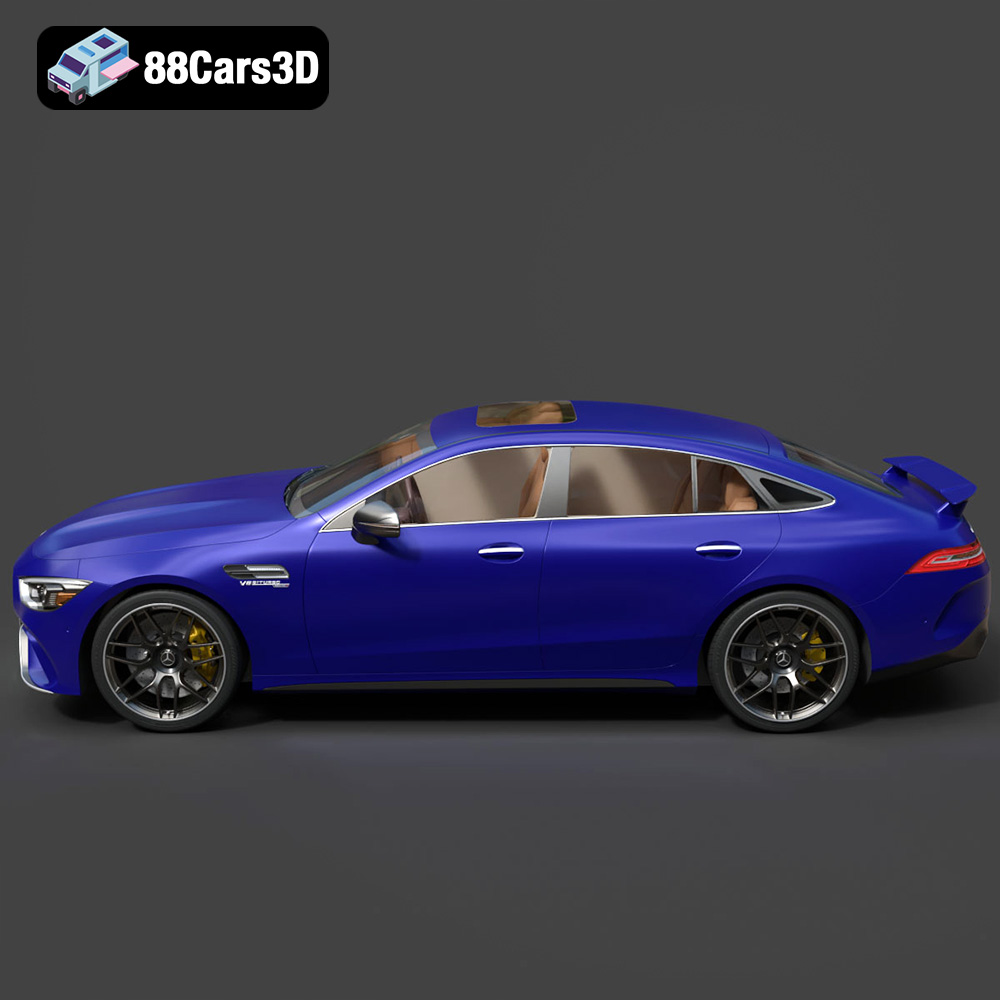
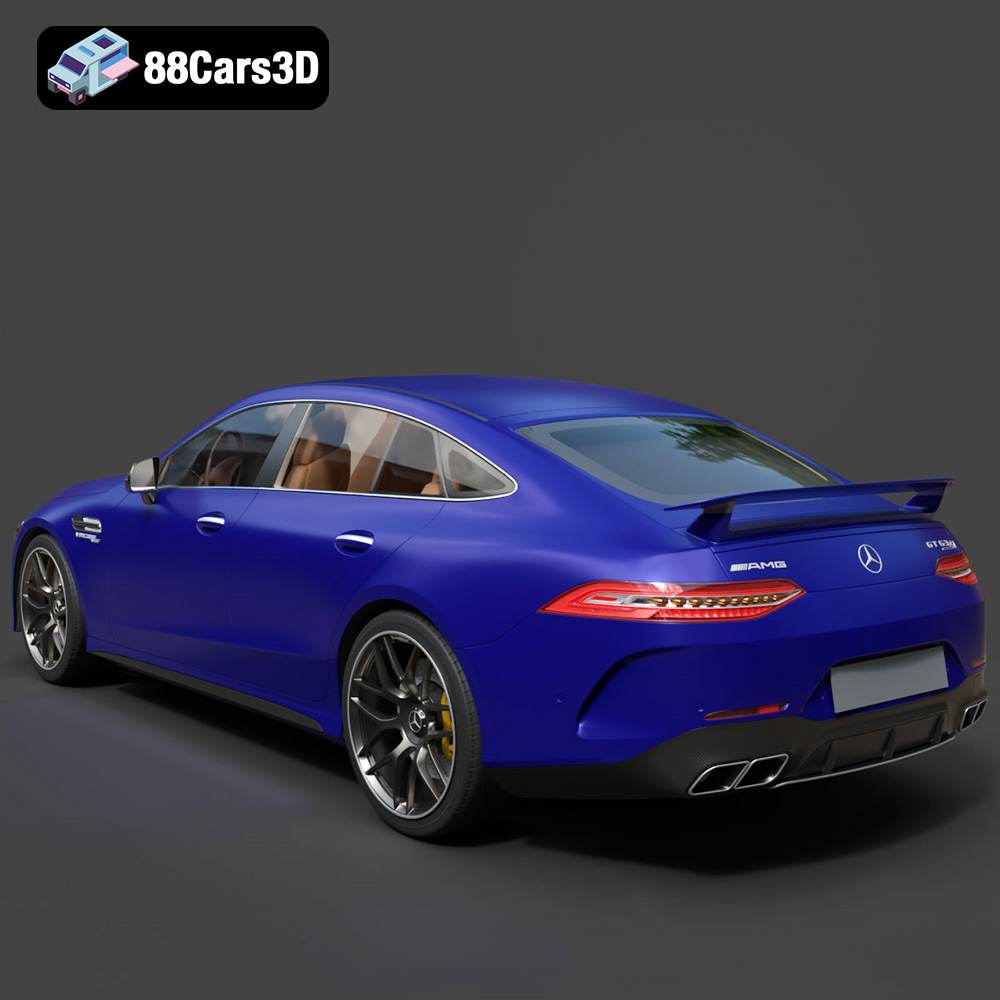
Consider the sleek lines and aggressive stance of the Mercedes AMG GT63 2019 3D model. This isn’t merely a representation of a car; it’s a digital masterpiece that captures the very essence of the real-world performance coupe. With its iconic Panamericana grille, muscular wide-body, and highly detailed interior, this model stands as a testament to what’s achievable when precision engineering meets digital artistry. Such an asset provides an unparalleled foundation for artists, designers, and developers looking to create stunning visualizations, immersive game environments, or engaging interactive experiences.
The versatility of a premium 3D model is often defined by the range and quality of its supported file formats. Each format serves specific purposes, catering to different software, rendering pipelines, and end-use applications. Understanding these distinctions is crucial for anyone working with 3D assets, ensuring smooth integration and optimal performance. For a model as complex and detailed as the Mercedes AMG GT63 2019, having a comprehensive suite of formats available, as offered by 88cars3d.com, provides invaluable flexibility.
The .blend format is the native file type for Blender, a powerful and increasingly popular open-source 3D creation suite. A .blend file typically encapsulates an entire Blender scene, including the 3D mesh, materials, textures, lighting, cameras, animations, and even physics simulations. This format is ideal for users who primarily work within Blender, offering full editability and seamless integration with Blender’s vast array of tools and modifiers. For the Mercedes AMG GT63 2019 model, a .blend file would provide the raw, fully editable scene, allowing artists to delve deep into its construction, modify materials, adjust lighting, or prepare it for complex animation sequences within Blender.
.fbx (Filmbox) is arguably one of the most widely adopted proprietary 3D file formats, developed by Autodesk. It’s renowned for its robust support for geometry, materials, textures, animations, and even rigging. .fbx is the go-to format for transferring assets between different 3D software applications and, crucially, for importing models into real-time game engines like Unreal Engine and Unity. Its strength lies in preserving critical data during export and import, making it an excellent choice for a game-ready asset like the Mercedes AMG GT63 2019. When transferring this model via .fbx, developers can expect its optimized mesh, material assignments, and pivot points (for wheels, steering) to be accurately maintained.
.obj (Wavefront OBJ) is one of the oldest and most universally supported 3D file formats. It primarily stores geometric data – vertices, faces, normals, and UV coordinates – along with references to external material files (.mtl). While it doesn’t support animation or rigging, its simplicity and widespread compatibility make it an excellent choice for basic mesh transfer between virtually any 3D software. For the Mercedes AMG GT63 2019, the .obj format serves as a reliable fallback, ensuring that the core geometry and UV mapping are accessible even in less common or older applications.
.glb (GL Transmission Format Binary) is the binary version of the glTF format, designed for efficient transmission and loading of 3D scenes and models in web and real-time applications. It packages all necessary assets (geometry, materials, textures, animations) into a single, self-contained file, making it incredibly easy to share and deploy. .glb is rapidly becoming the standard for augmented reality (AR), virtual reality (VR), and browser-based 3D viewers due to its small file size and quick parsing. The Mercedes AMG GT63 2019 in .glb format would be perfectly suited for immersive virtual showrooms or AR experiences on mobile devices, delivering high visual quality with optimized performance.
.stl (Stereolithography) is the de facto standard file format for 3D printing. It represents a 3D model as a series of connected triangles, describing only the surface geometry of an object without color, texture, or other attributes. For hobbyists or professionals looking to bring the Mercedes AMG GT63 2019 into the physical world, the .stl format is essential. It enables direct fabrication of the model, allowing for tangible prototypes or display pieces, albeit requiring careful preparation regarding scale and supports as noted in the product’s 3D print settings.
.ply (Polygon File Format) is another format used to store 3D data, particularly from 3D scanners or for CAD/analysis applications. It can store a wider range of properties than .obj, including color, transparency, and sometimes even normal information per vertex or face. While not as common for general asset exchange as .fbx or .obj, .ply can be useful for specific engineering analysis, reverse engineering workflows, or when detailed point cloud or mesh data needs to be preserved for precision modeling.
The .unreal format, often referring to a project or asset package specifically prepared for Unreal Engine, signifies a model that has undergone the necessary optimizations and setup for direct integration into this powerful game engine. This typically means the model has appropriate LODs (Levels of Detail), collision meshes, material instances, and possibly even Blueprint scripting pre-configured. The Mercedes AMG GT63 2019, offered with an .unreal variant, ensures game developers can drop this high-quality asset directly into their projects with minimal additional work, ready for lighting, physics, and gameplay implementation.
Similar to .blend for Blender, .max is the native project file format for Autodesk 3ds Max, a leading software in architectural visualization, automotive design, and animation. A .max file contains all scene data, including geometry, materials, textures, lighting, cameras, animation keyframes, and plugins used. For professionals entrenched in the 3ds Max ecosystem, having the Mercedes AMG GT63 2019 available in .max format means they can leverage its full editing capabilities, modify complex material shaders, set up intricate rendering scenarios using V-Ray or Corona, or integrate the vehicle into an existing 3ds Max production pipeline with complete fidelity.
Creating a 3D car model that meets professional standards involves a blend of artistic skill and technical precision. It’s about more than just replicating shapes; it’s about understanding the underlying engineering, the design philosophy, and how the model will function in various digital environments. The Mercedes AMG GT63 2019 3D model available on 88cars3d.com exemplifies these principles, offering a detailed and optimized asset ready for a multitude of applications.
The essence of a high-quality 3D car model lies in its ability to convincingly represent its real-world counterpart. For the Mercedes AMG GT63 2019, this means meticulous attention to its aggressive aerodynamics, the signature Panamericana front grille, and the intricate details of its Multibeam LED headlights. Every curve, vent, and panel gap must be faithfully reproduced. Beyond the exterior, the interior is equally critical. The model boasts a detailed cockpit with luxurious AMG Performance sport seats, an authentic AMG steering wheel, and accurate dual digital displays. This level of detail ensures that whether viewed from a distance in a racing game or up close in a virtual showroom, the model maintains its commanding presence and luxurious feel.
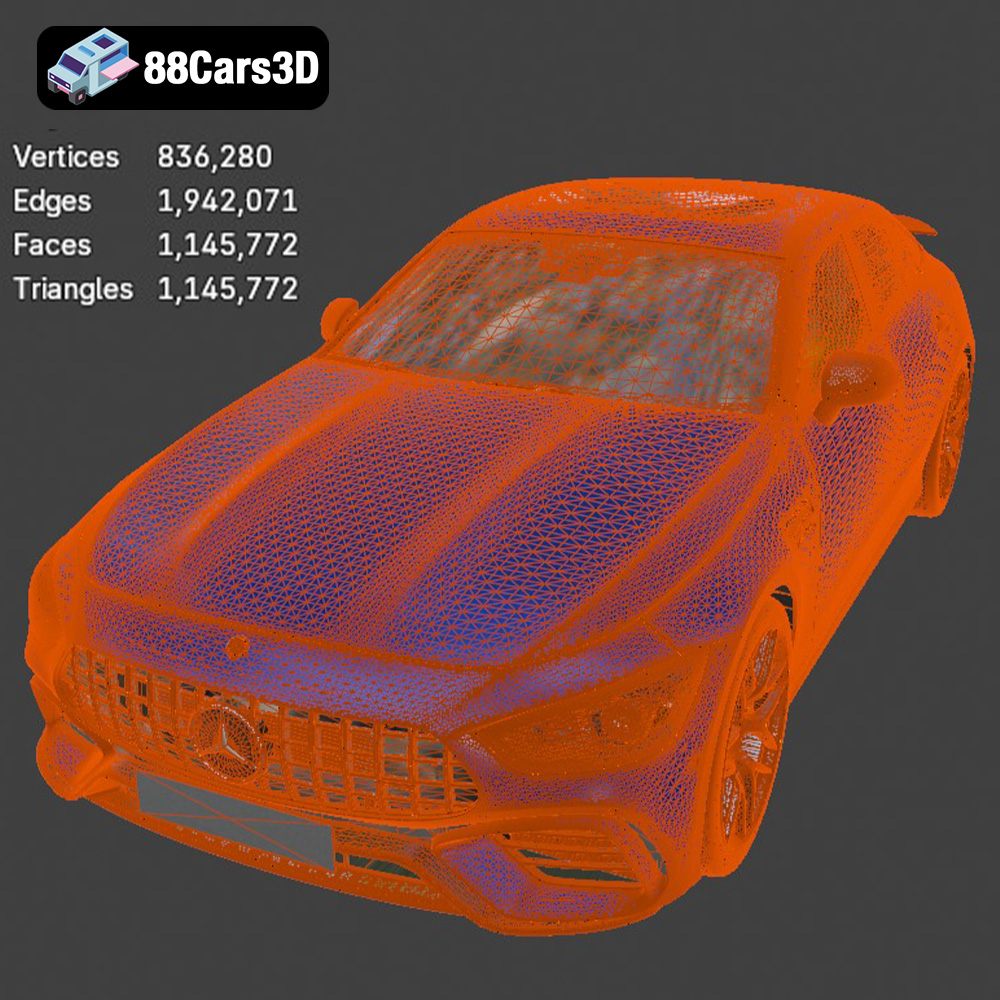
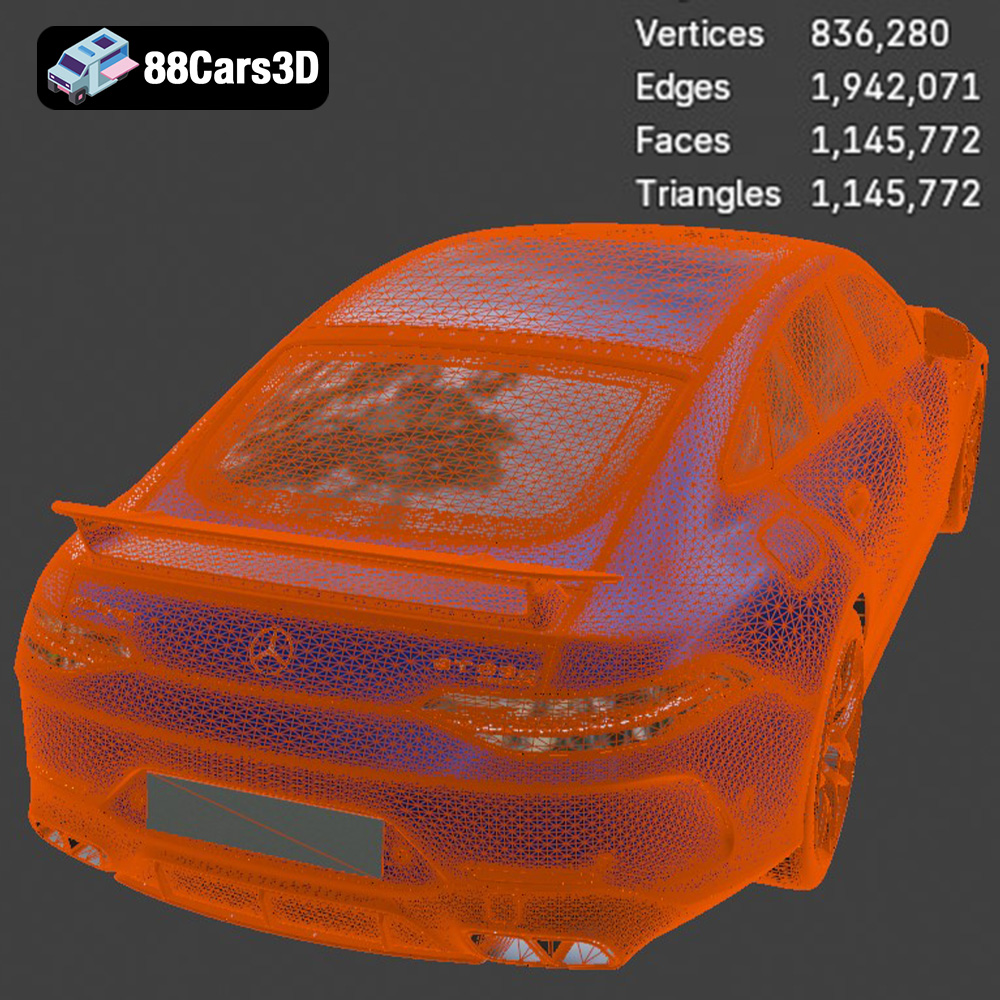
Beyond visual fidelity, a premium 3D model must be technically sound. The Mercedes AMG GT63 2019 is engineered with a game-ready polygon count of approximately 250,000 triangles. This ‘sweet spot’ balances visual richness with performance efficiency, making it ideal for real-time engines like Unreal and Unity without compromising quality. Furthermore, the model is built to real-world scale, which is crucial for accurate physics simulations in games and realistic scene composition in renders. Proper pivot setups for steering, wheel rotation, and suspension travel are also integrated, enabling seamless animation and dynamic interactions – a key feature for any automotive visualization or simulation project.
Automotive rendering is a specialized field demanding expertise in lighting, materials, and digital photography. A high-quality 3D model, such as the Mercedes AMG GT63 2019, serves as the perfect canvas for creating breathtaking photorealistic images and animations. Professional artists leverage sophisticated rendering software and techniques to bring these digital vehicles to life.
For many professionals in automotive visualization, 3ds Max combined with renderers like V-Ray or Corona is the gold standard. The Mercedes AMG GT63 2019 3D model, being available in .max format, integrates seamlessly into this workflow. Artists can import the model, apply advanced physically based rendering (PBR) materials to replicate car paint, chrome, leather, and glass with stunning accuracy. They then meticulously set up studio lighting environments or integrate the vehicle into realistic HDR (High Dynamic Range) outdoor scenes. V-Ray and Corona allow for complex reflections, refractions, global illumination, and depth of field, transforming the raw 3D model into an image indistinguishable from a photograph. This detailed workflow is essential for marketing campaigns, product configurators, and high-end advertising.
Blender, with its powerful Cycles and real-time Eevee renderers, offers another excellent platform for automotive rendering. The .blend file for the Mercedes AMG GT63 2019 provides artists with a native environment to explore creative lighting setups and material variations. Cycles, Blender’s path-tracing renderer, excels at photorealism, allowing for nuanced reflections and accurate light bounces on the car’s metallic paintwork. Eevee, on the other hand, enables rapid iteration and real-time feedback, perfect for exploring different color schemes, material finishes (matte, gloss, carbon fiber), and lighting scenarios efficiently. This flexibility makes the model an invaluable asset for indie artists and large studios alike seeking to produce high-quality renders without proprietary software limitations.
The rise of real-time engines and immersive technologies has revolutionized how we interact with digital content. Premium 3D car models are at the forefront of this shift, serving as the backbone for engaging games, virtual realities, and augmented experiences. The optimized nature of the Mercedes AMG GT63 2019 3D model makes it an ideal candidate for these demanding applications.
Game developers constantly seek high-quality, optimized assets to populate their virtual worlds. The Mercedes AMG GT63 2019, specifically engineered with a game-ready polycount and available in .fbx and .unreal formats, is perfectly suited for integration into Unreal Engine and Unity. In Unreal, developers can leverage its powerful Blueprint system to implement custom physics, add interactive elements like opening doors, or integrate the vehicle into AI-driven traffic systems. For Unity, the model’s clean topology and material setup allow for efficient creation of PBR shaders, ensuring it looks fantastic across various platforms. Its separate wheels, suspension, and steering components are invaluable for creating realistic driving dynamics and engaging gameplay in racing titles or open-world adventures.
The Mercedes AMG GT63 2019 model’s inclusion of the .glb format highlights its readiness for AR/VR applications. Imagine a virtual showroom where potential buyers can walk around the GT63 in true-to-life scale, open the doors, and inspect the detailed interior through a VR headset. Or an AR experience where the car appears on your driveway via a smartphone, allowing you to change colors and explore features as if it were truly there. These immersive experiences demand highly optimized yet visually stunning models that can render seamlessly on various devices. This 3D model provides exactly that, enabling brands to create compelling interactive configurators and product showcases that truly captivate audiences.
While digital visualization is a core application, the utility of a robust 3D model extends into the physical world through 3D printing. The ability to transform a digital design into a tangible object opens up new avenues for prototyping, display, and even personal customization. The Mercedes AMG GT63 2019 3D model is designed to support this physical manifestation.
For 3D printing, the .stl format is universally recognized. The Mercedes AMG GT63 2019 can be converted and prepared for 3D printing, allowing enthusiasts and designers to create scale models. This process requires careful consideration of scale (e.g., 1:12, 1:18, 1:24), layer height for detail, and necessary supports during printing. Resin printing is often recommended for such detailed automotive models to capture the fine lines of the grille, the intricacies of the wheels, and the sharp edges of the bodywork. Post-processing steps like sanding, priming, and painting are then crucial to achieve a high-quality physical replica that truly reflects the digital source.
A physical 3D print of the Mercedes AMG GT63 2019 offers unique customization opportunities. Hobbyists can experiment with authentic factory colors, metallic finishes, and even add custom decals. The ability to print separate components like wheels and suspension allows for greater assembly flexibility and the potential for creating dynamic display models with movable parts. This bridge between the digital and physical realms highlights the versatility of premium 3D car models, providing an avenue for tactile engagement with complex designs that goes beyond a mere screen display.
For any professional studio, efficiency and quality are paramount. Sourcing high-quality, pre-optimized 3D assets can significantly accelerate production timelines and elevate the overall standard of output. The Mercedes AMG GT63 2019 3D model from 88cars3d.com exemplifies the type of asset that empowers professional pipelines across industries.
Imagine an automotive manufacturer launching a new advertising campaign for the AMG GT63. Instead of expensive physical photoshoots in diverse locations, a studio can leverage this 3D model. They can place the virtual car in photorealistic environments, from a city skyscraper rooftop to a desert highway, adjusting lighting and weather conditions instantly. This not only saves immense costs and time but also provides unparalleled creative control. The model’s detailed exterior and interior allow for close-up shots that highlight design features, while its optimized nature ensures smooth animation for dynamic commercials, all rendered with cinematic quality.
In game development, creating highly detailed, performance-optimized vehicles from scratch can be a monumental task. By acquiring a professional-grade asset like the Mercedes AMG GT63 2019, game studios can fast-track their development. The model’s game-ready polycount, proper pivot setups, and compatibility with Unreal Engine and Unity mean less time on optimization and more time on gameplay and creative design. This allows developers to quickly populate their racing games or open-world environments with authentic, high-quality vehicles, enhancing player immersion and overall visual fidelity, directly impacting the quality and release schedule of a project.
Even in architectural visualization, the presence of realistic vehicles can significantly enhance the believability and scale of a scene. Dropping a detailed 3D car model like the Mercedes AMG GT63 2019 into a rendering of a luxury home or a modern office complex immediately adds life and context. The model’s high fidelity ensures it doesn’t detract from the architectural elements but rather complements them, creating a more convincing and engaging final image for clients and stakeholders.
The journey from a designer’s sketch to a fully realized, photorealistic 3D car model is a complex one, yet the output is an indispensable tool in today’s digital landscape. Assets like the Mercedes AMG GT63 2019 3D model represent the pinnacle of digital craftsmanship, offering unparalleled detail, technical optimization, and versatility across a spectrum of applications.
Whether you are a game developer striving for immersive realism, an automotive visualizer aiming for cinematic quality, an AR/VR creator building interactive experiences, or a hobbyist bringing digital designs to life through 3D printing, the choice of your 3D assets profoundly impacts your project’s success. Investing in high-quality 3D car models not only streamlines workflows but also elevates the final product, allowing artists and developers to focus on creativity rather than wrestling with technical imperfections.
The flexibility provided by a wide range of file formats – from .blend and .max for native software integration to .fbx for universal compatibility, .glb for web and AR/VR, and .stl for 3D printing – ensures that a premium model like the Mercedes AMG GT63 2019 is truly production-ready for any professional pipeline. For those seeking top-tier 3D car models, platforms like 88cars3d.com offer curated selections that empower creators to achieve their most ambitious visions.
The 2019 Mercedes AMG GT63 is a masterful blend of track-ready performance and luxurious four-door coupe grand touring. As the pinnacle of the AMG GT 4-Door lineup, it boasts aggressive aerodynamics, the iconic Panamericana grille with vertical slats, and a muscular wide-body stance. The sculpted hood hides a monstrous handcrafted biturbo V8, while the rear features an active spoiler, quad exhaust tips, and striking LED taillights. Every curve of this vehicle has been meticulously captured in 3D to reflect its commanding presence and aerodynamic efficiency. This premium 3D model is built with high-quality topology and a game-ready polygon count of approximately 250,000 triangles. Optimized for performance without sacrificing visual fidelity, it delivers photorealistic results in real-time engines. It is an ideal asset for game developers, automotive visualizers, and AR/VR creators demanding top-tier realism. Perfect for open-world racing games, high-end automotive configurators, virtual showrooms, and cinematic renders.
$19.99
.2019
.blend
.fbx
.glb
.gt63
.max
.mercedes
.obj
.ply
.rendering
.sports car
.stl
.unreal
4-door-coupe
car-3d-model
game asset
game-ready
low-poly
luxury car
mercedes-amg
optimized
VR/AR