Get 20% OFF All Premium 3D & STL Models!

In the dynamic realm of digital content creation, where photorealism meets real-time performance, the demand for high-quality 3D assets has never been more critical. From cinematic automotive rendering to immersive game development and sophisticated AR/VR experiences, the foundation of any compelling visual project lies in the fidelity and optimization of its core models. Artists and developers constantly seek assets that not only look authentic but also integrate seamlessly into diverse workflows without compromising performance.
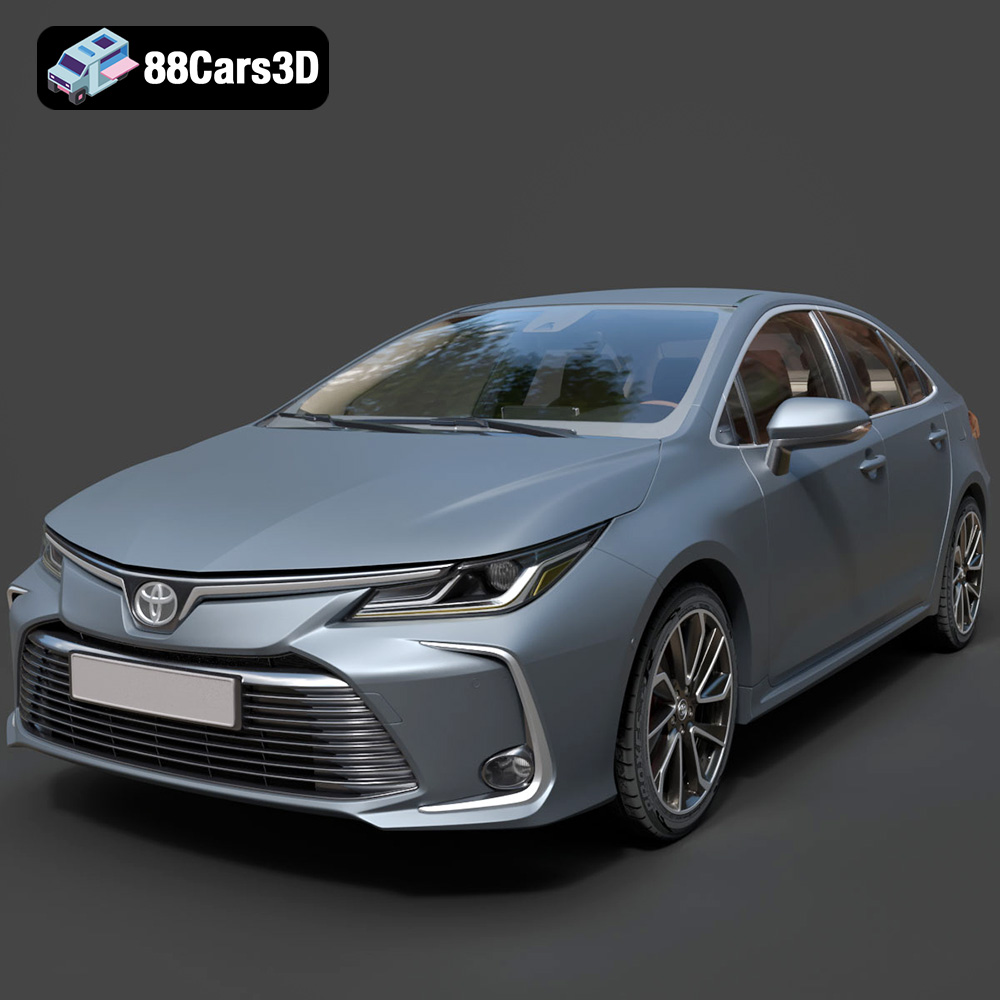
This quest for excellence often leads to the meticulous crafting of detailed vehicles, and a prime example of such an asset is the Toyota Corolla Sedan EU 2019 3D Model. This particular model stands out as a testament to the blend of aesthetic accuracy and technical efficiency, designed to meet the rigorous demands of professional production pipelines. It captures the essence of the European-spec Corolla, offering a versatile solution for anyone looking to populate a digital city, create a stunning visualization, or build an engaging interactive experience.
The success of any digital project that involves vehicles hinges on the quality of its 3D car models. These aren’t merely decorative elements; they are complex technical assets that must perform across a spectrum of applications, from static high-resolution renders to dynamic, interactive environments. The investment in a professionally crafted model pays dividends in both visual impact and production efficiency.
For automotive designers, advertisers, and architects, 3D visualization is an indispensable tool. It allows for the exploration of designs, the creation of captivating marketing materials, and the integration of vehicles into architectural proposals long before physical prototypes exist. High-fidelity 3D car models, like the Toyota Corolla Sedan EU 2019, provide the necessary detail to achieve photorealistic results, showcasing design nuances, material properties, and lighting interactions with unparalleled accuracy. This level of detail ensures that presentations are persuasive and visually striking, effectively bridging the gap between a conceptual idea and a tangible visual experience.
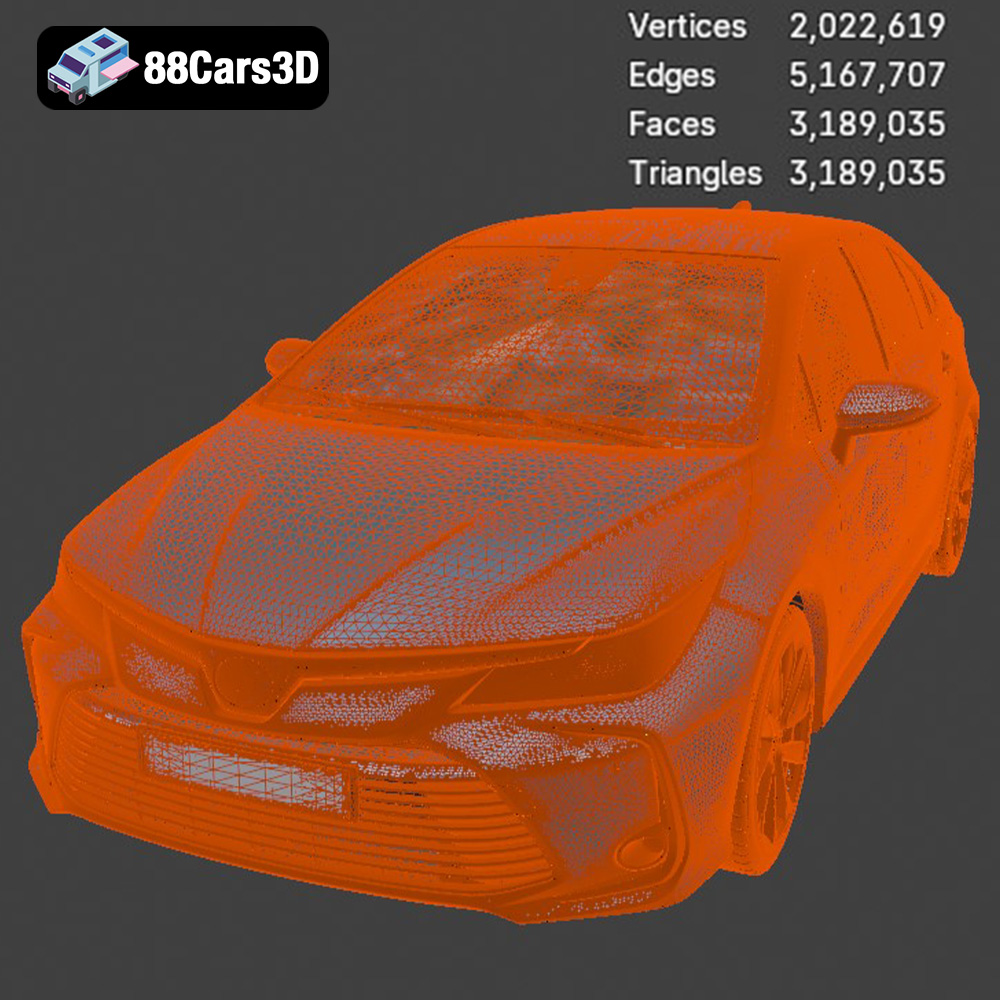
In the world of game development, AR/VR, and real-time simulators, visual quality must be balanced with performance. Every polygon, every texture, and every material shader contributes to the computational load. Professional game assets must therefore be meticulously optimized, featuring efficient topology, streamlined UV mapping, and carefully calibrated material setups. The Toyota Corolla Sedan EU 2019 3D model, with its approximately 350,000 triangle count, exemplifies this balance. It’s engineered to deliver exceptional visual fidelity for close-up views while remaining “game-ready,” ensuring smooth frame rates and responsive interactions in demanding real-time environments such as Unreal Engine and Unity. This optimization is crucial for creating fluid and believable digital worlds.
Navigating the diverse ecosystem of 3D software and applications requires a solid understanding of various file formats. Each format serves a specific purpose, offering unique advantages in terms of compatibility, data preservation, and workflow efficiency. The Toyota Corolla Sedan EU 2019 3D model is wisely provided in a comprehensive array of formats, ensuring its adaptability across virtually any professional pipeline. Understanding these formats is key to leveraging your 3D car models effectively.
Here’s a breakdown of the included formats and their typical use cases:
The .blend file is Blender’s native format, containing an entire scene with all its data: meshes, materials, textures, lighting, cameras, animations, and even physics simulations. It’s ideal for Blender users as it preserves all aspects of the original project, allowing for full editability and customization. When working with the Corolla model in Blender, the .blend file provides immediate access to its intricate material nodes, precise geometry, and any pre-configured scene elements, making it perfect for custom renders, animation projects, or further asset development within the Blender ecosystem.
The Filmbox (.fbx) format is one of the most widely used interchange formats in the 3D industry, particularly popular for game development. Developed by Autodesk, .fbx excels at transferring 3D model data, including geometry, materials, textures, bones, and animations, between different 3D software and game engines like Unreal Engine and Unity. It maintains a good balance of data preservation and compatibility, making it the go-to choice for importing the Toyota Corolla into a real-time environment. Its robust support for animations also means that any pre-rigged parts of the Corolla, such as rotating wheels or articulated suspension, will import correctly, ready for in-engine scripting and control.
The Wavefront Object (.obj) format is a universal, open-standard file format for 3D geometry. It’s renowned for its simplicity and widespread compatibility across virtually all 3D software. An .obj file typically stores vertex positions, UV coordinates, normals, and face information, often accompanied by a separate Material Template Library (.mtl) file for basic material properties. While it doesn’t support advanced features like rigging or animation, .obj is an incredibly reliable choice for pure geometry transfer. For the Toyota Corolla, if you need to bring the raw mesh into a less common 3D application or convert it to another format, .obj serves as an excellent foundational export.
GL Transmission Format (.glb) is the binary version of .gltf, an efficient, open standard for 3D scenes and models developed by the Khronos Group. Designed for real-time applications, especially on the web, AR, and VR, .glb packages all model data (geometry, materials, textures, animations) into a single, self-contained file. This makes it incredibly easy to load and display the Toyota Corolla model directly in web browsers (e.g., using Three.js or Babylon.js), mobile AR apps (like Google’s Scene Viewer), or VR environments, offering a streamlined experience for interactive showcases and configurators.
Stereolithography (.stl) is the standard file format for 3D printing. It represents 3D surfaces as a collection of unconnected triangular facets, making it simple for 3D printers to interpret and build. The .stl format does not contain color, texture, or material information, focusing solely on the object’s geometry. For hobbyists or professionals looking to create a physical replica of the Toyota Corolla, the .stl export provides the necessary watertight mesh for successful 3D printing, enabling the creation of display-scale models after appropriate slicing and support generation.
The Polygon File Format (.ply), also known as Stanford Triangle Format, is primarily used for storing 3D data from 3D scanners or for CAD applications. It can store a wider range of properties than .obj or .stl, including color per vertex, transparency, surface normals, and various confidence levels. While less common for general asset interchange, .ply is valuable when precision mesh data is critical, perhaps for engineering analysis, reverse engineering, or specific scientific visualizations of the Corolla’s geometry.
While not a universal file extension in the same vein as .fbx or .obj, a .unreal file designation typically implies an asset package specifically optimized or pre-configured for direct import into Unreal Engine. This often means the model has undergone specific preparation steps – such as proper scaling, material setup, collision geometry generation, and Level of Detail (LOD) creation – to ensure it functions optimally within Unreal’s demanding real-time rendering pipeline. For the Toyota Corolla, this format promises a highly efficient and ready-to-use asset, minimizing setup time for game developers.
The .max file is the native format for Autodesk 3ds Max, a leading software for 3D modeling, animation, and rendering in professional visualization. Like Blender’s .blend, a .max file preserves the entire scene with all its components, including modifiers, animation keys, complex materials, lighting setups, and render settings. For users deeply integrated into a 3ds Max workflow, the .max file for the Toyota Corolla offers maximum flexibility for further customization, high-end V-Ray or Corona renders, or integration into complex animation sequences, ensuring every original detail and setup is maintained.
This comprehensive offering of file formats for the Toyota Corolla Sedan EU 2019 3D model underscores its versatility and value, providing artists and developers the freedom to choose the format best suited for their specific software and project needs.
The value of a 3D model goes beyond its simple appearance; it lies in the meticulous engineering that underpins its structure and functionality. The Toyota Corolla Sedan EU 2019 3D model from 88cars3d.com exemplifies this principle, showcasing a detailed design philosophy that prioritizes both visual fidelity and technical performance.
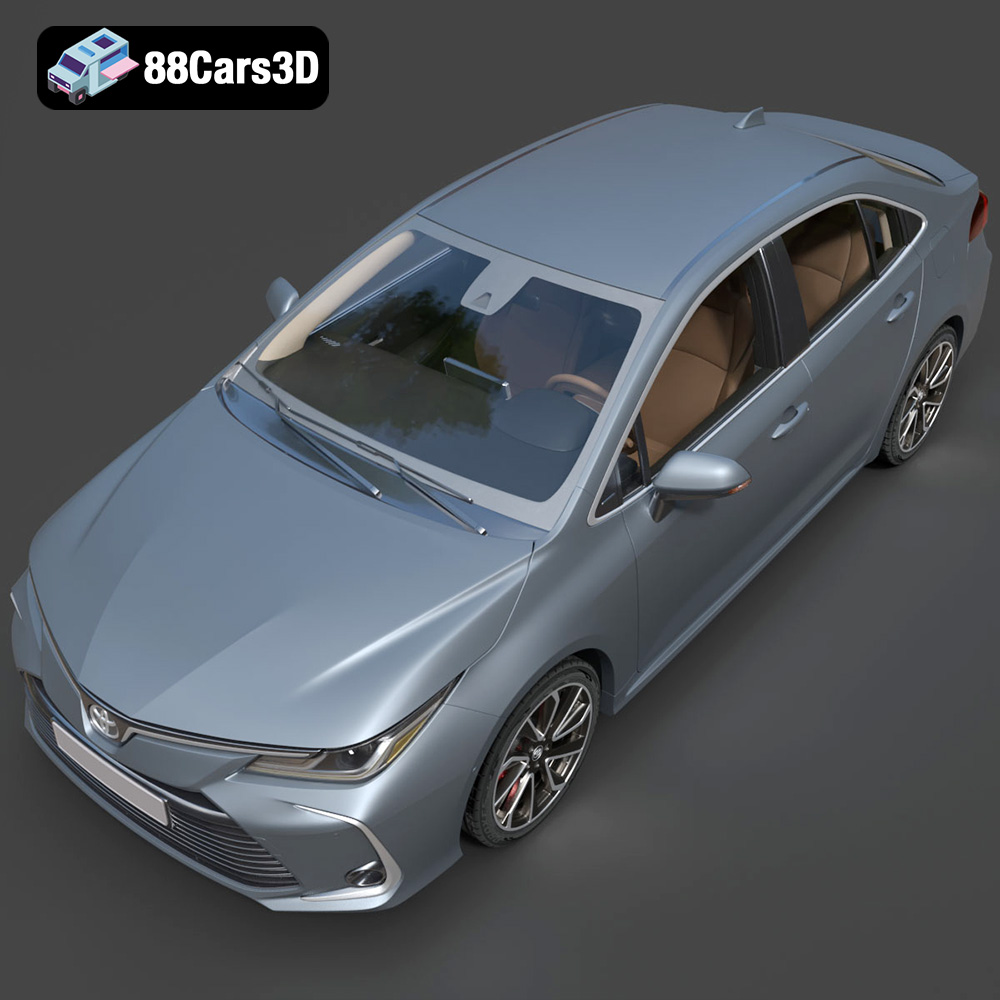
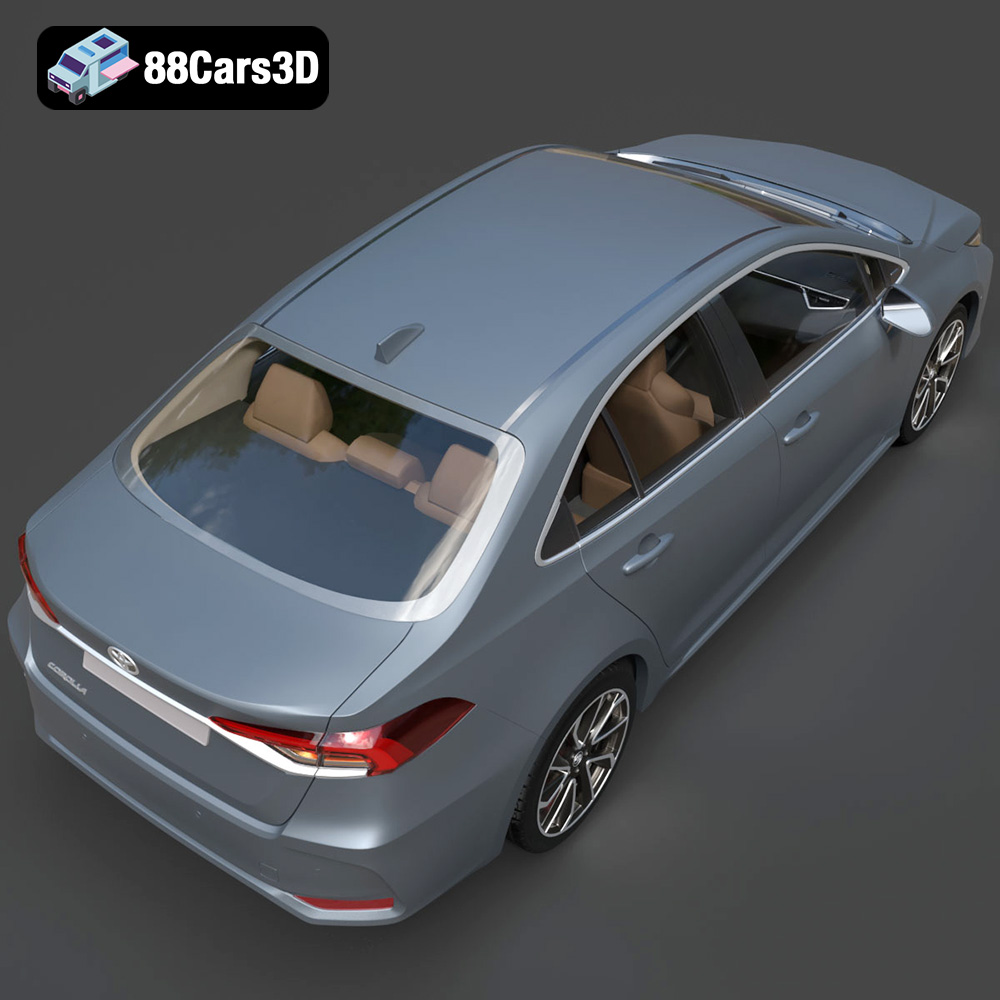
The exterior of the 2019 Toyota Corolla Sedan EU version is characterized by its sophisticated styling and aerodynamic profile, and this 3D model captures every nuance. From the dynamic front fascia to the sleek Bi-LED headlamps and signature LED taillights, the geometry precisely mirrors the real-world vehicle. The detailed multi-spoke alloy wheels and realistic tire sidewalls add to the authenticity, while accurate MacPherson strut and multi-link rear suspension details provide the foundation for realistic motion and interaction. Even subtle elements like the hidden exhaust system specific to the EU model are meticulously represented, making it ideal for close-up renders and simulations where accuracy is paramount. This attention to detail ensures that the model can stand up to the scrutiny of high-resolution automotive rendering.
A truly comprehensive 3D car model doesn’t stop at the exterior. The interior of the Corolla Sedan EU 2019 is equally detailed, providing an immersive experience for virtual tours, first-person gaming perspectives, or realistic cockpit renders. Accurate ergonomic seat details, precise upholstery, a multifunction steering wheel, and a detailed digital instrument cluster contribute to an authentic cabin environment. The floating infotainment display, center console, climate controls, and gear shifter are all precision-modeled, offering a high level of realism. This optimized geometry is particularly beneficial for game development, where players often interact with or view the interior from a first-person perspective.
Beyond visual accuracy, the technical specifications of the Toyota Corolla 3D model highlight its suitability for a broad range of professional applications. With an optimal triangle count of approximately 350,000, it strikes a perfect balance between high-end visual realism and game-ready optimization. This means it can be seamlessly integrated into demanding real-time engines like Unreal Engine or Unity without causing significant performance bottlenecks, yet it retains enough detail for stunning cinematic renders. Furthermore, the model is built to real-world scale, ensuring accurate proportions for simulations and scene composition. Crucially, it features a proper pivot setup for steering, wheel rotation, and suspension travel, which is indispensable for animating vehicles and creating interactive driving experiences. This underlying technical robustness makes it a highly versatile asset.
The versatility of the Toyota Corolla Sedan EU 2019 3D model means it can be a cornerstone asset in various professional pipelines. Its multi-format availability and optimized design cater to distinct technical requirements across industries.
For high-fidelity automotive rendering, artists typically turn to powerful software like Autodesk 3ds Max or Blender, often paired with physically-based renderers such as V-Ray, Corona Renderer, or Blender’s Cycles. The included .max and .blend files allow direct access to the model within these environments, complete with materials and potentially lighting setups. Artists can effortlessly import the Corolla, apply advanced shaders for paint, glass, and chrome, set up studio lighting, and craft compelling visual narratives for marketing, design reviews, or architectural visualizations. The model’s accurate geometry ensures realistic reflections and shadows, crucial for achieving photorealism in any automotive scene. For instance, in a 3ds Max workflow, the model can be quickly positioned within an exterior architectural scene, its materials tweaked to match specific branding, and then rendered with global illumination to simulate natural light interacting with the vehicle’s surfaces.
The “game-ready” optimization of the Toyota Corolla model makes it an invaluable asset for game developers working with Unreal Engine or Unity. The .fbx and .unreal formats streamline the import process. Developers can import the model, apply PBR (Physically Based Rendering) materials, and set up collision meshes for realistic physics interactions. The optimized polycount (around 350,000 triangles) ensures the car runs smoothly even in dense game environments, while the separate components for wheels, suspension, and steering facilitate easy rigging and animation for realistic driving mechanics. Developers can implement Level of Detail (LOD) meshes for distant vehicles, further enhancing performance. Imagine populating an open-world driving game with traffic using this high-quality, optimized asset, providing both visual appeal and a smooth gameplay experience.
The burgeoning fields of Augmented Reality (AR) and Virtual Reality (VR) demand highly optimized models that can be delivered across various platforms, often with strict performance budgets. The .glb format, included with the Toyota Corolla, is perfect for this. It allows for quick loading and display in web-based AR/VR experiences, mobile applications, and virtual showrooms. Companies can use this model to create interactive car configurators, allowing potential buyers to explore different colors, wheel options, and interior features in an immersive digital space. The detailed interior is especially beneficial for VR, where users can ‘sit’ inside the car. The model’s careful optimization ensures a fluid, responsive experience, preventing motion sickness and enhancing user engagement.
Beyond digital displays, the Toyota Corolla 3D model also extends into the physical world through 3D printing. The .stl format provides a solid, watertight mesh suitable for direct export to 3D printing software. Hobbyists and product designers can use this to create display-scale models (e.g., 1:12, 1:18, or 1:24). The product description provides excellent guidance for 3D print settings, recommending resin printing for fine details and specific wall thickness, infill, and support strategies. This allows for the creation of high-quality physical replicas that can be sanded, primed, and painted with authentic factory colors, serving as collectible items, design prototypes, or educational tools.
In today’s fast-paced production environment, time is a precious commodity. Creating a high-fidelity 3D car model from scratch, like the Toyota Corolla Sedan EU 2019, requires hundreds of hours of expert modeling, texturing, and optimization. This is where a marketplace like 88cars3d.com offers a significant strategic advantage.
By purchasing pre-made, professional-grade 3D car models, studios and individual artists can drastically cut down on development time and costs. Instead of allocating resources to model creation, teams can focus on core project development, level design, animation, or rendering. A single purchase replaces weeks or months of work, accelerating project timelines and improving profitability. The cost of a meticulously detailed model from 88cars3d.com is a fraction of what it would cost to commission or produce internally, offering exceptional value.
One of the biggest challenges with asset creation is ensuring consistent quality. 88cars3d.com provides expertly crafted 3D car models that adhere to industry best practices for topology, UV mapping, material setup, and optimization. This means you receive a reliable, production-ready asset right out of the box, reducing the need for extensive cleanup or rework. This consistency is vital for maintaining a professional look across all elements of a project, whether it’s a single compelling automotive rendering or a vast game world filled with diverse vehicles.
Access to a diverse library of high-quality 3D car models, such as the Toyota Corolla Sedan EU 2019, empowers creators to pursue more ambitious projects. It allows for the rapid prototyping of ideas, the creation of rich and varied environments, and the ability to choose the perfect vehicle to fit any scene or narrative. This expands creative possibilities without the constraint of having to build every asset from the ground up, freeing artists to innovate and focus on the artistic direction.
While purchasing a pre-made 3D model provides a significant head start, the ability to customize and adapt it to specific project needs is equally important. The Toyota Corolla Sedan EU 2019 3D model is designed with customization in mind, offering flexibility for artists to truly make it their own.
The model’s clean topology and organized material structure allow for easy customization of its visual appearance. Artists can effortlessly change body colors, applying authentic factory colors, custom metallic finishes, or even matte wraps. Tire textures can be swapped or modified to reflect different driving conditions – from pristine street tires to more rugged off-road variants. Interior upholstery materials can be adjusted, and gloss levels can be fine-tuned to achieve specific aesthetic outcomes, all contributing to a unique presentation tailored to the project’s vision.
Integrating a vehicle seamlessly into various digital environments requires more than just placing it in a scene. The Toyota Corolla model’s versatility extends to its ability to adapt to diverse lighting conditions and atmospheric effects. Artists can easily adjust materials to react correctly to different HDRI lighting setups, studio lights, or dynamic in-game weather systems. Fine-tuning reflections, refractions, and shadows ensures the vehicle looks believable whether it’s parked under a harsh desert sun, cruising through a rainy city, or gleaming under showroom spotlights. This adaptability is crucial for achieving visual coherence across different scenes and scenarios.
For projects requiring motion, the Corolla model is structured to facilitate complex animation. With separate components for wheels, suspension, and steering, animators have precise control over each element. This allows for realistic wheel rotation, independent suspension travel over uneven terrain, and accurate steering inputs for dynamic driving sequences. These features are indispensable for creating compelling cinematic animations, realistic driving simulators, or interactive vehicle demonstrations that truly bring the car to life in a digital space.
The evolution of 3D modeling has ushered in an era where high-quality, optimized assets are paramount for achieving professional-grade results across diverse applications. From breathtaking automotive rendering to high-performance game assets and immersive AR/VR experiences, the demand for excellence is unwavering. The Toyota Corolla Sedan EU 2019 3D Model stands as a prime example of an asset engineered to meet these rigorous standards, offering a rare combination of visual fidelity, technical efficiency, and unparalleled versatility.
Whether you are an architectural visualizer needing a realistic vehicle to populate an urban scene, a game developer crafting an engaging driving experience, or an animator seeking a detailed car for a cinematic sequence, this model provides the necessary foundation. Its availability in multiple industry-standard formats, coupled with meticulous detail both inside and out, ensures seamless integration into virtually any professional workflow. By leveraging such expertly crafted 3D car models, creators can significantly enhance their projects, accelerate production, and focus on delivering truly exceptional digital experiences. Explore the possibilities and elevate your next project with premium 3D assets available at 88cars3d.com.
The 2019 Toyota Corolla Sedan EU version brings sophisticated styling, hybrid efficiency, and renowned reliability to the compact passenger car segment. This highly detailed 3D model accurately captures the vehicle’s dynamic front fascia, sleek Bi-LED headlamps, refined body lines, and modern aerodynamic profile characteristic of the European market specification. Designed with optimal topology (approximately 350,000 triangles), this model ensures exceptional visual fidelity while remaining fully game-ready. The geometry is carefully balanced to support close-up renders and seamless integration into demanding real-time engines, making it a versatile asset for game development, AR/VR experiences, animation, and architectural visualization.
$37.50
.2019
.blend
.corolla
.fbx
.glb
.max
.obj
.ply
.rendering
.sedan
.stl
.toyota
.unreal
car-3d-model
corolla-sedan
eu-spec
game asset
game-ready
low-poly
optimized
passenger-car
VR/AR