Get 20% OFF All Premium 3D & STL Models!

In the expansive and dynamic world of 3D content creation, the pursuit of photorealism and historical accuracy often defines the success of a project. Whether you’re a game developer striving for immersive environments, an architectural visualizer crafting stunning lifestyle scenes, or a filmmaker producing period pieces, the quality of your foundational assets is paramount. Few vehicles encapsulate both breathtaking design and engineering prowess quite like the Mercedes Benz 540 K Roadster. This pre-war masterpiece, synonymous with unparalleled luxury and performance, presents a unique challenge and opportunity for 3D artists. Recreating its sweeping lines, intricate details, and powerful presence requires meticulous attention to detail, a task expertly accomplished in the Mercedes Benz 540 K Roadster 3D Model available for download.
This exceptional 3D car model is not merely a static representation; it’s a versatile, game-ready asset designed to elevate a multitude of digital endeavors. From its iconic supercharged straight-eight engine representation to the delicate wire-spoke wheels and luxurious interior, every facet has been faithfully recreated to deliver an authentic historical vehicle asset. For professionals seeking premium 3D car models that stand up to the closest scrutiny, this model offers a robust solution for everything from high-end automotive rendering to interactive AR/VR experiences and demanding game asset requirements. It embodies the precision and quality that professionals expect, streamlining workflows and empowering creators to focus on artistic direction rather than asset creation from scratch. The journey through its creation and potential applications reveals why assets of this caliber are indispensable for any serious 3D artist or studio.
Classic cars hold a timeless allure, transcending generations with their elegance, craftsmanship, and the stories they tell. Translating this appeal into the digital realm presents a unique set of artistic and technical challenges. The Mercedes Benz 540 K Roadster, in particular, with its distinctive Art Deco styling and formidable presence, demands a level of fidelity that cheap or rushed models simply cannot deliver. High-quality 3D car models of such iconic vehicles are not just data; they are digital sculptures, preserving history and making it accessible for new forms of media.
The essence of a classic car like the 540 K Roadster lies in its unique proportions, intricate detailing, and the subtle nuances of its period materials. Capturing this authenticity in a 3D model means going beyond basic shape replication. It involves meticulous research into blueprints, historical photographs, and real-world examples to ensure every curve, every rivet, and every chrome accent is accurately represented. For the Mercedes Benz 540 K Roadster 3D Model, this meant painstakingly reproducing the signature external exhaust pipes, the complex structure of the wire-spoke wheels, the specific design of its prominent chrome headlight assemblies, and even the intricate details of its leaf spring suspension. This level of detail is crucial for projects where historical accuracy is paramount, such as period films, museum exhibits, or educational simulations. Without this foundational authenticity, the illusion quickly breaks, undermining the entire project’s credibility.
Developing a high-fidelity 3D model from scratch is an incredibly time-consuming and resource-intensive process. It requires expert modelers, texture artists, and a deep understanding of automotive design. For a vehicle as complex and historically significant as the Mercedes Benz 540 K Roadster, this could mean hundreds of hours of work. This is where the value of premium, pre-made 3D car models becomes evident. By acquiring a meticulously crafted asset, studios and individual artists can significantly reduce their development timelines and allocate resources to other critical areas of their projects. The Mercedes Benz 540 K Roadster 3D Model, with its optimized geometry and game-ready status, allows creators to instantly integrate a visually stunning and technically sound asset into their scenes, ready for immediate use in automotive rendering, game development, or AR/VR applications. This efficiency doesn’t come at the cost of quality; rather, it’s a testament to the specialized skill embedded within such professional assets.
The versatility of a 3D model is often defined by the file formats it supports. Different formats are optimized for different stages of the 3D pipeline, from initial modeling and animation to real-time rendering and 3D printing. Understanding these formats is crucial for anyone working with 3D car models, ensuring seamless integration into various software environments and project requirements. The Mercedes Benz 540 K Roadster 3D Model is provided in a comprehensive suite of formats, each serving distinct purposes.
The .blend format is the native file type for Blender, a powerful and increasingly popular open-source 3D creation suite. A .blend file typically contains not just the mesh data, but also materials, textures, lighting setups, animations, cameras, and even custom scripts. This makes it an ideal choice for users who wish to have full control over the asset. When you download the Mercedes Benz 540 K Roadster 3D Model in .blend, you receive a complete scene, allowing you to easily dissect its construction, modify materials, adjust rigging for animations, or export specific components with precise settings. It offers unparalleled flexibility for further customization and integration into a Blender-centric workflow, perfect for high-quality automotive rendering.
FBX (Filmbox) is an industry-standard proprietary file format developed by Autodesk, widely used for exchanging 3D data between different applications. It’s renowned for its ability to store a vast array of information beyond just geometry, including animation, skeletons, morph targets, materials, and lighting. The .fbx format is particularly favored in game development for engines like Unreal Engine and Unity due to its robust support for animation and scene hierarchy, making it an excellent choice for game assets. Its stability and widespread adoption make it the go-to format for transferring animated 3D car models and ensuring compatibility across major professional software platforms.
OBJ (or .obj) is one of the most widely supported and simplest 3D geometry definitions file formats. It’s a universal format that describes only the geometry of a 3D object, including vertices, normals, UV coordinates, and faces. While it doesn’t store animation or complex material properties (these are usually stored in a companion .mtl file), its simplicity ensures maximum compatibility across virtually all 3D software. For the Mercedes Benz 540 K Roadster, an .obj file is perfect for those needing a clean mesh for importing into specialized renderers, CAD software, or for re-texturing from scratch in a new environment without carrying over potentially incompatible material setups. It’s a robust baseline for cross-software projects.
GLB (GL Transmission Format Binary) is a relatively newer format that has quickly gained traction, especially in the realms of Augmented Reality (AR), Virtual Reality (VR), and web-based 3D applications. It’s a binary version of the glTF (GL Transmission Format) and efficiently packs all 3D data – geometry, materials, textures, and animations – into a single file. This ‘single file’ nature makes .glb incredibly efficient for web streaming and quick loading, making it an excellent choice for interactive virtual showrooms, mobile AR experiences, or integrating the Mercedes Benz 540 K Roadster into a browser-based configurator. Its optimization for real-time environments makes it a key format for modern immersive experiences.
STL (Stereolithography) is the de facto standard file format for 3D printing. Unlike other formats that describe surfaces, .stl represents a 3D model as a collection of unconnected triangular facets that define its surface geometry. It’s a purely geometric representation, lacking color, texture, or material information. When preparing the Mercedes Benz 540 K Roadster for physical output, the .stl format is essential. It provides the necessary data for slicing software to prepare the model for a 3D printer, allowing hobbyists and professionals to bring the classic car into the physical world at various scales, as detailed in the product’s 3D print settings.
The PLY (Polygon File Format), sometimes referred to as the Stanford Triangle Format, is primarily designed to store 3D data from 3D scanners. It’s capable of storing a wide range of properties, including color, transparency, surface normals, and texture coordinates, in addition to XYZ coordinates and connectivity. While less common for general asset exchange than FBX or OBJ, .ply is valued for its precision in representing point cloud and mesh data, making it useful in scientific computing, CAD applications, and specific analysis workflows where accurate surface data is crucial. It can provide a very clean and detailed mesh for intricate engineering reviews or high-precision manufacturing.
While not a universal file extension in the same vein as FBX or OBJ, the inclusion of an “.unreal” file often signifies an asset specifically packaged or optimized for direct import into the Unreal Engine. This typically means the model has already been processed with Unreal’s specific requirements in mind, potentially including proper scale, collision meshes, material setups optimized for PBR (Physically Based Rendering), and potentially even LOD (Level of Detail) configurations. For game developers working with Unreal Engine, having a dedicated Unreal-ready file for the Mercedes Benz 540 K Roadster significantly accelerates the integration process, minimizing setup time and maximizing compatibility for a crucial game asset.
The .max format is the native file type for Autodesk 3ds Max, a long-standing industry leader in 3D modeling, animation, and rendering. Similar to .blend, a .max file contains a complete scene, including geometry, materials, lighting, cameras, and animation data. For professionals entrenched in the 3ds Max ecosystem, this format offers the highest degree of control and flexibility. It allows artists to directly open the Mercedes Benz 540 K Roadster model within their preferred software, leveraging 3ds Max’s powerful rendering capabilities (like V-Ray or Corona) and animation tools to create stunning automotive rendering sequences or integrate the vehicle into complex architectural visualizations.
The true measure of a high-quality 3D car model lies in its ability to convincingly replicate the real-world object. For the Mercedes Benz 540 K Roadster, this involved a meticulous translation of its physical attributes into a digital format, ensuring both visual accuracy and technical performance. This attention to detail is what transforms a generic car model into a truly iconic game asset or a center piece for high-end automotive rendering.
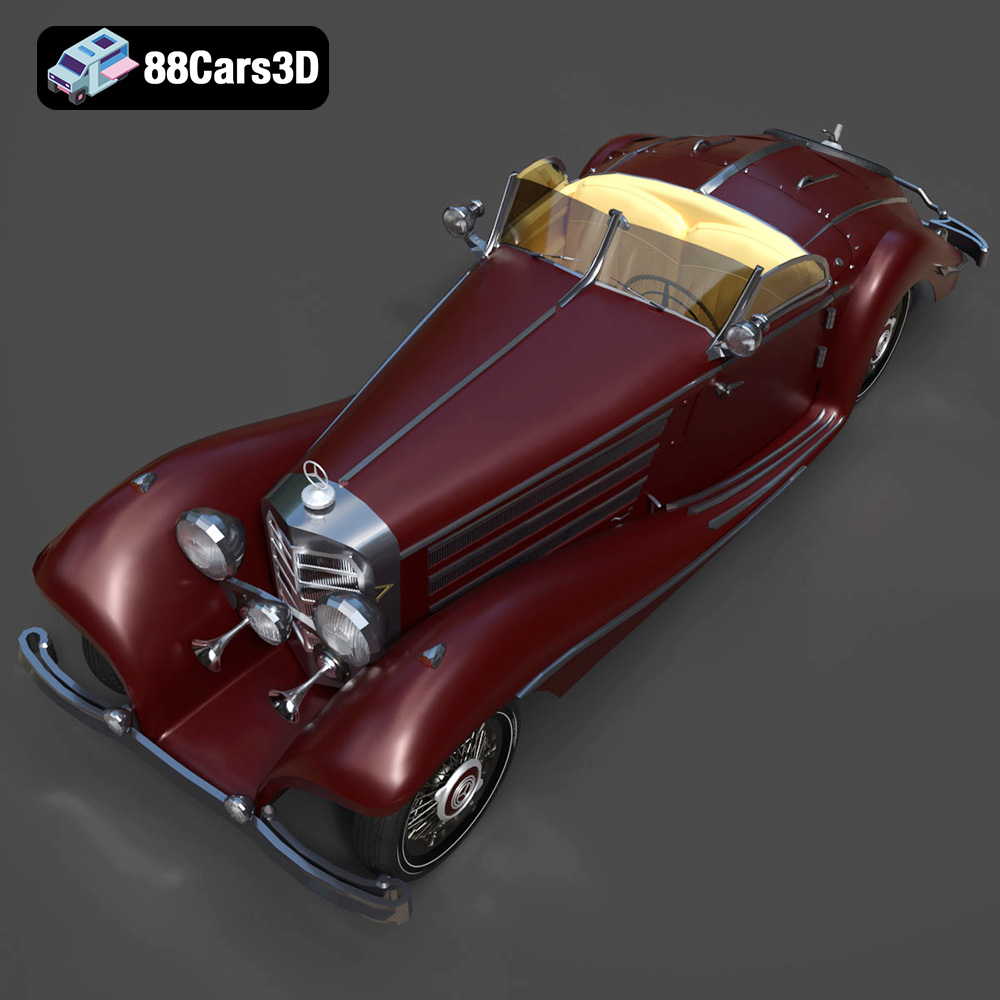
The Mercedes Benz 540 K Roadster is defined by its iconic exterior features, each demanding precise replication. The 3D model expertly captures the accurate frame geometry and classic proportions, which are fundamental to its recognizable silhouette. Key elements such as the detailed supercharged straight-eight engine block representation, visible beneath the hood, add a layer of mechanical realism that often goes overlooked in less detailed models. The legendary external ribbed exhaust pipes, running elegantly alongside the hood, are a signature touch faithfully rendered, as are the authentic vintage lighting details, including prominent chrome headlight assemblies. Furthermore, the intricate wire-spoke wheels with period-correct whitewall tires are not just textures; they are modeled with precision. Even the accurate leaf spring and rigid axle suspension details are present, and crucially, components like wheels, suspension, and steering are separated, ready for sophisticated animation sequences. This granular detail ensures the model is prepared for rigorous scrutiny, from close-up renders to dynamic game scenarios.
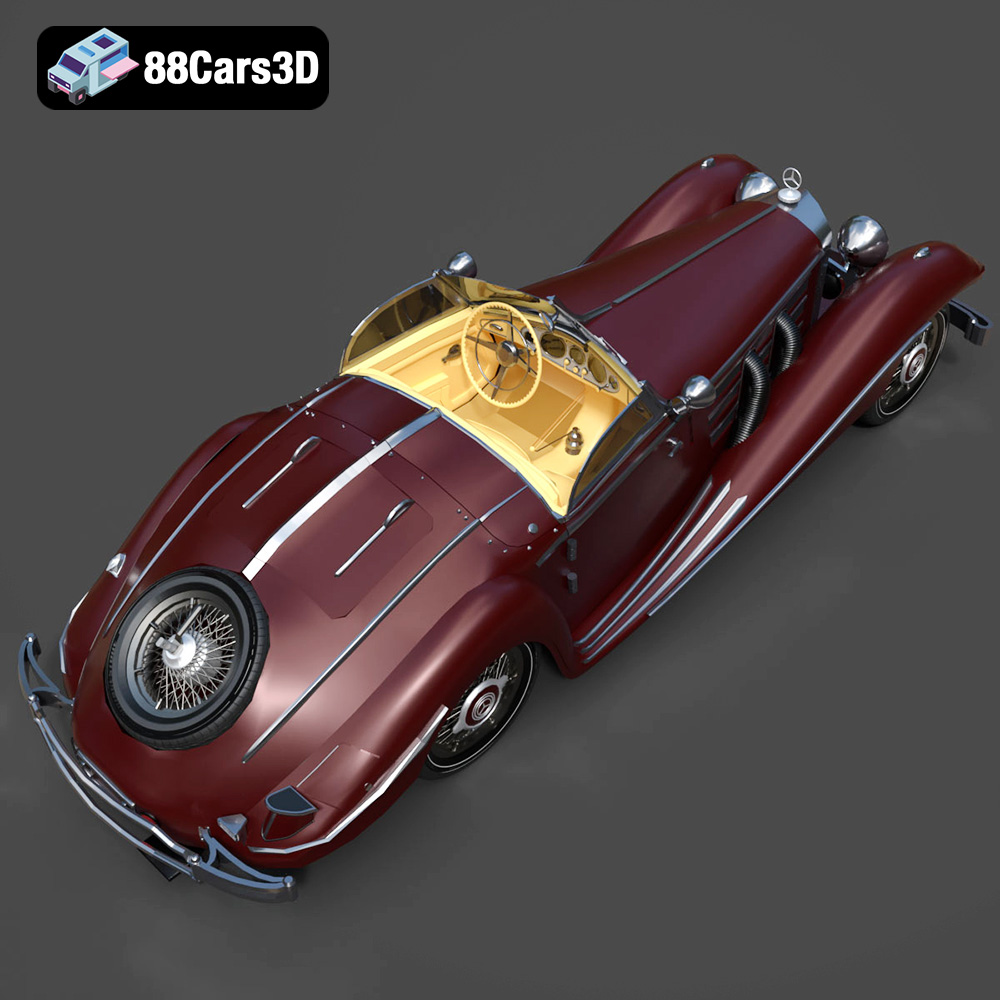
Beyond the impressive exterior, the cockpit and interior features of the Mercedes Benz 540 K Roadster are equally crucial for creating an immersive experience, especially for first-person viewpoints in gaming or virtual tours. The model showcases a luxurious vintage leather bench seat with authentic stitching details, reflecting the opulence of the original vehicle. The classic large-diameter steering wheel with its chrome horn ring, the period-correct wood-trimmed dashboard, and the vintage instrument cluster are all meticulously crafted, providing a convincing interior environment. Detailed control components, including the floor shifter, handbrake, and pedals, are present and optimized. This level of interior fidelity means the asset can be confidently used in driving simulators, virtual showrooms, or any application where the viewer might enter the vehicle, enhancing the overall realism and user experience.
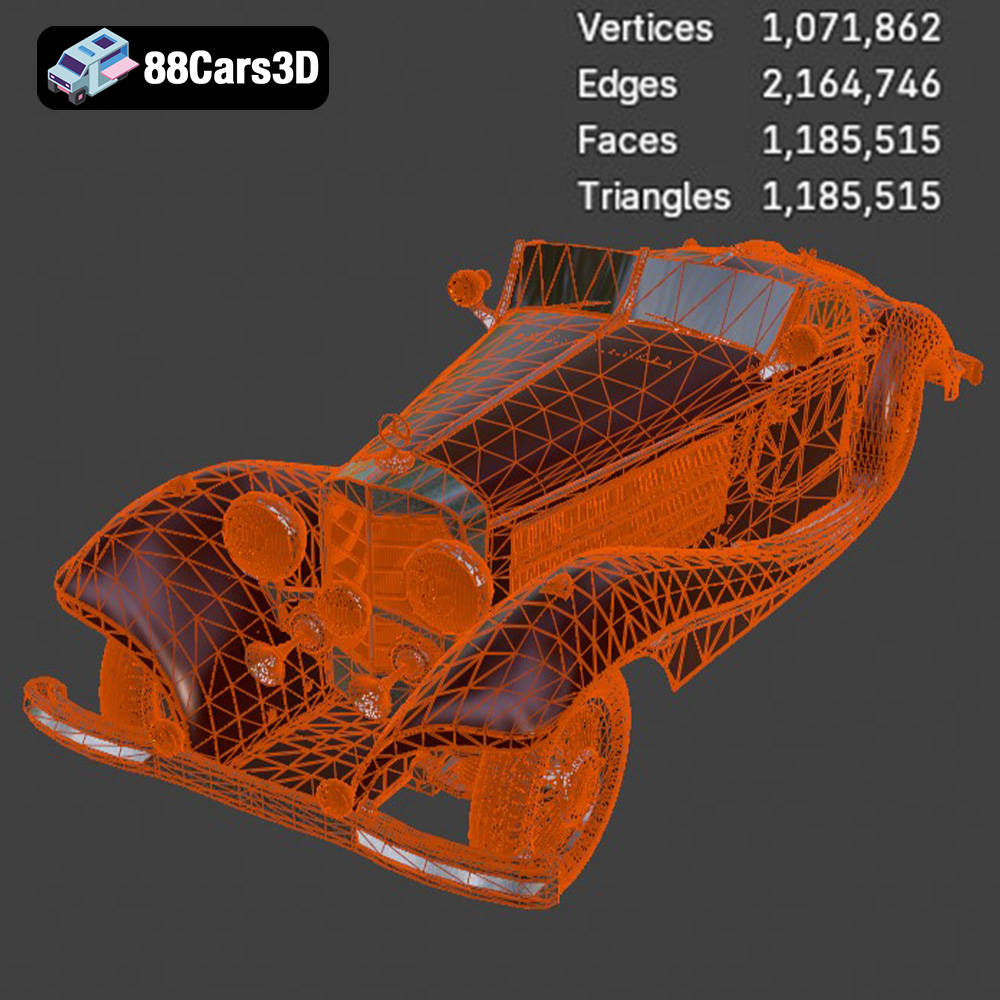
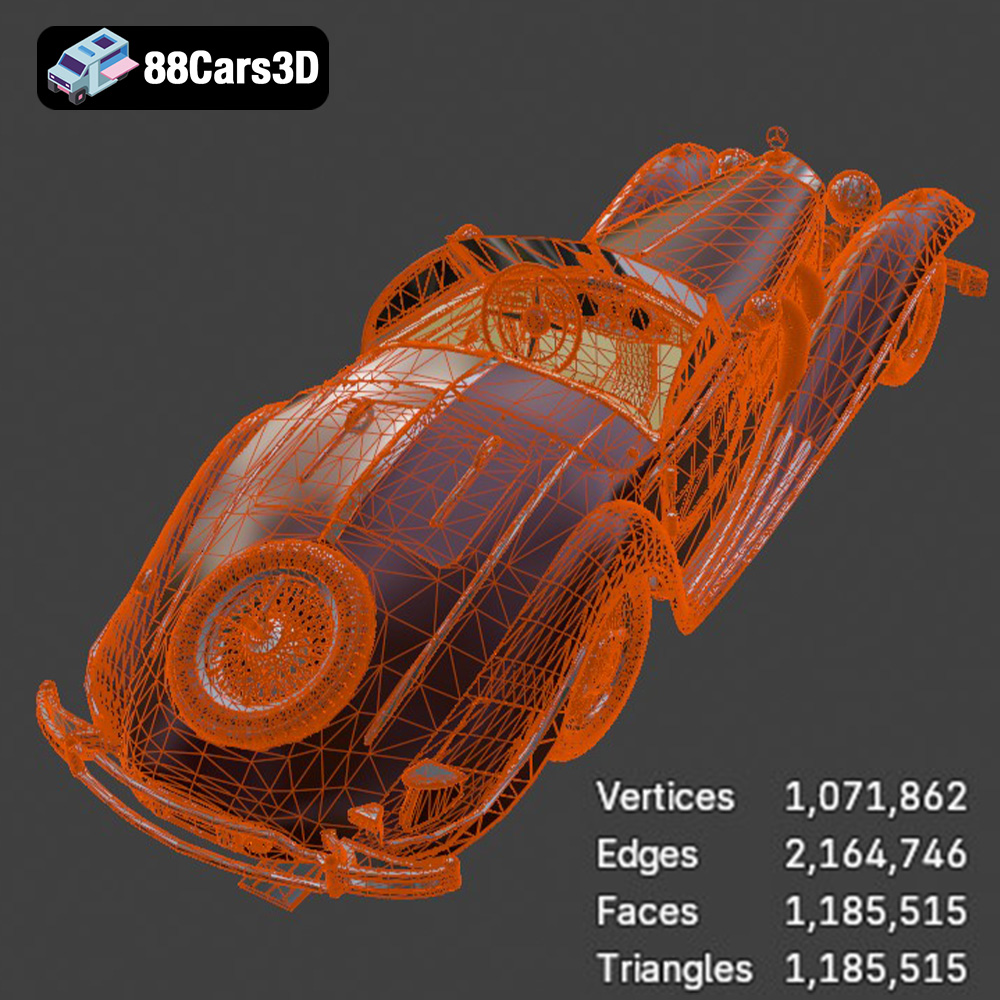
Achieving visual realism while maintaining optimal performance is a constant balancing act in 3D production. The Mercedes Benz 540 K Roadster 3D Model strikes this balance with its game-ready and optimized geometry, featuring approximately 150,000 triangles. This polycount is carefully chosen to provide high-end visual realism suitable for professional automotive rendering and close-up shots, without overburdening real-time engines like Unreal or Unity. The model also boasts real-world scale accuracy, based on actual vehicle chassis dimensions, ensuring it integrates seamlessly into diverse scenes without scale discrepancies. Proper pivot setup for steering, wheel rotation, and suspension travel is a crucial technical advantage, enabling immediate and accurate animation without requiring extensive rigging work. This technical preparedness significantly reduces the integration time for developers, making it a highly efficient and valuable asset for any project requiring detailed 3D car models.
High-quality 3D car models like the Mercedes Benz 540 K Roadster are transformative assets in various professional pipelines. Their inherent detail, optimization, and multi-format compatibility streamline production, allowing creators to focus on narrative and innovation rather than foundational asset creation. This model exemplifies a versatile game asset that seamlessly transitions between different creative demands.
For game developers, the Mercedes Benz 540 K Roadster 3D Model is a prime example of a ‘game-ready’ asset. Its optimized polycount of ~150,000 triangles hits a sweet spot, delivering stunning visuals without crippling engine performance in real-time environments. This makes it ideal for open-world games where performance is critical, historical racing titles demanding authentic vehicles, or driving simulators requiring precise physics and visual fidelity. The separated components (wheels, suspension, steering) are invaluable, enabling realistic animation for turning, suspension compression, and rotation, often crucial for dynamic vehicle mechanics in a game. Its compatibility with major engines like Unreal and Unity, often via the .fbx or .unreal formats, means less time on asset preparation and more time on gameplay mechanics and environmental design. Imagine a roaring 540 K leading the pack in a vintage Grand Prix game, or cruising through a meticulously recreated 1930s European city – this model makes such scenarios visually compelling and technically viable.
Beyond interactive entertainment, the Mercedes Benz 540 K Roadster shines in high-end automotive rendering and architectural visualization. In these fields, visual fidelity is king, and static imagery or animated sequences demand perfection. Using software like 3ds Max (with the .max format) or Blender (with the .blend format), artists can leverage the model’s rich detail to create breathtaking brand campaigns, luxurious lifestyle scenes, or dramatic studio lighting setups. The ability to easily customize body colors, material finishes (matte, gloss, metallic), and adapt lighting for different environments allows for endless creative possibilities. A pristine 540 K Roadster parked elegantly in front of a sprawling Art Deco mansion, or driving along a scenic coastal road in a cinematic advertisement, instantly elevates the perceived value and sophistication of the render. This model offers the photographic realism required for such discerning applications.
The burgeoning fields of Augmented Reality (AR) and Virtual Reality (VR) thrive on high-quality, optimized 3D content. The Mercedes Benz 540 K Roadster 3D Model, particularly in its .glb format, is perfectly suited for these immersive applications. Imagine a virtual showroom where customers can walk around, inspect, and even ‘sit inside’ this classic car, or a mobile AR experience where a life-sized 540 K appears on your driveway through your smartphone. Its optimized geometry and efficient file size make it suitable for seamless loading and interaction in real-time AR/VR experiences and browser-based 3D configurators. This opens new avenues for luxury brands, historical preservation projects, and interactive learning platforms to engage audiences with unparalleled realism.
While the digital realm offers endless possibilities, there’s a unique satisfaction in transforming a virtual object into a tangible one. The Mercedes Benz 540 K Roadster 3D Model’s inclusion of the .stl format bridges the gap between digital asset and physical artifact, opening doors for hobbyists, collectors, and educators.
The .stl format is the universal language for 3D printers, translating the Mercedes Benz 540 K Roadster’s intricate geometry into instructions for additive manufacturing. This capability allows enthusiasts to produce physical replicas of this iconic vehicle at various scales. The product description provides crucial 3D print settings: recommended scales (1:12, 1:18, 1:24), layer height (0.04–0.12 mm, with resin printing recommended for fine details), wall thickness (1.2–2.0 mm), and infill (20–30%). These guidelines are invaluable for achieving a high-quality print. Furthermore, the detailed advice on supports (required for parts like exhaust and mirrors) and print orientation (frame angled for structural integrity, wheels separately) demonstrates a deep understanding of the 3D printing process, ensuring successful outcomes. This means anyone with access to a 3D printer can hold a physical manifestation of this magnificent classic, perfect for display or further customization.
The journey doesn’t end with a raw 3D print. Post-processing is where the model truly comes to life. Sanding, priming, and applying authentic factory colors with metallic finishes can transform a plastic print into a museum-quality display piece. The digital model’s flexibility also extends to its physical form. Customization options, such as changing body colors, modifying tire textures, or adjusting material finishes (e.g., creating a matte black version instead of gloss), can be decided before printing or achieved through careful painting and finishing after the fact. This blend of digital precision and physical craftsmanship allows for truly personalized models, making each printed Mercedes Benz 540 K Roadster a unique piece of art. Whether it’s for a diorama, a desktop display, or part of a larger collection, the ability to physically manifest such a detailed 3D car model adds immense value.
In the competitive landscape of 3D production, the difference between a good project and a great one often hinges on the quality of its underlying assets. Investing in premium 3D car models like the Mercedes Benz 540 K Roadster is not an expense, but a strategic decision that pays dividends in terms of time, quality, and creative freedom.
The most immediate and tangible benefit of acquiring a meticulously crafted 3D model is the immense time and resource savings. As discussed, creating a vehicle of this complexity and historical accuracy from scratch is a monumental undertaking. By leveraging pre-made, optimized models from trusted sources like 88cars3d.com, studios and artists bypass the entire modeling, texturing, and initial optimization phases. This allows them to allocate precious resources – both human and financial – to other critical aspects of their project, such as level design, character animation, storytelling, or advanced rendering setups. The Mercedes Benz 540 K Roadster 3D Model comes game-ready, with proper pivots and a balanced polycount, meaning it’s ready to drop into a scene and begin performing almost immediately, offering a significant efficiency advantage.
Beyond efficiency, premium 3D assets fundamentally elevate the quality of a project. A high-fidelity model instantly boosts visual realism and professionalism, ensuring that the final output, whether it’s a game, an architectural visualization, or a cinematic render, meets professional standards. When every curve, every reflection, and every interior detail of a classic like the 540 K Roadster is accurately rendered, it creates a believable and immersive experience. This level of detail and authenticity is crucial for captivating audiences and delivering a polished final product. Choosing high-quality 3D car models reflects a commitment to excellence that resonates with viewers and ultimately enhances the project’s impact and success. 88cars3d.com is dedicated to providing these kinds of top-tier assets.
The Mercedes Benz 540 K Roadster is more than just a car; it’s a testament to an era of unparalleled automotive design and engineering. Its digital counterpart, the Mercedes Benz 540 K Roadster 3D Model, expertly captures this legacy, providing a versatile and technically robust asset for an array of professional applications. From its meticulously recreated exterior and interior features to its optimized geometry and extensive file format support, this model is designed to excel in game development, high-end automotive rendering, interactive AR/VR experiences, and even physical 3D printing.
Its readiness for integration into diverse workflows – be it Unreal Engine, 3ds Max, Blender, or web-based platforms – underscores its value as a premier game asset. For anyone seeking to infuse their projects with historical accuracy, stunning visual fidelity, and professional-grade performance, this 3D car model is an indispensable tool. It offers not just a digital representation of a classic car, but a gateway to creating immersive, engaging, and visually spectacular experiences across the digital and physical realms. Discover this exceptional model and many other high-quality 3D car models at 88cars3d.com, and elevate your creative endeavors to new heights.
The Mercedes Benz 540 K Roadster is a pinnacle of pre-war automotive design, renowned for its sweeping, aerodynamic fenders, massive chrome radiator grille, and unmatched luxury. Powered by a legendary supercharged straight-eight engine, this iconic classic car embodies elegance and power. The 3D model faithfully captures every vintage detail, from the signature external exhaust pipes to the intricate wire-spoke wheels and elegant chrome accents, delivering an unparalleled historical vehicle asset. This 3D model is meticulously crafted with high-quality topology and an optimized triangle count, ensuring game-ready performance without sacrificing visual fidelity. Designed for maximum versatility, the asset is fully prepped with separated components, making it exceptionally well-suited for high-end game development, interactive AR/VR experiences, professional animation, and architectural visualization. Perfect for historical racing games, cinematic period pieces, luxury virtual showrooms, and classic car configurators.
$19.99
.blend
.fbx
.glb
.max
.obj
.ply
.rendering
.stl
.unreal
540-k-roadster
car-3d-model
classic-car
game asset
game-ready
low-poly
luxury car
mercedes-benz
optimized
vintage-car
VR/AR