Get 20% OFF All Premium 3D & STL Models!

In the dynamic world of 3D design, the demand for exceptionally detailed and versatile assets is ever-increasing. From high-fidelity architectural visualizations to immersive game environments and cutting-edge AR/VR experiences, the quality of a 3D model can make or break a project. Automotive models, in particular, stand as a testament to precision and artistry, requiring meticulous attention to both aesthetic grandeur and technical optimization. Among the pantheon of luxury vehicles, the Mercedes-Benz GLS holds a distinguished position, embodying elegance, power, and sophisticated design. Capturing this essence in a 3D model presents a unique challenge and opportunity for creators looking to elevate their projects. Today, we’ll delve into the intricacies of integrating a premium 3D car model, specifically the Mercedes-Benz GLS 3D Model, into various professional pipelines, exploring its technical advantages and diverse applications.
This remarkable asset, available on 88cars3d.com, encapsulates the formidable road presence and opulent details of the real-world luxury SUV. It’s not just a model; it’s a meticulously crafted digital twin designed to perform across a spectrum of professional uses, from the most demanding automotive rendering projects to highly optimized interactive experiences. We will examine the core attributes that make such a model invaluable, from its optimized geometry to its extensive file format compatibility, ensuring it’s a ready-to-use solution for any creative challenge.
One of the first considerations when acquiring any 3D model is its file format compatibility. The right format ensures seamless integration into your preferred software and output pipelines. The Mercedes-Benz GLS 3D Model excels in this regard, offering a comprehensive suite of formats, each tailored for specific workflows and applications. Understanding these formats is crucial for maximizing the utility of any 3D asset.
The .blend format provides a fully editable Blender scene, complete with materials, textures, lighting, and animation setups. For artists and studios working within Blender, this is the most desirable format as it preserves all native features and settings. It allows for direct manipulation, material adjustments, scene assembly, and further animation without any loss of data or conversion artifacts. This ensures maximum flexibility for customization and advanced rendering within Blender’s powerful Cycles or Eevee render engines.
.fbx (Filmbox) is a proprietary file format developed by Autodesk, widely recognized as the industry standard for 3D data interchange. It’s ideal for transferring models, animations, and rigs between different 3D software and, critically, for real-time engines like Unreal Engine and Unity. FBX files can store a vast array of information, including geometry (meshes, polygons), materials, textures, animations, skinning, and even camera data. Its robust nature makes it indispensable for game development and ensures broad compatibility across professional pipelines.
The .obj (Wavefront OBJ) format is a simple, universal 3D data format that represents geometry, UVs, and material references. While it doesn’t typically store advanced features like animation or rigging, its widespread support across virtually every 3D application makes it a workhorse for basic model transfer. It’s an excellent choice when you need a clean mesh to import into a new environment for texturing and lighting from scratch, ensuring broad cross-software compatibility for your 3D car models.
.glb (GL Transmission Format Binary) is the binary version of glTF, a royalty-free specification for the efficient transmission and loading of 3D scenes and models by applications. GLB files package textures and other data directly into a single binary file, making them incredibly efficient for web-based 3D, augmented reality (AR), virtual reality (VR), and mobile applications. They are designed for speed and small file size, perfect for interactive experiences where performance is paramount, such as virtual showrooms or AR configurators for the Mercedes-Benz GLS.
The .stl (Stereolithography) format is almost exclusively used for 3D printing. It represents a 3D model as a series of connected triangles (a triangulated surface), defining only the surface geometry of an object without color, texture, or other attributes. For hobbyists and professionals looking to physically manifest their digital assets, like the detailed Mercedes-Benz GLS, STL is the required format to send to a 3D printer.
.ply (Polygon File Format, or Stanford Triangle Format) is a versatile format for storing 3D data, including color and other properties per vertex or face. It’s often used for scanned 3D data, CAD applications, and scientific visualization where precise mesh information and additional attributes are critical. While less common for general animation, it offers a robust solution for detailed mesh analysis or transferring precise geometrical data.
The inclusion of an .unreal file directly signifies an asset meticulously prepared for Unreal Engine. This often implies proper scaling, collision setups, optimized materials, and sometimes even blueprint configurations. For game developers, having an ‘engine-ready’ asset like the Mercedes-Benz GLS saves countless hours of setup, allowing for immediate integration into real-time environments, whether for open-world games or high-fidelity interactive experiences.
Finally, the .max format is the native file format for Autodesk 3ds Max. Similar to .blend for Blender users, this provides a fully editable project file for 3ds Max artists. It contains all scene information, including geometry, lights, cameras, materials, textures, animations, and render settings. For professionals specializing in 3ds Max for architectural visualization, automotive rendering, or complex animation, the .max file offers the highest level of detail and editability, making it ideal for incorporating the GLS model into sophisticated studio lighting setups or complex animated sequences.
Achieving photorealistic automotive rendering requires a deep understanding of vehicle design, material properties, and meticulous 3D modeling. The Mercedes-Benz GLS 3D Model stands out as an exemplary asset in this domain, capturing the essence of luxury and robust engineering with incredible fidelity.
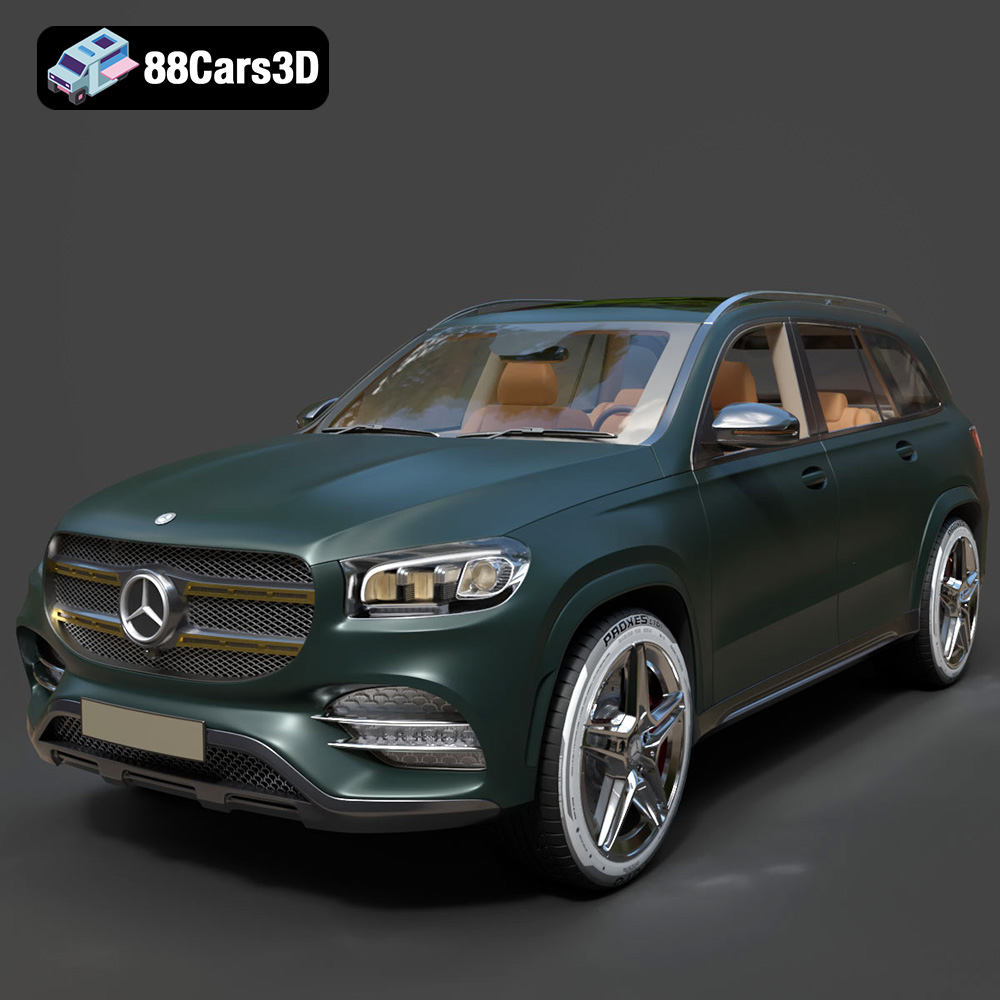
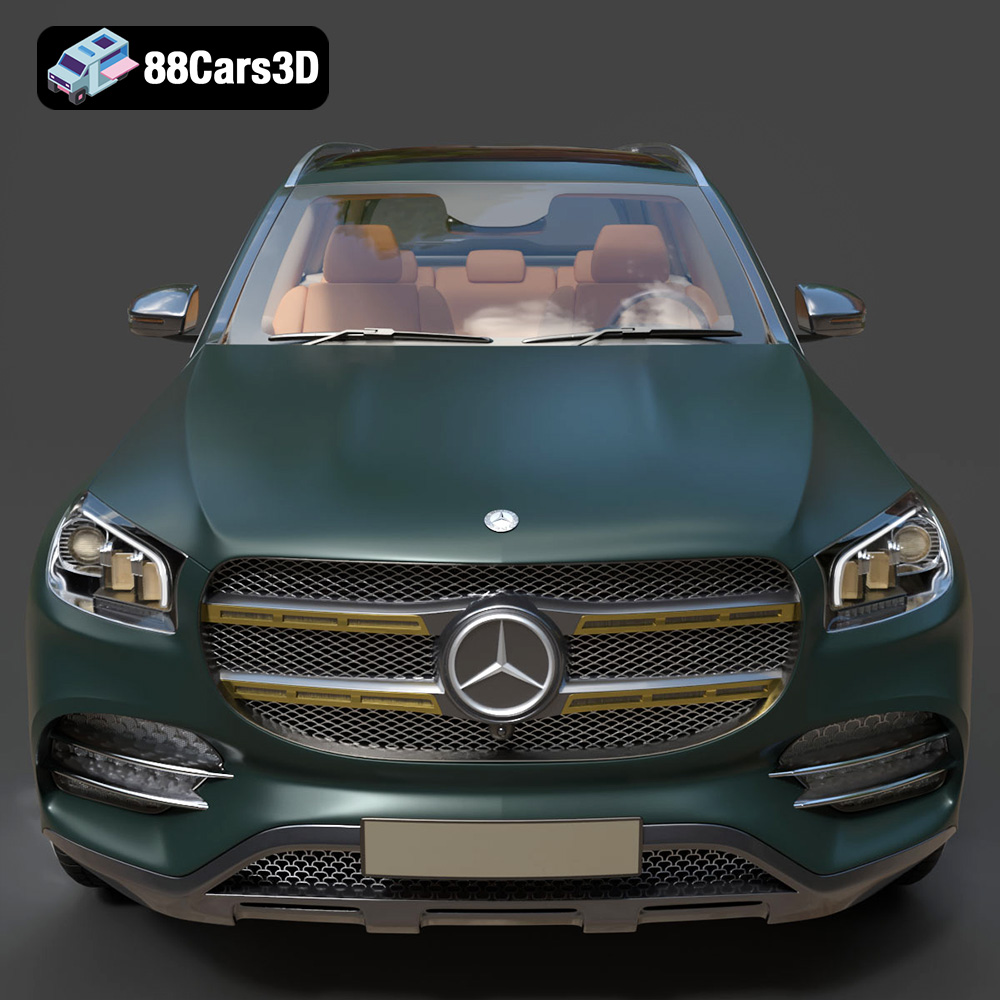
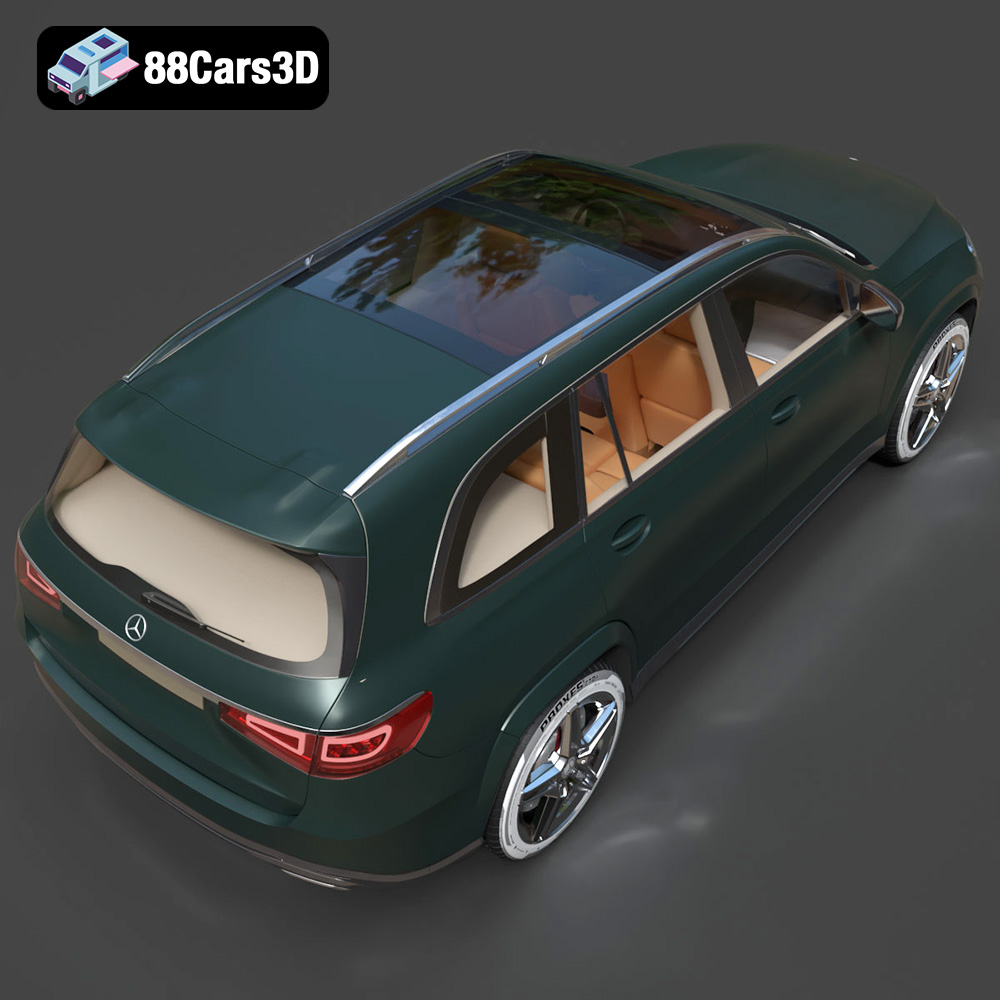
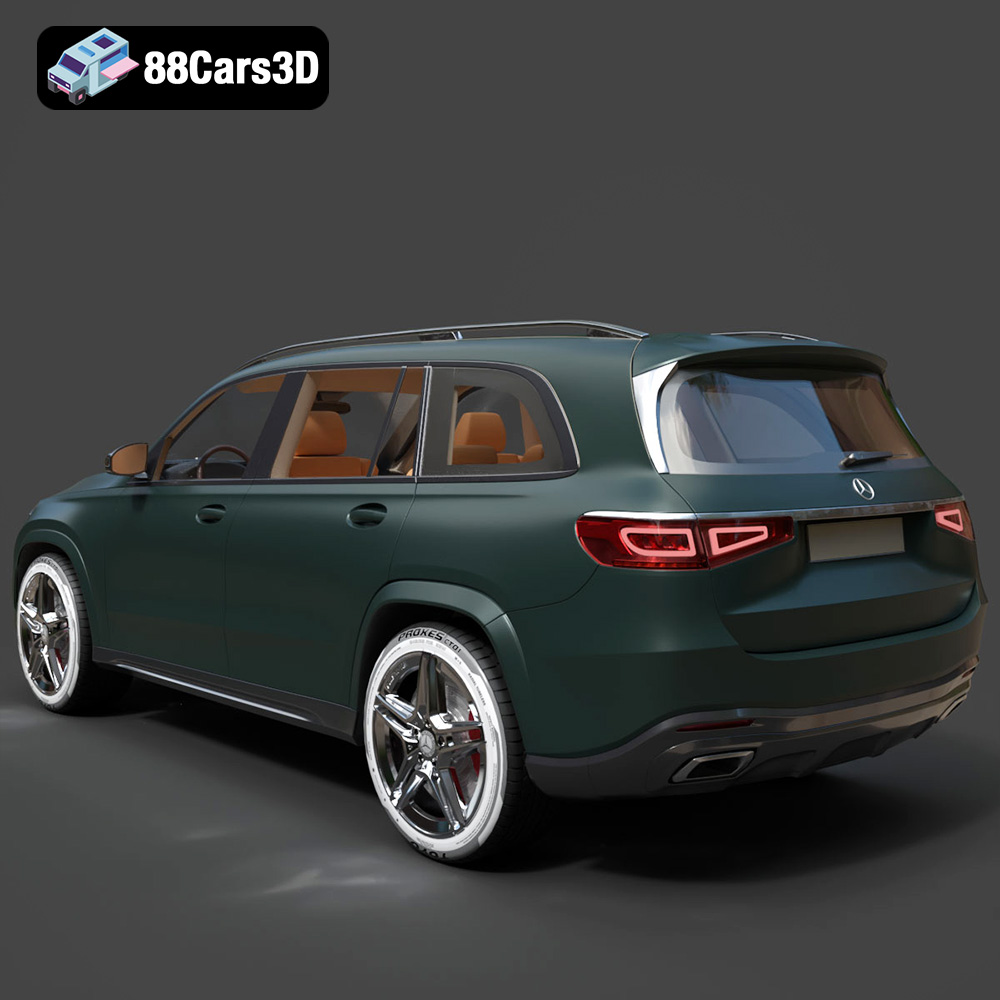
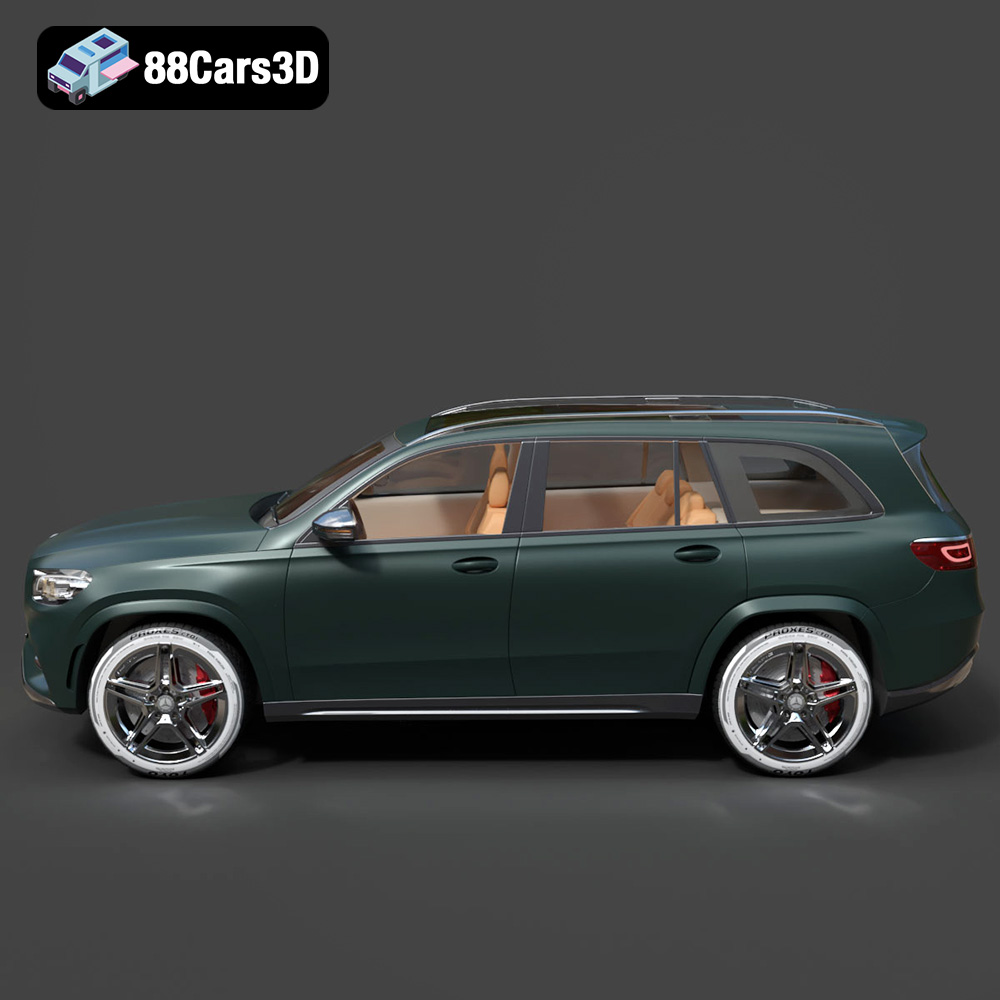
The exterior of the GLS is its most immediate statement, and this 3D model translates that commanding presence flawlessly. The bold front grille, muscular wheel arches, and sleek aerodynamic bodylines are accurately recreated, reflecting the vehicle’s real-world proportions. Details like the intricate multibeam LED lighting signatures, which are a hallmark of Mercedes-Benz design, are modeled with precision, ready to illuminate any scene dynamically. The integrated dual-exhaust ports with chrome-finish tips and the imposing premium multi-spoke alloy wheels, complete with detailed brake calipers and tire treads, add layers of authenticity crucial for high-end automotive rendering. Furthermore, the model includes details for the adaptive air suspension system and separate components for wheels, suspension, and steering, which are vital for realistic animation in simulations or cinematics.
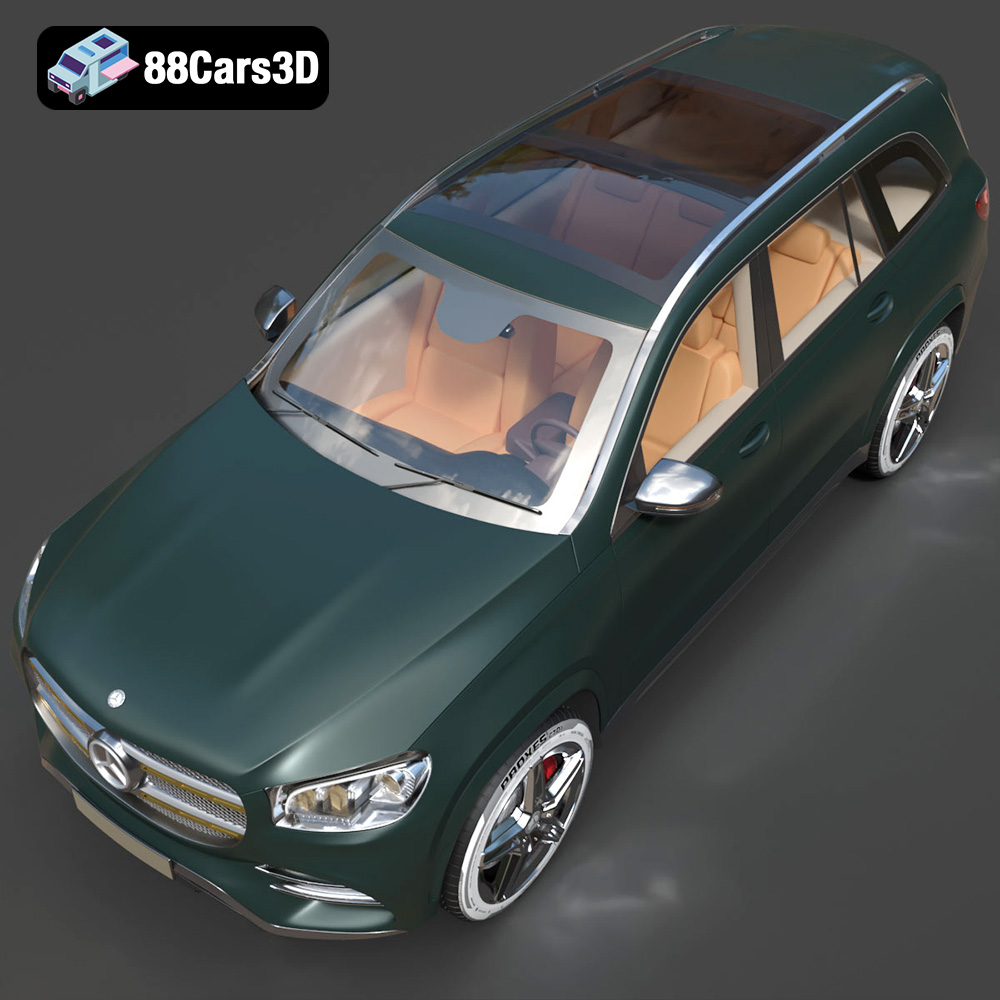
A luxury SUV like the GLS is defined as much by its interior as its exterior, and the 3D model does not disappoint. The cockpit and interior features are modeled with an eye for detail, offering plush seating configurations for three rows, a detailed multi-function steering wheel with paddle shifters, and the iconic dual widescreen MBUX digital instrument cluster and infotainment screens. The intricate center console, complete with trackpad, climate controls, and trim details, provides an immersive experience. This level of interior detail is crucial for projects requiring first-person views, such as virtual showrooms, AR configurators, or even open-world driving games where players might experience the cabin firsthand. The optimized geometry ensures that even with such richness, the model remains efficient for real-time rendering without sacrificing visual quality.
In the realm of game development and real-time visualization, raw detail often needs to be balanced with performance. A truly valuable 3D asset achieves this equilibrium, providing high visual fidelity while being efficient enough to run smoothly in interactive applications. The Mercedes-Benz GLS 3D Model is engineered precisely for this purpose.
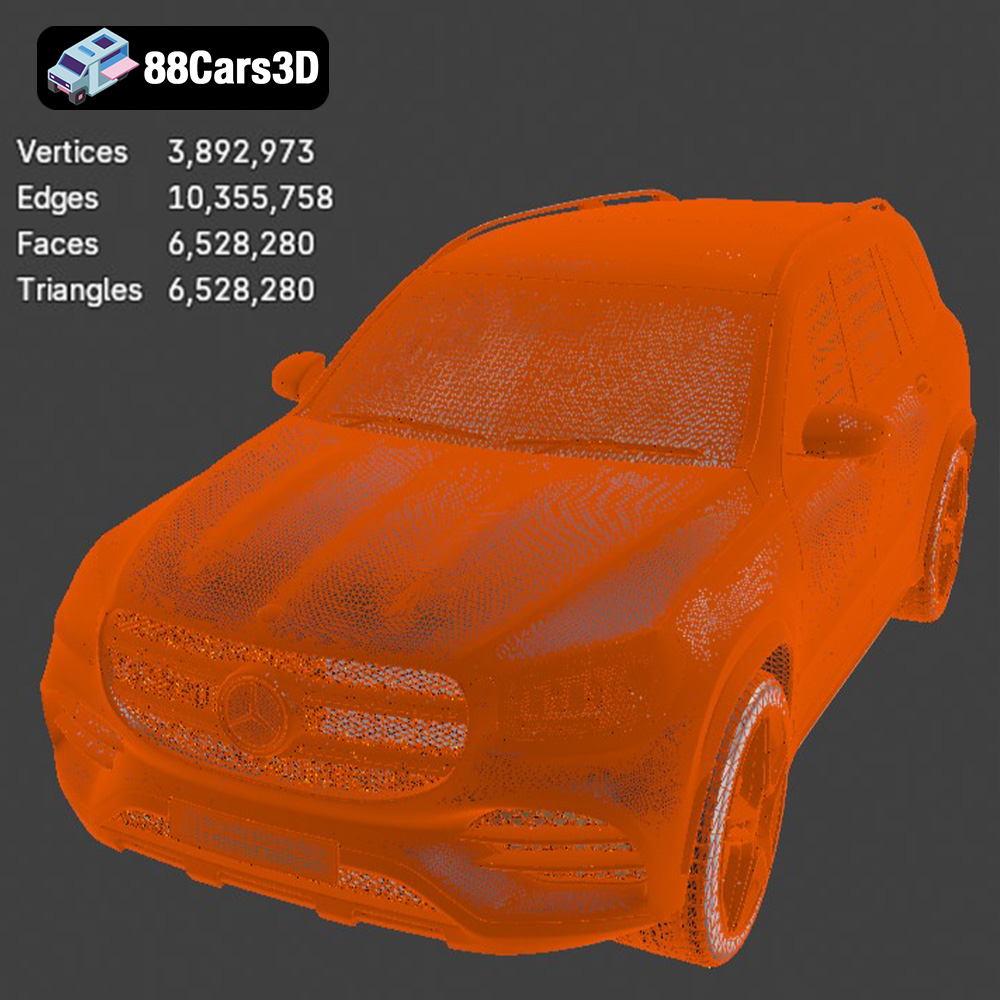
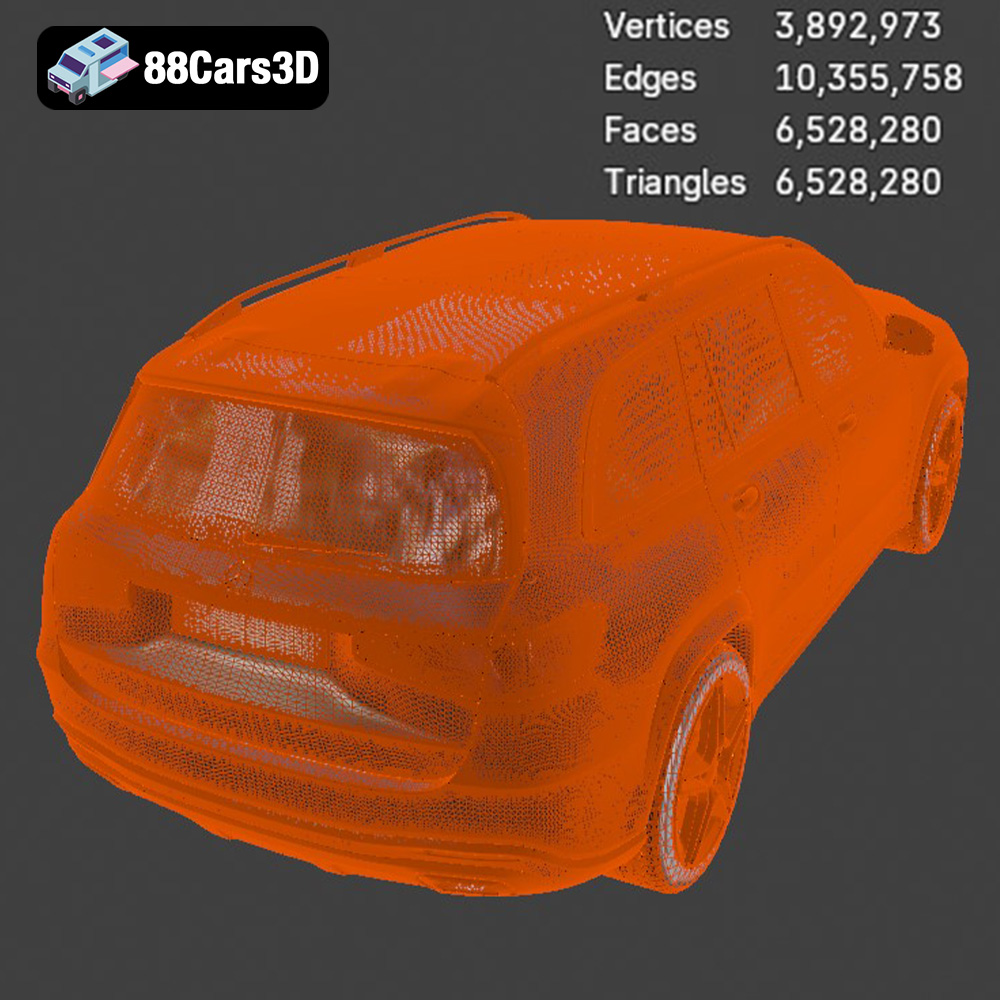
The model boasts an optimized topology with approximately 250,000 triangles. This figure represents a sweet spot: it’s high enough to capture the complex curves and features of a luxury SUV, ensuring smooth reflections and a premium look, yet low enough to be considered “game-ready.” Many high-fidelity cinematic models can run into millions of polygons, making them impractical for real-time engines. A poly count of around 250,000 allows the GLS to be seamlessly integrated into demanding real-time environments like Unreal Engine or Unity without causing significant performance bottlenecks. The geometry has been cleanly routed to ensure efficient rendering, a critical factor for maintaining high frame rates in interactive experiences. This optimization is what makes it a premium asset for game developers building expansive open worlds or creating realistic driving simulators.
Beyond polygon count, true game-readiness involves several other technical considerations. The Mercedes-Benz GLS model features real-world scale accuracy, which is essential for consistent environments in game engines. Furthermore, it includes proper pivot setups for steering, wheel rotation, and suspension travel. These technical details are paramount for animators and developers, enabling realistic vehicle dynamics and interactions straight out of the box. Imagine dropping this model into Unreal Engine; with its optimized mesh, correct pivots, and included .unreal format, much of the foundational work for vehicle setup is already complete, drastically accelerating development time for new titles or updates. This focus on practical integration highlights why assets from 88cars3d.com are favored by professionals.
The utility of a high-quality 3D model extends far beyond traditional rendering and game development. With advancements in augmented reality, virtual reality, and 3D printing, digital assets are increasingly bridging the gap between virtual and physical realms. The versatile Mercedes-Benz GLS 3D Model is perfectly positioned to excel in these emerging applications.
For AR/VR applications, performance and optimized file sizes are paramount. The inclusion of the .glb format for the GLS model is a testament to its readiness for these platforms. GLB files are designed for efficient transmission and loading in web-based viewers, mobile AR apps, and VR experiences. This makes the GLS model ideal for creating immersive virtual luxury vehicle showrooms, where customers can explore the SUV’s features in a fully interactive 3D environment. Imagine a prospective buyer using an AR configurator on their phone, placing a life-sized GLS in their driveway, and customizing its paint color or wheel options in real-time. The optimized geometry and clean topology ensure smooth performance even on less powerful mobile devices, making premium automotive experiences accessible to a wider audience. This level of detail also allows for dynamic lighting adjustments and material changes, enhancing the realism of virtual test drives or product showcases.
The transition from a digital model to a tangible object is a fascinating application, and the Mercedes-Benz GLS 3D Model is fully prepared for 3D printing thanks to its inclusion of the .stl format. For hobbyists, designers, or automotive enthusiasts, printing a display-scale model of this luxury SUV offers a unique way to appreciate its design. The provided print settings are crucial for a successful outcome: recommended scales of 1:12, 1:18, or 1:24 ensure a manageable size with sufficient detail. Recommendations like a layer height of 0.04–0.12 mm (with resin printing being preferred for fine details) and wall thickness of 1.2–2.0 mm guide users to achieve high-quality results. Furthermore, the guidance on supports for detailed parts and print orientation (frame angled, wheels separately) demonstrates a thoughtful approach to physical manufacturing. Post-processing steps like sanding, priming, and applying authentic factory colors with metallic finishes allow for a truly showroom-quality miniature replica, showcasing the exquisite details from its multibeam LEDs to its distinctive alloy wheels.
In professional creative industries, time is money, and ready-to-use, high-quality assets are invaluable. The Mercedes-Benz GLS 3D Model streamlines various professional workflows, offering significant advantages to artists, designers, and developers across different sectors.
For architectural visualization studios, integrating realistic vehicles into renders is crucial for creating believable environments. A luxury SUV like the GLS adds a touch of sophistication and lifestyle to any exterior or interior architectural scene. With its high-fidelity details and clean geometry, the model renders beautifully in engines like V-Ray, Corona, or Octane. Visualizers can quickly drop the .max or .blend file into their scene, adjust materials and lighting, and produce stunning images for client presentations or marketing materials. Similarly, for automotive brand campaigns, this 3D model becomes a versatile tool for creating dynamic lifestyle shots, studio lighting setups, or even animated commercials. The ability to customize body colors, material finishes (matte, gloss, metallic), and tire textures means the same base model can be adapted to countless scenarios without requiring re-modeling, saving considerable production time and resources.
Game development often involves tight deadlines and complex asset pipelines. The Mercedes-Benz GLS model, being game-ready and optimized with ~250,000 triangles, is an ideal asset for open-world games, racing titles, and simulators. Its compatibility with Unreal and Unity, particularly with the included .fbx and .unreal formats, means developers can integrate it with minimal friction. The proper pivot setup for steering, wheel rotation, and suspension travel is a huge time-saver, reducing the need for extensive rigging and animation adjustments. Developers can focus on gameplay mechanics and environmental design, knowing that the vehicle asset is technically sound and visually stunning. This kind of high-quality, pre-optimized game asset significantly accelerates development cycles and allows studios to deliver a polished, immersive experience to their players.
The world of 3D modeling thrives on precision, versatility, and efficiency. Whether you’re an architect visualizing a new urban landscape, a game developer crafting an expansive open world, or a marketing professional designing an immersive AR experience, the quality of your 3D car models is paramount. The Mercedes-Benz GLS 3D Model embodies these essential qualities, offering a meticulously crafted digital asset that transcends conventional boundaries. Its optimized geometry, stunning visual fidelity, and comprehensive file format support ensure it’s a valuable addition to any professional toolkit.
From its accurate exterior proportions and luxurious interior details to its game-ready triangle count and compatibility with various rendering and real-time engines, this model is designed for seamless integration and exceptional performance. It empowers creators to produce breathtaking automotive rendering, develop engaging game assets, and forge compelling AR/VR experiences, or even bring a tangible miniature to life through 3D printing. Investing in such a high-caliber asset from 88cars3d.com means investing in quality, efficiency, and the ability to elevate your digital projects to new heights.
The Mercedes-Benz GLS represents the pinnacle of luxury SUVs, combining the opulence of the S-Class with formidable road presence and utility. This meticulously crafted 3D model captures the vehicle’s commanding silhouette, featuring its iconic bold front grille, muscular wheel arches, and sleek aerodynamic bodylines. The model highlights sophisticated design elements including intricate multibeam LED lighting signatures, beautifully integrated dual-exhaust ports, and imposing premium wheels that define its flagship status.
Engineered for maximum versatility, this model features an optimized topology with approximately 250,000 triangles, striking the perfect balance between high-end visual fidelity and game-ready performance. The geometry has been cleanly routed to ensure smooth reflections and efficient rendering, making it a premium asset for high-quality real-time applications.
Perfect for architectural visualizations, open-world driving games, virtual luxury vehicle showrooms, and immersive automotive AR configurators.
.blend, .fbx, .obj, .glb, .stl, .ply, .unreal, .max
Tags:
mercedes-benz, gls, luxury-suv, suv, game-ready, low-poly, optimized, car-3d-model, game-asset, rendering, vr-ar, blend, fbx, obj, glb, stl, ply, unreal, max
$19.99
.blend
.fbx
.glb
.gls
.luxury suv
.max
.obj
.ply
.rendering
.stl
.unreal
car-3d-model
game asset
game-ready
low-poly
mercedes-benz
optimized
SUV
VR/AR