Get 20% OFF All Premium 3D & STL Models!

In the vast landscape of digital creation, the ability to accurately and efficiently bring iconic subjects to life is paramount. Whether crafting immersive video games, producing breathtaking cinematic visualizations, or engineering precise simulations, the quality of your 3D assets forms the bedrock of success. Few subjects command such universal admiration and historical significance as the Supermarine Spitfire, an aircraft that etched its silhouette into the annals of aviation and collective memory during World War II.
The challenge for 3D artists and developers lies in capturing not just the visual form but the very essence of such a legendary machine, balancing intricate detail with optimized performance across diverse platforms. This is precisely where expertly crafted 3D models become indispensable. Imagine integrating a meticulously detailed Supermarine Spitfire MK2A into your next project – an asset that not only looks historically accurate but is also ‘game-ready’ right out of the box, prepared for animation, rendering, and even 3D printing. Such models streamline workflows, allowing creators to focus on storytelling and user experience rather than getting bogged down in the intricacies of foundational asset creation. Let’s delve into the technical considerations and creative opportunities that arise when leveraging premium 3D assets, exemplified by a model like the Supermarine Spitfire MK2A available on marketplaces like 88cars3d.com.
The versatility of a professional 3D model is often defined by the array of file formats it offers, each serving specific purposes and workflows. Understanding these formats is crucial for seamless integration into various software environments and end-use applications. The Supermarine Spitfire MK2A 3D Model, for instance, comes equipped with a comprehensive suite of formats, ensuring compatibility across the digital design spectrum.
The .blend format represents a fully editable Blender scene. For users deeply integrated into the Blender ecosystem, this is often the preferred choice. It encapsulates not just the mesh data but also materials, textures, lighting setups, animation data, and even physics simulations. This allows for unparalleled flexibility, enabling artists to delve into the model’s construction, modify textures, adjust shader networks, or expand upon existing animation rigs with ease. For complex projects requiring extensive customization or iteration within Blender, the .blend file provides a complete, self-contained working environment.
The .fbx (Filmbox) format is an industry-standard for 3D data interchange, particularly favored in game development and animation pipelines. Its robust support for geometry, materials, textures, animations, and skeletal data makes it ideal for transferring assets between different software packages and into real-time engines like Unreal Engine and Unity. When working with the Spitfire MK2A, an .fbx file ensures that all separated control surfaces, landing gear, and propeller pivots are preserved, facilitating quick rigging and animation setup within your chosen engine or DCC application. It’s designed for efficiency in performance-critical environments.
The .obj (Wavefront OBJ) format is one of the oldest and most universally supported 3D file types. While it primarily stores geometry (vertices, normals, texture coordinates) and group information, it’s often accompanied by an .mtl (material) file for basic material properties. The .obj format is an excellent choice for broad cross-software compatibility, ensuring that the Spitfire MK2A model can be opened and utilized in virtually any 3D application, even if some advanced material settings need to be re-established manually. It’s a reliable fallback for foundational mesh data.
The .glb (GL Transmission Format Binary) is a relatively newer format specifically designed for efficient transmission and loading of 3D scenes and models in web and AR/VR applications. It’s a binary container that bundles textures, animations, and PBR (Physically Based Rendering) materials directly with the model, making it a single, self-contained asset. For displaying the Spitfire MK2A in augmented reality apps, virtual reality experiences, or interactive web viewers, .glb offers optimal performance and ease of deployment due to its compact size and comprehensive data encapsulation.
The .stl (Stereolithography) format is the de facto standard for 3D printing. It represents a 3D model as a series of interconnected triangles, defining only the surface geometry without color, texture, or material information. When preparing the Spitfire MK2A for physical realization, the .stl file is essential. Its simplicity makes it universally compatible with 3D printing software (slicers), allowing hobbyists and professionals to accurately reproduce the aircraft as a tangible model, whether for display, prototyping, or educational purposes.
The .ply (Polygon File Format) is another popular format for storing 3D data, particularly useful for scanned data, CAD, and scientific applications. It supports color and other properties per vertex or face, offering more flexibility than .stl. For projects involving reverse engineering, detailed mesh analysis, or integration into CAD software, the .ply format can provide a more comprehensive geometric dataset of the Spitfire MK2A, maintaining higher precision for technical applications.
The .unreal format, or more accurately, assets pre-packaged for Unreal Engine (often as .uasset files or direct project integration), signifies a model that has been specifically optimized and configured for the engine. This means materials, textures, and sometimes even basic blueprints or animation sequences are already set up within an Unreal project structure. For immediate deployment of the Spitfire MK2A into an Unreal Engine game or visualization, this format vastly reduces setup time, offering an “out-of-the-box” solution tailored for the engine’s powerful rendering capabilities.
Similar to .blend for Blender, the .max file is the native project format for Autodesk 3ds Max. It contains the complete scene, including geometry, modifiers, materials, lights, cameras, and animations. For artists working in 3ds Max, this file provides the maximum level of editability and control over the Spitfire MK2A model. It’s perfect for extending the model with custom animations, applying advanced rendering techniques with V-Ray or Corona, or integrating it into complex architectural visualizations where 3ds Max is the primary tool.
The Supermarine Spitfire MK2A is not just an airplane; it’s a symbol of resilience and engineering prowess. Translating such a powerful icon into a 3D model requires an exceptional eye for detail and a deep understanding of optimized asset creation. The model available from 88cars3d.com embodies this philosophy, delivering a high-quality asset that respects historical accuracy while being designed for modern digital applications.
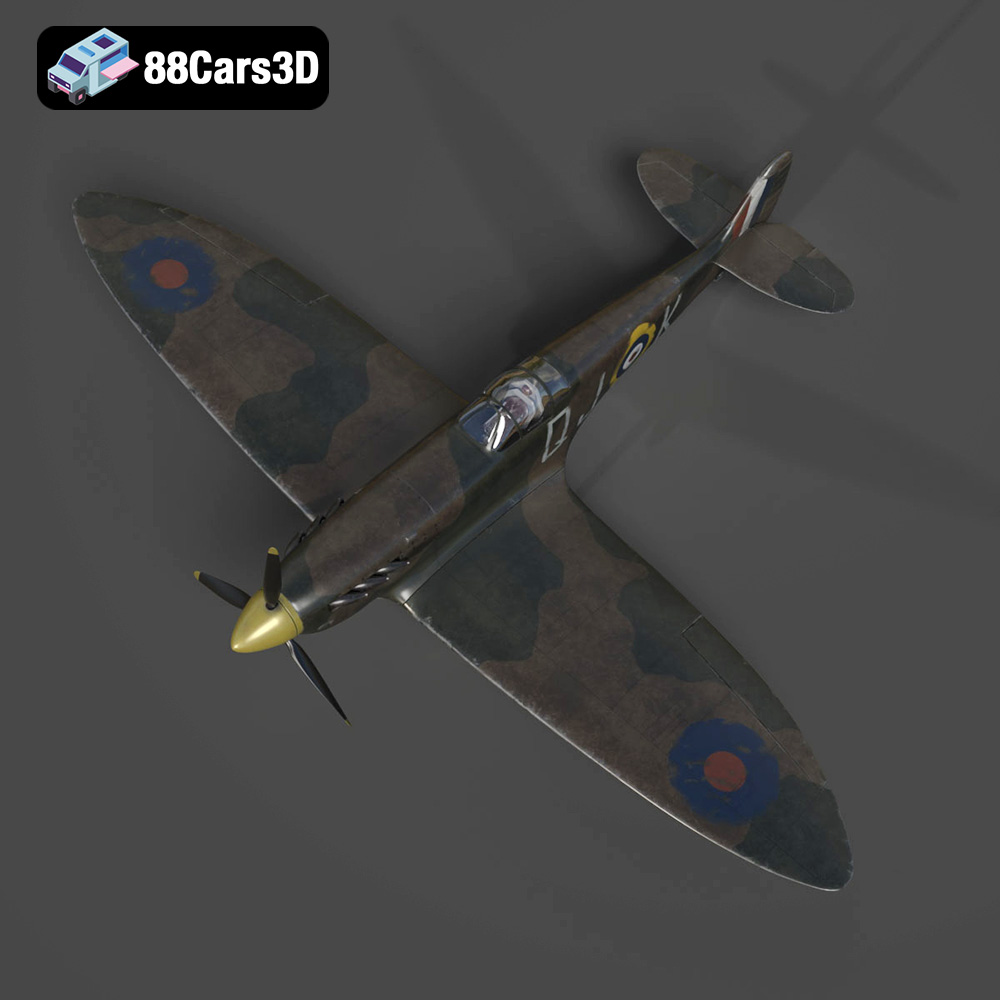
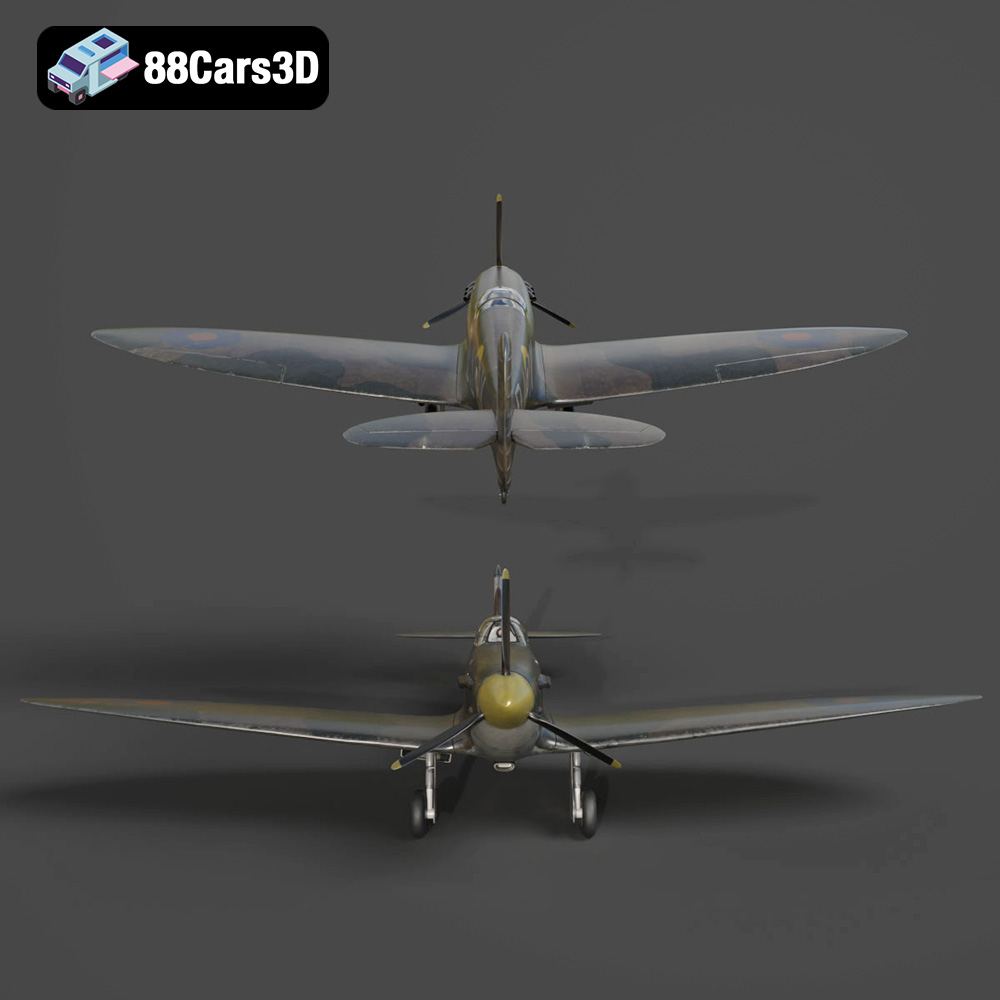
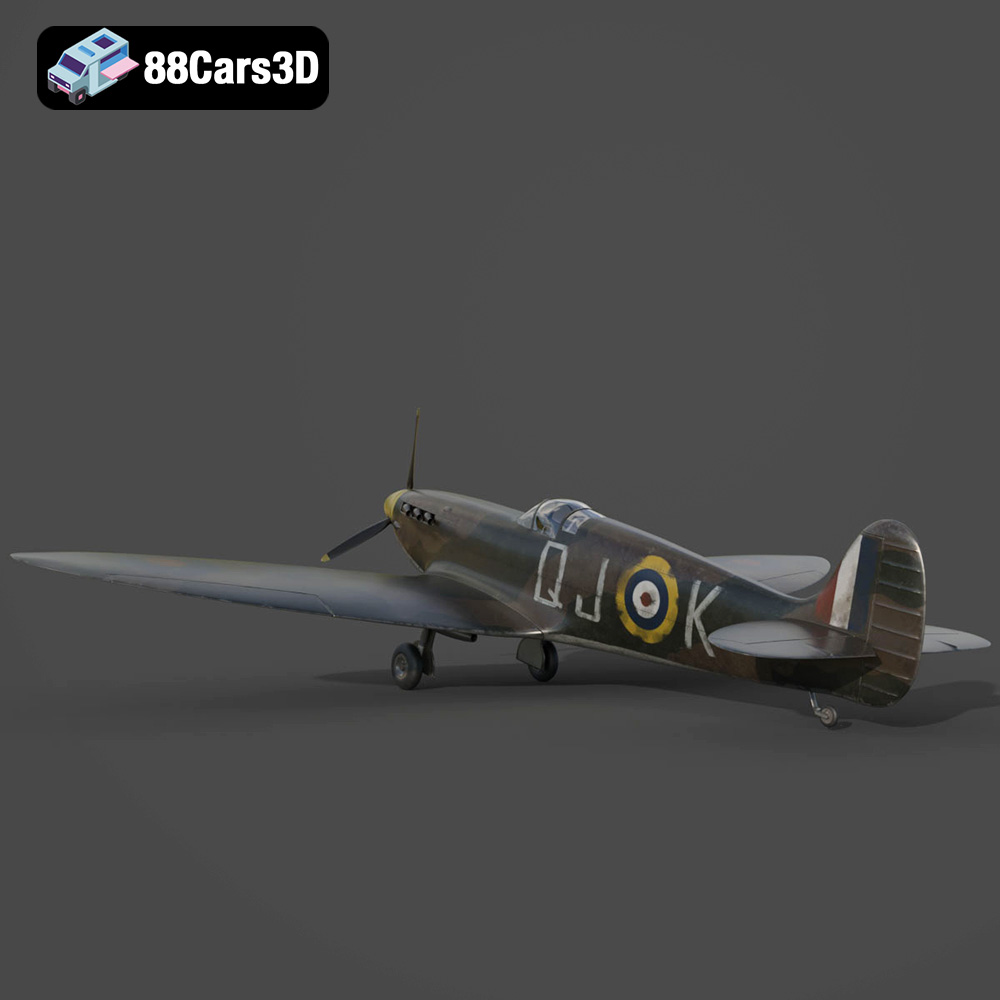
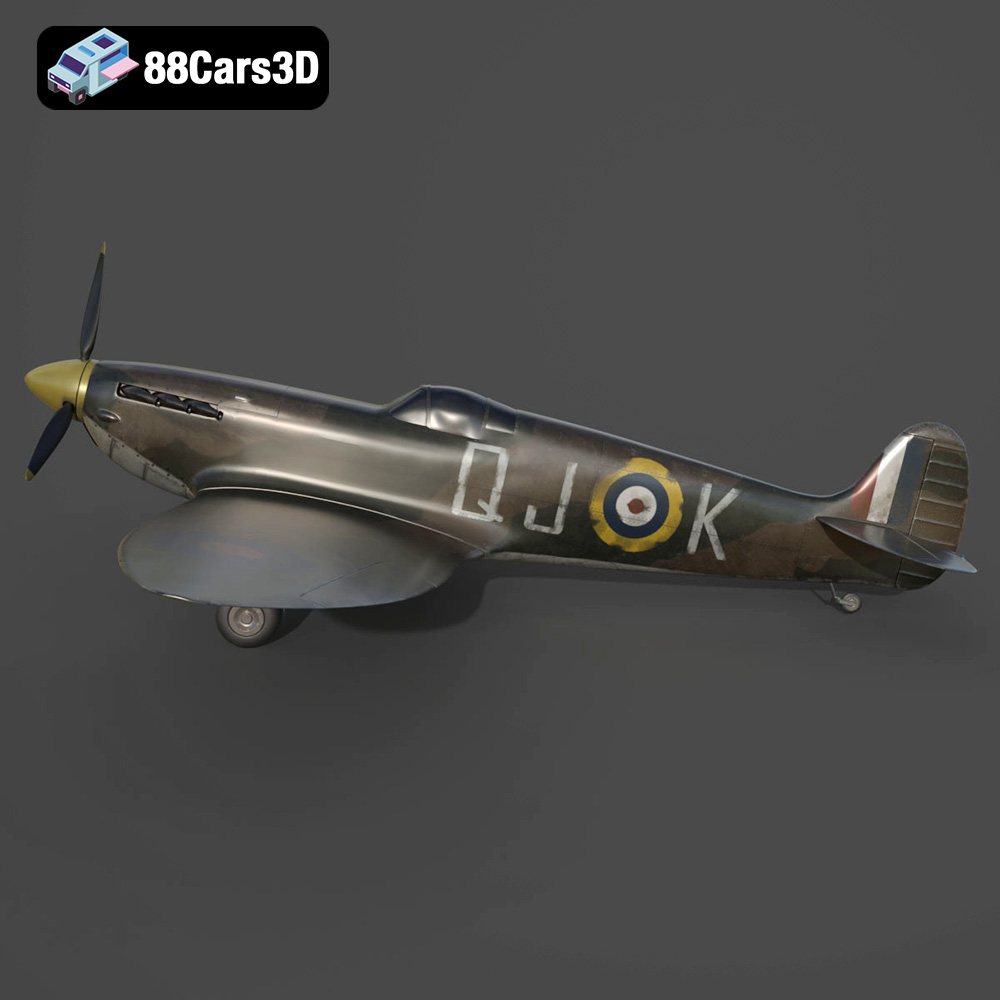
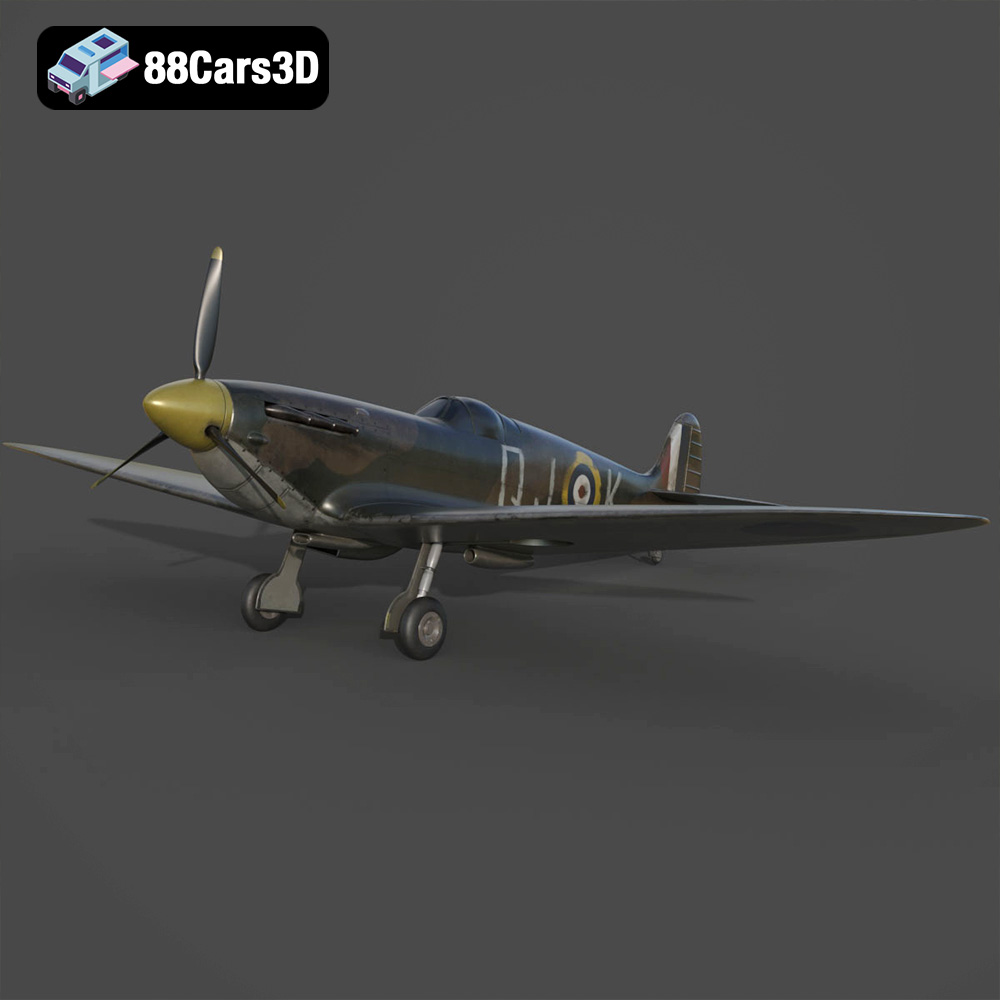
Every curve and rivet of the Supermarine Spitfire MK2A has been meticulously recreated to mirror the original aircraft’s iconic design. From its distinctive elliptical wings—a design marvel for aerodynamic efficiency—to the finely detailed Rolls-Royce Merlin engine exhaust stacks, the model leaves no stone unturned. Critical exterior elements such as historically accurate navigation lights, the pitot tube, and the retractable landing gear system are all faithfully reproduced. What truly sets this model apart for professional use is its animation readiness. Key components like the ailerons, flaps, separate wheels, landing gear doors, and the propeller are all distinct, isolated objects with correctly configured pivot points. This thoughtful separation drastically simplifies the rigging process, allowing animators to quickly set up authentic flight maneuvers, gear retraction sequences, and propeller rotations without extensive pre-processing.
Beyond the impressive exterior, the Supermarine Spitfire MK2A 3D model offers an equally detailed interior. The cockpit, often the most viewed area in flight simulators and VR experiences, is crafted with meticulous attention to historical accuracy. Pilots and enthusiasts will appreciate the authentic spade-grip control stick, realistic rudder pedals, and a comprehensive instrument cluster featuring gauges for altimeter, artificial horizon, and engine performance. Elements like the throttle quadrant, trim wheels, and even the canopy latching mechanisms contribute to an immersive environment. This level of detail is crucial for first-person POV applications, where realism can make or break the user’s experience. Optimized geometry ensures that this rich detail doesn’t compromise real-time performance, making it perfect for demanding VR gaming or high-fidelity simulator projects.
The true value of a premium 3D asset lies in its seamless integration into various professional pipelines. The Supermarine Spitfire MK2A 3D Model is designed with this versatility in mind, providing artists and developers with a robust foundation for their creative endeavors, whether in game development, cinematic rendering, or interactive experiences.
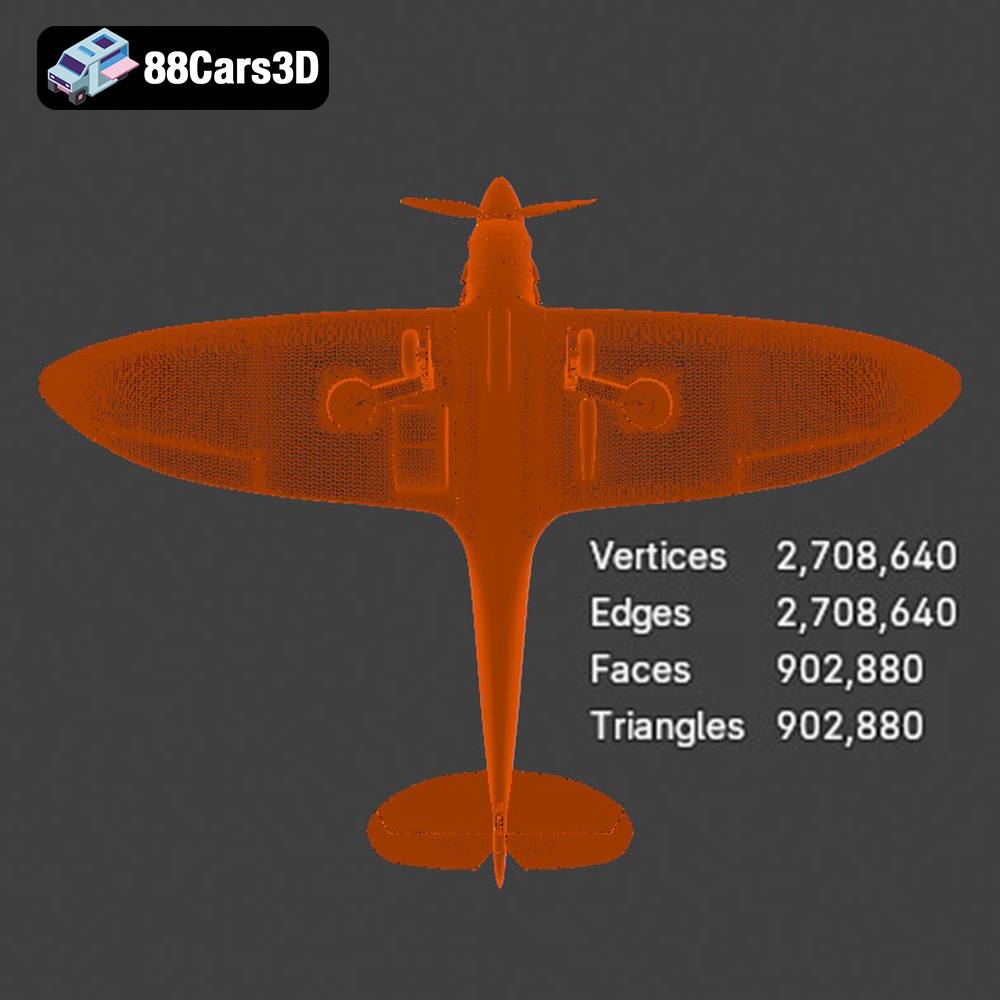
For game developers, efficiency and performance are paramount. The Spitfire MK2A model’s ‘game-ready’ optimization, with approximately 150,000 triangles, hits a sweet spot, providing high visual fidelity without crippling frame rates. When importing the .fbx or .unreal formats into engines like Unreal Engine or Unity, developers will find materials and textures largely pre-configured, requiring minimal setup. The separated control surfaces and pre-set pivots mean animation rigging is straightforward. Developers can quickly create realistic flight physics, implement dynamic weather effects affecting the aircraft, or integrate it into complex aerial combat systems. For example, in a historical WWII combat game, this Spitfire could serve as a primary player aircraft or a detailed AI opponent, benefiting from its optimized polycount and animation-ready structure. The quality of assets like this from 88cars3d.com significantly reduces development time and boosts visual realism.
When the goal is photorealism for cinematic sequences, advertising, or high-resolution imagery, the .max or .blend files offer maximum control. In Autodesk 3ds Max or Blender, artists can leverage advanced rendering engines like V-Ray, Corona Renderer, or Cycles to achieve stunning results. This involves setting up complex lighting scenarios – from a dramatic sunset dogfight to a hangar bathed in soft ambient light. Artists can refine the Spitfire’s materials, applying PBR textures that realistically simulate metal, paint, glass, and rubber with accurate reflectivity, roughness, and normal mapping. They can add subtle weathering effects, paint chips, and exhaust stains to tell a story of battle-hardened resilience. The comprehensive detail, from the propeller blade profile to the multi-stack exhaust system, comes alive under careful lighting and shader work, perfect for historical documentaries or high-impact marketing visuals. This level of detail makes it an exceptional asset for any project requiring top-tier automotive rendering or aircraft visualization.
The burgeoning fields of Augmented Reality (AR), Virtual Reality (VR), and WebGL demand highly optimized assets that can render smoothly on diverse hardware, including mobile devices. The Spitfire MK2A model’s .glb format is tailor-made for these applications. Its efficient binary structure bundles all necessary data, ensuring fast loading times and smooth interaction. Imagine a VR experience where users can walk around a virtual hangar, inspecting the Spitfire up close, or an AR application that places the iconic aircraft in your living room. The optimized geometry and clean topology ensure that the model performs well, providing an immersive and lag-free experience. Educational platforms can use this to create interactive historical exhibits, allowing students to explore the aircraft’s mechanics and history in an engaging, 3D environment.
The journey of a 3D model doesn’t always end on a screen. For enthusiasts, educators, and hobbyists, the ability to transform a digital asset into a tangible object is a powerful capability. The Supermarine Spitfire MK2A 3D model, with its inclusion of .stl and .ply formats, opens up the world of 3D printing, allowing for the creation of display-scale models and dioramas.
The .stl file is the cornerstone for 3D printing. When preparing the Spitfire for physical output, the recommended scales (1:32, 1:48, 1:72) ensure that the intricate details remain discernible. Resin printing is often recommended for models with fine details like the Spitfire’s exhaust stacks, landing gear, and propeller blades, as it offers superior resolution compared to filament (FDM) printing. Proper print orientation is critical; printing the fuselage angled helps structural integrity, while wings and the propeller are typically printed separately for better detail and support placement. Understanding wall thickness requirements (1.2–2.0 mm) and infill (20–30%) helps ensure the model is robust without being overly heavy or consuming excessive material. Supports are almost always necessary for overhangs and delicate parts, preventing print failures and preserving fidelity.
Once printed, the physical model requires post-processing to truly shine. This typically involves removing supports, sanding to smooth out layer lines, and applying a primer. The real magic happens with painting and weathering. Hobbyists can meticulously apply authentic WWII camouflage patterns, such as RAF Dark Earth/Dark Green, or desert schemes, adding another layer of historical accuracy. Weathering effects like exhaust stains, chipped paint, and battle damage can transform a plastic model into a convincing replica that tells a story. This hands-on process not only brings the digital model into the physical world but also allows for deep personalization, making each printed Spitfire a unique piece of art, a testament to both digital craftsmanship and traditional model-making skills. The .stl format provided by 88cars3d.com facilitates this entire process, empowering creators in a completely different dimension.
A high-quality 3D model serves as an excellent starting point, but its true power is unlocked through customization. The Supermarine Spitfire MK2A 3D Model is built to be a flexible foundation, allowing artists to adapt it to a myriad of creative requirements, from historical fidelity to imaginative reinterpretations.
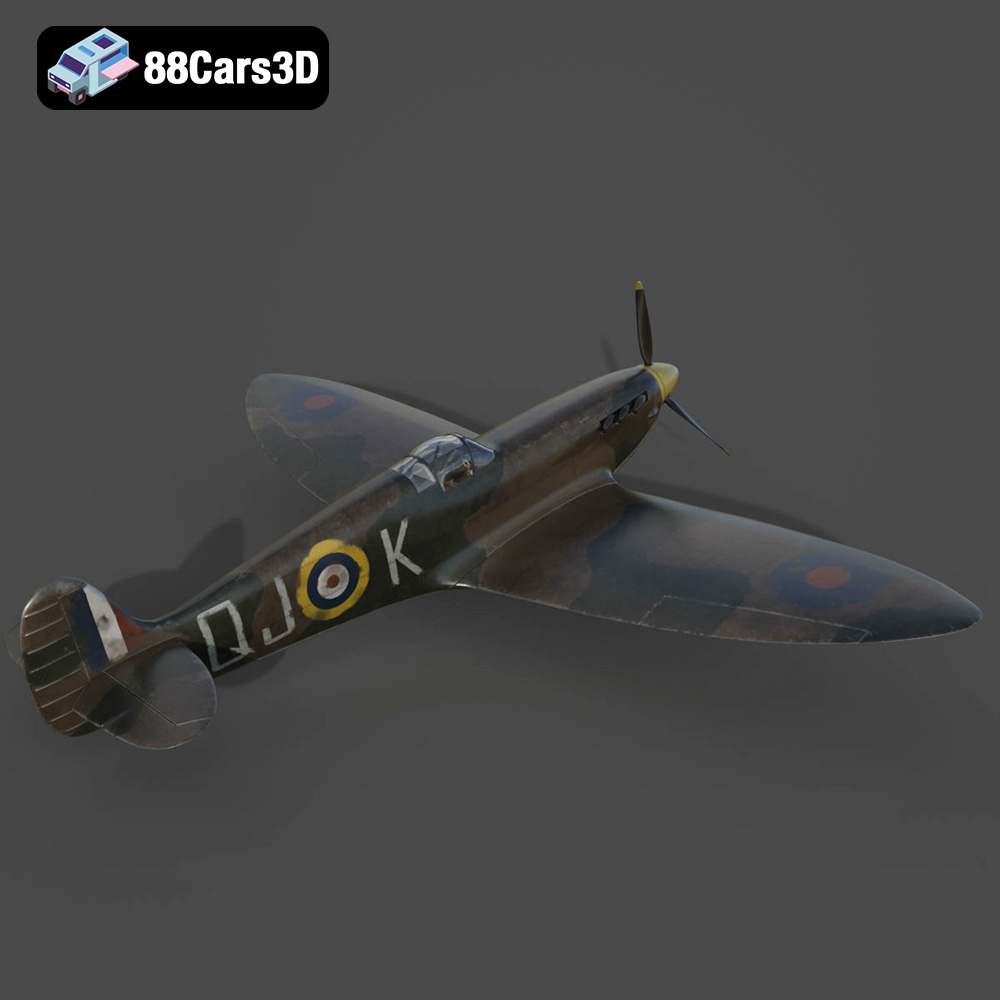
The model provides a strong basis for historical accuracy, allowing creators to replicate specific squadron codes, roundels, and nose art from famous Spitfire pilots or squadrons. Artists can apply different camouflage liveries to represent various theaters of war, from the Battle of Britain to the North African campaign. However, the flexibility extends beyond strict historical adherence. What if you wanted to envision a ‘what if’ scenario? A Spitfire in modern stealth livery? Or perhaps a racing variant for an alternate history game? The ability to easily change camouflage, squadron codes, and even material finishes (from matte camo to glossy restored finishes or battle-worn metallic weathering) provides boundless creative freedom. This versatility ensures the Spitfire model can be an asset for a wide range of projects, from educational simulations to speculative fiction.
Beyond the aircraft itself, the context in which it is presented can dramatically alter its impact. The Spitfire model is designed to integrate seamlessly into diverse environments. Imagine it sitting on a grassy airfield at dawn, sunlight glinting off its wings, or soaring through a stormy sky above the English Channel. Artists can adapt lighting setups to simulate different times of day, weather conditions, or even fantastical alien skies. Combining the Spitfire with other assets – ground crew, vehicles, buildings, or natural landscapes – allows for the creation of rich, immersive scenes. Whether you are building a vast open-world game environment, a detailed historical diorama for a museum, or a dramatic cinematic short, the model’s clean topology and accurate scale make it a versatile component in any scene-building endeavor, amplifying its utility as a foundational game asset or rendering centerpiece.
The journey from concept to a fully realized 3D asset is a complex one, demanding precision, optimization, and a deep understanding of diverse digital pipelines. The Supermarine Spitfire MK2A 3D Model exemplifies how a meticulously crafted asset can serve as a cornerstone for a vast array of creative and professional applications. From its historically accurate geometry and animation-ready components to its optimized performance for game engines and versatile file format support, it’s a testament to the power of high-quality digital resources. Whether you are a game developer striving for immersive realism, a visualization artist aiming for cinematic perfection, or a hobbyist eager to 3D print a piece of history, this model offers a streamlined path to achieving your vision.
Investing in professional-grade 3D car models and aircraft assets like the Supermarine Spitfire MK2A from a reputable source like 88cars3d.com is not just about acquiring a file; it’s about gaining a head start, saving countless hours of development, and elevating the quality of your final output. It allows creators to transcend the technical hurdles and focus on the art of storytelling and interaction, bringing legendary machines like the Spitfire to life for new generations to experience and appreciate. Explore this magnificent model and unlock new possibilities for your next project.
The Supermarine Spitfire MK2A stands as one of the most iconic fighter aircraft in aviation history. Renowned for its critical role in the Battle of Britain, this legendary WWII interceptor is instantly recognizable by its graceful elliptical wings, aerodynamic fuselage, and the distinctive roar of its Rolls-Royce Merlin engine. Our meticulously crafted 3D model captures the heritage and aggressive yet elegant styling cues of the original, from the sweeping wing leading edges to the multi-stack exhaust system and distinctive bubble canopy framing. Designed with exceptional attention to detail, this game-ready model features an optimized topology of approximately 150,000 triangles. It strikes the perfect balance between high-end visual fidelity and real-time performance rendering. Ideal for game development, AR/VR applications, animation, and high-quality visualization, this asset comes with separated control surfaces, propeller, and landing gear to ensure seamless rigging and animation. Perfect for historical flight simulators, WWII combat games, cinematic dogfight animations, and virtual aviation museums.
$19.99
.blend
.fbx
.glb
.max
.obj
.ply
.rendering
.stl
.unreal
classic-aircraft
fighter-aircraft
game asset
game-ready
low-poly
optimized
plane-3d-model
spitfire-mk2a
supermarine
VR/AR
wwii-plane