Get 20% OFF All Premium 3D & STL Models!

In the vast landscape of digital content creation, the allure of classic automobiles transcends mere nostalgia. For developers, artists, and enthusiasts alike, these vehicles represent not just engineering marvels, but cultural touchstones, rich with narrative potential. Bringing these classics into the digital realm requires meticulous attention to detail, technical prowess, and a deep understanding of diverse application needs. Whether you’re building a historically accurate video game, a breathtaking architectural visualization, or an immersive AR/VR experience, the quality of your 3D car models is paramount.
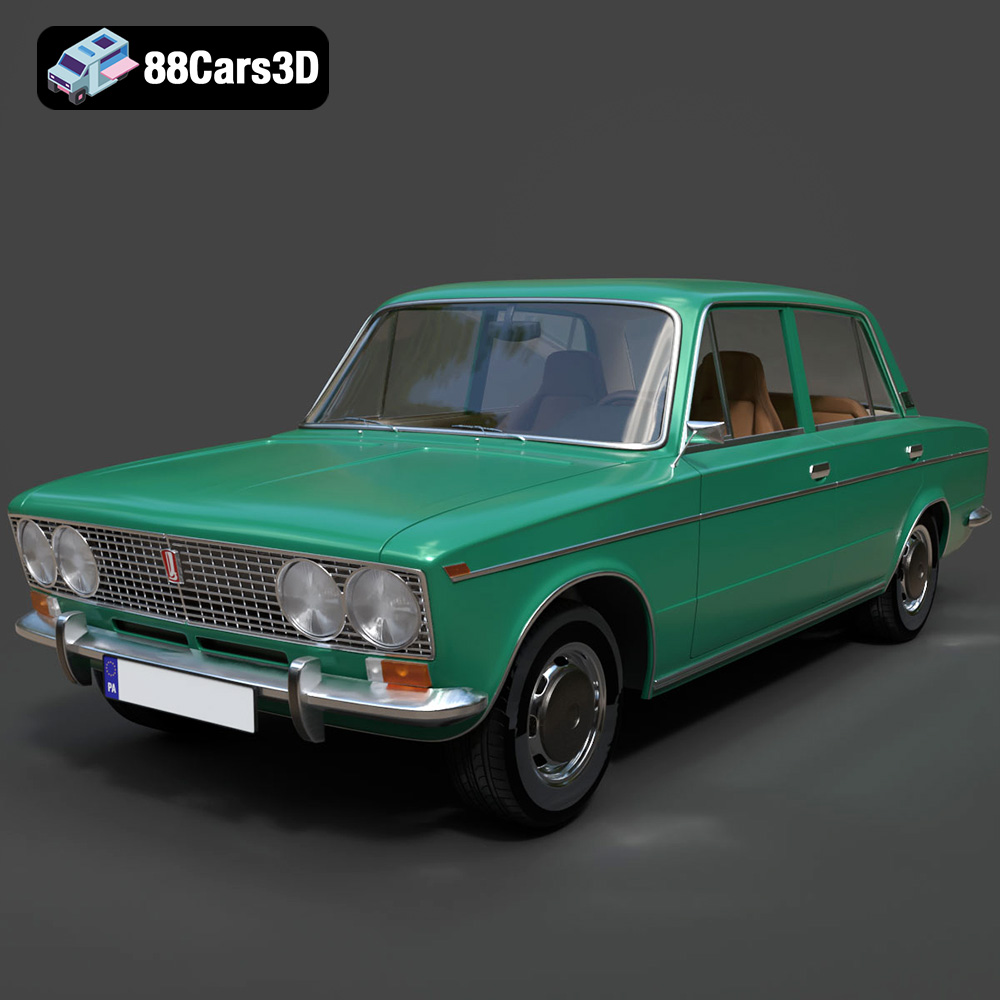
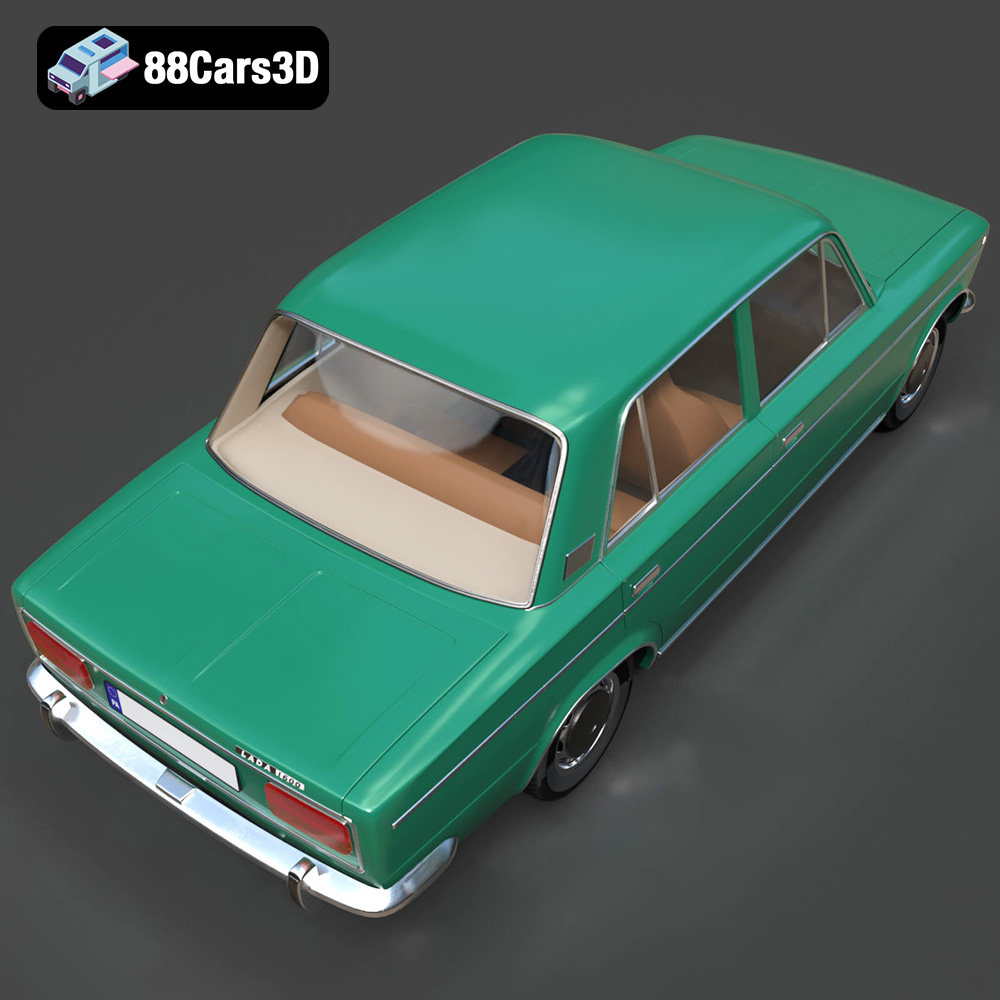
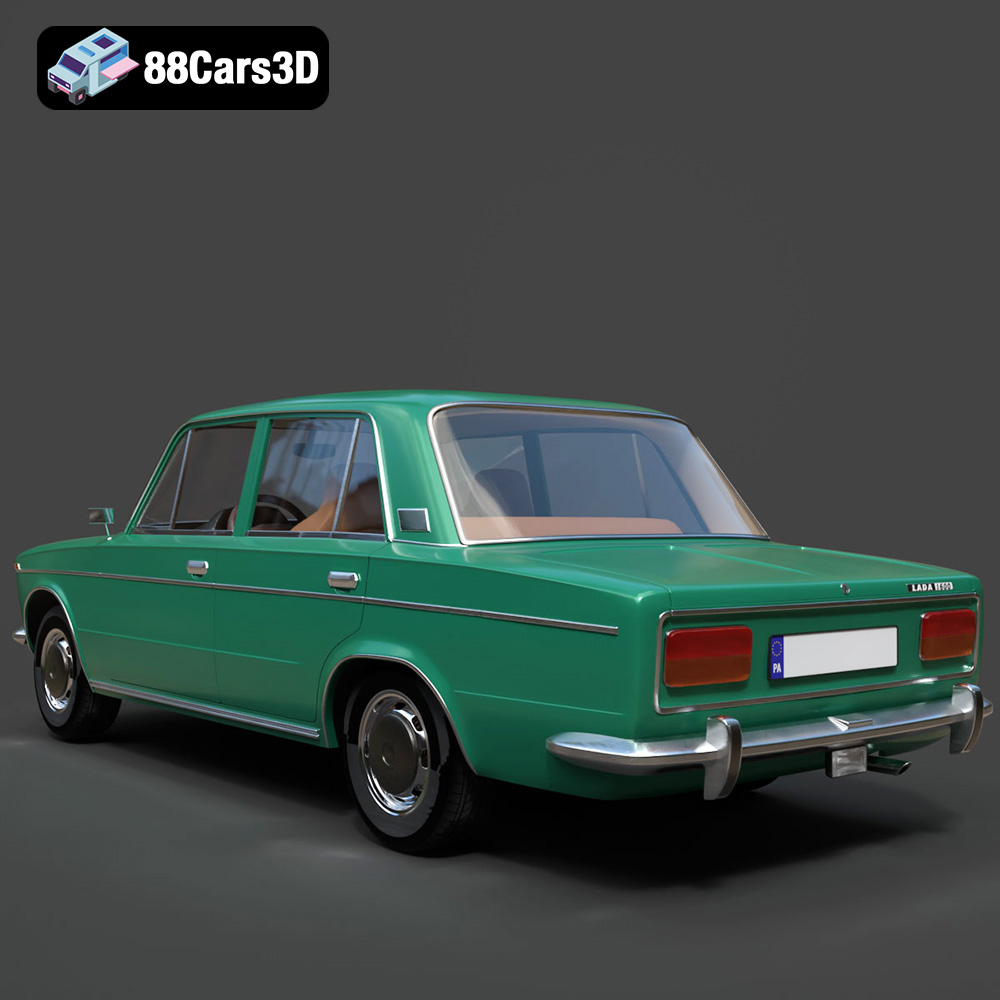
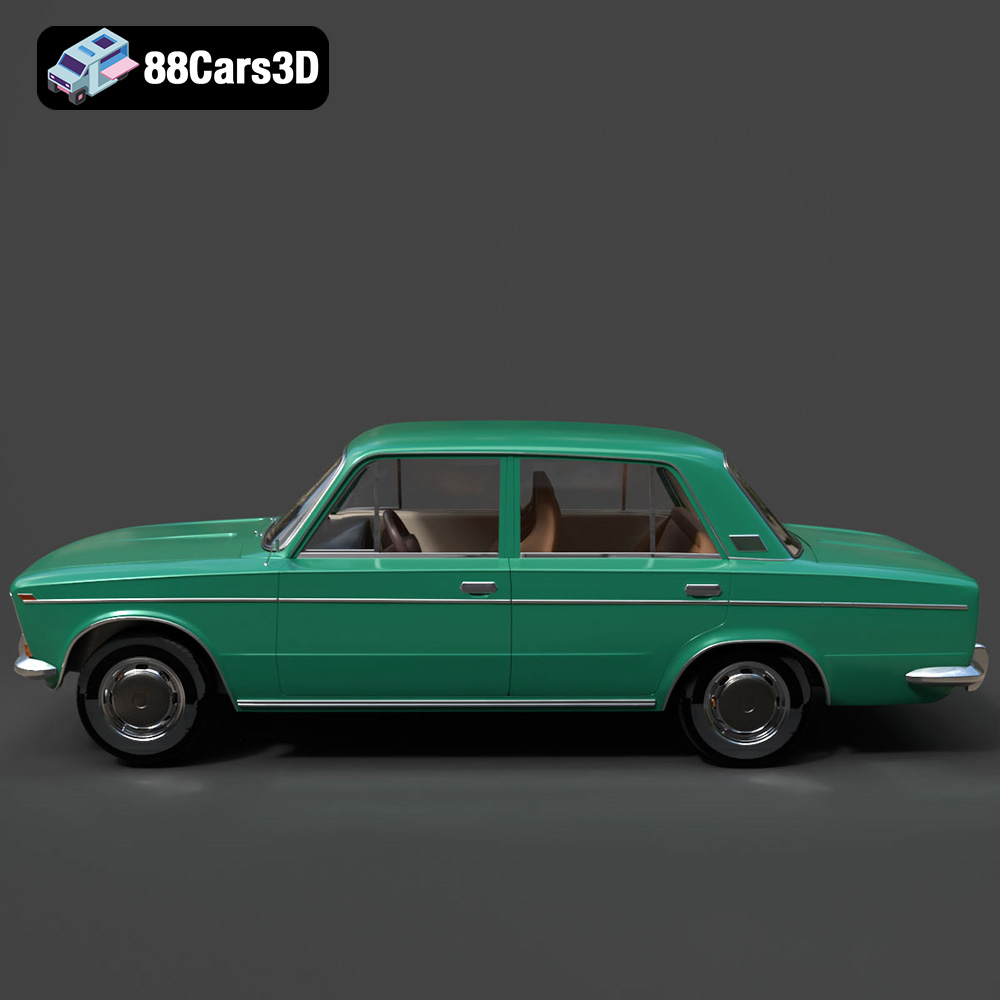
Today, we’re diving deep into a particularly iconic example that perfectly encapsulates these principles: the VAZ Zhiguli 2103 (1972). Known to many as the Lada 1500 in export markets, this Soviet classic is a testament to 1970s Eastern European motoring. Its distinctive quad headlights, prominent chrome grille, and elegant, boxy sedan silhouette evoke a specific era and charm. A high-fidelity 3D rendition of such a vehicle isn’t just a model; it’s a gateway to recreating history, driving compelling narratives, and delivering unparalleled realism in various digital media. A prime example of such precision can be found at 88cars3d.com, where the VAZ Zhiguli 2103 1972 3D Model is offered as a versatile asset, ready to integrate into your next project.
Choosing the right file format for your 3D car models is a critical decision that impacts workflow, compatibility, and the ultimate utility of your asset. Each format is designed with specific use cases and software ecosystems in mind. Understanding their nuances ensures seamless integration and optimal performance, especially when dealing with complex automotive geometry like the VAZ Zhiguli 2103 model.
The .blend format is Blender’s native file type. It encapsulates an entire Blender scene, including mesh data, materials, textures, lighting, camera settings, and even animations. For users primarily working within Blender, this is the most robust and editable format. When you download the VAZ Zhiguli 2103 in .blend format, you gain access to the raw project file, allowing for extensive customization, material tweaks, scene composition, and direct rendering within Blender’s powerful Cycles or Eevee engines. It’s ideal for artists who want full control over the asset’s attributes and wish to integrate it into their existing Blender projects with minimal friction.
.fbx (Filmbox) is a proprietary file format owned by Autodesk, widely adopted as an interchange format between 3D software and especially favored in game development. It efficiently stores 3D model data, including geometry, materials, textures (though often referenced externally), animations, and skeletal data. Its primary advantage lies in its robust support for animations and its compatibility with major game engines like Unreal Engine and Unity. For the VAZ Zhiguli 2103, an .fbx file would be the go-to for direct import into game development pipelines, ensuring that the separate wheels, suspension, and steering components are correctly recognized for animation.
The .obj (Wavefront OBJ) format is one of the oldest and most universally supported 3D formats. It’s a simple, human-readable text file that primarily stores geometry (vertices, normals, texture coordinates, and faces) and references external material files (.mtl). While it doesn’t support animation or rigging, its widespread compatibility makes it an excellent choice for basic mesh exchange between different 3D software applications where complex animations aren’t a primary concern. The Zhiguli 2103 as an .obj offers a clean mesh for general rendering or for re-texturing in virtually any 3D program.
.glb (GLB format for glTF) is a relatively modern, compact, and efficient format designed for real-time rendering on the web, augmented reality (AR), and virtual reality (VR) applications. It’s a binary version of the glTF (GL Transmission Format) and embeds all necessary data—geometry, materials, textures, animations—into a single file. This ‘self-contained’ nature makes .glb incredibly convenient for sharing and displaying 3D models online, without requiring external texture files. For classic 3D car models in AR/VR showrooms or browser-based configurators, the Zhiguli 2103 in .glb format would be highly efficient.
.stl (Stereolithography) is the most common file format for 3D printing. It describes only the surface geometry of a 3D object using a collection of interconnected triangles. It lacks information about color, texture, or other attributes. When preparing the VAZ Zhiguli 2103 for 3D printing, the .stl format ensures that the mesh is watertight and ready for slicing software. It’s essential for hobbyists and professionals looking to bring the digital model into the physical world, creating display-scale classic car replicas.
.ply (Polygon File Format or Stanford Triangle Format) is primarily used for storing 3D data from 3D scanners, CAD software, and other applications that require precise geometric representation. It can store not just geometry but also color, transparency, and normal data per vertex or face. While less common for general animation or rendering workflows, it’s valuable for specific engineering, analysis, or historical preservation projects where accurate surface data of the Zhiguli model is crucial.
The .unreal format, or more accurately, assets packaged for Unreal Engine, typically refers to a curated collection of files within an Unreal project structure. These are often .fbx files, textures, materials, and Blueprints pre-configured within the engine. When a model like the Zhiguli 2103 is provided in an “Unreal” package, it means it’s been specifically optimized, had its materials set up, and often includes LODs (Levels of Detail) and collision meshes, making it a drop-in ready asset for Unreal Engine projects without extensive post-import work.
Similar to .blend for Blender, .max is Autodesk 3ds Max’s native project file format. It contains all scene data, including geometry, materials, lighting, cameras, animations, and modifiers specific to 3ds Max. For artists whose primary workflow is within 3ds Max, the .max file for the VAZ Zhiguli 2103 provides the most flexibility for editing, rigging, animating, and rendering using renderers like V-Ray or Corona. It’s perfect for high-end cinematic rendering and detailed animation sequences.
The availability of the VAZ Zhiguli 2103 1972 3D Model in such a comprehensive suite of formats from 88cars3d.com underscores its versatility, ensuring it can seamlessly integrate into virtually any professional pipeline, from high-fidelity automotive rendering to demanding game assets development.
Creating a truly exceptional 3D car model, especially one based on a historical vehicle like the VAZ Zhiguli 2103, is a complex blend of artistic skill and technical precision. It goes far beyond simply mimicking shapes; it’s about capturing the soul of the machine while ensuring its digital counterpart is optimized for performance across various platforms.
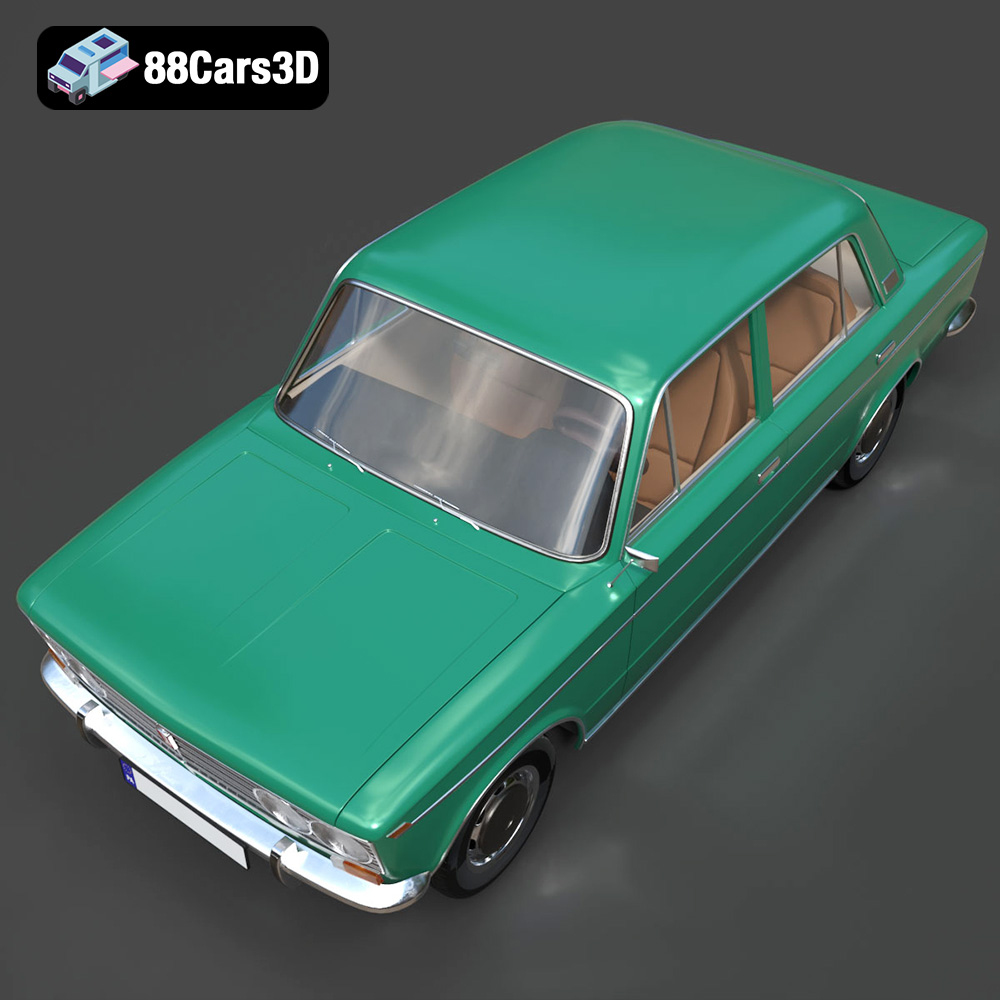
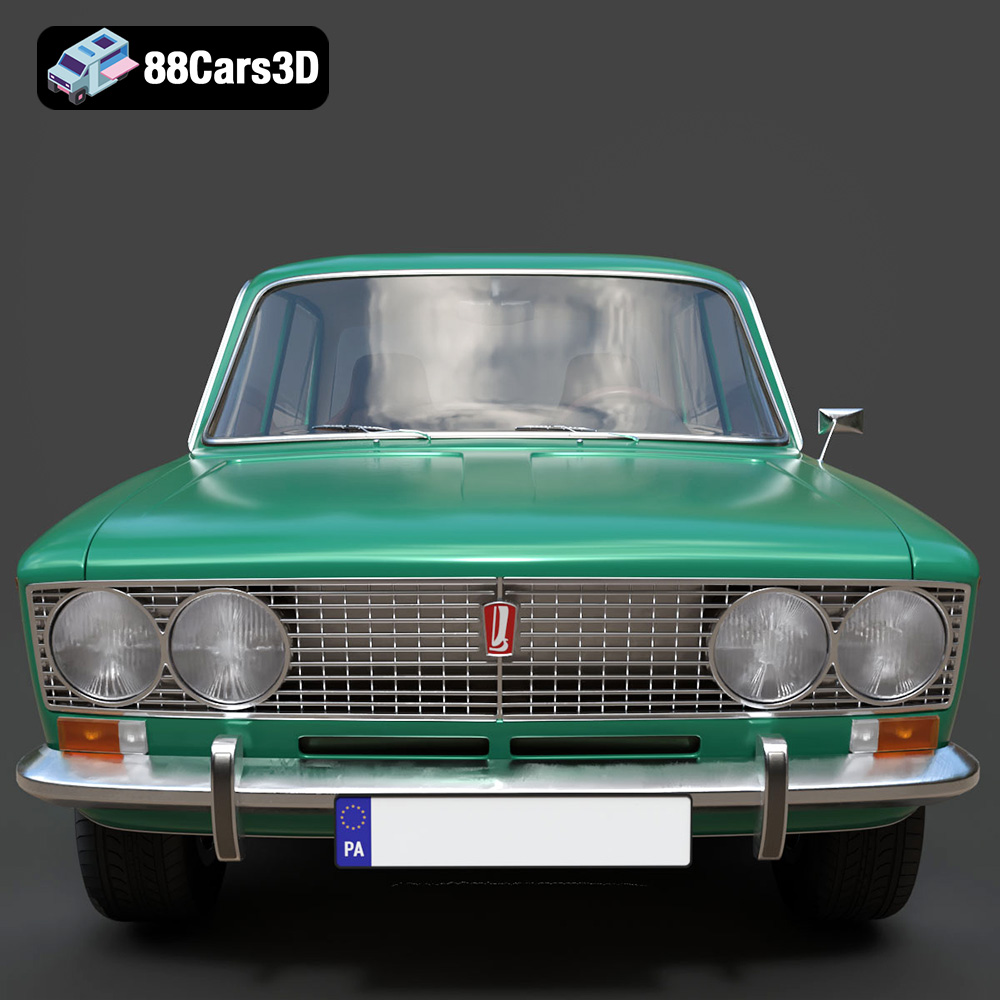
The essence of the VAZ Zhiguli 2103 lies in its distinctive features: the signature quad round headlights, the prominent chrome grille, the wrap-around chrome bumpers, and the elegant, boxy sedan silhouette. A high-quality 3D model faithfully replicates these elements. This involves extensive research, often using historical photographs, blueprints, and actual vehicle inspections, to ensure accuracy down to the smallest detail. For instance, the model accurately depicts the 1.5L inline-four engine block visibility under the hood, the authentic vintage exhaust system, and the factory-accurate steel wheels equipped with gleaming chrome hubcaps. These are not mere aesthetic touches; they are critical components that contribute to the overall authenticity and visual fidelity.
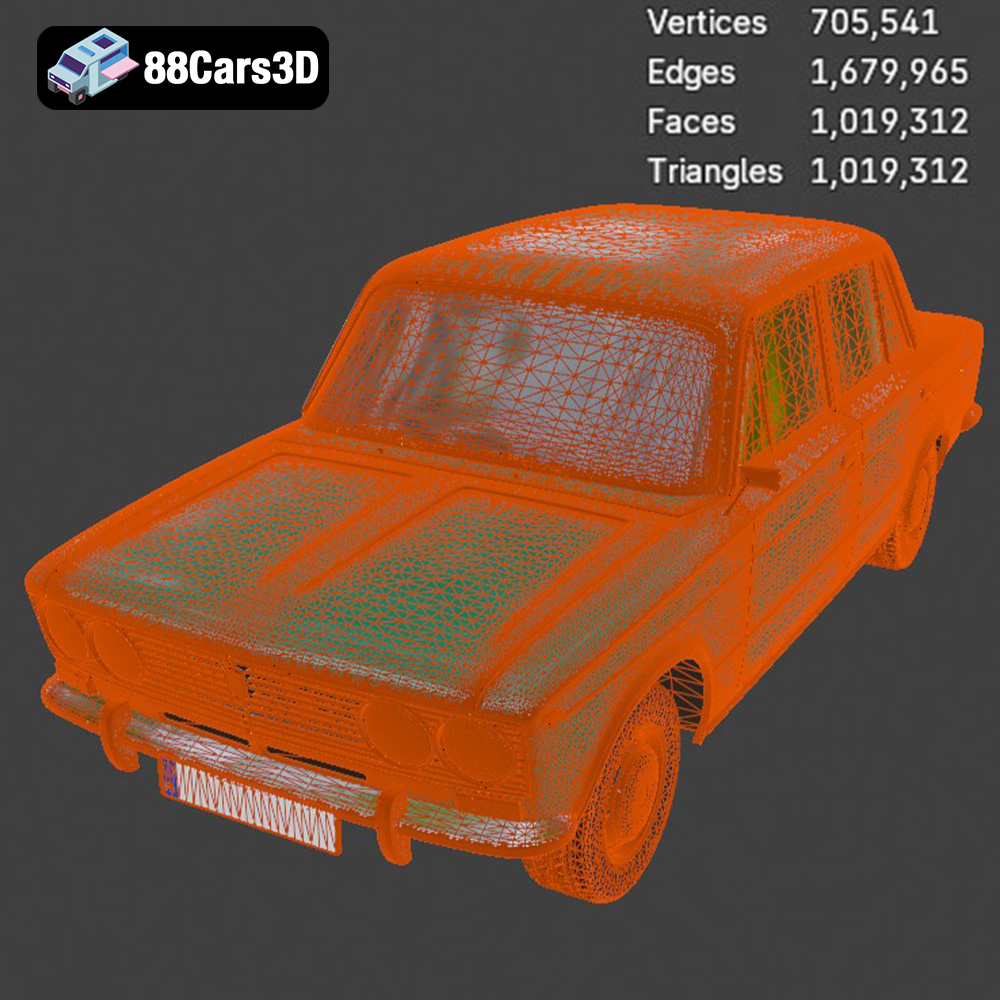
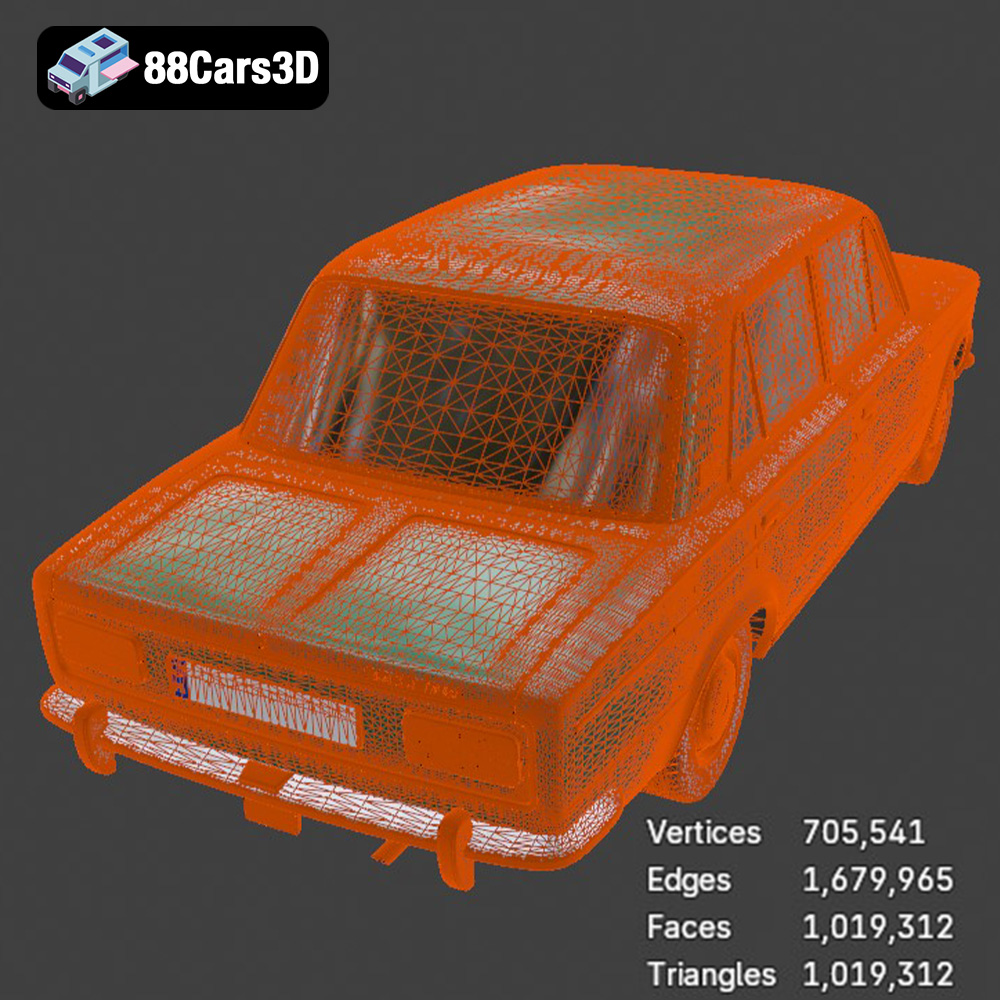
Beyond visual accuracy, technical cleanliness is paramount. The VAZ Zhiguli 2103 model boasts an optimized topology of approximately 180,000 triangles. This specific poly count strikes a crucial balance: it’s rich enough to convey high-end visual realism for close-up renders and detailed animations, yet optimized for smooth performance in real-time engines like Unreal and Unity. A clean edge flow ensures that the mesh deforms predictably during animation and holds up well under various lighting conditions. This careful optimization means the model can seamlessly transition from demanding cinematic projects to more constrained VR/AR experiences, making it a truly versatile game asset.
Effective UV mapping is the foundation for applying high-quality textures. For an automotive model, this means ensuring that paint surfaces, chrome trim, rubber tires, and glass elements receive their designated texture maps without stretching or distortion. The VAZ Zhiguli 2103 model features clean UV mapping, allowing artists to apply detailed PBR (Physically Based Rendering) materials that react realistically to light. This includes period-accurate deeply padded vinyl and cloth patterned seating, the thin-rimmed classic steering wheel with its chrome horn ring, and detailed faux wood-grain dashboard textures. The attention to these material details is what truly elevates a good 3D model to an exceptional one, providing a tangible sense of realism whether it’s viewed in a static render or driven in a simulator.
The true measure of a versatile 3D car model lies in its ability to integrate seamlessly into diverse professional pipelines. The VAZ Zhiguli 2103, with its optimized geometry and multi-format availability, offers artists and developers a powerful asset for various applications.
For cinematic quality renders and architectural visualizations, software like Autodesk 3ds Max and Blender are industry staples. The .max and .blend file formats included with the Zhiguli model provide direct access to native project files, ensuring all geometry, materials, and potentially even lighting setups are preserved. In 3ds Max, artists can leverage powerful renderers like V-Ray or Corona to create photorealistic images, adjusting reflections on the chrome, the subtle sheen on the paint, and the delicate refractions through the glass. Blender users benefit from Cycles and Eevee, which offer similar capabilities for stunning visuals. The model’s detailed exterior features, such as the authentic vintage exhaust system and detailed suspension geometry, provide ample opportunities for intricate close-up shots, perfect for marketing materials or virtual museums.
The VAZ Zhiguli 2103 is explicitly designed as a game-ready asset, featuring an optimized ~180,000 triangle count. This makes it ideal for integrating into real-time environments like Unreal Engine and Unity. The .fbx format is the preferred choice for these engines, allowing for efficient import of mesh data, UVs, and animation rigs. The model’s separate wheels, suspension, and steering components are configured for seamless animation, which is crucial for realistic driving mechanics. In Unreal Engine, developers can utilize Blueprints to set up vehicle physics, create custom material instances for body color variations, and integrate the model into open-world environments or classic car driving simulators. For Unity, a similar process applies, leveraging its extensive physics engine and rendering capabilities. The optimized geometry ensures minimal performance impact, even when multiple instances of the Zhiguli are present in a scene.
Augmented Reality (AR) and Virtual Reality (VR) demand highly optimized assets that can render in real-time on a range of devices, often with strict performance budgets. The .glb format, with its embedded textures and compact nature, makes the VAZ Zhiguli 2103 an excellent candidate for AR/VR applications. Imagine a virtual showroom where users can walk around, inspect the detailed cockpit with its period-accurate dashboard, or even “sit inside” the Lada 1500 to experience its 1970s charm in a fully immersive environment. The model’s clean topology and real-world scale accuracy contribute significantly to creating believable and engaging AR/VR interactions, perfect for classic car configurators or educational experiences.
The utility of a high-quality 3D car model like the VAZ Zhiguli 2103 extends far beyond static images or cinematic animations. Its robust technical specifications open doors to interactive experiences and even tangible creations.
For game developers, the VAZ Zhiguli 2103 is a treasure trove. Its ~180,000 triangle count strikes a perfect balance, offering visual richness without overburdening game engine performance. This makes it an ideal game asset for various genres:
Furthermore, the model’s optimized geometry and clean UV mapping simplify the process of implementing damage systems, custom paint jobs, and material variations within game engines, offering extensive customization options to players or designers.
The availability of the VAZ Zhiguli 2103 1972 3D Model in .stl format means it’s not just confined to screens; it can be brought to life through 3D printing. This opens up a fascinating realm for hobbyists, collectors, and educators. Imagine printing a highly detailed 1:12 or 1:18 scale model of this Soviet classic, complete with its distinctive quad headlights and chrome hubcaps.
This dual application – game-ready digital asset and 3D printable physical model – highlights the exceptional versatility of the VAZ Zhiguli 2103 from 88cars3d.com, truly serving a broad spectrum of creative needs.
High-quality 3D car models are more than just digital assets; they are foundational tools that empower creators to produce impactful content across various industries. The VAZ Zhiguli 2103 1972 3D Model exemplifies how a meticulously crafted asset can drive innovation and creativity in tangible ways.
Consider a museum specializing in automotive history or Cold War-era artifacts. A 3D model of the Lada 1500 can be used to create interactive exhibits. Visitors could explore a virtual environment, examine the car from all angles in VR, or even use AR to place the Zhiguli in their physical space, allowing for an up-close inspection of its historical design and engineering without the need for a physical vehicle. Educational documentaries can leverage such models for animated sequences, illustrating the car’s mechanics or its journey through different markets, providing visual depth that traditional footage might lack.
For independent game studios or large publishers working on titles set in the 1970s or Eastern European contexts, acquiring a pre-optimized, game-ready asset like the Zhiguli 2103 saves hundreds of hours of development time. Instead of building a vehicle from scratch, which involves modeling, UV mapping, texturing, rigging, and optimization, teams can drop this model directly into their pipeline. This allows artists and developers to focus on gameplay, level design, and other critical aspects, significantly reducing time-to-market. The robust technical specifications and included file formats mean less tweaking and more creating, turning the model into an immediate value-add for game projects requiring authentic game assets.
Architectural visualization (ArchViz) often requires realistic contextual elements to bring scenes to life. Placing a historically accurate VAZ Zhiguli 2103 in a render of a 1970s street scene or a post-Soviet era building complex instantly adds realism and narrative depth. For filmmakers and animators, the model offers an invaluable prop for cinematic animations. Imagine a period drama where the Lada 1500 is central to a chase scene or a poignant moment. Its detailed exterior and interior features provide the fidelity needed for close-up shots, allowing for storytelling through environmental details. The ability to customize colors and material finishes further enhances its versatility for various cinematic looks, from pristine factory finishes to weathered, aged appearances.
These real-world applications underscore the profound impact that high-quality, versatile 3D car models have across industries. The VAZ Zhiguli 2103 1972 3D Model from 88cars3d.com stands as a prime example of an asset that not only delivers aesthetic excellence but also practical, workflow-enhancing value.
Purchasing a premium 3D car model like the VAZ Zhiguli 2103 is an investment, and its true value is unlocked through its adaptability and potential for long-term use across diverse projects. The included customization options and broad compatibility ensure this asset remains relevant and powerful for years to come.
One of the significant advantages of a well-structured 3D model is its capacity for customization. The VAZ Zhiguli 2103 is designed with flexibility in mind, allowing artists to tailor its appearance to perfectly fit their creative vision:
These customization options mean that the VAZ Zhiguli 2103 isn’t just a static model; it’s a dynamic canvas ready for your creative input, allowing for endless variations and applications, whether for high-fidelity automotive rendering or diverse game assets.
The comprehensive range of included file formats (.blend, .fbx, .obj, .glb, .stl, .ply, .unreal, .max) is a testament to the model’s future-proofing. As software evolves and new platforms emerge, having the model available in multiple widely supported formats ensures its continued usability. This broad compatibility means:
By investing in such a versatile asset, creators are not just buying a 3D model; they are acquiring a foundational component that can grow and adapt with their projects, delivering value repeatedly across the ever-evolving digital landscape.
The journey from historical vehicle to high-fidelity 3D car model is one marked by technical precision, artistic vision, and a deep understanding of diverse application needs. The VAZ Zhiguli 2103 (1972) stands out as an exemplary asset, meticulously crafted to serve a wide spectrum of digital content creation. From its faithful replication of the iconic Lada 1500’s distinctive features and period-accurate interior to its optimized ~180,000 triangle count and clean UV mapping, every detail has been considered for maximum versatility.
We’ve explored how this model seamlessly integrates into professional workflows, whether you’re striving for breathtaking automotive rendering in 3ds Max and Blender, building immersive game assets for Unreal Engine or Unity, or crafting engaging AR/VR experiences with the .glb format. Its adaptability extends even further, providing a solid foundation for 3D printing enthusiasts looking to bring a piece of Soviet automotive history into the physical realm. The comprehensive suite of file formats ensures compatibility and longevity, future-proofing your investment against evolving software landscapes.
Ultimately, the VAZ Zhiguli 2103 1972 3D Model isn’t just a collection of polygons and textures; it’s a powerful tool for storytelling, a catalyst for game development, and an invaluable resource for historical preservation and visualization. Its ability to evoke a specific era and charm makes it more than just an object; it’s a character in its own right, ready to drive your next digital masterpiece. Discover this exceptional asset and many more high-quality 3D car models by visiting 88cars3d.com, where quality and versatility meet professional demands.
Step into automotive history with the iconic VAZ Zhiguli 2103 (1972), a legendary Soviet classic that redefined domestic luxury behind the Iron Curtain. Better known in export markets as the Lada 1500, this vehicle is celebrated for its distinctive quad headlights, prominent chrome grille, wrap-around chrome bumpers, and elegant, boxy sedan silhouette. Capturing the essence of 1970s Eastern European motoring, this model faithfully replicates the vehicle’s refined trim levels, vintage steel wheels, and classic exhaust styling. This 3D model boasts exceptional quality with an optimized topology of approximately 180,000 triangles, making it highly versatile for a variety of digital platforms. Carefully crafted to balance high-end visual fidelity with game-ready performance, the model ensures smooth rendering without compromising on intricate details. The clean edge flow and UV mapping make it a premium asset for game development, VR/AR experiences, animations, and high-resolution architectural visualizations. Perfect for historical Soviet-era environments, classic car driving simulators, vintage lifestyle cinematic renders, and immersive VR showrooms.
$19.99
.blend
.fbx
.glb
.max
.obj
.ply
.rendering
.sedan
.stl
.unreal
.vaz
car-3d-model
classic-car
game asset
game-ready
lada-1500
low-poly
optimized
retro-car
soviet-car
VR/AR
zhiguli-2103