Get 20% OFF All Premium 3D & STL Models!

In the rapidly evolving landscape of digital visualization, the demand for authentic and high-fidelity assets is paramount. From blockbuster cinematic sequences to hyper-realistic gaming environments and immersive virtual reality experiences, precision in 3D modeling forms the backbone of compelling visual narratives. Automotive design, in particular, requires an unparalleled level of detail to capture the essence and engineering marvel of modern vehicles.
Today, we delve into the critical role of superior 3D car models and how they empower professionals across various industries. We’ll explore the technical nuances that differentiate a good model from an exceptional one, examine the versatility offered by multiple file formats, and showcase real-world applications. Our journey will frequently reference a prime example of digital automotive artistry: the Porsche Taycan Turbo S 3D Model available on 88cars3d.com, a testament to meticulous craftsmanship and technical prowess.
This model, which meticulously captures the sleek, aerodynamic silhouette and high-performance heritage of Porsche’s electric flagship, serves as an ideal case study for understanding the comprehensive requirements of professional 3D assets. It is a powerful tool for anyone serious about automotive rendering, game development, AR/VR, or detailed visualization.
Creating a truly convincing digital vehicle goes far beyond basic shape. It involves a deep understanding of automotive design, engineering principles, and the specific technical requirements of various downstream applications. High-fidelity 3D car models are not just aesthetically pleasing; they are technically robust, built with precise topology and optimized geometry that allows for seamless integration into diverse pipelines.
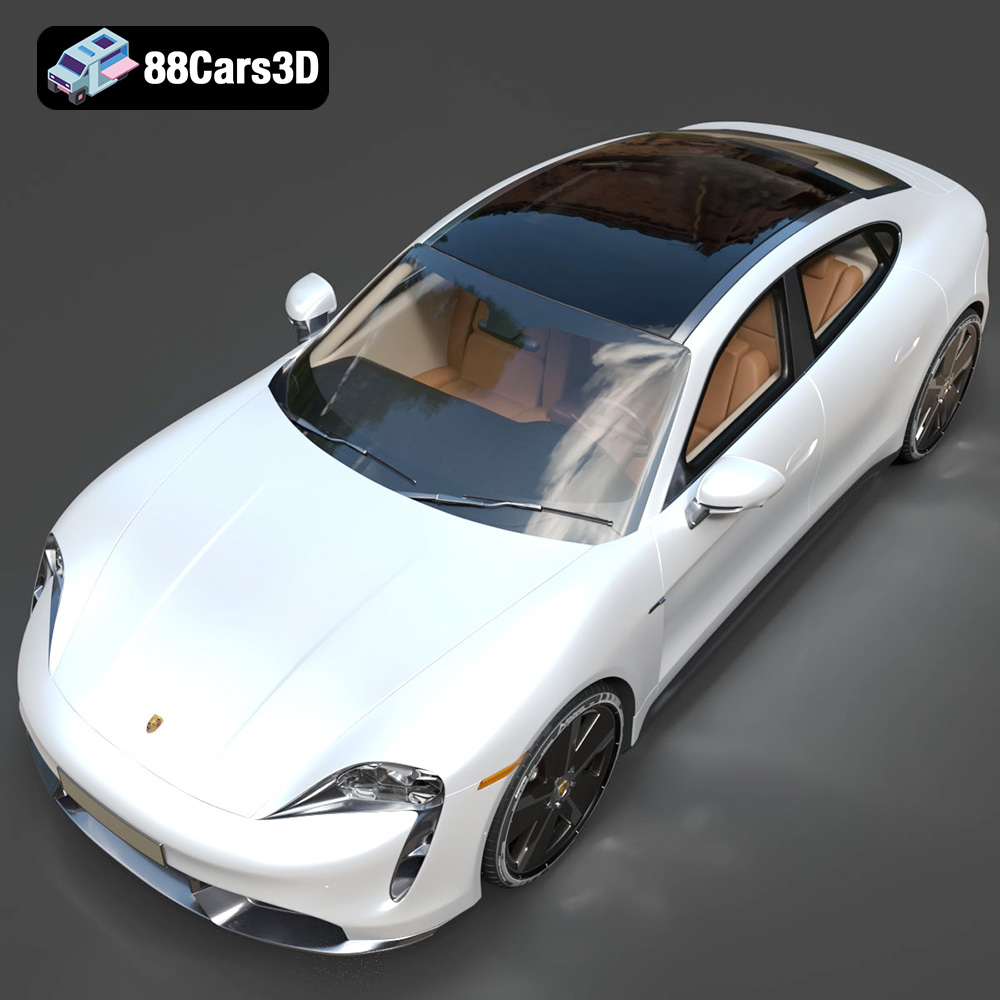
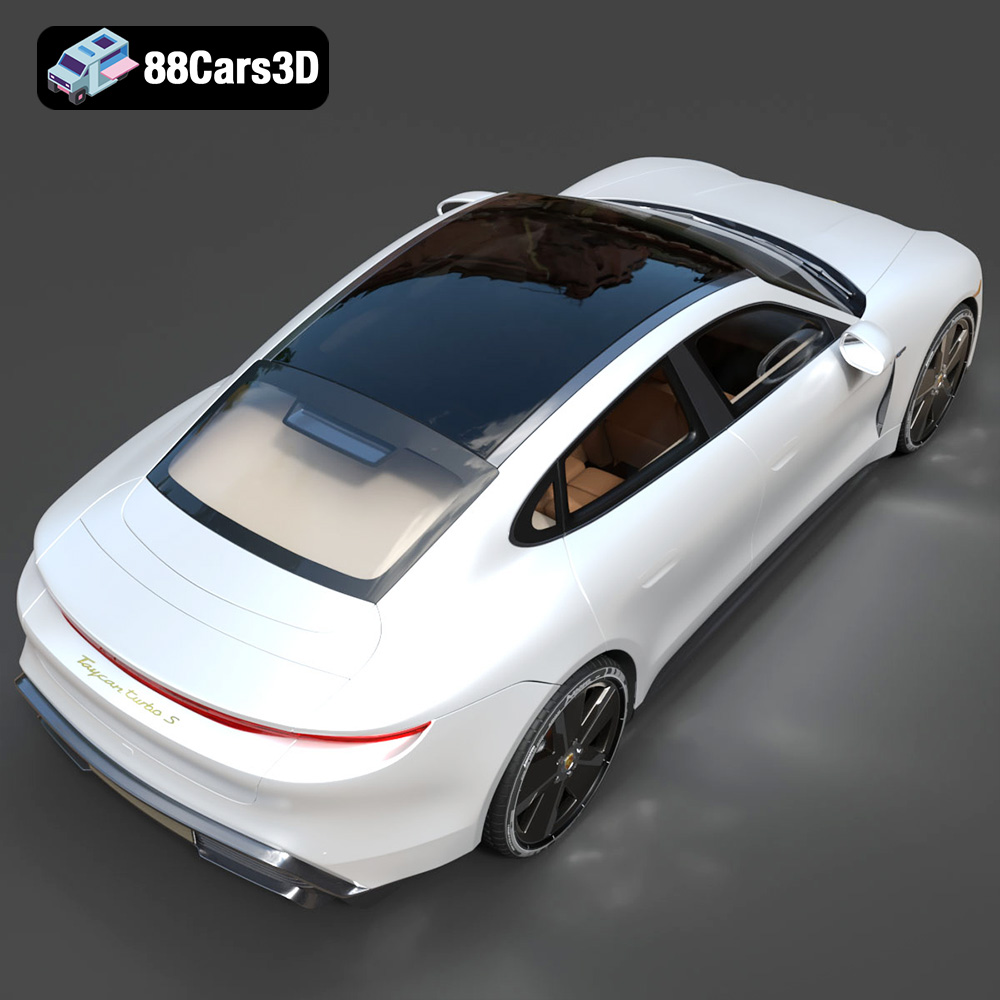
For cinematic rendering or high-end visualization, every curve, seam, and surface imperfection contributes to photorealism. A premium model, such as the Porsche Taycan Turbo S 3D model, meticulously recreates the distinctive four-point LED headlights, the continuous rear light bar, and the aggressive front fascia. These details are not merely cosmetic; they influence how light interacts with the model, how reflections behave, and ultimately, how convincing the final image or animation appears. The attention to detail extends to the interior, featuring sport seats with intricate stitching, the GT multifunction sports steering wheel, and the curved digital instrument cluster, all optimized for compelling close-up shots and first-person perspectives.
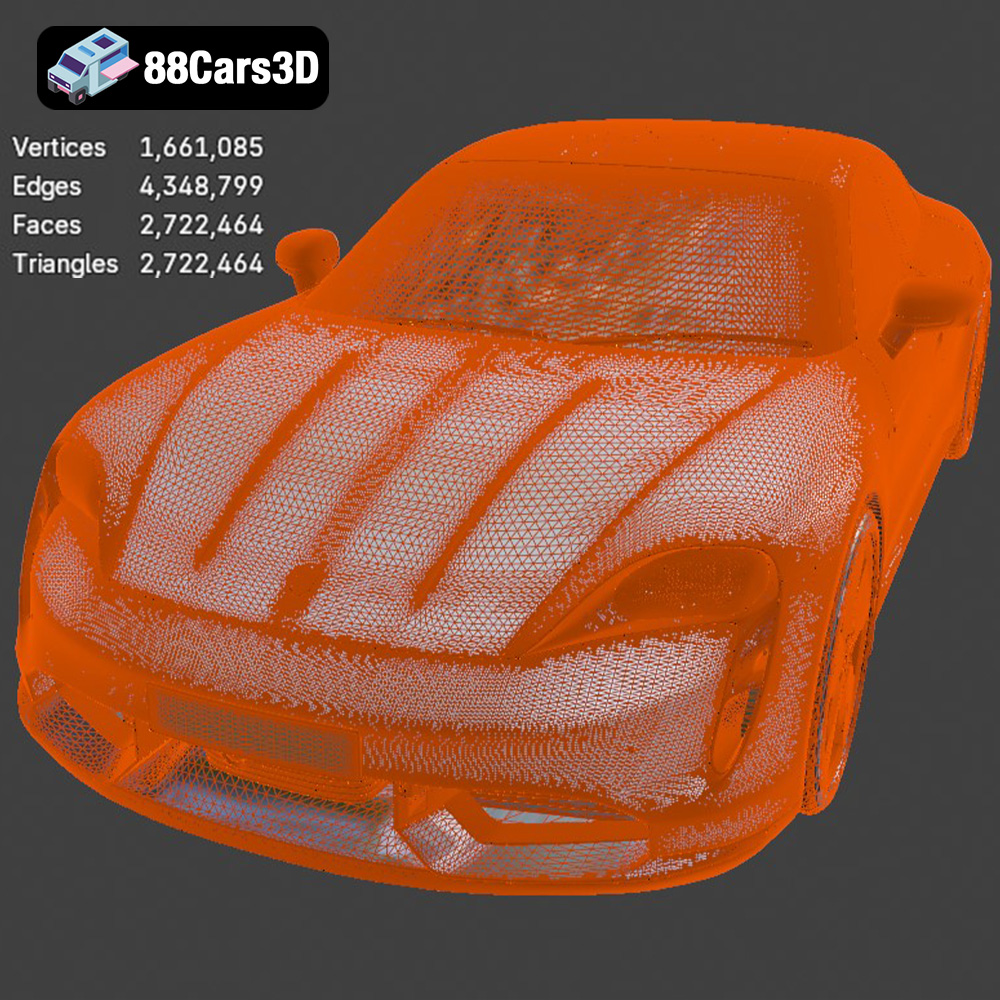
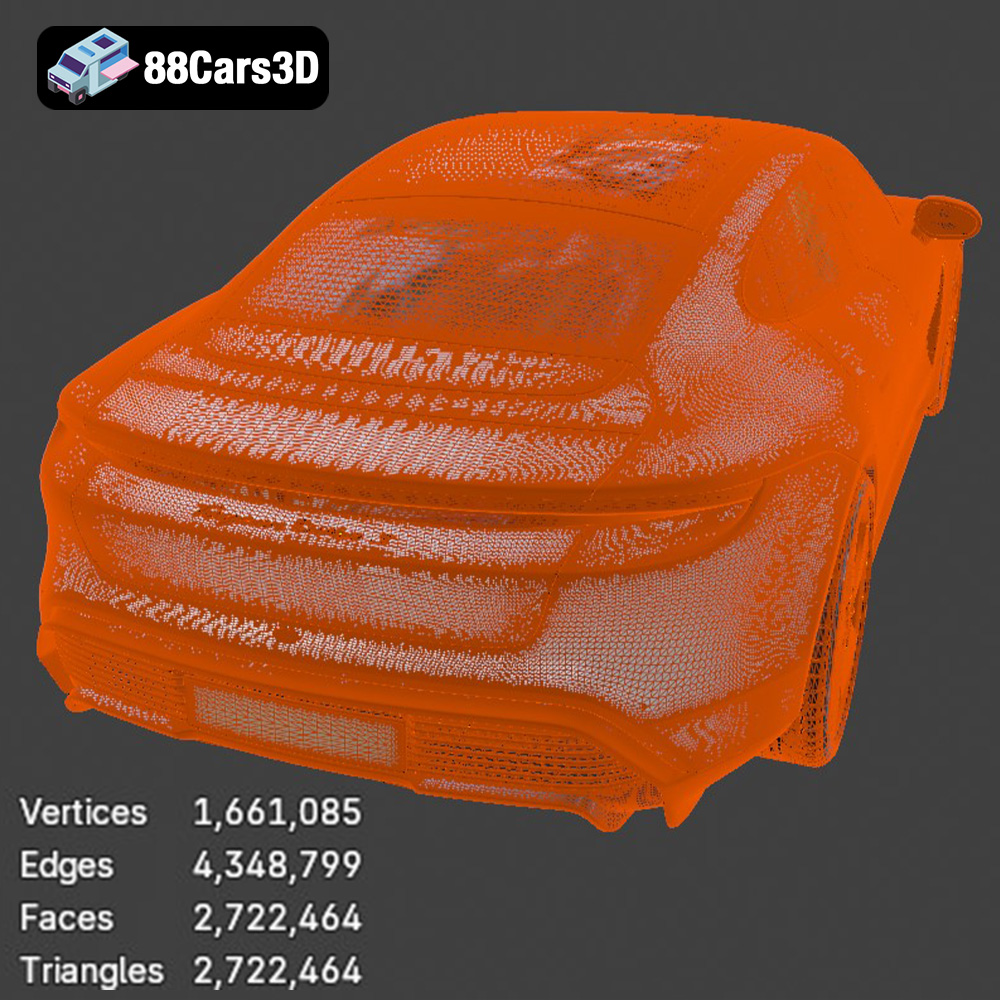
One of the most challenging aspects of 3D modeling is balancing visual fidelity with performance, especially for real-time applications like game development. A truly versatile 3D car model must be “game-ready” without sacrificing the quality needed for cinematic sequences. The Porsche Taycan Turbo S 3D model, with its 2,722,464 triangles, achieves this delicate balance. This poly count is high enough to deliver unparalleled visual fidelity for high-resolution renders and detailed cinematics, yet it remains structured and optimized for next-gen real-time applications in engines like Unreal Engine 5 or Unity. The strategic distribution of polygons ensures that critical areas maintain high detail while less visible parts are efficiently managed, preventing performance bottlenecks in interactive environments.
The choice of file format for a 3D car model is not trivial; it’s a critical decision that impacts workflow, compatibility, and the final application. Different formats are optimized for different purposes, offering unique advantages regarding data retention, portability, and performance. Understanding these distinctions is key to maximizing the utility of premium assets like the Porsche Taycan Turbo S 3D model, which offers a comprehensive suite of file types.
The .blend format is native to Blender, a powerful open-source 3D creation suite. When you download a .blend file, you’re not just getting a mesh; you’re receiving a fully editable Blender scene. This includes all materials, textures, lighting setups, camera positions, and even animation data configured within Blender. For users deeply integrated into the Blender ecosystem, this format offers unparalleled flexibility for further modification, rendering with Cycles or Eevee, or direct integration into Blender-based projects. It’s ideal for artists who want full control and the ability to dissect and understand the model’s construction within its native environment.
Autodesk’s .fbx (Filmbox) format is arguably the most widely adopted interchange format in the 3D industry, particularly for game development and animation. Its strength lies in its ability to store not just mesh data, but also animation, rigging, materials (though often simplified), cameras, and lights in a single file. This makes it ideal for transferring assets between different 3D software packages (like 3ds Max, Maya, Blender) and into real-time engines such as Unreal Engine and Unity. The .fbx format is highly optimized for performance, making it a go-to choice for complex animated game assets and interactive experiences where efficiency is paramount.
The .obj (Wavefront Object) format is a venerable and highly compatible format for raw 3D geometry. It’s often considered a universal format because nearly every 3D software package can import and export it. An .obj file primarily describes the geometry of a 3D model (vertices, normals, texture coordinates, and faces). Material definitions are typically stored in a separate .mtl (Material Template Library) file. While it doesn’t support animation or rigging as robustly as .fbx, its simplicity and widespread compatibility make it excellent for static models, archival purposes, or when you need to transfer just the raw mesh data between disparate applications without concerns about proprietary features.
.glb (GL Transmission Format Binary) is a modern, royalty-free format designed for efficient transmission and loading of 3D scenes and models by engines and applications. It’s a binary version of glTF, which packages all assets (geometry, materials, textures, animations) into a single, compact file. This format is quickly becoming the standard for 3D content on the web, in AR/VR applications, and mobile experiences due to its small file size and quick parsing. For immersive virtual showrooms or mobile AR experiences featuring a Porsche Taycan Turbo S, .glb offers an optimized, streamlined solution.
The .stl (Stereolithography) format is the cornerstone of 3D printing. It represents a 3D model as a collection of unconnected triangles, describing only the surface geometry without color, texture, or other CAD attributes. This makes it perfect for additive manufacturing, where the goal is to define the physical shape for slicing software. When preparing a 3D car model like the Taycan for physical manifestation, converting it to .stl is the first crucial step. The accuracy of the .stl output directly impacts the quality and printability of the physical model, making it an essential format for hobbyists and professionals alike.
The .ply (Polygon File Format or Stanford Triangle Format) is a versatile format for storing 3D data, particularly from 3D scanners. It supports various properties like color, transparency, normals, texture coordinates, and even confidence values for vertices and faces. While less common for general asset exchange than .fbx or .obj, it’s highly valued in scientific and engineering fields for its ability to store detailed information about scanned data. For intricate analysis or reverse engineering workflows, a .ply file can offer a higher degree of data fidelity for mesh properties.
The inclusion of a native .unreal file (often referring to a .uasset or an Unreal Engine project package) signifies a model that is ready to be dropped directly into an Unreal Engine project. This means the asset has likely been optimized, had its materials set up using Unreal’s physically based rendering (PBR) system, and potentially includes LODs (Levels of Detail), collision meshes, and proper pivot setups. For game developers and real-time visualization artists utilizing Unreal Engine, this format drastically reduces setup time and ensures immediate, high-performance integration.
The .max format is the native file type for Autodesk 3ds Max, one of the leading software packages for 3D modeling, animation, and rendering. Similar to .blend, a .max file contains the entire scene, including geometry, materials, textures, lighting, cameras, animation, and scene settings. For 3ds Max users, this provides maximum editability and full access to all the model’s components and settings as configured by the original artist. It’s indispensable for professional studios and individual artists who rely on 3ds Max for high-fidelity automotive rendering and complex animation projects.
The versatility of a premium 3D car model like the Porsche Taycan Turbo S lies in its ability to seamlessly integrate into a myriad of professional pipelines. From high-stakes marketing campaigns to the bleeding edge of interactive entertainment, this asset provides a robust foundation.
For advertising agencies, automotive designers, and visualization studios, creating stunning imagery and animations is critical. The Taycan’s accurate frame geometry, precise proportions, and detailed exterior features (like the aero-optimized lower valance and massive carbon-ceramic brake discs) make it an ideal candidate for photorealistic renders. In workflows using 3ds Max with V-Ray or Corona Renderer, or Blender with Cycles, artists can leverage the model’s clean topology and robust UVs to apply sophisticated PBR materials, simulate realistic lighting environments, and produce captivating brand campaigns or lifestyle scenes. The model’s inherent detail minimizes the need for extensive post-modeling work, allowing artists to focus on creative direction and presentation.
The “game-ready & optimized” nature of this Porsche Taycan Turbo S 3D model, boasting 2,722,464 triangles, is a significant advantage for game developers. Its optimized polycount strikes a perfect balance for real-time engines like Unreal and Unity, ensuring high-end visual realism without compromising frame rates. For racing titles, open-world games, or simulators, features like separate wheels, suspension, and steering components are crucial. These allow for realistic physics implementation, complex animation rigging (e.g., steering wheel rotation, suspension travel), and authentic vehicle dynamics. The included .fbx and .unreal formats streamline the import process, ensuring materials and textures are correctly mapped, and pivots are properly set up for immediate in-engine use.
Augmented Reality (AR) and Virtual Reality (VR) are transforming how consumers interact with products, especially in the automotive sector. Imagine a virtual showroom where potential buyers can explore the Porsche Taycan Turbo S in exquisite detail, opening doors, examining the cockpit, and even changing paint colors in real-time. The model’s optimized geometry and the inclusion of the .glb format are perfect for such applications. .glb ensures efficient loading and rendering on various devices, from high-end VR headsets to mobile AR platforms. This capability allows manufacturers and dealerships to create immersive configurators and engaging virtual experiences that transcend traditional sales methods.
Beyond digital screens, 3D car models offer the unique opportunity to bring virtual designs into the physical world through 3D printing. The Porsche Taycan Turbo S 3D model, with its convertibility to .stl, opens the door for hobbyists and professionals to create stunning physical replicas.
The journey from digital asset to physical model begins with careful preparation. The .stl format, while simple, is the universal language for 3D printers. Ensuring a manifold mesh (watertight, no holes or intersecting geometry) is crucial before slicing. For a complex model like the Taycan, identifying potential weak points or areas that require additional support is vital. The provided product description suggests recommendations like printing the frame angled for structural integrity and printing wheels separately, which are standard practices to achieve optimal results and minimize support material usage.
Achieving a high-quality 3D print of an automotive model requires specific print settings. The recommendation for layer heights between 0.04–0.12 mm, particularly with resin printing, is aimed at capturing the fine details and smooth surfaces of the Taycan’s bodywork. Resin (SLA/DLP) printers are generally preferred over FDM for models with intricate details, as they offer superior resolution. Post-processing is equally important: careful sanding, priming, and applying authentic factory colors with metallic finishes can transform a raw print into a museum-quality display piece. The ability to customize aspects like body colors and material finishes in the digital realm can directly translate to the painting and finishing stages of the physical model, allowing for personalized, true-to-life replicas.
A static 3D model, no matter how detailed, has limited utility compared to one designed for customization and animation. The Porsche Taycan Turbo S 3D model excels in its adaptability, offering features that empower artists to create dynamic and personalized content.
The ability to easily change body colors, modify tire textures, or adjust material finishes (matte, gloss, metallic) is invaluable for visualization and marketing. Whether you’re showcasing the Taycan in a sleek “Volcano Grey Metallic” or a vibrant “Neptune Blue,” a well-structured 3D model allows for rapid iteration of these aesthetic elements. This flexibility is essential for client presentations, where quick visual variations are often required, and for creating diverse scenes without needing multiple models. This is where the inherent quality of 3D car models truly shines, allowing creative freedom without starting from scratch.
Beyond static renders, the true power of a comprehensive 3D car model unfolds in animation. The Taycan model’s separate wheels, suspension, and steering components are not just cosmetic; they are engineered for animation. Proper pivot setups mean that these elements can be rigged and animated realistically, mimicking actual vehicle mechanics. This is critical for realistic driving simulations, cinematic camera movements that follow suspension compression, or showcasing the vehicle’s turning radius. For game developers, these separate components facilitate accurate physics integration, allowing the vehicle to respond dynamically to terrains and collisions, elevating the realism and immersion of the interactive experience. This level of granular control is what defines a truly professional game asset.
The world of 3D modeling for automotive design is a fascinating blend of artistic vision and technical precision. As we’ve explored through the lens of the Porsche Taycan Turbo S 3D model, the demands of modern production require assets that are not only visually stunning but also technically robust and adaptable across diverse platforms.
From delivering unparalleled visual fidelity for high-end cinematic automotive rendering to providing game-ready optimization for immersive interactive experiences, the right 3D car models are indispensable. Understanding the nuances of various file formats – from the editable power of .blend and .max, the widespread compatibility of .fbx and .obj, the web-optimized efficiency of .glb, to the physical manifestation capability of .stl – equips professionals with the tools to tackle any project.
The Porsche Taycan Turbo S 3D model, available at 88cars3d.com, exemplifies this commitment to quality and versatility. It stands as a testament to how meticulous modeling and thoughtful technical execution can empower artists, developers, and designers to push the boundaries of digital creativity. Whether you’re building a virtual showroom, crafting a racing simulator, or producing a visually stunning advertisement, investing in high-quality 3D assets is the foundation for achieving exceptional results.
Explore the possibilities and elevate your projects with premium 3D models today.
The Porsche Taycan Turbo S represents the pinnacle of electric performance and modern automotive design. This high-fidelity 3D model captures the sleek, aerodynamic silhouette, the striking four-point LED headlights, and the continuous rear light bar that defines Porsche’s zero-emission flagship. From the aggressive front fascia to the sculpted rear diffuser and signature aerodynamic wheels, every curve has been meticulously modeled to reflect its high-performance heritage. Crafted with exceptional detail and boasting a topology of 2,722,464 triangles, this model delivers unparalleled visual fidelity while remaining structured for next-gen real-time applications. Whether utilizing Unreal Engine 5 or rendering in high-end VFX pipelines, this asset provides a superb balance of mesh density and performance for game development, AR/VR experiences, cinematic animation, and high-end visualization.
$37.50
.blend
.ev
.fbx
.glb
.max
.obj
.ply
.porsche
.rendering
.sports car
.stl
.unreal
car-3d-model
electric-car
game asset
game-ready
high poly
luxury car
optimized
taycan-turbo-s
VR/AR