Get 20% OFF All Premium 3D & STL Models!

In the dynamic world of 3D visualization, automotive design, and game development, the pursuit of hyper-realism is a constant driving force. Artists, engineers, and developers continually seek assets that not only look stunning but are also technically robust, efficient, and versatile across a multitude of platforms. Capturing the intricate beauty and mechanical prowess of a real-world vehicle in a digital format requires immense skill and attention to detail, transforming mere polygons into a vibrant, functional representation.
Imagine needing to populate a high-octane racing simulator, create an immersive virtual showroom experience, or produce a cinematic render for a marketing campaign. The foundation of all these endeavors lies in the quality of the 3D model itself. This is where a meticulously crafted asset, like the Triumph Daytona 675 SE 2008 3D Model available on 88cars3d.com, becomes an invaluable resource.
The Triumph Daytona 675 SE 2008 is more than just a motorcycle; it’s a testament to British engineering, famed for its distinctive howling 675cc inline-three engine and razor-sharp handling. This article delves into the technical depths of such a specialized 3D model, exploring its construction, the various file formats that facilitate its use, and how it seamlessly integrates into diverse professional workflows, from game engines like Unreal to high-fidelity rendering in 3ds Max and Blender, and even its application in the exciting realm of 3D printing.
Creating a high-quality 3D automotive model is a complex fusion of artistic vision and technical precision. It’s not enough for a model to simply look good; it must also be built correctly to function optimally within various digital environments. This balance is particularly crucial for iconic vehicles like the Triumph Daytona 675 SE 2008, where every curve and component contributes to its distinctive character.
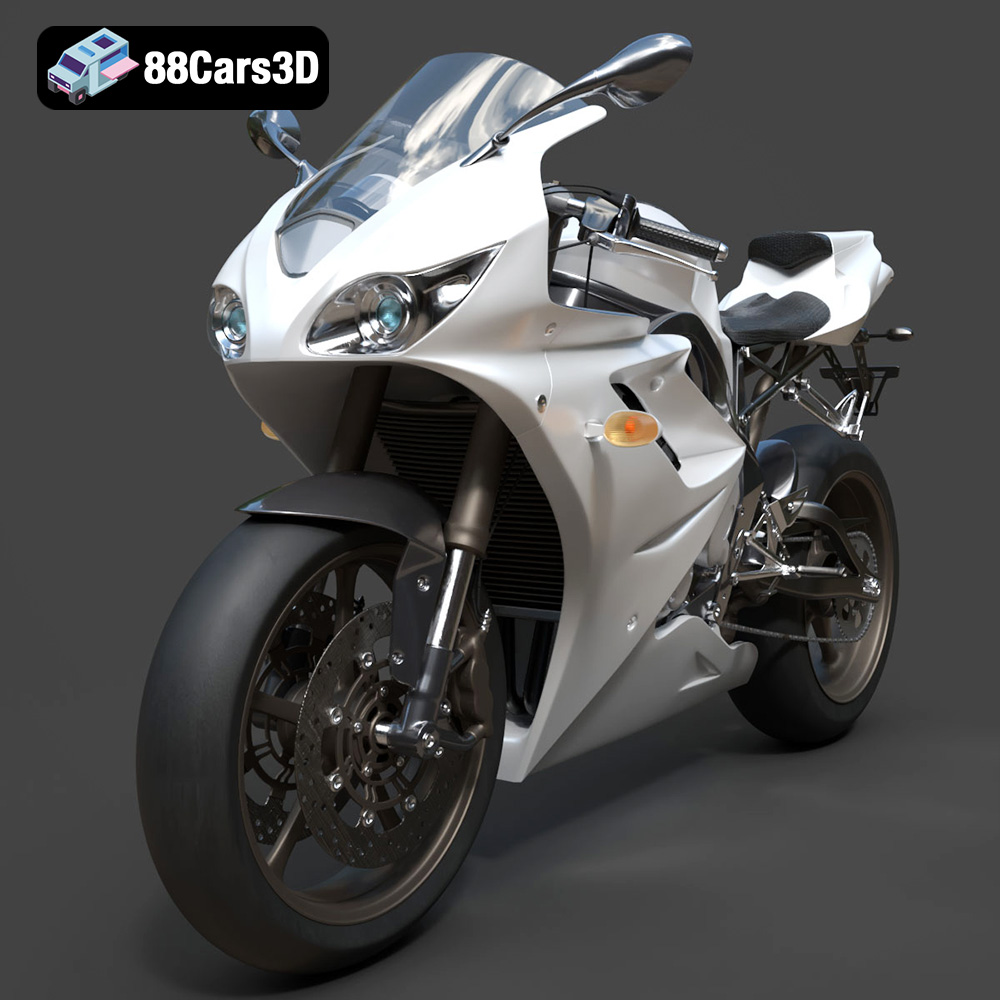
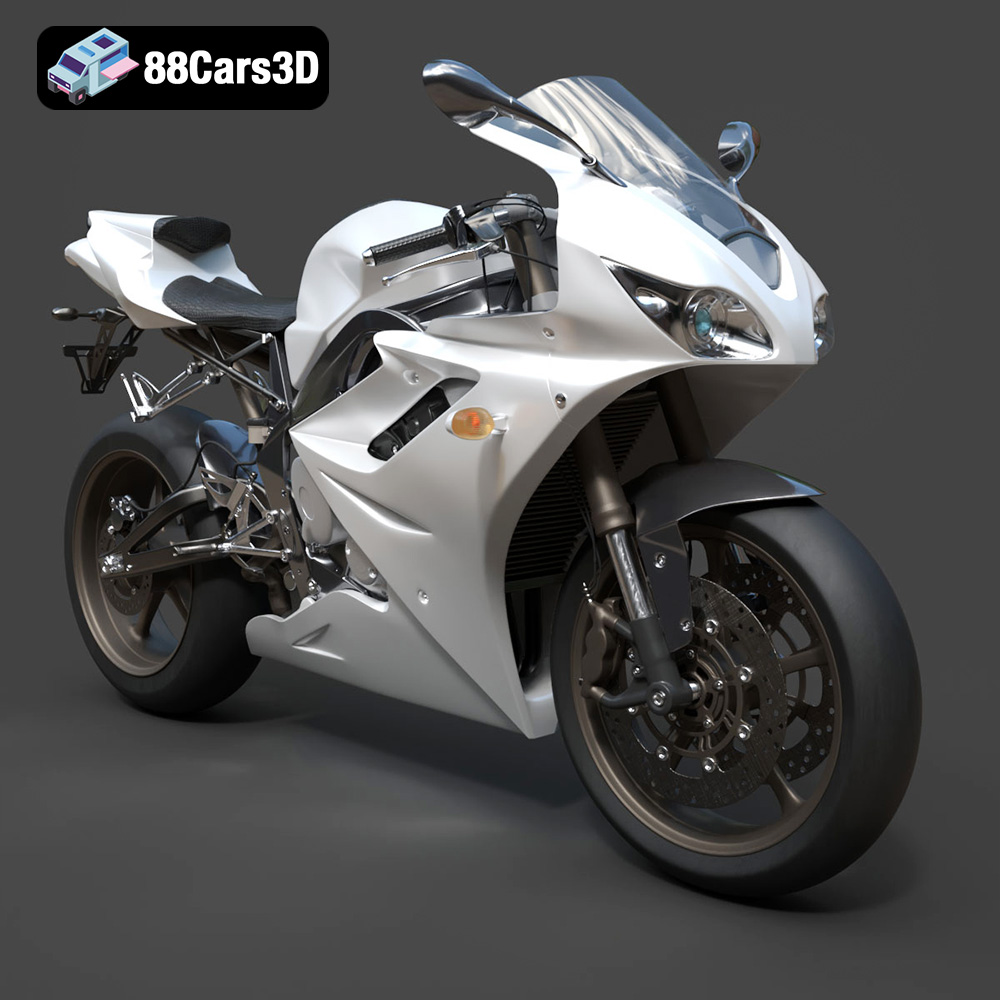
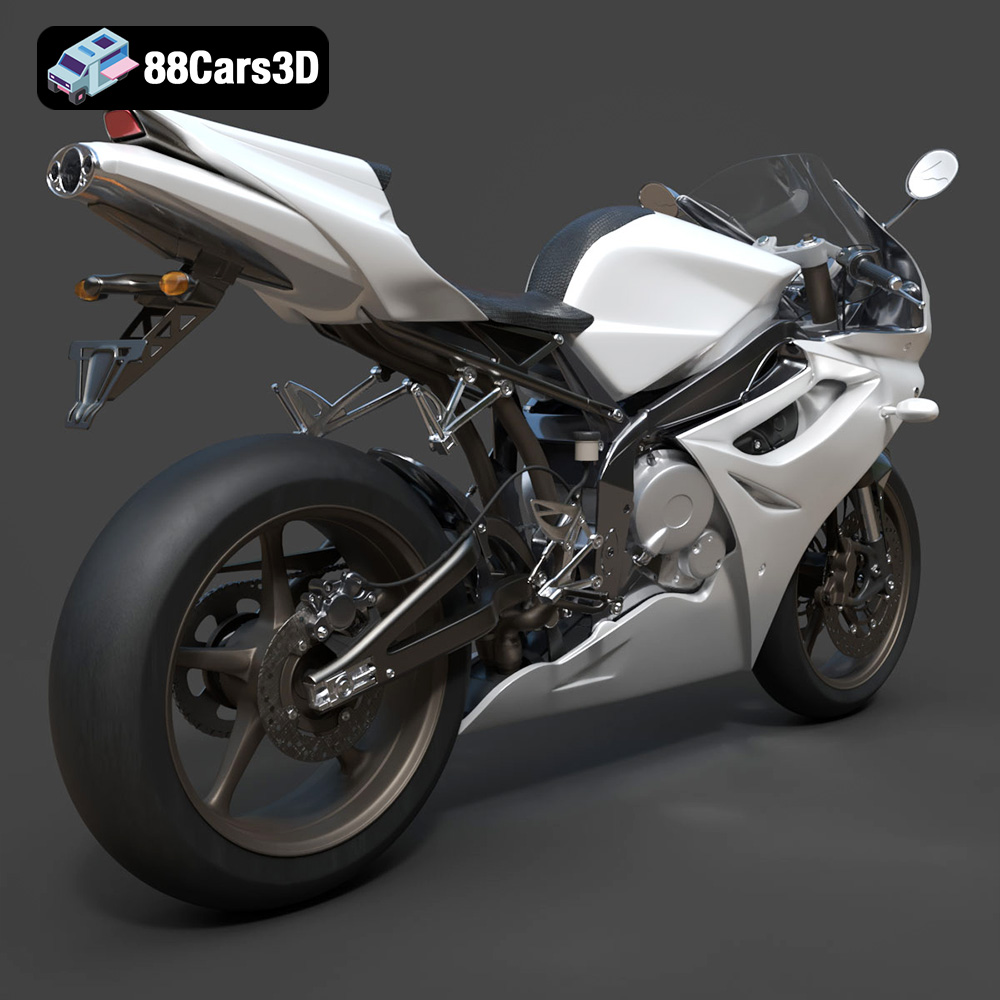
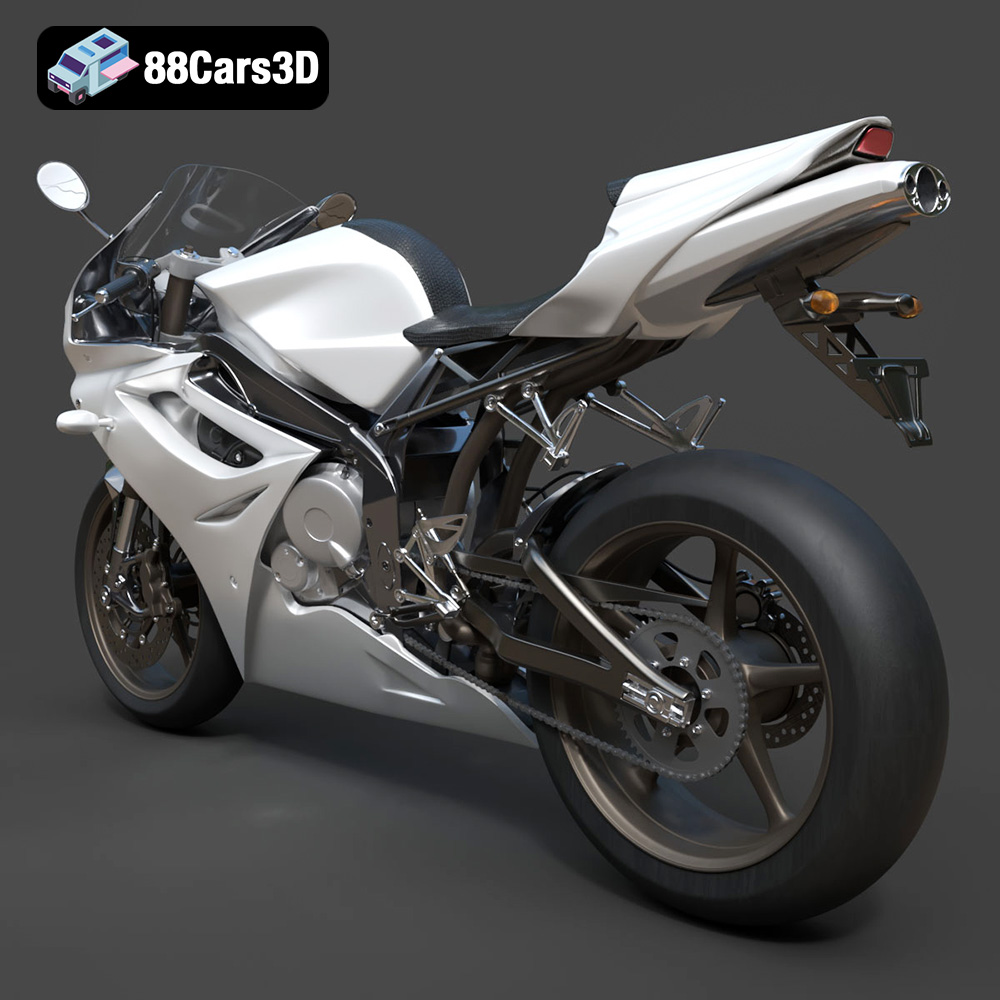
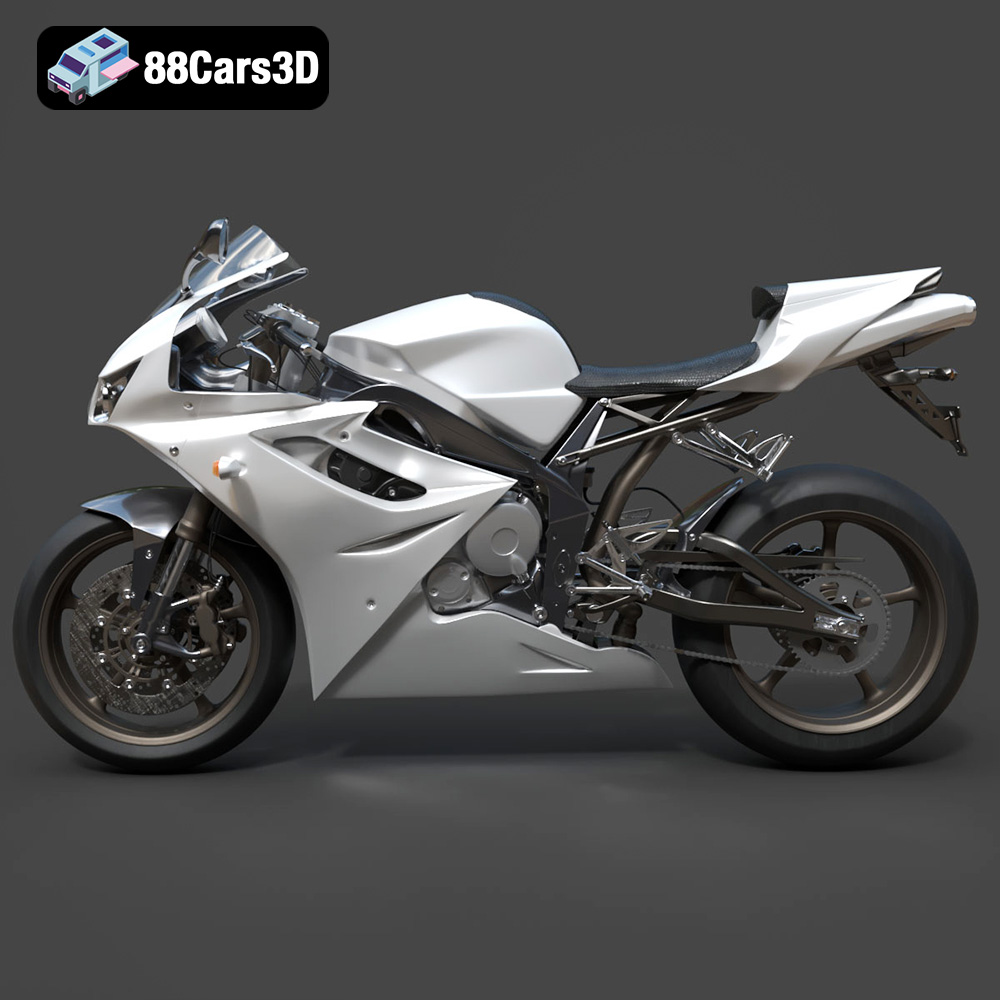
The first step in crafting an exceptional 3D car model is an unwavering commitment to accuracy. For the Triumph Daytona 675 SE 2008, this means replicating its signature triple under-tail exhaust system, the aggressive stance, and the unique proportions that define this supersport legend. The model must accurately reflect the intricate front inverted fork and rear monoshock suspension assemblies, and the high-detail golden five-spoke alloy wheels, right down to their track-ready tire treads. Every bolt, every panel gap, and every light fixture is meticulously observed and recreated.
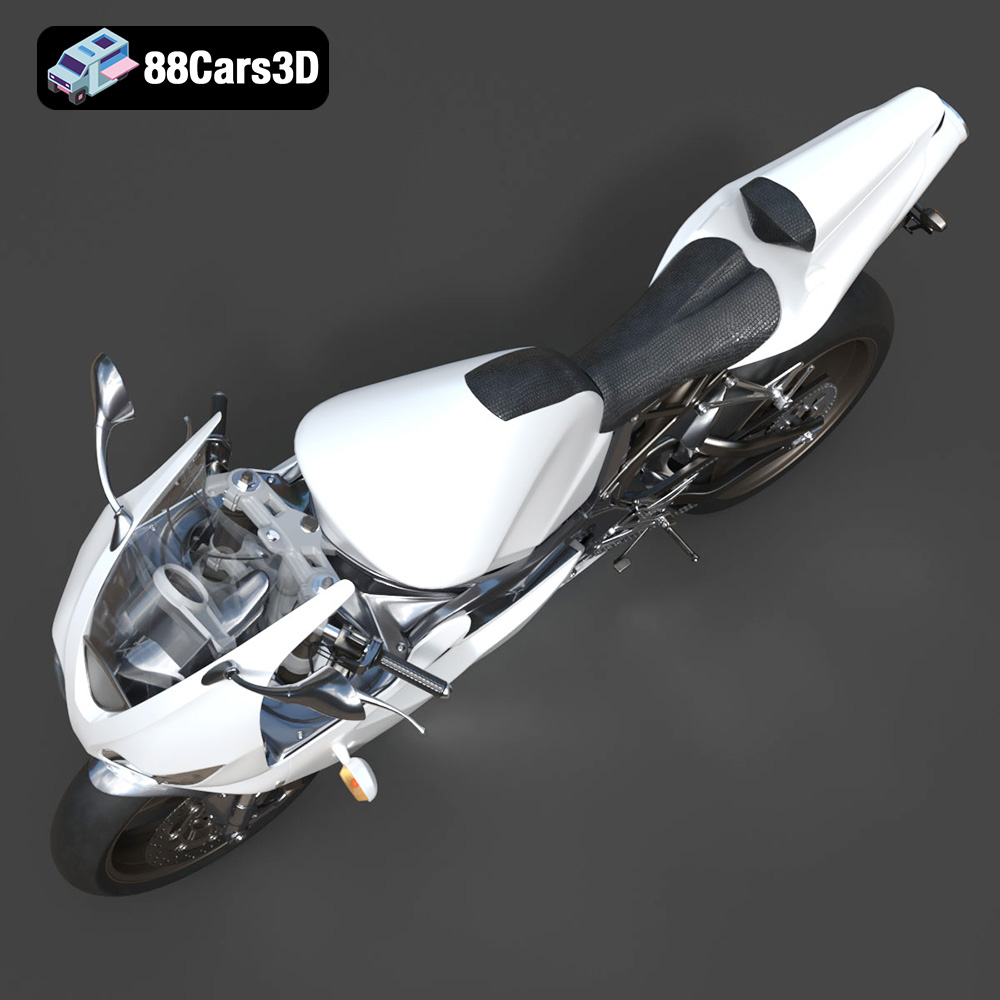
This fidelity extends to the cockpit, where details like the clip-on handlebars, reservoirs, switchgear, and the authentic digital/analog combination instrument cluster are brought to life. Such granular detail ensures that whether viewed from a distance in a sweeping cinematic shot or up close in a first-person game perspective, the model holds up to scrutiny. The goal is to provide a digital twin that feels as real and substantial as its physical counterpart, allowing designers to visualize, animate, and interact with the vehicle in ways that physical prototypes simply cannot match.
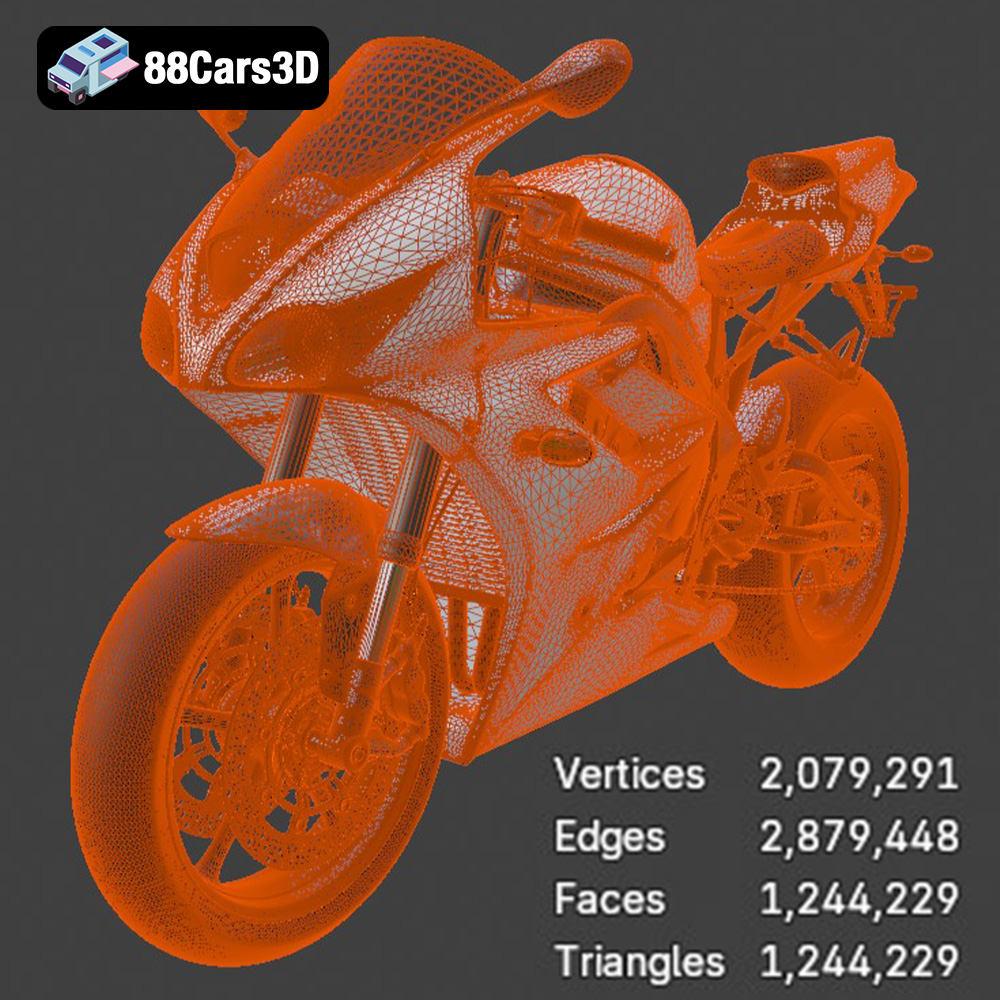
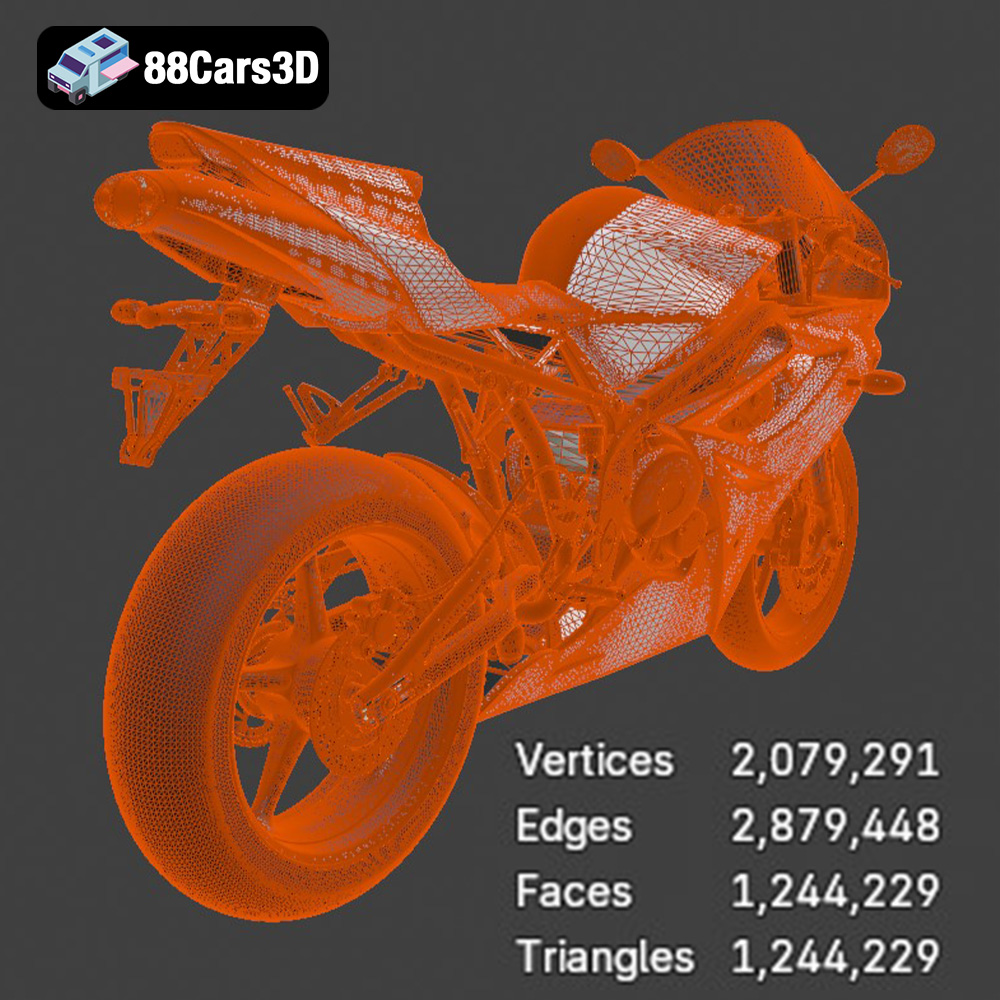
One of the most critical technical considerations in 3D modeling is polycount – the number of polygons (or triangles) that make up a mesh. The Triumph Daytona 675 SE 2008 3D Model boasts an impressive 1,244,229 triangles. This figure represents a sweet spot, carefully chosen to deliver unparalleled visual fidelity without crippling performance, especially in real-time applications.
For high-end cinematic renders or detailed visualization projects, this polycount provides ample geometric detail to capture subtle reflections, complex forms, and fine mechanical components. When it comes to game development or AR/VR, where frame rates are paramount, a model with this level of optimization can be integrated effectively. While 1.2 million triangles might seem high for some real-time scenarios, modern game engines and rendering pipelines are incredibly efficient. Furthermore, the model’s topology has been carefully managed to ensure clean deformation during animation and efficient rendering, often leveraging Level of Detail (LOD) systems if even lower polycounts are needed for distant views. This balance ensures that the model can be used for both visually demanding and performance-critical applications.
The ability of a 3D model to be used across various software applications and platforms is largely dependent on the file formats it supports. A truly versatile asset, like the Triumph Daytona 675 SE 2008 3D model, offers a wide array of formats, each optimized for specific use cases and technical requirements. Understanding these formats is crucial for any professional working with 3D content.
The .blend format is native to Blender, the powerful open-source 3D creation suite. When you download a .blend file, you’re not just getting the mesh; you’re getting a fully editable Blender scene. This includes all materials (often set up with advanced node-based PBR shaders), textures, lighting, camera setups, and even any animation data or rigging. For users deeply integrated into the Blender workflow, this format offers maximum flexibility for customization, rendering with Cycles or Eevee, and integration into existing Blender projects.
.fbx (Filmbox) is a proprietary file format owned by Autodesk and is widely considered the industry standard for exchanging 3D data between different software applications, especially for game development. It’s ideal for Unreal Engine, Unity, and real-time pipelines because it efficiently encapsulates not just mesh data but also materials, textures, animations, skinning information, and camera data. Its robust support for animation and character rigging makes it indispensable for animated assets, ensuring that pivots, hierarchical structures, and motion data are preserved accurately across platforms.
The .obj (Wavefront OBJ) format is one of the oldest and most universally supported 3D file formats. It’s a simple, text-based format that primarily stores geometric data (vertices, normals, UVs) and references to external material files (.mtl). While it doesn’t support animation or rigging directly, its simplicity makes it incredibly compatible across virtually every 3D software package. For static models or as a base for further development, .obj is a reliable choice for cross-software compatibility when animation isn’t the primary concern.
.glb (GL Transmission Format Binary) is the binary version of glTF, a modern, open-standard format specifically designed for efficient transmission and loading of 3D scenes and models by engines and applications. It’s quickly becoming the go-to format for AR, VR, and browser-based display because it’s highly optimized for the web. A single .glb file can contain mesh data, PBR materials, textures, animations, and skeletal information, all in a compact, self-contained package, making it perfect for rapid deployment in virtual showrooms or augmented reality experiences.
.stl (Stereolithography) is the de facto standard file format for 3D printing. It represents a 3D model as a raw, triangulated surface mesh without any color, texture, or material information. The .stl format describes only the surface geometry of a three-dimensional object. Its primary use is to convey the necessary shape information to 3D printers, which then slice the model into layers for fabrication. When preparing a model for 3D printing, ensuring it’s a “manifold” mesh (watertight with no holes or self-intersections) is crucial for successful output.
The .ply (Polygon File Format, or Stanford Triangle Format) is a versatile format for storing 3D data, particularly known for its ability to store properties such as color, transparency, surface normals, texture coordinates, and data confidence values, in addition to standard geometric data. It’s often used in applications involving 3D scanning, CAD software, and scientific visualization where precise mesh data and attribute storage are important for analysis or engineering purposes. It can handle more complex data than .obj, making it suitable for high-precision scenarios.
While not a universal file extension in the same way .fbx or .obj are, the inclusion of an .unreal file often indicates an asset specifically pre-configured or exported directly for Unreal Engine. This could mean a pre-packaged asset with optimized materials, collision meshes, LODs, and proper pivot setups ready to be imported and used immediately within an Unreal Engine project. This saves significant time in the asset pipeline, as much of the manual setup and optimization work has already been performed by the creator, making it truly “engine-ready.”
The .max format is the native file type for Autodesk 3ds Max, one of the leading 3D modeling, animation, and rendering software packages. A .max file contains the complete scene data, including geometry, materials (often V-Ray or Corona shaders), lighting, cameras, animation timelines, and all modifiers applied to the objects. For users working within the 3ds Max ecosystem, this format offers the highest level of editability and flexibility, allowing for deep customization, advanced animation, and high-fidelity rendering using its powerful rendering engines.
A high-quality 3D car model is a foundation upon which entire digital experiences are built. The versatility of the Triumph Daytona 675 SE 2008 3D Model truly shines in how it integrates into diverse professional workflows, from the adrenaline-pumping world of game development to the polished realm of cinematic rendering.
For game developers, the challenge is always to strike a balance between visual quality and performance. The Triumph Daytona 675 SE 2008 3D model, with its 1,244,229 triangles, is explicitly designed to be “Game-Ready & Optimized.” This means its topology is clean, UVs are properly laid out for texture mapping, and critical components like wheels, suspension, and steering have proper pivot setups for animation. In engines like Unreal Engine and Unity, this translates to:
Whether for a dedicated motorcycle racing simulator, a vehicle to be featured in an open-world action game, or an asset for virtual reality experiences, this model provides a robust starting point that significantly reduces development time and ensures a visually stunning result.
Beyond interactive experiences, the Triumph Daytona 675 SE 2008 3D model excels in static renders and cinematic animations. In software like 3ds Max (using the .max file) or Blender (with the .blend file), artists can leverage powerful rendering engines such as V-Ray, Corona Renderer, or Cycles to achieve photorealistic results:
The sheer detail and robust construction of the model make it an ideal candidate for professional visualization work, where every pixel counts.
The advent of Augmented Reality (AR) and Virtual Reality (VR) has opened up new frontiers for 3D models, transforming how consumers interact with products. The Triumph Daytona 675 SE 2008 3D model is perfectly positioned for these cutting-edge applications, thanks to its optimized geometry and support for relevant file formats like .glb.
Imagine stepping into a virtual showroom where you can explore the Triumph Daytona 675 SE 2008 from every angle, customize its colors and finishes in real-time, and even sit on it to get a rider’s perspective. This is precisely where a high-quality 3D model shines:
These applications move beyond passive viewing, offering engaging and highly informative interactive experiences.
Augmented Reality overlays digital content onto the real world, and 3D car models are at the heart of this technology. For the Triumph Daytona 675 SE 2008, AR offers compelling opportunities:
The inherent detail and accuracy of the 3D model ensure that these AR experiences are not only visually impressive but also genuinely useful and engaging.
The beauty of 3D modeling extends beyond the digital realm. With the rise of accessible 3D printing technology, digital assets can be transformed into physical objects. The Triumph Daytona 675 SE 2008 3D model, specifically through its .stl file format, opens the door for enthusiasts and professionals to create tangible replicas.
Converting a high-detail rendering model into a printable file requires specific considerations. The provided .stl format is ideal for this purpose, but further steps are often necessary:
This meticulous preparation ensures a smooth transition from digital mesh to physical prototype or collectible.
Once printed, the journey from raw plastic to a showroom-quality replica involves a crucial post-processing stage:
The end result is a stunning, high-fidelity physical model that stands as a testament to the original 3D asset’s quality and the modeller’s expertise.
A truly valuable 3D asset is one that offers flexibility and longevity. The Triumph Daytona 675 SE 2008 3D Model from 88cars3d.com is built with customization in mind, ensuring it remains relevant and adaptable for future projects and evolving artistic visions.
The foundation of any compelling visual is its materials and textures. The Triumph Daytona model provides extensive opportunities for creative customization:
This level of control ensures that the model can be tailored to fit specific project requirements, brand guidelines, or artistic expressions without needing to start from scratch.
Beyond static appearance, the model’s construction is geared for dynamic interaction and animation:
This inherent animatability and adaptability future-proofs the asset, making it a versatile investment for any project that requires a high-quality, modifiable 3D motorcycle.
The journey from a real-world engineering marvel like the Triumph Daytona 675 SE 2008 to a robust, versatile 3D model is a testament to the skill and technical prowess required in today’s digital design landscape. We’ve explored how such an asset isn’t just about visual appeal, but about meticulous detail, optimized topology, and compatibility across a spectrum of professional applications. From the nuances of polycount management for real-time game engines like Unreal and Unity, to the intricacies of high-fidelity rendering in Blender and 3ds Max, and even the tangible creation of physical replicas through 3D printing, a well-crafted 3D model is the backbone of innovation.
The Triumph Daytona 675 SE 2008 3D Model exemplifies this standard of excellence, offering an unparalleled level of detail and flexibility. Its support for a wide array of formats—.blend, .fbx, .obj, .glb, .stl, .ply, .unreal, and .max—ensures that designers, developers, and artists have the right tool for any job, whether it’s building immersive AR/VR experiences, producing stunning visualizations, or crafting the next big racing title. Such a comprehensive asset empowers creators to push the boundaries of realism and interaction, proving that the right digital asset can truly accelerate any project.
When seeking high-quality 3D car models and motorcycle assets that meet the rigorous demands of professional production, remember that the foundation of any great digital creation lies in the quality of its components. Explore the vast selection of meticulously crafted assets, including this exceptional Triumph Daytona model, at 88cars3d.com to bring your most ambitious projects to life.
The Triumph Daytona 675 SE 2008 stands as a pinnacle of British supersport engineering, renowned for its distinctive howling 675cc inline-three engine and razor-sharp handling. This 3D model meticulously captures the Special Edition’s unique heritage and aggressive styling, featuring the iconic triple under-tail exhaust system, golden alloy wheels, and aerodynamically sculpted fairings that make it an unforgettable machine on both the track and the street. Crafted with an impressive 1,244,229 triangles, this 3D model offers unparalleled visual fidelity and structural accuracy. The topology has been carefully managed to ensure excellent performance for high-end game development, cinematic animations, and cutting-edge AR/VR applications. Its stunning level of detail holds up perfectly in close-up renders while maintaining efficiency for real-time engines like Unreal Engine and Unity.
$37.50
.2008
.blend
.fbx
.glb
.max
.obj
.ply
.rendering
.stl
.supersport
.triumph
.unreal
daytona-675
daytona-675-se
game asset
game-ready
motorcycle-3d-model
optimized
sports-bike
VR/AR