Get 20% OFF All Premium 3D & STL Models!

In the fast-evolving landscape of digital content creation, the demand for high-fidelity 3D assets is more critical than ever. From blockbuster video games to cutting-edge architectural visualizations and immersive virtual reality experiences, photorealistic and technically sound 3D car models form the backbone of compelling visual narratives. They aren’t just decorative elements; they are complex digital sculptures that require precision, optimization, and versatility to meet the stringent demands of professional workflows.
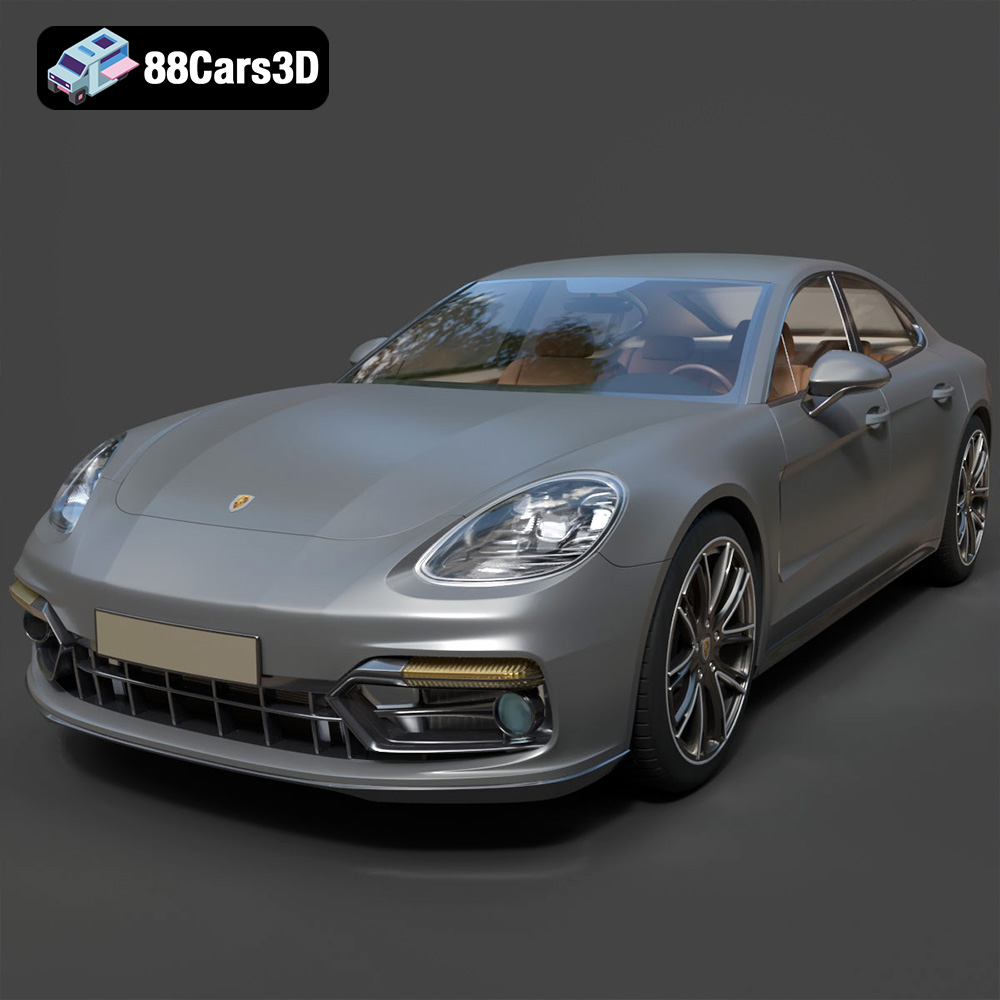
For designers, game developers, architects, and marketers, sourcing or creating accurate 3D vehicles can be a monumental task. This is where specialized marketplaces like 88cars3d.com become invaluable, offering a curated selection of meticulously crafted assets. One such standout is the Porsche Panamera GTS 3D Model, a perfect example of how exceptional digital assets can elevate projects across various industries. This model encapsulates the raw power and luxurious refinement of the iconic sports sedan, meticulously translated into a versatile digital format.
The essence of a great 3D model lies in its ability to faithfully reproduce the real-world counterpart while being optimized for digital environments. This requires a deep understanding of vehicle design, material science, and computational efficiency. A premium 3D car model, such as the Porsche Panamera GTS from 88cars3d.com, is built from the ground up to serve multiple purposes – from close-up beauty shots in cinematic sequences to interactive real-time applications.
Achieving this balance involves careful consideration of polygon count, UV mapping, texture resolution, and the intelligent separation of components. The goal is always to provide maximum visual impact without sacrificing performance, ensuring that the asset can be seamlessly integrated into diverse projects without extensive rework.
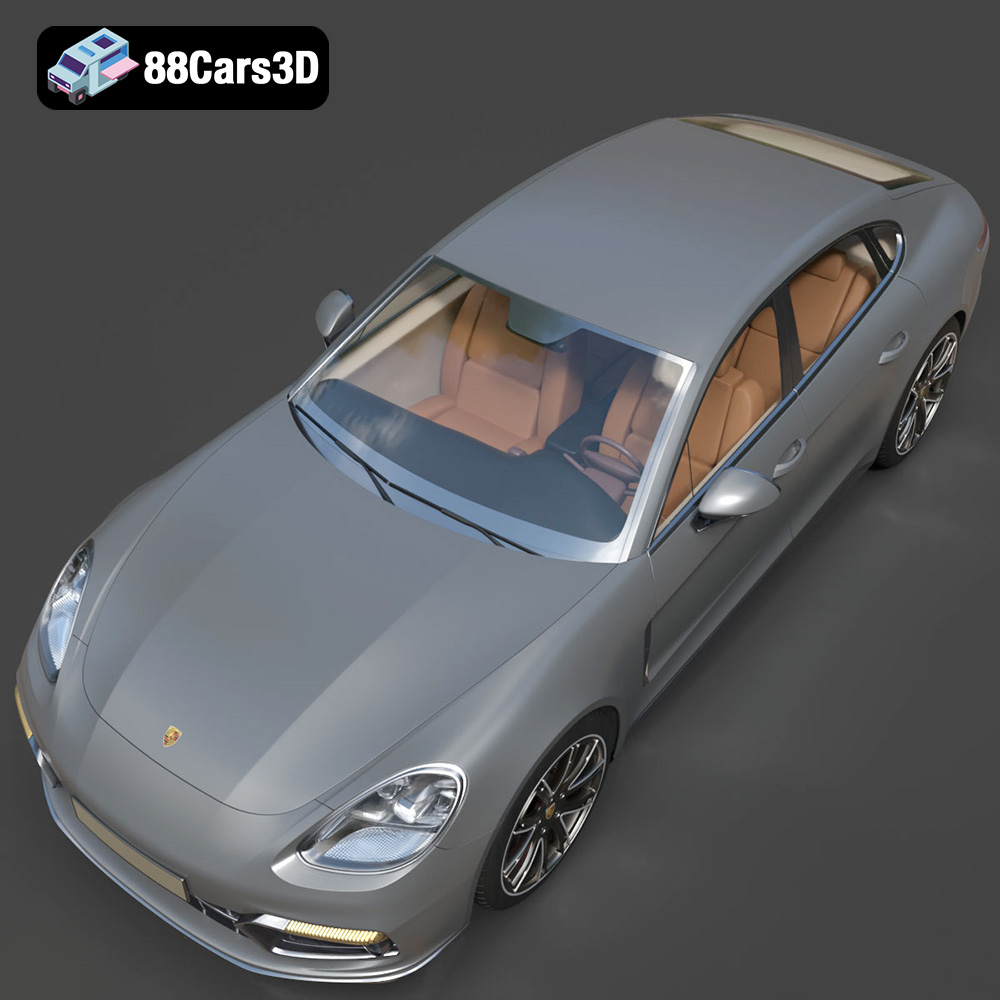
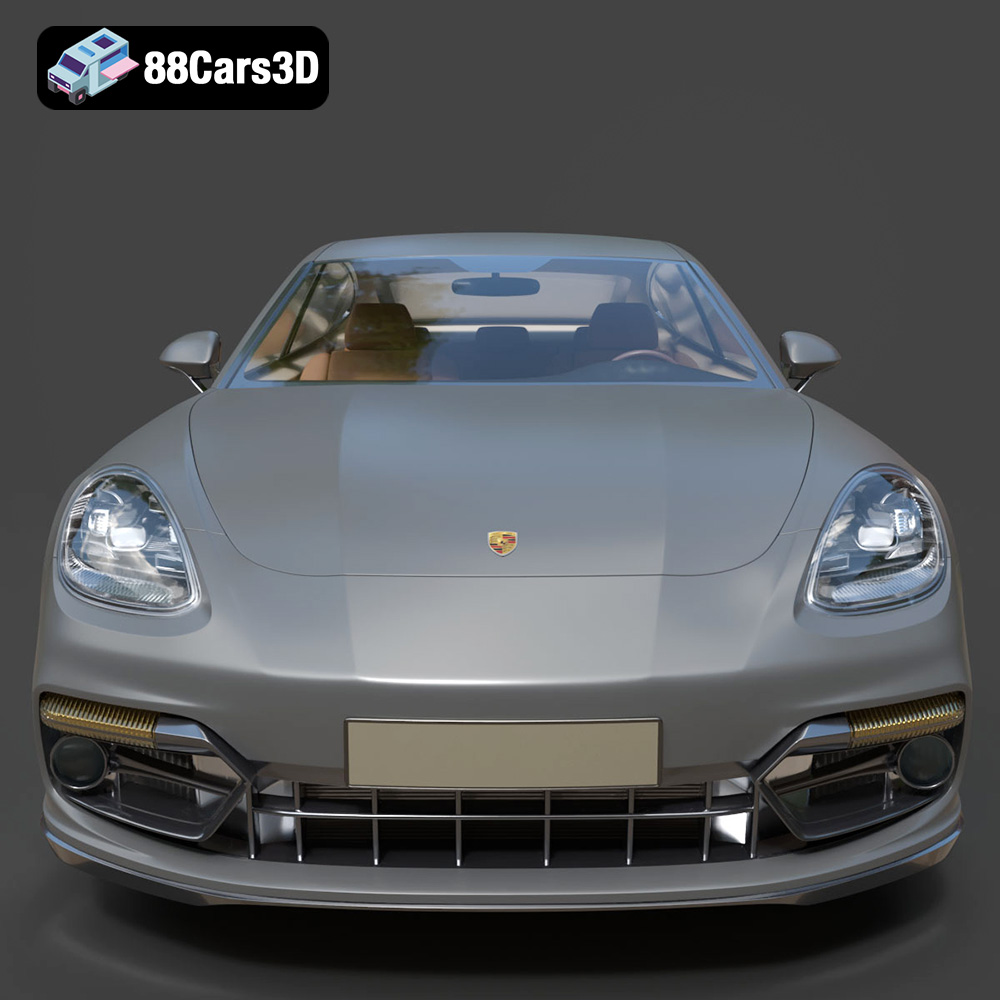
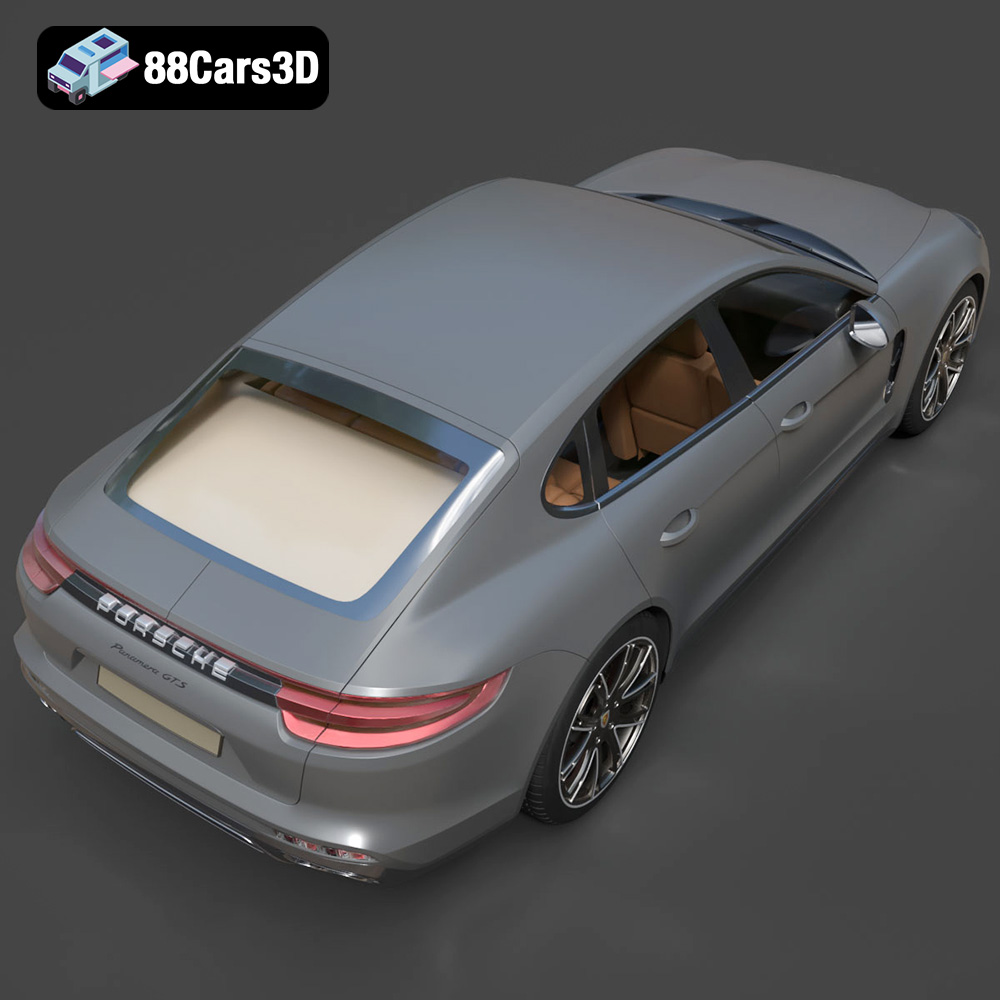
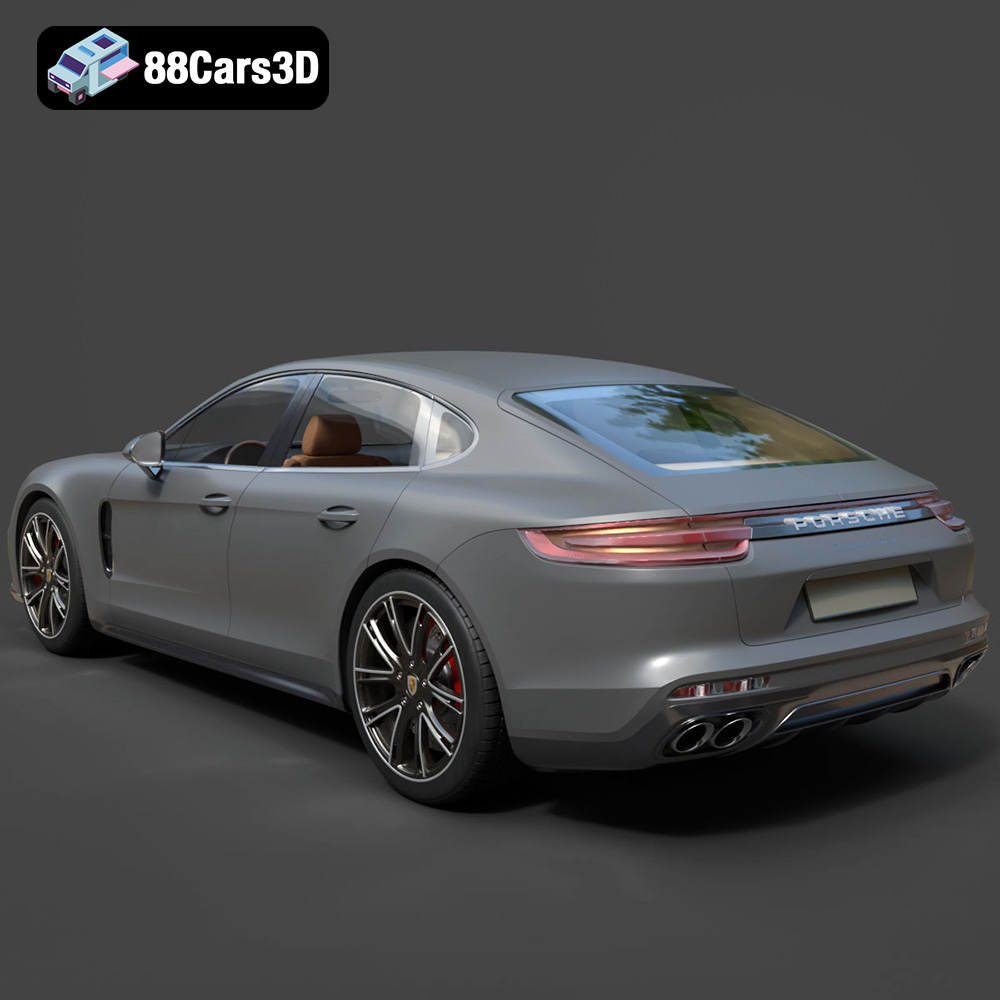
The Porsche Panamera GTS is celebrated for its distinctive blend of performance and luxury, and its digital rendition is no less impressive. Our featured Porsche Panamera GTS 3D Model captures every nuance of its aggressive GTS-specific aerodynamic fascia, signature sports exhaust, and iconic flyline proportions. From the menacing front air intakes and detailed LED matrix headlights to the continuous rear LED light bar and sleek widebody stance, every styling cue has been meticulously recreated. This model isn’t just a representation; it’s a digital twin, ready to inject unparalleled realism into any scene.
The versatility of a 3D model is often defined by the file formats it supports. Each format is designed with specific use cases and software ecosystems in mind, offering unique advantages for different stages of the production pipeline. Understanding these formats is crucial for anyone working with 3D car models, ensuring seamless integration and optimal performance. The Porsche Panamera GTS 3D Model, for instance, comes bundled with an impressive array of formats, making it exceptionally adaptable.
The .blend format is native to Blender, the powerful open-source 3D creation suite. When you receive a .blend file, you’re getting the full, editable Blender scene with all its materials, textures, lighting setups, modifiers, and animation data intact. This is ideal for users who operate primarily within Blender, offering maximum flexibility for customization, rigging, animation, and rendering. For the Porsche Panamera GTS 3D model, the .blend file provides a complete starting point for artists looking to dive deep into the model’s structure, adjust its materials, or integrate it into a complex Blender scene.
The .fbx (Filmbox) format, owned by Autodesk, has become an industry standard for interoperability between different 3D software applications and game engines. It supports not only mesh data but also materials, textures, animations, skinning, and camera information. This makes .fbx the go-to format for transferring complex animated assets, especially for real-time pipelines like Unreal Engine and Unity. When working with high-quality 3D car models like the Panamera GTS, .fbx ensures that all critical data—from the optimized topology to the separated components for animation—is preserved during export and import, making it a cornerstone for game development and cinematic pipelines.
Conversely, the .obj (Wavefront OBJ) format is a simpler, more universal format, often considered a “lowest common denominator” for 3D model exchange. It primarily stores geometry (vertices, normals, texture coordinates) and references to external material files (.mtl). While it doesn’t support animation or advanced scene data, its widespread support across virtually all 3D software makes it incredibly robust for static mesh transfer. For archival purposes or when you simply need the core mesh of your Porsche Panamera GTS, .obj is a reliable choice.
The .glb (GL Transmission Format Binary) is gaining significant traction, especially for web-based 3D, AR, and VR applications. It’s a binary version of glTF, designed to be a compact, single-file format that includes all necessary data like geometry, materials, textures, and even animation. Optimized for fast loading and rendering on the web, .glb is perfect for interactive product configurators, virtual showrooms, and augmented reality experiences where efficiency is paramount. The Porsche Panamera GTS in .glb format would be ideal for a cutting-edge virtual car configurator embedded directly into a website.
The .unreal format refers to engine-ready assets specifically packaged for Unreal Engine. While not a standalone file extension in the same way as .fbx, it denotes assets that have been processed, optimized, and often imported into an Unreal project, complete with proper materials, collision setups, and LODs (Levels of Detail). When a 3D car model is offered as “.unreal,” it implies that significant effort has been made to ensure it’s a drag-and-drop solution for real-time environments, saving developers countless hours of import and setup time. This format is crucial for accelerating game development and creating interactive simulations.
The .stl (Stereolithography) format is the undisputed king of 3D printing. It represents a 3D model as a collection of unconnected triangular facets, making it simple and widely supported by 3D printers and slicing software. While it lacks color or texture information, its simplicity and ubiquity make it essential for converting digital models into physical objects. For hobbyists or professionals looking to produce a physical replica of the Porsche Panamera GTS, the .stl file is the starting point for bringing the digital car to life on a print bed.
The .ply (Polygon File Format) is another popular format for storing 3D data, particularly from 3D scanners or for CAD applications. It can store a wider range of properties than .stl, including color, transparency, and sometimes even texture coordinates, per vertex or per face. While less common for general 3D model exchange compared to .fbx or .obj, it’s a precision mesh format valuable for engineering, analysis, and applications where detailed point cloud or polygonal data is paramount.
Finally, the .max format is the native scene file for Autodesk 3ds Max, a leading software for 3D modeling, animation, and rendering. Similar to .blend, a .max file contains the complete scene with all models, materials, lights, cameras, and animation data. It’s the preferred format for studios and artists who use 3ds Max extensively for high-end automotive rendering, architectural visualization, and intricate animation sequences. Having the Porsche Panamera GTS available in .max provides immediate access to an editable project file, allowing for native manipulation and integration into established 3ds Max pipelines.
The availability of such a diverse range of formats for the Porsche Panamera GTS 3D Model highlights its exceptional adaptability and value proposition for any professional workflow. This comprehensive support ensures that artists and developers can pick the most suitable format for their specific needs, streamlining their projects and maximizing creative output.
Creating a 3D car model that is both visually stunning and technically efficient requires a mastery of various digital sculpting and optimization techniques. It’s not enough for a model to “look good”; it must perform flawlessly within its intended environment, whether that’s a real-time game engine or a high-fidelity rendering pipeline. The Porsche Panamera GTS 3D Model exemplifies this rigorous technical craftsmanship, delivering on both fronts.
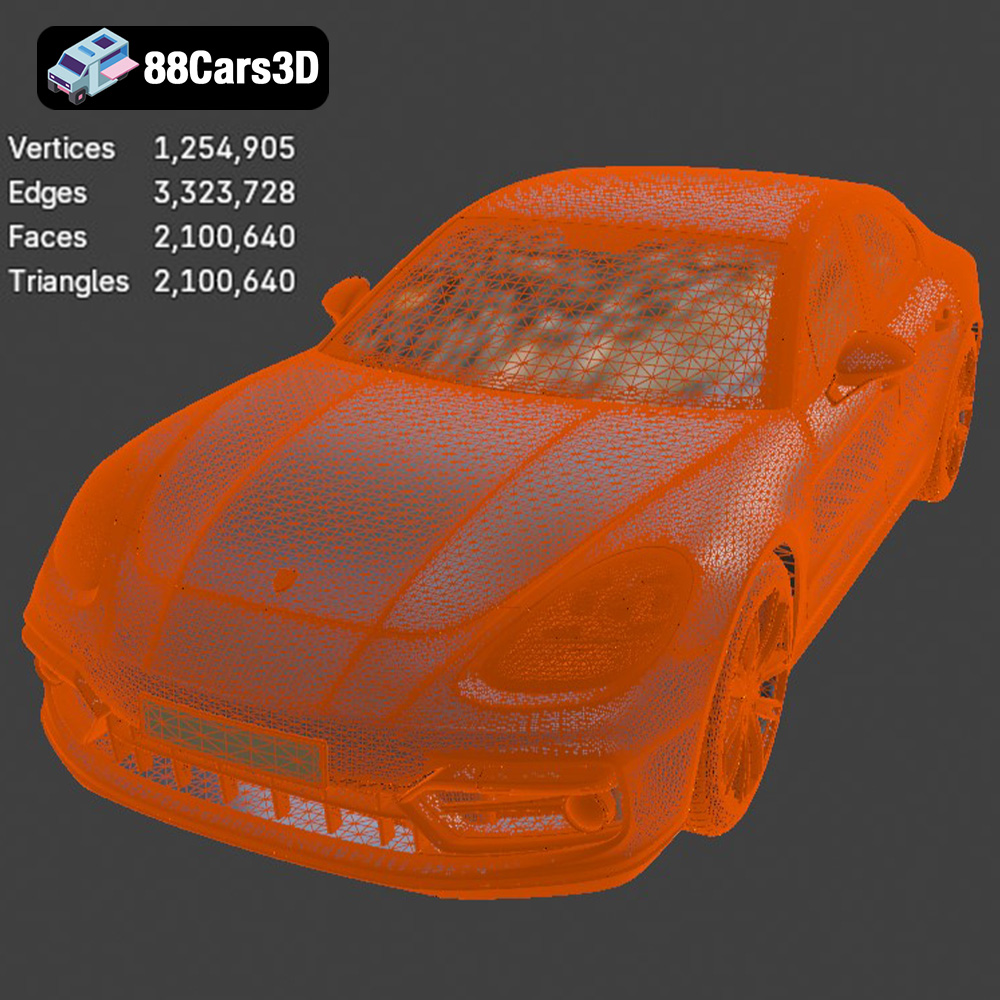
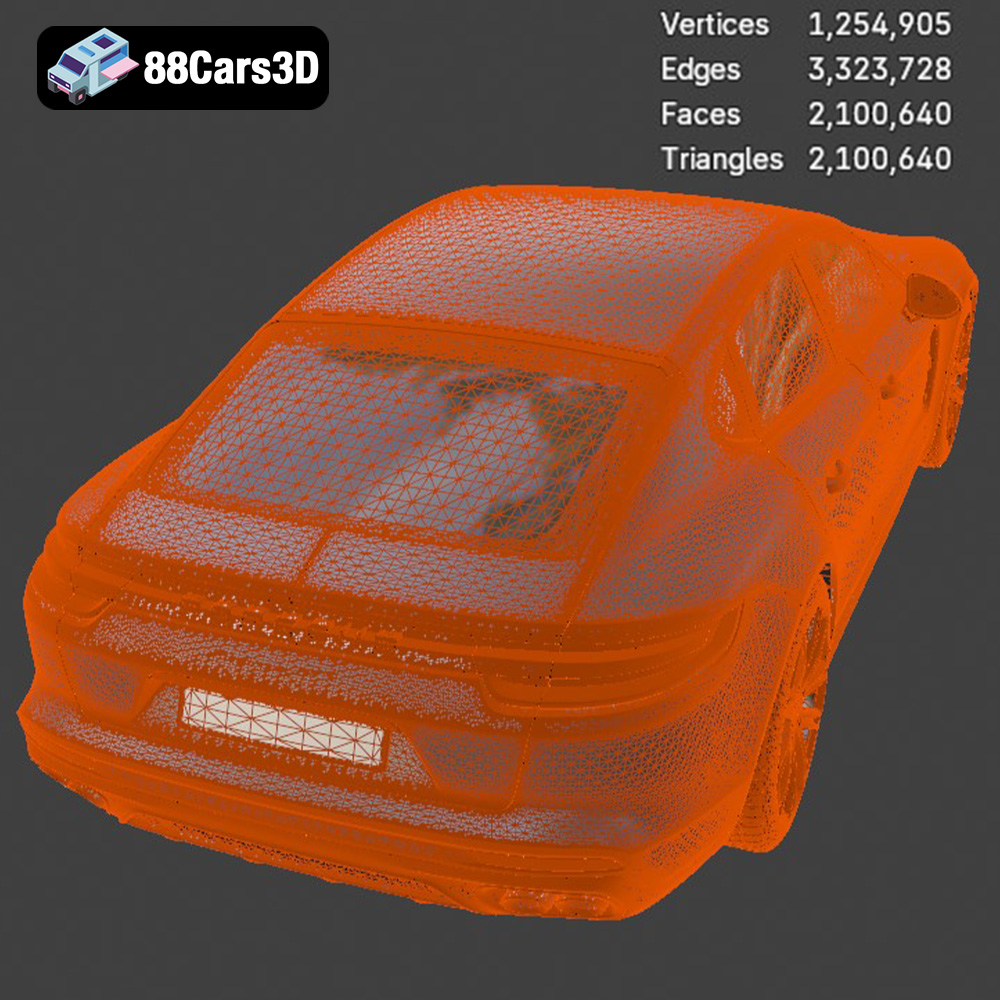
One of the most critical aspects of a professional 3D car model is its topology. The Porsche Panamera GTS model features an optimized topology with approximately 450,000 triangles. This figure represents a finely tuned balance: it’s high enough to capture the aggressive GTS-specific aerodynamic fascia, intricate body lines, and interior details without appearing blocky or low-resolution. Simultaneously, it’s efficient enough to be classified as “game-ready” or “optimized.”
For game development, particularly in engines like Unreal or Unity, polygon count directly impacts frame rates and overall performance. A model with excessive polygons will bog down a scene, especially when multiple vehicles are present. Conversely, a model with too few polygons sacrifices visual fidelity. The 450,000 triangle count for the Panamera GTS strikes this perfect equilibrium, ensuring the model performs smoothly in real-time simulations while maintaining high-end visual realism for close-up shots and cinematic sequences. This optimization extends to the interior, making it suitable for first-person perspectives in racing games and virtual test drives.
Beyond the mesh, the realism of any 3D car model hinges on its materials and textures. The Porsche Panamera GTS 3D Model excels here with premium sport seats featuring realistic Alcantara and leather texturing, a detailed digital instrument cluster, and intricate center console controls. High-fidelity LED matrix headlights and a continuous rear taillight strip are rendered with appropriate emissive properties, mimicking their real-world counterparts.
This attention to material definition extends to the metallic finishes, the high-gloss black of the sport quad-exhaust system, and the textures of the low-profile performance tires. Proper PBR (Physically Based Rendering) workflows are employed, ensuring that materials react accurately to light, providing convincing reflections, refractions, and specular highlights under various lighting conditions. This level of detail is paramount for automotive rendering and visualization, where realism is non-negotiable.
A truly versatile 3D car model is not just a static object; it’s a modular system designed for dynamic interaction. The Porsche Panamera GTS model features intelligently separated and grouped meshes, making it incredibly easy to work with. Wheels, suspension components, doors, and steering are all separate elements. This modularity is crucial for animation, allowing artists to effortlessly rig and animate functionalities like:
Furthermore, the model boasts real-world scale accuracy, based on actual vehicle chassis dimensions, and includes proper pivot setups for steering, wheel rotation, and suspension travel. These technical advantages significantly reduce setup time for animators and developers, making the Porsche Panamera GTS an ideal game asset for complex interactive environments.
The true measure of a high-quality 3D car model lies in its seamless integration into professional production pipelines. Whether it’s for breathtaking automotive rendering, immersive game development, or compelling cinematic visualization, the Porsche Panamera GTS 3D Model is engineered to fit right in, accelerating workflows and elevating visual output across the board.
For photorealistic automotive rendering, studios often turn to industry-standard software like 3ds Max combined with powerful renderers such as V-Ray or Corona. The .max file format provided with the Porsche Panamera GTS 3D Model is a direct portal into these high-end rendering environments. Artists can immediately access a fully constructed scene, apply studio-quality lighting, and set up intricate camera angles to showcase the car’s luxurious lines and aggressive stance.
The model’s optimized geometry and detailed materials translate beautifully into these renderers, allowing for realistic reflections on its sleek bodywork, nuanced material differentiation between Alcantara and leather in the interior, and accurate light dispersion through its LED elements. This makes the Panamera GTS model perfect for creating stunning marketing visuals, brand campaigns, and luxury lifestyle scenes that demand absolute fidelity.
In the realm of game development, efficiency and visual quality must go hand-in-hand. The Porsche Panamera GTS 3D Model, with its optimized ~450,000 triangle count and dedicated .fbx and .unreal formats, is a dream asset for engines like Unreal. Developers can easily import the model, which is already separated into logical meshes (body, wheels, interior, suspension), facilitating immediate rigging and vehicle blueprint setup.
Its “game-ready” optimization ensures that it won’t be a performance bottleneck in open-world games, racing titles, or simulators. The accurate pivot setups for wheels and steering mean less time spent on technical setup and more time on gameplay mechanics. For creators using 88cars3d.com assets, the pre-optimized nature of this Porsche Panamera GTS model means a quicker iteration cycle and a higher quality end-product, making it a valuable game asset for any interactive project.
Blender has emerged as a powerhouse for independent artists and studios alike, offering a comprehensive suite for 3D modeling, animation, and rendering. The native .blend file included with the Porsche Panamera GTS model allows Blender users to seamlessly integrate the car into their projects. This provides full access to the model’s geometry, materials, and potential rigging, enabling artists to craft cinematic sequences, product visualizations, or even add the car to architectural renders.
With Blender’s Cycles or Eevee renderers, artists can achieve stunning visuals, leveraging the model’s high-fidelity textures and well-defined topology. Whether it’s for a short film, a product advertisement, or an animated scene, the Panamera GTS offers the flexibility and detail required for professional-grade output within the Blender ecosystem.
The utility of a premium 3D car model extends far beyond traditional rendering and game environments. In an increasingly digital world, these assets are becoming foundational elements for new and innovative applications, from interactive experiences to physical prototypes. The versatility of 3D car models, such as the Porsche Panamera GTS from 88cars3d.com, opens up a myriad of creative and commercial possibilities.
Augmented Reality (AR) and Virtual Reality (VR) are revolutionizing how consumers interact with products, especially high-value items like luxury vehicles. High-quality 3D car models are central to creating immersive virtual showrooms, interactive configurators, and mobile AR experiences. Imagine a customer exploring the Porsche Panamera GTS in their driveway via an AR app, or stepping into a VR environment to customize its interior and test its features virtually. The .glb format, optimized for web and real-time display, makes this possible, offering efficient loading and rendering across various devices. The optimized geometry and detailed interior of the Panamera GTS model make it perfect for such detailed, first-person immersive applications.
The ability to convert a digital 3D model into a physical object via 3D printing is a testament to its technical accuracy. The Porsche Panamera GTS 3D Model is convertible to the .stl format, making it suitable for display-scale hobbyists and even professional prototyping. While 3D printing requires specific considerations (layer height, wall thickness, supports), the underlying mesh quality of the Panamera GTS ensures that fine details—from the sport quad-exhaust system to the intricate wheel designs—are preserved in the physical output.
This capability allows enthusiasts to create tangible replicas, designers to produce rapid prototypes, or engineers to visualize components in a physical space. Recommended scales like 1:12, 1:18, or 1:24, combined with resin printing, unlock the full potential for highly detailed, museum-quality models.
For marketing and advertising agencies, premium 3D car models like the Porsche Panamera GTS are indispensable tools. They allow for the creation of dynamic product shots, animated commercials, and interactive digital campaigns without the logistical complexities and costs associated with real-world photography and videography. Brands can present their vehicles in any environment, under any lighting, and with limitless creative freedom.
Furthermore, in architectural visualization, integrating realistic 3D car models brings life and scale to static building renders. Placing a high-fidelity Porsche Panamera GTS within a modern driveway or city street immediately adds a layer of realism, context, and aspirational appeal to an architectural scene, making the visualization far more engaging and believable. The optimized model from 88cars3d.com seamlessly enhances these scenes.
A significant advantage of working with a premium 3D car model is the unparalleled scope for customization. Unlike static images or videos, a digital asset provides the foundation for limitless creative exploration, allowing artists and designers to adapt the Porsche Panamera GTS to suit specific project requirements and artistic visions.
With the Porsche Panamera GTS 3D Model, creative possibilities are virtually endless. Artists can easily change body colors to match specific brand aesthetics or client preferences—from classic Carmine Red and Jet Black Metallic to any custom finish imaginable. The ability to modify tire textures allows for realistic representations of track-spec performance tires versus standard street variants. Material finishes can be adjusted between matte, gloss, metallic, or even carbon fiber, providing extreme flexibility in presenting the vehicle’s aesthetic.
Beyond the car itself, the environment and lighting can be entirely adapted. This means the Panamera GTS can be placed under a harsh desert sun, gleaming under neon city lights, or showcased in a sophisticated studio setup. This level of control is crucial for creating unique, impactful visuals that stand out in today’s crowded digital landscape.
The modular nature of the Porsche Panamera GTS model, with its separated parts and proper pivot setups, makes it inherently ready for animation. Beyond simple wheel rotation, artists can animate sophisticated camera movements, dynamic suspension compression, opening doors, or even showcase the detailed V8 engine block. For interactive applications, this modularity is vital, enabling users to customize and explore the car’s features in real-time, click on different parts to view specifications, or even ‘drive’ it in a virtual environment. This enhances user engagement and adds significant value to the digital asset.
In the competitive world of digital content creation, the difference between good and exceptional often lies in the quality of core assets. High-fidelity 3D car models are more than just digital objects; they are engineering marvels that bridge the gap between imagination and reality, driving innovation across various sectors.
The Porsche Panamera GTS 3D Model is a prime example of such an asset, meticulously crafted for versatility, performance, and visual fidelity. Its optimized topology, detailed interior and exterior features, and comprehensive file format support (from .blend to .unreal and .stl) make it an indispensable tool for automotive rendering, game development, AR/VR experiences, and even 3D printing.
Whether you’re an architect aiming to enrich your visualizations, a game developer building the next racing sensation, or a marketer creating an immersive brand experience, investing in premium 3D car models like the Porsche Panamera GTS from 88cars3d.com provides a significant competitive edge. It empowers creators to focus on their vision, confident that their foundational assets are of the highest professional standard, ready to accelerate their projects into the fast lane of digital excellence.
Experience the perfect fusion of sports car performance and luxury sedan comfort with our highly detailed Porsche Panamera GTS 3D model. Capturing the iconic heritage of Porsche design, this model features the aggressive GTS-specific aerodynamic fascia, signature sports exhaust system, and distinctive flyline proportions that make it a true standout. Every styling cue, from the menacing front air intakes to the continuous rear LED light bar and sleek widebody stance, has been meticulously recreated to reflect the vehicle’s dynamic road presence.
$19.99
.blend
.fbx
.glb
.max
.obj
.ply
.porsche
.rendering
.stl
.unreal
car-3d-model
game asset
game-ready
low-poly
luxury car
optimized
panamera-gts
sports-sedan
VR/AR