Get 20% OFF All Premium 3D & STL Models!

The roar of a classic V8 engine, the gleam of chrome, the distinctive lines of an automobile from a bygone era – these elements stir a unique passion in enthusiasts and designers alike. In the digital realm, recreating this experience demands not just artistic vision, but also deep technical understanding. High-quality 3D car models are the bedrock of realistic automotive rendering, immersive game environments, and cutting-edge visualization projects.
Whether you’re crafting a cinematic masterpiece, developing the next hit racing game, or building an interactive virtual showroom, the foundation of your project lies in the fidelity and versatility of your assets. Today, we’re diving deep into the world of professional 3D car models, exploring the technical intricacies, diverse applications, and how a meticulously crafted asset like the Mercury Montego 1970 3D Model empowers creators to bring their visions to life. This model, available on 88cars3d.com, is a prime example of how attention to detail and technical optimization can elevate any automotive project.
There’s a timeless allure to classic cars. They represent an era of bold design, powerful engineering, and cultural significance. For 3D artists and developers, these vehicles offer rich storytelling potential and a chance to explore complex forms and intricate historical details. The challenge, however, is translating that real-world charisma into a digital asset that holds up under scrutiny from every angle.
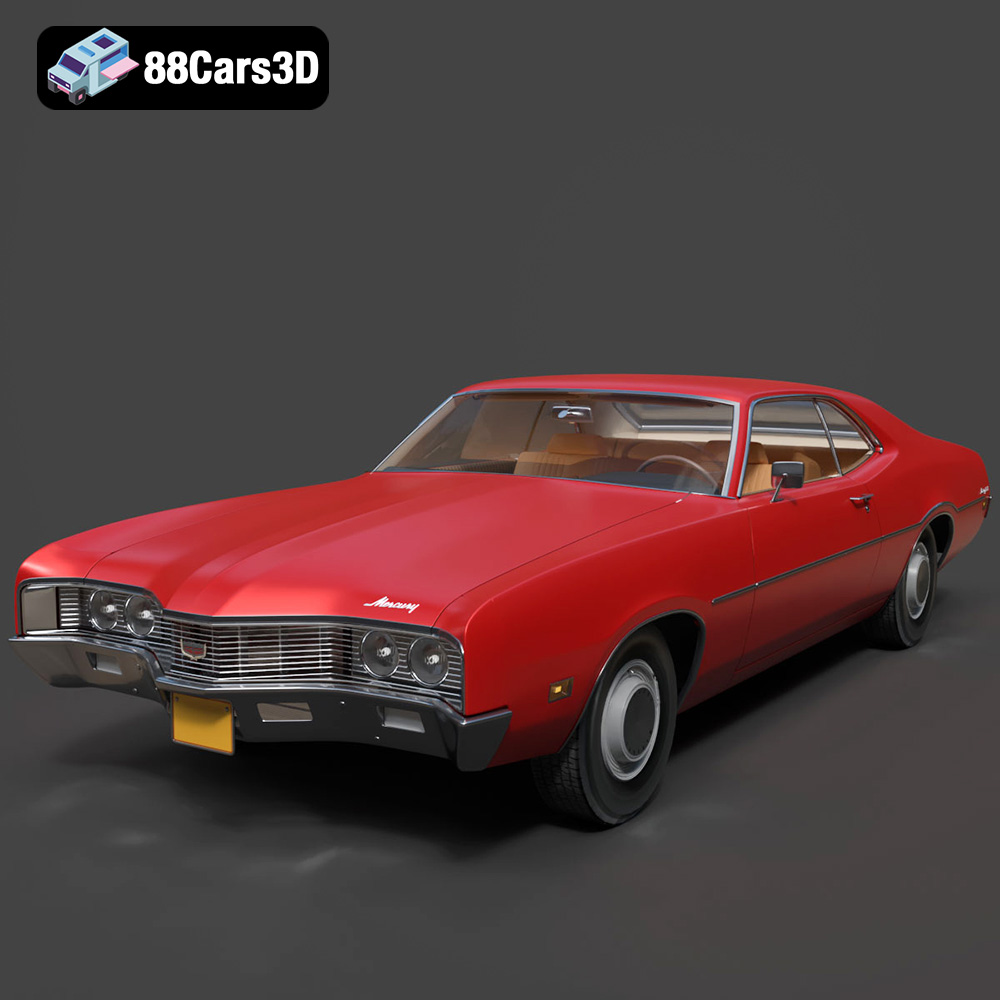
Authenticity in 3D automotive models goes far beyond simply matching the silhouette. It involves a meticulous study of original blueprints, photographic references, and even physical inspections when possible. Every curve, every panel gap, the subtle reflections on polished chrome – these details are critical. For a model like the Mercury Montego 1970, this means accurately reproducing its imposing road presence, its distinct pronounced front grille, and the sweeping fastback or hardtop styling that defined its vintage character. Developers often spend hundreds of hours ensuring that headlight bezels, door handles, and even the tire tread patterns are period-correct. This level of dedication ensures that when the model is dropped into a scene, it immediately conveys the intended era and aesthetic without compromise.
The beauty of a classic car model like the Montego is its ability to bridge historical accuracy with modern rendering techniques. Physically Based Rendering (PBR) workflows allow artists to create materials that react to light just as they would in the real world. This means the metallic flake in a vintage paint job, the subtle reflectivity of aged chrome, or the texture of classic vinyl seating can all be recreated with stunning realism. This fusion of historical detail with cutting-edge rendering ensures that whether the car is viewed in a high-definition cinematic render or in a real-time game engine, its essence and character remain intact. The careful integration of PBR textures and materials is paramount to achieving visual fidelity that stands up to contemporary industry standards.
The world of 3D modeling is incredibly diverse, and one of its complexities lies in the myriad of file formats available. Choosing the right format is crucial for workflow efficiency, compatibility, and achieving the desired outcome for your project. High-quality 3D car models, such as those found on 88cars3d.com, often come in multiple formats to cater to various professional pipelines. Let’s delve into the specifics of each common format included with the Mercury Montego 1970 3D Model.
Understanding these formats empowers artists and developers to select the most appropriate version of the Mercury Montego 1970 3D model for their specific needs, ensuring a smooth and efficient workflow across any platform.
Bringing a 3D car model like the Mercury Montego 1970 to life in a digital scene involves a blend of technical prowess and artistic vision. The journey from a raw model to a photorealistic render or a seamlessly integrated game asset requires specific workflows tailored to the chosen software and output.
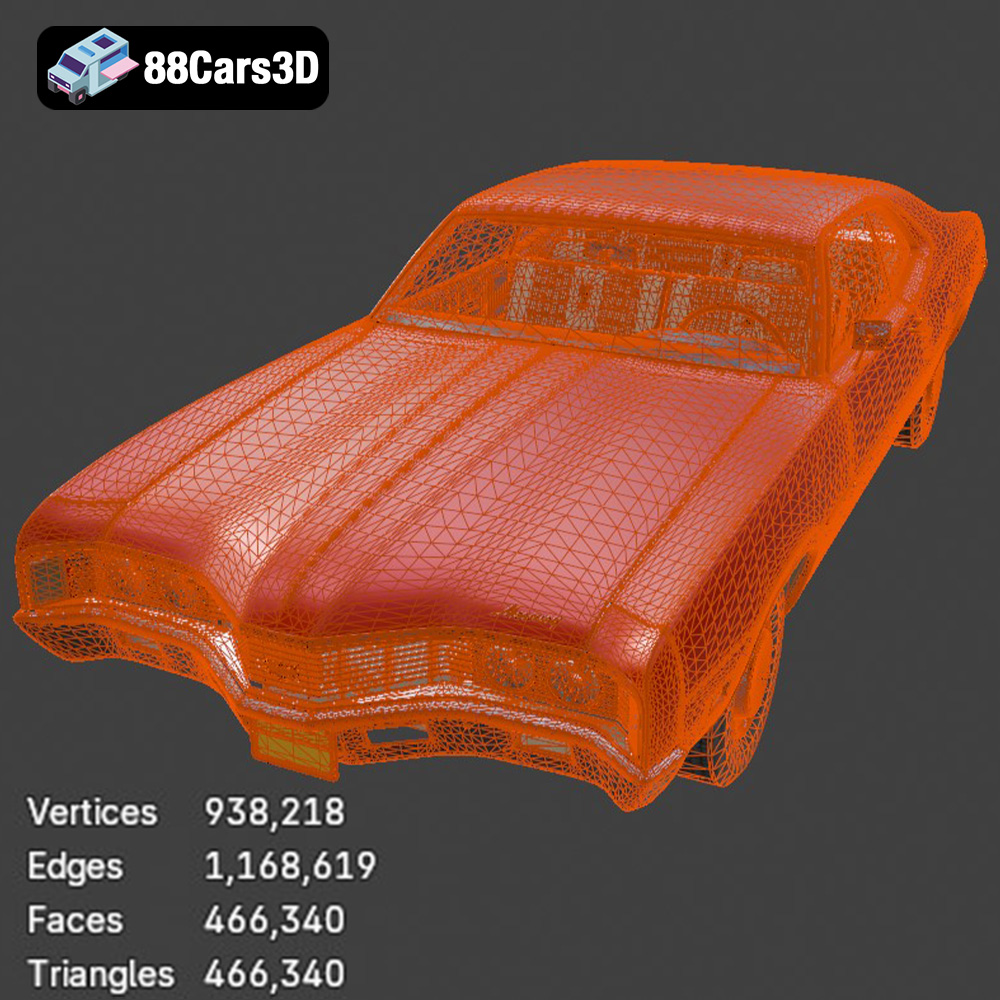
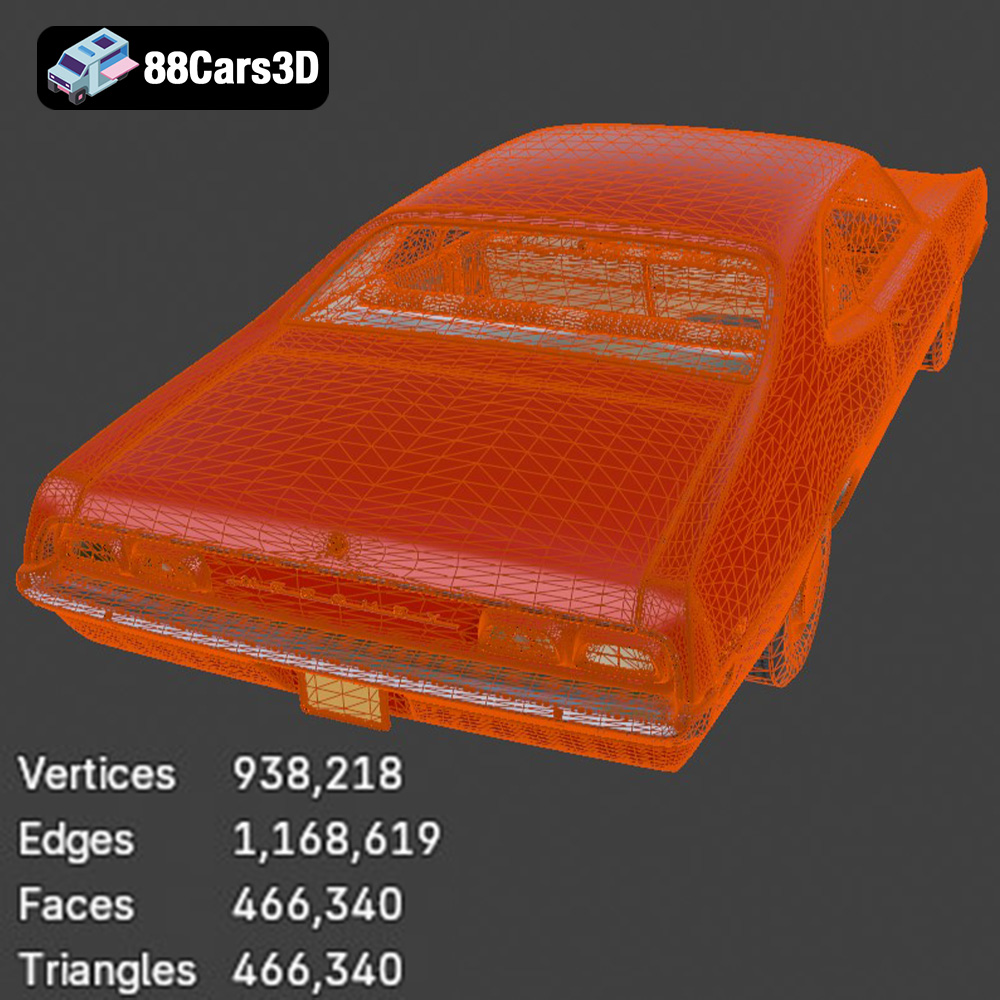
For artists focused on high-fidelity rendering and intricate scene construction, professional DCC applications like Blender and 3ds Max are indispensable. The Mercury Montego 1970 3D model, provided in both .blend and .max formats, offers a significant head start. In Blender, artists can open the native file, gaining full access to the model’s clean topology (466,340 triangles), material nodes, and UV layouts. This allows for deep customization, from adjusting paint shaders in Cycles to creating complex studio lighting setups. Similarly, 3ds Max users benefit from the native .max file, enabling them to leverage V-Ray or Corona Renderer for hyper-realistic renders, integrate the Montego into architectural visualizations, or animate its separate components (wheels, suspension, steering) with precision for cutscenes or promotional content. Both platforms allow for the refinement of PBR materials, ensuring the metallic flake of the paint, the sheen of the chrome, and the texture of the vinyl interior are rendered with utmost accuracy.
For game developers and real-time visualization specialists, efficiency and optimization are paramount. The Mercury Montego’s game-ready topology and “unreal” specific format make it an ideal game asset. When importing into Unreal Engine, the pre-optimized mesh, PBR materials, and textures significantly reduce setup time. Developers can quickly integrate the Montego into an open-world driving game, an immersive VR showroom, or even an AR application. The model’s proper pivot setup for steering, wheel rotation, and suspension travel is critical for implementing realistic physics and animation controllers within these engines. In Unity, the .fbx format is often preferred, allowing for straightforward import and material conversion, ready for script-driven interactions, damage systems, or interactive configurators. Both engines leverage the optimized polycount to ensure smooth performance without sacrificing visual quality, even when dozens of classic cars populate a scene.
Regardless of the software or target platform, Physically Based Rendering (PBR) materials are the cornerstone of modern 3D realism. PBR ensures that materials react consistently and accurately to light, regardless of the lighting environment. For the Mercury Montego 1970, this means meticulously crafted texture maps (Albedo/Base Color, Normal, Roughness, Metallic, Ambient Occlusion) that define everything from the subtle imperfections on the chrome bumpers to the specific weave of the vintage vinyl seating. These textures, combined with the model’s optimized UV mapping, allow for stunning visual fidelity. Artists can easily customize body/tank colors, modify tire textures (e.g., classic whitewalls vs. street performance variants), and adjust material finishes (matte, gloss, metallic, heavy chrome) while maintaining PBR accuracy. This level of detail ensures the Montego looks authentic whether it’s bathed in the harsh sunlight of a digital desert highway or showcased under the soft studio lights of an automotive configurator.
A truly exceptional 3D car model goes beyond aesthetics; it’s a triumph of technical precision and careful optimization. The Mercury Montego 1970 3D model exemplifies this by balancing visual richness with practical considerations for diverse applications.
The core of any professional 3D asset lies in its topology. With a triangle count of 466,340, the Mercury Montego 1970 strikes a perfect balance. This polycount is sufficiently high to capture the intricate details of its classic muscle car proportions, the detailed engine block, and the iconic split front grille, delivering high-end visual fidelity for close-up renders. Simultaneously, it’s optimized enough to be considered “game-ready,” ensuring excellent performance in real-time engines like Unreal and Unity. This careful optimization avoids excessive polycount that could bog down game framerates or inflate render times, making the model versatile for both cinematic sequences and interactive experiences. The clean, quad-based topology (prior to triangulation for game engines) also ensures smooth deformation for animation and simplifies UV unwrapping and texturing processes.
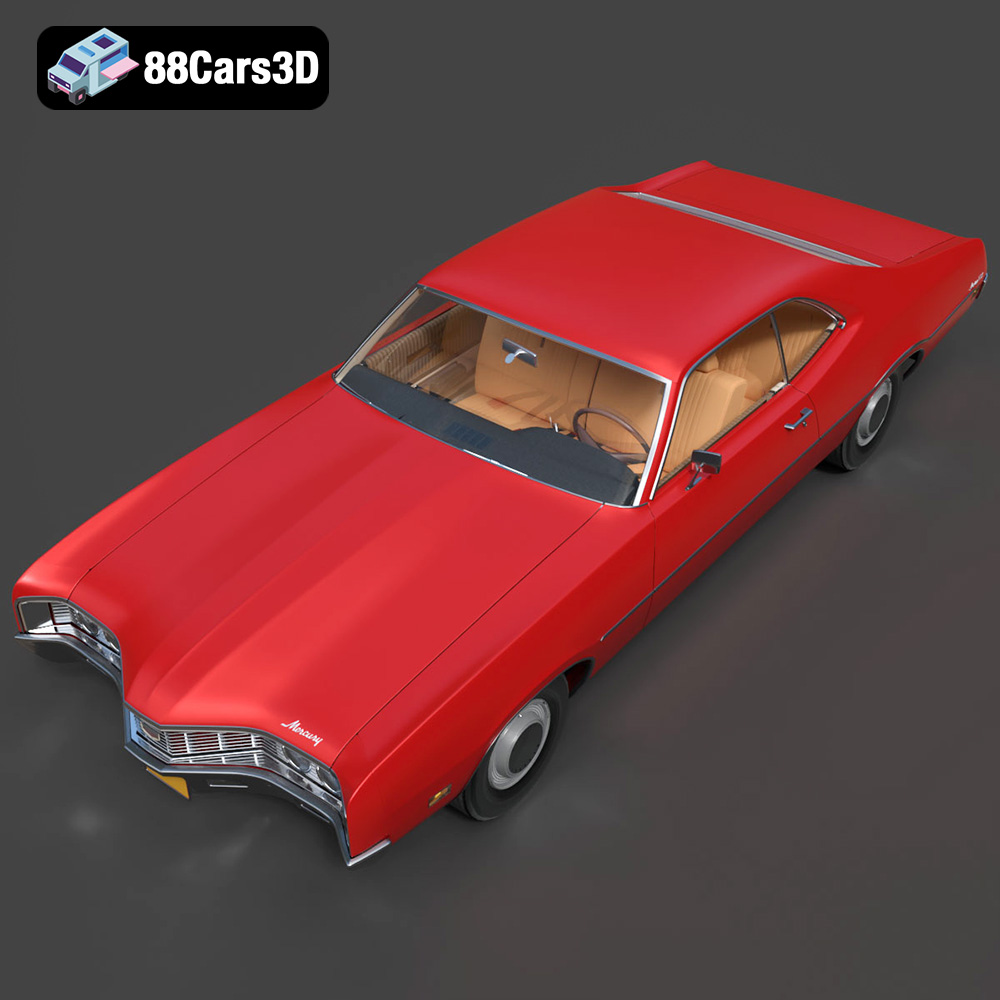
The product description highlights the meticulous attention paid to both the exterior and interior, and this is where the Montego truly shines as a comprehensive 3D car model. The exterior features accurate 1970 Mercury Montego frame geometry, an authentic dual exhaust system, period-correct wheels, detailed classic tires, and hubcaps. Even the suspension and undercarriage detailing are present, which is crucial for realistic automotive rendering and simulation. Inside, the cockpit is equally detailed, featuring vintage vinyl seating with accurate stitch patterns, a classic deep-dish steering wheel with period-correct badging, and an authentic dashboard with detailed instrument clusters and dials. The inclusion of accurate interior controls like pedals, window cranks, and a gear shifter, along with optimized interior geometry, makes this model ideal for first-person POV in driving simulators and gaming, providing an immersive experience for the user.
Beyond static representation, a truly valuable 3D car model is built with animation in mind. The Mercury Montego excels here with separate wheels, suspension, and steering components. This modularity is essential for animators and riggers, allowing for seamless animation of steering, wheel rotation, and realistic suspension travel without complex workarounds. The proper pivot setup for these components dramatically reduces rigging time, making the model instantly usable in animation pipelines. Furthermore, its real-world scale accuracy, based on the actual classic Mercury chassis, ensures that it integrates seamlessly into virtual environments and interacts correctly with physics engines, providing a scalable solution for projects ranging from detailed close-ups to expansive open-world scenarios.
The utility of a high-fidelity 3D car model like the Mercury Montego 1970 extends far beyond static images. Its versatility makes it an invaluable asset across multiple industries, catering to evolving technological demands and creative visions.
In the rapidly expanding world of interactive entertainment, realistic 3D car models are central to creating believable virtual worlds. The Mercury Montego, with its optimized polycount and game-ready attributes, is perfectly suited for open-world games, racing titles, and driving simulators. Its detailed interior geometry makes it excellent for first-person perspectives, enhancing immersion. For AR/VR applications, the model transforms into a centerpiece for virtual showrooms, interactive car configurators, or even mobile AR experiences where users can place the classic muscle car in their physical environment. The .glb format, included with the Montego, is specifically optimized for these browser-based and mobile real-time applications, ensuring smooth performance and rapid loading times, which are critical for engaging immersive experiences.
Manufacturers and marketing agencies rely heavily on 3D models for product visualization and configurators. The Mercury Montego 1970 can serve as an excellent base for demonstrating customization options in a virtual environment. Users can change body colors to vintage factory finishes or custom hot rod variants, modify tire textures, and adjust material finishes (matte, gloss, metallic, heavy chrome) with instant visual feedback. This interactive capability, often powered by real-time engines or web technologies leveraging formats like .glb, allows potential buyers or enthusiasts to explore every facet of the car before it’s physically produced or restored. For brand campaigns and lifestyle scenes, the model offers unparalleled flexibility for creating dynamic studio lighting setups and diverse environmental renders, showcasing the car in its best light for marketing collateral.
The journey of a 3D model doesn’t always end on a screen. For hobbyists, collectors, and prototyping specialists, 3D printing offers a tangible connection to digital assets. The Mercury Montego 1970 3D model, convertible to the ubiquitous .stl format, opens up possibilities for creating physical replicas. The product description provides clear 3D print settings, recommending scales like 1:12, 1:18, or 1:24, with specific advice on layer height (0.04–0.12 mm for resin printing), wall thickness, infill, and crucially, support requirements for detailed parts like the exhaust, mirrors, classic bumpers, and steering wheel. Guidance on print orientation (frame angled, wheels separately) ensures structural integrity and optimal detail. Post-processing suggestions, including sanding, primer, and authentic factory colors, empower users to create a museum-quality display piece that truly captures the essence of this automotive icon.
In the dynamic world of 3D content creation, the demand for high-quality, versatile assets is constant. A meticulously crafted 3D car model is more than just a digital object; it’s a powerful tool that enables artists, developers, and designers to realize their most ambitious projects. The Mercury Montego 1970 3D Model stands as a testament to this, offering an exceptional blend of historical accuracy, technical optimization, and broad compatibility.
From its game-ready topology and detailed interior to its provision in an extensive array of file formats including .blend, .fbx, .obj, .glb, .stl, .ply, .unreal, and .max, this model is designed to seamlessly integrate into virtually any professional workflow. Whether you’re aiming for photorealistic automotive rendering, building an immersive game environment, creating an interactive AR/VR experience, or even producing a physical 3D print, the Montego provides a robust and reliable foundation. Exploring the diverse offerings at 88cars3d.com reveals a commitment to delivering such high-caliber 3D car models, ensuring that creators have access to the best assets for their vision. Elevate your next project by investing in models that embody both artistic excellence and technical precision.
Experience the golden era of American muscle with this meticulously crafted 1970 Mercury Montego 3D model. Known for its imposing road presence, distinct pronounced front grille, and sweeping fastback or hardtop styling, the 1970 Montego captures the essence of classic 70s performance. This model highlights key visual elements including a highly detailed V8 engine block, authentic dual exhaust system, and beautifully reproduced chrome bumpers and trim lines that define its vintage character.
Designed with exceptional attention to detail, this 3D model features a well-optimized topology with a triangle count of 466,340, striking the perfect balance between high-end visual fidelity and game-ready performance. Whether you are developing an open-world driving game, crafting an immersive VR showroom, or producing cinematic animations, this asset delivers unmatched realism and versatility.
Perfect for classic car street racing games, historical 1970s urban environments, automotive configurators, and high-quality cinematic renders.
.blend, .fbx, .obj, .glb, .stl, .ply, .unreal, .max
Tags:
mercury, montego-1970, muscle-car, classic-car, game-ready, low-poly, optimized, car-3d-model, game-asset, rendering, vr-ar, blend, fbx, obj, glb, stl, ply, unreal, max
$26.00
.blend
.fbx
.glb
.max
.mercury
.obj
.ply
.rendering
.stl
.unreal
car-3d-model
classic-car
game asset
game-ready
low-poly
montego-1970
muscle-car
optimized
VR/AR