Get 20% OFF All Premium 3D & STL Models!

In the rapidly evolving landscape of 3D visualization, automotive design, and real-time interactive experiences, the demand for exceptionally high-quality 3D car models has never been greater. Professionals across industries—from game development studios and architectural visualization firms to automotive marketing agencies and AR/VR content creators—rely on precision-engineered digital assets to bring their visions to life. The challenge often lies in finding models that not only boast stunning visual fidelity but also offer the technical versatility required for diverse workflows.
Enter the Porsche Taycan 4S Cross Turismo 2021 3D Model, a standout asset that embodies the perfect synthesis of breathtaking detail and technical adaptability. This isn’t just a static representation; it’s a meticulously crafted digital twin of Porsche’s groundbreaking electric sports wagon, designed to excel in a multitude of professional applications. Whether you’re aiming for photorealistic renders that could be mistaken for actual photography, integrating a high-performance vehicle into a AAA game title, or creating an immersive virtual showroom, this model provides an unparalleled foundation. It serves as a testament to what premium 3D car models should deliver, offering a streamlined path to creativity and efficiency for any digital artist or developer looking to elevate their projects. Sourced from expert platforms like 88cars3d.com, such assets are crucial for maintaining a competitive edge.
The selection of the correct 3D model file format is a critical decision that dictates compatibility, functionality, and workflow efficiency across various software and platforms. The Porsche Taycan 4S Cross Turismo 2021 3D Model, available through platforms like 88cars3d.com, is thoughtfully provided in a comprehensive suite of formats, each serving distinct purposes and catering to specific professional needs. Understanding these formats is key to maximizing the utility of such a high-fidelity asset.
The .blend format is the native file type for Blender, the powerful open-source 3D creation suite. When you download a .blend file, you’re not just getting a mesh; you’re receiving a fully editable Blender scene. This includes all materials, textures, lighting setups, cameras, and even animation data, precisely as the artist intended. For the Porsche Taycan 4S Cross Turismo, the .blend file would provide complete access to its intricate topology, detailed PBR (Physically Based Rendering) materials, and potentially even pre-rigged components for animation. It’s ideal for artists deeply integrated into the Blender ecosystem, allowing for extensive customization, scene integration, and leveraging Blender’s robust rendering engines like Cycles and Eevee.
.fbx (Filmbox) is arguably the most widely adopted format for exchanging 3D data between different software applications. Developed by Autodesk, it supports not only mesh data but also materials, textures, lights, cameras, and crucially, animation and rigging. This makes it an indispensable choice for pipelines involving multiple software packages, such as modeling in Blender or 3ds Max and then importing into Unreal Engine or Unity for game development. For a complex model like the Taycan, an .fbx file ensures that details like separated wheels, suspension, and steering components retain their pivot points and hierarchical structure, critical for animating realistic car movement in real-time environments.
The .obj (Wavefront Object) format is a highly universal and widely supported format primarily used for transferring static 3D geometry. While it doesn’t support advanced features like animation or rigging, it excels at reliably exporting polygon mesh data, UV coordinates, and basic material definitions (via an accompanying .mtl file). Its simplicity ensures excellent cross-software compatibility, making it a reliable fallback when other formats encounter issues. For the Taycan model, an .obj file would contain the meticulously detailed chassis and interior geometry, perfect for scenarios where the primary goal is static rendering or a base mesh for further sculpting and detailing in software like ZBrush or Substance Painter.
.glb (GL Transmission Format Binary) is the binary version of glTF, a royalty-free specification for 3D scenes and models. Designed to be compact and efficient for transmission and loading, .glb files are highly optimized for web-based 3D applications, augmented reality (AR), and virtual reality (VR) experiences. They package textures and other data directly into a single file, simplifying distribution. For interactive applications like virtual showrooms or mobile AR experiences featuring the Porsche Taycan, the .glb format ensures fast loading times and smooth performance, making it an excellent choice for broad accessibility and immersive display on various devices.
.stl (Stereolithography) is the de facto standard format for 3D printing. It represents a 3D model as a series of connected triangles, describing only the surface geometry of an object without color, texture, or other CAD attributes. While not ideal for rendering, its universal acceptance by 3D printers and slicing software makes it essential for physical prototyping. The Taycan model includes an .stl option, allowing enthusiasts and professionals to print high-fidelity physical replicas, making it suitable for display-scale hobbyists or design review processes. Its robustness ensures that the complex curves and precise dimensions of the vehicle are accurately translated into a printable mesh.
The .ply (Polygon File Format) is another mesh format primarily used for storing 3D data from 3D scanners, CAD applications, or scientific data. It’s more versatile than .stl, as it can store a wider range of properties, including color, transparency, surface normals, and even confidence values for each vertex. While less common for general-purpose rendering than .fbx or .obj, it’s invaluable for applications requiring high precision and additional data per vertex, such as reverse engineering, quality inspection, or advanced simulations. For the Taycan, a .ply export could be useful for specific engineering analyses or precise measurements if integrated into a CAD pipeline.
The inclusion of a dedicated .unreal file signifies an asset specifically prepared and optimized for direct integration into Unreal Engine. This often means the model has already undergone crucial steps like proper pivot setup, UV mapping optimization for lightmaps, material instancing, and potentially even basic collision meshes or level-of-detail (LOD) groups. For the Porsche Taycan 4S Cross Turismo, having an .unreal file drastically reduces the setup time for developers, providing an “out-of-the-box” solution that is ready for real-time environments, offering significant advantages for game development or high-fidelity interactive architectural visualization projects.
Finally, the .max format is the native scene file for Autodesk 3ds Max, a leading software for 3D modeling, animation, and rendering. Like .blend, it contains the entire scene, including geometry, materials, textures, lights, cameras, modifiers, and animation. For professionals working within a 3ds Max pipeline, the .max file provides the most complete and editable version of the Porsche Taycan 4S Cross Turismo model. It allows for full control over every aspect of the asset, from fine-tuning the luxurious sport seats to adjusting the intricate four-point LED matrix headlights, making it perfect for high-end automotive rendering and complex animation sequences.
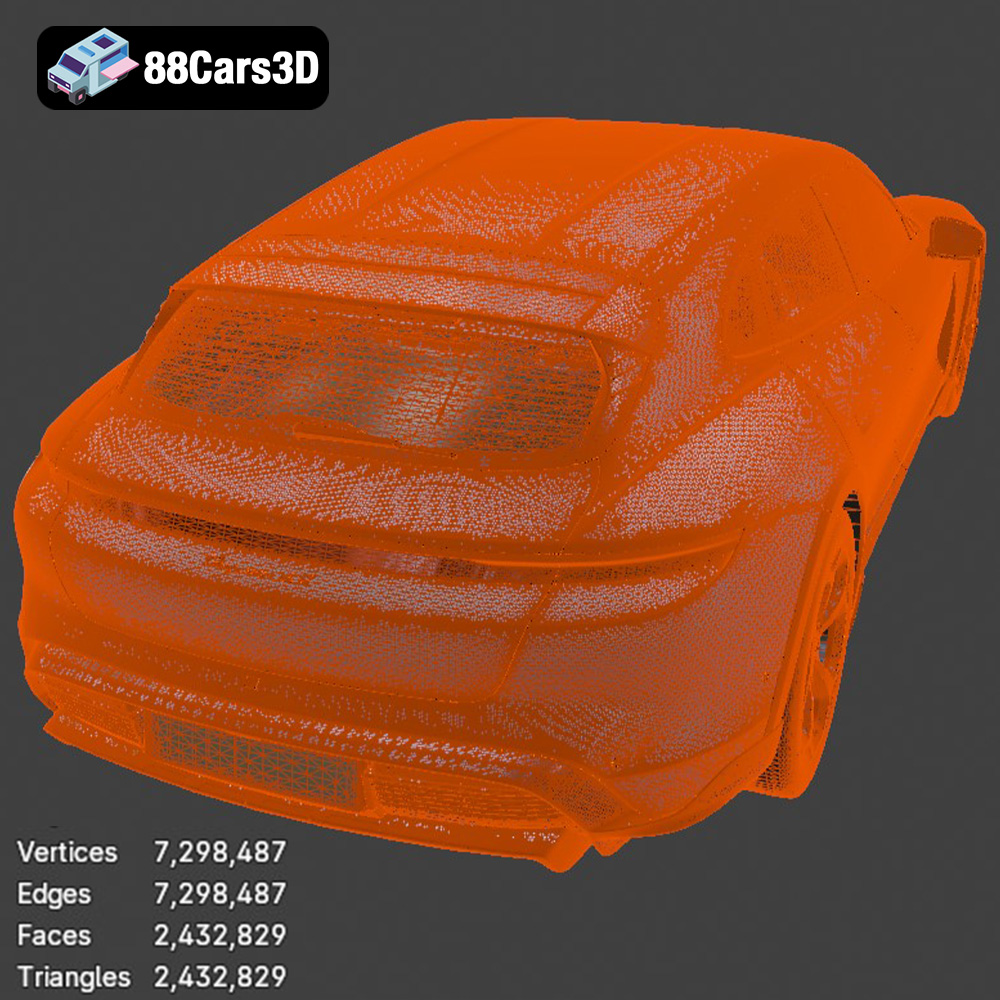
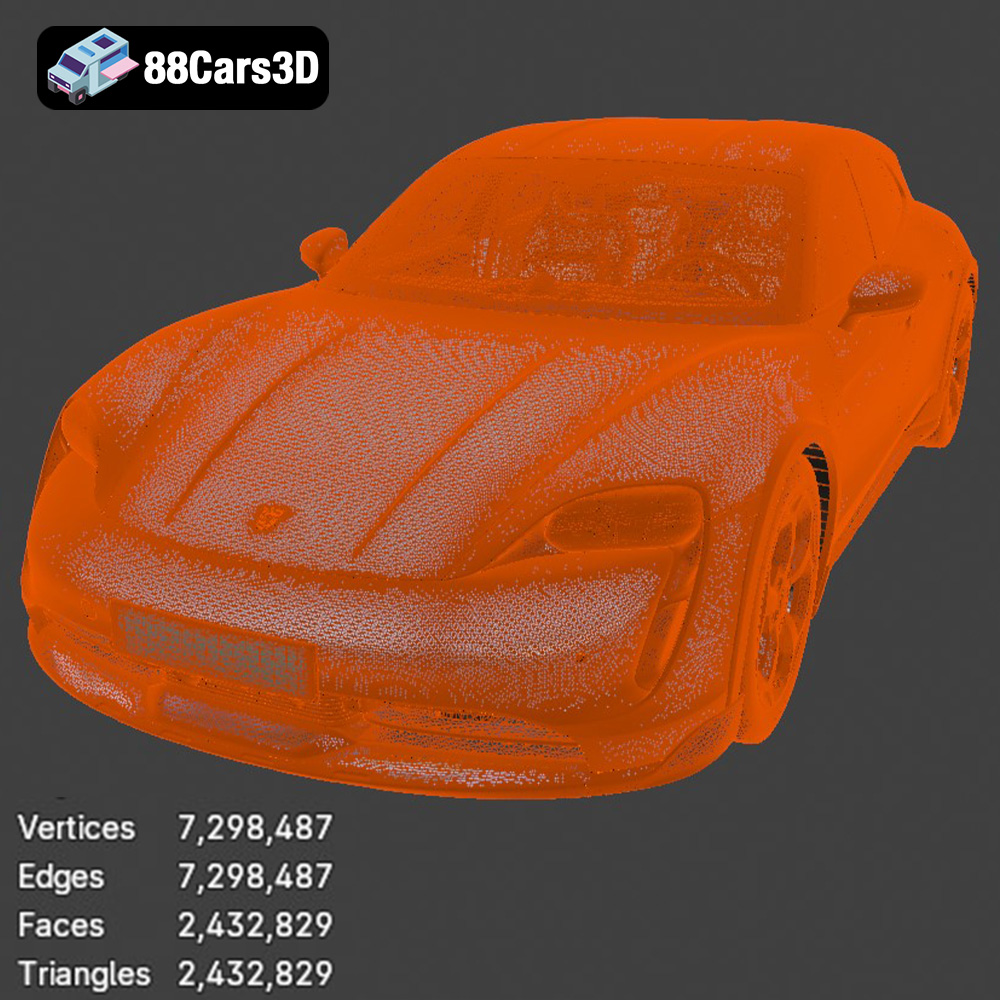
Photorealistic automotive rendering is an art form that demands meticulous attention to detail, sophisticated lighting, and robust 3D assets. The Porsche Taycan 4S Cross Turismo 2021 3D Model stands as an exemplary foundation for achieving stunning visualizations, whether for marketing campaigns, design reviews, or film and animation projects. Its high polygon count of 2,432,829 triangles, while optimized for real-time, also provides an incredible level of detail that shines in high-resolution renders.
For artists leveraging powerful rendering engines like V-Ray or Corona Renderer within 3ds Max, or Cycles within Blender, the Taycan model is a dream to work with. The model’s exceptional topology reacts beautifully to studio and natural lighting environments, allowing for a diverse range of artistic interpretations. In 3ds Max, artists can easily import the .max or .fbx file, set up intricate studio lighting rigs, apply advanced PBR materials with realistic reflections and refractions for the paintwork, glass, and chrome elements. The detailed interior, with its accurate stitching and contour details on the luxurious sport seats, comes alive with subtle indirect lighting, creating an atmosphere of true luxury. Similarly, Blender users can import the .blend file directly and harness the power of Cycles for unbiased rendering, focusing on accurate light bounces and material interactions to achieve breathtaking realism. The separate wheels, suspension, and steering components also enable advanced animation for dynamic studio shots or vehicle commercials.
Consider a high-end automotive advertising campaign. Agencies often need to showcase a vehicle in a variety of bespoke environments, from urban landscapes to serene natural settings. With the Porsche Taycan 4S Cross Turismo 3D Model, designers can quickly drop the vehicle into pre-built scenes, adjust lighting to match the mood, and render out stills or animations with incredible efficiency. For architectural visualization, the Taycan model can instantly elevate a static building render by adding a dynamic, aspirational element. Imagine a modern villa with the sleek Taycan parked elegantly in the driveway—it tells a story, adds scale, and imbues the scene with a sense of high-end lifestyle. Its real-world scale accuracy ensures it fits perfectly into any architectural context, enhancing the realism and appeal of property marketing materials. This kind of versatility highlights why investing in quality 3D car models from sources like 88cars3d.com is a smart professional move.
The demands of real-time environments, particularly in game development and interactive AR/VR, present a unique set of challenges that balance visual fidelity with performance. The Porsche Taycan 4S Cross Turismo 2021 3D Model is specifically engineered to meet these challenges, offering a “game-ready” asset without compromising on detail.
For Unreal Engine developers, the included .unreal file is a game-changer. It represents an asset that has been pre-configured for optimal performance and visual quality within the engine. This means proper pivot setups for steering, wheel rotation, and suspension travel are already in place, drastically cutting down on setup time. When importing the .fbx version, developers can easily bring in the model, set up its physically based materials, and integrate it into a vehicle blueprint. The optimized polycount of 2,432,829 triangles strikes a perfect balance: high enough to maintain the detailed electric vehicle undercarriage and complex surface transitions for close-up shots and next-gen graphics, yet structured efficiently for real-time rendering. Implementing LODs (Levels of Detail) ensures that the model performs optimally at varying distances, further enhancing its suitability for open-world games and racing titles where performance is paramount.
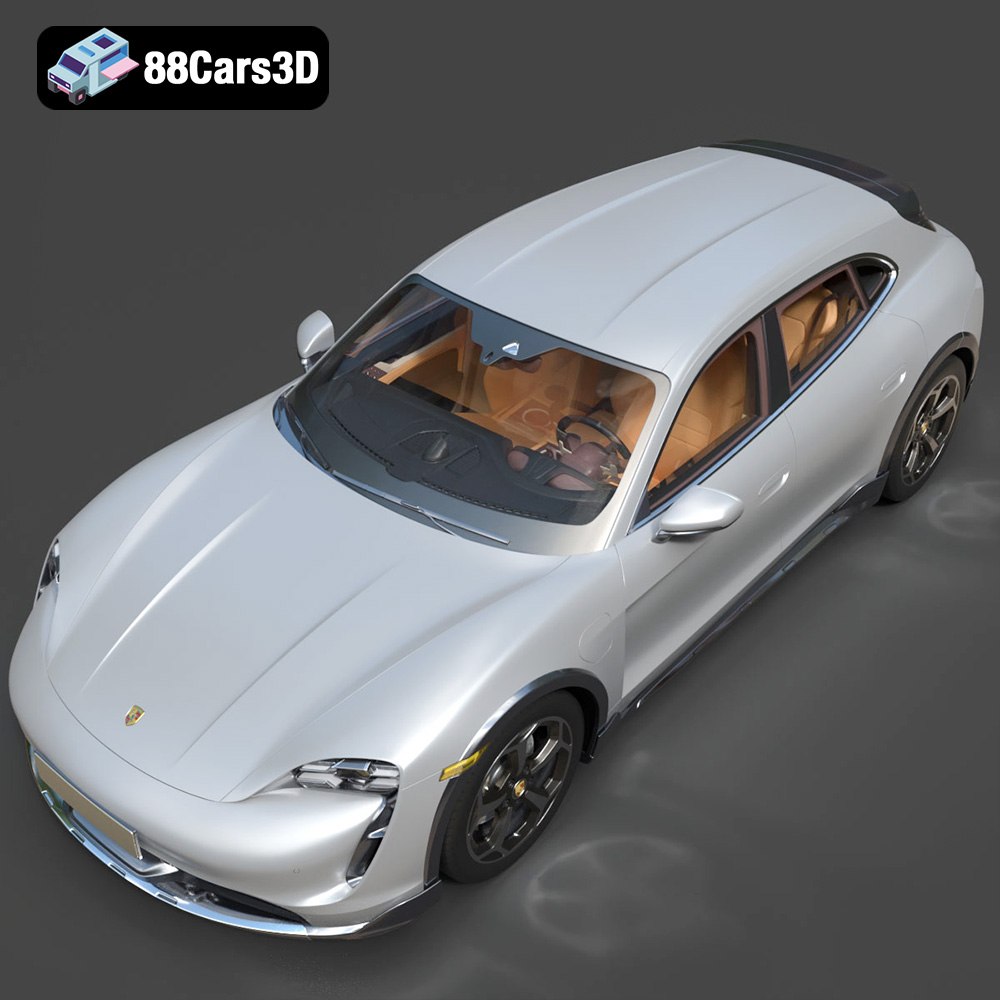
The immersive nature of AR/VR applications and interactive configurators requires models that are not only visually impressive but also incredibly lightweight and responsive. The Porsche Taycan model, with its thoughtful optimization and the inclusion of the .glb format, is ideally suited for these applications. For a virtual showroom, the model can be displayed with interactive hotspots, allowing users to explore the luxurious sport seats, the curved digital instrument cluster, and the detailed center console. In a mobile AR experience, the .glb format facilitates quick loading and smooth interaction on various devices, enabling users to place and view the Taycan in their real-world environment. The detailed interior, optimized for first-person POV, is particularly valuable for virtual driving experiences or exploring the cockpit in a high-fidelity VR simulation, offering an authentic sense of being inside the vehicle.
Beyond digital screens, the Porsche Taycan 4S Cross Turismo 2021 3D Model extends its utility into the physical realm through 3D printing. The inclusion of the .stl format, alongside detailed print recommendations, opens up avenues for hobbyists, collectors, and design professionals to bring this iconic EV into tangible existence.
Converting a high-detail rendering model into a successful 3D print requires specific considerations. The provided .stl format for the Taycan model is ready for slicing software, but adhering to the recommended print settings is crucial for capturing its intricate details. For scales like 1:12, 1:18, or 1:24, a layer height of 0.04–0.12 mm is suggested, with resin printing highly recommended for its ability to reproduce the fine details of the four-point LED matrix headlights, the aero-optimized alloy wheels, and the precise stitching on the interior. Specific instructions on wall thickness (1.2–2.0 mm), infill (20–30%), and the necessity of supports for delicate parts like side mirrors and suspension components ensure structural integrity and accurate reproduction. Printing the frame angled and wheels separately further aids in print quality and post-processing, which includes sanding, priming, and applying authentic factory colors to achieve a truly realistic miniature.
While often used for display-scale models, 3D printed versions of the Taycan can also serve practical purposes in design and education. Architects might print a scale model to complement a physical architectural model, adding a realistic vehicular context. Automotive designers could print concept variations or specific components of the Taycan for tactile review and ergonomic testing, even if at a smaller scale. These physical models provide a tangible reference point that digital screens cannot fully replicate, aiding in design validation and collaborative discussions. The detailed exterior and interior geometry, once printed, can become invaluable educational tools, allowing students or enthusiasts to study the vehicle’s design language and engineering up close.
A truly versatile 3D asset provides not only high fidelity but also the flexibility for artists and developers to adapt it to their unique creative visions and integrate it seamlessly into existing professional pipelines. The Porsche Taycan 4S Cross Turismo 2021 3D Model excels in this regard, offering extensive customization options and built-in compatibility.
The customization options for the Taycan model are extensive, empowering artists to personalize the vehicle to fit any project. Changing body colors, for instance, is straightforward, allowing for exploration of factory colors, custom finishes, or even experimental liveries for racing scenarios. Material finishes—whether matte, gloss, or metallic—can be adjusted to achieve specific aesthetic effects or match real-world paint samples. The ability to modify tire textures means the vehicle can be presented with performance street tires for a sleek urban look or rugged off-road variants to emphasize its Cross Turismo versatility. Furthermore, the model’s clean topology and PBR-ready materials make it simple to adapt lighting for different environments, from sun-drenched outdoor scenes to dramatic studio setups, ensuring it always looks its best. This level of control is paramount for automotive rendering and advertising where every detail counts.
The true value of a premium 3D car model, such as the Taycan available on 88cars3d.com, lies in its ability to save significant time and resources in a professional workflow. Rather than spending countless hours modeling a vehicle from scratch, designers and developers can acquire a highly detailed, technically sound asset that is ready for immediate use. The inclusion of multiple file formats (.blend, .fbx, .obj, .glb, .stl, .ply, .unreal, .max) ensures compatibility across virtually all major 3D software platforms and real-time rendering engines. This eliminates tedious conversion processes and potential data loss, allowing teams to focus on creative tasks rather than technical troubleshooting. For studios working on tight deadlines, the “game-ready” optimization and proper pivot setups mean the model can be dropped into a scene or engine and perform as expected, accelerating project timelines and ensuring a consistent standard of quality across all deliverables. Investing in such meticulously crafted 3D car models is a strategic decision for any professional seeking efficiency and excellence.
The digital realm is increasingly reliant on assets that are not only visually compelling but also technically robust and versatile. The Porsche Taycan 4S Cross Turismo 2021 3D Model stands as a prime example of such an asset, meticulously crafted to meet the stringent demands of modern 3D visualization, game development, AR/VR experiences, and even physical prototyping. Its high fidelity, evident in the detailed exterior and interior features, combined with its optimized polygon count and extensive file format support, makes it an indispensable tool for professionals.
From producing breathtaking automotive rendering in 3ds Max or Blender to powering immersive experiences in Unreal Engine, or enabling precise 3D prints, this model offers a comprehensive solution. Its adaptability for customization, ease of integration into diverse workflows, and the sheer quality of its construction underscore its value. For those seeking to elevate their projects with a premium 3D car model, the Porsche Taycan 4S Cross Turismo 2021 3D Model provides the perfect blend of performance, aesthetics, and technical excellence. Discover this exceptional asset and more high-quality 3D car models at 88cars3d.com, where professional-grade resources empower your creative endeavors.
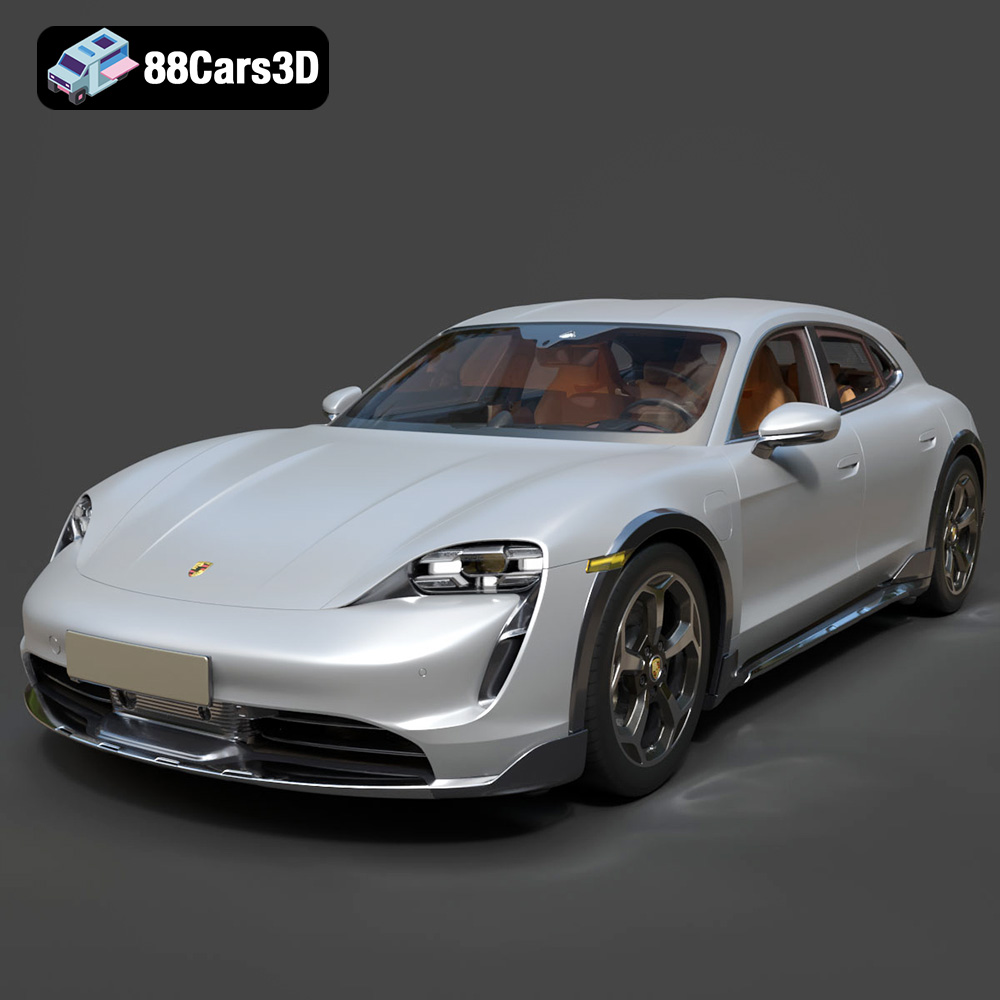
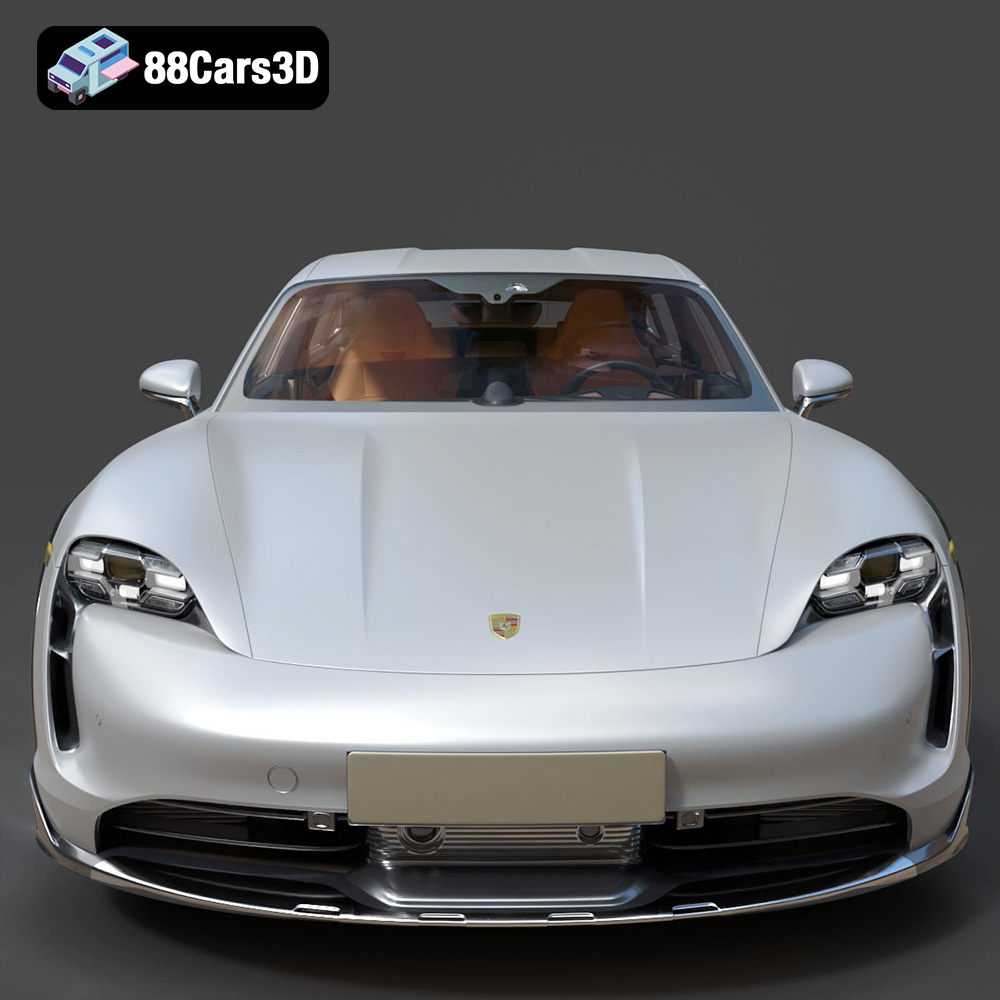
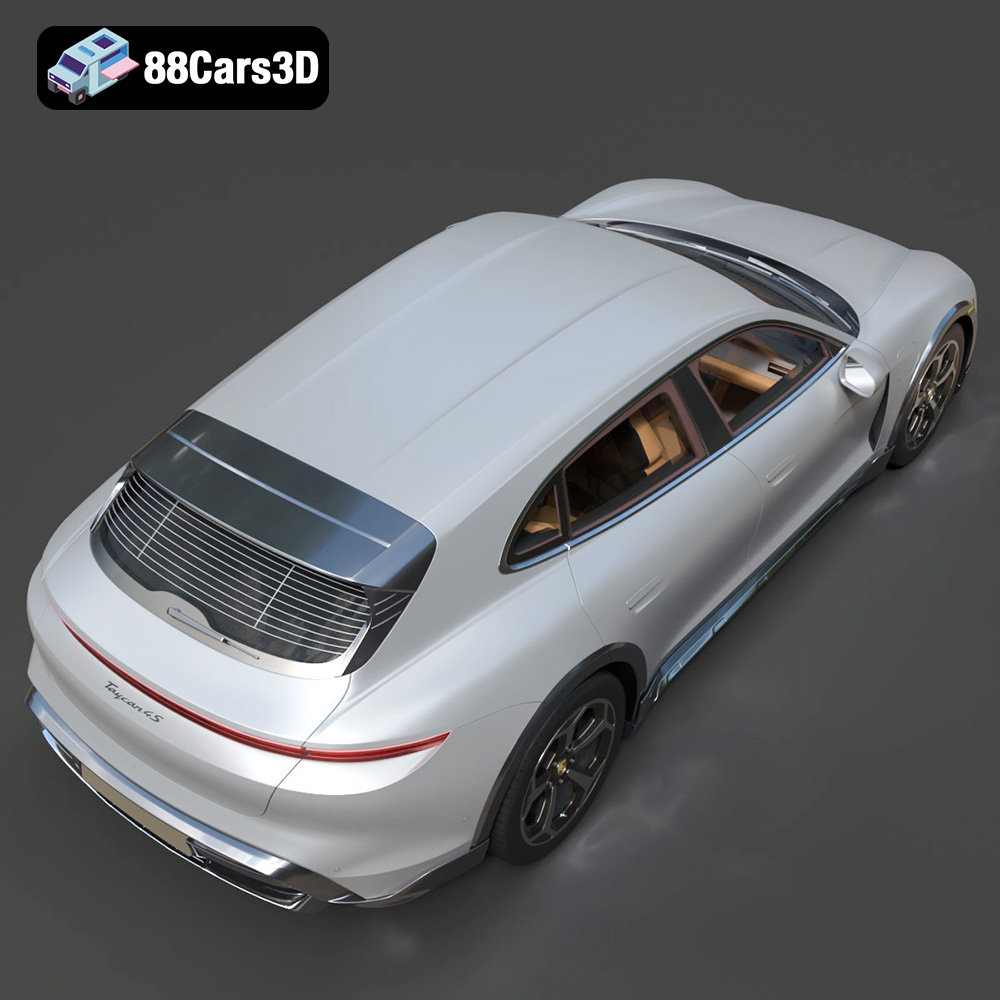
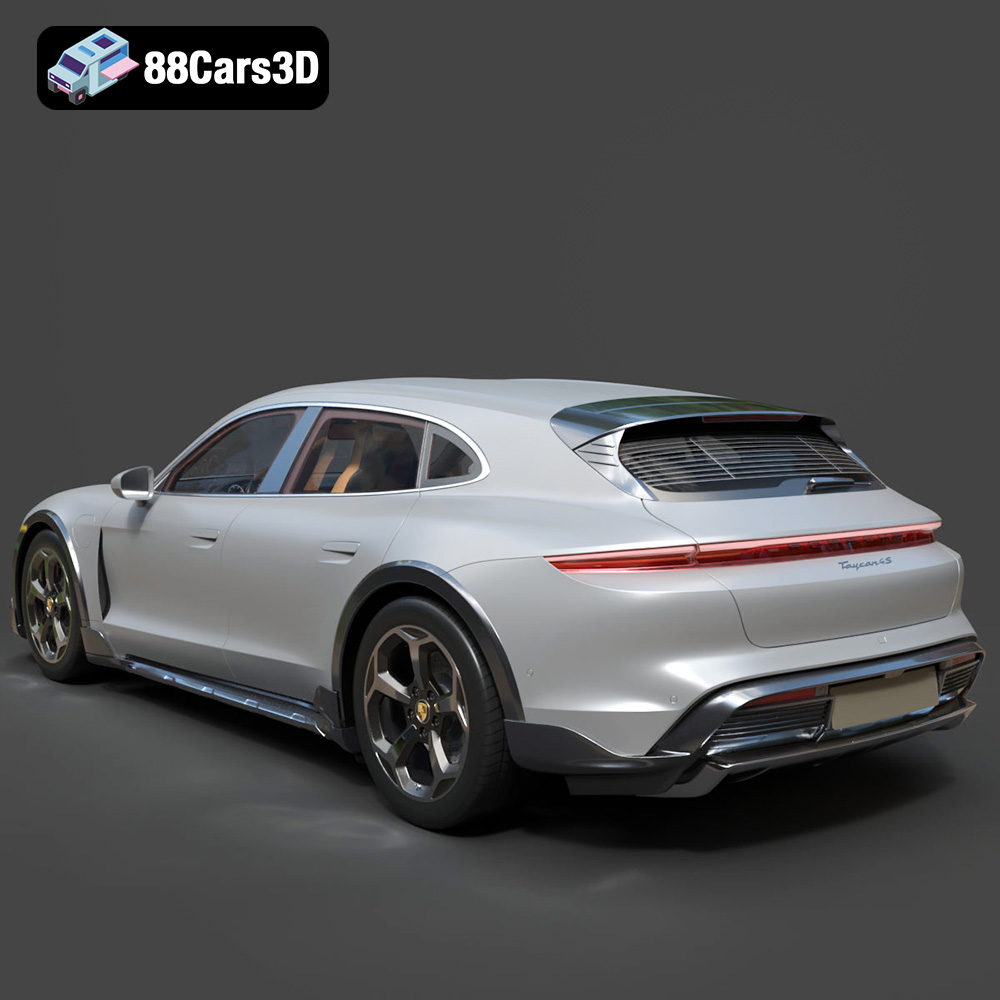
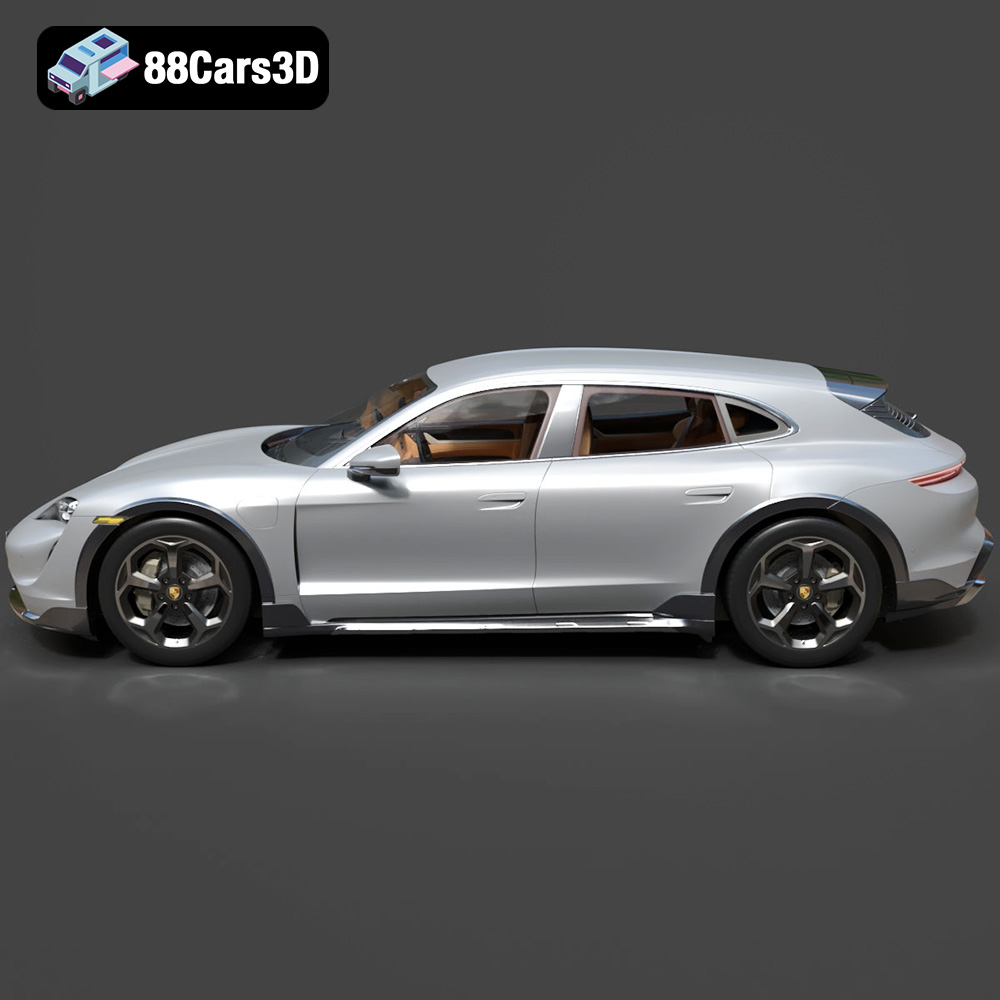
The Porsche Taycan 4S Cross Turismo 2021 represents the perfect synthesis of electric performance and rugged, real-world versatility. As an evolution of Porsche’s groundbreaking EV, this model features a distinctive shooting brake silhouette, offering increased headroom and cargo space alongside increased ground clearance. It is defined by iconic Porsche styling cues, including the signature four-point LED matrix headlights, protective off-road design elements on the wheel arches, and a muscular rear light strip. The absence of traditional exhaust systems is countered by a sleek, aerodynamically optimized rear diffuser and striking aero-style alloy wheels. This highly detailed 3D model boasts an impressive 2,432,829 triangles, delivering unmatched visual fidelity for high-end rendering while being carefully structured for advanced real-time engines. Meticulously modeled to capture the real-world scale and complex surface transitions of the physical vehicle, it features exceptional topology that reacts beautifully to studio and natural lighting environments. Whether used for game development, AR/VR applications, animation, or commercial visualization, this asset is built to meet professional industry standards.
$37.50
.2021
.blend
.crossover
.ev
.fbx
.glb
.max
.obj
.ply
.porsche
.rendering
.stl
.unreal
car-3d-model
electric-car
game asset
game-ready
high poly
optimized
sports-wagon
taycan-4s-cross-turismo
VR/AR