Get 20% OFF All Premium 3D & STL Models!

In the dynamic world of 3D design, the ability to translate groundbreaking automotive concepts into stunning digital realities is paramount. Visionary vehicles, often showcasing radical design philosophies and advanced technologies, serve as a bridge between today’s engineering and tomorrow’s possibilities. Capturing their essence in high-fidelity 3D models opens up unparalleled opportunities for designers, game developers, animators, and architects to explore, innovate, and create.
Concept cars like the BMW Vision Next 100, unveiled in 2016 to celebrate BMW’s centenary, are prime examples of this forward-thinking approach. This vehicle wasn’t just a car; it was a statement about future mobility, featuring iconic “Alive Geometry” and a seamless blend of manual and autonomous driving modes. Bringing such a complex and imaginative design to life digitally requires a meticulously crafted 3D model – one that respects the original vision while providing the technical versatility needed for modern workflows.
Today, artists and developers can leverage exceptionally detailed 3D car models of such iconic vehicles to push the boundaries of visual fidelity and interactive experiences. The BMW Vision Next 100 Concept 2016 3D Model Download STL FBX OBJ GLB Blend stands as a testament to this, offering an unparalleled digital asset for a multitude of professional applications, from high-end automotive rendering to immersive game development.
The BMW Vision Next 100 Concept is more than just a car; it’s a carefully sculpted narrative of future mobility. Its physical form is a symphony of curves, dynamic surfaces, and innovative features, all meticulously recreated in its digital counterpart. Understanding these design elements is key to appreciating the value of a high-quality 3D model.
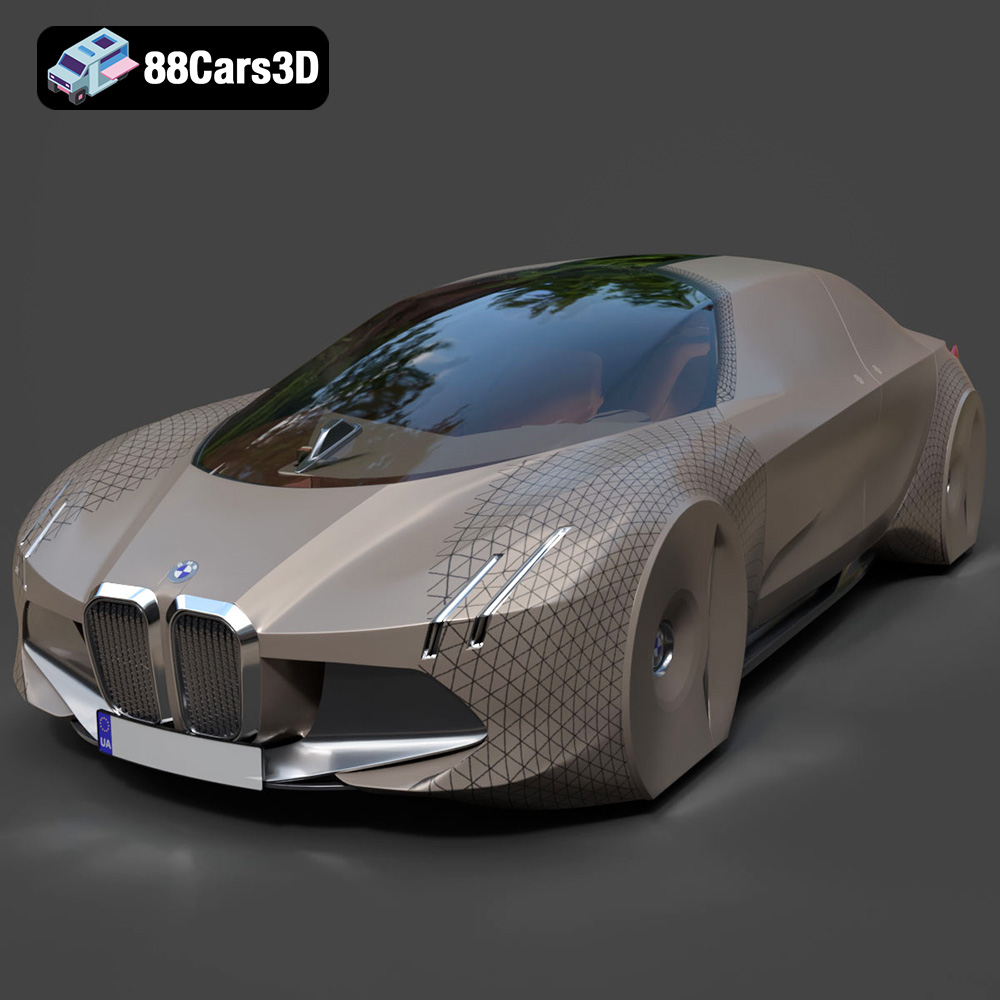
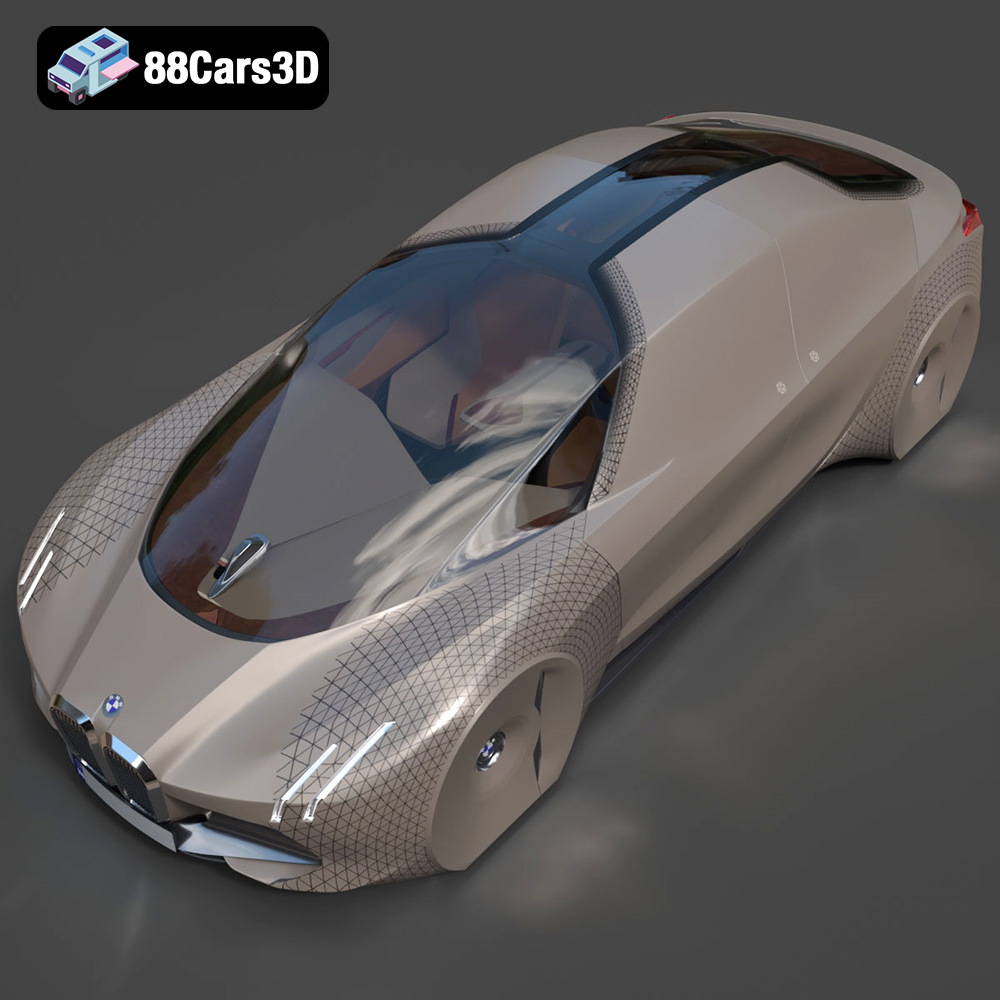
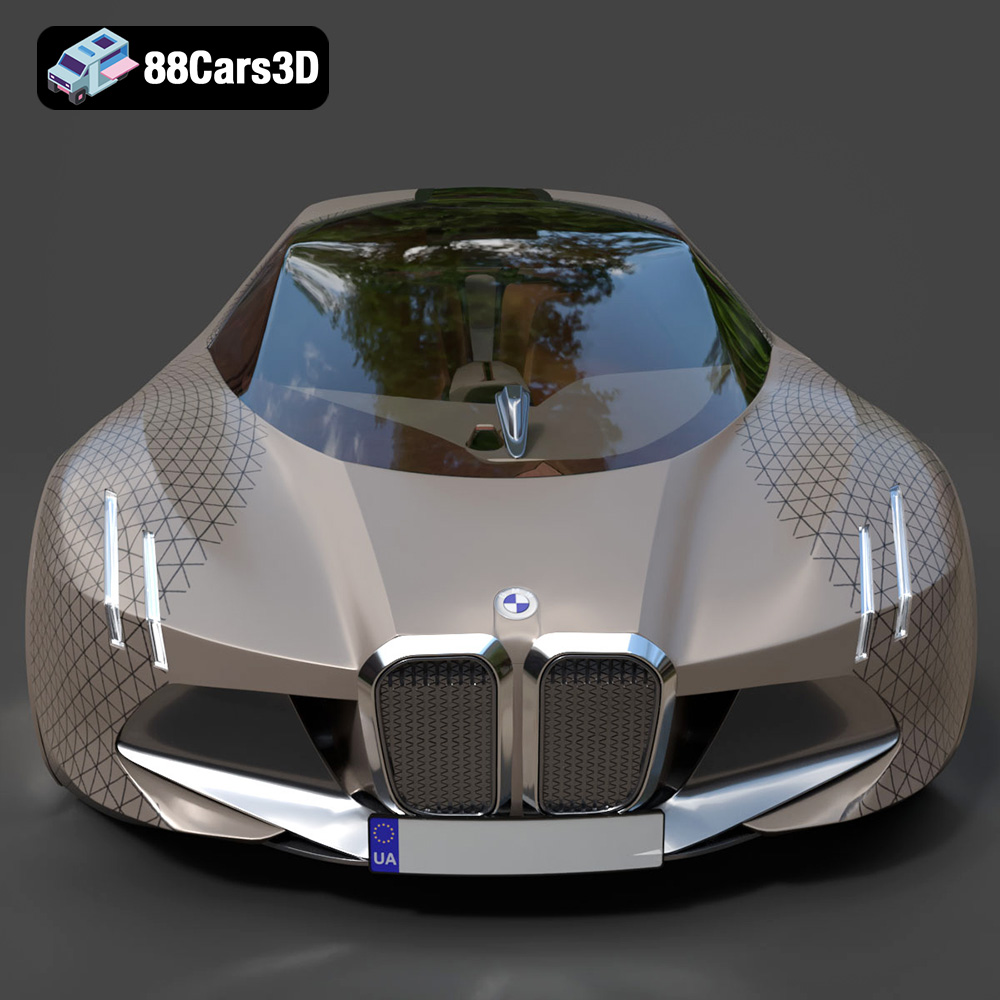
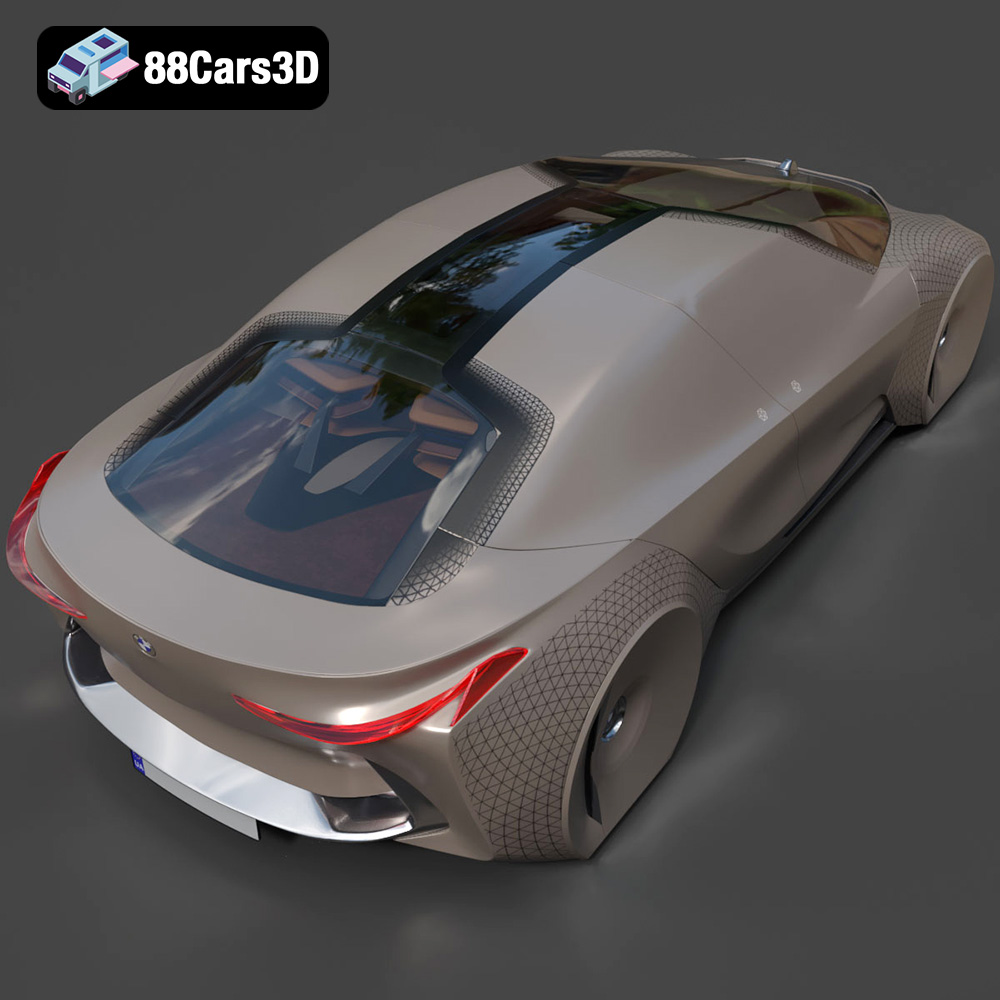
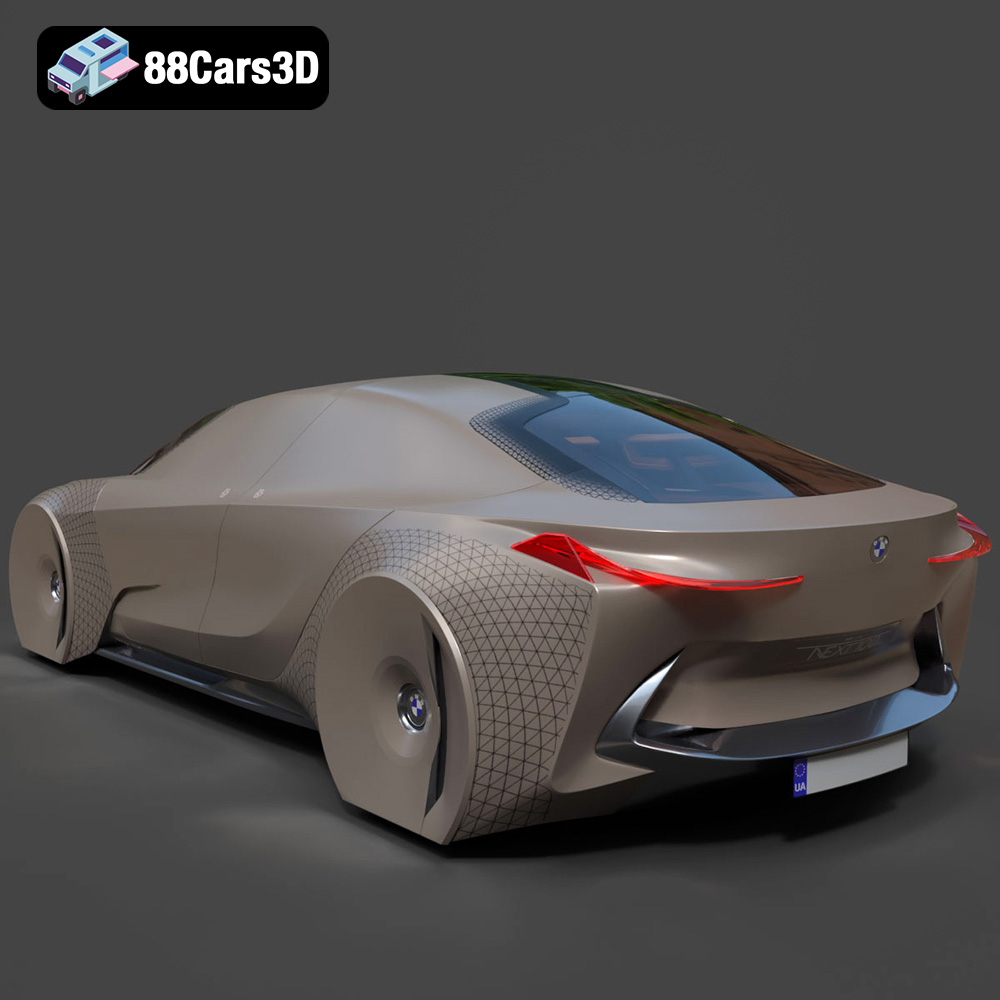
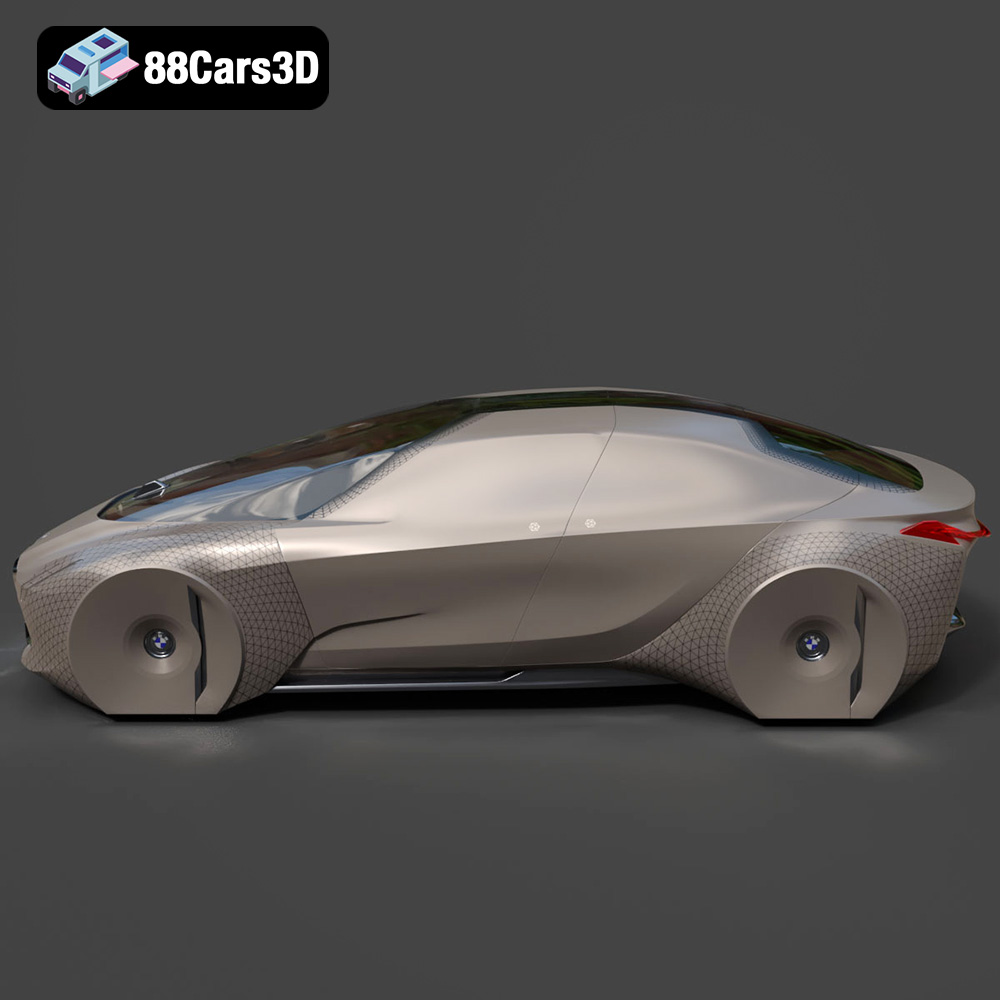
One of the most striking aspects of the Vision Next 100 is its “Alive Geometry.” This revolutionary concept envisions the car’s exterior as a living, breathing entity, with dynamic wheel coverings that expand and contract with steering movements, allowing the wheels to remain concealed for superior aerodynamics. Replicating this in a 3D model requires exceptional precision in topology and segmentation, ensuring that these complex elements are not merely static meshes but potential foundations for advanced animation and simulation. The seamless integration of the closed wheel arches into the copper-toned bodywork, along with the reimagined twin-kidney grille, showcases a commitment to aerodynamic efficiency and a bold new aesthetic that challenges traditional automotive design paradigms. A high-fidelity model captures every nuance, from the subtle reflections on the copper panels to the intricate details of the futuristic lighting elements.
Beyond the exterior, the interior of the BMW Vision Next 100 is equally visionary, designed to transition between “Boost” (manual driving) and “Ease” (autonomous driving) modes. This duality is reflected in the ultra-high-quality (HQ) minimalist lounge-style seating and the retractable futuristic steering wheel. The digital dashboard and conceptual head-up display elements provide a sophisticated, information-rich environment. In a 3D model, this means a meticulously crafted cockpit where every button, screen, and material surface is accurately represented. The level of detail ensures that whether you’re creating a photorealistic rendering for an automotive campaign or designing an immersive VR experience, the interior truly feels like a glimpse into the future. From the precise conceptual tread patterns on the concealed tires to the intricate suspension modeling integrated within the chassis, every component contributes to the model’s overall authenticity and utility for various digital applications.
The versatility of a 3D model is heavily dependent on the file formats it supports. Different formats are optimized for different stages of the production pipeline, from initial modeling and texturing to final rendering, real-time implementation, or even physical fabrication. The 88cars3d.com BMW Vision Next 100 model offers a comprehensive suite of formats, ensuring maximum compatibility and utility across diverse professional workflows.
The .blend format is the native file type for Blender, a powerful open-source 3D creation suite. When a model is provided in .blend, it typically includes the full scene hierarchy, mesh data, materials (using Blender’s native Cycles or Eevee renderer setup), textures, lighting, cameras, and potentially even animation rigs. This format is ideal for users who primarily work in Blender and require complete editability. You can dissect the model’s construction, modify its geometry, adjust material properties, or integrate it seamlessly into existing Blender projects without any loss of data that might occur during conversion. For the BMW Vision Next 100, this means direct access to how its complex surfaces and ‘Alive Geometry’ were constructed and shaded within a professional production environment.
The .fbx (Filmbox) format is an industry-standard proprietary file format developed by Autodesk, widely adopted for its excellent interoperability between various 3D applications and real-time engines. It excels at transferring not just geometry, but also materials, textures, animations, rigging information, and even camera data. This makes .fbx the go-to choice for game development (Unreal Engine, Unity), animation pipelines, and VFX. For the BMW Vision Next 100, an .fbx file would typically contain the optimized mesh, PBR (Physically Based Rendering) materials, UV layouts for texturing, and potentially basic rigging for elements like wheels or the steering wheel. Its robust support for skeletal animations makes it perfect for integrating the car into interactive simulations or cinematics.
The .obj (Wavefront OBJ) format is one of the oldest and most universally supported 3D file formats. It’s a simple, text-based format primarily used to exchange geometric data, including vertices, normals, UV coordinates, and faces. Material definitions are typically referenced in a separate .mtl (material template library) file. While .obj doesn’t support advanced features like rigging or animation, its widespread compatibility makes it an excellent choice for basic mesh exchange between virtually any 3D software. If you need to import the BMW Vision Next 100 into a niche application or simply require the raw geometry and basic texture mapping, .obj is a reliable option.
The .glb (GL Transmission Format Binary) is a modern, efficient, and compact format optimized for transmitting 3D scenes and models for web-based applications, Augmented Reality (AR), and Virtual Reality (VR). It’s essentially a binary version of glTF, bundling all assets (geometry, materials, textures, animations) into a single file, which significantly simplifies loading and rendering in real-time environments. Its small file size and rapid loading capabilities make it perfect for showcasing the BMW Vision Next 100 in virtual showrooms on websites, mobile AR apps, or light VR experiences, providing an accessible way to interact with the model across various platforms.
The .stl (Stereolithography) format is the standard file type used for 3D printing. It represents 3D surfaces as a collection of unconnected triangles. Unlike other formats, .stl contains no color, texture, or material information – purely geometric data. When preparing the BMW Vision Next 100 for physical reproduction, the .stl format ensures that the model’s surfaces are accurately translated into a printable mesh. This allows hobbyists and professionals alike to bring the futuristic concept car from the digital screen into the physical world, creating tangible display pieces or prototypes, requiring specific scale and print settings to achieve optimal results.
The .ply (Polygon File Format, or Stanford Triangle Format) is another format for storing 3D data, particularly useful for scanned data, point clouds, and precision meshes. It can store various properties beyond just geometry, such as color, transparency, normals, texture coordinates, and even reliability information for each polygon. While less common for general-purpose model exchange than .fbx or .obj, .ply is valuable in scientific, engineering, and CAD applications where precise mesh information and additional data per vertex/face are crucial. For highly detailed models like the BMW Vision Next 100, .ply can serve as a robust archival or interchange format for specific analytical or prototyping workflows.
The .unreal format, or more accurately, assets packaged for direct import into Unreal Engine projects, signifies a model that has likely been optimized and prepared specifically for Unreal’s pipeline. This often means PBR material setup, proper collision meshes, LODs (Levels of Detail), and correct pivot points. While not a standalone file extension in the same way as .fbx or .obj, the inclusion of an “.unreal” option implies a dedicated, pre-configured asset designed for seamless integration into Unreal Engine projects, saving developers significant setup time. For a game asset like the BMW Vision Next 100, this could mean an optimized Static Mesh or Skeletal Mesh asset ready for gameplay or cinematic sequences within the Unreal Editor.
The .max format is the native file type for Autodesk 3ds Max, a leading software in architectural visualization, animation, and game development. Similar to .blend, a .max file provides a complete scene, including geometry, materials (V-Ray, Corona, Arnold setups), textures, lighting, cameras, and animation data. This offers full editability and flexibility for users working within the 3ds Max ecosystem, allowing them to leverage the software’s powerful rendering capabilities for high-end cinematic sequences or detailed studio renders of the BMW Vision Next 100.
The availability of such a diverse array of formats for the BMW Vision Next 100 Concept 2016 model underscores its professional-grade quality and adaptability, ensuring that regardless of your software preference or project requirements, you have the right tools at your disposal.
Integrating a complex 3D car model like the BMW Vision Next 100 into professional pipelines demands technical understanding and creative execution. Its high fidelity and optimized structure make it suitable for a range of demanding applications.
For high-end automotive rendering, the BMW Vision Next 100 Concept 2016 3D Model truly shines. Using industry-standard software like 3ds Max with V-Ray or Corona Renderer, or Blender with Cycles, artists can create breathtakingly photorealistic images and animations. The model’s highly detailed topology, accurate real-world scale, and thoughtful material setup are crucial here. Imagine showcasing the vehicle in a futuristic cityscape, under dramatic studio lighting, or within a dynamic lifestyle scene. The signature copper bodywork, seamless window integration, and detailed interior demand sophisticated material shaders – metallic flakes for the paint, realistic glass refraction, and nuanced fabric textures for the lounge-style seating. Proper UV unwrapping ensures textures are applied flawlessly. Artists can experiment with different lighting setups – from softbox studio lights to high-dynamic-range image (HDRI) environments – to highlight the “Alive Geometry” and the sleek lines of the bodywork. The ability to customize exterior colors and material finishes further empowers artists to adapt the model for various brand campaigns or marketing visuals.
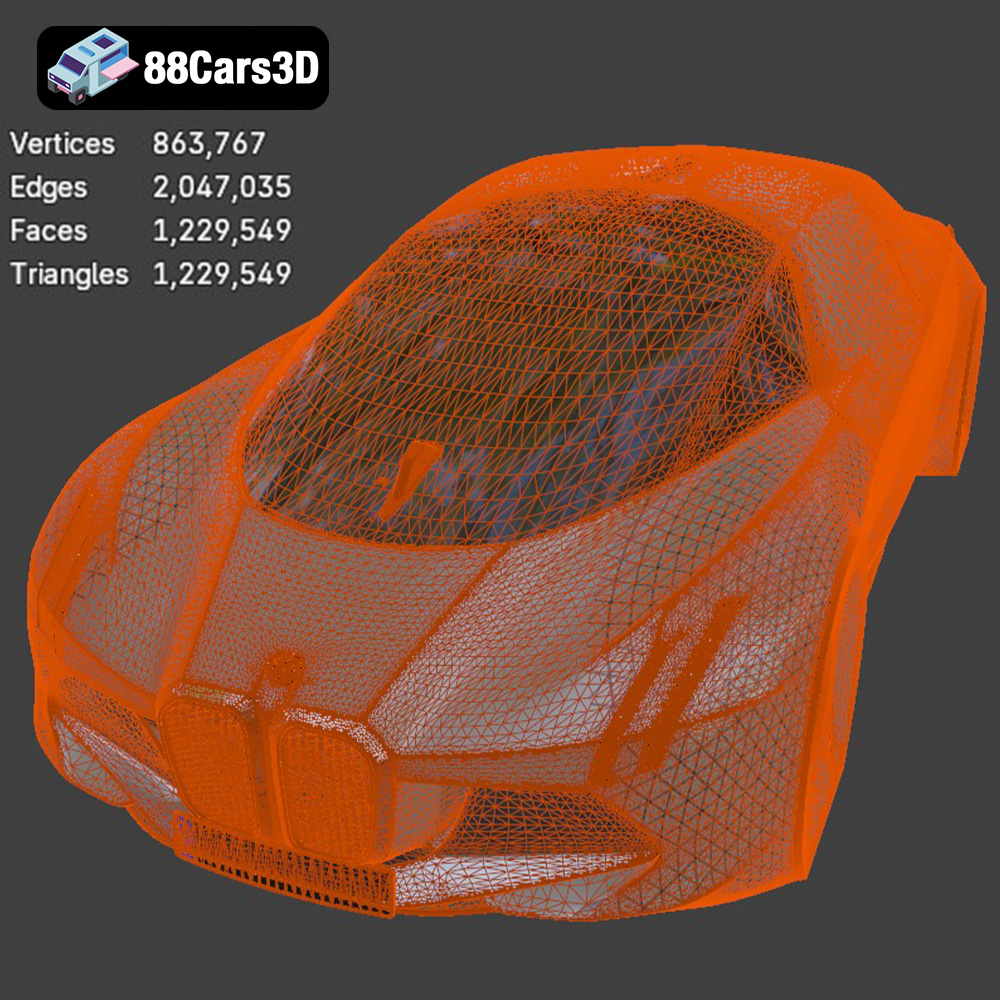
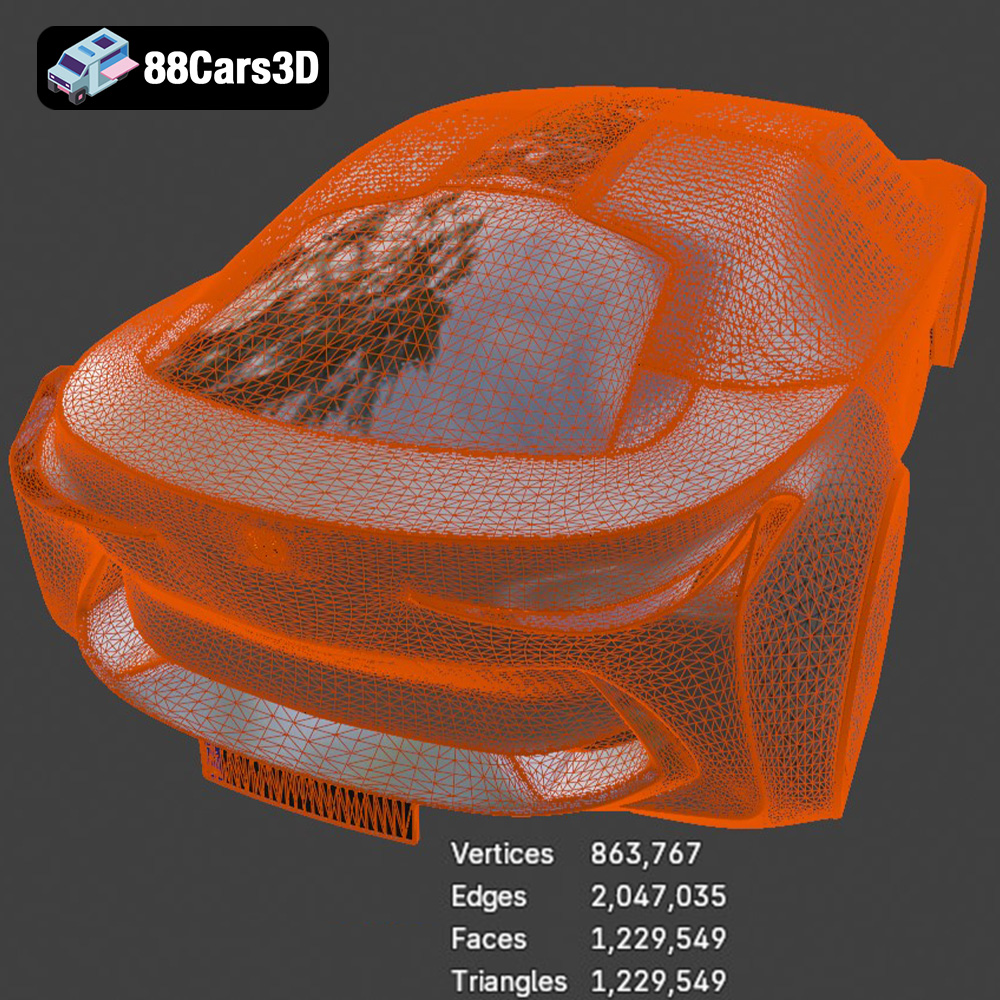
The BMW Vision Next 100 Concept 2016 3D Model is explicitly designed to be game-ready, making it an exceptional game asset for modern real-time engines like Unreal Engine and Unity. With a balanced triangle count of 1,229,549, it strikes an optimal balance between visual fidelity and performance, crucial for next-gen racing titles, open-world futuristic games, or immersive simulations. The inclusion of the `.unreal` format signifies its readiness for direct integration. Developers can leverage its proper pivot setup for accurate wheel rotation, steering, and even futuristic suspension travel, enabling realistic vehicle physics and animation. Implementing PBR materials is essential to achieve photorealistic visuals within the engine, reacting correctly to real-time lighting. Furthermore, the HQ interior is optimized for spectacular first-person POV, vital for driving simulators or VR experiences where players might interact with the cockpit, switching between ‘Boost’ and ‘Ease’ modes. Developers can easily adapt the model by modifying tire textures or adjusting interior display elements to fit specific game mechanics or visual styles.
Beyond traditional rendering and game development, high-quality 3D assets like the BMW Vision Next 100 Concept model open doors to exciting new frontiers in interactive experiences and physical manufacturing.
The demand for immersive content is skyrocketing, and detailed 3D car models are at the forefront of this trend. For AR (Augmented Reality) and VR (Virtual Reality), the BMW Vision Next 100 is a perfect candidate. Using the `.glb` format, the model can be seamlessly integrated into web-based AR experiences, allowing users to place the futuristic car in their real-world environment via a smartphone or tablet. Imagine a virtual showroom where potential buyers can walk around, zoom in on details, and even step inside the HQ interior using a VR headset. The ‘Boost’ and ‘Ease’ driving modes could be interactively toggled, demonstrating the car’s transformative cabin layout in real-time. This level of immersion is invaluable for marketing, product showcases, and interactive educational content, enabling a deeper connection with the design and technology of the concept vehicle. The optimized geometry ensures smooth performance even on mobile AR platforms, providing a fluid and engaging user experience.
The inclusion of the `.stl` format with the BMW Vision Next 100 Concept 2016 3D Model means that this digital masterpiece isn’t confined to screens. It can be brought into the physical world through 3D printing. This is particularly exciting for concept car enthusiasts, collectors, or designers looking to create physical prototypes. The provided 3D print settings are crucial for a successful print: recommended scales (1:12 / 1:18 / 1:24) cater to various display preferences, while the suggestion of resin printing for fine details underscores the precision required to capture elements like the ‘Alive Geometry’ panels and intricate cabin features. Specifying wall thickness, infill percentages, and the necessity of supports guides users through the technical challenges of bringing complex geometry to life. Post-processing, including sanding, priming, and applying an authentic signature copper metallic finish, allows for a truly professional and visually stunning physical replica, turning a digital vision into a tangible art piece. This bridge between the digital and physical realms highlights the comprehensive utility of such a versatile 3D asset.
The true mark of a professional 3D asset lies not just in its visual appeal but also in its underlying technical structure and the flexibility it offers to creators. The BMW Vision Next 100 Concept 2016 model excels in these areas, making it a valuable investment for any project.
With 1,229,549 triangles, the BMW Vision Next 100 model achieves a critical balance between high visual fidelity and performance efficiency. In 3D car models, especially those destined for both cinematic rendering and real-time game engines, poly count is a major consideration. Too few polygons result in blocky, unrealistic geometry, while too many can cripple performance. This model’s count indicates a meticulous approach to optimization, where essential details like complex body curves, interior elements, and intricate mechanical components are adequately resolved without excessive, redundant geometry. This careful optimization ensures that the model looks stunning in high-resolution renders while remaining manageable for real-time applications where frame rates are paramount. Furthermore, proper UV unwrapping is implicitly crucial here; a high-quality model will have well-laid-out UVs, allowing for clean application of textures, normal maps, and ambient occlusion, which further enhance visual detail without increasing the polygon count.
A static, unchangeable model limits creative scope. The BMW Vision Next 100 model, however, offers significant customization options, empowering artists to tailor it to specific project needs. The ability to change exterior body colors, for instance, allows for quick adaptation to different brand identities or stylistic themes beyond the signature copper. This is typically achieved through material adjustments in 3D software – modifying base color, metallic properties, or adding custom paint shaders. Similarly, modifying futuristic tire textures and lighting arrays can drastically alter the vehicle’s mood and functionality. Imagine a different tread pattern for a sci-fi racing scenario or a change in headlight glow for a dystopian future. Adjusting material finishes (matte, high gloss, metallic, carbon fiber) provides further aesthetic control, allowing the creation of unique variants. Even adapting interior lighting and displays can convey different environment moods, from a serene autonomous lounge to an alert, performance-oriented cockpit. This level of built-in flexibility ensures that the model isn’t just an asset; it’s a creative platform, ready to be infused with your unique artistic vision.
The world of 3D content creation thrives on innovation and high-quality assets. The BMW Vision Next 100 Concept 2016 3D Model epitomizes these qualities, serving as a versatile and technically robust foundation for a myriad of digital projects. From producing breathtaking automotive rendering for marketing campaigns to integrating it as a performant game asset in next-generation titles, this model empowers professionals across industries.
Its exceptional detail, comprehensive file format support (including .blend, .fbx, .obj, .glb, .stl, .ply, .unreal, and .max), and thoughtful optimization make it an invaluable resource. Whether you’re crafting immersive AR/VR experiences, visualizing futuristic cityscapes, or even bringing the concept into the physical world via 3D printing, this model provides the fidelity and flexibility required to realize your creative ambitions. It’s a testament to how expertly crafted 3D car models can bridge the gap between visionary design and practical application.
For those seeking to elevate their projects with premium 3D assets, exploring offerings like the BMW Vision Next 100 Concept 2016 3D Model on 88cars3d.com is an essential step. It represents an opportunity to acquire a meticulously detailed and professionally optimized asset that will undoubtedly become a centerpiece in any digital environment.
The BMW Vision Next 100 Concept 2016 is a groundbreaking masterpiece designed to celebrate the centenary of the legendary Bavarian automaker. This highly detailed 3D model captures the essence of futuristic mobility, featuring its iconic ‘Alive Geometry’ closed wheel arches, advanced aerodynamic copper bodywork, and reimagined twin-kidney grille. The high-quality (HQ) interior perfectly reflects the transition between manual ‘Boost’ and autonomous ‘Ease’ driving modes, making it an exceptional centerpiece for any digital environment. Boasting a highly detailed topology with 1,229,549 triangles, this model delivers unparalleled visual fidelity while maintaining optimized structures for high-end rendering and advanced real-time applications. Whether utilizing its HQ interior for immersive AR/VR experiences or rendering photorealistic automotive visualizers, this asset ensures top-tier performance across game development, animation, and visualization projects. Perfect for futuristic cityscapes, sci-fi racing titles, virtual showrooms, and high-end automotive configurators.
$37.50
.2016
.blend
.bmw
.fbx
.glb
.max
.obj
.ply
.rendering
.stl
.unreal
car-3d-model
concept-car
game asset
game-ready
optimized
vision-next-100
VR/AR