Get 20% OFF All Premium 3D & STL Models!

In the intricate tapestry of urban landscapes and bustling commercial zones, light commercial vehicles serve as the unsung heroes, facilitating the flow of goods and services that keep our modern world moving. From last-mile delivery to essential utility work, these vehicles are ubiquitous, making their accurate digital representation crucial for a vast array of industries. Whether for immersive game development, high-fidelity architectural visualization, or advanced AR/VR training simulations, the demand for meticulously crafted 3D car models that capture both the aesthetic and functional essence of these workhorses is consistently high.
This is where the meticulously crafted Ford Transit Camion 2008 3D model, available at 88cars3d.com, truly shines. It’s more than just a digital replica; it’s a versatile asset engineered for peak performance across diverse professional pipelines. This article will delve deep into the technical intricacies, practical applications, and creative potential offered by such a robust 3D model, demonstrating how it integrates seamlessly into cutting-edge workflows and empowers creators to achieve unparalleled realism and efficiency in their projects. We’ll explore everything from file format selection to advanced rendering techniques, ensuring you understand how this digital workhorse can elevate your next endeavor.
Choosing the right 3D model file format is paramount for a smooth workflow and optimal project outcome, directly impacting compatibility, performance, and the level of detail retained. The Ford Transit Camion 2008 3D model from 88cars3d.com offers an extensive suite of formats, ensuring maximum flexibility for any professional application. Understanding when and why to use each format is a cornerstone of efficient 3D production.
The .blend format is native to Blender, the popular open-source 3D creation suite. When you download the Ford Transit Camion 2008 model in .blend format, you’re receiving a fully editable Blender scene. This includes not just the mesh data, but also the materials, textures, lighting, camera setups, and even animation rigs if they were part of the original scene. For artists whose primary DCC (Digital Content Creation) tool is Blender, this format offers the most direct and uncompromised access to the model’s complete hierarchy and properties. It’s ideal for deep customization, re-texturing, rigging for complex animations, or integrating the model into existing Blender scenes without any loss of data during import/export cycles.
Autodesk’s .fbx (Filmbox) format is arguably the most widely adopted interchange format in the 3D industry, particularly favored for game development and real-time pipelines. Its strength lies in its ability to encapsulate a broad range of 3D data, including geometry, materials, textures, animations, skinning, and even camera and light information, all within a single file. For game engines like Unreal Engine and Unity, importing the Ford Transit Camion 2008 as an .fbx is often the most straightforward path. It maintains hierarchical integrity, ensuring that separate elements like wheels, doors, and the steering wheel are correctly parented and ready for animation. The .fbx format is a robust choice when transferring assets between different software packages or preparing them for real-time interaction.
The .obj (Wavefront Object) format is a classic, universal standard for exchanging 3D geometry data. While it’s excellent for mesh information (vertices, normals, UVs, and faces), it’s more limited in terms of materials and animations compared to .fbx. Materials are typically referenced in a separate .mtl (Material Template Library) file. The .obj format is highly compatible with nearly every 3D software application, making it a reliable fallback when other formats present issues. For static renders or when you intend to rebuild materials from scratch in your target software, the Ford Transit Camion 2008 in .obj format provides a clean, cross-software compatible mesh.
.glb is the binary version of the glTF (GL Transmission Format) format, which has rapidly gained traction as the “JPEG of 3D.” It’s specifically designed for efficient transmission and loading of 3D scenes and models in web-based applications, augmented reality (AR), and virtual reality (VR) environments. A single .glb file contains the model’s geometry, textures, and animations, making it highly portable and ideal for interactive online viewers or mobile AR experiences. For showcasing the Ford Transit Camion 2008 in a virtual showroom or integrating it into a browser-based configurator, the .glb format offers optimal performance and ease of deployment.
The .stl (Stereolithography) format is the de facto standard for 3D printing. It represents a 3D model as a collection of unconnected triangles, describing only the surface geometry without any color, texture, or material information. When preparing the Ford Transit Camion 2008 for physical fabrication, the .stl file is what your slicing software will process. It’s crucial for hobbyists and professionals looking to create miniature models or custom components, ensuring the digital mesh is accurately translated into a printable form. The model’s description specifically highlights its suitability for 3D printing output, making this format invaluable.
The .ply (Polygon File Format) is often used for storing 3D data from 3D scanners, CAD software, and other applications that require precise geometric representation. Similar to .obj, it focuses on mesh data but can also store additional properties like color per vertex, normal information, and confidence values. While less common for general game assets, it can be useful for specific engineering analysis, reverse engineering, or high-precision industrial visualization tasks involving the Ford Transit Camion 2008, particularly if it needs to interact with CAD environments or undergo structural analysis.
The .unreal format, or more accurately, the optimized asset structure for Unreal Engine, implies that the model has been specifically prepared and packaged to drop directly into an Unreal Engine project. This often means pre-configured materials, proper scale, collision meshes, and potentially even simple interactive blueprints. While typically achieved by importing .fbx and then saving as a native Unreal asset, having a pre-optimized “unreal” package for the Ford Transit Camion 2008 signifies that much of the initial setup work has already been done, saving valuable development time and ensuring engine-native compatibility and performance.
The .max format is the native file type for Autodesk 3ds Max. Like .blend for Blender, it contains the entire scene structure, including geometry, materials, textures, lighting, cameras, animation data, and modifier stacks. For users of 3ds Max, importing the Ford Transit Camion 2008 in this format provides the highest level of editable control, allowing for full scene manipulation, complex animation rigging, and integration into existing Max projects without any translation issues. It’s the preferred choice for high-end rendering, architectural visualization, and detailed animation work within the 3ds Max ecosystem.
By providing such a comprehensive range of file formats, the Ford Transit Camion 2008 3D model ensures that creators are not limited by their software choices and can confidently integrate this high-quality asset into virtually any professional pipeline.
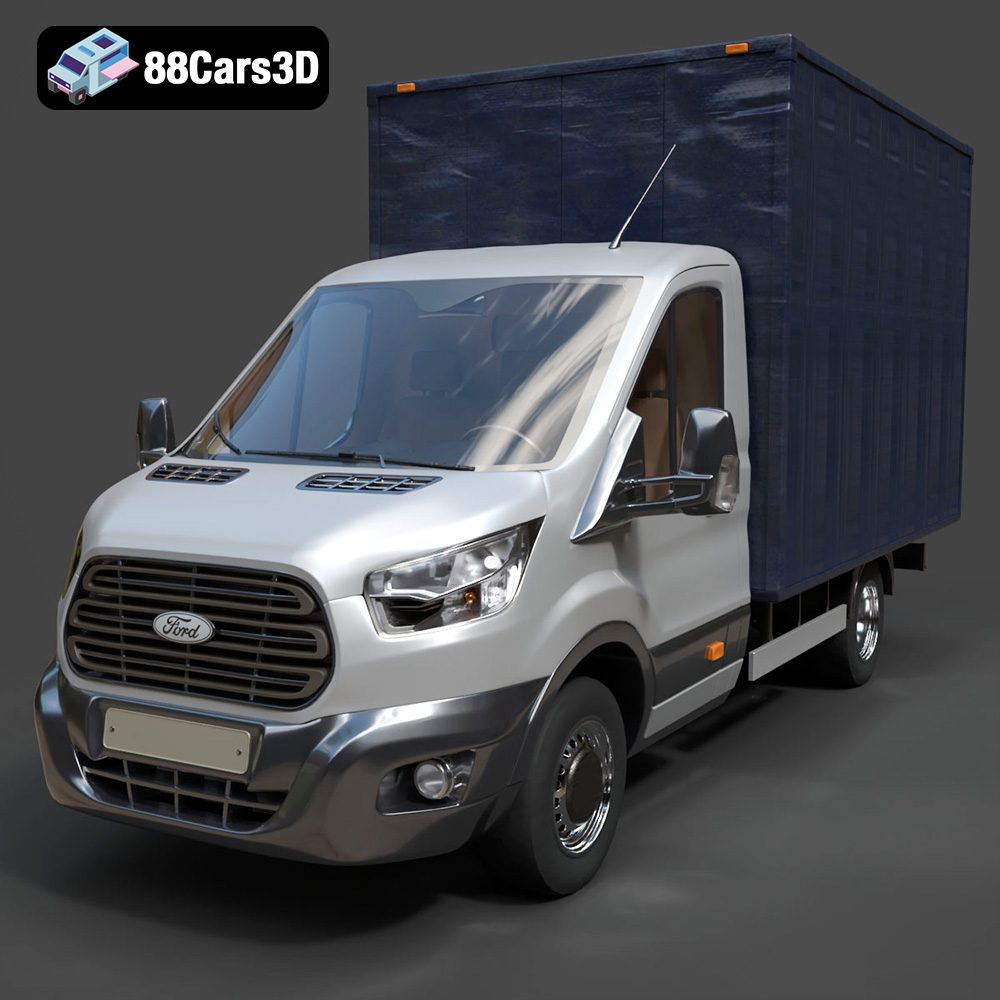
The real-world Ford Transit Camion 2008 has earned its reputation as a global icon of commercial reliability, a true backbone for logistics and delivery fleets. Replicating such a utilitarian vehicle in 3D demands an unwavering commitment to authenticity and technical precision. The Ford Transit Camion 2008 3D model delivers on this promise, translating the vehicle’s rugged aesthetic and practical functionality into a highly versatile digital asset.
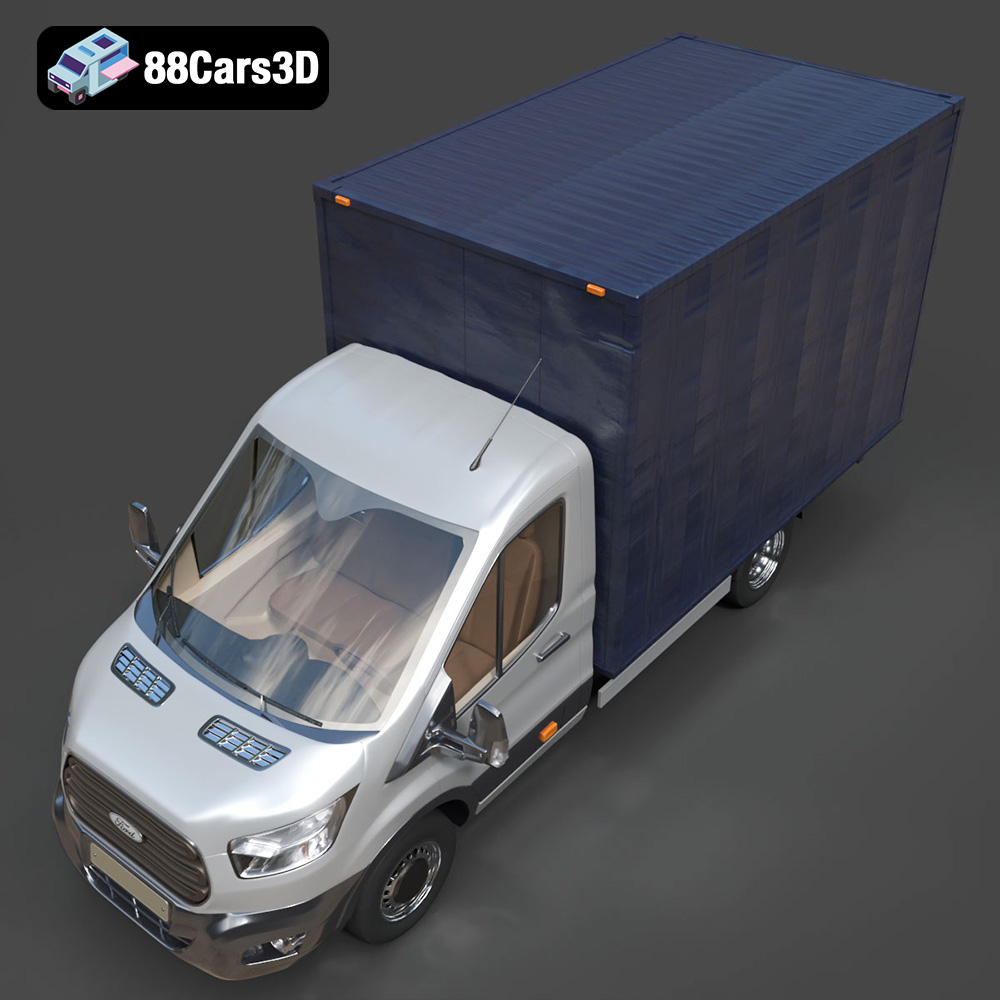
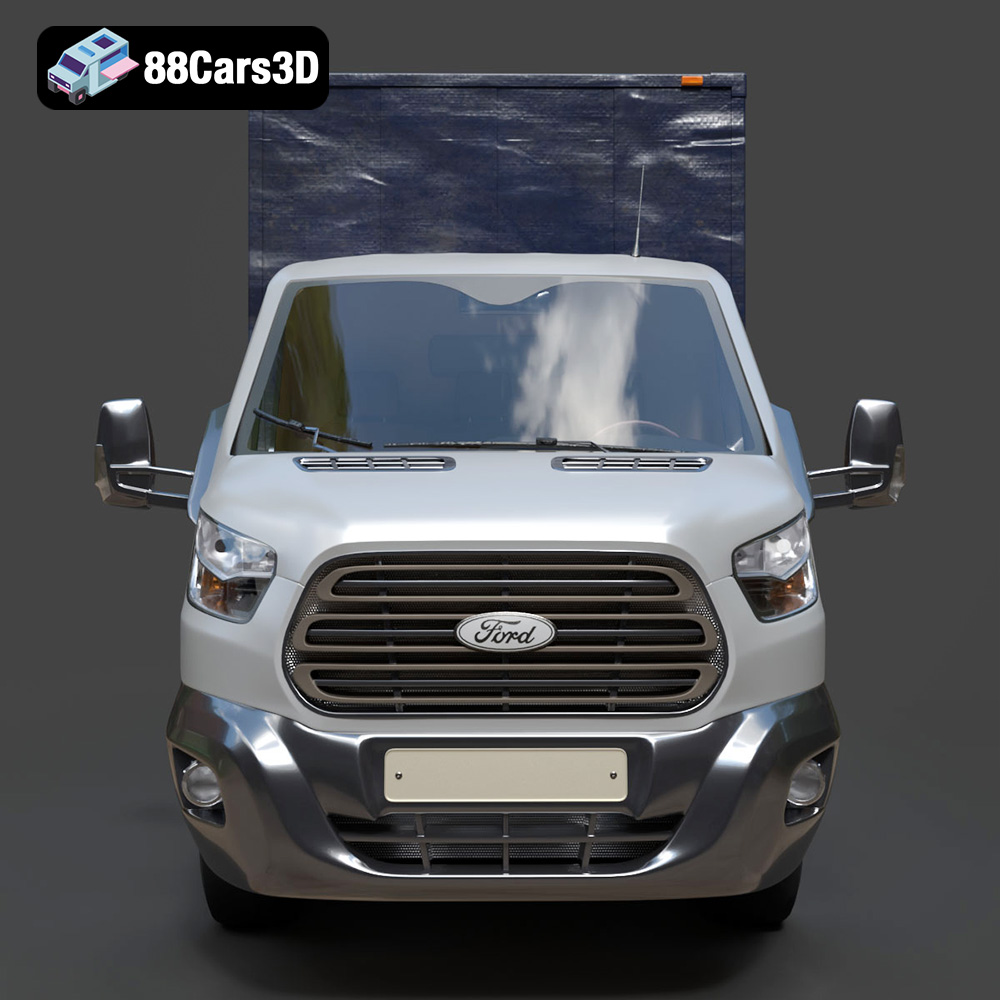
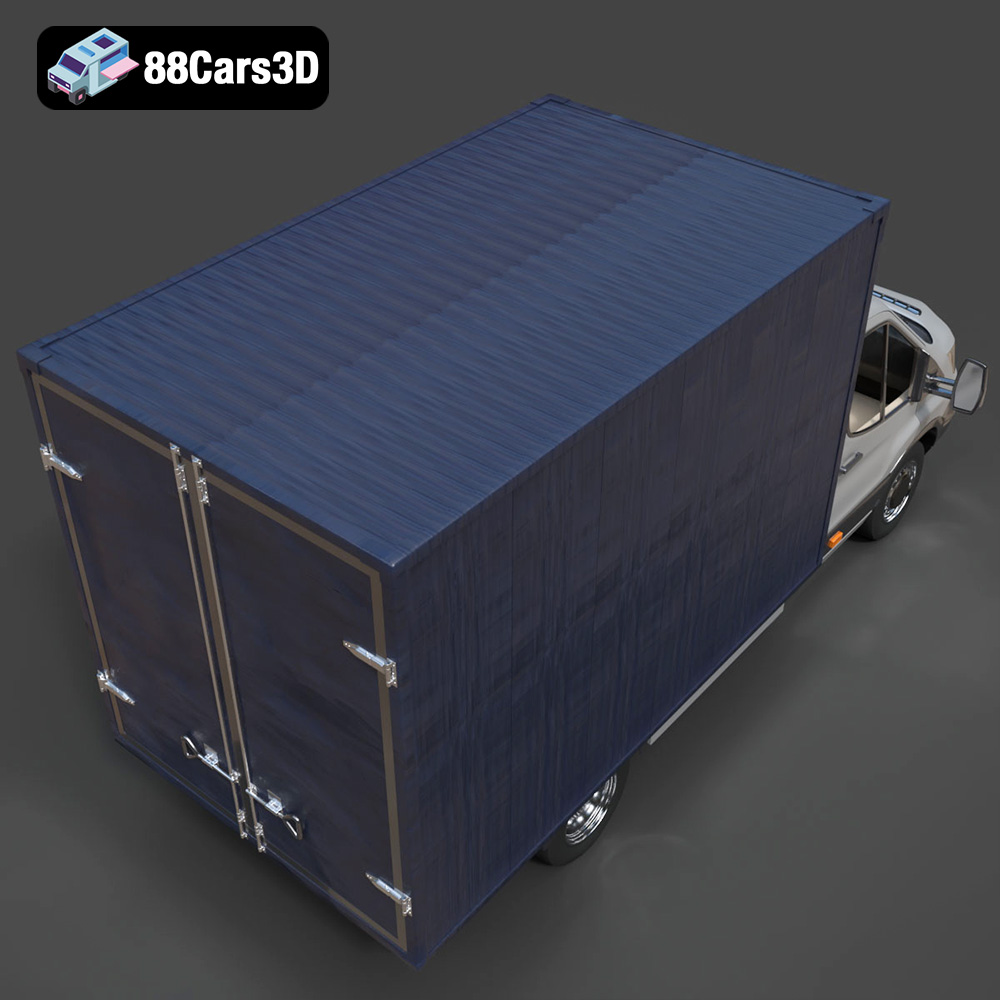
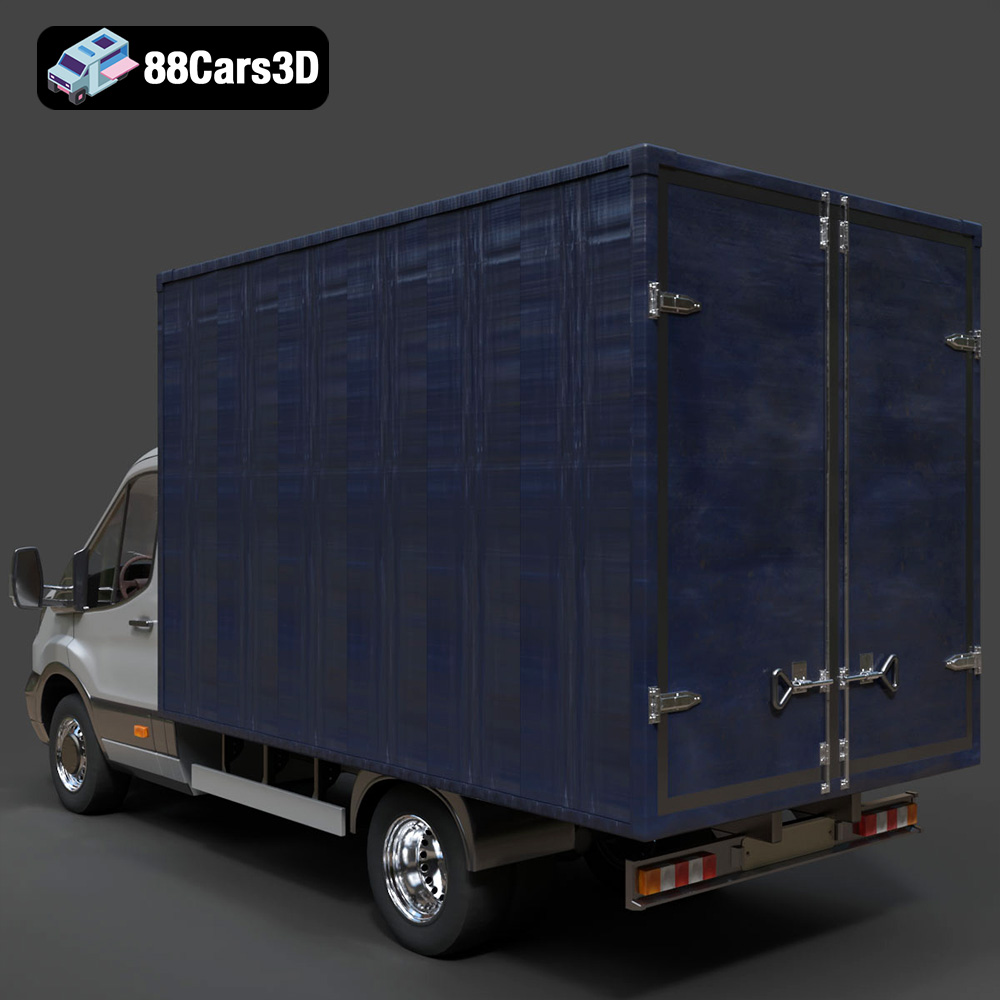
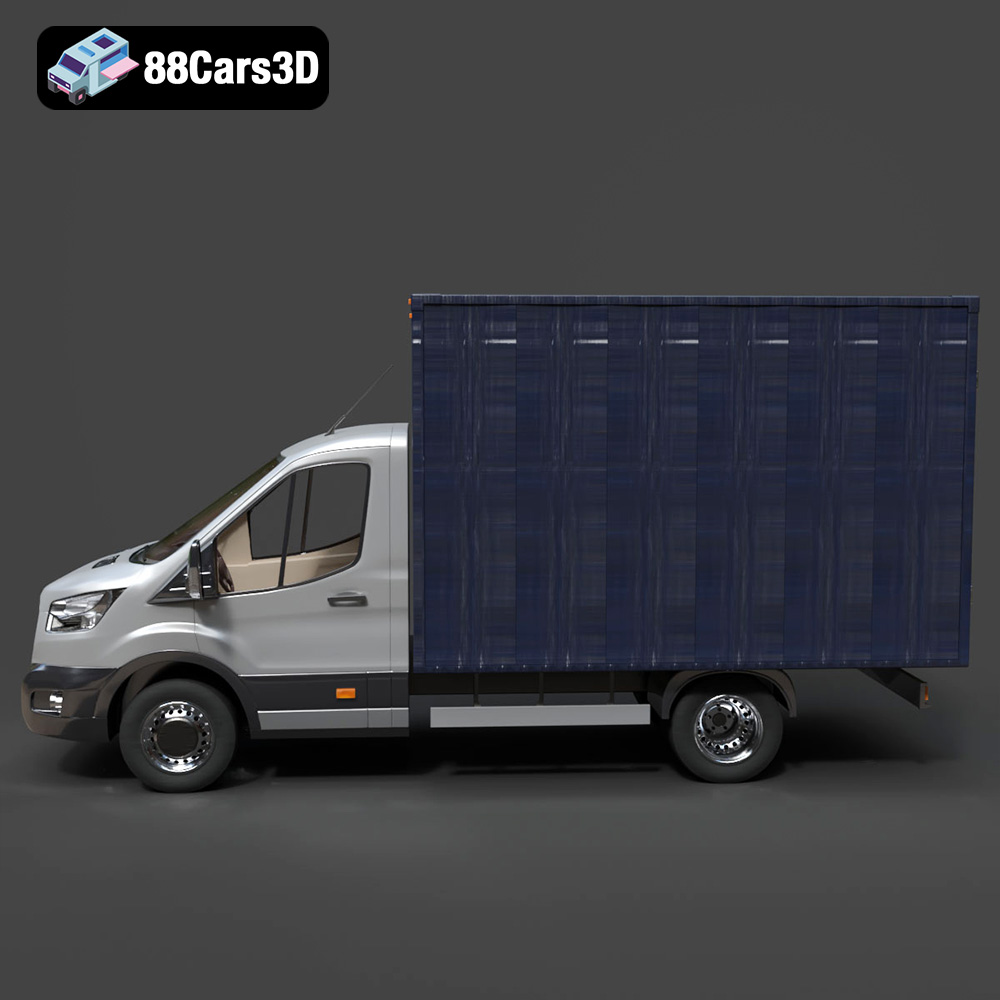
The exterior of this 3D model meticulously captures the signature look of the Ford Transit Camion 2008. From the distinct front fascia, with its accurately designed grille and robust bumper, to the heavy-duty chassis and spacious rear cargo box, every element reflects the real-world functionality of its physical counterpart. The intricate detailing extends to authentic commercial-grade headlights, indicator markers, and taillights, ensuring a realistic appearance under various lighting conditions. Furthermore, the model features heavy-duty steel wheels paired with rugged commercial tires, which are crucial for conveying the vehicle’s working-class character. Even the undercarriage boasts detailed elements, including exhaust routing and suspension components, contributing to the overall realism. Crucially, components like the wheels, doors, and steering are separated, allowing for seamless animation, whether for a driving simulation or an interactive experience.
Beyond its robust exterior, the Ford Transit Camion 2008 3D model offers a remarkably detailed interior, optimized for a range of applications, including first-person perspectives in driving simulators. The cockpit features authentic commercial cabin seating with textured fabric details, an accurate steering wheel, and a robust dashboard layout. The instrument cluster and center console controls are meticulously modeled, alongside operational details such as the gear shifter and pedal assembly. This attention to internal detail ensures that the model not only looks good from the outside but also provides an immersive and believable experience for virtual drivers or in training scenarios, reinforcing its value as a comprehensive digital asset.
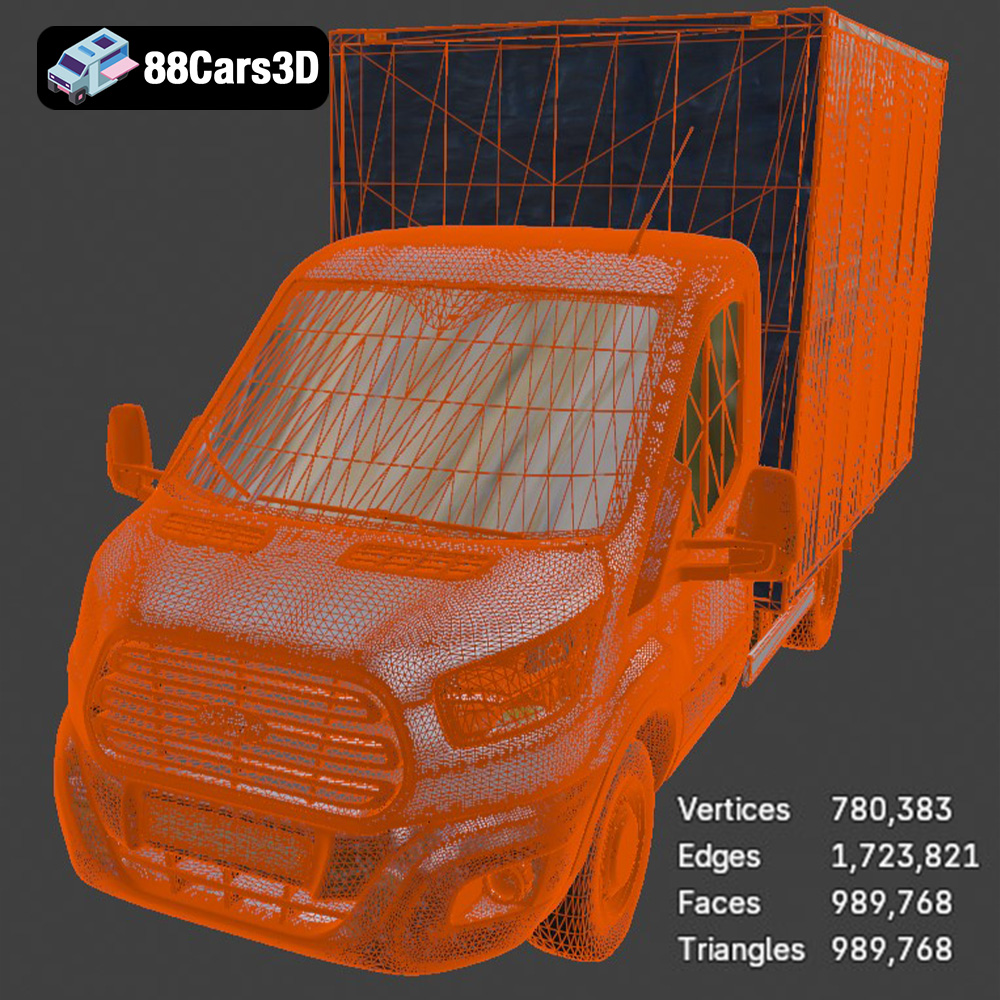
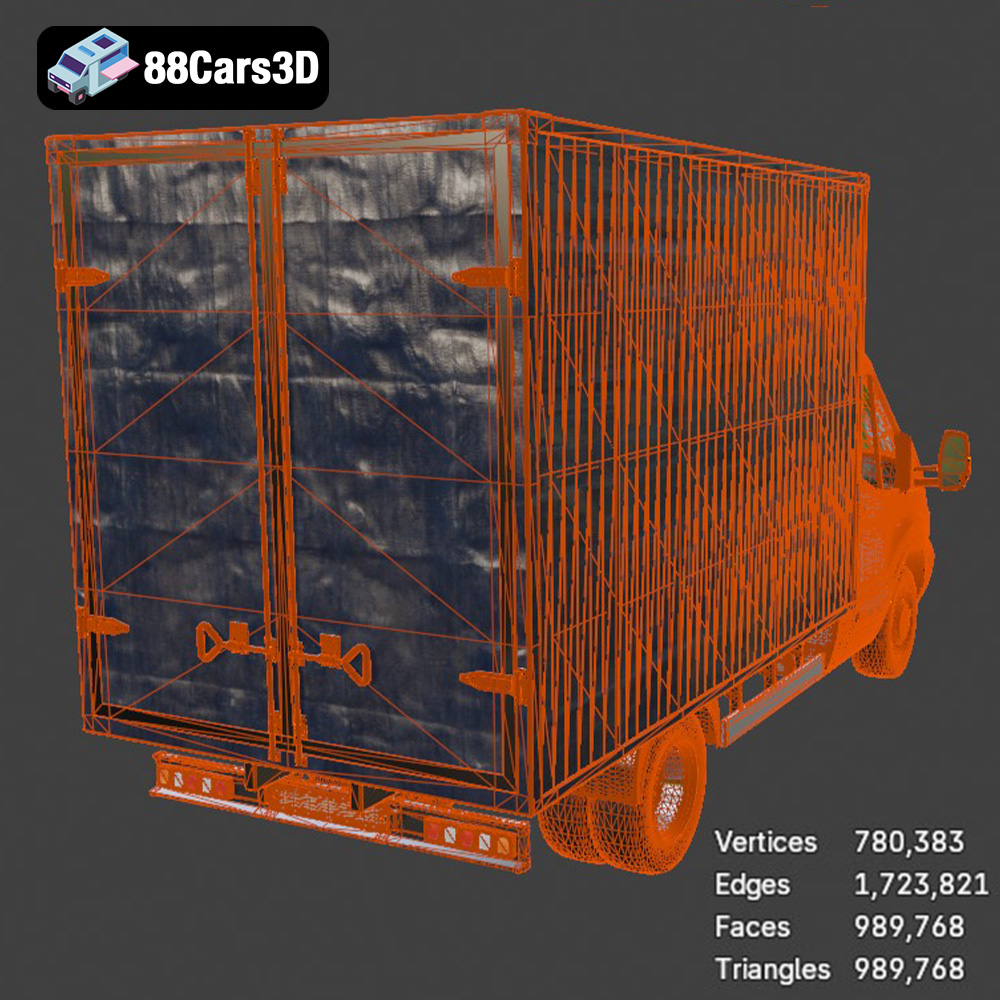
One of the standout advantages of this model is its commitment to game-ready optimization. With an approximate triangle count of 120,000, it strikes a perfect balance between high visual fidelity and rendering efficiency. This optimized topology ensures smooth performance in demanding real-time environments like Unreal Engine and Unity, making it an ideal choice for game development, AR/VR, and other interactive applications where performance is paramount. Despite its efficient polycount, it retains the intricate details necessary for close-up rendering, ensuring it holds up even under scrutiny. Real-world scale accuracy, based on actual vehicle chassis dimensions, guarantees correct proportions in any scene. The model also benefits from a proper pivot setup for steering, wheel rotation, and cargo door mechanics, streamlining the animation process. Combined with distinct material separation, which allows for easy application of custom liveries and weathering effects, this Ford Transit model is engineered for adaptability and professional-grade integration.
The true value of a high-quality 3D car model lies in its seamless integration into diverse professional workflows. The Ford Transit Camion 2008 3D model is specifically designed to be a versatile asset, empowering creators in game development, architectural visualization, and immersive AR/VR experiences.
For game developers, efficiency and visual quality are critical. The Ford Transit Camion 2008 model’s optimized ~120k triangle count is a sweet spot, providing excellent detail without overburdening real-time engines.
This model effectively functions as a robust game asset, ready to be dropped into a variety of interactive environments.
When photorealism is the objective, as in architectural visualization or automotive rendering, the intricate details of the Ford Transit Camion 2008 truly shine.
Augmented Reality (AR) and Virtual Reality (VR) demand efficient, high-quality assets that can be rendered in real-time on various devices. The Ford Transit model is perfectly suited for these emerging applications.
The model’s robust design and optimized polycount ensure smooth, responsive experiences across these demanding platforms.
The versatility of a well-crafted 3D car model extends beyond purely digital realms. The Ford Transit Camion 2008 model is designed with 3D printing in mind, allowing enthusiasts and professionals alike to bring this iconic commercial vehicle into the physical world as a detailed miniature or display piece.
The journey from a digital mesh to a tangible object begins with careful preparation. The availability of the model in the .stl format is crucial here, as it’s the standard for almost all 3D printers and slicing software. Before printing, several considerations are vital:
Achieving a high-quality 3D print requires precise settings and a diligent post-processing workflow:
A truly professional 3D car model offers more than just static beauty; it provides a canvas for creative expression and adaptation. The Ford Transit Camion 2008 model excels in this regard, offering extensive customization options that allow artists and developers to tailor it precisely to their project’s unique requirements.
The Ford Transit Camion is a vehicle synonymous with commercial identity. The 3D model embraces this, providing features that make branding and aesthetic changes remarkably straightforward:
Beyond static appearance, the model’s adaptability extends to how it interacts with and enhances its virtual environment:
This rich suite of customization options ensures that the Ford Transit Camion 2008 3D model is not just a high-quality asset, but a flexible tool that can be endlessly adapted to suit a wide spectrum of creative visions and technical specifications, truly embodying the spirit of modern automotive rendering and game asset development.
The Ford Transit Camion 2008 represents an enduring icon of commercial utility, and its digital counterpart, available at 88cars3d.com, fully embraces this legacy. This comprehensive 3D model is far more than just a collection of polygons; it’s a meticulously engineered asset designed to empower professionals across a spectrum of industries. From its optimized game-ready topology and incredibly detailed exterior and interior features to its diverse range of included file formats, every aspect of this model is crafted for maximum utility and visual fidelity.
Whether you are a game developer populating an open-world city with realistic AI traffic, an architect integrating believable vehicles into a visualization, an AR/VR designer crafting immersive training simulations, or a hobbyist bringing a beloved vehicle to life through 3D printing, the Ford Transit Camion 2008 3D model stands as an invaluable resource. Its technical specifications ensure high performance without sacrificing visual realism, while its adaptability through customization options allows for endless creative possibilities.
Investing in such a high-quality 3D car model significantly streamlines production pipelines, reduces development time, and elevates the overall quality of your projects. It’s a testament to the fact that foundational assets, when created with such precision and foresight, can become the cornerstone of countless innovative applications. Explore the potential of this versatile digital workhorse and see how the Ford Transit Camion 2008 3D model can drive your next project forward. You can find this exceptional asset and many other high-quality 3D car models at 88cars3d.com.
The Ford Transit Camion 2008 stands as a global icon of commercial reliability, serving as the backbone for countless logistics and delivery fleets worldwide. This 3D model meticulously captures the rugged utilitarian aesthetic of the beloved light commercial vehicle, featuring its distinct front fascia, heavy-duty chassis, and spacious rear cargo box. From the accurate grill design to the practical and robust exterior housing, every detail reflects the real-world functionality that has made the Transit a staple in the commercial transport sector. Crafted with an optimized topology of approximately 120,000 triangles, this game-ready model strikes the perfect balance between high visual fidelity and rendering efficiency. The geometry has been specifically tailored for real-time applications, ensuring smooth performance in game engines like Unreal Engine and Unity without sacrificing the intricate details necessary for close-up rendering. It features distinct material separation, enabling easy application of custom liveries and weathering effects. Perfect for urban logistics simulators, open-world city environments, commercial fleet visualizers, and VR training applications.
$19.99
.blend
.fbx
.ford
.glb
.max
.obj
.ply
.rendering
.stl
.unreal
box-truck
commercial-vehicle
game asset
game-ready
low-poly
optimized
transit-2008
transit-camion
truck-3d-model
VR/AR