Get 20% OFF All Premium 3D & STL Models!

In the vast landscape of 3D content creation, historical accuracy and technical precision are paramount, especially when depicting iconic military hardware. From immersive game environments to captivating historical documentaries and detailed visualizations, the demand for meticulously crafted assets continues to grow. These assets serve as the backbone for bringing historical narratives to life, allowing audiences to experience the power and presence of legendary machines with unparalleled realism.
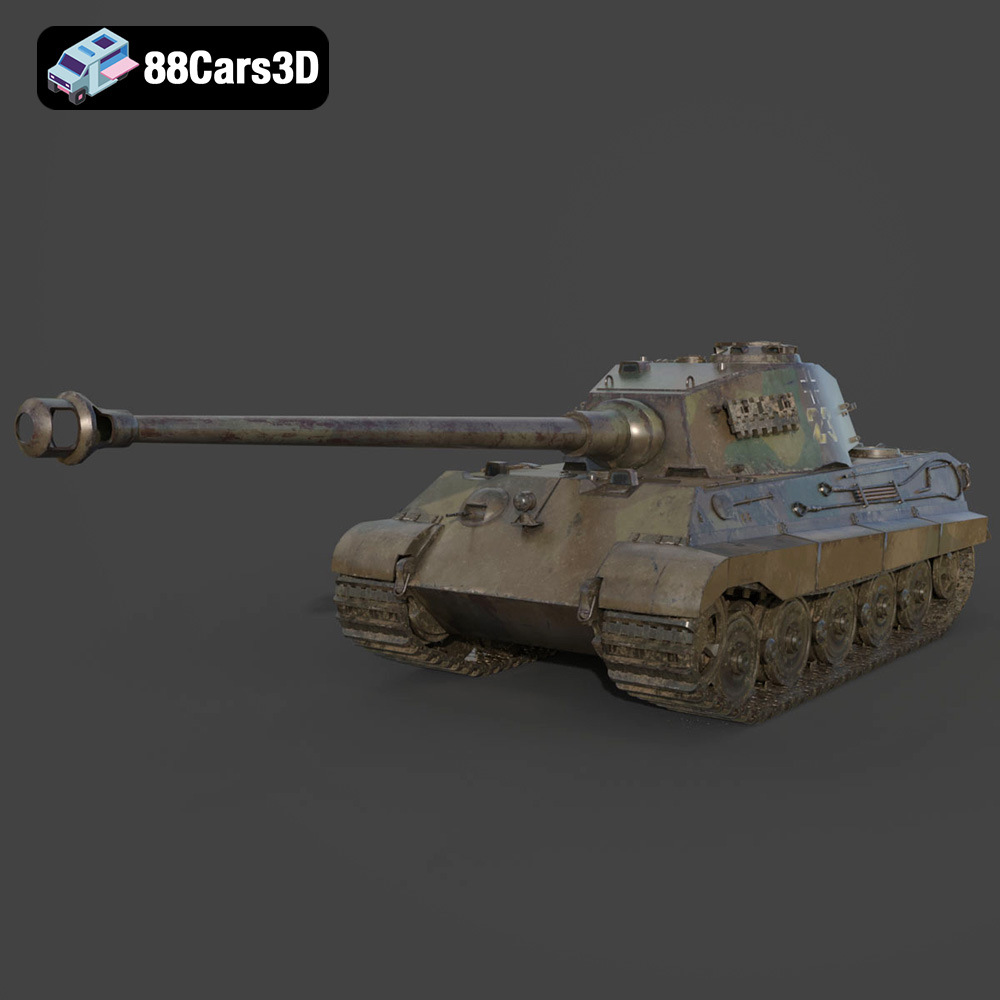
Today, we delve into the intricate world of military vehicle modeling, focusing on a truly formidable example: the Panzerkampfwagen VI Ausf-08. This legendary heavy tank, synonymous with its imposing silhouette and devastating firepower, presents a unique challenge and opportunity for 3D artists. Recreating such a complex machine requires not just artistic skill, but a deep understanding of its engineering, historical context, and the technical demands of various digital pipelines. The Panzerkampfwagen VI Ausf-08 3D Model available at 88cars3d.com exemplifies this blend of historical fidelity and technical optimization, offering a robust solution for professionals across industries.
Whether you’re a game developer striving for authentic combat simulations, an AR/VR creator building immersive historical experiences, or a visualization specialist producing cinematic renders, understanding the nuances of such detailed 3D assets is crucial. This article will explore the technical considerations, workflow integrations, and diverse applications of a high-quality 3D model like the Panzerkampfwagen VI Ausf-08, demonstrating how it can elevate your projects from concept to compelling reality.
The journey of any 3D model, from its initial creation to its final deployment, is heavily influenced by the file formats chosen. Each format serves a specific purpose, optimized for different software, engines, or end-use applications. Understanding these distinctions is critical for ensuring compatibility, maintaining data integrity, and streamlining your workflow. The Panzerkampfwagen VI Ausf-08 3D Model comes with a comprehensive suite of formats, empowering artists and developers with maximum flexibility.
The .blend format is the native file type for Blender, the powerful open-source 3D creation suite. When you download a .blend file, you gain access to the complete Blender scene, including all mesh data, materials, textures, lighting setups, cameras, animations (if present), and modifiers. This format is ideal for users who primarily work in Blender and require full editability. It allows for advanced customization, tweaking of topology, re-texturing, or integrating the model into existing Blender projects seamlessly. For the Panzerkampfwagen VI Ausf-08, the .blend file provides a solid foundation for any Blender-centric workflow.
.fbx (Filmbox) is arguably the most widely used 3D interchange format in the entertainment industry, particularly for game development. Developed by Autodesk, it efficiently stores 3D models, animations, cameras, and lights in a single file. Its strength lies in its excellent compatibility with major 3D software (like 3ds Max, Maya, Blender, Cinema 4D) and, crucially, real-time engines such as Unreal Engine and Unity. For a game-ready asset like the Panzerkampfwagen VI Ausf-08, the .fbx is often the go-to choice for importing into a game project, ensuring proper mesh geometry, UV mapping, and material assignments are retained.
.obj (Wavefront OBJ) is a fundamental and highly universal 3D file format. It stores mesh geometry (vertices, normals, texture coordinates, and faces) and can reference external material files (.mtl). While it doesn’t support animations or advanced scene data, its simplicity makes it incredibly robust for cross-software compatibility. Almost every 3D application can import and export .obj files. This format is excellent for ensuring the core geometry of the Panzerkampfwagen VI Ausf-08 is accessible, regardless of your primary 3D package, making it a reliable fallback or a starting point for re-texturing in different engines.
.glb (GL Transmission Format Binary) is the binary version of glTF, a royalty-free specification for 3D scenes and models. It’s designed for efficient transmission and loading of 3D models into web browsers, AR (Augmented Reality), and VR (Virtual Reality) applications. A .glb file embeds all assets (mesh, textures, materials, animations) into a single, self-contained binary file, making it incredibly convenient for quick deployment. For showcasing the Panzerkampfwagen VI Ausf-08 in a web-based configurator or an AR experience, .glb offers optimal performance and ease of integration.
.stl (STereoLithography) is the de facto standard file format for 3D printing. It represents a 3D model as a series of connected triangles, describing only the surface geometry without color, texture, or other attributes. While not suitable for rendering or animation, it’s essential for converting digital models into physical objects. The inclusion of an .stl format for the Panzerkampfwagen VI Ausf-08 means enthusiasts can easily bring this historical tank to life on their 3D printers, crafting display models or scale miniatures.
.ply (Polygon File Format or Stanford Triangle Format) is a versatile format for storing 3D data, particularly useful for scanned data, point clouds, and mesh models with additional properties like color per vertex, transparency, or even confidence values. While less common for general game assets, it’s frequently used in CAD, 3D scanning, and scientific visualization where precise mesh information and additional per-vertex data are crucial. For advanced analysis or specific industrial applications of the Panzerkampfwagen VI Ausf-08, the .ply format offers a robust data structure.
The .unreal format, often referring to assets packaged specifically for Unreal Engine, implies a highly optimized and pre-configured asset ready for direct import into an Unreal project. This typically means the model has been correctly scaled, pivoted, had its materials set up with appropriate textures (Albedo, Normal, Roughness, Metallic, etc.), and potentially has LODs (Levels of Detail) or collision meshes already in place. For developers working with Unreal, this format dramatically reduces setup time, allowing the Panzerkampfwagen VI Ausf-08 to be dropped directly into a scene and rendered with minimal additional work.
Similar to .blend for Blender, .max is the native file format for Autodesk 3ds Max, a leading software for 3D modeling, animation, and rendering. An .max file contains the complete 3ds Max scene, including all objects, modifiers, materials, textures, cameras, lighting, and animation data. It offers the highest level of editability and customization within the 3ds Max environment. For artists whose primary DCC (Digital Content Creation) tool is 3ds Max, the .max file for the Panzerkampfwagen VI Ausf-08 provides full control over every aspect of the model, from tweaking proportions to setting up complex animations or cinematic renders.
Bringing a historical military vehicle like the Panzerkampfwagen VI Ausf-08 into the 3D realm is an exercise in meticulous research and precision modeling. It’s not just about creating a visually appealing tank; it’s about honoring its legacy through authentic representation. The 88cars3d.com model stands out due to its commitment to historical fidelity.
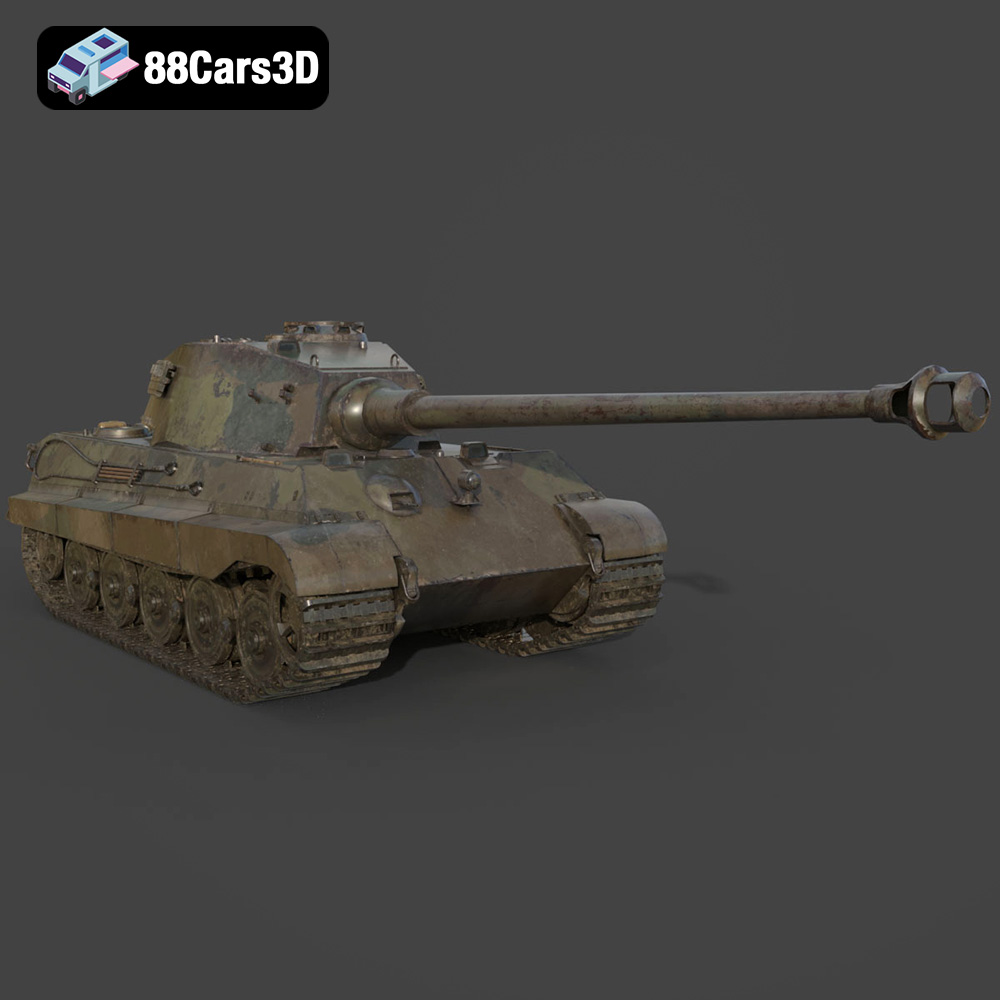
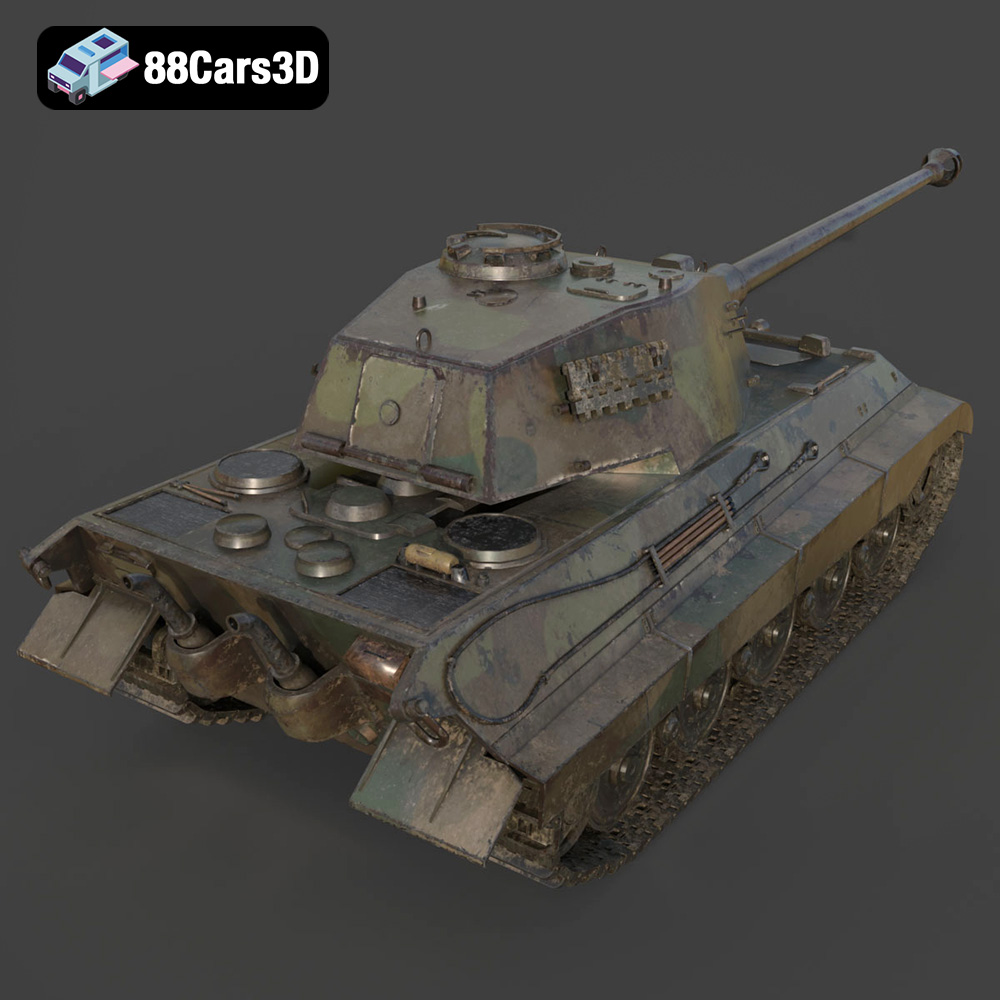
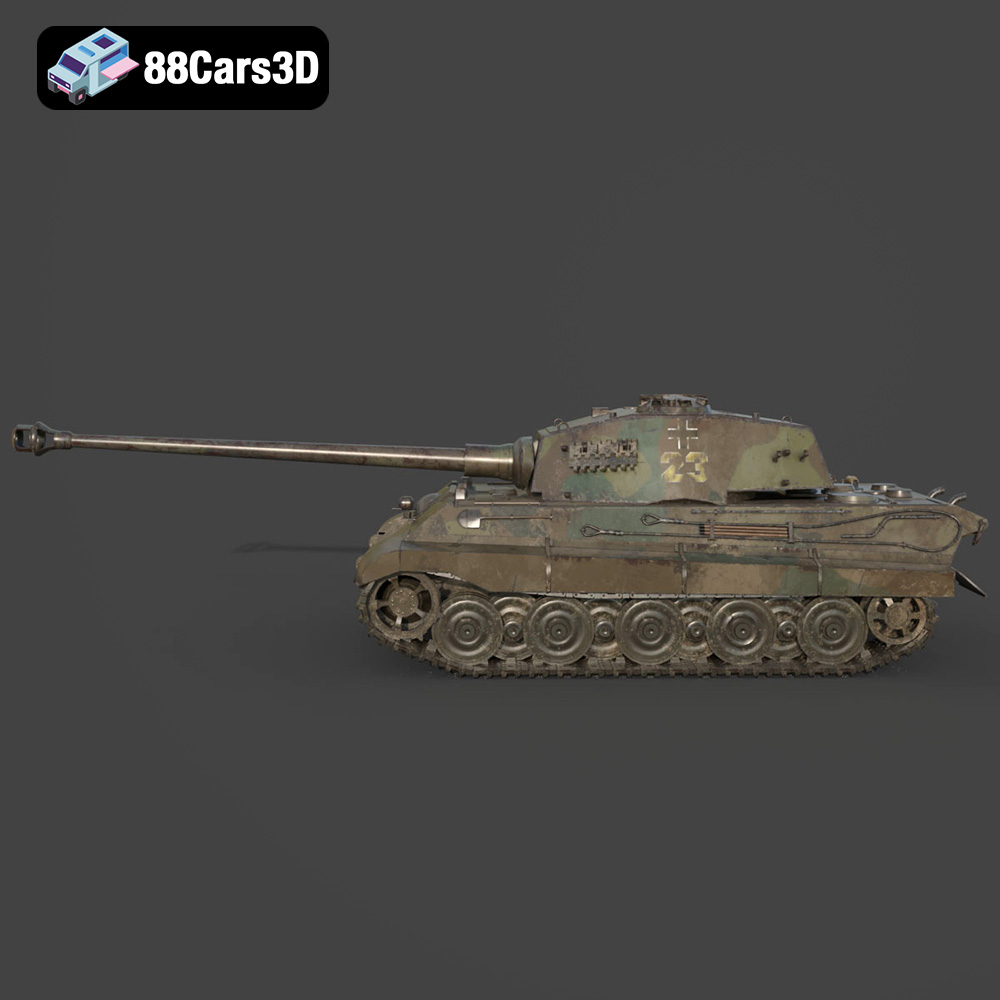
The Panzerkampfwagen VI Ausf-08 is instantly recognizable by its formidable, boxy hull, prominent turret, and the distinctive interleaved road wheels. The initial modeling phase for such an asset involves poring over blueprints, historical photographs, and archival footage to ensure every angle, every panel line, and every dimension is precisely replicated. The accuracy of the hull and turret frame geometry and proportions in this model is a testament to this painstaking process, ensuring that the tank’s powerful presence translates faithfully into the digital space.
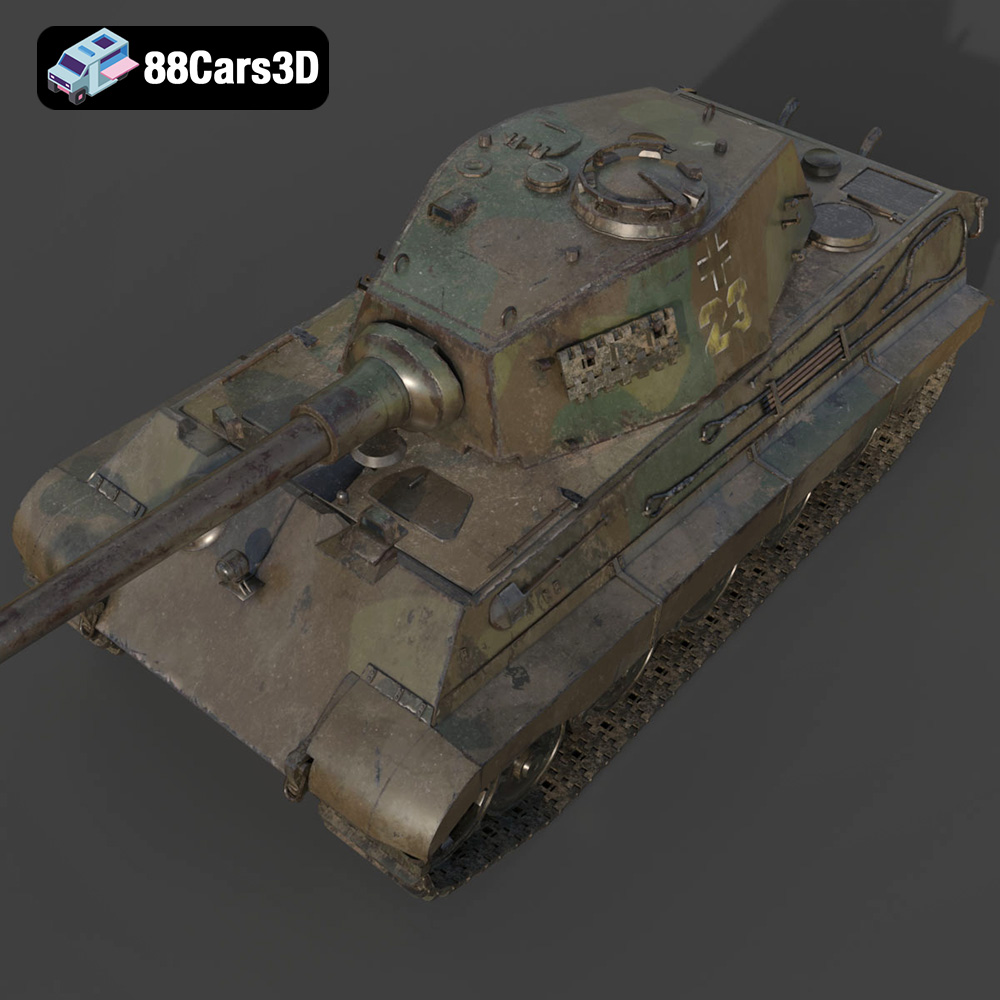
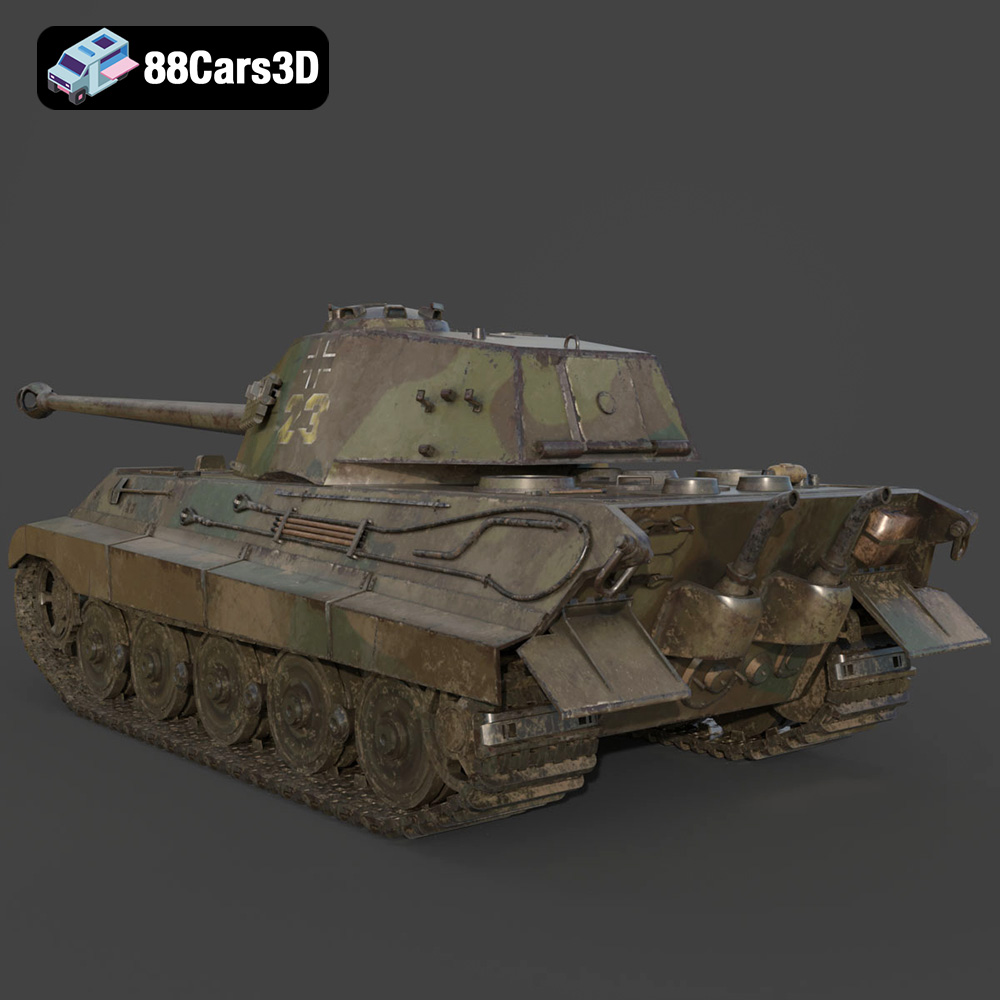
Beyond the primary forms, it’s the finer details that truly sell the realism of a 3D model. The Panzerkampfwagen VI Ausf-08 model excels here, featuring elements like the detailed exterior engine deck and ventilation grills, which are often overlooked but crucial for authenticity. The authentic twin rear exhaust system with its armored shrouds adds another layer of realism, hinting at the powerful engine within. Furthermore, military-spec lighting details, intricate interleaved road wheels, drive sprockets, and individual track links – often among the most challenging components to model – are all meticulously crafted, providing the robust visual detail expected in high-end 3D car models and military assets.
Even elements that might not always be in direct view contribute to the overall authenticity. The accurate torsion bar suspension details, for example, might be subtly visible during animations or close-up renders, enhancing the sense of mechanical realism. The commander’s cupola with detailed vision blocks and hatch geometry, along with the detailed driver and radio operator frontal hatch placements, allows for dynamic scene setups and even first-person perspectives in games. The basic internal breech assembly visible from hatches adds an extra layer of believability, ensuring that even a quick glance through an open hatch reveals a thoughtful level of detail.
While historical accuracy is paramount, practical application demands optimization. A stunningly detailed model is of little use if it grinds an engine to a halt. The Panzerkampfwagen VI Ausf-08 3D Model strikes a masterful balance between visual fidelity and real-time performance, making it a truly game-ready asset.
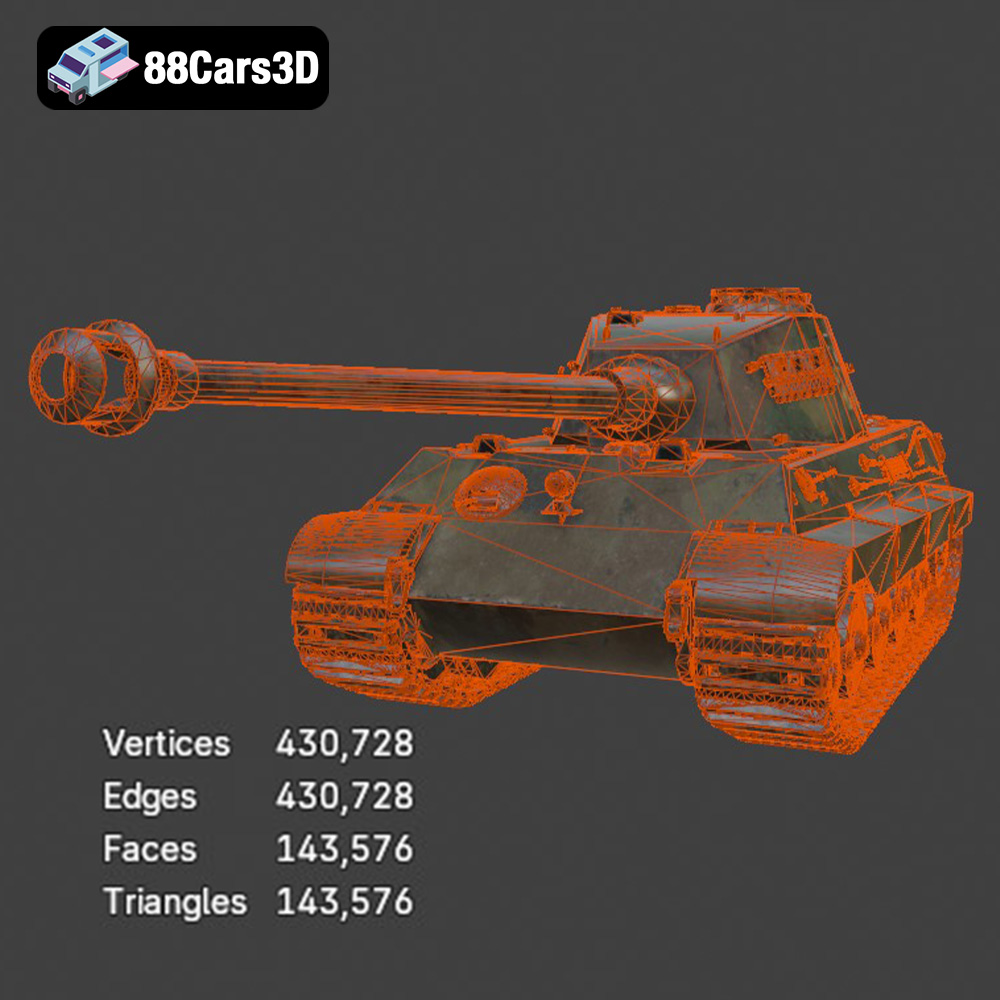
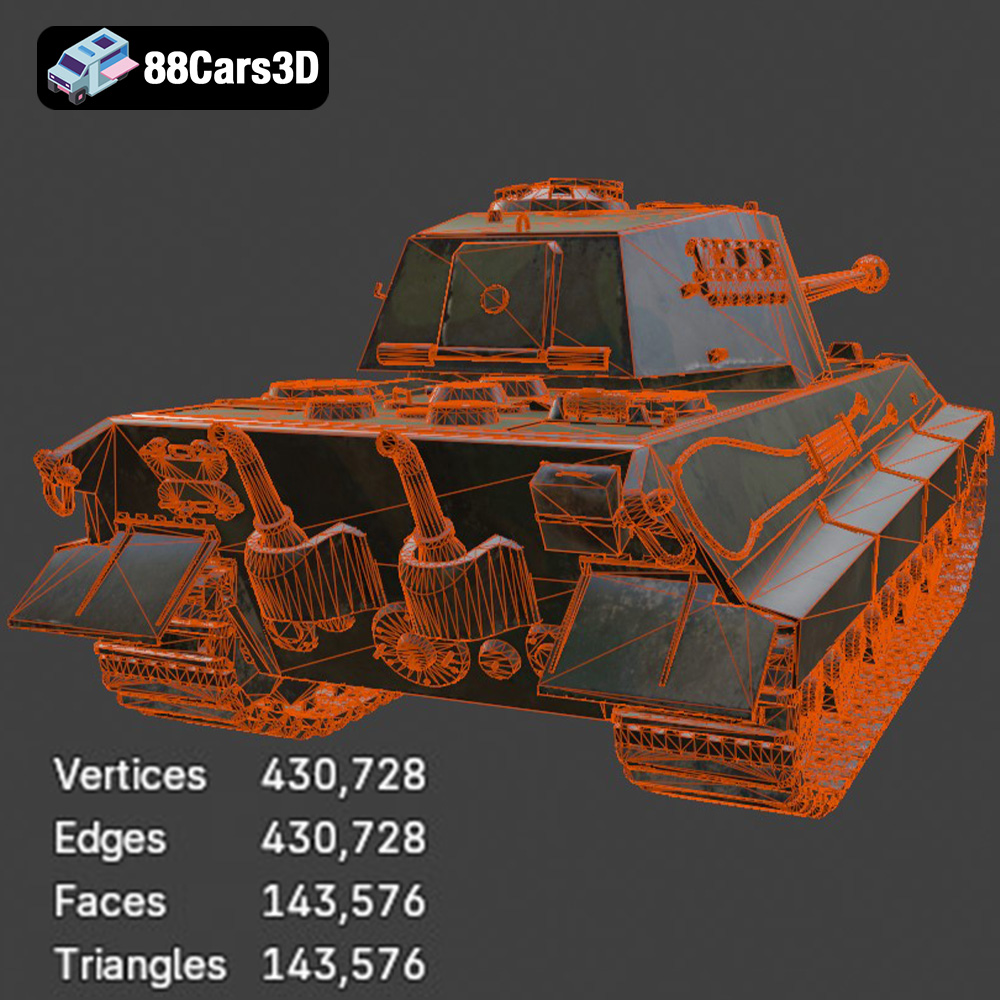
At 143,576 triangles, this model demonstrates a highly optimized topology. This polycount is carefully chosen to deliver exceptional visual fidelity – allowing for the intricate details discussed earlier – while remaining perfectly suitable for real-time engines like Unreal and Unity. Achieving this balance requires expert modeling techniques, including efficient polygon distribution, clean topology, and often, the strategic use of normal maps to simulate finer surface details without increasing mesh density. This ensures the Panzerkampfwagen VI Ausf-08 can be deployed in large-scale combat simulators or detailed virtual environments without compromising frame rates.
A “game-ready” asset is more than just a low-poly model; it’s about thoughtful preparation for engine integration. The Panzerkampfwagen VI Ausf-08 is crafted for seamless integration, evidenced by its real-world scale accuracy and proper pivot setup. Correct pivots for turret rotation, main gun elevation, and individual track/wheel movement are crucial for believable animation and physics simulation within a game engine. This attention to technical detail means less setup time for developers, allowing them to focus on gameplay mechanics or cinematic sequences rather than asset preparation. Its compatibility with major 3D software platforms and real-time rendering engines further cements its status as a versatile game asset.
The model’s exterior mountings for pioneer tools, tow cables, and spare tracks are not just visual embellishments; they are carefully optimized geometric elements that contribute to the tank’s rugged character. When combined with high-quality, PBR (Physically Based Rendering) ready textures (though textures are not explicitly listed in the description, they are implied for game-readiness and materials), these details create a convincing sense of wear and utility. The optimized geometry for first-person POV in gaming or VR tank simulators also ensures that internal details, even basic ones, hold up when viewed up close, enhancing the immersion for players.
The utility of a high-quality 3D model extends far beyond traditional game development. The Panzerkampfwagen VI Ausf-08 model, with its robust design and multiple file formats, is a versatile asset capable of enriching a diverse array of digital and even physical projects.
Augmented Reality (AR) and Virtual Reality (VR) are transforming how we interact with digital content. The optimized polycount and real-world scale of the Panzerkampfwagen VI Ausf-08 make it an excellent candidate for AR/VR applications. Imagine a virtual military museum where users can walk around, examine, and even “sit inside” a historically accurate Panzerkampfwagen. Or an educational AR experience that projects the tank into a real-world environment, allowing students to learn about its history and mechanics firsthand. The .glb format, in particular, is perfectly suited for such immersive virtual showrooms, configurators, and mobile AR experiences due to its web-friendly and optimized nature.
For cinematic sequences, historical documentaries, or even brand campaigns (e.g., historical military games or model kits), the Panzerkampfwagen VI Ausf-08 excels in rendering and visualization contexts. Its detailed geometry, authentic proportions, and potential for advanced material setups mean it can be lit and rendered with stunning realism. Visual artists can use this model to create compelling key art, animated sequences depicting historical battles, or detailed studio renders for marketing materials. The inclusion of .blend, .max, and .fbx formats ensures compatibility with industry-standard renderers like V-Ray, Corona, Cycles, and Arnold, facilitating high-end production.
A unique application for 3D models of historical vehicles is 3D printing. The Panzerkampfwagen VI Ausf-08 model includes an .stl format, specifically tailored for this purpose. Hobbyists and collectors can convert this digital asset into a tangible, display-scale model. The recommended print settings (scale, layer height, wall thickness, infill, and support requirements) provide a clear roadmap for successful printing, particularly recommending resin printing for the fine details of the main gun barrel, exhaust, and tracks. Post-processing suggestions, such as sanding, priming, and applying authentic camouflage and weathering finishes, further guide enthusiasts in creating a truly museum-worthy physical replica.
Integrating a new 3D asset, especially one as detailed as the Panzerkampfwagen VI Ausf-08, into an existing production pipeline requires a strategic approach. Leveraging the provided file formats and understanding how they interact with different DCC software and game engines is key to efficiency and successful project delivery.
For many professionals in automotive rendering, visualization, and cinematic production, 3ds Max remains a cornerstone. The inclusion of the native .max file for the Panzerkampfwagen VI Ausf-08 is invaluable. Artists can open the scene directly, finding all geometry, potentially pre-set materials, and pivot points already configured. From here, they can easily set up advanced lighting scenarios with V-Ray or Corona Renderer, create intricate camera animations, and generate high-resolution renders for historical brand campaigns or detailed studio lighting setups. The ability to directly access the scene file allows for further modifications, such as adding custom weathering effects, integrating into a broader environment, or preparing complex animation sequences.
Blender’s growing popularity makes the .blend file format a significant advantage. Indie game developers, freelancers, and even larger studios adopting Blender can directly open the Panzerkampfwagen VI Ausf-08 model, benefiting from its optimized geometry and clean topology. Within Blender, artists can easily re-texture the model using procedural nodes or image textures, set up Cycles or Eevee renders, and prepare the asset for export to other engines via FBX. The .blend file offers maximum flexibility for customization, allowing for quick color changes (e.g., Panzergrau, Dunkelgelb), modification of track textures, or adaptation of material finishes to suit specific project aesthetics, making it a highly versatile starting point for any creative endeavor.
When it comes to real-time interactive experiences, Unreal Engine is a dominant force. The .fbx and specifically the .unreal format included with the Panzerkampfwagen VI Ausf-08 streamline the game development process significantly. Importing the .fbx allows developers to quickly bring the model’s geometry and basic material slots into Unreal. However, a pre-packaged .unreal asset (if it contains engine-specific configurations) can dramatically cut down on setup time, ensuring correct scale, pivot points, and even preliminary material setups (using PBR workflows). This game-ready asset is ideal for open-world games, combat simulators, and strategy titles, allowing developers to focus on level design, AI implementation, and combat mechanics rather than tedious asset preparation. Its optimized polycount ensures smooth performance even with multiple instances of the tank on screen.
For scenarios requiring broad compatibility or web-based deployment, the .obj and .glb formats become critical. An .obj file provides a robust base for importing the model into virtually any 3D software for further processing or re-export. The .glb format, on the other hand, is optimized for direct use in web applications, AR experiences, and mobile VR, offering a lightweight, single-file solution for interactive online showcases of the Panzerkampfwagen VI Ausf-08. This makes the model highly adaptable for diverse project requirements, from conceptual design to public-facing interactive displays.
Even a highly detailed and optimized 3D model benefits from the ability to be customized and adapted for future needs. The Panzerkampfwagen VI Ausf-08 model provides several avenues for personalization, ensuring its longevity and versatility across various projects.
The ability to customize visual elements is crucial for adapting a single asset to multiple contexts. With the Panzerkampfwagen VI Ausf-08, artists can easily change base colors to reflect different historical periods or environments, such as “Panzergrau” for early war, “Dunkelgelb” for mid-war, or various winter camouflage patterns. Modifying track and hull textures to introduce mud, snow, rust, or battle damage variants can dramatically alter the tank’s narrative, portraying it in the throes of combat or as a weathered veteran. Adjusting material finishes – from matte and gloss to metallic sheens on worn edges – adds another layer of realism and customization, allowing the model to fit perfectly into any scene, from pristine museum displays to ravaged battlefields.
Beyond aesthetic changes, a truly versatile 3D asset should be adaptable to evolving technical requirements. The model’s separate components (turret, main gun, tracks, and wheels) are key for animation, enabling independent movement for dynamic scenes or game mechanics. Should a project require different levels of detail (LODs) for performance optimization at varying distances, the clean topology of the base model makes it easier to generate these. Similarly, adjusting lighting for different environmental scenes can drastically change the mood and perception of the model, allowing it to be seamlessly integrated into diverse artistic visions without extensive re-modeling. This forward-thinking design ensures the Panzerkampfwagen VI Ausf-08 remains a valuable asset for years to come, capable of meeting both current and unforeseen creative demands.
In the competitive world of 3D modeling and digital content creation, the difference between a good project and a great one often lies in the quality and versatility of its assets. The Panzerkampfwagen VI Ausf-08 3D Model stands as a prime example of a meticulously crafted asset that combines historical accuracy with technical optimization.
From its faithfully recreated exterior features, including the iconic 88mm main gun and intricate track links, to its game-ready topology of 143,576 triangles, this model is engineered for excellence. We’ve explored how its comprehensive range of file formats – .blend, .fbx, .obj, .glb, .stl, .ply, .unreal, and .max – empowers professionals across diverse fields, from game development and AR/VR to high-end rendering and even 3D printing. This extensive format support ensures seamless integration into workflows utilizing 3ds Max, Blender, Unreal Engine, and many other platforms.
The ability to customize its appearance, from camouflage patterns to battle damage, further enhances its value, making it a dynamic tool for any historical or military-themed project. Whether you’re aiming for an immersive combat simulator, a detailed historical visualization, or a tangible 3D-printed collectible, the Panzerkampfwagen VI Ausf-08 model provides the robust foundation you need.
Investing in high-quality 3D car models and military assets like this one from 88cars3d.com not only saves precious development time but also elevates the overall fidelity and impact of your creative endeavors. Explore this powerful historical asset and unlock new possibilities for your next project.
Experience the sheer power and historical presence of the Panzerkampfwagen VI Ausf-08. Known for its formidable heavy armor and devastating firepower, this legendary military vehicle features its iconic boxy hull design, interleaved road wheels, and the fearsome 88mm main gun. Every visual element, from the distinct rear exhaust system to the intricate track links and rugged styling cues, has been meticulously recreated to capture its powerful heritage.
Boasting a highly optimized topology with a triangle count of 143,576, this 3D model delivers exceptional visual fidelity while maintaining game-ready performance. The asset is expertly crafted to ensure seamless integration into real-time environments, making it a premier choice for game development, AR/VR experiences, historical animation, and high-end visualization projects.
Perfect for WWII combat simulators, historical documentary animations, real-time strategy games, and virtual military museums.
.blend, .fbx, .obj, .glb, .stl, .ply, .unreal, .max
Tags:
panzerkampfwagen, vi-ausf-08, tank, heavy-tank, military-vehicle, ww2, game-ready, low-poly, optimized, 3d-model, game-asset, rendering, vr-ar, blend, fbx, obj, glb, stl, ply, unreal, max
$14.99
.blend
.fbx
.glb
.max
.obj
.panzerkampfwagen
.ply
.rendering
.stl
.tank
.unreal
.ww2
3d model
game asset
game-ready
heavy-tank
low-poly
military-vehicle
optimized
vi-ausf-08
VR/AR