Mastering Automotive 3D: A Deep Dive into High-Fidelity Car Models for Every Creative Pursuit
In the dynamic world of digital content creation, the demand for exceptionally detailed and versatile 3D car models has never been higher. From the adrenaline-fueled realism of racing simulators to the cutting-edge immersion of virtual reality showrooms, and the breathtaking photorealism of cinematic renders, a high-quality vehicle asset is the cornerstone of any impactful project. Professionals across game development, automotive rendering, architectural visualization, and even product design constantly seek models that embody precision, performance, and aesthetic fidelity. It’s a pursuit where compromise is often not an option, where every curve, every reflection, and every interior detail contributes to the overall perception of realism and quality.
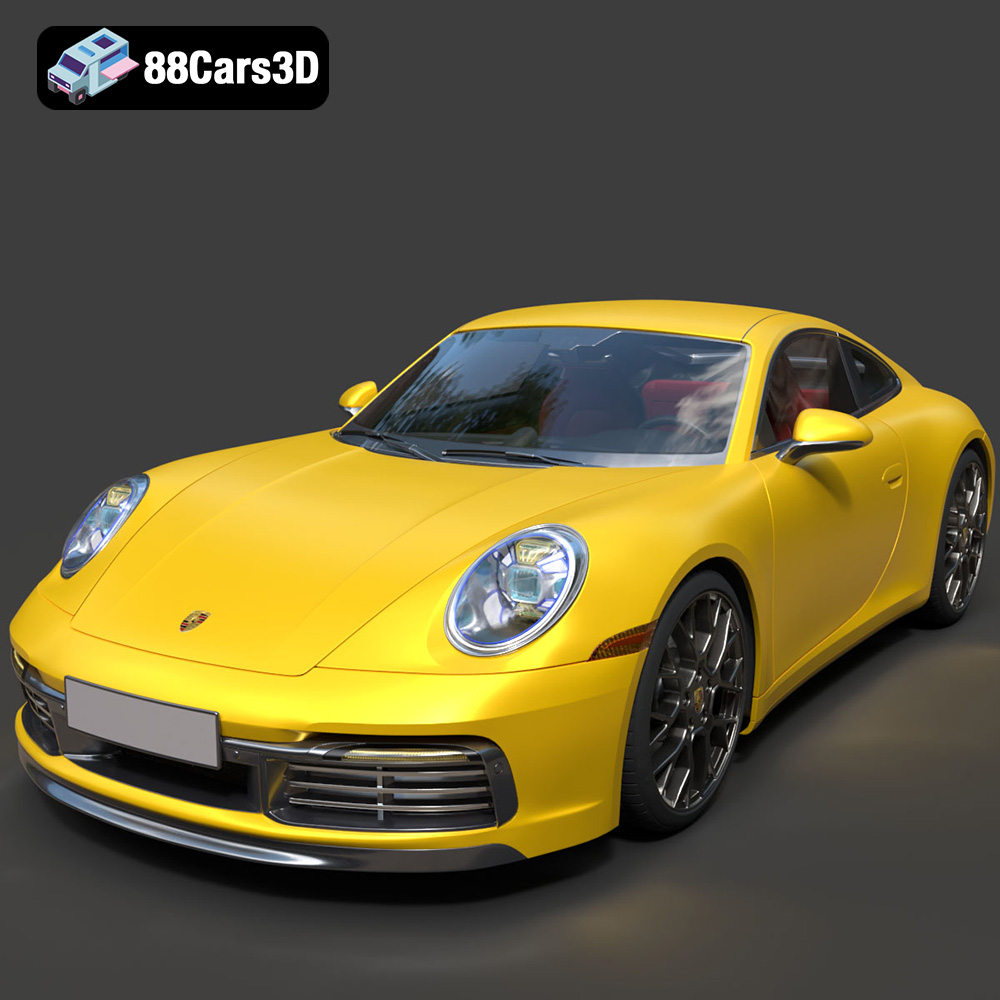
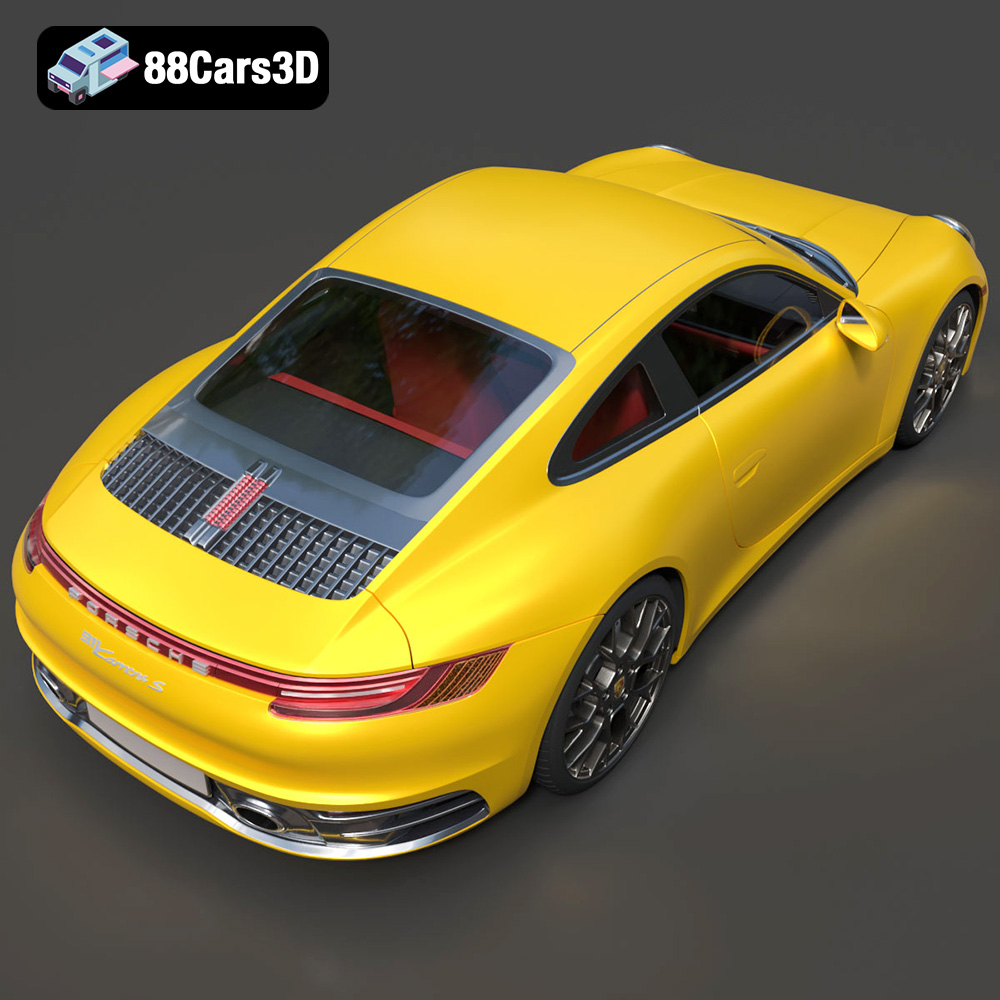
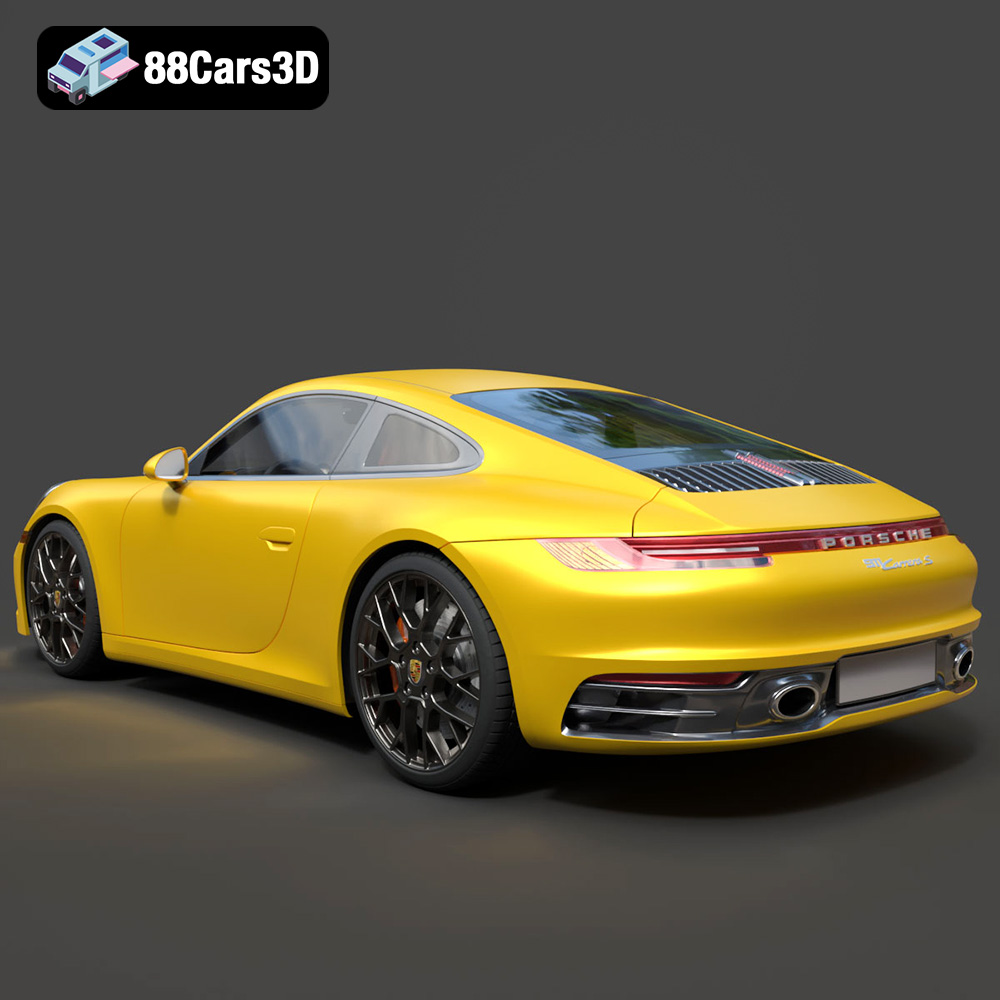
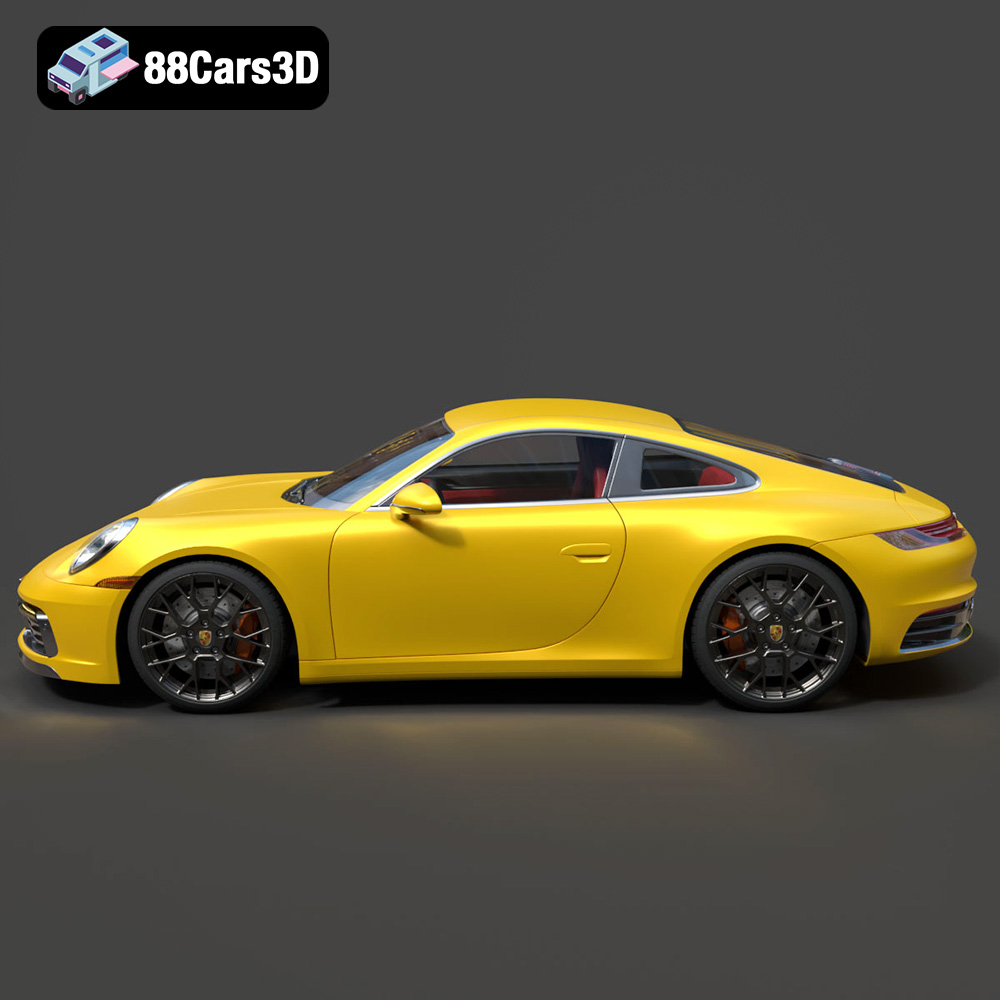
Consider the iconic allure of a Porsche 911 Carrera S. Its legacy is built on meticulous engineering and timeless design, making it a dream subject for 3D artists. Replicating such an automotive masterpiece in the digital realm requires an extraordinary blend of artistic skill and technical understanding. Today, we’re going to explore how a meticulously crafted asset like the Porsche 911 Carrera S 2019 3D Model exemplifies the pinnacle of digital automotive artistry. This model, available through 88cars3d.com, offers an invaluable resource for creators, providing a detailed, game-ready asset that meets the rigorous demands of modern production pipelines across a multitude of applications.
The Art and Science of High-Fidelity 3D Car Models
Creating a truly high-fidelity 3D car model is far more complex than simply extruding shapes. It’s a blend of artistry, technical precision, and an intimate understanding of real-world automotive design. Every surface, every panel gap, and every component must be meticulously recreated to capture the essence and engineering prowess of the actual vehicle.
Precision in Automotive Visualization
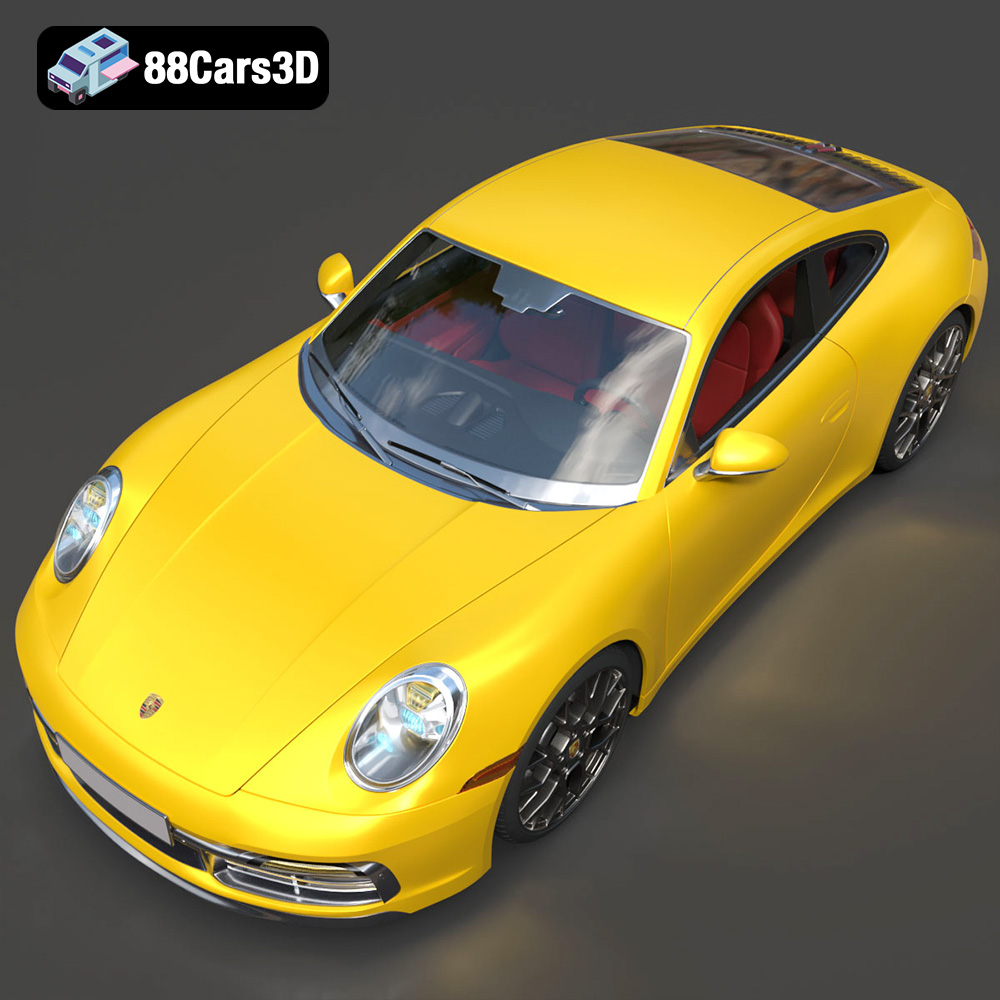
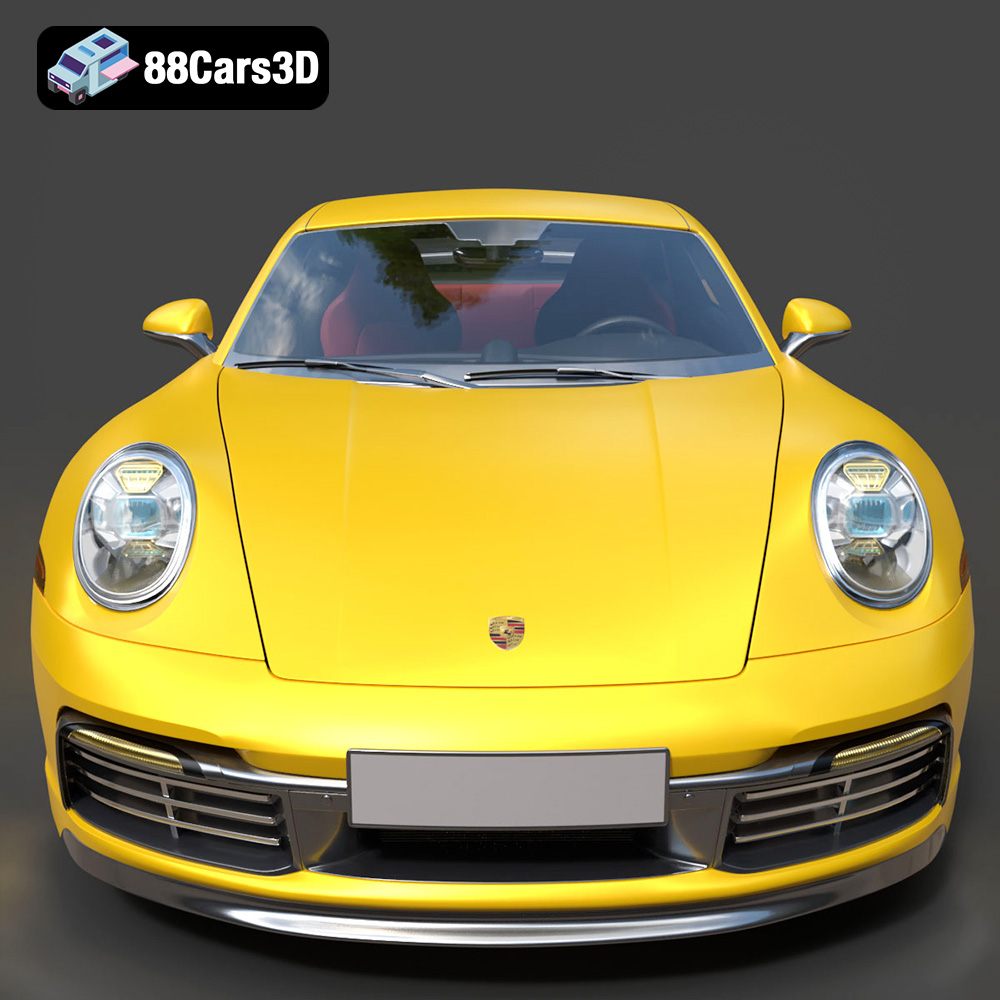
Automotive visualization demands an almost obsessive attention to detail. When showcasing a luxury sports car like the Porsche 911 Carrera S 2019, the model must flawlessly represent its distinctive features: the sweeping flyline, the widened wheel arches, the seamless rear light strip, and the iconic round LED matrix headlights. These aren’t just aesthetic elements; they are engineering statements that define the vehicle’s character. For a 3D model, this translates to accurately proportioned geometry, perfect surface continuity, and realistic material definitions. The goal is to create a digital twin that is indistinguishable from its physical counterpart in a well-lit render, capable of eliciting the same emotional response.
The Role of Topology and Polycount
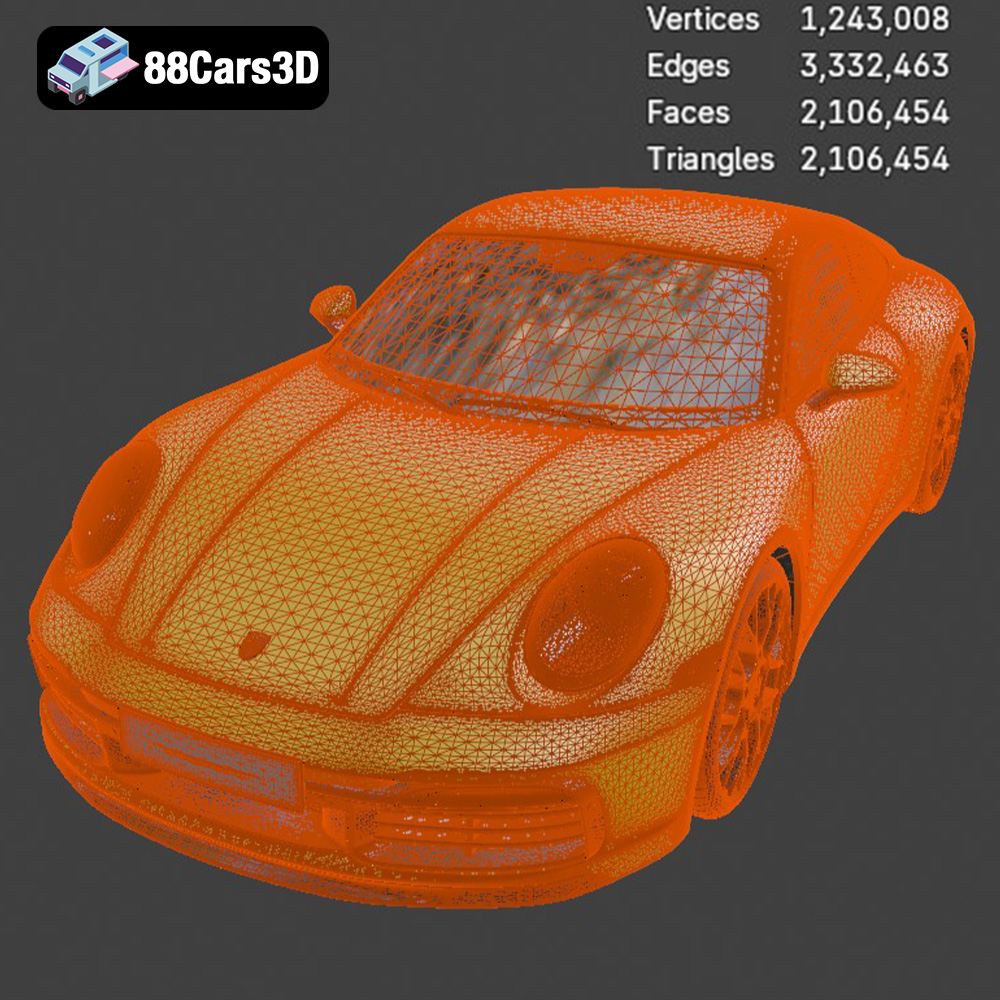
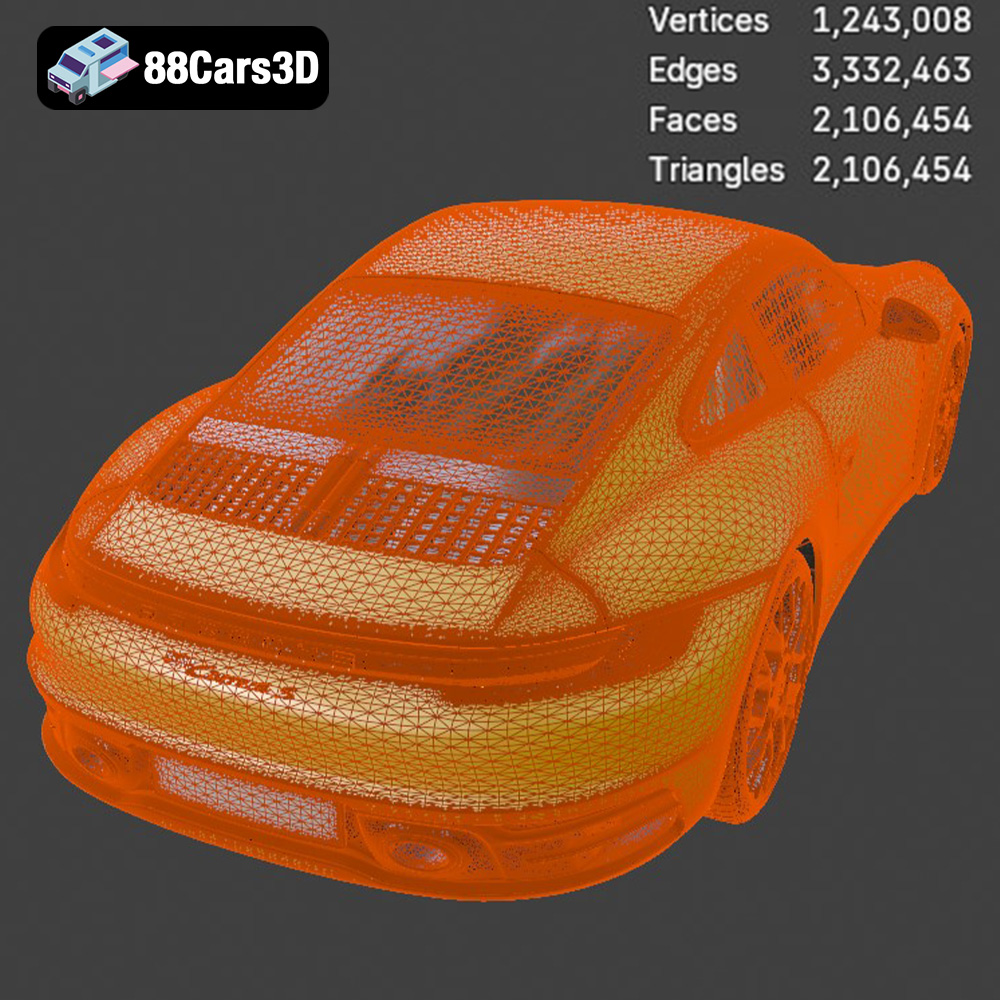
The underlying mesh structure, or topology, is critical. A clean mesh, typically composed of quads, allows for smooth subdivision, realistic deformation, and efficient UV unwrapping. For performance-critical applications like game development, the polycount (number of polygons or triangles) is a key consideration. A model with 2,106,454 triangles, like the Porsche 911 Carrera S 2019 3D model, strikes a remarkable balance. It’s dense enough to deliver extraordinary visual fidelity for close-up renders and detailed reflections, yet structured cleanly enough to be optimized for real-time engines. This balance ensures that the model can look stunning in a cinematic shot while also performing efficiently within an interactive environment. Without this careful management of topology and polycount, models can appear blocky, suffer from shading artifacts, or cripple performance in interactive applications.
Understanding 3D Model File Formats
Navigating the diverse landscape of 3D software and applications requires a comprehensive understanding of various file formats. Each format serves a specific purpose, offering different levels of compatibility, data preservation, and optimization for particular workflows. The Porsche 911 Carrera S 2019 3D Model is a prime example of a professional asset that comes equipped with a wide array of formats, ensuring its utility across virtually any digital pipeline.
Editable Project Files: .blend and .max
When maximum flexibility and full project editing capabilities are paramount, proprietary software formats are invaluable.
- .blend (Blender): As Blender’s native file format, a .blend file offers a complete scene package. It includes not just the mesh geometry, but also materials, textures, lighting, cameras, animation data, and even physics simulations. This format is ideal for artists working within the Blender ecosystem who need to make extensive modifications, re-rig the vehicle, create custom animations, or render using Blender’s Cycles or Eevee engines. The .blend file for the Porsche 911 Carrera S 2019 model would provide a fully editable foundation for any artist.
- .max (3ds Max): Similarly, the .max format is native to Autodesk 3ds Max, a long-standing industry standard for architectural visualization, game development, and high-end rendering. Like .blend, it encapsulates the entire scene, including hierarchies, modifiers, animation, and intricate material setups specific to 3ds Max renderers like V-Ray or Corona. For studios and artists deeply integrated with 3ds Max, this format ensures a seamless workflow, allowing full control over the model’s appearance and behavior within their established pipelines.
Universal Exchange Formats: .fbx, .obj, .ply
These formats are designed for interoperability, allowing 3D data to be shared and transferred between different software applications with varying degrees of fidelity.
- .fbx (Filmbox): Developed by Autodesk, FBX is arguably the most widely used exchange format in the entertainment industry, particularly for game development. It supports geometry, materials (with some limitations in translation), textures, rigging, and crucially, animation data. This makes .fbx the go-to choice for importing assets into game engines like Unreal Engine and Unity, or for transferring rigged characters and animated vehicles between 3D modeling packages. The Porsche 911’s .fbx version would be “game-ready,” retaining proper pivot setups for animation.
- .obj (Wavefront OBJ): A simpler, text-based format, OBJ is a universal standard for geometry exchange. It excels at transferring static mesh data, including vertices, normals, UV coordinates, and groups, often accompanied by an .mtl file for basic material definitions. While it doesn’t support animation or complex material shaders, its simplicity ensures broad compatibility across almost all 3D software, making it a reliable fallback for cross-software model sharing.
- .ply (Polygon File Format/Stanford Triangle Format): PLY is a precision mesh format often used for storing 3D scanner data, CAD models, and scientific applications where accurate geometry and vertex properties (like color, normal, or confidence values) are crucial. While less common for general animation or game assets, its ability to store detailed mesh information makes it valuable for analytical purposes or specialized engineering visualizations.
Real-time and Specialized Formats: .glb, .unreal, .stl
These formats cater to specific, often optimized, use cases.
- .glb (GL Transmission Format Binary): GLB is the binary version of glTF, a royalty-free specification for the efficient transmission and loading of 3D scenes and models by engines and applications. It’s highly optimized for web-based 3D, AR, and VR, packing geometry, materials, textures, and animation into a single file. For interactive web viewers or mobile AR experiences of the Porsche 911, .glb is the ideal choice due to its compact size and rapid loading capabilities.
- .unreal (Unreal Engine Asset): While not a standalone file format in the traditional sense, providing an “unreal” file often implies a pre-optimized asset pack specifically configured for direct import and use within Unreal Engine. This could mean a .uasset file or a folder structure containing geometry, materials, textures, and blueprints ready to be dropped into an Unreal project, minimizing setup time for developers. For the Porsche 911 Carrera S 2019, this signifies true game-readiness for Unreal’s powerful real-time environments.
- .stl (Stereolithography): STL is the standard file format for 3D printing. It represents a 3D model as a collection of unconnected triangles, defining only the surface geometry without color or texture information. It’s a “dumb” format in terms of artistic data but universally understood by 3D printers and slicing software. The Porsche 911’s .stl variant is perfect for those looking to bring the digital model into the physical world, whether for scale models or rapid prototyping.
Unleashing the Porsche 911 Carrera S 2019 in Professional Workflows
The true value of a versatile 3D asset lies in its adaptability across various professional pipelines. The Porsche 911 Carrera S 2019 3D Model from 88cars3d.com is engineered precisely for this, providing an exceptional foundation for diverse creative projects.
Game Development and Real-time Engines (Unreal Engine, Unity)
In game development, the balance between visual fidelity and performance is paramount. The Porsche 911 Carrera S 2019 model, with its 2,106,454 triangles, is designed to strike this exact balance. For high-end racing simulators or open-world games aiming for photorealism, this polycount allows for detailed reflections, smooth curves, and intricate components like brake calipers and suspension systems to be rendered accurately without excessive performance overhead.
- Unreal Engine Workflow: Leveraging the included .fbx or even the dedicated .unreal asset, developers can seamlessly import the model. The proper pivot setup for steering, wheel rotation, and suspension travel is crucial here, enabling realistic vehicle physics and animation within Unreal Engine’s advanced physics systems (e.g., Chaos Vehicle System). Developers can then apply custom PBR (Physically Based Rendering) materials, integrate it with dynamic lighting systems, and optimize LODs (Levels of Detail) to ensure smooth performance across various platforms. The detailed engine bay and interior also allow for first-person camera views, enhancing player immersion.
- Unity Integration: Similarly, the .fbx format is highly compatible with Unity. Artists can import the model, configure its material pipeline (e.g., HDRP or URP), and set up vehicle controllers. The clean mesh allows for efficient occlusion culling and light baking, further optimizing real-time performance. For a racing game, having a ready-to-animate chassis significantly cuts down development time, allowing teams to focus on gameplay mechanics and track design.
Photorealistic Rendering and Architectural Visualization (3ds Max, Blender)
For projects demanding absolute photorealism, such as automotive brand campaigns or high-fidelity architectural visualizations, the model’s detail truly shines.
- 3ds Max and V-Ray/Corona: Using the .max file, artists can access the model with its full hierarchy and potentially pre-configured materials. In 3ds Max, with renderers like V-Ray or Corona, the extensive detail of the Porsche 911’s exterior and interior allows for stunning close-up shots. Imagine the Carrera S parked elegantly in a modern architectural scene, its metallic paint reflecting the environment with flawless realism. The meticulous rendering of sport bucket seats, the five-dial instrument cluster, and the compact gear selector ensures that even interior shots hold up to intense scrutiny. Lighting setups can be tailored to emulate studio conditions or natural outdoor environments, producing marketing-ready visuals.
- Blender and Cycles: The .blend file provides a native environment for Blender artists. With Cycles, Blender’s powerful path-tracing renderer, the model’s detailed geometry and material flexibility can be exploited to produce breathtaking renders. Artists can easily modify body colors, adjust material finishes (matte, gloss, metallic), and adapt lighting for different moods and environments, generating visuals suitable for luxury car configurators or promotional content.
Immersive AR/VR Experiences and Digital Showrooms
The future of automotive marketing and interaction lies in augmented and virtual reality. The optimized nature and multiple file formats of this Porsche 911 model make it ideal for these cutting-edge applications.
- AR/VR Showrooms: For virtual showrooms, the model’s real-world scale accuracy and detailed interior are crucial. Customers can “sit” inside the car, explore the cockpit, and inspect the dual exhaust system in an immersive VR environment. The .glb format is particularly beneficial for web-based AR/VR viewers, allowing users to experience the model directly in their browsers or through mobile AR apps, enabling interactive configurators where they can customize colors and finishes in real-time. This provides an engaging and accessible way to showcase the vehicle without needing a physical car.
Beyond the Screen: 3D Printing and Physical Prototyping
The utility of a high-quality 3D model extends beyond digital displays. For enthusiasts, designers, and hobbyists, the ability to bring a digital asset into the physical world through 3D printing offers a unique dimension of interaction and creation.
Preparing for Print: The .stl Workflow
The .stl (stereolithography) format is the universal language of 3D printing. It represents the surface geometry of a 3D model using a tessellated mesh of triangles. The inclusion of an .stl file for the Porsche 911 Carrera S 2019 3D model means it’s ready for immediate use with most 3D printers and slicing software.
- Slicer Software: Once the .stl is loaded into a slicer (e.g., Cura, PrusaSlicer, Chitubox), it’s converted into a series of thin layers and toolpaths that the 3D printer can understand. This process allows for defining critical print settings.
- Recommended Settings: For a detailed automotive model like the Porsche, using a resin printer is highly recommended due to its ability to achieve finer details and smoother surfaces compared to filament-based FDM printers. Layer heights between 0.04mm and 0.12mm will ensure exceptional fidelity. Specific settings for infill (20-30%), wall thickness (1.2-2.0mm), and crucial support structures for overhangs (exhaust, mirrors, steering wheel) are essential to prevent print failures and maintain intricate features.
Achieving Scale and Detail
3D printing offers the flexibility to create the Porsche 911 model at various scales, from desktop display pieces to larger, more detailed prototypes.
- Scale Considerations: Recommended scales like 1:12, 1:18, or 1:24 allow for a balance between manageable print size and the retention of fine details. Printing the frame angled can enhance structural integrity, while printing wheels separately simplifies post-processing and assembly.
- Post-processing: Bringing a 3D print to life often involves post-processing steps. Sanding to smooth layer lines, applying primer for an even base, and then painting with authentic factory colors and metallic finishes can transform a raw print into a stunning miniature replica. This process is an art form in itself, where the digital precision of the 3D model is translated into a tangible, beautiful object.
Optimizing for Performance and Realism: Technical Deep Dive
Beyond the raw geometry, the technical specifications and underlying structure of a 3D car model dictate its usability and effectiveness across various applications. The Porsche 911 Carrera S 2019 3D model is a masterclass in these optimizations.
The Balance of Polycount: 2 Million Triangles Explained
The stated 2,106,454 triangles for the Porsche 911 Carrera S 2019 model is a carefully chosen figure. For a modern, high-fidelity asset, this polycount is considered high for standard game assets but ideal for detailed close-ups and cinematics.
- High Visual Fidelity: This triangle count allows for incredibly smooth curves, sharp edges where needed, and the accurate representation of intricate components like the mesh grilles, brake calipers, and the detailed twin-turbocharged flat-six engine bay. In rendering, this prevents faceting and ensures perfect reflections and realistic shading, crucial for automotive rendering where surface quality is paramount.
- Game-Ready Optimization: While seemingly high, a well-structured model with this polycount can still be optimized for real-time engines. Modern game engines are capable of handling millions of triangles per frame, especially for hero assets like player vehicles. Furthermore, techniques like instancing, aggressive LODs (Levels of Detail), and optimized material pipelines can manage the overhead. For virtual configurators or AR/VR experiences where a single high-detail model is central, this polycount is perfectly acceptable and necessary for a premium experience.
Materiality and Texturing Considerations
Realistic automotive rendering relies heavily on advanced PBR (Physically Based Rendering) materials and high-resolution textures. The underlying model must be properly UV mapped to facilitate this.
- PBR Workflow: A professional 3D car model comes with cleanly unwrapped UVs, allowing artists to apply detailed PBR texture sets (Albedo, Normal, Roughness, Metallic, Ambient Occlusion). These textures simulate real-world material properties, from the metallic flakes in the paint to the subtle imperfections on the glass or the texture of the leather interior.
- Customization Options: The ability to easily change body colors, modify tire textures, or adjust material finishes (matte, gloss, metallic) is a significant advantage. This flexibility allows users to create endless variations for different scenarios or client requirements without needing to re-texture from scratch.
Animation Readiness and Asset Management
A functional 3D car model is often more than a static mesh; it’s a dynamic asset.
- Proper Pivots and Hierarchy: The product description highlights “proper pivot setup for steering, wheel rotation, and suspension travel.” This is critical for animation. Wheels need pivots at their centers for rotation, and suspension components require correct pivot points for realistic compression and rebound. A clean hierarchy also ensures that parts can be selected and manipulated independently, simplifying the rigging process for advanced animations or interactive controls.
- Modular Design: The separate wheels, suspension, and steering components are examples of modular design. This not only aids animation but also allows for easier customization, replacement of parts, or even damage modeling in interactive environments. This thoughtful approach to asset structuring significantly enhances its value for any professional project.
Conclusion: Driving Innovation with Premium 3D Car Models
The world of 3D modeling continues to evolve at a breathtaking pace, pushing the boundaries of realism and immersion across various industries. At the heart of this evolution lies the indispensable role of high-quality 3D assets. From game development and cinematic rendering to AR/VR experiences and even physical 3D prints, the demand for precision, versatility, and technical excellence in 3D car models is a constant.
The Porsche 911 Carrera S 2019 3D Model stands as a testament to this commitment to quality. Its meticulous detail, balanced polycount, and extensive support for various file formats — from .blend and .max for comprehensive editing to .fbx and .unreal for real-time engines, and .stl for tangible replicas — make it an incredibly powerful resource. Whether you’re a professional looking to elevate your automotive rendering projects, a game developer seeking a game-ready asset for your next title, or a designer exploring new frontiers in AR/VR, this model provides a robust foundation.
Investing in such a high-caliber 3D car model from platforms like 88cars3d.com not only streamlines your workflow but also elevates the final output of your creative endeavors. It’s more than just a model; it’s a gateway to unlocking new possibilities in digital visualization and interaction, embodying the thrill and timeless elegance of the Porsche 911 Carrera S in every pixel and polygon.
Featured 3D Model
Porsche 911 Carrera S 2019 3D Model Download STL FBX OBJ GLB Blend
Experience the thrill and timeless elegance of the Porsche 911 Carrera S 2019 with this meticulously crafted 3D model. Continuing a legacy of unparalleled sports car heritage, the 992-generation Carrera S features the iconic, sweeping flyline, widened wheel arches, and a seamless light strip dominating the rear. This model captures every distinctive visual element, from the unmistakable classic round LED matrix headlights to the sophisticated dual exhaust system and the meticulously rendered twin-turbocharged flat-six engine bay. Boasting a highly detailed topology with 2,106,454 triangles, this model delivers extraordinary visual fidelity perfect for close-up renders while maintaining a clean mesh structure suitable for optimization in game development. Whether deployed in cutting-edge real-time engines like Unreal and Unity, integrated into immersive AR/VR showrooms, or used for photorealistic cinematic animation, the geometry ensures flawless reflections and realistic shading. Perfect for high-end racing simulators, virtual automotive configurators, photorealistic architectural visualizations, and brand marketing campaigns.
$37.50
View This Model
Related Tags
.blend
.coupe
.fbx
.glb
.max
.obj
.ply
.porsche
.rendering
.sports car
.stl
.unreal
car-3d-model
game asset
game-ready
optimized
porsche-911
porsche-911-carrera-s-2019
VR/AR