Get 20% OFF All Premium 3D & STL Models!

In the dynamic world of digital creation, the demand for exceptionally detailed and versatile 3D car models is ever-present. From the high-octane thrill of virtual racing circuits to the serene elegance of architectural visualizations, a premium automotive asset can elevate any project. Today, we delve into the meticulous craft of creating and deploying such assets, focusing on how a truly outstanding 3D model can bridge the gap between imagination and stunning digital reality. We’re talking about models that aren’t just visually appealing but are engineered for performance across a spectrum of professional applications.
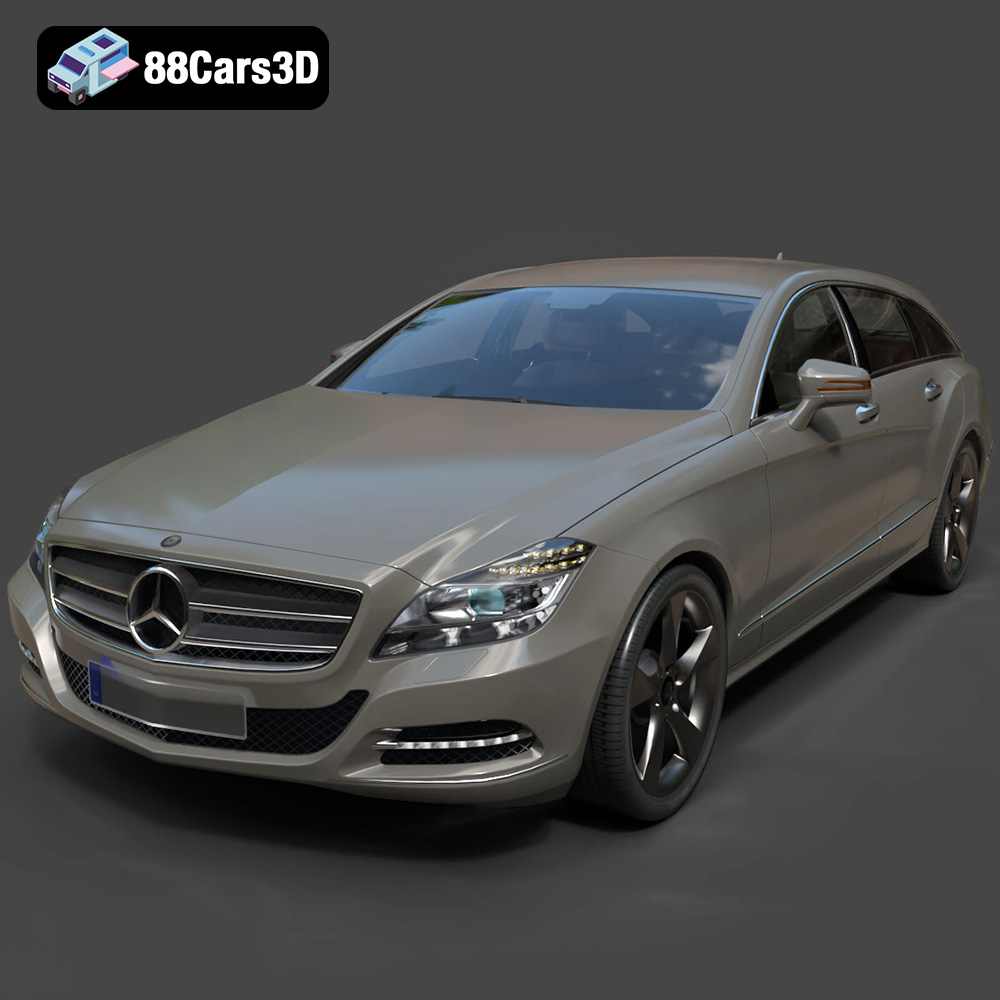
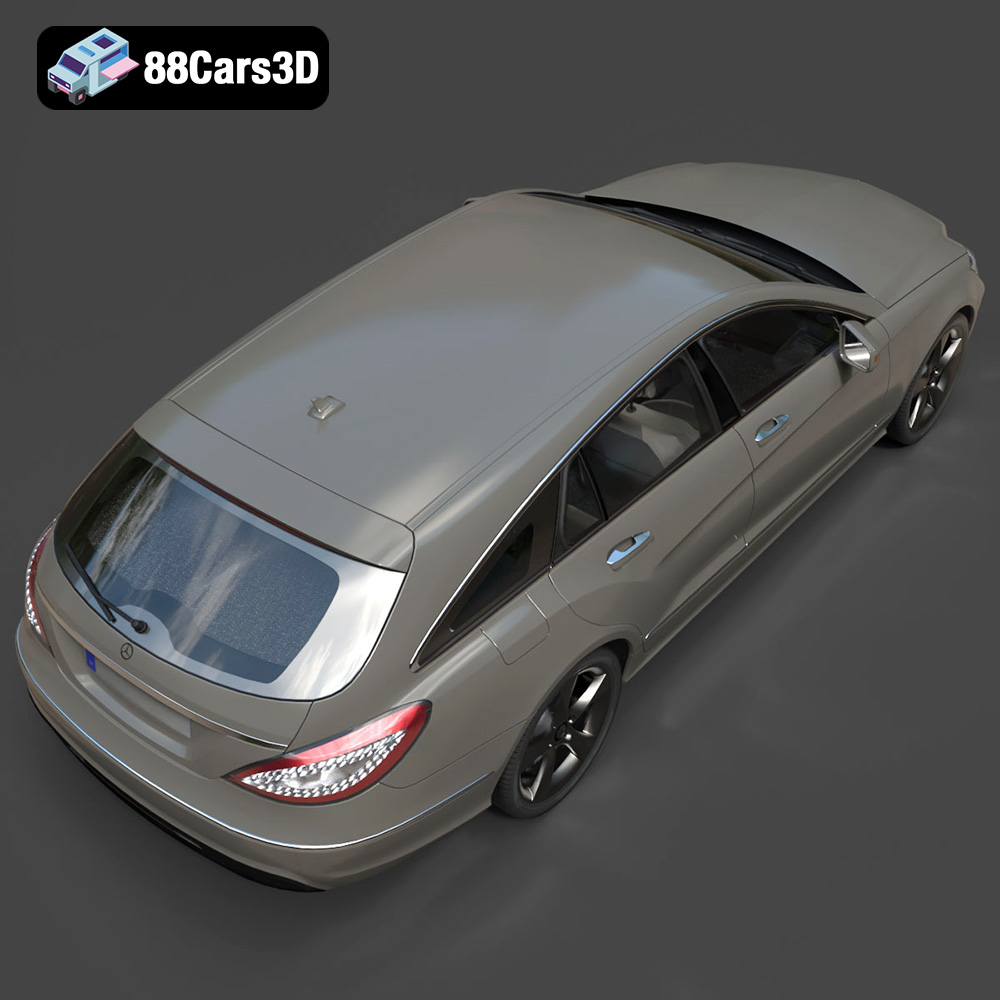
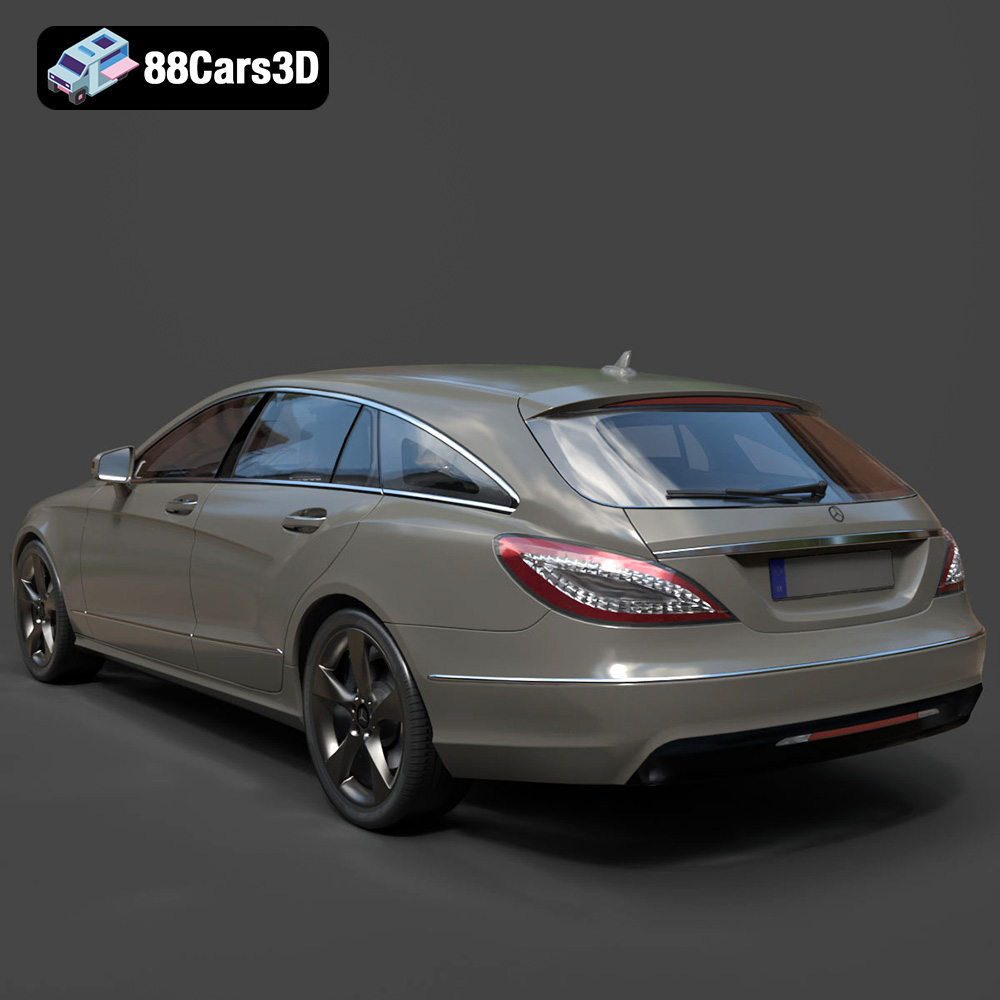
The Mercedes Benz CLS Shooting Brake stands as a masterclass in automotive design, seamlessly blending the sleek, sweeping roofline of a four-door coupe with the versatile cargo space of a luxury estate. Renowned for its elegant profile and commanding road presence, this vehicle features an aggressive front fascia with the iconic star grille, striking LED lighting signatures, and dual exhaust elements that highlight its dynamic performance pedigree. Capturing this blend of luxury and sportiness in a digital format requires an unparalleled level of detail and technical precision. This is where a high-quality 3D model, like the Mercedes Benz CLS Shooting Brake available from 88cars3d.com, truly shines, offering creators a foundation of excellence for their diverse projects.
Choosing the correct 3D model file format is crucial for ensuring compatibility, optimizing performance, and preserving data integrity across different software and pipelines. Each format serves a specific purpose, designed with particular strengths that make it ideal for certain applications. Understanding these nuances is key for any professional working with 3D car models.
The `.blend` format is Blender’s native file type. It encapsulates an entire Blender scene, including mesh data, materials (nodes and textures), lighting setups, animation data, cameras, and even custom scripts. This makes it an incredibly powerful format for Blender users, as it preserves every aspect of the project. If your primary workflow is within Blender, or if you plan to extensively modify or animate the model within Blender, the `.blend` file is your go-to. It offers full editability and access to all the original scene components, making it perfect for custom rigging, detailed texture work, and complex scene assembly.
`.fbx` (Filmbox) is arguably the most widely adopted interchange format in the 3D industry, particularly popular for game development and animation pipelines. Developed by Autodesk, FBX excels at preserving a broad range of data, including mesh geometry, materials (often as basic shaders with texture references), animations (skeletal and blend shapes), cameras, and lights. Its robust support across major DCC (Digital Content Creation) tools like 3ds Max, Maya, Blender, and game engines like Unreal Engine and Unity makes it indispensable. For transferring animated assets or models with complex hierarchies and materials into a real-time environment, FBX is the preferred choice due to its balance of compatibility and feature retention.
The `.obj` (Wavefront OBJ) format is a venerable and highly compatible format primarily used for exchanging pure geometric data. It stores vertex positions, UV coordinates, normals, and material references (via a companion `.mtl` file). While `.obj` is excellent for static meshes due to its widespread support across virtually every 3D software, it does not support animations, rigging, or scene data like lights and cameras. It’s often chosen when simplicity and universal mesh compatibility are paramount, making it a reliable workhorse for basic model transfers, especially when the receiving software might not support more complex formats.
`.glb` (GL Transmission Format Binary) is a modern, compact, and efficient format designed for real-time 3D applications, particularly for AR/VR and web-based displays. It’s a binary version of GLTF (GL Transmission Format), which means all assets (geometry, materials, textures, animations) are bundled into a single file, reducing load times and simplifying distribution. Its optimization for PBR (Physically Based Rendering) materials and GPU-friendly structure makes it superb for interactive 3D viewers, mobile AR experiences, and web applications where performance and file size are critical.
`.stl` (Stereolithography) is the most common file format for 3D printing. It represents a 3D model as a series of connected triangles, defining only the surface geometry of an object without color, texture, or other CAD attributes. While it lacks detail for rendering purposes, its simplicity makes it ideal for additive manufacturing. When converting a complex model like a 3D car model for printing, ensuring the mesh is manifold (watertight) is crucial for a successful `.stl` export and print outcome.
`.ply` (Polygon File Format or Stanford Triangle Format) is another format primarily used for storing 3D scanner data and meshes from CAD software. It can store more complex information than `.stl`, including color, transparency, confidence values, and normal vectors, making it suitable for scientific applications, reverse engineering, and scenarios where precise mesh data with additional attributes is required. While less common for general rendering, it offers robust data integrity for specific technical workflows.
The `.unreal` format, or more accurately, assets imported and packaged within an Unreal Engine project, refers to the engine’s native representation of an asset. While not a standalone file format in the traditional sense, having a model specifically optimized and configured for Unreal Engine (e.g., proper scale, collision meshes, material instances) saves immense development time. Assets like the Mercedes Benz CLS Shooting Brake 3D model, when provided as “unreal-ready,” imply that they have undergone specific preparation for direct integration, often meaning pre-configured materials, LODs (Levels of Detail), and a streamlined import process to leverage Unreal’s powerful rendering capabilities immediately.
`.max` is the native file format for Autodesk 3ds Max. Similar to `.blend` for Blender, it saves an entire 3ds Max scene, including all geometry, materials, textures, lighting, cameras, animation, modifiers, and plugin data. For professionals working within the 3ds Max ecosystem, the `.max` file provides the highest level of editability and preservation of the original project’s intricacies. It’s ideal for complex architectural visualizations, advanced animation projects, and high-fidelity rendering where 3ds Max’s robust toolset is heavily utilized.
Understanding these file formats empowers artists and developers to make informed decisions, ensuring their 3D car models, such as the exquisite Mercedes Benz CLS Shooting Brake, are utilized to their fullest potential across any digital endeavor.
The art of 3D modeling reaches its zenith when a digital asset not only replicates reality but also enhances creative possibilities. The Mercedes Benz CLS Shooting Brake 3D model from 88cars3d.com exemplifies this principle, offering a blend of aesthetic fidelity and technical optimization that caters to a wide array of professional needs.
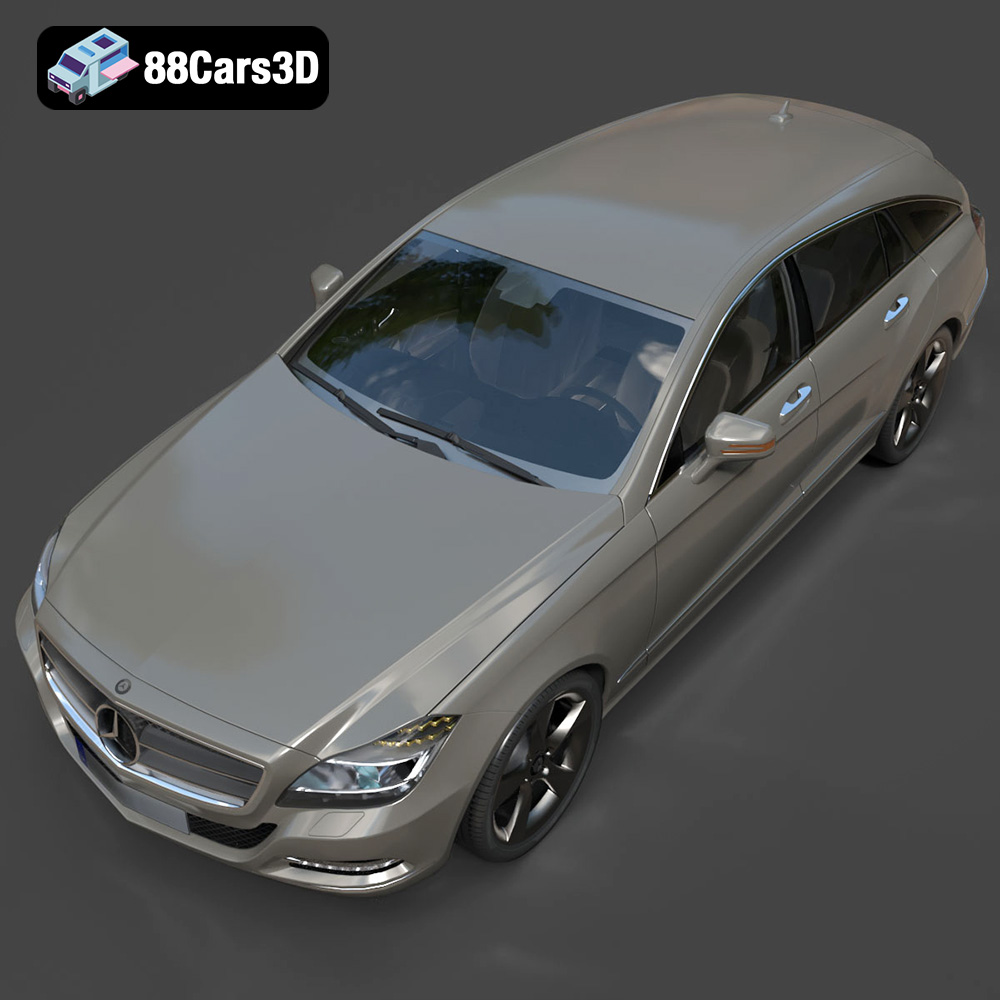
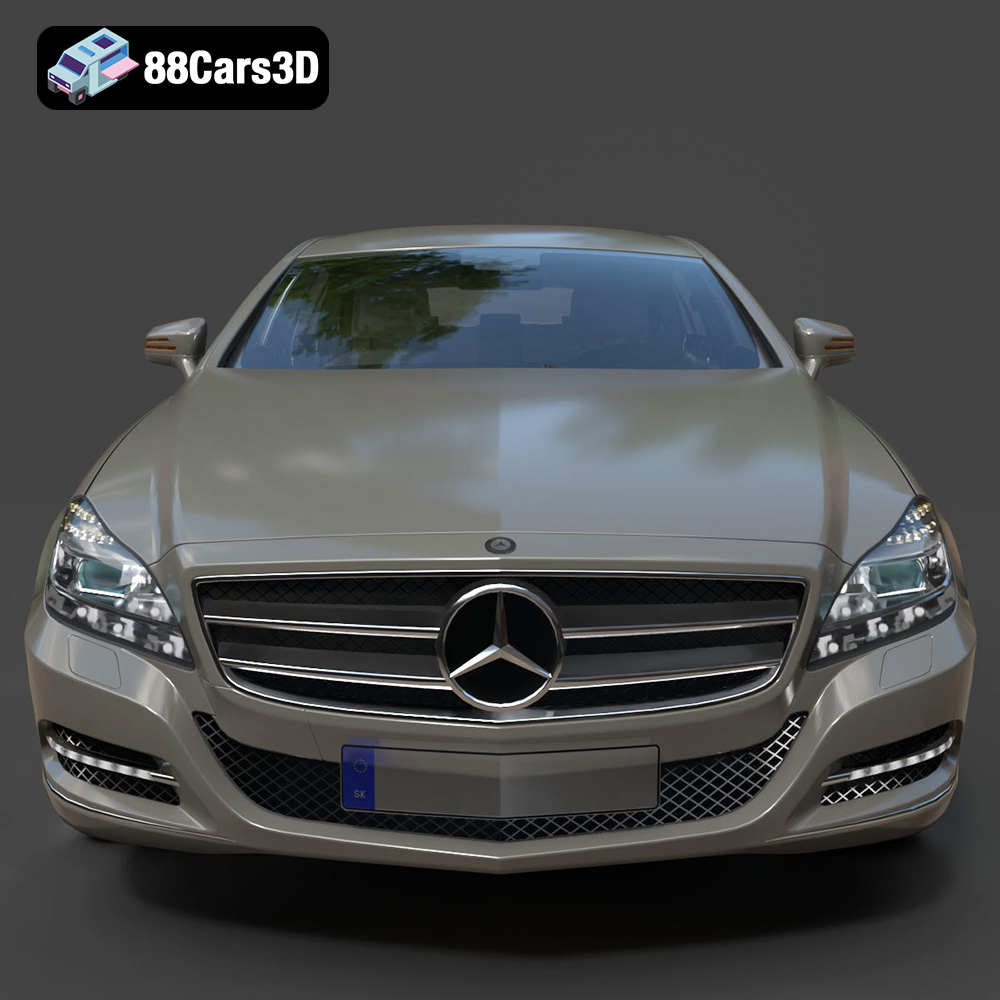
The exterior of this 3D car model is a testament to meticulous craftsmanship. It accurately captures the CLS Shooting Brake’s iconic frame geometry, from its sweeping roofline to its precise proportions. Details such as the aggressive front fascia with the iconic star grille, intricate signature LED headlights, daytime running lights, and wraparound taillights are all faithfully recreated. The high-fidelity premium alloy wheels, low-profile performance tires, and realistic suspension and brake caliper details add layers of realism crucial for high-end rendering and close-up shots. Furthermore, the inclusion of separate wheels, suspension, and steering components ensures robust animation capabilities, making it ideal for dynamic simulations and cinematics.
Inside, the model doesn’t compromise on luxury. The cockpit and interior features include luxuriously modeled leather seating, detailed door panel contours, a multi-function steering wheel with accurate badging, and high-resolution instrument and infotainment displays. The accurate center console controls, shifter, and pedals complete an immersive interior environment. This level of detail is particularly advantageous for first-person POV in gaming and VR simulations, allowing users to experience the vehicle’s opulent interior firsthand.
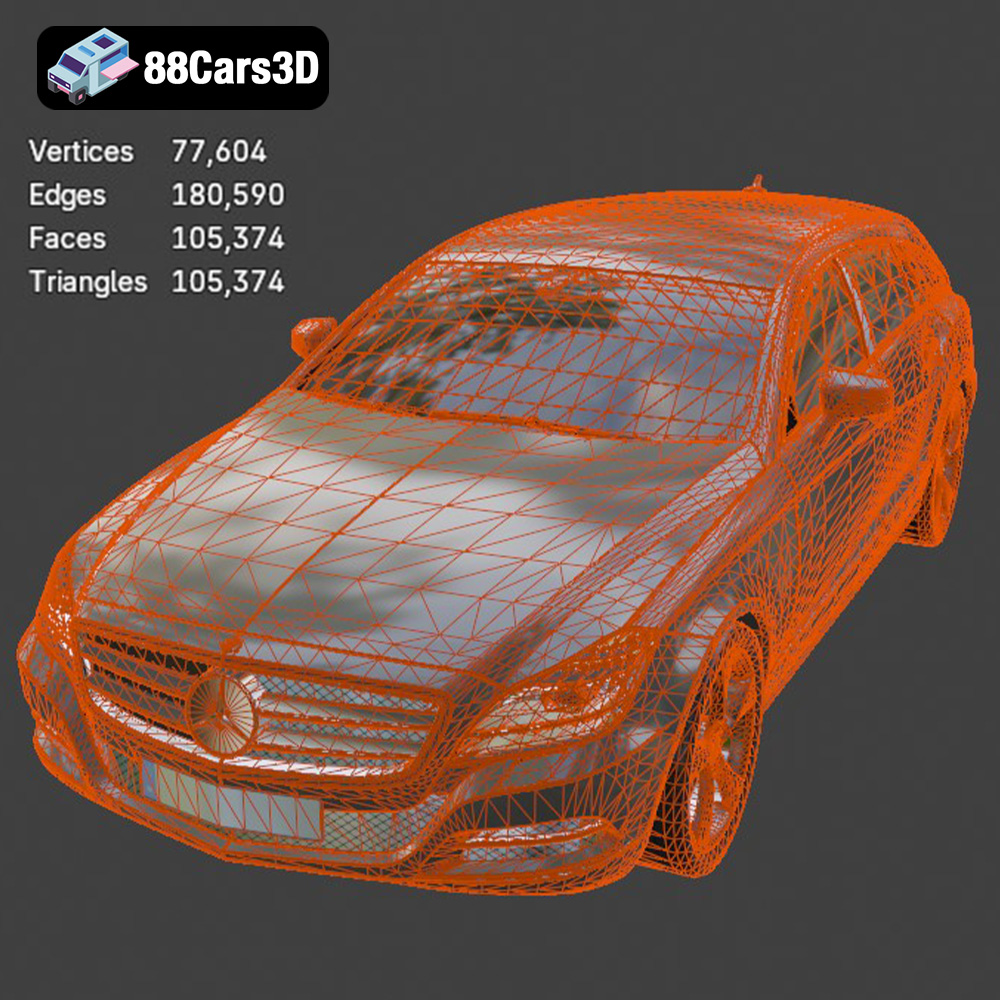
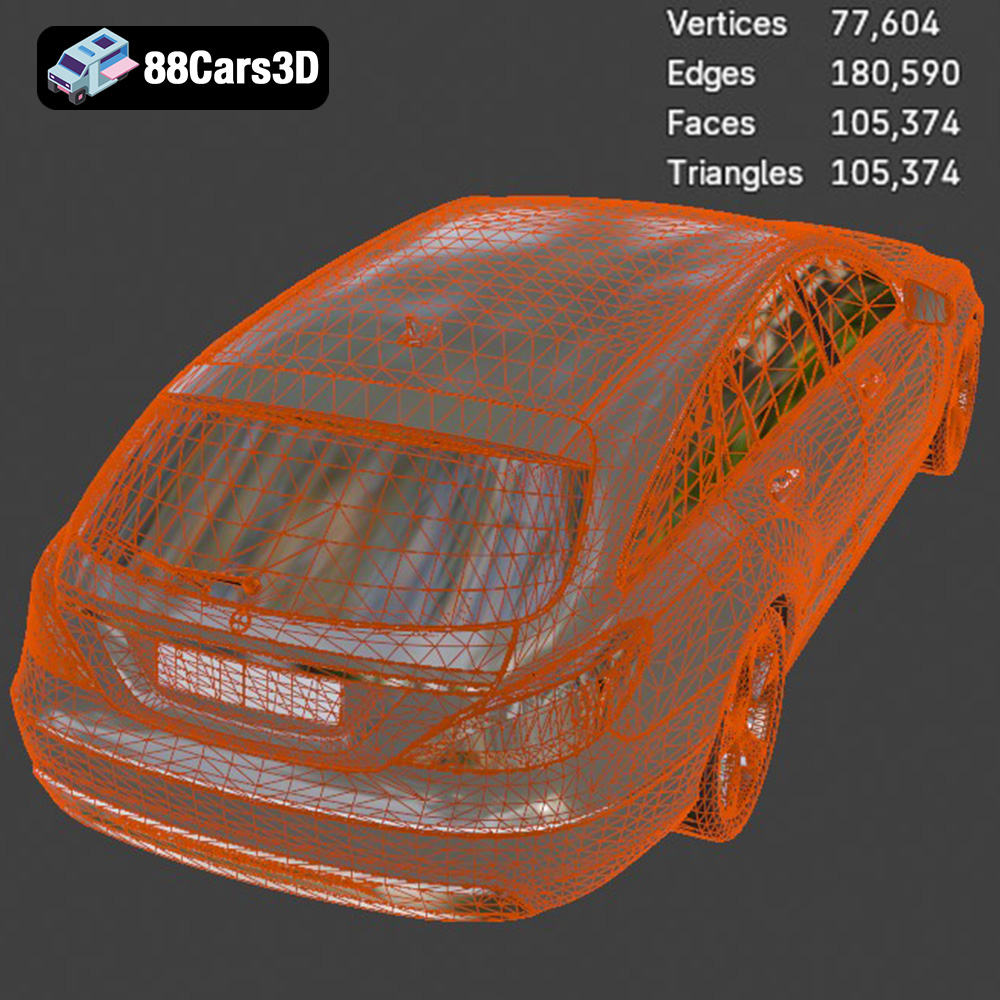
What truly sets this 3D car model apart is its technical prowess. Boasting an optimized triangle count of approximately 350,000, it strikes a perfect balance between high-end visual realism and real-time engine performance. This “game-ready” optimization means it can be seamlessly integrated into demanding environments like Unreal Engine and Unity without compromising frame rates or visual quality.
The model adheres to real-world scale accuracy, based on the actual vehicle chassis, which is critical for consistent scene integration and realistic physics simulations in games. Proper pivot setups for steering, wheel rotation, and suspension travel ensure that animators and game developers can easily implement realistic vehicle dynamics. Compatibility with major 3D software platforms and real-time rendering engines, through formats like .blend, .fbx, .obj, .glb, .stl, .ply, .unreal, and .max, further enhances its utility and versatility across professional pipelines.
High-quality 3D car models are the backbone of many digital projects, and understanding how to effectively integrate them into various professional workflows is paramount. Let’s explore typical pipelines using industry-standard software.
Autodesk 3ds Max remains a powerhouse for high-end automotive rendering and animation. When working with the Mercedes Benz CLS Shooting Brake 3D model in 3ds Max, the `.max` file format offers the most comprehensive data, ensuring all scene elements, materials, and rigging are preserved.
Upon loading the `.max` file, artists can immediately begin setting up their scene. This typically involves:
1. **Environment and Lighting:** Utilizing V-Ray, Corona Renderer, or Arnold, artists can create realistic studio lighting setups or integrate the car into a photographic backplate using HDRIs (High Dynamic Range Images). The model’s clean topology ensures smooth reflections, crucial for showcasing automotive surfaces.
2. **Material Refinement:** While the model comes with pre-configured materials, 3ds Max allows for extensive customization. Artists can tweak metallic flakes, clear coat imperfections, and tire tread displacement maps to achieve photorealistic results. The separate components of the model, such as wheels and brake calipers, allow for individual material assignments and texture baking.
3. **Animation:** The properly set-up pivots for wheels, steering, and suspension make animating the CLS Shooting Brake straightforward. Artists can create realistic driving sequences, suspension compression, or even intricate engine bay reveals for product showcases. Path constraints and linking objects to dummy helpers facilitate complex animations with ease.
Blender’s rise as a professional 3D suite makes the `.blend` file for the Mercedes Benz CLS Shooting Brake particularly valuable. Blender offers a robust environment for modeling, texturing, rigging, animation, and rendering, all within a single, powerful package.
1. **Node-Based Shaders:** Blender’s Cycles and Eevee renderers, combined with its node-based material system, allow for incredibly detailed and physically accurate material creation. Users can build complex car paint shaders with multiple layers, metallic flecks, and clear coat effects, bringing the CLS Shooting Brake to life with stunning realism.
2. **Rigging and Animation:** The model’s optimized geometry and separate components are ideal for rigging with Blender’s armature system. This allows for advanced vehicle dynamics, including realistic suspension bounce, independent wheel rotation, and steering linkages, vital for interactive experiences or cinematic sequences.
3. **Real-Time Visualization with Eevee:** Blender’s Eevee renderer provides real-time PBR rendering, perfect for quick iterations and pre-visualizations. This allows artists to see how their material and lighting choices affect the CLS Shooting Brake model instantly, making the development process much more efficient.
For interactive experiences, game development, and high-fidelity real-time rendering, Unreal Engine is an industry leader. The “game-ready” nature and `.unreal` optimized asset imply seamless integration for the Mercedes Benz CLS Shooting Brake 3D model.
1. **Import and Asset Setup:** Importing the optimized `.fbx` or the specific `.unreal` asset ensures the model, materials, and potential rigging are correctly transferred. The approximately 350,000 triangles strike the perfect balance for visual quality without hindering performance in a real-time environment.
2. **Material Instances and Blueprints:** Unreal Engine’s material instance system allows for rapid customization of car colors, finishes, and tire variations without recompiling shaders. Developers can also leverage blueprints to create interactive elements, such as opening doors, turning on lights, or even implementing full driving mechanics, making the CLS Shooting Brake an integral part of an interactive experience.
3. **Lighting and Environment:** Utilizing Unreal Engine’s advanced lighting features, such as Lumen for global illumination and ray tracing, developers can create incredibly realistic automotive showrooms, open-world environments, or dynamic cinematics that feature the car in stunning detail. The model’s accurate geometry ensures reflections and refractions behave physically correctly within the engine.
The utility of a meticulously crafted 3D car model extends far beyond static renders. Its robust design makes it a cornerstone for immersive experiences, interactive simulations, and even tangible physical reproductions.
For game developers, the Mercedes Benz CLS Shooting Brake 3D model is a significant asset. Its “game-ready” optimization, with around 350,000 triangles, hits the sweet spot for visual fidelity and performance, crucial for maintaining high frame rates in demanding game engines like Unreal and Unity.
In an open-world racing title, this model can serve as a primary drivable vehicle. Its accurate real-world scale and proper pivot setups for steering, wheel rotation, and suspension travel are fundamental for implementing realistic physics and driving mechanics. Developers can easily integrate it into vehicle blueprints, define handling characteristics, and apply damage models. For simulators, the detailed cockpit and interior features become paramount, providing an immersive first-person experience where players can truly feel connected to the virtual driving experience. Imagine navigating a bustling city or a scenic highway, feeling the nuanced performance of the CLS Shooting Brake, all powered by this meticulously crafted asset.
Augmented Reality (AR) and Virtual Reality (VR) are transforming how we interact with products, and automotive manufacturers are at the forefront of this revolution. The CLS Shooting Brake 3D model is perfectly suited for these cutting-edge applications.
In a VR showroom, customers could walk around, inspect the CLS Shooting Brake from every angle, and even sit inside the detailed cockpit. The optimized geometry ensures smooth performance, preventing motion sickness and enhancing immersion. Using the `.glb` format, this model can be deployed on web-based AR configurators, allowing potential buyers to visualize the car in their driveway or living room, customizing body colors and material finishes in real-time on their mobile devices. Such experiences significantly enhance engagement and sales processes, offering a level of interaction previously impossible.
For hobbyists, designers, or even professional model makers, the ability to transition a digital asset into a physical object via 3D printing is immensely valuable. The Mercedes Benz CLS Shooting Brake model supports this through its `.stl` file format.
Converting the high-detail model to `.stl` for 3D printing requires careful consideration. The recommended scales (1:12, 1:18, 1:24) allow for a balance between detail and printability. Resin printing is often recommended for such fine automotive details, ensuring crisp lines for the iconic grille, LED signatures, and intricate wheel spokes. The guidelines for layer height, wall thickness, infill, and supports are critical for a successful print. Printing the frame angled for structural integrity and wheels separately minimizes support structures and enhances final quality. Post-processing, including sanding, priming, and painting with authentic factory colors and metallic finishes, transforms the raw print into a stunning display piece, a tangible representation of the digital excellence sourced from 88cars3d.com.
Achieving a harmonious balance between visual fidelity and real-time performance is a constant challenge in 3D production. The Mercedes Benz CLS Shooting Brake 3D model is engineered with this equilibrium in mind, offering technical advantages that streamline workflows and enhance final output.
The stated ~350,000 triangles for the CLS Shooting Brake model represent a carefully chosen optimization point. For high-end cinematic rendering, this polycount provides ample detail for smooth curves and crisp edges without becoming overly cumbersome. In game development, this figure is manageable for a hero vehicle, especially with modern hardware and techniques like Level of Detail (LOD) systems.
The efficiency isn’t just in the total count but how polygons are distributed. Critical areas like the grille, headlights, wheel spokes, and interior dashboard receive higher polygon density to capture fine details, while flatter surfaces might have fewer. This intelligent distribution ensures visual richness where it matters most. For game engines, developers can generate lower LODs from this base model, creating versions with significantly fewer polygons for distant views, thus optimizing rendering performance without noticeable visual degradation.
Adherence to real-world scale is a non-negotiable for professional 3D models. The CLS Shooting Brake model is built to actual vehicle chassis dimensions, ensuring it seamlessly integrates into architectural visualization scenes, urban game environments, or simulation projects. This precision prevents scale mismatches, which can lead to disproportionate shadows, incorrect physics calculations, or awkward scene compositions.
Consistent pivot setups and a clean coordinate system are crucial for animation and interactive functionality. The model’s proper pivot for steering, wheel rotation, and suspension travel means artists don’t have to waste time manually adjusting pivot points, reducing errors and accelerating the rigging process. This standardized approach makes the model incredibly versatile, allowing it to be dropped into various scenes and animated with minimal fuss.
The quality of a 3D model is largely defined by its materials. A PBR (Physically Based Rendering) workflow is essential for achieving photorealistic results in modern renderers and game engines. The CLS Shooting Brake model implicitly supports this, requiring PBR-compatible textures.
High-resolution texture maps for the paint, chrome, glass, rubber, and interior elements are vital. These typically include albedo (base color), metallic, roughness, normal, and ambient occlusion maps. For the car paint, complex layered shaders are often employed to mimic the multi-layer effect of real automotive paint, including a metallic base layer, clear coat, and even orange peel imperfections. The detailed interior, with its leather textures and display screens, also benefits from carefully crafted PBR materials, making every surface feel tangible and authentic.
A truly versatile 3D asset provides a robust foundation, but its full potential is realized through the flexibility it offers for customization. The Mercedes Benz CLS Shooting Brake 3D model empowers creators with extensive options to tailor its appearance to specific project requirements.
The most apparent customization is altering the body color. From the factory colors that define the brand’s palette to unique custom finishes, artists can easily modify the vehicle’s hue. This goes beyond a simple color swap; it involves adjusting the complex car paint shader to accurately represent metallic, pearl, matte, or gloss finishes.
In game engines like Unreal, this is achieved through Material Instances, allowing designers to change color parameters, metallic values, and roughness levels on the fly without affecting the base material. For visualization, artists can experiment with different lighting scenarios to highlight the chosen finish, from a sleek studio setup to a dynamic outdoor environment, ensuring the CLS Shooting Brake always looks its best. This capability is essential for automotive configurators or showcasing different trim levels in marketing materials.
Tires are a critical detail that significantly impacts a car’s overall aesthetic and perceived performance. The ability to modify tire textures offers another layer of customization.
Artists can swap out standard street tire textures for more aggressive performance variants, complete with distinct tread patterns and sidewall branding. This detail not only enhances visual realism but also helps convey the vehicle’s dynamic capabilities in a visual narrative. Changing tire materials to reflect different compounds (e.g., race slicks vs. all-season) can also subtly alter the car’s character, making the CLS Shooting Brake adaptable to various thematic contexts.
Beyond the car itself, how it interacts with its environment through lighting is paramount. The high-quality geometry and PBR-ready materials of the Mercedes Benz CLS Shooting Brake excel under diverse lighting conditions.
Whether it’s a sterile, brightly lit studio setup for a product shot, a dramatic sunset for a lifestyle advertisement, or dynamic day-night cycles in an open-world game, the model’s surfaces will respond realistically. Artists can leverage advanced lighting techniques like global illumination, ray tracing, and volumetric effects to create truly immersive scenes. This adaptability ensures that the CLS Shooting Brake maintains its stunning appearance and luxurious presence regardless of the virtual stage it graces.
The journey through the intricate world of 3D car models reveals a profound dedication to detail, technical excellence, and creative versatility. From the initial design capture of an iconic vehicle like the Mercedes Benz CLS Shooting Brake to its optimization for diverse digital platforms, every step is geared towards empowering artists and developers. We’ve explored the critical role of file formats, the specific technical advantages of a game-ready asset, and its profound impact across professional workflows in 3ds Max, Blender, and Unreal Engine.
This exceptional Mercedes Benz CLS Shooting Brake 3D model, with its meticulously detailed exterior and interior, optimized polycount, and real-world scale accuracy, stands as a testament to what a high-quality asset can achieve. It’s not just a digital representation; it’s a versatile tool ready to be integrated into game development, transform AR/VR experiences, elevate automotive rendering, and even inspire physical creations through 3D printing. The customization options further ensure that this model can be tailored to perfectly fit any creative vision, embodying luxury and performance in every pixel.
For professionals seeking to push the boundaries of digital automotive content, investing in such a robust and meticulously crafted 3D car model is a strategic choice. The Mercedes Benz CLS Shooting Brake 3D model from 88cars3d.com offers an unparalleled foundation for your next project, promising both fidelity and performance. Embrace the power of premium assets and accelerate your creative endeavors.
The Mercedes Benz CLS Shooting Brake stands as a masterclass in automotive design, seamlessly blending the sleek, sweeping roofline of a four-door coupe with the versatile cargo space of a luxury estate. Renowned for its elegant profile and commanding road presence, this vehicle features an aggressive front fascia with the iconic star grille, striking LED lighting signatures, and dual exhaust elements that highlight its dynamic performance pedigree. This 3D model boasts exceptional topology and an optimized triangle count, ensuring it is fully game-ready without sacrificing visual fidelity. The clean geometry captures the vehicle’s complex curves and reflections perfectly, making it an ideal asset for real-time game engines, immersive AR/VR experiences, high-end animation, and architectural visualization projects. Perfect for luxury virtual showrooms, open-world driving games, high-end lifestyle rendering, and architectural visual integrations.
$19.99
.blend
.fbx
.glb
.max
.obj
.ply
.rendering
.sports car
.stl
.unreal
car-3d-model
cls-shooting-brake
game asset
game-ready
low-poly
luxury-estate
mercedes-benz
optimized
station-wagon
VR/AR