Get 20% OFF All Premium 3D & STL Models!

In the fast-paced worlds of game development, cinematic rendering, and immersive visualization, the demand for high-quality 3D assets is insatiable. A meticulously crafted 3D model can elevate a project from good to extraordinary, providing the foundational realism needed to captivate audiences. Nowhere is this more apparent than with automotive models, which require an intricate blend of aesthetic precision and technical optimization to truly shine.
Imagine recreating the thrill of off-road adventure or showcasing a rugged vehicle in a photorealistic advertising campaign. This level of detail and fidelity isn’t achieved by chance; it demands professional-grade 3D car models built with purpose. Today, we’re diving deep into the technical prowess and versatility of such assets, using the formidable Can-Am Maverick Buggy 2019 3D Model as our prime example. This premium asset, available at 88cars3d.com, encapsulates the very best in digital automotive engineering, offering unparalleled accuracy and flexibility for a wide array of applications.
The journey of any 3D asset begins and ends with its file format. Choosing the correct format is crucial for workflow efficiency, compatibility, and preserving the intricate details of a model. The Can-Am Maverick Buggy 2019 3D Model, like many professional-grade 3D car models, is offered in a comprehensive suite of formats, each serving distinct purposes in the digital pipeline. Understanding these is fundamental for any artist or developer.
The .blend format is the native file type for Blender, a powerful open-source 3D creation suite. When you download a .blend file for the Maverick, you’re getting a complete, editable Blender scene. This means access to all the model’s modifiers, procedural textures, material nodes, lighting setups, and even animation data. It’s ideal for artists deeply embedded in the Blender ecosystem, allowing for extensive customization, re-topology, or the creation of complex render scenes using Blender’s Cycles or Eevee render engines. The .blend file offers maximum flexibility for those who want to dissect and manipulate every aspect of the asset.
.fbx (Filmbox) is arguably the most widely used proprietary 3D file format for exchanging data between various 3D software applications and game engines like Unreal Engine and Unity. It excels at preserving a wide range of data, including geometry, UVs, textures, materials, rigging, skinning, and animation. For a complex asset like the Can-Am Maverick Buggy 2019 3D Model, an .fbx export ensures that separate components like wheels, suspension, and steering can be imported with their pivot points intact, ready for animation. Its robust nature makes it an industry staple for complex, animated game assets and cross-software collaboration.
The .obj (Wavefront Object) format is a universal, text-based standard, known for its simplicity and wide compatibility. It primarily stores geometric data (vertices, normals, UV coordinates) and basic material references. While it doesn’t support complex animation or rigging as comprehensively as .fbx, it’s an excellent choice for static meshes, arch-viz models, or when maximum compatibility across virtually any 3D software is needed. If you need to quickly import the Maverick’s geometry into an older application or one with limited format support, .obj is a reliable fallback.
.glb (GL Transmission Format Binary) is the binary version of glTF, a royalty-free specification for the efficient transmission and loading of 3D scenes and models by engines and applications. It’s specifically optimized for web-based 3D, augmented reality (AR), and virtual reality (VR) environments due to its compact file size and efficient rendering capabilities. A .glb version of the Maverick model would be perfect for embedding into a website for an interactive configurator, deploying in a mobile AR app, or showcasing in a virtual showroom, offering rich PBR materials with minimal loading times.
.stl (Stereolithography) is the most common file format for 3D printing. It represents the surface geometry of a 3D object using a collection of interconnected triangles, creating a faceted mesh. Unlike other formats, .stl files typically do not contain color, texture, or material information. For hobbyists or professionals looking to physically manifest the Can-Am Maverick Buggy 2019 3D Model, the .stl version provides the necessary geometry for additive manufacturing. It’s the digital blueprint that your 3D printer understands to build the model layer by layer.
The .ply (Polygon File Format) is another popular format for storing 3D data, particularly useful in applications involving 3D scanning, CAD, and scientific visualization. It can store a wider range of properties than .obj, including color, transparency, surface normals, and various data types per vertex or face. While not as universally used as .fbx or .obj for general asset exchange, .ply offers higher precision and richer data storage, making it valuable for detailed analysis or specific industrial applications where the Maverick’s intricate geometry might be scrutinized.
The .unreal file format denotes a specially packaged asset designed for direct import and optimal performance within Unreal Engine. This often means the asset has already undergone specific optimization, material setup, and potentially even collision geometry generation tailored for the engine’s real-time rendering pipeline. For developers working with Unreal, this format streamlines the integration process, saving significant time in asset preparation and ensuring the Can-Am Maverick Buggy 2019 3D Model is game-ready straight out of the box.
Similar to .blend for Blender, the .max file format is native to Autodesk 3ds Max, a leading software for 3D modeling, animation, and rendering. A .max file contains the entire scene, including geometry, lights, cameras, materials, textures, and animation data. It offers full editability within 3ds Max, making it the preferred choice for artists who wish to leverage 3ds Max’s powerful modeling tools, extensive plugin ecosystem, and industry-standard renderers like V-Ray or Corona to create high-end automotive renders or intricate animations of the Maverick.
Developing a truly premium 3D car model is a fusion of artistic skill and engineering precision. It’s not just about replicating a vehicle; it’s about understanding its essence and translating that into a digital form that performs flawlessly across various platforms. The Can-Am Maverick Buggy 2019 3D Model from 88cars3d.com stands as a testament to this philosophy, meticulously capturing the raw power and intricate details of this iconic off-road machine.
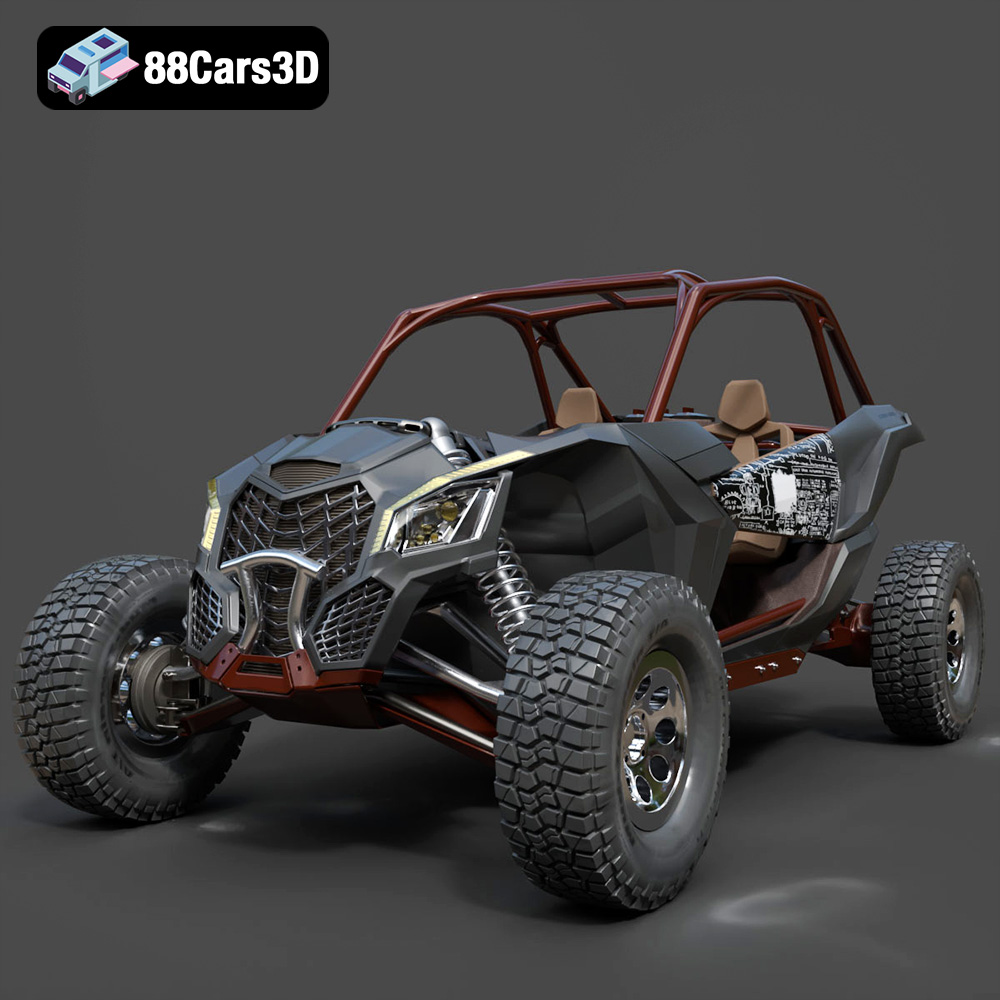
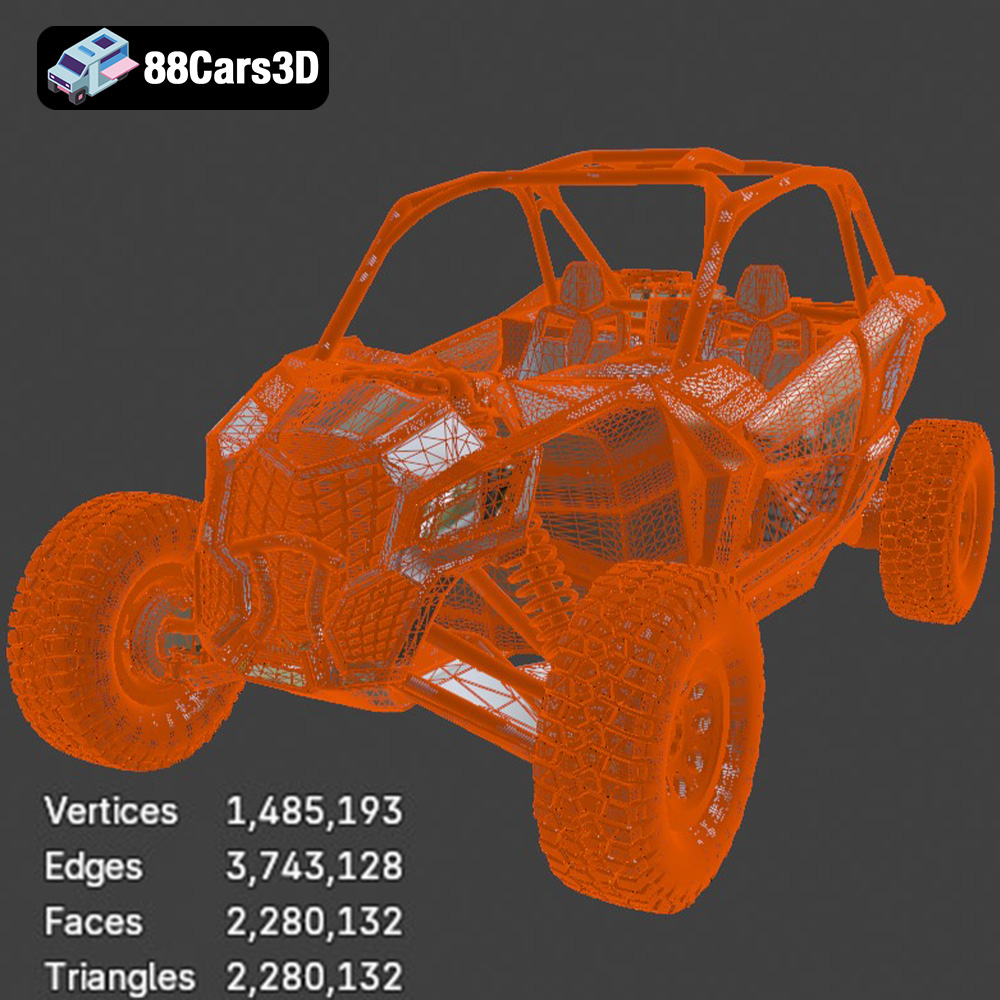
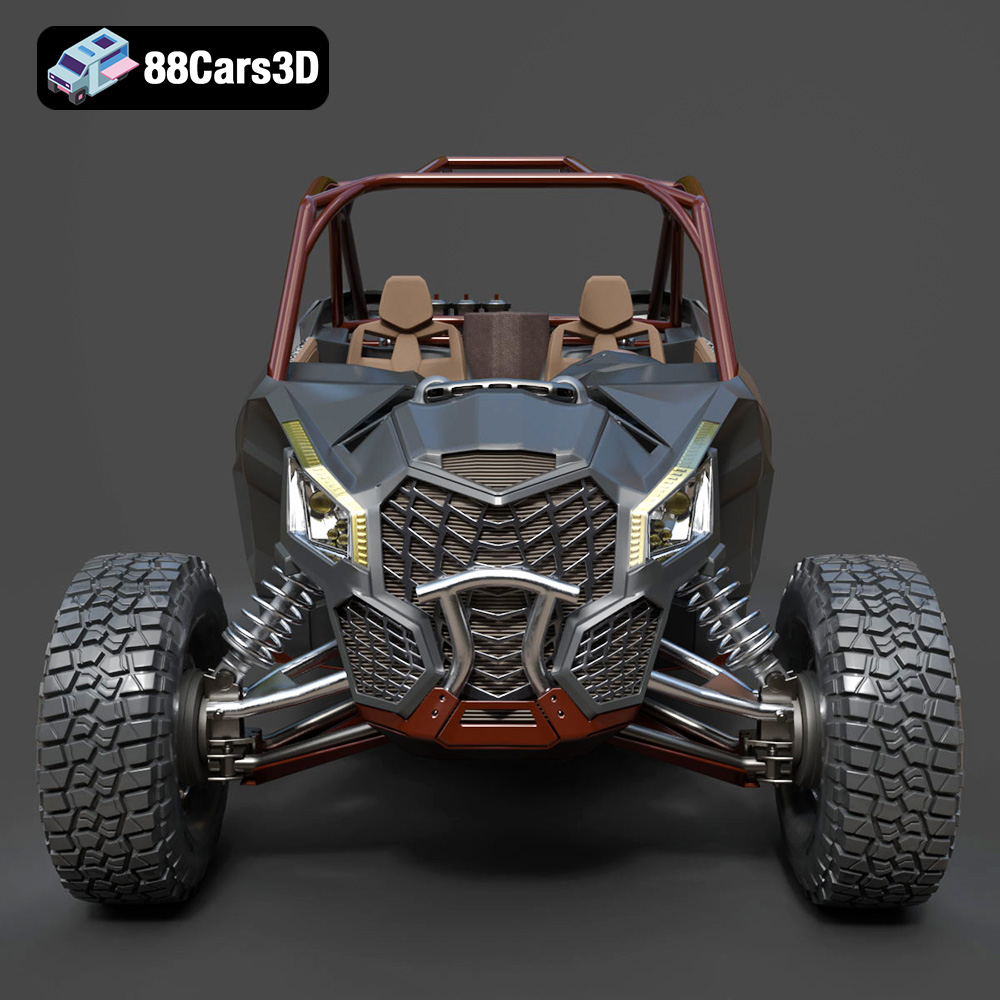
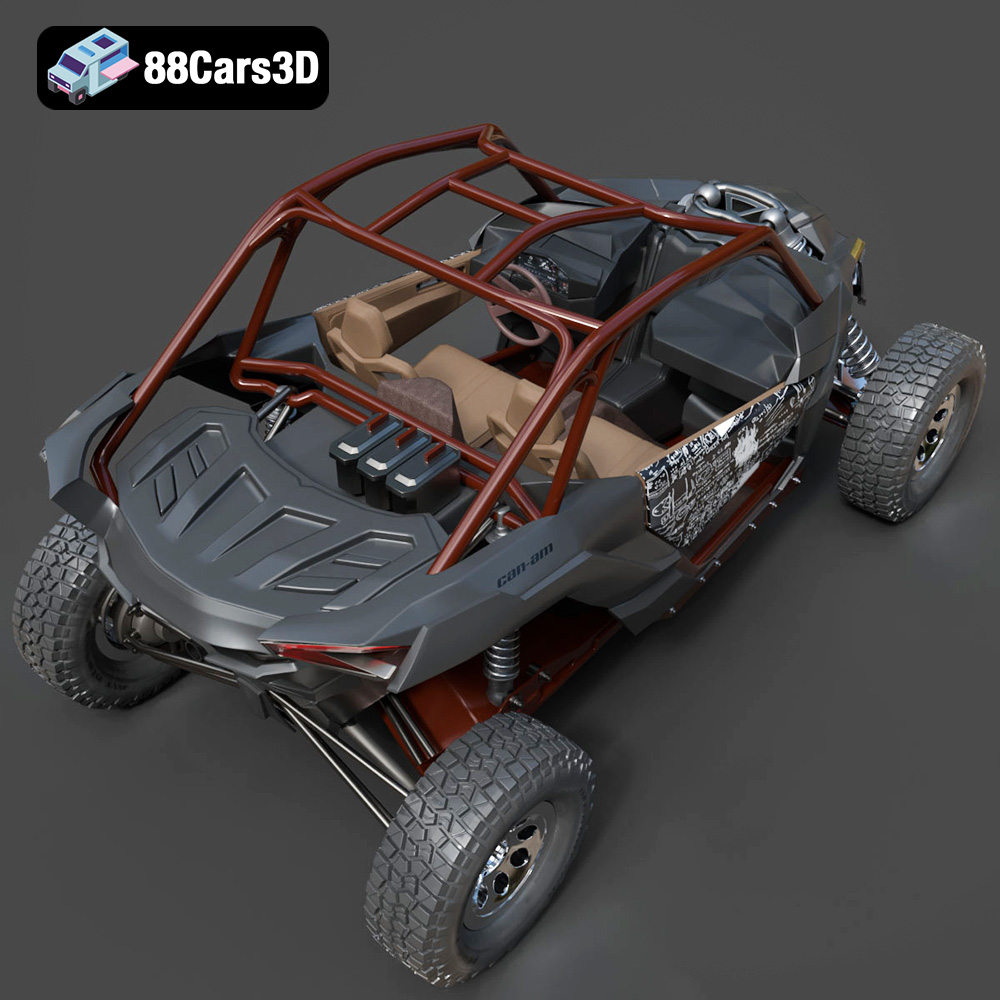
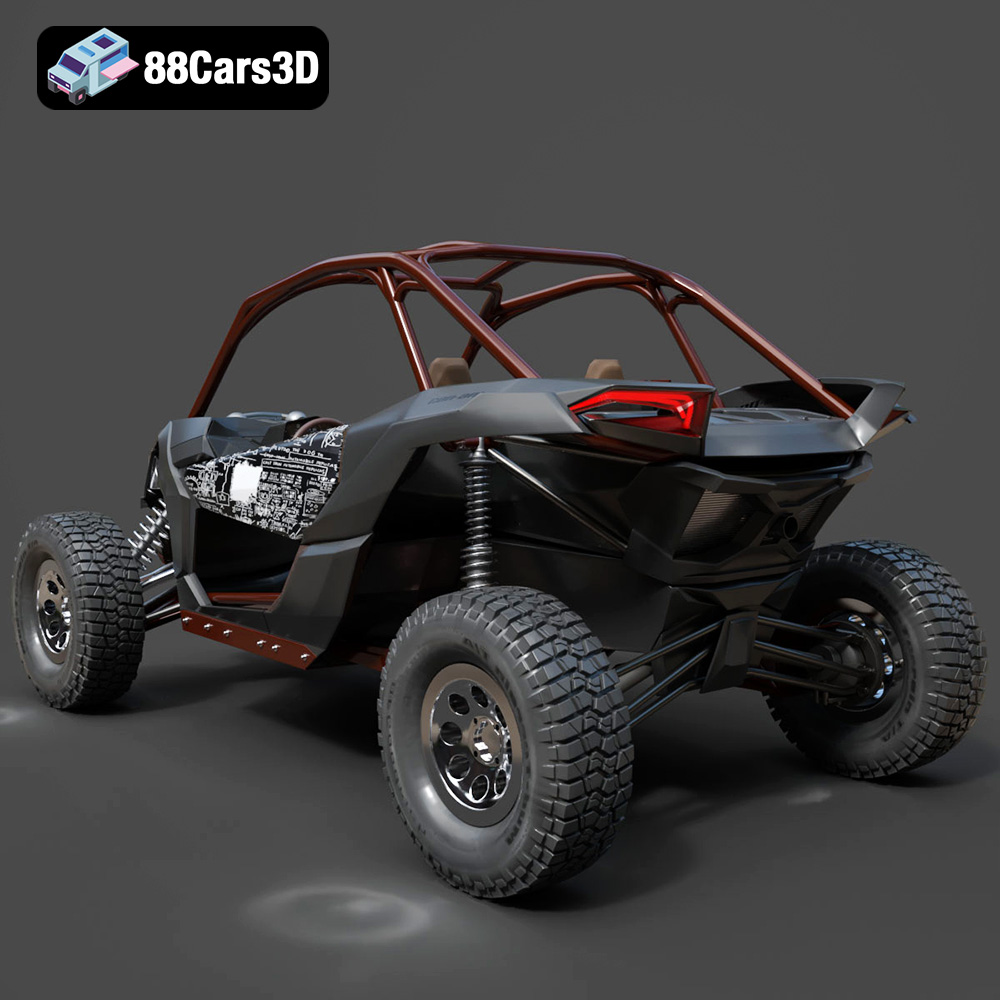
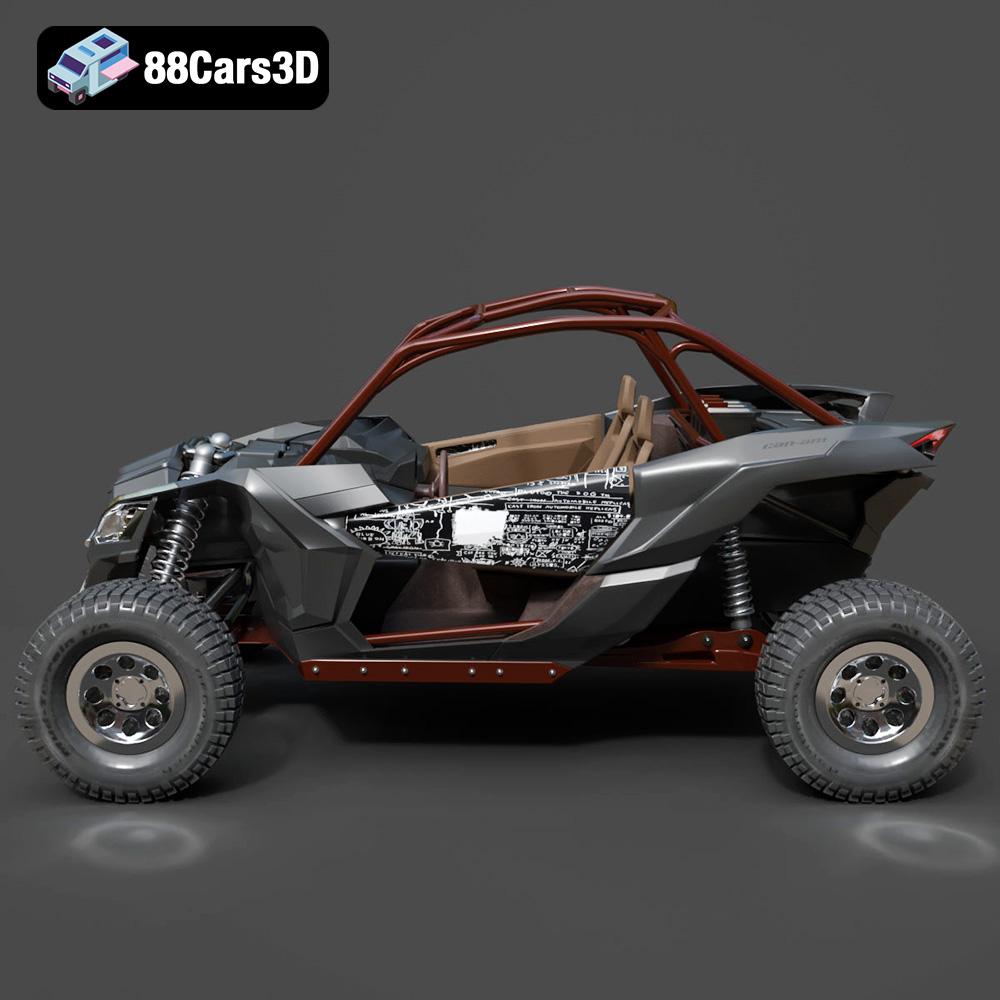
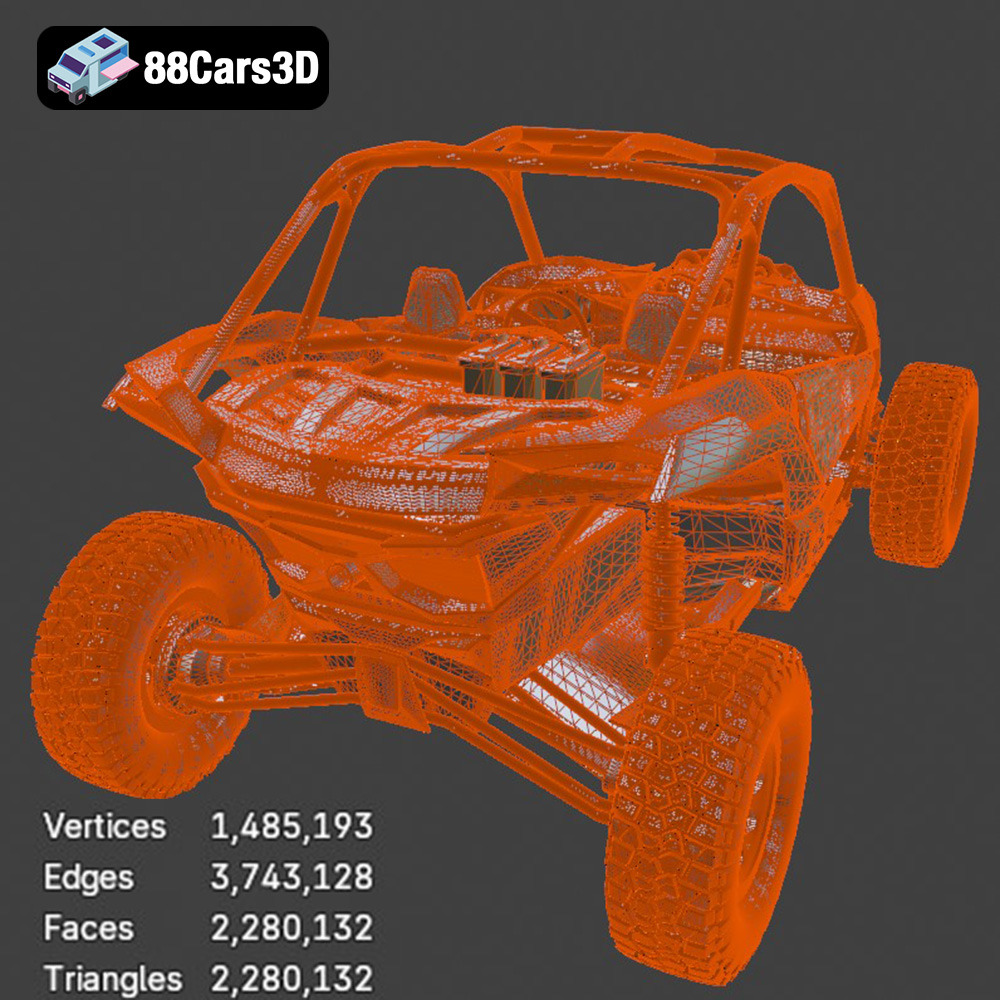
The 2019 Can-Am Maverick is instantly recognizable by its aggressive, wide-stance styling and exposed tubular frame. This 3D model painstakingly recreates these signature elements, from the detailed engine block with its Rotax-inspired high-performance layout to the intricate high-clearance dual exhaust system. Every curve of the bodywork, the menacing front fascia, and the distinctive signature LED headlights are accurately modeled. Crucially, the model boasts a high-fidelity topology with 2,280,132 triangles. This polycount strikes a perfect balance: it’s rich enough to convey unparalleled visual accuracy for high-end renders, yet clean and optimized enough to ensure predictable performance in modern game engines. The off-road beadlock wheels and aggressive knobby mud/dirt tires are not just aesthetic additions; they are carefully sculpted to reflect their real-world counterparts, enhancing realism in any scene.
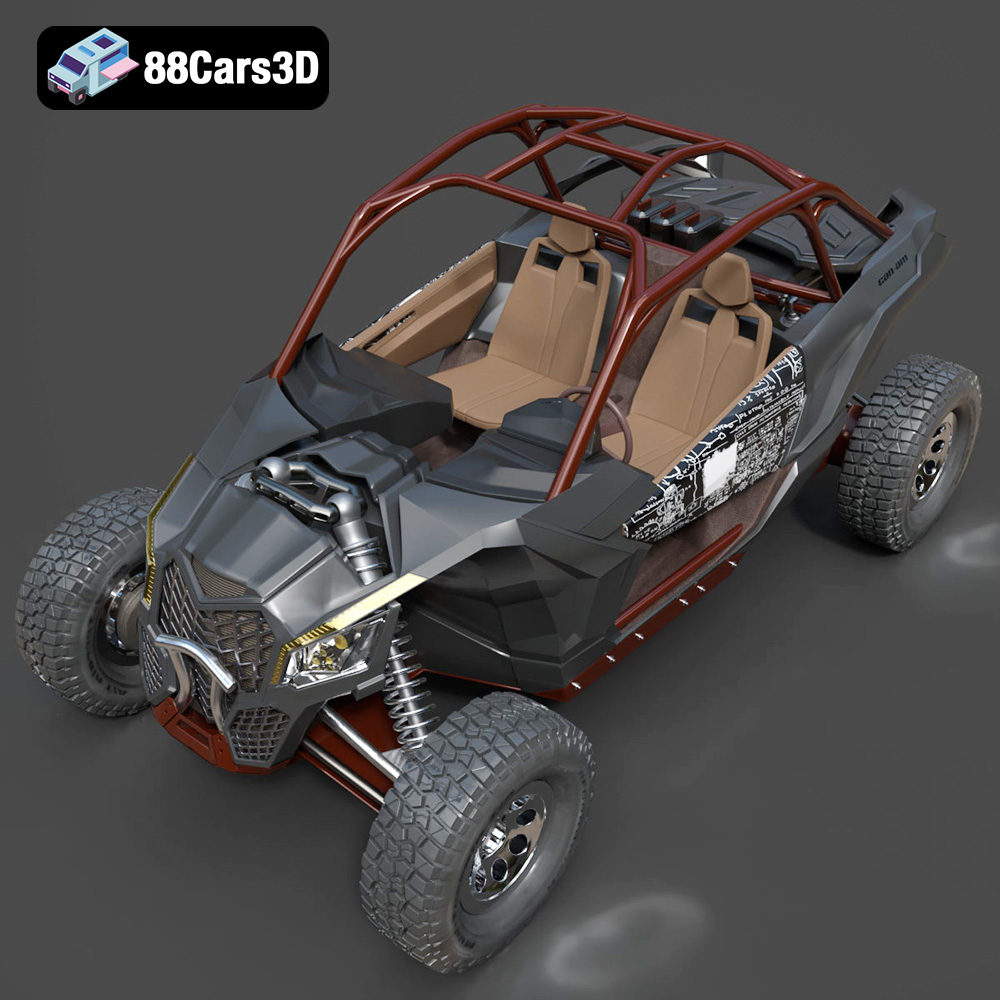
Beyond the exterior, the model extends its meticulous detail to the cockpit. The ergonomic racing-style bucket seats with harness slots, the sport-grip steering wheel, and the detailed adjustable column components immerse the viewer. A digital instrument cluster and centered multimedia controls are present, along with a rugged dashboard layout, shift lever, and pedal assembly. This level of interior detail is not just for show; its optimized geometry is perfect for first-person POV in gaming, allowing players to experience the Maverick from an authentic driver’s perspective. For virtual showrooms or AR experiences, this interior fidelity is paramount for a convincing immersion.
A beautiful model is only as good as its technical foundation. The Can-Am Maverick 3D model is built with real-world scale accuracy, ensuring it fits seamlessly into any scene or simulation without scale adjustments. More importantly, it features a proper pivot setup for critical components like steering, wheel rotation, and suspension travel. This is invaluable for animators and game developers, allowing for realistic vehicle dynamics right out of the box. The clean geometry, despite its high polycount, ensures ease of manipulation, stable rendering, and predictable collision detection in real-time environments, making it a robust asset for any professional pipeline.
The true value of a premium 3D model like the Can-Am Maverick Buggy 2019 3D Model lies in its versatility and how seamlessly it integrates into diverse professional workflows. From interactive gaming experiences to high-fidelity marketing visuals, this asset is designed to be a cornerstone for creative projects.
For game developers, the Maverick model is a dream come true. Its “game-ready & optimized” nature, with a balanced polycount of 2,280,132 triangles, means it can be dropped into engines like Unreal and Unity with minimal fuss. The separate wheels, suspension, and steering components are pre-configured with proper pivots, which is critical for implementing realistic physics and animation. Imagine populating an open-world racing game with these vehicles, allowing players to experience dynamic suspension travel over rugged terrain, or customizing their ride in a virtual garage. The clean geometry also facilitates the creation of optimized Level of Detail (LOD) models, ensuring smooth performance even in large-scale environments. The availability of a direct .unreal format further accelerates integration for Unreal Engine projects, significantly reducing development time.
The burgeoning fields of Augmented Reality and Virtual Reality demand highly optimized yet visually stunning assets. The Can-Am Maverick model is perfectly suited for these applications. Its fidelity lends itself to immersive virtual showrooms where customers can explore the vehicle in a 360-degree environment, or even configure custom options in real-time. For mobile AR experiences, where performance is paramount, formats like .glb provide the necessary optimization for seamless interaction on smartphones and tablets. Imagine placing a virtual Maverick in your driveway using your phone, or sitting inside its virtual cockpit in a VR headset – the detailed interior geometry is particularly effective for first-person viewpoints in these immersive scenarios.
In advertising, architectural visualization, and product marketing, photorealism is non-negotiable. The Maverick 3D model excels in these areas, offering the precise geometry and detail required for stunning marketing renders. Using software like 3ds Max or Blender (with its native .max and .blend files), artists can create studio-quality images or dynamic animations. The ability to customize body/tank colors, modify tire textures, and adjust material finishes (matte, gloss, metallic) allows for endless creative possibilities. Whether it’s showcasing the vehicle in a rugged outdoor landscape or under dramatic studio lighting, the model provides a robust foundation for compelling automotive rendering and visualization projects.
The journey from a static 3D model to a captivating visual spectacle involves skillful rendering and animation. The Can-Am Maverick Buggy 2019 3D Model is designed to facilitate these processes, offering features that empower artists to achieve photorealism and dynamic movement.
Achieving photorealistic results with the Maverick model hinges on intelligent lighting and material setup. With the included file formats, artists can leverage Physically Based Rendering (PBR) workflows in their chosen software. This involves meticulously setting up metallic, roughness, and normal maps to accurately represent the varied surfaces of the buggy – from the rugged metallic frame to the textured plastic components and rubber tires. Using High Dynamic Range Imagery (HDRI) for environment lighting can quickly establish a believable outdoor scene, while artificial lights can highlight specific design elements for studio-style renders. The ability to customize material finishes directly translates into creative control, allowing for unique visual identities, from factory-fresh gloss to a dirt-splattered, battle-hardened look.
One of the standout technical advantages of this premium 3D model is its articulated design. With separate wheels, suspension, and steering components, animators gain precise control over vehicle dynamics. This means creating realistic suspension travel as the Maverick traverses uneven terrain, accurate steering wheel rotation synchronized with wheel movement, and independent wheel spin. The proper pivot setup ensures that these animations are intuitive and physically accurate, reducing the need for complex rigging from scratch. This level of detail makes the model ideal for cinematic sequences, driving simulators, or interactive product demonstrations where dynamic movement is key.
For developers focusing on real-time interactive experiences, the .unreal format for the Can-Am Maverick simplifies integration. Upon importing the .unreal asset into Unreal Engine, the model often comes with pre-configured material instances, basic collisions, and correct scaling. Artists can then build upon this foundation, setting up more advanced physics, adding driving logic using Blueprints, and integrating it into game levels. The optimized polycount ensures that even with multiple Mavericks on screen, performance remains smooth, crucial for high-speed racing scenarios or large-scale open-world environments. This engine-ready approach significantly streamlines the asset pipeline, allowing more time for gameplay development and visual polish.
The versatility of a professional 3D car model extends beyond digital screens. For enthusiasts, designers, or even engineers, the ability to transition a digital asset into a physical object or adapt it for bespoke purposes opens up new avenues of creativity and utility.
For those who wish to hold a tangible representation of this formidable machine, the Can-Am Maverick Buggy 2019 3D Model is fully convertible to the .stl format, making it ready for 3D printing. This allows hobbyists and professionals alike to create display-scale models. To achieve the best results, specific print settings are recommended:
Post-processing, including sanding, priming, and painting with authentic factory colors or metallic finishes, can truly bring the physical model to life, mirroring its digital counterpart.
The inherent flexibility of the 3D model empowers users with extensive customization options. This isn’t just about minor tweaks; it’s about reshaping the asset to fit specific project requirements or personal creative visions:
These customization capabilities ensure that the Can-Am Maverick 3D model isn’t just a static asset, but a dynamic foundation for endless creative exploration, providing exceptional value for automotive rendering, game asset development, and visualization.
The world of 3D modeling thrives on detail, versatility, and technical excellence. As we’ve explored, a high-quality asset like the Can-Am Maverick Buggy 2019 3D Model is far more than just a digital representation of a vehicle; it’s a meticulously engineered tool designed to supercharge professional workflows across various industries. From its game-ready optimization and comprehensive file format support to its stunning visual accuracy and animation-friendly setup, this model exemplifies what a premium 3D car model should be.
Whether you’re crafting an immersive off-road racing game, developing an interactive AR/VR experience, producing photorealistic automotive renders for a marketing campaign, or even preparing a physical model for 3D printing, the Maverick offers the fidelity and flexibility needed to achieve exceptional results. Its ability to integrate seamlessly into major 3D software platforms and real-time engines, coupled with extensive customization options, makes it an invaluable asset for any serious artist or developer.
For those seeking the pinnacle of 3D automotive assets, a visit to 88cars3d.com is highly recommended. Discover how models like the Can-Am Maverick Buggy 2019 can transform your projects and unleash new levels of creative potential.
Discover the rugged capability of the 2019 Can-Am Maverick, a high-performance side-by-side UTV (buggy) that defines extreme off-roading. Known for its aggressive, wide-stance styling, exposed tubular frame, and turbocharged Rotax engine components, this vehicle is an icon of dirt trails and desert racing. Our highly detailed 3D model captures the raw power and intricate mechanical design of the Maverick, down to its rugged suspension geometry and menacing front fascia.
Boasting a high-fidelity topology with 2,280,132 triangles, this premium 3D model offers unparalleled visual accuracy. While rich in detail, its clean geometry ensures predictable performance in modern game engines and high-end rendering software. It is an exceptional asset for game development, high-end CGI, automotive visualization, and immersive AR/VR experiences.
Perfect for off-road racing games, rugged terrain simulations, outdoor lifestyle renders, and virtual vehicle configurators.
.blend, .fbx, .obj, .glb, .stl, .ply, .unreal, .max
Tags:
can-am, maverick, maverick-2019, buggy, utv, side-by-side, off-road, game-ready, low-poly, optimized, car-3d-model, game-asset, rendering, vr-ar, blend, fbx, obj, glb, stl, ply, unreal, max
$37.50
.blend
.fbx
.glb
.maverick
.max
.obj
.ply
.rendering
.stl
.unreal
.utv
buggy
can-am
car-3d-model
game asset
game-ready
low-poly
maverick-2019
off-road
optimized
side-by-side
VR/AR