Get 20% OFF All Premium 3D & STL Models!

The boundless expanse of space has captivated the human imagination for centuries, inspiring countless stories, games, and cinematic spectacles. In the digital realm, bringing these cosmic visions to life demands tools and assets that embody both artistic excellence and technical precision. Whether you’re a game developer crafting the next epic space opera, a filmmaker visualizing a dramatic interstellar chase, or an architect designing an immersive AR/VR experience, the foundation of your creation often lies in the quality of your 3D models. Without meticulously crafted assets, even the most ambitious projects can fall flat, lacking the visual fidelity and performance optimization required for a truly immersive experience.
Enter the world of high-quality, pre-built 3D assets – a game-changer for professionals seeking to accelerate their workflows without compromising on detail. Today, we’re diving deep into the intricate design and versatile applications of a truly remarkable asset: the Spaceship 3D Model Download STL FBX OBJ GLB Blend. This futuristic vessel, with its advanced aerodynamic hull and state-of-the-art propulsion engines, is more than just a model; it’s a meticulously engineered piece of digital art ready to elevate your sci-fi universe. Sourced from expert platforms like 88cars3d.com, such assets empower creators to focus on storytelling and interaction, knowing that their foundational visuals are already primed for excellence.
Navigating the diverse landscape of 3D software and engines requires a solid understanding of file formats. Each format serves a specific purpose, offering unique advantages in terms of compatibility, data integrity, and optimization for particular workflows. Choosing the right format is crucial for seamless integration and efficient project development. The featured Spaceship 3D Model comes with an extensive array of formats, ensuring its versatility across virtually any professional pipeline.
The .blend format is Blender’s native file type, offering a complete and fully editable Blender scene. This is invaluable for users who wish to delve into every aspect of the model’s construction. A .blend file typically includes not just the mesh data, but also materials, textures, lighting setups, animation data, camera information, and even physics simulations. For artists and developers working within the Blender ecosystem, this format provides maximum flexibility for customization, tweaking materials, re-rigging components, or extending the model’s functionality. It’s perfect for detailed rendering, animation projects, and any scenario where profound modification of the asset is desired.
As a proprietary file format owned by Autodesk, .fbx has become an industry-standard for 3D data exchange, particularly between different software applications and real-time game engines like Unreal Engine and Unity. FBX excels at preserving a wide range of data, including mesh geometry, materials, textures, animations (skeletal and morph targets), cameras, and lights. Its robust support for animation data makes it an ideal choice for characters, vehicles, and complex animated assets in game development. When you need to move a model, especially one with intricate rigging and animation like the Spaceship 3D Model, from a modeling package to a game engine, .fbx is often the most reliable and efficient solution.
The .obj (Wavefront Object) format is one of the oldest and most widely supported 3D file formats. Its strength lies in its simplicity and universality, making it an excellent choice for cross-software compatibility. An OBJ file primarily stores geometry data (vertices, normals, texture coordinates, and faces) and can reference an external .mtl (material) file for basic material properties. While it lacks support for animations, rigging, or advanced material nodes, its widespread adoption ensures that almost any 3D software can import and export OBJ files without issues. It’s particularly useful for static meshes and when you need a foundational geometry to work with in a new application.
.glb (GL Transmission Format Binary) is the binary version of the glTF format, designed for efficient transmission and loading of 3D scenes and models by applications. It’s particularly optimized for augmented reality (AR), virtual reality (VR), and browser-based 3D applications because it packages all model data (geometry, materials, textures, animations) into a single, self-contained file. This single-file nature simplifies asset management and reduces latency, making it perfect for interactive web experiences, mobile AR apps, and immersive VR environments where rapid loading and display are critical. For the Spaceship 3D Model, its .glb version is perfect for showcasing it in a virtual showroom or an interactive web viewer.
.stl (STereoLithography) is the de facto standard format for 3D printing. It represents a 3D model as a series of connected triangles, describing only the surface geometry of an object without color, texture, or other CAD attributes. While simple, this format is universally accepted by 3D slicing software, which prepares models for printing. For enthusiasts looking to bring the Spaceship 3D Model into the physical world, the .stl file is essential. It provides the pure geometric data necessary for your 3D printer to accurately reproduce the model layer by layer.
The .ply (Polygon File Format) is another format for storing 3D data, particularly common in scientific and engineering applications, as well as 3D scanning. It can store a wider range of properties than OBJ or STL, including color, transparency, and even confidence values for each vertex. PLY is often used for precision mesh data, point clouds, and scenarios where data integrity and additional attribute information are paramount. While less common in typical game or animation pipelines, it offers a robust alternative for specific CAD or analytical purposes related to the model’s geometry.
While not a universal file extension in the same vein as FBX or OBJ, the inclusion of a proprietary .unreal file (often a .uasset file or an Unreal Engine project package) signifies that the asset has been specifically pre-packaged and optimized for direct import or integration into Unreal Engine. This means materials are likely set up with Unreal’s Physically Based Rendering (PBR) system, textures are correctly linked, and collision meshes might already be generated. This “engine-ready” state drastically reduces setup time for developers, allowing them to drop the Spaceship 3D Model directly into their projects and begin working immediately.
Similar to .blend for Blender, the .max format is the native file type for Autodesk 3ds Max. This format retains all the intricate details of a 3ds Max scene, including advanced materials, lighting rigs, complex animation curves, modifiers, and scene organization. For professionals working within 3ds Max, the .max file provides the ultimate level of control and editability. It’s perfect for complex rendering setups, detailed animation sequences, or for leveraging 3ds Max’s robust modeling and simulation tools to further enhance the spaceship.
Understanding these formats is key to unlocking the full potential of any 3D asset, allowing creators to seamlessly transition between different stages of their production pipeline and maximize the utility of their purchased models.
Creating a believable and engaging sci-fi universe hinges on the details. A generic model won’t cut it when you’re aiming for cinematic quality or immersive gameplay. The Spaceship 3D Model stands out precisely because of its meticulous design and technical foresight, making it an ideal choice for serious projects.
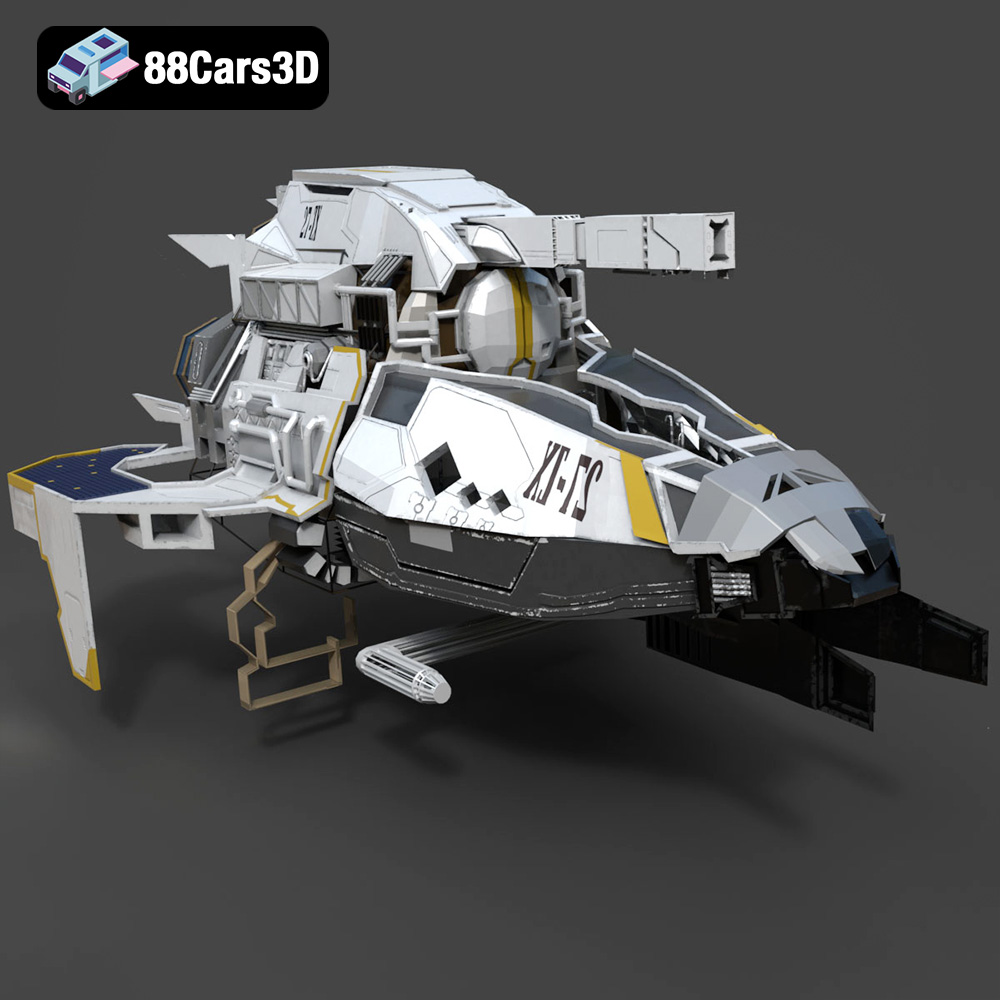
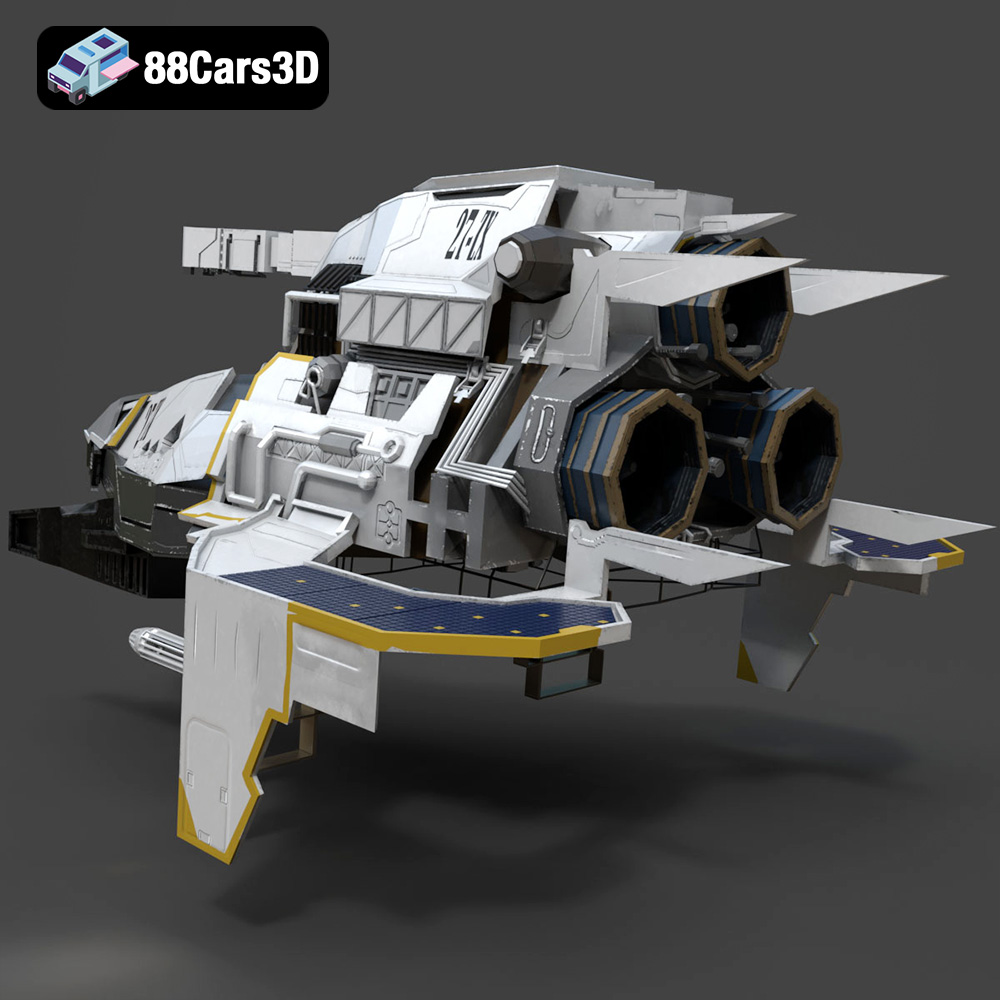
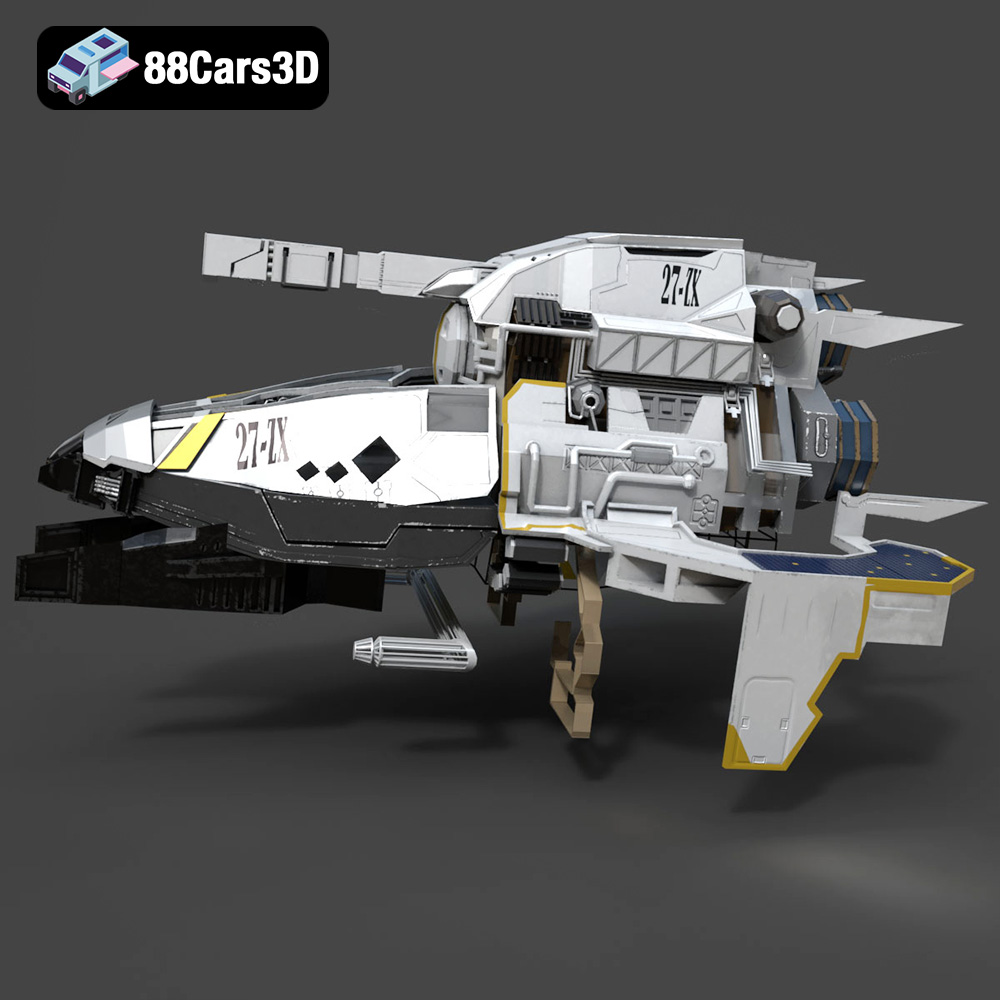
This particular spaceship model is a masterclass in futuristic design. Its detailed product description highlights an advanced aerodynamic hull, indicative of a vessel built for both speed and resilience. Imagine the intricate exterior armor plating catching the light as it streaks across a starfield, or the high-tech exhaust nodes glowing ominously as its hyper-drive engines spool up. The inclusion of dynamic lighting details, such as navigation beacons and engine glow, adds a layer of realism and visual interest that is crucial for both static renders and animated sequences. Furthermore, the model’s retractable landing gear, integrated weapon bays, and defensive shielding emitters hint at its functional versatility, allowing for dynamic interactions within a game or narrative.
Beyond the exterior, the model offers a surprisingly detailed interior, a critical feature for first-person perspective (FPV) games or virtual reality experiences. The ergonomic pilot command seat, futuristic flight yoke, and holographic instrument cluster are not just cosmetic; they suggest a fully functional cockpit environment. Complex control panels, throttle levers, and diagnostic screens complete the illusion, providing a rich backdrop for pilot interaction and immersion. This level of detail on both the exterior and interior ensures that the asset holds up under intense scrutiny, whether from a wide cinematic shot or an intimate cockpit view.
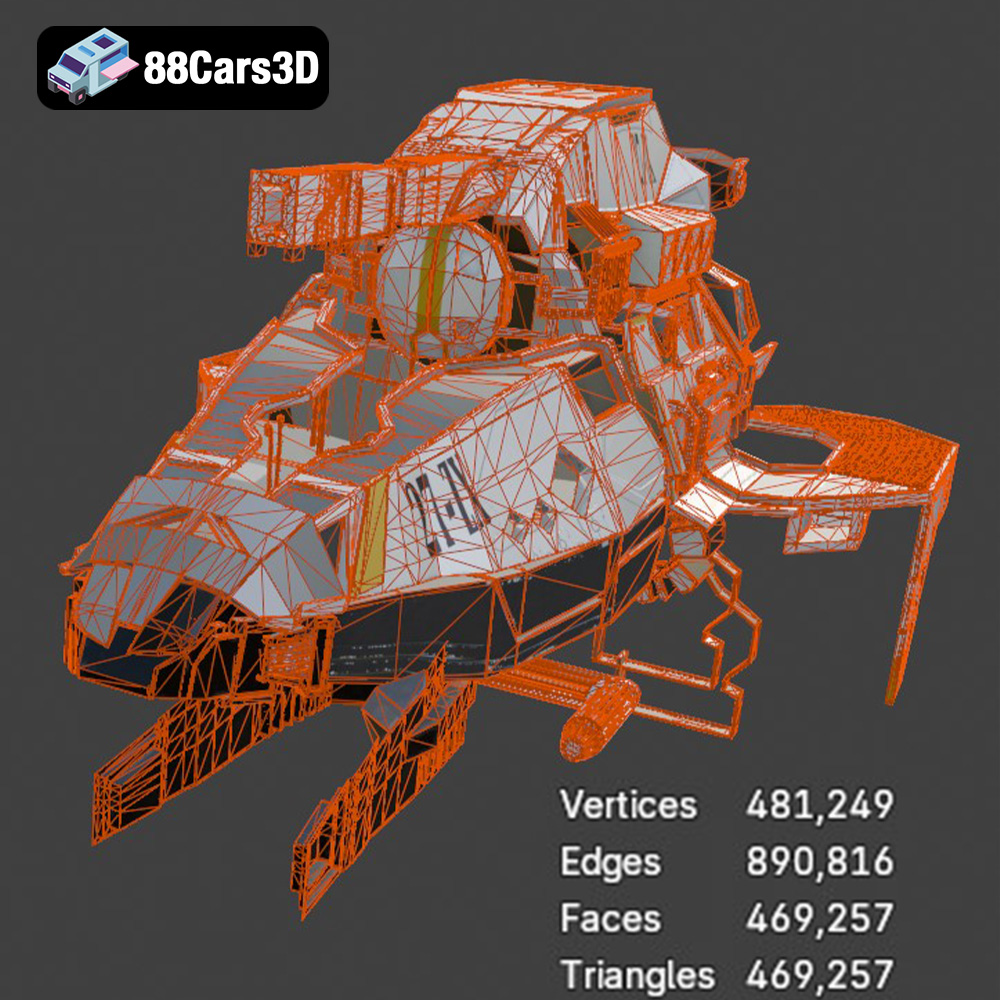
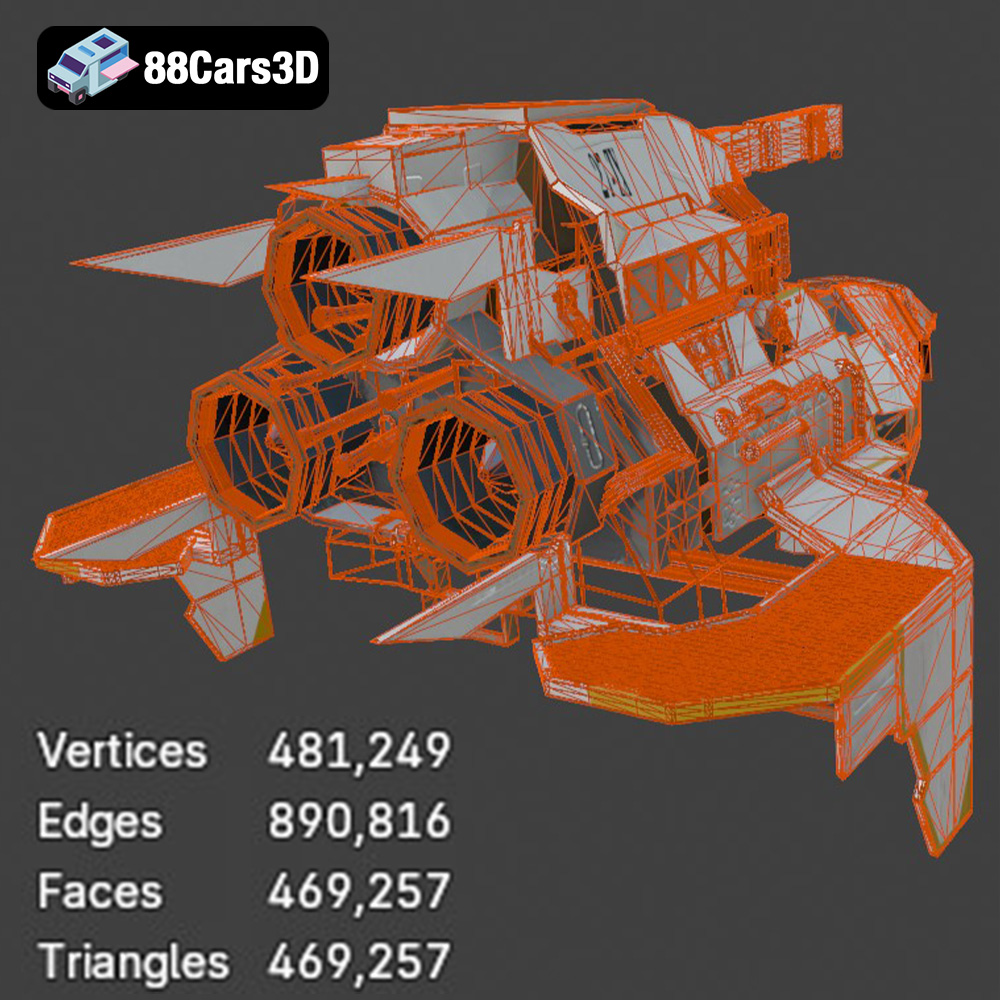
A beautiful model is only truly valuable if it’s usable. The Spaceship 3D Model strikes an impressive balance between visual fidelity and performance optimization with its 469,257 triangle count. This polycount is sufficiently high to deliver exceptional visual realism for high-end rendering and detailed cinematics, capturing every curve and panel line with precision. Yet, it remains structurally optimized, making it game-ready for next-generation engines like Unreal Engine and Unity without causing significant performance bottlenecks. This “sweet spot” ensures that the model looks stunning without demanding excessive computational resources, a crucial consideration for large-scale game worlds or real-time AR/VR applications.
Technical considerations extend beyond polycount. The model boasts real-world scale accuracy, based on actual vehicle chassis concepts. This attention to scale prevents common issues where assets feel out of place within a scene, ensuring seamless integration. Furthermore, proper pivot setups for elements like landing gear deployment, turret rotation, and thruster vectors mean that the model is animation-ready right out of the box. Artists won’t need to spend valuable time setting up pivot points, allowing for immediate rigging and animation work, significantly streamlining the production process.
The true measure of a versatile 3D asset lies in its ability to integrate effortlessly into various professional production pipelines. The Spaceship 3D Model is designed with this versatility in mind, making it a valuable addition to diverse creative projects.
For game developers, finding optimized yet highly detailed game assets can be a continuous challenge. The Spaceship 3D Model, with its “game-ready” label and 469,257 triangles, is tailor-made for titles ranging from open-world space games to intense dogfighting simulators. Its optimized geometry ensures smooth frame rates, even when multiple instances populate a scene. The separate landing gear, weapon turrets, and thruster components are crucial for in-game mechanics and animations, allowing developers to implement dynamic actions like combat maneuvers or docking sequences without complex re-modeling. The detailed cockpit, optimized for first-person POV, adds immense value for immersive experiences, giving players a believable environment to interact with, enhancing the overall gameplay.
When it comes to high-resolution cinematic campaigns or architectural visualizations (even if applied to space stations instead of buildings), the demand for fidelity is paramount. This Spaceship 3D Model excels in rendering and visualization workflows. Whether you’re working in 3ds Max, Blender, or other rendering packages, the model’s intricate details, accurate geometry, and robust material setup ensure breathtaking results. Its customization options, such as changing hull armor plating colors, modifying decal textures, or adjusting material finishes, provide immense creative freedom for directors and lighting artists. Imagine crafting a dramatic space battle, with the spaceship’s metallic finishes glinting under the harsh light of a distant star, or a peaceful docking sequence bathed in the soft glow of its navigation beacons. Its quality rivals even the most detailed 3D car models found on 88cars3d.com, ensuring top-tier visual output.
The burgeoning fields of augmented reality (AR) and virtual reality (VR) thrive on immersive, low-latency experiences. The Spaceship 3D Model, particularly with its .glb format, is a perfect fit for these applications. Developers can use it to create captivating virtual showrooms where users can explore the vessel in 3D, perhaps even customizing its colors and decals in real-time. For VR experiences, the highly detailed cockpit, optimized for FPV, can transport users directly into the pilot’s seat, offering an unparalleled sense of presence. The model’s balanced polycount ensures that even on mobile AR devices or less powerful VR headsets, performance remains smooth, preventing motion sickness and maintaining immersion.
The versatility of this Spaceship 3D Model extends beyond the digital screen into the tangible world of 3D printing. For hobbyists, collectors, or even professional prop makers, having a high-quality model ready for physical production is an exciting prospect.
The inclusion of the .stl format is essential for any 3D printing endeavor. The product description provides highly specific and valuable 3D print settings that ensure successful reproduction. Recommended scales like 1:72, 1:144, or 1:350 offer flexibility depending on the desired size and level of detail. For intricate parts, a low layer height of 0.04–0.12 mm is suggested, with resin printing being specifically recommended for capturing the fine details of exhaust nozzles and armor plating. Critical considerations like wall thickness (1.2–2.0 mm) and infill (20–30%) are provided to ensure structural integrity without wasting material. Supports will be required for detailed components like the exhaust nozzles, wings, and landing gear, and the recommendation to print the hull angled and engines separately is a professional tip for optimizing structural integrity and reducing support material.
The journey from a raw 3D print to a display-worthy model involves several crucial post-processing steps. Sanding and priming are necessary to smooth layer lines and prepare the surface for painting. This is where creative expression truly shines. Applying authentic sci-fi colors, perhaps with metallic finishes or battle damage weathering, can transform a grey plastic print into a miniature masterpiece. Imagine a squadron of these ships, each bearing unique weathering patterns or custom faction logos. The ability to customize hull armor plating colors, modify decal textures, and adjust material finishes (matte, gloss, bare metallic) extends directly from the digital model to its physical counterpart, allowing for truly personalized creations.
A truly exceptional 3D asset provides not just a static object, but a flexible foundation for boundless creativity. The Spaceship 3D Model is designed with extensive customization options and built-in features that empower artists and developers to tailor it precisely to their vision.
The ability to alter the visual appearance of the spaceship is key to integrating it seamlessly into diverse fictional universes. The model allows for changes to hull armor plating colors, making it adaptable for various factions – from military drab to corporate liveries or even unique custom finishes for a hero ship. Modifying decal textures enables branding with faction logos, adding warning labels for realism, or applying weathering effects to tell a story of countless battles and journeys. Adjusting material finishes, such as creating a matte radar-absorbent look, a sleek gloss, or a rugged bare metallic texture, drastically alters the vessel’s character and perceived function. This level of aesthetic control ensures that the spaceship can become a unique visual element within any project, rather than a generic placeholder.
Beyond static aesthetics, the Spaceship 3D Model is engineered for dynamic interaction. The inclusion of separate landing gear, weapon turrets, and thruster components is a significant advantage for animators and game developers. This modularity means these elements can be independently rigged and animated. Imagine the satisfying sequence of landing gear retracting into the hull as the ship takes off, weapon turrets tracking an enemy target in a dogfight, or the subtle adjustments of thruster vectors as the ship maneuvers through an asteroid field. Proper pivot setups, as detailed in the technical specifications, further streamline this process, saving countless hours of setup time. For AR/VR experiences, these interactive elements can provide engaging points for user interaction, allowing players or viewers to truly feel in control or immersed in the spaceship’s operations, pushing the boundaries of what game assets can achieve.
The creation of compelling digital worlds is an endeavor that demands both artistic vision and technical prowess. High-quality 3D models serve as the bedrock for these creations, offering an unparalleled blend of detail, optimization, and versatility. The Spaceship 3D Model, with its stunning futuristic design, meticulously detailed exterior and interior, and robust technical specifications, stands as a prime example of an asset that can significantly accelerate and enhance any sci-fi project. From its game-ready polycount to its full suite of included file formats – from .blend for deep customization to .stl for tangible 3D prints – this model is designed to integrate seamlessly into virtually any professional pipeline, be it game development, cinematic rendering, or immersive AR/VR experiences.
By investing in expertly crafted 3D car models (a testament to high-fidelity modeling generally) and versatile assets like this spaceship, creators can free themselves from the arduous task of building complex models from scratch, allowing them to focus on the narrative, interaction, and overall experience. The ability to customize its aesthetics and animate its key components further empowers artists to imbue it with unique character and functionality. For those seeking to launch their creative projects into the stratosphere, this Spaceship 3D Model from 88cars3d.com offers a powerful, professional-grade solution. It’s not just a model; it’s a launchpad for your imagination, ready to take your next project to new interstellar heights.
Prepare for launch with this stunning futuristic Spaceship, featuring an advanced aerodynamic hull design, state-of-the-art propulsion engines, and iconic sci-fi styling cues. Crafted with meticulous attention to detail, this vessel showcases intricate exterior armor plating, high-tech exhaust nodes, and a sleek silhouette designed for deep space exploration and interstellar combat.
Boasting a highly detailed 469,257 triangle count, this 3D model delivers exceptional visual fidelity while maintaining structural optimization for high-end rendering and next-gen game engines. Whether you are building an expansive sci-fi universe or a cinematic sequence, the geometry is perfectly structured for stunning visuals and seamless integration into major pipelines like Unreal Engine and Unity.
Perfect for space simulation games, sci-fi cinematic animations, virtual reality experiences, and high-resolution concept art.
.blend, .fbx, .obj, .glb, .stl, .ply, .unreal, .max
Tags:
spaceship, sci-fi, spacecraft, game-ready, high-poly, optimized, spaceship-3d-model, game-asset, rendering, vr-ar, blend, fbx, obj, glb, stl, ply, unreal, max
$26.00
.blend
.fbx
.glb
.max
.obj
.ply
.rendering
.spacecraft
.spaceship
.stl
.unreal
game asset
game-ready
high poly
optimized
sci-fi
spaceship-3d-model
VR/AR