Driving Innovation: The Essential Role of High-Quality 3D Car Models in Modern Digital Production
The digital realm has revolutionized how we interact with products, entertainment, and information. At the heart of this transformation, particularly within the automotive, gaming, and visualization industries, lies the sophisticated art of 3D modeling. From adrenaline-pumping racing games to breathtaking architectural renderings and immersive virtual showrooms, the quality of a 3D asset dictates the success of a project. High-fidelity 3D car models are not just digital representations; they are intricate data sets that power realism, facilitate rapid prototyping, and enable unparalleled creative freedom.
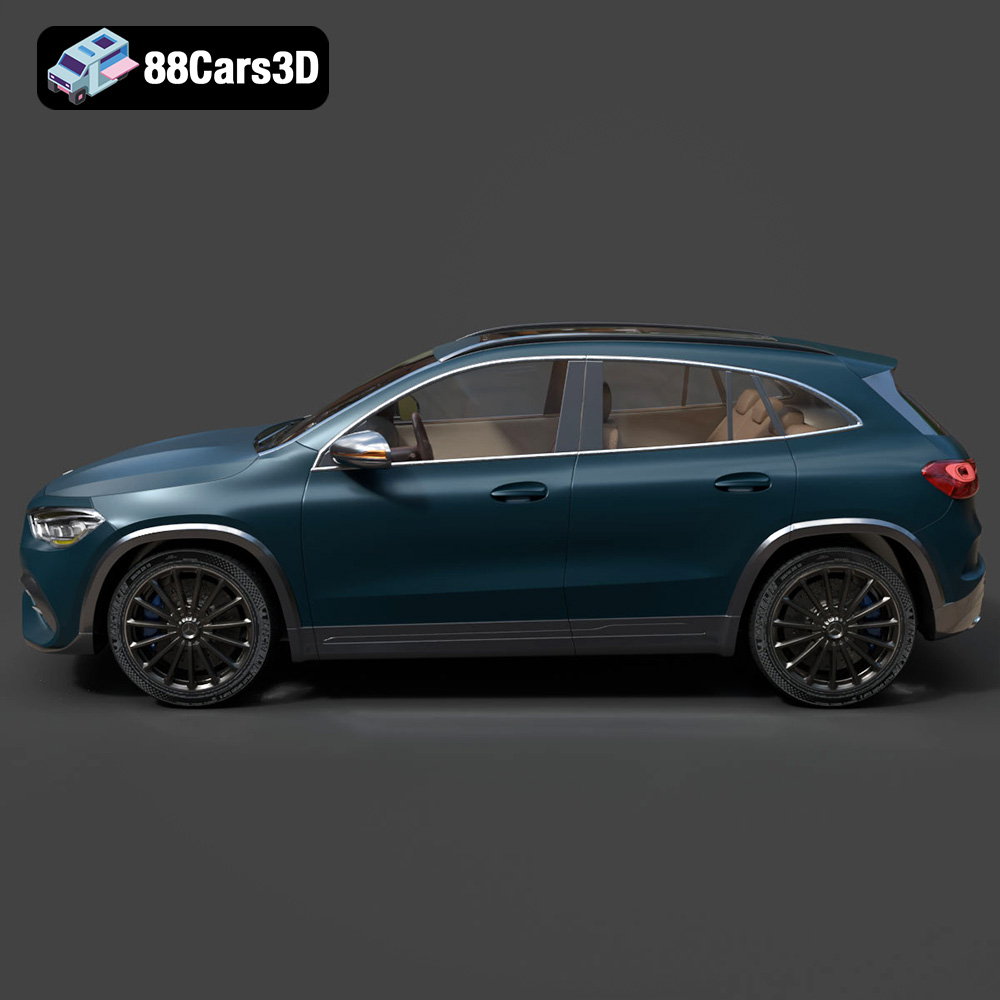
Today, artists and developers demand precision, optimization, and versatility from their assets. This is where a model like the Mercedes-Benz GLA-07 3D Model truly shines. It’s more than just a meticulously crafted vehicle; it’s a robust foundation for a myriad of professional applications, designed to integrate seamlessly into diverse pipelines while maintaining the iconic elegance and performance characteristics of its real-world counterpart. Let’s delve into the technical intricacies and expansive possibilities that such a premium 3D car model offers, exploring how it empowers creators across various digital frontiers.
The Art and Science of Premium 3D Car Models
Creating a truly exceptional 3D car model is a complex endeavor that marries artistic vision with rigorous technical standards. It goes beyond merely replicating a car’s shape; it involves understanding its engineering, design philosophy, and performance dynamics to translate them into a digital format that is both visually stunning and functionally optimized.
Capturing Automotive Essence Digitally
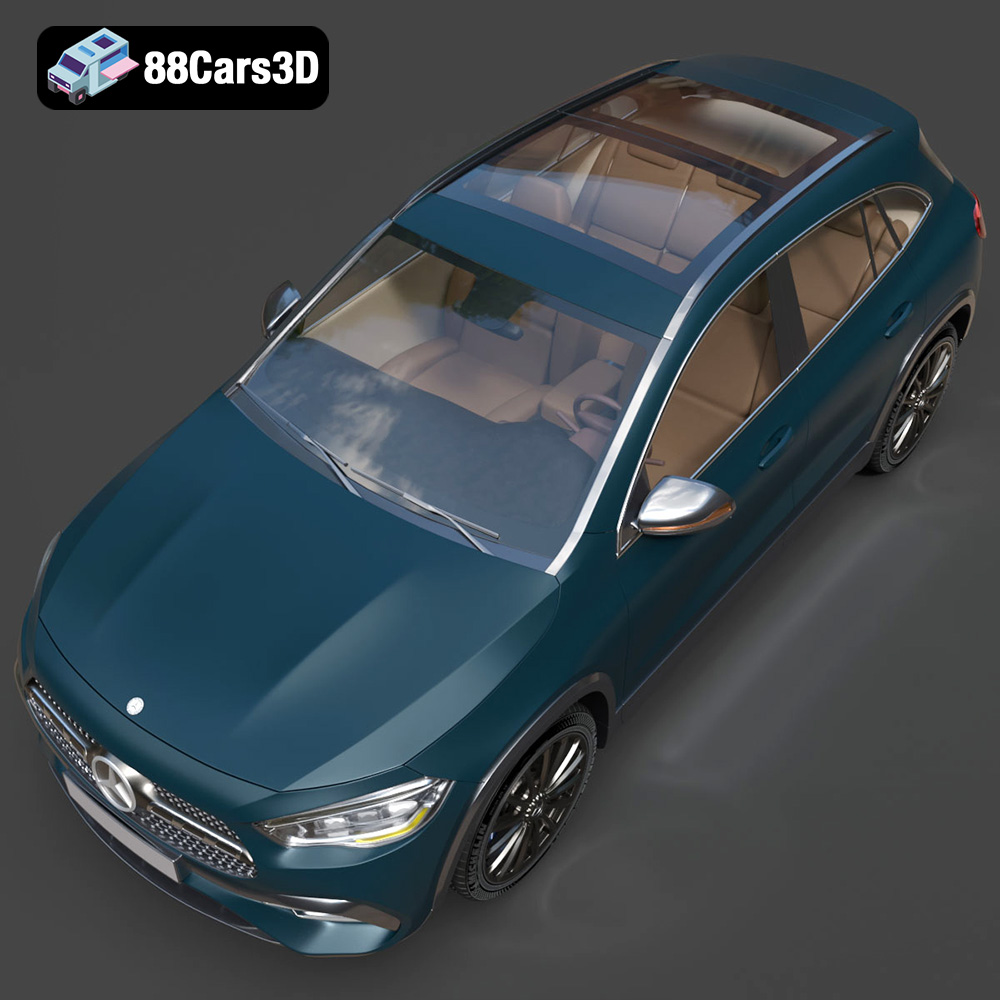
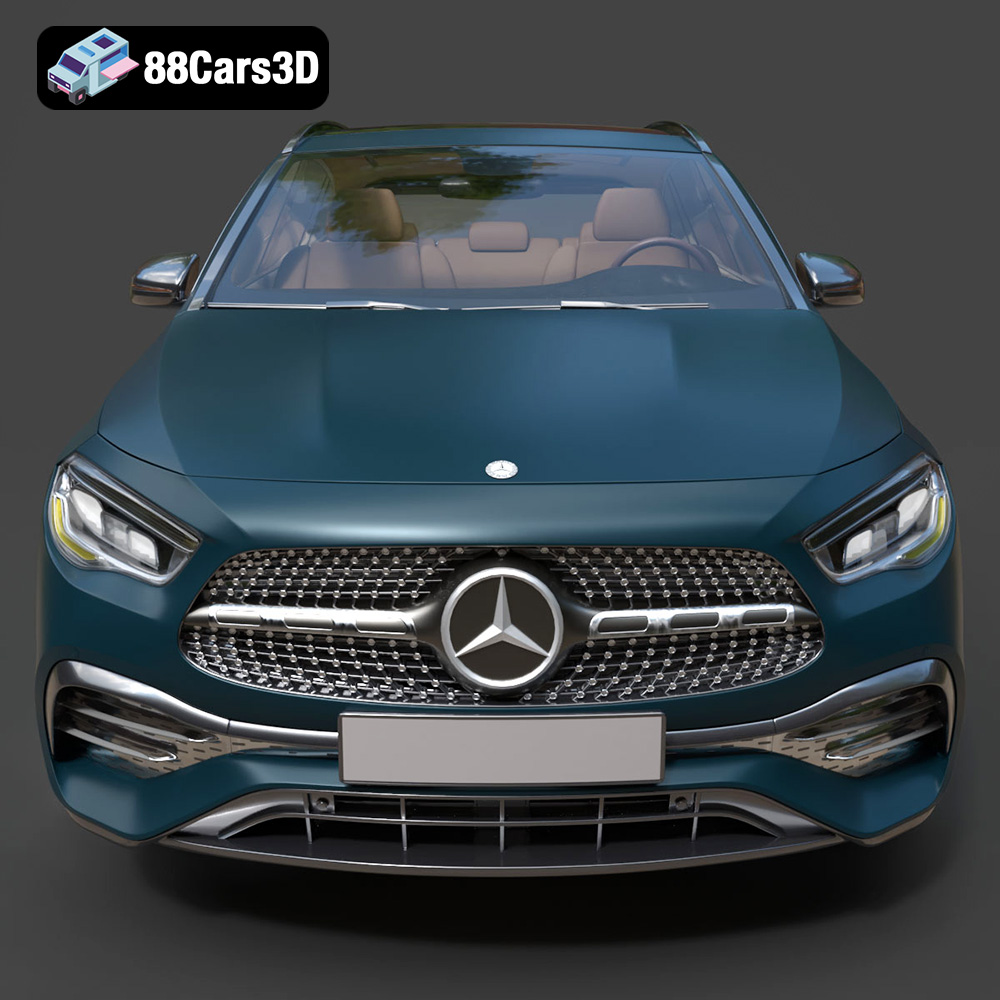
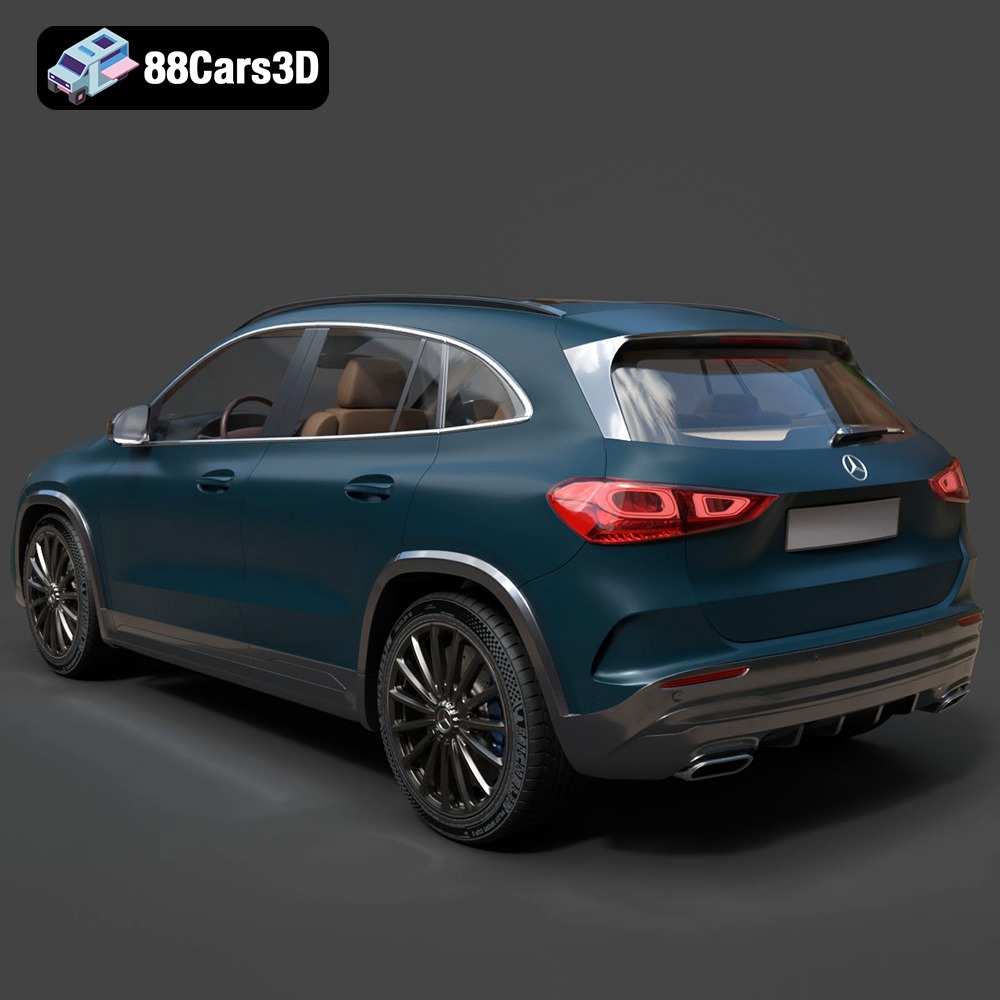
The initial phase of any high-quality automotive 3D model involves exhaustive research and careful attention to detail. This process begins with gathering extensive reference material, including blueprints, photographs, and even real-world measurements. The objective is to ensure that every curve, every panel gap, and every design element is accurately represented. For a model like the Mercedes-Benz GLA-07, this means replicating its distinctive LED high-performance headlamps, the signature diamond-block grille, the sculpted hood, and the integrated dual exhaust system with unwavering precision. These are the details that convey the “premium” feel and authentic brand identity.
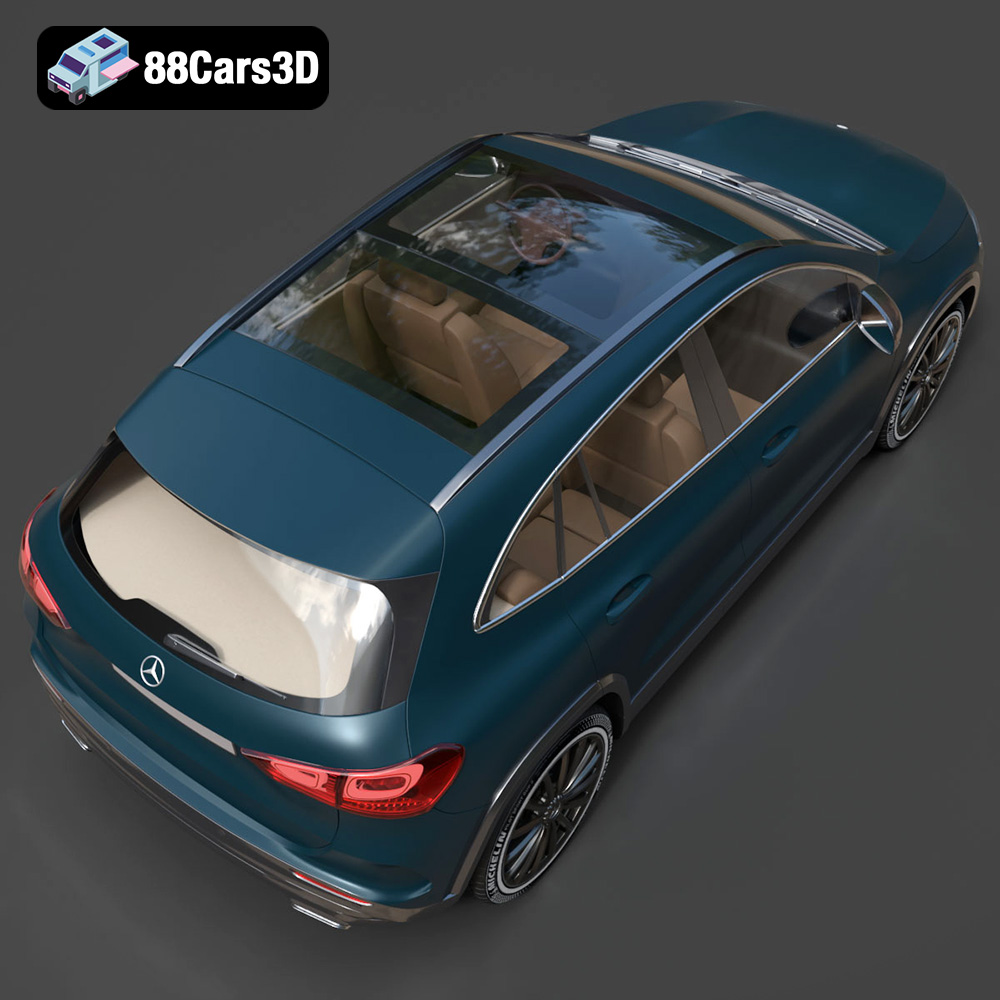
Proportion and scale are paramount. A premium 3D model, such as the Mercedes-Benz GLA-07 offered on 88cars3d.com, is built to real-world scale accuracy, ensuring that it fits naturally into any scene, whether it’s an architectural visualization or a virtual environment. This meticulous approach extends to intricate interior features as well, from the luxurious leather-stitched ergonomic seating and multifunction sports steering wheel to the widescreen dual-display digital instrument cluster and accurate center console. Such fidelity ensures the model is suitable for detailed close-ups and even first-person perspective gameplay, delivering a truly immersive experience.
Balancing Fidelity and Performance: The “Game-Ready” Imperative
While visual accuracy is critical, a truly professional 3D car model must also be optimized for performance, especially when destined for real-time applications like video games or AR/VR experiences. This is where the concept of “game-ready” comes into play. It signifies that the model has been carefully constructed with an optimized polygon count, efficient UV mapping, and a clean topology to ensure smooth rendering and interaction without sacrificing visual quality.
The Mercedes-Benz GLA-07 3D Model is an excellent example, featuring an optimized triangle count of approximately 250,000. This strikes a perfect balance: it’s rich enough in detail to look photorealistic in high-end renders, yet lean enough to run efficiently within demanding real-time engines like Unreal Engine and Unity. Furthermore, a “game-ready” asset includes proper pivot setups for animating crucial components like wheels, suspension, and steering, allowing for dynamic and realistic movement. This careful engineering ensures that the model is not only visually appealing but also a functional, high-performance asset ready for immediate deployment in complex interactive environments.
Understanding 3D Model File Formats
The choice of file format for a 3D model is often as critical as the model’s design itself, dictating its compatibility, functionality, and optimal use cases across different software and platforms. A versatile 3D asset, like the Mercedes-Benz GLA-07 3D Model, typically comes equipped with a range of formats to cater to diverse professional needs. Understanding each format’s strengths and limitations is key to a smooth and efficient workflow.
Universal Compatibility: The Cornerstones of 3D
Many file formats serve as industry standards, facilitating interoperability between various 3D applications:
- .obj (Wavefront OBJ): This is a venerable and widely supported format known for its simplicity and universality. An .obj file primarily stores geometry (vertices, normals, texture coordinates) and references to external material files (.mtl) for basic shading information. It’s an excellent choice for static meshes and transferring fundamental model data between different software packages without losing core geometry. However, it does not support animation, rigging, or complex scene data, making it less suitable for dynamic scenes.
- .fbx (Filmbox): Developed by Autodesk, FBX has become the de facto industry standard for exchanging 3D data, particularly in game development and animation pipelines. Beyond geometry, .fbx supports a rich array of features including animation, rigging, skinning, cameras, lights, and PBR (Physically Based Rendering) materials. Its robust nature makes it ideal for transferring complex scenes and animated characters between applications like 3ds Max, Maya, Blender, and directly into game engines like Unreal Engine and Unity. For a model like the Mercedes-Benz GLA-07, an .fbx file would retain all its intricate animation pivots and material assignments, crucial for real-time integration.
- .blend (Blender Project File): This is Blender’s native file format, offering a complete snapshot of a Blender project. It encompasses all scene data, including geometry, materials, textures, lighting, cameras, animations, physics simulations, and any applied modifiers. For users working primarily in Blender, this format provides the most editable and comprehensive version of the Mercedes-Benz GLA-07 3D Model, allowing full creative control over every aspect of the asset.
- .max (3ds Max Project File): Similar to .blend, .max is Autodesk 3ds Max’s native project file format. It stores an entire 3ds Max scene, preserving all objects, modifiers, materials, lights, cameras, animations, and rendering settings. For professionals deeply integrated into the Autodesk ecosystem, the .max file of the Mercedes-Benz GLA-07 provides direct access to the model in its native environment, enabling complex rendering setups, animation workflows, and detailed modifications within 3ds Max.
Specialized Formats for Specific Workflows
Beyond the universal formats, several specialized options cater to niche applications:
- .glb (GL Transmission Format Binary): GLB is the binary version of glTF, a royalty-free specification for the efficient transmission and loading of 3D scenes and models by applications. It’s often referred to as the “JPEG of 3D” due to its optimization for web, AR (Augmented Reality), and VR (Virtual Reality) experiences. A .glb file contains all necessary data—geometry, materials, textures, and animation—in a single, self-contained file, making it incredibly lightweight and fast to load in browsers and mobile AR applications. For the Mercedes-Benz GLA-07, the .glb format is perfect for interactive virtual showrooms or product configurators on the web.
- .stl (Stereolithography): STL is the standard file format for 3D printing. It represents a 3D model as a series of connected triangles, describing only the surface geometry without color, texture, or other CAD attributes. While simple, its ubiquity in the additive manufacturing world makes it indispensable for bringing digital models into the physical realm. The Mercedes-Benz GLA-07 3D Model, when converted to .stl, allows hobbyists and professionals to physically print scaled replicas, requiring careful consideration of print settings like layer height and supports for optimal results.
- .ply (Polygon File Format): PLY is a polygon file format primarily developed for storing 3D data from 3D scanners. It can store a wide range of properties, including color, transparency, surface normals, and range data, alongside vertex and face information. While less common for general model distribution, it’s valuable for precision mesh analysis or integrating scanned components.
- .unreal (Unreal Engine Asset): While not a standalone file format in the traditional sense like .fbx or .obj, “.unreal” typically refers to an asset package or project file ready for direct use within Unreal Engine. This often means an .fbx file that has been imported, processed, had materials applied, and perhaps collision meshes and LODs (Levels of Detail) generated within the Unreal Editor. For the Mercedes-Benz GLA-07, an “unreal” package would imply a fully configured asset, saving developers significant setup time and ensuring optimal performance within the engine.
Integrating the Mercedes-Benz GLA-07 into Professional Workflows
The true power of a meticulously crafted 3D model lies in its seamless integration into various professional pipelines. The Mercedes-Benz GLA-07 3D Model, with its diverse file formats and technical optimizations, serves as a versatile cornerstone for multiple creative and technical disciplines.
Game Development with Unreal Engine and Unity
For game developers, the Mercedes-Benz GLA-07 is an immediate asset. Its “game-ready” designation and optimized ~250k triangle count make it perfectly suited for demanding real-time environments. In both Unreal Engine and Unity, developers would typically import the .fbx file, which preserves crucial data like animation pivots for wheels, suspension, and steering components. This allows for realistic vehicle dynamics and cinematic cutscenes.
- Workflow in Unreal Engine: After importing the .fbx, artists would apply Physically Based Rendering (PBR) materials, leveraging Unreal’s advanced material editor to create realistic car paint, glass, chrome, and tire textures. Collision meshes would be generated or manually crafted to ensure proper physics interaction, and Levels of Detail (LODs) would be implemented to optimize performance across various viewing distances. The product’s “unreal” file, if provided as a pre-packaged asset, would significantly accelerate this setup, offering a near plug-and-play experience. Imagine integrating this GLA-07 into an open-world driving game, where its detailed interior and exterior can be explored in high fidelity, or a racing simulator where precision handling and visual realism are paramount.
- Workflow in Unity: Similar to Unreal, Unity users would import the .fbx and proceed with material setup, collision authoring, and LOD generation. Unity’s robust scripting capabilities allow for the easy implementation of advanced vehicle physics systems, making the GLA-07 an excellent candidate for interactive experiences, urban exploration games, or even mobile racing titles where optimization is key.
High-End Automotive Rendering and Visualization (3ds Max/Blender)
Beyond gaming, the Mercedes-Benz GLA-07 excels in high-end visualization and rendering, where photorealism is the ultimate goal. For these applications, artists often prefer the native .max or .blend files for maximum editability and scene control.
- Workflow in 3ds Max: With the .max file, a 3D artist has access to the model in its native environment, allowing for precise control over mesh topology, material assignments, and lighting setups. They can leverage powerful rendering engines like V-Ray or Corona Renderer to achieve stunning photorealistic results. This involves crafting complex car paint shaders with multiple clear coats, realistic glass refractions, and intricate chrome reflections. The model’s separate components (wheels, suspension, steering) facilitate sophisticated animations for promotional videos, virtual product launches, or architectural visualization scenes where the car complements a building design. Customization options, such as changing body colors to match factory palettes or applying custom finishes (matte, gloss, metallic), are easily executed, allowing for diverse marketing assets from a single base model.
- Workflow in Blender: Using the .blend file, Blender artists can utilize Cycles or Eevee renderers to produce high-quality images and animations. Blender’s non-destructive workflow with modifiers allows for quick iterations on design elements or material variations. Creating a virtual studio lighting setup with HDRI (High Dynamic Range Image) environments is a common practice to achieve realistic reflections and ambient light, showcasing the GLA-07 in its best light for brand campaigns or lifestyle scenes. The ability to modify tire textures, perhaps switching between off-road and street variants, adds another layer of versatility for different marketing narratives.
Beyond the Screen: AR/VR and 3D Printing Applications
The utility of a comprehensive 3D car model extends beyond traditional screen-based rendering and gaming. With advancements in augmented reality, virtual reality, and 3D printing, digital assets are increasingly being leveraged for immersive, interactive, and tangible experiences.
Immersive Experiences with AR/VR
Augmented Reality (AR) and Virtual Reality (VR) offer new frontiers for showcasing automotive designs. The Mercedes-Benz GLA-07 3D Model is ideally suited for these cutting-edge applications, especially due to its optimized geometry and support for relevant file formats.
- Virtual Showrooms and Configurators: Imagine a customer interacting with the GLA-07 in a VR showroom, walking around it, opening doors, and even sitting inside, all without leaving their home. The optimized polycount ensures smooth performance in VR headsets. For AR, the .glb format is particularly valuable. It allows developers to deploy the GLA-07 model onto web pages or mobile apps, enabling users to place a virtual GLA-07 in their driveway using their smartphone camera. This facilitates immersive virtual test drives and car configurators, where users can instantly change body colors, interior trims, and wheel designs, offering a highly personalized and engaging pre-purchase experience. The model’s real-world scale accuracy is crucial here, ensuring the virtual car appears correctly proportioned in the physical environment.
- Training and Simulation: In professional settings, AR/VR applications can use the GLA-07 for driver training simulators or maintenance walkthroughs. Mechanics could don a VR headset and practice complex repair procedures on a digital twin of the vehicle, reducing risks and costs associated with physical prototypes.
Bringing Digital to Life: 3D Printing the GLA-07
For hobbyists, designers, and even engineers, the ability to physically manifest a digital model through 3D printing is immensely appealing. The Mercedes-Benz GLA-07 3D Model supports this through its .stl file format, opening up a world of tangible creations.
- Converting to .stl and Print Settings: To 3D print the GLA-07, the model is converted into an .stl file, which describes the surface geometry as a mesh of triangles. As specified, recommended scales like 1:12, 1:18, or 1:24 are ideal for display-scale models. For optimal detail, especially with intricate parts like the engine block, LED clusters, and interior cockpit elements, resin printing (SLA/DLP) is highly recommended over FDM, allowing for finer layer heights (0.04–0.12 mm).
- Practical Considerations: Print orientation is critical for structural integrity, often requiring the frame to be printed at an angle, with wheels printed separately. Supports are invariably needed for overhangs and delicate features such as the exhaust system, mirrors, and wishbones. Post-processing is a significant part of achieving a showroom-quality physical model, involving sanding to remove layer lines, applying primer, and finally painting with authentic factory colors and metallic finishes to truly replicate the luxury aesthetic of the real Mercedes-Benz GLA-07. This blend of digital precision and physical craftsmanship results in stunning desktop models.
The Value Proposition for Creators and Studios
In today’s fast-paced digital production environment, efficiency and quality are paramount. Acquiring a professional-grade 3D car model like the Mercedes-Benz GLA-07 from a reputable source like 88cars3d.com offers significant advantages for individual creators and large studios alike.
Time and Cost Efficiency
Developing a high-fidelity 3D car model from scratch is an incredibly time-consuming and resource-intensive process. It requires expert 3D modelers, texture artists, and optimizers working for hundreds of hours, which translates directly into substantial costs. By purchasing a pre-made, professionally optimized asset, studios can drastically cut down on development time and expense.
- Accelerated Production Schedules: Instead of dedicating weeks or months to vehicle creation, designers can integrate the Mercedes-Benz GLA-07 3D Model almost immediately into their projects, allowing them to focus on unique aspects of their scene, game mechanics, or animation narratives. This rapid deployment capability is invaluable for meeting tight deadlines in industries such as game development, advertising, and architectural visualization.
- Guaranteed Quality and Optimization: When acquiring models from trusted marketplaces like 88cars3d.com, creators are assured of receiving assets built to professional standards. This includes clean topology, optimized polycounts, real-world scale accuracy, and proper pivot setups, reducing the need for extensive post-purchase cleanup or optimization. The game-ready nature of the GLA-07 model means less work getting it to perform well in real-time engines.
Future-Proofing Your Projects
Investing in a versatile 3D asset ensures its relevance and usability across various future projects and technological advancements. The Mercedes-Benz GLA-07 3D Model exemplifies this future-proofing through its broad compatibility and customizability.
- Multi-Platform Compatibility: With included file formats like .blend, .fbx, .obj, .glb, .stl, .ply, .unreal, and .max, the model is inherently adaptable to almost any 3D software or engine. This ensures that regardless of whether a studio shifts its primary workflow from 3ds Max to Blender, or from Unreal to Unity, the asset remains fully usable and editable. This versatility minimizes the risk of asset obsolescence and maximizes the return on investment.
- Adaptability and Customization: The ability to easily change body colors, modify tire textures, adjust material finishes (matte, gloss, metallic), and adapt lighting means the GLA-07 can be re-purposed for countless scenarios. A single base model can be transformed into a street racer, a luxury urban cruiser, or an element in a futuristic scene, providing immense creative flexibility. This inherent customizability extends the lifespan and utility of the asset across diverse projects and client requirements, making it a truly valuable addition to any digital asset library.
Conclusion
The demand for high-quality 3D car models continues to surge across industries, driving innovation in game development, automotive rendering, AR/VR, and even 3D printing. The Mercedes-Benz GLA-07 3D Model stands as a testament to the meticulous craftsmanship and technical optimization required for such a versatile asset. Its game-ready topology, real-world accuracy, and comprehensive suite of file formats make it an indispensable tool for professionals seeking to elevate their digital projects.
Whether you are designing the next blockbuster racing game, crafting a photorealistic architectural visualization, building an immersive virtual showroom, or bringing a detailed miniature to life through 3D printing, this Mercedes-Benz GLA-07 3D Model provides the perfect blend of aesthetic fidelity and technical performance. By leveraging expertly crafted assets from resources like 88cars3d.com, creators can streamline their workflows, save valuable time, and focus on pushing the boundaries of digital content. Invest in quality, and let your creativity accelerate.
Featured 3D Model
Mercedes-Benz GLA-07 3D Model Download STL FBX OBJ GLB Blend
The Mercedes-Benz GLA-07 is a premium compact SUV that perfectly balances luxury, versatility, and dynamic performance. Featuring the iconic diamond-block grille, sleek aerodynamic profile, and refined muscular stance, this 3D model captures the essence of modern Mercedes-Benz design. Attention to detail is evident in its distinctive LED high-performance headlamps, sculpted hood, and integrated dual exhaust system. This highly accurate 3D model features exceptional topology with an optimized triangle count of approximately 250,000, making it fully game-ready without sacrificing visual fidelity. The model is structured for seamless integration into real-time environments, AR/VR applications, and high-end visualization projects. Perfect for open-world driving games, architectural visualization, virtual showrooms, and automotive animation.
$19.99
View This Model
Related Tags
.blend
.fbx
.glb
.max
.obj
.ply
.rendering
.stl
.unreal
car-3d-model
compact-suv
game asset
game-ready
gla-07
low-poly
luxury car
mercedes-benz
optimized
SUV
VR/AR