Get 20% OFF All Premium 3D & STL Models!

In the rapidly evolving landscape of digital content creation, the demand for highly realistic and meticulously crafted 3D assets has never been greater. From high-octane video games and immersive virtual reality experiences to breathtaking automotive visualizations and detailed product configurators, the quality of a 3D model can significantly elevate a project’s impact. Professionals in various industries constantly seek assets that not only look authentic but are also optimized for performance and versatile across different platforms. This pursuit often leads to specialized marketplaces offering precision-engineered models.
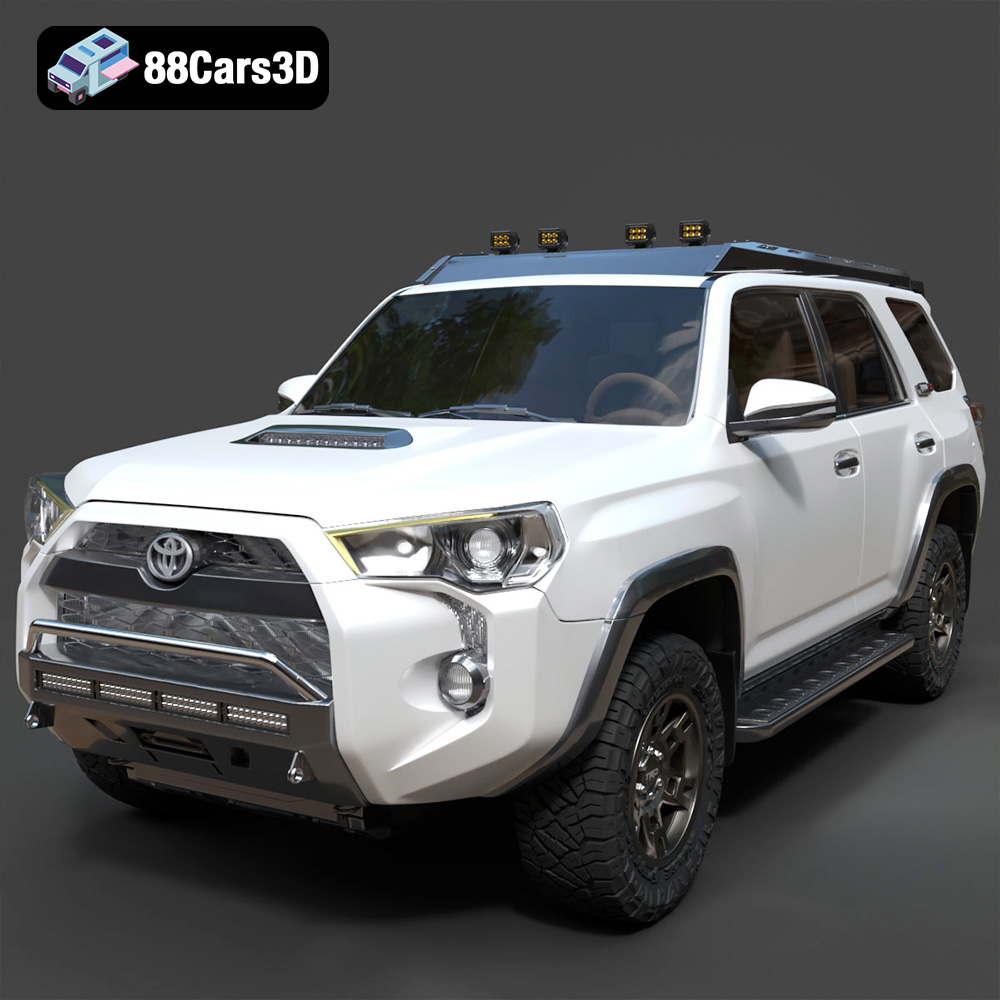
Today, we’re diving deep into the technical prowess and creative potential unlocked by a prime example of such an asset: the Toyota 4Runner 2018 TRD Pro 4×4 3D Model. This exceptional digital twin of a legendary off-roader is not just a pretty face; it’s a testament to the intricate balance between visual fidelity and technical optimization required for modern production pipelines. Whether your goal is to render a stunning marketing shot, integrate it into a demanding game engine, or even prepare it for 3D printing, understanding the nuances of such a model is crucial for any serious 3D artist or developer.
The journey from concept to a compelling visual experience is paved with countless technical decisions. At its core, the success of any project involving vehicles hinges on the quality of its 3D car models. A high-fidelity model isn’t just about looking good; it’s about providing a robust, flexible, and accurate foundation upon which an entire digital world can be built.
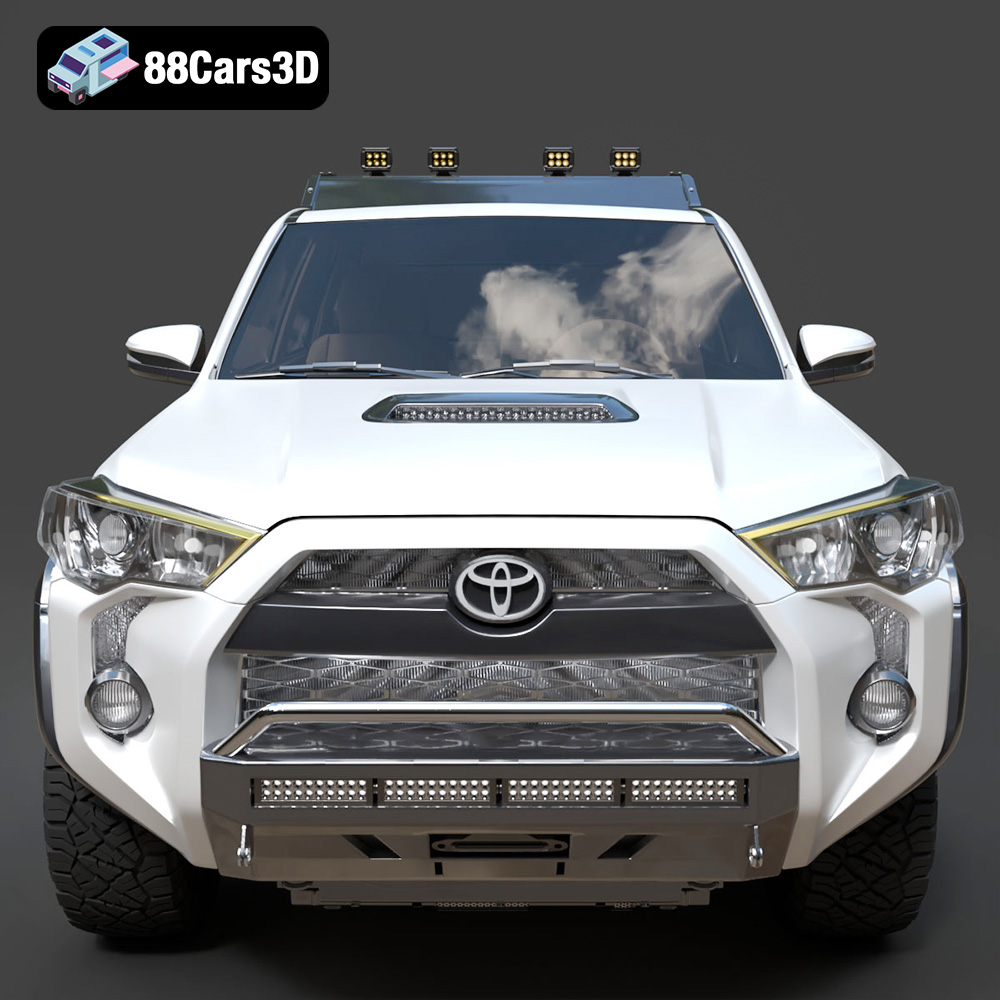
For automotive studios, marketing agencies, and product designers, 3D visualization is an indispensable tool. It allows for the exploration of new designs, the creation of hyper-realistic advertising campaigns, and the development of interactive configurators long before a physical prototype is ever built. High-quality 3D car models, like the Toyota 4Runner 2018 TRD Pro, offer unparalleled accuracy, ensuring that every curve, every reflection, and every material nuance contributes to an authentic representation. This precision is critical when details like the heritage TOYOTA front grille, aggressive hood scoop, or the specialized TRD-tuned suspension components need to be perfectly replicated to convey the brand’s identity and the vehicle’s rugged capability.
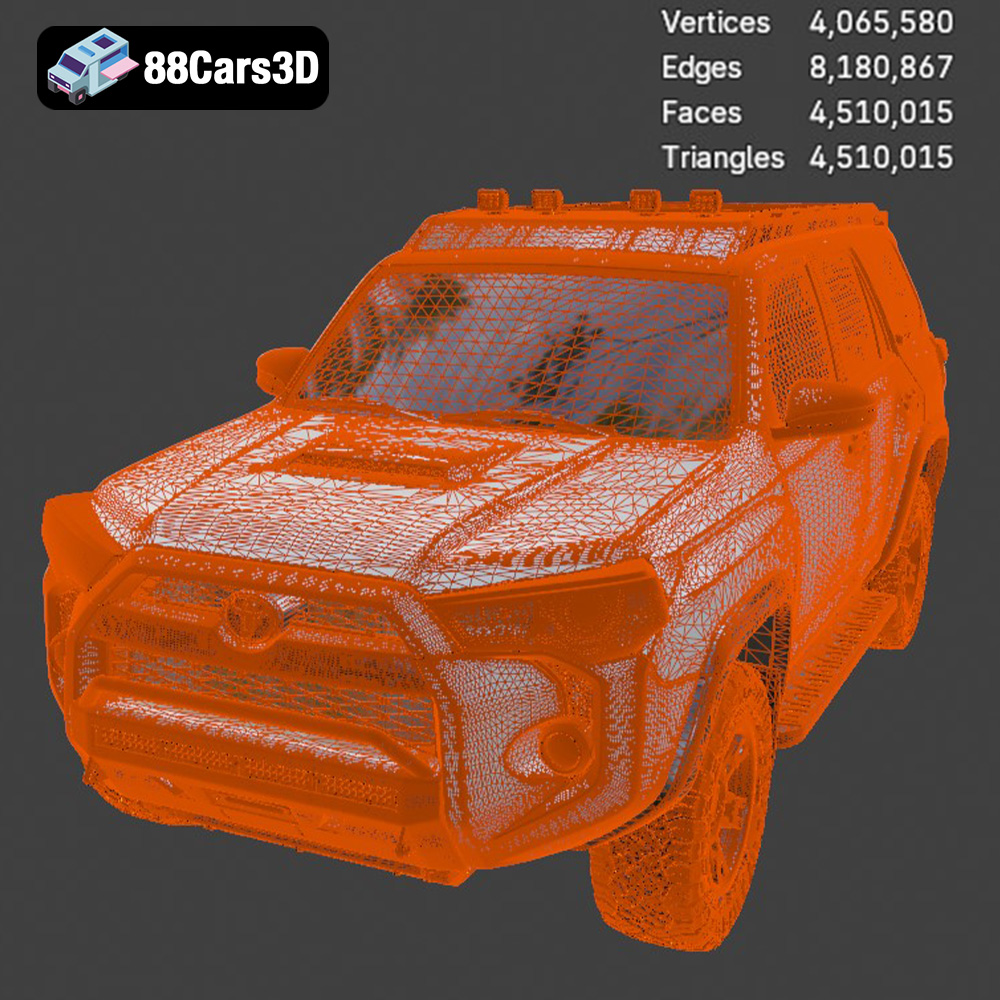
The interactive entertainment sector, encompassing video games, AR/VR, and simulation platforms, places unique demands on 3D assets. Game-ready models must strike a delicate balance between visual richness and technical efficiency. An overly complex model can cripple performance, leading to frame rate drops and a poor user experience. Conversely, a model with insufficient detail can break immersion. The sweet spot, as exemplified by the Toyota 4Runner 2018 TRD Pro 4×4 3D model with its optimized ~180,000 triangle count, delivers high-end visual realism without sacrificing the responsiveness required by real-time engines. This optimization extends to proper pivot setups for animation, UV mapping for efficient texturing, and clean topology for smooth deformations, making it an invaluable asset for open-world games, driving simulators, and immersive virtual environments.
One of the most critical aspects of working with 3D models, especially when sourcing them from platforms like 88cars3d.com, is understanding the myriad of file formats available. Each format serves a specific purpose, offering different levels of data preservation, compatibility, and optimization for various stages of the production pipeline. The Toyota 4Runner 2018 TRD Pro 4×4 3D Model notably comes with a comprehensive suite of these formats, ensuring maximum versatility.
The provision of such a comprehensive range of formats for the Toyota 4Runner 2018 TRD Pro model underscores its professional-grade utility, catering to virtually every conceivable 3D application from rendering to 3D printing.
The mark of a truly superior 3D model lies in its meticulous attention to detail and its thoughtful optimization. The Toyota 4Runner 2018 TRD Pro 4×4 3D Model exemplifies this duality, showcasing a commitment to both visual authenticity and technical efficiency.
Capturing the essence of a real-world vehicle demands an almost obsessive level of accuracy. This model faithfully recreates the rugged capability of the 4Runner TRD Pro. Key exterior features, such as the distinctive heritage TOYOTA front grille, the aggressive hood scoop, and the muscular body lines, are all meticulously modeled. Beyond the primary body, granular details elevate the realism: high-fidelity projector-beam headlights, LED fog lights, detailed taillight clusters, and the robust TRD-stamped aluminum front skid plate. Even the specific TRD 17-inch matte-black alloy wheels equipped with aggressive off-road tire treads and the high-clearance suspension, including TRD-tuned Fox shocks and springs, are accurately represented. This level of granular detail is crucial for automotive rendering, ensuring every render reflects the real vehicle’s engineering and aesthetic.
While often overlooked in external renders, a detailed interior is paramount for immersive experiences like AR/VR or first-person game views. The 4Runner model doesn’t disappoint, featuring an accurately modeled SofTex-trimmed interior with TRD Pro badging on the seats. The dashboard layout, steering wheel, high-resolution instrument cluster, and center console infotainment screen are all precisely recreated. From the TRD shift knob to the meticulously placed interior controls, the optimized geometry ensures that even from a close-up, first-person perspective, the digital cockpit provides a believable and engaging environment. This makes the model particularly valuable for interactive automotive configurators where users can explore the vehicle’s interior in detail.
The challenge in 3D modeling is often how to achieve high visual fidelity without creating an unwieldy asset. The Toyota 4Runner 2018 TRD Pro 4×4 3D Model strikes this perfect balance with a highly efficient triangle count of approximately 180,000. This polycount is a sweet spot: it’s rich enough to maintain high-end visual realism for cinematic rendering and close-up shots, yet optimized enough to be fully game-ready for real-time engines like Unreal and Unity. The clean topology ensures smooth shading and reflections, critical for realistic surfaces. Furthermore, the model is built to real-world scale accuracy and features proper pivot setups for independent steering, wheel rotation, and suspension travel, which are essential for believable animation and realistic driving physics in simulations.
The versatility of a well-designed 3D asset is truly tested in its integration into diverse professional pipelines. The Toyota 4Runner 2018 TRD Pro 4×4 3D Model, with its multiple file formats and optimized topology, is engineered for seamless adoption across various industry-standard workflows.
For game developers, the journey from a raw 3D model to an interactive game asset requires careful attention to optimization and engine compatibility. The 4Runner’s inclusion of .fbx and specific .unreal formats is a game-changer. An .fbx file, recognized as an industry standard, allows for easy import into both Unreal Engine and Unity. The separate wheels, suspension, and steering components, along with proper pivot setups, mean developers can immediately rig the vehicle for animation, physics simulations, and dynamic suspension systems. For Unreal Engine users, the dedicated .unreal asset offers an even more streamlined experience, often coming pre-configured with materials, basic collision, and possibly LODs (Levels of Detail) to ensure optimal performance across different viewing distances without manual setup. This means less time spent on technical conversion and more time on gameplay integration and level design, proving why high-quality game assets from marketplaces like 88cars3d.com are invaluable.
In the realm of architectural visualization (ArchViz) and high-fidelity product rendering, realism is paramount. Artists working with 3ds Max can leverage the included .max file, which provides the model in its native environment, allowing for full control over materials, textures, and scene setup. When paired with advanced rendering engines like V-Ray or Corona Renderer, the model’s precise geometry and clean topology ensure stunning results. Artists can easily adjust material finishes (matte, gloss, metallic), change body colors (e.g., Cavalry Blue, Super White, Midnight Black Metallic), and adapt lighting to simulate various environments—from showroom glam to rugged outdoor scenes. This flexibility enables rendering studios to produce compelling marketing collateral, showcasing the 4Runner in a wide array of visual narratives.
The burgeoning fields of Augmented Reality (AR) and Virtual Reality (VR) demand highly optimized, lightweight assets that can be rendered smoothly on diverse hardware, including mobile devices. The .glb (GL Transmission Format Binary) version of the Toyota 4Runner 3D model is specifically designed for this purpose. Its compact nature and support for embedded textures make it ideal for quick loading and efficient display in AR applications (like showcasing the 4Runner virtually in your driveway), VR showrooms where customers can interact with the vehicle in a simulated environment, or web-based 3D configurators using WebGL. This format ensures that the visual quality remains high, while the performance overhead is kept minimal, creating truly immersive and accessible interactive experiences.
The utility of high-quality 3D car models extends beyond purely digital realms. With advancements in manufacturing technologies, these digital assets can now bridge the gap to the physical world, offering tangible benefits for hobbyists, designers, and engineers alike.
For enthusiasts and model makers, the ability to 3D print a scaled replica of their favorite vehicle is a thrilling prospect. The Toyota 4Runner 2018 TRD Pro 4×4 3D Model specifically includes an .stl file, the industry standard for 3D printing. This format strips away textures and materials, focusing solely on the geometry necessary for manufacturing. The product description provides highly valuable 3D print settings, recommending scales (1:12 / 1:18 / 1:24), layer heights (0.04–0.12 mm, with resin printing suggested for fine details), wall thickness, infill, and crucial support requirements for delicate parts. Printing the frame angled for structural integrity and wheels separately are expert tips that ensure a successful, high-quality physical model. Post-processing with sanding, primer, and authentic factory colors can then bring the digital asset to life as a miniature display piece, highlighting the fidelity achieved in the original 3D model.
Beyond hobbyist models, the ability to rapidly prototype physical objects from 3D models has significant implications for design and engineering. While the full-scale Toyota 4Runner is a finished product, the underlying principles apply to new vehicle designs. Using the .stl or even the .ply format (for its precision), designers can quickly generate physical models for ergonomic testing, aesthetic review, or even wind tunnel analysis of scaled components. This iterative process, moving from digital concept to physical manifestation and back, significantly accelerates the product development cycle, allowing for early detection of design flaws and validation of aesthetic choices before committing to expensive tooling for full-scale production. This showcases the comprehensive value of meticulously crafted 3D car models in the entire product lifecycle.
A truly professional 3D model offers more than just static beauty; it provides a flexible foundation for creative exploration and adaptation. The Toyota 4Runner 2018 TRD Pro 4×4 3D Model is built with customization in mind, allowing artists to tailor its appearance to suit any project requirement.
The ability to easily modify material finishes is critical for diverse rendering scenarios. Whether you need the rugged matte look of an off-road beast, the gleaming metallic finish of a showroom vehicle, or a more subdued gloss for a particular environment, the model’s underlying material setup allows for straightforward adjustments. Artists can change body colors to match specific brand palettes or creative visions—from vibrant Cavalry Blue to classic Super White or stealthy Midnight Black Metallic. Furthermore, modifying tire textures, such as swapping between aggressive mud-terrain variants for extreme off-road scenes and more refined all-terrain options for a suburban setting, adds another layer of realism and narrative potential. This adaptability ensures that the single core model can serve multiple visual purposes without requiring extensive re-modeling.
Integrating a 3D car model into a scene involves more than just placing it; it’s about making it feel like it belongs. The optimized geometry and clean topology of the Toyota 4Runner model make it easy to merge into existing environments, be it a bustling city street, a serene forest trail, or a futuristic sci-fi landscape. The flexibility to adapt lighting is equally important. Changing the light source, intensity, and color can dramatically alter the mood and realism of a render. From harsh midday sun that highlights every contour to soft, diffused twilight that evokes a sense of adventure, the model responds realistically to various lighting setups. This level of control empowers artists to create compelling narratives and immersive visual experiences, leveraging the high-quality base asset to its fullest potential across any digital backdrop.
The journey through the intricacies of premium 3D car models reveals a fascinating blend of artistic precision and technical sophistication. Assets like the Toyota 4Runner 2018 TRD Pro 4×4 3D Model are more than just digital objects; they are versatile tools that power the next generation of visual content. From game development to cinematic rendering, AR/VR experiences, and even physical 3D printing, the demand for meticulously crafted and optimized 3D car models continues to grow.
Understanding the nuances of file formats, appreciating the balance between visual fidelity and performance, and mastering the integration into professional workflows are key skills for any serious digital artist or developer. The Toyota 4Runner model, with its comprehensive feature set, optimized geometry, and wide array of included file formats, stands as a prime example of a game-ready asset that provides immense value across the entire creative spectrum. Whether you’re a seasoned professional seeking to streamline your pipeline or an aspiring artist aiming for the highest quality in your projects, investing in such high-caliber assets is a strategic decision that pays dividends in both efficiency and visual impact. For those looking to elevate their projects with similarly exceptional 3D models, exploring offerings on platforms like 88cars3d.com is a clear path to success.
Experience the rugged capability and iconic design of the Toyota 4Runner 2018 TRD Pro 4×4. This highly detailed 3D model captures the essence of the legendary off-roader, featuring its distinctive heritage TOYOTA front grille, aggressive hood scoop, and muscular body lines. Every element, from the specialized TRD-tuned suspension components and robust skid plates to the beefy all-terrain tires and black TRD alloy wheels, has been meticulously recreated to provide an authentic digital twin of this revered adventure vehicle. Engineered for maximum versatility, this 3D model strikes the perfect balance between high-end visual fidelity and optimized topology. With a highly efficient triangle count, it is fully game-ready and ideally suited for real-time applications such as game development, immersive AR/VR experiences, and high-quality cinematic animations. The topology ensures smooth shading and reflections, making it equally capable in both low-overhead gaming environments and resource-intensive rendering pipelines. Perfect for off-road driving simulators, open-world exploration games, interactive automotive configurators, and outdoor lifestyle rendering projects.
$37.50
.2018
.4runner
.4×4
.blend
.fbx
.glb
.max
.obj
.ply
.rendering
.stl
.toyota
.unreal
car-3d-model
game asset
game-ready
low-poly
off-road-vehicle
optimized
SUV
trd-pro
VR/AR