Get 20% OFF All Premium 3D & STL Models!

In the dynamic world of 3D content creation, where historical accuracy meets cutting-edge technology, having access to meticulously crafted 3D models is paramount. From the intricate gears of game engines to the breathtaking realism of cinematic renders, the foundation of any compelling visual experience lies in the quality of its digital assets. Today, we’re taking an in-depth look at a truly remarkable piece of digital engineering: the Panzer 4 3D model available on 88cars3d.com. This iconic World War II medium tank, revered for its robust design and formidable presence, has been meticulously recreated to meet the demanding standards of professional artists, developers, and enthusiasts alike.
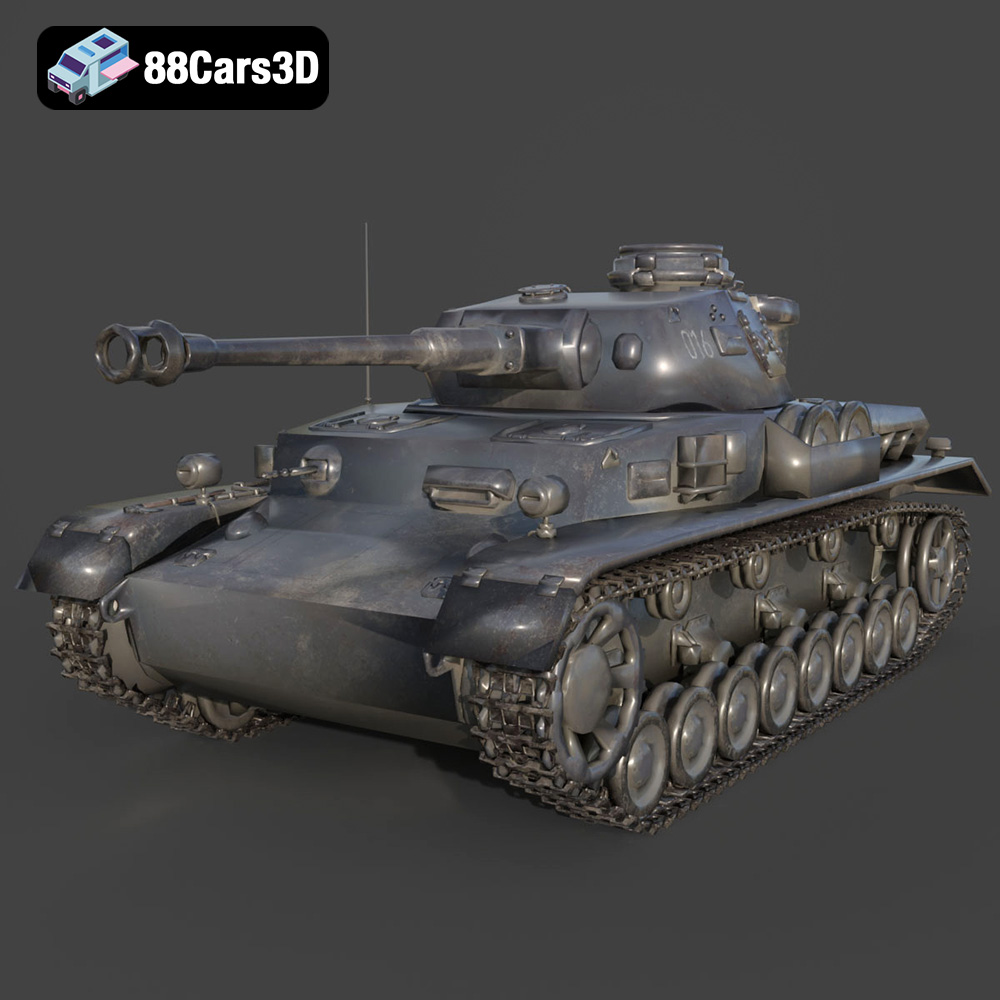
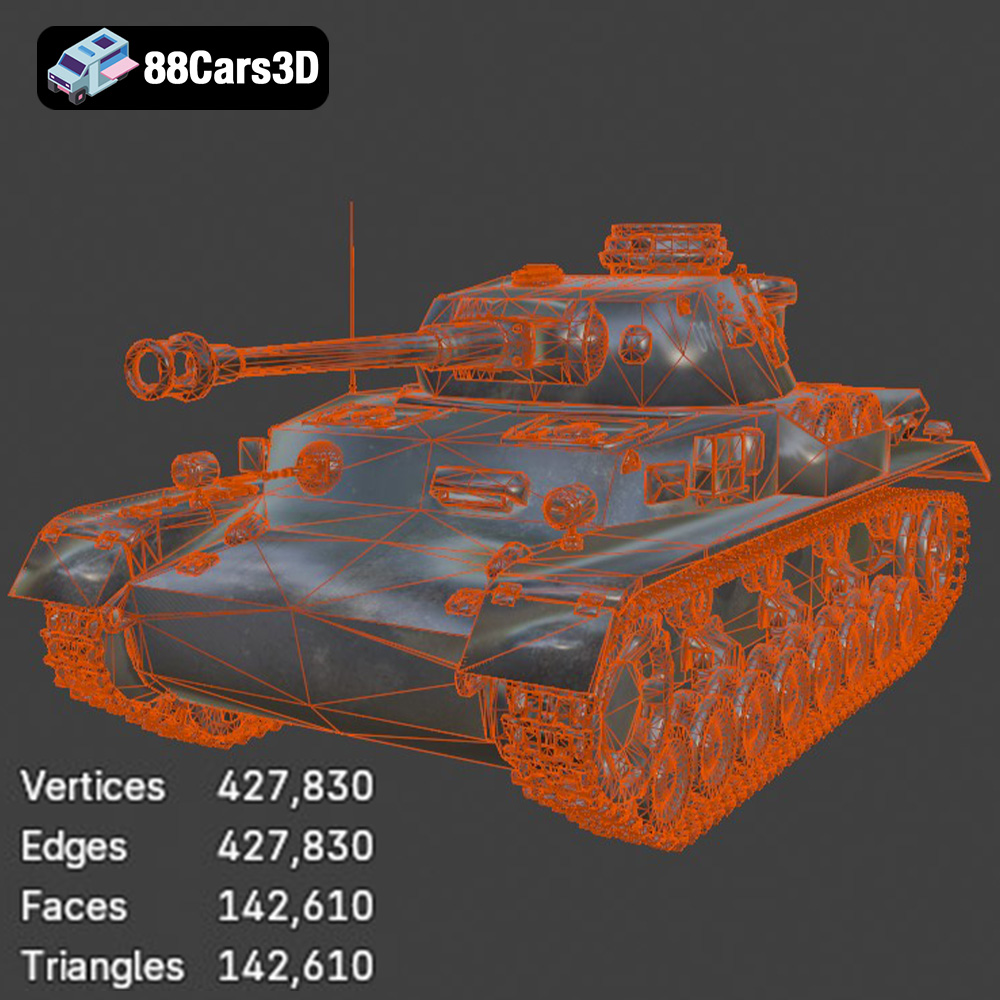
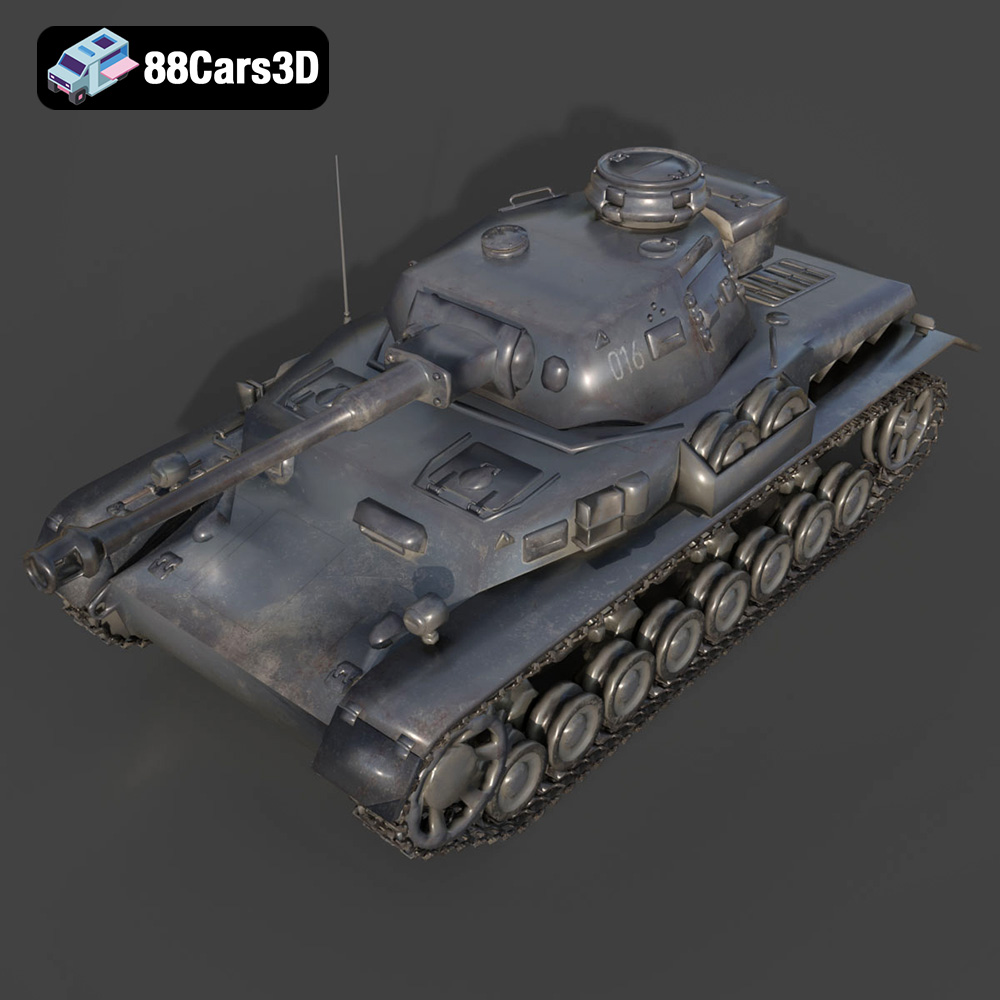
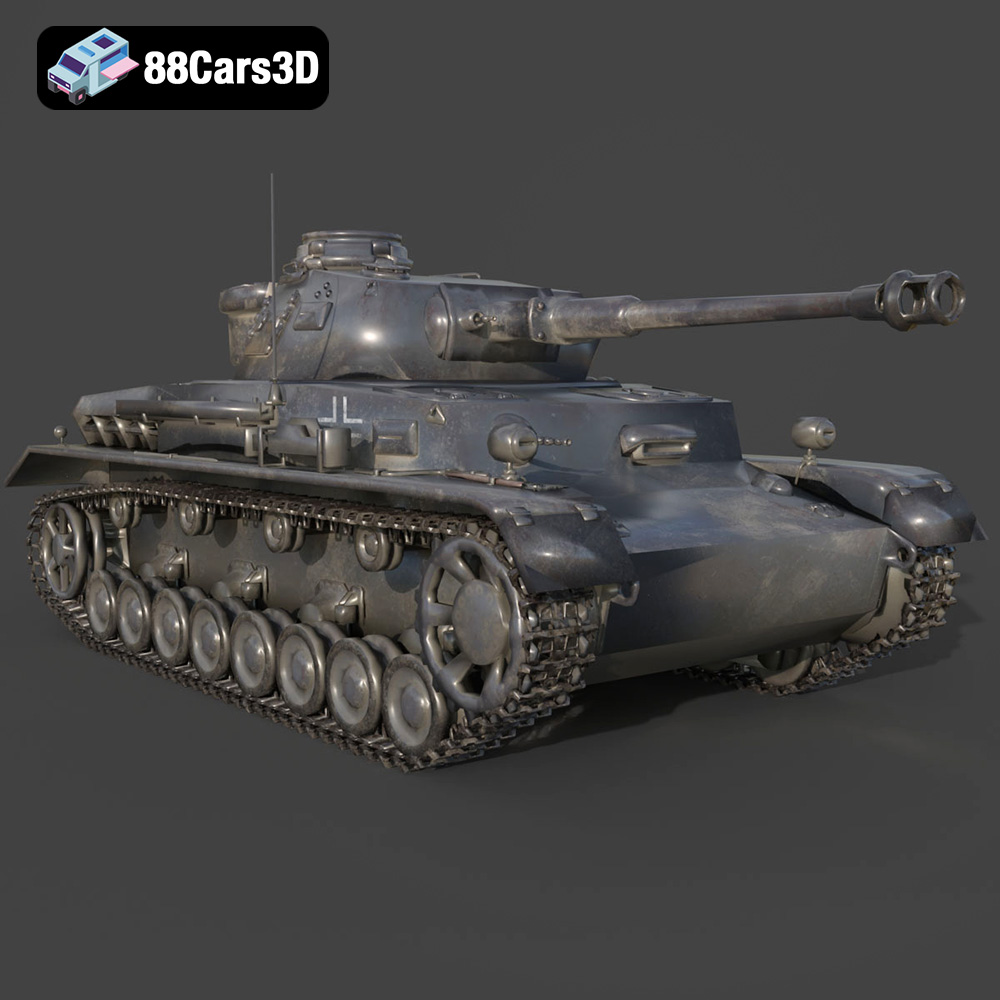
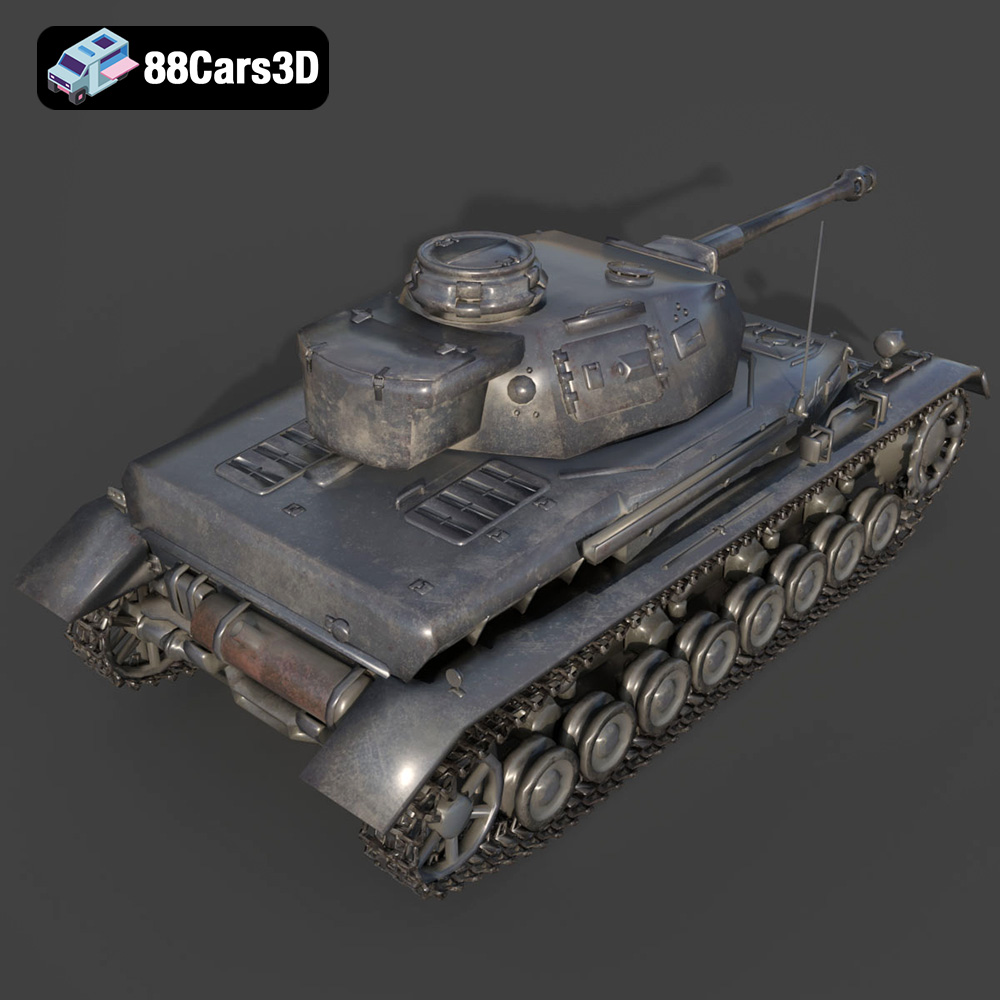
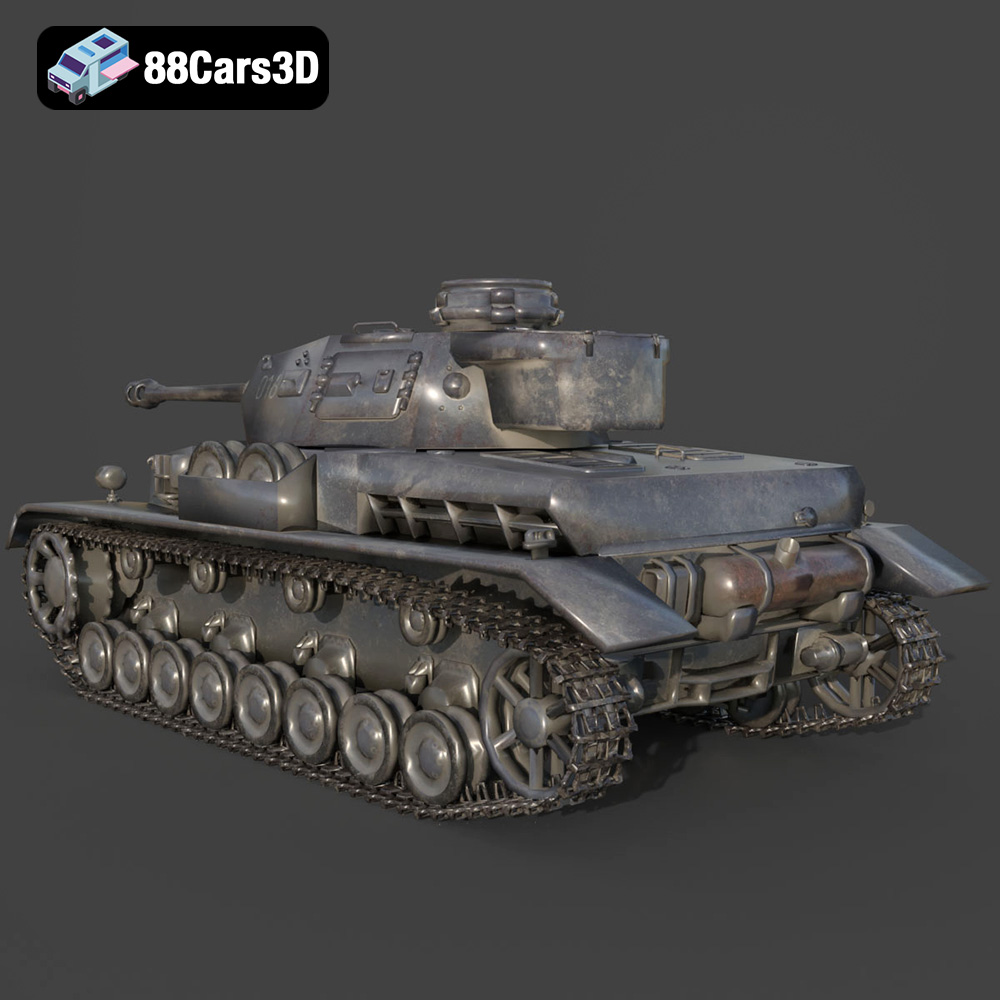
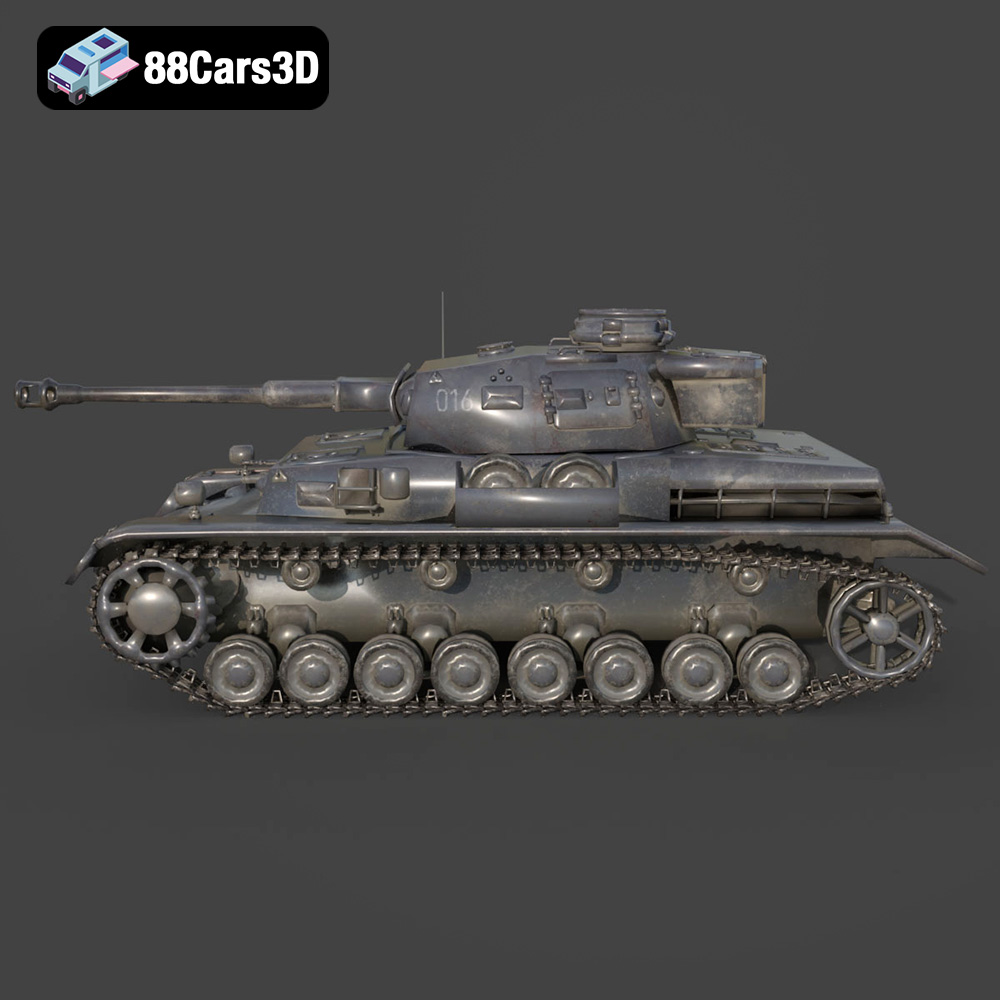
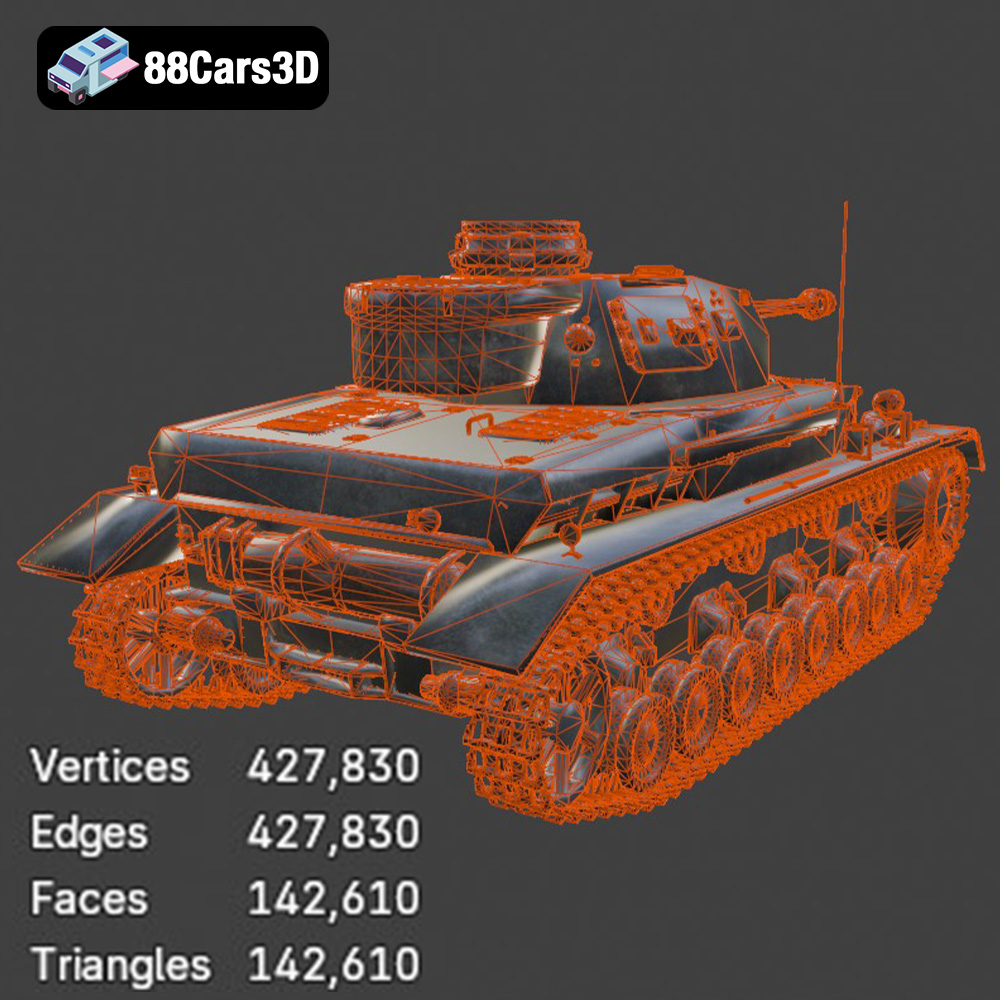
The Panzer 4 is more than just a historical artifact; it’s a testament to the era’s engineering prowess, characterized by its heavy armor, powerful main gun, and a distinct utilitarian military aesthetic. The digital rendition captures every nuance, from its complex track suspension system and angular hull to the commanding turret that dominated the battlefields. This particular 3D model delivers exceptional quality, boasting a highly optimized topology with 142,610 triangles. This balance ensures maximum visual fidelity without compromising game-ready performance, making it an invaluable asset for a diverse range of applications, including historical military simulators, strategy game development, cinematic war animations, and educational virtual exhibits. Whether you’re aiming for a photorealistic render or seamless real-time interaction, this model provides the foundational excellence needed to elevate your project.
Navigating the diverse landscape of 3D design requires a solid understanding of file formats. Each format serves specific purposes, catering to different software, pipelines, and end-uses. The Panzer 4 3D model download from 88cars3d.com comes with a comprehensive suite of these formats, ensuring maximum compatibility and utility for any project. Let’s break down the technical aspects and ideal applications for each.
The .blend file format is native to Blender, the popular open-source 3D creation suite. When you receive a .blend file, you’re getting a fully editable Blender scene, complete with materials, textures, lighting setups, camera positions, and any modifiers or animations applied to the model. This makes it ideal for artists who primarily work in Blender, offering maximum flexibility for customization, rigging, animation, and further refinement. Its self-contained nature ensures that all necessary scene data is preserved, providing a seamless starting point for advanced 3D modeling and rendering tasks within Blender.
FBX (Filmbox) is a proprietary file format developed by Autodesk, serving as a universal standard for 3D data exchange between various software applications. It’s renowned for its ability to store not only mesh data (vertices, faces, UVs) but also critical information such as animation, rigging, skinning, camera, and lighting data. This makes .fbx the go-to format for game development pipelines, particularly with engines like Unreal Engine and Unity. Its robust support for animation curves and embedded textures ensures that the Panzer 4, with its articulated suspension and turret, can be seamlessly imported and animated in a real-time environment, preserving all its dynamic elements.
The .obj (Wavefront OBJ) format is one of the oldest and most widely supported file formats for 3D models. It’s a simple, text-based format primarily used to store 3D geometry – vertices, normals, texture coordinates (UVs), and faces. While it doesn’t typically support animation or rigging information directly, its universality makes it excellent for cross-software compatibility. If you need to import the Panzer 4 into a less common 3D application or simply require the raw mesh data for retopology or high-resolution rendering, .obj is a reliable choice. It’s often accompanied by an .mtl (material) file that defines the model’s materials and references texture maps.
GLB (GL Transmission Format Binary) is a binary version of the glTF format, specifically designed for efficient transmission and loading of 3D scenes and models in web and real-time applications. It’s a self-contained file format, embedding all textures, animations, and other data directly within a single binary file. This optimization makes .glb files perfect for augmented reality (AR), virtual reality (VR), and browser-based display. For the Panzer 4, using the .glb format means it can be quickly loaded into an AR experience on a mobile device or integrated into a web-based 3D configurator, offering interactive viewing without extensive loading times.
STL (Standard Tessellation Language or Stereolithography) is the de facto standard file format for 3D printing. It represents a 3D model as a series of connected triangles, defining only the surface geometry without color, texture, or other properties. While it simplifies the model, this triangulation is precisely what 3D printers need to interpret and build an object layer by layer. The Panzer 4, provided as an .stl, is ready for enthusiasts to bring this historical tank to life as a tangible replica, allowing for scale models perfect for display or diorama projects.
PLY (Polygon File Format) is a versatile file format for storing 3D data, particularly useful for scanned 3D objects or models that require precise geometric information, including color, transparency, and sometimes even scalar properties at each vertex. Unlike STL, PLY can handle more complex data types, making it suitable for scientific visualization, CAD applications, and situations where detailed mesh analysis is required. For the Panzer 4, a .ply file might be used in scenarios demanding higher fidelity point cloud data or for specific reverse engineering tasks, though less common for general design.
The “.unreal” format isn’t a standalone file format in the same vein as FBX or OBJ, but rather implies an asset optimized and prepared specifically for direct import and use within Unreal Engine. This typically means an FBX file that has been thoroughly cleaned, optimized, and perhaps even includes pre-configured materials or Blueprints tailored for Unreal’s ecosystem. It ensures that the Panzer 4 can be dropped into an Unreal project with minimal setup, leveraging Unreal’s powerful rendering capabilities and real-time interactive features right out of the box. This format caters directly to game developers and real-time visualization specialists, simplifying integration.
Similar to .blend for Blender, .max is the native file format for Autodesk 3ds Max, a leading software for 3D modeling, animation, and rendering. An .max file contains the entire scene data, including geometry, materials, textures, lighting, cameras, animation timelines, and plugin-specific data. It offers full editability and flexibility within the 3ds Max environment, making it indispensable for professionals who use 3ds Max for complex automotive rendering, architectural visualization, or advanced character animation. Having the Panzer 4 in .max format means users can leverage 3ds Max’s robust toolset for high-end rendering and detailed scene composition.
The provision of these varied formats underscores the versatility of the Panzer 4 3D model and 88cars3d.com’s commitment to supporting diverse professional workflows.
When it comes to rendering and visualization, especially for historical vehicles, precision and artistic flair go hand in hand. The Panzer 4 3D model is an excellent foundation for achieving stunning visual results, whether for a museum exhibit, a documentary, or a high-end advertisement. Its accurate Panzer 4 frame geometry, historically accurate dual exhaust, and intricate track link details translate directly into believable and impressive renders.
Photorealism in still renders is about capturing the essence of the real object with digital accuracy. With the Panzer 4 model, artists can leverage its real-world scale and meticulously designed components. In software like 3ds Max or Blender, this involves setting up advanced material shaders to mimic weathered steel, rusted tracks, and worn paint. Using PBR (Physically Based Rendering) workflows, artists can define properties like metallicness, roughness, and normal maps to simulate every scratch and imperfection. A powerful rendering engine like V-Ray, Corona Renderer, or Cycles can then take this data and, combined with sophisticated lighting setups (HDRI environments, key lights, fill lights), produce images indistinguishable from photographs. The optimized topology, despite being game-ready, holds enough detail for close-up shots, revealing the authenticity of its design.
Beyond static images, the Panzer 4 truly shines in animated sequences. The model’s separate wheels, suspension, and steering components are pre-rigged for animation, allowing for realistic motion. Imagine a Panzer 4 traversing a rocky terrain, its leaf spring and bogey suspension system realistically articulating over obstacles. In 3ds Max or Blender, animators can keyframe these components or use physics simulations to achieve dynamic and believable movements. For cinematic productions, this level of detail is critical. Paired with environment assets, dynamic camera movements, and visual effects (dust, explosions), the Panzer 4 can become a compelling centerpiece in any virtual production. Game developers often utilize such high-quality models for in-game cinematics, showcasing their game’s narrative and visual prowess.
The core strength of the Panzer 4 3D model, beyond its historical accuracy, lies in its optimization for game development. With 142,610 triangles, it strikes a crucial balance between visual realism and real-time performance, making it an ideal game asset for modern titles.
For game developers, seamless integration is key. The availability of the .fbx and .unreal formats makes this Panzer 4 a developer’s dream. In Unreal Engine or Unity, importing the .fbx file brings in the mesh, UVs, and often a basic material setup, ready for custom textures and PBR material creation. The model’s proper pivot setup for steering, wheel rotation, and suspension travel simplifies the rigging process considerably. Developers can quickly set up vehicle physics, define hitboxes, and integrate custom animation states. For example, a historical military simulator could implement dynamic track animation, allowing the Panzer 4 to accurately traverse diverse terrains, enhancing player immersion. Furthermore, the “game-ready” label implies clean geometry and efficient UV mapping, reducing the workload for texture artists and ensuring optimal draw calls in the engine.
Achieving high visual fidelity in real-time environments requires clever optimization. The 142,610 triangles are a testament to this, offering detail without crippling performance. For even more demanding scenarios, game developers often implement Level of Detail (LOD) systems. This means creating progressively simpler versions of the model that swap in as the camera moves further away, saving polygon count and improving frame rates. While the Panzer 4 model already boasts an optimized count, studios can further refine it for mobile games or large-scale battles. The model’s clean topology facilitates this process. Its optimized geometry is also crucial for first-person POV experiences within games, ensuring that cockpit details like the commander’s cupola, instrument cluster, and control levers render flawlessly without a heavy performance cost. This meticulous attention to detail makes the Panzer 4 an excellent choice for open-world games and combat simulators where realism and performance must coexist.
Augmented Reality (AR) and Virtual Reality (VR) are transforming how we interact with digital content, offering immersive experiences that blur the lines between the digital and physical. The Panzer 4 3D model, particularly with its .glb format, is perfectly positioned for these emerging technologies.
Imagine walking around a life-sized Panzer 4 in a virtual showroom, examining its intricate track system or peering into the commander’s cupola, all from the comfort of your home. AR/VR applications allow for unparalleled engagement. The .glb format, optimized for web and mobile platforms, ensures that the model loads quickly and efficiently. This makes it ideal for educational institutions creating interactive historical exhibits or for developers building virtual configurators. Users could virtually customize the tank, changing body colors (e.g., factory colors or custom finishes), modifying material finishes (matte, gloss, metallic), or even adapting lighting for different virtual environments, providing a rich, interactive learning or visualization experience.
Beyond entertainment, AR/VR holds immense potential for education and training. A highly detailed and accurate model like the Panzer 4 can be a powerful tool for historical studies, military training simulations, or engineering analyses. Trainees could virtually “disassemble” the tank, understanding the function of each component, from the engine block to the turret rotation mechanisms. The optimized geometry ensures smooth performance on VR headsets, making the experience fluid and comfortable. Furthermore, the model’s real-world scale accuracy allows for realistic spatial understanding, which is vital for any effective simulation. This capacity to place the user inside or around a historically significant object transforms abstract learning into a concrete, memorable experience.
While digital rendering and real-time engines offer virtual immersion, there’s a unique satisfaction in holding a physical replica of a digital creation. The Panzer 4 3D model caters to this desire by providing an .stl format, making it readily convertible for 3D printing, allowing enthusiasts and hobbyists to own a tangible piece of history.
The .stl format, the industry standard for 3D printing, translates the detailed digital mesh into a printable object. The Panzer 4 model is ideal for hobbyists who wish to print scale models for display, wargaming, or detailed dioramas. Recommended scales such as 1:12, 1:18, or 1:24 offer a good balance between size and detail retention. When preparing for print, considerations like layer height (0.04–0.12 mm, with resin printing recommended for fine details) are crucial for capturing the intricate road wheels, drive sprockets, and even the tiny periscopes within the commander’s cupola. Wall thickness (1.2–2.0 mm) and infill (20–30%) ensure structural integrity, especially for a complex model like a tank.
3D printing is often just the first step. To achieve a truly authentic replica, post-processing is essential. Supports will likely be required for detailed parts like the exhaust muffler system and the delicate suspension components, and their careful removal is paramount. Print orientation, such as printing the frame angled and wheels separately, can optimize both structural integrity and surface quality. After printing, processes like sanding, priming, and painting are key. Enthusiasts can apply authentic factory colors, camouflage patterns, and metallic finishes to accurately represent the Panzer 4 as it appeared during WWII. Weathering techniques, such as dry brushing, washes, and pigments, can add battle-hardened realism, transforming a plastic print into a museum-quality miniature. This hands-on process connects the digital artist with the physical craftsman, bridging two worlds of creation.
The Panzer 4 3D model stands as a testament to the power of high-quality digital assets in today’s multi-faceted creative industries. From its historically accurate geometry and optimized topology to its comprehensive suite of file formats, this model is a versatile tool for any project. Whether you’re an automotive rendering specialist crafting cinematic visuals, a game developer building an immersive historical simulation, an AR/VR innovator creating interactive experiences, or a 3D printing enthusiast bringing history to life on your workbench, this model provides the detail, flexibility, and performance you need. Its game-ready optimization ensures smooth integration, while the included file formats guarantee compatibility across major software and platforms. This Panzer 3D model, alongside a vast array of other high-quality 3D car models and vehicle assets, is readily available at 88cars3d.com, empowering creators to achieve their artistic and technical visions. Invest in exceptional assets and elevate your digital creations today.
The Panzer 4 stands as an iconic symbol of World War II armored warfare, recognized for its robust design, powerful main gun, and distinct heavy armor plating. This renowned medium tank features a classic utilitarian military aesthetic, characterized by its complex track suspension system, angular hull, and commanding turret presence that defined the battlefields of its era. This 3D model delivers exceptional quality with a highly optimized topology consisting of 142,610 triangles. Designed for maximum visual fidelity and game-ready performance, the model ensures smooth integration into real-time engines without sacrificing the intricate mechanical details necessary for close-up renders, VR experiences, and high-end animations.
$14.99
.blend
.fbx
.glb
.max
.obj
.panzer
.ply
.rendering
.stl
.tank
.unreal
car-3d-model
game asset
game-ready
low-poly
military-vehicle
optimized
panzer-4
VR/AR