Get 20% OFF All Premium 3D & STL Models!

In the vibrant world of 3D visualization, few subjects command as much passion and technical scrutiny as automotive design. From high-octane racing games to photorealistic architectural renderings and immersive virtual showrooms, the demand for exceptionally crafted 3D car models is perpetually on the rise. These digital assets are the backbone of countless creative projects, requiring a delicate balance of aesthetic fidelity, technical optimization, and broad compatibility.
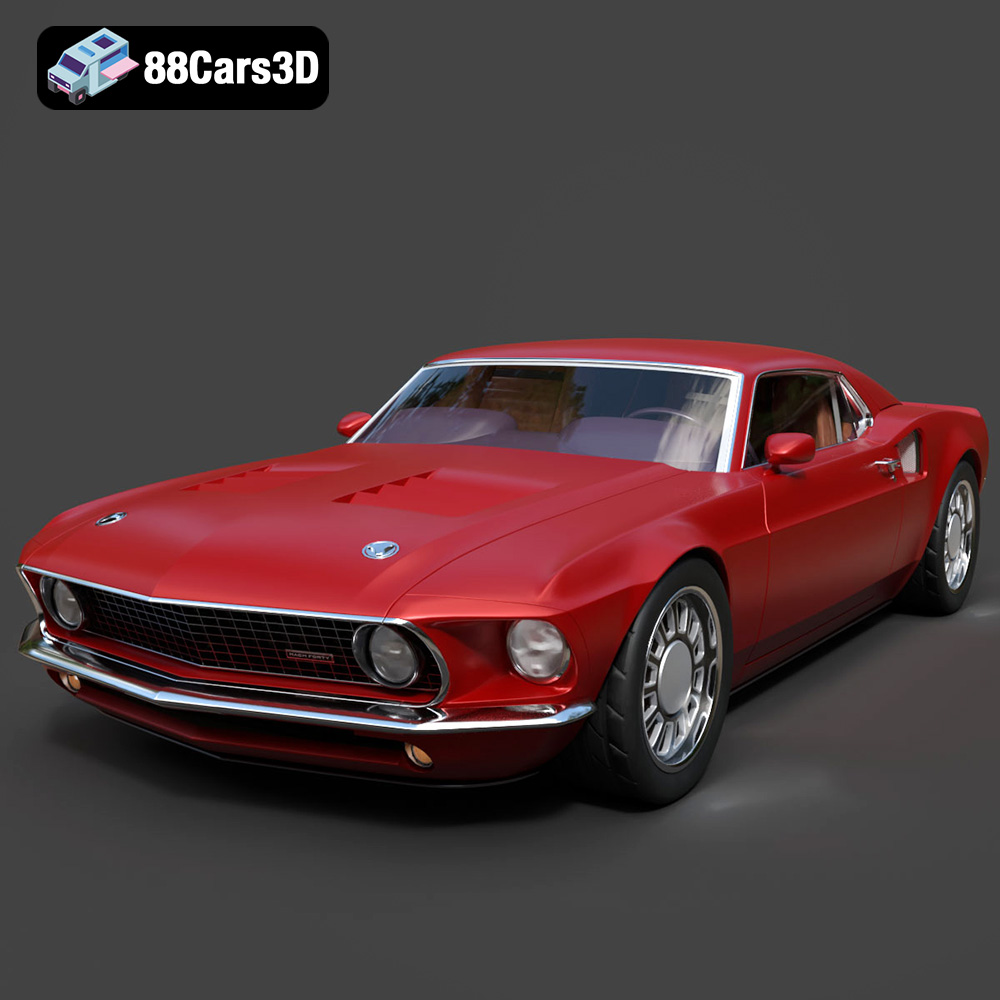
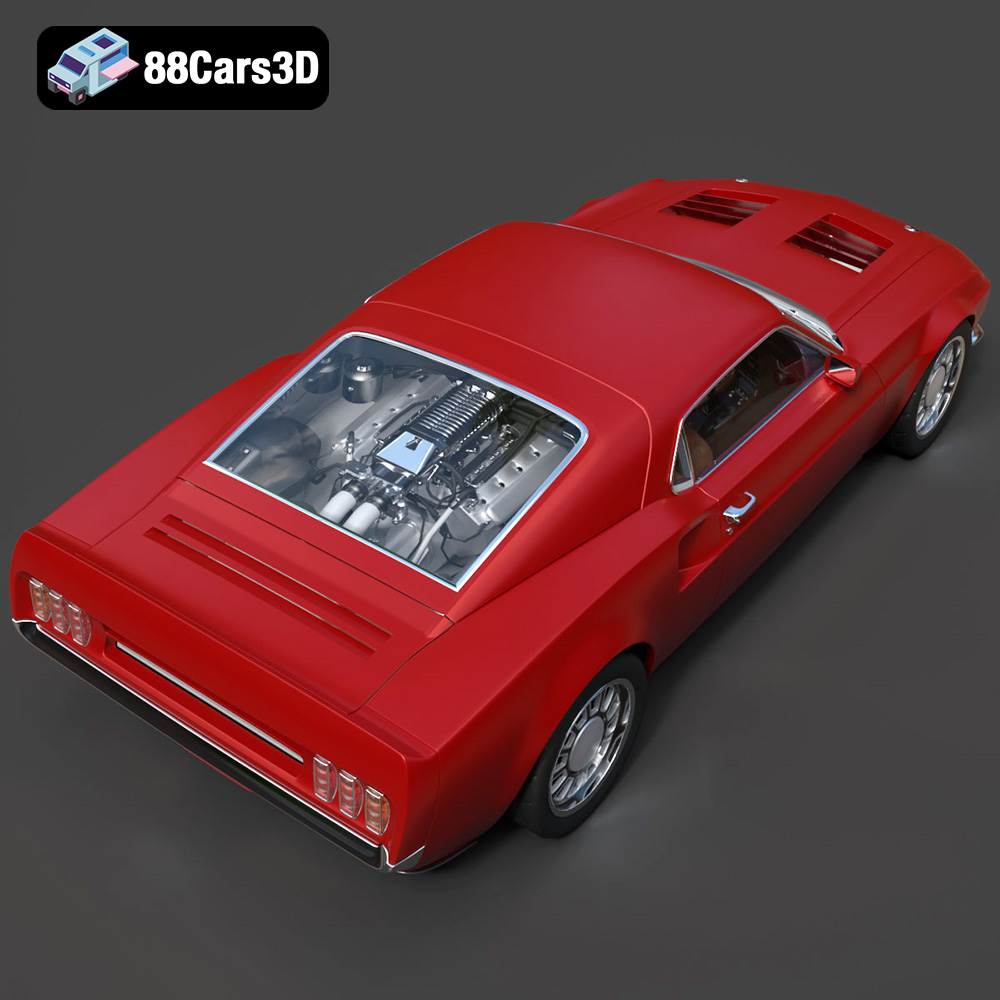
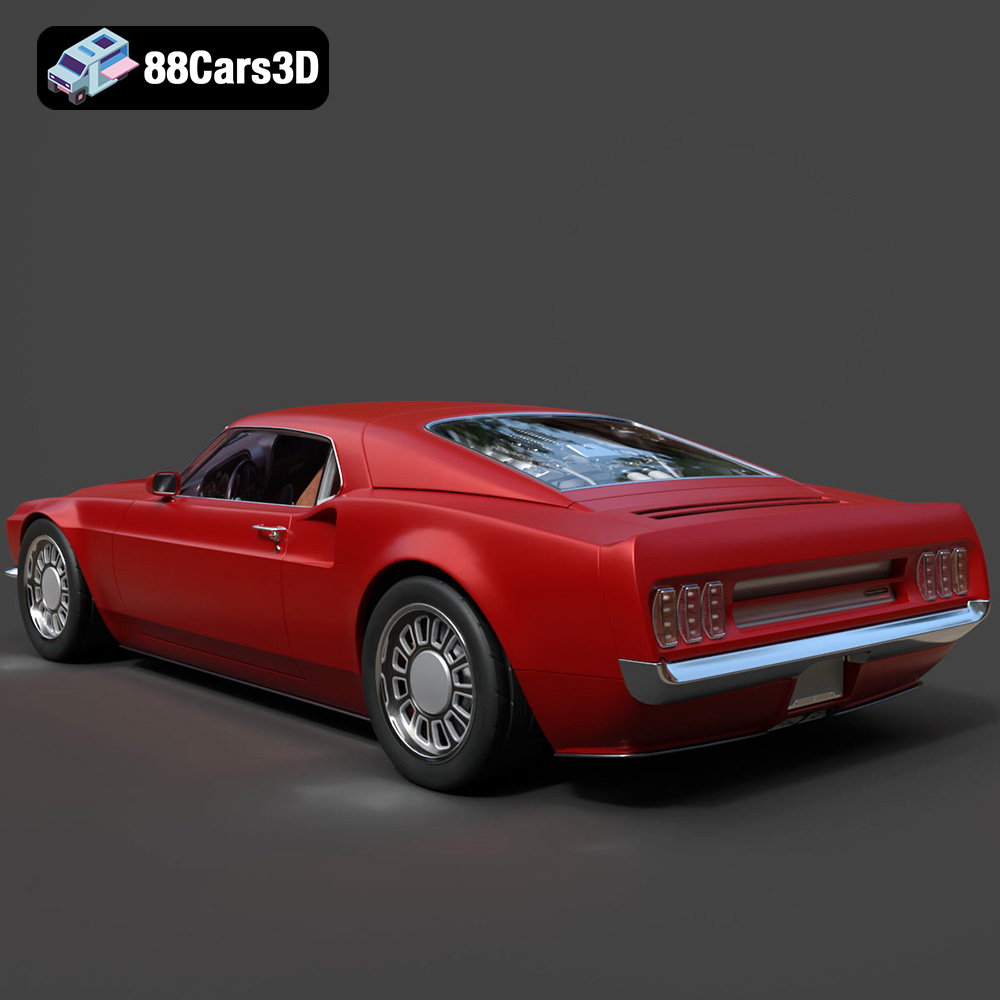
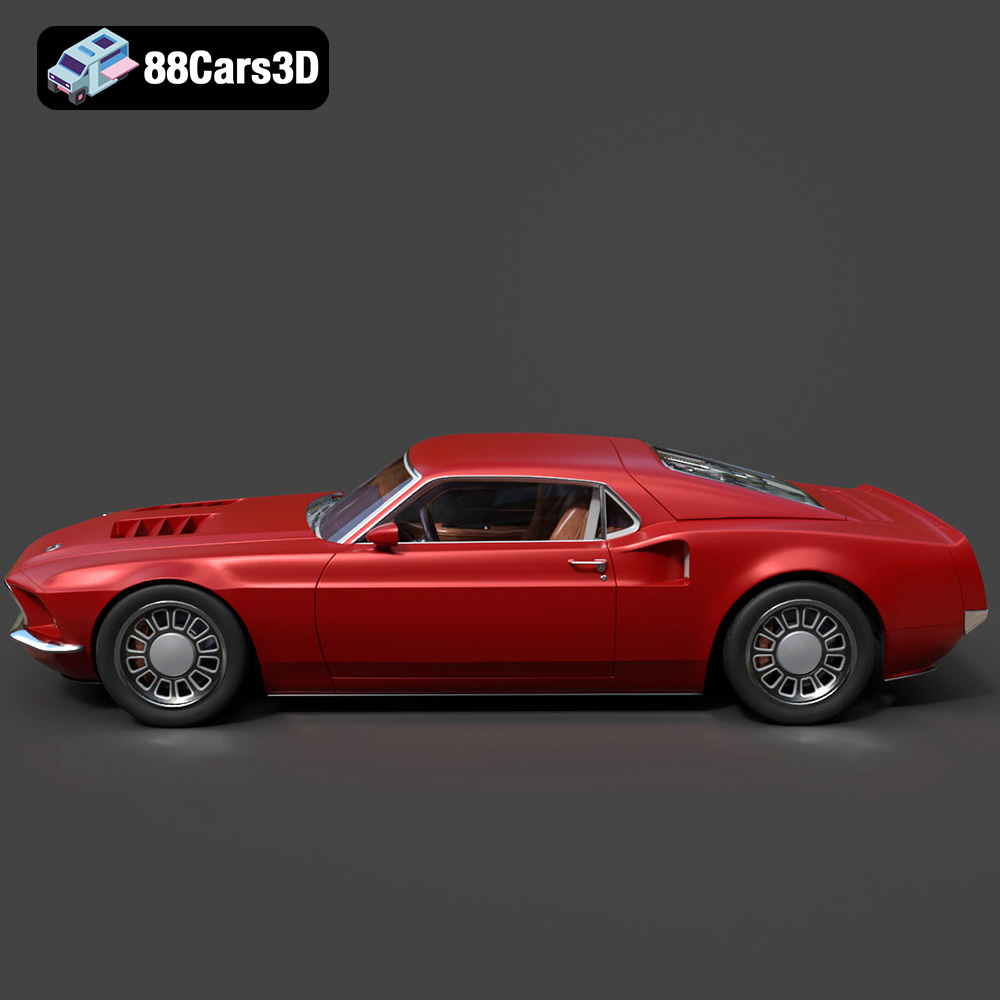
At the intersection of classic American muscle and cutting-edge engineering lies a legendary custom build: the Ford Mustang Mach 40. This breathtaking restomod masterfully blends the iconic lines of a 1969 Mustang Mach 1 with the formidable mid-engine performance of a Ford GT40. It’s a testament to automotive innovation, and its digital counterpart represents a pinnacle in 3D car model development. This article will delve deep into what makes a premium 3D vehicle asset truly outstanding, using the Ford Mustang Mach 40 3D Model as our prime example, exploring its technical prowess, diverse applications, and the critical role of versatile file formats in modern digital pipelines.
The journey of a 3D model, from its creation in a digital sculpting studio to its deployment in a game engine or a high-resolution render, is heavily influenced by the file format it adopts. Choosing the right format is paramount for compatibility, performance, and preserving the integrity of the asset. The Ford Mustang Mach 40 3D Model from 88cars3d.com exemplifies versatility by offering a comprehensive suite of file formats, each serving distinct professional workflows.
The .blend format is Blender’s native file type, a powerful open-source 3D content creation suite. When you download a .blend file, you’re not just getting a mesh; you’re receiving a fully editable Blender scene. This includes all materials, textures, lighting setups, cameras, animation data, and even modifiers, giving artists maximum flexibility. For users heavily invested in the Blender ecosystem, working with the native .blend file of the Ford Mustang Mach 40 allows for deep customization, rapid iteration, and seamless integration into existing Blender projects without loss of data or fidelity.
FBX, or Filmbox, is a proprietary file format owned by Autodesk and is widely considered the industry standard for exchanging 3D data between various software applications. Its strength lies in its ability to store not only mesh data, UVs, and materials, but also animation, rigging, and camera information. This makes the .fbx version of the Ford Mustang Mach 40 ideal for importing into game engines like Unreal Engine and Unity, as well as other DCC applications such as Maya, 3ds Max, and Cinema 4D, ensuring that complex models with multiple moving parts and material assignments transfer cleanly across pipelines.
OBJ, or Wavefront OBJ, is a simple, universally supported geometry definition file format. While it doesn’t typically store animation or rigging data, it excels at preserving mesh information (vertices, faces, UV coordinates, normals) and can reference external material (.mtl) files. The .obj format for the Mach 40 is excellent for basic mesh exchange, especially when compatibility is a concern and the target application might not fully support more complex formats. It’s a reliable choice for static renders or for importing into sculpting software where further mesh refinement might occur.
GLB, short for GL Transmission Format Binary, is a compact, single-file format designed for efficient transmission and loading of 3D scenes and models in web browsers, augmented reality (AR), and virtual reality (VR) applications. It bundles all necessary assets, such as geometry, materials, textures, and animations, into one self-contained file. For those developing immersive experiences or web-based configurators featuring the Ford Mustang Mach 40, the .glb format provides an optimized, ready-to-deploy solution that ensures quick loading times and broad accessibility across various devices and platforms.
STL, or Stereolithography, is the de facto standard file format for 3D printing. It represents a 3D model as a series of connected triangles, essentially describing the surface geometry without color, texture, or material information. The .stl version of the Ford Mustang Mach 40 is specifically geared towards physical fabrication, allowing enthusiasts and professionals to bring a tangible version of this custom car into existence. Careful consideration of scale, wall thickness, and support structures, as detailed in the product description, is crucial for a successful print.
PLY, or Polygon File Format, is another format for storing 3D data, often used for data from 3D scanners or for CAD (Computer-Aided Design) and scientific analysis. It can store a wider range of properties per vertex and face, including color, transparency, and surface normals, making it suitable for high-precision applications or complex data visualization. While less common for general asset exchange, its inclusion for the Mach 40 provides an option for highly specialized engineering or reverse-engineering workflows.
The inclusion of an “.unreal” file often signifies an asset specifically optimized for the Unreal Engine pipeline. While not a standalone file extension in the same way as .fbx or .obj, it typically refers to an FBX file pre-configured for seamless import into Unreal Engine, potentially with optimized material setups, collision meshes, or LODs (Levels of Detail) already prepared. For game developers and real-time visualization artists, this means significant time savings, allowing for immediate integration of the Ford Mustang Mach 40 into their interactive projects with minimal setup and maximum performance.
The .max format is the native file type for Autodesk 3ds Max, a powerful 3D modeling, animation, rendering, and compositing software. Like .blend, it contains a complete scene, including complex geometries, advanced material setups (such as V-Ray or Corona materials), lighting, animation rigs, and scene organization. Providing the Ford Mustang Mach 40 in .max format allows 3ds Max users to leverage the full power of the original scene, making it perfect for high-end cinematic rendering, detailed animation sequences, and intricate studio lighting setups, offering full control over every aspect of the model.
The Ford Mustang Mach 40 is not just a car; it’s a statement. Its design embodies a daring vision that respects automotive history while aggressively pushing the boundaries of performance. For 3D artists and designers, recreating such an iconic vehicle requires an unparalleled commitment to accuracy and detail. The Ford Mustang Mach 40 3D Model stands out with features designed for demanding creative and technical applications.
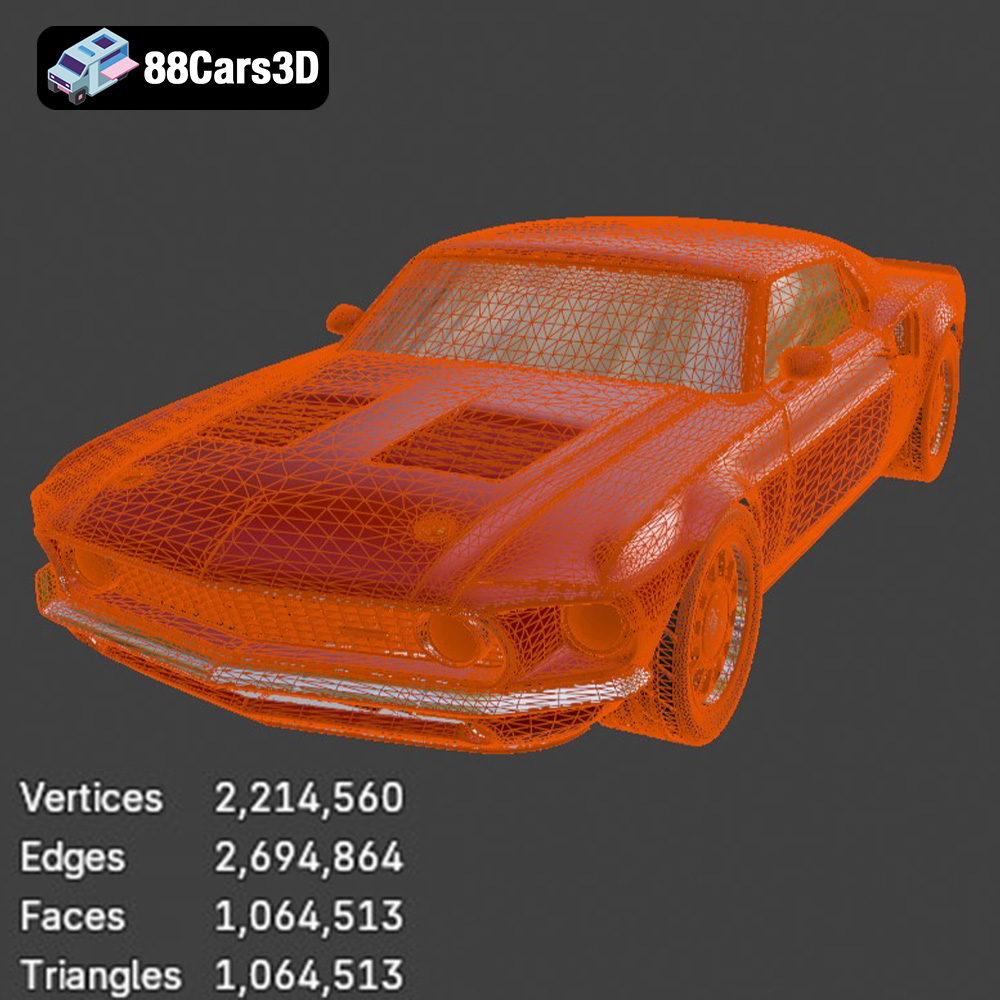
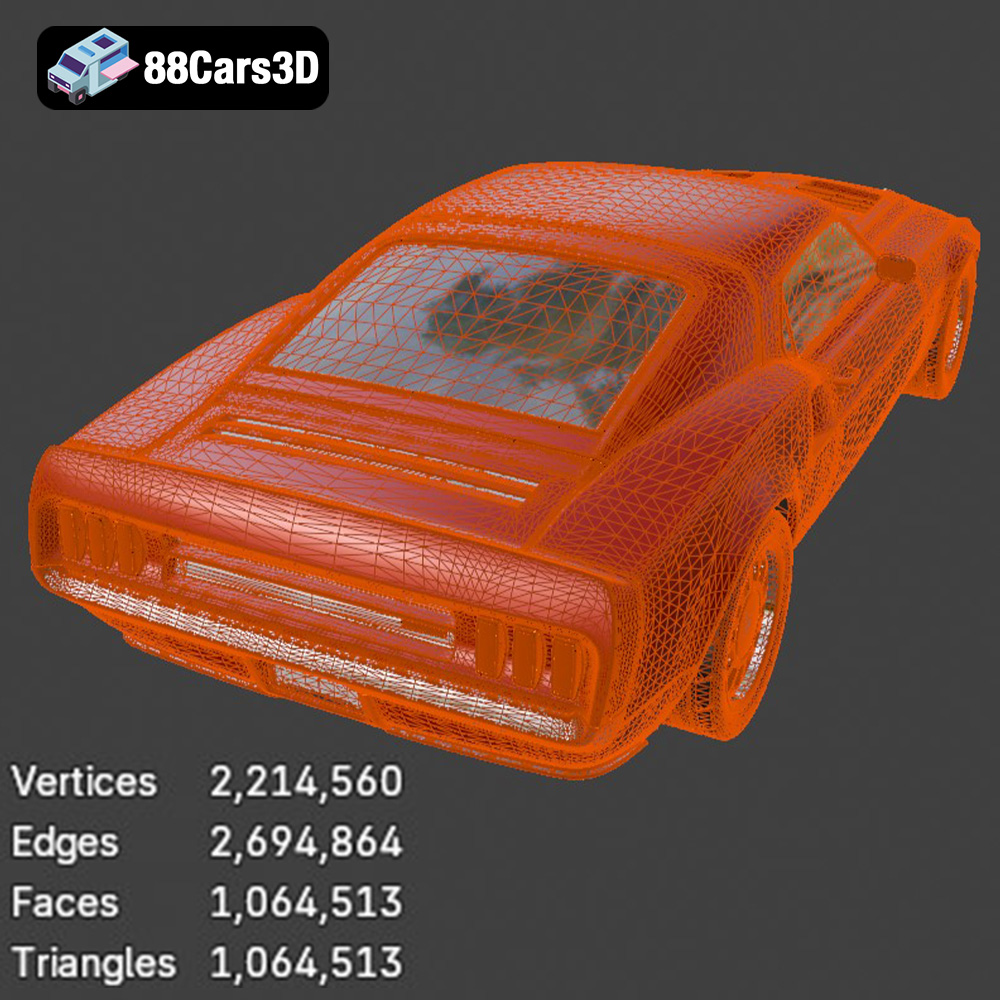
With a triangle count of 1,064,513, this model strikes an exceptional balance between stunning visual fidelity and optimization for real-time applications. For automotive rendering, this polycount ensures that intricate details, subtle reflections, and complex surfaces hold up under close scrutiny and high-resolution output. At the same time, it remains performant enough for high-end game development in engines like Unreal and Unity, where frame rates are critical. This careful optimization avoids the pitfalls of overly dense meshes that bog down performance, or overly simplified models that lack visual punch.
The model adheres to real-world scale accuracy, a non-negotiable for professional visualization. This ensures that when the Mach 40 is placed into a scene, whether it’s an architectural render or a game environment, it interacts correctly with lighting, shadows, and other elements, maintaining visual consistency and credibility. Precision in scale also facilitates seamless integration with other assets and environments.
A critical technical advantage for any vehicle model intended for animation is proper pivot setup. The Mach 40 model comes with correct pivot points for steering, wheel rotation, and suspension travel. This saves animators countless hours, eliminating the need to manually define these crucial rotational axes. It enables realistic vehicle dynamics for cinematics, game cutscenes, or interactive configurators, allowing for complex maneuvers and believable suspension articulation straight out of the box. This attention to detail is a hallmark of professional-grade 3D car models, ensuring smooth and efficient animation workflows.
The utility of a premium 3D model extends across a wide spectrum of digital platforms. The Ford Mustang Mach 40 3D Model is built with this versatility in mind, making it an invaluable asset for various industries.
For game development studios, this model is a compelling choice. Its optimized polycount and real-world accuracy make it ideal for integration into racing titles, where performance and visual realism are paramount. Imagine the Mach 40 tearing through a photorealistic track in Unreal Engine, its detailed bodywork reflecting the environment, and its suspension reacting dynamically to every bump. Its game-ready nature means less work for developers in optimizing the asset, allowing them to focus on gameplay and environmental design. Furthermore, for open-world games or simulators, the model’s quality ensures it can serve as a hero vehicle or a detailed prop, enriching the virtual landscape.
Integrating such a model into Unreal Engine or Unity typically involves importing the .fbx or .unreal format. Artists can then set up PBR (Physically Based Rendering) materials, utilizing textures for albedo, roughness, metallic, and normal maps to achieve stunning visual effects. The pre-set pivots simplify the integration with vehicle physics systems, allowing for quick setup of drivable cars.
The burgeoning fields of Augmented Reality (AR) and Virtual Reality (VR) demand highly optimized yet visually striking 3D assets. The Ford Mustang Mach 40 is perfectly suited for immersive applications such as virtual showrooms, where potential buyers can explore the vehicle in 3D space, or interactive configurators, allowing them to customize colors, wheels, and interior options in real-time. The .glb format is particularly beneficial here, offering a compact, web-friendly solution for deployment across mobile AR apps or VR platforms, ensuring smooth performance on a variety of devices. For instance, a mobile AR app could project the Mach 40 onto a user’s driveway, allowing them to walk around it and observe its intricate details as if it were truly there.
In the realm of cinematic animation and high-end visualization, the model’s detailed geometry and material readiness shine. Marketing agencies can leverage this model for brand campaigns, creating stunning lifestyle scenes or studio lighting setups that showcase the vehicle’s unique attributes. Architects can integrate it into architectural visualizations to add a touch of dynamic realism to a garage scene or a luxury property exterior. Using 3ds Max or Blender with rendering engines like V-Ray, Corona Renderer, or Cycles, artists can achieve photorealistic results, adjusting material finishes (matte, gloss, carbon fiber) and lighting to evoke specific moods and environments, bringing the Mach 40 to life in breathtaking detail.
The versatility of a high-quality 3D model extends beyond digital screens, offering the exciting possibility of physical manifestation through 3D printing. The Ford Mustang Mach 40 3D Model includes an .stl format, specifically tailored for this purpose, allowing hobbyists and professionals to create tangible replicas of this custom masterpiece.
Achieving a successful 3D print requires careful consideration of various settings. For the Mach 40, recommended scales typically range from 1:12 to 1:24, offering a good balance between detail and manageable print size. A layer height between 0.04–0.12 mm is suggested, with resin printing often recommended for its ability to capture the model’s fine details, such as the grille, engine components, and interior stitching, with superior precision compared to FDM (Fused Deposition Modeling) printers.
Structural integrity is key for a robust print. A wall thickness of 1.2–2.0 mm and an infill of 20–30% provide adequate strength without excessive material usage. Supports are almost always required for complex automotive models, especially for intricate parts like the exhaust system, mirrors, spoilers, and the visible mid-engine, preventing overhangs from collapsing during the printing process. Proper print orientation is also crucial; printing the frame angled can enhance structural integrity, while wheels are often best printed separately to preserve their circular shape and detail.
Once printed, the Mach 40 model can undergo post-processing to achieve a truly authentic finish. This typically involves sanding to smooth out layer lines, followed by primer application to prepare the surface for paint. The ultimate goal is to replicate authentic factory colors with metallic finishes, mimicking the lustrous paintwork of a real custom car. This hands-on process allows creators to add their personal touch, bringing a unique blend of digital precision and physical craftsmanship to their collection.
A truly valuable 3D asset provides a strong foundation while allowing for extensive creative customization. The Ford Mustang Mach 40 3D Model excels in this area, offering designers and artists the freedom to tailor the vehicle to their specific project requirements.
The model’s clean topology and organized material setup enable straightforward customization. Artists can easily change body colors, experimenting with everything from classic muscle car hues to modern metallic silvers or vibrant custom finishes. This is critical for brand campaigns that require specific color palettes or for game developers offering in-game car personalization. Furthermore, modifying tire textures, perhaps switching between street-legal treads and aggressive track slicks, can dramatically alter the vehicle’s character and performance perception. Adjusting material finishes—from matte to high-gloss or adding carbon fiber accents—allows for precise aesthetic tuning. Finally, adapting lighting for different environments is essential for realistic rendering, and the model’s material properties are designed to respond accurately to various light sources and HDRIs (High Dynamic Range Images).
These customization options not only extend the model’s lifespan but also empower artists to integrate the Mach 40 into a diverse range of narrative and visual contexts. Whether it’s a gritty post-apocalyptic scene, a futuristic urban landscape, or a pristine luxury garage, the model can be adapted to fit seamlessly.
The Ford Mustang Mach 40 3D Model represents the current state-of-the-art in premium 3D car models. Its meticulous detail, technical optimization, and broad file format support make it an invaluable asset for any professional in the fields of game development, architectural visualization, AR/VR, or cinematic rendering. As digital tools and platforms continue to evolve, the demand for such versatile and high-fidelity assets will only grow, underscoring the importance of investing in quality resources like those found at 88cars3d.com.
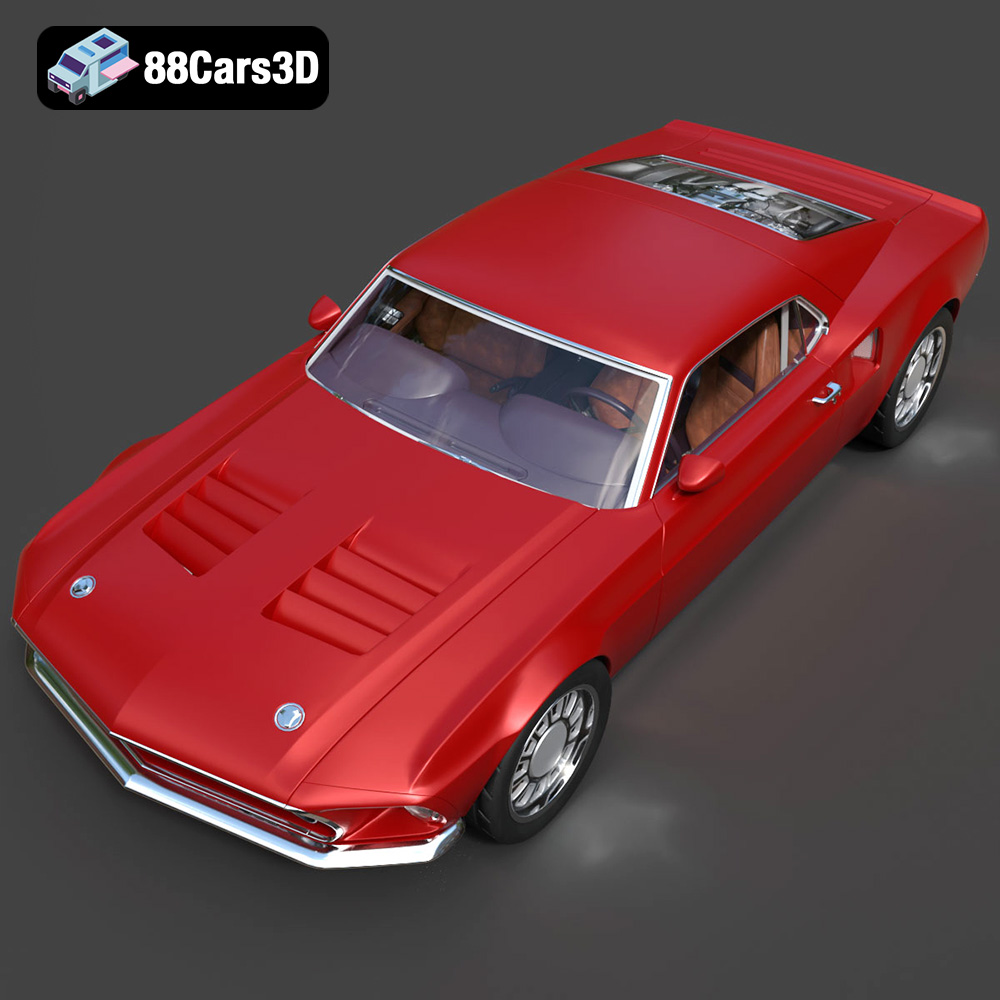
The Ford Mustang Mach 40 is a legendary vehicle, a potent blend of history and innovation. Its digital counterpart, presented as a highly detailed and technically optimized 3D model, mirrors this excellence in the virtual realm. From its accurate widebody geometry and visible mid-mounted supercharged V8 to its meticulously crafted interior and robust file format compatibility, this model is engineered for professional success.
Whether you are a game developer needing a high-performance vehicle for your next title, an architect seeking to populate a luxurious scene, a marketing agency crafting a compelling automotive campaign, or an AR/VR creator building an immersive experience, the Ford Mustang Mach 40 3D Model offers an unparalleled foundation. Its availability in formats like .blend, .fbx, .obj, .glb, .stl, .ply, .unreal, and .max ensures seamless integration into virtually any professional pipeline, providing maximum flexibility and efficiency. Investing in such high-quality 3D car models, like those offered by 88cars3d.com, is an investment in the future-proofing and visual integrity of your digital projects.
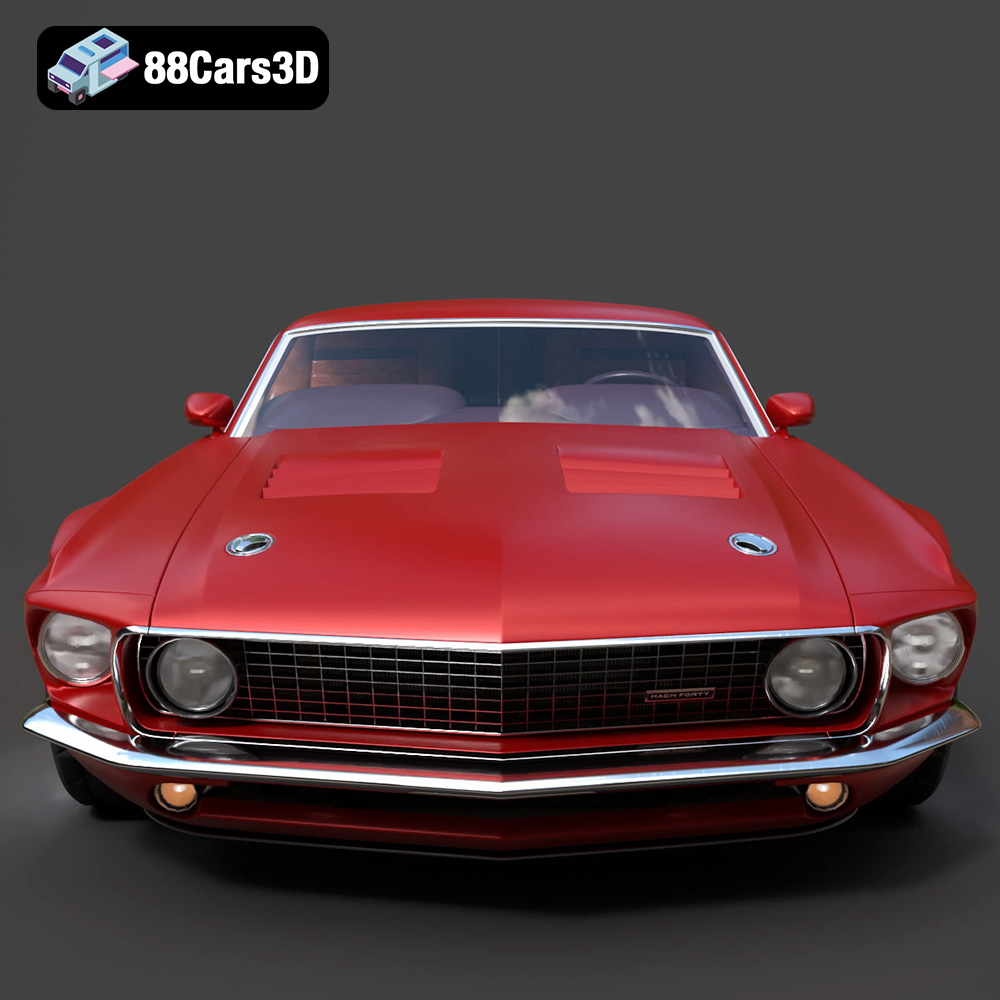
The Ford Mustang Mach 40 is a legendary custom build that flawlessly merges the classic 1969 Mustang Mach 1 styling with the mid-engine performance and chassis dynamics of a Ford GT40. This iconic restomod features a breathtaking widebody stance, aggressive aerodynamic cues, and a visible mid-mounted supercharged V8 engine that redefines American muscle. This highly detailed 3D model boasts a triangle count of 1,064,513, ensuring stunning visual fidelity and precise topology. Designed for versatility, it delivers exceptional realism for close-up renders while maintaining an optimized structure suitable for high-end game development, virtual reality (VR), augmented reality (AR), and professional cinematic animation.
$37.50
.blend
.fbx
.ford
.glb
.max
.obj
.ply
.rendering
.stl
.unreal
car-3d-model
custom-car
game asset
game-ready
low-poly
mid-engine
muscle-car
mustang-mach-40
optimized
VR/AR