Get 20% OFF All Premium 3D & STL Models!

In the dynamic world of 3D visualization, the demand for highly detailed and technically accurate models is ceaseless. Whether you’re crafting immersive game environments, producing breathtaking cinematic sequences, or developing cutting-edge AR/VR experiences, the quality of your assets dictates the fidelity of your final output. Precision-engineered 3D models are not merely aesthetic elements; they are foundational components that enable complex simulations, realistic renderings, and engaging interactive experiences.
Today, we delve into the intricate details of professional 3D asset creation, focusing on how a meticulously crafted model can elevate diverse projects. We’ll explore the technical specifications, workflow integrations, and versatile applications that define a truly premium asset. As a prime example of such excellence, we’ll frequently reference the Bombardier 6000 3D model, a magnificent long-range business jet whose virtual representation epitomizes the blend of artistic detail and technical optimization essential for modern pipelines. This model, available through platforms like 88cars3d.com, serves as a testament to the power of high-quality assets in unlocking creative potential across industries.
Creating realistic 3D vehicle models, be they luxury 3D car models or sophisticated aircraft, is a meticulous process that bridges artistic vision with engineering precision. It involves an understanding of real-world aerodynamics, material science, and the specific demands of various digital environments.
The journey of a high-fidelity 3D model often begins with extensive research, including real-world blueprints, technical drawings, and photographic references. For a complex machine like the Bombardier 6000, this means studying every curve, panel line, and intricate mechanism. Artists translate these real-world details into a digital mesh, meticulously building polygons to form the aircraft’s fuselage, wings, engines, and interior components. This initial modeling phase is critical for achieving accurate proportions and capturing the distinctive character of the subject. Every rivet, seam, and subtle contour is considered, ensuring that the virtual model is a faithful replica of its physical counterpart. The goal is not just to create an approximation, but a true digital twin, capable of standing up to close-up scrutiny in high-resolution renderings or immersive virtual reality.
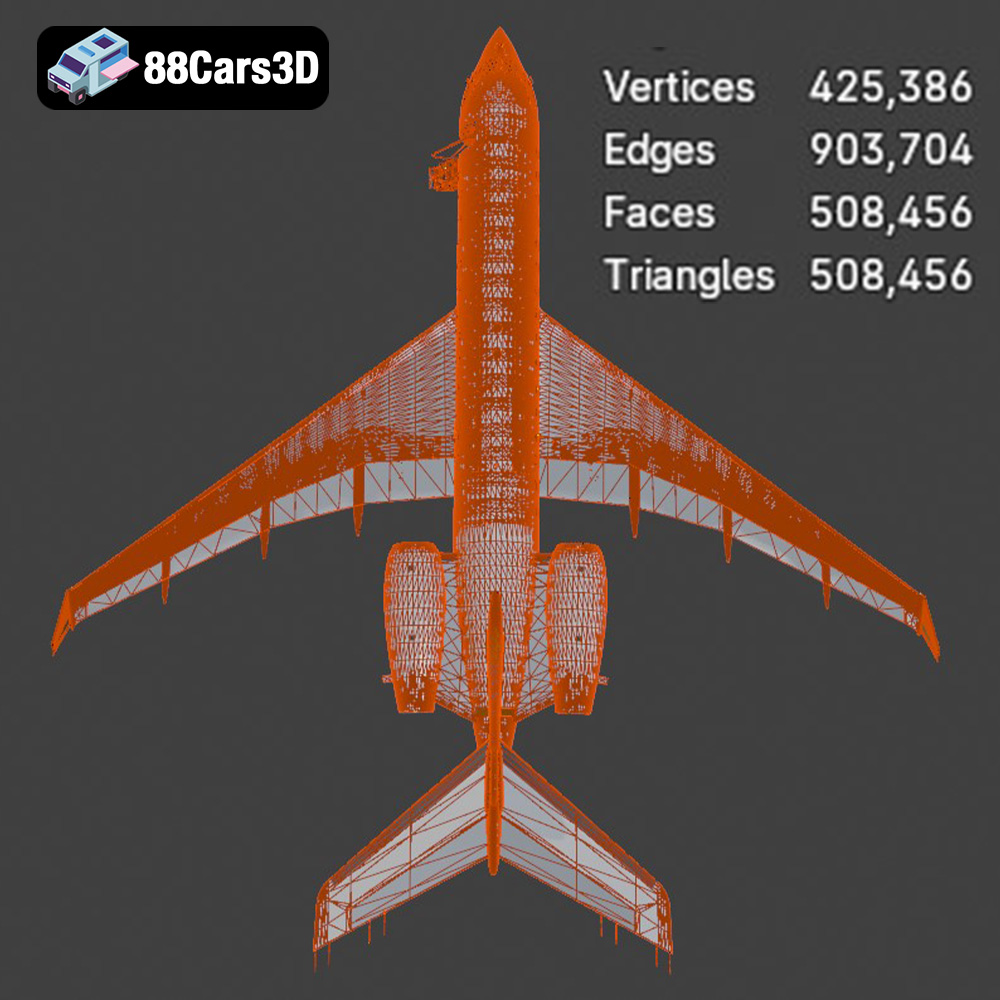
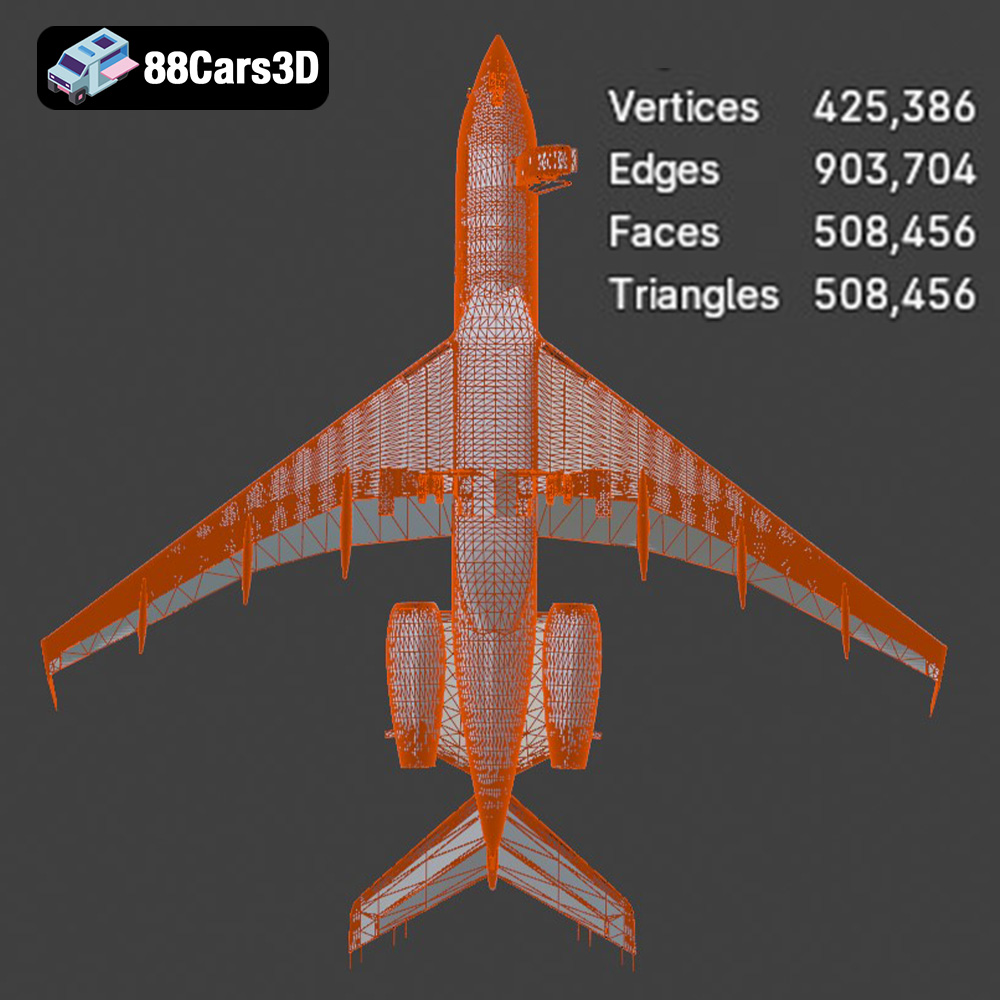
While detail is paramount, an equally critical aspect of professional 3D asset creation is optimization. A model overloaded with polygons can cripple real-time performance in games or AR/VR applications and significantly increase rendering times for cinematic projects. Striking the right balance is an art. For the Bombardier 6000 3D model, this balance is evident in its optimized topology with a triangle count of 508,456. This polycount is sufficiently detailed to convey the aircraft’s luxury and intricate mechanics for close-up shots and renders, yet efficient enough for smooth integration into demanding real-time engines like Unreal Engine or Unity. Optimization also extends to efficient UV mapping, clean geometry, and well-structured asset hierarchies, all of which contribute to a streamlined workflow and superior performance.
For subjects like luxury business jets, precision is non-negotiable. Clients commissioning visualizations for marketing, training, or simulations expect nothing less than absolute accuracy. The elegant sweeping lines, iconic winglets, and powerful turbofan engine housings of the Bombardier 6000 are signature elements that must be rendered perfectly. Any deviation can break immersion and undermine credibility. This attention to detail extends to functional elements such as accurately modeled landing gear assemblies, ailerons, flaps, and interior cockpit controls. Such precision ensures that the model not only looks correct but can also be animated and interacted with in a believable manner, making it ideal for flight simulators, luxury brand campaigns, and cinematic airport scenes.
The versatility of a professional 3D asset is often defined by the range of file formats it supports. Each format is designed with specific use cases in mind, catering to different software, pipelines, and end applications. A comprehensive asset, such as the Bombardier 6000 3D model, typically includes a multitude of formats to ensure maximum compatibility and utility. Understanding these formats is crucial for any 3D artist, developer, or enthusiast to make informed decisions about their workflow.
The .blend format is the native file type for Blender, the popular open-source 3D creation suite. When you download a .blend file, you’re getting a complete Blender scene, often including the original mesh, materials, textures, lighting setups, cameras, and even animations or rigging. For the Bombardier 6000 model, having a .blend file means artists can dive directly into the project, modify geometry, tweak shaders, adjust scene lighting, or re-render using Blender’s Cycles or Eevee render engines. It offers the highest degree of editability and flexibility within the Blender ecosystem, making it invaluable for artists who wish to customize the model extensively or integrate it seamlessly into their Blender-centric pipelines.
FBX (Filmbox) is a proprietary file format owned by Autodesk, widely regarded as the industry standard for exchanging 3D data between different software applications. It excels at preserving complex scene information, including meshes, materials, textures, animations, rigging, and even camera data. For game development, .fbx is the go-to format for importing assets into game engines like Unreal Engine and Unity. Its robust support for skeletal animation and hierarchical structures makes it perfect for game-ready assets. The Bombardier 6000 .fbx file would be optimized for direct import into these engines, ensuring that its pivot points for landing gear, ailerons, and engine turbines are correctly preserved for animation.
OBJ (or .obj) is a simple, universally supported geometry definition file format. It’s often considered the “least common denominator” for 3D models, as almost every 3D software can import and export it. An .obj file primarily stores mesh data (vertices, normals, UVs, and faces), and typically references a separate .mtl (material library) file for basic material properties. While it doesn’t support rigging or animation data directly, its simplicity and wide compatibility make it excellent for static model exchange between disparate software packages or for archiving. For the Bombardier 6000, the .obj version ensures that the core mesh geometry is accessible to virtually any 3D application, regardless of proprietary formats.
GLB (GL Transmission Format Binary) is a relatively newer format, gaining rapid traction, especially for web-based 3D, AR (Augmented Reality), and VR (Virtual Reality) applications. It’s a binary version of glTF, which packages all necessary data (geometry, materials, textures, animations) into a single, self-contained file. This makes .glb files incredibly efficient for streaming and display on the web or in mobile AR/VR environments, as no external files need to be loaded separately. The Bombardier 6000 .glb file would be highly optimized for quick loading and interactive viewing in a browser, a mobile AR app, or an immersive VR showroom, offering a lightweight yet visually rich experience.
STL (Stereolithography) is the standard file format for 3D printing. It represents a 3D model as a collection of unconnected triangles that define its surface geometry. While it lacks color, material, or texture information, its simplicity makes it ideal for additive manufacturing. The Bombardier 6000 .stl file would be prepped for 3D printing, enabling enthusiasts to create physical models of the jet. As described in the product details, specific considerations like recommended scale, layer height, wall thickness, infill, and support structures are crucial when working with .stl for physical output, ensuring a successful print, especially for delicate features like antennas and landing gear.
PLY (Polygon File Format) is another format for storing 3D data, often used for data acquired from 3D scanners, scientific visualization, and CAD applications. It can store a wider range of properties than .obj or .stl, including color, transparency, surface normals, texture coordinates, and even reliability information for each polygon. While not as universally common for general 3D asset exchange as .fbx or .obj, its precision and ability to carry detailed attribute data make it valuable for specific engineering, architectural, or research applications where the Bombardier 6000 might be integrated for aerodynamic analysis or structural studies.
While not a universal file extension in the same vein as .fbx or .obj, “.unreal” typically refers to an asset package specifically prepared or already imported into an Unreal Engine project. This means the model might come as a pre-packaged Unreal asset (.uasset), ready to be dropped into an Unreal Engine content folder. It implies that the Bombardier 6000 has undergone all necessary preparation for Unreal: proper material setup, collision meshes, LODs (Levels of Detail), and optimized textures, ensuring it functions flawlessly within the engine’s ecosystem without requiring extensive setup by the user. This “engine-ready” state is a significant time-saver for game developers and real-time visualization artists.
The .max format is the native file format for Autodesk 3ds Max, a powerful 3D modeling, animation, rendering, and visualization software. Similar to .blend for Blender, a .max file contains the complete scene information, including geometry, materials, lighting, cameras, animation timelines, and modifiers. For professionals working in architectural visualization, product design, or cinematic rendering, the Bombardier 6000 .max file provides full access to the original project. This allows for extensive customization, re-rendering with advanced renderers like V-Ray or Corona, and integration into existing 3ds Max pipelines, offering maximum control and flexibility for high-end production.
The Bombardier 6000 3D model offered on 88cars3d.com is a prime example of a professional-grade asset, meticulously designed to meet the rigorous demands of various industries. Its construction is a testament to blending artistic fidelity with technical robustness.
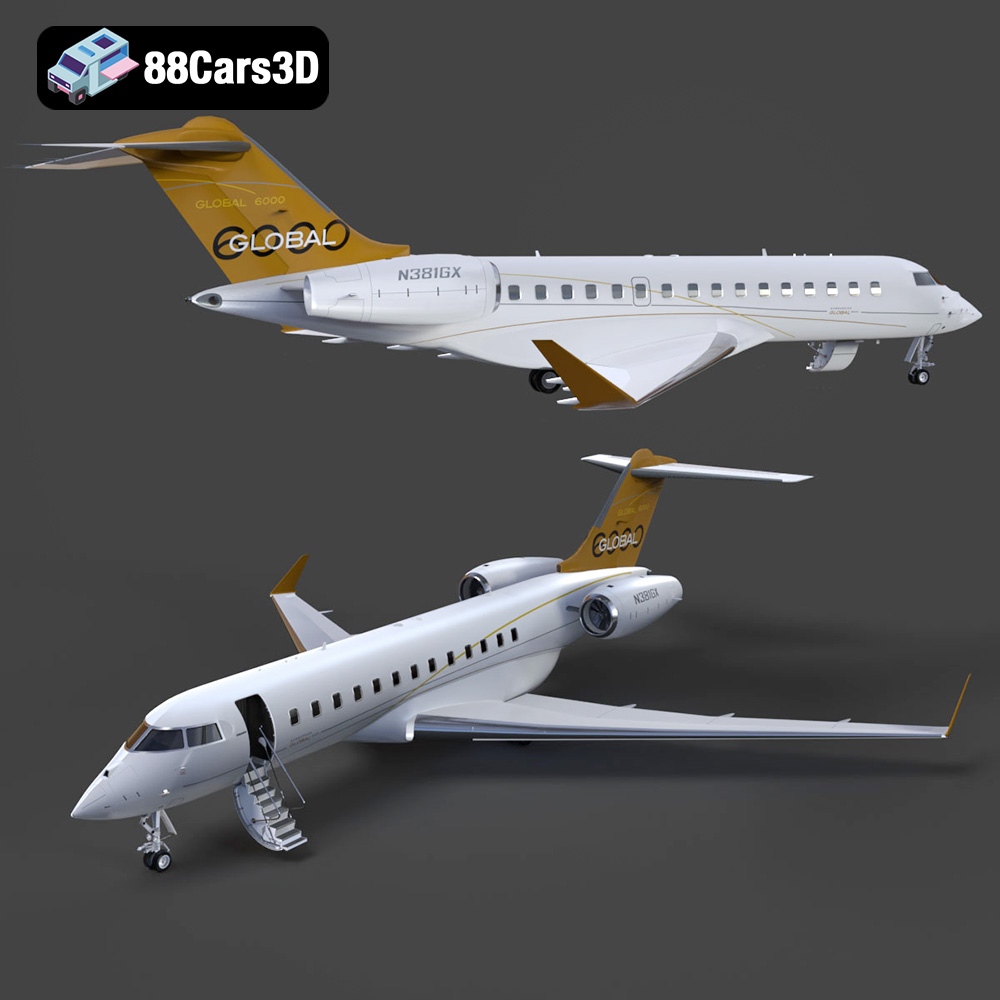
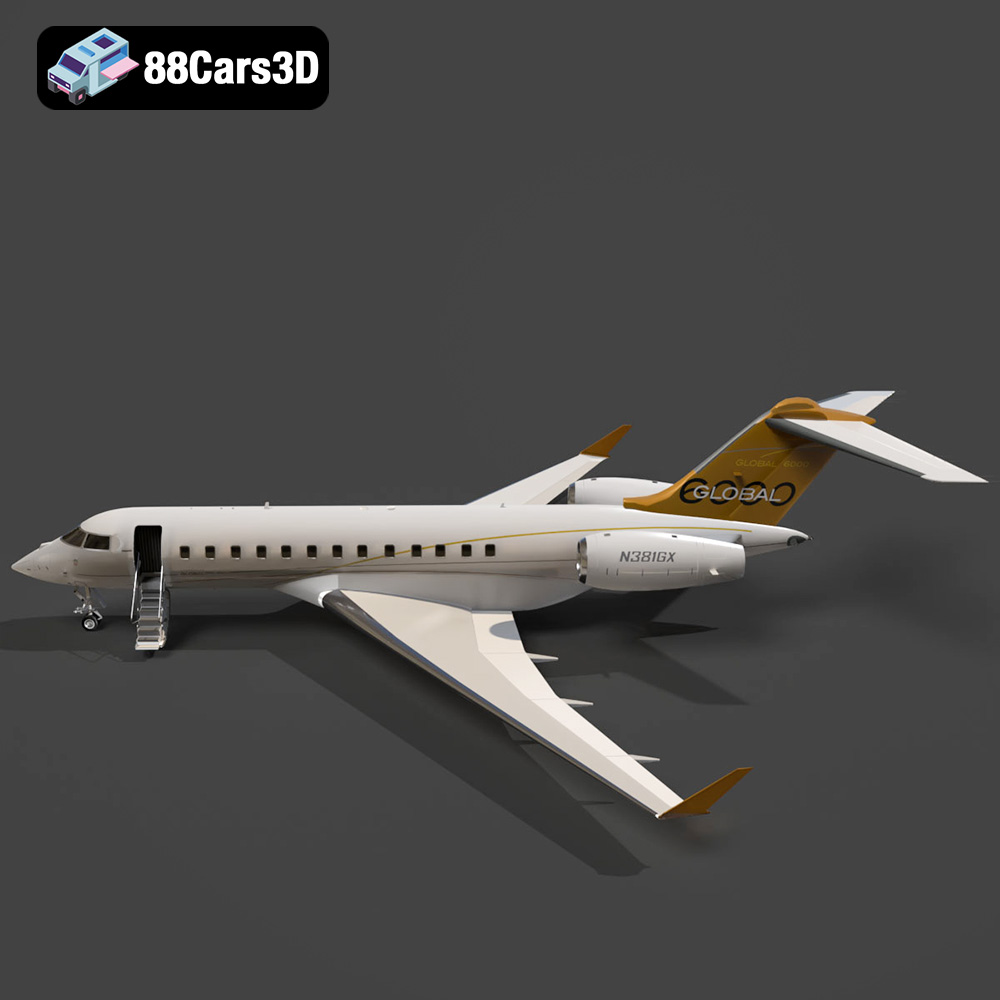
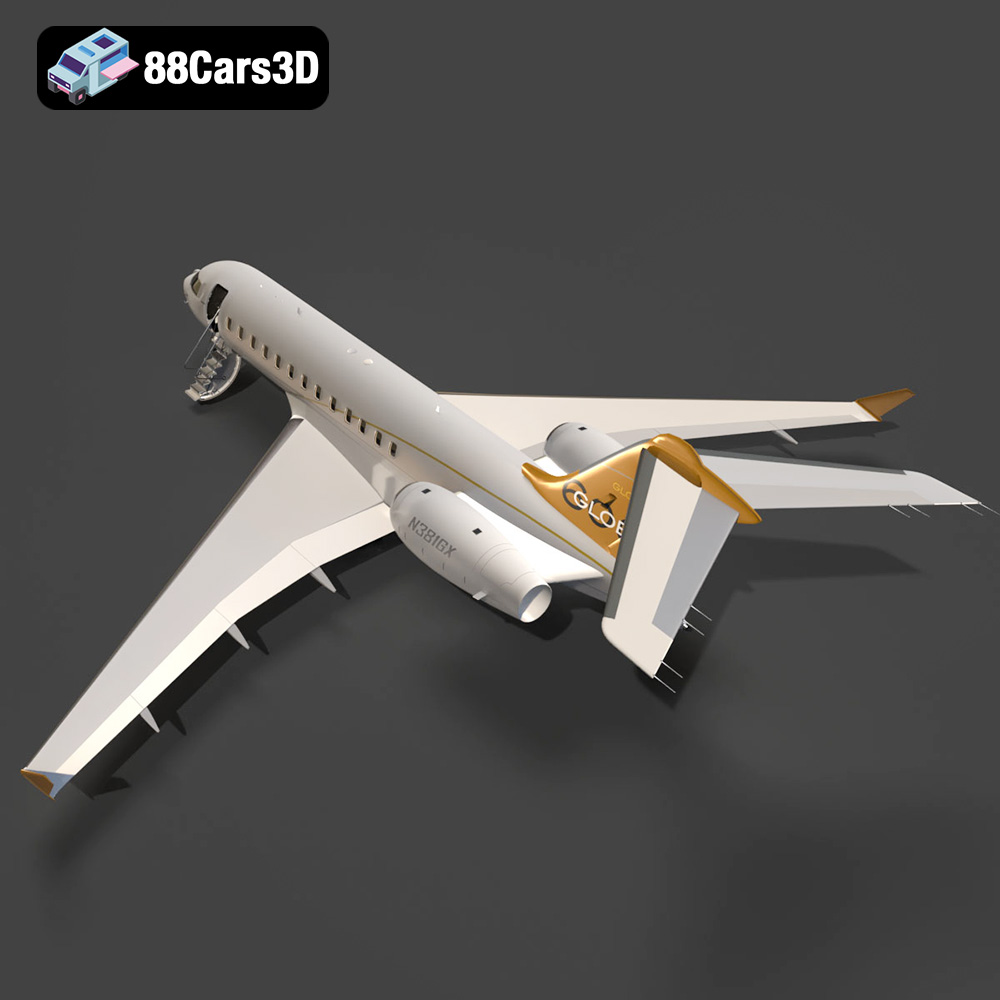
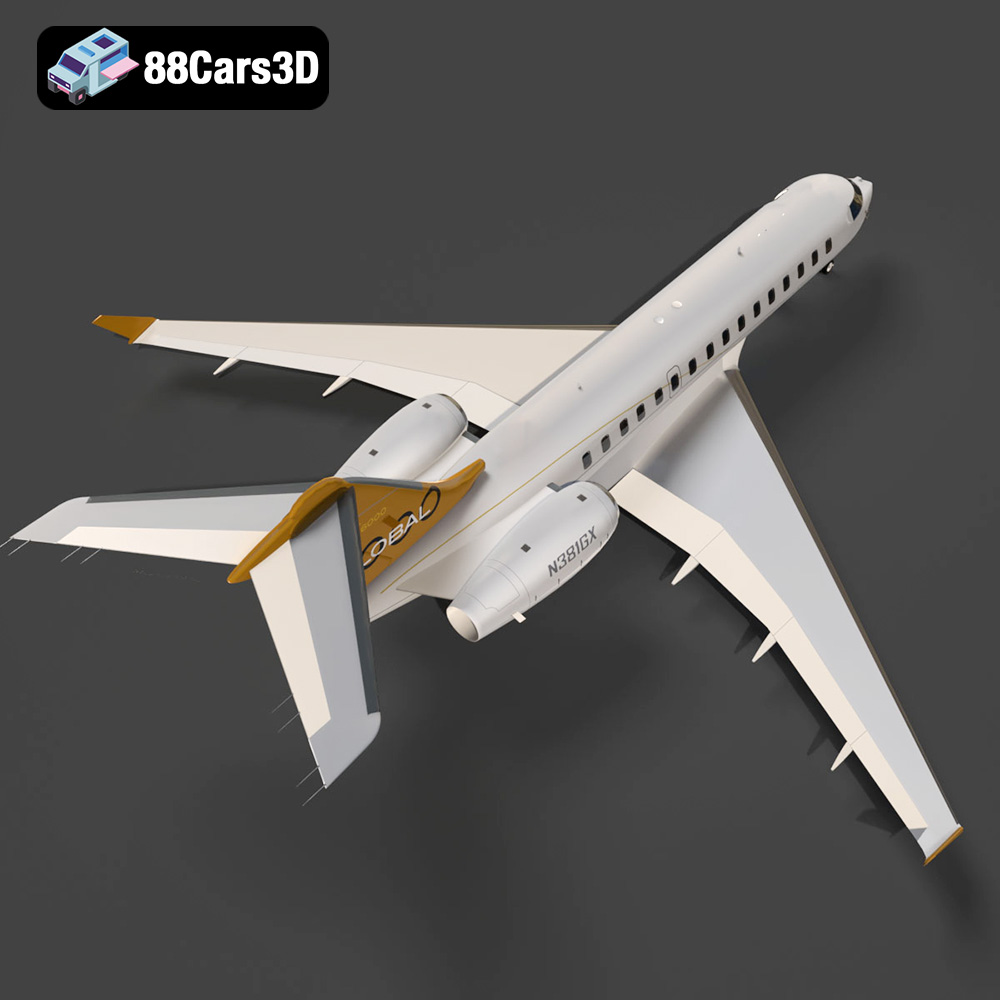
The model’s exterior is where its true craftsmanship shines. It accurately mirrors the Bombardier 6000’s elegant sweeping lines and aerodynamic proportions, which are critical for any visualization aiming for realism. The detailed twin turbofan engine nacelles and exhaust nozzles are rendered with high fidelity, capturing the intricate geometry that defines these powerful components. The wing structures include meticulously modeled ailerons, flaps, and the aircraft’s signature winglets – details often overlooked in lower-quality models. Furthermore, accurately modeled exterior lighting, including landing, navigation, and strobe lights, enhances realism for both day and night scenes. The intricate landing gear assemblies, wheels, tires, and bay doors are also faithfully replicated, complete with pivot points for realistic animation, making it suitable for complex landing and takeoff sequences in flight simulators or animations.
Beyond the impressive exterior, the Bombardier 6000 3D model features a detailed interior. The cockpit is designed for immersive first-person perspectives, essential for flight simulators and VR experiences. It includes detailed pilot and co-pilot seating, accurately proportioned flight yokes, and steering columns. The comprehensive instrument panel geometry is prepared for the integration of glass cockpit displays, allowing developers to implement their own functional avionics. Throttle quadrants and center console controls add to the authenticity, providing a rich environment for interactive simulations. While the product description focuses on the cockpit, for complete luxury visualization, users can often extend or integrate custom cabin elements to match specific project requirements, leveraging the model’s clean topology.
The technical specifications of the Bombardier 6000 3D model underscore its professional suitability. With a game-ready and optimized triangle count of 508,456, it strikes an ideal balance, maintaining high-end visual realism without burdening real-time engines like Unreal or Unity. This polycount ensures that the model can be effectively used in demanding scenarios such as high-frame-rate flight simulators or large open-world environments. The model adheres to real-world scale accuracy, based on actual aircraft dimensions, which is crucial for consistent integration into existing scenes or for engineering visualizations. Critically, it features proper pivot setup for crucial animated parts like landing gear retraction, aileron movement, and turbine rotation, significantly streamlining the animation pipeline for artists and developers.
The true value of a versatile 3D asset lies in its ability to integrate seamlessly into diverse professional workflows and cater to a broad spectrum of applications. The Bombardier 6000 3D model exemplifies this flexibility, proving to be an invaluable tool across multiple creative industries.
For game developers, the Bombardier 6000 3D model is a robust asset. Its optimized polycount of 508,456 triangles ensures smooth performance in game engines. In flight simulators, the model’s accurate geometry and pivot setup for flight control surfaces (ailerons, flaps) and landing gear allow for realistic flight dynamics and interactive experiences. Developers can import the .fbx or .unreal versions directly into Unreal Engine or Unity, quickly setting up materials, physics, and scripting interactive elements for a fully functional aircraft. In open-world games, this jet can serve as an impressive environmental prop, a player-controlled vehicle, or a dynamic element in cinematic cutscenes. Its detail also makes it perfect for luxury virtual experiences within larger game environments, adding a layer of realism and aspiration.
For artists focused on visualization and rendering, the Bombardier 6000 is an exceptional subject. Using software like 3ds Max or Blender, artists can leverage the .max or .blend files to achieve stunning cinematic results. Imagine high-resolution product shots for luxury brand campaigns, showcasing the aircraft’s sleek design under studio lighting, or integrating it into architectural visualizations of private airfields and luxury hangers. The model’s clean topology and material separation allow for easy texture and shader adjustments, enabling artists to create bespoke corporate liveries or experiment with various paint finishes – from high-gloss metallics to subtle matte textures. Paired with advanced renderers like V-Ray, Corona, Cycles, or Arnold, the Bombardier 6000 can be brought to life with photorealistic lighting, reflections, and atmospheric effects, perfect for advertising or film production.
The burgeoning fields of Augmented Reality (AR) and Virtual Reality (VR) demand highly optimized yet visually compelling assets. The Bombardier 6000 3D model, particularly in its .glb format, is perfectly suited for these immersive platforms. Developers can create virtual showrooms where prospective buyers can walk around, inspect, and even “enter” the aircraft in a VR environment. For AR applications, the model can be anchored in real-world spaces via a mobile device, allowing users to experience the jet in their driveway or office. Its game-ready optimization ensures that these experiences run smoothly on mobile and standalone VR hardware, providing a seamless and engaging user journey. This opens doors for innovative marketing, training simulations, and interactive product configurators.
The versatility of this asset extends beyond digital screens. With its inclusion of an .stl file, the Bombardier 6000 3D model can be brought into the physical world through 3D printing. Hobbyists, model makers, or educational institutions can print the aircraft at various scales (e.g., 1:72, 1:100, 1:144) to create tangible display models. The product description provides essential 3D print settings, recommending resin printing for finer details like antennas and landing gear, and suggesting optimal layer heights, wall thicknesses, infill percentages, and necessary support structures. Post-processing, including sanding, priming, and painting with authentic corporate liveries, allows for a truly personalized and professional physical model. This capability adds another dimension to the model’s utility, bridging the gap between digital creation and physical craftsmanship.
A truly professional 3D asset provides not just a pre-made model but also the foundation for extensive customization and refinement. The Bombardier 6000 3D model offers numerous avenues for artists to infuse their creative vision and meet specific project demands.
One of the most powerful customization options for any vehicle model is the ability to change its exterior appearance. With the Bombardier 6000 model, artists can easily modify exterior colors to create custom corporate liveries, adapting the aircraft to represent various brands or fictional entities. This involves adjusting texture maps and material parameters in their chosen 3D software. Beyond color, the model allows for detailed manipulation of material finishes on the fuselage, enabling artists to achieve matte, high-gloss, metallic, or even iridescent effects. Tire textures can be modified to show varying levels of wear, adding subtle realism, while the cabin and exterior lighting can be adapted for day or night environments, enhancing the mood and context of any scene. This level of control ensures the model can be seamlessly integrated into diverse visual narratives.
The Bombardier 6000 3D model is designed with animation in mind. Its separate landing gear, flight control surfaces, and engine turbines come with proper pivot setups, significantly simplifying the animation process. This means animators can easily retract the landing gear, articulate ailerons and flaps for flight maneuvers, and rotate engine turbines for takeoff sequences without extensive re-rigging. This pre-configured state saves valuable production time and allows for complex animations right out of the box, making the model a highly efficient choice for cinematic shorts, training modules, or interactive simulations where functional realism is paramount.
Ultimately, the value of an asset like the Bombardier 6000 3D model lies in its “production-ready” status. It’s not just a collection of polygons; it’s a meticulously engineered digital object that is optimized, accurately scaled, and prepared for immediate use across a variety of professional applications. This reduces the need for extensive cleanup, remodeling, or optimization by the end-user, allowing artists and developers to focus on their creative tasks rather than technical troubleshooting. The inclusion of multiple file formats further enhances its value, ensuring compatibility with virtually any professional 3D pipeline, from game engines to high-end rendering solutions.
In the competitive landscape of 3D content creation, access to high-quality, production-ready assets is a significant advantage. Platforms dedicated to delivering such assets play a crucial role in empowering artists and accelerating production timelines.
88cars3d.com stands out as an online marketplace committed to offering high-quality 3D car models and other vehicle assets, including impressive aircraft like the Bombardier 6000. The emphasis on detailed product descriptions, comprehensive technical specifications, and the inclusion of multiple file formats ensures that customers receive assets that are truly fit for professional use. Whether you are looking for specific 3D car models for automotive rendering, robust game assets for your next title, or specialized aircraft models for simulation and visualization, 88cars3d.com provides a curated selection designed to meet diverse needs. The quality assurance behind each model means fewer headaches for developers and artists, allowing them to integrate assets with confidence and speed.
Investing in premium 3D assets from a reliable source like 88cars3d.com effectively streamlines your production pipeline. Instead of spending countless hours modeling a complex aircraft like the Bombardier 6000 from scratch – a task that would require significant expertise in modeling, texturing, and optimization – you can acquire a meticulously crafted, ready-to-use model. This frees up resources, reduces development costs, and allows your team to focus on higher-level creative tasks such as scene composition, animation, and final rendering. For studios working on tight deadlines or independent artists seeking to elevate their portfolio, this efficiency is invaluable.
The world of 3D modeling is constantly evolving, driven by the insatiable demand for ever-increasing realism and interactive experiences. From creating compelling 3D car models to designing sophisticated aircraft for simulation, the foundational elements remain the same: precision, optimization, and versatility. The Bombardier 6000 3D model serves as a prime example of an asset that embodies these qualities, offering a detailed and technically robust solution for game development, high-end rendering, AR/VR experiences, and even 3D printing. Its comprehensive feature set and wide range of supported file formats ensure seamless integration into virtually any professional workflow.
By leveraging expertly crafted assets like the Bombardier 6000 from reputable sources such as 88cars3d.com, artists and developers can significantly enhance the quality of their projects, accelerate their production cycles, and unlock new creative possibilities. Embrace the power of premium 3D models to transform your digital visions into stunning realities, whether in the realm of immersive games, photorealistic visualizations, or engaging interactive applications.
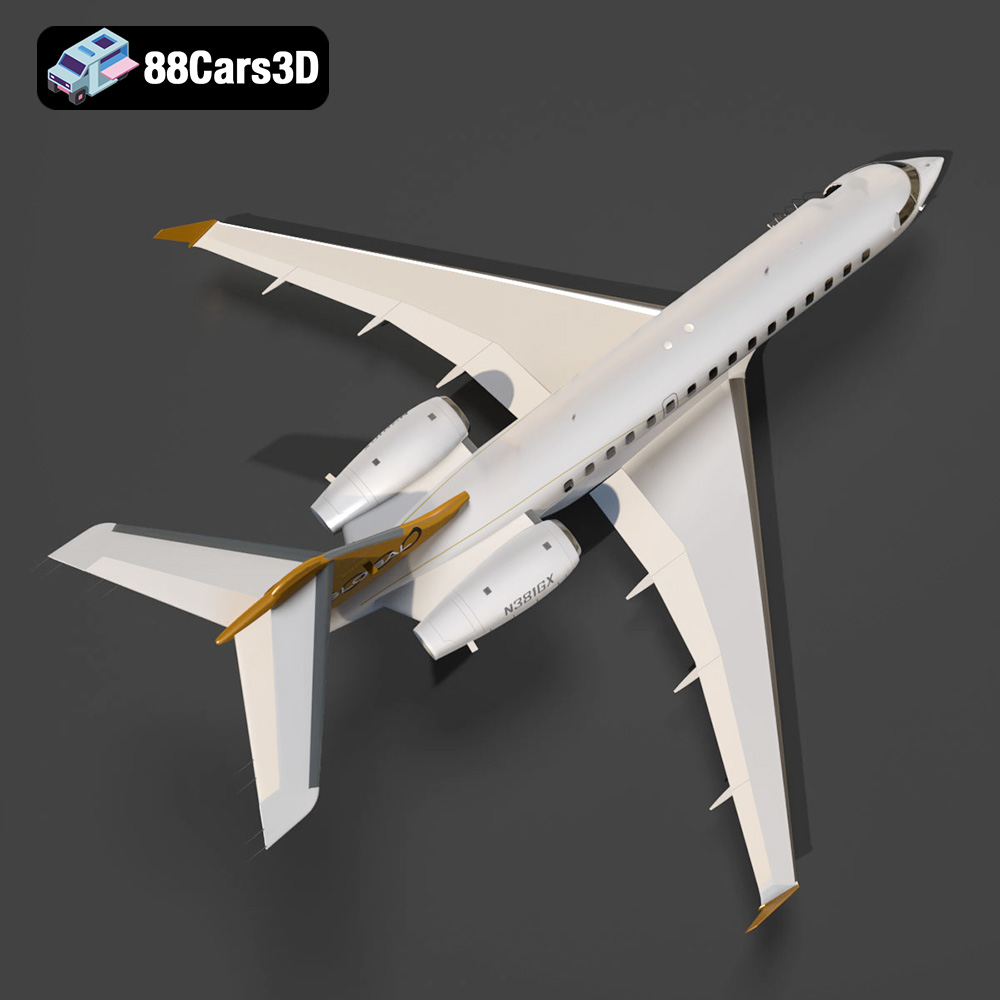
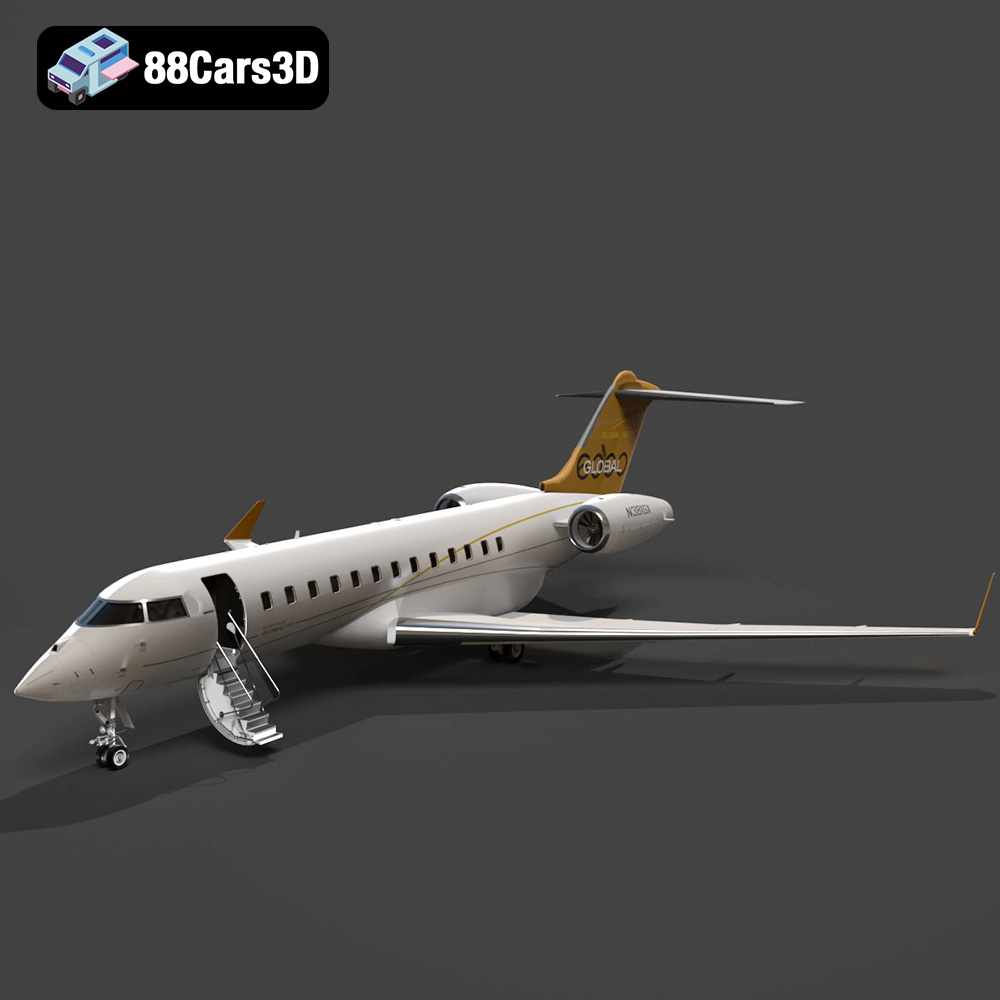
Experience the epitome of luxury aviation with this highly detailed 3D model of the Bombardier 6000, a premier long-range business jet renowned for its exceptional performance, striking aerodynamic profile, and global reach. This model meticulously captures the aircraft’s elegant sweeping lines, iconic winglets, and powerful turbofan engine housings that make it a standout in any virtual fleet or high-end aviation visualization.
Featuring a beautifully optimized topology with a triangle count of 508,456, this model delivers unparalleled visual fidelity while remaining efficient for real-time applications. Designed with developers and 3D artists in mind, it provides the perfect balance of detail and performance, making it highly suitable for flight simulation games, AR/VR experiences, animation, and architectural or high-end lifestyle visualizations.
Perfect for flight simulators, luxury brand campaigns, cinematic airport scenes, and virtual showrooms.
.blend, .fbx, .obj, .glb, .stl, .ply, .unreal, .max
Tags:
bombardier, bombardier-6000, private-jet, aircraft, airplane-3d-model, game-ready, low-poly, optimized, game-asset, rendering, vr-ar, blend, fbx, obj, glb, stl, ply, unreal, max
$26.00
.aircraft
.blend
.bombardier
.fbx
.glb
.max
.obj
.ply
.rendering
.stl
.unreal
airplane-3d-model
bombardier-6000
game asset
game-ready
low-poly
optimized
private-jet
VR/AR