Get 20% OFF All Premium 3D & STL Models!

In the dynamic world of 3D modeling, automotive design holds a unique place, demanding an unparalleled blend of artistic vision and technical precision. Whether for photorealistic renders that define a brand’s image, immersive game environments that transport players, or interactive AR/VR experiences that showcase future technology, the quality of a 3D car model is paramount. It’s not just about creating a shape; it’s about capturing the very essence, engineering, and luxury of a vehicle, down to the smallest detail.
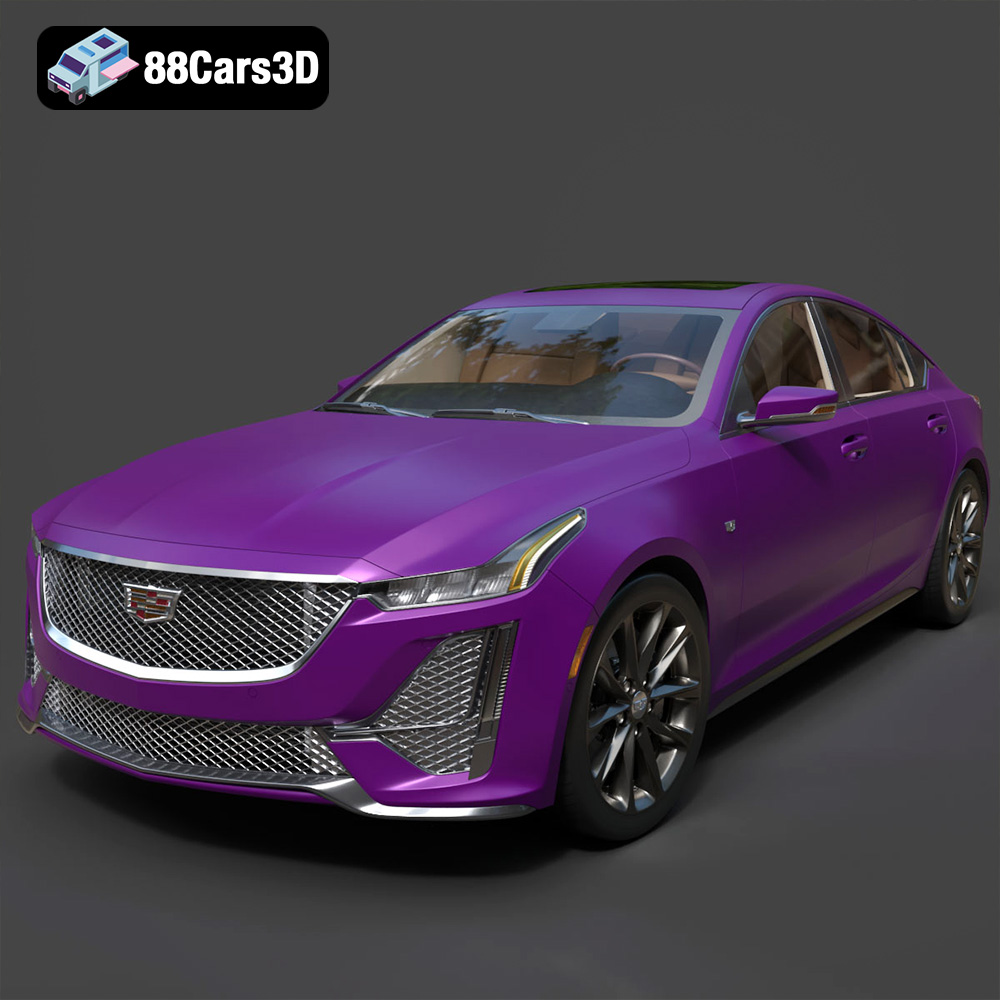
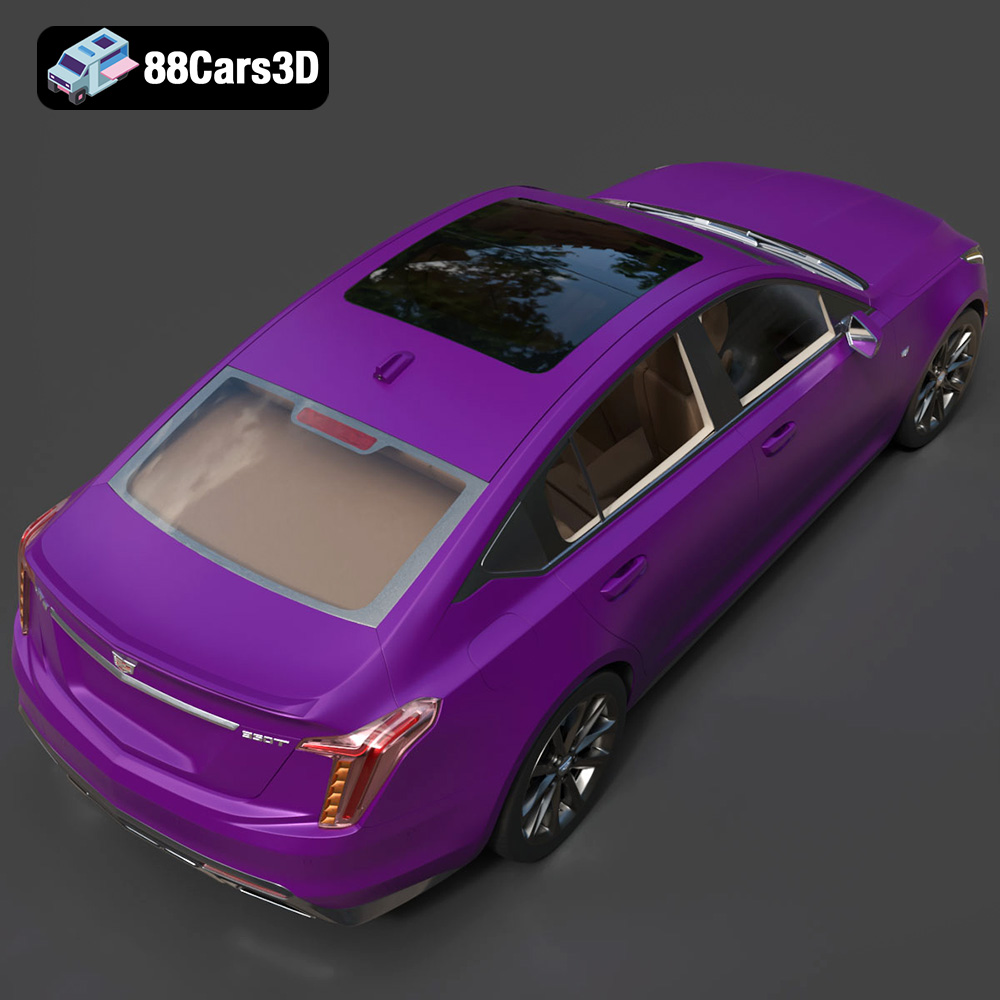
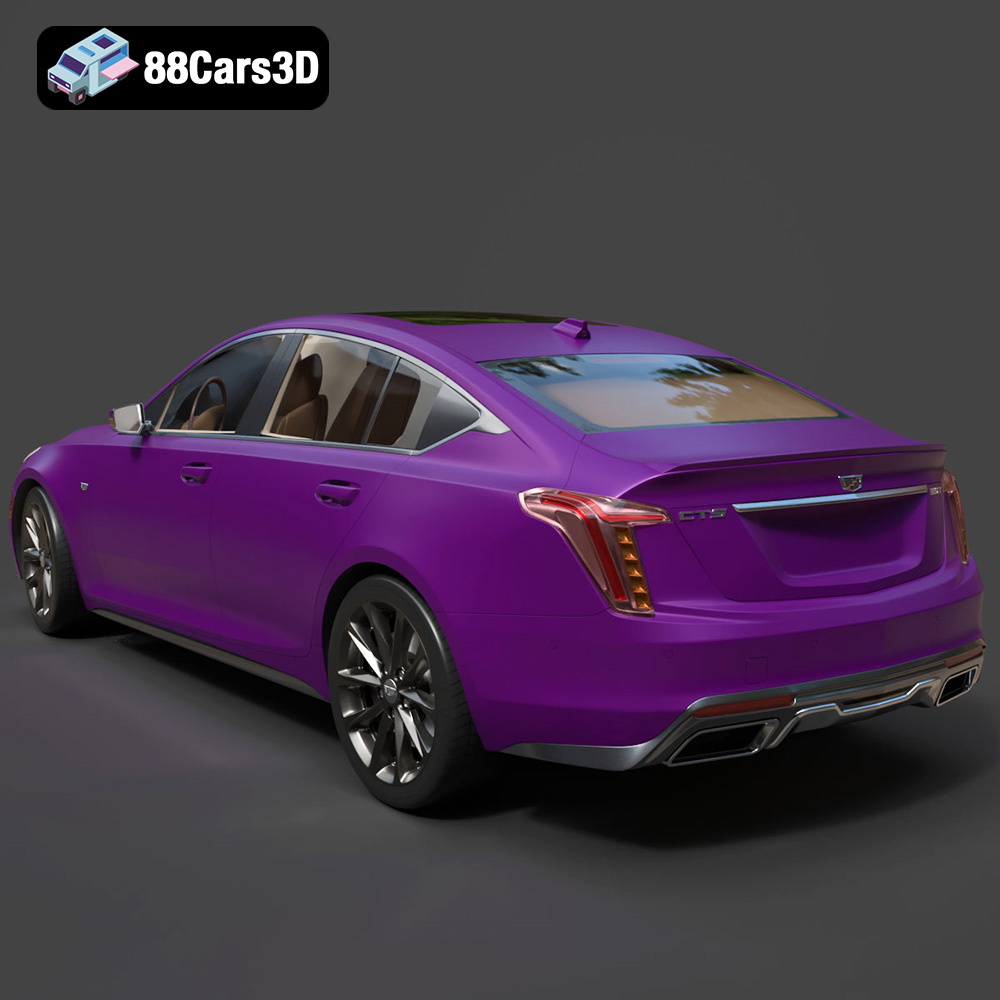
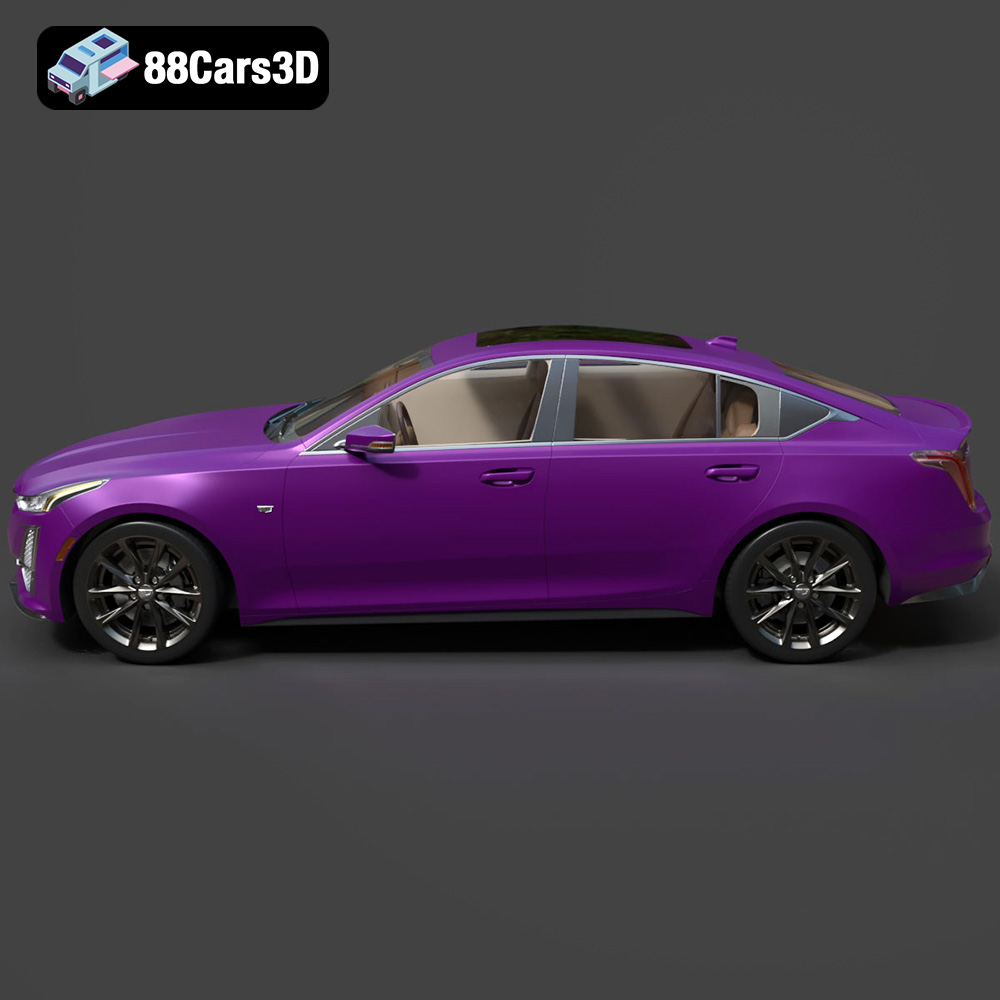
At 88cars3d.com, we understand this intricate balance. Our curated collection of high-quality 3D car models caters to professionals across various industries, providing them with the perfect foundation for their projects. Today, we delve into the sophisticated world of 3D automotive assets, using a stellar example: the 2020 Cadillac CT5. This model exemplifies the fusion of luxury and performance, brought to life in exquisite digital detail, making it an ideal candidate for pushing the boundaries of realism in renders, simulations, and interactive applications.
Creating a truly exceptional 3D car model is a labor of love, combining meticulous observation with advanced digital craftsmanship. It involves translating complex automotive designs into a digital format that is both visually stunning and technically robust, suitable for a multitude of applications.
The goal of high-fidelity 3D car models is to strike a delicate balance between hyper-realism and optimal performance. For visualizers, every curve, every reflection, and every material surface must contribute to an indistinguishable likeness to the real-world counterpart. This often means embracing a higher polygon count and intricate texture maps. However, for game developers and AR/VR creators, performance is equally critical. Models must render smoothly in real-time without compromising frame rates, necessitating intelligent optimization without sacrificing visual integrity.
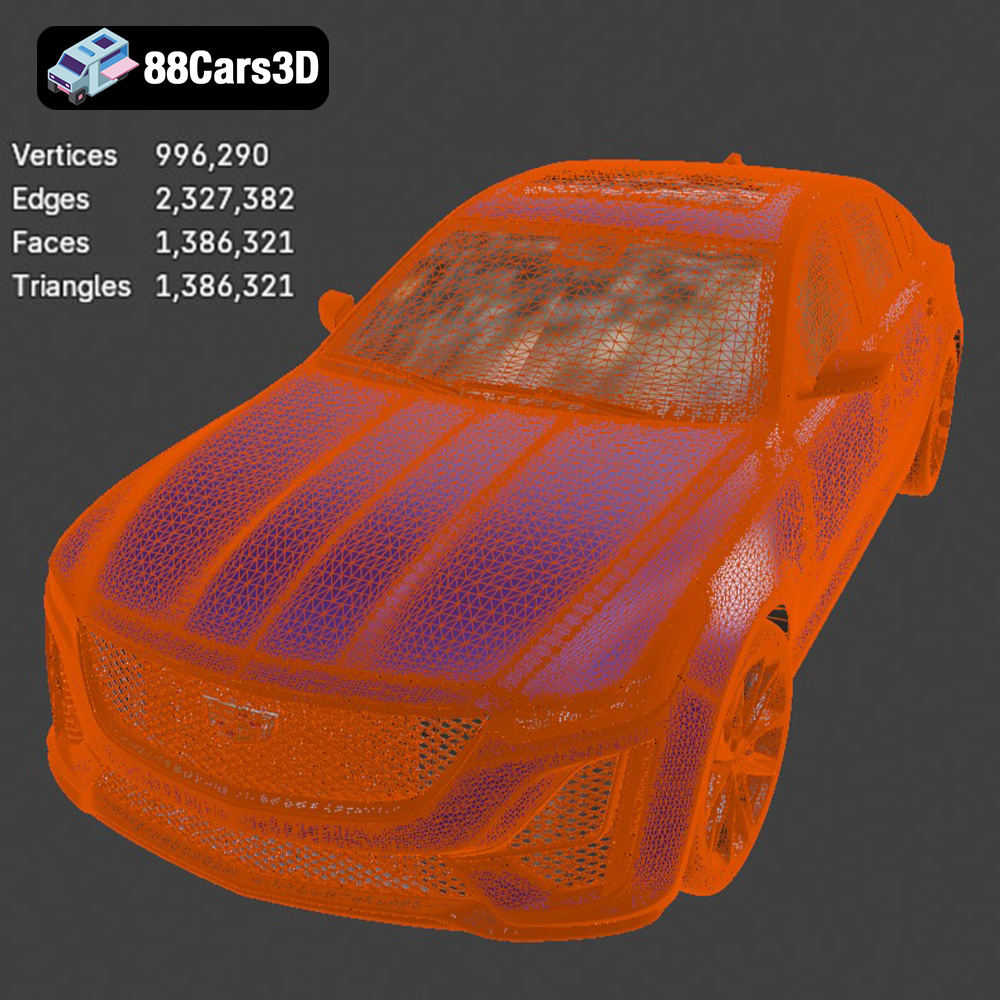
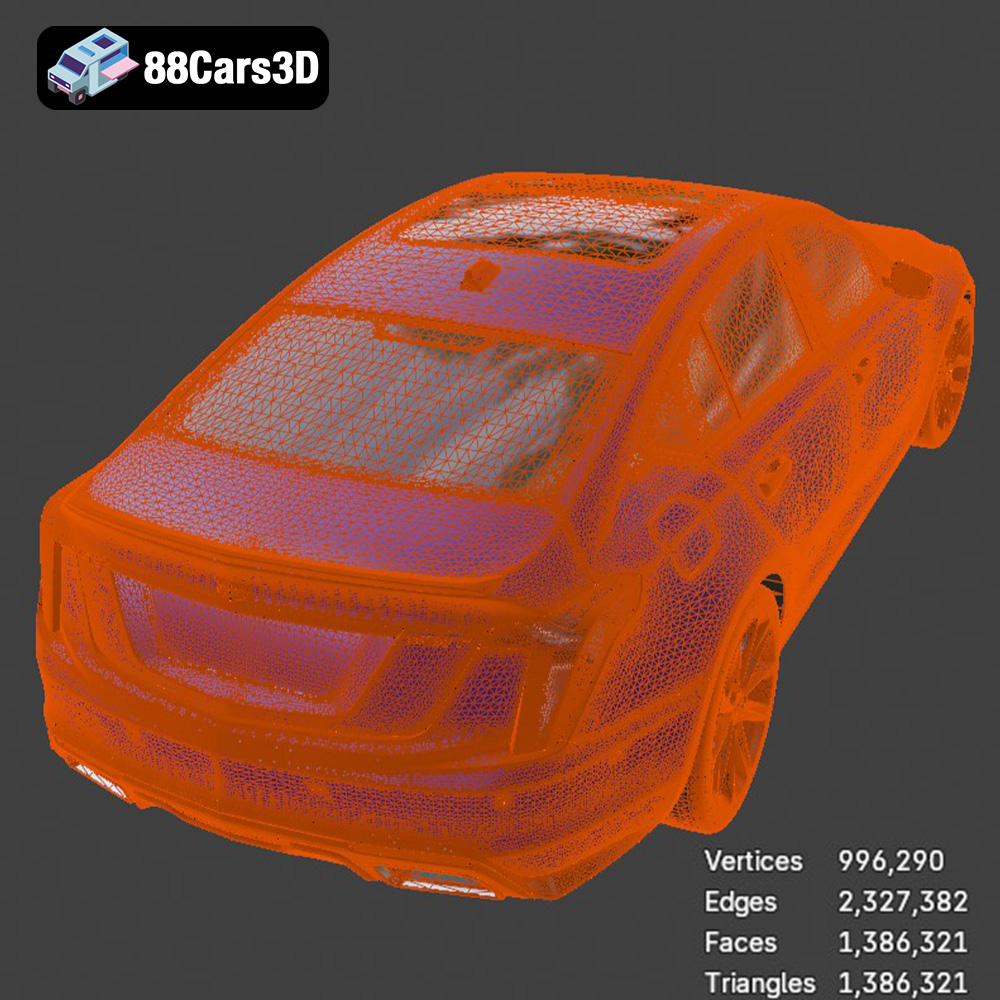
The 2020 Cadillac CT5 3D model, for instance, perfectly embodies this philosophy. With an impressive topology of 1,386,321 triangles, it achieves breathtaking visual fidelity for close-up rendering and high-end automotive visualization. Yet, this polycount is carefully balanced to remain “game-ready,” allowing seamless integration into real-time engines like Unreal and Unity. This careful design ensures that the model maintains structural integrity and detail for cinematic renders while remaining agile enough for interactive experiences.
Topology, the arrangement of polygons (usually triangles or quads) that form the surface of a 3D model, is foundational. Clean, efficient topology ensures smooth deformations during animation and prevents rendering artifacts. For complex shapes like a car body, this means carefully constructing the mesh to follow the vehicle’s natural contours and panel lines.
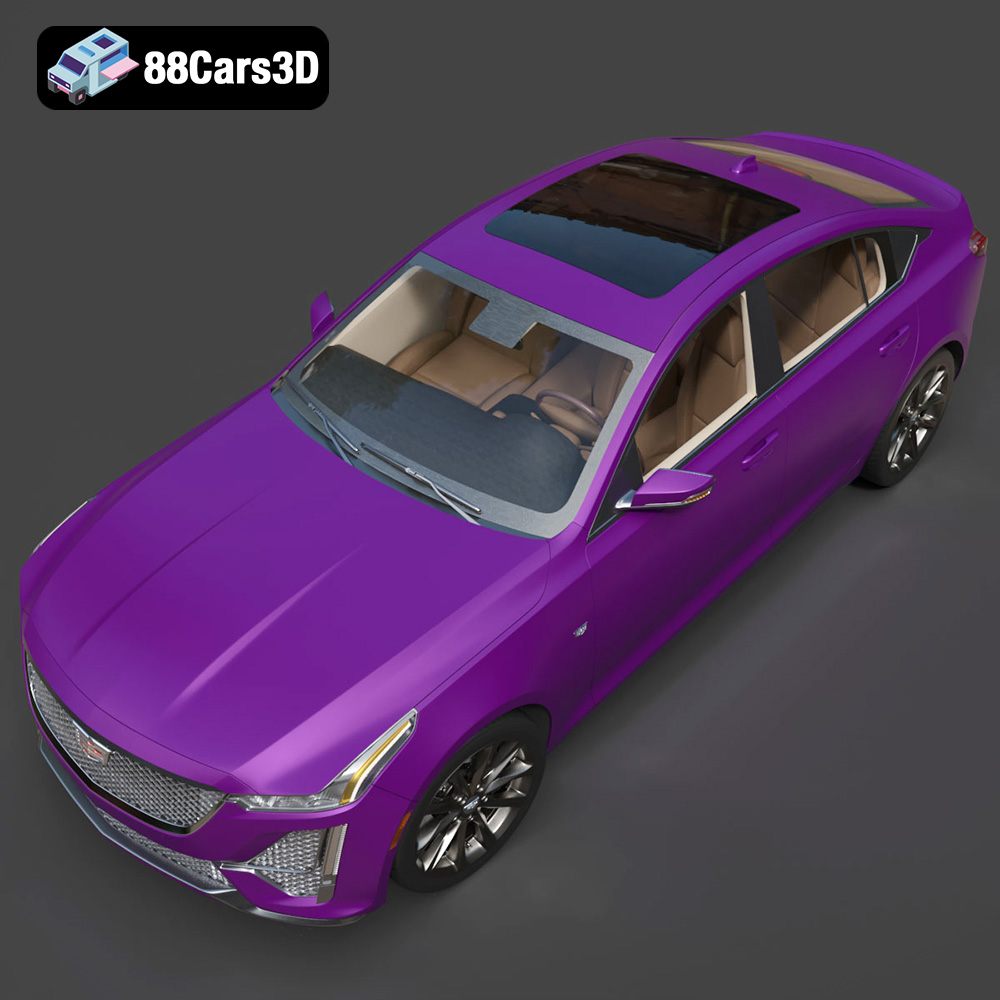
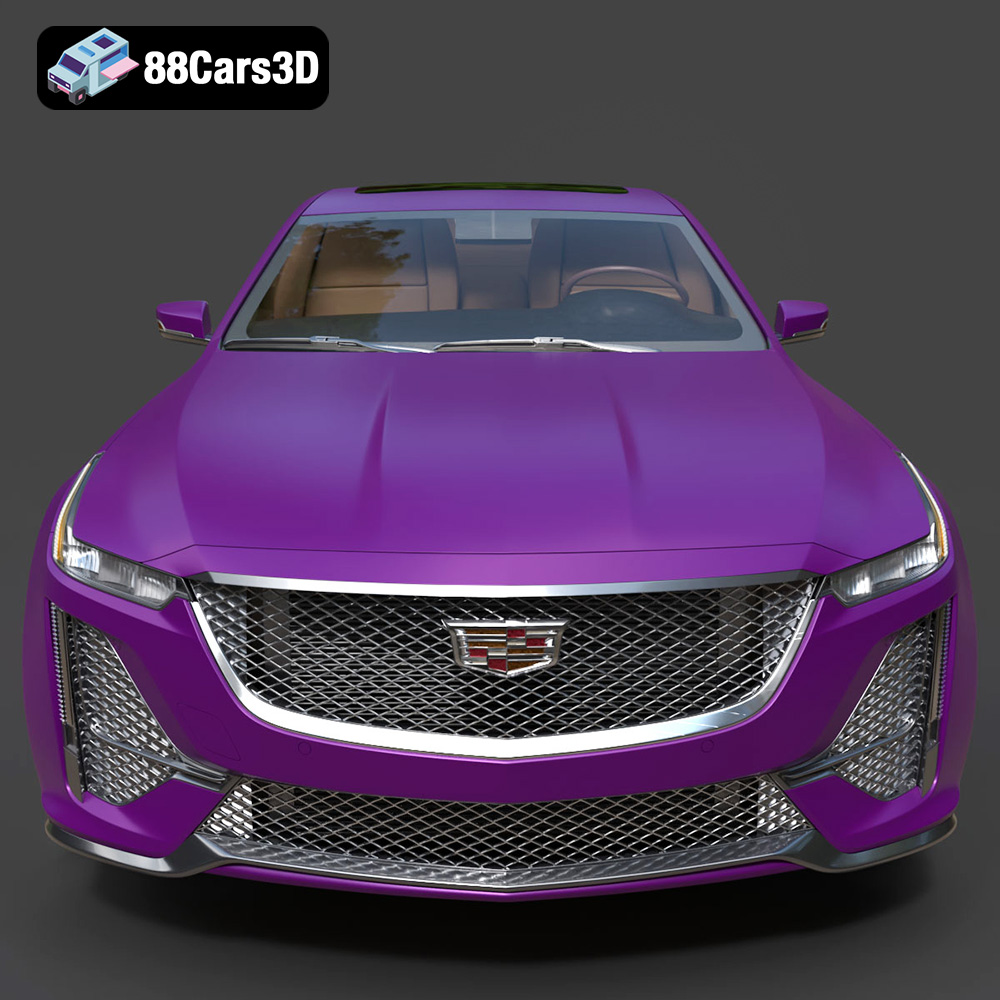
Beyond raw geometry, textures and materials breathe life into the model. High-resolution PBR (Physically Based Rendering) textures for paint, glass, rubber, chrome, and interior fabrics are crucial. These maps (albedo, normal, roughness, metallic, ambient occlusion) accurately simulate how light interacts with different surfaces, creating realistic reflections, refractions, and surface details. The Cadillac CT5 model excels here, featuring meticulously captured exterior details like the signature mesh grille, vertical LED headlights, high-fidelity alloy wheels with performance tire treads, and detailed brake calipers. Inside, premium leather-style seat sculpting, an accurate steering wheel with paddle shifters, and high-resolution infotainment geometry further elevate its realism, making it suitable for even the most demanding automotive rendering projects.
Navigating the landscape of 3D software and engines requires a solid understanding of the various file formats available. Each format serves a specific purpose, offering unique advantages in terms of compatibility, data retention, and optimization for particular workflows. Choosing the right format is crucial for a smooth pipeline, preventing potential headaches and ensuring your 3D car models perform exactly as intended across different applications.
The .blend file is the native format for Blender, a powerful open-source 3D creation suite. When you download a .blend file, you’re not just getting the mesh; you’re getting a complete Blender scene. This includes all geometry, materials, textures, lighting setups, cameras, animation data, and even modifiers. For users entrenched in the Blender ecosystem, a .blend file offers maximum flexibility and editability. It’s perfect for artists who want to dissect, modify, or re-purpose every aspect of the model directly within their primary tool. The Cadillac CT5 3D model, for example, comes as a fully editable Blender scene, allowing seamless integration into any Blender-based visualization or animation project.
Autodesk’s .fbx (Filmbox) format has become the de facto industry standard for exchanging 3D data between various software applications, especially those geared towards real-time engines. FBX is incredibly versatile, supporting geometry, materials, textures (though often linked externally), lights, cameras, skeletal animation, and morph targets. Its robust support for animation data makes it ideal for game development in engines like Unreal Engine and Unity, where animated assets like opening doors, spinning wheels, or suspension travel are critical. It’s a binary format, making it relatively efficient. When working with a high-fidelity asset like our Cadillac CT5 model for game development, .fbx is often the go-to choice for its reliability and widespread compatibility.
The .obj (Wavefront OBJ) format is one of the oldest and most universally supported 3D file formats. It’s a simple, text-based format primarily used to store 3D geometry (vertices, normals, texture coordinates, and faces) and usually references external material files (.mtl) for basic color and texture information. While it doesn’t support animation, rigging, or scene data, its widespread compatibility across virtually all 3D software makes it an excellent choice for basic mesh exchange. If you need to import the Cadillac CT5 model into a less common or older 3D application, or simply want the raw mesh data, .obj provides a reliable fallback.
.glb (GLB Transmission Format) is the binary version of glTF (GL Transmission Format), designed specifically for efficient transmission and loading of 3D scenes and models by web applications and XR (Extended Reality) experiences (AR/VR). A .glb file contains all necessary data – geometry, materials, textures, animations – in a single file, making it incredibly streamlined for browser-based viewers, virtual showrooms, and mobile AR applications. Its optimization for real-time web delivery makes it a prime candidate for showcasing the Cadillac CT5 in interactive online configurators or augmented reality experiences.
The .stl (Stereolithography) format is the industry standard for 3D printing. It represents a 3D model as a series of connected triangles, describing only the surface geometry without any color, texture, or material information. For designers and hobbyists looking to bring their digital car models into the physical world, converting to .stl is a necessary step. The Cadillac CT5 model is convertible to .stl format, allowing enthusiasts to 3D print scale replicas for display. The product description even provides recommended print settings, highlighting its readiness for fabrication.
The .ply (Polygon File Format or Stanford Triangle Format) is a file format for storing 3D data from 3D scanners, CAD systems, and other sources. It can store a wider range of properties than .obj, including color, transparency, normals, texture coordinates, and even reliability information. It supports both ASCII and binary representations. While less common for general 3D asset exchange, .ply is valuable for precision meshes, scientific visualization, and analysis where detailed vertex attributes are crucial. For specific engineering or analytical tasks involving the Cadillac CT5, the .ply format offers a robust data structure.
The .unreal format refers to assets specifically prepared and packaged for direct import and optimal performance within the Unreal Engine ecosystem. While often an internal Unreal asset type rather than a standard external exchange format, its inclusion signifies that the model is fully optimized and ready to drop into an Unreal project with minimal setup. This can mean pre-configured materials, collision meshes, LODs (Levels of Detail), and pivot points, all tailored for Unreal’s real-time rendering pipeline. For developers leveraging the Cadillac CT5 in an Unreal game or visualization, this format ensures a streamlined workflow and maximum efficiency.
Similar to .blend, the .max file is the native format for Autodesk 3ds Max, another industry-leading 3D modeling, animation, and rendering software. A .max file encapsulates the entire 3ds Max scene, including geometry, modifiers, materials, textures, lighting, cameras, animation, and rendering settings. It offers full editability within 3ds Max, making it the preferred format for professionals who use this software as their primary tool for automotive rendering and animation. Having the Cadillac CT5 available in .max format ensures that 3ds Max users can fully leverage the model’s detailed geometry and setup for high-fidelity animations and visualizations.
The availability of the Cadillac CT5 2020 model in all these diverse formats – .blend, .fbx, .obj, .glb, .stl, .ply, .unreal, and .max – underscores its versatility and the commitment to providing a flexible asset for any professional workflow. This comprehensive selection ensures that whether you’re rendering in Blender or 3ds Max, developing a game in Unreal, creating an AR experience, or even 3D printing, you have the right tools at your disposal.
Automotive visualization is a powerful tool for designers, marketers, and enthusiasts alike. It allows for the exploration of concepts, the showcasing of features, and the creation of compelling narratives around a vehicle without the need for physical prototypes or costly photoshohoots. High-quality 3D car models are the backbone of this process, enabling artists to craft stunning, lifelike imagery.
The journey from a real-world vehicle to a digital masterpiece begins with an obsession for accuracy. Every line, every curve, every proportion must be meticulously translated. For the 2020 Cadillac CT5, this meant capturing its dynamic fastback profile, aggressive front fascia with signature vertical LED DRLs, and wide, planted stance. The detailed signature mesh grille, distinctive badging, dual trapezoidal exhaust system, and intricate LED headlights and taillights are all crucial elements that define the CT5’s identity. These details are not merely aesthetic; they reflect the engineering and design philosophy of the original car. Furthermore, the interior details – from the sculpted leather-style seats to the high-resolution infotainment geometry and the intricate center console – contribute to a holistic and authentic representation, essential for any professional automotive rendering project.
Once the model is perfected, the rendering process takes center stage. In software like 3ds Max (often paired with renderers like V-Ray or Corona) and Blender (with its Cycles or Eevee engines), artists employ advanced techniques to achieve photorealism. This includes sophisticated material creation (PBR workflows), complex lighting setups (HDRI environment maps, area lights, spot lights), and meticulous camera work. For the Cadillac CT5, this translates to accurately simulating the metallic flake in the paint, the reflectivity of chrome, the subtle translucency of glass, and the tactile quality of interior textures. Dynamic studio lighting, realistic reflections on the car’s body panels, and precise shadows all contribute to a believable final image. These workflows allow visualizers to adjust body colors, modify tire textures, or change material finishes (matte, gloss, metallic, carbon fiber) to showcase different configurations or styling options, directly leveraging the versatility of a well-built 3D model.
A stunning car model needs an equally compelling environment to truly shine. Whether it’s a sleek studio setup, an urban cityscape, or a scenic landscape, the environment plays a critical role in storytelling. Artists use techniques like advanced lighting, atmospheric effects, and detailed background models or backplates to immerse the vehicle in a believable context. The Cadillac CT5, designed for luxury lifestyle visualizations and urban racing games, benefits immensely from carefully chosen backdrops that enhance its aggressive yet elegant character. By adapting lighting for different environments and using high-quality HDRIs, artists can quickly transition from a harsh midday sun to a moody dusk, showcasing the vehicle’s design under various conditions. This level of control is indispensable for brand campaigns, marketing materials, and virtual showrooms.
The demand for realistic and performant 3D car models in interactive media is constantly growing. From open-world racing games to immersive virtual reality training simulations, 3D vehicles are central to the user experience. Developers rely on optimized assets that seamlessly integrate into real-time engines while delivering high visual fidelity.
Game engines like Unreal Engine and Unity are engineered for real-time rendering, which presents unique challenges and opportunities for 3D car models. Optimization is key: balancing polycount, draw calls, and texture memory is crucial for maintaining high frame rates. While the Cadillac CT5 boasts a high triangle count for visual fidelity, it’s also designed with “game-ready” principles in mind. This means clean geometry, proper UV mapping for efficient texture baking, and well-organized asset structures. For engines like Unreal, the availability of a dedicated .unreal file format streamlines the import process, often including pre-configured materials, collision meshes, and even basic physics setups, reducing development time significantly. The proper pivot setup for steering, wheel rotation, and suspension travel is also critical for realistic in-game physics and animations.
Augmented Reality (AR) and Virtual Reality (VR) push the boundaries of interaction, offering truly immersive experiences. In AR, a 3D car model can be overlaid onto the real world via a smartphone or tablet, allowing customers to “try out” a car in their driveway. In VR, users can step inside a virtual showroom, inspect a vehicle from every angle, and even interact with its features. For these applications, the 2020 Cadillac CT5 is an ideal asset. Its optimized geometry and detailed interior make it perfect for virtual showrooms and configurators, allowing users to experience the car as if they were physically present. The inclusion of the .glb format is particularly beneficial here, as it’s optimized for efficient web and mobile AR/VR delivery, ensuring smooth performance on a variety of devices. Developers can leverage its high-fidelity cockpit and interior features to create compelling first-person POV experiences.
The Cadillac CT5 2020 3D model from 88cars3d.com is specifically designed to excel in game development scenarios. With 1,386,321 triangles, it strikes an excellent balance, providing enough detail for modern racing titles and open-world games without being overly burdensome on system resources. Its real-world scale accuracy ensures it fits seamlessly into any virtual environment, and the separate components for wheels, suspension, and steering make it ready for dynamic animations and physics simulations. Whether it’s for high-octane urban racing games, realistic driving simulators, or virtual exploration, this model provides a solid foundation for engaging interactive content, proving the value of investing in high-quality game assets.
Beyond screens and simulations, 3D printing offers a tangible connection to digital designs. Transforming a high-resolution 3D car model into a physical object allows for creation of prototypes, scale models, or collectible display pieces. However, this transition requires specific considerations and preparation.
Not all 3D models are immediately print-ready. For FDM (Fused Deposition Modeling) printers, models need to be manifold (watertight), have appropriate wall thickness, and be optimized for layer-by-layer construction. Resin (SLA/DLP) printing, on the other hand, excels at capturing finer details and smoother surfaces, making it highly recommended for intricate automotive models like the Cadillac CT5. The product description for the CT5 model provides specific print settings: recommended scales (1:12 / 1:18 / 1:24), layer height (0.04–0.12 mm for resin), and wall thickness (1.2–2.0 mm). It also advises on infill percentage (20–30%) and the crucial need for supports, especially for delicate parts like exhaust outlets, mirrors, and steering components. The strategy of printing the frame angled for structural integrity and wheels separately highlights thoughtful preparation for successful physical output.
Once printed, a 3D model often requires post-processing to achieve a polished, factory-fresh look. This can involve sanding to remove layer lines or support marks, applying primer to create a smooth surface for paint, and then meticulously painting the model. For an automotive model like the Cadillac CT5, this step is critical for replicating authentic factory colors, metallic finishes, and the subtle sheen of luxury. Hobbyists and professionals can experiment with different painting techniques to truly bring their printed CT5 to life, adding a physical dimension to their digital assets. The ability to convert the model to .stl format means that the exquisite design captured digitally can be enjoyed as a physical representation, bridging the gap between virtual and tangible.
A high-quality 3D model is not just a static asset; it’s a versatile foundation for endless creative possibilities. The ability to customize and seamlessly integrate a model into various professional workflows is what truly unlocks its potential, allowing artists and developers to tailor it to their specific needs.
The 2020 Cadillac CT5 3D model is designed with customization in mind. Its robust material setup and clean geometry allow for a wide range of modifications. Artists can easily change body colors, experimenting with authentic factory colors like Crystal White Tricoat or Wave Metallic, or even entirely custom hues to match a brand’s aesthetic. Tire textures can be swapped to represent performance or all-season variants, subtly altering the vehicle’s character. Material finishes can be adjusted from matte to gloss, metallic, or even carbon fiber, providing diverse visual options. This level of control is invaluable for creating bespoke visualizations, allowing the CT5 to fit perfectly into any brand campaign or interactive experience. The separate components for wheels, suspension, and steering also offer advanced customization, enabling artists to create unique animations or integrate custom physics systems.
One of the significant advantages of investing in premium 3D car models from resources like 88cars3d.com is their readiness for professional pipelines. The Cadillac CT5 model’s compatibility with major 3D software platforms and real-time rendering engines, combined with its optimized topology and real-world scale accuracy, ensures a smooth workflow. Whether you’re a seasoned artist in 3ds Max, a game developer in Unreal, or a visualization expert using Blender, the model’s included file formats (.blend, .fbx, .obj, .glb, .stl, .ply, .unreal, .max) guarantee easy import and immediate usability. This saves invaluable time and resources, allowing creative teams to focus on iterating and refining their vision rather than spending hours on model cleanup or conversion. The proper pivot setup for animation further exemplifies its professional-grade design, making it an ideal choice for high-end production environments where efficiency and quality are paramount.
The world of 3D automotive modeling is a complex yet rewarding frontier, where precision, performance, and aesthetic appeal converge. From stunning cinematic renders that captivate audiences to interactive game experiences that immerse players, the foundation of success lies in the quality of the 3D assets. The 2020 Cadillac CT5 3D model stands as a testament to what’s achievable: a highly detailed, technically robust asset versatile enough for rendering, game development, AR/VR, and even 3D printing.
Understanding the nuances of various file formats and how they integrate into diverse workflows is crucial for maximizing the potential of such an asset. Whether your project demands the full scene data of a .blend or .max file, the real-time efficiency of .fbx or .unreal, the web-readiness of .glb, or the printability of .stl, having access to a comprehensive package ensures your creative vision is never constrained by technical limitations. The 2020 Cadillac CT5 model, with its meticulously captured details, optimized topology, and extensive format support, offers an unparalleled starting point for any professional project.
For those seeking to elevate their automotive visualizations, develop cutting-edge game assets, or explore new dimensions in interactive media, investing in high-quality 3D car models like the Cadillac CT5 is a strategic decision. Explore this exceptional model and a vast array of other premium automotive assets at 88cars3d.com, and unlock the full potential of your next 3D project.
Experience the perfect fusion of luxury and performance with this highly detailed 3D model of the 2020 Cadillac CT5. Representing the modern era of American luxury sports sedans, the CT5 boasts a dynamic fastback profile, an aggressive front fascia with signature vertical LED DRLs, and a wide, planted stance. From the intricately modeled shield grille to the sleek dual exhaust outlets, every styling cue that makes this luxury sedan stand out has been meticulously captured in 3D form.
$37.50
.blend
.cadillac
.ct5
.fbx
.glb
.max
.obj
.ply
.rendering
.stl
.unreal
car-3d-model
ct5-2020
game asset
game-ready
high poly
luxury-sedan
optimized
sports-sedan
VR/AR