Get 20% OFF All Premium 3D & STL Models!

In the dynamic world of 3D visualization, automotive design, and real-time interactive experiences, the demand for meticulously crafted 3D car models has never been higher. Professionals across various industries, from game developers and architectural visualizers to product designers and cinematic artists, rely on high-fidelity assets to bring their creative visions to life. The challenge lies in finding models that not only boast stunning visual accuracy but also offer the technical optimization and flexibility required for demanding production pipelines. This is where premium resources like 88cars3d.com become indispensable, offering a curated selection of assets that meet the most rigorous industry standards.
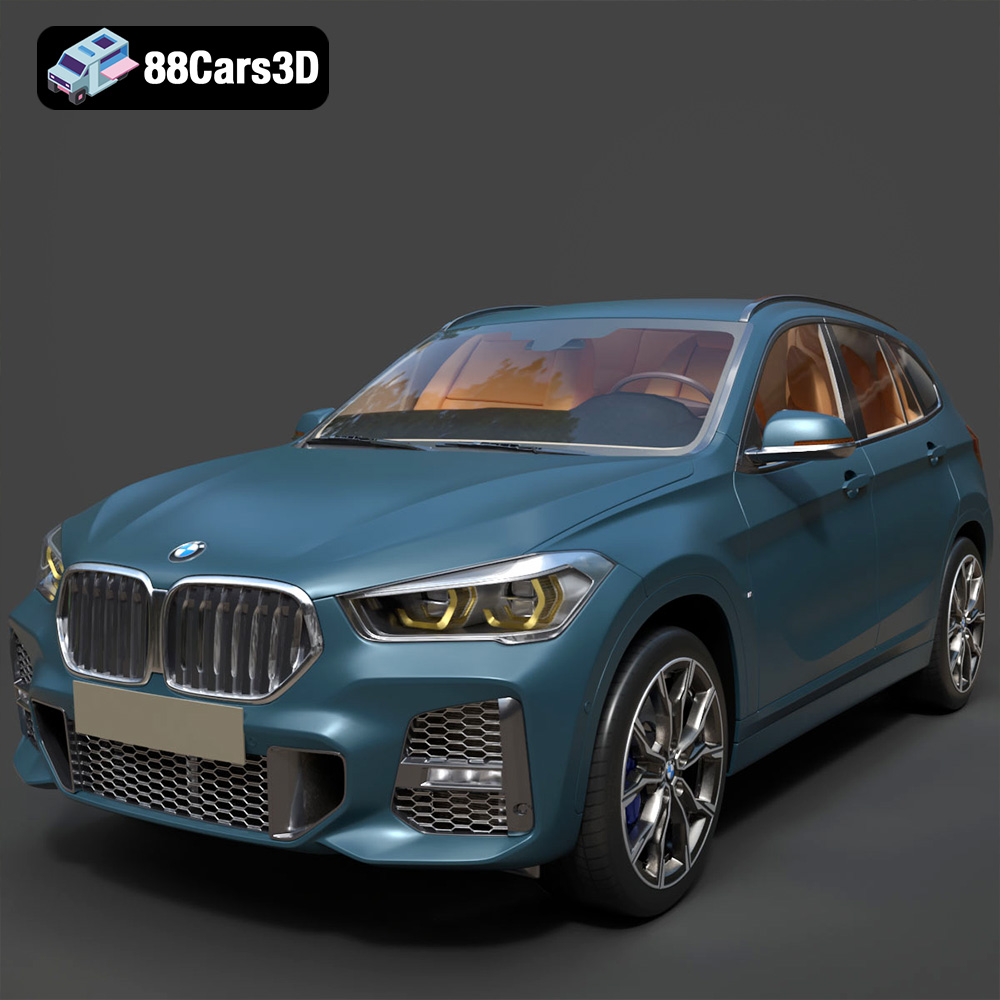
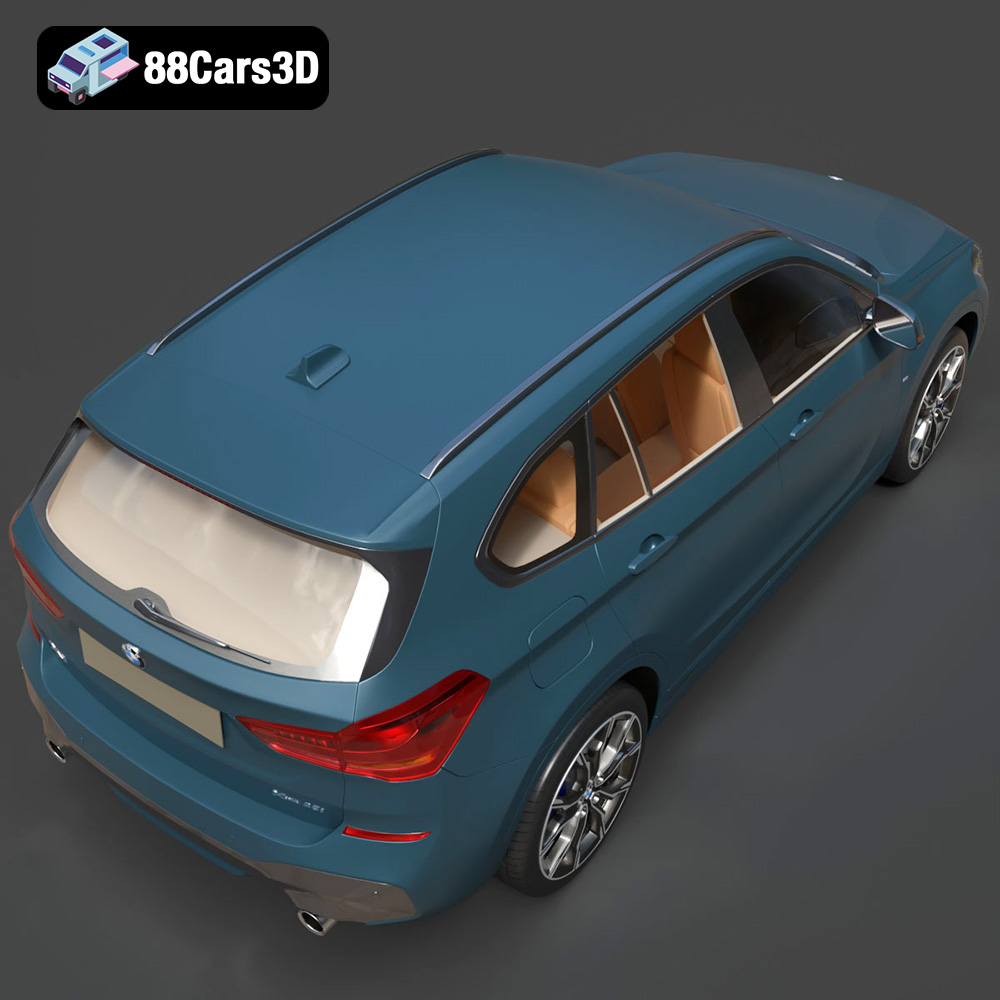
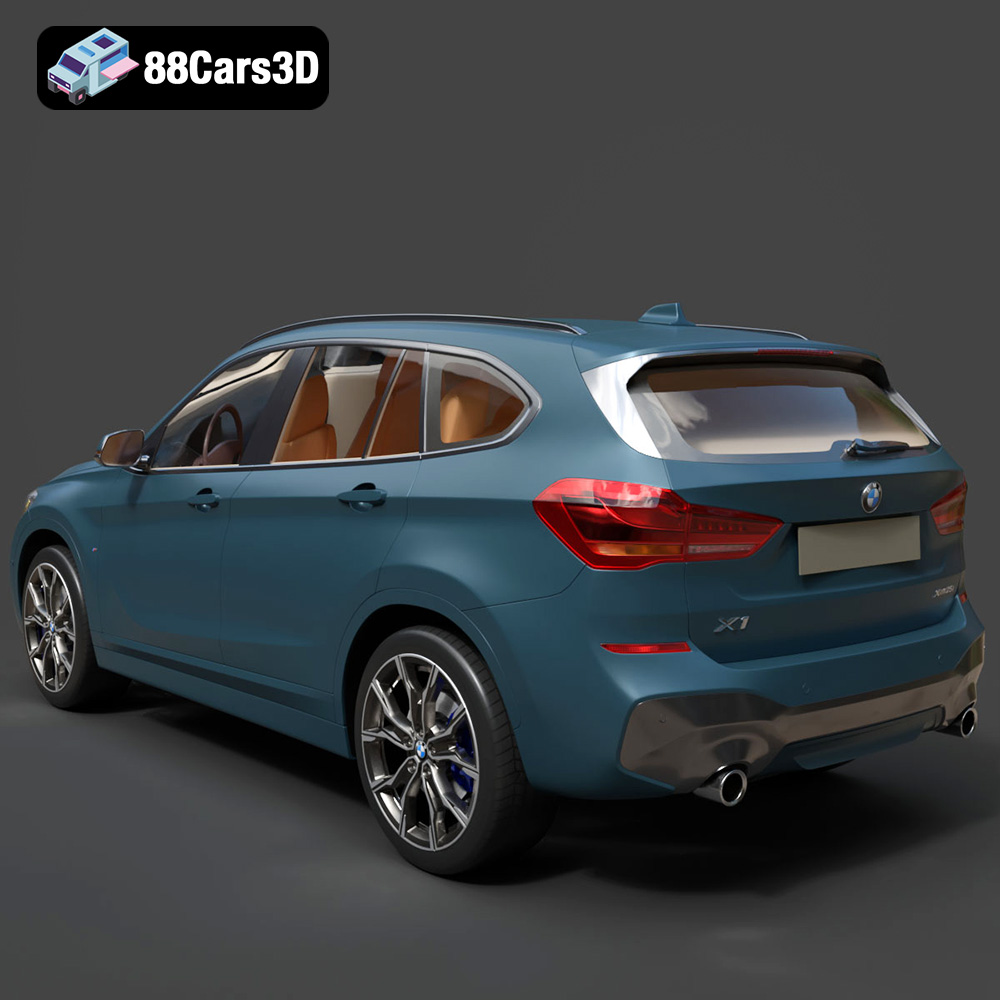
Today, we’re delving deep into one such exceptional asset: the BMW X1 M-Sport 2020 3D Model. This isn’t just a digital representation; it’s a meticulously engineered asset designed to integrate seamlessly into a multitude of professional workflows. Whether your project demands photorealistic automotive rendering, an immersive gaming experience, or precise 3D printing, understanding the nuances of such a model and its associated file formats is crucial for maximizing its potential. Let’s explore how this outstanding 3D car model elevates projects across the digital landscape.
Navigating the diverse landscape of 3D software and applications requires a solid grasp of various file formats. Each format serves a specific purpose, offering unique advantages in terms of compatibility, data preservation, and workflow efficiency. The BMW X1 M-Sport 2020 3D Model is a prime example of an asset offered in a comprehensive suite of formats, ensuring its versatility across virtually any professional pipeline. Understanding when and why to use each format is key to unlocking its full potential.
The .blend file format is the native and proprietary file type for Blender, one of the most powerful and popular open-source 3D creation suites. When you download the BMW X1 M-Sport 2020 model in this format, you’re not just getting the mesh; you’re receiving a complete Blender project file. This includes all scene data: the model’s geometry, materials with their intricate node setups, textures, lighting configurations, cameras, animations (if present), and even physics simulations. For artists working within Blender, this offers unparalleled flexibility for customization, rigging, animation, and rendering directly within their preferred environment. It’s the most editable and comprehensive version of the model for Blender users, ensuring all original data and setups are preserved.
FBX (Filmbox) is arguably the most widely adopted proprietary file format for 3D data exchange, developed by Autodesk. Its strength lies in its ability to store a vast array of 3D data, including geometry, materials (with basic properties), textures, rigging, skinning, animations, and cameras, in a relatively compact form. This makes the .fbx format for the BMW X1 M-Sport 2020 ideal for transferring the model between different 3D software packages like 3ds Max, Maya, Cinema 4D, and critically, into real-time game engines such as Unreal Engine and Unity. It’s robust, well-supported, and an essential format for any cross-software workflow, particularly for game assets due to its efficient handling of animation and hierarchical data.
The Wavefront OBJ (.obj) format is one of the oldest and most universally supported 3D file formats. It’s a non-proprietary, open standard that describes 3D geometry – vertices, faces, UV coordinates, and normals – in a simple text-based format. While it doesn’t typically store advanced material properties, rigging, or animation, it often comes accompanied by an MTL (Material Template Library) file that defines basic material colors and texture references. The BMW X1 M-Sport 2020 model in .obj format ensures maximum compatibility across almost all 3D software. It’s a reliable choice for pure geometric data transfer and a good starting point for projects where advanced scene data is built from scratch in the target application.
GLB (GL Transmission Format Binary) is the binary version of glTF, a royalty-free specification for the efficient transmission and loading of 3D scenes and models by applications. It’s specifically designed for modern web applications, AR/VR experiences, and mobile devices. A single .glb file for the BMW X1 M-Sport 2020 bundles all assets – geometry, materials, textures, animations – into a single, self-contained binary package. This optimization reduces load times and simplifies deployment, making it perfect for interactive product configurators on websites, augmented reality apps, or virtual showrooms. Its efficiency and comprehensive nature make it a burgeoning standard for real-time 3D on the web.
STL (STereoLithography) is the de facto standard file format for 3D printing and computer-aided manufacturing. It represents a 3D model as a series of connected triangles, describing only the surface geometry of an object without color, texture, or other CAD attributes. For the BMW X1 M-Sport 2020 model, the .stl format is crucial for hobbyists and professionals looking to produce physical replicas. While it requires careful preparation for printing – checking for manifold geometry, scale, and resolution – it serves as the essential blueprint for bringing the digital car model into the physical world. The product’s detailed description specifically highlights recommendations for scale, layer height, and support structures, underscoring its readiness for fabrication.
The PLY (Polygon File Format) is a file format for storing 3D data from 3D scanners. It supports properties like color, transparency, surface normals, texture coordinates, and data confidence values, which are not typically found in simpler formats like STL. While less common for general animation, .ply is valuable when dealing with high-precision mesh data, often originating from reverse engineering or scientific visualization. For the BMW X1 M-Sport 2020, its inclusion suggests the model’s suitability for applications requiring highly accurate surface data, potentially for CAD integration, detailed analysis, or manufacturing simulations where geometric integrity is paramount.
The .unreal format, often implying a pre-packaged asset bundle or a direct export tailored for the Unreal Engine ecosystem, is a significant advantage. This means the BMW X1 M-Sport 2020 model has likely been processed and optimized specifically for Unreal Engine, potentially including LODs (Levels of Detail), collision meshes, material instances, and even blueprint setups. This saves countless hours of manual import, setup, and optimization, allowing developers to drop the car directly into their Unreal projects with minimal fuss and immediate, high-quality results. It embodies the “game-ready” promise, making it an invaluable asset for real-time interactive projects.
The .max file is the native project file format for Autodesk 3ds Max, a leading 3D modeling, animation, rendering, and compositing software. Similar to the .blend file for Blender, the .max file for the BMW X1 M-Sport 2020 contains the complete scene data: geometry, complex materials, lighting, cameras, rigging, and animation. For professionals entrenched in the 3ds Max ecosystem, this format provides full editability and access to the original scene setup, making it ideal for high-end automotive rendering, detailed animation sequences, and integration into existing 3ds Max projects. It offers the most control and fidelity within its native software environment.
The availability of the BMW X1 M-Sport 2020 3D Model in such a comprehensive array of formats on 88cars3d.com underscores its professional utility. It ensures that regardless of your software of choice or your project’s specific requirements, you have an optimized version ready for immediate deployment.
Automotive rendering is a specialized field within 3D visualization, demanding an intricate balance of artistic flair and technical precision. The goal is to create images or animations of vehicles that are indistinguishable from real-world photographs or cinematic footage. This process is complex, involving advanced material definitions, sophisticated lighting setups, and meticulous post-production.
The foundation of photorealistic automotive rendering lies in the materials. Car paint, for instance, isn’t a simple color; it’s a complex multi-layered shader incorporating base color, metallic flakes, clear coat reflections, Fresnel effects, and subtle imperfections. Headlight glass, tire rubber, chrome trim, and interior leathers each require unique material definitions that accurately simulate their physical properties. The BMW X1 M-Sport 2020 3D Model, with its “uncompromised visual fidelity” and geometry that “guarantees smooth reflections,” is built for this level of detail. When paired with physically based rendering (PBR) workflows in software like 3ds Max (using V-Ray or Corona Renderer) or Blender (Cycles), these materials come alive. Equally important is lighting. Studio lighting setups, often using large softboxes and rim lights, are crucial for showcasing the car’s contours and reflections. HDR (High Dynamic Range) image-based lighting, combined with targeted area lights, can place the vehicle convincingly within any environment, from a sun-drenched coastal road to a moody urban street. The detailed exterior and interior features of the BMW X1, including its high-resolution LED headlights and M double-spoke alloy wheels, are designed to respond beautifully to these advanced lighting scenarios.
Beyond isolated product shots, automotive rendering often involves placing the vehicle within a narrative. This could be an architectural visualization scene where the car enhances the realism of a luxury property, or a lifestyle campaign that evokes a specific emotion or user experience. For studio setups, infinite white cycloramas or minimalist backdrops draw all focus to the vehicle itself, emphasizing its design and form. Here, precise control over reflections and shadows is paramount to define shape and volume. When integrating into a broader environment, the car becomes a character in a larger story. Matching lighting conditions, atmospheric effects like fog or haze, and ensuring consistent scale are vital. The BMW X1 M-Sport 2020 model, with its “real-world scale accuracy” and “optimized geometry,” serves as an ideal central element for such ambitious scene compositions, making it perfect for “automotive brand campaigns.”
Consider an automotive brand launching a new campaign for the X1 M-Sport. Instead of costly physical shoots, they opt for 3D rendering. The 88cars3d.com BMW X1 M-Sport 2020 model is imported into 3ds Max. Artists then apply custom material finishes – perhaps a striking Misano Blue metallic paint, contrasted with matte carbon fiber accents. The scene is lit with a complex array of virtual studio lights to highlight the aggressive M aerodynamics package and the distinctive brake calipers. For an environmental shot, the car is placed within a meticulously modeled cityscape, with real-time reflections from surrounding buildings bouncing off its polished surfaces. Every detail, from the signature M double-spoke alloy wheels to the premium sports seats of the interior, is rendered with breathtaking clarity, providing marketing assets that are both visually stunning and highly flexible for future iterations without reshooting.
The interactive nature of game development presents unique challenges and opportunities for 3D car models. Unlike static renders, game assets must perform efficiently in real-time environments, often at high frame rates, while still maintaining visual fidelity. The BMW X1 M-Sport 2020 3D Model is specifically engineered to excel in this demanding field, categorized as “Game-Ready & Optimized.”
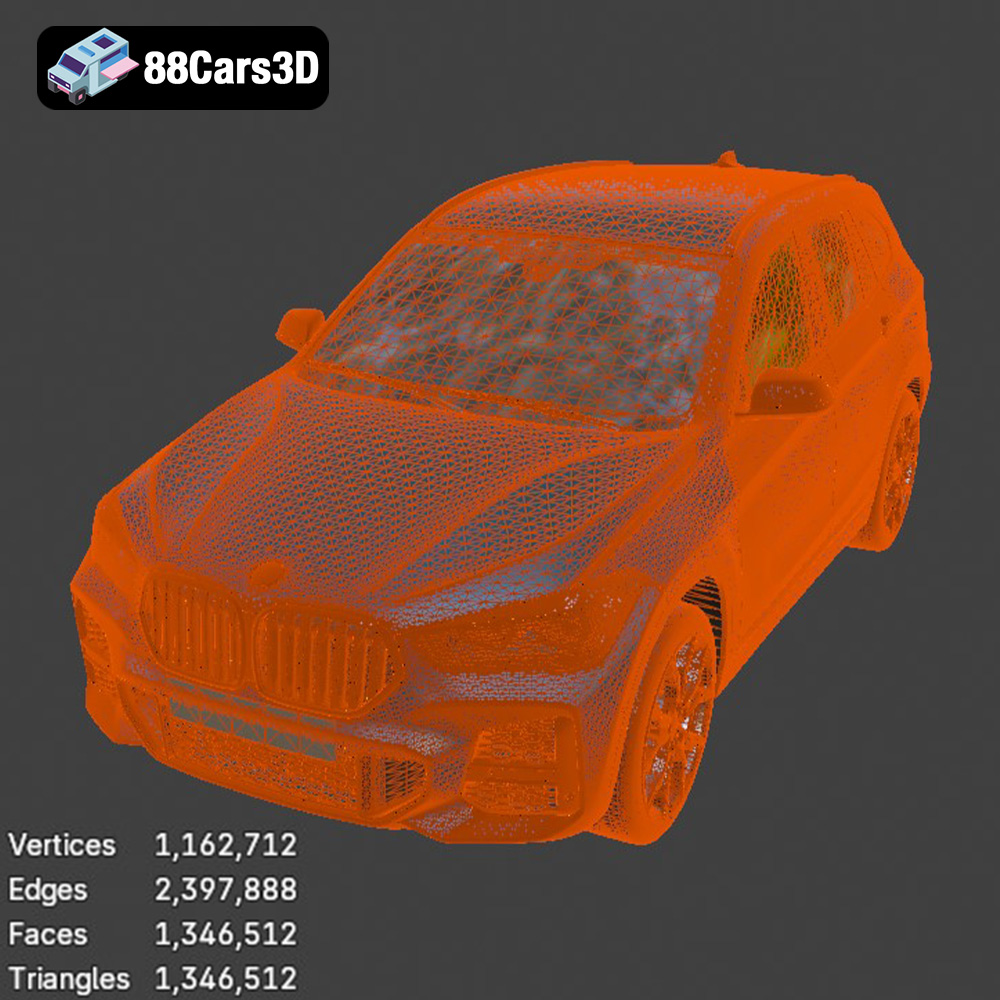
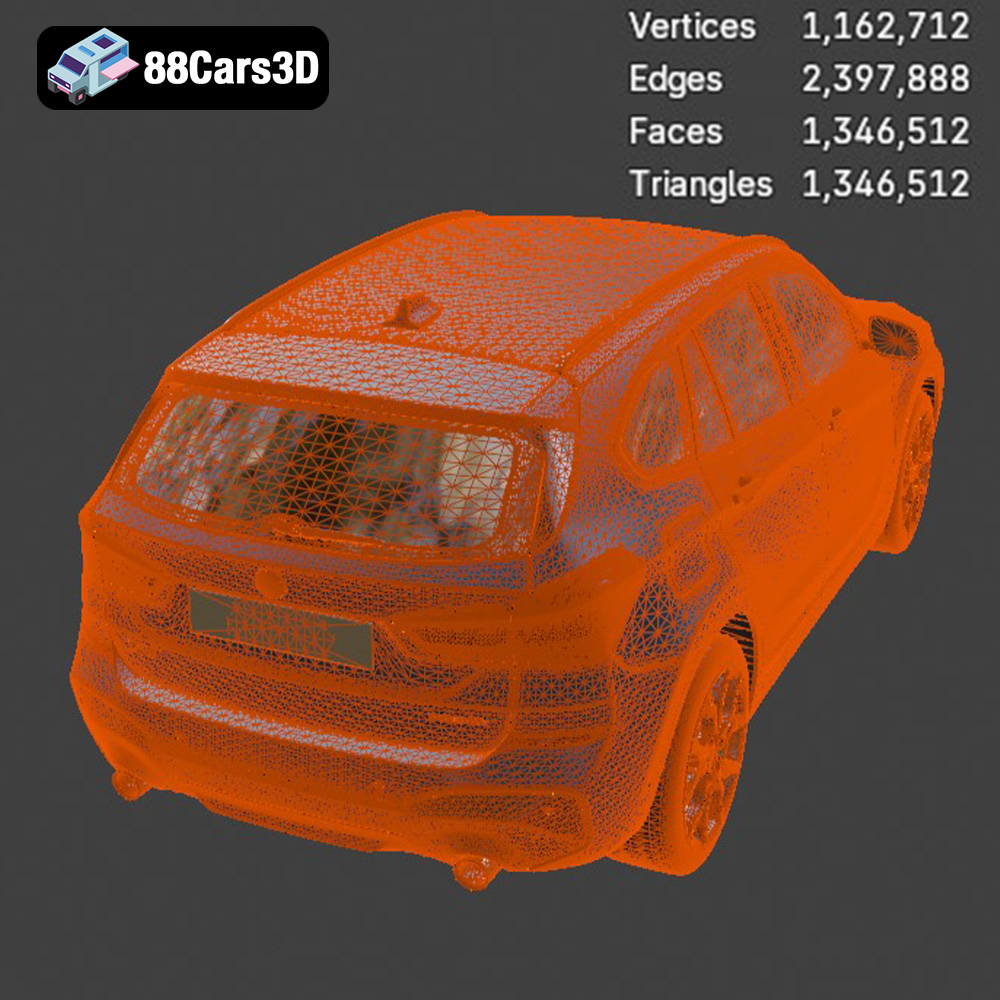
Real-time rendering places strict constraints on polygon counts. Every triangle processed by the GPU adds to render time, so efficient topology is critical. The BMW X1 M-Sport 2020 model strikes a “perfect balance” with 1,346,512 triangles. While seemingly high for a game asset, this indicates a high level of detail for main models, which would then be complemented by Levels of Detail (LODs). LODs are lower-polygon versions of the model that automatically swap in when the car is further from the camera, dramatically reducing the processing load without a noticeable drop in quality for the player. Additionally, game models require collision meshes – simplified geometries that the physics engine uses to calculate impacts and interactions, preventing players from “falling through” the car or scenery. Proper UV mapping is also paramount for efficient texture application and avoiding visual glitches in real-time.
Unreal Engine and Unity are the two titans of game development, and their asset pipelines are robust but require specific optimizations. For the BMW X1 M-Sport 2020 model, the inclusion of .fbx and particularly the .unreal format streamlines this integration. An .fbx import allows developers to bring in the mesh, basic materials, and skeletal animations (for wheels, steering, suspension) directly. Unreal and Unity then facilitate the creation of complex PBR materials, setting up blueprints for vehicle physics, and defining interactive elements. The .unreal format suggests an even more direct path, potentially providing a ready-to-use asset with pre-configured materials, physics assets, and even basic control setups, saving developers hundreds of hours. This means the detailed engine block, separate wheels, and suspension components can be readily animated and integrated into a realistic driving experience.
Imagine a high-end racing simulator or an open-world adventure game. The BMW X1 M-Sport 2020 3D Model fits perfectly. Its optimized polycount allows it to be a hero vehicle without taxing the engine. The “proper pivot setup for steering, wheel rotation, and suspension travel” means developers don’t have to manually adjust pivot points, which is a common and time-consuming task. The detailed interior features, including the digital instrument cluster and iDrive infotainment screen, are “optimized geometry for first-person POV in gaming and VR,” crucial for immersive cockpit views. This level of preparation means a game studio can acquire this asset from 88cars3d.com and immediately begin integrating it into their vehicle roster, focusing on gameplay mechanics rather than extensive asset preparation. The ability to customize body colors and tire textures further enhances its utility, allowing for diverse in-game variations.
The utility of high-quality 3D car models extends far beyond traditional rendering and game development, venturing into cutting-edge immersive technologies and tangible physical creations. Augmented Reality (AR), Virtual Reality (VR), and 3D printing are transforming how we interact with and experience automotive designs.
AR and VR offer unprecedented opportunities for engaging with products before they even exist physically. For the automotive industry, this translates into virtual showrooms and interactive configurators. Imagine a potential customer using a VR headset to sit inside the BMW X1 M-Sport 2020, exploring its premium sports seats, detailed stitching, and the M leather steering wheel in full 360-degree immersion. With AR, they could project the virtual car into their own driveway via a smartphone, visualizing it in different body colors like Misano Blue or Alpine White, and adjusting material finishes. The .glb format of the BMW X1 M-Sport 2020 model is specifically “optimized for AR, VR, and browser-based display,” making it the ideal choice for these applications. Its game-ready optimization ensures smooth performance even on mobile devices, providing a seamless and highly interactive experience that can significantly influence purchasing decisions.
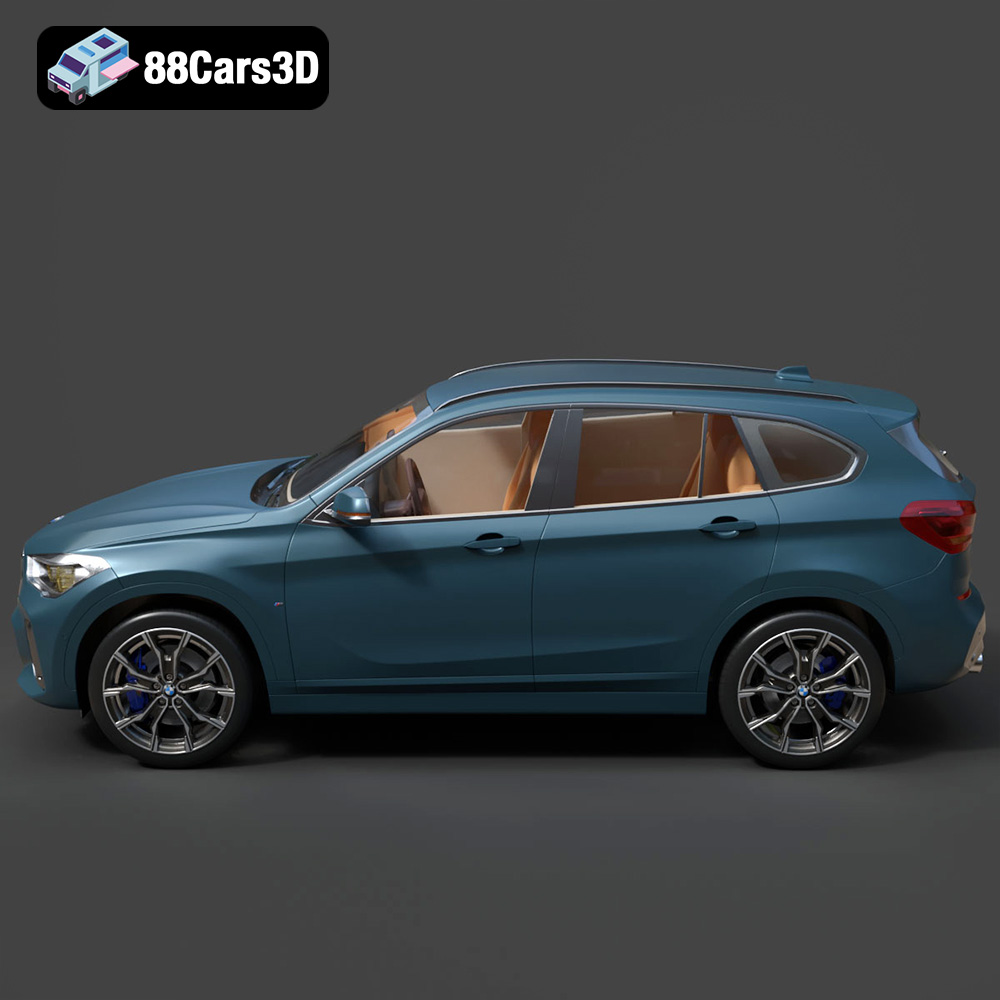
3D printing allows for the rapid creation of physical prototypes and display models directly from digital files. For automotive designers, this means quickly producing scaled models of new concepts for physical review and aesthetic evaluation. For enthusiasts, it offers the joy of owning a highly detailed replica of their favorite vehicle. The BMW X1 M-Sport 2020 3D Model is explicitly designed for this, providing the .stl format – the industry standard for 3D printing. The product description details crucial print settings: recommended scales (1:12, 1:18, 1:24), layer height, wall thickness, infill, and specific support requirements for delicate parts. This guidance is invaluable, particularly for resin printing, which is recommended for “fine details” such as the signature M double-spoke alloy wheels, the sporty twin exhaust tailpipes, and sharply contoured side profile. Post-processing suggestions, including sanding, primer, and authentic factory colors, further enhance the potential for creating exhibition-quality models.
The versatility of the BMW X1 M-Sport 2020 3D Model makes it a powerful tool for agencies and companies exploring new technologies. For a tech firm developing a smart city simulation, the model can populate virtual traffic flows with highly realistic vehicles. For educational institutions, it serves as an excellent teaching aid for automotive design and engineering principles, allowing students to dissect and analyze its detailed components. Its adaptability across rendering, gaming, AR, VR, and 3D printing solidifies its position as a truly multifaceted asset, demonstrating how a single, well-crafted 3D car model from 88cars3d.com can underpin innovation across numerous emerging technological fronts.
At the heart of any premium 3D asset lies a foundation of technical excellence. The BMW X1 M-Sport 2020 3D Model stands out not just for its visual appeal but for the engineering precision embedded within its digital structure. Understanding these technical specifications is crucial for professionals seeking uncompromised quality and seamless integration.
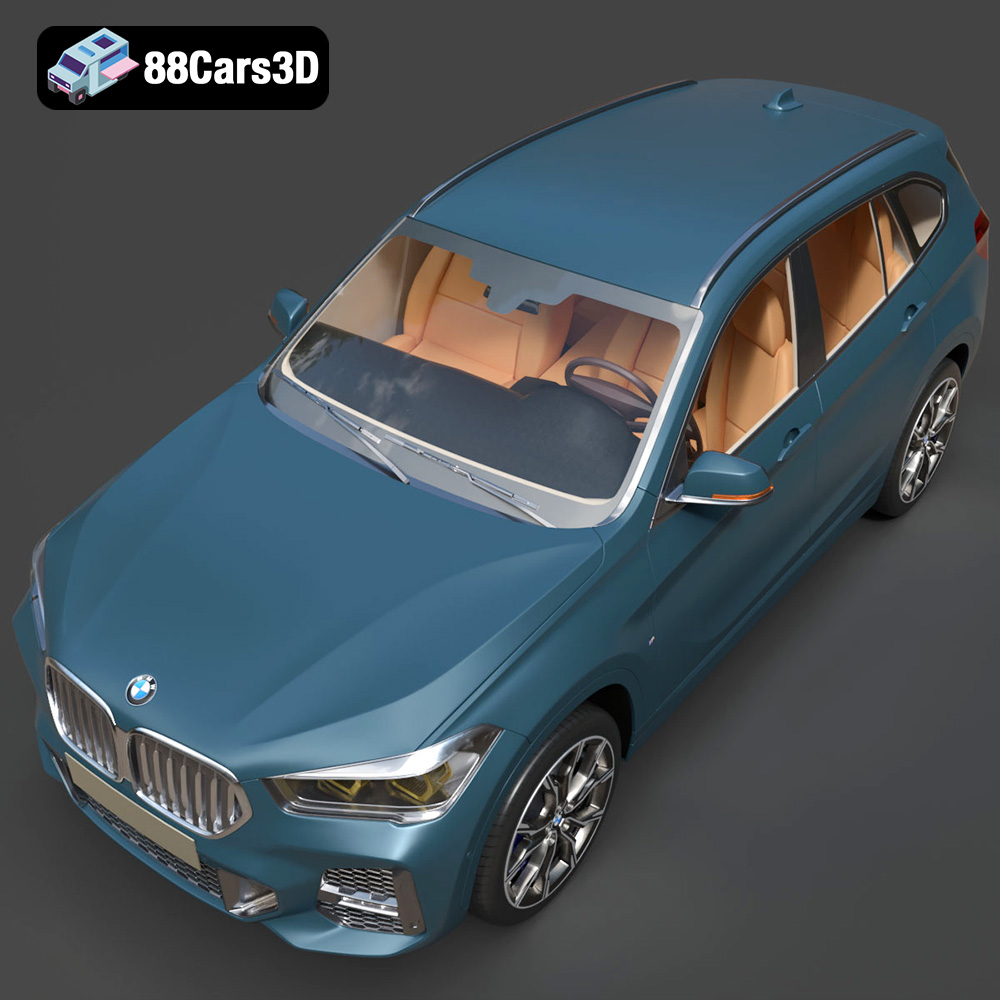
The product description highlights a “meticulously crafted” model, and the feature list corroborates this with impressive detail. The exterior boasts “accurate BMW X1 M-Sport 2020 frame geometry and proportions,” which is fundamental for any realistic depiction. Beyond the body, elements like the “detailed engine block and undercarriage components” add an incredible layer of realism, especially for close-up shots or even cutaway animations. The “sport exhaust system with twin chrome-plated tailpipes” and “distinctive brake calipers” showcase attention to the smaller, performance-oriented details that define the M-Sport lineage. Inside, the “premium sports seats with detailed stitching and bolstering,” the “iconic M leather steering wheel,” and a “fully detailed digital instrument cluster and iDrive infotainment screen” create an immersive cockpit experience. This level of detail ensures that whether viewed from afar or in a first-person perspective, the model holds up to scrutiny.
A static model, no matter how beautiful, has limited utility in dynamic projects. The BMW X1 M-Sport 2020 model is engineered for animation, a critical feature for cinematic sequences, game physics, and interactive experiences. The inclusion of “separate wheels, suspension, and steering components for animation” is a key advantage. This modularity allows animators to accurately simulate steering, wheel rotation, and suspension travel over uneven terrain, without having to manually detach or re-rig parts. The “proper pivot setup” further streamlines this process. Customization options, such as changing body colors (Misano Blue, Alpine White, custom finishes), modifying tire textures (summer vs. winter variants), and adjusting material finishes (matte, gloss, metallic, carbon fiber), empower artists to tailor the vehicle to specific project requirements, extending its lifespan and versatility across multiple scenarios. This flexibility is invaluable for iterative design and diverse client briefs.
Topology refers to the arrangement of polygons (usually quads or triangles) that make up a 3D model’s surface. Good topology is paramount for clean deformations during animation, efficient UV unwrapping, and smooth subdivision surfaces. The BMW X1 M-Sport 2020 model’s “highly detailed topology of 1346512 triangles” implies a well-structured mesh that, despite its density, is optimized for “efficient performance across various digital platforms.” This ensures “smooth reflections, crisp edge flow, and unparalleled realism.” Equally important is “real-world scale accuracy based on actual vehicle chassis.” Working with correct scale prevents headaches when integrating the model into existing scenes, ensuring environmental objects and human figures are proportionate to the vehicle. This attention to underlying technical detail is what truly differentiates a professional-grade 3D car model from a generic one, saving countless hours in pipeline adjustments and ensuring consistent quality in final outputs. When you acquire assets from 88cars3d.com, you are investing in this level of technical integrity.
The landscape of 3D visualization is constantly evolving, driven by an insatiable demand for realism, interactivity, and efficiency. At the core of this evolution are high-quality 3D assets, none more central than meticulously crafted 3D car models. We’ve explored how a truly professional asset like the BMW X1 M-Sport 2020 3D Model serves as a cornerstone for diverse projects, from photorealistic automotive rendering and immersive game development to cutting-edge AR/VR experiences and tangible 3D prints.
This model exemplifies the fusion of artistic fidelity and technical optimization, offering accurate geometry, detailed interiors, game-ready polycounts, and crucial animation setups. Its availability in a wide array of file formats – from .blend and .max for native software environments, to .fbx for universal interchange, .glb for web and AR/VR, and .stl for 3D printing – ensures its adaptability across any professional pipeline. This versatility minimizes friction, accelerates workflows, and empowers creators to focus on their artistic vision rather than wrestling with asset preparation.
For professionals seeking to elevate their projects with premium 3D car models that deliver on both visual excellence and technical reliability, the BMW X1 M-Sport 2020 3D Model offers an unparalleled solution. Discover this exceptional asset and many more at 88cars3d.com, your trusted source for high-quality automotive models designed for the demands of modern digital production.
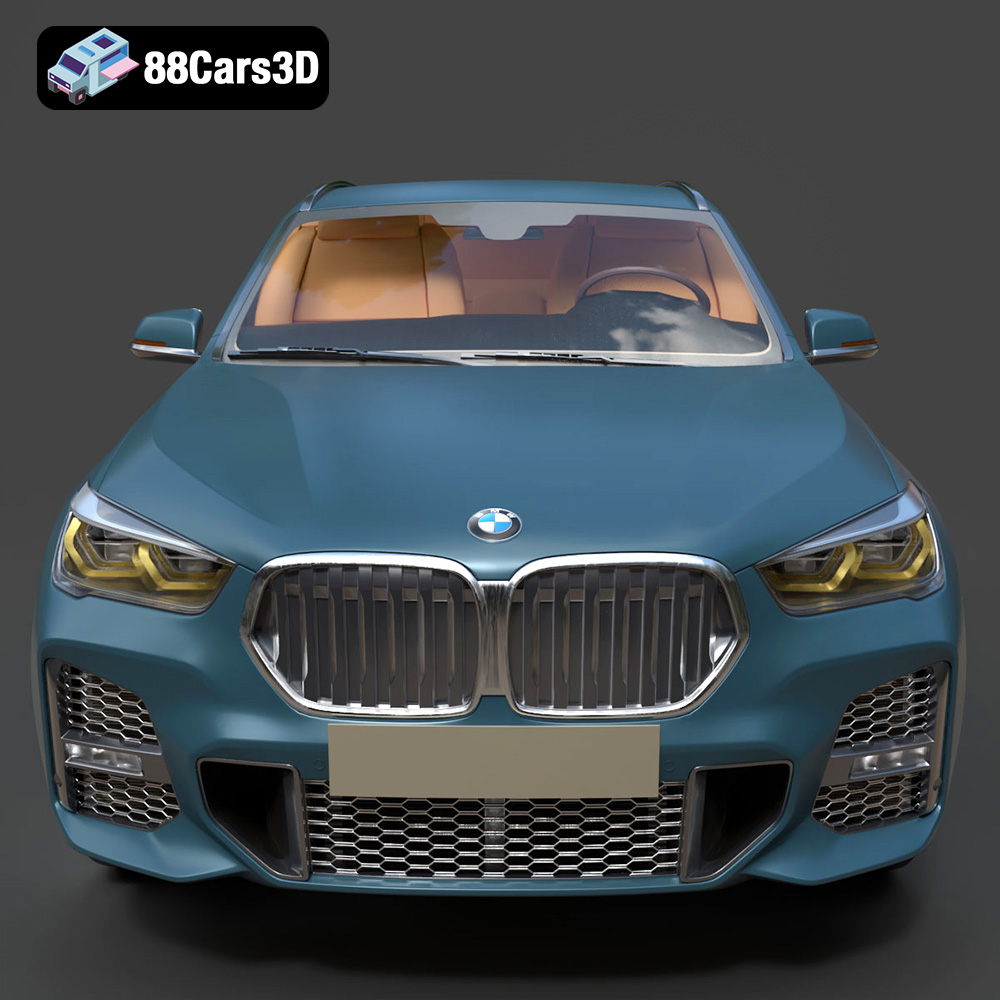
Experience the perfect fusion of versatility and athletic performance with this meticulously crafted 3D model of the BMW X1 M-Sport 2020. Representing the pinnacle of premium compact SUVs, this model captures the aggressive M aerodynamics package, signature enlarged air intakes, and the iconic prominent kidney grilles. From the sporty twin exhaust tailpipes to the sharply contoured side profile, every element has been faithfully recreated to convey the dynamic presence of the M-Sport lineage. Boasting a highly detailed topology of 1346512 triangles, this model is expertly optimized to deliver uncompromised visual fidelity while maintaining efficient performance across various digital platforms. Whether deployed in cutting-edge game engines or high-resolution cinematic renders, the geometry guarantees smooth reflections, crisp edge flow, and unparalleled realism for demanding 3D environments. Perfect for high-end racing simulations, architectural visualization scenes, immersive virtual showrooms, and automotive brand campaigns.
$37.50
.2020
.blend
.bmw
.crossover
.fbx
.glb
.max
.obj
.ply
.rendering
.stl
.unreal
car-3d-model
game asset
game-ready
optimized
SUV
VR/AR
x1-m-sport