Get 20% OFF All Premium 3D & STL Models!

In the dynamic world of 3D visualization, the demand for high-quality, meticulously crafted digital assets continues to soar across diverse industries. From immersive game development to sophisticated architectural and product rendering, the foundation of any compelling visual experience lies in the integrity and detail of its 3D models. While the focus often falls on ground vehicles, the aerospace sector presents its own unique challenges and requirements, demanding models that capture complex aerodynamics and intricate engineering with precision. Whether you’re developing a cutting-edge flight simulator, designing a virtual showroom, or producing high-fidelity renders for corporate aviation, the need for expertly optimized assets is paramount.
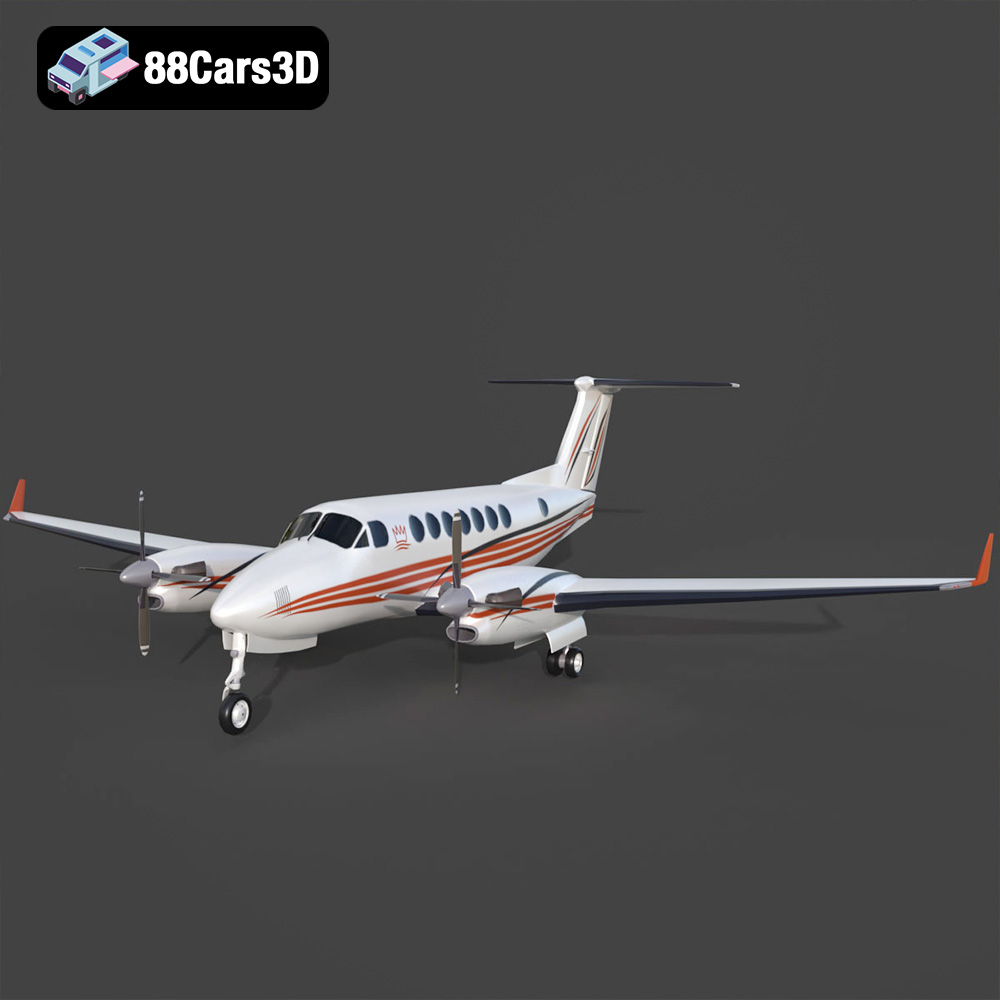
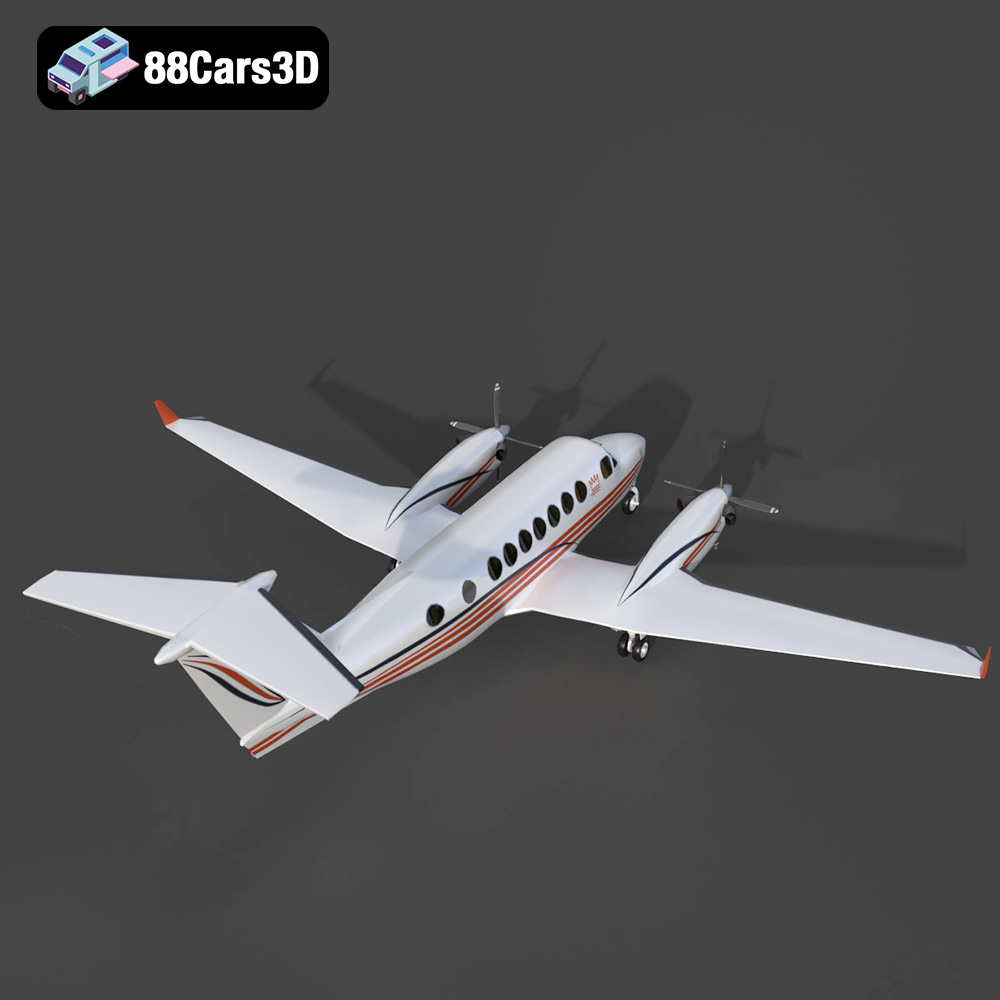
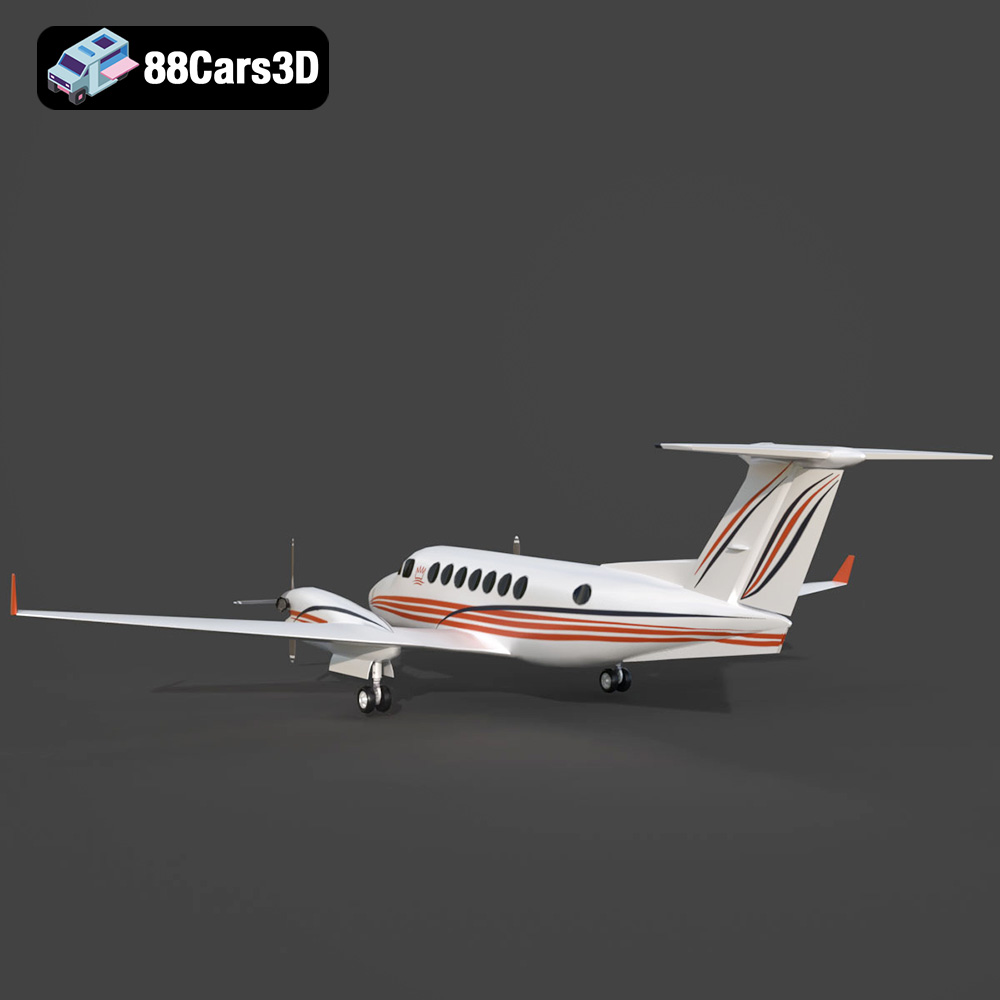
Today, we’re taking a closer look at an exceptional example of such an asset: the Beechcraft King Air B300 3D Model. This isn’t just any aircraft model; it’s a testament to the blend of technical optimization and visual fidelity required by modern 3D pipelines. The King Air B300, a legendary twin-turboprop, is renowned for its reliability and versatility in the real world, and this digital rendition mirrors that reputation with its robust design and adaptability. Available for download from platforms like 88cars3d.com, this model offers a comprehensive solution for professionals seeking to integrate a high-performance aircraft into their projects, ready for everything from real-time game engines to detailed cinematic sequences.
The versatility of a 3D model often hinges on the range and quality of its included file formats. Each format serves a specific purpose, offering different levels of compatibility, optimization, and feature retention across various software and platforms. Understanding these formats is crucial for any 3D professional to ensure a seamless workflow and optimal results. The Beechcraft King Air B300 3D model, for instance, comes packed with a suite of industry-standard formats, making it incredibly adaptable.
The .blend format is the native file type for Blender, the popular open-source 3D creation suite. When you receive a .blend file, you’re getting a fully editable scene that typically includes the mesh, materials, textures, lighting setups, animation data, and even camera perspectives as they were configured by the artist. This format is ideal for users working primarily in Blender who need complete control over every aspect of the model, allowing for easy modifications, re-texturing, or integration into existing Blender projects. It preserves all native Blender nodes and modifiers, offering maximum flexibility.
.fbx (Filmbox) is arguably one of the most widely adopted interchange formats in the 3D industry. Developed by Autodesk, it’s designed to transfer data between different 3D software applications and game engines while retaining crucial information such as mesh geometry, materials, textures, bones, animations, and even camera data. For pipelines involving Unreal Engine, Unity, 3ds Max, Maya, or Cinema 4D, .fbx is the go-to choice due to its robust support for animation and scene hierarchy. It’s particularly favored for game development and real-time applications where efficient asset transfer is critical.
The .obj (Wavefront OBJ) format is a fundamental, universal 3D data format primarily used for transferring geometry data. It stores vertex positions, UV coordinates, normals, and face information, often accompanied by a .mtl (material) file for basic material definitions. While .obj doesn’t typically support animation or rigging, its widespread compatibility makes it an excellent choice for static mesh transfer between almost any 3D software. It’s a reliable fallback when other formats encounter compatibility issues and is often used for archiving or basic model exchange.
.glb (GL Transmission Format Binary) is a relatively newer format that has rapidly gained traction, especially in augmented reality (AR), virtual reality (VR), and web-based 3D applications. It’s a self-contained, binary version of the glTF (GL Transmission Format) standard, meaning it packages all necessary data—geometry, materials, textures, and animations—into a single file. This makes .glb incredibly efficient for streaming and displaying 3D models in browsers or mobile AR/VR environments, offering a standardized way to render 3D scenes consistently across different platforms. Its compact nature and optimization for real-time rendering make it perfect for showcasing models like the Beechcraft King Air B300 in interactive web experiences or AR configurators.
.stl (Stereolithography) is the de facto standard format for 3D printing. It represents a 3D model as a collection of unconnected triangles, defining only the surface geometry without color, texture, or material information. While simple, its universal support by 3D printing software and hardware makes it indispensable for bringing digital models into the physical world. For hobbyists or professionals looking to create physical replicas of the King Air B300, the .stl format is essential, requiring careful consideration of scale and print settings.
The .ply (Polygon File Format) is another popular format for storing 3D data, particularly useful for scanned data, CAD, and scientific applications. It can store a wider range of properties than .obj, including color per vertex, transparency, surface normals, and even data from 3D scanners. Its flexibility makes it suitable for applications requiring high precision and additional data points beyond basic geometry, such as reverse engineering or detailed mesh analysis. While less common for general rendering, its inclusion offers robust options for specific technical workflows.
The .unreal format, or more accurately, assets specifically prepared for Unreal Engine, implies a highly optimized and engine-ready model. This means the model has likely been imported, scaled, textured, and configured within Unreal Engine, potentially with LODs (Levels of Detail), collision meshes, and proper material instances, ensuring it’s ready to be dropped directly into an Unreal project with minimal setup. This drastically speeds up development for flight simulators, architectural visualizations, and interactive experiences powered by Unreal.
Similar to .blend, the .max format is the native file type for Autodesk 3ds Max. It contains all scene information, including meshes, materials, textures, lighting, cameras, animation data, and modifiers specific to 3ds Max. Professionals using 3ds Max for high-end rendering, animation, or complex scene construction will find this format invaluable, allowing them to leverage all the powerful features of the software for further refinement or integration into their projects. It offers the most comprehensive editing capabilities within the 3ds Max ecosystem.
The inclusion of such a diverse array of formats with the Beechcraft King Air B300 3D model highlights its versatility and makes it a truly valuable asset for any professional, whether they are creating stunning automotive renderings or developing complex game assets.
Creating a truly effective 3D model, especially for a complex subject like an aircraft, requires a meticulous balance between visual accuracy and technical optimization. The Beechcraft King Air B300 3D model exemplifies this delicate equilibrium, delivering a highly detailed representation that remains game-ready and performant.
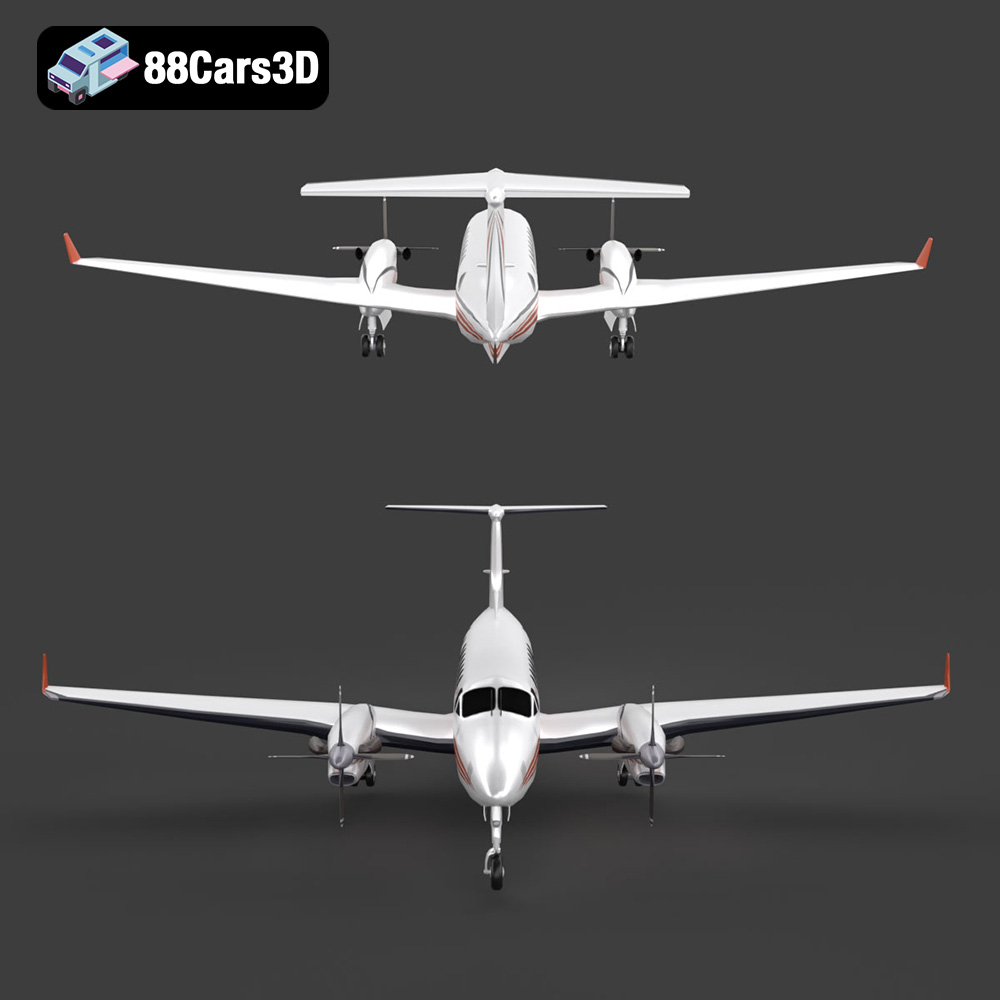
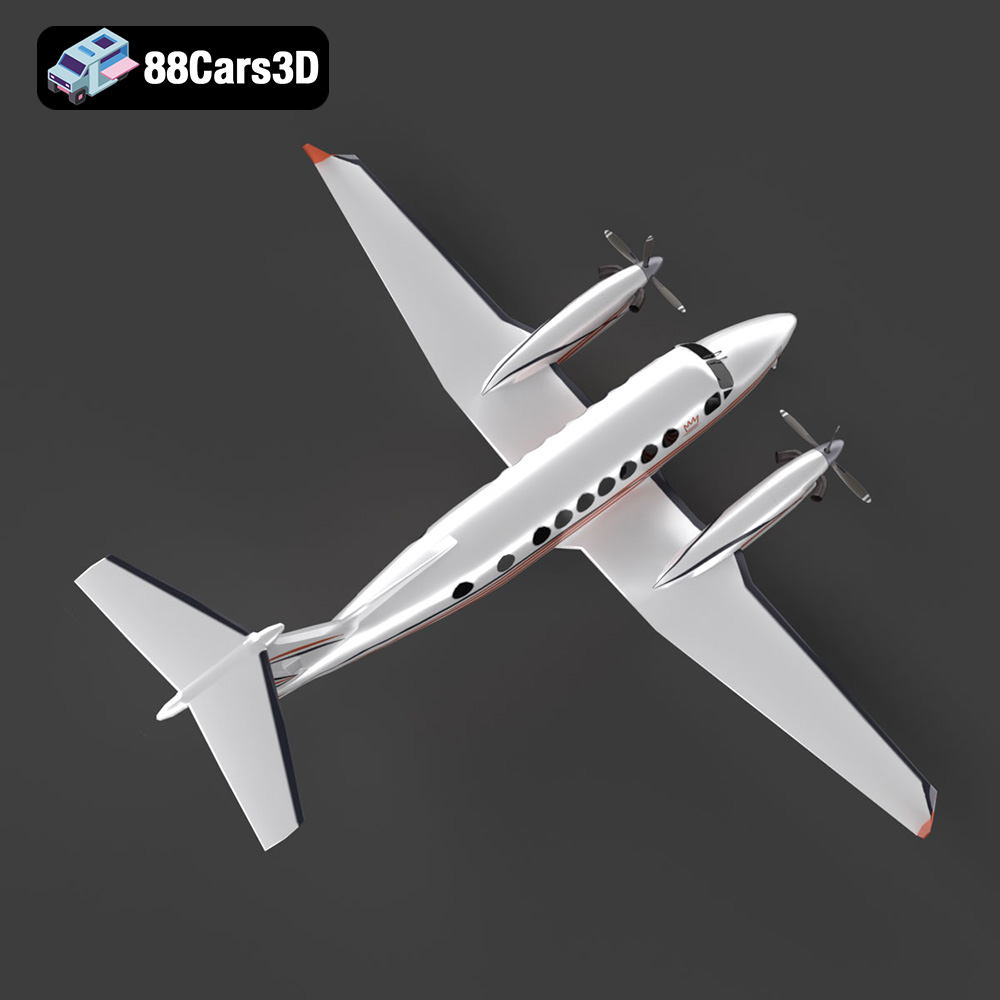
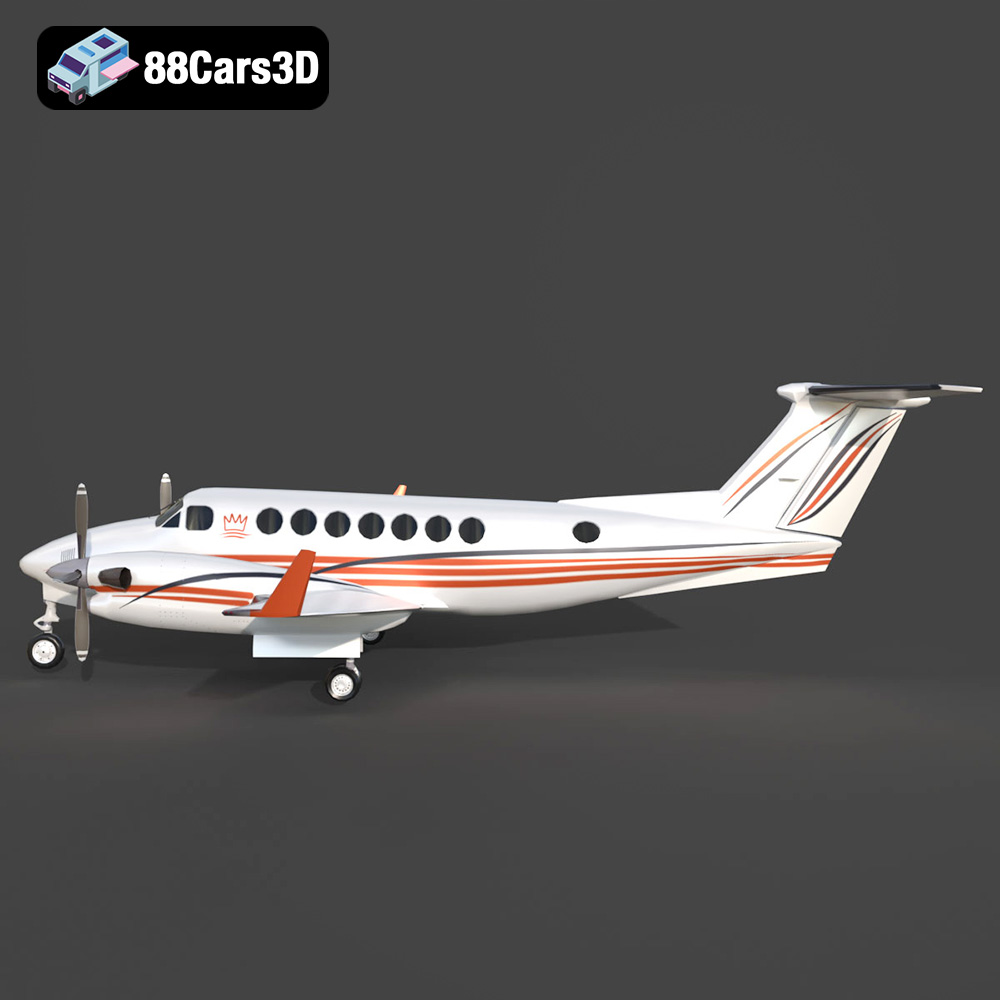
The external features of any aircraft model are its most recognizable attributes, and the King Air B300 is no exception. This 3D model captures the aircraft’s distinctive T-tail empennage, the elegant swept-back wing design, and the powerful dual Pratt & Whitney Canada PT6A engine cowlings with striking accuracy. Every curve and panel line on the fuselage geometry and proportions adheres to real-world dimensions, ensuring an authentic replication. The attention to detail extends to the multi-blade propellers, intricately modeled landing gear, wheels, and tire treads, all contributing to a visually rich asset. Furthermore, the model includes a realistic exterior lighting setup, encompassing navigation, strobe, and landing lights, which are crucial for rendering believable day-night cycles and enhancing visual realism in any scene.
While often optimized for performance, the interior of the King Air B300 model doesn’t sacrifice authenticity where it counts. The cockpit shell and windshield framing are authentically shaped, providing a solid foundation for any cockpit view. Detailed yoke and flight control columns, alongside a representative glass-cockpit instrument panel layout, offer enough fidelity for first-person perspectives in flight simulators and gaming environments. Even the pilot and co-pilot seating are modeled, contributing to the overall sense of immersion. Importantly, the model is built with animation in mind. Key components such as the landing gear, propellers, ailerons, elevators, rudder, and flaps are separated and pre-pivoted, making them animation-ready for dynamic simulations and cinematic sequences without extensive setup.
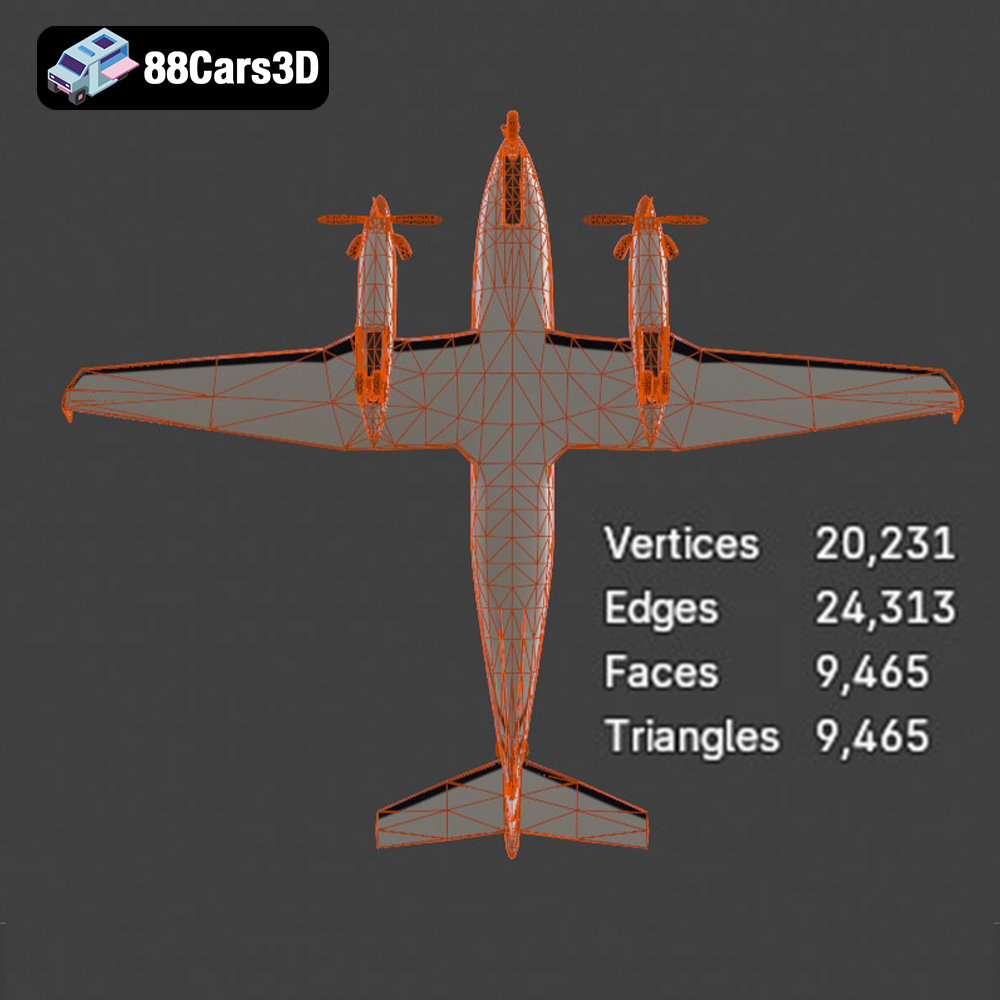
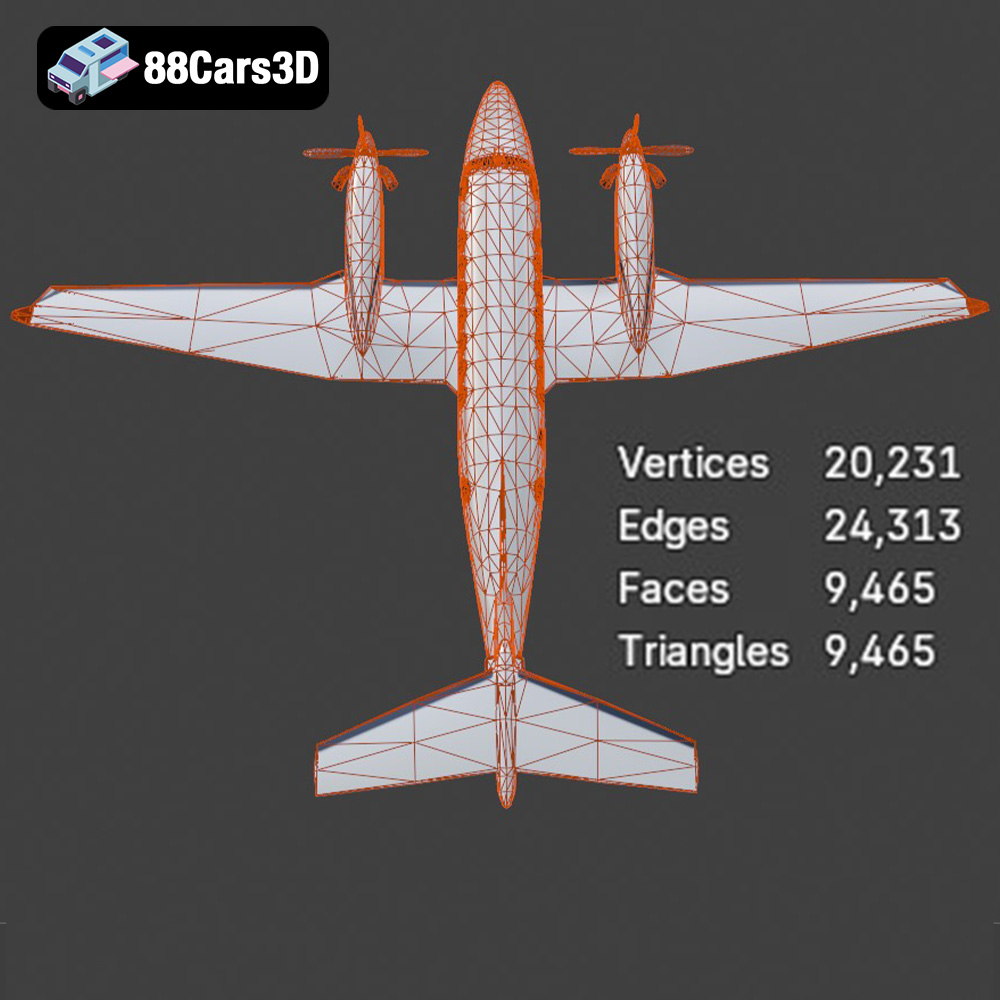
One of the most significant advantages of this Beechcraft King Air B300 3D model is its remarkable optimization. Boasting an incredibly efficient topology of just 9,465 triangles, it strikes a perfect balance between high-end visual realism and real-time performance. This “game-ready” asset is designed to seamlessly integrate into demanding environments like Unreal Engine or Unity, delivering outstanding visual fidelity without bogging down frame rates. Its real-world scale accuracy ensures correct proportions in any digital environment, from expansive virtual airports to detailed hangar visualizations. Proper pivot setups for propeller rotation, landing gear retraction, and flight control movement further underscore its readiness for professional use, minimizing the need for manual rigging and adjustments.
The versatility of the Beechcraft King Air B300 3D model makes it an indispensable asset across a spectrum of professional 3D workflows. Its optimized design and comprehensive file format support ensure it can be dropped into diverse projects with minimal friction.
For game developers and flight simulation studios, the King Air B300 model is a prime candidate. Its 9,465-triangle polycount is exceptionally low for the level of detail it provides, making it ideal for integration into demanding real-time environments like Unreal Engine and Unity. Developers can utilize the .fbx or .unreal formats for direct import, leveraging its pre-configured pivots for animation of propellers, landing gear, and control surfaces. This significantly reduces development time, allowing teams to focus on gameplay mechanics and environmental design rather than asset creation. Imagine this King Air seamlessly flying through an open-world game or serving as a detailed training aircraft in a high-fidelity flight simulator, its optimized geometry ensuring smooth performance even on moderate hardware. It’s a perfect example of a top-tier game asset.
Beyond real-time applications, the Beechcraft King Air B300 excels in pre-rendered visualization projects. Whether you’re working in 3ds Max, Blender, or other leading rendering packages, the provided .max, .blend, and .obj formats offer maximum flexibility. Artists can take advantage of the detailed exterior and interior to create stunning marketing materials for airline brand campaigns, corporate aviation scenes, or even integration into larger architectural visualization projects, such as airport designs. Just as 88cars3d.com provides exceptional 3D car models for automotive rendering, this aircraft model delivers the same level of quality for aerospace visualization. Imagine a photorealistic render of the King Air B300 glistening on a runway at sunset, or parked in a luxurious hangar, meticulously lit to showcase its form and finish. The customization options for fuselage livery, material finishes, and lighting allow artists to tailor the model to specific client requirements, ensuring unique and impactful visuals.
The burgeoning fields of Augmented Reality (AR) and Virtual Reality (VR) demand highly optimized models for seamless performance. The King Air B300 model, especially in its .glb format, is perfectly suited for immersive virtual showrooms, pilot training scenarios, and mobile AR configurators. Its efficient polycount ensures that it runs smoothly on mobile devices and VR headsets without causing performance bottlenecks. Imagine potential buyers exploring the aircraft in a virtual hangar, walking around it in AR on their phone, or even sitting in a VR cockpit to experience a flight simulation. The pre-animated components can add an extra layer of realism and interactivity to these experiences, providing a dynamic and engaging platform for learning, marketing, and sales.
The utility of a professional 3D model extends beyond its initial digital presentation. The Beechcraft King Air B300 3D model offers significant opportunities for customization and even physical manifestation through 3D printing, making it a truly versatile asset.
No two projects are identical, and the ability to customize a 3D model is paramount for professional artists and studios. The King Air B300 model provides excellent flexibility in this regard. Users can effortlessly change the fuselage livery and corporate striping to match specific branding or design requirements, transforming the aircraft into a unique asset for a particular company or game faction. Modifying propeller textures, for instance, allows for seamless transitions between static, high-detail blades and motion-blurred variants to convey speed and movement. Artists can also adjust material finishes—from matte to gloss or metallic—to achieve different levels of realism and mood, whether for a weather-beaten cargo plane or a pristine executive jet. Adapting lighting for different environments, from a sunny tarmac to a dimly lit hangar, further enhances its adaptability, ensuring the model always looks its best within any scene.
The inclusion of the .stl format opens up exciting possibilities for hobbyists, collectors, and educators to bring the digital King Air B300 into the physical world. While the model is optimized for digital rendering, converting it to .stl allows for display-scale 3D prints. For successful printing, careful consideration of settings is crucial. Recommended scales typically range from 1:48 to 1:144, balancing detail with printability. A layer height between 0.04–0.12 mm is suggested, with resin printing often recommended for capturing the fine details of aircraft components like antennas and wing edges. Wall thickness should be maintained between 1.2–2.0 mm, and an infill of 20–30% provides a good balance of strength and material usage. Due to the aircraft’s complex geometry, supports are required for detailed parts such as propellers, landing gear, and stabilizers. Printing the fuselage horizontally or angled can improve structural integrity, while wings are often best printed separately and assembled afterward. Post-processing, including sanding, priming, and painting with authentic factory colors and metallic finishes, can elevate a 3D print to a collector’s item, celebrating the iconic design of the King Air B300.
In the fast-paced world of 3D content creation, time is often the most valuable commodity. Developing complex 3D models from scratch, especially highly detailed and optimized ones like the Beechcraft King Air B300, is an intensive and costly endeavor. This is where specialized online marketplaces, such as 88cars3d.com, prove invaluable.
By offering pre-made, high-quality 3D assets, platforms like 88cars3d.com empower professionals to significantly accelerate their workflows. Instead of dedicating hundreds of hours to modeling, texturing, and optimizing an aircraft, developers and artists can acquire a production-ready asset instantly. This translates directly into substantial cost savings and allows teams to allocate their resources to other critical aspects of their projects, such as innovative gameplay mechanics, intricate scene design, or advanced animation. The quality assurance provided by reputable marketplaces ensures that the assets meet industry standards for topology, material setup, and optimization, eliminating the risks associated with unreliable freelance work or subpar models.
The Beechcraft King Air B300 3D model, with its optimized polycount, real-world scale, animation-ready components, and a full suite of file formats, is a prime example of the caliber of assets available. Whether you are building the next generation of flight simulators, producing cinematic renders, or diving into AR/VR experiences, investing in a high-quality, pre-optimized model provides an immediate and tangible return. It’s about efficiency, reliability, and ultimately, delivering superior results faster.
The realm of 3D modeling is constantly evolving, with increasing demands for realism, performance, and versatility across all industries. The Beechcraft King Air B300 3D Model stands out as a exemplary asset, meticulously crafted to meet these rigorous professional requirements. Its optimized topology of 9,465 triangles ensures outstanding visual fidelity without compromising real-time performance, making it a perfect fit for game development, flight simulators, and interactive AR/VR experiences. From its authentically detailed exterior, including animated control surfaces and landing gear, to its well-represented cockpit, every aspect has been considered for professional integration.
The comprehensive range of included file formats—.blend, .fbx, .obj, .glb, .stl, .ply, .unreal, and .max—underscores its adaptability across virtually any 3D software or engine, ensuring compatibility for diverse workflows, from high-fidelity automotive rendering to precise 3D printing. For studios and individual artists looking to enhance their projects with a high-quality, game-ready aircraft, this model offers a robust and reliable solution. It embodies the blend of technical precision and artistic quality that professionals seek, providing a valuable asset that saves time, reduces costs, and elevates the final output. For this exceptional model and a wide range of other professional-grade 3D assets, look no further than 88cars3d.com, where quality meets convenience.
The Beechcraft King Air B300 is a legendary twin-turboprop aircraft renowned for its reliability, versatility, and executive comfort. This highly detailed 3D model captures the iconic silhouette of the B300, featuring its distinctive T-tail, swept-back wing design, dual Pratt & Whitney Canada PT6A engines, and meticulously shaped aerodynamic fuselage. Boasting an incredibly optimized topology of 9,465 triangles, this game-ready asset delivers outstanding visual fidelity without compromising real-time performance. Designed for seamless integration into flight simulators, game engines, AR/VR experiences, and cinematic animations, the model maintains sharp lines and realistic texturing perfect for any digital hangar.
$14.99
.aircraft
.airplane
.aviation
.blend
.fbx
.glb
.max
.obj
.ply
.rendering
.stl
.unreal
aircraft-3d-model
beechcraft
flight-simulator
game asset
game-ready
king-air-b300
low-poly
optimized
twin-turboprop
VR/AR