Get 20% OFF All Premium 3D & STL Models!

In today’s fast-paced digital landscape, the demand for realistic, optimized, and versatile 3D models is greater than ever. From blockbuster video games to cutting-edge architectural visualizations, and from immersive AR/VR training simulations to precise 3D prints, high-fidelity assets form the bedrock of compelling visual experiences and practical applications. The quality of a 3D model directly impacts a project’s realism, performance, and overall professional polish. Whether you’re a game developer striving for immersive environments, an architect rendering a detailed site plan, or an engineer prototyping a new design, the right 3D asset can dramatically accelerate your workflow and elevate your final output.
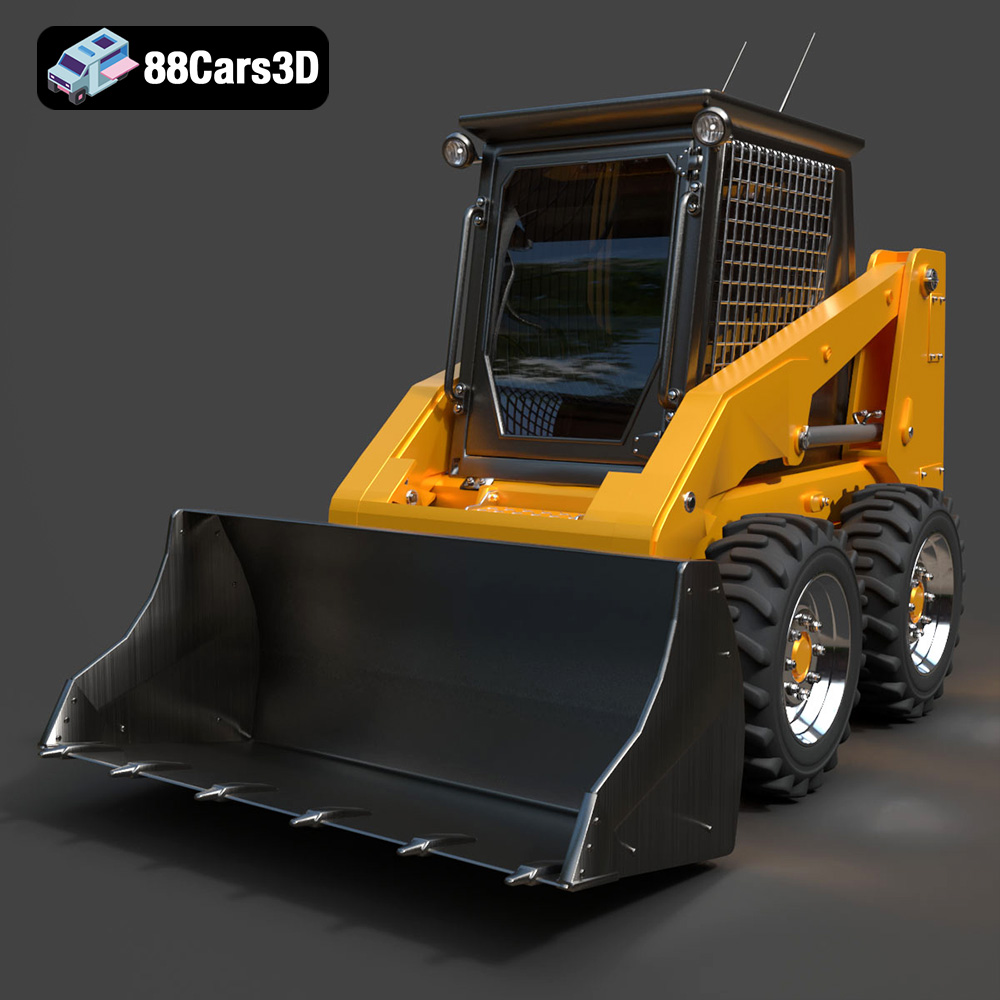
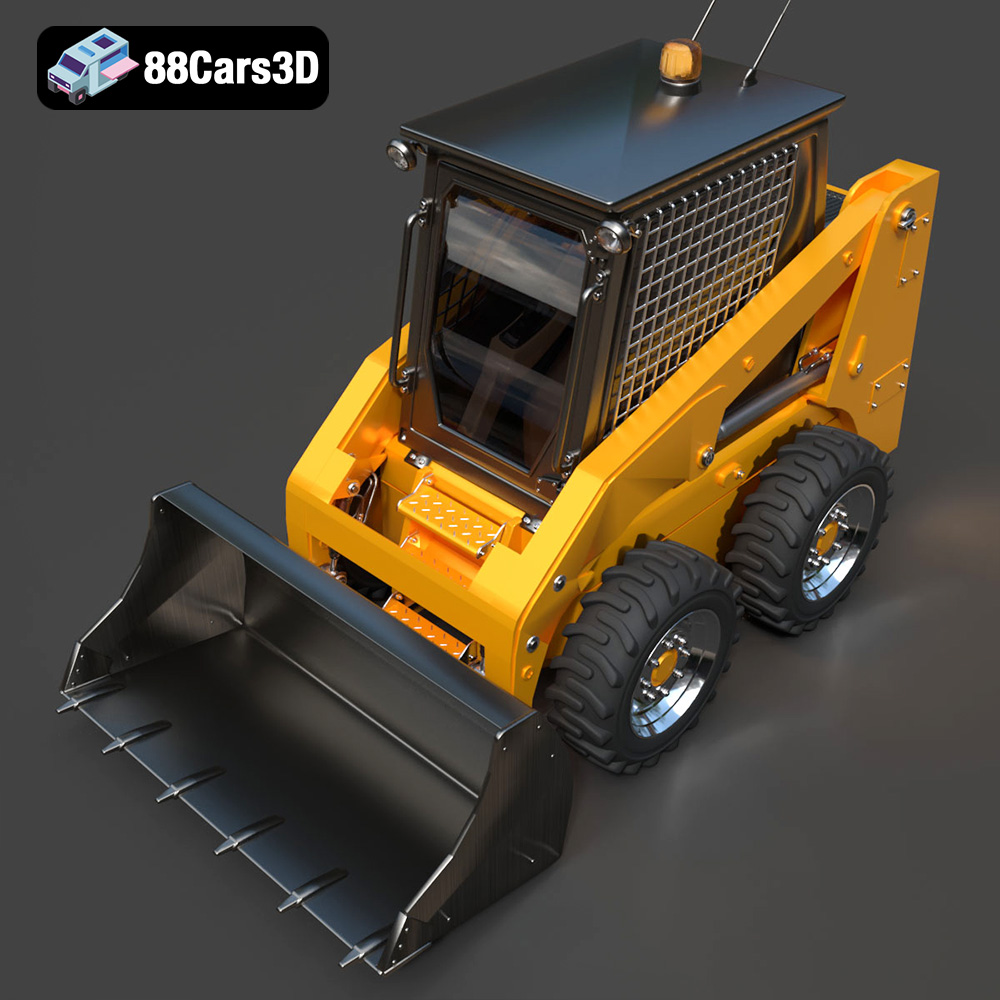
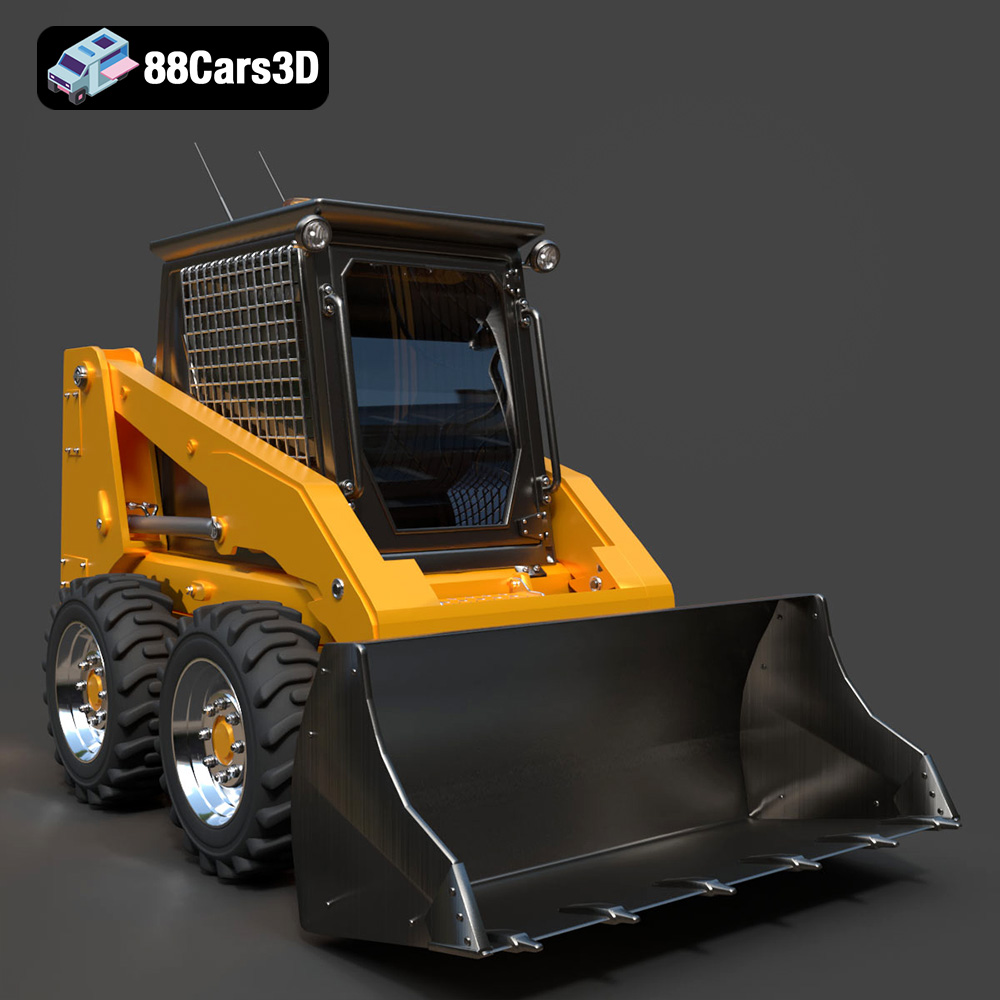
Heavy machinery, in particular, presents unique challenges and opportunities in 3D modeling. The intricate mechanics, robust construction, and functional purpose of industrial vehicles require meticulous attention to detail and optimization for various platforms. This is where a meticulously crafted asset like the Skid Steer Loader 3D Model truly shines. Available for download in a comprehensive range of formats from 88cars3d.com, this model isn’t just a static representation; it’s a dynamic tool engineered for performance across game development, AR/VR, rendering, and even 3D printing. It embodies the rugged versatility of its real-world counterpart, making it an invaluable addition to any professional’s digital toolkit.
The success of any 3D project often hinges on choosing the correct file format. Each format serves a specific purpose, offering unique advantages in terms of compatibility, features, and optimization for different stages of the production pipeline. Understanding these distinctions is crucial for seamless integration and efficient workflow. The Skid Steer Loader 3D Model, for instance, comes equipped with an extensive array of formats, ensuring maximum utility across virtually all professional applications.
The `.blend` file format is Blender’s native project file. It’s much more than just a mesh; it’s a complete scene package, containing all meshes, materials, textures, animations, cameras, lighting, and even scripts used in the Blender environment. For users of Blender, this format offers unparalleled flexibility, allowing for full editability and deep customization. If you need to tweak the model’s topology, modify its materials with Blender’s powerful node-based shader editor, or even animate the hydraulic arms with Blender’s rigging tools, the `.blend` file is your go-to. It provides the source material for any extensive modifications or integration into a Blender-centric pipeline.
Developed by Autodesk, the `.fbx` (Filmbox) format has become the de facto standard for exchanging 3D data between various software applications and game engines. Its strength lies in its ability to store not just geometry, but also materials, textures, skeletal animation, and even camera data. For real-time pipelines like Unreal Engine and Unity, `.fbx` is often the preferred choice due to its robust support for game-ready assets. The Skid Steer Loader’s `.fbx` version is optimized for this very purpose, ensuring smooth import and performance in demanding interactive environments.
The `.obj` (Wavefront Object) format is a classic and highly compatible choice for pure geometry exchange. While it doesn’t typically embed textures or animations directly (these are usually referenced via an accompanying `.mtl` material file), its simplicity makes it universally readable by almost every 3D application. When you need to transfer just the raw mesh data of the Skid Steer Loader to a new software for retopology, sculpting, or a fresh material setup, `.obj` is a reliable workhorse. It’s excellent for ensuring cross-software compatibility, though you’ll need to re-link textures manually in most cases.
The `.glb` (GL Transmission Format Binary) is an increasingly popular format, particularly in the realm of AR, VR, and browser-based 3D applications. It’s a binary version of `.gltf`, designed for efficient transmission and loading of 3D scenes and models. Crucially, `.glb` packs all necessary data (geometry, materials, textures, animations) into a single, self-contained file, making it incredibly easy to share and deploy. For interactive web experiences or quick previews of the Skid Steer Loader in augmented reality, the `.glb` format offers superior performance and convenience.
The `.stl` (Stereolithography) format is the standard file type for 3D printing. It represents a 3D model as a series of connected triangles (a triangular mesh) without color or texture information. It’s essentially a blueprint for a physical object. The Skid Steer Loader’s `.stl` variant is specifically prepared for additive manufacturing, allowing hobbyists and professionals to bring the digital model into the physical world. While simple, its prevalence in 3D printing makes it indispensable for rapid prototyping and creating display-scale models.
The `.ply` (Polygon File Format) is another popular format for storing 3D data, particularly useful in fields requiring high precision like CAD, 3D scanning, and scientific analysis. It can store not only geometry but also color, transparency, normals, texture coordinates, and other data for each vertex and face. For detailed inspection or conversion to other engineering formats, the `.ply` version of the Skid Steer Loader model provides a robust and accurate representation of its mesh structure.
The `.unreal` extension typically refers to assets or packages specifically structured and optimized for direct import and use within Unreal Engine. This often implies pre-configured materials, collision meshes, LODs (Levels of Detail), and sometimes even basic blueprints. Receiving the Skid Steer Loader model in an `.unreal` format signifies that it’s already prepped for the engine, saving significant time on asset preparation and ensuring optimal performance within an Unreal project. It simplifies the integration process, allowing developers to drop the asset directly into their scene with minimal fuss.
The `.max` file format is Autodesk 3ds Max’s native scene file. Similar to `.blend` for Blender, a `.max` file contains all scene information, including geometry, materials, lighting, cameras, animation, and modifiers. For users entrenched in the 3ds Max ecosystem, this format provides full editability and control over the model. It’s perfect for complex rendering setups, detailed animation sequences, or integrating the Skid Steer Loader into larger architectural visualization projects where 3ds Max is the primary tool.
Creating a 3D model that is both visually striking and performant across diverse applications is an art. The Skid Steer Loader 3D Model available at 88cars3d.com exemplifies this balance, offering a robust solution for professionals seeking high-quality industrial assets. Its design philosophy centers around real-world accuracy combined with meticulous optimization for real-time engines and rendering pipelines.
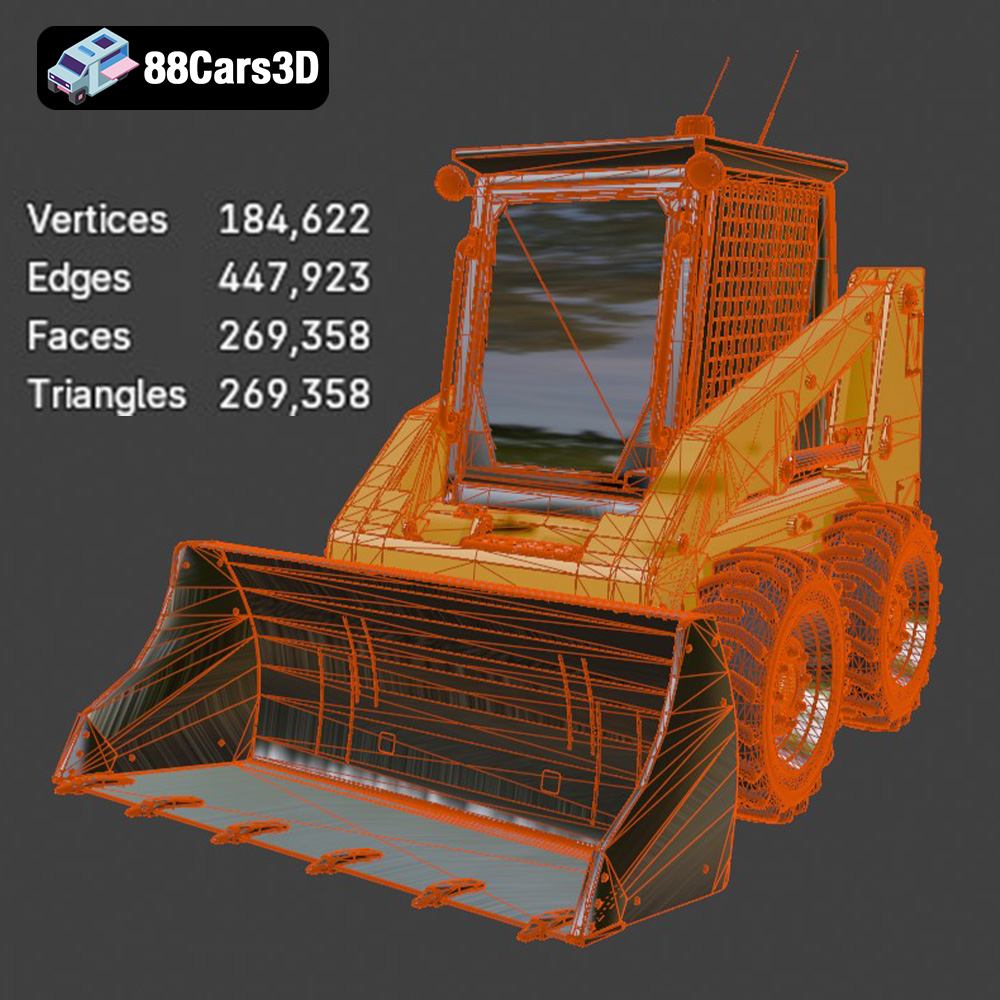
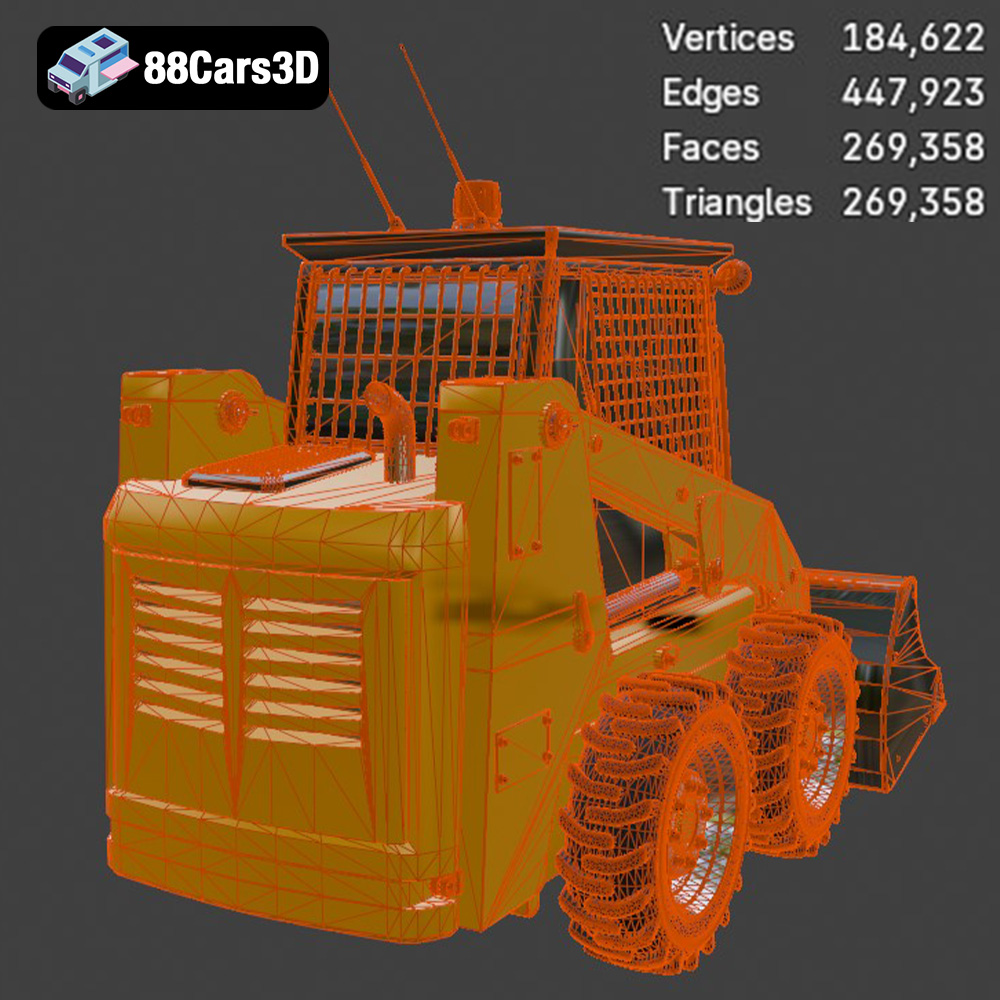
One of the most critical aspects of any game-ready asset is its topology. The Skid Steer Loader boasts a well-optimized triangle count of 269,358. This figure represents an exceptional equilibrium, offering enough detail to convey high-end visual fidelity without overwhelming real-time engine budgets. For game development in platforms like Unreal or Unity, this polycount ensures smooth framerates even in complex scenes with multiple vehicles. The clean, efficient mesh geometry means less computational overhead, translating directly into better performance for simulations, VR experiences, and interactive applications. This careful optimization extends to proper UV mapping (though not explicitly detailed, it’s implied for a game-ready asset), ensuring textures are applied efficiently and without distortion.
Beyond raw polycount, the model’s true value lies in its adherence to real-world scale and intricate detailing. Every aspect of the Skid Steer Loader has been accurately modeled:
This commitment to realism, combined with thoughtful optimization, makes the Skid Steer Loader 3D Model a standout asset for any project demanding authenticity and performance.
The true measure of a high-quality 3D asset is its versatility and how seamlessly it integrates into various professional workflows. The Skid Steer Loader 3D Model is engineered precisely for this purpose, offering robust solutions for diverse industries.
For game developers, finding game assets that are both visually appealing and perfectly optimized is a constant challenge. This Skid Steer Loader model is a prime example of an ideal game asset. With its optimized 269,358 triangle count, it strikes the perfect balance for real-time engines, making it a fantastic addition to construction simulators, farming games, or industrial environments. Its separate, pivot-ready components (wheels, arms, bucket, hydraulics) empower animators to create realistic operational sequences, from lifting and tilting to navigating rough terrain. Whether you’re building a massive open-world construction game in Unreal Engine or a more focused machinery simulator in Unity, this model provides a solid foundation, significantly reducing development time and ensuring consistent visual quality across the game world.
Architects and visualization artists frequently need to depict active construction sites or industrial zones. Integrating realistic heavy machinery like a skid steer loader can bring a scene to life, adding a sense of scale, activity, and authenticity. The detailed exterior and interior features of this model make it excellent for high-resolution architectural renderings, construction site visualizations, and equipment showcases. Imagine a detailed render of a new commercial building, with this Skid Steer Loader meticulously placed on-site, perhaps with a slight tilt to its bucket, conveying an ongoing, dynamic construction process. Its accurate scale and robust geometry ensure it holds up under close scrutiny and various lighting conditions, making it an indispensable asset for conveying project scope and realism.
Augmented Reality (AR) and Virtual Reality (VR) are revolutionizing industrial training, safety simulations, and virtual showrooms. The Skid Steer Loader 3D Model is particularly well-suited for these applications. Its game-ready optimization ensures smooth performance in VR headsets, while its detailed cockpit and controls provide an immersive experience for operator training. Trainees can virtually sit in the operator’s seat, manipulate the dual-joystick steering, and learn to operate the heavy machinery without the risks and costs associated with real-world equipment. From teaching precise bucket maneuvers to understanding safety protocols in a controlled virtual environment, this model enables highly effective and engaging learning modules.
The utility of high-quality 3D models extends beyond digital screens into the realm of physical creation through 3D printing. The Skid Steer Loader 3D Model’s inclusion of an .stl format opens up a fascinating avenue for heavy machinery enthusiasts, model builders, and even industrial designers looking for tangible representations.
Transforming a digital asset into a physical object requires careful consideration. The Skid Steer Loader model, with its robust and well-defined geometry, is highly convertible to .stl format for display-scale heavy machinery hobbyists. Recommended scales such as 1:24, 1:35, or 1:50 allow for a balance between manageable print size and retaining fine details. For successful printing, especially with intricate parts like the roll cage, hydraulic arms, and joysticks, supports are absolutely required. Modern resin printers, with their ability to achieve layer heights between 0.04–0.12 mm, are particularly recommended for capturing the model’s fine details, ensuring smooth surfaces and crisp edges that filament printers might struggle with at smaller scales.
Once printed, the physical Skid Steer Loader model offers yet another layer of customization. Post-processing is key to achieving a professional finish. This typically involves sanding to smooth layer lines, applying a primer, and then painting with authentic industrial colors. The product description suggests classic industrial yellow or orange, which can be further enhanced with weathering effects to simulate years of hard work. Imagine a scale model with meticulously applied rust, mud splatters on the heavy-duty off-road tires, and faded paint, telling a story of countless hours on a construction site. This tactile customization bridges the gap between the digital and physical, offering a unique way to appreciate the model’s intricate design and rugged aesthetics.
A truly professional 3D asset provides not just a static model but a flexible foundation that can be adapted to specific project requirements. The Skid Steer Loader 3D Model offers ample opportunities for customization, allowing artists and developers to integrate it seamlessly into a multitude of scenarios.
The ability to modify material properties and textures is crucial for tailoring the model to different visual contexts. Users can easily change body colors, moving beyond the standard industrial yellow to construction orange, corporate white, or even custom brand colors. Imagine a pristine, white skid steer in an architectural rendering for a high-tech facility, contrasting with a heavily weathered, mud-splattered version for a rugged game environment. Similarly, tire textures can be swapped or modified to depict brand new, dusty, or heavily muddy conditions, adding instant visual storytelling. Adjusting material finishes from matte to gloss, or introducing heavy weathering and rust, allows the model to fit perfectly into any scene, from a pristine showroom to a derelict construction site. This level of control ensures the Skid Steer Loader can match the aesthetic requirements of any project.
Beyond static appearances, the Skid Steer Loader model is designed for dynamic integration. Its optimized geometry and clean topology make it responsive to various lighting setups. Artists can adapt lighting for day or night construction environments, simulating the harsh glare of work lights or the subtle glow of a dusk scene. The pre-pivoted components for lift arms, bucket, and wheels facilitate animation, enabling the creation of dynamic sequences that truly bring the model to life. Whether it’s driving through an uneven terrain simulation, lifting heavy materials in an industrial animation, or being showcased under studio lights, the model’s inherent adaptability ensures it performs admirably across diverse environmental and functional demands. This versatility underscores the value of such high-quality 3D models from marketplaces like 88cars3d.com, empowering creators to achieve their artistic and functional visions with ease.
The landscape of 3D modeling continues to evolve, yet the fundamental need for meticulously crafted, optimized, and versatile assets remains constant. From the intricacies of game development and the realism demanded by architectural visualization to the immersive potential of AR/VR and the tangible results of 3D printing, high-quality 3D models are indispensable tools for modern professionals. They serve as the digital building blocks that accelerate production, enhance visual fidelity, and unlock new creative possibilities across industries.
The Skid Steer Loader 3D Model stands as a testament to this principle. Its expert balance of detailed realism, optimized topology, and comprehensive file format support makes it an exemplary asset for a wide array of applications. Whether you are creating a bustling virtual construction site, training operators in a risk-free VR environment, or simply admiring a physically printed scale model, this asset provides the foundation for success. Investing in such robust and flexible 3D car models, like those offered at 88cars3d.com, empowers creators to focus on innovation and storytelling, confident that their foundational digital assets are of the highest caliber.
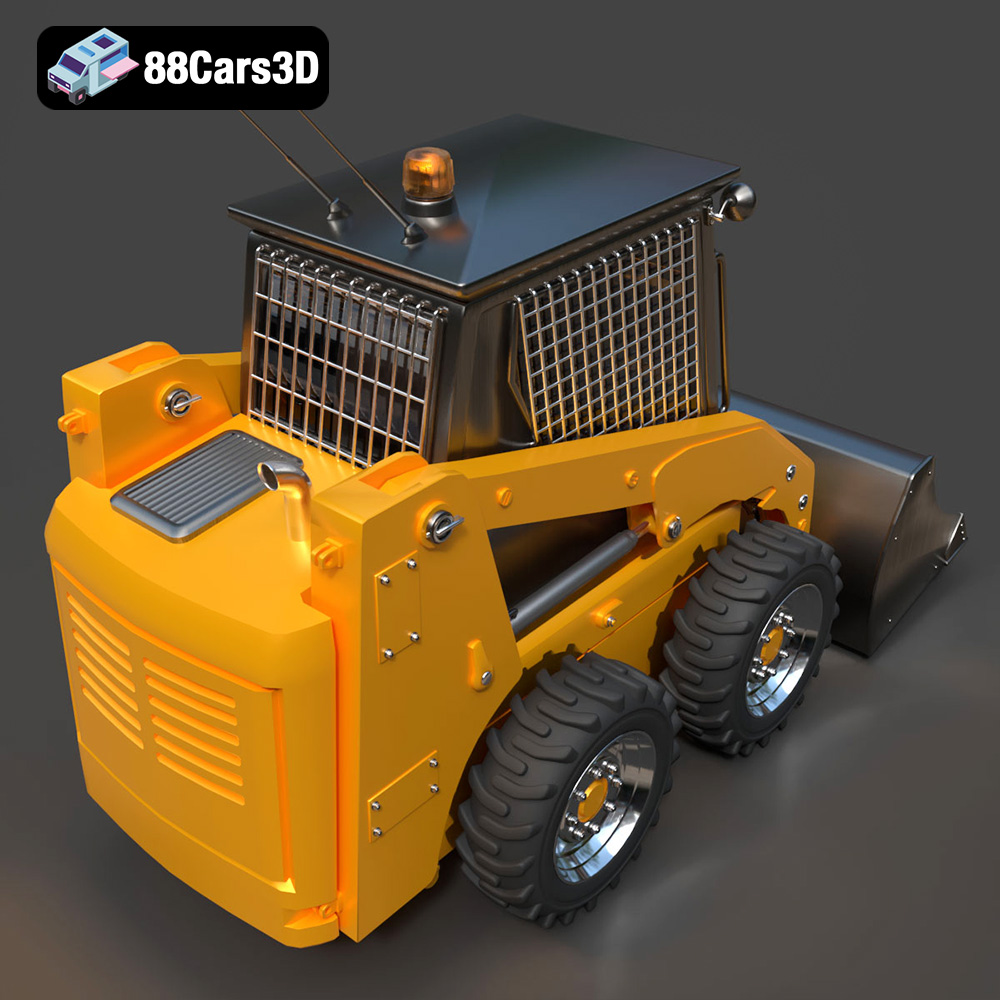
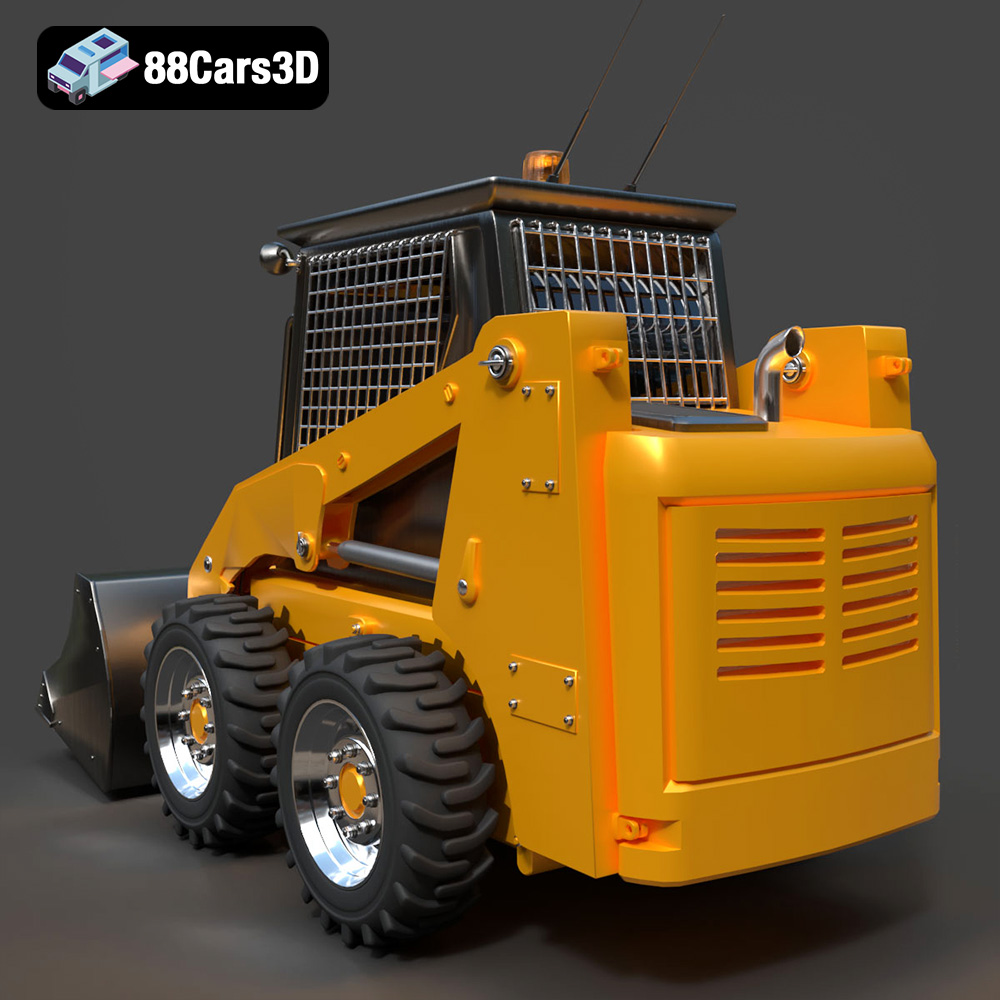
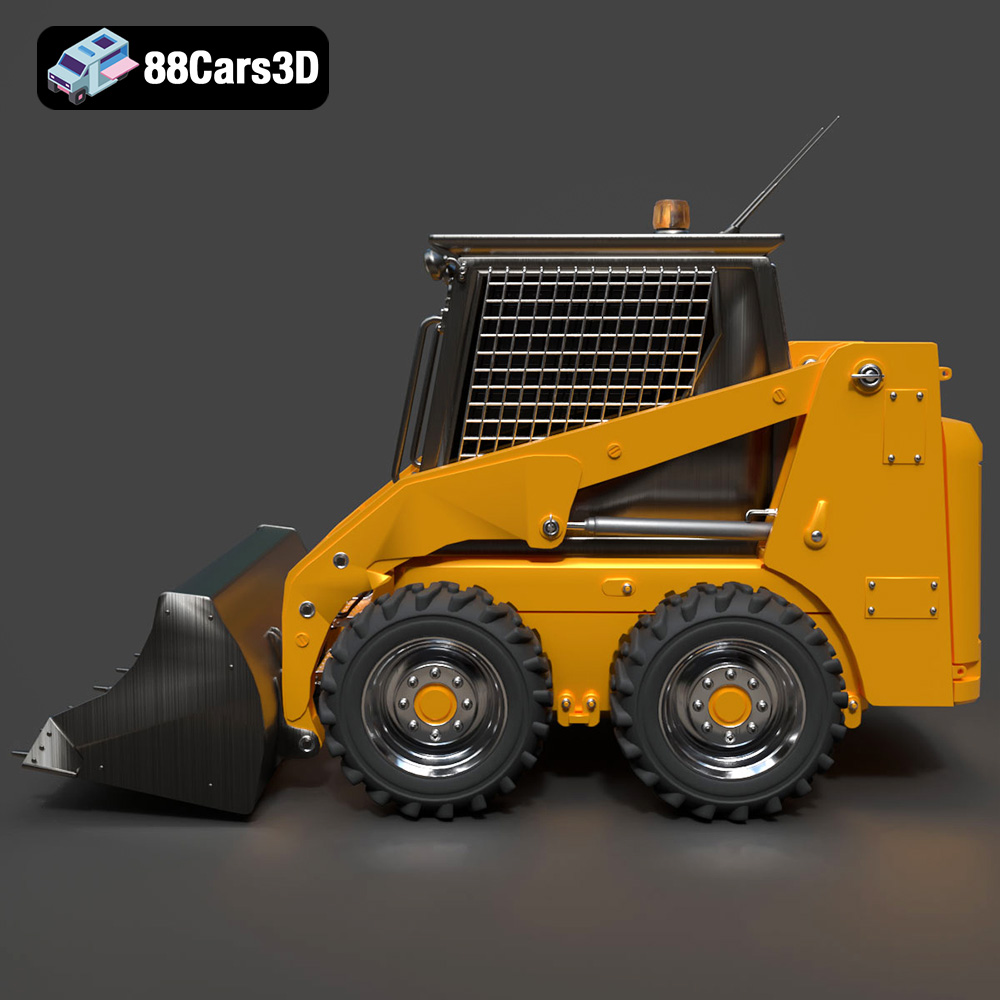
Explore the rugged versatility of this Skid Steer Loader, a highly accurate 3D model representing the workhorse of modern construction, landscaping, and agriculture. Known for its compact frame, tight turning radius, and formidable lifting power, this model captures the heavy-duty aesthetics perfectly, from its robust lifting arms and reinforced front bucket to its protective roll cage and hydraulic cylinders. This 3D model features a well-optimized topology with a triangle count of 269,358, providing an exceptional balance between high-end visual fidelity and real-time engine performance. Designed to be game-ready, the model ensures smooth integration into various platforms, making it an outstanding asset for game development, AR/VR industrial training applications, and realistic architectural visualizations. Perfect for construction site simulations, industrial animations, heavy machinery games, and VR operator training modules.
$27.99
.blend
.fbx
.glb
.max
.obj
.ply
.rendering
.stl
.unreal
construction-equipment
game asset
game-ready
heavy-machinery
loader
low-poly
optimized
skid-steer-loader
vehicle-3d-model
VR/AR