Get 20% OFF All Premium 3D & STL Models!

In the world of automotive design and digital content creation, the pursuit of realism and precision is paramount. Whether crafting a high-octane racing game, an immersive architectural visualization, or a cutting-edge AR configurator, the quality of your 3D assets dictates the fidelity of your final output. Among the pantheon of classic performance sedans, the BMW E32 chassis holds a special place, representing a golden era of German engineering where luxury met formidable power. For enthusiasts and professionals alike, bringing such an iconic vehicle into the digital space with unwavering accuracy is a significant achievement.
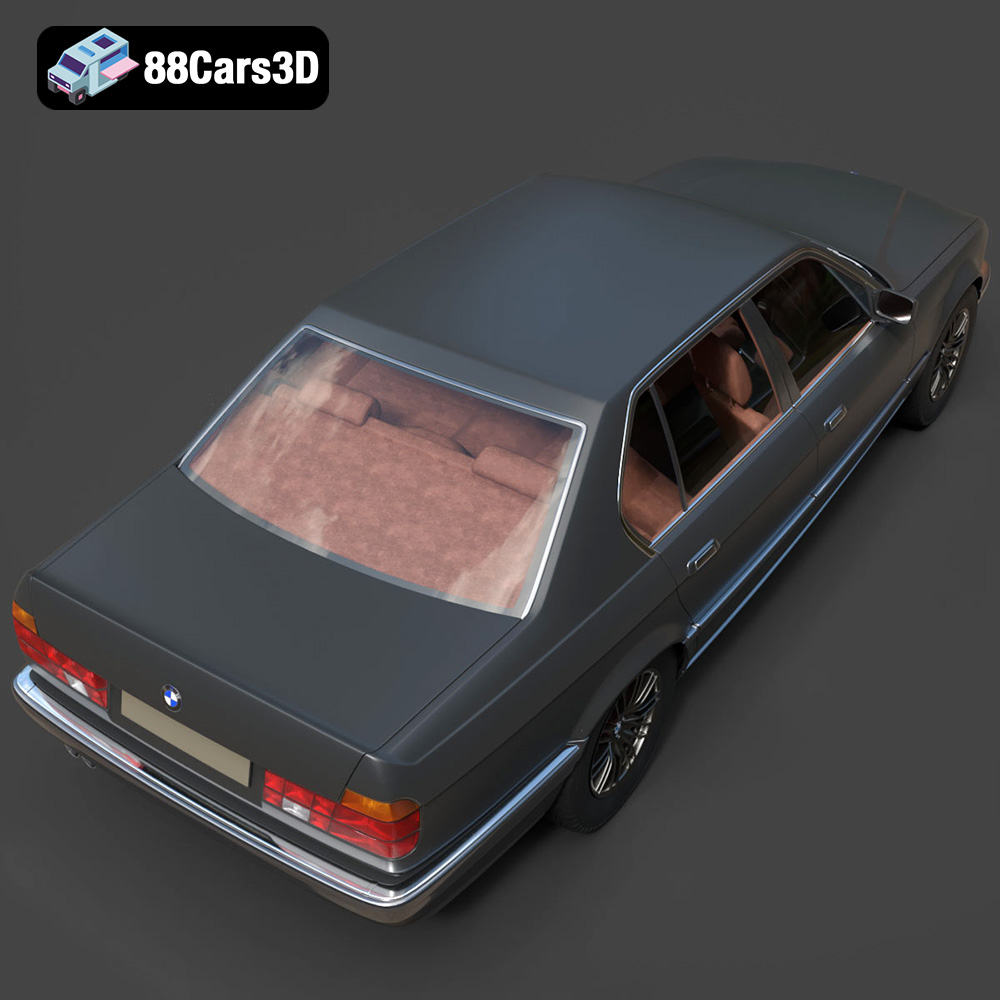
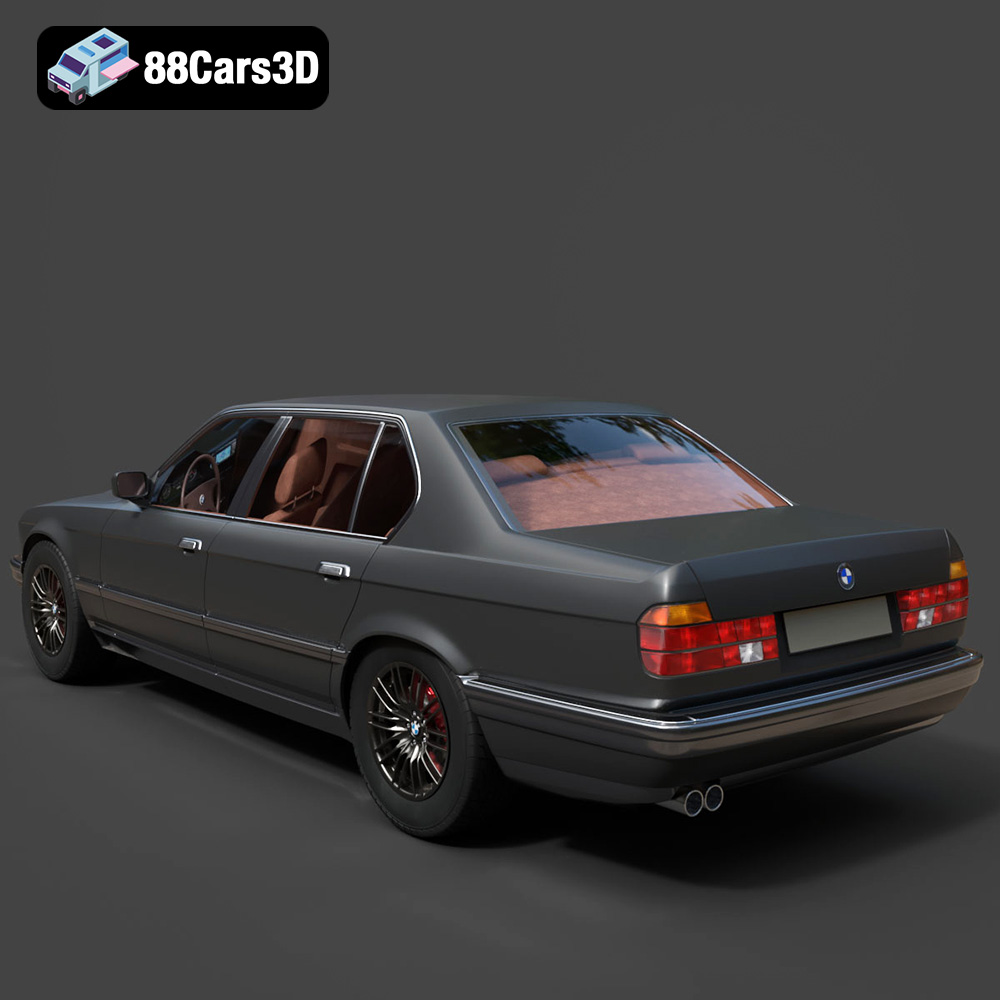
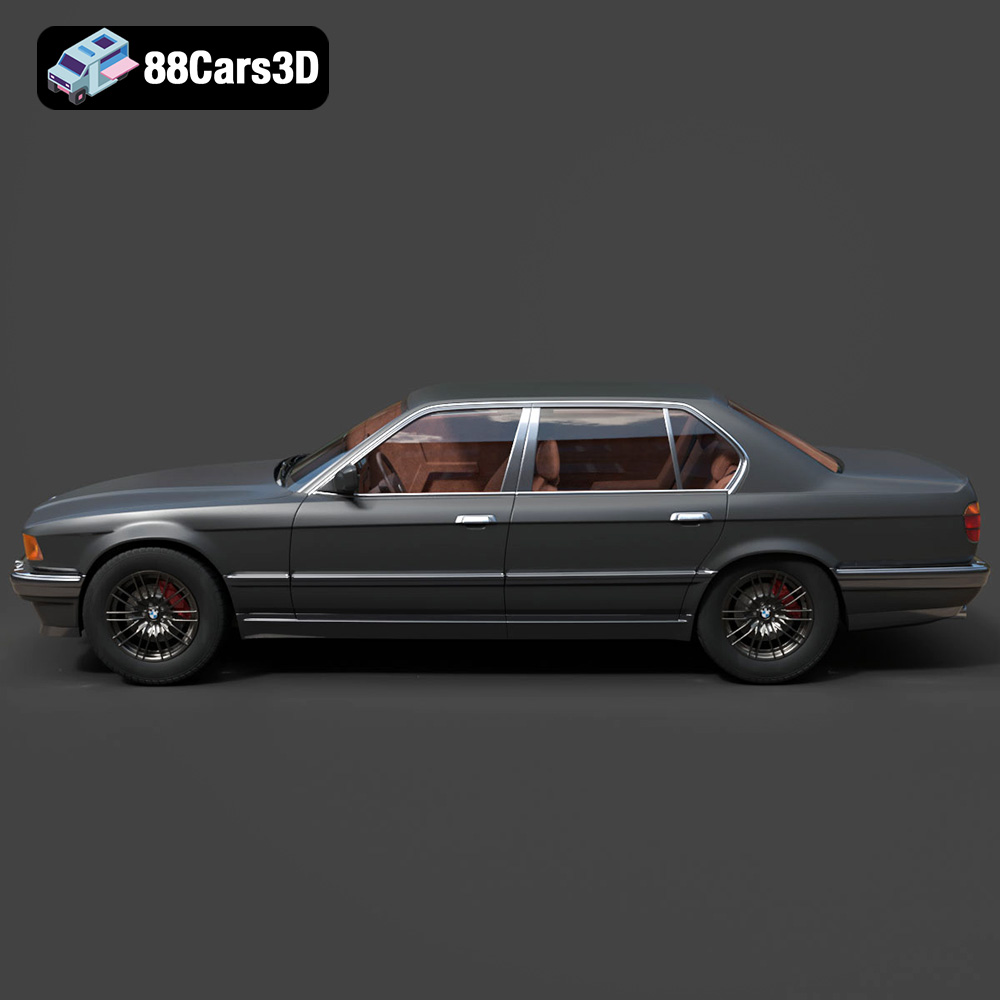
This commitment to authenticity is perfectly encapsulated by the BMW M7 E32 3D Model available on 88cars3d.com. This meticulously crafted asset doesn’t just replicate the car; it digitizes its very essence, offering a gateway for creators to integrate this legendary vehicle into a myriad of digital projects. From its aggressive M-performance styling cues to the nuanced textures of its executive interior, every element has been thoughtfully developed to meet the rigorous demands of modern production pipelines, ensuring that the legacy of the E32 M7 is preserved and celebrated in stunning digital detail.
The BMW E32 generation, particularly with M-performance enhancements, stands as a testament to automotive design from the late 1980s and early 1990s. It was a vehicle that exuded confidence, blending executive comfort with an underlying aggression that hinted at its capabilities. Recreating such a nuanced piece of history in 3D requires more than just technical skill; it demands an understanding of its character, its lines, and the engineering philosophy behind it.
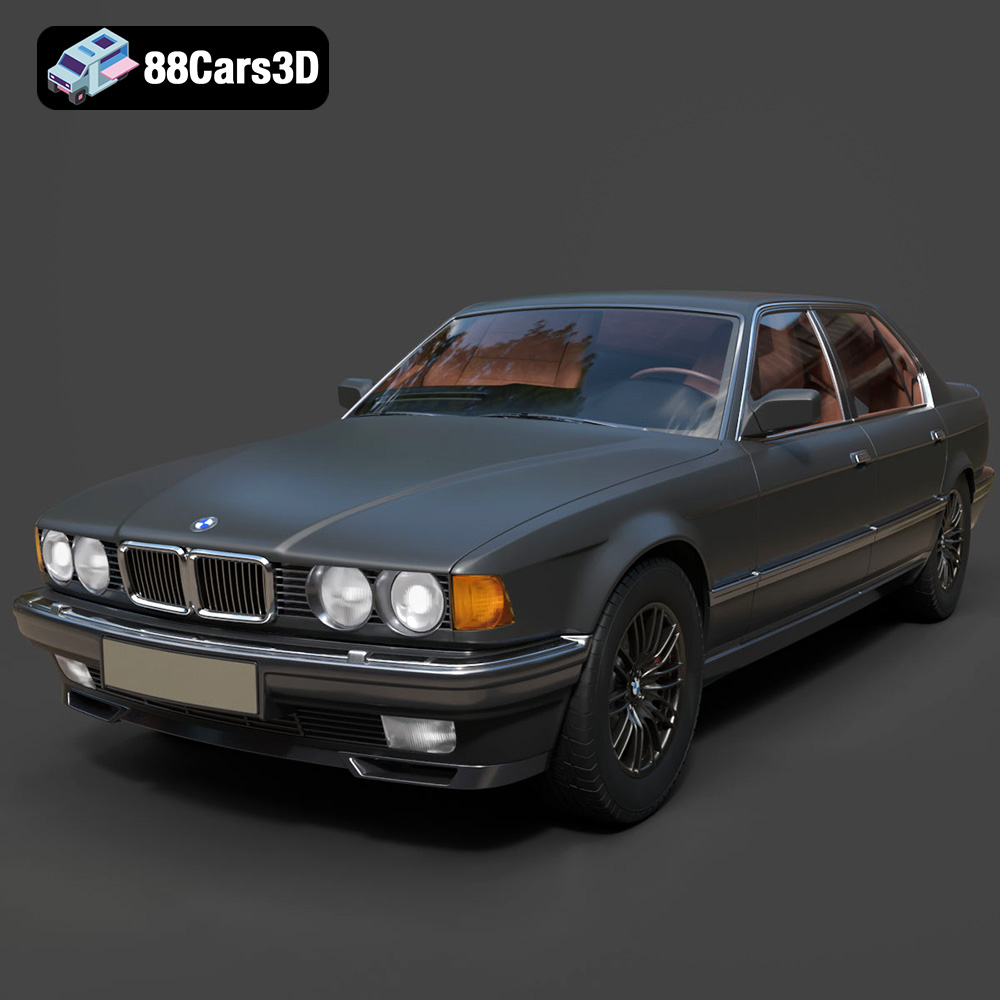
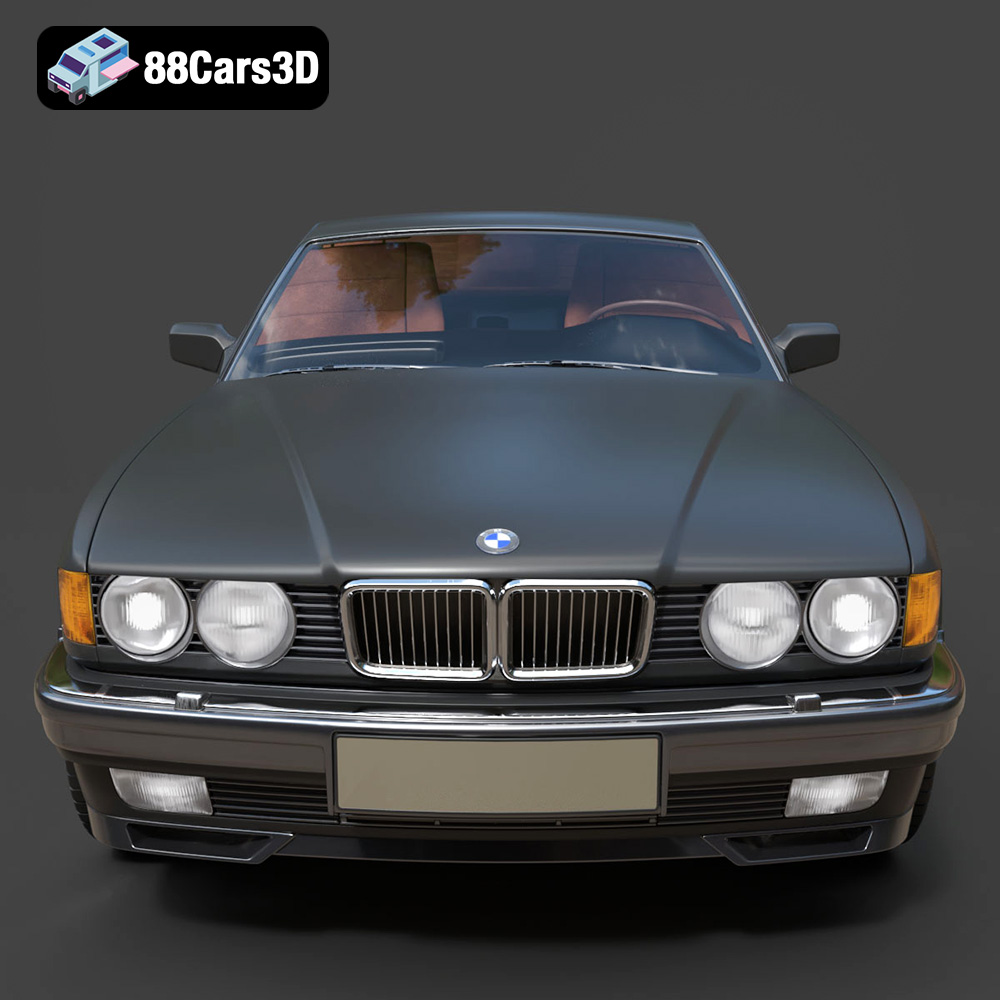
The BMW M7 E32 3D Model meticulously embodies this heritage. Its signature quad round headlights, the pronounced kidney grilles, and the sleek, elongated profile are instantly recognizable. But the true fidelity lies in the details that often go unnoticed in less-polished models: the aerodynamic front air dam, the aggressive M-style dual/quad exhaust system, and the classic deep-dish alloy wheels. These aren’t just features; they are historical markers that define the vehicle, and their accurate digital representation is crucial for any project aiming for authenticity.
From the precise frame geometry and proportions to the detailed engine bay, the model speaks volumes about the dedication involved in its creation. Every curve, every panel gap, and every vent contributes to a faithful digital twin of a real-world classic. This level of attention ensures that whether the model is placed in a static render or a dynamic simulation, its presence is commanding and true to life.
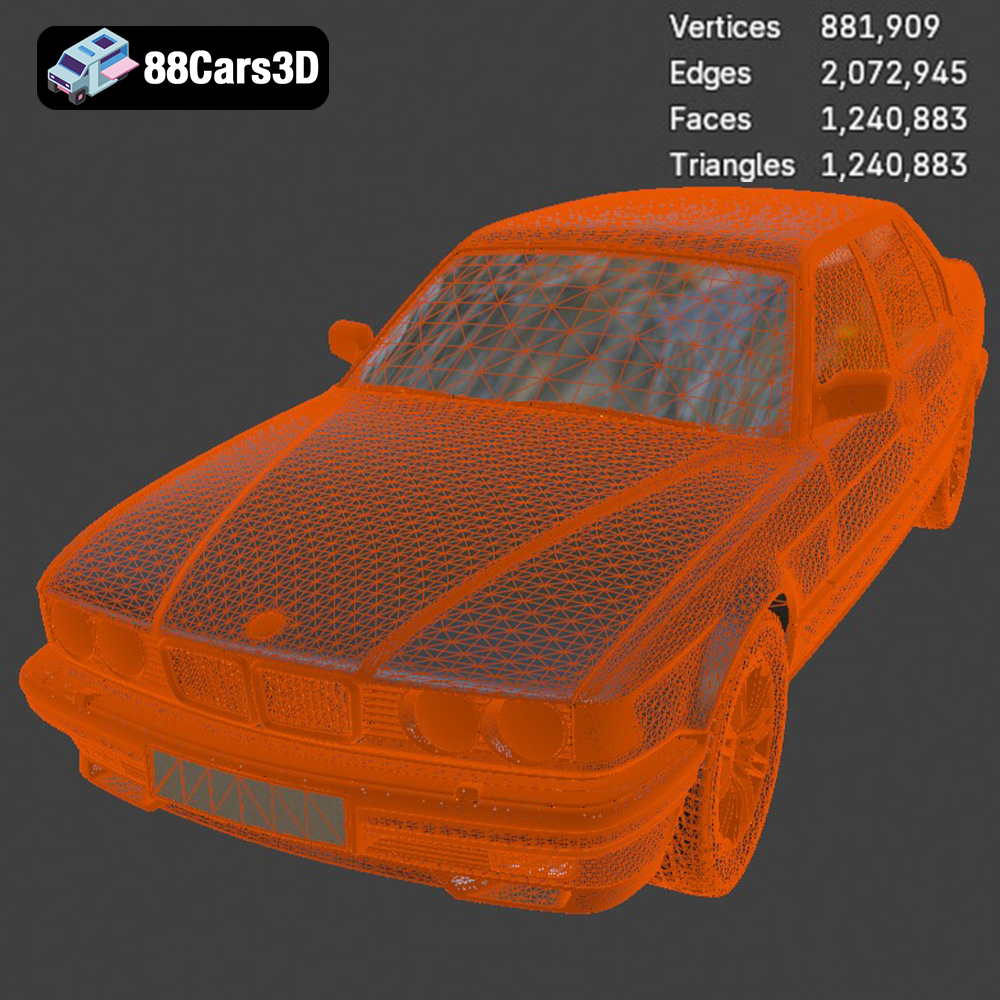
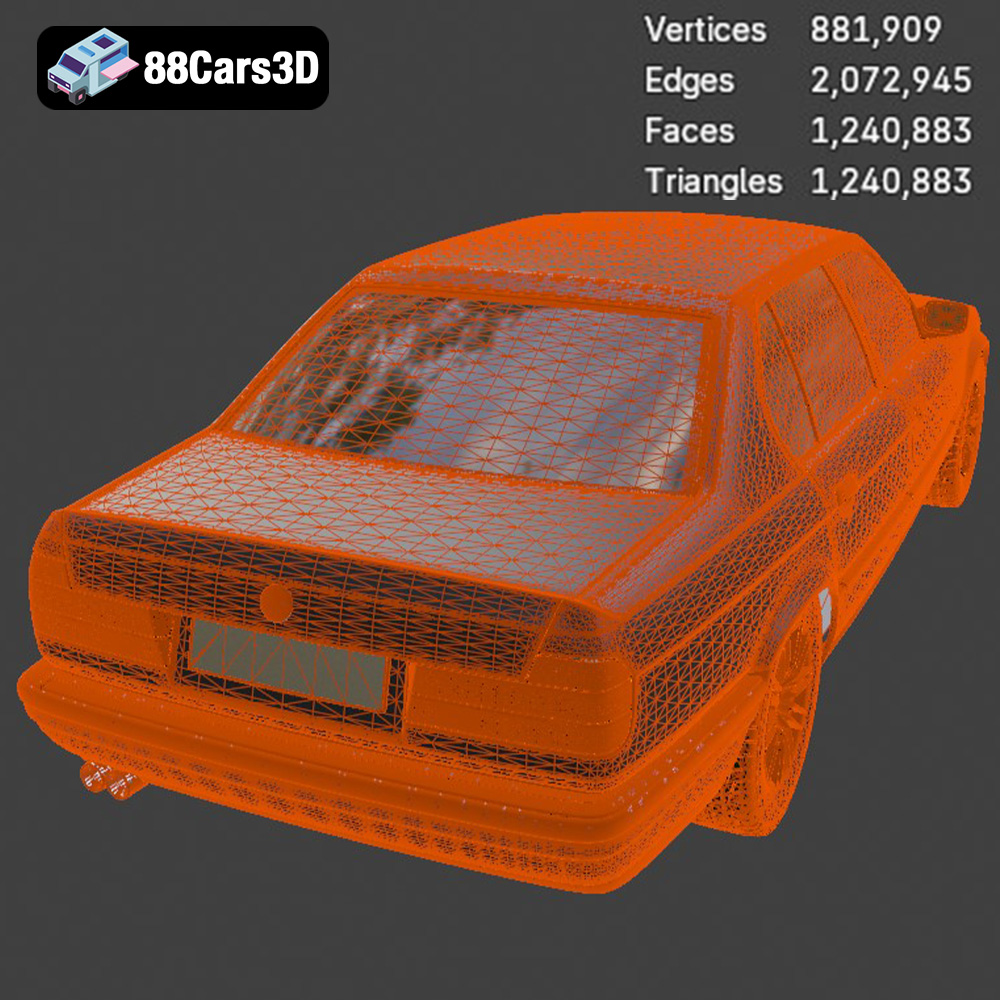
The technical specifications of the BMW M7 E32 3D Model underscore its commitment to precision. Boasting a highly detailed topology with a triangle count of 1,240,883, it delivers unparalleled visual fidelity. This dense mesh is not simply for show; it’s carefully structured to ensure striking realism for close-up automotive renders, virtual reality showrooms, and high-fidelity racing simulations where every surface and reflection matters. For instance, the authentic suspension geometry and undercarriage details, often overlooked, provide crucial realism for animation and dynamic camera angles.
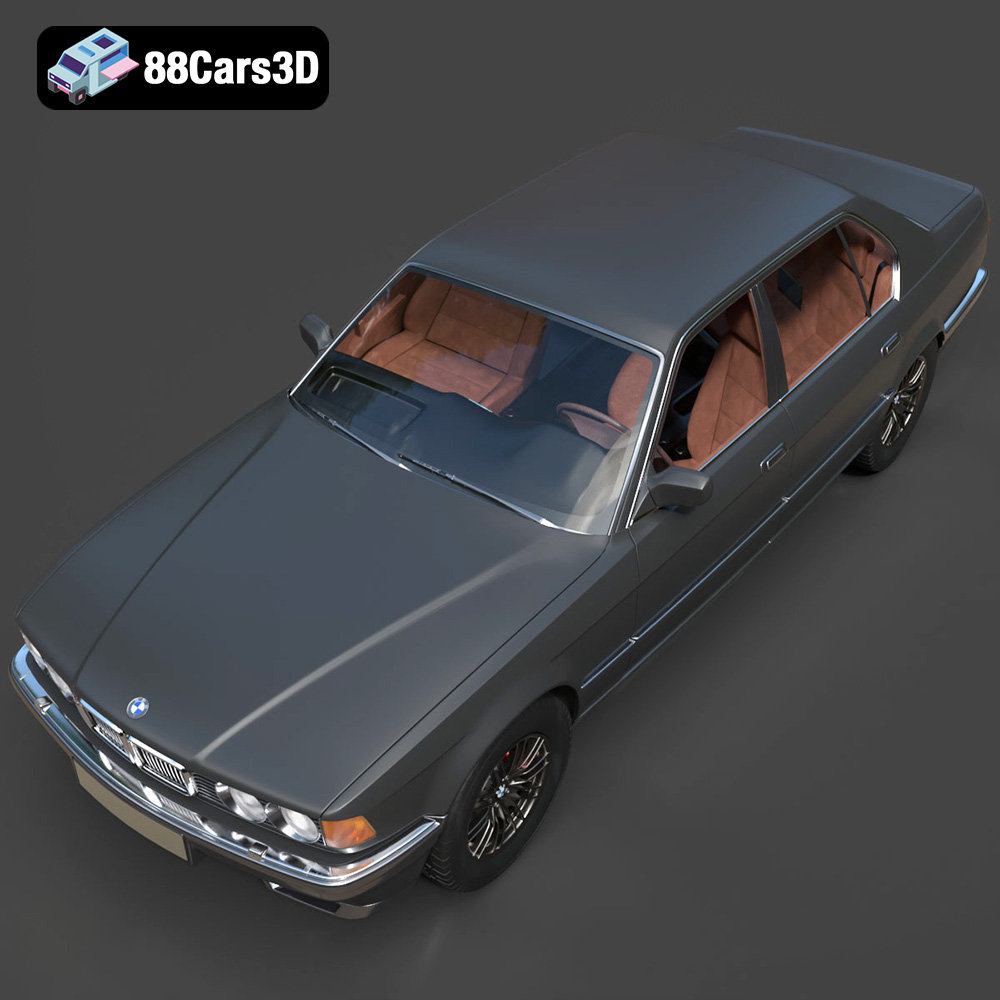
The interior, too, reflects this dedication. Luxurious executive seating with accurate leather stitching, a classic driver-oriented dashboard, and highly detailed analog instrument clusters transport the user directly into the 90s cockpit. For applications like first-person POV in gaming or immersive VR experiences, these intricate details are essential, bridging the gap between digital representation and tangible reality. The proper pivot setup for steering, wheel rotation, and suspension travel further enhances its utility for animation and interactive experiences, making it a robust asset for professional workflows.
The versatility of a 3D model is often defined by the range of file formats it supports. For a professional-grade asset like the BMW M7 E32, offering a comprehensive suite of formats is crucial for seamless integration into diverse production pipelines. Each format serves a specific purpose, catering to different software environments, use cases, and technical requirements. Understanding these distinctions is fundamental for any 3D artist, developer, or designer.
The .blend file format is Blender’s native project file. When you download a .blend file, you are receiving a fully editable Blender scene. This includes not just the mesh data, but also materials, textures, lighting setups, cameras, animations (if present), modifiers, and even custom scripts. For artists primarily working in Blender, this is often the most convenient format as it requires no import/export translation, preserving all project-specific data. It allows for direct modifications, material adjustments, and scene composition within the familiar Blender interface. This format is ideal for users who wish to delve deep into the model’s construction, make significant alterations, or integrate it into an existing Blender scene with minimal fuss.
The .fbx (Filmbox) format is a proprietary file format owned by Autodesk, but it has become an industry-standard for 3D data interchange. It is incredibly versatile, supporting not only geometry but also materials, textures, rigging, animation, and even lights and cameras. Its strength lies in its ability to transfer complex scene data between different 3D software applications (like 3ds Max, Maya, Blender, Cinema 4D) and game engines (Unreal Engine, Unity) with high fidelity. For the BMW M7 E32, the .fbx version is ideal for real-time pipelines due to its robust support for animation and instancing, making it a go-to for game development and cinematics.
The .obj (Wavefront OBJ) format is one of the oldest and most widely supported 3D file formats, renowned for its universality. It primarily stores geometric data – vertices, normals, texture coordinates, and faces – and can reference external material (.mtl) and texture files. While it doesn’t support animation or rigging directly, its simplicity and widespread compatibility make it an excellent choice for basic mesh transfer across virtually any 3D software. When maximum compatibility is a priority, and complex scene data isn’t needed, .obj is a reliable fallback.
The .glb (GL Transmission Format Binary) is the binary version of glTF, a royalty-free specification for the efficient transmission and loading of 3D scenes and models by engines and applications. It packages textures and other assets directly into a single file, making it incredibly optimized for web-based 3D, augmented reality (AR), virtual reality (VR), and mobile applications. Its compact size and ease of integration make it perfect for embedding the BMW M7 E32 into browser-based configurators, social media filters, or AR experiences without heavy loading times.
The .unreal format, often referring to an Unreal Engine-ready asset or a uasset file, indicates that the model is specifically prepared for direct import and optimal performance within Unreal Engine. This typically means it has been exported with Unreal-specific conventions, potentially including LODs (Levels of Detail), collision meshes, and properly configured materials ready for the engine’s physically based rendering (PBR) pipeline. This format streamlines the workflow for Unreal Engine developers, minimizing setup time and ensuring engine-native compatibility.
The .stl (Stereolithography) format is the undisputed standard for 3D printing. It represents a 3D model as a series of connected triangles (a triangulated surface mesh) without any color, texture, or material information. Its simplicity makes it universally accepted by 3D printing software (slicers). For hobbyists or professionals looking to physically manifest the BMW M7 E32, the .stl file is the starting point for producing display-scale models or functional prototypes.
The .ply (Polygon File Format) is another precision mesh format, often used in scientific and engineering fields, particularly for storing data from 3D scanners. It can store more complex information than .stl, including color, transparency, normals, and even confidence values. While less common for direct 3D printing by hobbyists, it’s a valuable format for detailed geometric analysis, CAD integration, or applications requiring precise mesh reconstruction.
Finally, the .max format is the native file type for Autodesk 3ds Max. Similar to .blend for Blender, it contains a complete 3ds Max scene, including the BMW M7 E32 model, its materials, textures, lighting, cameras, and any animations or modifiers applied within 3ds Max. As 3ds Max remains a pillar in architectural visualization, cinematic rendering, and high-end animation, the .max file provides users with the most comprehensive control and flexibility within that ecosystem, allowing for advanced rendering setups, intricate animations, and seamless integration into existing 3ds Max projects.
The availability of these diverse formats ensures that the BMW M7 E32 3D Model from 88cars3d.com is a truly versatile asset, ready for any creative challenge across various platforms and applications.
For game developers, finding a 3D car model that strikes the perfect balance between visual fidelity and real-time performance is crucial. The BMW M7 E32 3D Model is specifically designed to meet these stringent requirements, making it an exceptional asset for next-generation game engines.
With a triangle count of 1,240,883, this model is robust enough to provide stunning detail for cinematic sequences and close-up gameplay, yet optimized for integration into modern engines like Unreal Engine and Unity. The mesh geometry is thoughtfully structured to maintain visual realism without becoming overly burdensome on performance, especially when accompanied by proper LOD (Level of Detail) setups that can be generated or fine-tuned within the engine. This careful balance ensures that the M7 E32 can serve as a hero asset in racing titles or a background element in open-world environments with equal effectiveness.
The model’s real-world scale accuracy is also a significant advantage, providing a solid foundation for physics simulation and collision detection. The distinct separation of components like wheels, suspension, and steering allows for realistic animation and interactive physics, crucial for believable driving mechanics and crash simulations in racing games.
Integrating a complex 3D car model into a game engine involves several steps, and the included file formats like .fbx and .unreal streamline this process significantly. For Unreal Engine, a developer would typically import the .fbx or .unreal file directly into the content browser. Once imported, the material setup would involve assigning the included textures (diffuse, normal, roughness, metallic maps) to the appropriate PBR (Physically Based Rendering) material slots, fine-tuning them for the desired look under various lighting conditions.
Beyond visual fidelity, the model’s pivot setup is critical. With proper pivots already configured for steering, wheel rotation, and suspension travel, animators and physics programmers save invaluable time. They can directly hook up the model to the vehicle physics system, defining parameters for spring stiffness, dampening, and tire friction to create an authentic driving experience that truly reflects the M7 E32’s performance characteristics.
While immediately suited for racing games, the BMW M7 E32 3D Model’s versatility extends far beyond the racetrack. In open-world games, it can populate bustling cityscapes, serve as a unique vehicle for player use, or become a centerpiece for narrative moments. Its high detail ensures it holds up to scrutiny in dynamic weather systems and day-night cycles.
For simulation titles, such as driving schools or vehicle maintenance simulators, the detailed engine bay and authentic undercarriage provide an excellent base for interactive learning and repair scenarios. Even in virtual dealership experiences or car configurators, the model offers a high-fidelity representation, allowing potential customers to explore the car’s features and customization options in an immersive virtual environment.
The demand for photorealistic automotive imagery extends across advertising, product visualization, and architectural rendering. The BMW M7 E32 3D Model from 88cars3d.com is a powerful tool for visual artists seeking to produce stunning, lifelike renders of this classic automobile.
For artists working in 3ds Max, the inclusion of the .max file provides a ready-to-render scene, complete with materials and potentially basic lighting. Using rendering engines like V-Ray or Corona, one can leverage the model’s high polygon count and accurate topology to create incredibly detailed reflections, precise shadows, and subtle surface variations that are hallmark of real-world vehicles. Setting up a studio lighting environment, perhaps with HDRIs (High Dynamic Range Images) for realistic reflections, allows the metallic finishes and leather textures of the M7 E32 to truly shine.
Similarly, Blender users benefit from the .blend file, enabling direct access to the model within Cycles or Eevee. The model’s intricate details, such as the accurate leather stitching in the interior or the classic deep-dish alloy wheels, become focal points for photorealistic renders. Artists can experiment with various material finishes – matte, gloss, metallic – to achieve different moods and styles, from a pristine showroom look to a gritty, street-raced aesthetic. The separate components, like suspension and steering, also allow for dynamic “beauty shots” with exaggerated wheel turns or compression for dramatic effect.
The M7 E32 3D Model is also perfectly suited for creating immersive virtual showrooms and configurators. Using formats like .fbx for high-end VR platforms or .glb for web-based AR experiences, designers can craft interactive environments where users can explore the car from every angle, open doors, inspect the engine bay, and even change colors or tire types in real-time. The model’s optimized geometry for first-person POV in gaming directly translates to a superior experience in VR, where users can virtually sit inside the luxurious executive cockpit and appreciate its meticulous details.
For mobile AR, the .glb format’s optimization ensures smooth performance, allowing the M7 E32 to be overlaid onto real-world environments with impressive fidelity. Imagine placing a virtual BMW M7 E32 in your driveway or office, customizing its finish, and walking around it as if it were truly there – a powerful tool for marketing and customer engagement.
Beyond static renders, the model offers extensive customization options crucial for advertising campaigns and brand storytelling. Artists can easily change body colors to match specific brand palettes or conceptual designs, modify tire textures for track versus street variants, and adjust material finishes to convey different levels of luxury or performance. Adapting lighting setups for diverse environments, from a sun-drenched coastal road to a moody urban night scene, allows the M7 E32 to seamlessly integrate into various visual narratives. This flexibility makes it an invaluable asset for agencies and automotive brands seeking to leverage iconic vehicles in their digital content.
One of the most exciting applications for high-quality 3D models is their translation from the digital realm into physical objects through 3D printing. The BMW M7 E32 3D Model, with its detailed geometry, is an excellent candidate for this, allowing enthusiasts to hold a piece of automotive history in their hands.
The inclusion of the .stl and .ply formats specifically caters to 3D printing applications. The .stl format, being the universal language of 3D printers, ensures broad compatibility with various slicing software. Before printing, however, a model of this complexity often requires a few preparatory steps. Ensuring the mesh is “manifold” (water-tight, with no holes or self-intersecting geometry) is critical for successful slicing. While 88cars3d.com models are typically print-ready, a quick check in a 3D editor for any potential issues is always good practice, especially if modifications have been made.
Choosing the right scale is also important, and the product recommends 1:12, 1:18, or 1:24. These scales offer a good balance between manageable print time and sufficient detail for display. The .ply format can be useful for more advanced users who might need higher precision for specific parts or who are working with industrial-grade 3D printers that leverage its additional data capabilities.
Successfully 3D printing a detailed car model like the BMW M7 E32 requires careful attention to print settings. As specified in the product description, resin printing is highly recommended for capturing the fine details, such as the delicate grille elements, the interior dashboard controls, and the intricate wheel spokes. A layer height of 0.04–0.12 mm is ideal for resin printers, ensuring smooth surfaces and crisp edges.
For FDM (Fused Deposition Modeling) printers, while possible, a smaller nozzle and slower speeds would be necessary to approach similar detail levels. Supports are undeniably required for many parts – exhaust, mirrors, steering wheel, and potentially complex overhangs on the body frame. Strategic print orientation is also key; printing the frame angled can enhance structural integrity, while printing wheels separately allows for optimal detail and minimizes support marks on visible surfaces. Wall thickness recommendations (1.2–2.0 mm) ensure the model is robust enough post-print without being excessively heavy.
The ability to 3D print the BMW M7 E32 opens up a world of possibilities for hobbyists and professionals alike. For collectors, it means being able to create bespoke scales or unique variations of their favorite classic car. For model makers, it provides an incredibly detailed base for further hand-finishing, painting with authentic factory colors and metallic finishes, and adding weathering effects.
Beyond personal enjoyment, these 3D printed models can serve as tangible prototypes in design studios, educational tools for teaching automotive mechanics, or unique display pieces in showrooms. The transformation from a digital file on 88cars3d.com to a physical, finely detailed model is a testament to the power of modern 3D technology.
The digital landscape of 3D content creation is constantly evolving, demanding assets that are not only visually stunning but also technically robust and versatile. The BMW M7 E32 3D Model stands as a prime example of such an asset, meticulously crafted to honor an iconic piece of automotive history while meeting the rigorous demands of contemporary digital production.
From its intricate exterior features and detailed interior to its game-ready optimization and comprehensive file format support, this model empowers artists and developers across various disciplines. Whether you are aiming to create a hyper-realistic automotive rendering, develop an immersive racing game, build an interactive AR/VR experience, or even bring a physical model to life through 3D printing, the M7 E32 provides an exceptional foundation. Its high fidelity, technical flexibility, and broad compatibility make it an invaluable addition to any professional toolkit, ensuring that the legacy of this classic BMW continues to inspire and drive innovation in the digital realm. Discover this extraordinary 3D car model and many others at 88cars3d.com, your premier source for high-quality automotive assets.
The BMW M7 E32 represents the pinnacle of 90s luxury performance, blending executive comfort with aggressive motorsport DNA. This stunning 3D model captures the iconic heritage of the classic E32 chassis, enhanced with M-performance styling cues. From its signature quad round headlights and pronounced kidney grilles to the aerodynamic front air dam and sleek, elongated profile, every detail has been meticulously recreated to honor this legendary era of German engineering.
$37.50
.blend
.bmw
.e32
.fbx
.glb
.max
.obj
.ply
.rendering
.stl
.unreal
car-3d-model
classic-car
game asset
game-ready
high poly
luxury-sedan
m7
sports-sedan
VR/AR