Get 20% OFF All Premium 3D & STL Models!

In the rapidly evolving landscape of digital content creation, the demand for hyper-realistic and meticulously engineered 3D assets has never been higher. From breathtaking cinematic sequences and immersive virtual reality experiences to high-octane racing games and compelling architectural visualizations, premium 3D car models form the cornerstone of professional projects. They are not merely decorative elements; they are complex digital sculptures that convey design intent, technical precision, and emotional resonance.
Today’s artists and developers seek models that strike an intricate balance: exceptional visual fidelity for close-up renders, optimized topology for real-time performance, and broad compatibility across diverse software ecosystems. This quest for perfection often leads to bespoke asset creation, a time-consuming and resource-intensive endeavor. However, marketplaces like 88cars3d.com provide a vital solution, offering a curated selection of pre-made, professional-grade assets that empower creators to bring their visions to life with unparalleled efficiency. Among these offerings, a standout example is the Citroen DS5 3D Model – a testament to avant-garde design and technical optimization, ready to integrate into virtually any professional pipeline.
The journey of any 3D model, from its initial creation to its final application, often involves a multitude of software platforms and specific use cases. Understanding the various file formats available is critical for ensuring compatibility, preserving data integrity, and optimizing workflows. Each format serves a distinct purpose, carrying different types of information and catering to specific industry needs. The Citroen DS5 3D model, for instance, offers a comprehensive suite of formats, highlighting its versatility.
The .blend file is the native format for Blender, a powerful open-source 3D creation suite. When you download a .blend file, you’re not just getting the raw mesh; you’re receiving a complete Blender scene. This includes the model’s geometry, materials, textures, lighting setups, cameras, animation data, and even physics simulations if they were part of the original project. This format offers maximum flexibility for artists who use Blender, allowing for full editing, customization, and exploration of the model’s construction. For the Citroen DS5, a .blend file means access to its meticulously crafted materials and textures directly within Blender, making it ideal for further refinement or integration into Blender-based projects.
The .fbx (Filmbox) format is a proprietary file format owned by Autodesk, widely regarded as the industry standard for exchanging 3D data between different software applications. Its strength lies in its ability to encapsulate a vast array of 3D data, including geometry, materials, textures, animations, skinning, and camera information, while maintaining scene hierarchy. For game development, .fbx is invaluable; it’s the preferred import format for engines like Unreal Engine and Unity. Its robust support for skeletal animations and blend shapes makes it perfect for animated assets. The Citroen DS5, being game-ready, would leverage .fbx for seamless integration into real-time environments, ensuring all its intricate details and potential animation pivots are preserved.
The .obj (Wavefront OBJ) format is one of the oldest and most universally supported 3D file formats. It is a simple, text-based format primarily used for storing 3D geometry (vertices, normals, texture coordinates, and faces). While it doesn’t typically store animation or rigging data, it’s excellent for static meshes and is supported by almost every 3D modeling, animation, and rendering software package. Its simplicity ensures high compatibility, making it a reliable choice for transferring models between disparate programs without losing core geometric information. The Citroen DS5 in .obj format guarantees that its accurate aerodynamic profile and detailed frame geometry can be accessed and modified in virtually any 3D application.
The .glb (GLB-Binary) format is the binary version of glTF (Graphics Library Transmission Format), an open standard for 3D scenes and models. Designed to be a compact, efficient, and runtime-agnostic format, .glb is rapidly gaining traction, particularly for web-based 3D, augmented reality (AR), and virtual reality (VR) applications. It packs all necessary data (geometry, textures, animations, materials) into a single file, making it incredibly easy to load and display in browsers and mobile environments. For the Citroen DS5, a .glb file means it’s immediately ready for immersive virtual showrooms, configurators, or mobile AR experiences, leveraging its optimized geometry for smooth performance.
The .stl (STereoLithography) format is the standard file type for 3D printing. It represents a 3D model as a series of connected triangles, describing only the surface geometry of an object without color, texture, or other CAD attributes. While it lacks visual data, its simplicity makes it ideal for additive manufacturing. When utilizing the Citroen DS5 3D model for 3D printing, the .stl file will be the go-to, allowing hobbyists and professionals to physically manifest the digital design on recommended scales like 1:12 or 1:18, requiring consideration for layer height, infill, and supports for optimal results.
The .ply (Polygon File Format, also known as Stanford Triangle Format) is another format for storing 3D data, often used in scientific and engineering applications, especially for scanned data. Like .obj and .stl, it primarily focuses on geometry, but it can also store additional attributes like color, transparency, normals, texture coordinates, and even reliability information for each vertex and face. It’s particularly useful when precision mesh data is critical, such as in reverse engineering, CAD, or detailed 3D analysis. The inclusion of .ply for the Citroen DS5 speaks to its potential for highly technical applications beyond standard rendering or gaming.
The .unreal format, or more accurately, assets packaged for Unreal Engine, typically refers to a pre-configured asset or an entire project structure designed to be directly imported and used within the Unreal Engine ecosystem. This might involve specifically prepared .fbx files with correct material setups, collision meshes, LODs (Levels of Detail), and blueprint configurations, bundled in a way that minimizes setup time for Unreal developers. For the Citroen DS5, an .unreal asset signifies that it has been meticulously prepared to take advantage of Unreal’s powerful rendering capabilities and real-time performance, with optimized geometry and proper pivot setups for animation.
The .max file is the native format for Autodesk 3ds Max, one of the leading 3D modeling, animation, and rendering software packages in the industry. Similar to a .blend file, a .max file contains a complete 3ds Max scene, including all geometry, modifiers, materials, textures, lights, cameras, animation keyframes, and scene settings. It offers unparalleled control and flexibility for users working within 3ds Max, allowing for extensive modifications, complex rigging, and high-fidelity rendering projects. The Citroen DS5 .max file would provide direct access to its fully structured design, enabling professional animators and visualizers to harness its detailed exterior and interior features for high-end studio shots and animations.
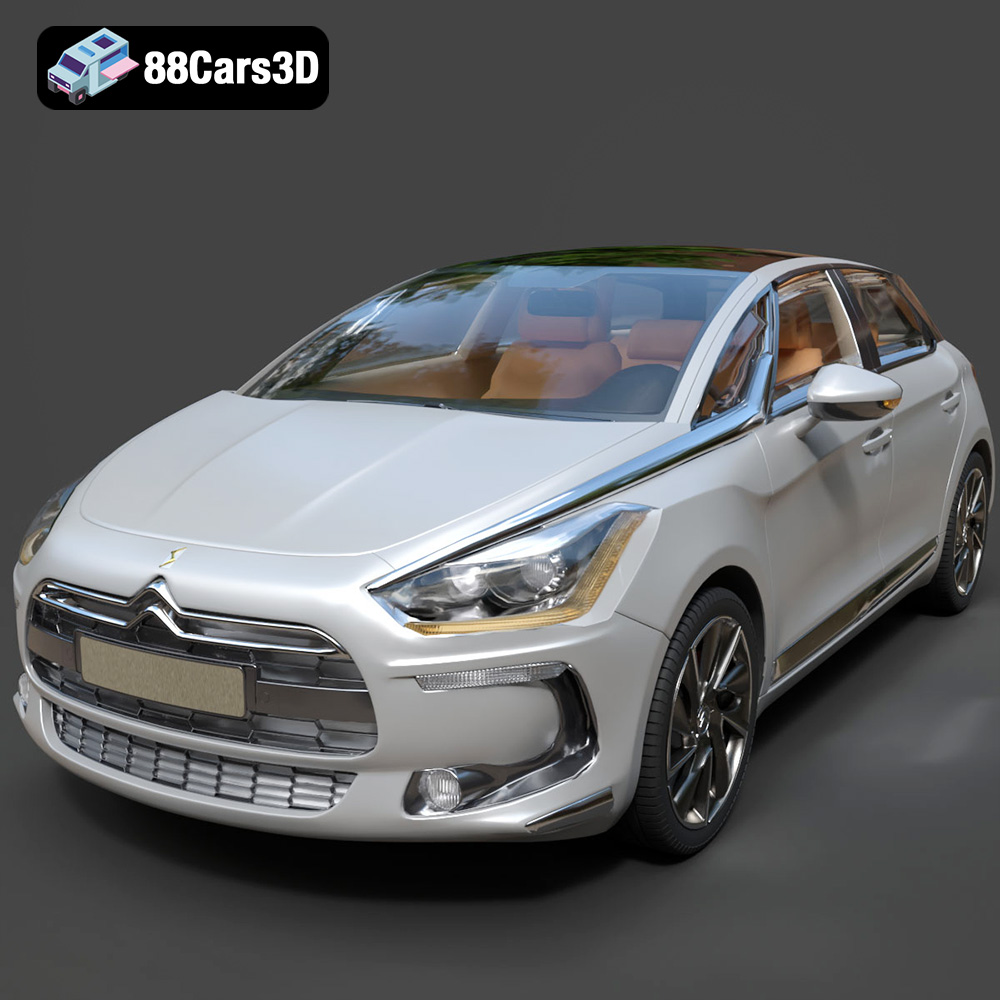
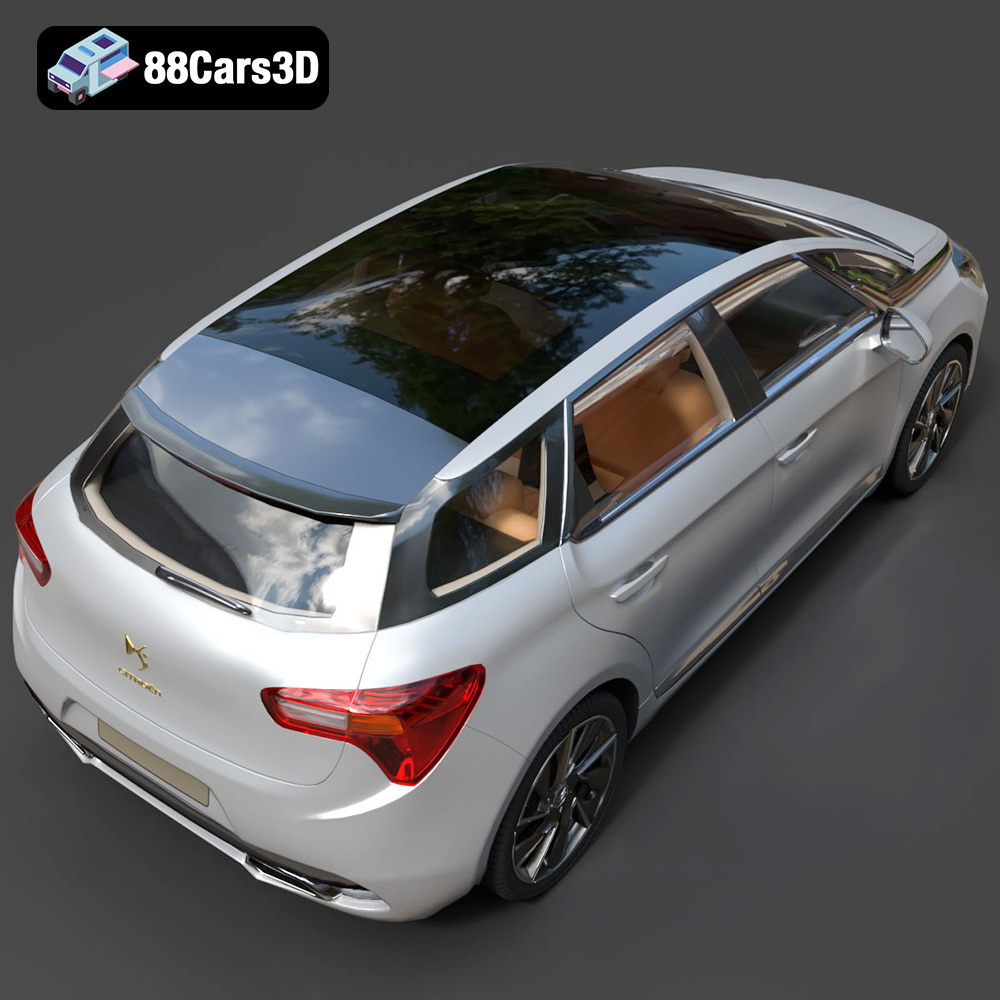
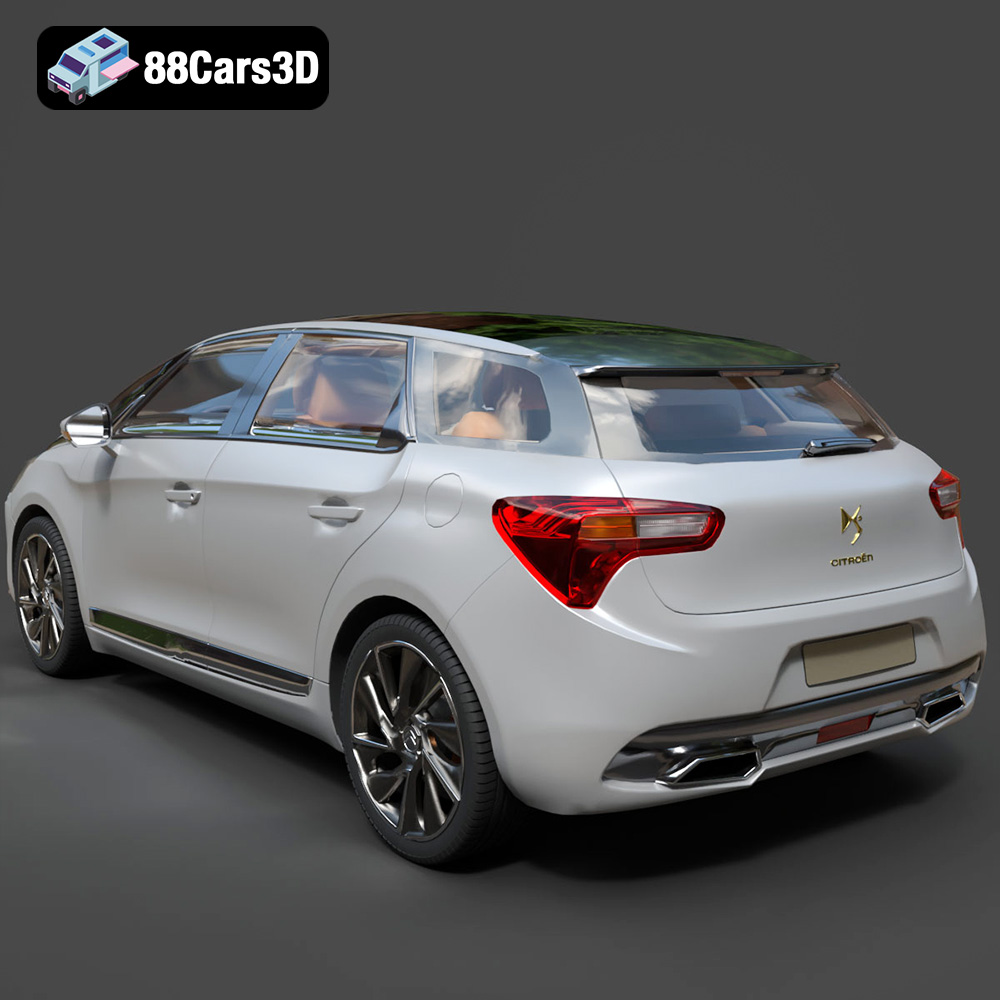
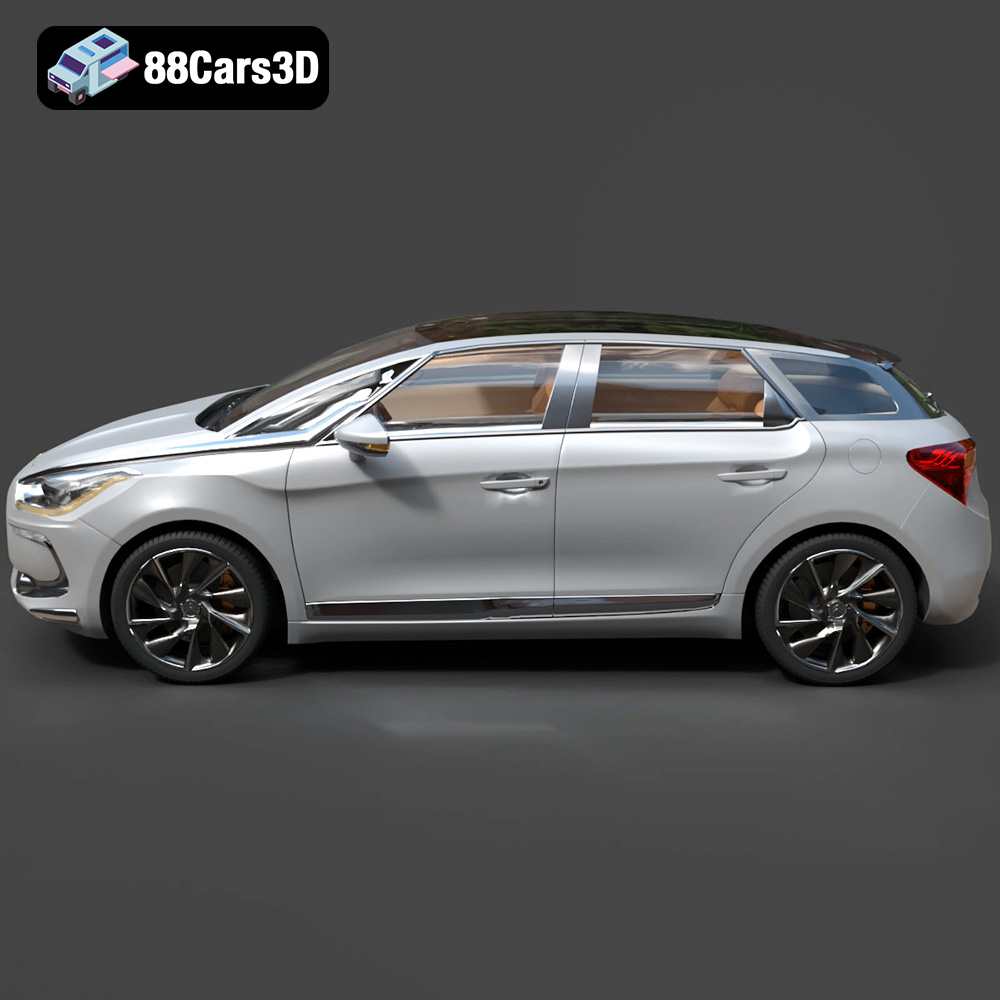
The allure of the Citroen DS5 lies in its unique blend of premium aesthetics and distinctive French design, characterized by aviation-inspired elements and the iconic chrome “sabers.” Replicating such an intricate vehicle in 3D requires not just artistic skill, but profound technical understanding. The Citroen DS5 3D Model available on 88cars3d.com exemplifies this synthesis, offering a highly detailed and optimized digital twin.
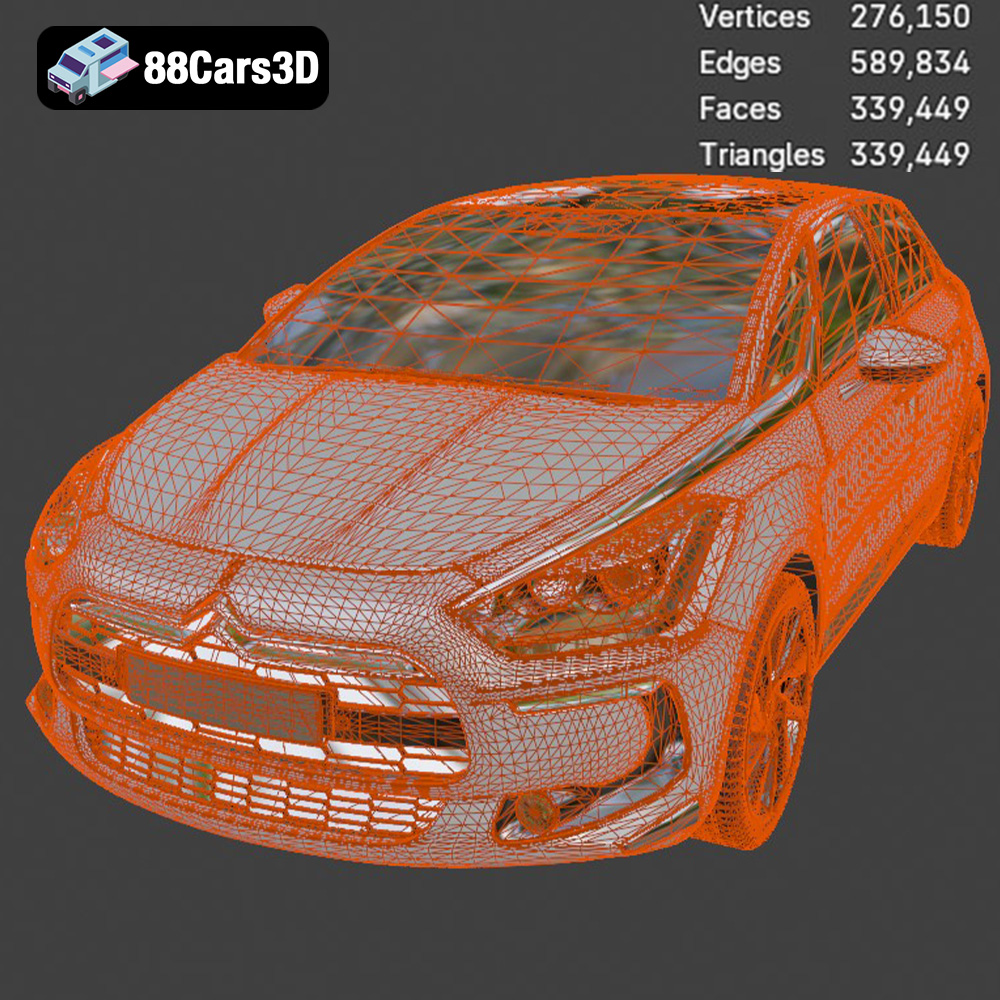
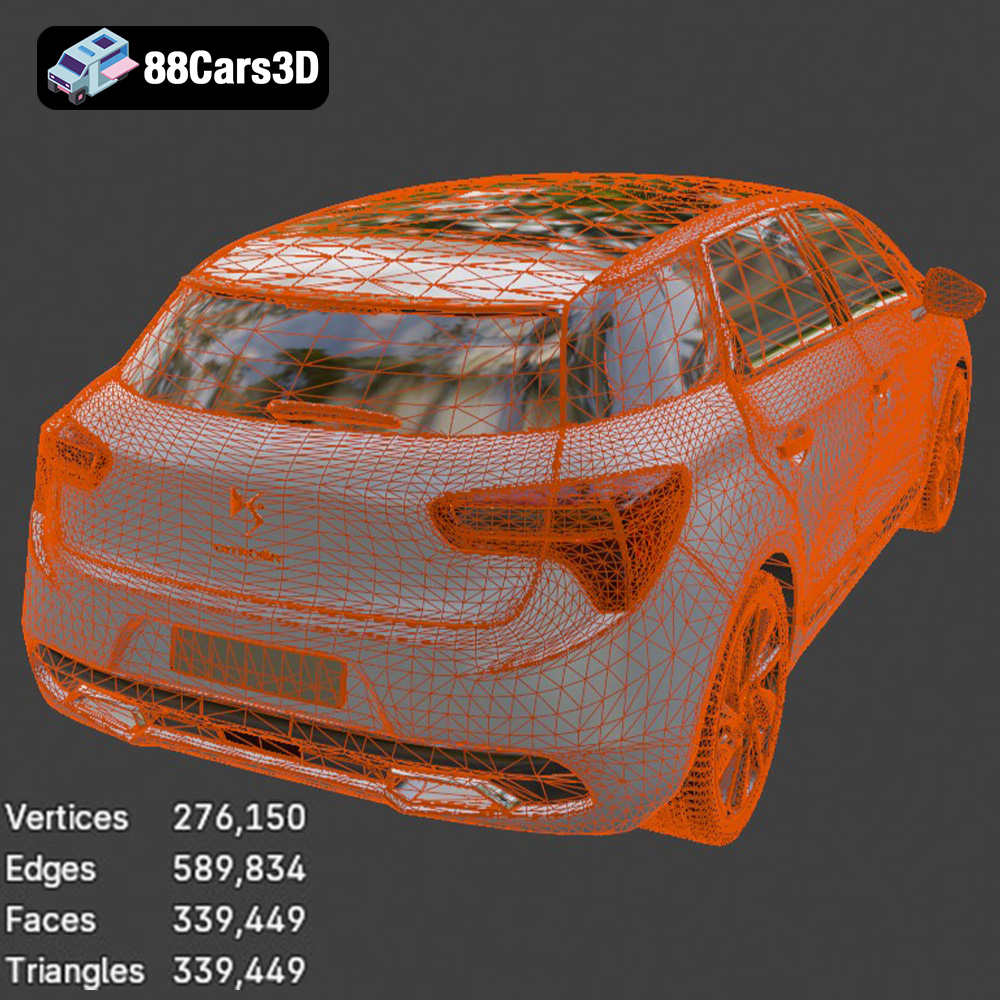
Central to any high-quality 3D model is its geometry and topology. The Citroen DS5 model boasts a meticulously optimized topology with a triangle count of 339,449. This figure is crucial; it represents a sweet spot that allows for exceptional visual fidelity for rendering and close-up shots, while remaining performant enough for real-time applications like game engines and AR/VR experiences. Every curve, panel gap, and hard edge, from the aggressive headlight clusters to the sculpted bodywork and dynamic dual exhaust setup, has been faithfully reproduced. This attention to detail extends to the complex LED lighting signatures and high-fidelity alloy wheels, complete with detailed brake calipers and discs, ensuring the model stands up to the closest scrutiny.
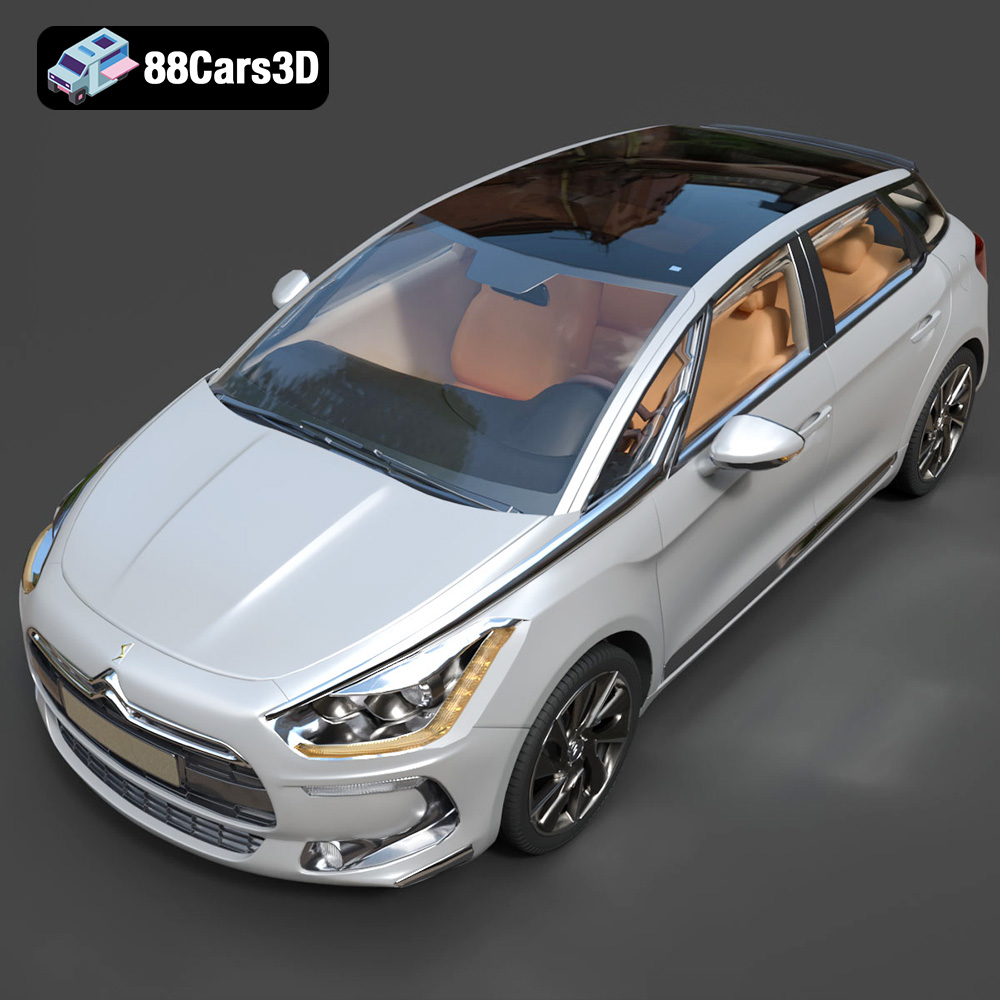
The value of a 3D car model often extends beyond its exterior shell. The Citroen DS5 model includes an equally impressive interior. An aviation-inspired cockpit layout, premium seating representations, a sporty flat-bottomed steering wheel, and intricate center console details are all accurately modeled. This level of interior fidelity is paramount for immersive applications, enabling first-person POV in gaming and virtual reality simulations. Furthermore, separate wheels, suspension, and steering components are modeled, ensuring seamless animation possibilities. This modularity is a critical technical advantage, allowing developers to create realistic driving dynamics and visual storytelling.
Beyond visual accuracy, the technical specifications underpin the model’s versatility. Its “game-ready” optimization means it’s built for efficiency within real-time engines like Unreal and Unity, minimizing draw calls and maximizing frame rates. Real-world scale accuracy ensures it integrates seamlessly into existing scenes, whether for architectural visualization or automotive configurators. Crucially, the proper pivot setup for steering, wheel rotation, and suspension travel simplifies the animation process, saving countless hours for animators and riggers. This thoughtful engineering makes the Citroen DS5 3D model an invaluable asset for professionals across various digital industries.
A truly professional 3D asset is defined not only by its aesthetic quality but also by its ease of integration into diverse production pipelines. The Citroen DS5 3D model has been engineered with this principle in mind, providing comprehensive file formats and optimized structures to facilitate smooth workflows in leading software and game engines.
For architectural visualization, broadcast advertising, and high-end automotive rendering, Autodesk 3ds Max remains an industry powerhouse. The inclusion of a native .max file for the Citroen DS5 model is a significant advantage. This allows artists to open the complete scene with all its modifiers, materials, and potential rigging intact. From here, creating photorealistic studio renders becomes an intuitive process. Artists can quickly set up advanced lighting environments using V-Ray or Corona Renderer, fine-tune material properties for metallic paints, leather interiors, and glass, and experiment with camera angles to showcase the DS5’s distinctive chrome “sabers” and sculpted bodywork. The separate, animatable components like wheels and suspension further enable sophisticated animation sequences, such as dynamic driving shots or suspension articulation demonstrations.
Blender, with its open-source nature and powerful capabilities, has become a go-to tool for individual artists and indie studios. The provided .blend file for the Citroen DS5 model ensures full editability within Blender. This means users have direct access to the mesh, materials, and UVs, allowing for extensive customization. Whether it’s changing body colors to bespoke finishes, modifying tire textures for off-road or street variants, or adapting lighting for different atmospheric effects, Blender users can deeply personalize the model. Its robust Eevee real-time renderer and Cycles path tracer offer excellent rendering options, from quick previews to final production-quality images, making it perfect for rapid prototyping or developing unique visual styles for the Citroen DS5 in a game or animation.
For game development and real-time interactive experiences, Unreal Engine and Unity are the undisputed leaders. The Citroen DS5 3D model’s “game-ready” optimization and inclusion of .fbx and potentially .unreal formats streamline integration. Developers can import the .fbx file, which carries not only the 339,449 triangle geometry but also crucial information like material assignments and pivot points. In Unreal Engine, for example, the model can be imported as a Static Mesh, and PBR (Physically Based Rendering) materials can be quickly set up using the provided textures (or custom ones) to achieve stunning realism. The proper pivot setup for wheels and suspension ensures that vehicle blueprints and animation systems can be applied without extensive re-rigging. This makes the DS5 an ideal candidate for open-world games, racing titles, virtual showrooms, or even sophisticated training simulations where performance and visual quality are equally paramount.
The utility of a high-quality 3D car model extends far beyond traditional rendering and game development. With advancements in augmented reality (AR), virtual reality (VR), and 3D printing technologies, these digital assets are opening up entirely new dimensions for interaction and physical manifestation. The Citroen DS5 3D model is particularly well-suited for these cutting-edge applications.
The optimized geometry of the Citroen DS5 3D model makes it an excellent choice for AR/VR applications. With the .glb format, designers can easily deploy the model into web-based AR experiences, allowing prospective buyers to place a virtual DS5 in their driveway via a smartphone or tablet. In VR, this model can form the centerpiece of an immersive virtual showroom, enabling users to “walk around” the vehicle, explore its aviation-inspired cockpit, and even customize its features in real-time. Imagine a virtual configurator where colors, trim levels, and wheel options can be changed with a gesture, instantly updating the photorealistic model. The model’s balanced polycount ensures smooth frame rates within VR headsets, critical for preventing motion sickness and providing a truly engaging experience. The detailed interior features, optimized for first-person POV, further enhance the sense of presence in these virtual environments.
For hobbyists, designers, and engineers interested in physical prototypes or display models, the Citroen DS5 3D model’s inclusion of an .stl format is a significant advantage. The .stl file, being the standard for additive manufacturing, allows users to translate the digital design into a tangible object. Whether scaling it down to 1:12, 1:18, or 1:24, the model retains its essential characteristics. However, successful 3D printing requires careful consideration. For the intricate details of the DS5, such as the chrome “sabers,” dual exhaust, and fine wheel spokes, resin printing is highly recommended for achieving superior surface quality and capturing minute features that FDM (fused deposition modeling) might struggle with. The recommended layer heights of 0.04-0.12 mm ensure smooth surfaces, while proper supports and print orientation (e.g., printing the frame angled, wheels separately) are crucial for structural integrity and minimizing post-processing. After printing, sanding, priming, and applying authentic factory colors with metallic finishes can elevate the printed model to a high-fidelity collectible or display piece.
In a saturated market of digital assets, discerning professionals seek not just models, but solutions that accelerate their workflows, ensure technical accuracy, and deliver exceptional visual results. This is precisely the value proposition offered by 88cars3d.com, an online marketplace specializing in high-quality 3D car models. The Citroen DS5 3D model stands as a prime example of the caliber of assets available, representing a strategic investment for any creative project.
One of the most significant benefits of sourcing models from 88cars3d.com is the guarantee of “game-ready” optimization. The Citroen DS5, with its 339,449 triangle count, is perfectly balanced to provide stunning detail without bogging down real-time engines. This means less time spent on manual optimization, UV unwrapping, and material setup, and more time focused on creative aspects of development. For studios on tight deadlines or indie developers with limited resources, instantly usable, high-performance 3D car models are invaluable. They can be dropped directly into game engines like Unreal or Unity, leveraging their meticulously prepared geometry, accurate scale, and proper pivot setups for immediate animation and interaction.
The breadth of file formats provided with assets like the Citroen DS5 3D model – including .blend, .fbx, .obj, .glb, .stl, .ply, .unreal, and .max – speaks volumes about the commitment to versatility. This multi-format approach ensures that regardless of an artist’s preferred software (whether 3ds Max, Blender, Cinema 4D, Maya) or target platform (games, AR/VR, rendering, 3D printing), the model will integrate seamlessly. This eliminates conversion headaches, potential data loss, and compatibility issues, allowing artists to focus on their creative tasks rather than technical troubleshooting. Such comprehensive offerings underscore the professional orientation of 88cars3d.com, providing assets that truly empower diverse workflows across the entire digital content pipeline.
Beyond technical precision, the models from 88cars3d.com, including the Citroen DS5, offer a canvas for creative expression. With clean geometry and well-organized assets, customization options are extensive. Artists can easily change body colors, experiment with different material finishes (matte, gloss, metallic), modify tire textures, or adapt lighting to suit various environments and moods. This flexibility is crucial for brand campaigns, lifestyle scenes, or generating unique vehicle variants for open-world games. The ability to quickly iterate on design choices without starting from scratch empowers creators to achieve their artistic vision with greater efficiency and impact, making 88cars3d.com a go-to resource for premium 3D car models.
The journey from concept to a fully realized digital environment is paved with countless technical and artistic decisions. High-quality 3D car models are not just assets; they are foundational elements that define the realism, performance, and aesthetic appeal of modern digital projects. The Citroen DS5 3D Model exemplifies this principle, offering a meticulously crafted and optimized solution that caters to a vast spectrum of professional applications.
Its blend of avant-garde design, precise geometry, game-ready optimization, and comprehensive file format support (.blend, .fbx, .obj, .glb, .stl, .ply, .unreal, .max) makes it an invaluable resource for automotive rendering, game asset development, AR/VR experiences, and even precision 3D printing. Whether you’re aiming for cinematic realism in 3ds Max, interactive performance in Unreal Engine, or tangible scale models, this DS5 model provides the technical bedrock you need. By leveraging such expertly prepared 3D car models from trusted sources like 88cars3d.com, creators can significantly accelerate their workflows, achieve unparalleled visual quality, and push the boundaries of digital content creation. Invest in quality, and let your creative vision drive forward.
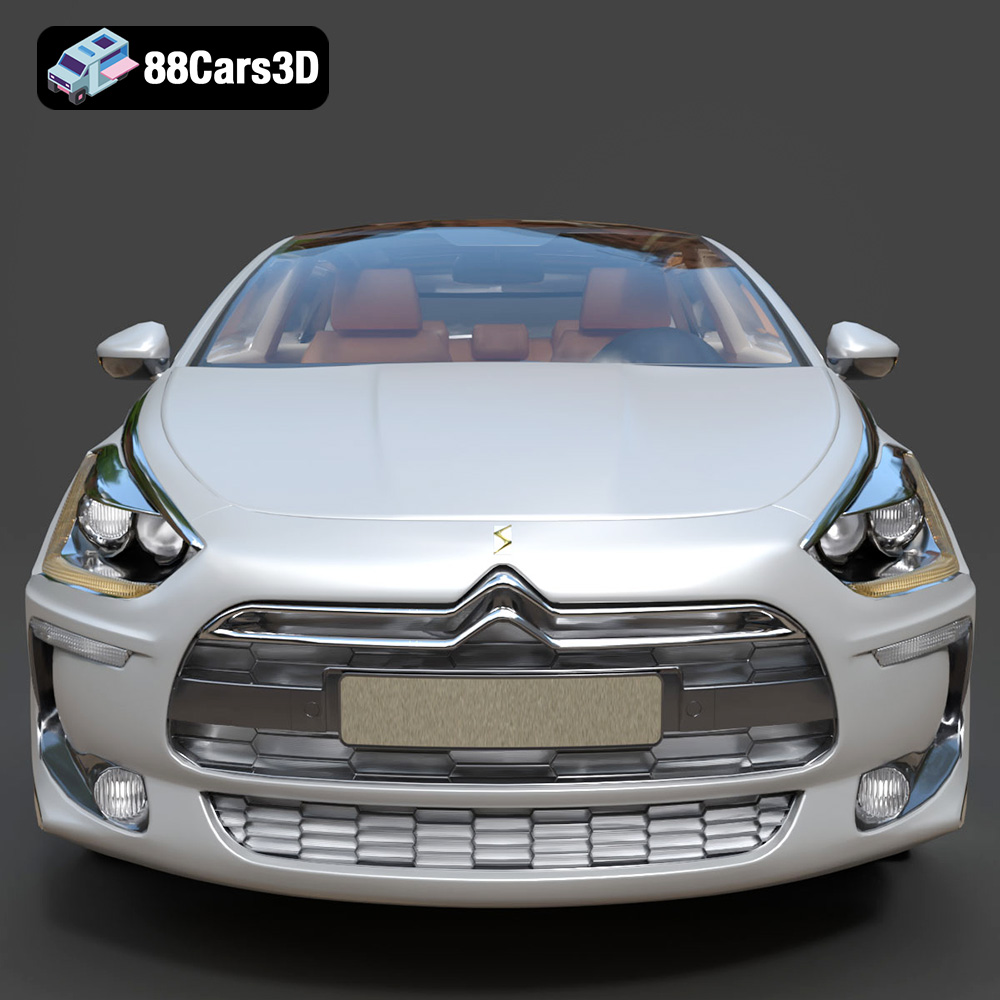
Experience avant-garde French automotive design with this highly detailed 3D model of the Citroen DS5. Renowned for its striking, aviation-inspired styling, the DS5 bridges the gap between a premium hatchback and a sleek executive estate. This model captures the vehicle’s iconic visual elements, most notably the signature chrome “sabers” that stretch seamlessly from the aggressive headlight clusters to the A-pillars. The sculpted bodywork, distinctive front grille, and dynamic dual exhaust setup are faithfully reproduced to reflect its luxurious and futuristic heritage.
$35.00
.blend
.citroen
.ds5
.fbx
.glb
.hatchback
.max
.obj
.ply
.rendering
.stl
.unreal
car-3d-model
executive-car
game asset
game-ready
low-poly
optimized
VR/AR