Get 20% OFF All Premium 3D & STL Models!

In the vast landscape of digital creation, the demand for highly realistic and functionally accurate 3D models continues to grow exponentially. From blockbuster video games and immersive virtual reality experiences to industrial visualization and architectural pre-builds, the foundation of any successful project lies in the quality of its assets. Nowhere is this more apparent than with heavy machinery, where every hydraulic line, every tread, and every panel must convey a sense of power, purpose, and rugged utility.
Creating compelling digital environments often hinges on the inclusion of believable elements. For industries like construction, logistics, or resource management, this means populating scenes with equipment that not only looks correct but can also be animated, interacted with, or even simulated with precision. The challenge for 3D artists and developers is immense: balancing intricate detail with performance optimization, ensuring cross-platform compatibility, and maintaining real-world accuracy. Manually building such models from scratch is a time-consuming and often cost-prohibitive endeavor, requiring specialized skills in modeling, texturing, rigging, and optimization.
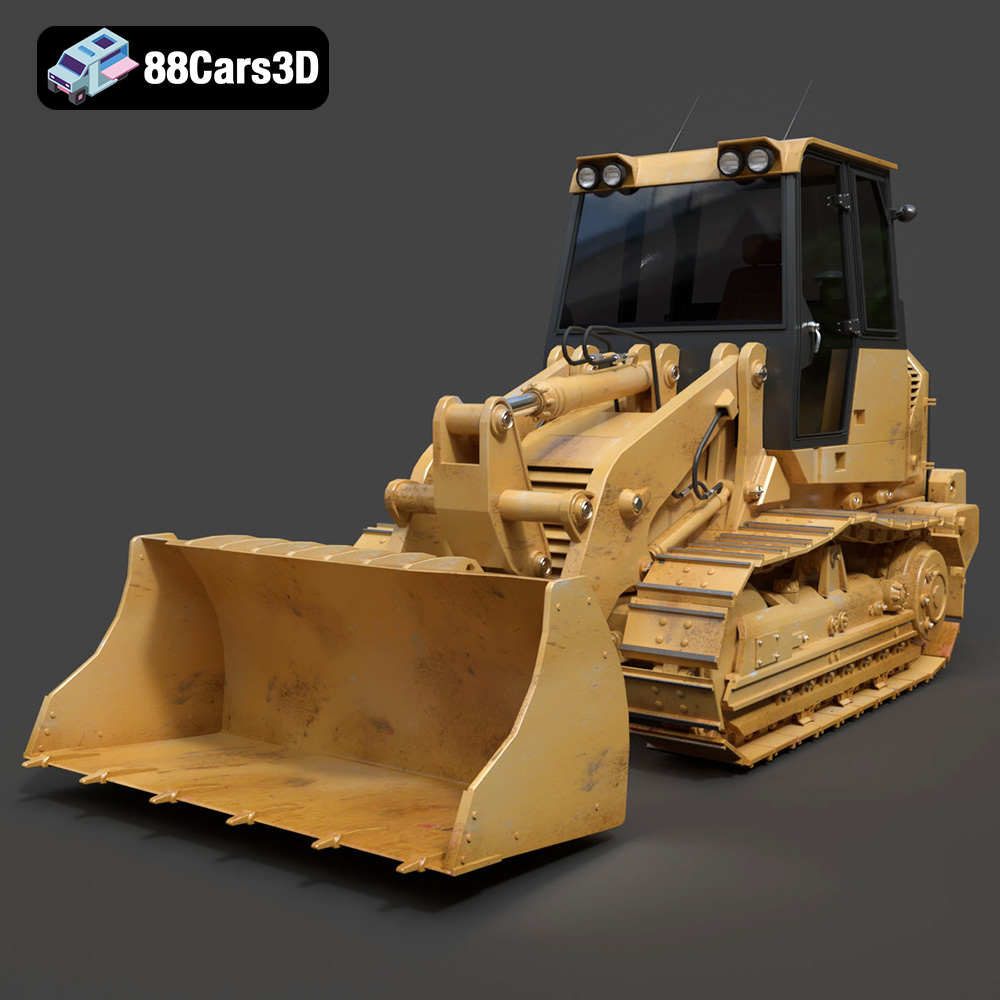
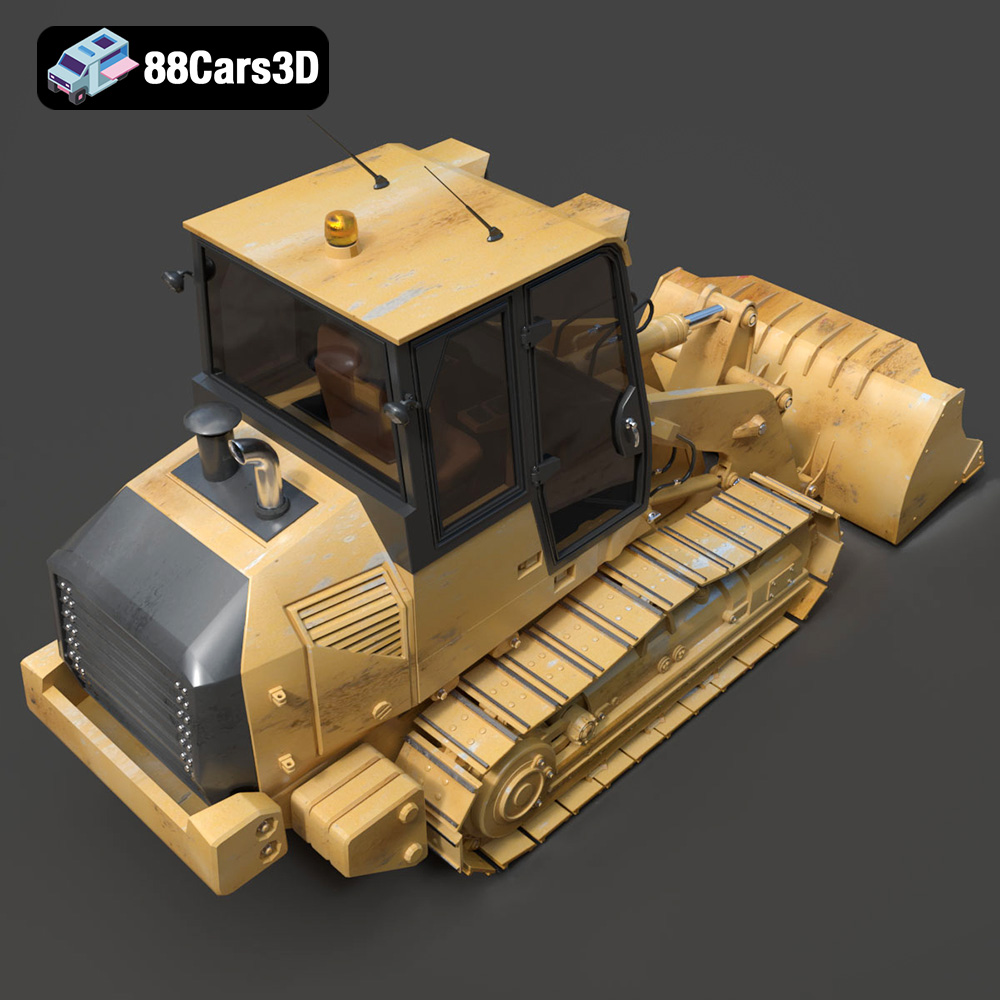
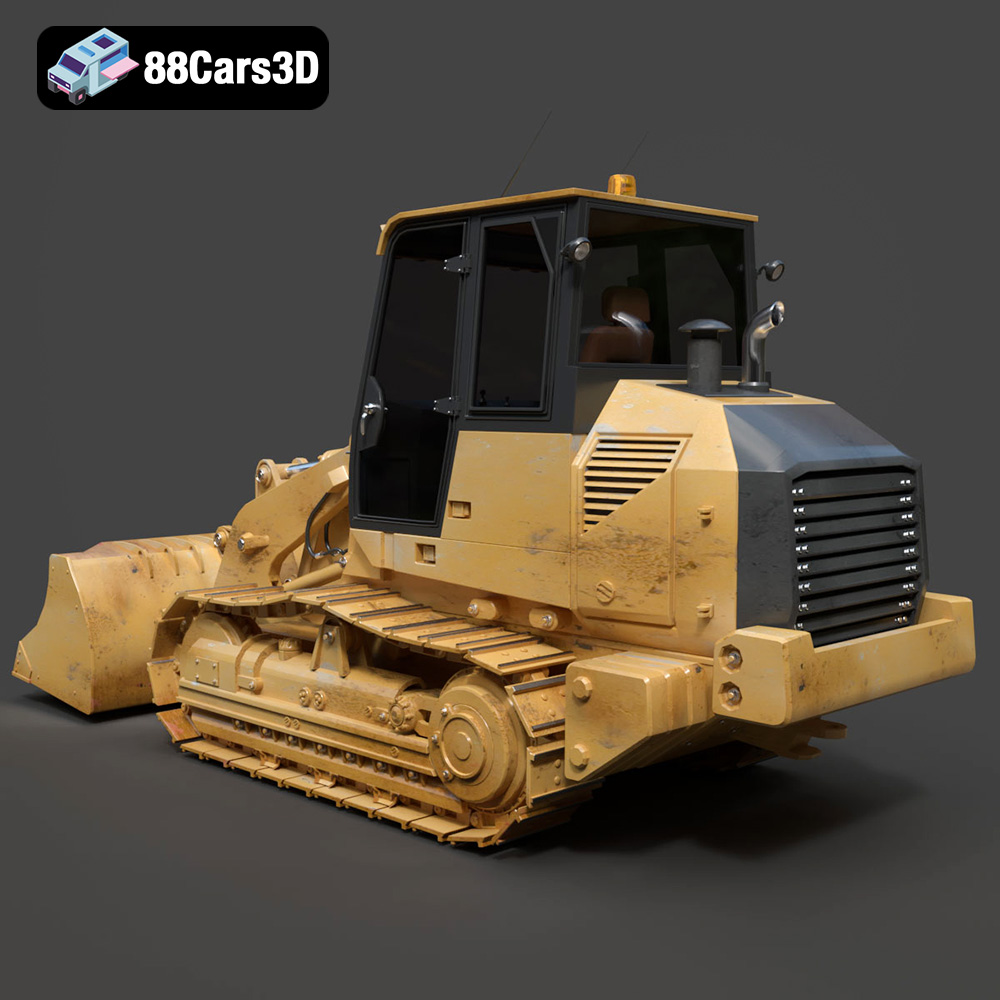
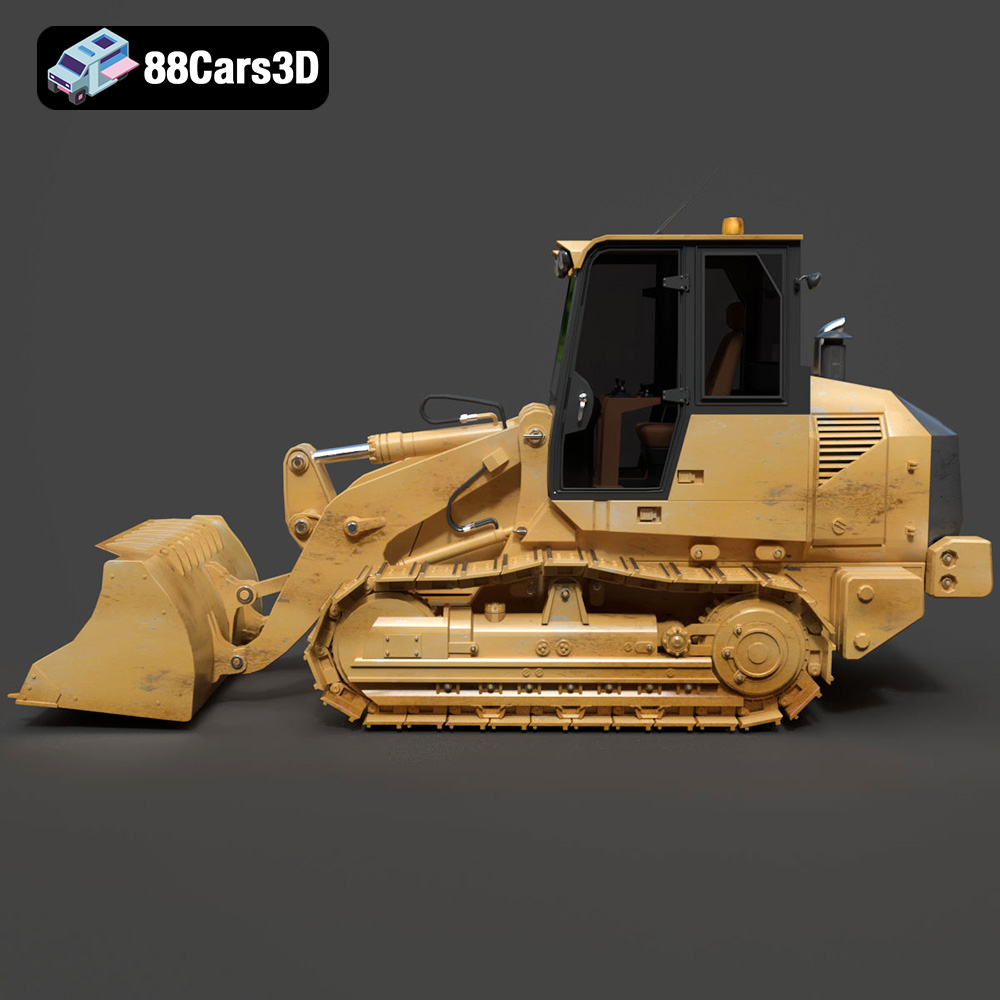
Enter the Track Loader 3D Model from 88cars3d.com – a prime example of an asset designed to meet these exacting professional standards. This isn’t just a generic placeholder; it’s a meticulously crafted digital twin of a heavy-duty construction machine, built for versatility across a multitude of applications. With its robust continuous tracks, powerful front bucket mechanism, and detailed hydraulic systems, this model authentically captures the utilitarian aesthetics and operational complexity of a real-world earthmoving beast. It promises exceptional visual fidelity while remaining efficient for real-time applications, making it an invaluable addition to any professional’s toolkit, whether you’re developing the next big construction simulator or a high-end industrial visualization.
The choice of file format is a critical decision in any 3D workflow, dictating compatibility, feature support, and downstream utility. The Track Loader 3D Model comes equipped with an impressive array of formats, each serving distinct purposes and optimized for different stages of the production pipeline. Understanding these formats is key to maximizing the value of your 3D assets and ensuring seamless integration into your projects.
The .blend format is native to Blender, the popular open-source 3D creation suite. When you receive a .blend file, you’re getting a complete Blender scene, often including cameras, lighting, and all materials configured within Blender’s Eevee or Cycles render engines. This format is ideal for artists who primarily work in Blender, offering full editability of the mesh, access to modifiers, node-based materials, and any pre-setup animation rigs. It ensures that the model can be seamlessly integrated into existing Blender projects or used as a starting point for further customization and animation without any loss of data during import/export. Technical details often include embedded textures, armature data, and custom properties, making it a self-contained package.
.fbx (Filmbox) is arguably the most ubiquitous format in 3D content creation, acting as a crucial bridge between different software applications. Developed by Autodesk, FBX is widely supported by 3ds Max, Maya, Blender, Unreal Engine, Unity, and many others. Its strength lies in its ability to store not just mesh data (vertices, faces, UVs) but also materials, textures, animations (skeletal and blend shapes), cameras, and lights. This makes it ideal for transferring complex animated assets, like the Track Loader with its articulated boom and tracks, between various stages of a pipeline. While highly versatile, users should be aware of potential scale unit discrepancies between software packages, often requiring slight adjustments upon import to maintain real-world dimensions.
The .obj (Wavefront OBJ) format is one of the oldest and most widely supported 3D file types. Its primary advantage is its simplicity and near-universal compatibility across virtually all 3D software. An OBJ file typically stores geometric data (vertices, normals, UV coordinates) and references a separate .mtl (Material Template Library) file for basic material properties like color and texture maps. While robust for static mesh transfer, OBJ does not support animation, rigging, or advanced material definitions, making it less suitable for animated assets or complex PBR workflows. It’s an excellent choice for straightforward mesh exchange when high fidelity geometry is the priority, such as sending a base model for sculpting or general scene population.
.glb is the binary version of glTF (Graphics Language Transmission Format), designed for efficient transmission and loading of 3D scenes and models by engines and applications. It’s often referred to as the “JPEG of 3D” due to its optimization for web and real-time use cases. A .glb file packages all necessary data—geometry, materials (often PBR, physically based rendering), textures, animations, and scene graph—into a single file. This single-file nature makes it incredibly convenient for AR/VR applications, browser-based 3D viewers, and low-latency interactive experiences. For the Track Loader, a .glb file would be perfectly suited for integrating into an AR visualization of a construction site on a mobile device or a web-based configurator.
The .stl (Stereolithography) format is the de facto standard for 3D printing. It represents a 3D model as a series of connected triangles, describing only the surface geometry of an object without color, texture, or material information. For a model like the Track Loader, preparing an STL for 3D printing involves ensuring the mesh is “manifold” (watertight, with no holes or self-intersections) and properly scaled. The detail of the hydraulic arms or track treads in the digital model translates directly to the physical print, enabling hobbyists and professionals to create tangible representations of the heavy machinery.
The .ply (Polygon File Format, or Stanford Triangle Format) is another common format for storing 3D data, particularly useful for scanned data, engineering applications, and scientific visualization. It can store a wider range of properties than OBJ or STL, including color at the vertex level, surface normals, and texture coordinates. While less common for general game assets, PLY files are valuable when precision mesh data and additional per-vertex information are crucial, often seen in CAD workflows, reverse engineering, or detailed structural analysis where fine geometry details are paramount.
While not a standalone file format in the traditional sense, the term .unreal implies an asset that is specifically prepped and optimized for direct import into Unreal Engine. This often means the FBX or a similar format has been tested, materials correctly set up with Unreal’s PBR workflow, collision meshes generated, and potentially even LODs (Levels of Detail) configured for performance scaling. An “engine-ready asset” like the Track Loader in an .unreal context suggests minimal setup work once imported, allowing developers to immediately drop it into their scenes, confident that materials, pivots, and scale will be correct for the real-time environment.
Similar to .blend for Blender, the .max format is native to Autodesk 3ds Max, a leading software for 3D modeling, animation, and rendering. A .max file contains the complete scene information, including the model’s geometry, materials, textures, lighting setups, cameras, and any animation or rigging data. For professionals using 3ds Max, this format offers the highest level of editability and ensures that all scene-specific parameters and modifiers are preserved. It’s the go-to for advanced rendering projects, complex animation setups, or when further modifications within the 3ds Max ecosystem are anticipated.
Creating a 3D model like the Track Loader is a testament to both artistic skill and engineering precision. It’s not enough to simply create a shape; every component must reflect its real-world counterpart, contributing to both visual authenticity and functional believability. This meticulous approach is evident in the Track Loader 3D Model available at 88cars3d.com, making it an exceptional game asset and visualization tool.
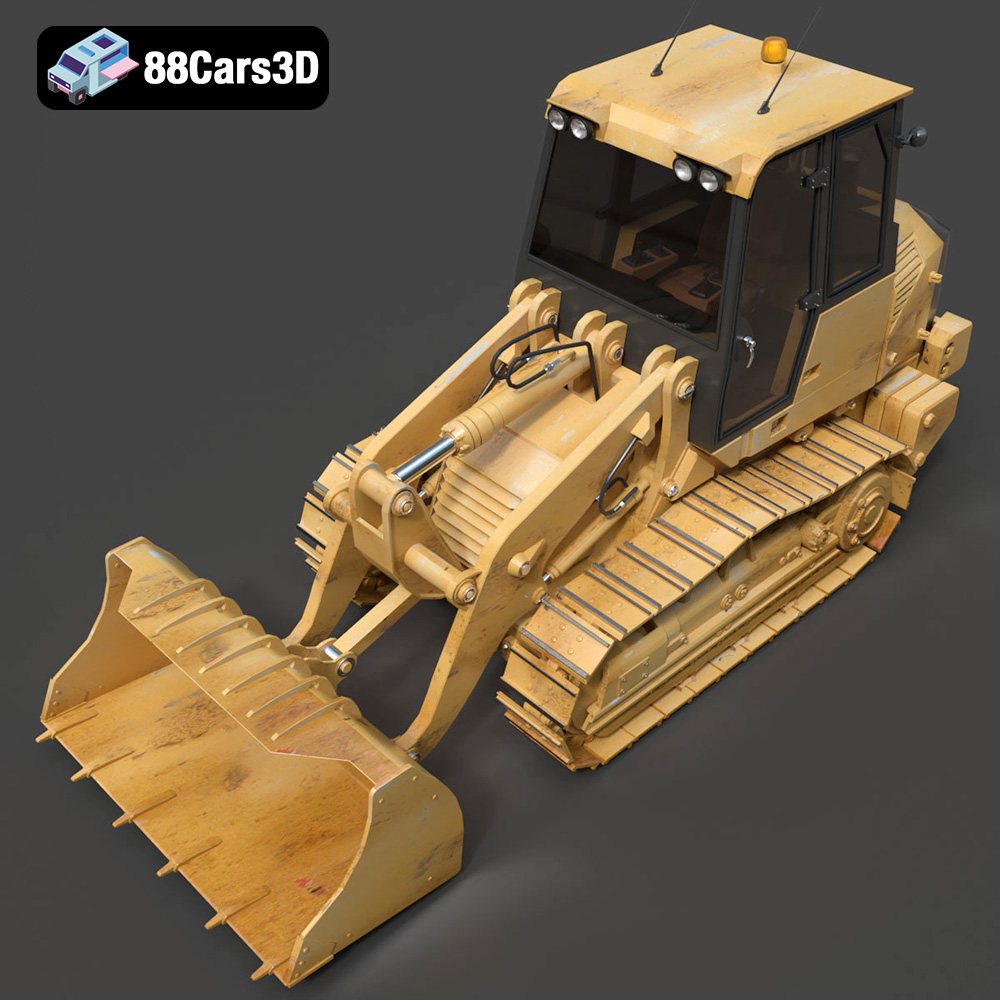
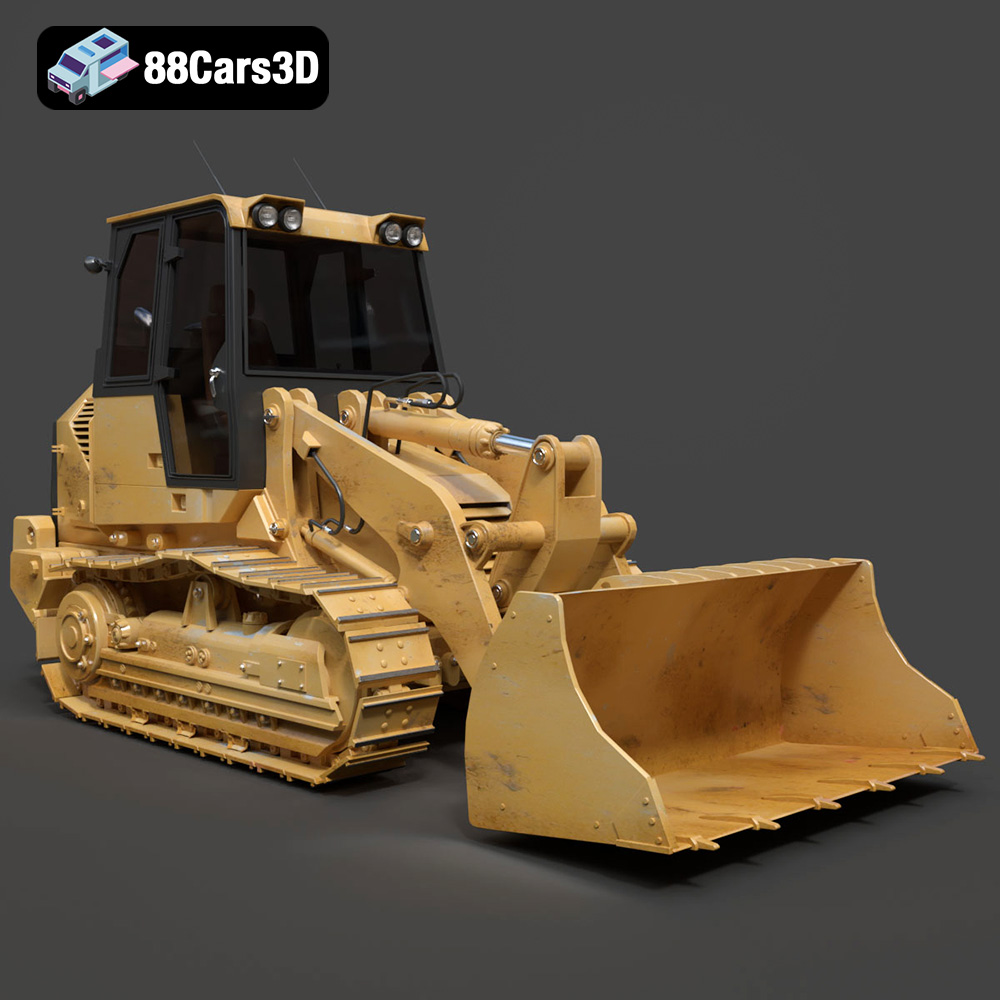
The rugged appeal of heavy construction equipment lies in its purposeful design. The Track Loader model meticulously reproduces these details. From the accurate heavy-duty frame and counterweight geometry that give the machine its imposing presence, to the detailed diesel engine enclosure complete with authentic ventilation grilles and an exhaust stack, no element is overlooked. The complex continuous track system, a hallmark of loaders, features individually modeled sprockets, idlers, and track rollers, ensuring realistic movement and deformation when animated. The front loader boom arms are equipped with intricate hydraulic lines and piston linkages, providing the visual cues for powerful lifting and tilting actions. Even the high-capacity front bucket showcases accurately modeled digging teeth and wear edges, conveying its rigorous function. These details are crucial for any rendering or simulation where realism is paramount.
For simulations, AR/VR experiences, and first-person game perspectives, the interior of a vehicle is just as important as its exterior. The Track Loader model includes an industrial operator cab enclosed within a robust ROPS (Roll-Over Protective Structure), a critical safety feature in real-world machinery. Inside, a detailed pneumatic suspension seat with heavy-duty safety restraints enhances realism. The accurate dual joystick control layout for precision boom, bucket, and drive operation, along with a detailed instrument panel featuring digital displays, analog gauges, and environmental controls, provides a fully immersive cockpit. Optimized glass reflections and accurate interior spatial geometry ensure that first-person views in simulators are convincing and provide a true sense of being at the controls.
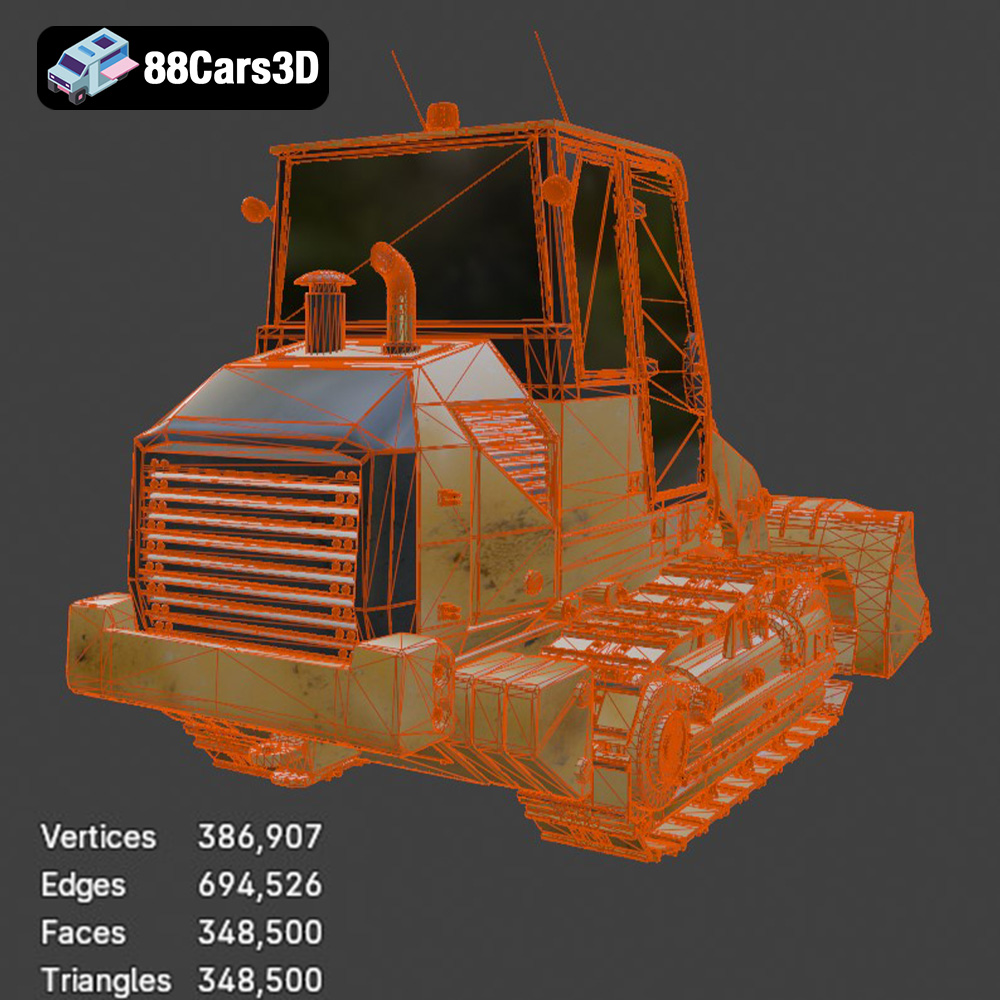
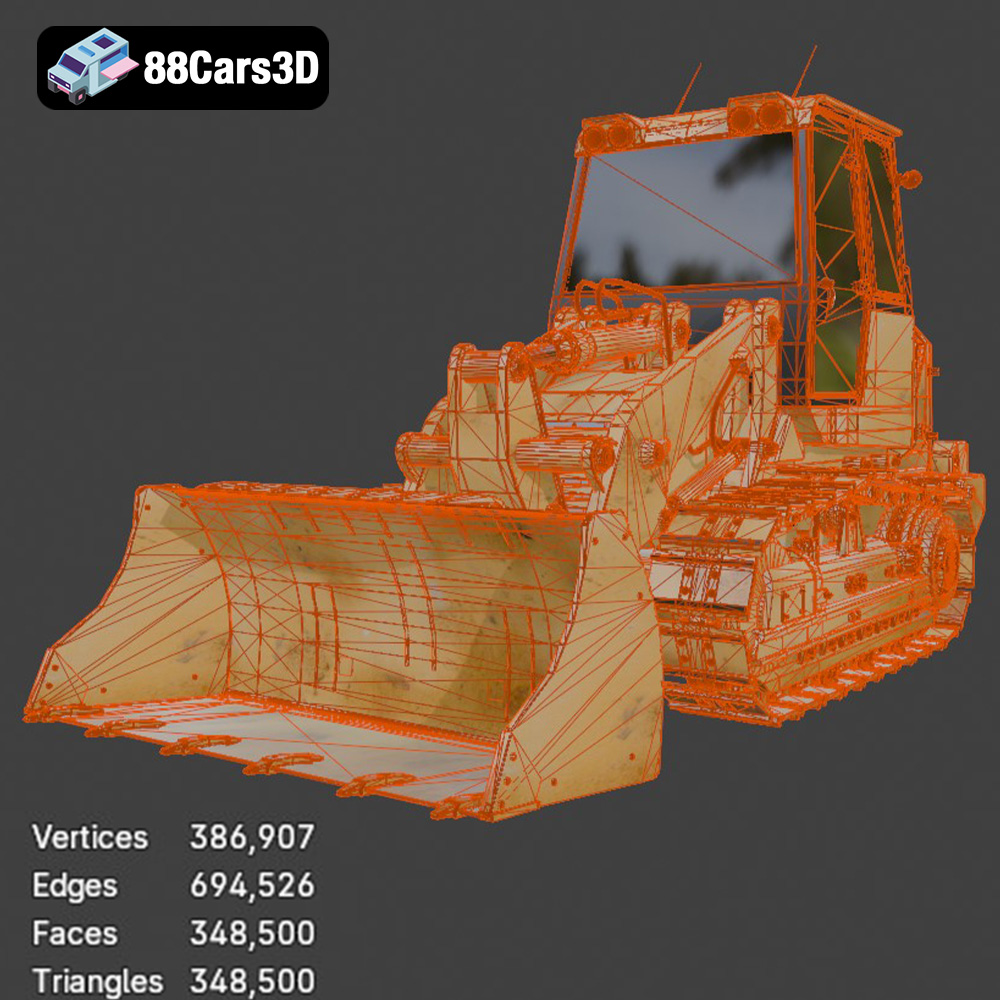
Achieving a balance between visual fidelity and real-time performance is a constant challenge in 3D asset creation. The Track Loader model boasts an optimized topology of approximately 348,500 triangles. This poly count is a carefully chosen sweet spot: it delivers exceptional visual fidelity, allowing for all the intricate details mentioned, while remaining highly efficient for real-time applications in engines like Unreal Engine and Unity. This optimization means that developers can integrate multiple instances of the loader into a complex scene without significant performance bottlenecks. Furthermore, the model’s real-world scale accuracy, based on actual construction vehicle chassis schematics, ensures that it fits perfectly into existing environments and interacts correctly with other assets within a scene.
The demands of real-time environments, whether for interactive games or professional simulations, are rigorous. Assets must be optimized, flexible, and visually stunning. The Track Loader 3D Model is engineered precisely for these challenges, providing a versatile foundation for a multitude of immersive experiences.
In the realm of game development, assets like the Track Loader are invaluable. For open-world sandbox games, players expect rich, interactive environments, and a highly detailed, optimized construction vehicle can be a centerpiece for gameplay. Imagine a player operating this Track Loader to clear debris, excavate foundations, or transport materials in a realistic construction simulator. The model’s proper pivot setup for boom elevation, bucket tilt, and track continuous rotation means it’s ready for immediate rigging and animation, significantly accelerating development time. Its game-ready polycount ensures smooth performance even on moderate hardware, making it ideal for everything from high-fidelity PC titles to mobile simulation experiences. Integrating this 3D car model, or rather, this robust construction vehicle model, into a game engine is streamlined thanks to the inclusion of formats like .fbx and .unreal, which are specifically tailored for real-time pipelines.
Virtual Reality (VR) is revolutionizing industrial training, offering safe, cost-effective, and highly immersive learning environments. The Track Loader model is perfect for creating VR safety training modules. Trainees can experience operating heavy machinery in various simulated scenarios, learning proper procedures, identifying hazards, and practicing emergency responses without any real-world risk. The detailed cockpit features, including the accurate joystick controls and instrument panel, provide an authentic experience for muscle memory training. The model’s optimized geometry ensures smooth frame rates within VR headsets, crucial for preventing motion sickness and maintaining immersion. This application underscores the value of precise game assets in serious gaming and professional development.
Augmented Reality (AR) offers exciting possibilities for visualizing heavy equipment in real-world contexts. Imagine project managers using their tablets to overlay a virtual Track Loader onto a physical construction site plan, assessing its spatial fit, movement paths, and operational clearances before any ground is broken. Sales teams can use AR to showcase different equipment configurations to clients, allowing them to “walk around” and interact with a full-scale virtual model in their own environment. The .glb format, specifically optimized for AR and web-based display, makes this integration seamless and highly accessible. This innovative use of 3D car models, or in this case, heavy machinery, extends beyond entertainment, offering tangible benefits in planning and presentation.
While the Track Loader excels in real-time applications, its high level of detail and comprehensive file formats also make it an outstanding choice for offline rendering, industrial visualization, and even physical fabrication through 3D printing. The versatility of this 3D asset from 88cars3d.com truly knows no bounds.
For industrial marketing campaigns, architectural visualizations, or detailed site planning, high-quality rendered images and animations are essential. The Track Loader model provides an excellent foundation for achieving studio-quality results. With its meticulously crafted exterior and interior features, artists can set up dynamic lighting, apply advanced materials, and render stunning visuals that accurately represent the equipment in various environments. Whether it’s showcasing a new housing development with construction underway or illustrating the efficiency of heavy machinery in a promotional video, the model’s detail (down to the hydraulic cylinders and aggressive track treads) ensures photorealism. Compatibility with major 3D software platforms and rendering engines via .max, .blend, and .fbx files allows artists to leverage powerful renderers like V-Ray, Corona Renderer, Cycles, or Arnold to produce breathtaking results.
The ability to convert a digital 3D model into a physical object offers unique opportunities, particularly for hobbyists, collectors, or even educational purposes. The Track Loader 3D Model is convertible to the .stl format, making it suitable for 3D printing. Imagine having a highly detailed, display-scale replica of this construction beast on your desk. For optimal results, specific 3D print settings are recommended: scales like 1:24, 1:35, or 1:50 allow for a good balance of detail and manageable size. Resin printing is often recommended for finer details like hydraulic lines and small components due to its superior resolution at lower layer heights (0.04–0.12 mm). Structural integrity can be maintained by printing the frame angled, and parts like tracks and the bucket separately. Post-processing steps like sanding, priming, and applying authentic construction yellow or orange factory colors, along with weathering effects, can transform a raw print into a museum-quality model. This fusion of digital design and physical manifestation opens new avenues for interaction with 3D car models and construction equipment.
No project is identical, and the flexibility to customize assets is paramount. The Track Loader model offers extensive customization options, enabling users to adapt it precisely to their project’s needs. Change exterior chassis colors to match specific corporate fleet liveries or project aesthetics. Modify material textures to apply realistic dirt, mud, or worn-metal weathering effects, instantly telling a story of hard work and use. Adjust material finishes—from matte industrial paint to gloss accents or exposed steel—to achieve the desired visual style. Furthermore, the model is designed to adapt lighting for diverse scenarios, whether depicting a bustling daytime construction site or a dynamic nighttime work environment. This level of customization ensures that the asset remains versatile and valuable across a wide range of creative and professional applications.
The true measure of a high-quality 3D asset is its seamless integration into existing professional workflows. The Track Loader 3D Model is designed with this principle at its core, offering not just a model, but a catalyst for efficiency and enhanced creative output.
Acquiring the Track Loader from 88cars3d.com is just the first step; its real value lies in how effortlessly it fits into your pipeline. With included file formats like .blend, .fbx, .obj, .glb, .stl, .ply, .unreal, and .max, you have the flexibility to import the model into virtually any 3D software or game engine with minimal fuss. For instance, game developers can directly import the .fbx into Unity or Unreal Engine, knowing that the proper pivot setup for the boom, bucket, and tracks is already configured for animation. Visualization artists using 3ds Max can open the .max file and immediately access all scene data for high-resolution renders. This multi-format approach drastically reduces the time spent on conversion and setup, allowing artists and developers to focus on creative tasks rather than technical hurdles.
The technical specifications of this Track Loader model are designed to provide significant advantages. The optimized 348,500 triangle count strikes a perfect balance, ensuring detailed visuals without overtaxing real-time engines. This means smoother frame rates in games and AR/VR applications, and faster render times for static images and animations. Real-world scale accuracy ensures that the model fits seamlessly into environments built with realistic dimensions, preventing scale issues that often plague imported assets. The detailed interior, complete with accurate controls and robust ROPS, enhances the immersion for first-person views in simulators and VR training modules. These inherent technical advantages translate directly into higher quality projects, delivered more efficiently.
Investing in premium 3D assets like the Track Loader from 88cars3d.com offers a clear value proposition. It eliminates the need for costly and time-consuming in-house modeling from scratch, allowing teams to allocate resources to other critical areas of development. The consistency and quality of a professional asset elevate the overall production value of any project, whether it’s a commercial game, an industrial training simulation, or an architectural walkthrough. For those seeking high-quality 3D car models, or in this case, robust heavy machinery, 88cars3d.com provides a reliable source for assets that are not just visually appealing but technically sound and project-ready.
The digital landscape is built on the quality of its assets, and the demand for authentic, high-performance 3D models has never been greater. The Track Loader 3D Model stands as a testament to meticulous craftsmanship and technical foresight, providing an indispensable tool for professionals across game development, AR/VR, industrial visualization, and 3D printing. Its diverse file formats, optimized geometry, and stunning attention to detail ensure that it integrates seamlessly into any workflow, accelerating production and elevating project quality.
Whether you’re creating the next immersive construction simulator, developing critical safety training modules in VR, producing photorealistic marketing renders, or even fabricating a physical replica, this Track Loader model from 88cars3d.com provides the robust foundation you need. It’s more than just a model; it’s a versatile, high-fidelity asset engineered for success in today’s demanding digital creation environments.
The Track Loader is a versatile and heavy-duty piece of construction machinery, renowned for its formidable pushing power, traction, and lifting capabilities. Featuring rugged continuous tracks, a robust front bucket mechanism, and a reinforced industrial chassis, this earthmoving beast is essential for demanding excavation, grading, and material handling tasks. The model authentically captures the utilitarian aesthetics of heavy equipment, complete with detailed hydraulic systems and a secure operator’s cabin. This highly detailed 3D model boasts an optimized topology of approximately 348,500 triangles, delivering exceptional visual fidelity while remaining efficient for real-time applications. From the intricate hydraulic cylinders and linkages to the aggressive track treads and industrial paneling, every element has been meticulously crafted to meet the highest standards of game development, AR/VR simulations, and high-end industrial visualization.
$26.00
.blend
.fbx
.glb
.max
.obj
.ply
.rendering
.stl
.unreal
3d model
construction-equipment
earthmover
game asset
game-ready
heavy-machinery
industrial-vehicle
loader
low-poly
optimized
track-loader
VR/AR