Get 20% OFF All Premium 3D & STL Models!

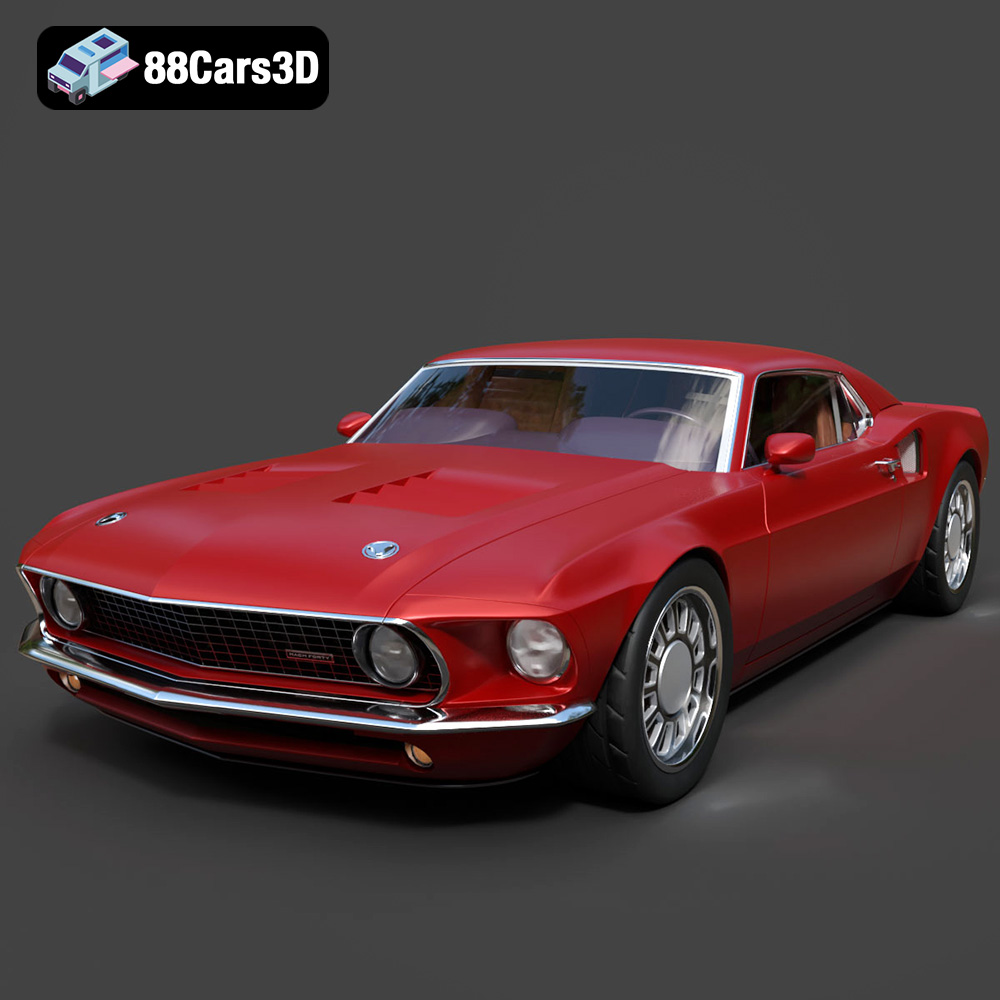
In the dynamic world of 3D visualization, automotive design, and game development, the demand for exceptionally detailed, high-quality vehicle models is constant. Artists, developers, and engineers alike seek assets that not only look stunning but are also technically robust and versatile enough to integrate seamlessly into diverse projects. Enter the Ford Mustang Mach 40, a legendary custom build that marries the raw power of a mid-engine Ford GT40 with the timeless allure of a 1969 Mustang Mach 1. Imagine capturing that breathtaking fusion in a digital asset – a task made effortless with the exceptional Ford Mustang Mach 40 3D Model, available for download on 88cars3d.com.
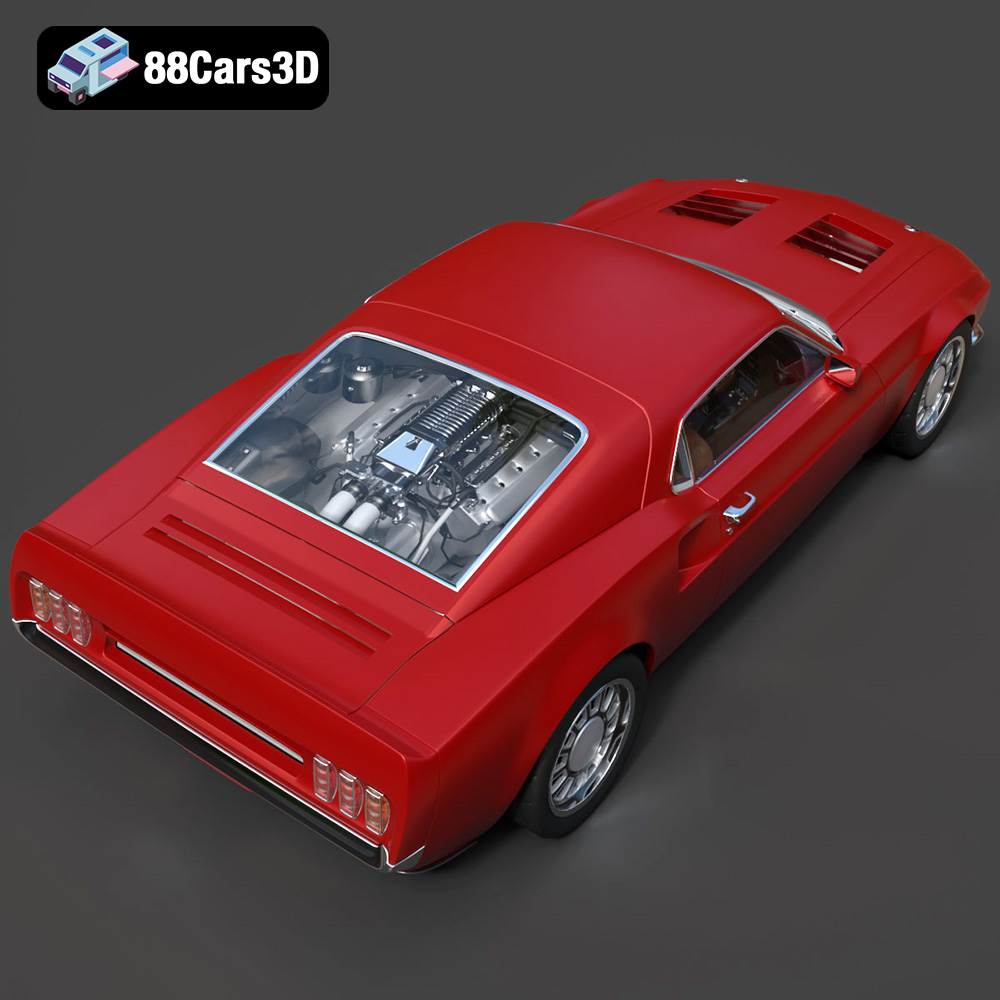
This isn’t just another car model; it’s a meticulously crafted digital twin, engineered to meet the highest standards of professional pipelines. From the aggressive widebody stance to the visible supercharged V8 engine, every detail has been faithfully recreated to deliver unparalleled realism and performance across various applications. Whether you’re aiming for a photorealistic render, an immersive game asset, or an interactive AR/VR experience, this model provides the foundational excellence you need to achieve your creative vision.
The Ford Mustang Mach 40 is a true marvel of automotive engineering, a restomod that pushes boundaries by blending two iconic Ford legacies. The 3D model encapsulates this spirit, offering a digital asset that is as much a work of art as its real-world counterpart. Its design ethos reflects a deep understanding of both classic aesthetics and modern performance, making it a compelling choice for any project demanding excellence.
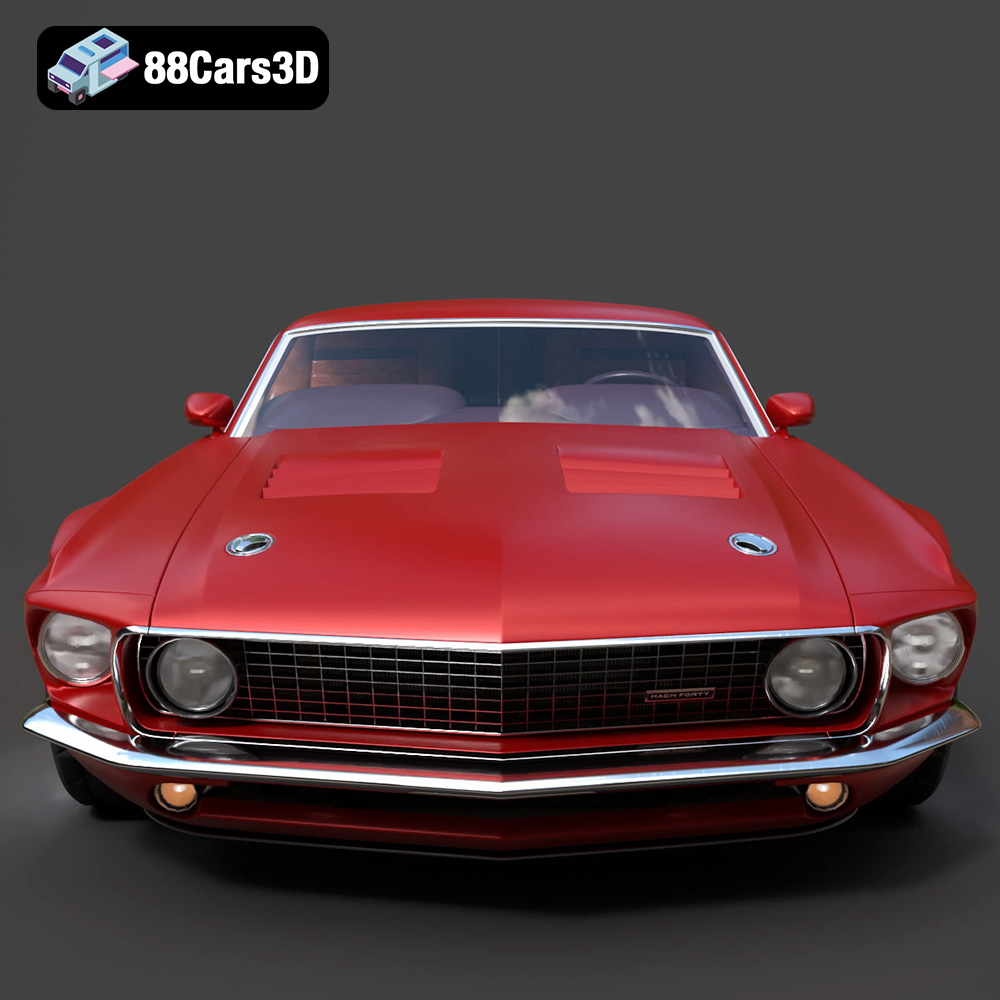
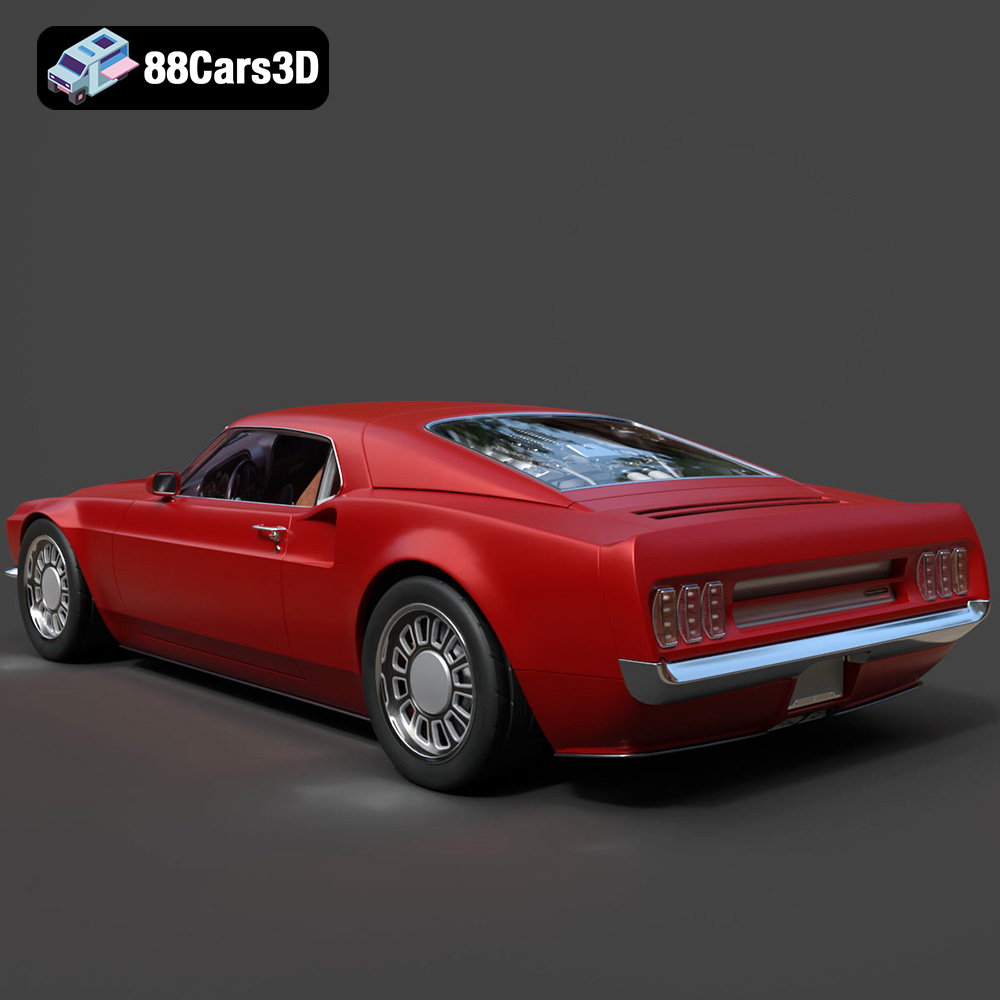
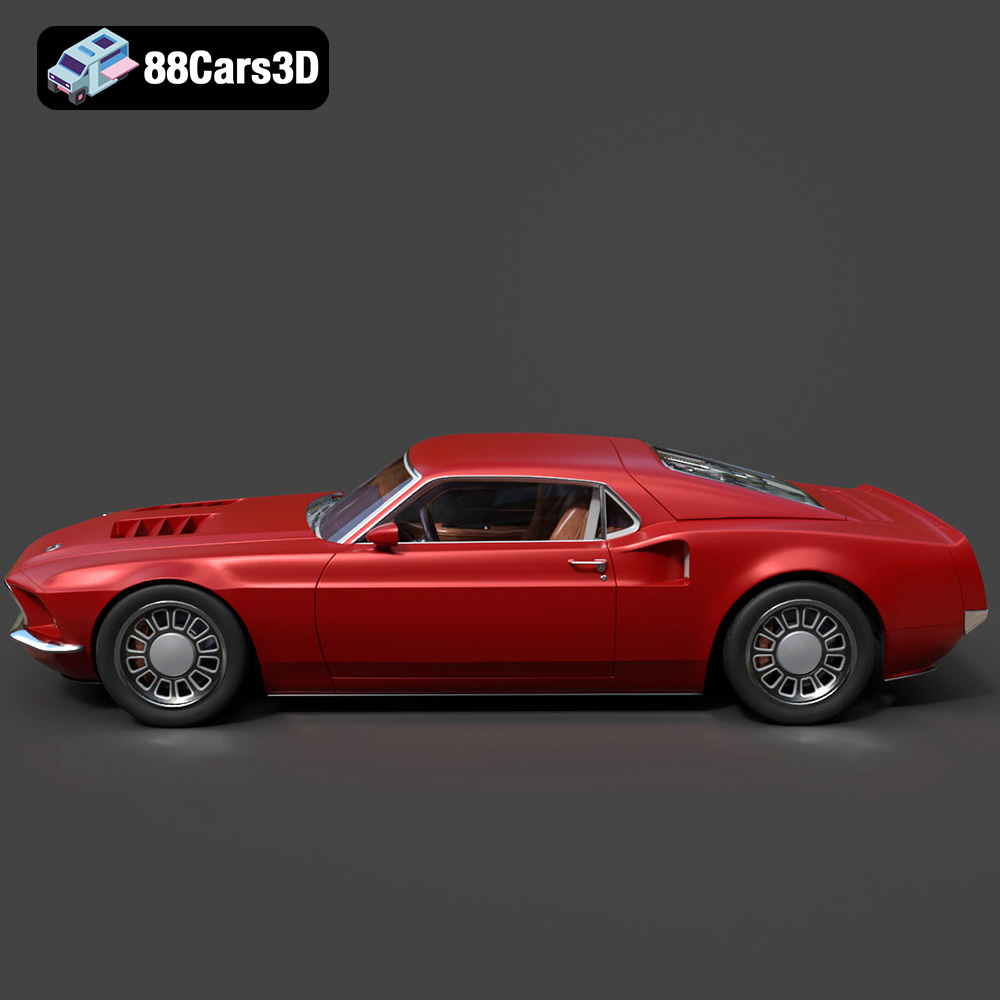
At its core, the Ford Mustang Mach 40 3D model is a testament to the power of thoughtful design. It captures the essence of the 1969 Mustang Mach 1 with its classic lines and aggressive grille, seamlessly integrating the audacious widebody flares and aerodynamic enhancements characteristic of a high-performance, mid-engine supercar. The model accurately portrays the vehicle’s unique identity, which is crucial for projects where brand recognition and aesthetic impact are paramount. This blend of eras and styles makes it incredibly versatile, fitting into scenes that range from retro-futuristic to cutting-edge contemporary.
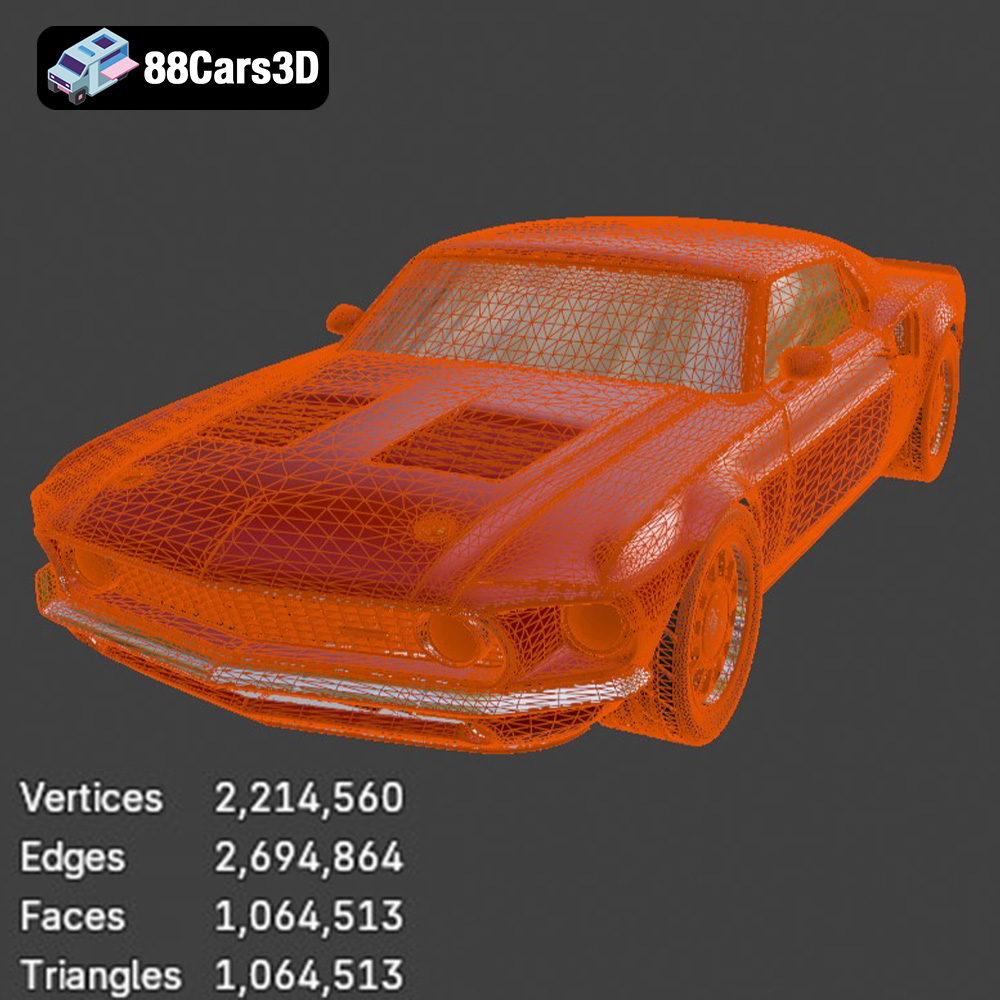
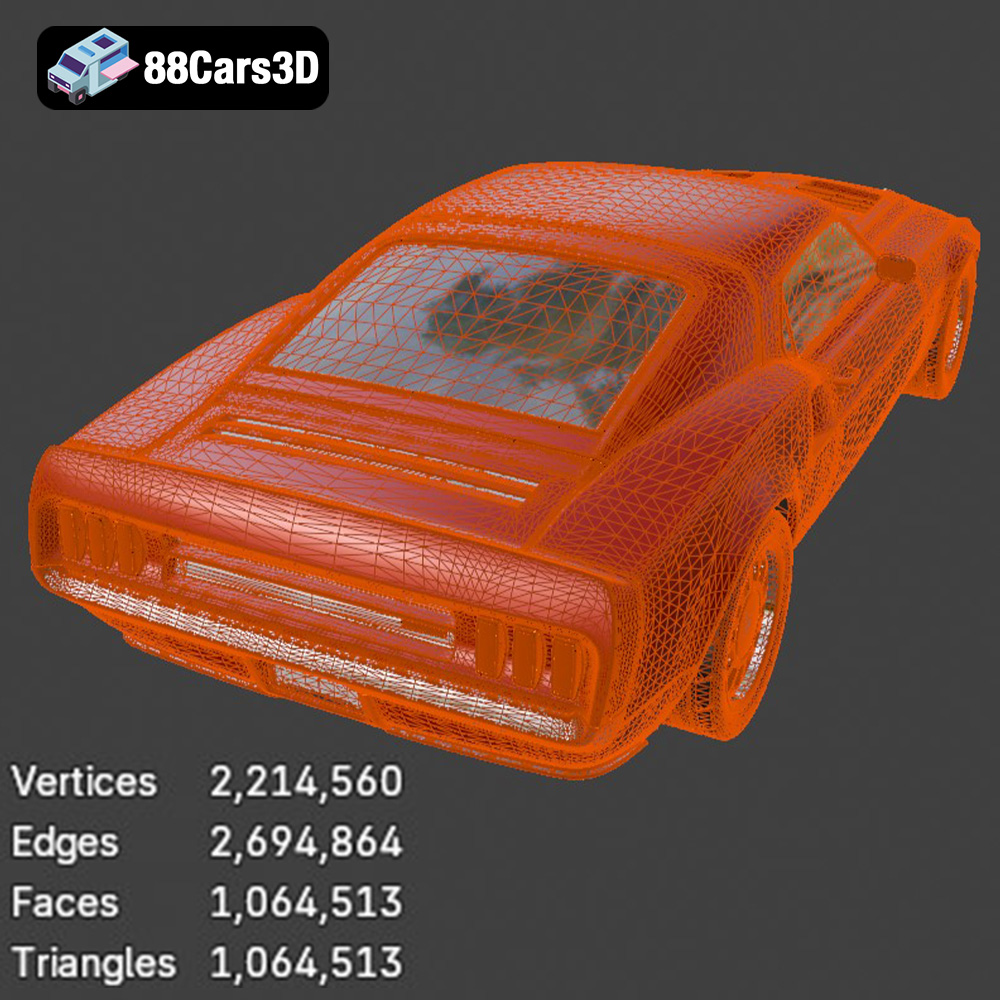
With a robust triangle count of 1,064,513, this 3D car model strikes an impressive balance between high visual fidelity and optimization. This polycount ensures that close-up renders reveal intricate details without appearing faceted, while simultaneously being efficient enough for real-time applications where performance is critical. The meticulous topology ensures clean deformations, crucial for animation, and provides a solid foundation for advanced texturing and shading. The level of detail extends to every aspect, from the precision of the panel gaps to the subtle curves of the bodywork, all contributing to an authentic and believable representation.
Choosing the right file format for your 3D car model is as crucial as selecting the model itself. Each format serves distinct purposes, offering varying degrees of compatibility, optimization, and feature retention across different software and platforms. The Ford Mustang Mach 40 3D Model offers a comprehensive suite of formats, ensuring maximum flexibility for any professional workflow.
The .blend format is native to Blender, an open-source 3D creation suite renowned for its versatility and powerful toolset. When you download the .blend file from 88cars3d.com, you’re getting a fully editable Blender scene with all materials, textures, lighting setups, and any associated rigging or animation intact. This makes it ideal for Blender users who want to dive straight into modifying, animating, or rendering the model within their familiar environment. It preserves scene hierarchy, custom properties, and even physics simulations, offering the most comprehensive access to the original project data.
.fbx (Filmbox) is an industry-standard format developed by Autodesk, serving as a robust exchange format between various 3D applications, game engines, and animation pipelines. It excels at transferring geometry, materials, textures, animations, and skeletal data with high fidelity. For the Ford Mustang Mach 40, the .fbx file is perfect for importing into Unreal Engine, Unity, 3ds Max, Maya, or Cinema 4D, ensuring that critical data like pivot points for wheels and suspension are maintained, making it ideal for real-time and cinematic projects requiring animation. Its widespread adoption makes it a go-to for complex assets.
.obj (Wavefront OBJ) is one of the oldest and most universally supported 3D formats. It primarily stores geometry (vertices, faces, normals, UV coordinates) and can reference external .mtl (material) files for basic material properties. While it doesn’t support animation or rigging, its simplicity and widespread compatibility make it an excellent choice for static mesh exchange across virtually any 3D software. The .obj version of the Ford Mustang Mach 40 3D model guarantees that you can open and work with the base geometry no matter your preferred software, serving as a reliable fallback or a starting point for re-texturing in specialized applications.
.glb (GL Transmission Format Binary) is an increasingly popular format optimized for efficient transmission and loading of 3D scenes and models in web, augmented reality (AR), and virtual reality (VR) applications. It bundles geometry, materials, textures, and animation into a single compact file, making it perfect for rapid deployment on platforms like Sketchfab, Babylon.js, or Google’s ARCore/Apple’s ARKit. The .glb file of the Ford Mustang Mach 40 is essential for creating immersive virtual showrooms, product configurators, or engaging mobile AR experiences, where fast loading and smooth performance are paramount.
The .unreal format signifies an engine-ready asset specifically tailored for Unreal Engine. This often means the model is already imported, optimized, and set up within an Unreal project structure, potentially including materials, LODs (Levels of Detail), and collision meshes configured for real-time environments. Utilizing the .unreal file for the Ford Mustang Mach 40 significantly streamlines the integration process for game developers, saving valuable time on asset preparation and ensuring optimal performance within the engine.
.stl (Stereolithography) is the standard file format for 3D printing. It represents the surface geometry of a 3D object using a collection of interconnected triangles. While it doesn’t carry color or texture information, its simplicity makes it universally compatible with 3D printers and slicing software. The .stl variant of the Ford Mustang Mach 40 3D model allows hobbyists and professionals to physically manifest this digital masterpiece, creating display-scale models with incredible accuracy, ready for post-processing and custom paint jobs.
.ply (Polygon File Format), or Stanford Triangle Format, is a versatile format for storing 3D data, particularly useful for scanned data and high-precision meshes. It can store not only geometry but also color, transparency, and other properties per vertex or face. For the Ford Mustang Mach 40, the .ply file offers a robust option for applications requiring precise mesh analysis, CAD integration, or where raw, detailed geometric data is preferred without the overhead of other formats.
Finally, .max is the native file format for Autodesk 3ds Max, one of the leading 3D modeling, animation, and rendering software packages. Like .blend for Blender, the .max file contains the complete 3ds Max scene, including all modifiers, materials, lighting, cameras, and animation data. This provides 3ds Max users with full editability and control over every aspect of the Ford Mustang Mach 40 3D model, making it perfect for high-end cinematic rendering, architectural visualization integration, or complex animation projects.
The true value of a professional 3D car model lies not just in its visual appeal but in its underlying technical structure. The Ford Mustang Mach 40 3D Model exemplifies this, featuring an optimized design that supports a wide array of demanding applications.
The 1,064,513 triangle count is a carefully chosen figure. For high-end cinematic rendering, it provides enough vertices to ensure smooth curves and crisp details, even under extreme close-ups or high-resolution outputs. Yet, it remains “game-ready,” striking a perfect balance for real-time engines like Unreal and Unity, where performance is paramount. The topology is clean, predominantly quad-based where appropriate, facilitating easy UV unwrapping, material assignment, and subdivision for even finer detail if needed. Crucially, the model adheres to real-world scale accuracy, an essential factor for architectural visualizations, automotive configurators, and simulations where environmental integration must be precise.
One of the most significant advantages for animators and game developers is the intelligent segmentation of the model. The wheels, suspension, and steering components are all separated, and more importantly, they are set up with proper pivot points. This means that rotating the wheels along their axles, simulating steering input, or articulating the suspension travel becomes a straightforward task. This pre-setup saves countless hours in the animation pipeline, allowing artists to focus on creative movement rather than technical preparation. Imagine a thrilling racing game sequence or a detailed promotional animation – these features make complex actions simple to implement.
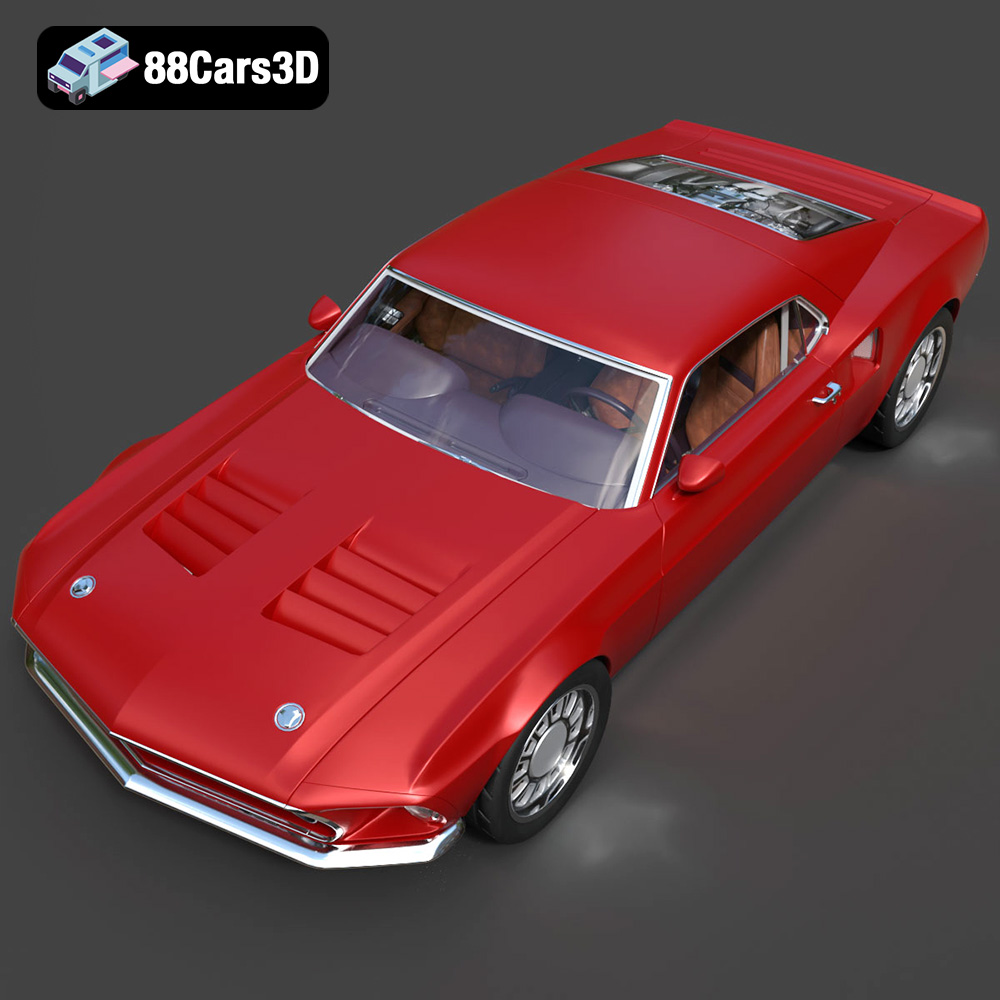
The attention to detail in this Ford Mustang Mach 40 3D Model is truly remarkable. On the exterior, the aggressive widebody geometry is faithfully captured, as is the intricate design of the custom high-performance dual exhaust system. The iconic 1969-style quad headlights and custom LED taillights are modeled with precision, ready for sophisticated lighting setups. The deep-dish staggered alloy wheels are not just placeholders; they feature realistic high-performance tire treads, and behind them, detailed independent suspension and slotted brake rotors with custom calipers complete the high-performance aesthetic. Under the rear glass, the mid-mounted 5.4L supercharged V8 engine block is visible, a centerpiece of this custom build and a critical component for achieving absolute realism.
Inside the cockpit, the model continues to impress. Custom retro-modern bucket seats with detailed stitching provide both comfort and style. The period-correct yet modernized steering wheel, detailed instrument cluster with classic analog gauges, custom pedals, billet shifter, and center console all contribute to an authentic and immersive experience. The interior geometry is specifically optimized for first-person POV in gaming, ensuring that players or virtual passengers have a seamless and believable view.
The versatility of the Ford Mustang Mach 40 3D Model truly shines when integrated into various professional pipelines. Its design caters to a broad spectrum of creative and technical demands.
For game developers, the Ford Mustang Mach 40 is an ideal asset. Its “game-ready” optimization, signified by its balanced polycount, ensures that it performs efficiently within real-time engines like Unreal Engine and Unity without compromising visual quality. The included .fbx and .unreal formats are specifically tailored for rapid integration. In an open-world racing title, players could customize and drive this iconic vehicle, experiencing its detailed interior from a first-person perspective. For a simulator, the accurate real-world scale and animated components (wheels, steering, suspension) would provide a realistic driving experience, crucial for believable physics and interaction. LODs (Levels of Detail) can be easily generated from this high-quality base mesh, further optimizing performance for distant views without noticeable degradation.
Automotive rendering demands perfection, and the Ford Mustang Mach 40 3D model delivers. Whether working in 3ds Max, Blender, or other software, artists can leverage the model’s high fidelity for stunning visual output. Using renderers like V-Ray, Corona, Cycles, or Octane, the intricate details of the exterior and interior, combined with sophisticated material setups (glossy paints, metallic finishes, leather textures), can produce images indistinguishable from photographs. Imagine a marketing campaign for a luxury brand, a feature in a digital automotive magazine, or a detailed garage scene showcasing this unique vehicle under studio lighting – the model provides the perfect canvas. The .max and .blend files offer complete control over scene setup, allowing for custom lighting, camera angles, and advanced material customization to achieve specific aesthetic goals.
The burgeoning fields of Augmented Reality (AR) and Virtual Reality (VR) present exciting opportunities for showcasing digital assets. The Ford Mustang Mach 40 3D Model, particularly in its optimized .glb format, is perfectly suited for these immersive experiences. Imagine a virtual showroom where potential buyers can walk around the Mach 40, open its doors, examine the engine, and even customize its color and materials in real-time. For an AR experience, users could place the Mach 40 directly into their driveway via a smartphone, visualizing its impressive scale and presence in their own environment. Web-based configurators, allowing users to interact with the model directly in their browser, become seamless with such a well-optimized and versatile asset, offering unparalleled engagement for marketing and sales.
The journey of a 3D model doesn’t always end on a screen. For enthusiasts and hobbyists, the ability to physically hold a creation is the ultimate satisfaction. The Ford Mustang Mach 40 3D Model caters to this desire with its print-ready capabilities.
The inclusion of the .stl format is a direct nod to the 3D printing community. Converting the high-detail model into .stl ensures compatibility with virtually any 3D printer and slicing software. While the initial model boasts immense detail, preparing it for 3D printing involves considering practical aspects such as scaling, support structures, and print orientation. The recommended scales (1:12, 1:18, 1:24) provide a good balance between manageable print times and retaining intricate details. For optimal results, particularly with complex elements like the exhaust system, mirrors, and spoilers, strategically placed supports are essential to prevent structural failures during the printing process.
The product description wisely recommends resin printing for the Ford Mustang Mach 40, especially for achieving the fine details present in the engine, interior, and brake components. Resin printers, with their ability to produce extremely thin layers (0.04–0.12 mm), can capture the nuances that might be lost on FDM (Fused Deposition Modeling) printers. However, FDM printing remains viable for larger components or where absolute fidelity isn’t the primary concern. Post-processing is key: sanding to smooth layer lines, applying primer to create a uniform surface, and then meticulously painting with authentic factory colors and metallic finishes can elevate a raw print into a museum-quality display piece. Printing components like the frame angled and wheels separately further enhances structural integrity and detail capture, offering a truly rewarding physical model.
A truly professional 3D asset provides a foundation, but also invites customization. The Ford Mustang Mach 40 3D Model is designed with this flexibility in mind, allowing artists to inject their unique creative vision.
The model’s robust topology and clean UVs facilitate easy modification of materials and textures. Artists can effortlessly change body colors, experimenting with a spectrum from classic muscle car hues to modern metallic silvers, or even apply custom livery designs. Tire textures can be swapped between street profiles and aggressive track slicks to suit different racing scenarios or aesthetic preferences. Material finishes are also highly adaptable, allowing for switches between matte, gloss, or even advanced carbon fiber textures to highlight different panels or aerodynamic elements. This level of control ensures the model can be tailored precisely to the demands of any project or client.
Beyond surface appearance, the model’s inherent structure allows for significant adaptation. Lighting can be adjusted to create dramatic studio renders, gritty street scenes, or bright, open-world environments. The separated components mean custom modifications, such as different wheel designs or even subtle body kit alterations, are much easier to implement. Whether the goal is to portray the Mach 40 as a pristine show car, a battle-hardened racer, or a futuristic concept, the underlying 3D model provides the necessary flexibility. This adaptability is invaluable for studios and freelancers who need a single high-quality asset to serve multiple projects with distinct visual requirements.
The Ford Mustang Mach 40 is more than just a custom car; it’s a statement. And the Ford Mustang Mach 40 3D Model is more than just a digital file; it’s a professional-grade asset meticulously crafted to empower creators across every facet of 3D production. From its robust triangle count and optimized topology to its comprehensive suite of file formats, every aspect is designed for seamless integration and outstanding results. Whether you’re animating a cinematic masterpiece in 3ds Max, developing the next-gen racing game in Unreal, creating an interactive AR experience with .glb, or even bringing this digital marvel into the physical realm via 3D printing, this model stands ready. Its versatility, technical integrity, and stunning visual fidelity make it an indispensable tool for anyone serious about digital automotive visualization. Explore this exceptional 3D car model and many more high-quality game assets today at 88cars3d.com, and elevate your projects to unprecedented levels of realism and professionalism.
The Ford Mustang Mach 40 is a legendary custom build that flawlessly merges the classic 1969 Mustang Mach 1 styling with the mid-engine performance and chassis dynamics of a Ford GT40. This iconic restomod features a breathtaking widebody stance, aggressive aerodynamic cues, and a visible mid-mounted supercharged V8 engine that redefines American muscle. This highly detailed 3D model boasts a triangle count of 1,064,513, ensuring stunning visual fidelity and precise topology. Designed for versatility, it delivers exceptional realism for close-up renders while maintaining an optimized structure suitable for high-end game development, virtual reality (VR), augmented reality (AR), and professional cinematic animation. Perfect for high-octane racing games, automotive configurators, cinematic garage scenes, and photorealistic architectural visualizations.
$37.50
.blend
.fbx
.ford
.glb
.max
.obj
.ply
.rendering
.stl
.unreal
car-3d-model
custom-car
game asset
game-ready
low-poly
mid-engine
muscle-car
mustang-mach-40
optimized
VR/AR