Mastering Digital Construction: A Deep Dive into High-Fidelity 3D Excavator Models
In the rapidly evolving landscape of digital visualization, the demand for highly detailed and technically accurate 3D models has never been greater. From cinematic rendering to immersive virtual reality experiences and real-time game environments, professional-grade assets form the bedrock of compelling digital content. For industries like construction, engineering, and simulation, the ability to accurately represent heavy machinery in a digital space is paramount. This isn’t just about aesthetics; it’s about functionality, scale, and the precise replication of complex mechanical systems.
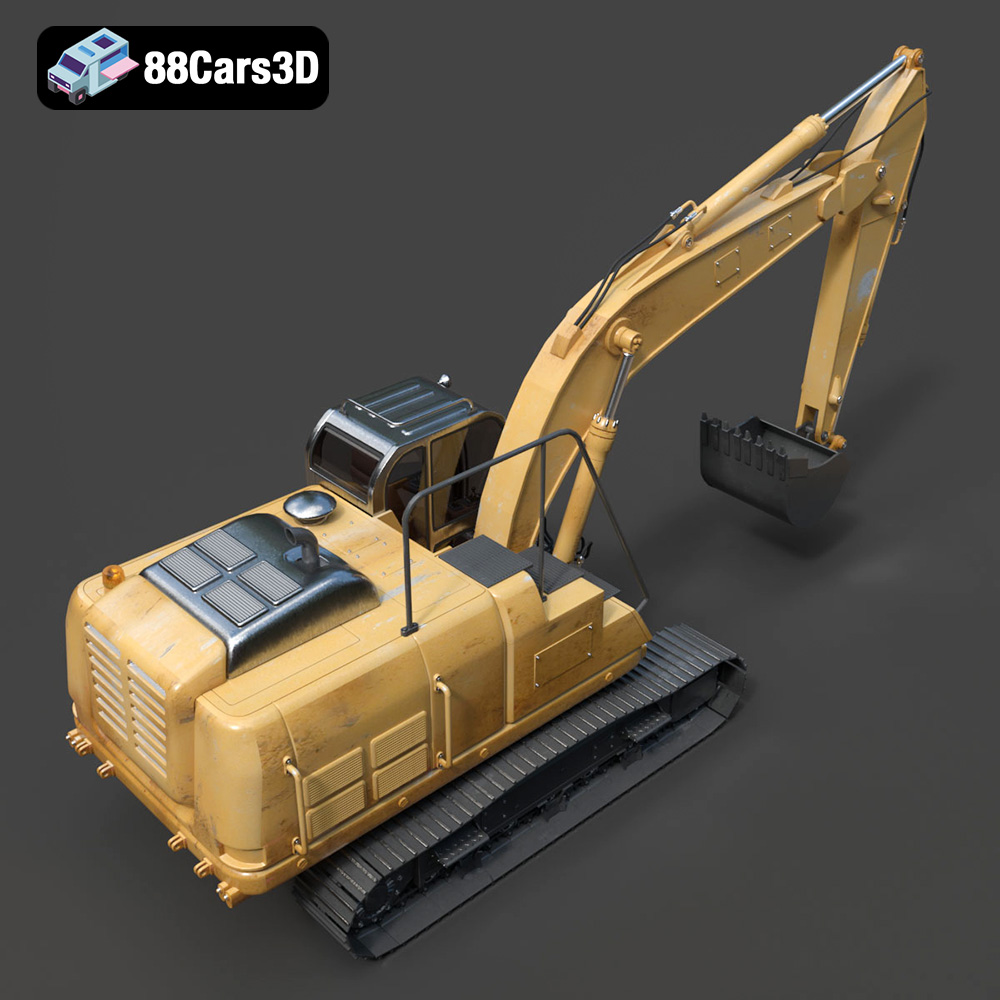
Today, we’re taking an in-depth look at a standout example of such an asset: the Track Excavator 3D Model, available for download on 88cars3d.com. This model isn’t just a static representation; it’s a meticulously crafted digital powerhouse designed to meet the rigorous demands of professional workflows. Whether you’re a game developer building a new construction simulator, an architect visualizing a future site, or an educator creating AR/VR training modules, this excavator model offers unparalleled authenticity and versatility right out of the box. Its detailed geometry, optimized performance, and broad file format support make it an essential tool for anyone looking to elevate their industrial 3D projects.
The Foundation of Digital Worlds: Why High-Quality 3D Assets Matter
High-quality 3D assets are the unsung heroes of countless digital experiences. They are the building blocks that transform abstract concepts into tangible, interactive realities. In an era where visual fidelity dictates engagement, investing in professionally crafted models like the Track Excavator 3D Model is not just a luxury; it’s a necessity.
Bridging Reality and Simulation
The ability to accurately model real-world objects, especially complex machinery, allows for the creation of incredibly powerful simulations. Imagine training new operators in a virtual environment where they can manipulate a track excavator with realistic feedback, without the risks or costs associated with physical equipment. Or consider engineers visualizing construction phases, detecting potential clashes, or optimizing workflows long before ground is broken. This Track Excavator 3D Model, with its real-world scale accuracy and proper pivot setup for articulation, serves as a perfect digital twin for such applications. It enables industries to prototype, train, and visualize with a level of precision that was once impossible, greatly reducing errors and increasing efficiency. This principle applies equally to detailed 3D car models used in automotive design reviews or complex architectural models for urban planning – the underlying need for fidelity remains constant.
The Demand for Detail and Optimization
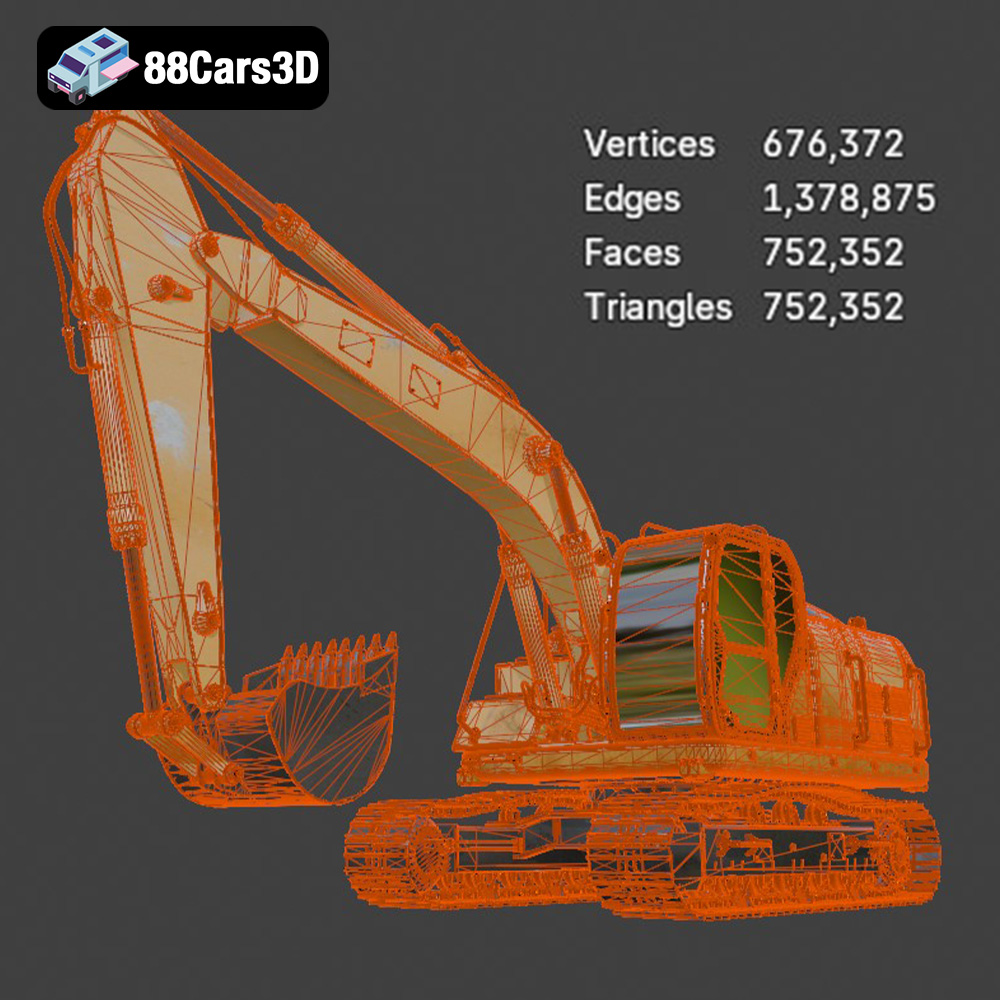
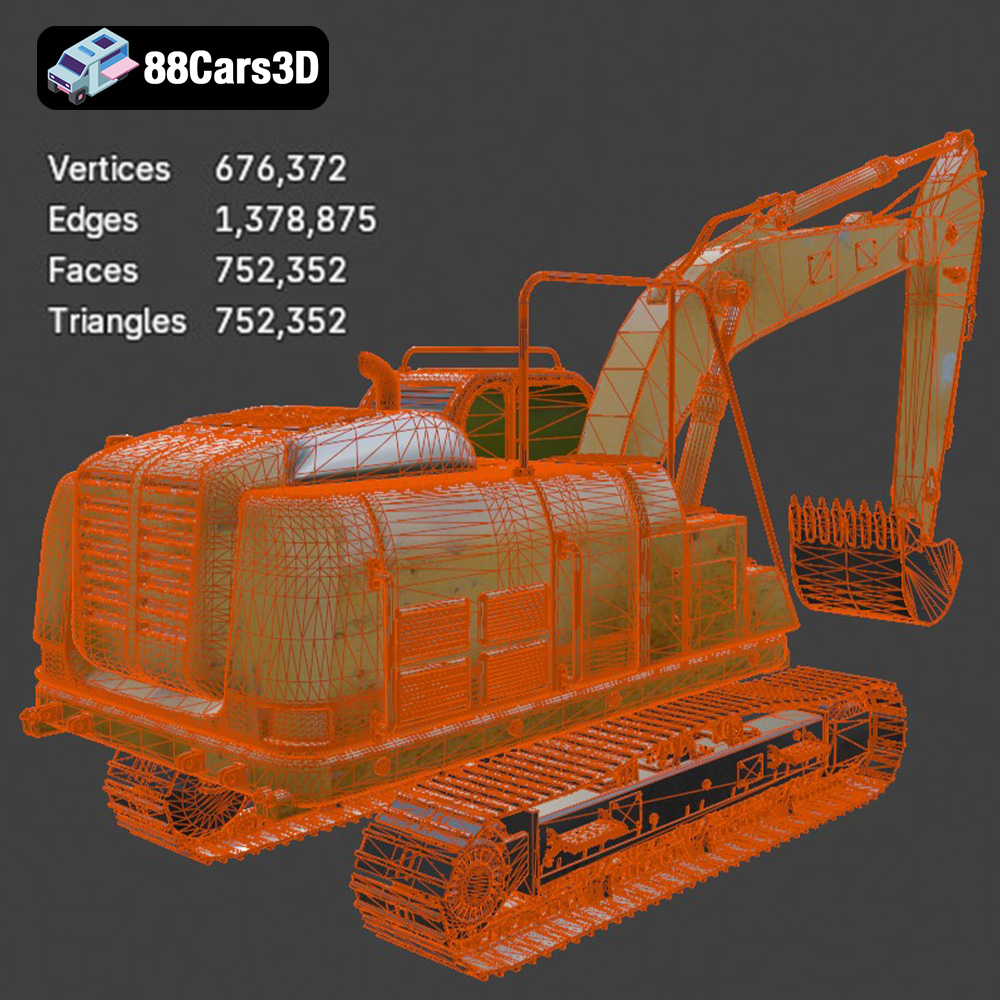
Achieving a balance between visual splendor and operational efficiency is one of the greatest challenges in 3D content creation. A model might look fantastic, but if it’s too polygon-heavy or poorly optimized, it can bring a real-time engine to its knees. Conversely, a highly optimized model that lacks detail will fail to impress. The Track Excavator 3D Model strikes this critical balance with a triangle count of 752,352. This level of detail ensures uncompromising visual fidelity—from the intricate hydraulic lines to the individual track links—while remaining “game-ready.” This optimization is crucial for smooth performance in demanding environments like Unreal Engine or Unity, as well as for fluid AR/VR experiences. It demonstrates a thoughtful approach to asset creation, understanding that a professional model must deliver both stunning visuals and robust performance.
Understanding 3D Model File Formats
The world of 3D modeling is rich with various file formats, each designed with specific purposes, compatibility, and technical characteristics in mind. Choosing the correct format is paramount for ensuring seamless integration into your workflow and achieving your project goals. The Track Excavator 3D Model from 88cars3d.com comes equipped with an extensive range of formats, making it incredibly versatile for almost any application.
Editable Scene Formats
These formats are typically native to specific 3D software and retain the most information, including scene hierarchy, animations, materials, and sometimes even modifier stacks.
- .blend – Fully editable Blender scene with materials: This is Blender’s native file format. When you download a .blend file, you’re getting the complete Blender project, which includes not just the mesh, but also all materials (often set up with Cycles or Eevee renderers), textures, lighting, cameras, rigging, animations, and even modifiers. It’s ideal for Blender users who want full control to modify the model, re-rig, animate, or render directly within Blender, leveraging its powerful toolset. It’s an excellent choice for customization and detailed scene integration.
- .max – Editable 3ds Max project for animation and rendering: Similar to .blend for Blender, .max is the native file format for Autodesk 3ds Max. It offers a comprehensive scene description, including complex hierarchies, materials (often V-Ray or Corona setups), lighting, cameras, and intricate animation data. This format is invaluable for professionals working in architectural visualization, high-end animation studios, or anyone deeply integrated into the 3ds Max ecosystem, providing maximum flexibility for rendering, animation sequences, or detailed scene composition.
Universal & Exchange Formats
These formats act as bridges between different 3D software, facilitating interoperability.
- .fbx – Ideal for Unreal, Unity, and real-time pipelines: Developed by Autodesk, FBX (Filmbox) is arguably the most widely adopted exchange format in the industry. It’s incredibly robust, capable of storing not just mesh data (vertices, faces, UVs, normals) but also animations, skinning, blend shapes, cameras, lights, and PBR (Physically Based Rendering) material assignments. Its strength lies in its ability to transfer complex animated scenes between different software packages (e.g., from 3ds Max or Blender to Unreal Engine or Unity). For game development, .fbx is often the go-to choice for importing characters, vehicles like our excavator, and environmental assets due to its comprehensive data retention and widespread support.
- .obj – Universal format for cross-software compatibility: OBJ (Wavefront Object) is one of the oldest and most universally supported 3D formats. It’s a simple, text-based format primarily designed for storing geometric data—vertices, normals, UV coordinates, and faces. It can reference external .mtl (material) files for basic material properties. While it doesn’t support animation, rigging, or scene hierarchy, its simplicity makes it highly compatible across virtually all 3D software. It’s perfect for static models where you only need the raw geometry and basic texture mapping, serving as a reliable fallback when more complex formats are causing issues.
- .ply – Precision mesh format for CAD or analysis: PLY (Polygon File Format or Stanford Triangle Format) is often used for storing 3D data from 3D scanners or for CAD applications. It can store a variety of properties including color, transparency, surface normals, texture coordinates, and even data confidence values. It’s particularly good for storing precise mesh data with a focus on geometric accuracy rather than animation or scene data. Engineers and researchers often prefer .ply for its ability to handle dense point clouds and high-precision polygon meshes, making it suitable for analysis or manufacturing processes.
Real-time & Specialized Formats
These formats are optimized for specific use cases, often focusing on performance or web delivery.
- .glb – Optimized for AR, VR, and browser-based display: GLB (GL Transmission Format Binary) is the binary version of glTF, a royalty-free specification for the efficient transmission and loading of 3D scenes and models by engines and applications. GLB packs all asset data—geometry, materials, textures, animations—into a single file, making it incredibly easy to share and deploy. It’s the “JPEG for 3D,” highly optimized for web browsers, AR (Augmented Reality), and VR (Virtual Reality) environments, ensuring fast loading times and broad compatibility with modern platforms. The excavator in .glb format would be perfect for an interactive web viewer or a mobile AR app.
- .unreal – Engine-ready asset for real-time environments: While “.unreal” isn’t a standard, broadly recognized 3D file extension, it typically signifies an asset specifically packaged and optimized for Unreal Engine. This could be an .fbx file that has been meticulously imported, had its materials set up, collision meshes generated, and sometimes even blueprint logic attached within Unreal Engine, then potentially exported as a UASSET or simply provided in a way that is immediately usable within the engine. This means minimal setup for Unreal users, with all textures, materials, and necessary configurations pre-applied, saving significant development time and ensuring engine-native performance.
3D Printing Specific
This format is the industry standard for additive manufacturing.
- .stl – Suitable for 3D printing output: STL (Stereolithography) is the de facto standard for 3D printing. It represents a 3D model as a series of connected triangles (a triangulated mesh) without any color, texture, or material information. It’s purely geometric. For the Track Excavator, providing an .stl file means it’s ready to be sliced and sent to a 3D printer. This allows enthusiasts or professionals to bring the digital model into the physical world, creating scale replicas for display or functional prototypes.
The availability of such a wide array of formats for the Track Excavator 3D Model highlights its versatility and the foresight of its creators. It ensures that regardless of your software, pipeline, or end-use case, you have a direct path to integrate this high-quality asset into your project.
Deconstructing the Track Excavator: A Masterclass in Industrial 3D Modeling
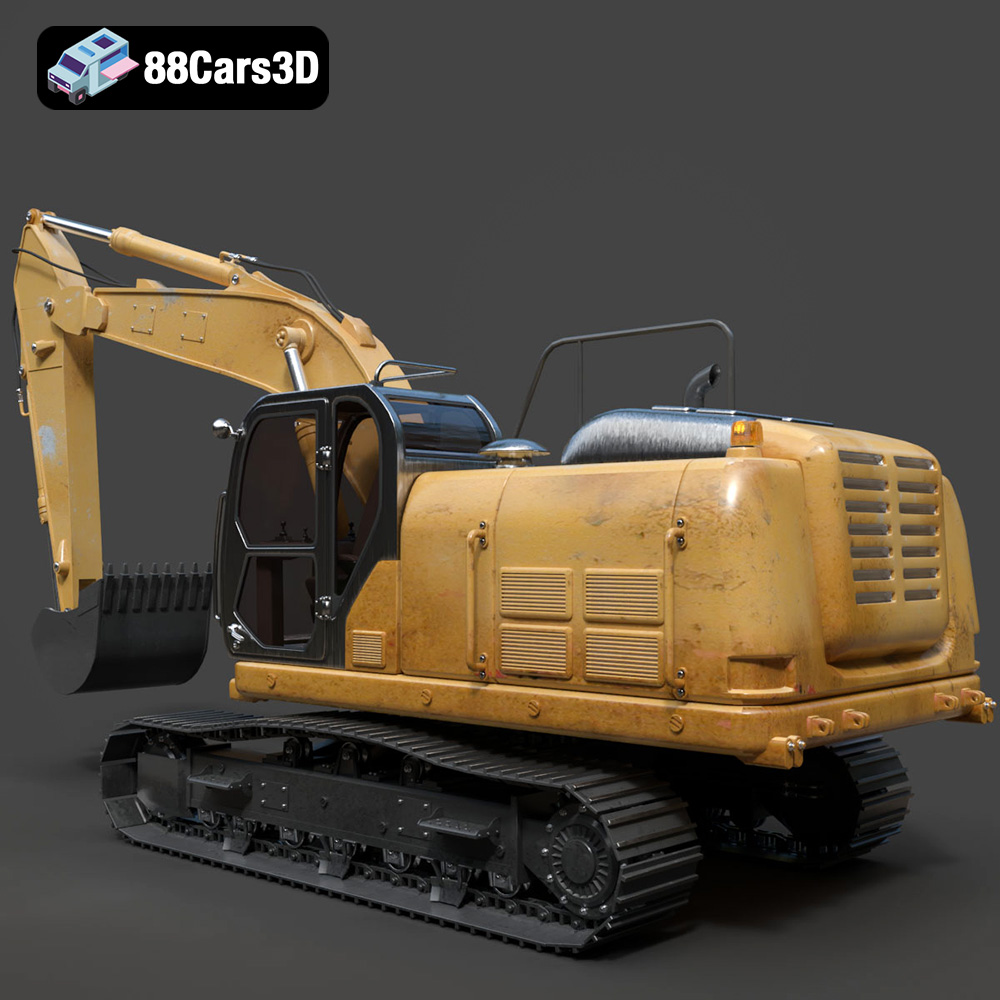
The Track Excavator 3D Model from 88cars3d.com stands as a testament to meticulous engineering and artistic craftsmanship. Every component, from its robust chassis to the smallest hydraulic line, has been faithfully recreated, offering an unparalleled level of detail and authenticity for industrial-themed projects.
Unparalleled Realism and Technical Fidelity
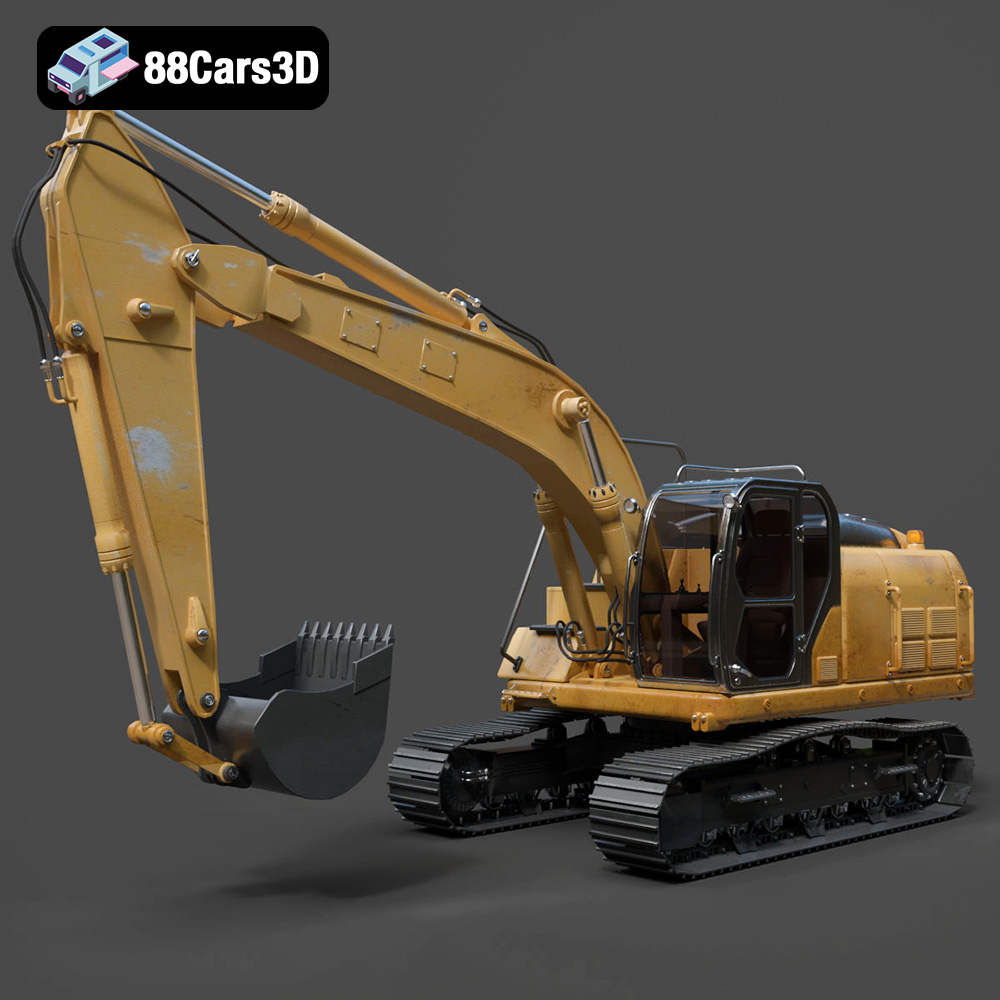
The visual impact of this model begins with its foundational geometry. Boasting a triangle count of 752,352, it achieves a stunning balance between high visual fidelity and game-ready optimization. This means you get crisp, clean edges and complex forms without bogging down your rendering engine. The exterior features are particularly noteworthy:
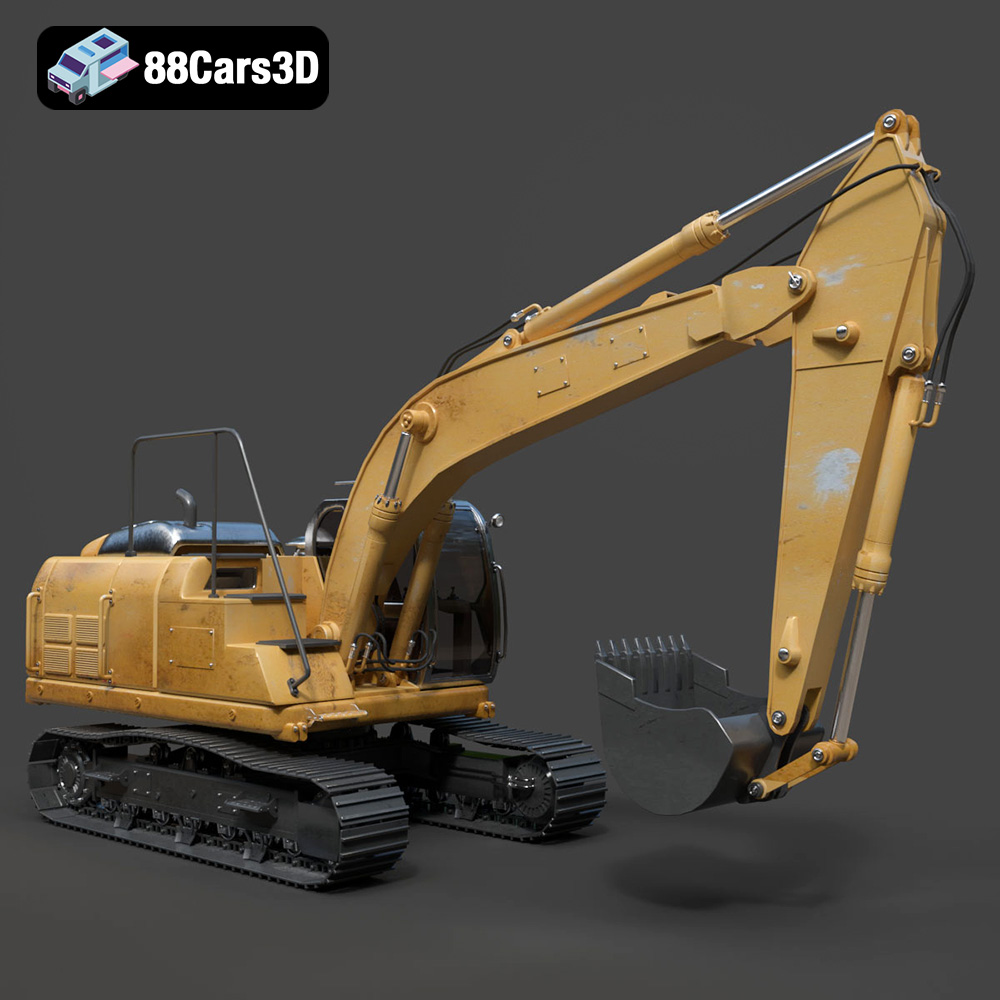
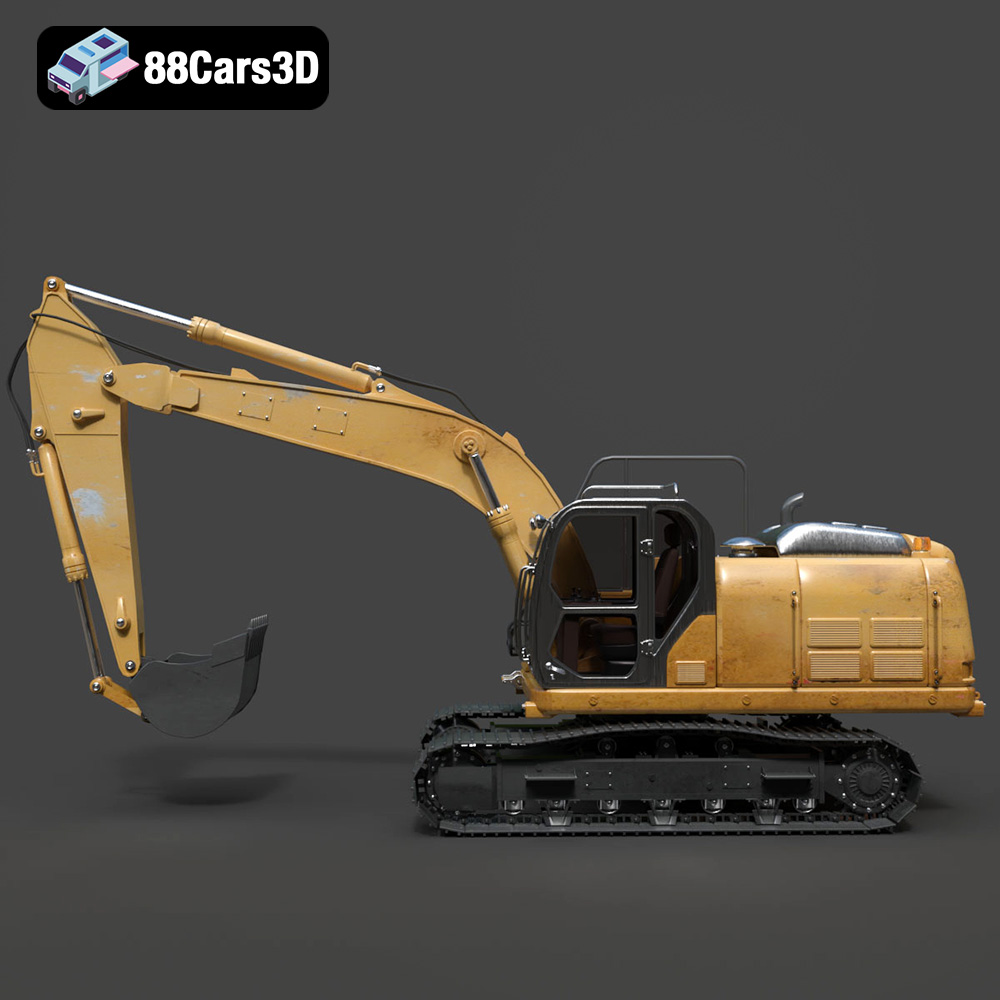
- Accurate Chassis Geometry and Proportions: The model captures the heavy-duty stance and industrial robustness of a real excavator, adhering to real-world scale accuracy.
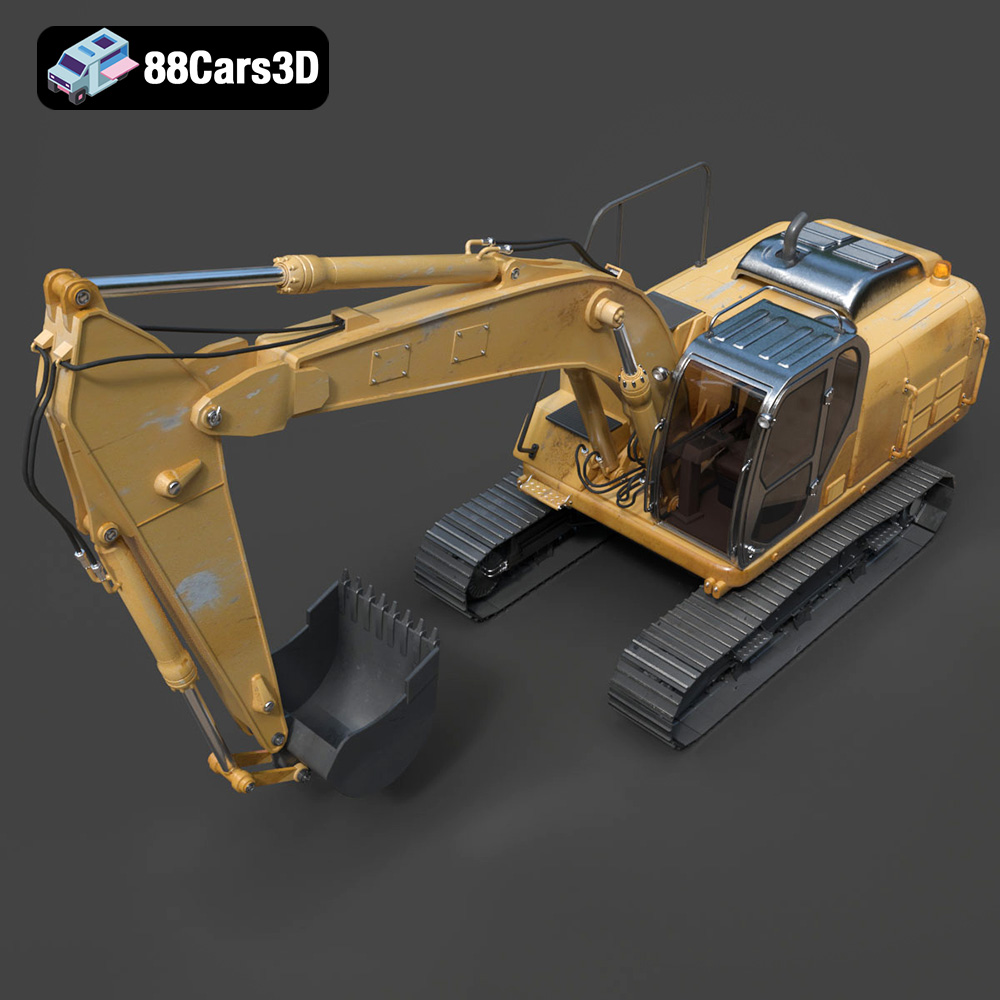
- Detailed Engine Housing and Cooling Panels: Even elements often hidden from view, like the ventilated engine housing, are modeled with care, providing depth and realism for close-up shots or transparent renders.
- Intricate Hydraulic System: The hydraulic boom and stick assembly is fully articulated, complete with individual lines, hoses, and pistons. This level of detail is crucial for realistic animation and understanding mechanical function.
- Realistic Industrial Lighting: The inclusion of work lights and beacons is not just cosmetic; it’s essential for night-time scene rendering or emergency vehicle simulations.
- High-Detail Tracked Undercarriage: The individual track links and rollers are modeled, allowing for realistic deformation and movement – a feature often simplified in lesser models, but crucial for compelling ground interaction.
- Reinforced Bucket with Wear Details: The heavy-duty bucket features realistic wear and digging teeth, indicating a history of work and adding character.
This granular attention to detail elevates the model from a simple prop to a focal point, capable of withstanding intense scrutiny in high-resolution renders or immersive VR environments.
Ergonomics and Immersive Interiors
Beyond the impressive exterior, the Track Excavator 3D Model offers a fully realized interior, a critical feature for first-person perspectives and simulation applications.
- Industrial Operator Seat with Suspension Details: The operator’s seat is not just a placeholder; it includes suspension details, hinting at the comfort and functionality required for long workdays.
- Dual Joystick Control Configuration and Foot Pedals: The main control interfaces are present, enabling developers to map virtual controls to these visual elements, enhancing immersion in simulators.
- Digital Instrument Cluster and Warning Displays: These details provide critical visual feedback for virtual operators, further bridging the gap between digital and physical operation.
- Safety Grilles and Robust ROPS Cabin Design: The Roll-Over Protective Structure (ROPS) cabin design and safety grilles are accurately represented, emphasizing the safety aspect inherent in heavy machinery.
Optimized geometry for first-person POV ensures that simulator experiences are smooth and convincing, making this model an invaluable asset for operator training modules or game environments where players can step inside the machinery.
Modular Design for Dynamic Scenarios
A truly professional 3D model of complex machinery requires more than just static beauty; it needs to be functional and animatable. This Track Excavator excels in this regard.
- Separate Components for Full Animation: Crucially, the tracks, turntable, boom, stick, and bucket are all separate components. This modularity is key for animators and game developers, allowing for independent movement and interaction.
- Proper Pivot Setup: The model comes with a proper pivot setup for turntable rotation, hydraulic arm movement, and track scrolling. This pre-configured setup saves countless hours of rigging time, enabling immediate use in animation software or game engines. This meticulous preparation is what differentiates a high-quality asset from a generic model, ensuring it integrates seamlessly into dynamic, interactive scenes.
The combination of high detail, thoughtful interior design, and a modular, animatable structure makes this Track Excavator 3D Model a powerhouse for any project demanding realistic heavy machinery.
Professional Workflows: Integrating the Excavator into Your Projects
The versatility of the Track Excavator 3D Model lies in its ability to seamlessly integrate into diverse professional pipelines. From real-time game development to photorealistic rendering and cutting-edge AR/VR, its multi-format availability and optimized design cater to a broad spectrum of creative and technical needs.
Game Development and Real-time Engines (Unreal Engine & Unity)
For game developers, the phrase “game-ready” is paramount. This excavator model, with its 752,352 triangle count, achieves excellent visual fidelity without compromising performance, making it ideal for engines like Unreal Engine and Unity.
- Optimized for Performance: The carefully balanced polygon count ensures smooth framerates even in complex scenes, crucial for immersive gameplay in construction simulators, industrial-themed open-world games, or strategy titles.
- Streamlined Import with .fbx and .unreal: Importing the .fbx file into Unity or Unreal Engine is a straightforward process. The model’s proper pivot setup translates directly, allowing for immediate rigging and animation of the boom, stick, bucket, and tracks. For Unreal Engine users, the dedicated “.unreal” format likely means even less setup, with materials, collision, and possibly even basic blueprint functionality pre-configured, drastically cutting down on development time.
- Material Setup and PBR Workflows: Developers can easily apply Physically Based Rendering (PBR) materials, leveraging the model’s clean UVs (implied for game-ready assets) to integrate high-quality textures for paint, metal, rubber, and glass. This enables realistic reflections, wear, and environmental interactions.
- Collision and Physics: Custom collision meshes can be generated or utilized from the imported asset, allowing for accurate physical interaction within the game world—whether it’s the bucket digging into terrain or the tracks navigating uneven ground.
High-End Rendering and Visualization (3ds Max, Blender)
When photorealism is the goal, the Track Excavator 3D Model provides an exceptional starting point for high-end rendering and visualization projects.
- Leveraging Native Formats (.max, .blend): Professionals working in 3ds Max or Blender can utilize the respective native files to take full advantage of their software’s advanced rendering capabilities, such as V-Ray, Corona, or Cycles. This includes full material control, access to scene hierarchy, and potentially advanced rigging setups.
- Advanced Material Customization: The detailed geometry allows for the creation of incredibly nuanced materials. Artists can layer textures for dirt, rust, scratches, and mud, transforming a pristine model into a battle-hardened workhorse. This is akin to the advanced surfacing techniques used in automotive rendering, where every scratch and reflection contributes to realism.
- Dynamic Lighting and Environmental Integration: The model performs exceptionally well under various lighting conditions. Users can create stunning corporate presentations, detailed construction site scenes, or studio-lit product showcases, adjusting the included work lights and beacons for day or night scenarios. The separate components also facilitate complex animation sequences, from scooping operations to full site movement, enhancing visualization narratives.
The Future of Interaction: AR/VR Training and Experiences
The immersive capabilities of Augmented Reality (AR) and Virtual Reality (VR) are transforming how we train, design, and interact with complex machinery. The Track Excavator 3D Model is perfectly poised for these cutting-edge applications.
- Optimized for Immersive Environments with .glb: The .glb format is tailor-made for web-based AR/VR, offering a lightweight, single-file solution that loads quickly and performs efficiently across different platforms. This is crucial for seamless user experiences in virtual showrooms or technical configurators.
- Operator Training Simulations: The detailed cockpit and interior features, combined with optimized geometry for first-person POV, make this model ideal for VR operator training modules. Trainees can virtually sit in the driver’s seat, manipulate controls, and learn operational procedures in a safe, controlled, and highly realistic virtual environment. This significantly reduces costs and risks associated with real-world training.
- Virtual Showrooms and Technical Demonstrations: Companies can leverage the model to create interactive virtual showrooms, allowing potential clients to explore the excavator’s features in 3D, customize its colors, or even place it virtually on a real-world site using AR. This level of engagement provides a powerful marketing and sales tool.
By offering such robust file format support and inherent optimization, the Track Excavator 3D Model ensures that creative professionals have the flexibility and quality needed to tackle any project, across any medium. This commitment to versatility is a hallmark of the high-quality assets found on 88cars3d.com.
Beyond the Screen: 3D Printing and Customization Potential
A truly versatile 3D asset extends its utility beyond digital screens, bridging the gap between virtual and physical realms. The Track Excavator 3D Model excels in this regard, not only as a digital masterpiece but also as a blueprint for tangible creations and a canvas for endless customization.
Bringing Digital to Physical with .STL
The inclusion of an .stl file immediately opens up the world of 3D printing, allowing enthusiasts, educators, and professionals to materialize this complex piece of heavy machinery.
- Preparation for Additive Manufacturing: The .stl format is the standard for 3D printers, translating the detailed geometry into a mesh suitable for slicing. The product description provides excellent guidance for 3D printing this model:
- Recommended Scale: 1:35 / 1:50 / 1:87 allows for various display sizes.
- Layer Height: 0.04–0.12 mm is suggested, with resin printing recommended for intricate details like hydraulic lines, ensuring maximum fidelity for the smaller components.
- Structural Integrity: Recommendations for wall thickness (1.2–2.0 mm) and infill (20–30%) ensure a robust print.
- Strategic Supports and Orientation: The advice to print detailed parts like the boom, bucket, and tracks separately, with supports, and angling the main chassis for structural integrity, demonstrates a deep understanding of 3D printing best practices.
- Post-Processing for Realism: Beyond printing, the suggestions for sanding, primer, and authentic industrial color schemes with weathering effects guide users towards creating a truly realistic physical model, perfect for dioramas, educational tools, or collector’s displays. This transforms the digital asset into a tangible hobby project or a professional prototype.
Tailoring the Asset to Your Vision
While the model is highly detailed out-of-the-box, its design anticipates and facilitates extensive customization, ensuring it can perfectly match any project’s specific aesthetic or functional requirements.
- Color and Livery Changes: The ability to change main body colors, from standard industrial yellow to custom corporate livery, makes it adaptable for branding or specific scene requirements. This allows for quick iteration and integration into diverse visual themes.
- Material Wear and Tear: Users can modify material wear and tear, transitioning the excavator from a “factory new” sheen to a “heavily weathered/muddy” appearance. This is crucial for storytelling in game environments or adding authenticity to visualization projects, depicting the machine’s operational history.
- Adjusting Material Finishes: Customization extends to material finishes—matte paint, glossy decals, bare metal hydraulics. These subtle changes can dramatically alter the visual impact and perceived age of the machinery.
- Adapting Lighting: The model is designed to respond well to varied lighting scenarios. This allows artists to adapt it for daytime construction scenes or dramatic night-shift environments, integrating seamlessly into any lighting setup and enhancing the mood of the rendering.
These customization options provide creative freedom, allowing users to make the Track Excavator 3D Model uniquely their own, ensuring it always fits the specific demands of their project without compromising on quality or authenticity. This flexibility is a key advantage of acquiring professional 3D assets.
Sourcing Premium Assets for Your Creative Journey
In the fast-paced world of 3D production, time is often the most valuable commodity. Building highly detailed, optimized 3D models from scratch can be an incredibly labor-intensive process, demanding specialized skills and significant resources. This is where the strategic acquisition of premium, pre-made assets truly shines.
The Track Excavator 3D Model exemplifies the significant value that such assets bring to professional pipelines. It’s not merely a collection of polygons; it’s a meticulously engineered solution that has already undergone the rigorous process of modeling, texturing, optimization, and multi-format export. This allows creative professionals, game developers, architects, and animators to bypass the initial time-consuming stages of asset creation and jump directly into integration, customization, and rendering.
Whether you’re looking for specialized heavy machinery, realistic 3D car models, or diverse game assets for your next project, platforms like 88cars3d.com serve as invaluable resources. They curate high-quality models that meet industry standards for detail, accuracy, and performance. By providing assets in a comprehensive range of file formats—including .blend, .fbx, .obj, .glb, .stl, .ply, .unreal, and .max—88cars3d.com ensures that you have the flexibility to integrate products like this Track Excavator seamlessly into virtually any professional workflow. This saves not only countless hours of development but also guarantees a level of quality and consistency that might be challenging to achieve on a tight deadline. Investing in these professional-grade assets is investing in efficiency, quality, and the overall success of your digital creations.
Conclusion
The digital frontier of visualization, simulation, and entertainment is continuously pushing the boundaries of realism and immersion. At the heart of this progress are high-quality 3D assets that serve as the indispensable building blocks for compelling experiences. The Track Excavator 3D Model is a prime example of such an asset—a testament to detailed craftsmanship and thoughtful optimization designed to excel across a multitude of applications.
From its intricate exterior details, including the hydraulic systems and individual track links, to its fully realized interior cockpit optimized for first-person views, this model delivers unparalleled industrial authenticity. Its versatile file format support, encompassing everything from editable scene files like .blend and .max to game-ready .fbx and web-optimized .glb, ensures seamless integration into professional workflows spanning game development, high-end rendering, AR/VR training, and even physical 3D printing. The balance it strikes between visual fidelity (752,352 triangles) and performance optimization makes it a robust choice for any project demanding realism without sacrificing efficiency.
Ultimately, the Track Excavator 3D Model offers a powerful solution for anyone seeking to create engaging, realistic, and performant digital content involving heavy machinery. It eliminates the need for arduous modeling from scratch, allowing professionals to focus on customization and creative implementation. We highly recommend exploring this exceptional model and the wide array of other professional-grade game assets and 3D car models available on 88cars3d.com. Equip your projects with the best, and watch your digital visions come to life.
Featured 3D Model
Track Excavator 3D Model Download STL FBX OBJ GLB Blend
The Track Excavator is a powerhouse of modern heavy machinery, designed for demanding construction, mining, and earthmoving tasks. This highly detailed 3D model captures the rugged essence of industrial equipment, featuring a robust tracked undercarriage, an intricately modeled hydraulic boom and stick assembly, and a heavy-duty bucket. Every visual element, from the ventilated engine housing and heavy counterweight to the reinforced operator cabin, has been faithfully recreated to deliver unparalleled industrial authenticity.
Boasting a highly detailed geometry with a triangle count of 752,352, this model ensures uncompromising visual fidelity while retaining game-ready optimization. Whether deployed in a real-time game engine, utilized for immersive AR/VR training simulations, or featured in high-end pre-rendered industrial animations, this asset guarantees a premium visual standard without sacrificing performance.
$50.00
View This Model
Related Tags
.blend
.fbx
.glb
.industrial
.max
.obj
.ply
.rendering
.stl
.unreal
3d model
construction-equipment
game asset
game-ready
heavy-machinery
optimized
track-excavator
VR/AR