Get 20% OFF All Premium 3D & STL Models!

In the vast landscape of digital creation, where realism and performance converge, the demand for exceptionally detailed and optimized 3D models is constantly escalating. From blockbuster game environments to cutting-edge AR/VR simulations and high-fidelity industrial visualizations, the underlying quality of 3D assets dictates the success of any project. This holds particularly true for specialized equipment like heavy machinery, which requires not only accurate visual representation but also functional precision and robust technical specifications.
Today, we’re delving into the world of industrial modeling with a spotlight on a remarkable example: the Track Loader 3D Model. This isn’t just a static object; it’s a meticulously crafted digital asset designed to meet the rigorous demands of professional workflows. Whether you’re developing a construction simulator, creating an immersive training module, or producing stunning marketing renders, the right model makes all the difference. And when you’re seeking high-quality 3D car models and industrial equipment for your projects, places like 88cars3d.com offer a curated selection built for performance and visual excellence.
Choosing the correct file format for your 3D models is a critical decision that profoundly impacts workflow, compatibility, and the final output of your project. Each format serves specific purposes, offering unique advantages depending on your software, desired level of editability, and final application. Understanding these nuances is essential for any professional working with 3D assets, ensuring smooth integration and optimal performance.
The .blend format is Blender’s native file type, encompassing an entire scene with all its data. This includes not just the mesh geometry, but also materials, textures, animations, rigging, lighting, cameras, physics simulations, and even custom scripts. For Blender users, .blend offers unparalleled editability and flexibility, allowing artists to revisit any aspect of their project with ease. It’s ideal for projects where Blender is the primary DCC (Digital Content Creation) tool, providing a complete, self-contained environment for development and iteration. However, its proprietary nature means full compatibility is largely limited to Blender itself, though Blender can export to other formats.
FBX (Filmbox) is a proprietary file format developed by Autodesk, but it has become a de facto industry standard for 3D data exchange between various software applications, particularly in game development and animation. It can store a wide array of 3D data, including geometry, materials, textures, bone skeletons, animation takes, cameras, and lights. For real-time pipelines like Unreal Engine and Unity, .fbx is often the go-to format due to its robust support for animation and skeletal data. Its versatility makes it indispensable for transferring complex animated assets, like our Track Loader with its articulated boom and bucket, between different stages of a production pipeline.
OBJ (or .obj) is one of the oldest and most widely supported 3D file formats. It’s renowned for its simplicity and cross-software compatibility, making it a universal choice for exchanging static mesh geometry and UV mapping information. While it doesn’t typically store animation or rigging data, it’s excellent for static models, architectural visualizations, or when you need a clean mesh to start a new project in a different application. The .obj format is highly reliable for transferring the raw polygonal structure of models like the Track Loader, allowing artists to apply new materials and animations in their preferred software.
GLB is the binary form of the glTF (Graphics Language Transmission Format) specification, known as the “JPEG of 3D.” It’s designed for efficient transmission and loading of 3D scenes and models by web browsers and AR/VR applications. A .glb file contains all necessary data (geometry, materials, textures, animations) in a single, self-contained binary file, making it incredibly streamlined for real-time display on the web, augmented reality experiences, and virtual reality platforms. For showcasing models like the Track Loader in a browser-based configurator or an interactive AR experience, .glb offers optimal performance and ease of use.
STL (Stereolithography) is the standard file format for 3D printing. It represents 3D surfaces as a collection of unconnected triangular facets, without color, texture, or other CAD attributes. This format is crucial for manufacturing and rapid prototyping, as it precisely describes the surface geometry needed for slicing software to prepare a model for physical production. For enthusiasts looking to 3D print a display-scale Track Loader, the .stl format is the direct translation required to bring the digital model into the physical world, ensuring the intricate details like hydraulic arms and track treads are accurately represented.
PLY (Polygon File Format) is often used for storing 3D data from 3D scanners or for CAD applications. It can store a wider range of information than .obj, including vertices, faces, normals, color, and even transparency for each polygon. This makes .ply a powerful format for scientific visualization, point cloud data, and when precise surface information with additional attributes is critical for analysis or reverse engineering. While less common for general game assets, it provides a high-fidelity representation valuable in niche industrial and research applications.
The .unreal extension typically refers to a native Unreal Engine asset package. When a model like the Track Loader is provided in this format, it means it has been specifically prepared and optimized for direct import into Unreal Engine projects. This can include pre-configured materials, proper collision meshes, optimized LODs (Levels of Detail), and correct pivot points for animation, saving significant setup time for developers. It’s the most efficient way to integrate complex models directly into an Unreal-based real-time environment, ensuring maximum compatibility and performance.
Similar to .blend for Blender, .max is the native file format for Autodesk 3ds Max, a leading software for 3D modeling, animation, and rendering. A .max file contains the complete scene data, including geometry, modifiers, materials, textures, lighting, cameras, animation timelines, and render settings. For professionals deeply integrated into a 3ds Max workflow, this format offers full creative control and the ability to leverage all of 3ds Max’s powerful tools for high-end rendering and complex animation sequences. It’s the ideal choice for artists who need to fully customize, animate, or render the Track Loader within the 3ds Max environment.
The Track Loader 3D Model stands as a testament to meticulous digital craftsmanship, bringing a formidable piece of heavy construction machinery to life in the virtual realm. Its design philosophy centers on striking a perfect balance between high visual fidelity and optimal performance, making it suitable for a wide array of professional applications.
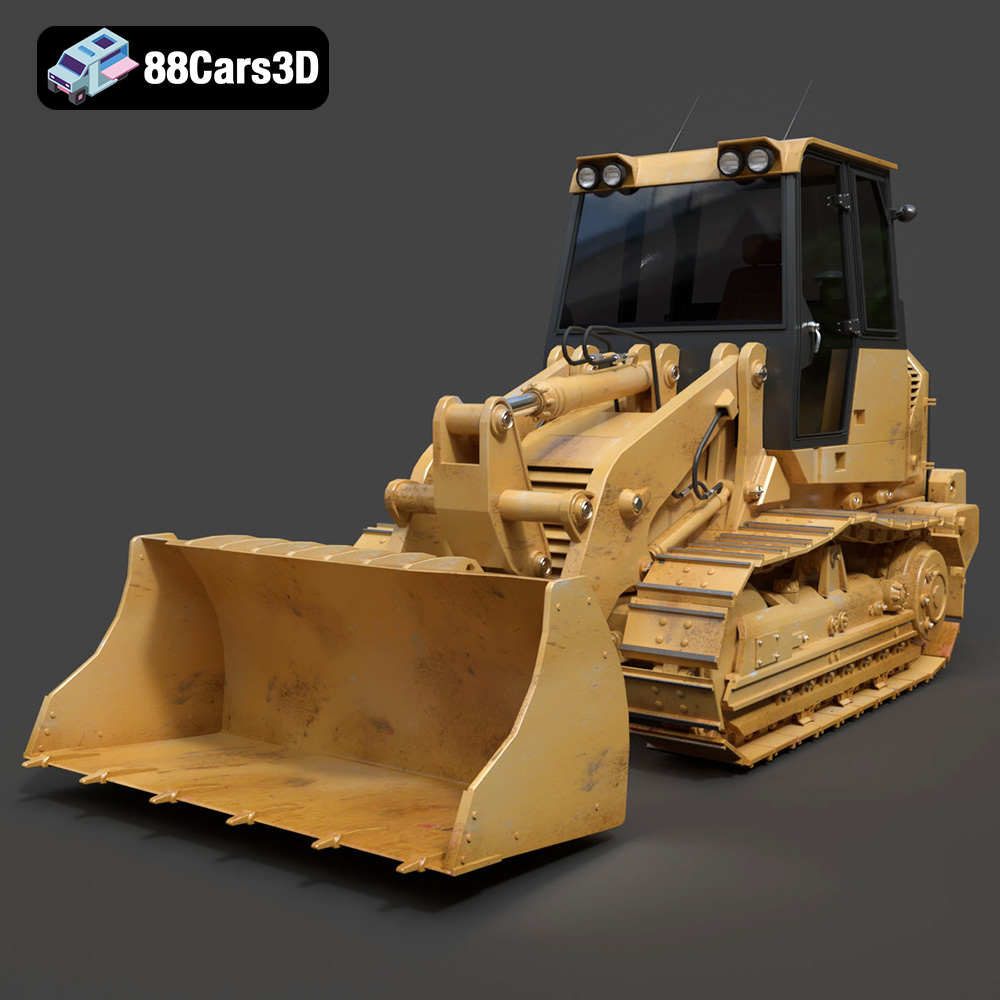
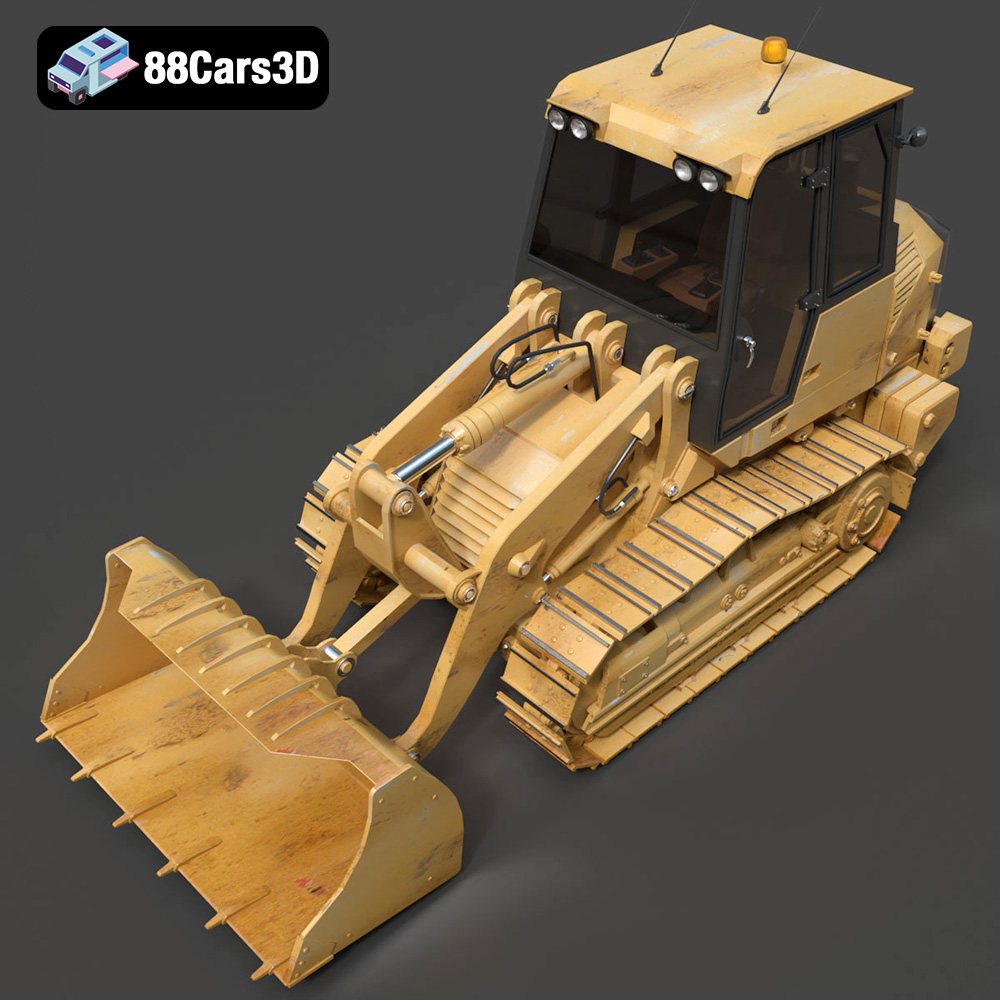
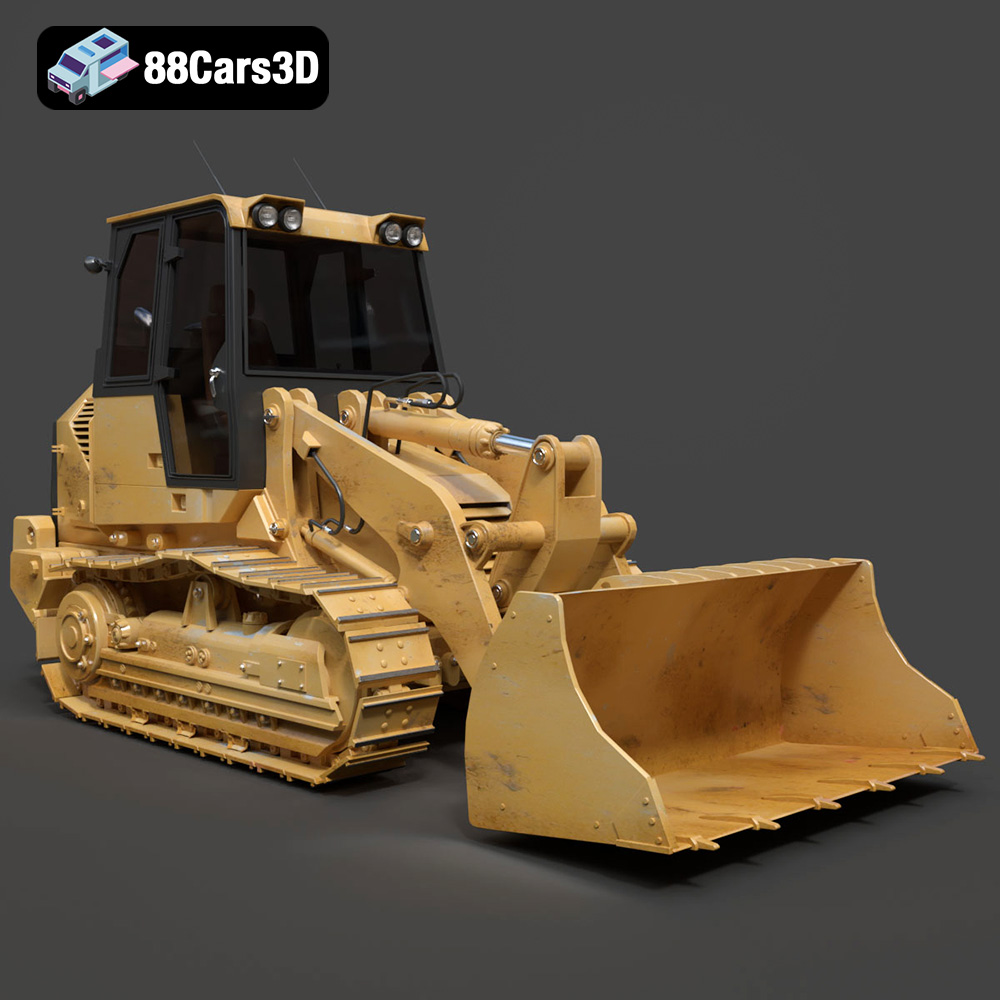
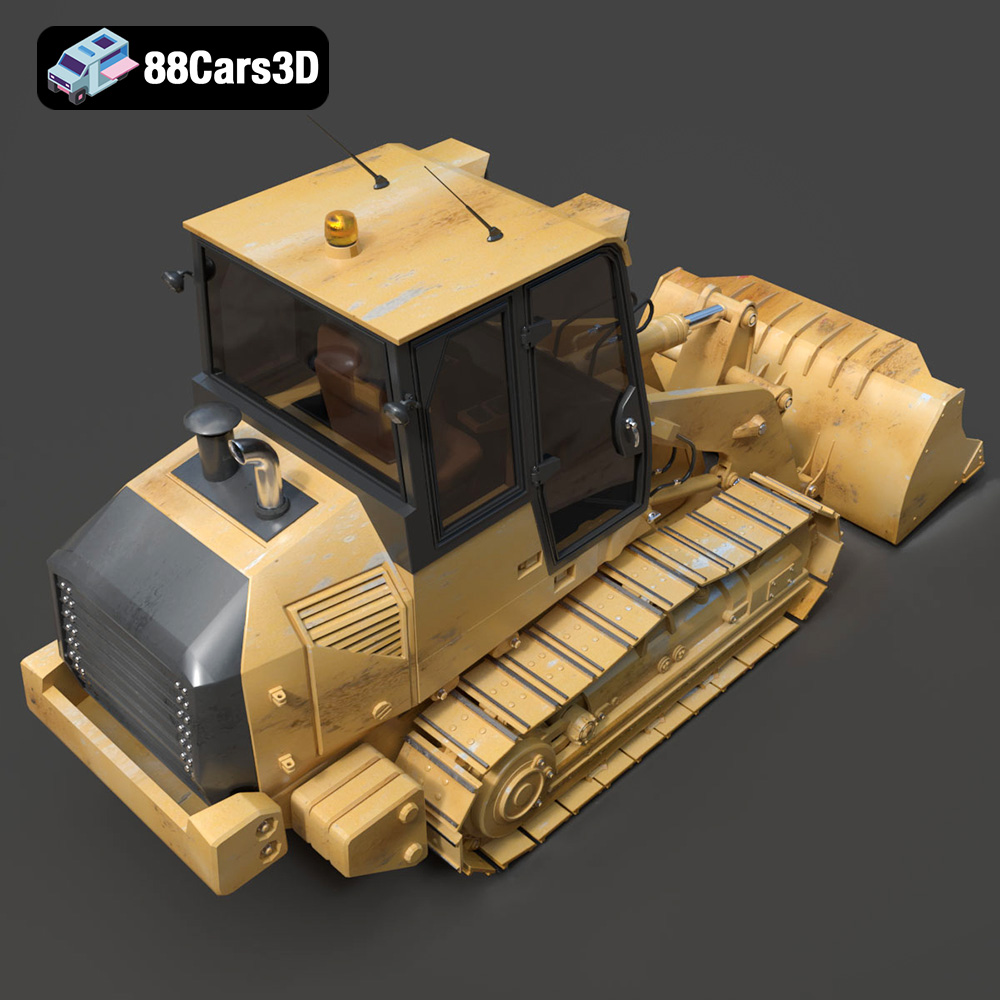
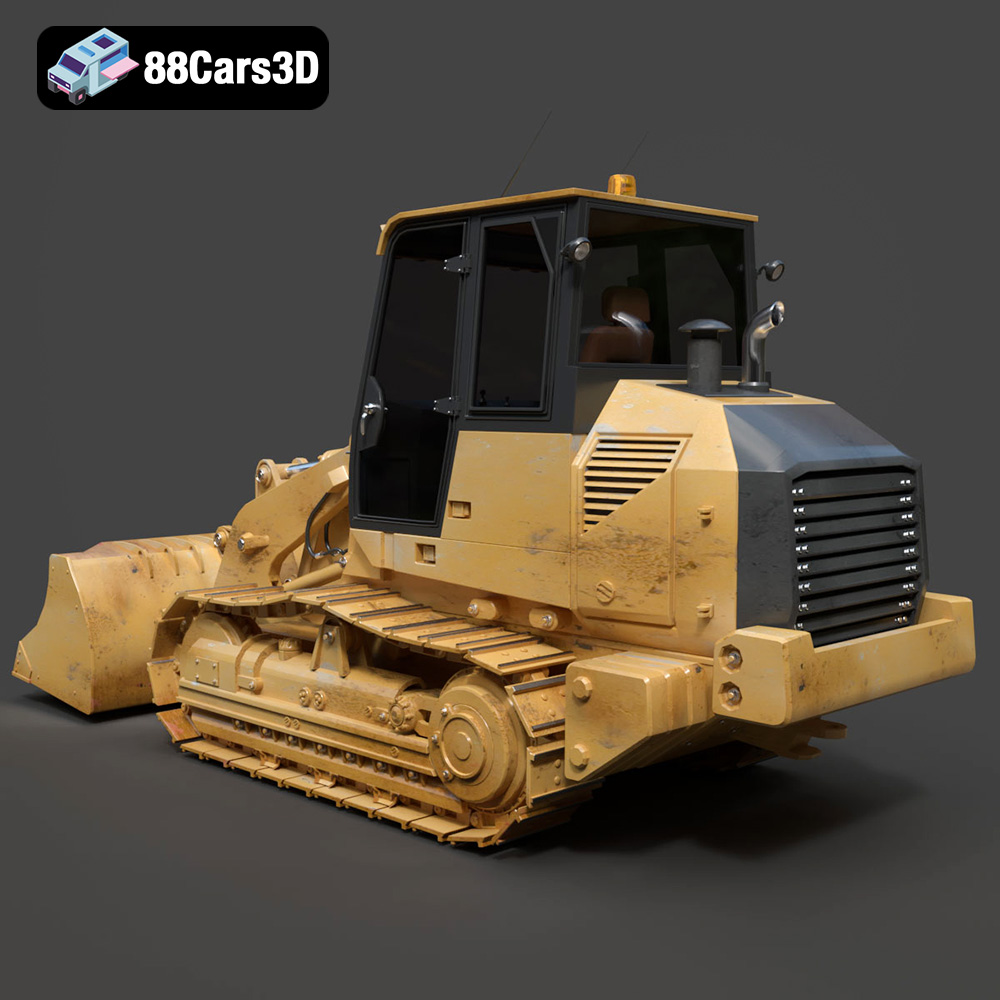
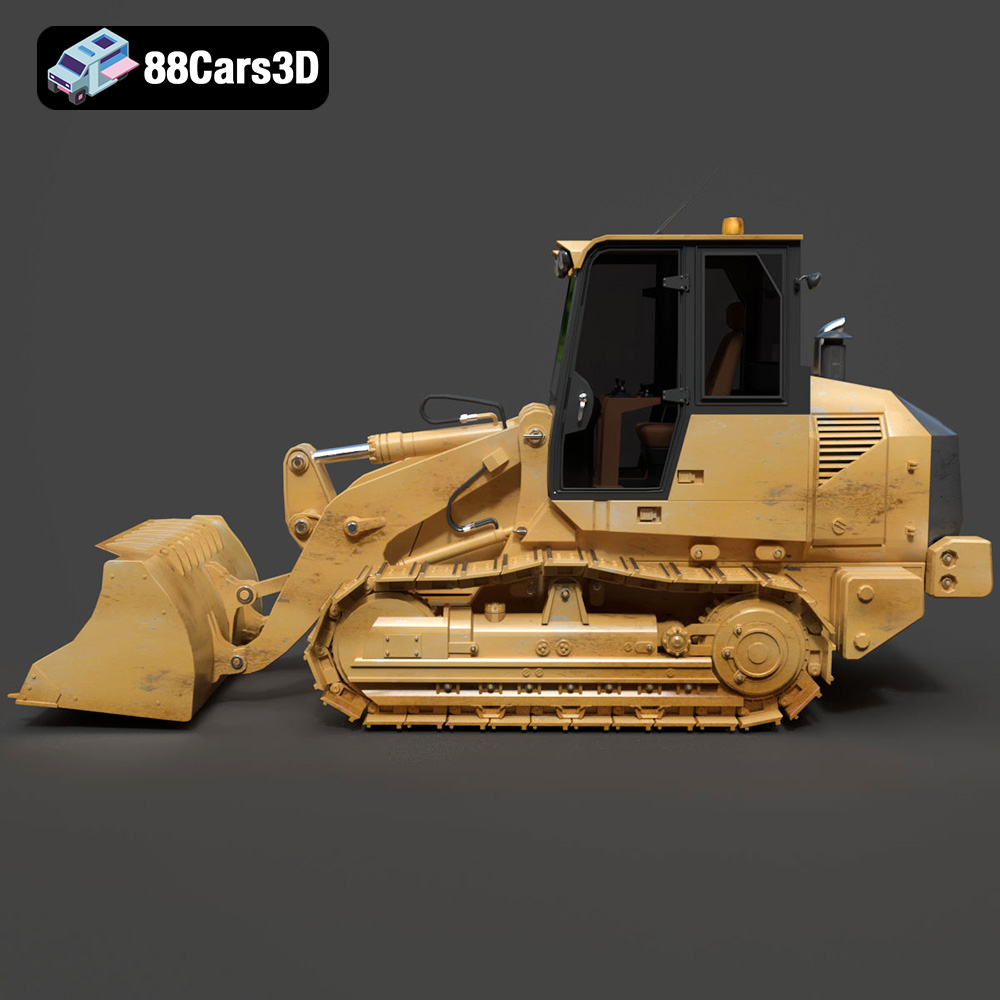
Every aspect of this Track Loader model has been engineered for authenticity. The heavy-duty frame and counterweight geometry are accurately replicated, forming the robust foundation of the machine. The diesel engine enclosure features authentic ventilation grilles and an exhaust stack, conveying a sense of functional realism. Perhaps one of the most complex elements, the continuous track system, is modeled with intricate detail, including individual sprockets, idlers, and track rollers – components crucial for realistic mechanical animation and ground interaction. The rugged front loader boom arms are not merely aesthetic; they are designed with complex hydraulic lines and piston linkages, providing the basis for accurate mechanical movement. The high-capacity front bucket showcases meticulously modeled digging teeth and wear edges, hinting at its strenuous work life. Even the functional industrial lighting, from overhead work lights to safety beacons, is included, ready for dynamic scene illumination. Crucially, separate components for the bucket, boom, chassis, and tracks are prepped for mechanical animation, ensuring ease of integration into animated sequences and interactive simulations.
Beyond the impressive exterior, the Track Loader 3D Model offers a fully realized industrial operator’s cab, essential for truly immersive experiences. Encased within a robust ROPS (Roll-Over Protective Structure), the interior provides a safe and functional environment. A detailed pneumatic suspension seat with heavy-duty safety restraints enhances the realism, important for first-person perspectives in simulators. The accurate dual joystick control layout allows for precision operation of the boom, bucket, and drive, mirroring real-world controls. An instrument panel complete with digital displays, analog gauges, and environmental controls further enriches the cockpit experience, offering vital feedback to the virtual operator. Optimized glass reflections and accurate interior spatial geometry are critical considerations for first-person POV in simulators, ensuring that users feel genuinely present within the machine, whether for game development or specialized safety training modules.
For any 3D model destined for real-time applications like games or interactive simulations, raw visual fidelity must be expertly balanced with performance efficiency. The Track Loader 3D Model excels in this regard, built from the ground up to be game-ready without compromising on its intricate details.
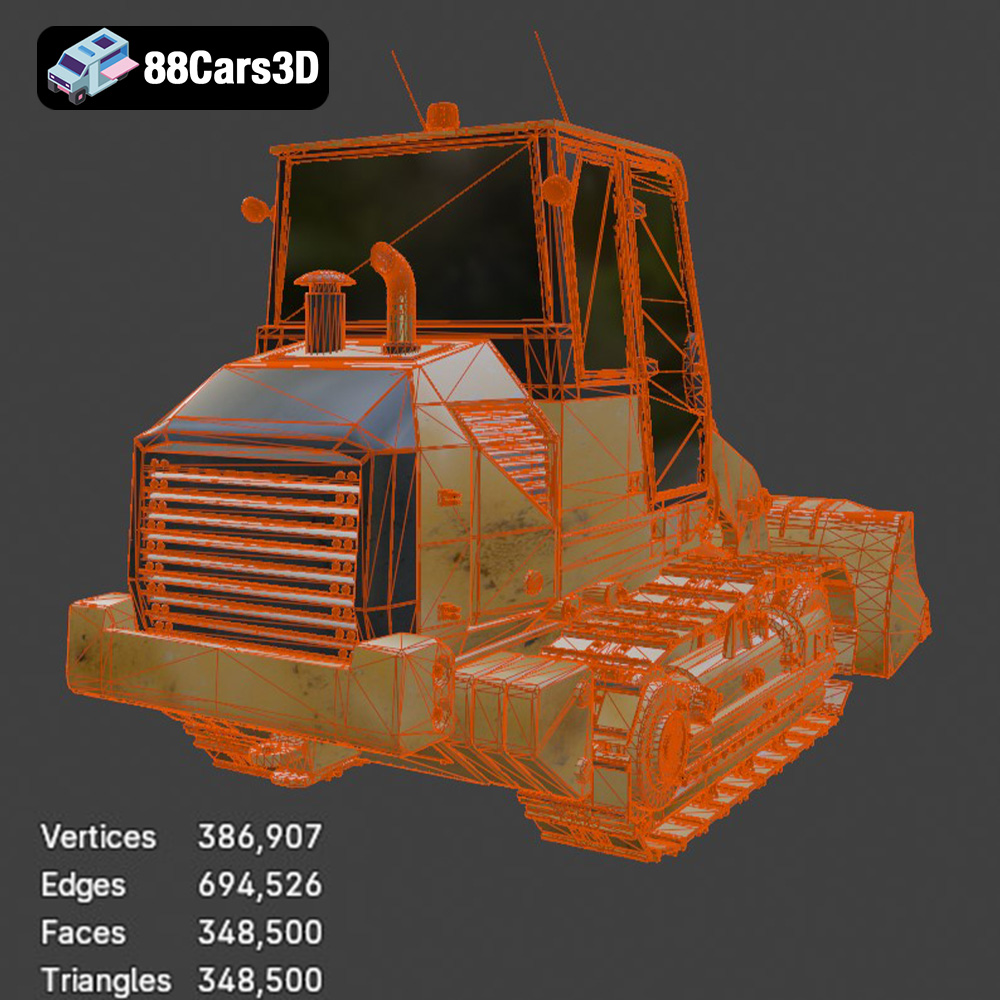
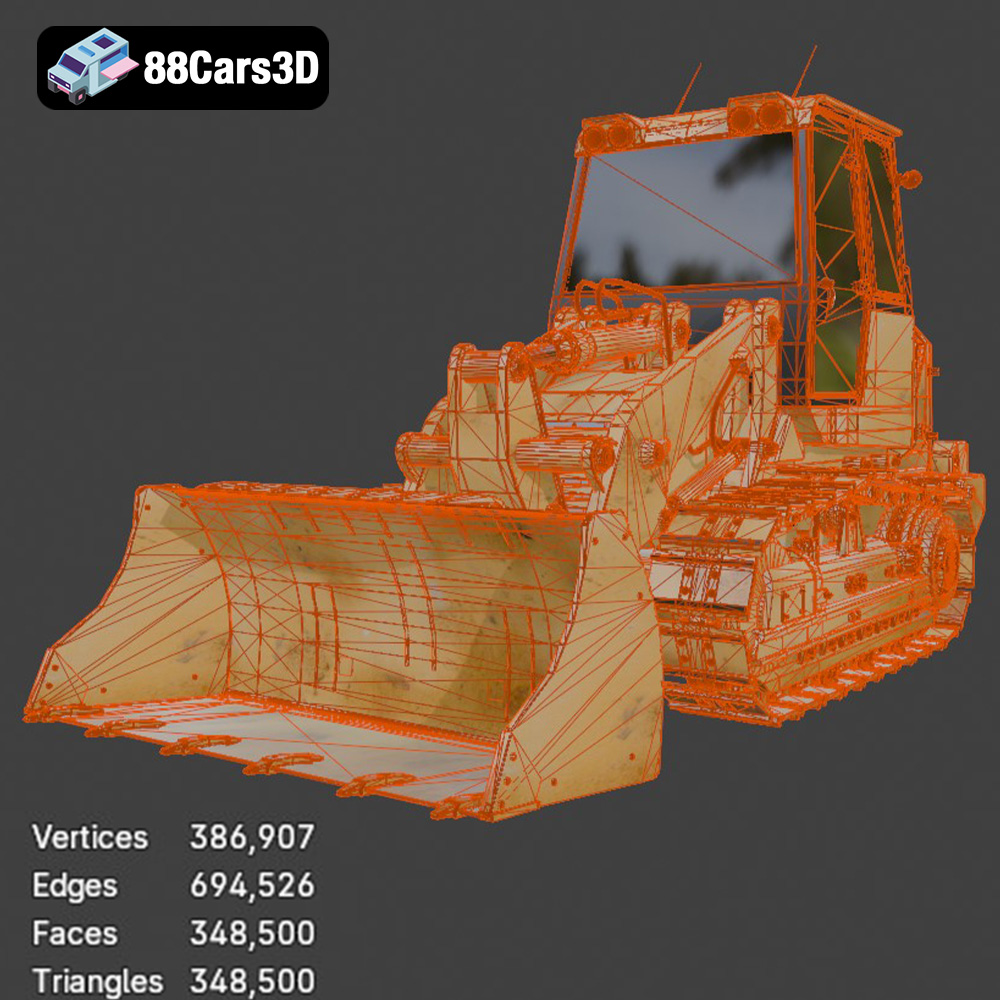
The model boasts an optimized topology of approximately 348,500 triangles. This polycount strikes a perfect balance, delivering exceptional visual fidelity that holds up under close inspection while remaining highly efficient for real-time engines such as Unreal Engine and Unity. For context, many highly detailed “3D car models” or complex “game assets” can often exceed this count significantly. The designers of this Track Loader have achieved a state where the machine looks convincing and detailed without overburdening the rendering pipeline. While the current model offers a high level of detail, professional game development workflows often involve creating multiple Levels of Detail (LODs). This means generating lower polygon versions of the model that are swapped in at greater distances from the camera, further optimizing performance. This foundational mesh quality provides an excellent base for developers to generate their own LODs, ensuring scalability across different platforms and performance targets, from high-end PCs to mobile AR/VR devices.
Underpinning the visual realism of any modern 3D asset is a robust Physically Based Rendering (PBR) material workflow. While not explicitly detailed in the product description, the “game-ready” designation strongly implies the use of PBR textures (Albedo/Base Color, Metallic, Roughness, Normal, Ambient Occlusion). These textures accurately simulate how light interacts with different surfaces, allowing the model to look consistent and realistic under various lighting conditions, a crucial aspect for convincing “automotive rendering” or industrial visualization. The Track Loader model is designed to readily accept these PBR texture sets, allowing artists to apply realistic dirt, mud, or worn-metal weathering effects to enhance its authenticity. Proper UV mapping is essential for applying these textures without distortion. High-quality models ensure clean, non-overlapping UVs, making texture application seamless and efficient for artists, enabling quick customization for different scenarios, from pristine factory finishes to heavily used construction site conditions.
The true value of a well-crafted 3D model lies in its adaptability across diverse professional applications. The Track Loader 3D Model is not confined to a single use case; its robust design and technical flexibility open doors to a multitude of industries.
For game developers, this model is an ideal “game asset” for construction simulators, open-world sandbox titles, and heavy machinery games. Its optimized polycount ensures it runs smoothly within game engines, while its detailed components allow for engaging gameplay mechanics, such as precision digging or material handling. Imagine a virtual construction site where players operate this Track Loader with realistic physics and visual feedback. Beyond traditional gaming, the model shines in the burgeoning fields of Augmented Reality (AR) and Virtual Reality (VR). It’s perfect for creating immersive safety training modules, allowing operators to learn machine controls and procedures in a risk-free virtual environment. Virtual fleet configurators can let potential buyers explore different loader configurations and paint schemes in AR. Educational experiences can leverage the model to teach about heavy equipment mechanics or construction processes interactively. The .glb format, included with the product, is particularly suited for these web and AR/VR applications, offering lightweight and efficient deployment.
When it comes to high-end rendering and visualization, the Track Loader provides an exceptional base for creating compelling industrial marketing campaigns, site planning visualizations, and architectural walkthroughs. Its authentic details allow for stunning “automotive rendering” (in a broader sense of vehicle rendering) that can highlight the machine’s features in studio lighting setups or realistic outdoor environments. Architects and urban planners can integrate the model into their site plans to visualize equipment placement and operational logistics. The model’s versatility extends to the tangible world through 3D printing. Convertible to the .stl format, it caters to hobbyists and professionals who wish to create display-scale construction equipment models. The product description provides specific 3D print settings, recommending scales like 1:24, 1:35, or 1:50, and suggesting resin printing for fine details. Guidance on layer height, wall thickness, infill, and crucial support structures ensures successful physical reproduction, allowing enthusiasts to apply authentic construction yellow/orange factory colors and weathering effects post-processing.
A high-quality 3D model is only as good as its ability to integrate seamlessly into a professional workflow. The Track Loader 3D Model is designed with this principle in mind, offering multiple file formats and features that streamline its use in various DCC tools and game engines.
For developers utilizing Unreal Engine or Unity, the included .fbx and .unreal formats are game-changers. The .fbx file, as the industry standard, imports robustly into both engines, bringing in the mesh, UVs, and potential basic material slots. Developers can then easily create PBR materials within the engine, utilizing textures to achieve realistic wear and tear, paint finishes, and metallic accents. The .unreal format, specifically optimized for Unreal Engine, provides an even more direct path, often including pre-configured materials, proper collision meshes, and potentially even LODs, significantly reducing setup time. For animation, the Track Loader’s proper pivot setup for boom elevation, bucket tilt, and track continuous rotation is invaluable. This allows animators to quickly rig and animate the machine’s moving parts directly in the engine or in their preferred 3D software before export, creating dynamic and interactive “game assets” for player control or cinematic sequences. Setting up collision volumes for realistic interaction with the environment is straightforward, ensuring the loader behaves as expected within the game world.
Artists working in 3ds Max or Blender will find the .max and .blend files particularly useful. These native formats preserve the model’s full editability, allowing for extensive customization. Users can easily change exterior chassis colors, applying standard construction yellow, custom corporate fleet liveries, or even military green for specialized versions. Modifying material textures to apply realistic dirt, mud, or worn-metal weathering effects is straightforward, creating a narrative of use and age. Adjusting material finishes—from a matte industrial paint to gloss accents or exposed steel—can dramatically alter the model’s visual impact. For animation, the full access provided by these native files means animators can leverage the precisely modeled components and pivot points to create complex sequences. Whether it’s the hydraulic arms extending, the bucket scooping earth, or the tracks rotating, the model’s inherent structure supports detailed mechanical animation, making it an excellent asset for cinematic renders or realistic simulations where every moving part needs to be accurately represented. The ability to adapt lighting for daytime construction sites or nighttime work environments further enhances its utility for high-quality “automotive rendering” and visualization.
In the competitive world of 3D content creation, sourcing reliable, high-quality assets is paramount. 88cars3d.com distinguishes itself by providing professional-grade models that meet the stringent demands of various industries, and the Track Loader 3D Model is a prime example of this commitment.
88cars3d.com is more than just a marketplace; it’s a curated collection where quality and technical excellence are prioritized. Their selection of models, including a wide array of “3D car models,” heavy machinery, and other vehicles, is meticulously crafted to ensure high visual fidelity, optimized topology, and practical utility. Each asset, like this Track Loader, undergoes rigorous detailing, from accurate geometry and realistic textures to proper pivot setups and versatile file format offerings. This ensures that professionals receive assets that are not only beautiful to look at but also technically sound and ready for integration into demanding production pipelines. This focus on professional-grade quality saves valuable development time and ensures a consistent standard across projects, whether for game development, virtual reality, or high-end rendering.
By providing assets such as the Track Loader 3D Model, 88cars3d.com empowers creators to focus on their core creative tasks rather than spending countless hours on modeling intricate details from scratch. Ready-to-use “game assets” and visualization models streamline the production process, allowing studios and individual artists to accelerate their project timelines and achieve superior results. The inclusion of multiple file formats—from .blend and .max for comprehensive editing to .fbx and .unreal for game engine integration, and .stl for 3D printing—demonstrates a deep understanding of varied professional needs. This versatility means fewer compatibility headaches and more time spent on innovating and perfecting your final output. Leveraging pre-built, optimized models from a reputable source like 88cars3d.com is a smart strategy for maintaining efficiency, consistency, and a high level of quality in any digital project.
The Track Loader 3D Model is a testament to the power of highly detailed, optimized, and versatile digital assets. Its meticulous construction, from the intricate hydraulic systems to the robust operator’s cabin, provides an unparalleled level of realism. Whether you’re integrating it into a fast-paced game environment, an immersive AR/VR training module, or a photorealistic industrial visualization, this model is engineered to perform. Its comprehensive technical specifications, including an optimized polycount and multiple included file formats, ensure it seamlessly integrates into virtually any professional pipeline.
This model exemplifies how precision-engineered “game assets” and “3D car models” (or in this case, heavy equipment) can elevate projects across various sectors. By understanding the capabilities of such assets and the flexibility offered by different file formats, creators can unlock new levels of efficiency and visual excellence. For this exceptional Track Loader 3D Model and a wide range of other high-quality digital assets designed to meet professional standards, be sure to explore the extensive collection available at 88cars3d.com. Elevate your next project with assets built for success.
The Track Loader is a versatile and heavy-duty piece of construction machinery, renowned for its formidable pushing power, traction, and lifting capabilities. Featuring rugged continuous tracks, a robust front bucket mechanism, and a reinforced industrial chassis, this earthmoving beast is essential for demanding excavation, grading, and material handling tasks. The model authentically captures the utilitarian aesthetics of heavy equipment, complete with detailed hydraulic systems and a secure operator’s cabin. This highly detailed 3D model boasts an optimized topology of approximately 348,500 triangles, delivering exceptional visual fidelity while remaining efficient for real-time applications. From the intricate hydraulic cylinders and linkages to the aggressive track treads and industrial paneling, every element has been meticulously crafted to meet the highest standards of game development, AR/VR simulations, and high-end industrial visualization. Perfect for heavy machinery simulators, construction site virtual environments, industrial safety training VR modules, and earthmoving game environments.
$26.00
.blend
.fbx
.glb
.max
.obj
.ply
.rendering
.stl
.unreal
3d model
construction-equipment
earthmover
game asset
game-ready
heavy-machinery
industrial-vehicle
loader
low-poly
optimized
track-loader
VR/AR