Get 20% OFF All Premium 3D & STL Models!

In the fast-paced worlds of automotive design, game development, and immersive visualization, the quality of 3D assets can make or break a project. From breathtaking cinematic renders to hyper-realistic driving simulations, the foundation of excellence lies in meticulously crafted 3D car models. These aren’t just digital sculptures; they are complex technical assets engineered for specific purposes, driving realism, efficiency, and creative possibilities across a myriad of industries.
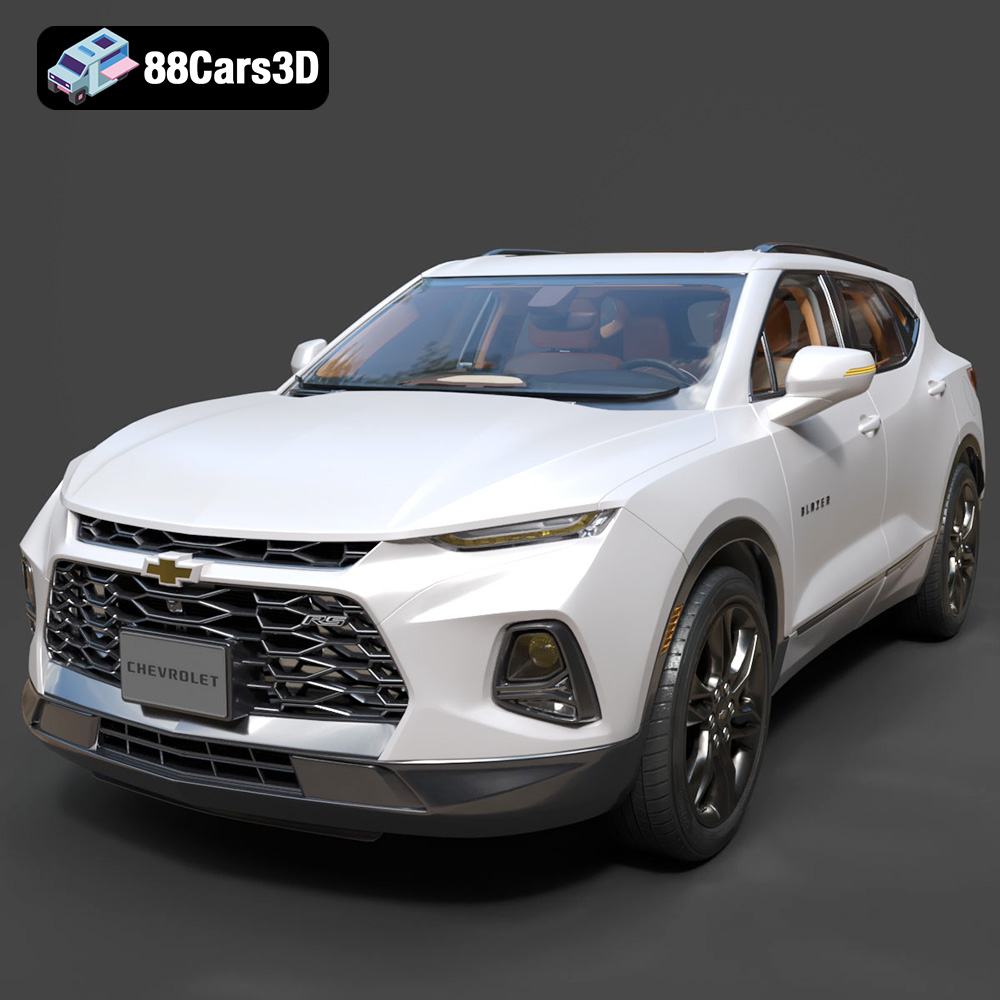
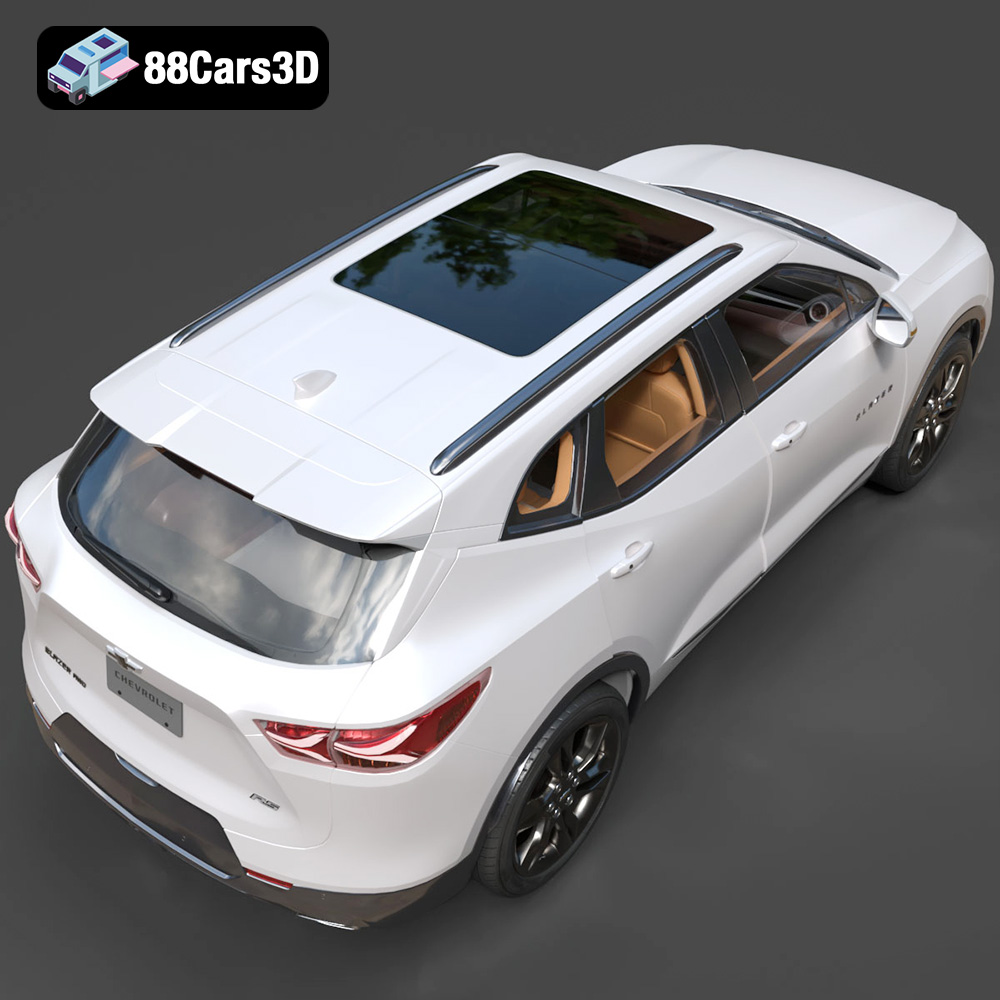
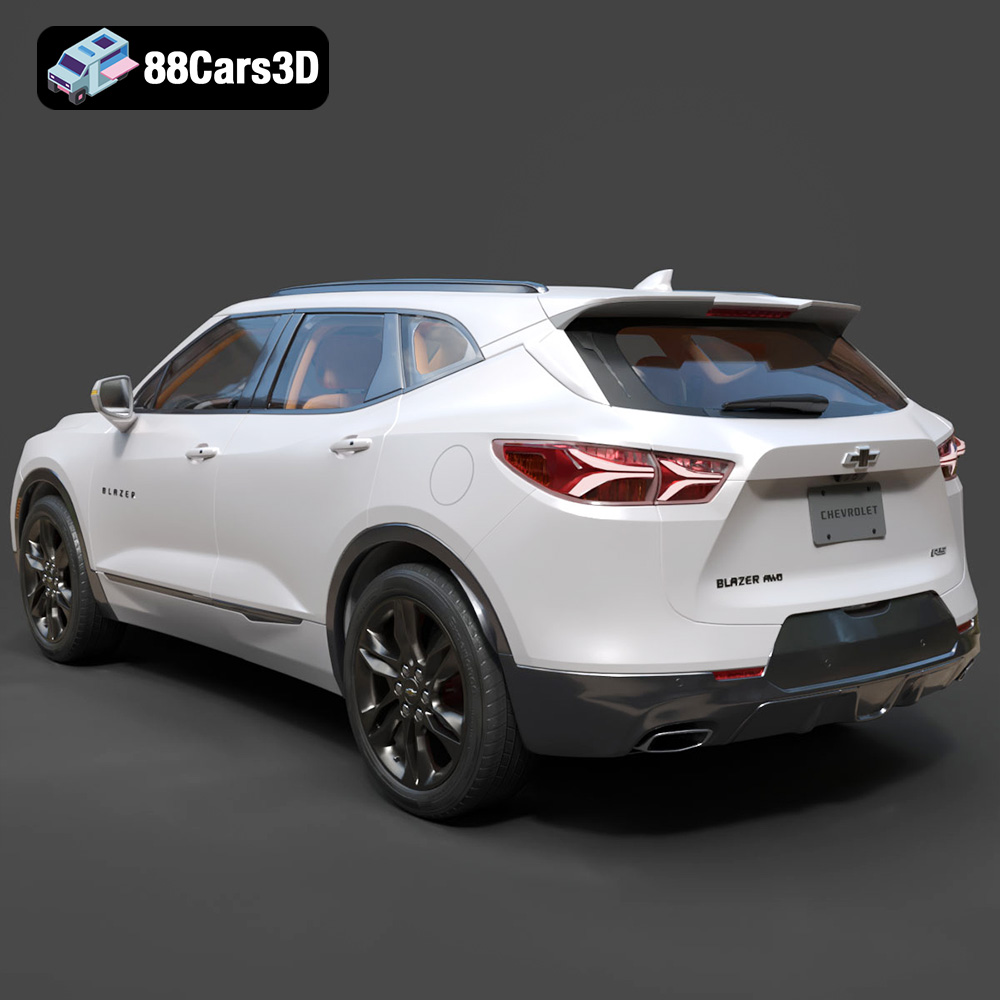
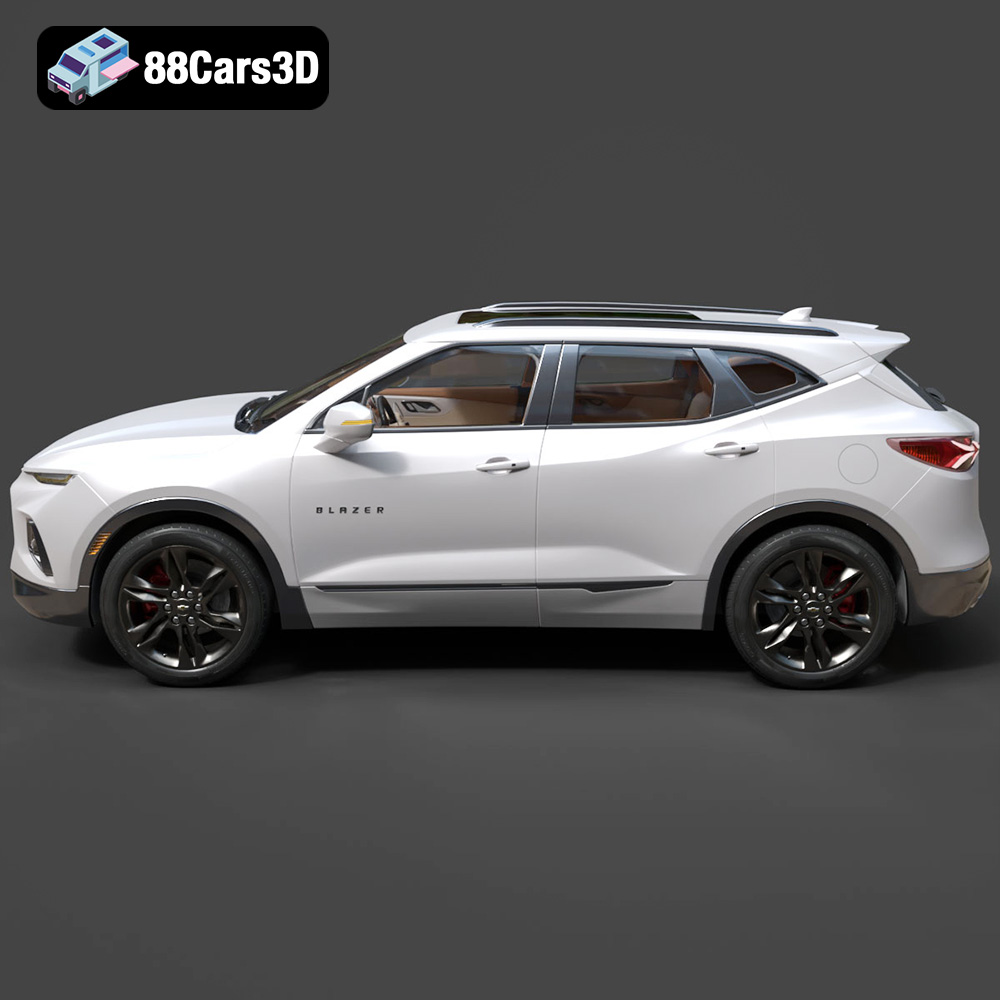
Imagine being able to integrate a new vehicle into an urban racing game with minimal setup, or showcase a car’s intricate interior in an interactive AR configurator before it even rolls off the assembly line. This level of versatility and detail is precisely what professional 3D car models offer. Take, for instance, the 2019 Chevrolet Blazer RS 3D Model – an outstanding example of how a single asset can power diverse professional workflows, from high-end rendering to real-time game environments and even physical 3D prints. This model captures the aggressive, performance-oriented aesthetic of the iconic SUV with remarkable precision, making it an invaluable tool for designers, developers, and artists alike.
The journey from a concept sketch to a fully realized vehicle, whether virtual or physical, is a complex one. In this journey, 3D car models serve as the linchpin, bridging the gap between artistic vision and technical execution. Professional 3D artists and developers understand that time is a precious commodity, and creating highly detailed, optimized models from scratch for every project is often neither feasible nor cost-effective. This is where pre-existing, high-quality assets become indispensable.
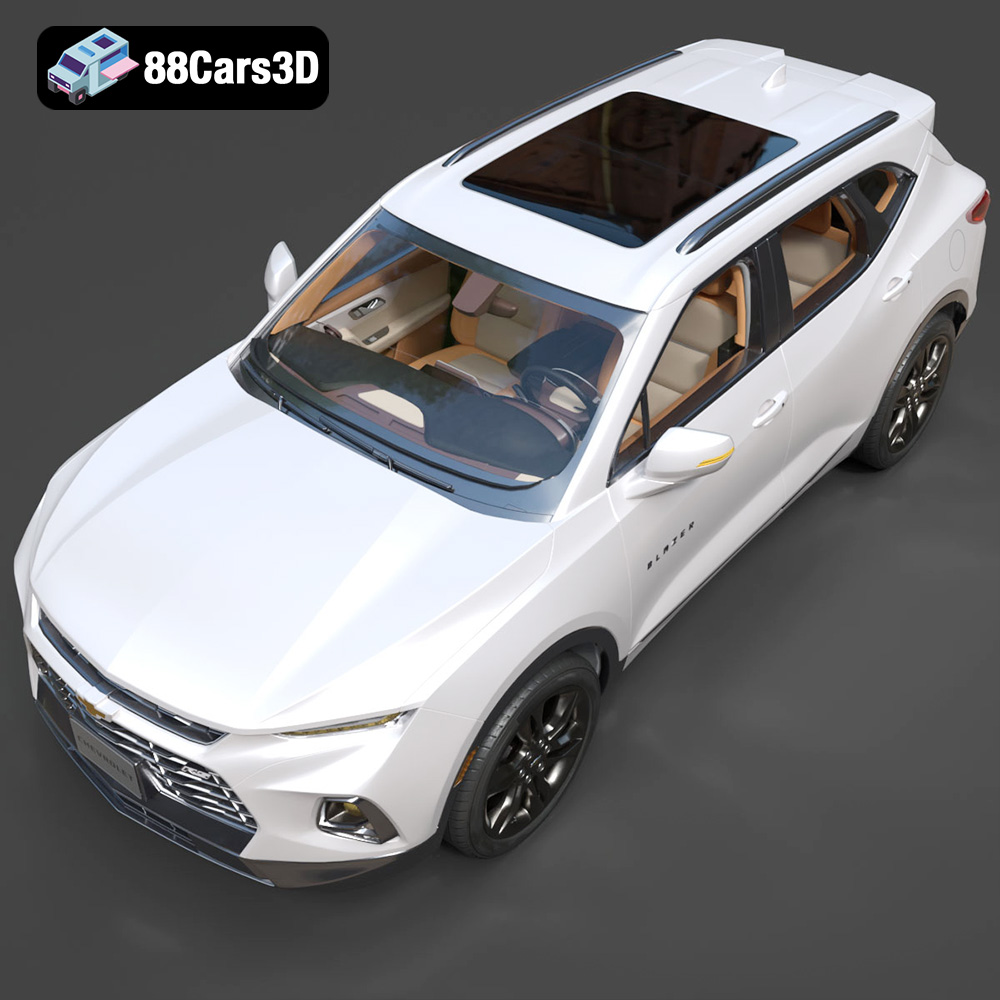
Automotive visualization demands an unparalleled level of realism. Every curve, every reflection, every stitch in the upholstery must be perfect to convey the essence of the vehicle. High-fidelity 3D car models provide this foundation. They are built with accurate dimensions, precise topology, and often include intricate details like engine components, suspension systems, and fully modeled interiors. Such models enable designers to experiment with colors, materials, and lighting scenarios in a virtual studio, presenting concepts that are indistinguishable from real photography. The Chevrolet Blazer RS 2019 3D Model, with its detailed 3.6L V6 engine block styling cues, dual-outlet exhaust, and sport-inspired perforated leather seating, offers a rich canvas for such detailed visualization work.
Developing a complex 3D car model like the Chevrolet Blazer RS 2019 from the ground up can easily consume hundreds of hours of a skilled artist’s time, translating into significant financial investment. This includes blueprint analysis, high-polygon modeling, retopology for optimization, UV unwrapping, texturing, material setup, and rigging. For many projects, especially those with tight deadlines or budgets, commissioning a custom model is simply not an option. Marketplaces like 88cars3d.com address this challenge by offering a curated selection of professionally developed 3D car models that are ready for immediate integration. These models are often available in multiple formats, pre-optimized for various applications, allowing teams to accelerate their development cycles and allocate resources more effectively to other critical aspects of their projects.
The choice of 3D file format is crucial for workflow efficiency, compatibility, and achieving specific project goals. Each format has its strengths, weaknesses, and intended applications. Understanding these nuances is key to leveraging 3D car models effectively across different software and platforms. The Chevrolet Blazer RS 2019 3D Model, for instance, comes in a comprehensive array of formats, ensuring maximum flexibility for any professional pipeline.
The `.blend` format is the native file type for Blender, the popular open-source 3D creation suite. It’s a powerhouse for artists who use Blender, as it encapsulates an entire scene including geometry, materials, textures, lighting setups, cameras, animations, rigging, and even physics simulations. When you download a `.blend` file, you’re not just getting the model; you’re getting the artist’s full working environment. This makes it ideal for extensive customization, iterative design, and leveraging Blender’s powerful toolset for animation or further detailing. For models like the Chevrolet Blazer RS 2019, the `.blend` file offers unparalleled control over every aspect of the asset.
Developed by Autodesk, the `.fbx` (Filmbox) format has become an industry standard for interoperability, especially between different 3D software packages and real-time game engines like Unreal Engine and Unity. It supports a wide range of 3D data, including mesh geometry, materials, textures, animations, skinning, blend shapes, cameras, and lights. `.fbx` is highly efficient at transferring complex scenes while maintaining structural integrity, making it the go-to choice for game developers and animators. Its ability to embed textures and support various levels of detail (LODs) also streamlines the asset pipeline significantly.
The `.obj` (Wavefront OBJ) format is one of the oldest and most universally supported 3D file formats. It’s a simple, text-based or binary format that primarily describes 3D geometry (vertices, normals, UV coordinates) and can reference external `.mtl` (material template library) files for basic material properties and texture maps. While `.obj` is excellent for basic mesh transfer between almost any 3D software, it does not support advanced features like animation, rigging, or scene hierarchy. It’s a robust choice for static models and ensures basic compatibility when dealing with a diverse software ecosystem.
`.glb` is the binary version of the glTF (GL Transmission Format), often referred to as the “JPEG of 3D.” It’s an efficient, compact, and self-contained format specifically designed for the web, AR (Augmented Reality), and VR (Virtual Reality) applications. A `.glb` file embeds all necessary assets, including textures, animations, and PBR (Physically Based Rendering) materials, into a single file, making it incredibly fast to load and render in real-time browser-based viewers, mobile AR experiences (like those from Apple ARKit or Google ARCore), and other interactive 3D contexts. For showcasing the Chevrolet Blazer RS 2019 in a virtual showroom or an AR configurator, `.glb` is the format of choice.
The `.stl` (Stereolithography) format is the de facto standard for 3D printing. It represents the surface geometry of a 3D object using a collection of interconnected triangles. Unlike other formats, `.stl` files do not store color, texture, or material information; they solely describe the object’s shape for additive manufacturing. When preparing the Chevrolet Blazer RS 2019 for 3D printing, converting it to `.stl` is the essential step, allowing hobbyists and professionals to bring the digital model into the physical world. The product description specifies various print settings, underscoring its readiness for this application.
The `.ply` (Polygon File Format) is another format for storing 3D data, often used for data acquired from 3D scanners or for CAD (Computer-Aided Design) and scientific visualization. It can store a wider range of properties than `.obj`, including vertex colors, normals, transparency, and even multiple data types. `.ply` is particularly useful when precision and comprehensive data representation for analysis or reverse engineering are paramount, making it suitable for specialized applications where the Chevrolet Blazer RS 2019’s geometry might be studied or integrated into industrial design workflows.
While not a standalone file format in the traditional sense, “.unreal” typically refers to an asset that has been specifically prepared, imported, and optimized for use within Unreal Engine. This often means the model has been imported as an FBX, then had its materials set up with Unreal’s PBR workflow, collision meshes generated, LODs (Levels of Detail) configured, and possibly even integrated into a blueprint or specific Unreal project structure. For game developers, receiving a “.unreal” asset implies a significant head start, as much of the engine-specific setup has already been handled, streamlining integration of the Chevrolet Blazer RS 2019 into a real-time environment.
The `.max` format is the native file type for Autodesk 3ds Max, a leading software for 3D modeling, animation, rendering, and visualization. Similar to `.blend`, a `.max` file contains the complete scene data, including intricate geometry, advanced V-Ray or Corona Renderer materials, complex lighting setups, cameras, animation timelines, and all modifiers or plugins specific to 3ds Max. For professionals working within the Autodesk ecosystem, the `.max` file provides the highest level of editability and control, making it ideal for high-end automotive rendering, architectural visualization, and detailed animation projects involving the Chevrolet Blazer RS 2019.
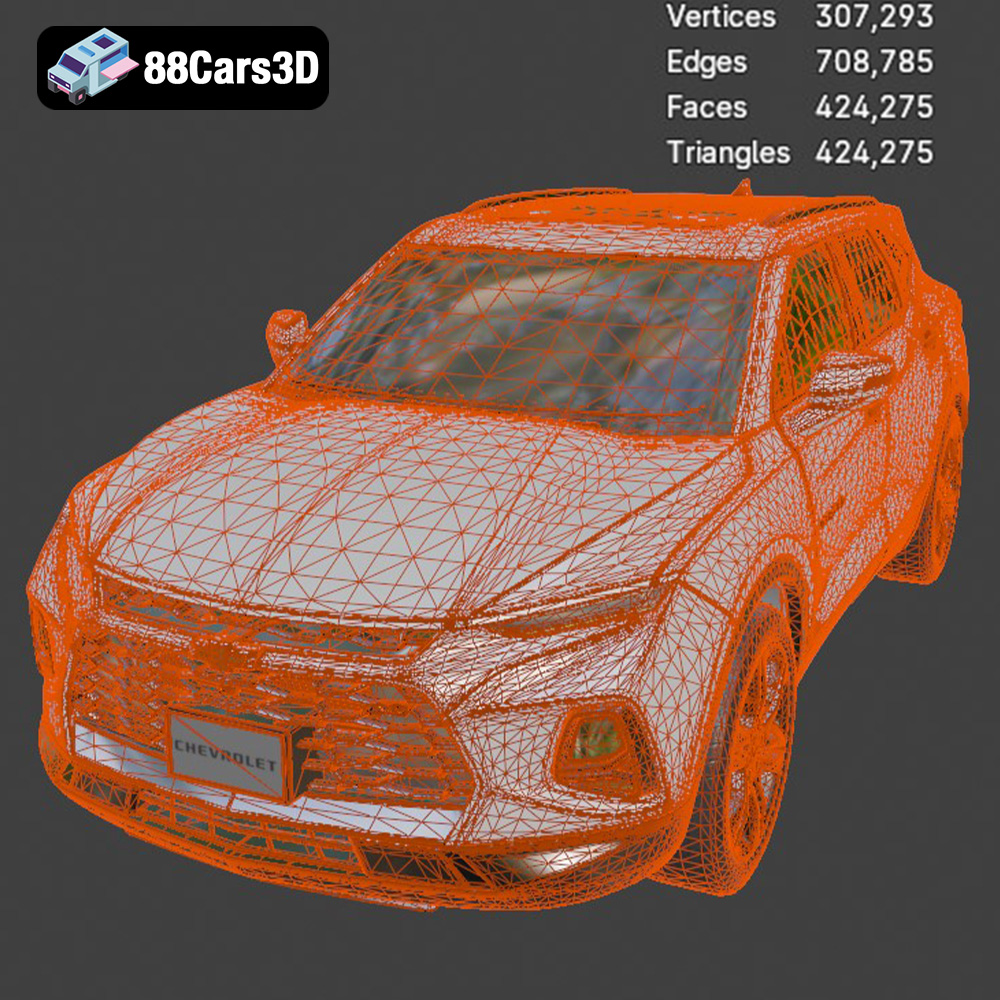
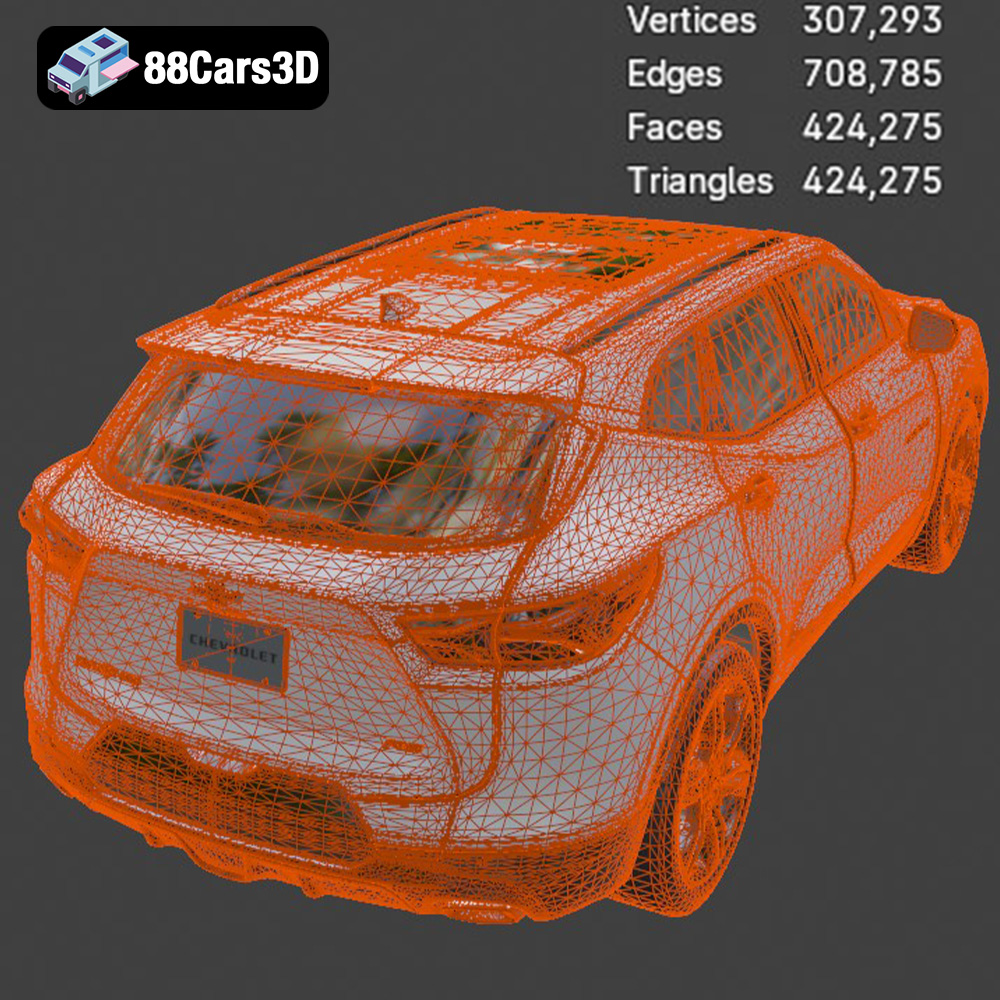
Photorealistic rendering is the pinnacle of automotive visualization, allowing brands and artists to showcase vehicles in stunning detail, long before a physical prototype exists. The quality of the 3D model directly translates to the realism of the final render. The 2019 Chevrolet Blazer RS 3D Model, with its “precise topology of 424,275 triangles,” is engineered for this very purpose, striking an excellent balance between intricate detail and render-time efficiency.
Achieving photorealism is largely about materials. The metallic flake of the paint, the subtle reflections on the glass, the texture of the tires, and the intricate stitching on the leather seats all contribute to the illusion of reality. A high-quality 3D model, like the Blazer, comes with clean UV mapping and often pre-configured PBR (Physically Based Rendering) materials, or at least a topology conducive to easy material setup. Artists using software like 3ds Max with renderers such as V-Ray or Corona can leverage these foundations to create incredibly convincing surfaces. Customization options like changing body colors, modifying tire textures, and adjusting material finishes (matte, gloss, metallic) provided with the model further empower artists to tailor the visuals to specific brand guidelines or creative visions.
Just as in real-world photography, lighting is paramount in 3D rendering. Utilizing the Chevrolet Blazer RS 2019 3D Model, artists can set up virtual studio lighting environments, using HDRIs (High Dynamic Range Images) for realistic ambient illumination and area lights for targeted highlights and reflections. The model’s accurate frame geometry and detailed surfaces ensure that light interacts correctly, producing believable shadows and reflections that enhance its aggressive, performance-oriented aesthetic. The separate wheels, suspension, and steering components also allow for complex animation and dynamic poses that further augment the visual storytelling in a rendered scene.
Even the best renders benefit from post-production. Software like Adobe Photoshop or Nuke can be used to add subtle effects such as lens flares, depth of field, chromatic aberration, or even atmospheric haze. These touches, combined with the inherently high quality of the 3D car model from 88cars3d.com, elevate a render from technically proficient to visually captivating, making the Blazer model stand out in marketing campaigns or lifestyle scenes.
For game developers, the challenge is not just realism, but also performance. Game assets must be optimized to run smoothly in real-time environments without sacrificing visual quality. The 2019 Chevrolet Blazer RS 3D Model exemplifies a “Game-Ready & Optimized” asset, striking a critical balance that makes it ideal for racing titles, open-world games, and simulators.
A polygon count of “424,275 triangles” for the Chevrolet Blazer RS 2019 is a sweet spot for modern game engines. It’s detailed enough to look fantastic up close in an Unreal Engine or Unity game, yet optimized enough to be rendered efficiently alongside other complex assets without bogging down frame rates. This careful balance is crucial for maintaining player immersion and ensuring a smooth gaming experience. Developers can further optimize this with LODs, automatically swapping lower-polygon versions of the model as the car moves further from the camera.
Beyond visual fidelity, a game-ready car model requires proper preparation for physics and animation. The Chevrolet Blazer RS 2019 model is designed with “separate wheels, suspension, and steering components for animation,” and features a “proper pivot setup for steering, wheel rotation, and suspension travel.” This technical foresight is invaluable for game developers. It allows for straightforward implementation of realistic vehicle physics, enabling authentic driving dynamics, responsive steering, and accurate suspension reactions to varied terrain. The detailed independent suspension architecture, for example, can be accurately simulated, adding another layer of realism to the virtual driving experience.
Whether it’s an urban racing game or a detailed virtual automotive showroom, the 3D car model is the star. Its “real-world scale accuracy” ensures it fits seamlessly into environments, preventing scale issues that can break immersion. The detailed cockpit and interior features, including “optimized geometry for first-person POV in gaming,” allow for immersive in-car camera views, enhancing the player’s connection to the vehicle and the virtual world around it. This attention to detail extends to high-resolution infotainment clusters and accurate center consoles, all contributing to a rich, believable interactive experience.
The utility of high-quality 3D car models extends far beyond traditional screens. Augmented Reality (AR), Virtual Reality (VR), and 3D printing represent exciting frontiers where digital assets bridge into interactive and tangible experiences. The Chevrolet Blazer RS 2019 3D Model is equipped for these cutting-edge applications, thanks to its versatile file formats and detailed design.
AR and VR are transforming how consumers interact with products, especially in the automotive sector. Imagine walking around the Chevrolet Blazer RS 2019 in your living room via AR on your smartphone, or sitting inside its virtual cockpit in a VR headset, exploring every detail as if it were truly there. The `.glb` format, optimized for these experiences, makes this possible. Such immersive virtual showrooms and configurators offer unparalleled engagement, allowing potential buyers to customize colors, interiors, and explore features in a highly interactive way. The Blazer model’s accurate proportions and detailed interior are perfect for creating these compelling AR/VR experiences, providing a powerful sales and marketing tool.
For hobbyists, collectors, or even designers needing a physical prototype, 3D printing offers an incredible avenue. The ability to convert the Chevrolet Blazer RS 2019 3D Model to a `.stl` format makes it perfectly suitable for display-scale hobbyists. The product provides specific 3D print settings, including recommended scales (1:12 / 1:18 / 1:24), layer height (0.04–0.12 mm, with resin printing recommended for fine details), wall thickness, infill, and crucial advice on supports and print orientation. The detailed post-processing suggestions — sanding, primer, and authentic factory colors with metallic finishes — guide users in transforming a digital file into a high-quality physical replica, capturing the essence of the SUV in miniature form.
As technology evolves, so too do the applications for 3D car models. From AI-driven design iteration to photogrammetry-based asset creation and real-time ray tracing in games, the demand for high-quality, versatile 3D assets will only grow. Models like the Chevrolet Blazer RS 2019 are future-proofed by their attention to detail, optimization, and availability in multiple formats, ensuring they remain relevant as new visualization and interactive technologies emerge.
The impact of high-quality 3D car models on professional workflows cannot be overstated. They are the essential building blocks for captivating automotive renders, immersive game experiences, interactive AR/VR applications, and even tangible 3D prints. These assets empower designers, developers, and artists to bring their visions to life with unparalleled efficiency and fidelity.
The 2019 Chevrolet Blazer RS 3D Model stands as a testament to this power, offering a meticulously crafted asset that excels across diverse technical applications. Its balanced polycount, detailed features, and comprehensive range of file formats – from `.blend` for full creative control to `.fbx` for game engines and `.glb` for web and AR – make it an incredibly versatile resource. Whether you’re aiming for a photorealistic render in 3ds Max, integrating a new vehicle into Unreal Engine, or creating a physical model with a 3D printer, this asset from 88cars3d.com provides the robust foundation you need to achieve professional-grade results. Investing in such high-quality 3D car models is not just an acquisition; it’s an investment in the future of your creative and technical endeavors.
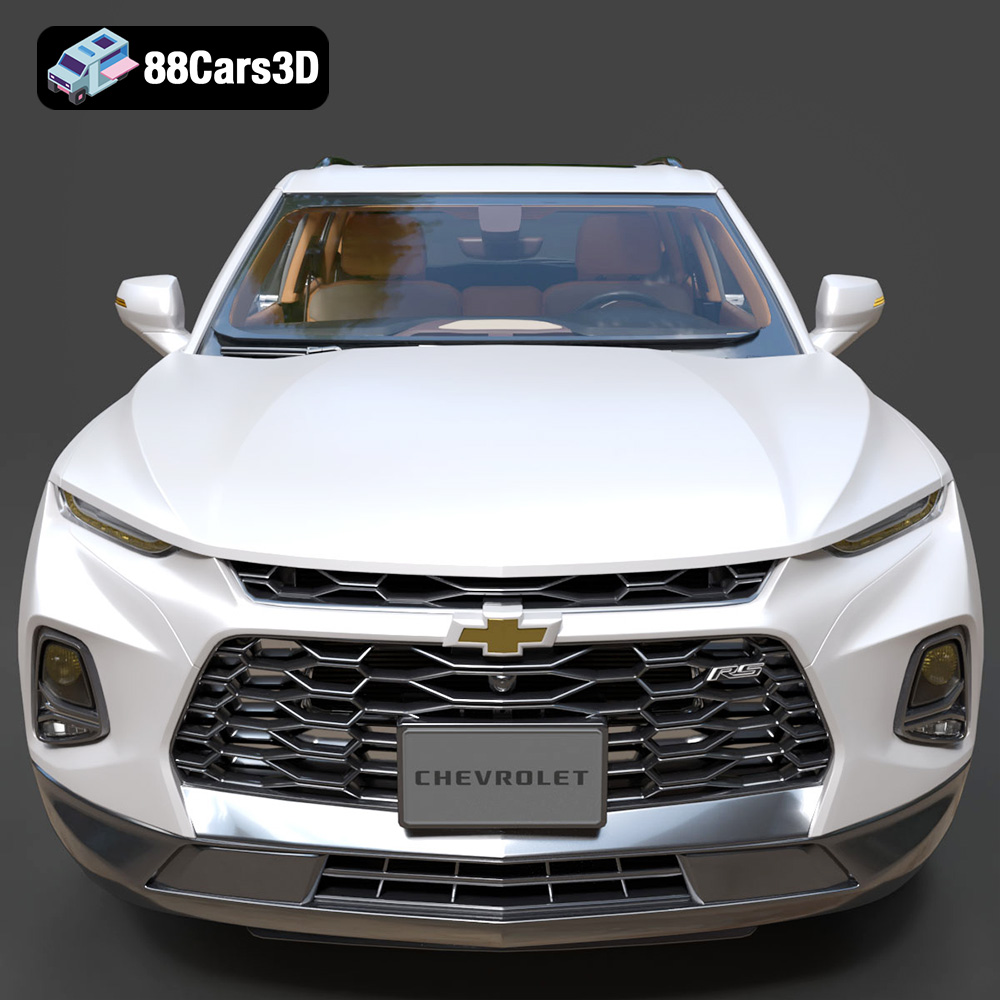
The 2019 Chevrolet Blazer RS brings back the iconic nameplate as a sleek, Camaro-inspired midsize crossover SUV. This 3D model captures its aggressive, performance-oriented aesthetic, featuring a bold black mesh grille, striking LED daytime running lamps, and muscular body lines that redefine the modern sporty SUV. With a precise topology of 424,275 triangles, this 3D model delivers exceptional visual fidelity while maintaining game-ready optimization. Crafted for seamless integration into game engines, virtual reality environments, and high-end animation projects, it provides highly accurate reflections and texturing potential. Perfect for urban racing games, virtual automotive showrooms, architectural visualization, and interactive AR configurators.
$26.00
.2019
.blend
.chevrolet
.crossover
.fbx
.glb
.max
.obj
.ply
.rendering
.stl
.unreal
blazer-rs
car-3d-model
game asset
game-ready
low-poly
optimized
sporty-suv
SUV
VR/AR