Get 20% OFF All Premium 3D & STL Models!

In the rapidly evolving landscape of digital visualization, the demand for exceptionally detailed and versatile 3D car models has never been higher. From breathtaking cinematic renderings and immersive game environments to interactive AR/VR experiences and precision 3D printing, the humble polygon has transformed into a critical asset. Professionals across industries seek not just any model, but assets that embody authenticity, technical robustness, and seamless integration into complex workflows.
Today, we delve into the core of what makes a premium 3D vehicle stand out, using a prime example that perfectly encapsulates these qualities: the BMW 3 Series Touring 2011 3D model. This asset represents the pinnacle of modern 3D automotive design, offering a compelling blend of aesthetic accuracy and technical optimization. Whether you’re an automotive designer striving for photorealism, a game developer crafting the next open-world driving simulator, or an architect visualizing a lifestyle scene, understanding the intricacies of such a model is crucial for elevating your projects.
The flexibility and utility of any 3D asset are largely determined by the file formats it supports. A truly professional-grade 3D car model, such as the BMW 3 Series Touring 2011 found on 88cars3d.com, provides a comprehensive suite of formats, ensuring compatibility across a multitude of software and hardware platforms. Each format serves a specific purpose, optimized for different stages of the production pipeline, from initial modeling to real-time rendering and even physical fabrication.
By offering this comprehensive range of formats, the BMW 3 Series Touring 2011 3D model ensures that creators, regardless of their preferred software or end-use application, have the right tool for the job. This foresight in asset packaging saves invaluable development time and expands the creative possibilities.
A truly outstanding 3D car model doesn’t just look good; it’s built with an understanding of both aesthetic fidelity and technical precision. The BMW 3 Series Touring 2011 3D model is a testament to this philosophy, meticulously crafted to capture every nuance of its real-world counterpart while being optimized for digital performance.
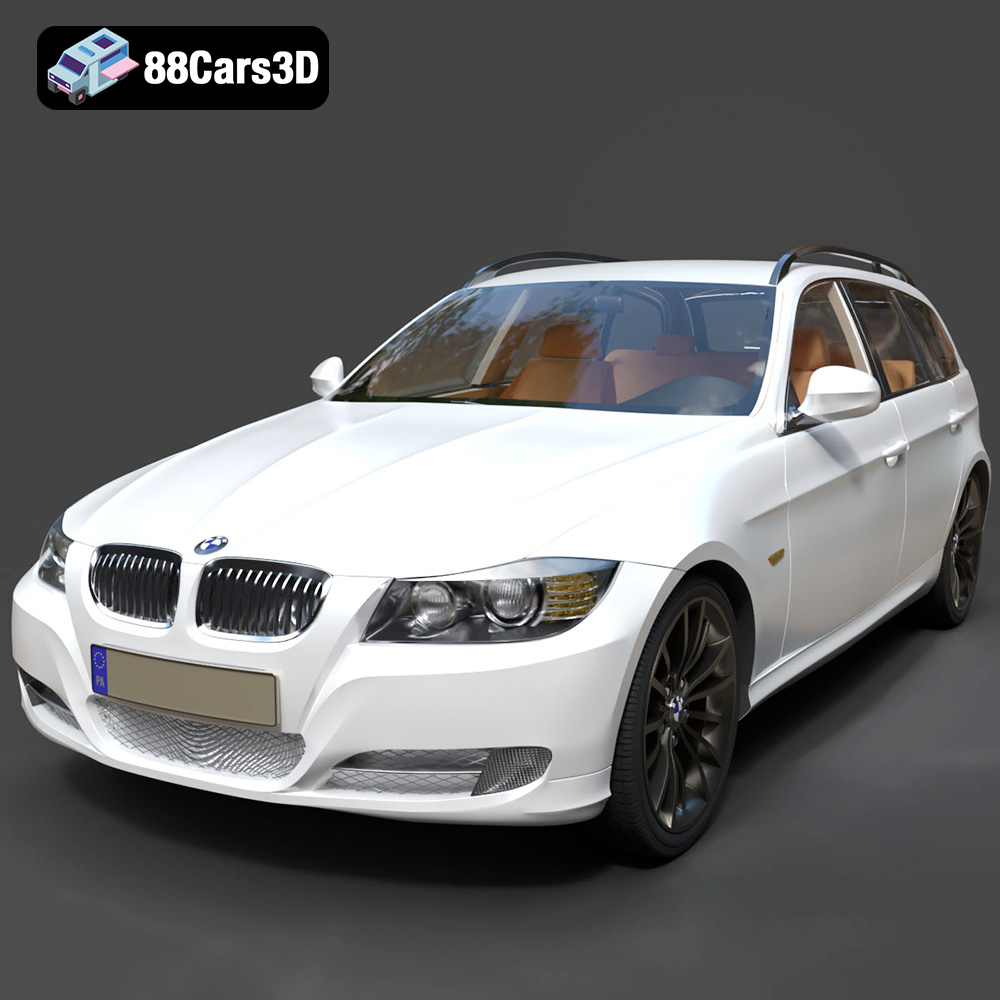
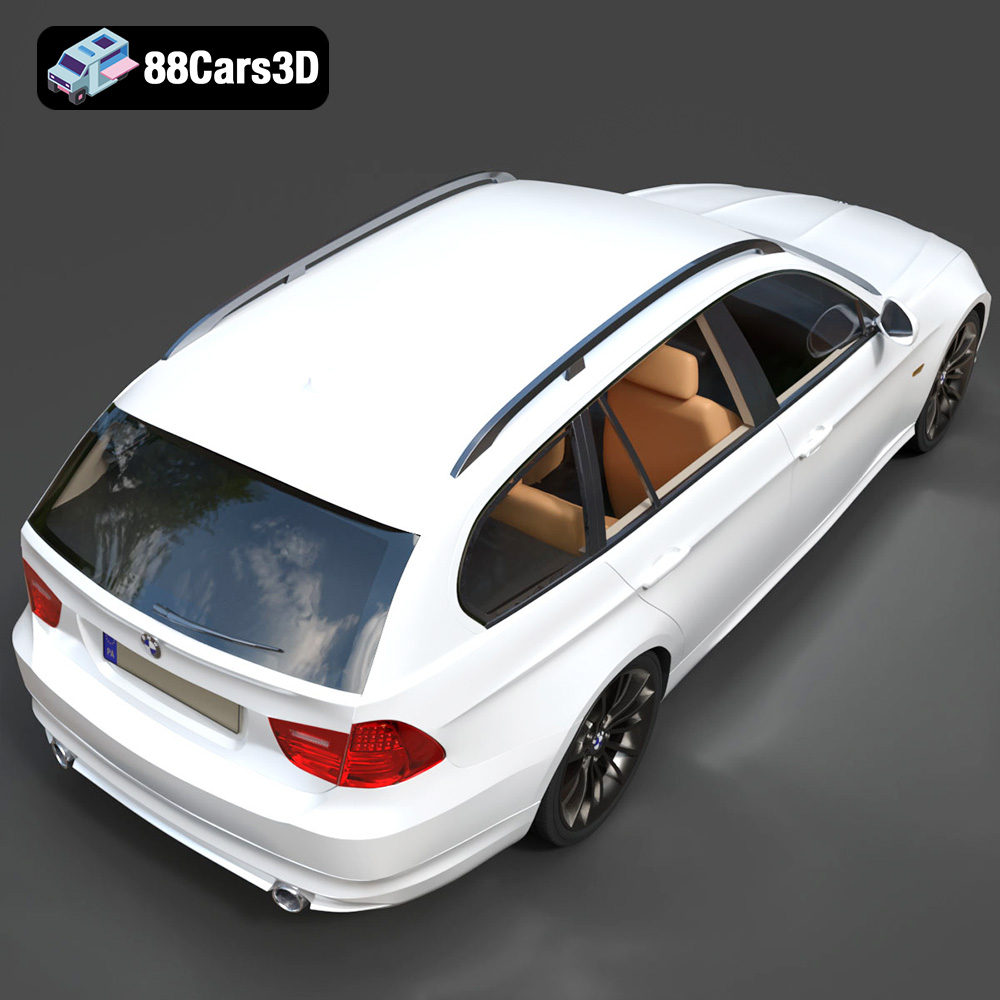
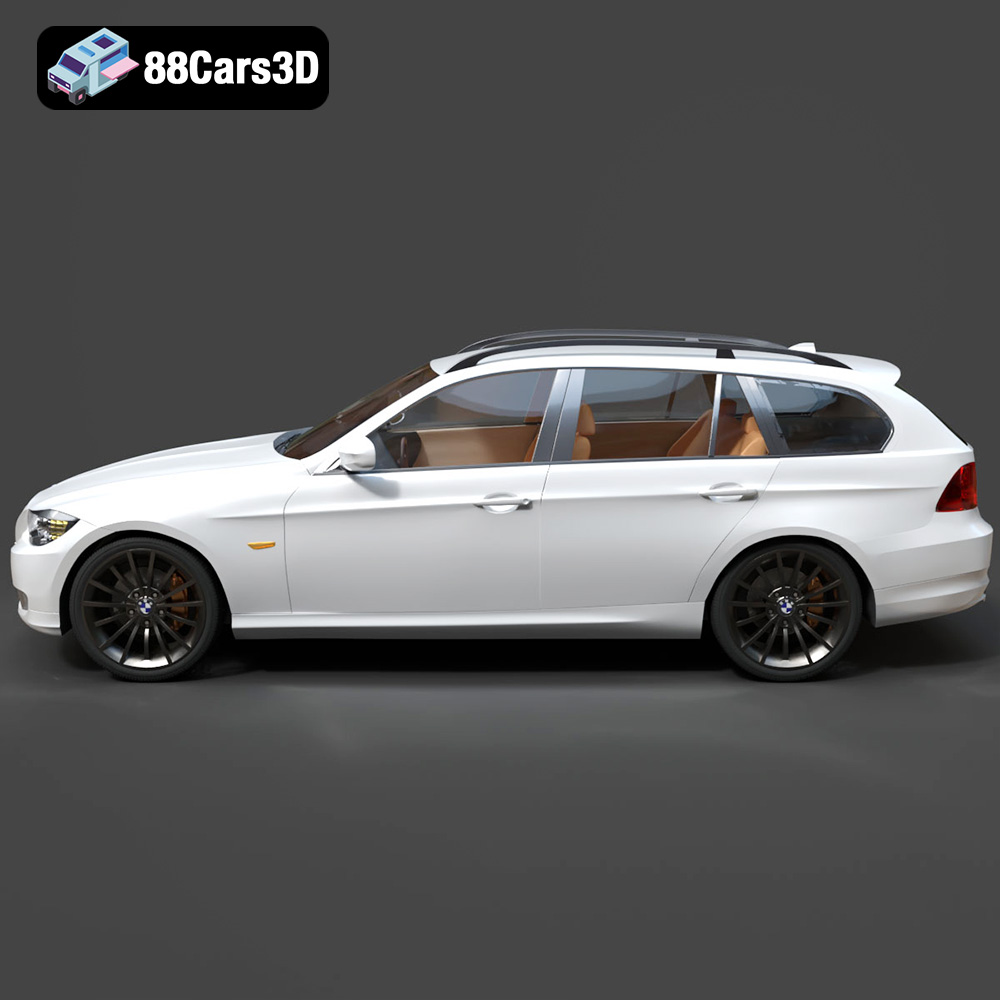
The first impression of any car model hinges on its exterior accuracy. This BMW 3 Series Touring 2011 model excels here, faithfully reproducing the distinct visual cues of the E91/F31 generation. The iconic split kidney grilles are precisely modeled, alongside the dynamic sweeping lines that define BMW’s design language. The aerodynamic profile of this estate version is perfectly translated into 3D, ensuring it looks right from every angle. Details such as the striking headlight clusters, complete with signature angel-eye headlights and L-shaped taillights, are high-resolution, making them suitable for close-up renders and realistic lighting scenarios. Even the twin exhaust tips are accurately detailed, contributing to the model’s overall authenticity and sporty stance. The precision-modeled alloy wheels and high-traction tire treads further elevate the realism, grounding the vehicle in its environment.
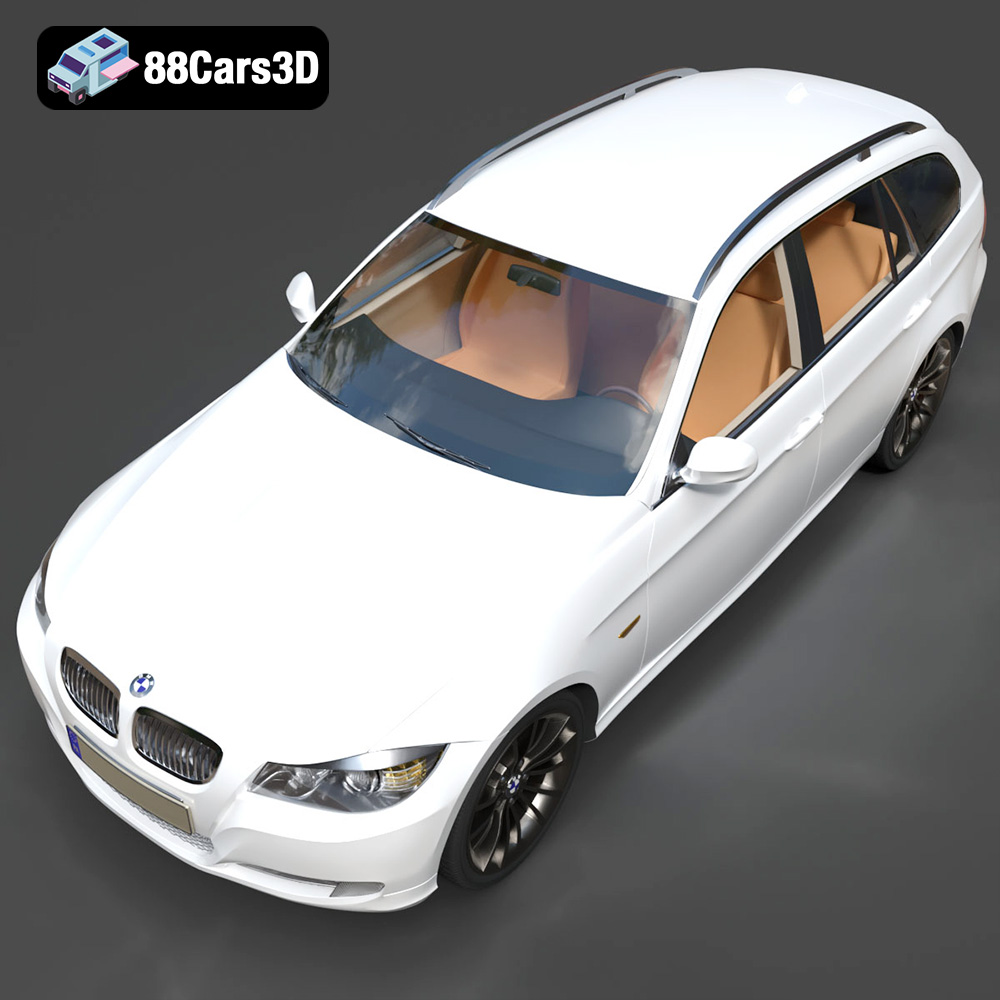
Beyond the impressive exterior, the interior of the BMW 3 Series Touring 2011 model is where true immersion begins, especially for applications like AR/VR or first-person gaming. The model features detailed leather-textured seating and accurately proportioned cargo area, reflecting the car’s practicality. Every aspect of the cockpit has been carefully considered: from the multi-function steering wheel and column setup to the high-fidelity instrument cluster and the iDrive infotainment screen. Precision control details, including pedals, indicator stalks, and the gear shifter, are all present and accurately modeled. This level of interior detail ensures that the model holds up even under the closest scrutiny, making it perfect for virtual showrooms or driving simulations where the user will be “inside” the vehicle.
For dynamic applications like games or animations, a static model simply isn’t enough. The BMW 3 Series Touring 2011 addresses this by featuring separate wheels, suspension, and steering components. Crucially, it boasts a proper pivot setup for steering, wheel rotation, and suspension travel. This means animators and developers don’t have to spend hours rigging the model from scratch. The pre-configured pivots significantly reduce setup time, allowing for immediate integration into physics engines and animation sequences, resulting in realistic driving dynamics and cinematic motion.
The true value of a high-quality 3D asset lies in its seamless integration into diverse professional workflows. The BMW 3 Series Touring 2011 3D model, available at 88cars3d.com, is designed with this versatility in mind, catering to the specific needs of game developers, rendering artists, and AR/VR creators alike.
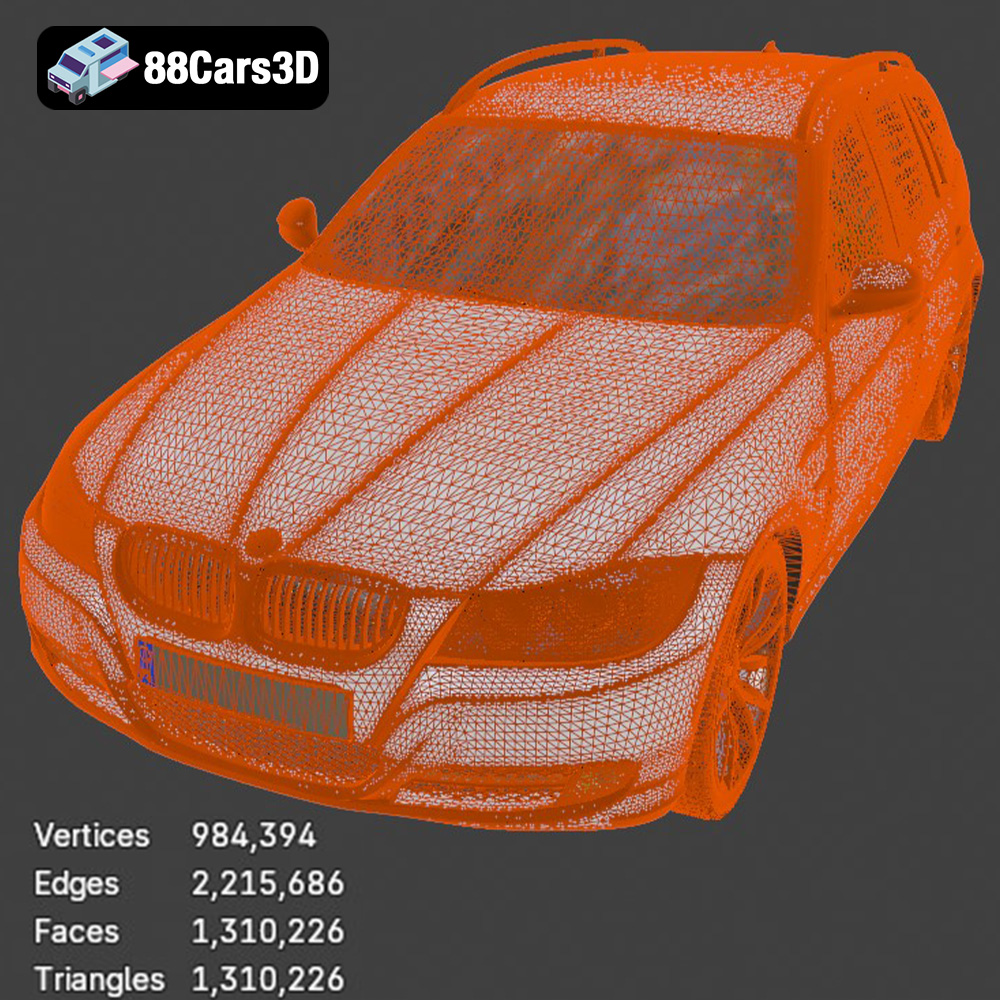
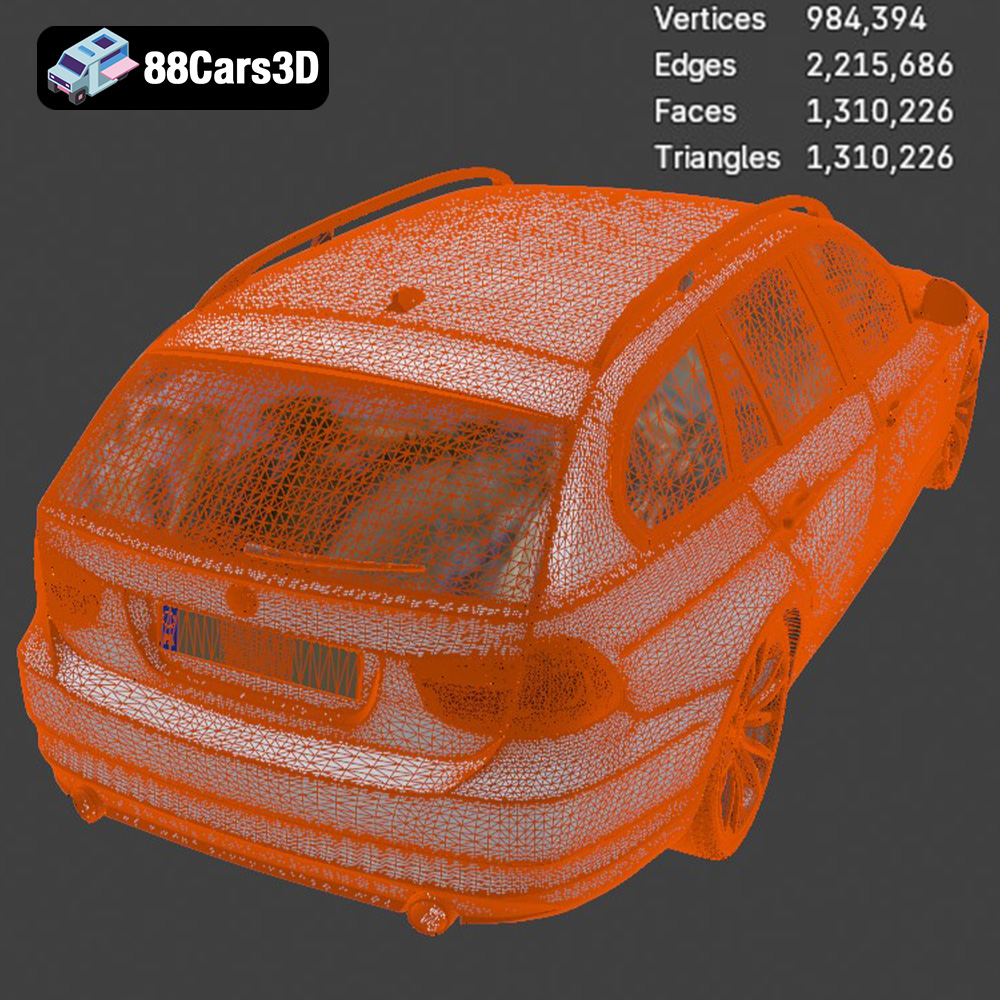
For game developers, performance is as critical as visual fidelity. The BMW 3 Series Touring 2011 strikes an excellent balance with a triangle count of 1,310,226. This is “Game-Ready & Optimized” geometry, perfect for modern driving simulators, open-world games, and racing titles. When importing into Unreal Engine or Unity via the .fbx or .unreal formats, the model’s proper pivot setup for steering, wheel rotation, and suspension travel simplifies the integration process significantly. Developers can quickly set up vehicle physics, ensuring realistic handling and movement. The optimized geometry means less strain on the game engine, allowing for smoother frame rates and more complex environments, even on varying hardware specifications.
For artists focused on photorealistic rendering and visualization, the .max and .blend file formats are invaluable. These provide fully editable scene files, allowing complete control over materials, lighting, and environmental setups. In 3ds Max or Blender, artists can easily assign advanced PBR (Physically Based Rendering) materials to achieve stunning realism, from the metallic flakes in the car paint to the subtle reflections on the glass and the intricate textures of the leather interior. The real-world scale accuracy of the model ensures it fits perfectly into architectural visualizations or lifestyle scenes, interacting believably with other elements and lighting. This makes it an excellent choice for brand campaigns, high-end advertisements, and detailed studio lighting setups where every pixel counts.
The immersive nature of AR/VR demands optimized assets that can be rendered smoothly on various devices. The .glb format of the BMW 3 Series Touring 2011 is specifically designed for this purpose. Its compact size and efficient loading make it ideal for virtual showrooms where customers can explore the car in a 3D environment, or for augmented reality applications that overlay the vehicle onto the real world via a smartphone or headset. Imagine walking around a life-sized BMW 3 Series Touring in your living room, changing its color, or opening its doors with a simple gesture – all made possible by a well-optimized .glb model. The detailed exterior and interior features contribute to a convincing and engaging user experience, blurring the lines between the digital and physical.
The utility of a high-quality 3D car model extends far beyond digital screens. With advancements in 3D printing technology, these digital assets can be transformed into tangible objects, offering a unique avenue for display, prototyping, and personal customization. The BMW 3 Series Touring 2011 3D model includes a .stl format, specifically catering to this growing demand.
The .stl file format is the universal language of 3D printing. It converts the detailed polygonal mesh of the BMW 3 Series Touring 2011 into a series of triangles that define its surface geometry, which 3D printers then use to build the physical model layer by layer. This allows hobbyists to create display-scale replicas for their collections or automotive enthusiasts to possess a tangible representation of their favorite car. For professionals, 3D printing can be used for rapid prototyping, allowing designers to physically evaluate the car’s form, proportions, and aesthetic details before committing to expensive manufacturing processes. It provides a tactile connection to the digital design, offering insights that might be missed on a screen.
Achieving a high-quality 3D print of a complex automotive model like the BMW 3 Series Touring 2011 requires careful attention to specific settings. The provided guidelines are invaluable:
By following these expert recommendations, creators can successfully bridge the gap between digital asset and physical object, bringing the BMW 3 Series Touring 2011 to life in a whole new dimension.
The intersection of technical precision and artistic flexibility defines a superior 3D asset. The BMW 3 Series Touring 2011 3D model excels in both areas, delivering a robust foundation for diverse projects while offering extensive customization possibilities.
One of the most critical technical specifications for any 3D model, particularly for real-time applications, is its polycount (or triangle count). The BMW 3 Series Touring 2011 model boasts 1,310,226 triangles. This number strikes a near-perfect balance: it’s high enough to ensure exceptional visual fidelity, capturing all the nuanced curves and intricate details of the vehicle without visible faceting, yet optimized enough for smooth integration into demanding real-time engines like Unreal Engine and Unity. Achieving this balance requires expert modeling techniques, ensuring that polygon density is allocated efficiently where detail is most needed, and kept lower in less visible areas. This “Game-Ready & Optimized” approach means developers don’t have to spend valuable time reducing polygon counts or optimizing meshes, allowing them to focus on game mechanics and environmental design.
Beyond the mesh, the model’s real-world scale accuracy is paramount for believable integration. Whether placing the car in an architectural render or a virtual city, its precise dimensions ensure it interacts correctly with other assets and environments. The proper pivot setup for steering, wheel rotation, and suspension travel is a subtle but vital technical advantage, eliminating tedious rigging work for animators and enabling accurate physical simulations.
Even the most detailed model needs to be adaptable. The BMW 3 Series Touring 2011 offers excellent customization options, empowering artists and developers to tailor the asset to their specific creative vision or project requirements. This flexibility enhances the model’s utility across different scenarios:
These technical advantages and customization capabilities make the BMW 3 Series Touring 2011 a highly efficient and versatile asset, maximizing both visual impact and development efficiency.
In the fast-paced world of digital content creation, time is a precious commodity. The strategic decision to utilize high-quality, ready-made 3D car models like the BMW 3 Series Touring 2011 from marketplaces like 88cars3d.com offers significant advantages, streamlining production workflows and ensuring consistent excellence.
Creating a high-fidelity 3D car model from scratch is an incredibly labor-intensive and expensive process. It requires skilled 3D artists, extensive research into vehicle blueprints and reference images, meticulous modeling of every component, complex UV mapping, and sophisticated material creation. A single project can consume hundreds of hours of a specialist’s time. By investing in a pre-made asset such as the BMW 3 Series Touring 2011, studios and individual creators bypass this entire initial phase. The cost of purchasing a professionally crafted model is typically a fraction of the expense involved in bespoke creation, delivering immediate return on investment. This efficiency frees up internal teams to focus on core project development, innovation, and fine-tuning, rather than foundational asset creation.
Furthermore, the “Game-Ready & Optimized” nature of this model, with its balanced polycount and proper pivot setups, means less time spent on post-import optimization. This translates directly into faster iteration cycles for game development, quicker turnaround for rendering projects, and more rapid deployment for AR/VR applications.
Maintaining a consistent level of quality across all assets within a large project can be challenging. When multiple artists work on different assets, there’s always a risk of variations in detail, topology, and material setup. Sourcing models from a reputable marketplace like 88cars3d.com guarantees a baseline of professional quality. The BMW 3 Series Touring 2011 is an example of an asset built to industry standards, featuring clean topology, accurate real-world scale, and well-organized components.
This consistency is particularly important for games where vehicles need to look and perform cohesively, or for large-scale visualizations where different cars might populate a scene. Relying on expertly crafted assets helps elevate the overall production value, creating a more polished and believable end product. It ensures that critical technical specifications, such as polygon count optimization for real-time engines and comprehensive file format support, are already handled, providing a solid foundation for any project.
The world of 3D content creation thrives on efficiency, quality, and versatility. The BMW 3 Series Touring 2011 3D model exemplifies these principles, offering a meticulously detailed and technically robust asset that serves a multitude of professional applications. From its authentic exterior and immersive interior to its game-ready optimization and comprehensive file format support, this model empowers creators in game development, automotive rendering, AR/VR experiences, and even 3D printing.
Understanding the nuances of various 3D file formats, appreciating the intricate details of a well-crafted model, and leveraging the strategic advantages of pre-made assets are crucial for success in today’s digital landscape. The BMW 3 Series Touring 2011 3D model stands as a testament to what a premium asset can offer, simplifying complex workflows and enabling artists and developers to focus on unleashing their creativity. For those seeking high-quality 3D car models that deliver on every front, exploring offerings like this at 88cars3d.com is a definitive step towards elevating any project.
Experience the perfect blend of performance and practicality with the BMW 3 Series Touring 2011. This estate version of the iconic E91/F31 generation features renowned Bavarian engineering, sporting the signature split kidney grilles, dynamic sweeping lines, and a spacious yet aerodynamic profile. Designed to capture the essence of this versatile family car, the model highlights distinct visual cues including detailed twin exhaust tips, striking headlight clusters, and a meticulously crafted wheel setup that emphasizes its sporty stance. This 3D model boasts exceptional topology with a triangle count of 1,310,226, ensuring high visual fidelity while remaining optimized for various digital applications. Whether you are developing modern driving simulators, creating immersive AR/VR automotive configurators, or producing high-end architectural and lifestyle visualizations, this asset delivers unparalleled realism. Its careful construction ensures seamless integration into real-time engines like Unreal Engine and Unity.
$37.50
.2011
.blend
.bmw
.fbx
.glb
.max
.obj
.ply
.rendering
.stl
.touring
.unreal
3-series
car-3d-model
estate-car
game asset
game-ready
low-poly
optimized
station-wagon
VR/AR