Get 20% OFF All Premium 3D & STL Models!

In the dynamic world of 3D visualization, from high-stakes game development to intricate architectural rendering and immersive virtual reality experiences, the demand for exceptionally detailed and optimized 3D models is ever-present. Precision and realism are paramount, especially when depicting complex machinery that operates within real-world environments. Whether it’s the sleek lines of a supercar or the rugged power of construction equipment, the quality of your 3D assets directly impacts the final output’s credibility and impact.
Today, we’re shifting our focus from the asphalt to what builds it: heavy construction machinery. We’ll explore the technical intricacies and professional applications of a particularly vital asset: the Road Roller Vibratory Tandem 3D Model. This model stands as a testament to the blend of high fidelity and optimization required in contemporary 3D pipelines. Developed with meticulous attention to detail, this particular 3D model, available on 88cars3d.com, is not just a visual representation but a versatile tool designed to integrate seamlessly into a multitude of professional projects, from creating realistic construction simulators to enhancing architectural visualizations with authentic job site elements.
Navigating the world of 3D modeling often begins with understanding the various file formats available. Each format serves a specific purpose, offering unique advantages depending on your project’s requirements, software ecosystem, and final output. The Road Roller Vibratory Tandem 3D Model exemplifies this versatility by offering a comprehensive suite of formats, ensuring maximum compatibility and utility across professional workflows. Let’s break down the core formats and their applications.
The .blend file is the native format for Blender, a powerful and increasingly popular open-source 3D creation suite. When you download a .blend file, you’re receiving a fully editable Blender scene, complete with all mesh data, materials, textures, lighting, camera setups, and even animations. For artists working primarily in Blender, this format offers the most flexibility for customization, allowing for deep modifications to the model’s topology, UVs, and PBR (Physically Based Rendering) materials. It’s ideal for those who wish to adapt the Road Roller model to a specific art style, add custom animations, or render it within Blender’s Cycles or Eevee engines.
The .fbx (Filmbox) format is arguably the most widely adopted 3D interchange format in the industry. Developed by Autodesk, it’s a robust solution for transferring 3D data between different software applications like Maya, 3ds Max, Cinema 4D, and most importantly, real-time game engines such as Unreal Engine and Unity. FBX files support geometry, materials, textures (via references), skeletal animations, and even blend shapes. Its primary strength lies in its ability to maintain scene hierarchy and animation data accurately, making it the go-to choice for importing complex animated models like the Road Roller with its articulated steering and rotating drums into a game development pipeline or for automotive rendering scenarios where motion is key.
The .obj (Wavefront Object) format is a universal standard for storing 3D geometry data. It’s an older, simpler format that is incredibly versatile and supported by virtually every 3D application. OBJ files primarily store vertex positions, UV coordinates, normals, and face information, often accompanied by an MTL (Material Template Library) file for basic material properties. While it doesn’t support animation or scene hierarchy as robustly as FBX, its cross-software compatibility makes it an excellent choice for static meshes, arch-viz, or when you need a clean geometric base. For the Road Roller, the .obj provides a solid foundation for those working in less common software or needing a stripped-down mesh for specific purposes.
The .glb (GL Transmission Format Binary) is a relatively newer format designed for the efficient transmission and loading of 3D scenes and models in web and AR/VR applications. It’s a self-contained, compact format that embeds textures and other assets directly within a single binary file. This makes it incredibly efficient for browser-based 3D viewers, augmented reality experiences on mobile devices, and lightweight virtual reality environments. The Road Roller model in .glb format is perfectly suited for developers creating immersive virtual training simulations or interactive product configurators accessible via the web, ensuring quick loading and optimal performance.
The .stl (Stereolithography) format is the cornerstone of additive manufacturing, commonly known as 3D printing. It represents a 3D model as a series of connected triangles, defining only the surface geometry without color, texture, or material information. While not suitable for rendering or animation, it’s indispensable for physical fabrication. The Road Roller model, provided in .stl, allows hobbyists and professionals to 3D print scale models for dioramas, prototypes, or educational purposes, leveraging the model’s precise geometry to create a tangible replica.
The .ply (Polygon File Format) is another format primarily used for storing 3D data, often originating from 3D scanners or CAD software. It can store a wider range of properties than OBJ, including color per vertex, transparency, and normal data. While less common for general rendering, it’s highly valued in fields requiring precise mesh data for engineering analysis, reverse engineering, or high-fidelity geometric representations. For specialized applications involving the Road Roller, the .ply format offers an avenue for detailed inspection and integration into more technical software.
While not strictly a native file format in the same way .blend or .max are, .unreal typically refers to an asset package specifically configured and optimized for Unreal Engine. This usually means the FBX import has been processed, materials are set up using Unreal’s PBR shader system, collisions are generated, and possibly even basic blueprints for functionality (like a drivable vehicle) are included. The “unreal” option for the Road Roller model signifies that it’s meticulously prepared for immediate use in Unreal Engine projects, minimizing setup time and maximizing performance within real-time environments.
Finally, the .max file is the proprietary native format for Autodesk 3ds Max, a leading software for 3D modeling, animation, and rendering. Like .blend, it contains the entire scene data, including geometry, lights, cameras, materials, and animation. For professionals integrated into the 3ds Max ecosystem, this format offers complete control over the Road Roller model, enabling complex animation sequences, advanced rendering with V-Ray or Corona, and seamless integration with other Autodesk products. It’s the ultimate format for comprehensive project development and high-end visualization.
The availability of these diverse formats for the Road Roller Vibratory Tandem 3D Model underscores its flexibility and value, ensuring that no matter your preferred software or project scope, you have an optimized, ready-to-use asset at your fingertips.
Crafting a 3D model that balances visual fidelity with performance efficiency is an art, particularly when dealing with complex industrial machinery. The Road Roller Vibratory Tandem 3D Model from 88cars3d.com exemplifies this balance, offering a high-quality asset suitable for a broad spectrum of professional applications. Its detailed design and optimized topology make it a standout choice for any digital construction site.
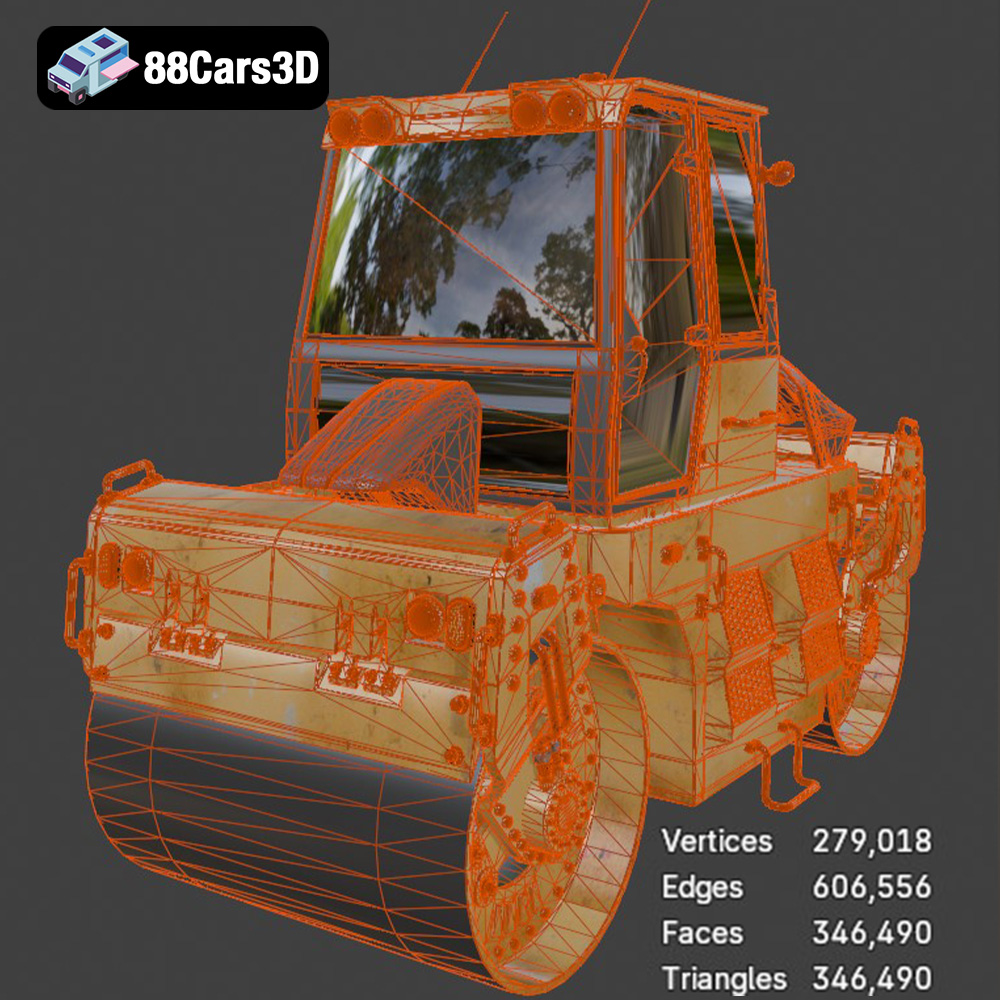
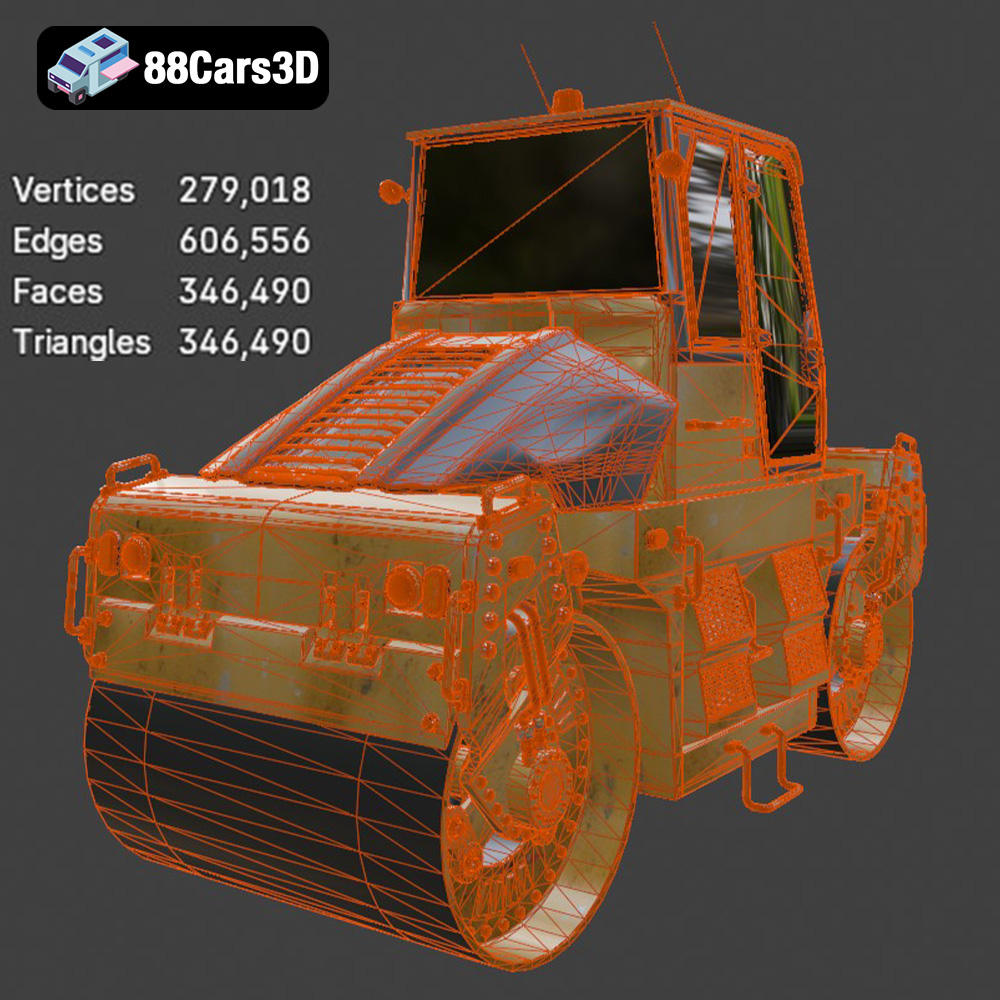
At the heart of any professional 3D model is its geometry and topology. This Road Roller model boasts an optimized topology with precisely 346,490 triangles. This polycount strikes a perfect balance, delivering remarkable visual fidelity without overburdening real-time engines like Unreal or Unity. Such optimization is crucial for maintaining high frame rates in game development and ensuring smooth performance in AR/VR applications. The model is built to real-world scale accuracy, based on actual vehicle chassis dimensions, which is vital for realistic simulations, architectural visualization, and accurate spatial planning.
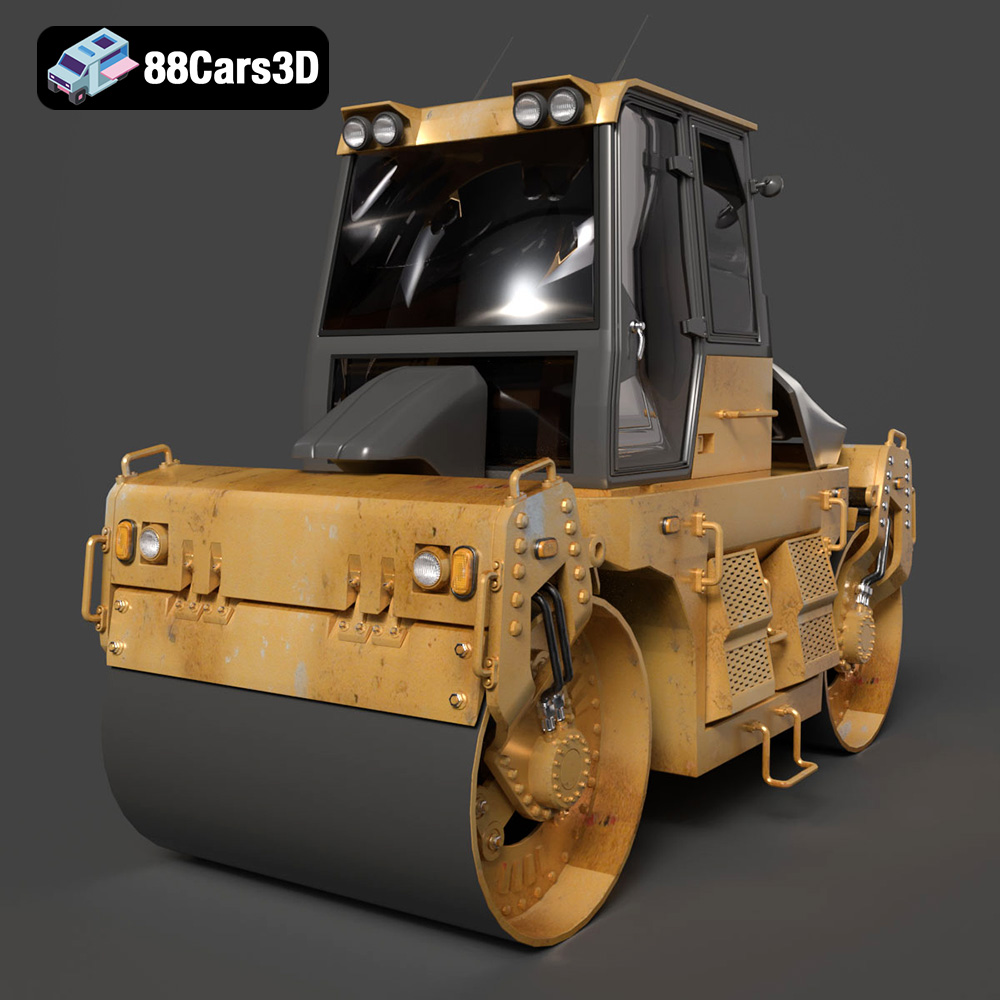
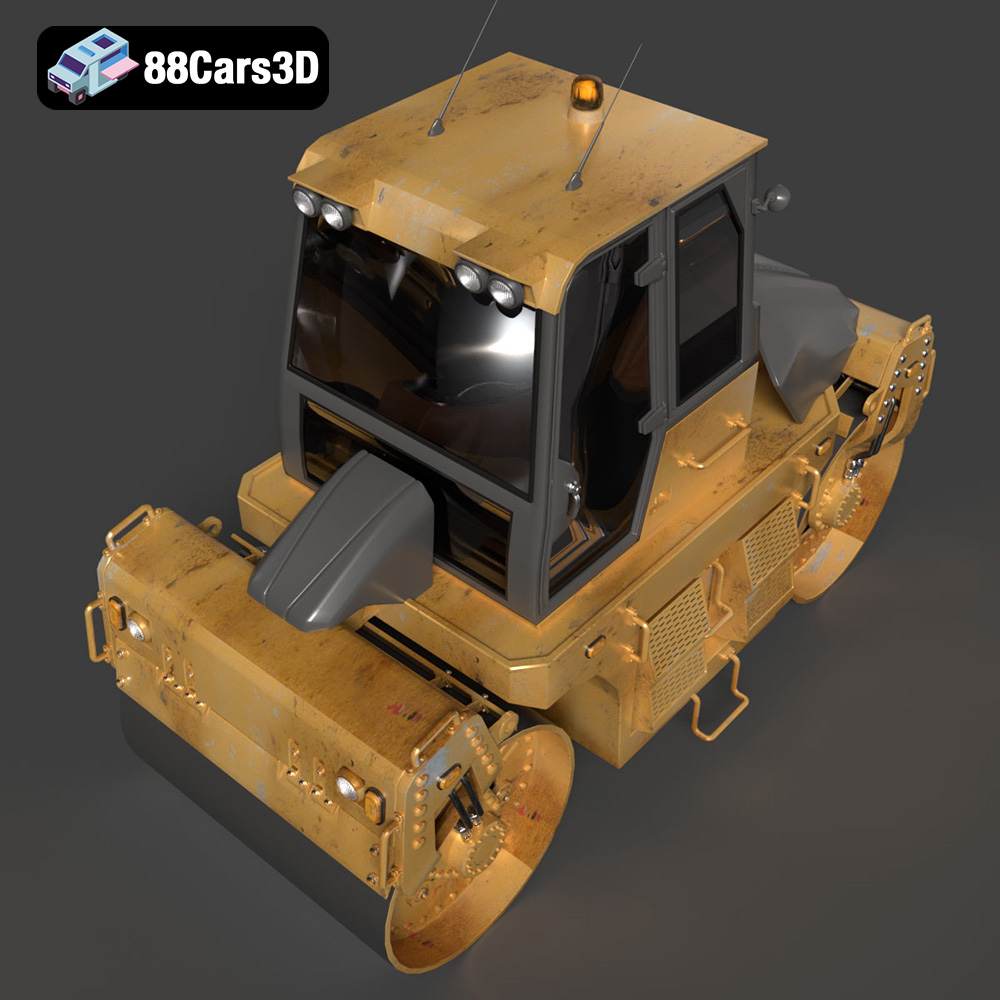
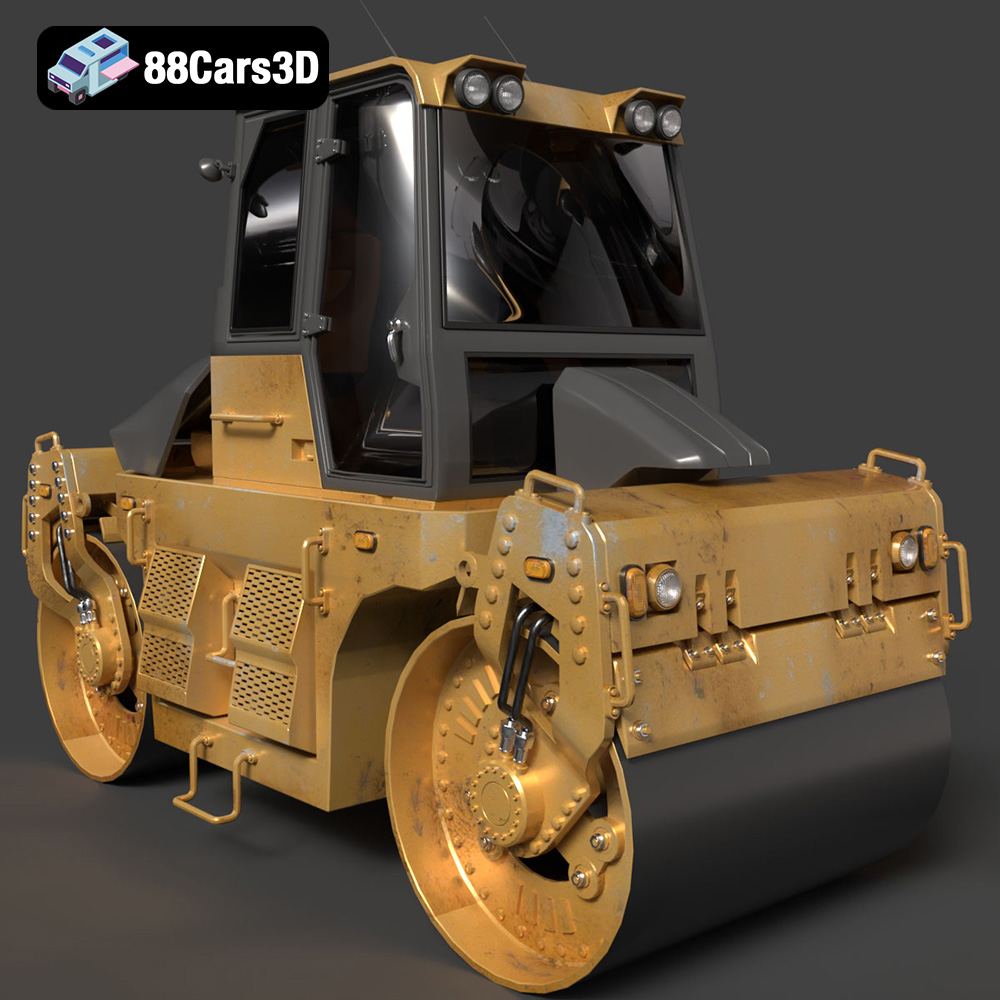
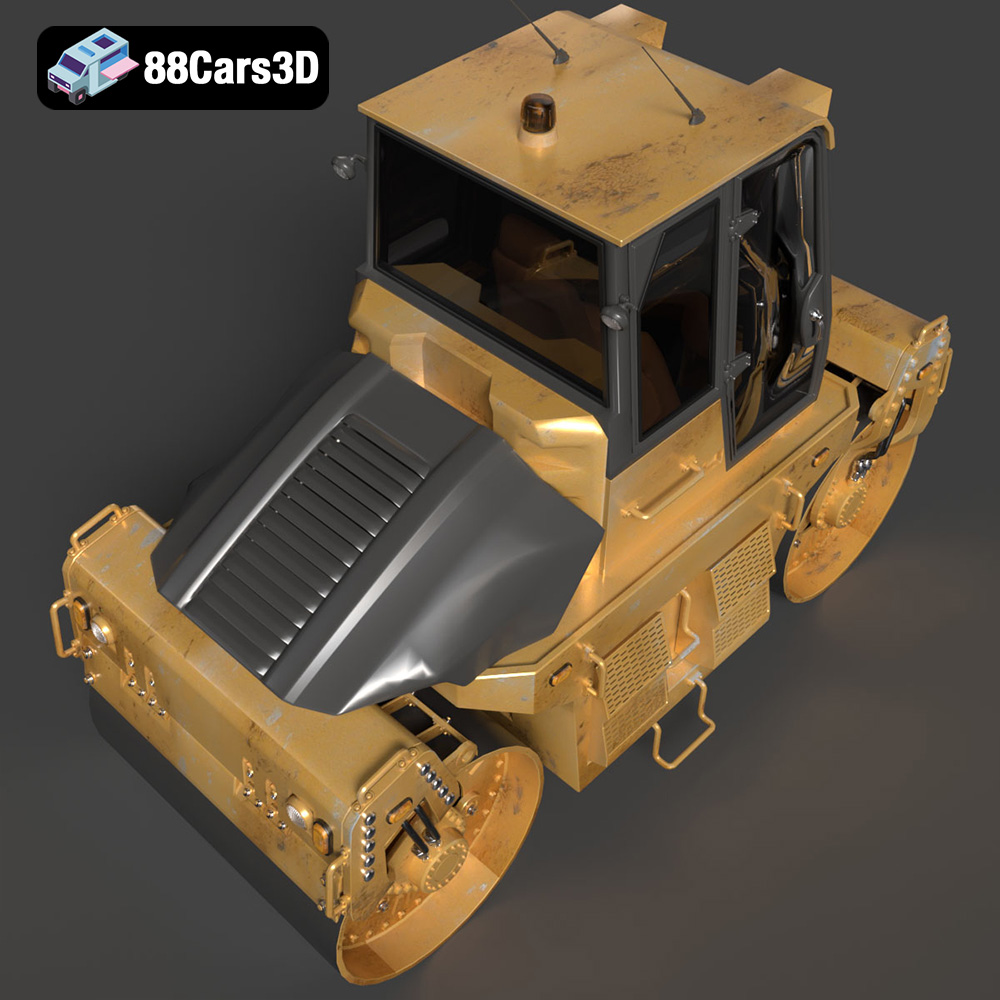
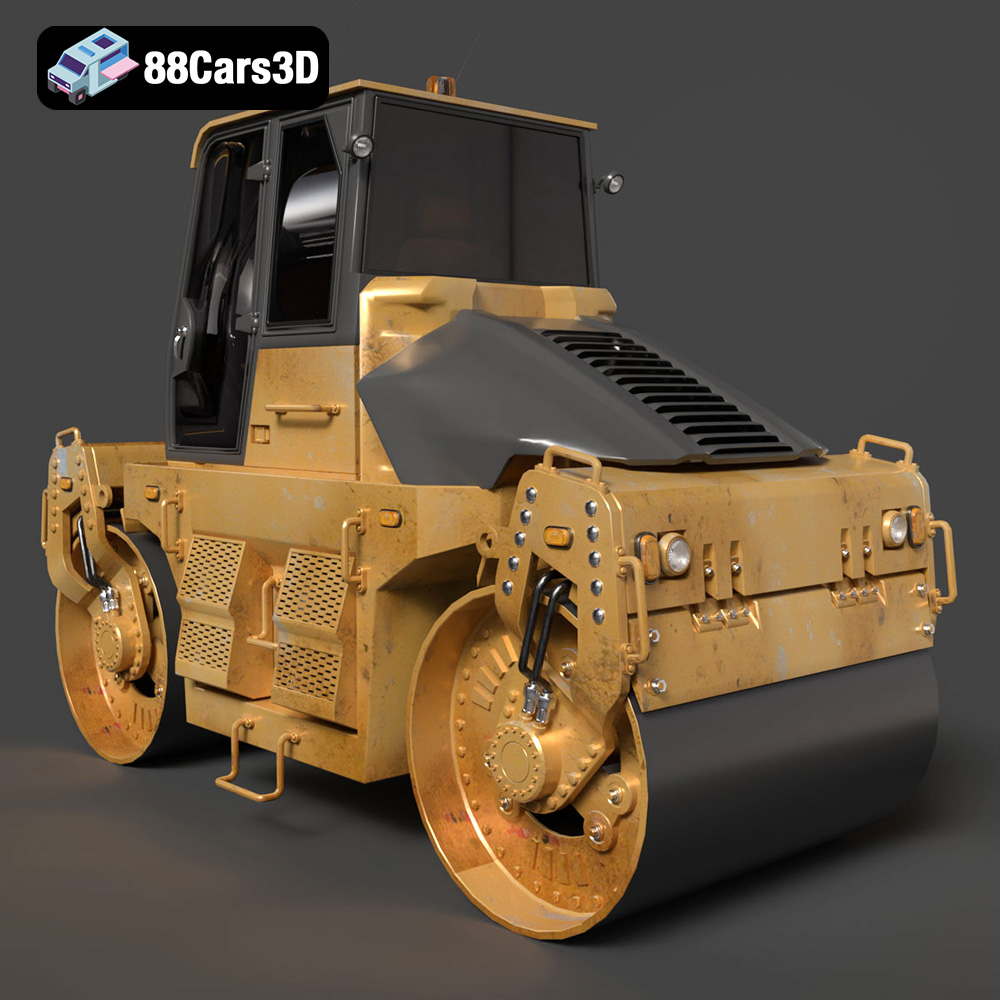
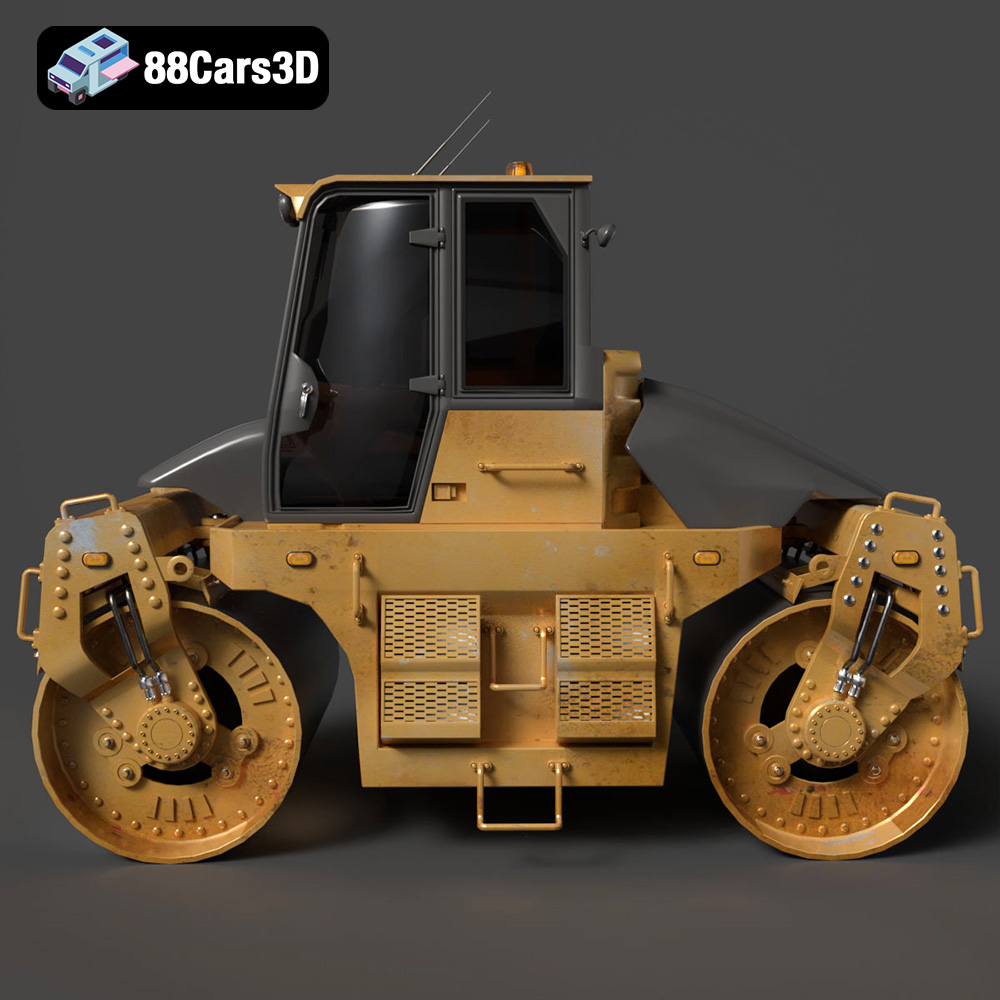
Key exterior features are meticulously replicated: the robust double steel compacting drums, complete with scraper mechanisms, the heavy-duty diesel engine housing and vents, and industrial-grade work lights and safety beacons. The articulated center steering joint features intricate hydraulic cylinder details, and even the water spray system components are present. Crucially, components like the drums, articulation joints, and steering are separated with proper pivot setups, enabling realistic mechanical movement and animation, an indispensable feature for dynamic scenes and interactive experiences.
Beyond the exterior, the Road Roller model extends its detail into the cockpit and interior, providing a truly immersive experience. An ergonomic operator seat with suspension detailing, a heavy machinery steering wheel, and a comprehensive control console with an instrument cluster are all accurately modeled. Industrial gauges, vibration, throttle, and directional control levers further enhance the realism. This level of interior detail is not merely for show; it’s optimized for first-person point-of-view (POV) in construction simulators, allowing players or trainees to interact with a highly believable virtual environment. The functional separation of parts means that not only does the model look authentic, but it can also behave authentically within a simulated context, making it an invaluable asset for serious simulation projects.
The true value of a versatile 3D asset lies in its ease of integration and adaptability within diverse professional workflows. The Road Roller Vibratory Tandem 3D Model is engineered to provide this flexibility, offering native files for popular software and optimized formats for real-time engines, ensuring a smooth transition into any project pipeline.
For artists and studios entrenched in specific software ecosystems, the inclusion of native file formats like .max for 3ds Max and .blend for Blender is a significant advantage. These files offer unparalleled access to the model’s core structure, materials, and scene setup. In 3ds Max, professionals can leverage its robust modeling tools to further refine the geometry, apply advanced modifiers, or integrate the road roller into complex architectural scenes with other 3D car models or buildings. Similarly, Blender users can take full advantage of its comprehensive toolset, modifying the model’s PBR materials, adjusting UVs, or even re-rigging components for specialized animations. This deep level of customization allows artists to change body colors—perhaps to a standard construction yellow or orange, or even custom fleet finishes—modify drum textures to show clean steel or worn, asphalt-coated surfaces, and adjust material finishes from matte to gloss or heavy weathering to match specific scene requirements. Such flexibility is crucial for tailoring the asset to distinct project aesthetics and visual demands.
The demands of game development and interactive experiences necessitate assets that are “game-ready” straight out of the box. The Road Roller Vibratory Tandem 3D Model delivers on this front with optimized .fbx and specifically configured .unreal files. The .fbx format is the go-to for importing into both Unreal Engine and Unity, preserving all necessary geometry, UVs, and material references. Once imported, the optimized polycount (346,490 triangles) ensures excellent performance, a critical factor for maintaining smooth frame rates in open-world games or demanding VR simulations. For Unreal Engine users, the .unreal asset takes this a step further, often including pre-configured materials using Unreal’s physically based shading system, collision meshes, and potentially even basic animation setups or blueprints for immediate interaction. This significantly reduces the time and effort required for artists and developers, allowing them to focus on game logic and level design rather than asset preparation. Whether it’s setting up physics for a drivable vehicle in a construction simulator or populating a virtual training environment, the model’s optimized nature and proper pivot setups for steering articulation and drum rotation make it an ideal game asset for real-time environments.
The utility of a high-quality 3D model extends far beyond static renders. The Road Roller Vibratory Tandem 3D Model is a prime example of an asset engineered for diverse and demanding professional applications, proving its worth in dynamic, interactive, and even tangible outputs.
In the realm of game development, realistic and optimized heavy machinery is a cornerstone for creating believable experiences. The Road Roller model is ideally suited for open-world games where players interact with environments and vehicles, construction simulators that demand accurate machinery operation, and city builders where infrastructure development is key. Its optimized polycount makes it a performance-friendly game asset, crucial for large-scale environments. Consider a scenario in a next-generation construction simulator: players could operate this vibratory tandem roller in a first-person perspective, experiencing the nuances of compacting asphalt with detailed cockpit controls and realistic articulation. For AR/VR, the model shines in immersive virtual training and safety configurators. Imagine a construction company utilizing a VR experience where new operators can practice driving and operating the road roller in a safe, simulated environment, learning its controls, blind spots, and operational procedures before touching real equipment. The .glb format is particularly beneficial here for mobile AR experiences, allowing users to place a virtual road roller in their real-world environment via their smartphone, enhancing site planning or maintenance training.
For architectural visualization, adding realistic construction equipment like the Road Roller Vibratory Tandem can significantly enhance the credibility and narrative of a scene. An architect presenting a new infrastructure project, such as a highway extension or a commercial development, can populate their renders with this model to convey a sense of scale, activity, and future progress. It seamlessly integrates into complex studio lighting setups, making it excellent for showcasing industrial designs or large-scale infrastructure projects. Furthermore, the model’s utility extends into the physical world through 3D printing. The provided .stl format makes it convertible for display-scale hobbyists and diorama creators. With recommended scales of 1:24, 1:35, or 1:50, enthusiasts can bring a tangible piece of heavy machinery to life. Precise 3D print settings are included: layer height of 0.04–0.12 mm (with resin printing recommended for fine details), wall thickness of 1.2–2.0 mm, and infill of 20–30%. Support structures are required for complex parts like the cabin frame and articulation joint. Post-processing involving sanding, priming, and painting with authentic factory colors can result in stunning miniature replicas, demonstrating the model’s versatility across digital and physical mediums.
Bringing a 3D model to life in a render goes beyond just placing it in a scene. It involves a meticulous blend of lighting, material science, and post-production techniques to achieve photorealism and convey a compelling narrative. The Road Roller Vibratory Tandem 3D Model offers an excellent foundation for achieving stunning visualizations.
Effective lighting is the cornerstone of any impactful render. Utilizing High Dynamic Range Images (HDRIs) is a powerful technique to simulate real-world lighting conditions, providing accurate reflections and ambient illumination. For the Road Roller, an industrial yard HDRI or a construction site HDRI can instantly ground the model in a realistic environment. Physically based lighting, mimicking how light behaves in the real world, is essential for convincing shadows and highlights. Consider dramatic chiaroscuro lighting for a nighttime construction scene, with the model’s industrial-grade work lights cutting through the darkness, or a bright, clear daytime setup emphasizing its robust form. Environmental storytelling is also key: incorporating elements like dust particles in the air, subtle dirt on the ground, or puddles reflecting the machinery can significantly enhance realism. The Road Roller’s presence in a render instantly transforms a generic ground plane into an active job site, whether it’s paused during a break or actively compacting a section of road, lending authenticity to architectural renders and infrastructure visualizations.
The materials applied to a 3D model dictate how it interacts with light, making PBR (Physically Based Rendering) materials indispensable for photorealism. The Road Roller model comes with well-separated materials, allowing for extensive customization. Artists can easily change body colors, perhaps shifting from a standard yellow to a more modern grey or even a weathered, faded look to suggest years of service. Modifying drum textures is crucial; a clean, polished steel drum will appear vastly different from one covered in a layer of asphalt, grime, or even light rust. Adjusting material finishes—from a pristine glossy paint job to a matte, utilitarian finish, or even heavily weathered textures with scratches and chipped paint—allows for bespoke storytelling. This attention to material detail is what elevates a render from good to exceptional, making the asset feel truly “lived-in.”
Finally, post-production is where the final polish is applied. Techniques such as color grading can establish the mood, whether it’s a gritty, high-contrast look for a documentary style or a warmer tone for promotional materials. Depth of field can draw the viewer’s eye to specific parts of the model, while subtle motion blur applied to the rotating drums can suggest movement even in a static image. These adjustments, when applied thoughtfully, can significantly enhance the visual impact of the Road Roller Vibratory Tandem, ensuring it stands out in any high-quality render or automotive rendering project.
The world of 3D modeling demands assets that are not only visually stunning but also technically robust and highly adaptable. The Road Roller Vibratory Tandem 3D Model exemplifies these qualities, offering an unparalleled blend of detail, optimization, and versatility. From its meticulously crafted exterior and immersive interior to its game-ready topology and comprehensive file format support, this model is designed to empower professionals across game development, architectural visualization, AR/VR, and even 3D printing.
Its ability to seamlessly integrate into diverse software workflows, from the deep customization offered by .blend and .max files to the real-time efficiency of .fbx and .unreal, underscores its value as a premium asset. Whether you’re building a sprawling virtual city, enhancing an architectural rendering with realistic construction activity, or creating an interactive training simulation, this model provides the foundation for exceptional digital experiences. It’s a testament to how specialized, high-quality 3D car models and heavy machinery assets can elevate any project.
To access this exceptional Road Roller Vibratory Tandem 3D Model and explore a wide array of other high-quality 3D models for rendering, game development, and visualization, visit 88cars3d.com today. Invest in assets that truly pave the way for digital excellence.
The Road Roller Vibratory Tandem is an essential piece of heavy construction machinery, universally recognized for its robust double steel drums and articulated chassis. Designed to compact asphalt, gravel, and soil, this vehicle features distinctive industrial styling, a powerful diesel engine housing, and a specialized vibratory mechanism built for high-efficiency paving operations. This highly detailed 3D model boasts an optimized topology with exactly 346,490 triangles, delivering remarkable visual fidelity while remaining efficient for real-time applications. Whether used in high-end game development, architectural visualization, or immersive VR training simulations, the model’s precise geometry and realistic material separation provide an exceptional asset for developers and 3D artists alike. Perfect for construction site environments, city building games, heavy machinery simulators, and industrial visualizations.
$35.50
.blend
.fbx
.glb
.max
.obj
.ply
.rendering
.stl
.unreal
car-3d-model
construction-equipment
game asset
game-ready
heavy-machinery
optimized
road-roller
vibratory-tandem
VR/AR