Get 20% OFF All Premium 3D & STL Models!

In the dynamic realm of 3D content creation, high-fidelity models are the bedrock of compelling visuals, immersive experiences, and functional simulations. From the intricate details of a supercar in an automotive rendering to the rugged realism of construction equipment in a game engine, the quality of a 3D asset dictates the perceived realism and overall project success. Professional artists, game developers, architects, and product designers constantly seek out assets that not only look incredible but are also technically optimized and versatile enough to integrate seamlessly into diverse workflows.
Heavy machinery, in particular, presents a unique challenge in 3D modeling. These powerful vehicles are characterized by complex mechanical linkages, hydraulic systems, robust chassis, and specialized tools that demand meticulous attention to detail. Capturing their utilitarian aesthetic and functional design is crucial for projects ranging from industrial visualizations to immersive training simulators. This is where a high-quality asset like the Track Loader 3D Model from 88cars3d.com truly shines, offering an exceptional blend of visual fidelity and technical optimization for a wide array of professional applications.
This article will delve into the critical aspects of leveraging professional-grade 3D models, using the Track Loader as a prime example. We’ll explore the significance of various file formats, discuss technical specifications crucial for performance and realism, outline integration strategies for popular 3D software and game engines, and even touch upon the exciting possibilities of 3D printing. Whether you’re building a realistic construction simulator, an interactive AR/VR training module, or a high-impact marketing render, understanding the nuances of such an asset is key to unlocking its full potential.
The choice of a 3D model’s file format is far more than a simple preference; it dictates compatibility, functionality, and the efficiency of your workflow. When acquiring a complex asset like the Track Loader 3D Model, understanding what each included format offers is crucial for maximizing its utility across different software and applications. 88cars3d.com provides a comprehensive set of formats, ensuring broad compatibility for professional users.
The .blend format is the native file type for Blender, a powerful and increasingly popular open-source 3D creation suite. When you download the Track Loader in .blend format, you gain access to a fully editable Blender scene. This means the model comes complete with its materials, textures, lighting setups, and any existing rigging or animation data directly within the Blender environment. For artists whose primary software is Blender, this is invaluable. You can easily modify geometry, adjust materials, re-texture, add custom animations, or even break down the model into its constituent parts for unique compositions. It offers the most flexibility for customization and integration into existing Blender projects without any loss of data during import/export.
.fbx (Filmbox) is an industry-standard 3D file format developed by Autodesk, renowned for its ability to store not just mesh data, but also animation, rigging, materials, textures, cameras, and lights in a single file. This makes it an indispensable format for game development, especially when integrating models into real-time engines like Unreal Engine and Unity. The Track Loader in .fbx format is ideal for real-time pipelines due to its robust support for animation. Proper pivot setups for the boom, bucket, and tracks, as noted in the product description, translate directly and reliably into game engines, allowing animators to quickly set up complex mechanical movements. Its versatility makes it a go-to for data exchange between different 3D software packages as well.
The .obj (Wavefront Object) format is one of the oldest and most universally supported 3D formats. It’s an excellent choice for static mesh data, offering strong cross-software compatibility. While it stores mesh geometry (vertices, normals, UVs, faces) very reliably, it typically references external .mtl (material) files for color and texture information, and does not inherently support animation or rigging data. For the Track Loader, the .obj format is perfect for users who need a clean, stable mesh to import into virtually any 3D application for rendering or as a base for further modeling, especially when animation is not the immediate priority or will be applied in the target software.
.glb (GL Transmission Format Binary) is the binary version of glTF, a modern, royalty-free specification for the efficient transmission and loading of 3D scenes and models by applications. It’s particularly optimized for AR (Augmented Reality), VR (Virtual Reality), and browser-based 3D experiences because it bundles all assets (mesh, textures, animations) into a single, compact file. This format is crucial for developers building web configurators, immersive training modules, or interactive product showcases where the Track Loader might be viewed in real-time on mobile devices or within web browsers. Its efficiency and comprehensive scene representation make it ideal for delivering complex 3D models with minimal load times.
The .stl (Stereolithography) format is the de facto standard for 3D printing. It represents a 3D model as a collection of unconnected triangular facets, defining only the surface geometry of an object without color, texture, or material information. For hobbyists or professionals looking to physically manifest the Track Loader model, the .stl file is what your 3D printer slicing software will interpret. It’s essential for ensuring structural integrity during the printing process, making it possible to create detailed physical models of the construction equipment.
.ply (Polygon File Format or Stanford Triangle Format) is another format that describes the geometric properties of 3D objects. It can store a variety of information including color, transparency, surface normals, texture coordinates, and data confidence values, in addition to the X, Y, Z coordinates of vertices and the list of faces that make up the object. Often used in CAD (Computer-Aided Design) applications or for models derived from 3D scanning, the .ply format offers precision and robust data storage, making it suitable for engineering analysis or highly accurate representations where data integrity is paramount.
The inclusion of a .unreal file (often a .uasset or a project ready to import) signifies that the Track Loader model has been specifically prepared or optimized for direct integration into Unreal Engine. This often means textures are properly packed, materials are set up using Unreal’s physically-based rendering (PBR) system, and the asset might already have collision meshes or basic LODs (Levels of Detail) configured. This dramatically reduces setup time for game developers, allowing them to drop the asset directly into their scene and begin working with it immediately, leveraging Unreal Engine’s powerful real-time rendering capabilities.
Finally, the .max format is the native file format for Autodesk 3ds Max, a leading software for 3D modeling, animation, rendering, and visualization. Like .blend for Blender, the .max file contains the complete scene data, including geometry, materials, textures, lighting, cameras, rigging, and animation. For professionals utilizing 3ds Max for high-end rendering, architectural visualization, or complex animation sequences, this format provides the highest level of flexibility and control. It ensures that all original scene data for the Track Loader is preserved, enabling seamless modification and integration into existing 3ds Max projects.
Beyond file formats, the intrinsic technical quality of a 3D model is what truly defines its value. The Track Loader 3D Model from 88cars3d.com exemplifies a commitment to both visual fidelity and performance, making it a standout asset for demanding projects. Its design showcases an authentic understanding of heavy equipment, capturing the utilitarian aesthetics with precision and an emphasis on functional details.
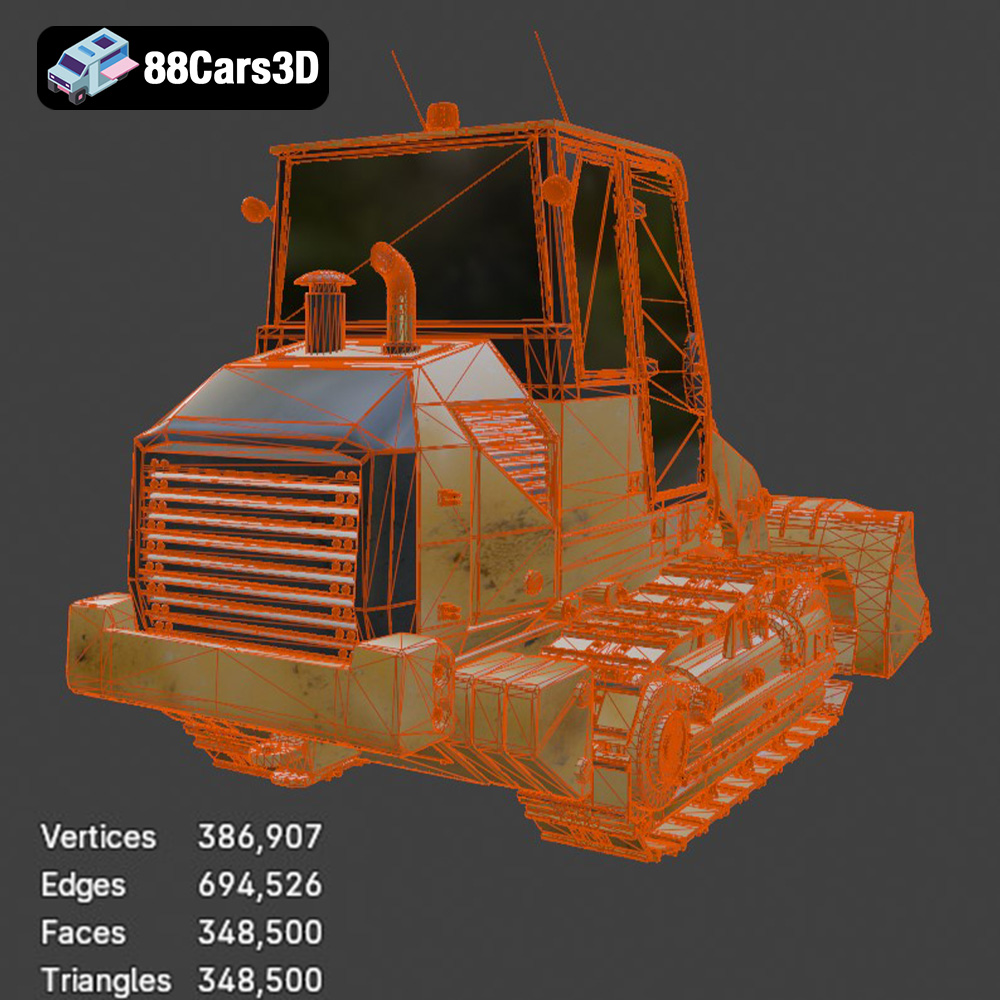
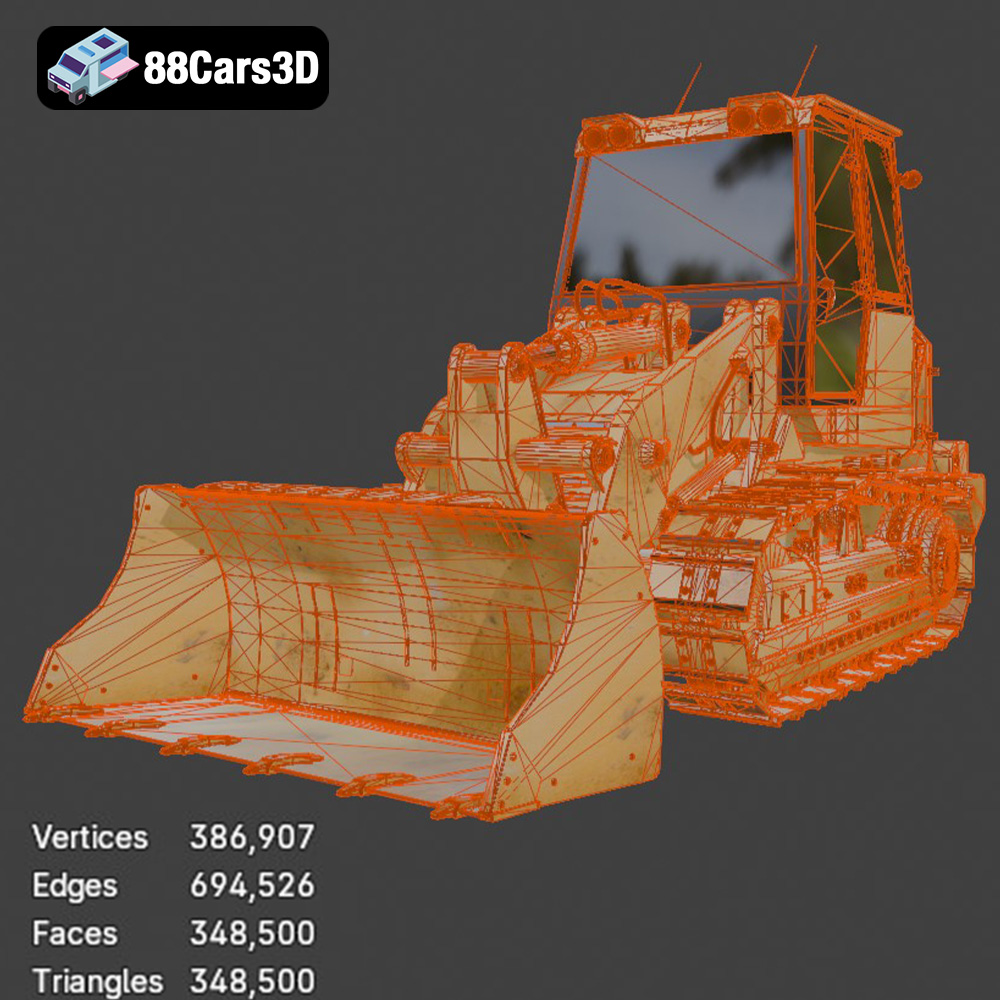
A critical technical specification for any 3D asset, especially one intended for real-time applications like games or AR/VR, is its polygon count. The Track Loader boasts an optimized topology of approximately 348,500 triangles. This figure represents a sweet spot, balancing high-end visual realism with efficiency for real-time engines. Such a poly count allows for the intricate modeling of elements like detailed hydraulic cylinders, aggressive track treads, robust industrial paneling, and the complex continuous track system with modeled sprockets, idlers, and track rollers – all without bogging down scene performance. For offline rendering, this level of detail ensures crisp, believable visuals, even under close-up scrutiny.
The realism of a 3D model is heavily influenced by its materials and textures. While the product description hints at customization options, a professional asset like this comes with a foundation of high-quality, PBR (Physically Based Rendering) ready materials. These materials mimic how light interacts with real-world surfaces, ensuring that the heavy-duty frame, the diesel engine enclosure, and the high-capacity front bucket react realistically to varying lighting conditions. The attention to details like authentic ventilation grilles, exhaust stacks, and wear edges on the digging teeth means that textures applied will have a believable substrate, enhancing the overall visual impact.
For any piece of heavy machinery, motion is key. The Track Loader model is explicitly designed for mechanical animation, featuring separate components for the bucket, boom, chassis, and tracks. Crucially, it includes proper pivot setup for boom elevation, bucket tilt, and track continuous rotation. This pre-rigged foundation saves countless hours for animators, allowing them to jump straight into creating realistic movement sequences. Whether it’s digging animations in a construction simulator or demonstrating the vehicle’s capabilities in an industrial presentation, the model’s inherent animation readiness makes it an extremely versatile game asset and rendering component.
The true value of a versatile 3D asset lies in its seamless integration into various professional workflows. The Track Loader 3D Model, with its diverse file formats and technical optimizations, is engineered to fit perfectly into game development, architectural visualization, and immersive AR/VR experiences.
For game developers, especially those creating construction simulators, open-world sandbox games, or heavy machinery titles, the Track Loader is an invaluable game-ready asset. Its optimized triangle count (348,500) ensures excellent performance in real-time engines like Unreal Engine and Unity. The inclusion of .fbx and .unreal formats streamlines the import process significantly. Developers can expect clean geometry, properly scaled dimensions based on real-world schematics, and pre-set pivots that are essential for rigging and animation. In Unreal Engine, for instance, you can import the .fbx, apply its PBR materials, and then easily integrate it with physics systems for realistic interactions – imagine the bucket digging into terrain or the tracks dynamically interacting with uneven ground. For Unity, similar steps apply, allowing for quick deployment into game levels. The separate components allow for dynamic destruction, customizable attachments, or interactive elements crucial for deep gameplay mechanics.
Beyond gaming, the Track Loader serves as an exceptional asset for high-end industrial visualization and architectural rendering. Using formats like .max (for 3ds Max) or .blend (for Blender), artists can import the model into their preferred rendering software. Here, the focus shifts from real-time performance to absolute visual fidelity. In 3ds Max with V-Ray or Corona Renderer, or Blender with Cycles or Eevee, the detailed geometry of the hydraulic systems, engine enclosure, and operator’s cabin can be showcased with breathtaking realism. This is ideal for industrial marketing campaigns, presenting proposed construction sites, or creating studio lighting setups to highlight the machinery’s robust design. Customization options, such as changing exterior chassis colors or applying dirt and mud weathering effects, allow artists to perfectly match the model to specific project needs, whether depicting a pristine new machine or a heavily used workhorse.
The burgeoning fields of Augmented Reality (AR) and Virtual Reality (VR) demand highly optimized yet detailed 3D models. The Track Loader’s game-ready optimization and the inclusion of the .glb format make it perfect for immersive safety training modules, virtual fleet configurators, and interactive educational experiences. In AR, the model can be overlaid onto a real-world environment, allowing users to interact with a virtual Track Loader on their construction site. In VR, it can be dropped into a simulated environment, providing a safe and interactive space for operators to learn controls, practice maneuvers, or understand complex operational procedures. The detailed interior, with its accurate dual joystick control layout and instrument panel, provides an authentic first-person perspective, critical for effective simulator training. The efficiency of the .glb format ensures smooth performance on mobile AR platforms and VR headsets, minimizing latency and maximizing immersion.
The versatility of the Track Loader 3D Model extends beyond digital displays, offering exciting possibilities for physical manifestation through 3D printing. The inclusion of the .stl format specifically caters to this application, allowing hobbyists, educators, and even professionals to create tangible replicas of this powerful construction equipment.
When preparing the Track Loader for 3D printing, careful consideration of scale and support structures is paramount. The recommended scales (1:24, 1:35, 1:50) provide practical options for balancing detail and print size. For instance, a 1:24 scale model would capture more of the intricate hydraulic details and interior elements, making resin printing highly recommended for its precision with fine features. Due to the model’s complex geometry, especially elements like the hydraulic arms, cab roof overhang, and safety rails, supports will be required during printing. Proper print orientation, such as angling the frame for structural integrity and printing tracks and the bucket separately, further enhances print success and detail preservation.
Once printed, the physical model offers a canvas for further customization and realism. Post-processing steps like sanding can smooth out layer lines, particularly important for FDM prints. Applying a primer prepares the surface for painting, allowing for authentic construction yellow/orange factory colors, custom corporate fleet liveries, or even weathered effects to simulate a machine that has seen heavy use on a job site. This hands-on process allows enthusiasts to fully immerse themselves in creating a miniature, yet highly detailed, replica of the Track Loader, suitable for display or as a component in larger dioramas. This fusion of digital design with physical creation truly highlights the multi-faceted utility of high-quality 3D car models and heavy equipment assets.
In the world of 3D production, an asset’s ability to be customized is as important as its initial quality. The Track Loader 3D Model excels in this regard, offering extensive flexibility that allows it to adapt to nearly any project requirement, reinforcing its value as a premier asset on platforms like 88cars3d.com.
The included editable file formats (.blend, .max) empower artists to dive deep into the model’s material properties. This means you can effortlessly change exterior chassis colors, transforming a standard construction yellow into a custom corporate fleet livery or a weathered, rust-bitten machine. Beyond primary colors, you can modify material textures to apply realistic dirt, mud, or worn-metal weathering effects, instantly conveying a story about the vehicle’s operational life. Adjusting material finishes – from matte industrial paint to gloss accents or exposed steel – allows for fine-tuning the visual style to match your specific rendering or game environment’s needs. This level of material adaptability ensures that the Track Loader can feel perfectly at home in a pristine architectural visualization or a gritty post-apocalyptic game scene.
Integrating the Track Loader into a larger 3D scene is a streamlined process due to its real-world scale accuracy and versatile file formats. Whether you’re placing it on a virtual construction site, within an industrial facility, or as part of a dynamic game level, its proportions will be correct, minimizing scaling adjustments. Furthermore, the model’s robust geometry and PBR-ready materials respond beautifully to various lighting conditions. You can adapt scene lighting for bright daytime construction sites, capturing harsh shadows and glinting metallic surfaces, or craft moody nighttime work environments with prominent functional industrial lighting, including overhead work lights and safety beacons. This flexibility in lighting and scene integration makes the Track Loader an exceptionally adaptable component, enhancing the realism and narrative of any visual production.
The demand for high-quality 3D car models, automotive rendering assets, and game assets continues to grow, driving innovation in how these complex digital objects are created and distributed. The Track Loader 3D Model exemplifies the pinnacle of professional-grade asset development, offering a meticulously detailed, technically optimized, and incredibly versatile solution for a wide range of industries.
From its diverse array of included file formats – from the fully editable .blend and .max scenes to the game-ready .fbx and .unreal assets, and the 3D-print-friendly .stl – this model ensures seamless integration into virtually any professional pipeline. Its optimized topology, detailed hydraulic systems, animation-ready pivots, and accurate real-world scale provide an unparalleled foundation for creating immersive game environments, realistic industrial visualizations, effective AR/VR training modules, and even tangible 3D prints. The capacity for extensive customization, from materials and textures to lighting and weathering, further solidifies its position as an indispensable asset.
For designers, developers, and artists seeking to elevate their projects with heavy machinery that boasts both exceptional visual fidelity and technical robustness, the Track Loader 3D Model is an outstanding choice. Explore this and many other premium 3D models at 88cars3d.com, where quality and versatility empower your creative vision.
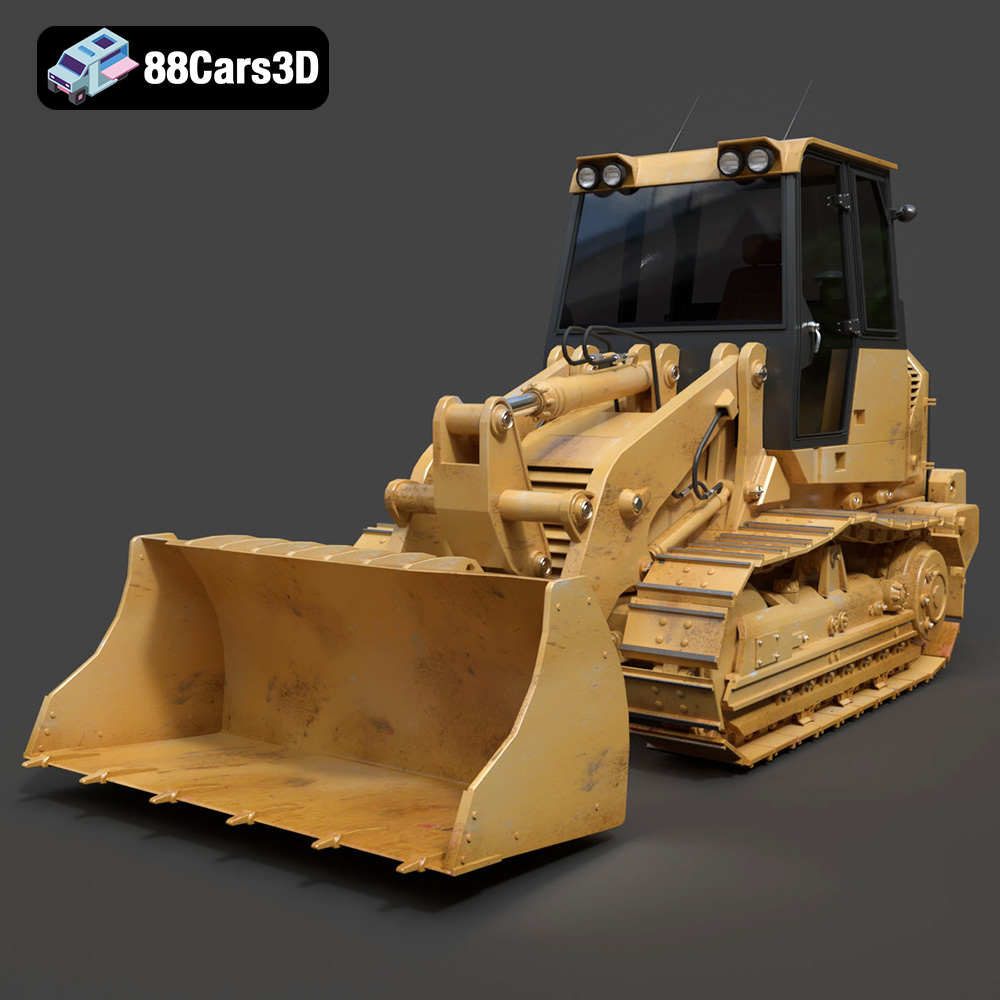
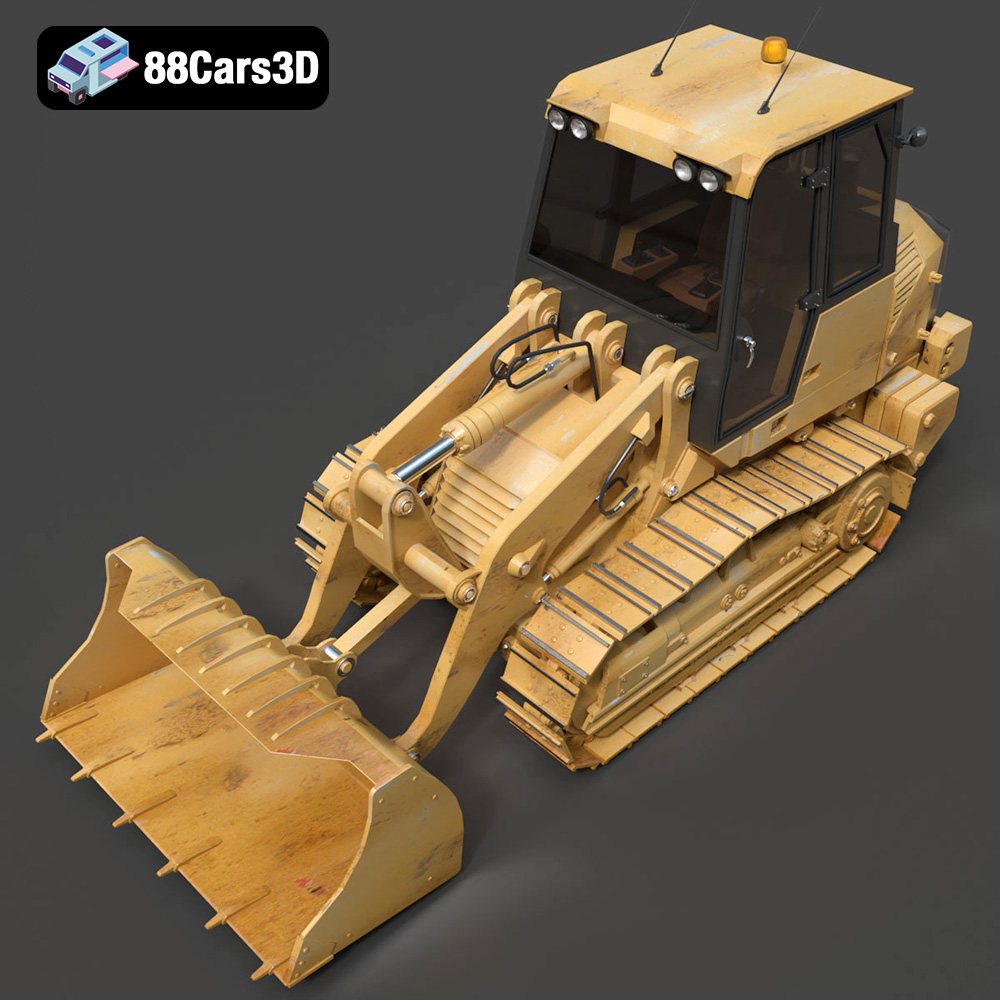
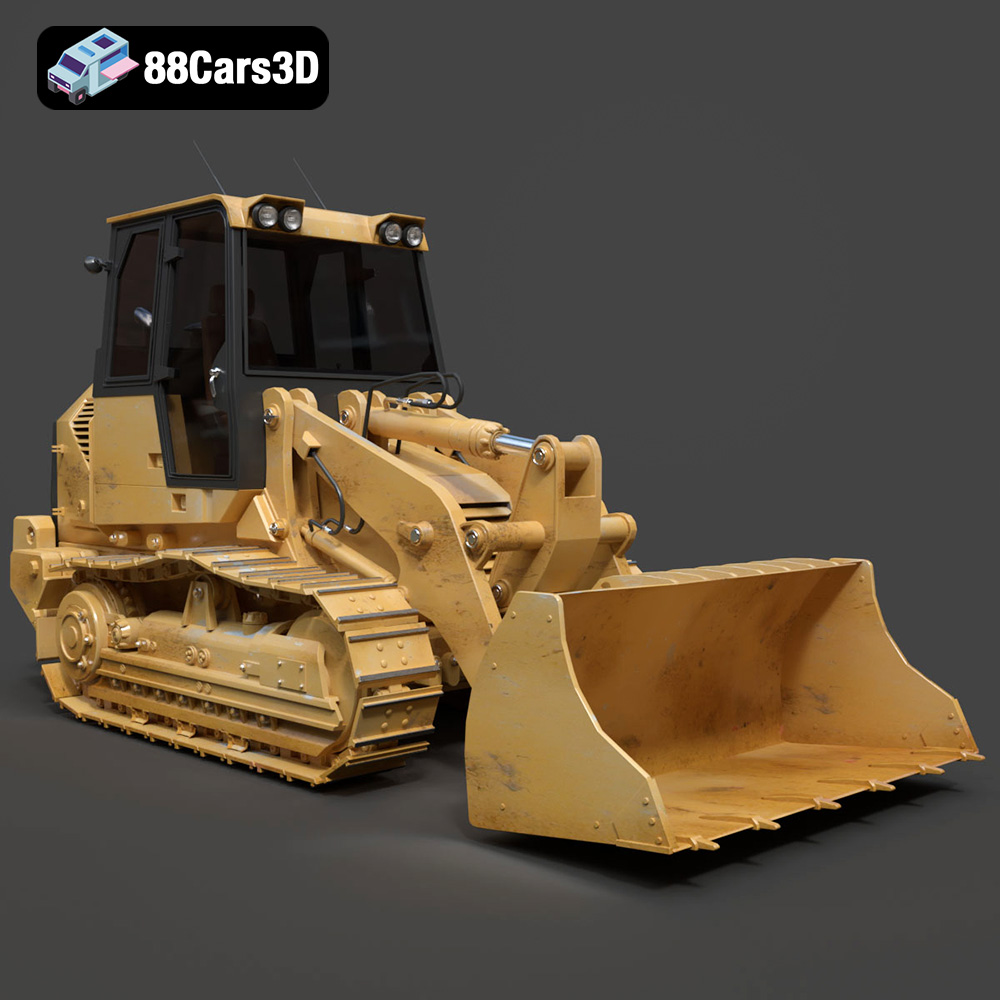
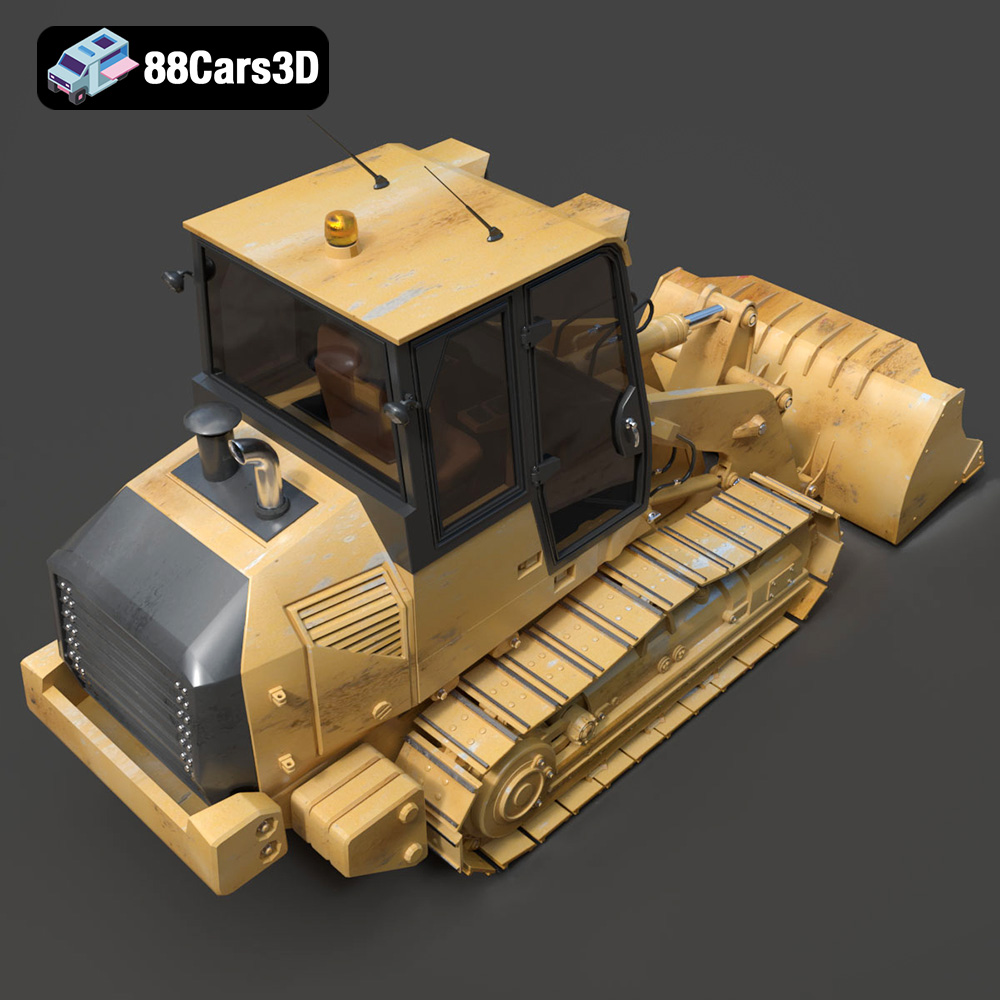
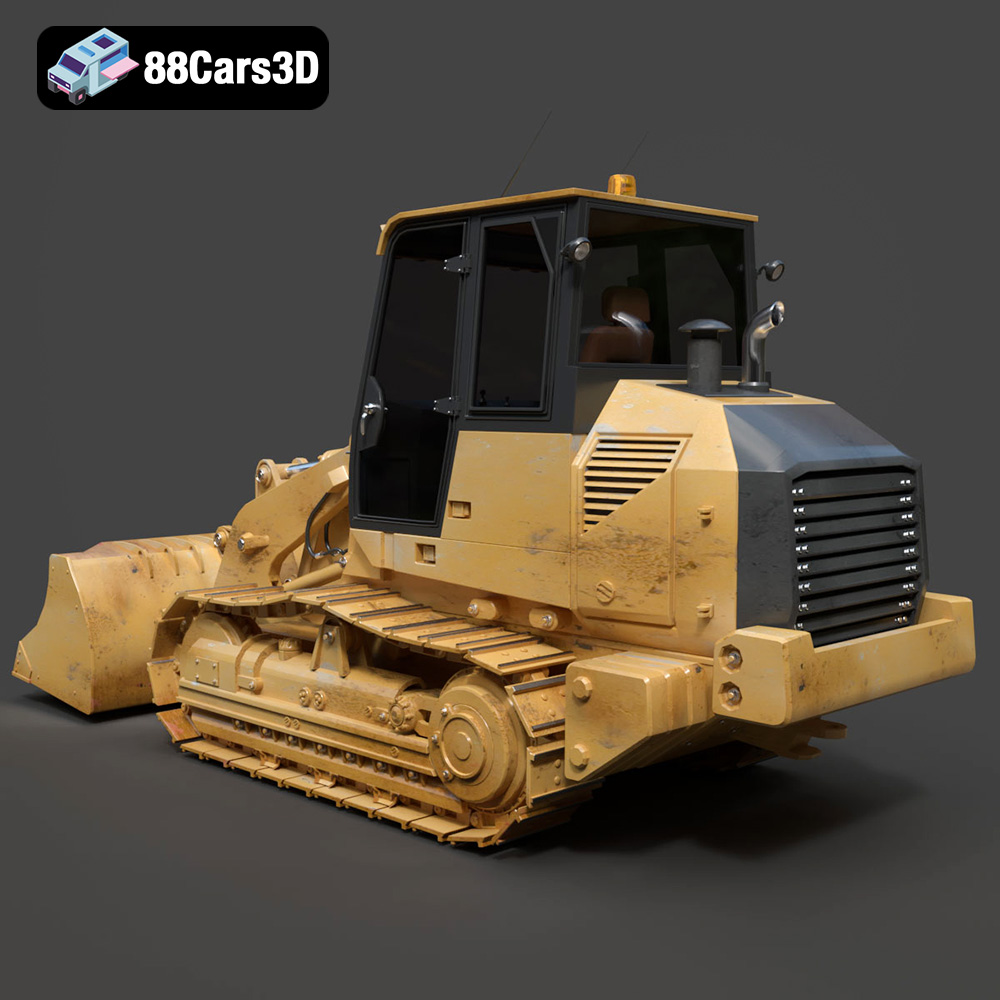
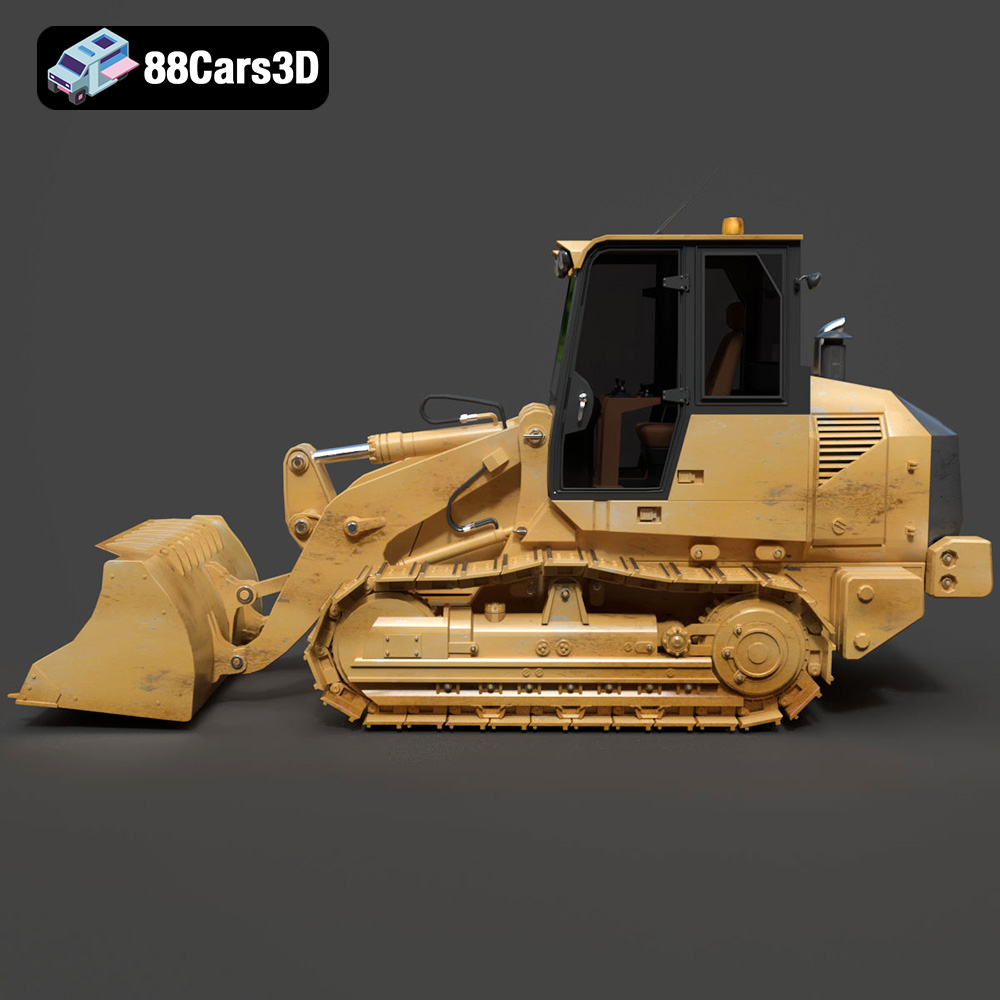
The Track Loader is a versatile and heavy-duty piece of construction machinery, renowned for its formidable pushing power, traction, and lifting capabilities. Featuring rugged continuous tracks, a robust front bucket mechanism, and a reinforced industrial chassis, this earthmoving beast is essential for demanding excavation, grading, and material handling tasks. The model authentically captures the utilitarian aesthetics of heavy equipment, complete with detailed hydraulic systems and a secure operator’s cabin.
This highly detailed 3D model boasts an optimized topology of approximately 348,500 triangles, delivering exceptional visual fidelity while remaining efficient for real-time applications. From the intricate hydraulic cylinders and linkages to the aggressive track treads and industrial paneling, every element has been meticulously crafted to meet the highest standards of game development, AR/VR simulations, and high-end industrial visualization.
Perfect for heavy machinery simulators, construction site virtual environments, industrial safety training VR modules, and earthmoving game environments.
.blend, .fbx, .obj, .glb, .stl, .ply, .unreal, .max
Tags:
track-loader, heavy-machinery, construction-equipment, loader, earthmover, industrial-vehicle, game-ready, low-poly, optimized, 3d-model, game-asset, rendering, vr-ar, blend, fbx, obj, glb, stl, ply, unreal, max
$26.00
.blend
.fbx
.glb
.max
.obj
.ply
.rendering
.stl
.unreal
3d model
construction-equipment
earthmover
game asset
game-ready
heavy-machinery
industrial-vehicle
loader
low-poly
optimized
track-loader
VR/AR