Get 20% OFF All Premium 3D & STL Models!

In the vast landscape of digital creation, from intricate game environments to breathtaking cinematic visualizations, the demand for meticulously crafted 3D assets is ever-growing. For enthusiasts and professionals alike, the challenge often lies in finding models that not only possess visual fidelity but also adhere to rigorous technical standards for seamless integration into diverse workflows. This is particularly true for historical subjects, where accuracy is paramount to truly capture the essence of an era.
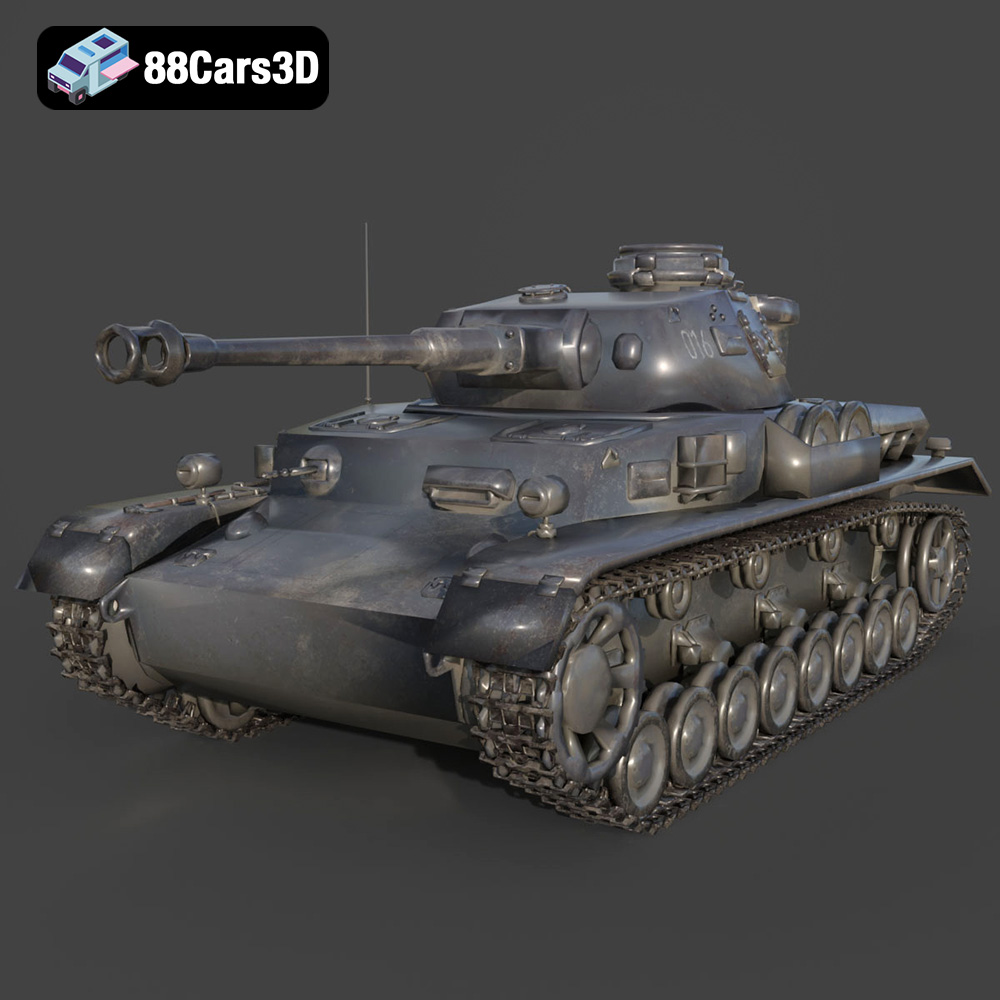
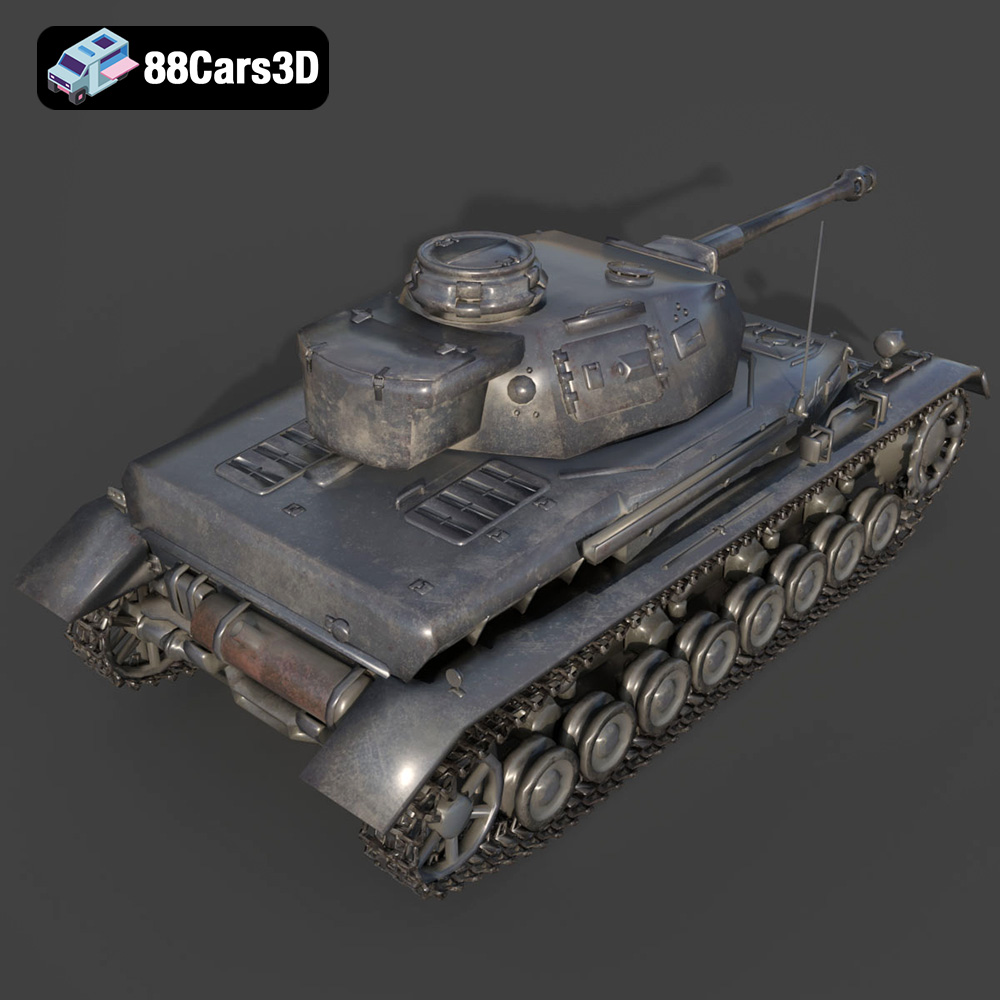
Among the most iconic symbols of World War II armored warfare stands the Panzerkampfwagen IV, or Panzer 4. Recognized for its robust design, powerful main gun, and distinctive heavy armor plating, this medium tank defined the battlefields of its time. Its classic utilitarian military aesthetic, characterized by a complex track suspension system, angular hull, and commanding turret presence, makes it an ideal subject for digital recreation.
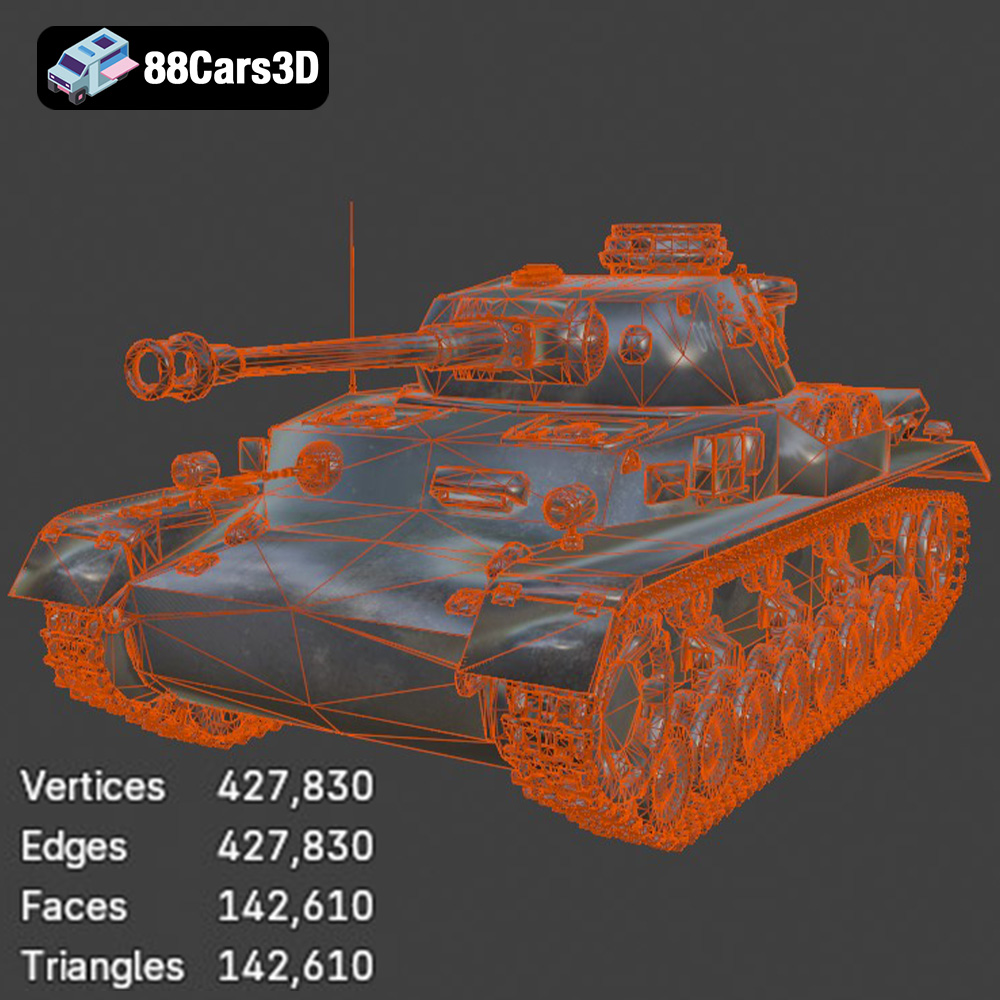
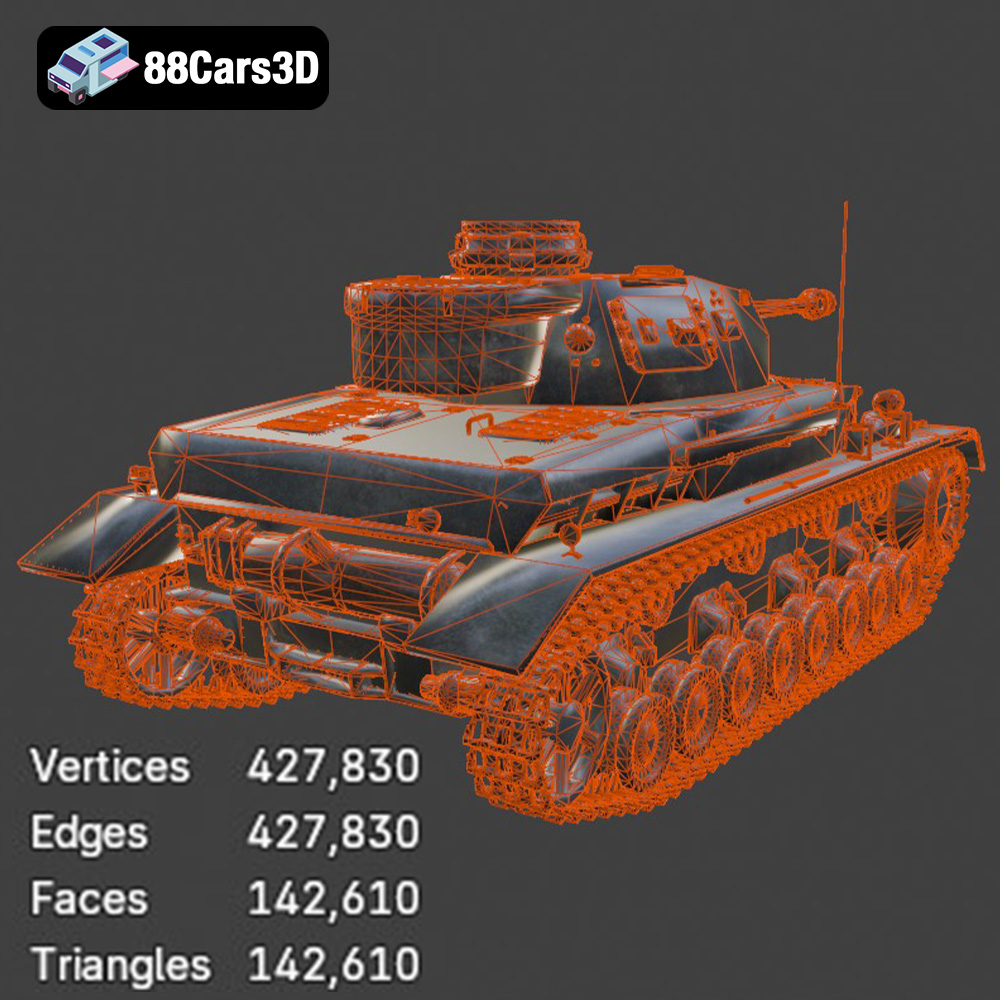
Today, artists and developers have the opportunity to bring this legendary vehicle to life in their projects. A prime example is the Panzer 4 3D Model available on 88cars3d.com. This model delivers exceptional quality, meticulously designed for both maximum visual fidelity and game-ready performance. With an optimized topology of 142,610 triangles, it ensures smooth integration into real-time engines without sacrificing the intricate mechanical details necessary for close-up renders, immersive VR experiences, and high-end animations. Whether for historical military simulators, strategy game development, cinematic war animations, or educational virtual exhibits, this model provides a foundational asset for a myriad of creative endeavors.
The Panzer 4 is more than just a historical vehicle; it’s a piece of engineering marvel and a symbol of a pivotal period in human history. Recreating such an object in 3D demands not just artistic skill, but also a deep respect for historical authenticity and technical precision.
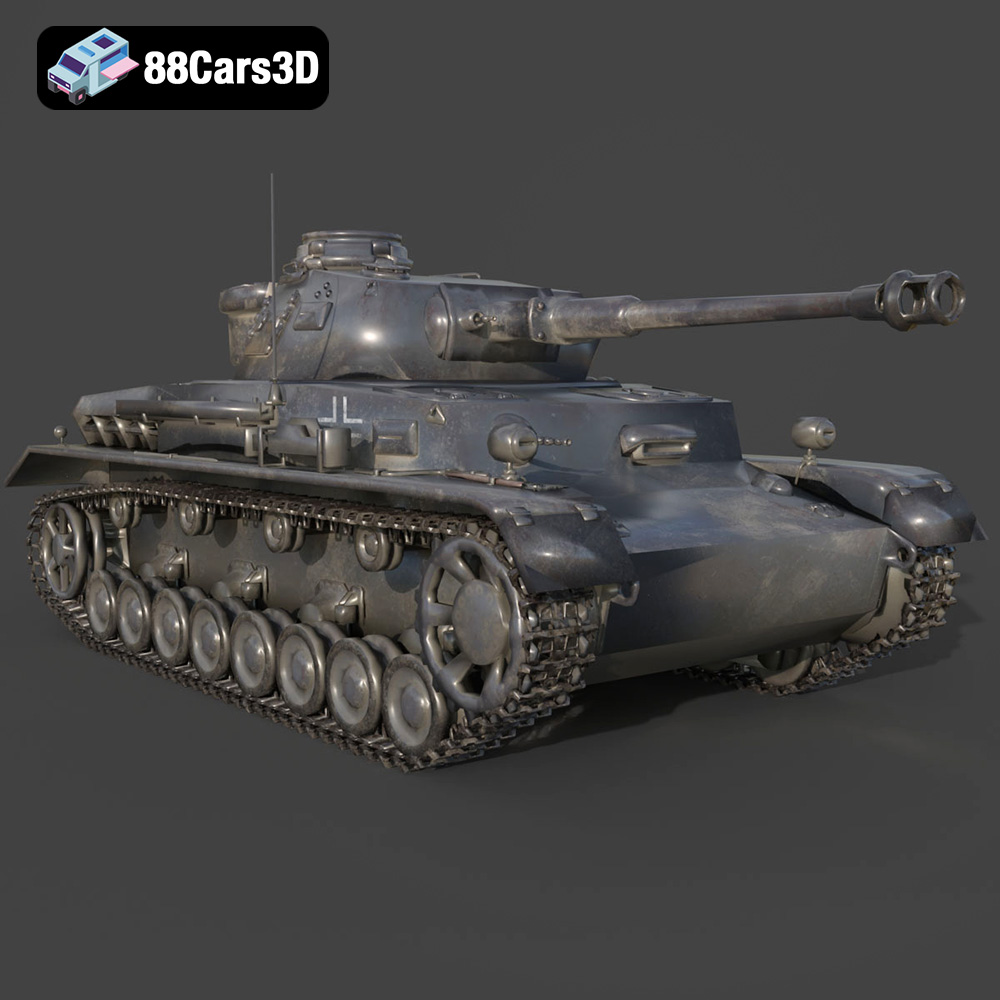
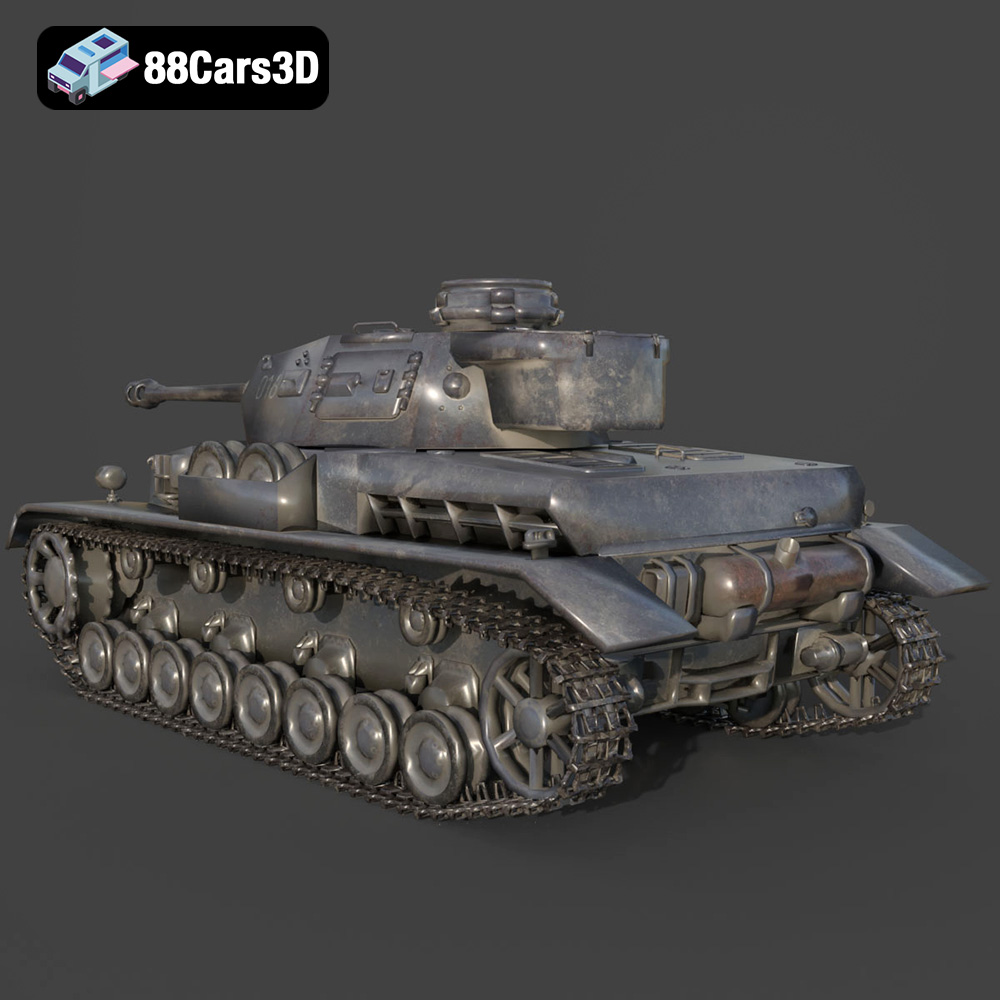
Authenticity begins with accurate geometry and proportions. The Panzer 4 3D model meticulously replicates the vehicle’s true-to-life scale and design. Every major component, from the angular hull to the distinctive turret, is modeled with careful attention to historical references. This level of detail is crucial for projects where historical accuracy is non-negotiable, ensuring that the tank appears credible and historically correct, whether viewed from a distance or in a detailed close-up. For instance, the historically accurate dual exhaust muffler system and authentic military lighting setups, including blackout headlights, contribute significantly to this realism.
Such precision is not merely aesthetic; it serves a functional purpose. In historical simulations, players expect to interact with vehicles that behave and look as they did in reality. This model’s adherence to real-world dimensions and visual features provides that critical layer of immersion, making it an invaluable asset for serious game developers and historical archivists.
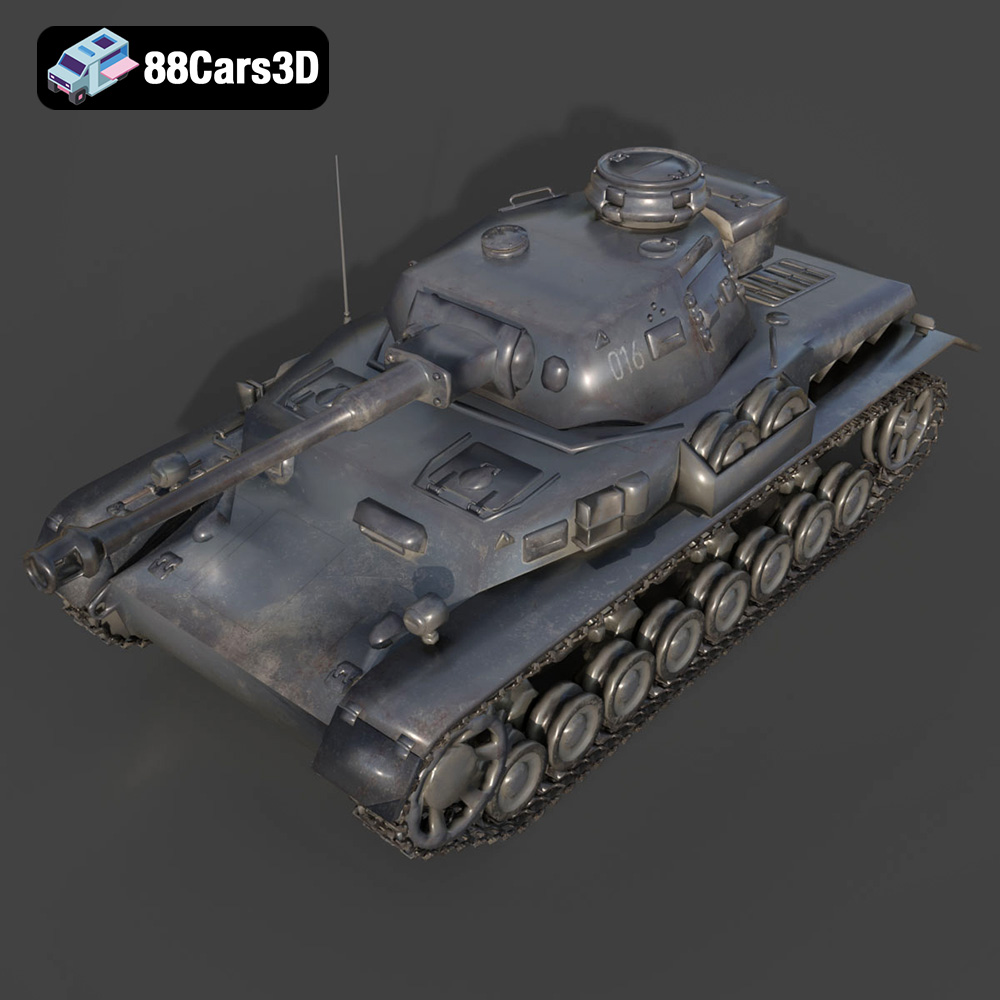
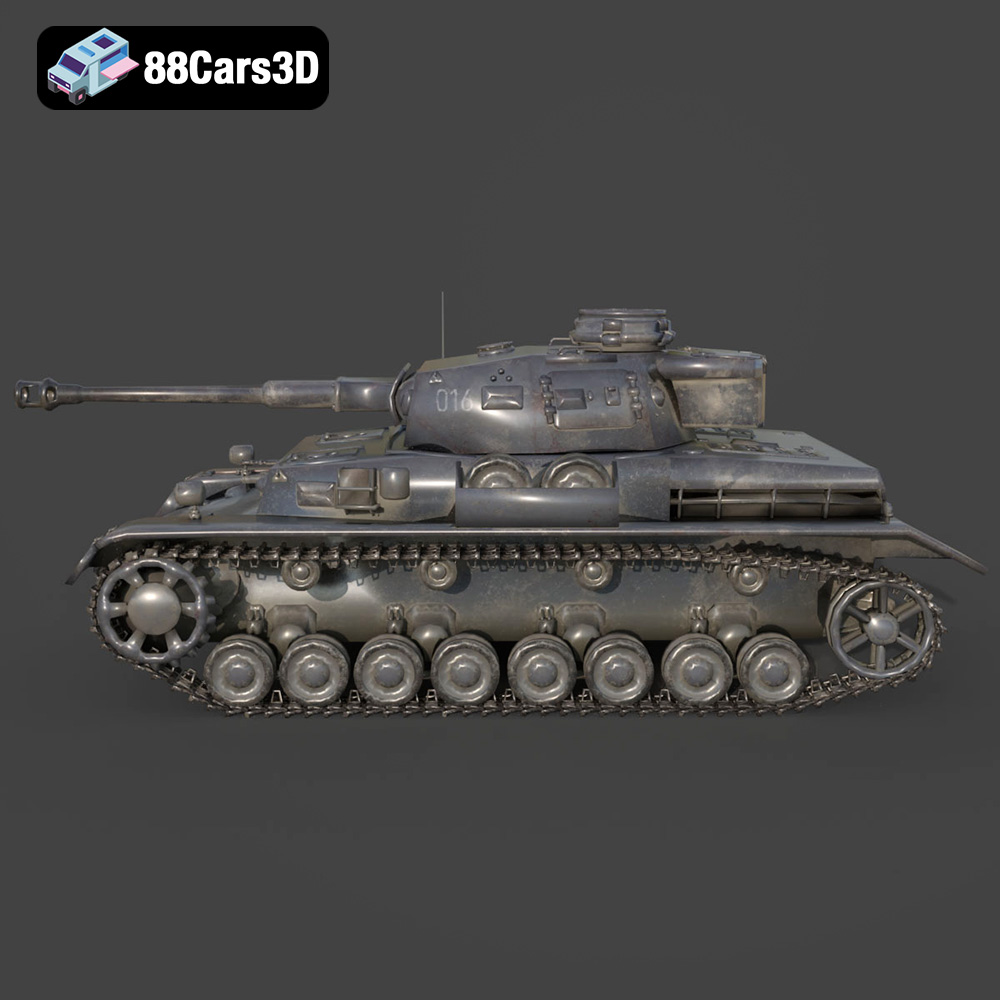
A high-quality 3D model like the Panzer 4 isn’t just a static mesh; it’s a collection of interconnected components, each designed for functionality and visual realism. The exterior features are incredibly detailed, encompassing intricate road wheels, drive sprockets, and heavy track link details. The realistic leaf spring and bogey suspension details are not only visually accurate but are also often set up as separate components for animation, allowing for dynamic movement that mirrors real-world physics.
Beyond the exterior, the model extends to cockpit and interior features, which is a testament to its comprehensiveness. The commander’s cupola and interior hatch details, turret rotation and gun elevation mechanisms, historical instrument clusters, and viewing periscopes are all included. Even control details such as driving levers, pedals, and shifters are present. This interior fidelity is particularly important for first-person perspective (FPV) gaming, where players might operate the tank from within, demanding an optimized yet detailed cockpit environment. The careful balance between detail and optimization, with its 142,610 triangles, makes this model highly versatile.
One of the most critical aspects of working with 3D car models or any complex 3D asset, especially one as detailed as the Panzer 4, is understanding the various file formats. Each format has its strengths, weaknesses, and specific use cases, dictating how a model can be used across different software and platforms. The Panzer 4 3D Model includes a comprehensive suite of formats, ensuring maximum compatibility and utility for any project.
The .blend format is the native file type for Blender, a powerful and free open-source 3D creation suite. When you download the Panzer 4 in .blend format, you gain access to the complete, editable Blender scene. This means not only the mesh geometry but also all materials, textures, lighting setups, cameras, and any applied modifiers or rigging. For Blender users, this is the most flexible format, allowing for full customization, animation setup, and scene integration without any data loss from export/import processes. It’s ideal for artists who want to delve deep into the model’s construction, make extensive modifications, or use Blender as their primary rendering and animation platform.
.fbx (Filmbox) is an industry-standard 3D exchange format developed by Autodesk. It’s renowned for its ability to store not just geometry and UVs, but also animations, rigs, cameras, lights, and PBR (Physically Based Rendering) materials. This makes it incredibly versatile and the go-to format for transferring complex animated assets between different 3D software and, crucially, into real-time game engines like Unreal Engine and Unity. For the Panzer 4, the .fbx format ensures that all the crucial elements like pivot setups for steering, wheel rotation, and suspension travel are preserved, making it game-ready out-of-the-box. Its robust nature makes it indispensable for developing game assets and cinematic sequences.
The .obj (Wavefront Object) format is one of the oldest and most universally supported 3D file formats. It primarily stores geometric data, including vertices, normals, UV coordinates, and faces. While it doesn’t typically store animation, rigging, or advanced material properties directly (it usually references a separate .mtl file for basic material definitions), its widespread compatibility makes it a safe bet for importing models into almost any 3D software application. If your primary need is the clean mesh geometry of the Panzer 4 for static renders or for re-texturing and re-rigging from scratch in a specific application, .obj is a reliable choice.
.glb (GL Transmission Format Binary) is a relatively newer format that’s gaining significant traction. It’s a binary version of the glTF format, designed for efficient transmission and loading of 3D scenes and models by web applications, AR (Augmented Reality), and VR (Virtual Reality) experiences. A .glb file contains all necessary data—geometry, materials, textures, animations—in a single, self-contained file, optimizing for compact size and rapid parsing. For deploying the Panzer 4 into a web-based configurator, a mobile AR experience, or a lightweight VR scene, the .glb format offers unparalleled performance and ease of integration.
.stl (Stereolithography) is the standard file format for 3D printing. It represents a 3D model as a series of connected triangles (a triangulated mesh) without color, texture, or other advanced attributes. Its sole purpose is to define the surface geometry of a 3D object for manufacturing. The Panzer 4 in .stl format is perfect for hobbyists and professionals looking to physically manifest the tank. While it lacks visual details, it provides the precise geometric information necessary for slicing software to prepare the model for a 3D printer. The product description highlights recommended scales and print settings, demonstrating its suitability for tangible output.
.ply (Polygon File Format) is another format for storing 3D data, often used for data acquired from 3D scanners or for CAD applications requiring high precision. It can store not only geometry but also color information, transparency, and sometimes even confidence values for scanned points. While less common for general 3D asset exchange than .fbx or .obj, its ability to store detailed mesh data makes it valuable for specialized applications, such as reverse engineering, scientific visualization, or detailed surface analysis of the Panzer 4 model. It ensures the integrity of the mesh data for precise technical workflows.
While not a standalone file extension in the traditional sense like .fbx or .obj, “.unreal” in this context refers to an asset that has been specifically prepared, optimized, and potentially packaged for direct use within Unreal Engine. This often implies an .fbx file that has undergone specific import settings, material setup (using Unreal’s PBR system), collision mesh generation, and potentially even blueprint integration within an Unreal project. It signifies that the Panzer 4 model is ready to be dropped into an Unreal Engine scene with minimal further configuration, leveraging Unreal’s powerful real-time rendering capabilities for game development, architectural visualization, or cinematic production. It represents a high level of optimization and compatibility with one of the leading game engines.
The .max format is the native file type for Autodesk 3ds Max, a leading software for 3D modeling, animation, and rendering in professional visualization and game development. Similar to .blend for Blender, the .max file provides the full, editable scene data including all geometry, materials, textures, lighting, cameras, animation keyframes, and modifiers applied within 3ds Max. For users whose primary workflow revolves around 3ds Max, this format offers the highest level of flexibility and control for custom rigging, advanced rendering setups (e.g., V-Ray, Corona), and complex animation sequences using the Panzer 4 model.
By offering this diverse range of formats, 88cars3d.com ensures that the Panzer 4 model is genuinely versatile, catering to the specific needs and software preferences of a broad spectrum of 3D artists and developers.
Game development thrives on a delicate balance between visual richness and performance efficiency. A high-quality 3D car model, particularly a complex vehicle like the Panzer 4, must meet stringent criteria to be truly “game-ready.”
The Panzer 4 3D model, with its 142,610 triangles, strikes an excellent balance for real-time engines like Unreal and Unity. This polycount is optimized to deliver high-end visual realism without overburdening the GPU, which is critical for maintaining high frame rates in complex game environments. The model’s topology is clean, ensuring efficient rendering and less processing overhead. This is paramount for open-world games, military simulators, or even strategy titles where numerous detailed assets might be on screen simultaneously.
Furthermore, the model’s design accounts for various levels of detail (LODs) if developers choose to implement them, allowing the game engine to swap lower-poly versions of the model when it’s further from the camera, further enhancing performance. Its real-world scale accuracy also ensures it integrates seamlessly with game world scaling, preventing visual inconsistencies that can break immersion.
A static tank is rarely useful in a game. The Panzer 4 model is designed with animation in mind. Its proper pivot setup for steering, wheel rotation, and suspension travel is a significant advantage. This pre-configured rigging allows animators to quickly implement realistic movement physics without spending valuable development time setting up complex hierarchies. Separate wheels, suspension, and steering components enable independent animation, crucial for recreating the complex mechanics of tank locomotion over varied terrain.
For first-person game experiences, the detailed cockpit and interior features, including the commander’s cupola, instrument cluster, and control details, are optimized for seamless interaction. Players can realistically observe and operate the tank’s internal mechanisms, enhancing the overall gameplay experience. This attention to detail extends the model’s utility beyond just visual representation, making it a truly interactive game asset.
While game development focuses on real-time performance, high-end rendering and visualization demand absolute fidelity and control over every visual aspect. The Panzer 4 model is equally adept at producing stunning, photorealistic imagery and captivating animations.
For artists working in industry-standard rendering software like 3ds Max (with rendering engines like V-Ray or Corona) or Blender (with Cycles or Eevee), the Panzer 4 3D model provides a robust foundation. The model’s clean geometry and detailed features are perfectly suited for complex material assignments and intricate lighting setups. Artists can easily apply PBR textures (albedo, roughness, metallic, normal maps) to achieve realistic surface qualities, from weathered steel to dusty tracks. The model’s accurate frame geometry and detailed engine block allow for close-up shots that highlight the engineering marvel of the tank.
Customization options are a significant advantage here. Artists can effortlessly change tank colors to reflect factory finishes or custom camouflage patterns, modify tire textures, and adjust material finishes from matte to gloss or metallic, adapting the tank to specific scene requirements or brand campaigns. This flexibility makes it a powerful asset for producing marketing materials, historical documentaries, or even concept art.
The animation-ready nature of the Panzer 4 model extends its utility into cinematic production. With its separate, animatable components—wheels, suspension, steering, turret, and gun elevation—artists can create dynamic, realistic sequences. Imagine a cinematic depicting the Panzer 4 traversing challenging terrain, with its suspension reacting naturally, its turret rotating to track a target, and its gun elevating. The proper pivot setup streamlines this process, saving significant time in a production pipeline.
For VR/AR applications, the model’s optimized geometry and real-world scale make it perfect for immersive virtual showrooms or educational experiences. Users can walk around, inspect the tank from all angles, and even “step inside” for a first-person perspective, gaining an unprecedented understanding of its design and function. The availability in .glb format further facilitates its deployment in such interactive environments, offering a seamless and performant experience.
The digital realm often inspires tangible creations. For model enthusiasts, collectors, and educators, the ability to physically manifest a digital asset like the Panzer 4 3D model is incredibly appealing. This is where the .stl format, alongside specific printing recommendations, becomes indispensable.
The included .stl format converts the intricate digital mesh of the Panzer 4 into a format directly compatible with 3D printers. This allows users to create physical replicas, ranging from display-scale hobbyist models to detailed dioramas. The transition from virtual to physical requires careful consideration of the model’s geometry and the capabilities of the printing technology.
For hobbyists, printing a detailed military vehicle like the Panzer 4 offers a unique opportunity to own a bespoke, historically accurate collectible that might otherwise be unavailable or prohibitively expensive. Educators can use 3D printed models as tactile learning aids, allowing students to explore the tank’s design in a hands-on manner.
To ensure a successful 3D print, specific settings and considerations are crucial. The product description provides excellent guidance, recommending scales like 1:12, 1:18, or 1:24. For fine details, resin printing is explicitly recommended, alongside a layer height of 0.04–0.12 mm, which speaks to the model’s intricate surface features.
Practical advice on wall thickness (1.2–2.0 mm), infill (20–30%), and the necessity of supports for detailed parts like the exhaust, mirrors, and handlebars ensures structural integrity and fidelity during the printing process. The recommendation for angled frame printing and separate wheel printing further optimizes for both print success and ease of assembly. Post-processing steps like sanding, priming, and applying authentic factory colors with metallic finishes are essential to bring the physical model to life, mirroring the customization available in the digital realm.
In professional production environments, time is a precious commodity. Relying on high-quality, pre-optimized 3D assets can dramatically enhance efficiency and elevate the final product. The Panzer 4 3D model exemplifies the advantages of sourcing assets from a dedicated marketplace like 88cars3d.com.
Creating a highly detailed and technically sound 3D car model from scratch, especially a complex military vehicle, requires hundreds of hours of expert modeling, texturing, and optimization. This includes meticulous research for historical accuracy, careful topology creation for performance, and proper pivot setups for animation. By providing a game-ready and optimized model with 142,610 triangles, 88cars3d.com offers a significant head start. This allows artists and developers to bypass the most time-consuming initial stages of asset creation and focus directly on integrating the model into their projects.
The assurance of real-world scale accuracy and compatibility with major 3D software platforms and real-time rendering engines means fewer technical hurdles and more time for creative iteration. This is particularly beneficial for indie game studios, freelance artists, and even larger design firms operating under tight deadlines.
The true value of an asset like the Panzer 4 3D model lies in its ability to streamline project timelines. Instead of allocating resources to model creation, teams can dedicate their efforts to level design, gameplay mechanics, animation sequences, or advanced rendering setups. The variety of included file formats (.blend, .fbx, .obj, .glb, .stl, .ply, .unreal, .max) ensures that irrespective of the team’s primary software, the model can be integrated effortlessly.
For instance, an Unreal Engine team can use the “.unreal” optimized asset directly, while a visualization studio using 3ds Max can leverage the .max file for advanced rendering. An AR/VR developer can instantly deploy the .glb version for a mobile experience. This versatility minimizes conversion issues, compatibility problems, and the need for extensive post-import cleanup, which are common pain points when dealing with lesser-quality or poorly formatted 3D assets. Ultimately, investing in high-quality 3D car models like the Panzer 4 from 88cars3d.com translates directly into efficiency, quality, and accelerated project delivery.
The journey from a historical artifact like the Panzer 4 to a meticulously crafted digital asset is a testament to the power of 3D modeling. This particular Panzer 4 3D model stands out as an exemplary asset, offering a compelling blend of historical accuracy, technical optimization, and versatile utility. From its detailed exterior and intricate interior to its game-ready topology and animation-friendly pivots, it meets the rigorous demands of modern digital production.
The comprehensive range of file formats—including .blend, .fbx, .obj, .glb, .stl, .ply, .unreal, and .max—ensures seamless integration into any workflow, whether you’re developing immersive games, creating photorealistic automotive renderings, designing captivating AR/VR experiences, or bringing the model to life through 3D printing. This model is more than just geometry; it’s a production-ready solution that empowers artists and developers to save time, maintain quality, and focus on their creative vision.
For professionals and enthusiasts seeking top-tier 3D car models and military assets, exploring the offerings at 88cars3d.com is a worthwhile endeavor. The Panzer 4 3D Model is a prime example of the quality and versatility available, ready to accelerate your next project and bring historical grandeur to your digital canvas.
The Panzer 4 stands as an iconic symbol of World War II armored warfare, recognized for its robust design, powerful main gun, and distinct heavy armor plating. This renowned medium tank features a classic utilitarian military aesthetic, characterized by its complex track suspension system, angular hull, and commanding turret presence that defined the battlefields of its era.
This 3D model delivers exceptional quality with a highly optimized topology consisting of 142,610 triangles. Designed for maximum visual fidelity and game-ready performance, the model ensures smooth integration into real-time engines without sacrificing the intricate mechanical details necessary for close-up renders, VR experiences, and high-end animations.
Perfect for historical military simulators, strategy game development, cinematic war animations, and educational virtual exhibits.
.blend, .fbx, .obj, .glb, .stl, .ply, .unreal, .max
Tags:
panzer, panzer-4, tank, military-vehicle, game-ready, low-poly, optimized, car-3d-model, game-asset, rendering, vr-ar, blend, fbx, obj, glb, stl, ply, unreal, max
$14.99
.blend
.fbx
.glb
.max
.obj
.panzer
.ply
.rendering
.stl
.tank
.unreal
car-3d-model
game asset
game-ready
low-poly
military-vehicle
optimized
panzer-4
VR/AR