Get 20% OFF All Premium 3D & STL Models!

In the dynamic world of digital design, the allure of a meticulously crafted vehicle transcends mere aesthetics. From high-octane racing games to breathtaking architectural visualizations and immersive virtual reality experiences, the demand for hyper-realistic 3D car models is constantly accelerating. These digital assets are not just static representations; they are fundamental building blocks that inject authenticity, speed, and luxury into countless projects across diverse industries.
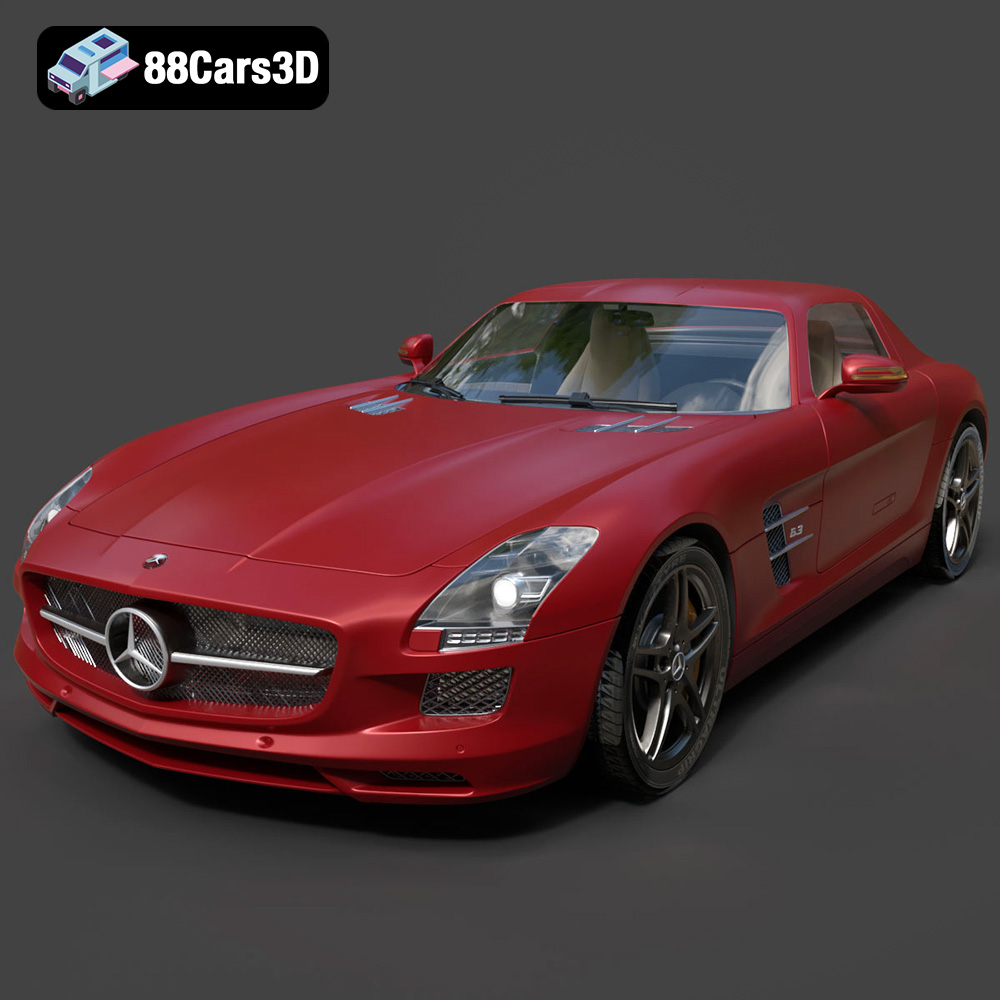
Today, we delve into the intricate details of what makes a truly exceptional 3D car model, using a prime example of digital automotive mastery: the Mercedes-Benz SLS. Renowned for its iconic gullwing doors, elongated hood, and aggressive grand tourer proportions, the SLS is a modern homage to legendary automotive design. Capturing its essence in 3D requires a blend of artistic skill and technical precision, delivering a model that is both visually stunning and highly functional. Whether you’re a game developer seeking unparalleled realism, a visualization artist aiming for cinematic quality, or an AR/VR creator building immersive worlds, a high-fidelity model like the Mercedes-Benz SLS is an invaluable asset, providing a foundation for truly groundbreaking work.
Creating a 3D model that truly stands out involves more than just replicating shapes; it’s about capturing the soul of the vehicle. For a car as iconic as the Mercedes-Benz SLS, this means paying obsessive attention to every curve, panel gap, and component. The goal is to produce a digital twin that evokes the same sense of awe and admiration as its real-world counterpart.
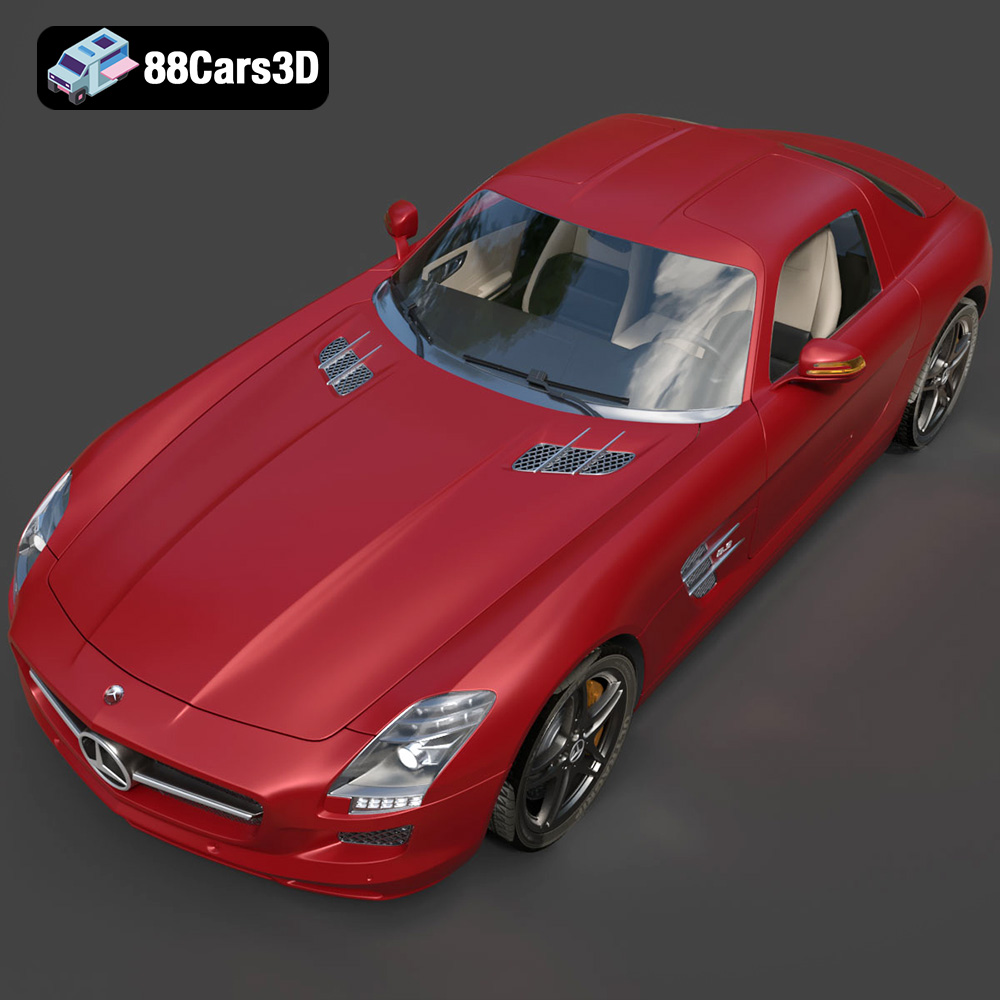
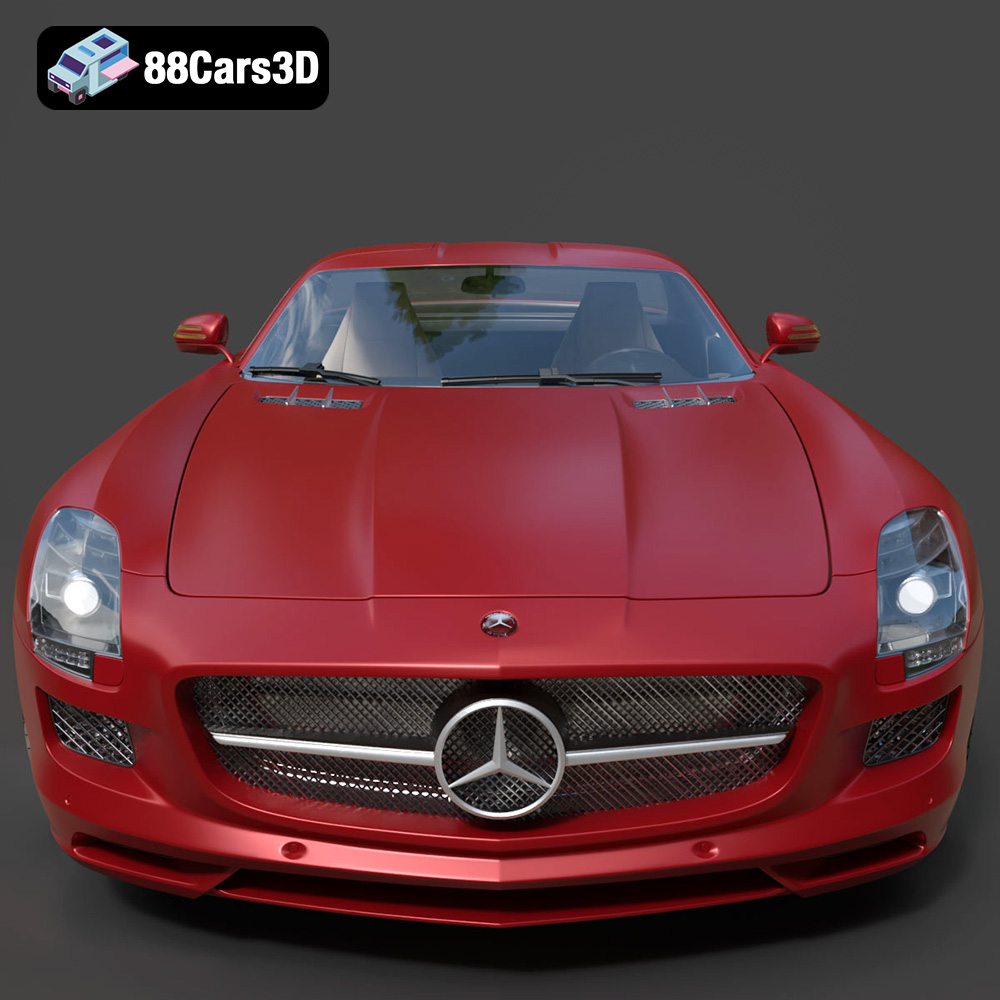
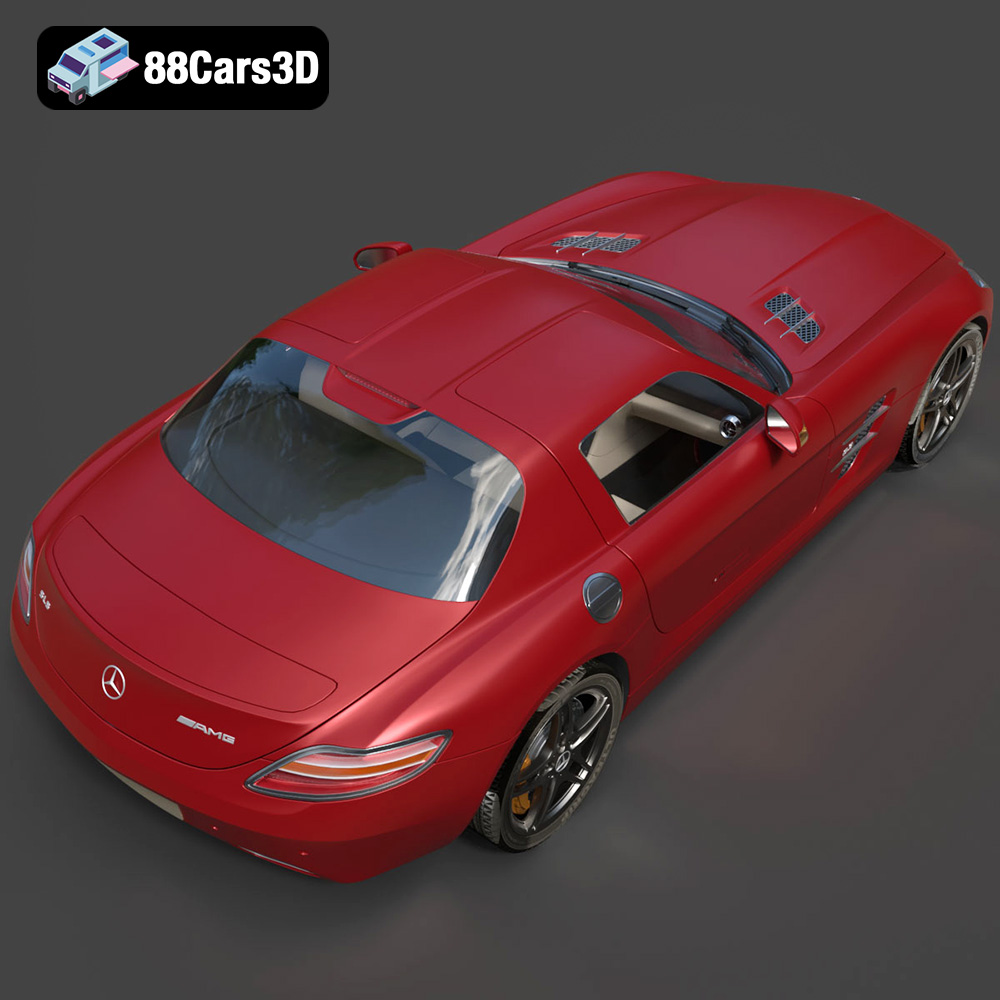
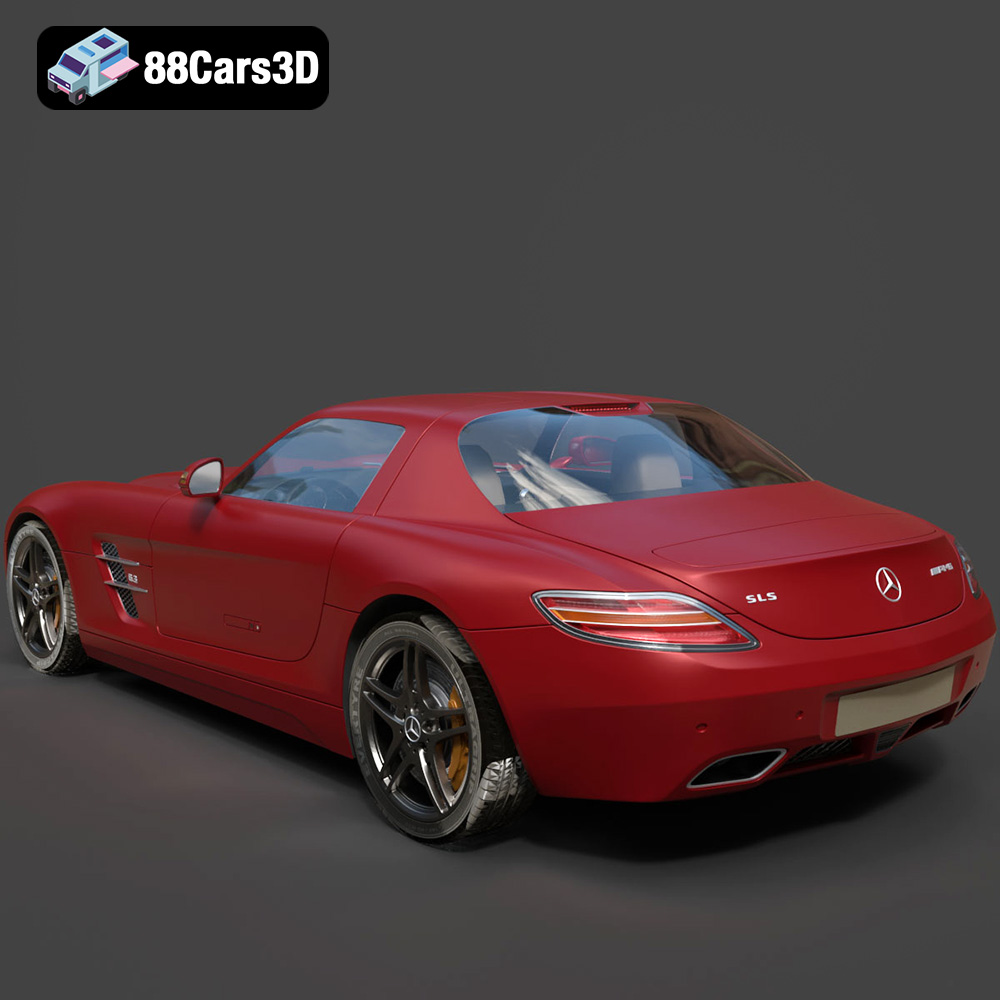
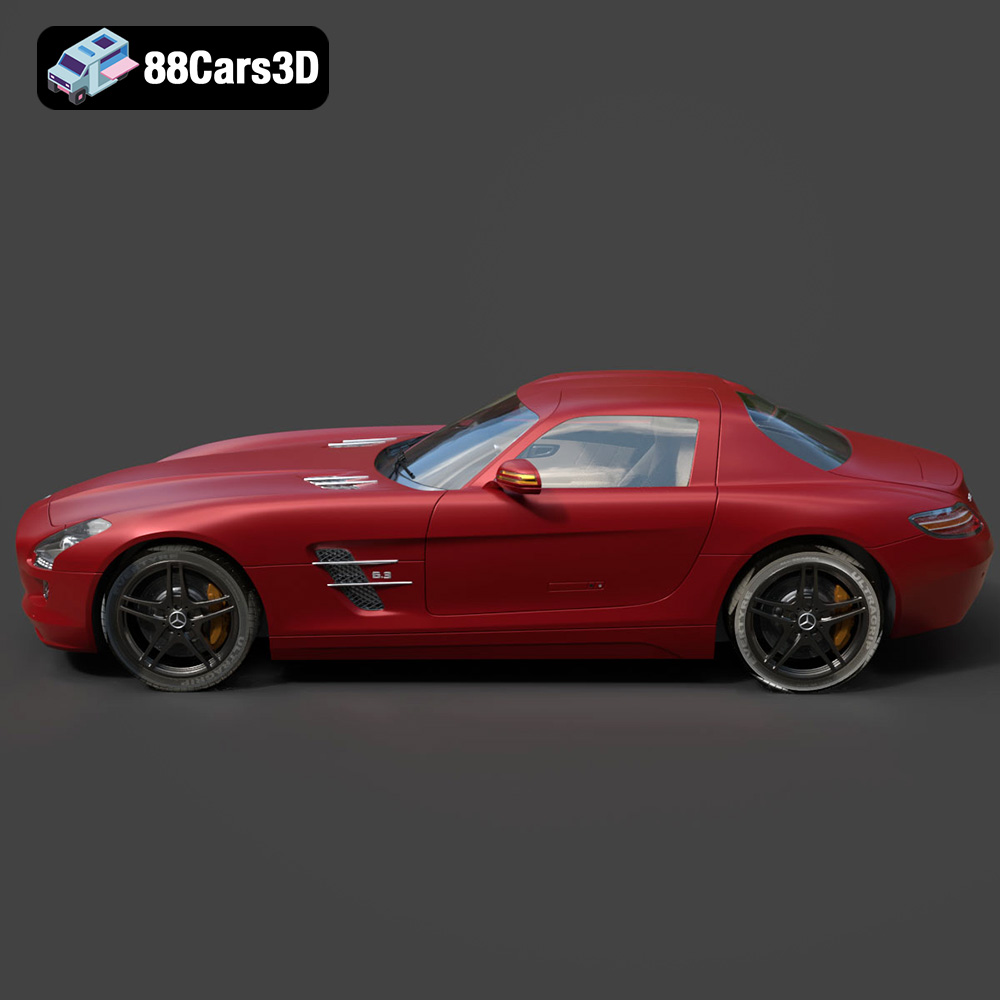
The first impression of any car, digital or physical, comes from its exterior. Replicating the Mercedes-Benz SLS requires a deep understanding of automotive design principles. This particular model excels in capturing the classic supercar’s essence, featuring its signature front grille, sleek aerodynamic profile, and intricate quad exhaust system. The accurate Mercedes-Benz SLS frame geometry and proportions are paramount, ensuring that the model looks correct from every angle. Details extend to the authentic dual-tip performance exhaust system, signature bi-xenon headlights, and intricate LED taillights, which are modeled with an eye for how light will interact with them during rendering. Furthermore, the detailed multi-spoke alloy wheels, performance tires, and brake calipers are not just textures but carefully modeled components that add significant realism. Even the accurate suspension and drivetrain components are present, not only for visual fidelity but also for potential animation, with separate wheels, suspension, and steering components facilitating dynamic movement.
While the exterior grabs attention, the interior is where the user or viewer often connects most intimately with the vehicle, especially in interactive applications. The cockpit of the Mercedes-Benz SLS model is a testament to meticulous detailing. Sculpted sport bucket seats with detailed upholstery and stitching offer a luxurious and authentic feel. The authentic flat-bottom performance steering wheel, classic dual-pod instrument cluster, and dashboard layout are all faithfully recreated. Even smaller elements like aviation-style air vents, pedals, and the center console gear selector contribute to an immersive experience. This level of detail is particularly crucial for gaming, where the geometry is optimized for first-person POV, ensuring that players feel truly inside the vehicle, enhancing gameplay and realism.
The versatility of a 3D model is often defined by the file formats it supports. Different formats are optimized for various stages of the 3D pipeline, from initial modeling and animation to real-time rendering, web deployment, and even physical production. A comprehensive package, such as the Mercedes-Benz SLS 3D model available on 88cars3d.com, offers a range of formats, ensuring maximum compatibility and utility for diverse projects. Understanding each format’s strengths is key to selecting the right one for your specific needs.
The `.blend` format is the native file type for Blender, a powerful and widely used open-source 3D creation suite. When you download a `.blend` file, you’re not just getting the mesh; you’re getting a complete Blender scene. This includes all geometry, materials, textures, lighting setups, cameras, animations, and even modifiers. It offers the highest degree of editability and flexibility, making it ideal for artists who want to deeply customize the model, study its construction, or integrate it seamlessly into an existing Blender project. For the Mercedes-Benz SLS, this means full access to every component, allowing for extensive modifications to colors, finishes, and structural elements within a familiar environment.
FBX (Filmbox) is a proprietary file format owned by Autodesk, widely regarded as the industry standard for interoperability between 3D software applications and real-time engines. It’s excellent for transferring 3D models, entire scenes, animation data, skeletal rigs, and PBR materials. Its strength lies in its ability to preserve complex scene information across different platforms. For game developers working with Unreal Engine or Unity, the `.fbx` format is often the go-to choice for importing assets like the Mercedes-Benz SLS, as it reliably translates geometry, UVs, and animation data, ensuring a smooth transition into the game development pipeline.
OBJ (Object) is one of the oldest and most widely supported 3D file formats. It’s a universal standard, prized for its simplicity and excellent cross-software compatibility. An `.obj` file primarily stores geometry data (vertices, faces, normals, UV coordinates) and can reference an accompanying `.mtl` (material) file for basic material properties. While it doesn’t support animation or rigging as robustly as `.fbx`, its ubiquity makes it perfect for sharing static meshes between almost any 3D application, from Maya and 3ds Max to Blender and ZBrush. The Mercedes-Benz SLS in `.obj` format ensures that virtually any 3D artist can open and work with the core model.
GLB is the binary version of glTF (Graphics Language Transmission Format), designed for efficient transmission and loading of 3D scenes and models by engines and applications. It’s becoming the standard for web-based 3D, AR (Augmented Reality), and VR (Virtual Reality) experiences. A single `.glb` file encapsulates all model data – geometry, materials, textures, and animations – making it incredibly easy to integrate into websites, mobile apps, and immersive platforms. For virtual showrooms or interactive web configurators featuring the Mercedes-Benz SLS, the `.glb` format offers superior performance and accessibility.
STL (STereoLithography) is the most common file format used for 3D printing. It represents the surface geometry of a 3D object using a collection of interconnected triangles, without any color, texture, or material information. The `.stl` format is essentially a triangulated mesh, defining the object’s shape for additive manufacturing processes. While it doesn’t capture the visual richness of other formats, it’s indispensable for creating physical replicas of the Mercedes-Benz SLS model. The provision of `.stl` makes the model convertible for hobbyists and professionals looking to produce display-scale models.
PLY (Polygon File Format) is another format for storing 3D data, particularly useful for scanned data and high-precision meshes. Unlike `.stl`, `.ply` can store more complex information, including color, transparency, surface normals, and even texture coordinates for each vertex or face. It’s often used in scientific and engineering applications, CAD software, and for objects generated from 3D scanners where accurate point cloud or mesh data is critical. For detailed analysis or high-fidelity reproduction of the Mercedes-Benz SLS chassis, the `.ply` format offers a robust solution.
While not a standard open format, the inclusion of `.unreal` implies a highly optimized, engine-ready asset specifically prepared for Unreal Engine. This often means the model has already been imported, scaled, and configured within Unreal, potentially including proper materials, collision meshes, LODs (Levels of Detail), and blueprint setups. This dramatically reduces integration time for developers, offering a plug-and-play experience for projects using the Mercedes-Benz SLS in Unreal Engine.
The `.max` format is the native file type for Autodesk 3ds Max, a leading software for 3D modeling, animation, and rendering. Similar to `.blend`, a `.max` file contains an entire 3ds Max scene, including geometry, materials, lighting, cameras, and any applied modifiers or animation data. It provides full editability and flexibility within a professional studio environment. For artists specializing in high-end automotive rendering or cinematic animation, the Mercedes-Benz SLS provided as a `.max` file offers complete control to achieve stunning visualizations.
The comprehensive range of formats for the Mercedes-Benz SLS 3D model from 88cars3d.com underscores its adaptability, making it an excellent investment for any digital artist or developer.
In the world of 3D, visual appeal must often be balanced with technical performance. This is especially true for assets destined for real-time applications like games or interactive AR/VR experiences. A truly premium 3D car model, such as the Mercedes-Benz SLS, achieves a delicate equilibrium between stunning visual fidelity and optimal performance, ensuring it looks incredible without bogging down the rendering engine.
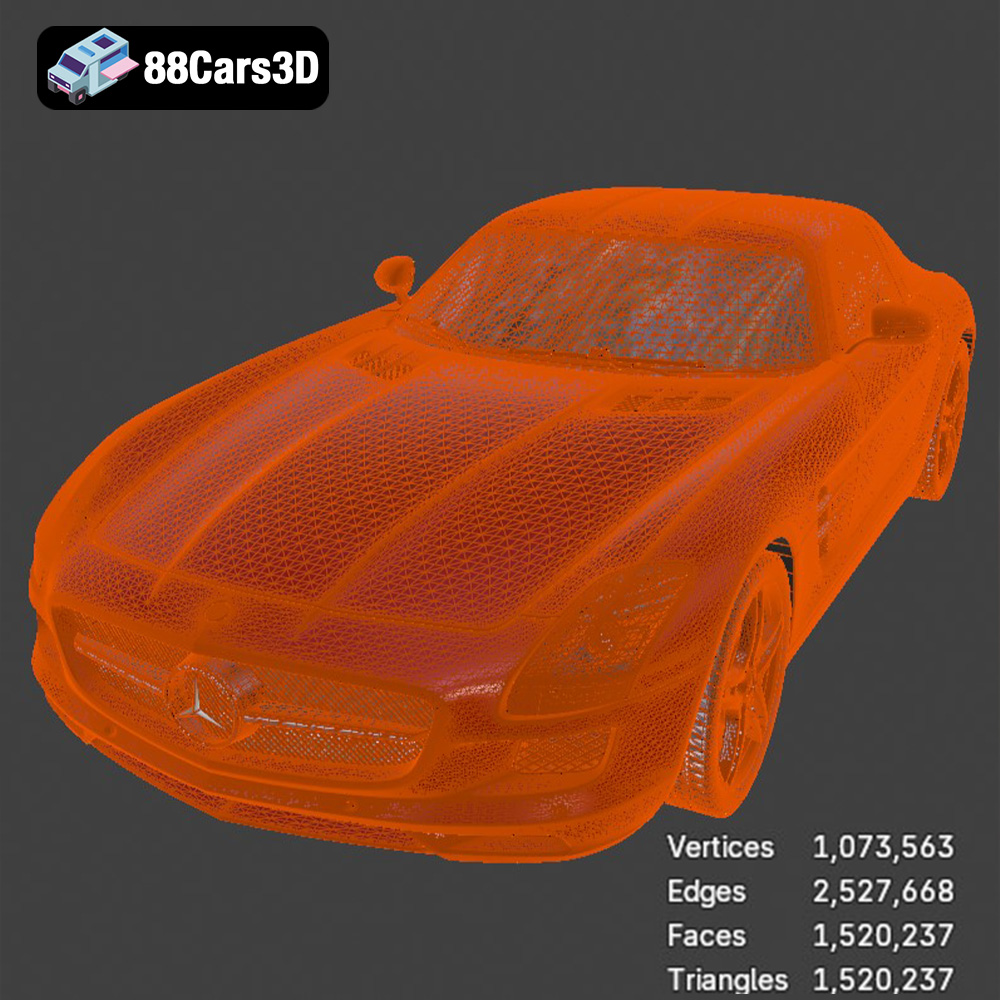
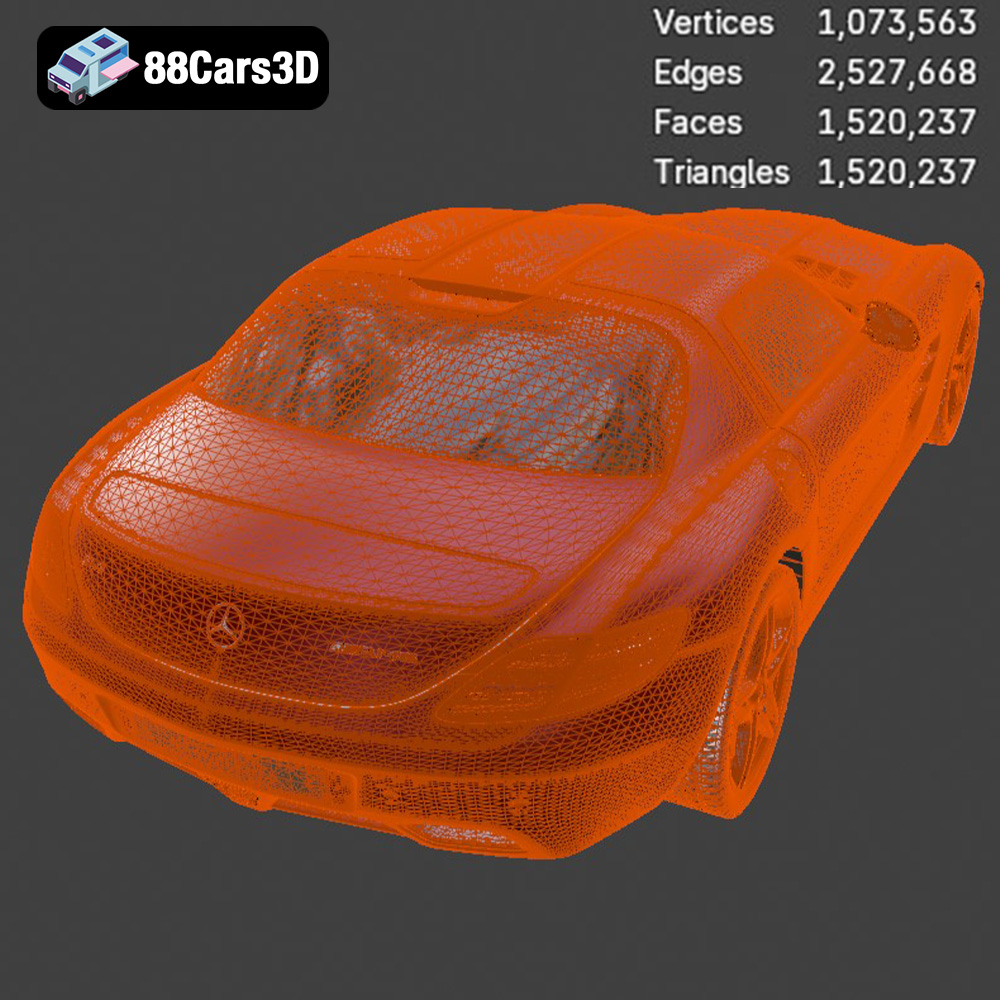
One of the most critical technical specifications is the triangle count (polycount). For the Mercedes-Benz SLS model, a highly detailed 1,520,237 triangle count strikes a perfect balance. This number is high enough to offer incredible visual fidelity for high-end rendering and detailed close-ups, ensuring smooth curves, sharp edges, and intricate details are perfectly preserved. Simultaneously, it remains optimized enough for high-end AAA game development and immersive AR/VR experiences, where every polygon can impact frame rates. Achieving this balance requires expert modeling techniques, efficient mesh topology, and careful planning to ensure that detail is concentrated where it matters most, without unnecessary geometry.
Beyond polycount, real-world scale accuracy is paramount for proper integration into any scene. The Mercedes-Benz SLS model is based on actual vehicle chassis dimensions, ensuring it fits realistically alongside other assets or in architectural visualizations. Furthermore, proper pivot setup for steering, wheel rotation, and suspension travel is a crucial technical advantage. This “game-ready” feature means animators and game developers can immediately integrate the model’s functional elements without time-consuming manual setup, allowing for realistic vehicle dynamics right out of the box.
When a model is labeled “game-ready,” it signifies that it has undergone rigorous optimization for seamless integration into real-time rendering engines like Unreal Engine and Unity. This involves more than just a balanced polycount. It typically includes clean, non-overlapping UV mapping for efficient texture application, PBR (Physically Based Rendering) materials configured for realistic lighting interactions, and potentially multiple Levels of Detail (LODs) to optimize performance at varying distances (though not explicitly listed, it’s a standard practice for game-ready assets). The Mercedes-Benz SLS model’s optimization directly translates into smoother frame rates and a higher-quality visual experience in interactive environments. The attention to detail, from the fully detailed engine block to the suspension components, ensures that even the closest inspection in an engine will reveal a high level of realism. This makes it ideal for open-world games, racing titles, and simulators where both visual impact and stable performance are critical.
A premium 3D car model like the Mercedes-Benz SLS isn’t just a static object; it’s a versatile tool that enhances professional workflows across various creative and technical disciplines. Its multi-format availability and detailed design mean it can be seamlessly integrated into diverse pipelines, from cinematic rendering to interactive real-time applications.
For artists focused on creating stunning imagery for brand campaigns, lifestyle scenes, or virtual showrooms, the Mercedes-Benz SLS model provides an exceptional foundation. In software like 3ds Max (.max format) or Blender (.blend format), artists can leverage the model’s high fidelity to produce photorealistic renders. The workflow typically involves importing the model, setting up advanced PBR materials to accurately represent paint, chrome, and glass, and configuring a sophisticated lighting environment, often using HDRI (High Dynamic Range Image) maps for realistic reflections and global illumination. Cameras are positioned to capture dramatic angles, showcasing the vehicle’s iconic design. The detailed exterior and interior features allow for close-up shots that highlight the craftsmanship of the virtual car, making it perfect for high-end marketing collateral or architectural visualizations where a luxury vehicle adds significant value to a scene.
Game developers will find the Mercedes-Benz SLS an invaluable asset, particularly with its game-ready optimization and `.fbx` or `.unreal` file formats. Integrating the model into game engines like Unreal Engine involves importing the asset, setting up physics constraints for realistic driving dynamics, and configuring collision meshes to ensure proper interaction with the game world. The separate components for wheels, steering, and suspension facilitate advanced animation setups, allowing for realistic vehicle movement and player control. The optimized polycount ensures that the car runs smoothly even in graphically intensive open-world games or fast-paced racing simulators. This level of preparation significantly reduces development time, allowing teams to focus on gameplay mechanics and world-building while the core vehicle asset is already polished and performant.
The immersive nature of AR/VR and the accessibility of web-based 3D demand highly optimized and portable assets. The Mercedes-Benz SLS model, with its `.glb` format, is perfectly suited for these cutting-edge applications. For virtual showrooms, users can walk around, inspect, and even customize the car in real-time, offering a highly engaging experience. In mobile AR, the SLS can be placed in real-world environments, allowing users to visualize it in their driveway or office. Web configurators can enable users to change body colors, adjust material finishes, and explore interior details directly in their browser. The `.glb` format’s efficiency ensures quick loading times and smooth performance across various devices, making the Mercedes-Benz SLS an excellent choice for innovative, interactive product experiences.
While digital applications are diverse, the power of 3D modeling extends into the physical realm. The Mercedes-Benz SLS model is not just for screens; it’s also designed with physical production in mind, offering a pathway for enthusiasts and designers to bring this iconic vehicle into tangible form through 3D printing.
The journey from a digital 3D model to a physical object involves specific considerations and specialized file formats. For 3D printing, the `.stl` (StereoLithography) format is the industry standard. It represents the model’s surface as a series of triangles, stripped of color and texture information, focusing purely on geometry. The `.ply` format can also be used, offering more fidelity for complex meshes. When preparing a model for printing, it’s crucial to ensure that the mesh is “manifold”—meaning it’s a watertight, solid object without holes or internal self-intersections. The Mercedes-Benz SLS model is designed to be convertible to `.stl`, ensuring its robust geometry is suitable for this transformation. This allows for the creation of intricate, display-scale replicas, making the digital asset valuable for collectors and modelers alike.
Achieving a high-quality 3D print requires adherence to recommended settings. For the Mercedes-Benz SLS, recommended scales like 1:12, 1:18, or 1:24 offer a good balance of detail and printability. A layer height of 0.04–0.12 mm is suggested, with resin printing specifically recommended for capturing the fine details, such as the intricate exhaust system or the delicate grille. Critical parameters include a wall thickness of 1.2–2.0 mm and an infill of 20–30% for structural integrity without excessive material usage. Supports are essential for detailed parts like the exhaust, mirrors, and other overhangs. Proper print orientation, such as printing the frame angled and wheels separately, further ensures structural soundness and minimizes support material. Once printed, post-processing is key to achieving an authentic finish: sanding for smoothness, applying primer for an even surface, and painting with authentic factory colors, often with metallic finishes, will bring the miniature Mercedes-Benz SLS to life with stunning realism.
The true power of a high-quality 3D asset lies not only in its initial fidelity but also in its adaptability. The Mercedes-Benz SLS 3D model is built with customization in mind, providing artists and developers with the flexibility to tailor it to their specific creative vision and project requirements.
The included customization options for the Mercedes-Benz SLS offer significant creative freedom. Artists can easily change body colors, experimenting with factory hues or crafting unique custom finishes that match a particular aesthetic. Modifying tire textures from street variants to off-road options (if desired) can dramatically alter the vehicle’s character, enabling it to fit into diverse scenes and narratives. Adjusting material finishes—from matte to gloss or various metallic sheens—allows for fine-tuning the car’s presence and realism under different lighting conditions. Furthermore, the ability to adapt lighting for different environments is crucial for achieving specific moods, whether it’s the harsh sunlight of a desert race track or the elegant glow of a virtual showroom. This adaptability ensures that the Mercedes-Benz SLS can serve as a versatile foundation, ready to be transformed into anything from a pristine concept car to a battle-hardened racing machine.
The comprehensive features and technical advantages of the Mercedes-Benz SLS model make it a cornerstone asset for an incredibly wide array of applications. Its optimized polycount and real-world scale make it perfect for integrating into game development projects, from immersive racing titles to expansive open-world adventures. The visual fidelity and clean topology are ideal for high-end rendering and visualization tasks, creating captivating imagery for marketing or architectural scenes. With `.glb` support, it shines in AR/VR experiences, delivering interactive virtual showrooms and mobile augmented reality. And finally, its `.stl` compatibility opens the door to 3D printing, bringing the digital icon into the physical world. This exceptional versatility, coupled with the quality assurance expected from a marketplace like 88cars3d.com, makes the Mercedes-Benz SLS 3D model an intelligent investment for any professional seeking premium 3D car models that stand the test of technical and artistic scrutiny.
In the expansive digital landscape, the Mercedes-Benz SLS 3D model stands as a testament to the pinnacle of 3D automotive artistry and technical excellence. From its meticulously recreated exterior and immersive interior to its optimized geometry and extensive file format support, every aspect is crafted to meet the demands of professional workflows. Whether your goal is to push the boundaries of realism in automotive rendering, deliver exhilarating experiences in game development, create engaging AR/VR applications, or even produce stunning 3D printed replicas, this model provides the robust foundation you need.
Investing in high-quality 3D car models like the Mercedes-Benz SLS from 88cars3d.com isn’t just about acquiring an asset; it’s about empowering your projects with unparalleled detail, performance, and versatility. It significantly reduces development time, enhances visual impact, and ensures your creations resonate with audiences. Explore the possibilities and elevate your digital creations with a model designed for excellence.
The Mercedes-Benz SLS stands as a modern homage to legendary automotive design, renowned for its iconic gullwing doors, elongated hood, and aggressive grand tourer proportions. This meticulously crafted model perfectly captures the essence of the classic supercar, featuring its signature front grille, sleek aerodynamic profile, and intricately detailed quad exhaust system. Boasting a highly detailed 1,520,237 triangle count, this 3D model offers incredible visual fidelity while remaining optimized for high-end rendering and detailed close-ups. It is expertly crafted to deliver premium quality for AAA game development, immersive AR/VR experiences, and cinematic animations. Perfect for virtual showrooms, high-end racing simulators, cinematic renders, and architectural visualizations.
$37.50
.blend
.fbx
.glb
.max
.obj
.ply
.rendering
.sls
.sports car
.stl
.supercar
.unreal
car-3d-model
game asset
game-ready
grand-tourer
low-poly
mercedes-benz
optimized
VR/AR